Author: Mei Ling Tan

  • National power utility faces financial crunch

    National power utility faces financial crunch

    Vietnam Electricity (EVN) will face increasing financial difficulties in the coming years as its payment obligations to independent power projects keep rising. National utility EVN’s gross margin fell from 15.1 percent in 2015 to 12.9 percent last year due to rising costs of payment to new coal-fired independent power projects (IPPs), a recent report by the Institute for Energy Economics and Financial Analysis (IEEFA) says.

    As EVN has to pay these projects a fixed price for their power, as more such plants come online, the sole power distributor in the country will experience a financial crunch. Between 2015-2019, EVN’s own generation capacity shrank from 61 percent to 52 percent of the total system, a ratio that IEEFA Vietnam expects to fall even more rapidly in comping years.

    It estimates that in the next three years, there will be on average 4.4GW of capacity addition annually from IPPs, significantly increasing EVN’s payment obligation. Payment for IPPs, which accounted for 42.7 percent of EVN’s total cost of sales last year, will likely rise to 60.1 percent in 2023, it says. This means the drop in EVN’s gross margin “will likely continue as more IPP capacity with fixed capacity payments comes online.”

    The solution is to increase tariffs, but this has become more difficult this year with the Covid-19 pandemic crippling key industries and cutting jobs.

    A plan to increase tariffs by the end of this year has been suspended as the government now focuses on protecting jobs and ensuring economic growth while keeping inflation below 4 percent.

    EVN also had to offer a 10 percent reduction in billings to customers from April to July, resulting in subtraction of VND6.8 trillion ($292 million) from its revenue.

    The national utility now “faces the risk that if tariff increases cannot keep pace, the new debt will be needed to help meet the company’s growing IPP payment obligations,” the report says.

    It cites credit rating firm Fitch as saying that EVN’s financial profile can be significantly affected if tariffs are not adjusted regularly as it faces major hydrology, currency, and demand risks.

    IEEFA forecasts that EVN could report a loss of VND14.5 trillion this year against a post-tax profit of VND9.7 trillion last year.

  • South Korean department stores refurbished to attract cashed-up MZ shoppers

    South Korean department stores refurbished to attract cashed-up MZ shoppers

    Department stores are undergoing renovations to attract the so-called MZ generation – encompassing the Millennials and Generation Z.

    After its first renovation in 11 years, Hyundai Department Store’s Jungdong branch reopened the ‘U-Plex’ Fashion House on Wednesday in Bucheon, west of Seoul.

    The storehouses 130 domestic and international fashion brands popular among the MZ generation, including the Street Fashion Zone, where the top 10 most-popular fashion brands online are located.

    The largest shopping mall dedicated to sportswear in the greater Seoul area opened on the department store’s fourth and fifth floors, featuring boutiques from Nike, Adidas, New Balance, and 34 other sports brands.

    Lotte Department Store Yeongdeungpo Branch also redesigned its floor space by filling the first and second floors with brands popular among the MZ generation. Cosmetics brands, originally located on the first floor, have been moved to the third floor.

    Shinsegae Department Store Yeongdeungpo Branch also completed renovations to attract younger customers.

  • Ruten Japan launches international website

    Ruten Japan launches international website

    Japanese e-commerce platform Ruten has launched a global website, offering more than 60 million Japanese including snacks, supplements, kitchen appliances, beauty products, and fashion to 13 markets.

    The site is now shoppable from markets including Singapore, Hong Kong, Canada, Indonesia, South Korea, and New Zealand and Ruten Japan says it will expand its product range and add more countries in the future.

    The idea started after Yun Su, CEO of Ruten, saw the increasing demand for Japanese products after traveling became almost impossible with the advent of Covid-19.

    The company has also dedicated a separate category for Covid-19 related products, including facial masks, automatic liquid soap dispensers, infrared thermometers and anti-splatter protective face shields.

    In celebration of its global launch, customers will enjoy free international shipping for orders more than US$50. According to the company, the average delivery time within Asian countries is seven working days.

  • Byredo opening Singapore flagship store

    Byredo opening Singapore flagship store

    Swedish luxury brand Byredo has opened its first flagship store in Singapore.

    Located in Ngee Ann City shopping center, the store offers a wide range of fragrances, leather goods, and accessories.

    The store facade features a gray concrete wall with the brand logo highlighted by white lights. The interior design creates a modern and futuristic vibe by using elements such as metal shelves and metal-framed mirrors. The storehouses three displays in orange, standing out from the plain gray background and carpet.

    Besides launching its first boutique in Singapore, the brand is to launch its first beauty line with makeup artist Isamaya Ffrench next month. The line will include eyeshadow, eyeliner, mascara, lip balm, and lipstick.

    Founded in 2006 by Ben Gorham, Byredo is known for its fragrances, leather goods, and accessories.

  • Pizza chains post double-digit growth

    Pizza chains post double-digit growth

    With over 180 outlets, three popular pizza chains in Vietnam posted double-digit growth last year with combined revenues of over $83 million.

    American chain Pizza Hut was the revenue leader with VND749 billion ($32.2 million), up 22 percent year-on-year; followed by Thailand-headquartered The Pizza Company, which passed the VND600 billion revenue mark last year, up 24 percent; and Vietnam’s Pizza 4Ps with VND568 billion, up 38 percent.

    As one of the earliest pizza chains established in Vietnam, Pizza Hut has had the advantage of being a market pioneer and has now operated for 14 years with over 90 outlets nationwide.

    But as new players entered the market, its growth fell to below 20 percent annually in the 2015-2018 period; even down to 6 percent in 2017-2018.

    Second-placed The Pizza Company has been rapidly expanding in Vietnam since 2013, its number of stores second only to Pizza Hut at over 70 nationwide. It also took the company just six years to pass the VND600 billion revenue mark, while it took Pizza Hut 12 years to record the same figure.

    While it is in third place with just 20 stores, Pizza 4Ps’s revenue last year was only 8 percent behind that of The Pizza Company.

    It was also the only of the three that posted profits of over VND50 billion in the last two years. Pizza Hut has reported losses in three of the last four years while The Pizza Company has done so for three years in a row.

    Euromonitor International, a London-based strategic market analyst, estimated the value of Vietnam’s pizza market at $120 million in 2017.

  • Vietnam opens anti-dumping probe into sugar imports from Thailand

    Vietnam opens anti-dumping probe into sugar imports from Thailand

    The Ministry of Industry and Trade has initiated an anti-dumping investigation into sugar imports from Thailand, which have increased six-fold this year.

    The probe follows complaints by Vietnamese sugar producers that Thai exporters, with a subsidy from their government, are dumping their products in Vietnam and causing damage to the local sugar industry, the Trade Remedies Authority of Vietnam said in a statement.

    The import of sugar from Thailand increased six times year-on-year in the first eight months of this year to nearly 950,000 tonnes, it said.

    Vietnamese producers, represented by six major companies, said the surging imports hit their production, causing it to fall by 33 percent to 800,000 tonnes in the 2019-2020 crop.

    They have sought an anti-dumping duty of 37.9 percent. Vietnam removed import duties on sugar imported from ASEAN countries this year in accordance with the commitments of the ASEAN Trade in Goods Agreement (ATIGA).

  • Amazon Prime Day 2020 finally has a start date

    Amazon Prime Day 2020 finally has a start date

    Everything was delayed due to the COVID-19 pandemic this year, including Amazon’s huge sale known as Prime Day. Typically, Amazon Prime Day takes place in July, but this year, due to obvious reasons, the sale was reportedly delayed for October.

    The initial reports dated early July claimed Amazon Prime Day will be scheduled for the week starting October 5, and that a definitive date will be announced later. However, a new report mentions another start date for Amazon Prime Day.

    Without further ado, Amazon’s Prime Day 2020 will start on October 13, at least according to four people familiar with Amazon’s plans. Although Amazon declined to comment on the date, it looks like the company has already “blacked out vacation for its full-time warehouse workers from October 13-20.”

    It’s important to mention that the sources of this crucial information don’t know how long the sale will last, just the start date. It’s hard to make any assumptions at this time since Amazon has already extended these huge sales in the last couple of years, so it won’t be a surprise to learn that this year we’ll have a 3-day Amazon Prime Day sale event.

    Last year, the annual deal event exclusively for Prime members lasted for two days, whereas the year before it was squeezed into a 36-hour sale event. If the information proves to be accurate, Amazon should make an official announcement in the next couple of weeks, so stay tuned.

  • Google launches Android 11 on Android TV

    Google launches Android 11 on Android TV

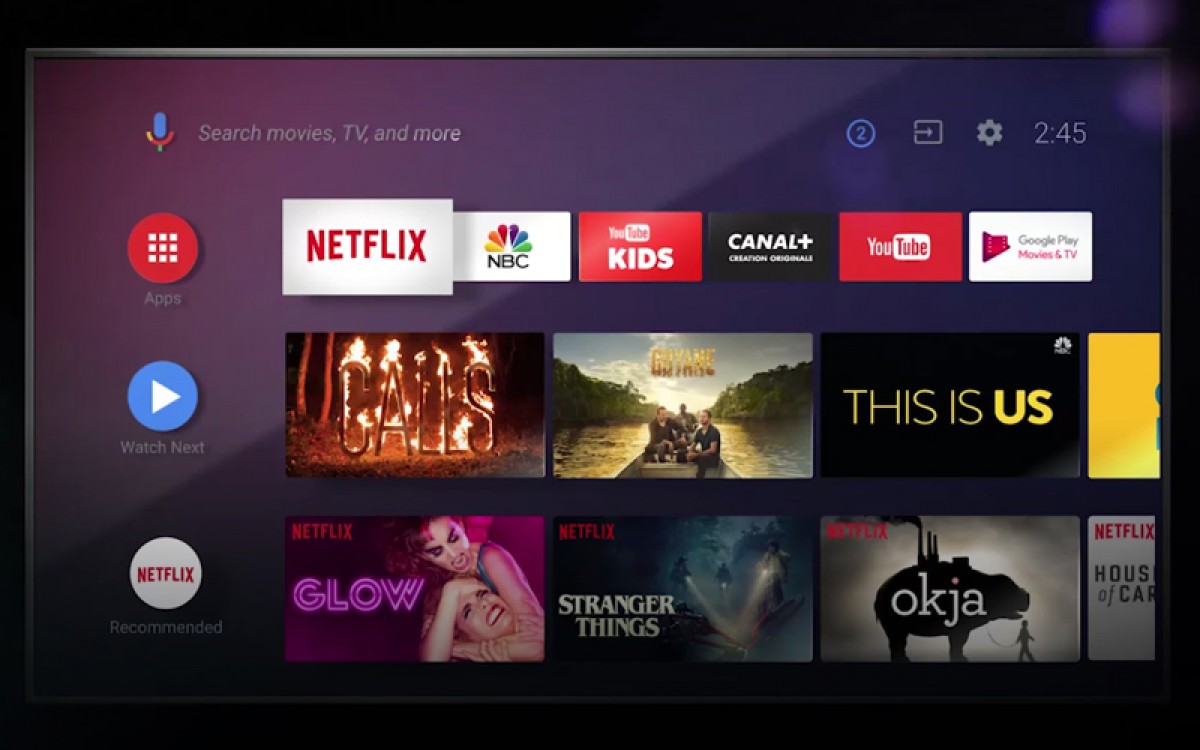
    Google is bringing Android 11 to Android TV devices, the search giant revealed today. Several performance enhancements and privacy improvements will be part of the new Android update, as well as a plethora of new features specifically designed for the TV.

    Among these improvements, Google mentioned enhanced memory management, one-time permissions, and support for Auto Low Latency Mode and low latency media decoding. Since gaming has become such a major part of the entertainment industry, Google is introducing extended gamepad support for Android TV.

    Also, silent boot mode for system updates, inactivity prompts, and OEM configurable wake keys are included in the upcoming Android 11 update for Android TV. All these and more should give users greater control over TV functions.

    And for those interested, testing on Android TV will be much easier with Android 11 thanks to the addition of the so-called “test harness mode,” a feature for third-party app developers that want to automate a device for a fleet of devices.

    According to Google, Android TV OEM partners should release and upgrade to Android 11 over the coming months, so the rollout hasn’t begun yet.

  • 7-Eleven in Taiwan to offer restaurant grade fresh meals

    7-Eleven in Taiwan to offer restaurant grade fresh meals

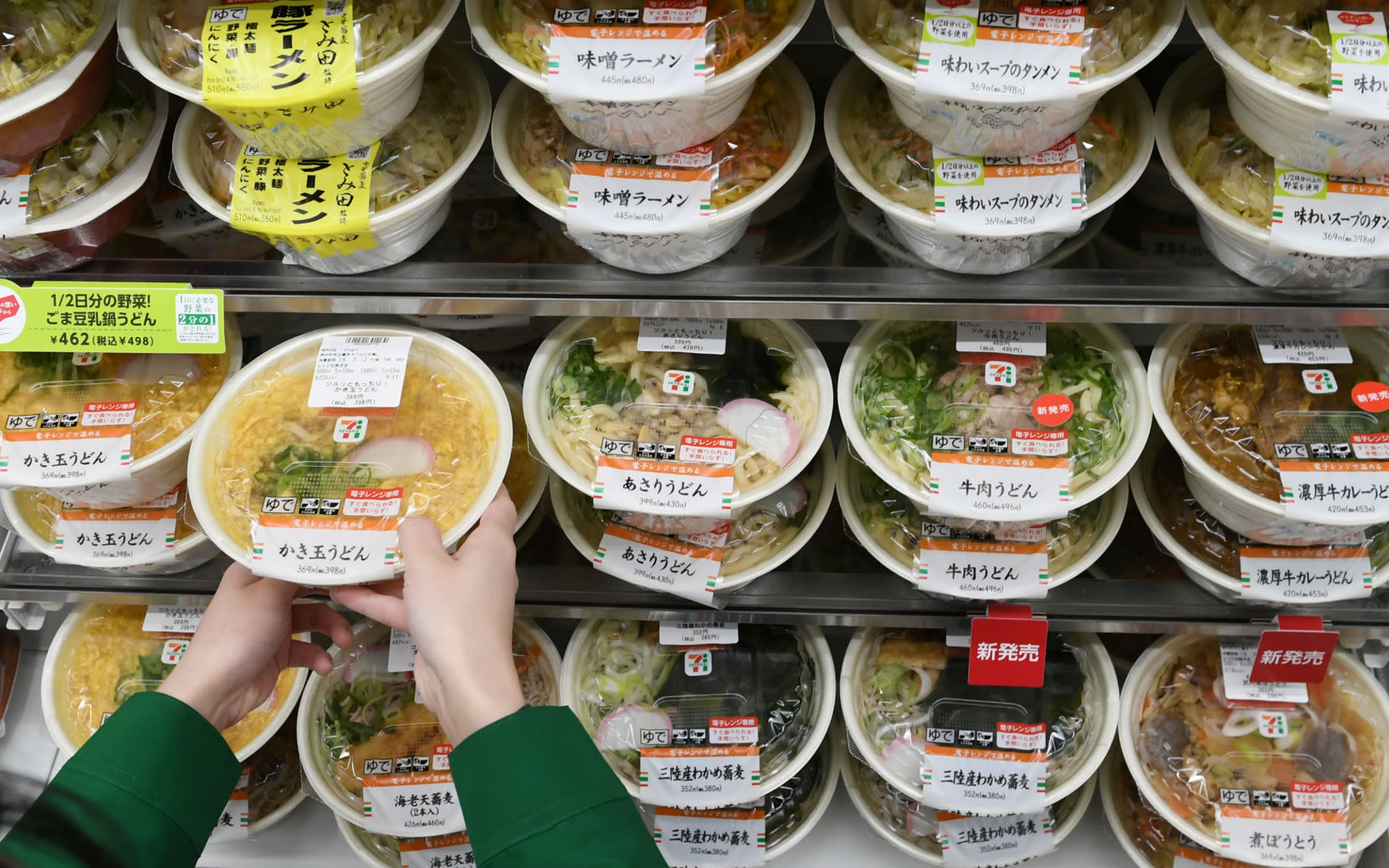
    Convenience store chain 7-Eleven in Taiwan has partnered with a restaurant and a hotel to offer fresh-cooked meals to consumers.

    The service, launching this week at the Dongxing Road outlet in Taipei, will retail assorted boxed meals targeting office workers following seven different menus prepared for the venture by Regent Taipei chefs and restaurant Su/food.

    Customers are invited to place advance orders for the meals, to be picked up on the same or following day at noon. The partnering providers will deliver the meals to the participating stores, which will store them to preserve the temperature.

    7-Eleven in Taiwan expects the venture to increase its meal sales by 10 to 20 percent. After a trial period, the concept is expected to be rolled out more widely.

  • Japanese premium grocer Guu San opens in Hong Kong

    Japanese premium grocer Guu San opens in Hong Kong

    Independent premium Japanese grocery and lifestyle store, Guu San has opened its first store in Hong Kong.

    Guu San (Guu for valley, San for sanctuary) is an anchor of the new H Zentre commercial building located at Tsim Tsa Tsui. The 5000sqft store is designed to be a one-stop-shop where consumers can eat, shop, and rest – indoors and out.

    The space is divided into three zones: Sawaya, for non-packaged bulk-buy food following the zero waste trend, alongside snacks, beverages and fresh fruit and vegetables delivered from Japan.

    A ‘Kome Korner’ retails light meals made in-store such as omusubi (rice balls), soup, and other vegetable dishes paired with tea from Uji and Kyoto. A salad bar dubbed the ‘Salfee Bar’ will feature new salad varieties daily.

    The store also features an interactive LED art installation that changes scenes and animations according to the time of the day.

    The retailer says it sources high-quality foods ranging from local organic produce fresh from the market to curated snacks and tea delivered from Japan.

    The opening of Guu San follows the trend towards the Japanese retailing of groceries and food, which is showing strong momentum in Hong Kong. Don Don Donki recently expanded to its sixth flagship in the territory, Muji has opened its largest store, at Olympian City, and Yata department store has unveiled plans for a convenience store concept.

  • Qualcomm’s newest 5G chipset is announced

    Qualcomm’s newest 5G chipset is announced

    Qualcomm unveiled a new 5G enabled chipset from the Snapdragon 7-Series. The Snapdragon 750G enables “truly global gaming” according to the San Diego-based company, along with True HDR gaming (with 10x brighter colors), and on-device AI. The chipset supports both sub-6GHz and mmWave 5G; the latter delivers signals that travel far, easily penetrate structures but provide slower 5G download data speeds than what is available from mmWave 5G signals. The Snapdragon 750G chip offers some features from Qualcomm’s Snapdragon Elite Gaming that allow for smooth gameplay with low latency.

    The Snapdragon 750G comes with the Adreno 619 GPU providing users with as much as a 10% hike in graphics rendering compared to the Adreno 618 GPU found on the Snapdragon 730G. Qualcomm states that the new chipset delivers “stunning, life-like imagery” and the 5G support allows users to play multiplayer contests or stream games through their smartphones using 5G cloud gaming platforms.

    AI tasks will be handled by the fifth-generation Qualcomm AI Engine supporting voice translation, smart camera, and video, AI-enhanced gaming experiences and advanced AI-based imaging. The AI Engine handles up to 4.0 Trillion Operations Per Second (TOPS), a 20% improvement compared to Snapdragon 730G. The chip is powered by the Kryo 570 CPU core allowing for a 20% hike in “enhanced user experience,” also compared to the Snapdragon 730G. Integrated into the Snapdragon 750G is an AI-based audio and voice communication suite that allows users to hear speech loud and clear despite dogs barking in the background, the sounds of construction, loud traffic, and more.

    The Qualcomm Spectra 355L Image Signal Processor produces noise-reduced sharp images and 4K HDR videos can be recorded. The chip will work with image sensors supporting a pixel count of up to 192MP.

    The CPU runs at a clock speed as fast as 2.2GHz and works with Bluetooth 5.1. It is Wi-Fi 6 ready and does work with a 120Hz rapid refresh rate on screens with a resolution of FHD+. The maximum display that can be driven by the Snapdragon 750G is QHD (1440p) with a standard 60Hz refresh rate. The chip is manufactured using an 8nm process node and the first devices to be powered by the chip are expected to be commercially available at the end of this year.

    Verizon’s Chris Emmons, executive director device and product marketing, says, “As Verizon continues to lead 5G innovation with 5G Ultra Wideband and our soon-to-be-launched 5G Nationwide network, we know we can count on technology partners like Qualcomm Technologies to provide the superior solutions for sub6 and mmWave spectrum needed to run the next-generation 5G devices our customers rely on.”

    >Andreas Bussmann, program manager 5G Devices Deutsche Telekom, states that “Deutsche Telekom and Qualcomm Technologies have a strong strategic collaboration in driving innovation together. We are excited as this announcement will further help scale 5G for everyone and improve the overall consumer experience.” Lastly, Quanxin Wang, general manager of product and technology, Xiaomi International, said that “Xiaomi is committed to developing cutting-edge devices to address the growing consumer demand for 5G. We are proud to work with Qualcomm Technologies to launch the first commercial smartphone based on the latest Snapdragon 750G to consumers.”

    Speaking of 5G, the Snapdragon 750G offers peak speeds of up to 3.7Gbps (download) and 1.6Gbps (upload) with 5G connectivity. Peak LTE speeds are up to 1.2Gbps (download) and 210Mbps (upload).

    So now we know that a Xiaomi branded 5G handset will be the first powered by the Snapdragon 750G when the integrated circuit is released later this year.

  • These changes being added to Microsoft’s Outlook greatly improve the app

    These changes being added to Microsoft’s Outlook greatly improve the app

    Microsoft’s attempt to take on Siri, Google Assistant, and Alexa was not what you might call a rousing success for the software giant. In most head to head testing, Cortana finished behind all of its rivals including Siri, which is about as bad as things can get. Earlier this year, Cortana was removed from the Microsoft App Launcher. And Microsoft itself has said that at the beginning of next year it will pull Cortana out of the App Store and the Google Play Store.

    But this might not be the end of Microsoft’s digital assistant after all.  In an effort to revitalize its mobile apps, Microsoft announced some changes it is making to Outlook at the request of IT administrators who want to encourage their end-users to start using the iOS or Android version of the app. In a blog post, Microsoft explains that Outlook users will be notified from their desktop or browser that they can have the Outlook experience on their mobile device.

    The users then send a text to themselves containing a link that allows them to download Outlook mobile from the app stores. When they open the app, scanning a QR code will securely transfer their Microsoft credentials from the desktop version of Outlook to the app on their phone. This way they won’t need to enter their username and password when adding a work or school account.” As Microsoft says, “This experience provides a shortcut for both users and IT administrators. Users can easily get started and IT administrators can quickly and confidently know they can scale their deployments in a secure way using the services they already have.

    “Microsoft says that over the next several weeks, it will be adding shortcuts into Outlook for iOS and Android. For example, if suggested replies is enabled by the user and allowed by his or her organization when receiving a message for a get-together, Send Availability will allow the user to work out a time that works out the best for him or her. Tapping on Schedule Meeting will allow the user to create a new event on his Outlook Calendar.

    In the Android version of Outlook, users will be able to respond to email notifications in the app by choosing Archive, Reply, and Delete. Two out of the three can also be selected as responses along with Mark Read, Flag, Read & archive, or none. With Drag and drop, files, text and images can be added to Outlook emails. And those using the iOS 14 version of Outlook now have a widget shortcut to the Outlook Calendar.

    Those with the iOS or Android version of Outlook will be able to schedule a meeting, call contacts from Outlook with their phone, and quickly compose short emails using their voice. This is in addition to searching for people, emails, events, and files, or monitoring new posts in their inbox with help from Cortana.

    The weather is coming to the Outlook app as a way for users to see what the forecast is for later on the same day, the forecast over the next three days, or over the upcoming week. Lastly, AI-based text predictions are coming to the mobile version of Outlook. This makes it quicker to complete composing emails in the app. Swipe on the screen to accept the suggested text or keep typing to ignore it.

    Coming around the beginning of the New Year is Reactions. This feature will allow the Outlook user to add an Emoji quickly in reaction to a message that he or she has received. It helps the user express his view about an email without having to write another long-winded response.

  • Luckin Coffee fined US$9 million for accounting fraude

    Luckin Coffee fined US$9 million for accounting fraude

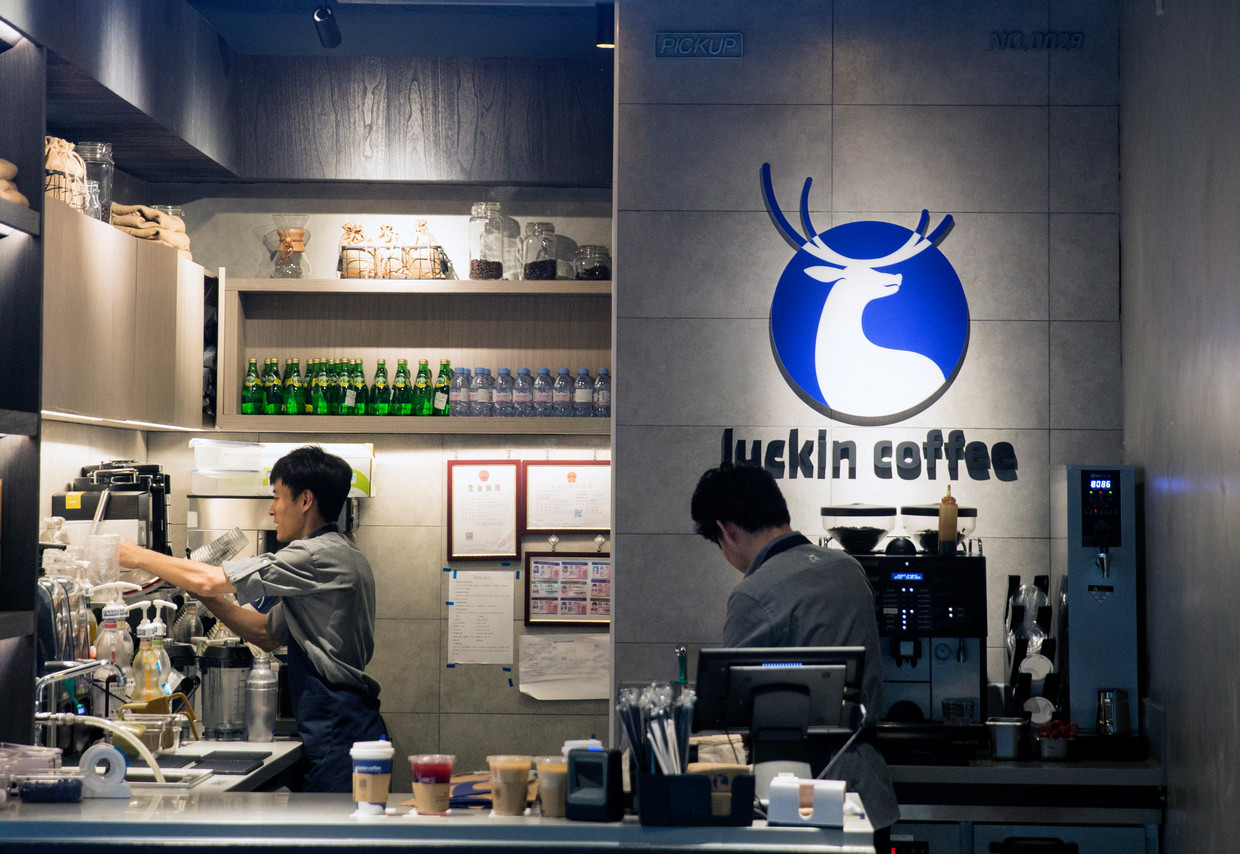
    Disgraced Chinese coffee chain Luckin Coffee, along with more than 40 other firms involved in the deception, has been fined almost US$9 million for falsifying its financial records.

    According to reporting, China’s finance ministry has previously found Luckin to have booked RMB2.25 billion in sales via counterfeit coupons between April and December last year, as well as having inflated its reported revenues, costs, and profits.

    China’s market regulator found Luckin to have flouted Chinese regulations and misled the public over the period in question.

    “We have carried out an overall rectification on the related issues,” said a representative from the firm in acknowledging that Luckin respected the regulator’s decision. “We will further improve our operations according to related laws and regulations.”

    Luckin was formerly considered a likely competitor against Starbucks within the territory.

  • Shopify data stolen by its own employees

    Shopify data stolen by its own employees

    Shopify has seen customer data stolen by “rogue” employees, the e-commerce provider announced.

    Two members of Shopify’s support team were engaged in a scheme to obtain customer transactional records of certain merchants – less than 200, according to Shopify.

    Once the business became aware of the scheme the team members’ access was immediately terminated, and an international investigation began with the assistance of the FBI and other agencies that will seek to find if, when, and where the data was used – if at all.

    “This incident was not the result of a technical vulnerability in our platform, and the vast majority of merchants using Shopify are not affected. However, those whose stores were illegitimately accessed may have had customer data exposed,” Shopify said in a statement.

    “This data includes basic contact information, such as email, name, and address, as well as order details, like products and services purchased. Complete payment card numbers or other sensitive personal or financial information were not part of this incident.”

    Shopfiy added that it has zero tolerance for platform abuse, and will take the necessary action.

    “To put it simply, we are committed to protecting our platform, our merchants, and their customers and will continue to work hard to earn your trust every day,” Shopify said.

  • UOB Kay Hian Partners Pico

    UOB Kay Hian Partners Pico

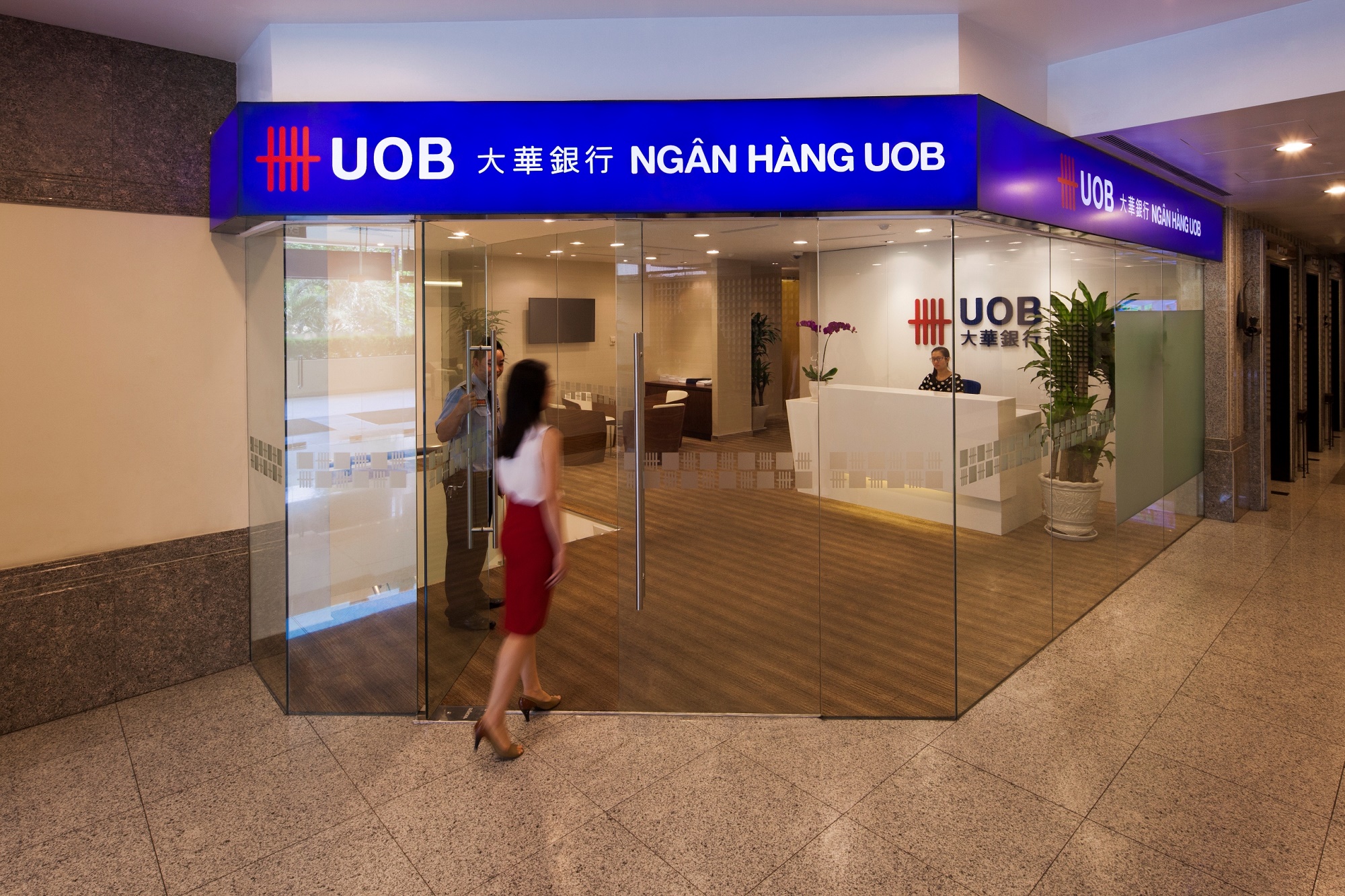
    The bank’s securities brokerage is working with the financial markets technology services provider, which will provide managed services and support for its new trading platform.

    Pico rapidly deployed a tailored platform for trading execution in the heart of Singapore’s liquidity hub that is engineered for seamless coordination of trading and risk strategies, it said in an announcement on Wednesday.

    UOB Kay Hian is one of Asia’s largest securities trading and investment firms. Headquartered in Singapore, it has offices in Hong Kong, Thailand, Malaysia, London, Shanghai, and New York.

    Working with Pico has helped UOB Kay Hian lower its OpEx, while freeing it to focus on optimizing its trading strategies and business operations, said director Desmond Yeo.

    Pico works with firms as a specialist partner to design, build, host and manage their electronic trading infrastructure. It connects to liquidity providers via PicoNet, a private ultra-low latency, resilient and comprehensive proprietary network mesh with the fastest path connections between on-net co-location sites.

    Pico opened offices in Singapore and Tokyo in mid-2018, and a year later announced its continued expansion in Asia with new hires, additional offices, and an increased data center presence in the region.

    The firm said it has plans to add 20 more data centers by 2021, including in China, Australia, South Korea, and India, to complement its existing 30+ global locations.