Category: Automotive

Retail News Asia is committed to providing both local and global retailers with the latest Auto and Car news throughout the Asian market. This on a daily base.

  • MG Hector Will Be Launched In Four Variants

    MG Hector Will Be Launched In Four Variants

    With the opening of its first dealership in India, MG Motor India has also started taking pre-bookings for the Hector and has shared details about its variants. The MG Hector will be offered in India in four variants- Style, Super, Smart and Sharp and there will be a range of features which will be available right from the base Style variant. That said, the base variant won’t be a connected car and will miss the 10.4-inch HD touchscreen unit which gives access to a host of connected features. In fact, the base Style variant will not get a touchscreen at all will be equipped with a two-din audio system which will support USB and Bluetooth connectivity.

    In terms of safety and driver assistance features dual airbags, electronic stability program (ESP), traction control system (TCS), hill hold control (HHC), rear parking sensors, speed alert and speed sensing auto door lock are standard across variants, Other comfort features which will be standard on the Hector are rear AC Vents, 3.5-inch multi-information display (MID), Projector headlamps, rear seat recline, driver armrest with storage, driver seat height adjust, powered ORVMs, front and rear fast charging with 2A USB ports and front seatbelt height adjust among others.

    Plenty details about the Hector were already revealed when it was unveiled and we are aware that it will be launched with two engine options and one mild hybrid variant. The diesel engine is the Fiat-sourced 2.0-litre Multijet engine which churns out 168 bhp and 350 Nm of peak torque and is mated to a six-speed manual transmission as standard. It lacks an automatic transmission in the diesel variant but the petrol gets a 6-speed dual clutch unit which offers smoother shift.

    The 1.5-liter, four-cylinder turbo petrol engine is also mated to a six-speed manual transmission and develops 141 bhp and 250 Nm of peak torque. The hybrid variant is powered by the same petrol engine which is coupled with a 48 Volt mild hybrid system. A 48-volt lithium-ion battery helps store energy and provides extra torque assistance of up to 20 Nm when required. The combination also helps in reducing emissions by up to 12 percent using three key functions – Engine Auto Start-Stop, Regenerative Braking, and E-Boost.

  • Jaguar’s Director of Design Ian Callum Steps Down After 20 Years

    Jaguar’s Director of Design Ian Callum Steps Down After 20 Years

    Jaguar has announced that Ian Callum, its Director of Design, has decided to step down from his position after 20 years. A legend within the company, as well as in the industry, Cullum, has been responsible for creating a new design philosophy and reviving the company product range with award-winning designs for the Tata Motors-owned British carmaker. Julian Thomson, who currently serves as the Creative Design Director for Jaguar, has been now been appointed as Ian Callum’s successor and will take charge as Director of Design from July 1, 2019. Callum will continue to work with Jaguar as a Design Consultant.

    Talking about his decision to step down as Jaguar’s Director of Design, Ian Callum said, “I came into this role with a mission to take Jaguar design back to where it deserved to be. It has taken 20 years, but I believe I have achieved what I set out to do. Given the strength of both our products and the design team, I feel that now is the right time to move on, both personally and professionally and explore other design projects. Designing Jaguar cars was a lifelong dream for me and I’m delighted to remain involved as a consultant for the brand.” He further added, “I have worked closely with Julian Thomson for 18 years – he is a hugely talented designer and absolutely the right person to lead Jaguar design into its next chapter.”

    Over the years, Ian Callum has been responsible for some of the most popular Jaguar cars, including the F-Type two-seater sports car, the XE, XF and XJ saloons, and the company’s first-ever SUVs, the F-Pace, which as soon followed by its younger sibling the E-Pace. Cullum most recent creation and perhaps the most award-winning model has been the all-electric Jaguar I-Pace. This year the first all-electric Jaguar bagged the 2019 World Car of the Year, World Car Design of the Year, and World Green Car awards.

    Talking about his creations with Jaguar, Callum said, “One of my biggest highlights was creating XF because it represented the beginning of a new era moving Jaguar from tradition to contemporary design – it was a significant turning point in our story. Designing the F-Type was a dream come true for me, and I-PACE was an opportunity to create something hugely innovative that would really challenge the perception of Jaguar – and its success is a testament to just how far the brand has come.”

    Like the cars he has designed over the years, Ian’s journey has been equally spectacular as well. A journey which began back in 1979 with Ford. During the first 12 years of his spent at Ford Design Studios, Callum contribution led to the creation of models like – Ford Escort RS Cosworth and the Ghia Via Concept. After Ford, Callum left the corporate environment to join Peter Stevens and Tom Walkinshaw to form TWR Design as Chief Designer in 1991. At TWR, Callum was partially responsible for the Aston Martin DB7, probably the design he is currently most famous for, followed by the Vanquish. In fact, with TWR, Callum has also worked for other automotive clients like – Volvo, Mazda and HSV and in 1998, he designed the Nissan R390.

    Finally, in 1999, following the death of Jaguar’s then design director, Geoff Lawson, Callum was appointed to succeed him, which back then was a subsidiary Ford Motor Company. At that time, for a short stint, Ian continued to manage Aston Martin Design as well and is said to have played a key role in the creation of both the DB9 and Vantage, however, they are attributed to Henrik Fisker. At Jaguar Design Ian and his team, amongst others, also created the R-Coupe, RD-6 and C-X75 concepts. However, the first all-new model was the XK, followed by the XF and XJ sedans and then in September 2012 the much-anticipated F-Type was launched, Jaguar’s first 2-seater sports car since the iconic E-Type. This was followed later by the Jaguar XE, which Ian designed for a very competitive segment. A bold statement for Jaguar using Ian’s established design philosophy.

    Talking about replacing Ian Callum as the Director of Design, Julian Thomson, Creative Design Director, Jaguar said, “I’m honored to take up the position of Director of Design, Jaguar. It will be a great privilege to lead such a talented team and continue to build on our success. Automotive design has always been fast moving, but today it is changing at a rate faster than ever before. I’m passionate about ensuring Jaguar Design leads that change, and the cars that will drive our future.”

  • New Piaggio Ape City Plus 3-Wheeler Launch Date Announced

    New Piaggio Ape City Plus 3-Wheeler Launch Date Announced

    Piaggio India has officially announced the launch date for its upcoming new three-wheeler, the Ape City Plus. Slated to be launched on June 14, 2019, the new Piaggio Ape City+ auto rickshaw will be the newest addition to the mid-body segment three-wheelers. Piaggio claims that with the new Ape City+, the company will address its customers’ needs perfectly in the last mile segment, suitable for both cities as well as the rural markets.

    Currently, in the people carrier space, Piaggio India offers three models – the Ape City, the Ape Auto+, and the Ape City HT. The existing Ape City comes in two engine choices – petrol and diesel, and the former comes with three fuel options – petrol, CNG and LPG. The petrol version is powered by a 197 cc that is tuned to churn out about 10 bhp and 17.6 Nm of peak torque, along with a fuel efficiency of 29.43 km.

    The same motor in the CNG version makes 9.6 bhp and 15.3 Nm of peak torque, with a mileage of 27.36 km/g, and in the LPG version, it makes 10.46 bhp and 16.7 Nm torque with a fuel efficiency of 22.7 km/g. The diesel model comes powered by a 435 cc oil burner that is tuned to churn out around 8 bhp and develops 21 Nm of peak torque. The motor offers a fuel efficiency of 32.32 km. We expect the new Ape City+ to come with the same engine options.

    In the invite sent by Piaggio, the company has also confirmed that at the launch, it will talk about upcoming technology in Piaggio products and its future plans for the Indian market. So, we expect the automaker to reveal its plans for the Bharat Stage VI / BS6 transitions and maybe even electrification.

  • MG Motor Opens Its First Flagship Showroom In India

    MG Motor Opens Its First Flagship Showroom In India

    MG Motor India today inaugurated its first showroom, or as the company likes to call it, flagship experience store in Gurugram, Haryana. Located at Milestone Experion Centre, in Sector 15 Gurugram, the new flagship showroom from Morris Garages (MG) Motor India is the first of the 120 centers that will be activated across India. Having said that, the MG India plans to further expand its network to a total of 250 centers across India by September 2019. Today the carmaker also commenced the official bookings for the company’s first car in the country, the MG Hector for a token of ₹ 50,000. The customer test drives will commence from June 15 onward.

    Talking to carandbike.com, Rajeev Chaba, President, and Managing Director, MG Motor India, said, “This is in line with our brand purpose of enabling exciting experience every time. So, we thought we will have an experience center or a flagship store, as well call it, of our own and we tried to give a very different experience.” He further added, “This is different than other places, and it goes back to the same thing that, if we need to be successful in this market, which is very tough, we need to do things in a different way, in a disruptive way and make sure that our employees are satisfied, dealers and dealer employees are satisfied, and if this set of people are ok, they will take care of customers. This is not a typical showroom, this is very different!”

    Being the company’s first flagship showroom in India, MG Motor has worked towards building an outlet completely different from a typical car showroom, based on the brand’s “Emotional Dynamism” philosophy. The visual cues include a unique facade grill in the shape of an “Upturned Mountain”, at the entry, while inside MG has made use of some creative elements to attract all the 5 senses of its prospective customers who visit the showroom.

    The new showroom has been designed to give its customers a taste of both, MG’s past and the present, divided into special sections. This includes a special zone at the entry that pays homage to the brand’s British Heritage, showcasing cultural icons such as the Big Ben, the Union Jack, telephone booths and streetlamps, incorporated as design elements. In fact, there is also a 1965 MG Midget on display inside the showroom. The showroom also comes with a special “LED Video Wall” – a large video wall made from 36 connected TVs plays artfully-created brand videos to further engage visitors. Furthermore, the center also has the MG Cafe within the showroom.

    The store also has a special section called the “Engineering Corner” with various vehicle components and the revolutionary 48V Hybrid engine, on display, along with engravings of other state-of-the-art features integrated into MG’s range of internet vehicles. In addition to that, there is also a “Live Vehicle Configurator”, a digital wall that allows prospective customers to select their choice of model, transmission type, and fuel variant, and customize the look and feel, and accessories the SUV accordingly. At 55 inches per screen, the configurator wall has the largest live configurator screen and is set up in a 6-by-6 format (36 screens).

    The new facility will also have MG Motor India’s corporate office above it, and the whole company-owned facility has been built under an overall investment of ₹ 150 crore. The carmaker’s first model – the MG Hector SUV is set to be launched in India later this month, and it will be the company’s first connected car for the Indian market. The Hector SUV will be made available in both the petrol and the diesel engines and there’ll also be a petrol hybrid offering up for grabs. The petrol version will get a 1.5-liter turbocharged engine, while the hybrid version will additionally come paired with 48-volt mild-hybrid architecture, as well. The diesel model will get the 2.0-liter engine in the MG Hector is the Fiat sourced Multijet unit which also powers other models in the segment like the Tata Harrier and Jeep Compass.

  • MG eZS Electric SUV Will Be Made In India

    MG eZS Electric SUV Will Be Made In India

    MG Motor has announced that it will be manufacturing its pure electric SUV, the MG eZS, in India, at its plant in Halol, Gujarat. The MG eZS will be one of the first ever fully electric SUVs in India when it is launched. The eZS will be MG’s second launch in India after the upcoming MG Hector. The company further said that its electric vehicles will get over-the-air (OTA) technology and would go over 300 km in a single charge from its lithium-ion battery. MG is yet to announce the exact specifications for the eZS.

    By the end of 2019, MG Will have a total of 120 sales and service outlets across India and the company said it will also reach out to Indian target audience and educate them about electric vehicles and look to address issues such as range anxiety and charging infrastructure. Like the MG Hector, the eZS will also feature MG’s iSmart Next-Gen connected technology.

    “The MG eZS, as one of the first locally produced global EVs, will mark a new chapter in environment-friendly mobility in India. We are delighted to be one of the first carmakers to enter this space in India. We aim to bring accessible electric motoring to the customers in India upon its introduction by the end of this year,” said Rajeev Chaba, President and Managing Director, MG Motor India.

    Till date, MG Motor India has made an investment of ₹ 2,200 crores at its Halol plant. The company has installed an all-new assembly line, a press shop, a body shop, a parts distribution center, a testing track along with a new training facility in the plant. MG has also set up a vendor park in and around the plant so as to increase the localization content for upcoming MG models.

  • Important Things To Remember About A Car Accident?

    Important Things To Remember About A Car Accident?

    Getting into a car accident is a scary and stressful situation. The aftermath can be overwhelming. Yet it is crucial to remember the important things that need to be done following a car accident. Listed below are a few helpful tips that you should do after a car accident.

    Stay there

    First of all, leaving the scene of an accident is never recommended. Both drivers are required to stay until the police arrive to take their statements. While waiting for the police, drivers need to block off the area as best they can. The two most common options are leaving the cars’ flashers on and using flares to direct other drivers away from the accident. It never hurts to have a flashlight available in case a car’s lights aren’t operational. 

    Take snapshots

    If there are damages to one or both cars, pictures of the damage should be taken. However, care should be taken when capturing these pictures. No personal information should be revealed in pictures. And while drivers need to know each other’s contact information, there is no need to allow photos of one’s driver’s license to be taken. 

    Full disclosure

    Once the police do arrive all of their questions need to be answered honestly and thoroughly. Leaving out any information can cast suspicion if the accident results in legal action. Any potential injuries should be brought to the attention of the police. It is never a good idea to deny having any injuries when some may not appear until hours later. 

    Another thing to keep in mind is to avoid declaring guilt. This is something that will be decided later on, by a judge. No one involved in an accident should admit that it was their fault. 

    Immediately following a car accident, the appropriate form needs to be filled out. What the form asks for will vary from one state to the next. In many states, drivers involved in an accident are required to let the insurance company know about. It is best to say no if the other driver suggests handling the accident on their own. 

    Report to the insurance company

    Any insurance company is going to need to know about a car accident as soon as possible. Ideally, it is best to call the insurance company while still at the accident site. Reporting what happened while it is still fresh in one’s mind will make the report more accurate. Many insurance policies cover the cost of any medical bills incurred from an accident. Any amount that it doesn’t cover is then transferred to the driver’s health insurance. 

    Yet often, insurance covering damages and medical bills isn’t enough. This is why car accidents can and do lead to large cash settlements for the victims. According to Justin Kimball of Preszler Law, the categories for auto accident injuries and their respective caps for eligible compensations are “minor,” $3.5k, “non-minor,” $50k, and “catastrophic,” $1 million. It is important to consult with an attorney when determining what category a particular case falls into. They will be able to obtain and share that information with their client. This is an important step in the process and one that should never be overlooked. 

    Submitting the medical records from accident-related injuries to a lawyer is a crucial step in the process. It gives them the information they need to ask for an appropriate settlement, based on the level of injuries incurred. 

    A lawyer will be able to organize the paperwork needed to show in court. The many technical aspects of a car accident can be confusing to the victim. An attorney is able to consult with technical experts that can help determine how much a case is worth in court.

    The amount a case is worth varies from one to the next. Attorneys are trained to estimate how much a client can realistically expect to receive from an accident settlement. A good attorney will be upfront with his or her client when it comes to compensation. No matter how much compensation one can get, it is better to avoid settling too early. The ideal time to settle is after any injuries incurred have been fully treated. Before a victim is completely healed, it is impossible to know exactly how much money it will cost. 

    When the total damages have been calculated, an attorney can look at the case an objective manner and clear up any misconceptions. An accident attorney will know how to converse with the lawyers with the driver’s insurance company. They are a better line of defense than an uninformed client would be. It is the goal of an accident attorney to get their client as much money as they can in the settlement. 

    A car accident is to be avoided at all costs. When it can’t be avoided, the correct steps need to be taken. Following the steps as closely as possible is an important part of the process. While reporting it is the first step, the subsequent steps are just as important. Skipping even one of them can interfere with any legal claims made. Consulting with police and a lawyer is the best way to properly handle the aftermath of a car accident. 


  • Lotus Teases Type 130 Electric Hypercar

    Lotus Teases Type 130 Electric Hypercar

    Lotus has confirmed that Type 130, the brand’s first all-new model in more than a decade, will be revealed to the world’s media at an exclusive event in Central London on 16 July, 2019. The company also announced that only 130 examples will be available to own – representing the number of Lotus ‘Types’ introduced during the brand’s 71-year history.

    The Type 130 will be the world’s first British all-electric hypercar. Lotus also confirms that the Type 130 will be built at Hethel in Norfolk, the brand’s headquarters since 1966. It will be the most dynamically accomplished road car in the company’s history according to Lotus and while the specifications of the car elude us, we’ll know more about the car very soon.

    However, there are reports doing the rounds that the new hypercar will be low and wide and will have roughly the same length as the Evora. There are other reports that suggest that it will be a 1000 horsepower car, will come with all-wheel drive and a range of 408 km on a single charge

    The company has teased the new Type 130 and we only get to see what appears to be the rear of the car. It carries the ‘illuminated’ Lotus brand name and gets an electrically operated cover for the charging port. We also get a chance to see the taillights but not in its entirety. Of course, the teaser campaign will continue and we’ll know more about the car closer to the launch, so stay tuned!

  • Toyota’s Domestic Sales Down By 7% In May

    Toyota’s Domestic Sales Down By 7% In May

    The downward trend in the automotive industry continues in May 2019 as well. Toyota Kirloskar Motor announced its sales figure for the month of May and it has sold a total of 12,138 units in the domestic market, which was a de-growth of 7 per cent as compared to the same period last year. The company exported 928 units of the Etios series this month thus bringing the company’s total sales to 13,066 units. In comparison, Toyota Kirloskar Motor sold a total of 13,940 units in May 2018 thus registering a decline in sales of 6 per cent.

    N. Raja, Deputy Managing Director, Toyota Kirloskar Motor said, “The customer demand had witnessed a continued slowdown before the election results. Customers have been cautiously spending which has led to sluggishness in the domestic auto sales. Added factors like liquidity tightening, high insurance costs, increase in fuel costs have also weakened the retails.”

    However, he says that there is an increase in customer walk-ins post the election results announcement which would brighten the sales in upcoming months.The company is all set to launch the Glanza in India on June 6, 2019 and this would mark the company’s entry into the premium hatchback segment. The company thinks that the slowdown will soon be gone and things will look bright for the automotive industry.

  • Honda Car Sales Drop By 27 Per Cent In May

    Honda Car Sales Drop By 27 Per Cent In May

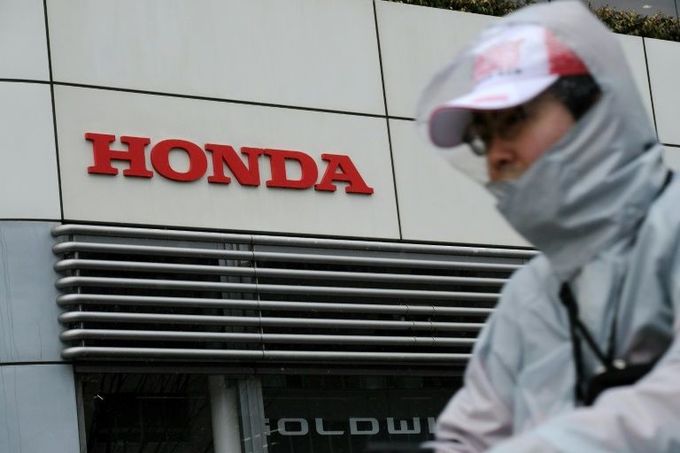
    Honda Cars India announced its sales report for May 2019 and the automaker has reported declining sales for the second consecutive month. The Japanese car maker sold 11,442 units last month, a drop of 27 per cent in year-on-year sales when compared to 15,864 units that were sold in May last year. Honda also exported 450 units in May this year, down by 12.7 per cent from 516 units exported in May 2018. The decline in volumes aligns with the overall disappointing sentiment in the auto sector that has seen a slump in volumes over past few months.

    Speaking on the declining numbers, Rajesh Goel, Senior Vice President and Director, Sales and Marketing, Honda Cars India said, “The market continues to be tough for the auto industry with two consecutive months of such a high de-growth. It is unprecedented in the last two decades. After elections, we were expecting an upswing which has not yet come. Factors like liquidity that is affecting capital to auto sector along with an increase in fuel prices have remained a challenge to revive consumer sentiments. We are still hopeful that demand will revive due to pent up demand, favourable indicators on monsoon and expected actions by the new government.”

    Honda had favourable volumes in May last year on the back of the launch of the second generation Amaze subcompact sedan. In the past year, the automaker has had some major launches including the new generation CR-V and the all-new Civic sedan, with the latter off to a good start. Honda is expected to bring the new HR-V compact SUV as well in India that will take on the Hyundai Creta, MG Hector, Tata Harrier and the likes.

  • Audi A3 Gets A Price Cut

    Audi A3 Gets A Price Cut

    Celebrating its fifth anniversary in India, the Audi A3 sedan has received a price cut of ₹ 5 lakh across different variants. Prices for the A3 now start at ₹ 28.99 lakh for the 35 TFSI Premium Plus petrol trim, making it an attractive proposition over rivals including the Mercedes-Benz CLA, Skoda Superb, Volkswagen Passat, Toyota Camry Hybrid and the likes. The A3 35 TDI Premium Plus diesel, on the other hand, is priced at ₹ 34.93 lakh (all prixes, ex-showroom). Barring the price cut, the sedan does not get any changes nor does it miss out on any features. The A3 line-up includes four variants – 35 TFSI Premium Plus, 35 TFSI Technology, 35 TDI Premium Plus and the 35 TDI Technology.

    With respect to the features, the Audi A3 comes loaded with a panoramic sunroof, Audi phone box with wireless charging, dual-zone climate control with rear AC vents, 7-inch touchscreen infotainment system, and LED puddle lights with the Audi logo. The automaker is also offering the S Line package on the A3 that brings the S line front and rear bumpers and side skirts, S line grille, rear diffuser, chrome exhaust pipes, illuminated door sill trim with S logo and S line badge on the front fenders.

    Power on the Audi A3 sedan comes from the 2.0-litre four-cylinder TDI diesel engine that churns out 141 bhp and 320 Nm of peak torque, while there’s also the 1.4-litre TFSI petrol motor that belts out 148 bhp and 250 Nm of peak torque. The diesel is paired with a 6-speed dual-clutch automatic, while the petrol engine gets a 7-sperd DCT unit. Power is sent to the front wheels on either models.

  • Tata Motors Posts 26 Per Cent Drop In Sales In May

    Tata Motors Posts 26 Per Cent Drop In Sales In May

    The Indian auto sector has been reporting a slump in new car sales over the past months and the month of May 2019 has been no different. Tata Motors announced its sales for the previous month and the company has registered a drop of 26 per cent in overall sales. The company sold a total of 40,155 units in May this year, as opposed to 54,290 units sold during the same month last year. The automaker’s year-to-date sales were also on a drop after back-to-back declining numbers, with 82,684 units sold between April-May 2019, a de-growth of 23 per cent as compared to 107,758 units sold during the same period in 2018.

    Mayank Pareek, President, Passenger Vehicles Business Unit, Tata Motors said, ” In view of higher vehicle stocks in network our strategy was to focus on retails. While the market sentiments continued to be muted, our exciting products and micro segmenting strategy helped in improving retails. In May 2019, our retail sales have shown a growth of 11% over May’18. Despite this challenging environment, our UV segment continues to grow at 13% on the back of a strong UV portfolio. We expect that post- election industry will start improving gradually. In the months to come, we are positive to bounce back with our robust product lineup and strive towards driving volumes and increasing our market share as part of our on-going turnaround journey.”

    With respect to passenger vehicle sales, Tata registered 10,900 units in May 2019, witnessing a hefty drop of 38 per cent over 17,489 units sold in May last year. That said, the automaker stated that retail sales recorded an 11 per cent growth last month, backed by new and updated products as well as micro-segmenting strategy. The UV segment sales too grew by 13 per cent in May 2019. Cumulative sales growth between April-May 2019 for passenger vehicles in the domestic market stood at 23,594 units, a decline of 32 per cent over 34,724 units sold during the same period last year.

    The commercial vehicle (CV) business also a 20 per cent drop in volumes with 29,329 units sold last month, as against 36,806 units sold in May 2018. Tata Motors attributed the declining sales to weak market sentiments due to depressed freight rates and underutilisation of trucks. The year-to-date CV sales in the domestic market also saw a decline of 19 per cent with 59,212 units, as compared to 73,082 units sold during the same months (April-May) in 2018.

    The M&HCV sales dropped by 38 per cent at 7,683 units in May this year, as compared to 12,424 units sold in May 2018. The revised axle load norms still pose a challenge for the heavy vehicle segment to grow, according to the manufacturer. Tipper sales too dropped by 22 per cent with 2539 units sold in May this year, as against 3261 units sold during the same month last year. The I&LCV truck sales in May 2019 declined by 2 per cent at 4043 units over 4106 units sold in May 2018. This segment has been relatively less affected by the revised axle load norms. E-commerce and discretionary consumption have been the two main drivers of I&LCV volume. Tata did say that new products in the 15-16 tonne segment and CNG products were well accepted in the makret and contribute over 10 per cent to the volumes.

    The SCV Cargo and Pickup segment witnessed a drop of 18 per cent with 12,695 units sold in May 2019, as compared to 15,558 units sold in May 2018. The slow consumption in rural areas was attributed as the main reason in the drop of volumes, which is likely to improve with a normal monsoon. The commercial passenger carrier segment sales stood at 4908 units in May this year and grew by 4 per cent. The Company is gearing up for the supply as per the new regulations, AIS 153, backed by strong demand for the Winger series.

    Girish Wagh, President, Commercial Vehicles Business Unit, Tata Motors said, “Tata Motors Commercial Vehicles (CV) Business sales in the domestic market in May registered a drop of 20% . The M&HCV sales has taken the maximum hit in the domestic market, declining by 38%, at 7,683 units, essentially due to higher capacity post increased axle load, not yet matched by commensurate freight growth. I&LCV truck sales were least affected, with a decline of 2% at 4,043 units as discretionary consumption has been witnessing a slowdown in recent months. The SCV Cargo and Pickup segment also lower by 18% as distress in the agriculture sector brought down rural consumption. The commercial passenger carrier segment sales was higher by 4% over last May. The school season has pushed up demand and is expected to be positive in the next month too. We are expecting an improvement in the economic conditions in the coming months and look forward to an improved buying sentiment.”

    Tata Motors reported a cumulative export of 1563 units in May 2019, witnessing a massive drop of 58 per cent over last year. The drop in retail sales in Bangladesh, Nepal and high stocks in the SAARC region, along with the slump in the Middle East, affected the automaker’s export volumes.

  • Datsun GO & GO+ Updated With Vehicle Dynamic Control

    Datsun GO & GO+ Updated With Vehicle Dynamic Control

    Datsun India has updated GO and GO+ hatchbacks with Vehicle Dynamic Control (VDC) technology. The updated Datsun GO and the Datsun GO+ get enhanced safety systems thanks to the new tech on offer. The VDC system monitors wheel speed, steering wheel position, and lateral acceleration via onboard sensors to provide electronic stability control. The system also facilitates a safer driving experience by responding to the car’s oversteering and understeering inputs. The GO and GO+ now also comes with anti-lock braking system (ABS), electronic brake force distribution (EBD), brake assist (BA) and traction control system (TCS).

    Commenting on the updated versions, Hardeep Singh Brar, Director Sales and Commercial, Nissan India said, “Datsun is committed to transform customer experience with new and innovative products. Underscoring our focus on progressive mobility backed by safety, technology, style and convenience, the New Datsun GO and GO+ now comes with VDC so that the Datsun owner can drive with confidence.”

    In addition, the new Datsun GO will be available in a new ‘Vivid Blue’ colour option, while the cars now get the 7-inch touchscreen infotainment system as standard across all variants with smartphone connectivity via Apple CarPlay and Android Auto with voice recognition. The hatchbacks have also been updated with rear parking sensors and dual front airbags as standard, in a bid to comply with the upcoming safety regulations.

    The Datsun GO and GO+ received comprhensive facelifts last year bringing a premium touch, better features and attractive pricing to the models. Prices for the GO hatchback start at ₹ 3.32 lakh going up to ₹ 5.02 lakh, while the multi-seater GO+ is priced from ₹ 3.86 lakh for the base trim that goes up to ₹ 5.74 lakh (all prices, ex-showroom Delhi) for the range-topping version. The GO+ will soon face competition two back-to-back launches including the Renault Triber and Maruti Suzuki’s Wagon R-based sub 4-metre MPV, both of which are slated to launch this year.

  • Volvo Cars Partners With POC To Develop Safer Helmets For Cyclists

    Volvo Cars Partners With POC To Develop Safer Helmets For Cyclists

    Volvo Cars are one of the pioneers in the development of safer modern cars and the Swedish carmaker is now coming up with something innovative to take the safety quotient one step ahead. Volvo is partnering with POC for a series of world’s first crash test of bike helmets against cars in a bid to protect cyclists in case of a collision. Accidents between cars and cyclists often result in severe injuries and even death of the rider. Cyclist detection with full auto brake uses cameras and radars to detect cyclists, warn the driver of an imminent collision and apply the brakes as a precautionary measure.

    The Volvo-POC research project consists of a number of specially designed crash tests at the Volvo Cars safety research facilities in Gothenburg, Sweden and is part of a wider research project to understand the types of long-term injuries sustained by cyclists. Speaking about the new project, Malin Ekholm, head of the Volvo Cars Safety Centre said, “This project with POC is a good example of our pioneering spirit in safety. We often develop new testing methods for challenging traffic scenarios. Our aim is not only to meet legal requirements or pass rating tests. Instead, we go beyond ratings, using real traffic situations to develop technology that further improves safety.”

    Volvo Cars also use the auto brake system with help of cameras and radars to detect cyclists, warn the driver of an imminent collision and apply the brakes as a precautionary measure.

    The tests are based on existing regulatory test procedures for pedestrian head protection. During these tests, POC bike helmets are worn by crash dummy heads mounted on a testing rig, from where they are launched towards different areas of the hood of a static Volvo car, at different speeds and angles for various measurements. The learnings from the research project will help POC make its helmets safer and more protective in the event of a car-bike accident, while the tests will also provide valuable insights and learnings for Volvo Cars into these types of accidents for future development.

  • Hyundai Registers 5.6 Per Cent Sales Decline In May 2019

    Hyundai Registers 5.6 Per Cent Sales Decline In May 2019

    Affected by the slump in the Indian auto market, Hyundai Motor India’s domestic volumes witnessed a decline in May 2019 at 42,502 units, dropping by 5.6 per cent as against 45,008 units sold in May 2018. Exports, however, saw a major increase in volumes by 50.8 per cent with the company shipping 16,600 units last month, as against 11,008 units in May last year. Despite the poor domestic performance, the automaker’s overall volumes for the previous month still over the red line. Hyundai sold a cumulative (domestic+exports) 59,102 units last month, growing by 5.5 per cent over 56,016 units sold during the same period last year.

    The drop in domestic volumes isn’t too different from other manufacturers that have reported a steeper decline in sales for the last month. Both Maruti Suzuki and Tata Motors registered double-digit de-growth, while Mahindra sales dropped by just one per cent. Meanwhile, sales for Hyundai are expected to improve in the coming months, backed by the strong demand for the newly launched Venue subcompact SUV. With booking numbers at 20,000 and counting, the new offering is off to a good start and will help stabilise the Korean auto giant’s falling numbers.

    With the elections have come to a close and the new government in power, the buyer sentiment is also expected to see a favourable change towards the purchase of new vehicles. The auto industry is also looking forward to a normal monsoon this year to boost growth in rural areas. Hyundai also has a few new products lined up for a launch this fiscal that will include the Kona Electric SUV and the Tucson facelift. The automaker has also repositioned itself as the country’s first smart mobility solutions company, diversifying its presence in other vehicle categories.

  • Toyota To Build New Plant In Myanmar

    Toyota To Build New Plant In Myanmar

    Toyota Motor Corporation will be building its first vehicle production company in Myanmar where it will locally produce the Hilux from February 2021. The announcement comes after other carmakers like Suzuki, Nissan and Ford established factories in the country. The automotive market in Myanmar has soared in accordance with the growth of the economy.

    The demand for new vehicles has soared in recent years (2018 market: approx. 18,000 units) more than twice the size compared to the previous year. The government introduced auto import restrictions in 2017, and a fall in prices has seen the auto market grow, with many new vehicles built locally. Toyota currently sells the Hilux, Vios, Rush, and other vehicles in Myanmar by relying on imports.

    Toyota plans to construct the new plant in the Thilawa Special Economic Zone, situated in the southern suburbs of Yangon city. The company is expected to investment approximately $52.6 million. Toyota plans to hire 130 new employees, and intends to build 2,500 Hilux vehicles per year using the SKD (semi knock-down) method when operations begin in 2021. The brand is already popular in the country, though most of its cars on the road are second-hand models.