Category: Automotive

Retail News Asia is committed to providing both local and global retailers with the latest Auto and Car news throughout the Asian market. This on a daily base.

  • Ducati Hong Kong opens Kowloon store

    Ducati Hong Kong opens Kowloon store

    Ducati Hong Kong has opened a new store in Kowloon.

    The store launch, focused solely on Borgo Panigale-built bikes, serves to expand Ducati’s presence in Hong Kong. The new showroom, opened by sole Ducati importer in the territory Ho Wun Cars, is designed to offer customers a full brand immersion experience.

    The entire Ducati range is represented in the venue, which includes a comprehensive section dedicated to apparel and accessories and a social area for the Ducati Owners Club Hong Kong.

    “Hong Kong is one of the most premium markets for Ducati in Asia,” said the brand’s marketing director for Asia Pacific Stefano Campaci. “The city itself is not only one of the world’s main economic hubs, making it an aspirational point of reference in terms of lifestyle, but it is also home to one of Ducati’s most sophisticated clientele in the world. Last year, for example, 50 per cent of Ducati motorcycles sold in Hong Kong were superbikes, many of which were sold to our numerous local collectors.

    “It is therefore fundamental for Ducati to be represented at the highest level, and this new showroom marks a step forward in this direction.”

  • Uber Unveils Next-Generation Volvo Self-Driving Car

    Uber Unveils Next-Generation Volvo Self-Driving Car

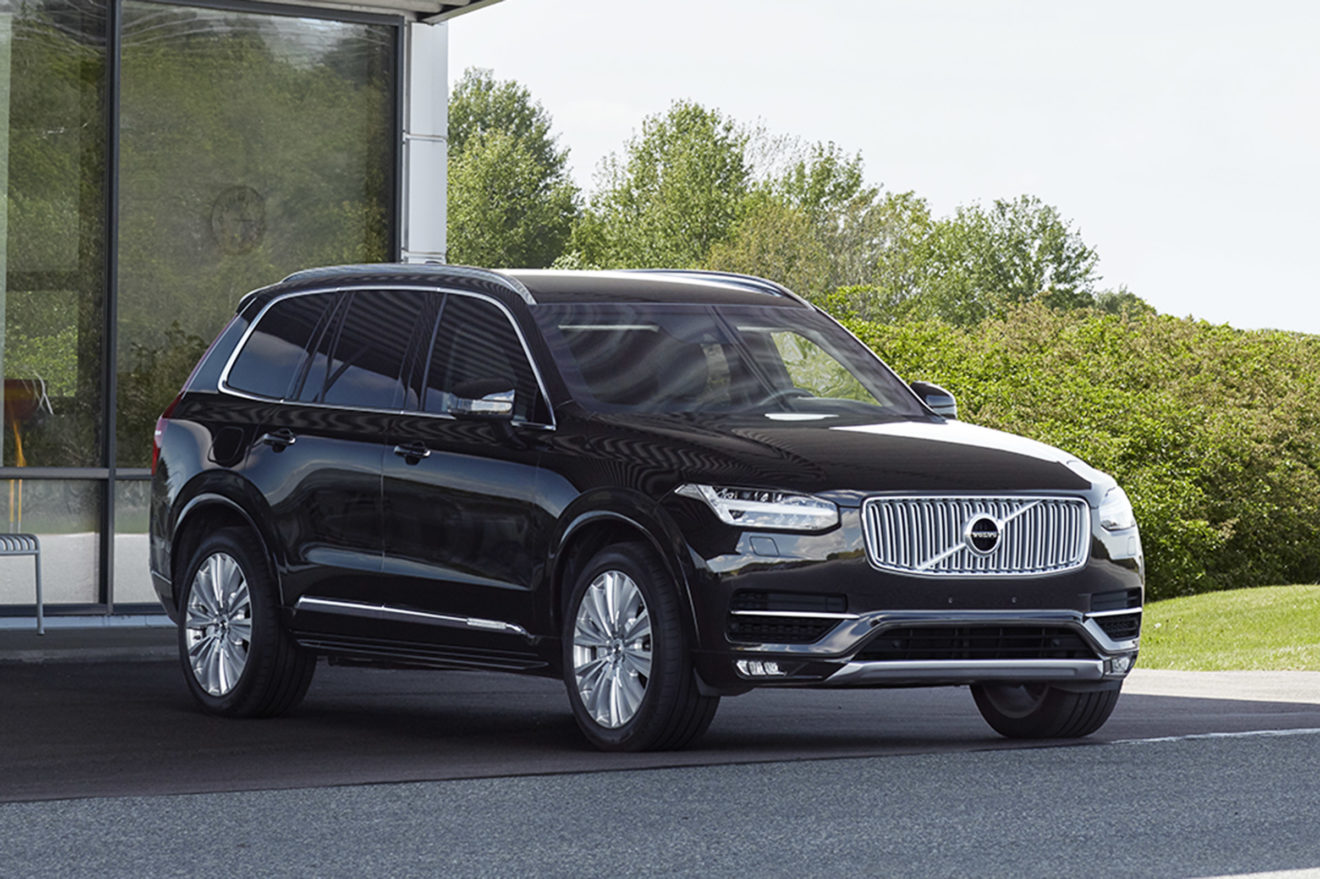
    Uber Technologies Inc unveiled its newest Volvo self-driving car in Washington on Wednesday as it works to eventually deploy vehicles without drivers under some limited conditions. Uber said the new production XC90 will be assembled by Volvo Cars in Sweden and have human controls like steering wheels and brake pedals, but also with factory-installed steering and braking systems designed for computer rather than human control.

    Uber Advanced Technologies Group chief scientist Raquel Urtasun showed off the company’s artificial intelligence technology that allows it to drive autonomously for long distances on highways without maps and “on the fly” to plot its course and navigate construction zones.”Our goal is get each one of you to where you want to go much better, much safer, cheaper,” Urtasun said.As the race to push out autonomous cars across the globe heats up, other companies are also working to deploy self-driving vehicles in limited areas.

    Ford Motor Co’s majority-owned autonomous vehicle unit, Argo AI, launched its new fleet of self-driving test vehicles – Ford Fusion Hybrid – in Detroit on Wednesday, expanding to five U.S cities.The No 2 U.S automaker also opened a research centre in Tel Aviv, joining a growing number of major automakers and suppliers setting up shop in Israel’s tech hub.General Motors Co in January 2018 sought permission from U.S regulators to deploy a ride-sharing fleet of driverless cars without steering wheels or other human controls before the end of 2019, but is still struggling to win regulatory approval

    Alphabet Inc’s Waymo unit is operating a robotaxi service in Arizona and said last month it is partnering with Lyft Inc to serve more riders.South Korea’s Hyundai Motor Co and Kia Motors Corp both said they would invest in the self-driving car software startup Aurora and speed up development of their respective autonomous vehicle technologies.Carmakers have struggled to maintain profit margins faced with the rising costs of making electric, connected and autonomous cars.

    As a result, they are setting up alliances and lining up outside investors to combat spiralling development costs.Previously, Uber had purchased about 250 Volvo XC90 SUVs and retrofitted them for self-driving use.The new vehicles – known by the internal code number 519G and under development for several years – are safer, more reliable and will replace the older vehicles in Uber’s fleet “soon,” according to Eric Meyhofer, the head of Uber’s Advanced Technologies Group.”This is about going to production,” Meyhofer said in an interview at an Uber conference in Washington on Tuesday.The new vehicle also has several backup systems for both steering and braking functions as well as backup battery power and new cybersecurity systems.

    Uber is not ready to deploy vehicles without human controls, Meyhofer said.”We’re still in a real hybrid state,” he said “We have to get there and we’re not going to get to thousands of cars in a city overnight. It’s going to be a slower introduction.”The new XC90 vehicles have an interior fish-eye camera to scan for lost items, Uber said.

    They also do not have sunroofs since the self-driving vehicles have large sensors on the roof and are equipped with auto-close doors to prevent an unsafe departure.Uber, which has taken delivery of about a dozen prototypes of the new vehicle, but has not yet deployed them on public roads, said the car’s “self-driving system will one day allow for safe, reliable autonomous ridesharing without the need” for a safety driver.Asked if Uber will deploy self-driving cars without safety drivers in limited areas in the next few years, Meyhofer said: “Yes – way before that.” But he added that Uber wants to be in “the good graces of public trust and regulatory trust” before making the business decision to deploy.In December, Uber resumed limited self-driving car testing on public roads in Pittsburgh, nine months after it suspended the program following a deadly accident in Arizona.In March 2018, authorities in Arizona suspended Uber’s ability to test its self-driving cars after one of its XC90 cars hit and killed a woman crossing the street at night in the Phoenix suburb of Tempe, then Uber’s largest testing hub.

    The crash was the first death attributed to a self-driving vehicle.In March 2019, prosecutors in Arizona said the company was not criminally liable in the crash and would not pursue charges.

    Uber has since ended testing in Arizona, but plans to eventually resume testing in Toronto and San Francisco, Meyhofer said.The death prompted significant safety concerns about the nascent self-driving car industry, which is racing to get vehicles into commercial use.Volvo Cars Chief Executive Hakan Samuelsson said in a statement that “by the middle of the next decade, we expect one-third of all cars we sell to be fully autonomous.”Volvo Cars, which is owned by China’s Geely Automobile Holdings Ltd, will use a similar autonomous base vehicle concept for the introduction of its first commercially available autonomous drive technology in the early 2020s.Volvo and Uber said in 2017 that the rideshare company planned to buy up to 24,000 self-driving cars from Volvo from 2019 to 2021 using the self-driving system developed by Uber’s Advanced Technologies Group.

    An Uber spokeswoman said Tuesday that the company plans “to work with Volvo on tens of thousands of vehicles in the future.”

  • Honda Joins Industry Concern Over Electric Vehicle Deadline

    Honda Joins Industry Concern Over Electric Vehicle Deadline

    Honda Motorcycle and Scooter India (HMSI) has now voiced concerns over the government’s draft proposal to ban all two-wheelers below 150 cc by 2025 and replace them with electric two-wheelers. HMSI has just introduced the company’s first two-wheeler which will meet the new Bharat Stage VI emission regulations which come into force from April 2020. India has decided to move straight to the more stringent BS-VI regulations from BS-IV regulations and the entire auto industry has invested in significant technology and machinery to make all vehicles BS-VI ready. Honda says a move to now start banning internal combustion engine two-wheelers below 150 cc by 2025 is not realistic and will prove to be disruptive, not just to two-wheeler manufacturers, but also to the small and medium enterprises in the component manufacturing industry.

    “As a voice of the industry, SIAM has already taken up with the government, and we continue to be in active talks to have a very realistic kind of roadmap because there is a big supply chain which is linked to the two-wheeler industry and the auto industry per se. At the same time, we’re just coming into BS-VI. There’s a lot of new investment which has gone into building up the capacity, changing the machinery, not only from the OEM’s point of view, but also from the component manufacturers’ point of view. So, this is something which becomes a concern for the entire supply chain, and together we’re taking this up with the government. We still hope that there will be some realistic roadmap which will see the light of day, because currently, as it is, accepting it, it looks very unrealistic,” Yadvinder Singh Guleria, Senior Vice President (Sales & Marketing), Honda Motorcycle and Scooter India said. Guleria was speaking on the sidelines of Honda’s unveiling of the new Honda Activa 125 which meets the BS-VI regulations.

    The government is reportedly working on a draft policy which calls for banning all three-wheelers with internal combustion engines by 2023, and to replace all two-wheelers below 150 cc with electric vehicles by 2025. As things stand today, two-wheelers constitute the bulk of the Indian auto industry, and moving to electric vehicles will require forward planning as well as the development of charging infrastructure, as well as a proper supply chain ecosystem. Various two-wheeler manufacturers have already voiced concerns against the government’s proposal to completely replace two-wheelers and three-wheelers by electric vehicles at such short notice, particularly at a time when the industry is under pressure and has already invested between ₹ 70,000-80,000 crore for the transition to meet BS-VI emission regulations.

  • Ford Launches Testing Of New Self-Driving Fleet In Detroit

    Ford Launches Testing Of New Self-Driving Fleet In Detroit

    Ford Motor Co’s majority-owned autonomous vehicle subsidiary, Argo AI, launched its new fleet of self-driving test vehicles – Ford Fusion Hybrid – in Detroit on Wednesday, expanding its presence to five U.S. cities. The new cars are equipped with upgraded sensors, including radars and cameras with higher resolution and range, the company said.

    The No. 2 U.S. automaker is in talks with German carmaker Volkswagen AG to develop self-driving vehicles as its autonomous vehicles unit competes for investment and engineering talent with peers as well as technology companies.

    General Motors’ majority-owned Cruise robotaxi business, Aurora, recently announced a partnership with Fiat Chrysler Automobiles, while Alphabet and Uber are also investing in their self-driving projects.

    Argo already operates vehicles in Pittsburgh, Palo Alto, Miami and Washington D.C.

  • Hyundai And Kia To Invest In Self-Driving Start-Up Aurora

    Hyundai And Kia To Invest In Self-Driving Start-Up Aurora

    Hyundai Motor Co said on Thursday it would invest in self-driving car software startup Aurora along with Kia Motors Corp to speed up development of autonomous vehicle technologies.

    “With the new investment, the companies have agreed to expand research to a wide range of models and to build an optimal platform for Hyundai and Kia’s autonomous vehicles,” Hyundai said

    Aurora said in a blog post that Hyundai and Kia’s investment is part of a series B financing round, which has now raised more than $600 million.

    Aurora, which just announced a partnership with Fiat Chrysler Automobiles, competes with Alphabet’s Waymo and General Motors’ majority-owned Cruise, among others.

  • Hyundai To Bring N Performance Brand To India

    Hyundai To Bring N Performance Brand To India

    In a bid to create excitement around its brand, Hyundai Motor is set to bring the N brand to India. N is the performance division of Hyundai worldwide, and works with Hyundai motorsport too. All N badged cars are the higher performance versions of the production models they use as their base. The plan for India is two-pronged though, given that India remains a price sensitive market – and also the limited demand for hard core performance cars. And so while some N cars will be brought in to create a flutter and build image, they may not be sold through the regular retail channel. Those cars will help build aspiration and instead Hyundai will eye volumes from what it calls the N-Line range of products. It is likely we shall see some N products at the 2020 Delhi Auto Expo, with an official announcement for the brand’s India launch as well.

    Hyundai has already carried out some customer clinics for the N and N-Line cars in India. While it is still early days, the initial feedback for the N-Line range is very positive. Sources within the company have exclusively told carandbike that there is a move to see how the N brand could be used to further penetrate the Indian market. The target would be younger buyers and hence the two-pronged approach to justify the investments needed to bring N to India.

    The N-Line feature stock cars with some minor tweaking to enhance performance, but much visual embellishment – like spoilers, side skirts, aggressive bumpers and of course the requisite stickers, and badges. These are more variants than standalone different models. A full fledged N car would also sport a proprietary N engine that’s specially developed for use only by the N range. N-Line cars feature the same engines as the regular model but with some extra power or torque on offer, as also the most powerful engine that model like has to offer.

    The first N production model was the Hyundai i30 N and now the range also includes the i30 Fastback N and the Veloster N. The latter has especially impressed with its performance credentials. The N-Line range includes the i30 N Line, i30 Fastback N Line, and Tucson N Line. There are unconfirmed plans afoot to also look at an N version of the i20 (likely with the next generation only) as well as adding N-Line variants for cars like the Kona, and Creta. It is these models that would hold interest for the Indian market.

    Maruti Suzuki has attempted to bring a performance range to India with its RS range – albeit halfheartedly. The Baleno RS simply sports the company’s 1.0 boosterjet engine – which is sold as the stock Baleno engine in most other markets. The car also does not have many obvious visual or styling cues to separate it. Volkswagen has also launched the Polo GTrange and subsequently the truly high performance GTI – but both have met with limited success. Hyundai N and N-line cars are offered in specific paint schemes and with more styling elements – which may be the advantage for them when they launch.

  • Car Sales Down By 20.55 Per Cent In May

    Car Sales Down By 20.55 Per Cent In May

    De-stocking is a common phenomenon in the auto market when the demand is not adequate. Also, the industry is on the verge of a big upgrade and automakers have also started to keep a check on inventories at the onset of Bharat Stage 6 (BS6) and BNVSAP (crash test norms) which will require them to introduce updated models which will adhere to all the upcoming regulations. Mahindra has already announced to shut down their production plant for up to 13 days and other carmakers as well are keeping a check on production.

    In May 2019, the passenger vehicle (PV) segment witnessed a decline of 20.55 per cent selling 239,347 units as against 301,238 units which were sold in the same month last year. However, retail sales which is the real reflector of market demand is down by just 1.46 per cent in the same month selling 270,048 units as compared to 274,037 units which were sold last year. The difference between the wholesale and retail figures itself speaks about the stock correction measures taken by the industry. Moreover, the production figures are down by 12.23 per cent as well which also substantiates the fact that carmakers are avoiding accumulation. The industry manufactured 315,168 units in May 2019 as against 359,078 units which were manufactured in the same month last year.

    Other than de-stocking, sales were also down due to general elections and low credit availability. Speaking on the industry outlook, SIAM has requested the government to reduce the GST on cars to 18 per cent which will help the industry to absorb the cost of BS6 transition. “Cars are set to become expensive post BS6. Hence, we have asked the government to bring down the GST rates which will help to keep a check on the prices to a certain extent,” said Vishnu Mathur, Director General, SIAM.

    SIAM is also requesting the government to reduce the corporate tax as government has withdrawn incentives on R&D. Lower corporate tax will also help the industry to use the saved money on development of new technologies. That said, the only thing that can work in favour of the industry at this point is the new launches which are expected to bring in some excitement among car buyers.

  • Jeep Compass Trailhawk Bookings Start In India

    Jeep Compass Trailhawk Bookings Start In India

    FCA India today announced that it has opened bookings for the Jeep Compass Trailhawk. Customers can now book the Trailhawk at a fully refundable ₹ 50,000 at any of the 82 FCA all-brand showrooms across 70 Indian towns and cities. The Trailhawk is the first Made-in-India Jeep to have earned the coveted Trail Rated badge, a global benchmark that is given to Jeep 4×4 SUVs which are developed to have much superior off-roading capabilities compared to regular 4×4 Jeep models

    The Trailhawk gets an anti-glare decal on the hood which ensures the sun does not hamper the driver’s visibility; the front bumpers are redesigned and are now devoid of the aerodynamic overhang. The air dam has been provided at the bottom of the front bumper for enhanced air intake. The Trailhawk also comes with the comfortable frequency damped suspension, albeit has ground clearance much higher than the regular Compass to aid extreme on- and off-road conditions. The Compass Trailhawk monograms on the front and rear are now matte, neutral grey and the 7-slots in the grille also gets matte, neutral grey frames. The Trailhawk is given a tow hook at the rear which makes it capable of pulling out a stuck vehicle

    Announcing bookings open, Kevin Flynn – President and Managing Director, FCA India said, “The Trailhawk is a product which is developed for customers looking for a hugely capable and exclusive SUV in the compact category. It is the first compact SUV to be offered the BS VI turbodiesel engine, nearly a year before the new emission norms come into effect and, it is the only compact SUV which comes with a 9-speed automatic transmission.”

    Under the hood, the Trailhawk gets a 2-litre turbodiesel engine is re-engineered with additional technology to make it fully compliant with the BS 6 norms which come into play on April 1, 2020. As the engine will be available in all Trailhawks nearly one year before the norms become effective, it uses urea technology that will ensure peace of mind for customers. This means that the BS VI engine is capable of running on BS IV diesel until BS VI diesel is widely available in the country.

  • Mahindra To Stop Production Of All Vehicles For Up To 13 Days Due To Low Demand

    Mahindra To Stop Production Of All Vehicles For Up To 13 Days Due To Low Demand

    Indian Auto Industry has been under turmoil since the start of 2019. In April, the Passenger Vehicle segment recorded the lowest sales in the last eight years witnessing a decline of 17.07 per cent. The drop in sales has continued in May as well and all major carmakers have again recorded de-growth. Mahindra also has been recording decline in sales and to the extent that the company had to shut down its production plants for up to 13 days, pertaining to the low demand.

    The Indian UV maker has issued a notification on the Bombay Stock Exchange (BSE) saying, “The Company at its Automotive Sector and Farm Equipment Sector, and Mahindra Vehicle Manufacturers Limited, a wholly owned subsidiary of the Company (‘MVML’), as part of aligning its production with sales requirements, would be observing ”No Production Days” ranging between 5 – 13 days in various plants of the Company and MVML during the first quarter of the Financial Year 2019-2020. The Management does not envisage any adverse impact on the availability of vehicles in the market due to the adequacy of vehicle stocks to serve the market requirements.”

    Mahindra & Mahindra sold a total of 43,721 vehicles in April 2019 compared to 48,097 vehicles during April 2018 which is a decline of 9 per cent. In the Commercial Vehicles segment, the company sold 17,321 vehicles in April 2019, as against 18,963 vehicles in April 2018 which marked a drop in sales by 9 per cent. In the Medium and Heavy Commercial Vehicles segment, M&M sold 474 vehicles for the month. Exports for April 2019 stood at 2,118 vehicles. In May 2019, the carmaker’s total sales stood around 45,421 units as against 46,848 units during the same month last year, which is again a de-growth of 3 per cent. That said, new models like the XUV300 and Marazzo have been well received in the market and Mahindra is soon going to introduce an automatic variant of both models which is likely to give a fillip to the overall sales.

  • Mercedes-Benz India Appoints Santosh Iyer As VP, Sales And Marketing

    Mercedes-Benz India Appoints Santosh Iyer As VP, Sales And Marketing

    Mercedes-Benz India announced that effective from July 1, 2019. Santosh Iyer, currently Vice President of Customer Service & Corporate Affairs will take over the position of Vice President, Sales & Marketing of Mercedes-Benz India. Santosh succeeds Michael Jopp who assumes the new responsibility of heading the Sales & Marketing function of Mercedes-Benz in Malaysia. Santosh Iyer has two decades of diverse experience in the Indian automobile domain spreading across sales, marketing, retail, customer service and corporate affairs. He has been associated with Mercedes-Benz India since 2009 and currently is responsible for the Customer Services, Corporate Affairs & CSR functions at Mercedes-Benz India.

    Announcing the organizational change, Martin Schwenk, Managing Director & CEO, Mercedes-Benz India commented, “Michael played an important role in leading the company’s Sales & Marketing functions and successfully managed critical market disruptions and headwinds over the last three years. He was instrumental in introducing new digital initiatives and his tenure saw Mercedes-Benz sustaining the number one market position and also topping the JD Power top ranking in Sales Satisfaction. We highly value his contribution for the growth of the brand in India. We are equally excited to welcome Santosh who has successfully headed multiple functions at Mercedes-Benz India, and played a key role in establishing the ‘service differentiation’ for the brand and driving customer centricity. We are confident that Santosh with his in-depth market understanding, rich industry experience and proven track record of driving excellence, will continue the growth momentum of the brand in this highly competitive and dynamic market. I thank both of them for their immense contribution to the brand and wish them the very best for their respective new roles.”

    Santosh played an important role in driving ‘service differentiator’ as the key parameter towards achieving service excellence and customer loyalty. Under Santosh’s stewardship, Mercedes-Benz India significantly increased its Customer satisfaction scores and topped the J.D. Power CSI rankings for two years in a row.

  • Renault Kwid Sales Cross The 3 Lakh Mark

    Renault Kwid Sales Cross The 3 Lakh Mark

    Renaut India has achieved a new milestone with its best-seller – the Kwid – crossing the three lakh sales mark. The entry-level hatchback was first launched in 2015 and was game-changing offering from the French automaker, taking on the market leader Maruti Suzuki’s Alto in the segment. Over the years, the Renault Kwid has been appreciated for its novel design, segment-first features and roomy cabin, while the automaker time and again introduced updates to keep the model fresh amidst competition.

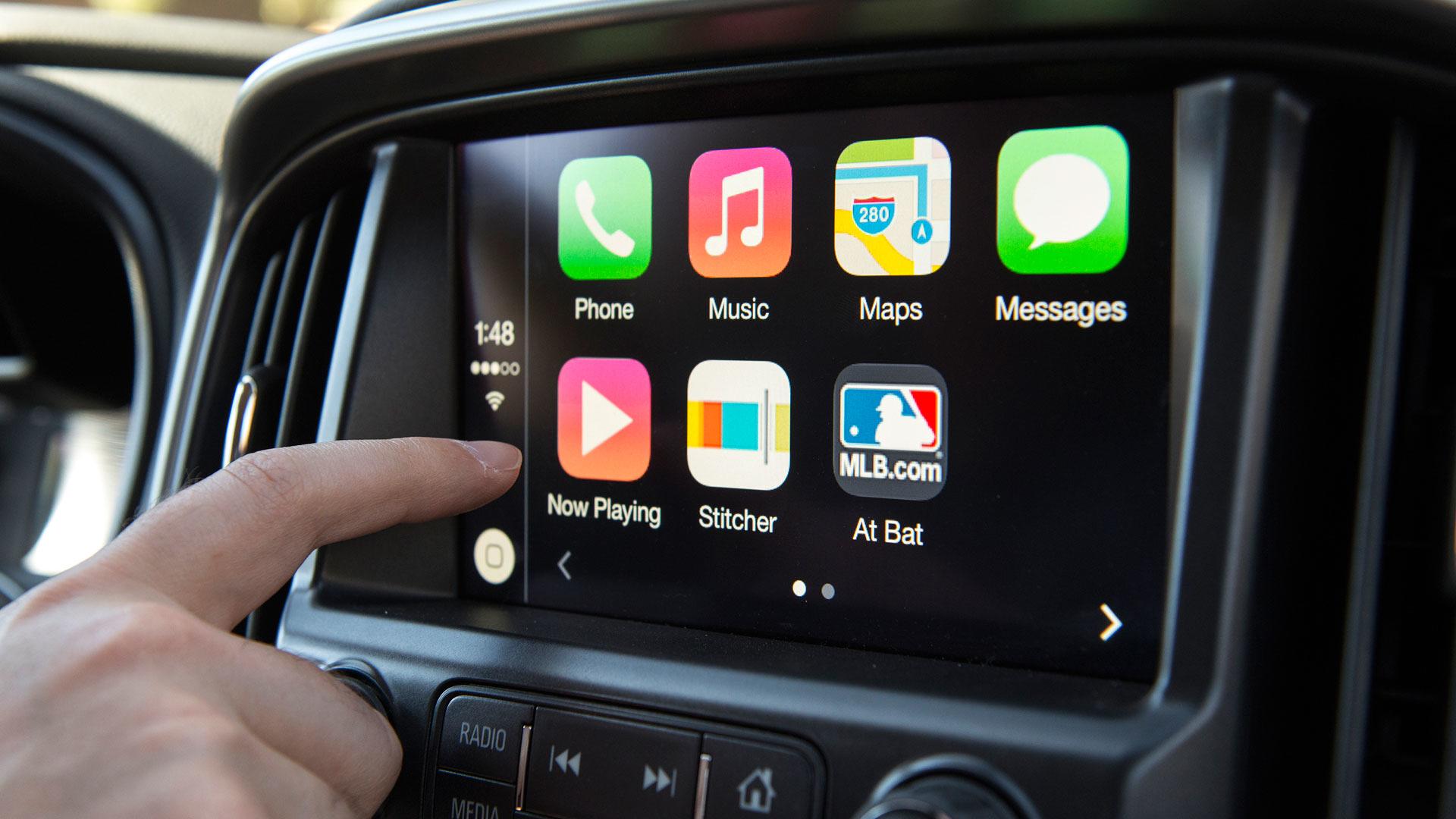
    The Renault Kwid’s three lakh sales milestone is certainly impressive and translates to an average of about 10,000 units every month. It also helps that the hatchback is completely localised in India with 98 per cent local content going in, which makes for a highly competitive price tag. With respect to features, the Kwid was the first model in its space to get a 7-inch touchscreen infotainment system and was later updated with Apple CarPlay and Android Auto. It also gets a segment-first all-digital instrument console, speed-sensitive volume control, one touch lane indicators and more.

    The Renault Kwid though has been widely appreciated for its SUV-inspired design that makes it look like an apt sibling to the Duster in the company’s stable. The tall riding stance not only offers better road presence to the driver but also opened more space in the cabin. With respect to engine options, the car uses 0.8-litre motor with 53 bhp and 1.0-litre motor with 67 bhp under the hood, paired with a 5-speed manual or AMT unit.

    In addition, the Kwid is now compliant with the new safety norms and comes with a driver’s side airbag, ABS with EBD, speed alert system, passenger seatbelt reminder and ISOFIX for child seats as part of the standard kit. A comprehensive facelift to the Kwid is also expected to arrive later in the year.

    The Renault Kwid is based on the CMF-A platform and the automaker will be introducing a new seven-seater offering based on the platform. The Renault Triber has been teased already and is set for an unveil later this month. The launch slated for July this year. In addition, the Renault line-up will be getting the BS6 upgrades ahead of the April 2020 deadline.

  • Audi Recalls 1644 e-Tron SUVs Globally

    Audi Recalls 1644 e-Tron SUVs Globally

    Audi has recalled the e-Tron electric SUV, it’s first in the history, for a water leakage that could result in fie. The company is taking the recall very seriously and said that the recall is voluntary and affects approximately 540 e-tron vehicles in the US that have been delivered to customers and 1,644 in total. The recall is in response to a potentially faulty seal that may allow moisture to enter the battery compartment which could lead to a short circuit or in extreme cases to a fire. No incidents have been reported globally yet, but Audi is taking precautions to make sure that the problem is fixed. The recall repair is expected to become available in August 2019.

    Customers are being contacted directly to inform them of the recall and the company’s dealer network will get the issue resolved. Audi e-tron vehicles unaffected by the recall remain available for delivery and the company’s reservation system remains open to receive customer reservations.

    The e-Tron is not the only electric car that has faced this issue, in fact even the Jaguar too has had to recall the I-Pace to rectify a fault with the regenerative brake system. While the India launch will happen in the second half of 2019, we wait to see what it’ll be priced at as also how the country takes to the first luxury electric car in the country.

  • Renault Fiat Case ‘Not Closed’

    Renault Fiat Case ‘Not Closed’

    Plans to merge carmakers Renault and Fiat Chrysler could re-emerge despite the breakdown of negotiations last week, France’s transport minister said on Tuesday, joining a chorus of French officials hoping the deal could be revived. Asked if talks between the two companies were over, Elisabeth Borne said: “I think it is not closed.”

    Borne’s comments follow similar remarks by French Finance Minister Bruno Le Maire, who also said he felt a merger between France’s Renault and Italian-American Fiat Chrysler Automobiles (FCA) remained a “good opportunity.”

    French budget minister Gerald Darmanin said last week as well that he hoped the door had not closed on a deal. Last week, FCA pulled out of $35 billion merger talks with Renault, with both companies blaming the French government.

    France has a 15% stake in Renault and the collapse of the talks deprived the companies of an opportunity to create the world’s third-biggest carmaker with 5 billion euros ($5.6 billion) in promised annual synergies.

    FCA and Renault are still looking for ways to resuscitate their merger plan and win the approval of Renault’s alliance partner Nissan, sources close to the companies have told Reuters.

  • Maruti Suzuki Cut Production By 18% In May

    Maruti Suzuki Cut Production By 18% In May

    Maruti Suzuki India had cut cut its production by 9.6 per cent to 147,669 units in April this year from 163,368 in April 2018.The company has now announced a further cut in vehicle production by over 18 percent in May, according to a regulatory filing. It is the company’s fourth consecutive month of taking a production cut

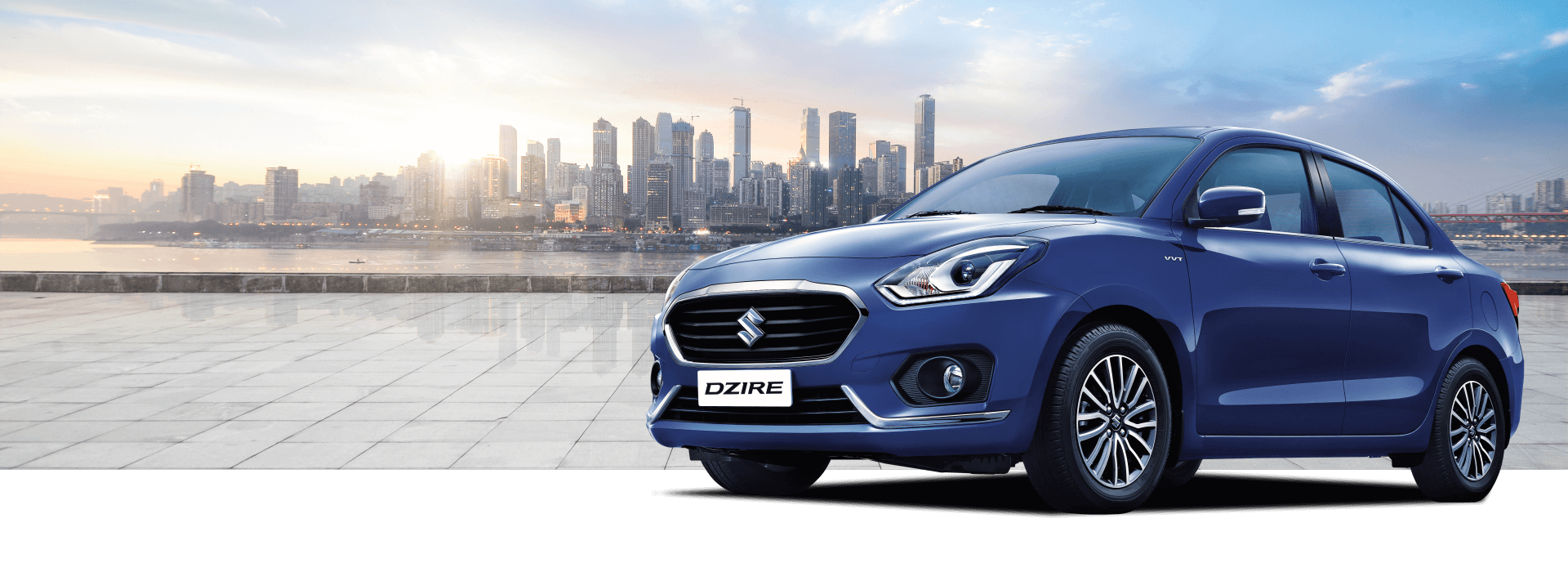
    Barring Super Carry, the company reduced production of all other segments, including that of its big selling compact and mini cars last month. MSI slashed production of passenger vehicles, including Alto, Swift and Dzire, by 18.88 percent to 1,48,095 as compared to 1,82,571 units in May 2018.

    The company cut production of mini segment vehicles by 42.29 percent to 23,874 units last month as against 41,373 units in the year-ago period. MSI also slashed production of compact segment cars by 9.54 percent to 84,705 units in May from 93,641 units in corresponding month of last year. Production of utility vehicles also witnessed a decline of 3.21 percent to 24,748 units, as against 25,571 units in May last year.

    Overall passenger vehicle sales in India dropped over 17 percent in April, the worst monthly fall in nearly eight years, as subdued sentiment and the ongoing liquidity crunch hit car sales.

  • This Skoda Concept Car Gets A Built In Washing Machine

    This Skoda Concept Car Gets A Built In Washing Machine

    If you’re a carmaker, would you ever think about the slow moving cyclists on the road? The unanimous answer here should be no. But Skoda, with the Karoq Velo concept, has made the ultimate support car for the growing number of cyclists around the world. Featuring a host of in-built technologies, from a fully-functioning washing machine for sweaty kit to a drone landing pad, the Karoq Velo offers the services of a fully-staffed race support team.

    Developed and built by Skoda UK, the Karoq Velo was conceived by a team of passionate cyclists to help fellow riders enjoy the perfect ride this summer. Its numerous unique design features were shaped by the results of a survey carried out by the Czech carmaker. More than 1,500 active riders were asked to suggest ideas for the perfect cycling support vehicle and all these ideas were packed into this one-off Karoq.

    Among the many stand-out features of the Karoq Velo, is a fully integrated spin cycle washing machine. This was chosen after 27 per cent of survey respondents said that returning to their car in damp cycling kit was a major downside of riding. The washing machine uses the same water supply as an integrated pressure washer that ensures that bikes can be made as fresh as their owners after a long summer ride. A washing machine in a car is something that you don’t see often right.

    After 31 per cent of survey respondents reported that mechanical issues were a major bugbear, Skoda’s design team created space for a full tool kit and equipment to facilitate rapid puncture repairs. A network of built-in LED lights also ensures that any late-night repairs can be carried out without the need to hold a torch or find a streetlight to work under.

    Practicality and carrying ability were also high on the wish-lists of survey respondents, with 37 per cent of cyclists wanting an easy to use exterior bike carrier, and 29 per cent wanting the extra security of an in-car storage system. The result is sufficient racking to carry two bikes on a special roof mount and one inside. Despite being packed with kit, the Karoq Velo still has room for three adult passengers.

    In keeping with the standard Karoq, the Karoq Velo is brimming with technology. Features specifically developed for the concept include a special magnetic landing pad for a Follow Me drone that uses sensors and recognition technology to follow the cyclist and capture ride photos. An inbuilt Wi-Fi hotspot also allows riders to immediately upload footage of their ride when they return to the Karoq Velo.

    The Karoq Velo also features the emergency call function that when pressed will immediately relay the car’s location to and connect to someone instantly who will be able to assist in an emergency. Although the one-off Karoq Velo is not available for sale, it is being used throughout the summer to assist cyclists ahead of races and competitions.