Category: Automotive

Retail News Asia is committed to providing both local and global retailers with the latest Auto and Car news throughout the Asian market. This on a daily base.

  • Porsche 911 Heritage Design Packages Coming

    Porsche 911 Heritage Design Packages Coming

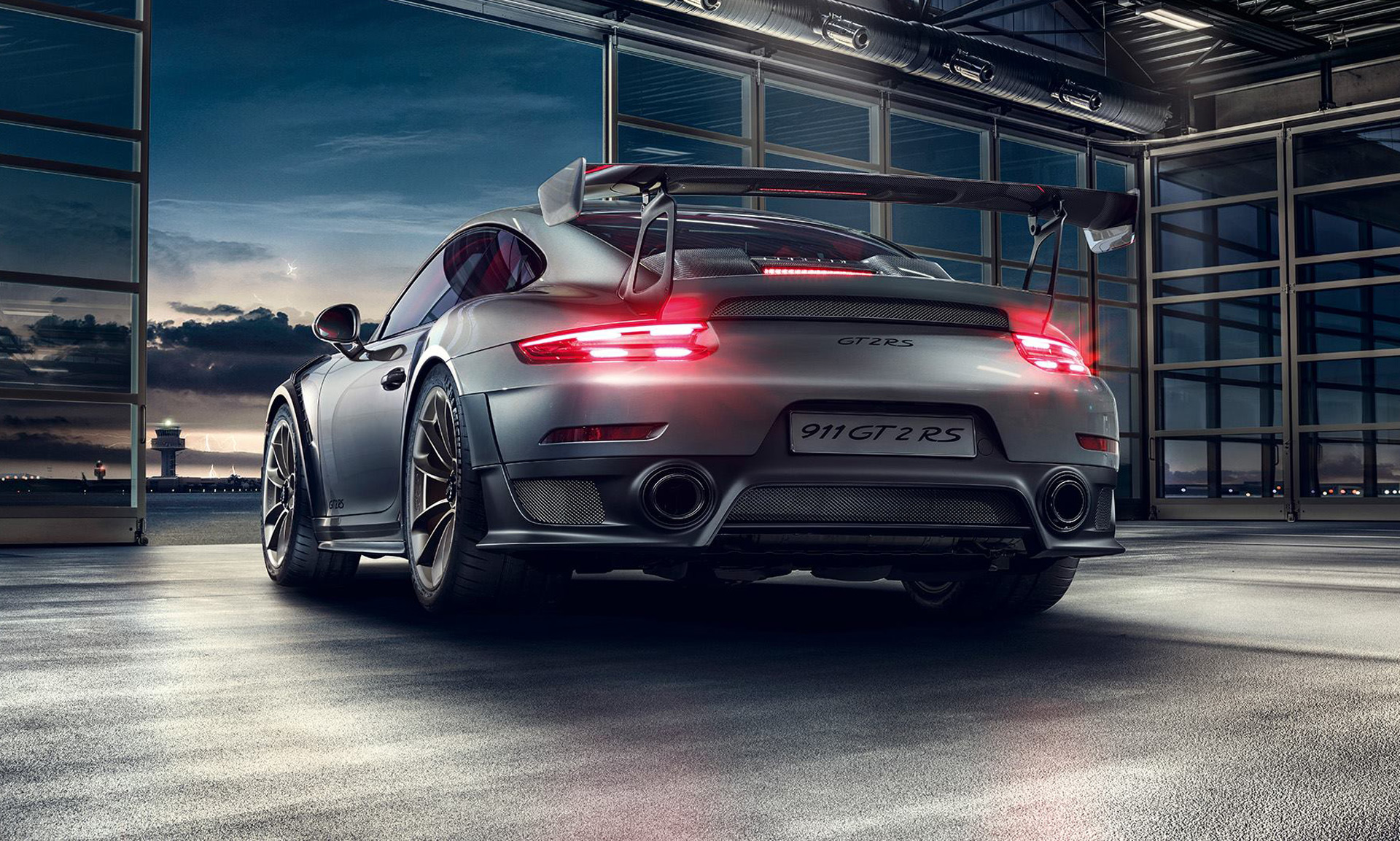
    Porsche has a glorious history of making dazzling and gorgeous performance cars. It has given the world some iconic models in the past and the Stuttgart based carmaker is now planning to revisit its heritage. Porsche Exclusive Manufaktur and Style Porsche design departments are working on a new Heritage Design Package which will be introduced in the next year, i.e. 2020. The 911 is one of the most iconic Porsches of all times and has led the charge several times for new developments. Once again, Porsche will start introducing the Heritage Design Package in the 911 range and is likely to follow with other models.

    The Porsche 911 Speedster concept which was showcased at the New York Auto Show was adorned with the Heritage Design Package and gave us an initial outlook of the design. The Heritage design models will get special colours and materials along with special paintwork and liveries to characterize the classic appearance of special models. Porsche designers have taken inspiration from old models and have used old colours, equipment cards and retro design elements. A hint of the same was the circular, chrome finished wing mirror on the 911 Speedster. The same treatment and finish will also accentuate inside the cabin of the car. Retro elements such as corduroy, the Pepita pattern, the Pasha pattern or tartans will be redesigned and comprehensively tested and will have sumptuous material characteristics for the special models.

    Porsche design is also developing matching timepieces, exclusively for the owners of Heritage Design vehicles. The company is trying to bring back the spirit of Professor Ferdinand Alexander Porsche, the designer of the 911 and founder of Porsche Design.

  • BMW Vision DC Roadster Concept Unveiled

    BMW Vision DC Roadster Concept Unveiled

    Electric motors are supposed to be the successor to the internal combustion engine and manufacturers are making the transition towards the electric mobility on both two and four wheels. BMW Motorrad, largely known for its evocative motorcycles is also working on an electric future for itself and is offering a glimpse of the future with its new Vision DC Roadster concept. BMW calls the ‘electrical awakening’ of the twin-cylinder Boxer engine that has powered the bike maker’s motorcycles for over 90 years. The BMW Vision DC Roadster is only a concept for now but could just preview a future Rnine T model with an electric drive.

    Speaking about the new BMW Vision DC Roadster, Edgar Heinrich, Head of Design BMW Motorrad explained, “The boxer engine is the heart of BMW Motorrad – an absolute stalwart of its character. But BMW Motorrad stands for visionary zero-emissions vehicle concepts, too. In view of this, one question that arises is: what would happen if we were to replace the boxer engine with an electric motor and the required battery? The Vision Bike shows how we’re able to retain the identity and iconic appearance of BMW Motorrad in distinctive form while at the same time presenting an exciting new type of riding a pleasure. After all: anyone who’s ever tried it out in practice knows very well that riding on two wheels is just as exciting when its electrically powered! The high level of torque right at set-off makes for breath-taking acceleration. This almost brutal power delivery creates a whole new experience of dynamic performance. And the BMW Motorrad Vision DC Roadster puts a face to this experience.”

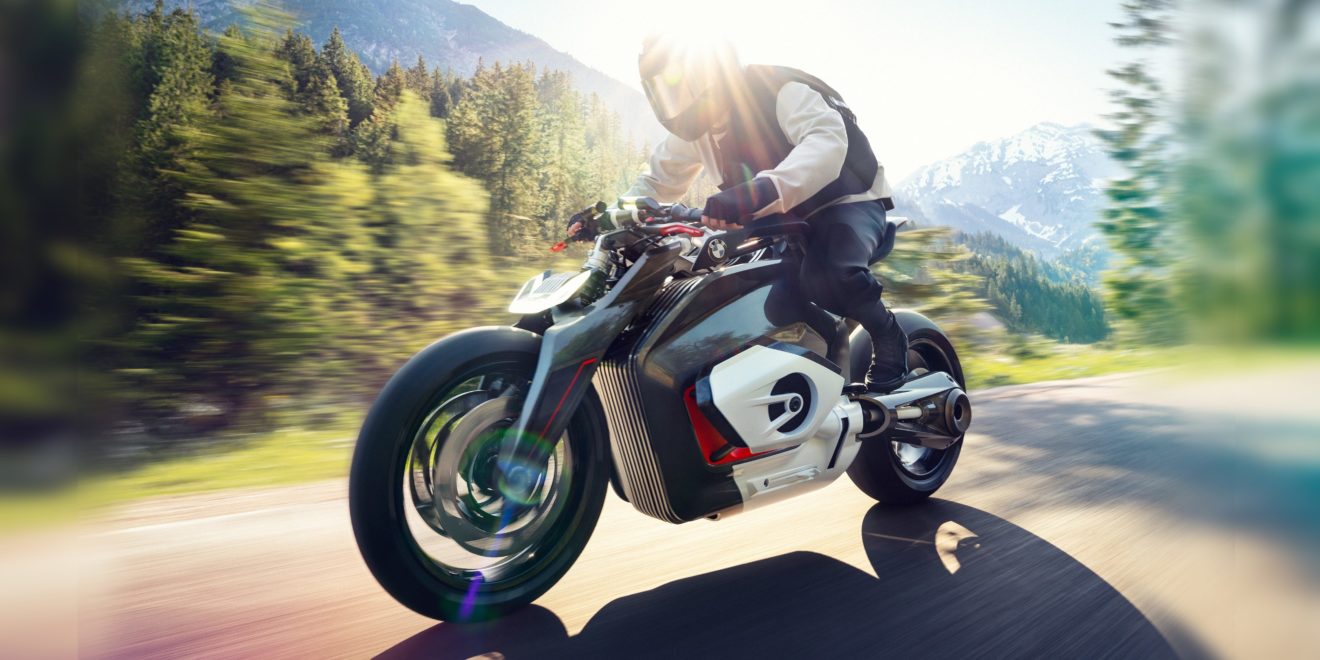
    The BMW Vision DC Roadster is built around a completely new architecture with the battery as its centerpiece. The manufacturer retains the iconic Boxer appearance with its concept of the future, which can be determined as an electric on closer inspection. The bike uses a vertically fitted, longitudinally oriented battery and is mounted in place of the conventional engine, while two side elements protrude with cooling ribs and integrated ventilators, which are quite similar to the cylinder heads on the Boxer engine. The cylinder-shaped electric motor itself is placed underneath the battery and is directly connected to the universal shaft. BMW Motorrad states that the Vision DC Roadster demonstrates a clever drive architecture that visually echoes the history of BMW Motorrad while taking it a step further.

    The design language on the BMW Vision DC Roadster is dynamic with the low front section and the short high rear. The design gives a sense of agility on the motorcycle, while a very interesting bit is the tubular structure that shows up like the skeleton of the motorcycle, replacing where a fuel tank would be placed. The aluminium frame structure also plays a key factor in the with the battery at the centre of the frame. Given the silence that comes along with electric motors, BMW has worked an innovative to denote that the bike is ready with the side cooling elements moving out slightly when the electric motor is turned on.

    The BMW Vision DC Roadster uses extensive cabon fibre and aluminium in its construction that further adds to its visual appeal. The red contrast elements and brushed aluminium around the battery, frame and cooling systems further emphasise on the bike geometry. There’s extensive attention to detail as well with the use of high quality materials throughout the concept. Details like the exposed universal shaft and the Duolever fork add a striking mechanical look to the motorcycle, while the flat U-shaped LED headlight with two compact lenses looks menacing. The taillight comprises two C-shaped LED elements that carry a minimalist look on the motorcycle. BMW says the Vision bike uses tyres exclusively made by Metzeler, while there are five fluorescent elements, each about the size of a postage stamp, integrated in the design for added visibility and graphic effect.

    In addition, BMW also revealed protective riding gear along with the Vision DC Roadster concept with integrated lighting and connectivity aspects. BMW Motorrad conveys the new concept is a symbol of the future of the manufacturer with alternate drive forms. The manufacturer has not yet revealed details on if and when there will be a production version to the concept, but we do see it coming in a torque-filled future closer than ever. And sure looks exciting!

  • BMW Previews Vision M Next Electric Sportscar

    BMW Previews Vision M Next Electric Sportscar

    BMW today previewed the Vision M Next which offers a foretaste of the BMW M brand’s electrified future and yes, this one places the driver right at the centre of all the action. Hosting the exclusive world premiere of the BMW Vision M NEXT is the new NextGen infotainment platform at BMW Welt. The BMW Vision iNEXT and BMW Vision M NEXT Vision Vehicles represent prototype versions of BMW’s future experience concepts ‘Ease’ and ‘Boost’. Ease encompasses all the experiences during a journey when the vehicle assumes the task of driving, so maximum comfort for users while Boost is all about the ultimate active driving experience.

    The BMW Vision M Next draws its inspiration from the iconic BMW Turbo and of course the i8 plug-in hybrid. It’s low-slung, has a wedge-shaped silhouette, gets gullwing doors and a striking colour scheme while maintaining its sports-car proportions. The front and rear ends are finished in the matt-neon shade orange, producing a vivid contrast against the exterior’s otherwise silver metallic paintwork.

    The signature BMW kidney grille is flanked on either side by triangular elements which are painted in orange. The triangular elements accentuate the air intakes at the sides and the integral headlights. The headlights are positioned on the outer edges of the front end, higher up than the kidney grille. Arranged one above the other rather than side by side and that gives it BMW’s classic four-eyed front end. The black side skirts are made from recycled carbon fibre and make the car look even lower on the road.

    Domagoj Dukec, Vice President BMW Design, said, “The BMW Vision M NEXT is a progressive hybrid sports car that makes a very clear and confident statement, in terms of both appearance and interaction. Where the BMW Vision iNEXT illustrated how autonomous driving is set to transform life on board our vehicles, the BMW Vision M NEXT demonstrates how state-of-the-art technology can also make the experience of driving yourself purer and more emotionally engaging. In both models, the focus is firmly on the people inside. Design and technology make the ‘EASE’ and ‘BOOST’ experiences more natural and more intense,”

    The Vision M Next offers the choice between electric all-wheel drive and pure rear-wheel drive, with either all-electric propulsion or the power of a turbocharged four-cylinder petrol engine. The output stands at 591 bhp and it has a top speed of 300 kmph. 0-100 kmph is done in just under 3 seconds. There is also a BOOST+ mode that puts extra power on tap at the push of a button. The maximum range when driving in all-electric mode is 100 km.

    The rear wheels on the BMW Vision M NEXT measure 22 inches in diameter, making them one inch larger than the front wheels (21 inches) and that gives the car a lovely stance. The design of the rear window takes its cue from the BMW M1. The three-piece louvres are made from glass and emphasise the horizontal focus of the rear-end styling. The rear lights feature the same Laser Wire technology used for the headlights. The two-dimensional reinterpretation of the distinctive pair of BMW roundels from the BMW Turbo and BMW M1 – a gift to BMW aficionados – gives them the impression of floating in the rear lights’ transparent lenses.

    There’s also facial recognition technology in the Vision M Next and his allows the car to unlock automatically as the driver approaches. Pressing the touch sensor on the gullwing doors prompts them to swing open. The cabin is minimalist and revolves entirely around the actively engaged driver, both stylistically and technologically. The seat shells form part of a seat sculpture with a flowing design. They are upholstered in a foam material with shape memory properties that moulds itself to, cushions and supports the body to optimum effect.

  • Mercedes-Benz To Start Assembling Cars In Egypt

    Mercedes-Benz To Start Assembling Cars In Egypt

    Mercedes-Benz and the Egyptian government have signed a Memorandum of Understanding to locally assemble the company’s passenger cars in the country. This is the result of successful discussions with the Egyptian government. This planned commitment is set to further improve the market position of Mercedes-Benz Cars in Egypt. The Memorandum of Understanding not only describes a local Mercedes-Benz passenger car assembly, but also contains other potential fields of cooperation. The assembly will be set up by a local business partner. At the same time, Mercedes-Benz Cars emphasises the involvement and know-how of Egyptian suppliers.

    “In building up a local car assembly, we will be able to structure our production network even more flexibly and efficiently and respond even better to the needs of our customers,” says Jorg Burzer, Executive Board member Mercedes-Benz Cars, Production and Supply Chain.

    In view of the long-term market potential, further investments are also conceivable, for example expansion of the dealer network, a logistical hub in the Suez Canal Special Economic Zone and a training centre. Furthermore, the company has offered to make its specialist expertise with respect to modern mobility concepts, e-mobility and electric vehicles, as well as autonomous driving, available.

    With the planned car assembly operation in Egypt, Mercedes-Benz Cars is supporting Egypt as an industrial location. Already now, Mercedes-Benz is securing more than 1,000 direct and indirect jobs in Egypt with its own import and sales organisation, a central spare parts warehouse and numerous authorised retailers and workshops in Cairo, Gizeh, Alexandria and Hurghada. With the new car assembly operation, Mercedes-Benz Cars will create new employment and contribute to better training opportunities with the planned training centre.

  • Volkswagen Opens IT Centre In Dresden

    Volkswagen Opens IT Centre In Dresden

    Volkswagen has opened a new IT Development Centre in its Glaserne Manufaktur in Dresden. In the Software Development Centre Production (SDC Production), up to 80 newly hired IT specialists will be working on the Volkswagen Industrial Cloud. In the future, the Industrial Cloud will link all 122 Group-wide Volkswagen production facilities. The goal is to amalgamate all data, and in doing so consistently digitalize production and logistics.

    One of the main focus points is the use of artificial intelligence, which suitably simulates human eyesight. The SDC developed the software for the visual quality checks of automated priming tasks for the door and side windows – this robot application comes from the Dresden-based start-up Wandelbots.

    Martin Hofmann, Head of IT for the Volkswagen Group, stated: “With the new IT Development Centre in the Glaserne Manufaktur, our expert knowledge will continue to grow; skills in important areas of technology secure our future.”

    The Industrial Cloud brings together data from all factories. For example, the material flow can be organized more efficiently and delivery bottlenecks and process disruptions can be detected at an early stage. It enables smart real-time control – simultaneously in Wolfsburg and Shanghai, Dresden and Uitenhage (South Africa)

    The Industrial Cloud is being established together with Amazon Web Services (AWS). AWS is a leader in the field of the Internet of Things (IoT), machine learning and computer services. In the Industrial Cloud, these technologies are being developed specifically for the automotive production environment. With Siemens, Volkswagen has gained its first major integration partner. Siemens contributes know-how in automation, connectivity of machines and systems, and the industrial IoT world to the collaboration.

  • GM To Spend $20 Million More On Equipment Upgrade At Arlington Plant

    GM To Spend $20 Million More On Equipment Upgrade At Arlington Plant

    General Motors Co said on Tuesday it would invest an additional $20 million to upgrade equipment at the automaker’s Arlington Assembly plant in Texas, ahead of the launch of full-size sports utility vehicles (SUVs).

    The investment will not add to the plant’s production capacity, a GM spokesman said. The No.1 U.S. automaker has not revealed when the company is going to launch its next-generation full-size SUVs such as the Chevrolet Tahoe, Chevrolet Suburban, GMC Yukon, GMC Yukon XL and the Cadillac Escalade.

    GM has long been dominated the U.S. full-size SUV segment, which fetches higher margins, but rival Ford Motor Co has been pushing to capture market share. Fiat Chrysler Automobiles NV said earlier this year it would start building a full-size Jeep SUV in late 2020.The latest equipment upgrade at Arlington plant is expected to be ready next year, the company said.

    GM has invested more than $1.4 billion in the Arlington Assembly plant since 2015.

  • VinFast Starts Production Of Two Cars Designed By Pininfarina At Its New Plant

    VinFast Starts Production Of Two Cars Designed By Pininfarina At Its New Plant

    The first two cars designed by Pininfarina for the Vietnamese brand VinFast will be manufactured in the new plant which was inaugurated by VinFast Production and Trading LLC at Dinh Vu Industrial Zone, Cat Hai, Hai Phong. It is built on an area exceeding 500,000 square meters out of the 335 hectares of the entire complex, meeting the requirements of Industry 4.0 automation and data exchange system. The designed capacity of the first and second phases are to grow from 250,000 vehicles per year to 500,000 vehicles per year, respectively, with the production speed reaching 38 vehicles per hour.

    The Vietnamese brand will produce the new Pininfarina-designed LUX A2.0 sedan and LUX SA2.0 SUV, both of which made their debut at the 2018 Paris Motor Show. After unveiling 20 concept designs submitted by world-famous design houses including Pininfarina, Vinfast asked customers to vote which they thought were in line with world trends and fitting with Vietnamese tastes and demand. Nearly 62,000 participants voted in the contest. The Sedan and SUV designs that collected the most votes were the two that Pininfarina will develop.

    VinFast has in fact already received 10,000 preorders, a year prior to the launching of its final products and that’s quite a record it’s set. After the inauguration of the factory, VinFast will organize the delivery and release of the first cars. Specifically, delivery of VinFast Fadil cars to customers started on June 17, while Pininfarina-designed Lux A2.0 sedan and Lux SA2.0 SUV will be delivered at the end of July 2019.

  • BMW X1 Faceflift Makes World Debut In Munich

    BMW X1 Faceflift Makes World Debut In Munich

    The youngest SUV in the BMW family has received a comprehensive update and despite being the smallest, it doesn’t look like one. The current generation BMW X1 surprised us with its grown proportions and bold styling and even car enthusiasts confused it with the X3. The new 2020 facelift model builds upon that with clear and prominent revisions made to its face and rear. It looks more dominant sporting larger kidney grilles which merge in the center. The new Adaptive LED headlamps to include sharper light iconography and the bumper along with integrated LED foglamps also houses larger air intakes. The rear end of the X1 also looks stylish. For instance, the new inlay in the body-color rear apron adopts the car’s main body color.

    The driver side wing mirror projects two-tone LED X1 image when the car is unlocked. The new BMW X1 also gets three new body colors- Jucaro Beige metallic, Misano Blue metallic (exclusively for the M Sport model) and the ultra-exclusive BMW Individual Storm Bay metallic along with four new wheel designs. The 2020 BMW X1 Facelift will be offered in three variants- the base X Line, Sport Line and M Sport. The BMW X1 M Sport gets lowered stance, thanks to the M Sport suspension and BMW Individual High-gloss Shadow Line trim gets additional features along with the M Aerodynamics package.

    On the inside, the cabin is finished in high-quality materials and it continues to get contrast stitching on the instrument panel which is finished in black on its upper section and adopts the color of the interior upholstery lower down. The contrast stitching is available for the xLine, Sport Line and M Sport models only. Moreover, the floor mats also gain colored edging and contrast stitching for the edging and customers will get a choice of three upholstery options. There is also a 6.5-inch screen which is standard while customers can also opt for an 8.8-inch or 10.25-inch touch screen which can be operated using the BMW iDrive Controller or voice control and gets built-in navigation. The latest version of BMW’s connected drive is also standard on the new X1. Moreover, the rear seats can be folded down in three sections (40:20:40) and can slide forward by up to 13 cm, however, that is optional. Features such as automatic tailgate operation and Comfort Access are optional as well.

    The new BMW X1 line up will get 16 engine and transmission options globally which will include a range of three-cylinder and four-cylinder engine options. The BMW X1 sDrive16d which is powered by the 1.5-liter three-cylinder engine will be available with either a manual six-speed gearbox or a seven-speed dual-clutch transmission and will develop 114 bhp and 270 Nm of peak torque. The xDrive 25d diesel will get the 2.o-litre, four-cylinder engine which puts out 228 bhp and 450 Nm of peak torque will be mated to an eight-speed auto transmission as standard and will clock triple-digit speed in 6.6 seconds. Finally, the petrol BMW X5 xDrive 25i will use the 2.0-liter, four-cylinder engine which puts out 228 bhp and 350 nm of peak torque and is also mated to an eight-speed auto transmission as standard. It’s 0.1 seconds quicker to 100 kmph than its diesel counterpart and clocks triple-digit speed in 6.5 seconds.

  • Porsche Recalls Cars Worldwide Due To Faulty Transmission Unit

    Porsche Recalls Cars Worldwide Due To Faulty Transmission Unit

    Volkswagen’s sports-car brand Porsche has to recall almost 340,000 Cayenne and Panamera vehicles due to problems with their automatic transmission, the German company said on Tuesday.

    A Porsche spokesman said the cars might roll when parked due to a potentially fragile part in the connection between the gear lever and transmission.

    Almost 100,000 of the affected vehicles, which date back to 2002, are in the United States and almost 25,000 in Germany.

  • New Flagship SUV From Audi Reveiled

    New Flagship SUV From Audi Reveiled

    The new Audi SQ8 breaks cover! It is the new flagship SUV from Audi and it gets a massive 4.0-liter V8 turbo-diesel engine with a 48-volt mild-hybrid technology. The V8 pumps out a mind-boggling 900 Nm of peak torque. The SUV gets an 8-speed automatic gearbox. Audi hasn’t revealed the power figures yet. The Audi SQ8’s 48-volt mild-hybrid makes up to 10 bhp under braking lets the SQ8 coast for up to 40 seconds without the engine being active, at speeds between 55 kmph to 160 kmph. Also, the diesel engine turns of one of the two turbo-chargers at city speeds to increase the efficiency as well. The Audi SQ8 has a 0-100 kmph sprint time of 4.8 kmph and a top speed of 250 kmph which is electronically limited.

    Built on the Volkswagen Group’s MLB platform, the Audi SQ8 can also be specified with an optional suspension package which also includes a sport differential and an adaptive air suspension. The air suspension can adjust the ride height of the SQ8 by up to 90 mm. The other feature is the electromechanical active roll stabilization which reduces body roll when cornering hard. Audi also offers all-wheel steering as an option on the SQ8.

    As far as looks are concerned, the Audi SQ8 gets a new grille with a silver frame along with re-designed air inlets. The rear end of the car gets a new diffuser in black color and gets quad exhaust tips. The cabin gets Alcantara leather upholstery along with ‘S’ logos embossed on the seats and stainless steel pedals. The Audi SQ8 also gets two touchscreens and the Audi Virtual Cockpit with displays specific to the SQ8.

  • Lexus’ Safety System+ To Be Standard In All Cars In The US From 2020

    Lexus’ Safety System+ To Be Standard In All Cars In The US From 2020

    Collisions that result in injury can often be caused by a delay in a driver’s recognition of the situation and his or her ability to react accordingly. In a move to help prevent such accidents before they happen, the Lexus Safety System+ will be a standard feature in all US Lexus vehicles starting with the 2020 model year. Designed to help protect drivers, passengers and pedestrians, the Lexus Safety System+ is an integrated suite of four advanced active safety packages anchored by automated pre-collision warning and braking.

    David Christ, group vice president and general manager, Lexus Division said, “We are working toward preventing crashes before they happen. That’s why we have developed some of the most advanced safety features on the road today, and now those systems will be standard equipment on every model we sell.”

    The Safety System+ will come with Pre-Collison System with Pedestrian Detection, a system which is engineered to help detect a preceding vehicle or a pedestrian in front of the Lexus under certain conditions. Should the system detect a pedestrian or a potential frontal collision, it’s designed to activate an audible and visual alert while automatically preparing Brake Assist for an increased braking response. If the driver does not break in time, the system is designed to automatically begin braking before impact and, in some cases, can even bring the vehicle to a stop.

    There will also be Lane departure alert which will utilize a high-resolution camera to monitor visible lane markings and determine the vehicle’s position within a lane. If an inadvertent lane departure or potential departure due to swaying is detected at speeds above 51 kmph, the system attempts to alert the driver with audio and visual warnings and steering wheel vibrations. Then there are the Intelligent High Beams which provide added visibility for the Lexus driver as well as other motorists, Intelligent High Beams offer added illumination to help keep the driver focused on the road. When the road ahead is clear, the system defaults to high-beam mode, then temporarily switches to low beams when it detects the headlamps or taillamps of vehicles ahead.

    And finally, there’s the dynamic radar cruise control which uses radar and camera technology to help maintain a preset speed and following distance from the vehicle ahead. If driving at highway speeds and the road ahead clears, the vehicle returns to its preset speed.

  • Renault India To Double Sales In India By 2021

    Renault India To Double Sales In India By 2021

    Renault India found success with the Duster and even the Kwid in India and now it’s readying to bring in its compact MPV – the Triber – into India. The Triber too, like the Kwid is based on the CMF-A platform and comes with a heavy dose of local content, so prices will be competitive for sure. But Renault India has grand plans for the Triber and it’s made its intention to export the compact MPV to other markets too and with it help the company improve its sales in India too. In fact, the company is looking to double its sales in the country by 2021 and the Triber will play a big role in making this happen. Thierry Bolloré, CEO, Groupe Renault said, “It’s (The Triber) a significant contributor to the progress we want to make in order to double the sales of Renault in India for sure.”

    The Triber is actually a seven-seater tucked under the four-meter mark. At that size, the new Renault Triber is a direct rival to the Datsun GO+ and also the upcoming compact seven-seater from Maruti Suzuki. It gets a completely different design language from its rivals that help make for a roomier cabin. In fact, Renault is comparing the Triber to a number of B-segment hatchbacks, with the French model offering the additional third-row seating that is more practical. Renault also says the new offering will be 20 percent more affordable in terms of ownership than a conventional B-segment hatch.

    But it’s not just the sales in India that will help Renault achieve this target. The company is banking on exports as well, something it has been doing with the Kwid too. Bolloré said, “Export is key because this is a car made in India, for India and having the genes for a great exporter to other markets.”

    Not everything has worked for Renault in India though. Cars like the Lodgy and the Capture have failed to pick up in terms of sales and establish themselves as strong contenders in their respective categories and Renault isn’t shying away from that reality. Bolloré explains, “The mistakes we have done sometimes, well, we have learned from that. We are quite humble you know, and we know it’s necessary, step-by-step, to understand, and to be better and better for sure, Triber is one key contributor.”

    There will be some other contributors, coming fast after the Triber which will help Renault achieve its set target for 2021.

  • BMW X7 And BMW 7 Series Facelift Launch Date Revealed

    BMW X7 And BMW 7 Series Facelift Launch Date Revealed

    BMW has announced that it will be launching the new 7 Series facelift and the all-new X7 SUV in India on July 25, 2019. Talking about the new 7 Series facelift, the most apparent of all the design changes is the massive kidney grille which is 40 percent larger than the one on the outgoing model. The headlights still look sleek and go well with the long bonnet which now looks more sculpted and has even gained muscle along with the fenders. The profile looks almost similar to the outgoing model and there have been subtle changes in the design at the rear.

    The new BMW 7 Series will also get a range of engine options including a new 6.0-liter, V12 motor which churns out 592 bhp and 850 Nm of peak torque and will make its way under the hood of the top-end M760 variant. Then there is the 4.4-liter, V8 motor which produces 516 bhp (up 78 bhp) and 750 Nm of peak torque (100 Nm up) and propels the car to 100 kmph in 3.9 seconds. Finally, the most in-demand of the lot will be the 740L which will now be a plug-in hybrid variant. It will get the same 3.0-liter, in-line six-cylinder engine which produces 276 bhp and 450 Nm of peak torque but will be coupled with an electric motor which will add 111 horses more taking the combined power output to 384 bhp.

    The BMW X7 is an all-new model and it will be the new flagship SUV for BMW, positioned above the X5. The BMW X7 is based on the CLAR platform which also underpins its sedan counterpart- the 7 Series and several other BMW models like the 5 Series and new generation X3. BMW is also developing the next-generation X5 on the same platform. Visually, the new X7 takes design quotient a notch higher with that massive kidney grille, slim LED headlamps and muscular bumper with wheel arches.

    Petrol engine options on the 2019 BMW X7 include the 3.0-liter, in-line six-cylinder petrol with 335 bhp and a 4.4-liter, twin-turbo V8 petrol with 456 bhp. There will also be the 3.0-liter six-cylinder diesel with 256 bhp, along with a more powerful 400 bhp version. A plug-in hybrid version is also said to be in the works, while an M badged model is the one we look forward to. All engines use the 8-speed automatic transmission and get all-wheel drive as standard. The system does come with the option to send power only to the rear wheels, while you get BMW’s Dynamic Handling Package and the Off-Road Package. Upon launch, the BMW X7 will be going up against the Mercedes-Benz GLS, Range Rover Sport and the Audi Q7.

  • Aston Martin Valhalla To Be Featured In The Upcoming 25th James Bond Movie

    Aston Martin Valhalla To Be Featured In The Upcoming 25th James Bond Movie

    Further extending its deep connection with the James Bond franchise, Aston Martin has recently revealed the carmaker’s new mid-engined hypercar Valhalla will be a part of the upcoming 25th Bond movie, staring actor Daniel Craig. In addition to the recently unveiled Aston Martin Valhalla, the new 007 movie will also feature the classic Series II V8 Vantage and the iconic DB5. While the Vantage was last seen in a Bond film more than 30 years ago when Timothy Dalton drove it in The Living Daylights, the Aston Martin DB5 has been a series regular driven by almost all major 007s. Last time we saw the DB5 was in the 2015 movie Spectre.

    The new Valhalla will be the first mid-engined Aston Martin car to be driven by a James Bond, and only the second among all. Last time a James Bond character drove a mid-engined car was in the1981 movie For Your Eyes Only, and it was Roger Moore driving the Lotus Esprit Turbo.

    As for the Aston Martin Valhalla, the all-new hypercar will be positioned below the company’s flagship, Valkyrie, which is more track-focused, and instead be a more road-friendly usable everyday car. An outcome of the collaboration between Aston Martin and Red Bull Racing, the Valhalla was earlier known as the AM-RB 003. The car uses a carbon fiber monocoque chassis and is powered by a twin-turbocharged V6, assisted by a battery-powered electric hybrid system. The powertrain system is expected to offer a combined power of up 986 bhp. The exhaust system uses dual outlets, which are positioned on top of the car, similar to the Porsche 918 Spyder.

    While we are likely to see a pre-production model in the movie, the new Aston Martin Valhalla is expected to officially enter production in 2021. It is expected to compete with the upcoming successor of the McLaren P1.

  • Most Affordable Harley-Davidson Will Be A 338 cc Motorcycle

    Most Affordable Harley-Davidson Will Be A 338 cc Motorcycle

    Harley-Davidson confirmed the development of a small capacity motorcycle earlier this year and now the American bike maker has officially released details of what will be its smallest motorcycle yet. Harley has joined hands with China-based company – Qianjang Motorcycle – and willl be building a 338 cc naked motorcycle. The bike will be manufactured in China, one of the biggest auto markets in the world, and will be exported to a number of countries including India. Harley has also released a render image of the 338 cc motorcycle, which is more of an aggressive street-naked than the traditional cruiser design that the manufacturer is known for.

    Speaking about what will be most affordable offering from the company, Matt Levatich, President and CEO, Harley-Davidson said, “Harley-Davidson has always been about inspiring riders around the world. Our More Roads plan is all about bringing our brand of freedom to more people, in more places, in more ways. We’re excited about this opportunity to build more Harley riders in China, one of the world’s largest motorcycle markets, by creating new pathways to our brand.”

    The upcoming Harley-Davidson 338 cc naked will be co-developed by the US-based manufacturer and Qianjang. The styling is a mix between a street-fighter and a scrambler, and is more of an urban naked. Considering that a lot of potential buyers for the upcoming offering will be young first-time Harley owners, the company will aim to provide a mix of old and new in design and technology. Although not much has been said about the underpinnings of the new motorcycle, the bike is likely to be underpinned by a Trellis frame with possibly a liquid-cooled, parallel-twin motor, telescopic front forks, dual disc brakes and an analogue instrument console with a digital readout.

    The new Harley 338 cc motorcycle will be launched in China first by the end of 2020, and is likely to make it to other parts of Asia and other emerging markets by 2021. That’s also when we expect the India launch to take place with the model likely to be locally assembled at the company’s Haryana-based facility. With its smallest offering, Harley will be taking on Royal Enfield as well as the models to be produced under the Bajaj-Triumph alliance in the 350 cc cruiser segment. Royal Enfield currently rules this space growing aggressively in the middleweight motorcycle segment worldwide. Expect prices to be around the ₹ 3.5 lakh (ex-showroom) mark for the entry-level Harley-Davidson motorcycle.