Category: Automotive

Retail News Asia is committed to providing both local and global retailers with the latest Auto and Car news throughout the Asian market. This on a daily base.

  • Volvo Car India Registers 11 Per Cent Increase In Sales

    Volvo Car India Registers 11 Per Cent Increase In Sales

    Volvo Car India recorded 11 percent growth in its half-yearly sales in 2019. The company sold 1,159 units between January-June 2019, whereas it sold 1,044 units sold during the same time last year. Volvo said that the sales contribution from mini metros and Tier-I towns and solid demand for the company’s SUV range were the key factors for the growth. Volvo Cars India has witnessed a growth of 25 per cent in the last fiscal year. The company sold 2,687 units of passenger vehicles in FY2018-19 against 2,157 units which it sold in the previous year. FY19’s growth was largely driven by the XC40 compact luxury SUV which is the most affordable Volvo sold in India currently and was launched last year.

    Charles Frump – Managing Director, Volvo Car India said, “We are extremely happy with 11 percent growth in sales performance so far especially when the industry is not looking positive. Our brand engagement programs continue to play a crucial role in this performance. While the short term market performance looks tough, I am very confident the automobile growth will bounce back and we would be happy to replicate our sales performance of 2018.”

    Volvo India had already announced that it will be introducing 4 new electrified cars in the country in the next 3 years. In its commitment towards the environment and electrified future, Volvo Cars plans to slowly phase out conventional powertrains and focus only on electrification. The Next launch from Volvo in India will be the new-generation Volvo S60, which could be launched towards the end of 2019 or early 2020.

  • Jeep Compass Based Seven-Seater SUV In The Works For India

    Jeep Compass Based Seven-Seater SUV In The Works For India

    The Jeep Compass was a game changer when it first arrived in 2017 and helped the Fiat Chrysler Automobile (FCA) cement the Jeep brand in the premium segment. Now, a report suggests that the American automaker is looking to further capitalize on the success of the Compass and is in working on a seven-seater version for the Indian market. A report states that the head honchos at FCA have approved a new top-of-the-line SUV under the Jeep brand that will hit the market by 2020-21. The new Compass-based seven-seater SUV will take on the likes of the Toyota Fortuner, Ford Endeavour, Skoda Kodiaq, Honda CR-V and the likes, when it goes on sale.

    Interestingly, Jeep’s plans to produce a seven-seater SUV for India aren’t new. However, the report states that the project was given the green light only now. The Jeep Grand Compass, as it is touted to be called, will get a proper 4×4 drivetrain and will be based on the all-new Compass that is in the works for 2020. The model will be produced at the automaker’s facility in Ranjangaon, near Pune and is likely to hit the market by the second half of next year or by early 2021.

    The new Jeep Grand Compass will help the American establish itself in the premium end of the SUV space, and solidify its position in the overall SUV space. The seven-seater SUV will be followed up with the more affordable subcompact offering in Jeep India’s stable that will hit the market in the following years. FCA said that the company had no comments at the moment on the same.

    It will be safe to say that the upcoming Jeep seven-seater SUV will retain the automaker’s DNA at its core, complete with the brand’s off-roading capabilities and premium positioning. Expect to see a host of new tech and features from the company’s global stable. Engine options are unclear at the moment, but Jeep is likely to offer both petrol and diesel versions. The 2.0-litre MultiJet II turbo diesel could be used on the new model too, albeit with higher power output.

    Meanwhile, Jeep India is currently in the process of upgrading the Compass to the BS6 regulations. The newly launched Compass Trailhawk already gets a BS6 ready engine, and other variants of the SUV will meet the new norms soon. The automaker is also likely to introduce the diesel automatic version of the Compass towards the end of this year or probably in the first half of 2020.

  • Kia XCeed Revealed

    Kia XCeed Revealed

    Kia Motors took the wraps off the 2020 XCeed, which is an urban crossover utility vehicle. Kia says that it is an alternative to regular SUVs and is as practical as an SUV and as engaging as a hatchback. It will be launched in Europe in the third quarter of 2019 and will be positioned between the Kia Stonic and the Kia Sportage. The Kia XCeed has a sporty design which is all-new. The only the body panels were carried over from its five-door hatchback sibling are the front doors. While the wheelbase remains the same as other models in the Ceed line-up 2,650 mm, the Kia XCeed’s front and rear overhangs are extended over the five-door hatchback model by 25 mm at the front to 905 mm and 60 mm at the rear to 840 mm. The headlamps are newly-designed, with the Ceed’s ‘ice cube’ LED light signature sitting within a more angular shape along with slim indicators. The rear gets newly designed tail lamps which have the company’s signature styling.

    Kia will offer a range of turbo-charged engines on the XCeed. There will be a 3-cylinder 1.0-litre turbo petrol which makes 118 bhp and 172 Nm. The 1.4-litre turbo petrol makes 138 bhp and 242 Nm while the 1.6-litre turbo petrol pumps out 201 bhp and 265 Nm of peak torque. The XCeed is also available with a choice of a 1.6-litre Smartstream diesel engine in two states of tune which make 113 bhp and 134 bhp. Except for the 1.0-litre T-GDi, all engines can be paired with a choice of six-speed manual or seven-speed dual-clutch transmissions. The 1.0-litre engine is paired with a six-speed manual transmission. Kia will introduce low-emissions electrified powertrains, including 48V mild hybrid and plug-in hybrid options, will be launched into the Kia XCeed range later in 2020.

    The XCeed has a busy dashboard which is angled towards the driver. The interior gets soft-touch material and a satin chrome trim on the dashboard along with multiple upholstery options. Like the Kia Seltos, the XCeed too will get Kia’s UVO Connect and telematics system. There will be Apple CarPlay and Android Auto on offer as well. Other optional features include a JBL premium audio system with Clari-Fi technology, dual-zone air-conditioning, heated electric folding door mirrors, heated steering wheel, heated windscreen, heated and ventilated front seats and heated rear seats.

    Kia will manufacture the XCeed at its manufacturing facility in Zilina, Slovakia along with the Ceed, Ceed Sportwagon and the ProCeed Shooting Brake.

  • Tata Harrier To Get Dual-Tone Colours

    Tata Harrier To Get Dual-Tone Colours

    The Tata Harrier is all set to get the option of dual-tone colors soon. Tata Motors has released a teaser of the compact SUV with the new black with orange and black with silver color schemes, and it is the roof as well as pillars that get the black treatment. The update comes about six months into the launch of the Harrier in India, and will also keep the model relevant amidst new competitors including the newly launched MG Hector, Jeep Compass Trailhawk and the upcoming Kia Seltos.

    Since its launch, the Tata Harrier was available only in mono-color tones, while the dual tone was made available at the dealer level with several showrooms providing the option of a roof wrap. The Harrier dual-tone version though will come from the factory and is likely to be offered on the range-topping XZ trim. Expect prices to see a marginal increase by about ₹ 30,000, up from the current asking price of ₹ 16.55 lakh (ex-showroom, Delhi) for the XZ trim. The Harrier is currently offered in five colors – Calisto Copper, Ariel Silver, Thermisto Gold, Telesto Grey and Orcus White.

    Dual-tone color options have been really popular amidst new and young car buyers, and Tata Motors has already been offered the same on its other vehicles including the Tiago, Nexon and the Hexa. Other manufacturers offer the dual-tone color option as well in the segment. It’s unclear if the Tata Harrier will get any other changes apart from the dual-tone paint scheme. Since its launch in January this year, the SUV has remained largely unchanged barring the addition of Apple CarPlay connectivity to its infotainment system. The SUV did receive its first price hike last month with it costing more by ₹ 31,000.

    With respect to power, the Tata Harrier uses a Fiat-sourced 2.0-liter turbo diesel engine that develops 138 bhp and 350 Nm of peak torque. The motor is paired with a 6-speed manual gearbox. Tata is developing the BS6 version of the Harrier that is likely to go on sale by the end of this year. Tata will also introduce the Hyundai-sourced 6-speed torque converter on the Harrier later, while a 1.6-litre turbo petrol version is also lined up. The seven-seater version – Tata Buzzard – will hit the showrooms in 2020, after making its India debut at the Auto Expo next year.

  • Honda To Recall 1.6 Million Vehicles, Finish Takata Recalls Early

    Honda To Recall 1.6 Million Vehicles, Finish Takata Recalls Early

    Honda is recalling 1.6 million vehicles in the U.S. to replace potentially deadly Takata air bag inflators, completing its required recalls six months ahead of schedule, the automaker said Friday.

    When the latest recall is done, Honda says it will have recalled or accounted for 22.6 million inflators in about 12.9 million vehicles.

    Takata inflators can explode with too much force and blow apart a metal canister, spewing shrapnel. Twenty-four people have been killed and hundreds injured by the inflators worldwide. Honda was Takata’s largest customer.

    The Japanese company, which was forced into bankruptcy by the troubles, used the volatile chemical ammonium nitrate to create a small explosion and inflate the air bags. But the chemical deteriorates when exposed to high temperatures and humidity and can burn to fast, blowing apart the canister designed to contain the explosion.

    The recalls include many Honda and Acura models from 2003 through 2015. All received replacement inflators made by Takata before February of 2017 and were scheduled to be recalled a second time to replace those with inflators made by another company.

    Affected Honda models include the 2001-2012 Accord, the 2010-2015 Crosstour, the 2001-2011 Civic, 2002-2011 CR-V, the 2011-2015 CR-Z, the 2003-2011 Element, the 2007-2014 Fit, the 2010-2014 Insight, the 2002-2004 Odyssey, the 2003-2015 Pilot and the 2006-2014 Ridgeline. Acura models include the 2003 3.2CL, the 2013 ILX, the 2003-2006 MDX, the 2015 RDX, the 2005-2012 RL, the 2002-2003 3.2TL, the 2009-2014 TL, the 2009-2014 TSX, and the 2010-2013 ZDX.

    Honda said it has completed repairs or accounted for 83 percent of the, among the highest in the auto industry. Some of the inflators have been found in scrap yards or the vehicles are no longer in use.

    Owners will be notified by letters starting in mid-August, and Honda is urging people to schedule repairs as soon as possible.

    Nineteen automakers are recalling about 70 million inflators in what has become the largest string of automotive recalls in U.S. history. The recalls are taking place on a schedule set by the National Highway Traffic Safety Administration.

    The recalls do not include inflators that have a moisture-absorbing chemical. The government will decide by the end of this year whether those should be recalled.

  • Tesla Model 3 Is Norway’s Top Selling EV Last Month

    Tesla Model 3 Is Norway’s Top Selling EV Last Month

    Almost half of new cars sold in Norway in the first six months of 2019 were powered by fully electric engines, up from just over a quarter in the same period last year, ensuring the Nordic nation retains its top global ranking in electric vehicle sales. Tesla’s Model 3 was Norway’s top-selling vehicle, the Norwegian Road Federation said when announcing the latest sales data on Monday.

    In total, 48.4% of all new cars sold from January to June were electric, surpassing the 31.2% seen for the full year 2018, and making oil-producing Norway the global leader in per-capita electric car sales by a wide margin.

    Seeking to end the sale of diesel and petrol engines by the middle of the next decade, Norway exempts battery-driven cars from the heavy taxes imposed on vehicles powered by fossil fuel. It also offers benefits such as discounts on road tolls. The policy has boosted brands such as Tesla, Nissan, Hyundai and BMW, which all offer fully electric vehicles, rather than hybrids that use electric motors to drive the car but also have a combustion engine

    Brands without fully electric offerings, such as Ford and Daimler’s Mercedes-Benz, have seen sales drop, although Ford and Mercedes are among several automakers that have promised to offer electric cars in Norway from 2020. California-based Tesla sold 3,760 vehicles in Norway in June, for a 24.5% share of all cars during the month, and was also the top-selling brand for the first six months.

    Most of its sales were of the mid-sized Model 3, while the bigger Model S and Model X have seen lower year-on-year volumes.

    The International Energy Agency, which includes the more widely-sold plug-in hybrids when counting electric cars, measured Norway’s share at 39% of sales in 2017, far ahead of second-placed Iceland on 12% and Sweden on 6%

  • Aston Martin’s Biggest Investor Considers Acquiring Another Stake

    Aston Martin’s Biggest Investor Considers Acquiring Another Stake

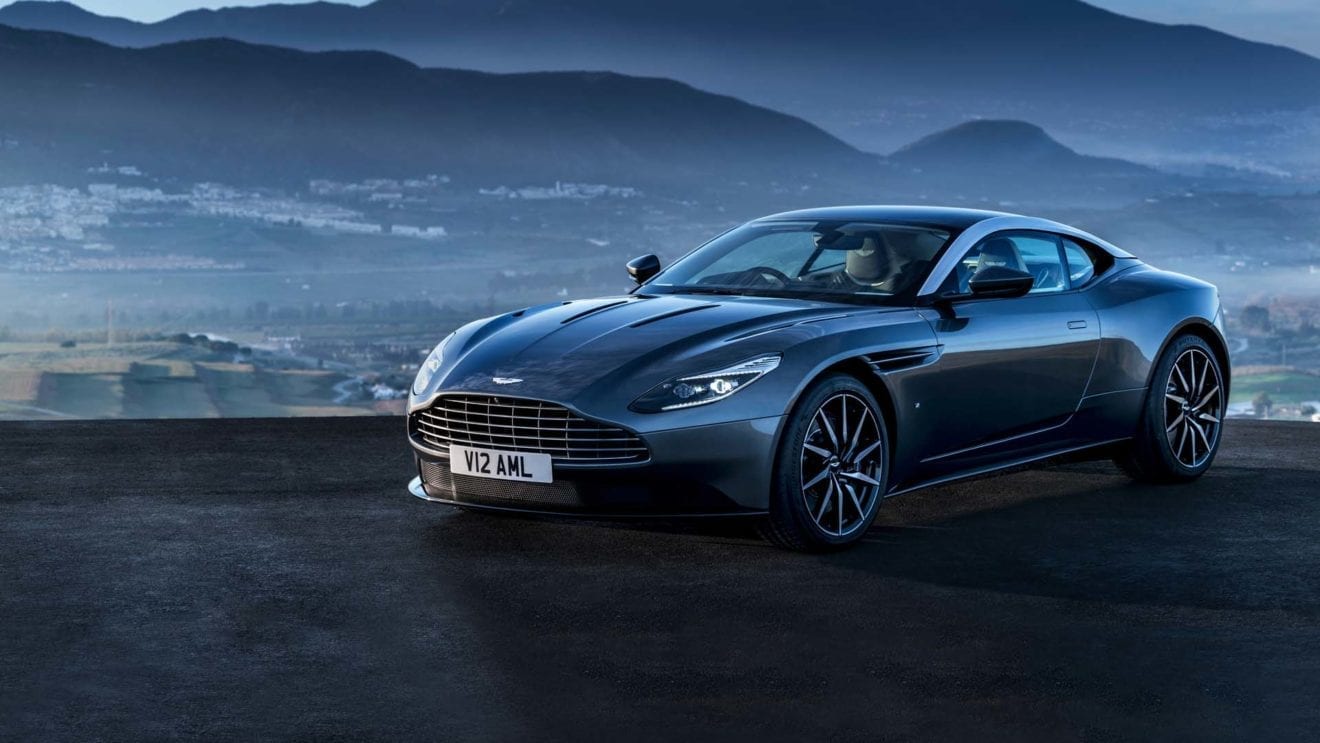
    The biggest investor in Aston Martin is considering buying another 3% stake, offering to increase its holding after shares in the luxury carmaker crashed almost 50% since its listing nine months ago.

    Strategic European Investment Group, part of the Italian private equity group Investindustrial, owns 31% of Aston Martin. It only wants to buy a maximum 3% stake but has to make an offer to all shareholders due to its already large holding.

    It has secured agreements from existing shareholders such as a group of Kuwait-based investors to back the move.

    It is offering to pay 10 pounds ($12.68) per share, the price at which the shares closed on Friday. It must make a decision by July 29.

    Aston Martin has struggled since it listed in October last year. Its shares fell on the opening day and are now down 47 percent. The company’s recent results have been hit by a need to invest more in its manufacturing plants and expand its vehicle offering, leading to higher costs.

  • Suzuki, Mazda, Subaru Join Toyota-Softbank Self-Drive Venture

    Suzuki, Mazda, Subaru Join Toyota-Softbank Self-Drive Venture

    Five Japanese automakers including Suzuki Motor Corp and Mazda Motor Corp said they would each invest 2 percent in the on-demand, self-driving car service venture set up by SoftBank Corp and Toyota Motor Corp. Suzuki, Mazda, Subaru Corp, Isuzu Motors Ltd and Toyota’s compact car unit Daihatsu will each invest 57.1 million yen ($530,620) in the venture – dubbed Monet – in return for a 2 percent stake, the companies said in a statement.

    SoftBank and Toyota will each retain their 35% stakes in the company, which is now capitalized at $26.6 million. The latest investors join Honda Motor Co Ltd and Hino Motors Ltd, Toyota’s truck-making operations, which each own 10 percent stakes. Launched in October, the venture plans to roll out on-demand bus and car services in Japan in the next year, and a services platform for electric vehicles in the country as early as 2023 based on Toyota’s boxy “e-palette” multi-purpose vehicle.

    Monet is building up members as it joins the ride-sharing sphere which is dominated by startups such as Uber Technologies Inc, Didi Chuxing and Lyft Inc, as traditional automakers band together to compete in an industry which is placing a growing emphasis on offering vehicle services rather than selling cars to individual drivers.

    Automakers are increasingly joining forces with technology companies as well as each other as they grapple with the massive investment and software expertise required to develop these new services for which demand has yet to be tested. The new investment will see Suzuki, Mazda and Subaru deepen their partnership with Toyota, as they have already agreed to tap the R&D firepower of Japan’s biggest automaker for electric cars and other future vehicle technologies.

  • Volvo XC90 Armoured Vehicle Revealed

    Volvo XC90 Armoured Vehicle Revealed

    Volvo Cars takes a big step as a manufacturer of armoured vehicles with the XC90 Armoured car. The cars are designed and built to provide safe and comfortable travel with a high level of personal protection for the occupants. There is a growing global market for armoured vehicles at present, and a large number are manufactured with various protection ratings. Volvo already has received numerous requests over the past few years to develop an armoured XC90. The company has extensive experience of building police cars, fire engines and diverse special vehicles with high requirements in terms of function, driveability and safety. In fact, the first Volvo police car was delivered back in 1929.

    Work to develop a car with a VPAM VR8 protection rating commenced just over two years ago. A certified VPAM VR8 rating means the car has 360-degree ballistic resistance as well as explosive resistance. The armoured car is built on the Inscription version of the Volvo XC90 T6 AWD, which is manufactured at the Torslanda plant in Sweden. The size and nature of the model make it the most suitable vehicle in Volvo Cars’ product portfolio for armouring. From Torslanda, the car is sent to TRASCO Bremen GmbH in Germany, a company which has specialised for many years in building high-quality vehicles with high protection ratings.

    The high-strength steel armour is 10 millimetres thick, while the thickness of the glass can be up to 50 millimetres. The armour adds approximately 1,400 kilograms to the XC90, which brings the total weight of the car up to 4,490kg (including five occupants). To cope with the increased weight, the car is fitted with uprated suspension and new brakes. The Volvo XC90 Armoured (heavy) is available to order now and the first customer deliveries will be made at the end of 2019.

    Volvo Cars also develops another version of the armoured car (light). This means that Volvo Cars has a full portfolio of cars able to offer high personal protection. These cars are built on the XC60 T6 AWD Inscription or XC90 T6 AWD Inscription.

    These versions are geared towards different clientele than the XC90 Armoured (heavy). Users could be individuals or companies requiring a car with a higher level of protection due to a geographical risk or a heightened personal threat. A market for these types of protective vehicles also exists among security services, the police, the diplomatic corps and private individuals.

    The cars are intended for Latin America and Europe. After construction, they are retrofitted in Brazil, where there is considerable demand for these types of cars as well as substantial experience of building them. These vehicles are designed to offer lighter protection compared with the XC90 Armoured (heavy). Sales of these cars are scheduled to begin in the first half of 2020.

  • Ford Says To Cut 12,000 Jobs In All Across Europe

    Ford Says To Cut 12,000 Jobs In All Across Europe

    US carmaker Ford said Thursday that it plans to slash a total of 12,000 jobs across Europe as part of a previously-announced restructuring, as it closes or sells six plants in Britain, France, Russia and Slovakia in 2019 and 2020.

    “Ford’s manufacturing footprint in Europe will be reduced to a proposed 17 facilities by the end of 2020, from 24 at the beginning of 2019,” the group said, adding that the job cuts — including 5,400 already announced in Germany and 1,700 in Wales — would come “primarily through voluntarily separation programmes”.

  • Regent No. 1 Retro-Styled Electric Motorcycle To Debut Next Year

    Regent No. 1 Retro-Styled Electric Motorcycle To Debut Next Year

    Sweden-based Regent Motorcycles is an electric motorcycle manufacturer that recently showcased the company’s first product – the retro-styled Regent No. 1 electric motorcycle. The production prototype was unveiled on May 10, 2019 at the MC Massan Swedish Motorcycle Fair, and encouraged by the response the Regent No. 1 received at that event, the company now intends to ramp up production for a commercial launch of the Regent No. 1 by May 2020. The bike is priced at 9,500 Euros (around ₹ 7.5 lakh) with a 10 per cent discount for the first 100 bikes and Regent is already accepting pre-orders on the company’s website.

    The Regent No. 1 is powered by a rear hub motor which can produced around 11 bhp of power upto 20 bhp, and has a top speed of 120 kmph. The battery is a 72 V and 80 Ah pack, offering 6 kWh capacity, and is said to offer a range of 150 km on a single charge. The bike weighs around 130 kg, and has a steel frame, standard telescopic fork and dual rear shocks featuring chromed out coilover springs. The 18-inch spoked wheels come standard with disc brakes with ABS and regenerative braking.

    Despite the retro-styling, the Regent No. 1 comes with a host of modern technology. The instrument panel is a digital touch screen infotainment system, and the bike includes built-in GPS as an anti-theft device which powers the geofencing feature. The price tag is a bit on the higher side, and Regent Motorcycles is actively looking for investors as well. If the Regent No. 1 gives any indication, the next range of electric motorcycles from Regent will be interesting to see what they offer, both in terms of technology and features.

  • MG Motor India Introduces Annual Maintenance Package For The Hector

    MG Motor India Introduces Annual Maintenance Package For The Hector

    The MG Hector has finally hit the showrooms. It’s the stepping stone for MG Motor in our market and the company is going the whole hog to ensure that the Hector doesn’t fail to appeal to prospective customers on any front. The car has been packaged really well and has upped the ante in its segment in more than one way. Besides being the first connected compact SUV it also packs in several segment-first features and is offered with multiple powertrains and gearbox options. And now MG Motor has come up with pretty reassuring after sales service plans as well.

    The company offers Five years unlimited kilometers warranty, Five years unlimited kilometers roadside assistance, Five labor free scheduled services and medical assistance via 24×7 pulse hub in case of an emergency are among the services which will be standard with the car. Other than these, the company has also introduced four annual maintenance service packages- Classic, Classic 360, Premium and Premium 360 for Hector customers. The service packs can be purchased at a premium of ₹ 8000 for the base Classic pack which will be applicable for five years. The Classic and Classic 360 provides additional scheduled maintenance plans for the Hector. The Premium and Premium 360 plans on the other hands also cover wear and tear of parts (excluding tyre, battery and accidental repair) along with scheduled maintenance plans.

    In addition to these services, MG Motor will also offer 60 percent assured resale value after three years of ownership if customers are willing to upgrade to a new model. The company is also planning to launch four new SUVs by 2021 including an electric SUV and a seven-seater version of the Hector. The after sales services and annual packages are expected to be standard across the range.

  • MG Hector Launched In India

    MG Hector Launched In India

    MG Motor had revealed almost everything about the Hector in a series of events but we still awaited the prices. Now the company has announced the price of the Hector and it starts at  ₹ 12.18 lakh  (ex-showroom, India) going all the way up to ₹ 16.88 lakh. These prices are introductory. The Hector will be available in four variants- Style, Super, Smart and Sharp and of course it is the first connected car in its segment. The company has kick-started operations with 120 centers for the convenience of its customers. This figure will go up to 250 in September

    The connected car tech remains the magnum opus and MG Motor has left no stone unturned in its promotion, be it the ‘Internet Inside’ badge on the fender and tailgate or Benedict Cumberbatch talking about connectivity features in TV commercials or conducting a mega event for its technology demonstration. The Hector packs-in the best of connected car tech Indian customers have seen so far. The vertically-mounted 10.4-inch screen comes with pre-loaded entertainment content and allows you to manage complete vehicle settings and some more. The system offers features like – Real-Time Navigation, Remote Location, Geo-Fencing, Emergency Response, and Indian accented voice assist for a plethora of features. The software is updated via over-the-air (OTA) downloads like firmware and features updates like any updates. The SUV also comes with pre-loaded apps like – TomTom IQ Maps, Gaana Premium, and AccuWeather app among others. The system also comes with a first machine-to-machine embedded sim, along with the SUV Internet Protocol version 6 which makes it 5G-ready. The e-Sim will be provided by Airtel and MG Motor will give internet connectivity for free until the SUV is under warranty period. That said, the MG Hector oozes in the features department as well and scores really well with plenty of upmarket features. It gets a panoramic sunroof, premium sound system by Infinity, Electronic Stability Program (ESP), Hill Assist, cruise control, MID, powered seats, and wing mirrors and powered tailgate among others.

    Moving to its looks, the design and overall silhouette of the Hector are definitely something buyers in this segment will admire. Though MG is historically a British brand, the outline and impression of the Hector are more American. It has a butch looking front which is dominated by a massive black mesh grille with sleek chrome surroundings and MG has adopted the new, in-trend design where the headlamp assembly is mounted in the bumper and the daytime running lights (DRLs) are positioned at the top, close to the hood. The dimensions of the Hector are a size plus for its segment and it has the largest footprint in its segment at 2750 mm and it is 4270 mm long, 1835 mm wide and 1760 mm tall. On the inside, it gets an all-black treatment and the upholstery is finished in soft-touch leather which feels good. The design of the dash and central console looks minimalistic which is majorly due to the enormous touchscreen which eliminates many buttons. The longest wheelbase has also translated into a spacious cabin.

    There will be three powertrain options and gearbox options to choose from. The diesel variant will be powered by the Fiat-sourced 2.0-liter engine which churns out 168 bhp and 350 Nm of peak torque and is mated to a six-speed manual transmission as standard. The petrol variants will get the 1.5-liter, four-cylinder turbo petrol engine which is also mated to a six-speed manual transmission and develops 141 bhp and 250 Nm of peak torque. However, MG is also offering the same 1.5-liter engine with a 48 Volt mild hybrid system which is mated to a six-speed dual-clutch transmission (DCT). A 48-volt lithium-ion battery helps store energy and provides 20 Nm of extra torque when required. The combination also helps in reducing emissions by up to 12 percent using three key functions – Engine Auto Start-Stop, Regenerative Braking, and E-Boost. MG Motor is also planning to launch the seven-seater version of the Hector next year.

  • Erik Buell’s New Electric Bike FUELL Fluid Details Revealed

    Erik Buell’s New Electric Bike FUELL Fluid Details Revealed

    The FUELL Fluid electric bike is the first product from the new company spearheaded by motorcycle engineer Erik Buell. Buell was a former engineer with Harley-Davidson, and had founded his own motorcycle brand, the Buell Motorcycle Company and later Erik Buell Racing. The new company, called FUELL, is a partnership between Erik Buell and two other entities, Vanguard Motorcycles, and Spark Racing Technology. FUELL’s first product is the Fluid electric bike, and has a claimed range of 200 km from its two 1,008 Wh removable batteries.

    The FUELL Fluid e-bike has a mid-drive bofeili 500W pedal-assisted motor, giving it 100 Nm of torque, and comes equipped with a Gates Carbon Drive belt system and a Shimano Alfine 8-speed Geared Hub. The twin batteries can be charged up to 80 percent in just 2.5 hours and a full charge in 5 hours. According to FUELL, both of the Fluid e-bike’s 504wh batteries are removable and have the potential to be upgradable, as and when battery technology evolves. The Fluid e-bike sports a 3.2 IPC colour screen which displays information like speed, distance traveled, battery level and five configurable motor assist settings. The Fluid also comes equipped with adjustable suspension and hydraulic brakes for impressive stopping power. The Fluid e-bike is expected to be available from September 2019 and will be shipped worldwide. It’s priced at USD 2,999 (around ₹ 2 lakh in current exchange rates).

    Erik Buell, the man behind the FUELL brand, is considered to be a pioneer in motorcycle technology and was inducted into the American Motorcyclist’s Association Hall of Fame in 2002. He has over 40 years of engineering experience and founded Buell Motorcycle Company which eventually merged with Harley-Davidson. Erik Buell Racing followed the shutdown of Buell Motorcycle Company, and has an Indian connection as well, with Hero MotoCorp picking up 49.2 percent stake in the company in 2013. Erik Buell Racing was involved primarily in building race-ready motorcycles. Erik Buell Racing eventually shut shop in 2016, and the remnants of the company were sold to Liquid Asset Partners.

    FUELL, Erik Buell’s new electric bike venture is expected to introduce more electric motorcycle models in the coming years. The next FUELL product is expected to be the FUELL Flow, an electric motorcycle featuring a hub-mounted electric motor and side-mounted rear shock. The Flow is expected to be available in two variants – with one variant producing 11kW (around 15 bhp) and the other with 35 kW (around 37 bhp). With a history of motorcycle engineering, and racing, it will be interesting to see how the FUELL brand will evolve in the coming years, particularly at a time when the entire auto industry seems to be focussing on electric vehicles as the preferred choice of technology for the future.

  • Android Auto is getting a redesigned interface and Dark Mode

    Android Auto is getting a redesigned interface and Dark Mode

    Google last month announced an update for Android Auto that would change the way the app looks and works, and it is now finally rolling out to some regions. Google says that the refreshed interface was “built to help you get on the road faster, show more useful information at a glance and simplify common tasks while driving.”

    To streamline the experience and to make common tasks even easier to perform while driving, the latest Android Auto update introduces a redesigned bottom navigation bar. It allows users to control apps and media, manage incoming calls and notifications, and get directions on the same screen, with fewer taps required than before.

    The redesigned bottom bar also offers a way to better utilize screen real estate. Since Android Auto is a scalable experience, made to work on many types of displays with different sizes, aspect ratios, and resolutions, the UI design changes are aimed at making the app a consistent and well-optimized experience across the board.

    Speaking of UI changes, Dark Mode is also a thing now in Android Auto. It’s more of a visual change, rather than functional, but it should make using the app during the night a bit easier on the eyes. Google says that the new dark theme was designed to utilize more colorful accents and easier to read fonts to further improve visibility and reduce eye strain.

    The update seems to depend on a server-side switch, as is often the case with Google services, and not on the app version you’re running. Still, you can check if you’re on the latest version by heading to the Google Play Store.

    The new Android Auto update has started rolling out in the UK and US, so other regions where the service is available should start receiving the new features in the coming days/weeks.