Category: Automotive

Retail News Asia is committed to providing both local and global retailers with the latest Auto and Car news throughout the Asian market. This on a daily base.

  • BMW Doubles Battery Production Capacity

    BMW Doubles Battery Production Capacity

    BMW Group said on Wednesday it would double its production capacity for electric vehicle batteries at its U.S. plant in South Carolina as it ramps up manufacturing of plug-in hybrid vehicles to include the X3 vehicle in addition to the X5. BMW said it was investing $10 million in a new battery assembly line which will be capable of operating in a two-shift system ahead of the introduction of the BMW X3 plug-in hybrid vehicle by the end of the year.

    BMW made 15,000 batteries last year with a one-shift system and currently produces a plug-in hybrid version of the X5 offroader. A new version of the X5 will be produced at the Spartanburg plant from August onwards, the company said. BMW said it planned to employ 120 staff to manufacture different types of batteries, and the additional staff gave it the capacity to double production.

    In the past four years BMW workers assembled 45,000 batteries, the carmaker said.

  • Jaguar Confirms J-Pace SUV In The Works

    Jaguar Confirms J-Pace SUV In The Works

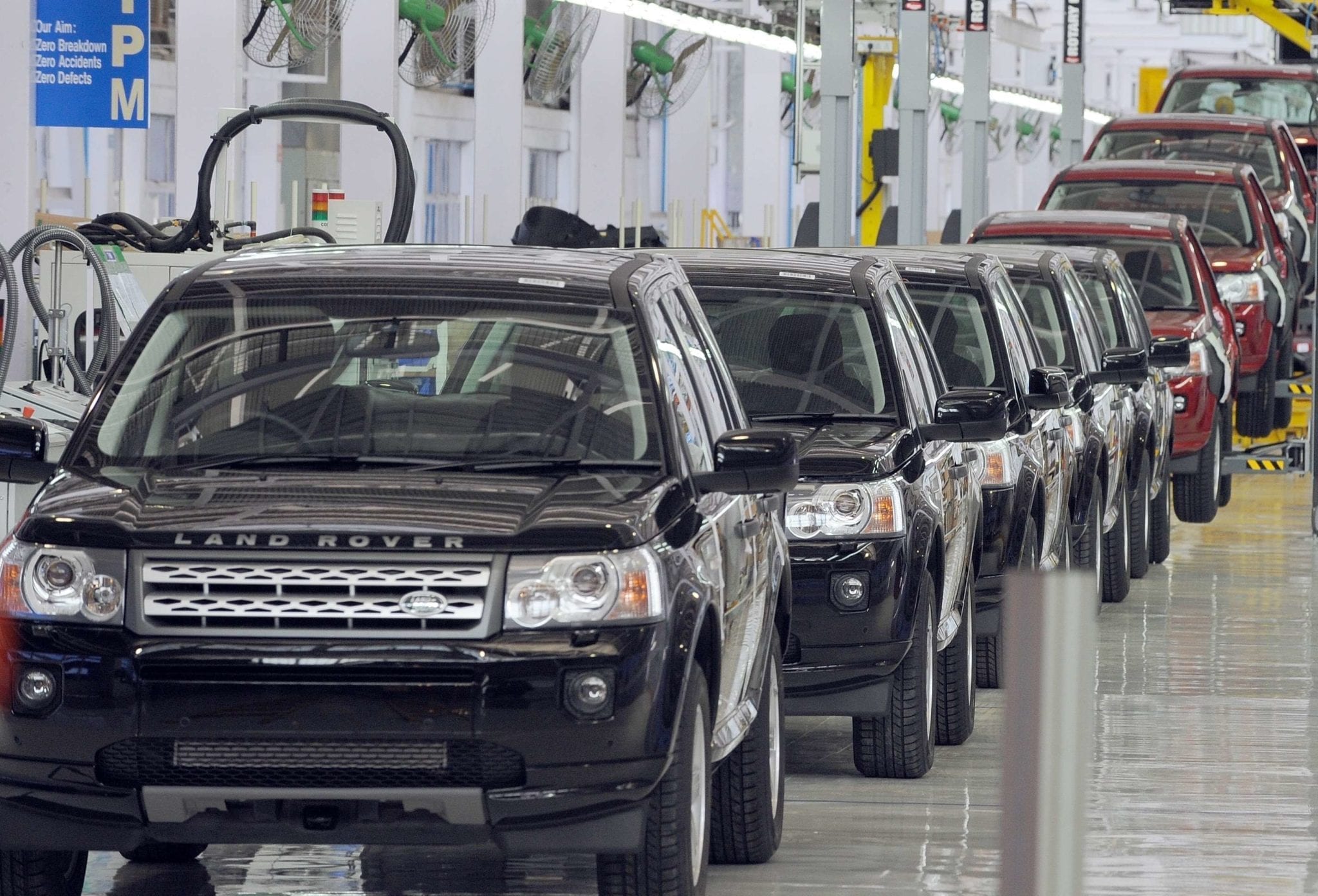
    Jaguar has confirmed that the J-Pace SUV is in the works and a select few got a chance to see what the car is like. The J-Pace will be positioned above the F-Pace and it is likely to be underpinned by the MLA platform which will also spawn the next-generation Land Rover and its hardware will be developed with electrification in mind. The company had already announced its electrification plan worldwide. Every new Jaguar Land Rover model line will be electrified from 2020, giving customers more choice. The company is also set to introduce a portfolio of electrified products across our model range, embracing fully electric, plug-in hybrid and mild hybrid vehicles and that has already started with the I-Pace.

    There are more cars coming through and this includes the replacements for the current XE and F-Type. Of course, there’s also the all-electric version of the flagship sedan, XJ, which is set to make its mark in the market very soon. the model all-electric XJ which will succeed the combustion version which rolled off the production line for the last time on July 5.

    Codenamed Road Rover, the new generation Jaguar XJ will also get cosmetic changes along with the electric motor. Reports suggest that the XJ will be turned in to a five-door sedan instead of the current 4-door body. It is understood that the design layout for the new XJ is ready and the company will soon start working on it. This new design language will also be seen in the future Jaguar models.

    Additionally, considerably less expensive ‘baby Jags’ (possibly badged A-Pace or B-Pace) have not been ruled out. Dr. Ralph Speth, Jaguar CEO also stressed that Jaguar (plus sister manufacturer, Land Rover) are definitely not for sale to Peugeot-Citroen, Fiat-Chrysler, Hyundai-Kia or any other motor manufacturing companies.

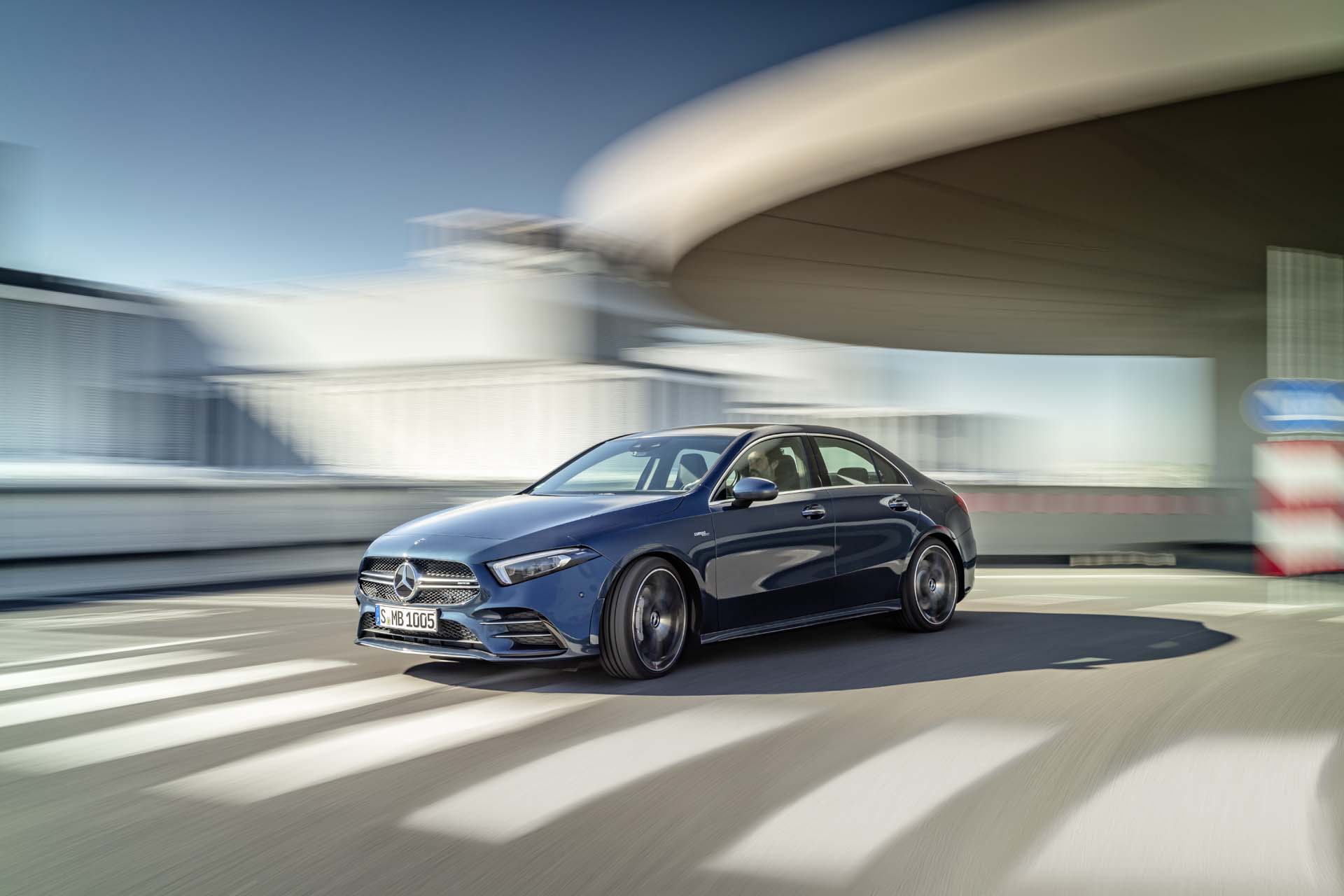
  • Mercedes-Benz India To Hike Car Prices By 3% From August

    Mercedes-Benz India To Hike Car Prices By 3% From August

    Mercedes-Benz India has announced an increase in prices for select model range in India. With effect from August 2019, select Mercedes-Benz cars will see an upward revision in prices, up to 3 percent across the model range. While the company hasn’t shared the list of models that will see the price hike next month, the carmaker does mention that the current increase in customs duty on automotive parts and additional cess and excise duty on fuel has led to the price hike.

    Martin Schwenk, Managing Director & CEO, Mercedes-Benz India said, “As the leading luxury automobile maker in India, we have been relentlessly working on offering the best of products and industry benchmark customer service and ownership experience. However, a hike in customs duty on automotive parts, compounded by an increase in excise duty, and cess on fuel have had a significant impact on our bottom line. We were left with fewer options, but to make some necessary price adjustments to our product range at the moment to offset the impact of the rising input costs.”

    Last time the carmaker announced a price hike in India was back in September 2018, along with several other carmakers, after the value of the Indian Rupee reaches almost 73 compared to the US dollar.

    Recently, Mercedes-Benz India also reported a sales decline of 18.60 percent in the Indian market in the first half of the calendar year 2019. The company has sold 6561 units in the January-June period this year against 8061 units which were sold in the same period a year ago.

  • Germany’s Continental, Jungheinrich Hit Brakes As Auto Sector Slows

    Germany’s Continental, Jungheinrich Hit Brakes As Auto Sector Slows

    A slowing auto sector prompted profit warnings from supplier Continental and paint systems producer Duerr late on Monday.Jungheinrich also lowered its outlook citing a downturn in the forklift truck  sector. It marked a fourth profit warning from Continental in 16 months, while French rival Faurecia on Tuesday stuck to its guidance. “The main reason is the continued decline in the global production of passenger cars and light vehicles,” Continental said, adding that car production will likely drop by 5% rather than remain flat.

    Despite the negative news Continental shares were up 4.6% at 0925 GMT.”The market is telling us that in the short run, the worst has been priced in,” said Evercore ISI analyst Arndt Ellinghorst.

    “The magnitude of the cut is worse than we were expecting and bodes poorly for the remainder of earnings season and 2020 outlooks.”

    Continental is due to release earnings on August 7.

    Duerr, which produces woodworking equipment and paint systems for the auto industry, said lower payment receipts from the auto sector had eaten into its free cashflow in the first half.

    The company, which is due to release first-half results on August 7, said its EBIT margin guidance of 7%-8% for 2020 is under review.

    Jungheinrich said there had been a sharp drop in customer investment.

    “This is due to the gloomier macroeconomic environment and the related current developments in the market for material handling equipment,” said Jungheinrich, which is due to release results on August 8.

  • China’s BAIC Buys 5% Daimler Stake To Cement Alliance

    China’s BAIC Buys 5% Daimler Stake To Cement Alliance

    China’s Beijing Automotive Group Co Ltd (BAIC) has bought a 5% stake in Daimler, cementing their long-standing alliance after China’s Geely emerged as a potential rival by also taking a stake in the German automaker.

    BAIC has been Daimler’s main partner in China for years, operating Mercedes-Benz factories in Beijing through Beijing Benz Automotive.

    But last year Li Shufu, the chairman of Zhejiang Geely Holding, bought a 9.69% stake in the German company with the aim of forging an alliance to develop electric and self-driving cars.

    “This step reinforces our alignment with, and strong support for, Daimler’s management and strategy,” BAIC chairman Heyi Xu said on Tuesday.

    Reuters reported in May that BAIC was seeking to buy a stake of up to 5% in Daimler as a way to secure its investment in Beijing Benz Automotive.

    Daimler, which since 2013 has held a stake in BAIC’s Hong Kong-listed unit, said it welcomed BAIC’s investment.

    “The purchase of Daimler shares by BAIC will strengthen the cooperation between BAIC and Daimler,” said Jefferies analyst Patrick Yuan.

    “From this point of view, the possibility of Daimler increasing its stake in the Beijing Mercedes-Benz joint venture will be greatly reduced, which will benefit the shareholders of BAIC’s listed companies.”

    Shares in Daimler rose by more than 2.5%, while BAIC’s listed subsidiaries, BAIC Motor Corp and BAIC BluePark New Energy Technology, climbed by more than 3% and 5% respectively after the news.

    The high cost of electric car batteries has made it hard for automakers to build affordable zero-emissions vehicles, leading several of them to strike alliances with Chinese partners.

    Stuttgart-based Daimler in March agreed to build the next generation of Smart-branded city cars together with Geely, which is based in Hangzhou.

    Daimler has reassured BAIC that any new industrial alliances involving Mercedes and a Chinese partner would only happen after a consensus is found with BAIC.

    Geely declined to comment on the BAIC-Daimler deal but referred to past statements which said it was committed to long-term investment and healthy collaboration with Daimler.

    Daimler shares have lost about 30% of their value since Li Shufu disclosed his stake, hit by a string of profit warnings linked to a slowing auto market and diesel emissions costs.

  • Toyota, BYD Team Up To Develop Battery EVs

    Toyota, BYD Team Up To Develop Battery EVs

    Toyota Motor said it would develop battery electric vehicles (EVs) and batteries with BYD Co Ltd, in a sign it was ramping up partnerships with Chinese players as planned to build affordable EVs for the world’s top auto market. In a joint statement, Toyota and the Chinese electric automaker said on Friday that they would develop sedans and sport utility vehicles, which would then be sold under the Toyota brand in China before 2025.

    Earlier this week, Toyota announced it was teaming up with China’s Contemporary Amerex Technology Co Ltd (CATL) to supply and develop batteries for lower-emission vehicles.

    Widely considered a late comer in embracing battery EVs versus rivals including Nissan, Toyota had flagged in June that it aimed to get half of its global sales from EVs, including gasoline hybrids, by 2025, five years ahead of schedule.But to meet this accelerated timeline, Toyota, Japan’s top automaker, would need more-than-expected batteries, prompting it to look beyond Panasonic Corp, its long-time partner in battery development, to secure supply.

    These measures come amid a breakneck growth in the zero-emission vehicle market, with tighter global emissions regulations expected to shift even more drivers away from gasoline engine vehicles in the coming decades. In China, Toyota is planning to launch its first battery EV, a version of its C-HR/IZOA compact crossover, next year.

  • Aston Martin’s Biggest Investor Offers To Buy Another 3% Stake

    Aston Martin’s Biggest Investor Offers To Buy Another 3% Stake

    The biggest investor in Aston Martin offered on Friday to buy another 3 per cent stake in the luxury carmaker, whose shares have slumped since listing last year. Strategic European Investment Group, part of the Italian private equity group Invest industrial, already owns 31 per cent of Aston Martin. It only wants to buy a maximum 3 per cent more, but has to make an offer to all shareholders due to its already large holding. It confirmed it is offering to pay 10 pounds ($12.53) per share.

    Aston Martin has struggled since it listed in October last year. Its shares, down 21 per cent so far this year, closed Thursday at 963 pence, valuing the business at 2.18 billion pounds.

    The company’s recent results have been hit by a need to invest more in its manufacturing plants and expand its vehicle offering, leading to higher costs.

  • Hyundai Mobis Builds Camera System To Replace Vehicle Side Mirrors

    Hyundai Mobis Builds Camera System To Replace Vehicle Side Mirrors

    South Korea’s largest auto parts maker Hyundai Mobis on Sunday said it has developed a camera monitoring system that will replace side-view mirrors in next-generation vehicles. With the advanced sensor technology, Hyundai Mobis has joined a couple of global future mobility developers and it aims to export the technology to carmakers, Yonhap news agency reported.

    Three high-performance camera sensors inside the vehicle will not only increase driving safety by significantly reducing blind spots, and but also improve fuel efficiency as side-view mirrors will be hidden inside the car, Hyundai Mobis said in a statement.

    “The paradigm shift to the future car is demanding both functional and design upgrades of all core components, which have been taken for granted until today,” Vice President Gregory Baratoff in charge of autonomous vehicle development at Hyundai Mobis said in the statement.

    The company will not only develop element technologies, like sensors and solutions based on them, but also the core parts portfolio that it has already secured in accordance with the future car era, he said.

  • Porsche To Use Holoride’s Virtual Reality Tech To Keep Rear Passengers Entertained

    Porsche To Use Holoride’s Virtual Reality Tech To Keep Rear Passengers Entertained

    Porsche has collaborated with Munich-based entertainment firm Holoride to come out with a special Virtual Reality (VR) based entertainment device for rear passengers. Recently unveiled at the Start-up Autobahn Expo Day, the immersive virtual entertainment tech uses a VR headset with sensors, which is paired to the vehicle so that its content can be adapted to the car’s driving movements in real-time. With this new tech, the German luxury and sports carmaker is trying to show what entertainment could be like in the future for the backseat passenger in a Porsche.

    How this device essentially works is, suppose the car is being driven around the curve, the virtual vehicle that the passenger is traveling in, let’s say, for example, a space shuttle, will also change direction. The company says that this results in a highly immersive experience, which significantly reduces the symptoms of motion sickness. Although still in prototype stage, Porsche says In future, the system will also, for example, be able to evaluate navigation data to adapt the length of a VR game to the calculated duration of the journey. This technology can be used to integrate other entertainment services such as watching a film or even virtual conferences, the applications are many. Also, as Holoroid has an open platform approach, car manufacturers and content producers can customize the content to adapt to driving time, motion, and context.

    Nils Wollny, CEO of Holoride founded the entertainment tech start-up at the end of 2018 with his partners, Marcus Kuhne and Daniel Profendiner. Using the Start-up Autobahn platform, the up-and-coming company has now shown that their “holoride” software works seamlessly with manufacturers’ vehicle data for motion-synchronized, real-time generation of virtual reality (VR) and cross-reality (XR) content.

    Porsche will have the new VR technology on display and to experience at the upcoming Frankfurt Motor Show, from September 20, 2019. Under the motto “Next Visions. Change the Game – Create tomorrow”, Porsche is inviting innovators and partners to the motor show to discuss the future of mobility.

  • Volvo S60 And V40 Discontinued In India

    Volvo S60 And V40 Discontinued In India

    Volvo Auto India has finally pulled the plug two of its oldest models in the domestic line-up. The Volvo S60 sedan and the V40 hatchback have been discontinued in India, along with their cross country versions. The cars have also been de-listed from the company’s website. The Swedish automaker has confirmed the development. With both the cars already discontinued globally, it was only time that they would go off sale in India too. Volvo imported these cars as Completely Built Units (CBUs), which means they adhere to the global lifecycle. While the cars have been discontinued, certain dealers do have an example or two of the older generation S60 in their inventory.

    So, when do we see the new Volvos then? Well, not for a while actually. The Volvo V40 will be discontinued globally by the end of this year and will not have a direct replacement. Instead, a new SUV coupe likely to be positioned below the XC40 and will replace the hatchback instead. Power is expected to come from petrol, hybrid and electric options on the new offering. The V40 replacement will be based on the automaker’s Compact Modular Architecture (CMA) platform that also underpins the XC40 SUV.

    On the other hand, the next generation Volvo S60 has already been revealed globally and is based on the automaker’s new Scalable Product Architecture (SPA) platform that underpins the new and larger cars from the automaker. The new generation S60 was expected to go on sale this year in India but the launch has been postponed to 2020, according to the company. The new S60 is likely to be locally assembled when it arrives in India, like the other models based on the SPA platform including the S90 sedan, XC60 and the XC90 SUVs.

    The outgoing Volvo S60 arrived in India in 2011 and helped the brand grow amidst the German offerings. The Volvo V40 arrived in India in 2013 in the Cross Country guise, and was the brand’s most affordable offering till the standard version was launched later. Currently, it is the Volvo XC40 that is the brand’s most affordable offering in India. The company’s newer models have also been able to help the brand grow immensely in recent times. Volvo India registered a 11 per cent increase in volumes for the first half of 2019, quite contrary to the lull period that the Indian auto industry is going through.

  • 50th Anniversary Edition BMW R Nine T/5 Unveiled

    50th Anniversary Edition BMW R Nine T/5 Unveiled

    BMW has completed the 50th anniversary of the /5 Series motorcycle models, as well as 50 years of BMW Motorrad production in the Berlin Spandau factory. To celebrate both anniversaries, BMW Motorrad has introduced an exclusive BMW R Nine T/5 anniversary model. The R Nine T/5 uses the BMW R Nine T model as a base and incorporates several historical aesthetic touches, in addition to modern bits. The BMW R Nine T/5 anniversary model uses the classic silver and black finishes throughout the bike, as well as classic chrome on the mirrors, exhaust manifold, and rear silencer. The double seat with chrome decorative elements and white piping evoke the historic predecessor.

    The retro touch of the BMW R Nine T/5 is further accentuated by fork gaiters, spoked wheels and aluminium finished wheel hubs for the classic old-school look, as well as standard fork gaiters. Modern gizmos include standard ABS, ASC (automatic stability control) with heated seats and handlebar grips. There’s also the elaborate use of high-end details such as fork bridges and footrests in forged, clear anodised aluminium. The R Nine T/5 continues to be powered by the same 1,170 cc, twin-cylinder engine which puts out 110 bhp at 7,750 rpm and peak torque of 116 Nm at 6,000 rpm. Prices and availability are yet to be announced for the special edition motorcycle.

    The original BMW R50/5, R60/5 and R75/5 marked the beginning of a new production era at BMW’s new motorcycle operations in Berlin in the 1960s. The first /5 models went on to become popular choices for the customer well into the 1970s, with more than 12,000 motorcycles leaving the factory by 1970. When the /5 series was discontinued in 1973, BMW had built a total of 68,956 motorcycles in Berlin, and in that same year, the company celebrated “50 years of BMW Motorrad” with the manufacture of the 500,000th BMW motorcycle.

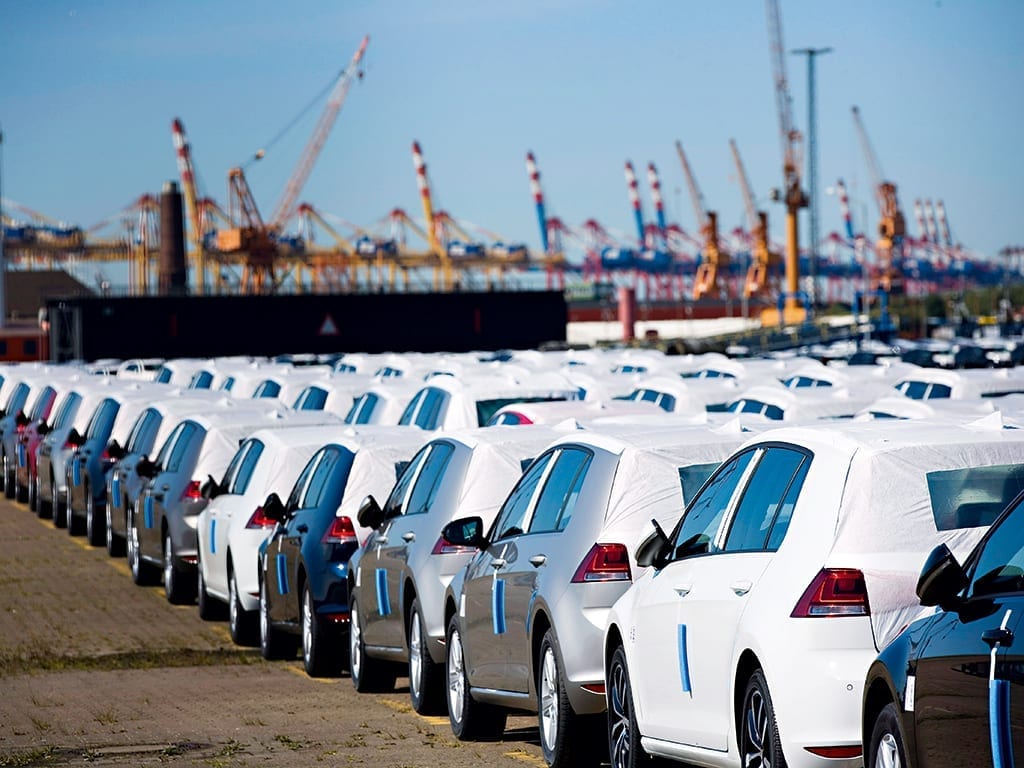
  • Volkswagen To Build New Plant In Turkey

    Volkswagen To Build New Plant In Turkey

    German carmaker Volkswagen is planning to build a multi-brand production plant in Turkey, a German trade magazine reported on Friday without citing sources.

    Automobilwoche said Volkswagen supervisory Board on Thursday made the decision to build a plant near the city of Izmir, adding that Volkswagen’s subsidiary Skoda will be one of the brands to be produced there.

    In April, Czech daily Hospodarske Noviny reported that Skoda was choosing between Bulgaria or Turkey as the site for a planned new plant.

  • Ford To Lay Off Around 200 Workers At Canadian Plant

    Ford To Lay Off Around 200 Workers At Canadian Plant

    Ford Motor  will lay off about approximately 200 employees in September at a Canadian manufacturing plant in Oakville, Ontario, with the possibility of more layoffs in January, the company said on Friday. Ford employs approximately 4,600 workers at the Oakville plant. “We have been arguing as a local for the past several weeks trying to persuade the company from somehow avoiding this scenario, but to no avail,” Dave Thomas, president of Unifor Local 707, in Oakville, Ontario, said in a note to members that was posted on the union’s website on Wednesday.

    “As always, it’s based on a business decision and it all comes down to dollars and cents,” he said.

    Ford attributed the layoffs to slowing sales of the Ford Flex and Lincoln MKT, both of which are produced at the Oakville plant.

    In addition, the Ford Edge is no longer being sold in some European markets, which the company also pointed to as a reason for the Oakville layoffs.

    “We have a longstanding practice of matching production with consumer demand,” Kelli Felker, Ford’s manufacturing and labour communications manager, said in an email.

    The plant will slow production as of Aug. 1, cutting one shift and reducing hours, Thomas said.

    Robert Gibson, spokesman for Ontario’s minister of economic development, said the provincial government is disappointed to learn of the layoffs.

    “We want the employees in Oakville to know that our government stands with them and their families,” Gibson said in an email to Reuters. “We will work with our partners to continue to fight for good jobs in Oakville and support the affected families.”

    Ford had announced a 10% cut to its global white-collar workforce in May, eliminating 7,000 jobs.

    The Dearborn, Michigan-based automaker also announced intentions to slash 12,000 European jobs by 2020.

    Canadian auto sales in June were down 7.2% from a year earlier, the latest drop in a 16-month decline.

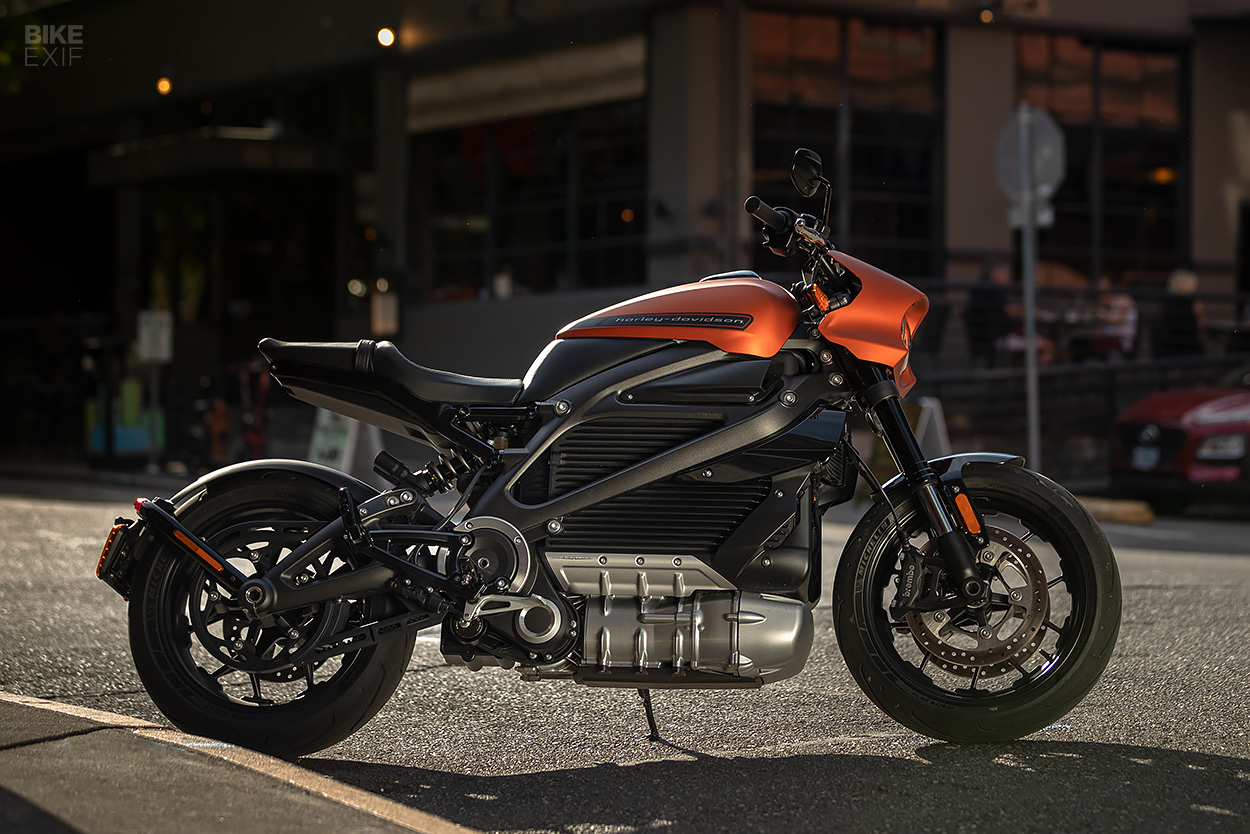
  • Harley-Davidson LiveWire Electric Motorcycle Unveiled

    Harley-Davidson LiveWire Electric Motorcycle Unveiled

    Harley-Davidson has unveiled the production version of its first electric cruiser and it is expected to go on sale in 2020. The Harley-Davidson LiveWire made its debut as a concept at the EICMA 2018 motorcycle show and at the Consumer Electronic Show (CES) 2019, the American motorcycle maker had announced that it will take pre-orders for its first electric model. Harley-Davidson intends to work on a complete range of electric motorcycles and the LiveWire will kick things off for the company in the electric mobility space. The bike maker has also revealed the pricing on the Livewire that costs $30,000 in the US (around ₹ 20.56 lakh).

    The LiveWire is powered by a new electric motor which Harley-Davidson calls the “Revelation” drivetrain. The new drivetrain uses a belt drive to power the motorcycle forward. The electric bike also comes with a number of advanced features like a telematics system called H-D Connect which gives data about the motorcycle’s battery charge and service reminders to the owner via Harley’s connected app. Harley-Davidson aims to make LiveWire the first cellular-connected electric motorcycle.

    The company has already revealed the specifications and details about the performance of the LiveWire and claims that it can clock triple digit speed in just 3.5 seconds along with a top speed of 177 km on a single charge. The manufacturer claims a range of 235 km on a single charge. Ride assist features on the LiveWire include traction control and anti-lock braking system (ABS) which will be assisted by an inertial measurement unit (IMU). Moreover, it also features a signature Harley-Davidson sound as it accelerates.’ Additionally, the LiveWire gets rear-set pegs, Brembo calipers and a steel trellis frame with inverted Showa forks and a monoshock at the rear. It is also packed with equipment like multiple rider modes, Bluetooth connectivity and a full-colour TFT instrument console.

  • China Liberates Its Automotive Strategy To Support Hybrid Vehicles Sales

    China Liberates Its Automotive Strategy To Support Hybrid Vehicles Sales

    China is one of the biggest EV markets in the world and many global automakers have developed electric vehicles particularly for the Chinese market. However, some carmakers like Toyota and Honda have also invested heavily in the hybrid technology and have been expecting support from the Chinese Government to promote the sales of hybrid vehicles. Finally, it looks like that the Chinese Government will consider their demand and has started focussing on hybrid vehicles as well in its new strategy for the auto sector.

    Earlier this year, the Chinese government had introduced manufacturing and sales quota to promote new-energy vehicles which include electric cars, hydrogen fuel cell vehicles and plug-in hybrids. According to the quota rule, new-energy vehicle must account for 10 per cent of automakers fleet in 2019. The Ministry of Industry and Information Technology wants to amend the regulations and allow automakers to include more fuel-efficient hybrid vehicles in their line-up. Hybrid vehicles will be still categorised under the fossil fuel powered segment but will be classified as low-fuel consumption vehicles. The new rule is likely to help automakers in China to meet the environmental quota norms along with allowing them to add more hybrid vehicles in their product line-up.

    The current rule requires automakers to manufacture 20,000 high performance EVs for every one million hybrid vehicles. If EVs do not meet the performance standards, then they require to manufacture more than 20,000 units as hybrids are grouped along with petrol and diesel vehicles, under the same category. That said, the new proposed rule will allow automakers to manufacture only 6000 EVs for a million hybrid vehicles, while the number of EVs for one million petrol or diesel vehicles will be increased to 29,000 units. China is also world’s largest car market and hybrid vehicles being more fuel efficient and low on emission will help carmakers to achieve emission targets in such a high-volume market along with improving sales.