Category: Automotive

Retail News Asia is committed to providing both local and global retailers with the latest Auto and Car news throughout the Asian market. This on a daily base.

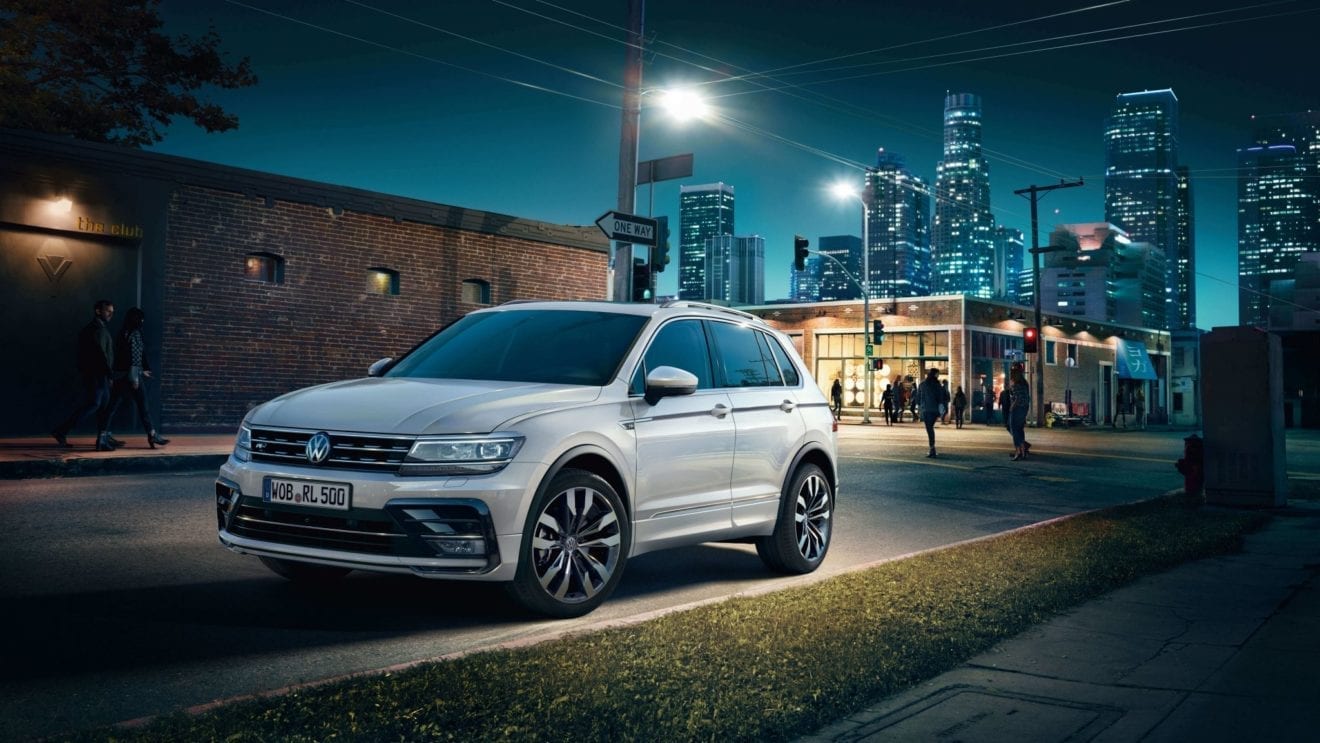
  • Volkswagen offers $20K discount

    Volkswagen offers $20K discount

    German auto brand Volkswagen has cut the prices of three models in Vietnam by VND140-500 million (US$5,700-20,300) this month.

    The Teramont now costs VND2 billion, down VDN500 million, or 20%, from its original price tag.

    The full-size SUV, which is imported from the U.S., has high-end entertainment features such as an 11-speaker audio system and 8-inch screens.

    The Teramont X, which starts at around VND2 billion, comes with a discount of VND99-130 million depending on locality. It is imported from China.

    The Touareg, imported from Slovakia and priced at up to VND3.05 billion, is being sold at discounts of VND134-182 million.

    Volkswagen announced the discounts after major brands such as Honda, Toyota, Nissan, Subaru, and Suzuki all cut their prices.

    Vietnam Automobile Manufacturers Association members’ sales rose by only 1.1% year-on-year in the first seven months to 163,800 units.

  • Chinese luxury EV maker Zeekr enters Vietnam

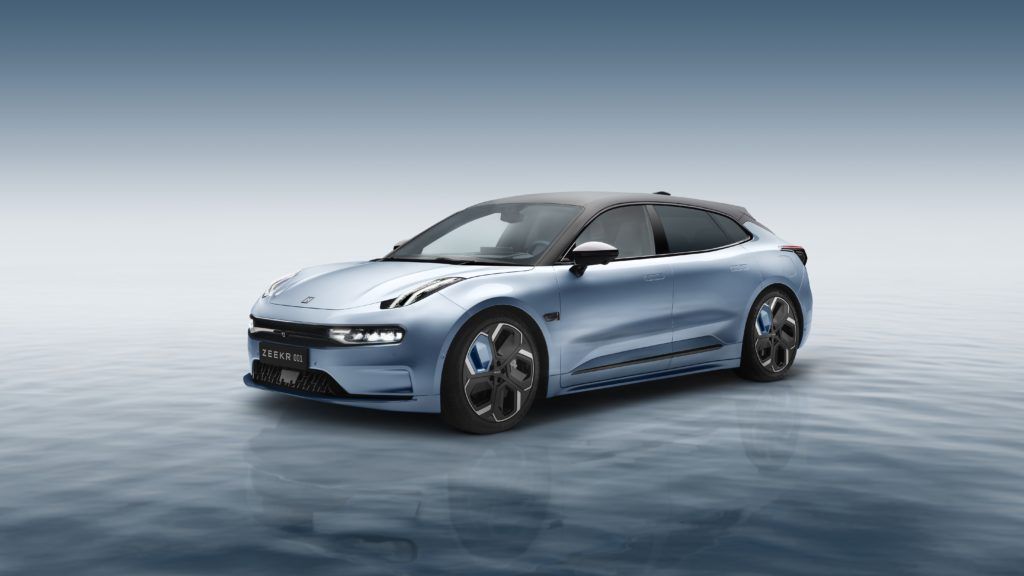
    Chinese luxury EV maker Zeekr enters Vietnam

    Zeekr, Chinese conglomerate Geely’s premium electric vehicle brand, will be distributed in Vietnam by transport services provider Tasco.

    Following an agreement signed Monday the EV maker joined the list of auto brands distributed by Tasco, which also includes Lynk & Co and Volvo, two other Geely subsidiaries.

    Tasco has not disclosed when or which Zeekr models will be sold in the market, nor has it confirmed whether it will build charging infrastructure for Zeekr vehicles or outsource this to a third party.

    Zeekr was established in 2021 and is positioned as a luxury EV manufacturer that focuses on driving assistance and safety technologies.

    It targets high-end customers and competes in the premium EV segment, but offers competitive prices. It recently expanded to Europe, the Middle East and Southeast Asia.

    The brand offers seven models in China, all based on Geely’s Sustainable Experience Architecture EV platform.

    Zeekr vehicles sold in Vietnam will be imported from China, where the company has its only plant.

    Other Chinese EV brands that have entered Vietnam within the last year include BYD and Lynk & Co.

    Three others, Omoda, Jaecoo and Aion, are expected to launch in the fourth quarter.

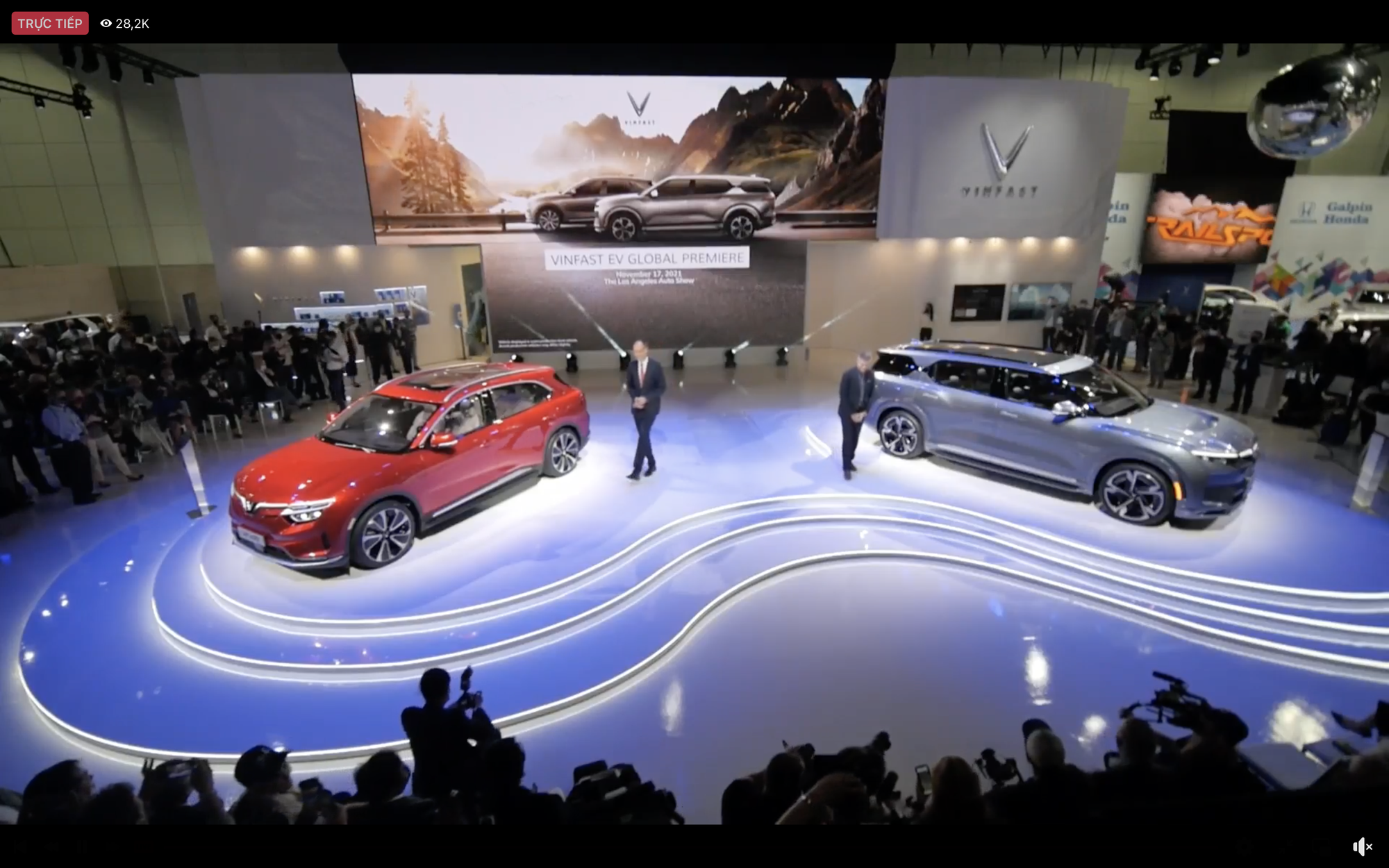
    VinFast, the only domestic producer, dominates the EV market in Vietnam with a wide range of products and the largest network of charging stations.

  • Indonesia encourages people to embrace EVs​

    Indonesia encourages people to embrace EVs​

    Indonesian Transportation Minister Budi Karya Sumadi is encouraging more people to embrace electric vehicles (EVs) in their lives as the country wishes to boost its e-mobility adoption.

    However, the minister admitted that convincing people to use EVs could be hard as they were still pricey at this time. Promoting green transport should also start as soon as possible so people will get used to riding EVs, according to Budi.

    He said this is a grand idea that will certainly benefit all, particularly for the future generations. But it is not an easy task.

    He also said he hopes that there will be a rise in the EV lifestyle, although electric cars and two-wheelers are still expensive.

    Indonesia is aiming to reach net zero emission by 2060 or sooner. The country has set a goal to have 2 million electric cars and 13 million electric two-wheelers on its roads by 2030.

    The government earlier this year reported that Indonesia had recorded 144,547 units of EVs as of May 2024.

  • Over 600 Lexus cars recalled in Vietnam

    Over 600 Lexus cars recalled in Vietnam

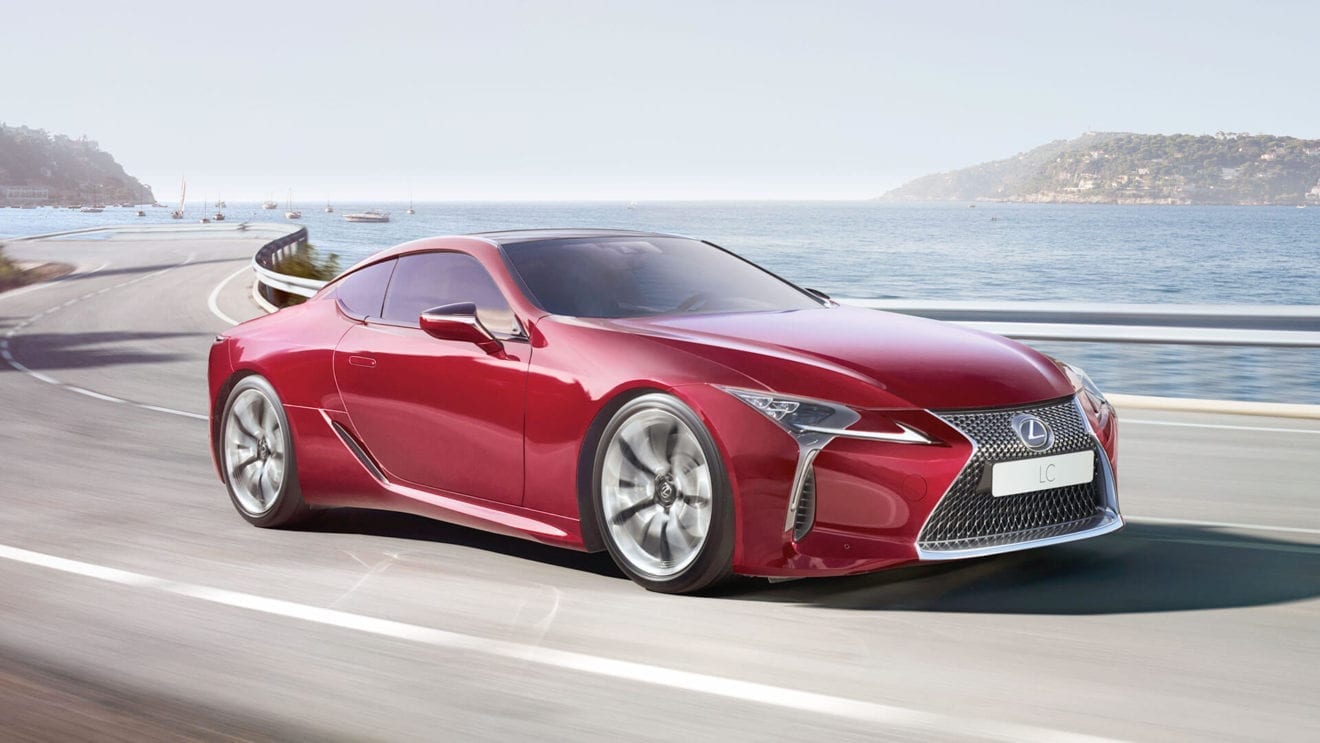
    Toyota Vietnam has issued a recall for 634 Lexus cars in Vietnam due to potential issues with their cameras and fuel injectors.

    Most of the recalled vehicles were produced between November 2022 and August 2023, according to Vietnam Register.

    The cover of the front and rear cameras of these units can be exposed after time, allowing water to enter and causing internal short circuit that can disable them.

    Among the recalled vehicles are 26 units that have fuel injectors which can be distorted over time, increasing risks of explosion.

    While no incidents have been reported so far, the manufacturer is recalling these vehicles as a precautionary measure.

    Owners of the affected vehicles are entitled to a free replacement of these parts at Lexus dealerships in Hanoi and Ho Chi Minh City. The recall service will be available for three years, starting from Aug. 13.

  • EU slashes tariffs on Chinese-made EVs

    EU slashes tariffs on Chinese-made EVs

    The European Union has slashed its planned extra tariff on Tesla electric vehicles imported from China by more than half, the bloc’s executive said on Tuesday, following further investigations requested by the company.

    The European Commission also revised its proposed punitive duties on imports of Chinese-made EVs in draft findings, in the highest profile EU investigation of alleged Chinese subsidies, which has provoked threats of retaliation from Beijing.

    It set a new reduced extra rate of 9% for Tesla, lower than the 20.8% it had indicated in July, and said some Chinese companies in joint ventures with EU automakers may also receive lower planned punitive duties on Chinese-made EV imports.

    The tariffs are on top of the EU’s standard 10% duty on car imports, a measure the Commission says is aimed at levelling the playing field and countering what it says are unfair subsidies.

    Tesla had requested a recalculation of its rate, to be based on the specific subsidies the company had received. The Commission said on Tuesday it had verified that it received less subsidies from the Chinese government compared with the country’s EV makers which Brussels had investigated.

    The Commission, which sets EU trade policy, said it still believed Chinese EV production has benefited from extensive subsidies and proposed duties on other companies of up to 36.3% – slightly lower than the maximum initial planned duty of 37.6% set in July for companies that did not cooperate with the EU’s anti-subsidy investigation.

    China’s commerce ministry said in response it is “firmly opposed to and highly concerned” about the findings, and vowed to take all necessary measures to protect Chinese firms.

    The draft findings were based on “facts unilaterally determined by the EU side, not on facts mutually agreed upon,” the ministry said in a statement.

    China hopes the EU side will expedite the exploration of proper solutions in a rational and pragmatic manner, and take practical actions to avoid the escalation of trade frictions, it added.

    Beijing launched a challenge at the World Trade Organization earlier this month.

    Lower duties

    Tesla was among the companies classed as cooperating with the EU investigation. It did not respond to a request for comment on Tuesday.

    The Commission said three companies it had sampled would each receive slightly lower provisional duties than indicated in July. China’s BYD would face a rate of 17.0% from 17.4% levied in July, Geely 19.3% versus 19.9% and SAIC 36.3% from 37.6%.

    Chinese firms in joint ventures with EU producers may also be eligible for the lower duties planned for the Chinese companies in which they are integrated, the Commission said.

    Volkswagen’s SEAT subsidiary was now expecting to receive a lower tariff of 21.3% on its Cupra Tavascan, which is produced by a joint venture in China majority-owned by the German automaker, a source close to the matter told Reuters.

    A spokesperson for SEAT said it was working with the VW Group to reduce the impact of the tariffs further.

    BMW said in a statement its joint venture in China which produces the electric Mini was also classed as a “cooperating company”, qualifying it for a lower duty of 21.3%, versus the 37.6% Brussels had indicated last month.

    The planned tariffs could become the EU’s final measure on Chinese-made EVs once its investigation is concluded in about two months.

    Interested parties have until Aug. 30 to submit their comments on the Commission’s findings.

    The proposed final duties will be subject to a vote by the EU’s 27 states. They will be implemented unless a qualified majority of 15 EU members representing 65% of the EU population vote against.

    It is a high hurdle that is rarely reached, although this is a politically charged file.

    In an advisory vote in July, 12 EU members supported the provisional tariffs, four voted against and 11 abstained, sources said.
  • VinFast VF 5 Vietnam’s most popular car by wide margin

    VinFast VF 5 Vietnam’s most popular car by wide margin

    VinFast sold 13,000 units of its VF 5 electric car in Vietnam in the first half of the year, making it the top seller in the market.

    A person familiar with the matter said that 20,000 VF 5s were sold globally.

    Mitsubishi Xpander was the second most popular car in Vietnam with 7,773 units, followed by the Ford Ranger, which sold almost exactly the same number.

    But analysts said it is still early to decide if VinFast has won over Vietnamese consumers with the crossover VF 5 as a large number were bought to be used as taxis and ride-hailing vehicles.

    “Eventually all car manufacturers want to sell to retailers, not taxi companies,” an analyst who asked not to be identified said.

    We are making efforts to convince retail consumers to buy the VF 5 by offering personalized color choices and other incentives.

    Many ride-hailing drivers buy the VF 5 for its affordable price and the fact that electricity is cheaper than gasoline.

    Overall, 154,265 cars were sold in the first six months, down 7% year-on-year, according to data from the Vietnam Automobile Manufacturers Association and Hyundai Thanh Cong, which sells Hyundai cars.

    VinFast does not release data by market but said it delivered 21,800 units globally, down 8% year-on-year.

  • Malaysia encourages use of EVs

    Malaysia encourages use of EVs

    The Malaysian government has included the adoption of electric vehicles (EVs) in its National Energy Transition Roadmap (NETR) towards the goal of EVs accounting for 15% of all vehicles sold by the year 2030, rising to 80% by 2050.

    The current import duty and excise duty exemption for fully-imported (CBU) EVs has been extended to December 31, 2025, and EV owners will also continue to enjoy exemption from road tax until the end of next year.

    They will also enjoy a lower tax rate in 2026, after the exemption expires, that will be based on the power output of their EV. When unveiling the new structure, Transport Minister Anthony Loke said it was 85% lower vis-a-vis petrol powered vehicles.

    To encourage the growth of the EV charging network in Malaysia, the government is offering individuals 2,500 MYR (US$530) in yearly income tax relief through to 2027 for the installation, rental, and purchase of EV charging equipment or subscription fees.

    Besides, the country will offer up to 2,400 MYR in tax return to encourage individuals to adopt electric-powered motorcycles. However, this incentive has only been announced for the 2024 assessment year and it is only available for individuals earning no more than 120,000 MYR annually.

    Companies investing in the assembly or manufacturing of energy efficient vehicle (EEV) including hybrids and electric or components for such vehicles are eligible for income tax exemption of 70% or 100% on statutory income respectively for a period of five or ten years.

    Companies investing in green technology services involving EVs such as installation, maintenance, repair of EV charging equipment, EV infrastructure and charging stations are eligible for a 70% tax exemption for three years from the start of their operations.

  • Tasco buys 100% stake in sole Volvo distributor

    Tasco buys 100% stake in sole Volvo distributor

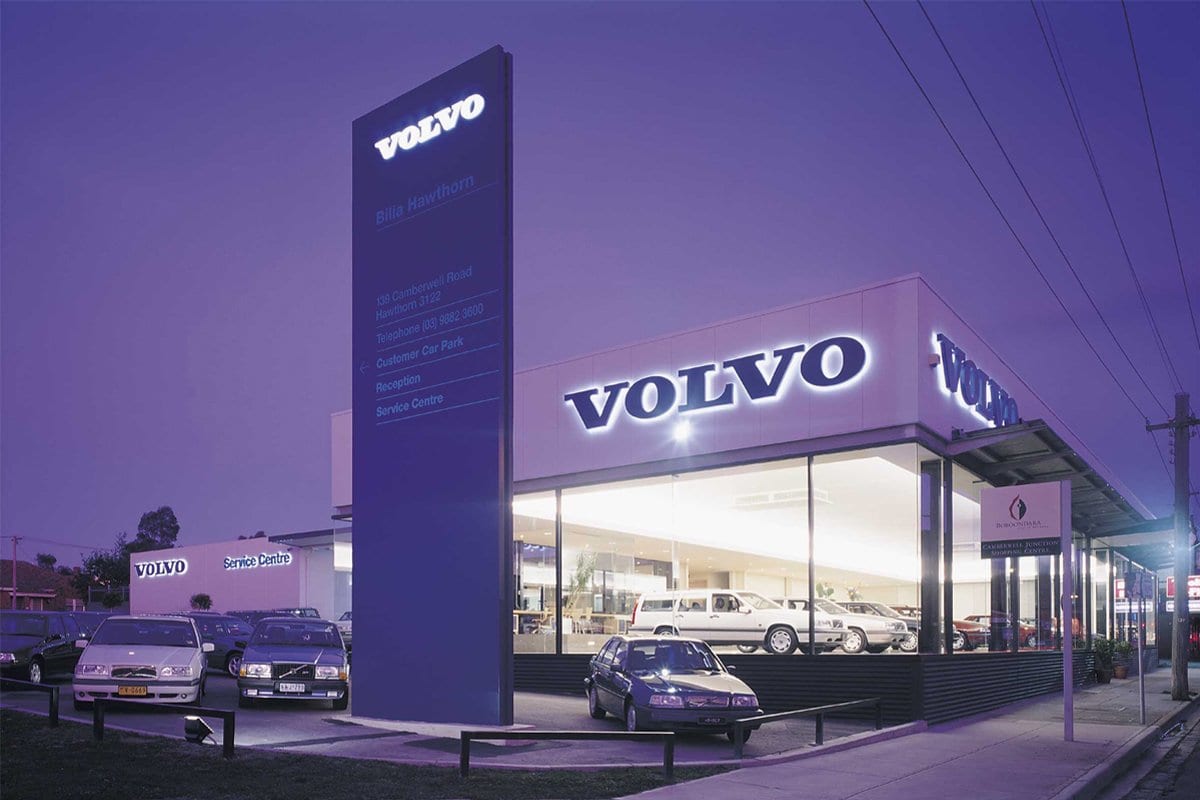
    Tasco Auto, a subsidiary of auto distributor Tasco, has bought out Sweden Auto, the sole distributor of Volvo cars in Vietnam.

    The deal made Tasco the importer and distributor of the Chinese-owned Swedish luxury brand, and it has since increased its number of showrooms by four to almost 90, maintaining its position as the biggest auto distributor in the country, the company said in a statement.

    Sweden Auto started distributing Volvo cars five years ago and reported pre-tax profits of VND54 billion ($2.1 million) last year, but the figure jumped to VND105 billion in the first five months this year thanks to a double-digit surge in sales.

    In May Volvo accounted for 14% of Vietnam’s luxury car market, Tasco said.

    The distributor of 15 auto brands last month announced that it would branch into car assembling and launch its first products next year.

    Tasco Auto chairman Pham Van Dung said at the time the company wanted to work with a global top 10 auto producer.

  • VinFast ranks second in EV sales in Southeast Asia

    VinFast ranks second in EV sales in Southeast Asia

    According to the research firm Counterpoint Research, EV sales in the region more than doubled in the January to March quarter from a year before. Sales of ICE cars,meanwhile, slid by 7%.

    “Vietnam saw an even more impressive growth, with BEV (battery electric vehicle) sales increasing by more than 400%, contributing to nearly 17% of regional sales,” the firm said.

    “As Japanese and Korean automakers, who dominate conventional vehicle sales, lag in EV adoption, Chinese OEMs (original equipment manufacturers) are stepping in to fill the gap,” said Counterpoint analyst Abhik Mukherjee.

    “Over 70% of EV sales in the region are from Chinese brands, led by BYD,” he said. In the first quarter of last year, 75% of all EVs sold in Southeast Asia were made by Chinese car makers.

    Thailand, Southeast Asia’s second-largest economy, where Chinese car makers have committed more than US$1.44 billion to set up new EV production facilities, is leading the charge.

    The regional auto manufacturing hub where Japan’s Toyota Motor and Honda Motor have a major presence accounted for 55% of all Southeast Asia’s EV sales in the first quarter, with the segment growing 44% compared to last year.

    U.S. electric carmaker Tesla saw its market share in the region drop two percentage points to 4% in the first quarter, in spite of its sales growing 37% in the same period.

    A number of Southeast Asian countries, including Thailand and Indonesia, have rolled out incentives to stimulate EV demand and attract new investments – a call answered by Chinese car makers locked in a bruising price competition at home.

    “Southeast Asia is becoming a major expansion region for Chinese OEMs,” Mukherjee said.

  • Domestic motorcycle market remains challenging in 2024

    Domestic motorcycle market remains challenging in 2024

    Motorbike sales volumes in the first quarter of 2024 reached 603,745 units, down 4.88% from the previous quarter and 11.5% lower year-on-year.

    This sales level is equivalent to around 15 years ago, indicating a prolonged gloomy period for the industry.

    Vietnam remains the world’s leading motorbike market, with over two-thirds of adults owning two-wheeled vehicles.

    However, motorbike sales have been declining and manufacturers need to be nimble in order to respond to new demands, according to industry insiders.

    The Vietnam Association of Motorcycle Manufacturers (VAMM), which includes major brands like Honda, Yamaha, Suzuki, Piaggio and SYM, dominates the market.

    Motorcycle sales in Vietnam peaked at 3.25 million vehicles in 2019, but declined to 2.71 million in 2020 due to the Covid-19 pandemic.

    Last year, the decline in VAMM’s motorbike sales had slowed, but only reached 2.51 million vehicles, about 16% lower than the previous year. All major segments, including scooters and manual motorcycles, saw significant declines, with the under 50cc category decreasing by 28.4%.

  • Auto distributor Tasco to begin assembling

    Auto distributor Tasco to begin assembling

    Tasco, a distributor for 14 auto brands, plans to branch into car assembling, and will launch its first products next year.

    At the annual general meeting last week, its management told shareholders about the plan without disclosing what brand or brands it plans to assemble.

    A person familiar with the matter told VnExpress that Tasco’s plan “might not necessarily be to assemble passenger cars.”

    Pham Van Dung, chairman of subsidiary Tasco Auto, said the company wants to work with a global top 10 auto producer.

    The partner is already selling “successfully” in Vietnam, he said.

    The products would be sold not only in Vietnam but also in markets with which it has free trade agreements, he said.

    Tasco Auto used to be Savico Holdings until its acquisition by Tasco in 2022.

    It has 84 dealerships nationwide that distribute Toyota, Ford, Honda, Mitsubishi, Volvo and other vehicles.

  • VinFast recalls over 2,000 EVs

    VinFast recalls over 2,000 EVs

    VinFast is recalling 2,097 electric vehicles to fix various technical issues.

    Some of the VF e34 and VF 5 Plus cars produced between September 2023 and April 2024 face the threat of bolts securing the upper cover of the high-voltage battery becoming loose, leading to a potential reduction in the water resistance.

    This issue affects 23 VF e34 and 131 VF 5 Plus units. VinFast will inspect and tighten the bolts and replace the high-voltage battery if needed.

    VF 6 Plus vehicles produced between March 18 and April 9 this year have a potential defect that could cause the brake fluid hose connectors to crack, leading to possible brake fluid leakage.If the brake fluid drops below the minimum threshold, a warning will appear on the control screen, and the braking system’s effectiveness will be reduced. The number of p otentially affected vehicles is 47.<

    VinFast will inspect and replace the brake fluid hoses in the affected vehicles free of charge.

    In VF 8 and VF 9 (Eco and Plus) cars manufactured between August 2022 and March 2024, incorrect airbag types might have been installed in certain places.

    After approximately 10,000 kilometers of use, an airbag warning and inspection request may appear on the screen.

    If the airbags are not of the correct type, they may not deploy in the event of a severe collision under certain conditions.

    In all, 1,134 VF 8 Eco and VF 8 Plus vehicles and 762 VF 9 Eco and VF 9 Plus vehicles are being recalled.

    VinFast has reported these issues to the Vietnam Register and will individually notify vehicle owners, asking them to bring their vehicles to authorized service centers.

  • Honda recalls 221 of its most expensive motorcycles for faulty fuel pump

    Honda recalls 221 of its most expensive motorcycles for faulty fuel pump

    Honda Vietnam is recalling 221 of its two most expensive motorcycles, the CBR1000RR Fireblade and Gold Wing, for faulty fuel pumps that could cause their engine to stall.

    The 74 CBR1000RRs and 147 Gold Wings were manufactured in Japan between September 2017 and March 2023 and imported to Vietnam.

    Due to changes in production methods, the faulty fuel pump impeller could get deformed, preventing fuel from flowing into the engine, Honda Vietnam said.

    This could make starting the engine difficult and potentially cause the vehicle to shut down, it said.

    While no accidents have been reported in Vietnam due to the defect, the company advised owners to bring their vehicles to authorized dealers to get them fixed, a task that should take around an hour.

    The recall started on March 29 and will go on for two years.

    CBR1000RRs were once previously recalled in April 2022 for faulty oil cooler pipes that could overheat and melt, causing oil leakages.

    The CBR1000RR is currently priced at VND1.05 billion (US$41,400) and the Gold Wing at VND1.23 billion ($48,500).

  • BMW narrows gap with market leader Mercedes in Vietnam’s luxury car scene

    BMW narrows gap with market leader Mercedes in Vietnam’s luxury car scene

    Mercedes, the best-selling luxury auto brand in Vietnam for years, is seeing BMW close the gap rapidly following the start of local production.

    Mercedes sold 3,416 units last year, a 57% decline from 2022 but still the highest for the seven luxury brands in Vietnam.

    BMW jumped from fourth place in 2022 to second last year with sales of 2,023, a 108% increase. It was the only brand to achieve an increase in sales.

    In third place was Lexus with 1,532 units, a marginal drop from 2022. Volvo, Audi, Porsche, and Land Rover followed it. Together the seven sold 8,638 vehicles, down 36%.

    Mercedes used to outsell BMW 6-8:1, but the gap has narrowed to around 1.5 times. Its share of the luxury auto market has dropped from 60% in 2022 to 40% while BMW’s has jumped from 7% to 23%.

    The rise is attributed to BMW’s manufacture in Vietnam by Thaco. The first BMWs made in Vietnam were sold at the end of 2022, and now four models are sold at cheaper prices than imported units.

    Among the models are Series 3 and X3, which are considered the main competitors to Mercedes’s C-class and GLC.

    Brad Kelly, CEO of Mercedes Vietnam, said that the race between Mercedes and BMW has become more even and similar to their competition globally. But others in the luxury segment have also been gearing up.

    In March Audi opened its third showroom in HCMC and fifth in the country. It is in a residential area and includes a quick maintenance facility.

    This is its new type of urban showroom, and it plans to open more in Vietnam to reach 18 by 2032. Managing director of Audi Vietnam, Ferry Enders, expects luxury vehicle sales to surpass the auto industry average.

    Volvo Vietnam earlier this year opened its fourth showroom. Land Rover opened a showroom in Hanoi last year and plans to open one in HCMC latest by next year. Mercedes now has 17 showrooms and BMW, 15.

  • Car imports see recovery in March

    Car imports see recovery in March

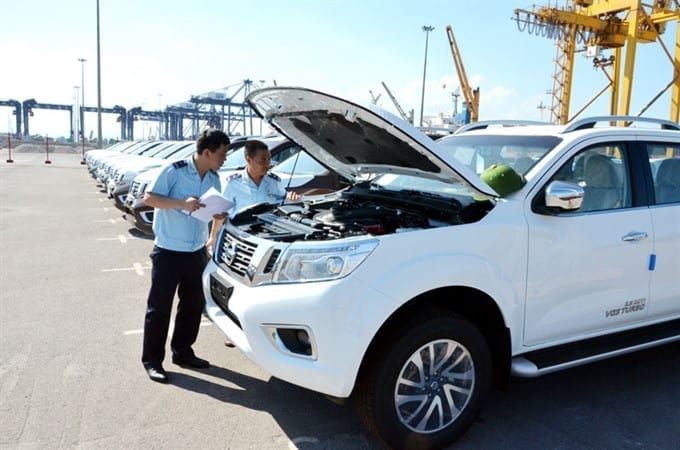
    Import turnover of completely built-up (CBU) cars in March increased by 55.4% in volume and 41.4% in value compared to the previous month.

    A preliminary report from the General Statistics Office (GSO) said that Vietnam imported about 15,000 CBU cars in March with a value of US$287 million.

    However, this import decreased slightly by 1.7% in volume and 18.8% in value compared to the figures in March 2023.

    The strong recovery in CBU car import in March was due to the car import in February falling sharply when businesses stopped all import-export activities during the seven-day Tet (Lunar New Year) holiday.

    Those numbers in February reached 9,650 units in volume and $203 million in value.

    Thus, CBU car import turnover in March had a strong recovery despite the market situation not showing clear positive signals.

    Positive signals from the economic recovery are bringing back higher expectations of domestic car demand.

    The CBU car import is expected to continuously recover in the second quarter of 2024.

    After the Lunar New Year holiday in February, the Vietnamese auto market welcomed many new car models, mainly imported cars.

    GSO also reported that the total import of CBU cars in the first three months of 2024 was estimated at 31,452 units worth $632 million, down 25.1% in volume and 31.7% in value year on year.

    This was still a very low turnover compared to 2023, before the market fell into a period of deep decline in demand.