Category: Automotive

Retail News Asia is committed to providing both local and global retailers with the latest Auto and Car news throughout the Asian market. This on a daily base.

  • Why Vietnam’s auto industry never stepped on the gas

    Why Vietnam’s auto industry never stepped on the gas

    Vietnam’s auto industry has suffered from rewards not being connected to production and the neglect of domestic suppliers.

    It is evident that while joint ventures have continually received financial support and incentives without developing production, domestic suppliers have been ignored.

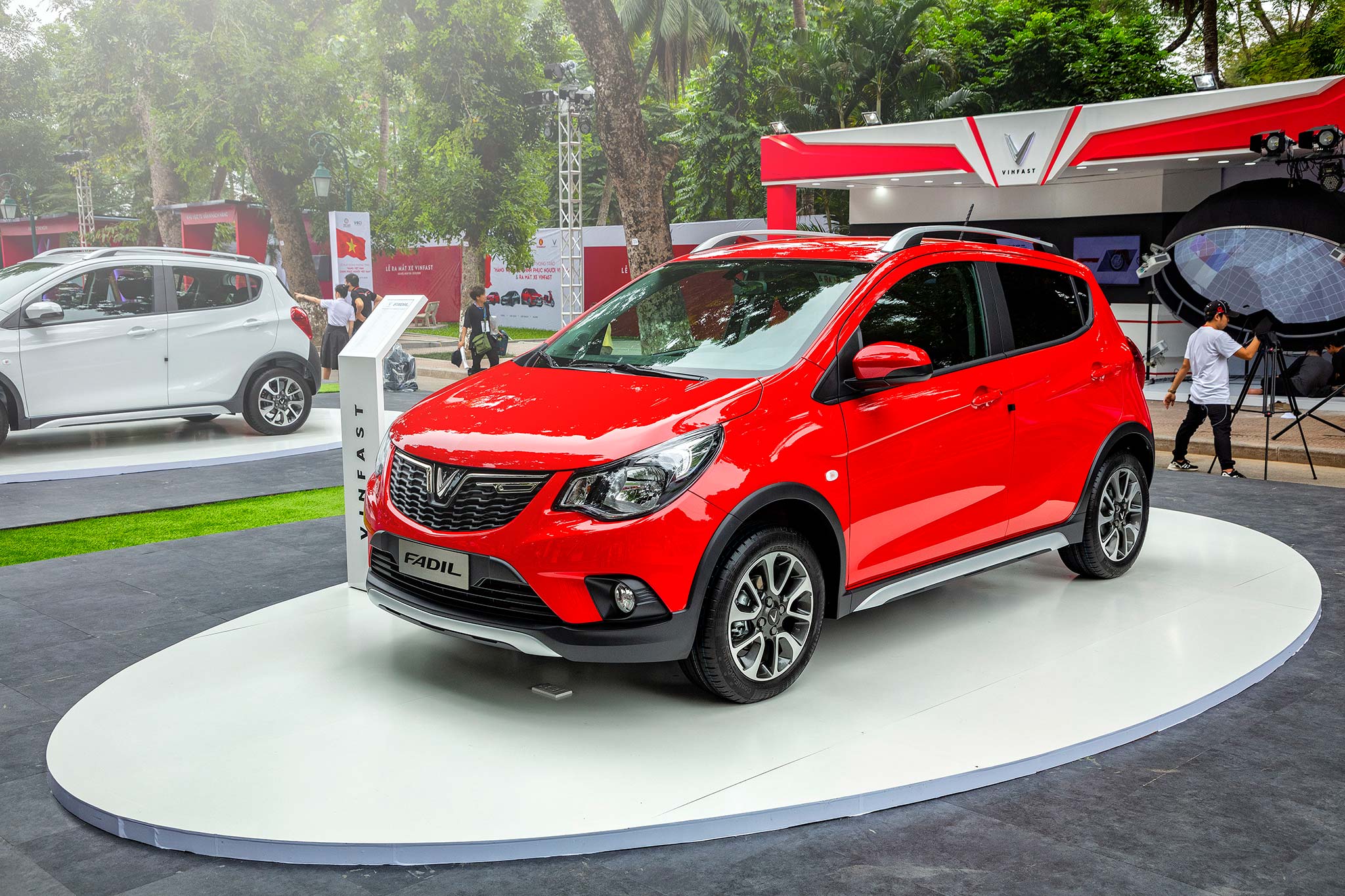
    In this context, the emergence of VinFast – the year-old auto-making subsidiary of Vietnamese realty and retail giant Vingroup – is being seen as a keystone element in the development of the Vietnamese auto industry.

    Standing alongside Vingroup are major incumbents, like Truong Hai Auto Corp and Hyundai Thanh Cong. Although it seems the right time has come for Vietnam’s car industry to move to a new level, the industry has failed to take shape for the last 20 years.

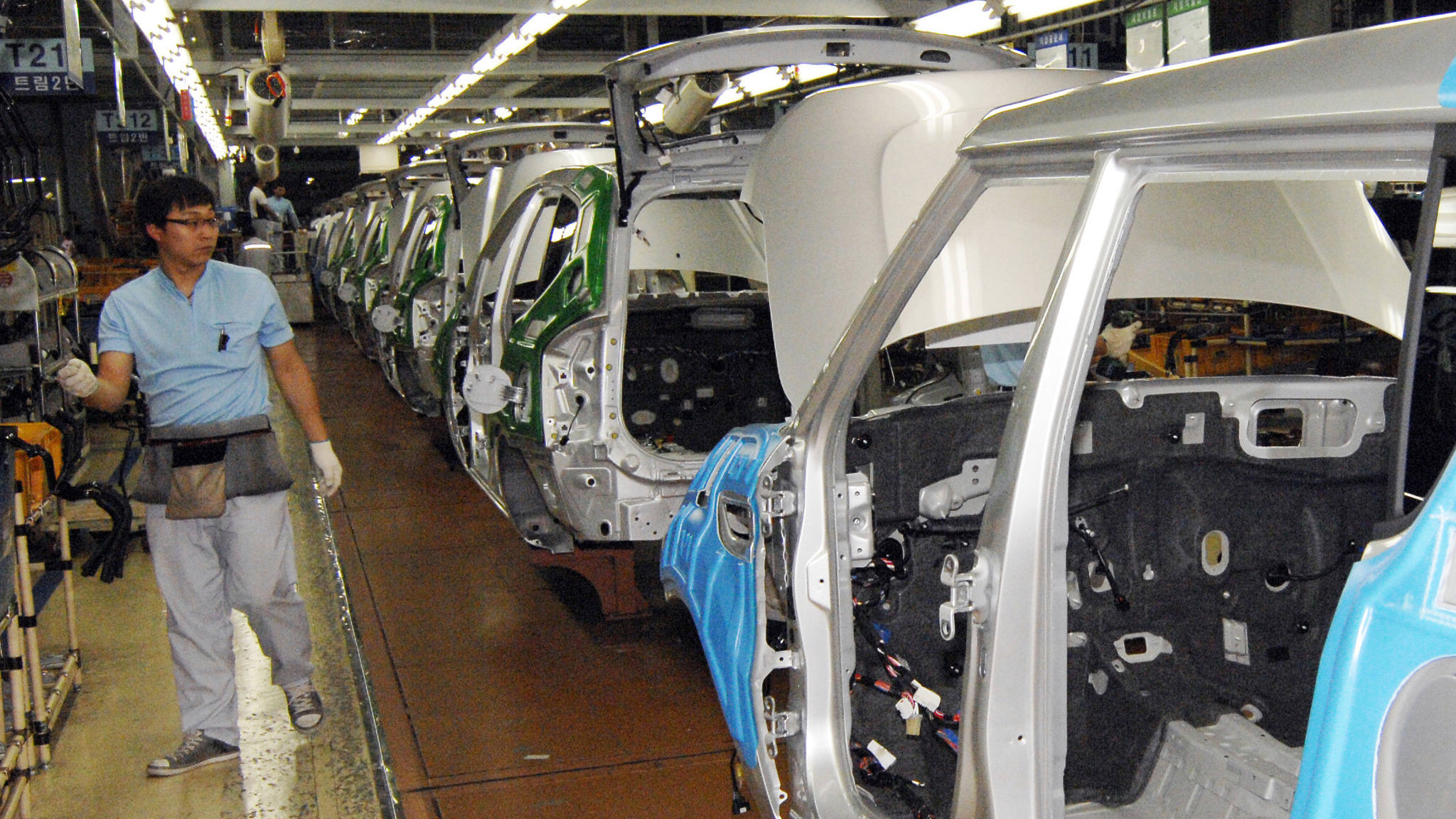
    Car making projects in Vietnam have been around since the 90s. Production was first undertaken by the Hoa Binh (Vietnam Motors Corporation-VMC) and Mekong Auto Corporation in the form of business cooperation contracts (BCC) with other automobile manufacturers.

    VMC assembled and manufactured different product lines for BMW, Mazda and Kia, while Mekong produced for Fiat and Ssangyong.

    Subsequently, foreign companies began to invest in Vietnam in the form of joint ventures, like Toyota, Honda, Daihatsu, Ford and Mercedes.

    The developmental strategy for the first stage of the industry was clear: attract FDI, create jobs, and create a favorable environment to nurture local producers of materials needed to produce cars.

    The social rationale for this strategy was also to use the projects to provide growth opportunities for low-income provinces such as Vinh Phuc and Hai Duong.

    At that time, even though consumption was primarily in the south of Vietnam, most manufacturers were located up north. To protect the fledgling joint ventures, which primarily manufactured CKDs (completely knocked down cars, to be assembled by the buyer), the government enforced a protectionist policy, closing the market for imported CBUs (completely built up cars).

    In the early 2000s, tariffs on imported CBUs were very high, at 120 percent. This rate was reduced to around 60-80 percent after Vietnam joined the WTO in 2007; and it was to be further lowered pursuant to the ATIGA trade agreement’s reduction schedule.

    2018 is the first year in the schedule where imported cars of ASEAN origin (C/O form D) are subject to zero percent tariffs.

    Since the Common Effective Preferential Tariff (CEPT) agreement was signed between ASEAN countries in 1992, car manufacturers have been forced to reconsider the strategy of producing and consuming cars within this region.

    With Vietnam’s accession to ASEAN, a country with a large population and unrealized market potential, car makers revised their long-term business strategy, reducing CKD production and moving towards 100 percent importing of CBUs from other countries in the region.

    The only manufacturing hope lay with Korean firms Kia and Hyundai, both of whom had just begun to establish production and consumption in the Vietnamese market.

    The emergence of Vietnam’s first home-made brand, VinFast, is a notable step forward, but it is still far too early for this to mean anything.

    A strategy that failed

    The strategy of using FDI to foster growth of the auto industry and increase localization has not been successful. Why?

    A new car must go through a rigorous testing process by the manufacturer and the relevant independent accreditation bodies. Therefore, manufacturers are very careful when choosing components for their car models. Original Equipment Manufacturing Suppliers (OEM), otherwise known as parts suppliers, are selected at the development stage of the model, long before the car is introduced to the market.

    Each vehicle has a Homologation Document that contains a complete set of vehicle assembly information. This kit must be approved by an independent body after testing, prior to the issuance of a Vehicle Type Approval. Compliance with technical documentation is compulsory to ensure quality and safety of the car.

    Because Vietnam’s auto market is small and production is predominantly in CKD form, models are usually introduced to the markets one to two years late. This makes it impossible to change component suppliers. There have been many cases of joint ventures in Vietnam suggesting replacement of components with those sourced from inside the country, but not getting the parent company’s approval.

    The Kia models sold in Vietnam are a good example. They run on Continental tires from Germany instead of Kumho, a Korean brand produced locally.

    In 2006, import taxes on CKD cars were restructured. Instead of being taxed per whole kit, the tax was levied on individual components to make it more favorable for manufacturers who source components locally. Despite this, the localization ratio has not increased as desired by policy makers.

    According to statistics compiled by McKinsey & Company, components sourced overseas make up 55 percent of the total cost of a car. Manufacturers cannot achieve the 40 percent localization rate required by the ATIGA trade agreement if the supply source is not available.

    Because of the failed developmental strategy for domestic manufacturers, Vietnam is instead becoming a market for major production centers based in Thailand and Indonesia.

    Over a long time, policies and resources have been poured into automotive joint ventures, but OEM Suppliers are key players in shaping the game. Most companies in the list of the 100 largest OEM suppliers are from Japan, Germany or the United States.

    While China is the largest market for automobile production and consumption, accounting for 30 percent of the world market, only two companies make the above list, mainly producing aluminium chassis components.

    So how can any real change happen?

    If local OEMs, not joint ventures, receive these huge resources and are facilitated to build factories in Vietnam, then the production and business strategies of automakers in the ASEAN region might not be what they are now. -Bui Sinh-

  • Porsche Mission E Cross Turismo To Go Into Series Production

    Porsche Mission E Cross Turismo To Go Into Series Production

    It was at the 2018 Geneva Motor Show, that Porsche first unveiled the Mission E Cross Turismo concept. Back then, we’d told you that the car looked great and did not have that concept feel to it. It’s very close to something you’d see on actual roads and it was as production ready as it gets. However, Porsche still called it a concept as the Supervisory board of the company had not given the green light for the project. But now the company has said that the Supervisory Board of Porsche AG gave the green light for series production of the concept study Mission E Cross Turismo. The sports car manufacturer will create 300 additional jobs at its headquarters in Zuffenhausen for production of the vehicle, which was presented at the Geneva Motor Show next year.

    The Porsche Mission E Cross Turismo is a derivative of the Taycan

    The Porsche Cross Turismo includes an emotional design with striking off-road elements as well as an innovative display and operating concept with touchscreen and eye-tracking control. It measures in just under 5 metres and has all-wheel drive and can also be charged by induction, at a charging station or using the Porsche home energy storage system.

    The four-door Cross Turismo has an 800-volt architecture and is prepared for connection to the fast charging network. It has a system output of 600 horses and a range of 500 km (NEDC). This enables the Mission E Cross Turismo to accelerate to 100 km/h in less than 3.5 seconds and to reach a speed of 200 km/h in under 12 seconds. The vehicle is a derivative of the Taycan which is the first purely electric Porsche that will be launched in the market in 2019. Porsche plans to invest more than six billion euros in electromobility by 2022.

  • Mahindra Marazzo MPV Gets Apple CarPlay

    Mahindra Marazzo MPV Gets Apple CarPlay

    Mahindra’s latest launch- the Marazzo will now be equipped with Apple CarPlay. The MPV was launched in India on September 3 and it’s infotainment system was Android Auto compatible. The UV maker has now confirmed to carandbike of having received the licence for Apple CarPlay. The company has sold over 4500 units of the Marazzo, which were rolled out of the Nashik plant. All these units did not have Apple Carplay but the company has informed us that all the models sold will be updated with the Apple CarPlay in their schedule service, without any additional cost.

    The timing for the license couldn’t have come at a better time as Mahindra is all set to launch the Y400 in the country in November this year and well, the SUV of course will get both Apple CarPlay and Android Auto now.

    The 7-inch touchscreen infotainment system in the Mahindra Marazzo is claimed to be the most updated unit in Mahindra’s product portfolio boasting of some cool features, for example configurable home screen. Buyers can add personalized images on the infotainment system’s internal memory via the USB socket and select it as the background wallpaper. Moreover, Mahindra has also been innovative with the creature comfort features in the Marazzo.

    The new Mahindra Marazzo is powered by a new 1.5-litre four-cylinder diesel engine that has been tuned to offer a maximum of 121 bhp and develops a peak torque of 300 Nm. The engine only comes mated to a 6-speed manual gearbox, and right now, there is no automatic transmission on offer. Mahindra is also working on the petrol engine and an automatic transmission for the Marazzo and could introduce the same when the BS VI emission norms come into effect from April 2020.

  • Tesla Chief Elon Musk Unveils a $35,000 Model 3

    Tesla Chief Elon Musk Unveils a $35,000 Model 3

    Tesla chief Elon Musk said late Thursday that the automaker was preparing to sell the cheapest version yet of its newest electric car, the Model 3, signaling an attempt to get back to business after months of controversy. Musk said on Twitter that the sedan, with its “midrange” battery pack, would cost $35,000, bringing it in line with the mass-market model he had promised for years would revolutionize the availability of electric cars.

    But that price takes into account federal and state tax rebates. Before the discounts, it will sell for $45,000 – though the company says buyers should think of the car as far cheaper, because of the money they’ll save on gas.

    Musk sparked a frenzy of customer reservations in 2016 when he said the Model 3 would cost $35,000 before incentives, such as a $7,500 federal tax credit – a price point that would help Tesla expand beyond its traditional range of well-heeled buyers. That model, however, remains delayed until 2019, the company said Thursday.

    The surprise announcement, delivered via tweet to Musk’s 23 million followers, comes as Tesla seeks to steer attention away from a chaotic period in which Musk battled with critics, smoked marijuana during an interview and pledged that he had the money to take Tesla private – a promise for which he was sued by the Securities and Exchange Commission, and which he recently settled.

    Musk agreed as part of the settlement to step down as the company’s chairman for three years, opening a prominent void for which the company has yet to fill. But the announcement again highlights Musk’s enduring role as the company’s chief executive, designer and hype man.

    Musk said Thursday the car would be sold via Tesla’s “super simple new order page,” which estimated that delivery for its midrange model would take six to 10 weeks. That model, the company said, could go 260 miles on a single charge.

    The only available Model 3 for the last year has been a long-range version, offered mostly at luxury prices. But Musk said a “truer cost of ownership” for the midrange version would be about $31,000, his estimate for discounting the cost of gas.

    The move could ratchet up the pressure on Tesla’s already-straining California factory and its nationwide system built to deliver cars to customers, which Musk described last month as mired in “delivery logistics hell.”

    “As Model 3 production and sales continue to grow rapidly, we’ve achieved a steady volume in manufacturing capacity, allowing us to diversify our product offering to even more customers,” a Tesla spokesperson said in a statement.

    The move could frustrate Tesla fans who put down a $1,000 deposit two years ago for what they believed would be a sleek electric sedan costing about $27,500 after tax incentives.

    Tesla says the “standard battery” version will not be available for another 4 to 6 months. Musk has said the company, a cash-burning giant that faces billions of dollars in impending debts, must push out more profitable and expensive versions first: Shipping the cheapest “Model 3 right away (would) cause Tesla to lose money & die,” he tweeted in May.

  • Honda Active Has Crossed The 2 Crore Sales Milestone

    Honda Active Has Crossed The 2 Crore Sales Milestone

    Honda Motorcycle and Scooter India (HMSI) has announced that the company’s top-selling two-wheeler, the Honda Activa, has recently breached the 2 crore sales mark in India. Evidently, the popular Honda Active is now the first scooter in the country to cross this huge sales milestone. Interestingly enough, it took the Honda 15 years to breach first one crore sales mark, while the next one crore units were sold in just 3 years, which is four times faster than the time taken to acquire the first 1 crore customers.

    Minoru Kato, President & CEO, Honda Motorcycle & Scooter India Pvt. Ltd. today announced this feat and expressed his gratitude to the 2 crore happy Indian customers, and said “Over 18 years and 5 generations, Honda 2Wheelers India continuously added value to exceed Customers expectations & making Activa the most preferred choice of Indian 2wheeler buyers. We are delighted that Activa partnered over 2 crore Indian families on the move in realizing their dreams. As India’s Love for Activa grows, we remain committed to take on new challenges and bring joy to our customers.”

    2018 Honda Activa 5G was launched at the Auto Expo

    The Honda Active was first launched in the year 2001, and since then we have seen five generations of the scooter in India. The fifth-gen model, the Honda Activa 5G, was launched this year in February, at the 2018 Auto Expo. The Activa was truly a ground-breaking product from the Japanese two-wheeler manufacturer and it has been the country’s top-selling two-wheeler for quite some time now. In fact, in 2017 the Activa becomes not just India’s, but the World’s largest selling two-wheeler.

    The current-generation model – Honda Activa 5G, is powered by a 109 cc, single-cylinder engine which puts out 8 bhp at 7,500 rpm and 9 Nm of peak torque at 5,500 rpm. No other scooter on sale in India has been able to come close to the Activa’s sales success in its segment. In addition to features like Honda’s Combi-break system and HSE technology, the new Activa also comes with a semi-digital instrument cluster with the display showing information like additional service due indicator and ECO options. The scooter also gets a 4-in-1 hook with the seat opener switch like the Grazia and a retractable rear hook.

  • New Hyundai Santro Bookings Cross 14,000 Units

    New Hyundai Santro Bookings Cross 14,000 Units

    The Hyundai Santro is back with a bang. And as if to proclaim that this nameplate still commands the kind of strength it used to, the small car has already garnered over 14,000 bookings. Sources have shared with carandbike that the small car has notched up 14,208 bookings within the first 9 days of pre-bookings having been opened for a token of ₹ 11,000, on October 10 2018. This is even though the variants and prices are not known, and customers have shown a preference for the top spec (Asta) manual variant followed by the top spec (Sportz) AMT version.

    These are pan-India bookings, but sources have shared with carandbike that a large chunk of the bookings are from the southern states, with Tamil Nadu, Andhra Pradesh, Telengana, Karnataka and Kerala accounting for just under half the total bookings so far. The above figure does not include bookings taken on Dussehra (celebrated on October 18 in Western India, October 19 in North India), and so the overall number is expected to shoot up with Dussehra bookings and then more so over this weekend too. Bookings are only open online, and not at dealerships since there is no car in showrooms as yet that people can see. But a number of dealers have shared with carandbike that many potential customers have been visiting their showrooms, and then making the bookings online with their help.

    The Hyundai Santro has bagged over 14,000 bookings in just 9 days

    Hyundai had opened online pre-bookings for the Santro the day after it unveiled the car to media at its Chennai plant. At the time, the Hyundai India MD, YK Koo had also announced a price protection for the first 50,000 customers. and had pretty much guaranteed that the prices announced at launch will be hiked soon after. At that preview we had the chance to see and drive the car, and have told you plenty about it. What we have been unable to do is share our pictures and videos. And while that remains embargoed until launch day – i.e. October 23 2018 – a lot of leaked pictures have already emerged that show the car’s exterior and interior in fairly good detail.

    The 2018 Hyundai Santro will get a 6.5-inch touchscreen infotainment system

    We know there will be a base version – most likely the Era variant, followed by the Magna variant, the fairly well-loaded Sportz trim and the top spec Asta. All variants will sport a driver-side airbag and ABS (anti-lock braking) as standard equipment. The Asta will have dual airbags standard. The Sportz will also get the 7-inch touchscreen with Apple CarPlay, Android Auto, MirrorLink and Voice Commands. The car’s cabin will be finished in a dual-tone palette of beige and black. On the outside, buyers will have 7 colours to choose from, though only the green will get a special interior package in its Asta trim.

    Under the hood, the new Hyundai Santro features a 1.1-litre four-cylinder petrol engine that comes from the company’s Epsilon engine family. The motor is capable of churning out a maximum of 68 bhp and develop a peak torque of 99 Nm, and Hyundai says that it’s already BS-VI ready. Additionally, the 2018 Santro will also come with a factory fitted CNG kit, which can hold up to 8 kg of gas, and offer a reduced power output of 58 bhp, while developing the same 99 Nm of peak torque. Transmission duties are taken care of by a 5-speed manual gearbox in both the versions, however, the petrol trim also gets an optional 5-speed automated manual transmission (AMT) unit. The AMT unit is developed by Hyundai in-house and uses an electric actuator instead of a hydraulic, which is controlled by a separate electric unit. The petrol engine offers a mileage of 20.3 kmpl, while the fuel efficiency of the CNG version is yet to be revealed.

  • Porsche Expects To Repeat Record Vehicle Sales

    Porsche Expects To Repeat Record Vehicle Sales

    Volkswagen’s Porsche sports car brand is confident it can repeat last year’s record sales in 2018, the division’s chief executive told. Porsche sold 196,562 vehicles during the first nine months of the year, with Europe showing a 9 percent increase and China, the world’s largest car market, growing by 4 percent.

    “In light of these good numbers we expect that we can reach last year’s record again,” Oliver Blume said in e-mailed comments on Thursday.

    Porsche delivered 246,375 vehicles in 2017.

  • Skoda names new compact the Scala

    Skoda names new compact the Scala

    Skoda says it will rename its Rapid compact hatchback the Scala when the new model goes on sale next year. The car’s name comes from the Latin word for “ladder,” Skoda said in a statement.

    The Scala was previewed as the Vision RS concept that was unveiled at the Paris auto show this month.

    The name change signifies the step up Volkswagen Group’s Czech subsidiary has made with the new car, Skoda CEO Bernhard Maier explained in the statement. “This is a completely new development that sets standards in terms of technology, safety and design in this class,” he said.

    The Scala will be pitched further upmarket compared with the current budget Rapid to create a more credible rival for cars such as the Ford Focus.

    “I think the problem of the current Rapid is maybe it’s too low-market. Maybe we went too far toward value for money,” Bjorn Kroll, Skoda’s head of product marketing and the brand’s commercial leader on electric cars, said at a preview of the concept ahead of the Paris show. “With this one, we tried to balance it out.”

    Skoda said the car would offer innovative features that “have only been seen in higher segments,” without being specific about those features.

    The Scala will be engineered for Europe on the VW Group’s small-car MQB A0 platform. The current model uses a version of the low-cost PQ platform.

    The name change also signifies a break with the Rapid sold in China and Russia. A future replacement for the Rapid in those markets is expected to use an updated version of the PQ platform to keep costs down.

    Instead of a badge, the Scala will feature the word Skoda affixed to the tailgate — the first Skoda to feature this, the brand said.

    The range is expected to include an RS high-performance version using the same plug-in hybrid drivetrain previewed by the Vision RS concept. It combines a 150-hp, 1.5-liter gasoline turbo engine with a 102-hp electric motor to accelerate the car from 0 to 100 kph (62 mph) in 7.1 seconds. The 13-kWh battery provides a range of 70 km (43 miles), compared with 50 km (31 miles) in the discontinued VW Golf GTE plug-in hybrid.

    Skoda sold 35,206 units of the Rapid notchback and Spaceback hatchback in the first half of this year across Europe, down 2.7 percent compared with the year before, figures from JATO Dynamics show. The notchback will be discontinued in Europe, Skoda said.

  • Softbank, Toyota form JV for mobility services in Japan

    Softbank, Toyota form JV for mobility services in Japan

    Japan’s Softbank and automaker Toyota announced plans to form a joint venture by April 2019 to provide launch Mobility-as-a-Service (MaaS) in the country. The company, called Monet Technologies, will combine Toyota’s mobility services platform and information infrastructure for connected vehicles with Softbank’s Internet of Things platform, the companies said in a joint statement.

    Initially, Monet plans to roll out just-in-time vehicle dispatch services for Japanese public agencies and private companies to meet user demand. Those services include on-demand transportation service and corporate shuttles.

    By the second half of the 2020s, Monet intends to launch an autono-MaaS (autonomous mobility as a service) businesses, using Toyota’s e-Palette battery electric vehicles.

    These vehicles will deliver meals with food prepared in the vehicles, provide hospital shuttles where onboard medical examinations can be carried out onboard.  These vehicles can also serve as mobile offices, Softbank said.

    Softbank said Monet will roll out its mobility services in Japan before focusing on future expansion to the global market.

    The joint venture will have initial capital of 2 billion yen ($17.49 million), and this will be increased to 10 billion yen in future.

    Softbank will own 50.25% of the JV and Toyota take the remaining 49.75%.

    SoftBank Corp representative director and CTO Junichi Miyakawa will be president and CEO of the new joint venture.

  • Bosch to launch IoT software services in China

    Bosch to launch IoT software services in China

    Bosch and Huawei have struck a partnership to accelerate the development of the Internet of Things (IoT) in China. The collaboration will see the pair makes Bosch’s IoT Suite software services available in China on Huawei Cloud. The software platform of Bosch connects web-enabled objects to facilitate data sharing across a multitude of digital services and business models. The first service made available to Chinese consumers via Huawei Cloud will be the Bosch IoT Remote Manager – a service for managing and controlling gateways, sensors, and devices. Additional services from the Bosch IoT Suite will follow in 2019.

    The pair also said a Chinese automotive manufacturer has chosen to deploy the Bosch IoT Suite on Huawei Cloud for updating its vehicles’ firmware over the air (FOTA). The service is expected to be rolled out to millions of connected cars in China over the coming years.

    “The demand for IoT solutions in China is rising. The partnership between Bosch and Huawei Cloud marks a decisive step for Bosch in one of the fastest growing IoT markets in Asia,” said Dr. Stefan Ferber, CEO of Bosch Software Innovations, a wholly-owned subsidiary of Bosch.

    Bosch Software Innovations has been active in China since 2012 and has implemented IoT projects ranging from Industry 4.0 to connected transportation. The company expects China’s market for IoT platforms to grow by close to 70% over the coming years, Ferber said.

    Bosch and Huawei also intend to develop an integrated end-to-end IoT offering as a result of the partnership.

    Huawei is developing IoT hardware gateways that will be pre-configured with Bosch IoT Gateway Software and managed through the Bosch IoT Remote Manager to run on Huawei Cloud.

    This close integration will provide customers with a more complete IoT solution that is easier to deploy and manage, the companies said.

  • Samsung Launches New Chipsets To Make Cars Smarter

    Samsung Launches New Chipsets To Make Cars Smarter

    Samsung Electronics, a part of the Samsung Group, has announced the introduction of two new chipsets or processors for the automotive segment for connected cars technology. Christened the Samsung Exynos Auto and Samsung ISOCELL Auto, the new chipsets claim to offer cutting-edge application processor and image sensor technology solutions to the road.  While the former Exynos will help manufacturers develop in-car apps for infotainment, advanced driving assistance systems, and telematics, the ISOCELL Auto is targeted at developing in-vehicle infotainment systems and telematics solutions.

    Talking about the two new chipsets, Kenny Han, vice president of Samsung’s Device Solutions Division said, “Samsung’s new automotive brand solutions, Exynos Auto and ISOCELL Auto, bring Samsung’s market-proven technologies to automotive applications with enhanced features and durability required by the market. With fast telecommunication, accurate sensing and powerful processing capabilities, Samsung’s Auto-branded solutions will enable new driving experiences to next-generation smart vehicles.”

    Processors from Exynos Auto range come in three sub-categories: Exynos Auto V series for advanced in-vehicle infotainment (IVI) systems, Exynos Auto A series for ADAS, and Exynos Auto T series for telematics solutions. On the other hand, Samsung’s ISOCELL image sensors are built on the company’s innovative pixel isolation technology, which provides greater visibility of the road and surroundings even in low-light environments, while enabling more precise identification of objects. The sensors also allow vehicles to perceive road conditions or potential hazards even when driving through tunnels or other high-contrast environments.

  • BMW India To Launch 12 New Models In 2019

    BMW India To Launch 12 New Models In 2019

    BMW plans the largest ever product offensive from any manufacturer in India in the coming year. 2019 will see the introduction of a slew of new products that BMW expects will really fire up the market and help strengthen its position in the premium car space. The plan is to bring twelve model launches to India next calendar year from the BMW brand, and two additional new models also from MINI. The motorcycle side of the business will also see two all-new models being added in.

    This will be further supplemented by new variants or updates on existing products, Speaking at the inauguration of BMW India’s brand new headquarters in Gurgaon, Hildegard Wortmann, Senior Vice President – Region Asia Pacific, BMW Group said the new car strategy is planned across the region, with India playing a strong part in it. “On a worldwide scale, it (will be) the biggest product segments that we have done at BMW. So we are really going full blast here into the product segments and I can full-heartedly say, the future is really bright. Fantastic cars coming, strong design aspects, strong performance, and you can feel the joy of BMW in every instance now!”, she added.

    Spearheading that charge will be the most awaited new generation of the BMW 3 Series sedan. The 7th generation G20 just made its public debut at the recently concluded Paris Motor Show and it will get to India next year. There are big expectations from the new sedan, which includes its performance on the road, as well as on the sales charts. Speaking about the 3 series and also another significant upcoming model, Ms Wortmann says, “Clearly if you look at it, the core of BMW business around the 3 series is a very very important part of our business. And having the new 3 series coming is obviously a milestone again. I think I am not exaggerating if I see the 3 series as an icon in the automotive industry, not just in India, but everywhere in the world. So having that model coming next year is very exciting. Personally I think the big news will be the X7, where again we created something very special, very new, and I think that one will have very big impact.” So the other big plan then is a huge offensive of the X range of cars. Currently the X portfolio comprises four models, but in 2019 that will go to seven with the addition of the X7 flagship SUV, as well as the X2 and X4 crossovers. BMW sees much potential for the large and very luxurious X7 in the Asia Pacific region as a whole, but particularly so in India.

    BMW India had its most successful year in India in 2017, with total car sales at 9800 units, which was a 25 per cent growth over the previous year. And it expects 2018 to end even bigger, with the first nine months already showing an 11 per cent year-on-year growth at 7915 units. But next year will clearly be another one for the record books, and also one where it might be able to eye the number one slot again – held by Mercedes-Benz for 3 years straight. “I think we’ve shown over the 11 years that we have to find the right strategy, the right way of approaching the market, and really making sure we grasp what customers desire here, I think last year was a really good jump and I am highly satisfied to seeing the development here. And 2018 as a strong year now, with the major launches – you’ve seen the 6 GT coming and again a new segment that we created. And obviously the future is very bright as I look forward to the next year. 12 launches! So it will definitely keep the team here, spending long evenings in these offices!” says Ms Wortmann.

  • 2018 Porsche Cayenne India Revealed

    2018 Porsche Cayenne India Revealed

    We’d told you a long time back that the 2018 Porsche Cayenne is all set to land on Indian soil this year. Though the launch has been delayed to the festive season, the company was planning to launch the car in the middle of the year. However, the third generation of the SUV is all set to grace our shores today. Bookings for the new Porsche Cayenne Turbo had already started in September and the first batch of cars will be delivered this year. The all-new model boasts of a new and more agile platform, more powerful engines and for the first time, the option of a hybrid powertrain as well.

    The 2018 Porsche Cayenne SUV gets a host of upgrades over its predecessor including a revised chassis, and a separated link design for the front axle and a multi-link rear axle. The latter though is offered as optional, but further improves the agility on the car. Visually too, the Cayenne has evolved and gets a sharper looking appearance while keeping the appearance similar. The SUV now comes with the Porsche Dynamic Light System (PLDS) or LED Matrix Beam headlights, which also include PDLS.

    In terms of power, the new generation Porsche Cayenne will be offered in a range of engine options including V6 and V8. The standard version will use a 3.0-litre single-turbo V6 with 335 bhp and 450 Nm of peak torque, while the Cayenne S will draw power from the 2.9-litre twin-turbo V6 that produces 433 bhp and 550 Nm of peak torque. The 2018 Cayenne Turbo packs in 542 bhp and 770 Nm of peak torque from a 4.0-litre bi-turbo V8 engine, and is capable of hitting a top speed of 286 kmph.

  • TomTom loses Volvo contract

    TomTom loses Volvo contract

    Dutch navigation firm TomTom said on Tuesday it had lost a contract with automaker Volvo. The company said the contract to provide location and navigation services to Volvo, which was announced in 2016, had been ended before it was due to go into force in 2019. That fed into concerns of critics who said a deal Google made last month with Renault, another TomTom customer, meant the company risked being relegated to third place in its main market, with lower margins.

    Volvo could not immediately be reached for comment on the contract. ING analysts said in a trading note that they believe the Swedish automaker had switched to Google, rather than the current leading player in the navigation market, HERE.

    “Now that Google is making inroads, the mapping business has become a three-player market with TomTom, HERE and Google, which is clearly less attractive for TomTom than the two-player market it was before,” they said.

    TomTom shares lost a quarter of their value in one day on Sept. 18 after Google announced a far-reaching supply deal with a group of automakers including Renault, Nissan and Mitsubishi.

    Though the Volvo news knocked shares lower, TomTom reported better than expected third-quarter results on Tuesday, with core earnings rising to €62.4 million euro ($72.2 million) from $41.1 million a year earlier.

    Group sales were slightly higher at $254 million euros, from $253 million in the third quarter of 2017.

    While sales of the company’s traditional satellite navigation devices continued to fall, that was offset by sales to automakers and map licensing to customers Apple and Uber. The company also raised its full-year revenue outlook to $984 million from $955 million.

    TomTom this month announced plans to sell its fleet management business, saying it would instead focus its energy on making digital maps used in highly automated driving — the business on which it has pinned its future.

    It said it has seen “strong interest” for the fleet subsidiary, valued at roughly $810 million.

    Harold Goddijn, CEO and co-founder, said recent new deals with PSA Group and BMW showed the viability of the company’s products.

  • Porsche to price Taycan electric sports car between Cayenne, Panamera

    Porsche to price Taycan electric sports car between Cayenne, Panamera

    Porsche will position the Taycan below the brand’s Panamera sedan when the electric four-door sports car reaches markets next year, with a likely starting price above 80,000 euros (about $92,500).

    “We’re expecting a price somewhere between a Cayenne and a Panamera,” said Robert Meier, the complete vehicle model line director for the Taycan.

    Including taxes, that would place the vehicle between 74,828 euros and 90,655 euros for its base version of the car in Germany.

    However, Porsche Chief Financial Officer Lutz Meschke told reporters that he wants to offer higher-performance versions that could be priced as much as 200,000 euros, such as a Taycan Turbo S.

    The Taycan’s two permanently excited synchronous electric motors, supplied by Italy’s Magneti Marelli, will produce more than 600 hp and accelerate the vehicle from 0 to 100 kph (62 mph) in less than 3.5 seconds. The Taycan aims to be the fastest series production electric car around Germany’s Nordschleife racetrack, with a lap time of less than 8 minutes.

    “Asynchronous e-motors are clearly more affordable, but they have one very important disadvantage: You can only overload the motor once when you want high dynamic acceleration before it quickly reaches its limits the second or third time,” Meier said. “That’s fine for most electric cars but not for a high-performance Porsche.”

    The 800-volt lithium-ion battery, built by Draexlmaier Group outside Stuttgart, is composed of “pouch” cells sourced from LG Chem of Korea in a specific power-to-energy ratio that balances the needs of range with those of performance.

    Together, the roughly 400 battery cells have a gravimetric energy density equivalent to 270 watt-hours per kilogram, roughly comparable to the latest technology on the market today.

    The Taycan will be able to drive more than 500 km (310 miles) miles on a single charge under the New European Driving Cycle. Once drained, the battery needs only about 4 minutes to add a further 100 km in range when using a 350-kW fast-charging station. By comparison, Porsche estimates a Tesla requires two and a half times that duration. Porsche expects it will build 20,000 units of the Taycan a year on two shifts, but production boss Albrecht Reimold said a third shift could be added if more capacity is needed.