Category: Automotive

Retail News Asia is committed to providing both local and global retailers with the latest Auto and Car news throughout the Asian market. This on a daily base.

  • KYMCO, Twenty Two Motors Join Hands To Make Electric Scooters

    KYMCO, Twenty Two Motors Join Hands To Make Electric Scooters

    Electric scooter manufacturer Twenty Two Motors has joined hands with KYMCO, a Taiwanese scooter manufacturer and leading two-wheeler and powersports global brand, to form a new venture to manufacture, market and sell electric two-wheelers in India. Although no details about the partnership have been announced, a joint statement by the two companies state that both brands will share knowledge, technology and expertise to create “premium electric mobility architectures” in the country. The statement adds that Twenty Two Motors and KYMCO are “all set to revolutionise the two-wheeler sector in India by establishing a favourable ecosystem for EVs”

    “Twenty-Two Motors was founded with the sole aim to change the commutation landscape in India by providing powerful smart vehicles to generation next. Electric mobility is the future of the world – a near future, not distant. We envisioned facilitating Indian customers with smart EV vehicles and a proper infrastructure with charging stations and efficient battery and our partnership with KYMCO is the next step in this direction. This unique partnership will prove to be a revolution for fundamentals of Indian auto sector which no one expected so far as we shall be creating a complete new ecosystem for premium EV mobility in India,” said Parveen Kharb, CEO and Co-Founder, Twenty Two Motors.

    Under the new partnership, called Twenty Two KYMCO, the two companies will strive to make electric mobility a practical reality for everyone. KYMCO will introduce its unique battery swapping solutions, called Ionex and Ionex Commercial in India. The Ionex smart battery weighs only 5 kg and is designed to be user friendly in every application. The ecosystem offers various charging solutions including standard charging, fast charging, battery swaps, or any combination. The Ionex Commercial further provides a range of customisable electric scooters along with engineering services to convert existing fleets of two-wheelers to work with the Ionex Commercial platform.

    “KYMCO is on a social mission to change the modern transportation and India is one of most important markets from that point of view. We found a natural partner in Twenty Two Motors as we have synergies in terms of vision, technological innovation and outlook. Together we aim to change the landscape of urban mobility in India. ”

    “While Ionex enables consumers to go electric without compromise, businesses and governments need to have reliable solutions for charging stations, removable batteries and related IT support systems before they opt for EVs. And therefore, Ionex Commercial is here to provide a total package to empower and enable all businesses and governments to adopt premium electric mobility”, said Allen Ko, Chairman, KYMCO.

    The Flow, the first smart electric scooter developed by Twenty Two Motors, will be equipped with the advanced Ionex technology developed by KYMCO. The new removable Ionex battery will be lighter in weight, easy to swap, waterproof and can be fully charged in less than an hour. The Flow was launched at the Auto Expo 2018 at a price of ₹ 74,740 (ex-showroom Delhi). In addition to the Ionex battery, the updated Flow will also have a fixed reserve battery on board which is kept constantly charged by the removable battery. Riders can use the scooter for 20 km when the Ionex battery is removed for charging. The updated Flow and other models from Twenty Two Motors KYMCO will be available at Twenty Two KYMCO Experience stores in New Delhi, followed by Gurgaon, Jaipur, Hyderabad, Pune and Bengaluru.

  • Royal Enfield Interceptor 650 and Continental GT 650 India Launching

    Royal Enfield Interceptor 650 and Continental GT 650 India Launching

    Carandbike has learnt that Royal Enfield will be launching the Continental GT 650 and the Interceptor 650 in India sometime on the 13th , 14th or the 15th of November, 2018. Most probably, the company will club the launch of the 650 Twins with its annual event, the ‘Royal Enfield Rider Mania’. The Royal Enfield 650 twins have been in coming for the longest time now and we have already ridden them in California and were quite impressed by what the bikes offer as an overall package. The bikes were first officially showcased at last year’s EICMA show and Royal Enfield has taken its time to launch the motorcycles in India. The company wants the two motorcycles to be flawless in each and every manner and hence, the delay in the launch.

    The Royal Enfield 650 Twins could be best described as modern classic motorcycles. They are the most powerful motorcycles from Royal Enfield till date. Both the Interceptor 650 and the Continental GT 650 share the same engine, chassis, 18-inch wheels and brakes, but motorcycle wears a completely different character and personality. There is no liquid-cooling, ride-by-wire or electronics apart from the dual-channel ABS which is standard. This is probably because it will help Royal Enfield to price the Interceptor 650 and the Continental GT 650 competitively.

    Both motorcycles will be available in three variants, which are standard, custom and chrome. We expect all variants of the motorcycles to be launched in India and we are kind of looking forward to ride the ‘Chrome’ variant especially. We expect the prices of the 650 Twins to start at ₹ 3 lakh mark. Royal Enfield said that the prices will be disruptive. The intent of the interceptor 650 is to be a natural upgrade to the 350s and the 500s and therefore, it will be a motorcycle meant for high volumes and if we read it right, Royal Enfield believes the same and we could see the Interceptor being priced even below ₹ 3 lakh. At that price point, it will be going up against the single-cylinder performance naked motorcycles such as the KTM 390 Duke and the BMW G 310 R. We will update you as soon as we have confirmation on the final date.

  • Kodiaq GT SUV to be Skoda’s flagship in China

    Kodiaq GT SUV to be Skoda’s flagship in China

    Skoda has said its new, coupe-styled Kodiaq GT SUV will become its flagship model in China. The midsize SUV, shown in pictures for the first time, will increase Skoda’s SUV range in China to four when it goes on sale later this year. The new model reshapes the design of the Kodiaq seven-seat SUV to give it more of a coupe profile to the rear and make it look more sporty and dynamic, the brand said.

    The new model reshapes the design of the Kodiaq seven-seat SUV to give it more of a coupe profile to the rear of the car. Skoda said the Kodiaq GT will be its flagship model.

    “It will be a key driver of the brand’s image,” Skoda said in a statement.

    China is Skoda’s biggest market, accounting for about a quarter of the brand’s global sales, the Czech automaker says. This year Skoda launched the China-only Kamiq small SUV to sit below the Karoq. The Kamiq sits on the low-cost PQ platform and is priced to rival Chinese offerings outside the country’s biggest cities.

    Skoda has said it wants to double its Chinese sales to 600,000 a year by 2020, largely through its SUV launches. A fifth SUV is to be added in 2019, CEO Bernhard Maier said in March without providing details.

    Skoda’s vehicle sales in China rose 2.5 percent last year to 325,009, according to company data. That puts that country ahead of the automaker’s No. 2 market of Germany at 173,300 and the Czech Republic in third at 95,000.

    Skoda has said the Kodiaq GT would not be sold in Europe. “I would love to do so,” Maier said in March, “but we do not have any production capacity.”

    Technology available in the Kodiaq GT includes the VW Group’s Virtual Cockpit with its customizable digital dials, as well as wifi connection, adaptive cruise control, and blind spot detection.

    The car will be sold with a 2.0-liter turbo gasoline engine with either 186 hp or 220 hp. The higher power model comes with all-wheel drive and a seven-speed dual-clutch transmission as standard.

    The Kodiaq GT will be revealed at the Guangzhou auto show next month.

  • Audi To Pay 800 Million Euros Fine Over Dieselgate Scandal

    Audi To Pay 800 Million Euros Fine Over Dieselgate Scandal

    Volkswagen said on Tuesday that its subsidiary Audi would not contest an 800-million-euro (USD 927 million) fine issued by German prosecutors over “deviations from regulatory requirements” in diesel engines.
    “Audi AG has accepted the fine” investigators levied for “deviations from regulatory requirements in certain V6 and V8 diesel aggregates and diesel vehicles”, the group said in a statement, adding that “the fine will directly affectVolkswagen AG’s financial earnings” for 2018
  • KTM 125 Duke Bookings Open In India

    KTM 125 Duke Bookings Open In India

    In a surprising move, KTM India is likely to introduce the 125 Duke in India by the end of the year in the country. KTM dealerships in Mumbai and Pune have confirmed to carandbike that they are accepting bookings for the new entry-level street-fighter at a token amount of ₹ 1000. While the launch date has not been officially announced yet, reports suggest the launch is likely to happen by December 2018. Deliveries will commence soon after the launch. This will be the updated KTM 125 Duke that was revealed at the end of 2016 and shares its styling with the KTM 250 Duke. The naked motorcycle will also be the most expensive 125 cc offering to go on sale in the country.

    Power on the KTM 125 Duke will come from the 124.7 cc single-cylinder, liquid-cooled engine tuned for 15 bhp and 12 Nm of peak torque. The motor is paired with a 6-speed gearbox. The bike comes with USD forks up front and a monoshock suspension setup at the rear, while braking performance comes from a 300 mm front and 230 mm disc at the rear.

    Internationally, the 125 Duke is offered with ABS as standard, which could be skipped on the India-spec model since it is not mandatory for motorcycles below 125 ccc. Moreover, the bike will get a price advantage with the absence of ABS. The bike is likely to get CBS (Combined Braking System) instead, which is a lot cheaper in comparison. The TFT screen that is offered on the KTM 390 Duke is also likely to be given a miss to keep costs in check.

    It is to be noted that the KTM 125 Duke was always intended to be an export-only offering ever since KTM commenced operations in India. While the motorcycle benefits from the same cycle parts as its older siblings, it also emerges as a more expensive offering compared to other “premium” 125 cc motorcycles. In Europe, the 125 Duke is largely targeted at A1 license holders with the government restrictions in place, making it a good-looking, fun-to-ride 125 cc bike for young buyers.

    In India, the 125 cc segment is seen largely as a commuter segment for anyone looking for more power without compromising on efficiency. The KTM 125 Duke clearly does not belong to that segment, but could just be a lucrative choice for those looking at a fun-to-ride urban runabout. In terms of competition, the 125 Duke will compete against the Yamaha YZF-R15 V3, Yamaha FZ 25, Bajaj Pulsar NS 200 and the likes. So, yes, prices are likely to be around ₹ 1.50 lakh (on-road), which will make it about ₹ 20,000-30,000 cheaper than the KTM 200 Duke.

  • BMW, Northvolt, Umicore team up on battery recycling

    BMW, Northvolt, Umicore team up on battery recycling

    BMW will team up with Northvolt, which is building Europe’s largest battery factory in Sweden, and Belgium’s Umicore to develop a process for electric car batteries to be recycled, the automaker said in a statement. BMW had a funding investment of undisclosed size in the venture, the Swedish startup, which plans to build a factory in Sweden to produce 32 gigawatt hours (GWh) of battery capacity a year by 2023, said on Monday.

    The partnership could indicate that BMW will source batteries from Northvolt, giving investors confidence to fund the project that is expected to raise debt and equity next year.

    The project aims to create a “closed life cycle loop” for battery cells, which will be manufactured using a recyclable design and used in electric vehicles, then possibly as stationary storage devices before finally being recycled and reused.

  • Renault-Brilliance count on e-vans

    Renault-Brilliance count on e-vans

    Renault and Chinese partner Brilliance plan to launch three electric delivery vans in two years, seeking to capitalize on robust growth in China’s commercial vehicle market and city center driving curbs on vehicles with combustion engines. The battery-powered vans will be part of a seven-model product offensive announced on Tuesday for the Renault-Brilliance joint venture that was created last December.

    The first two electric vans are to be introduced as commercial and passenger versions under Brilliance’s Jinbei brand. The first will be a full-electric update of Jinbei’s F50 model. A battery-powered Renault vehicle will follow in 2020.

    “Now with the expertise of Renault in electrified technology we will get it into the zero-emissions (zones) for last-mile deliveries,” Ashwani Gupta, commercial vehicles chief for the Renault-Nissan-Mitsubishi alliance, told reporters on a call.

    The overall Chinese auto market shrank for the third consecutive month in September, recording its biggest year-on-year decline in seven years.

    But Renault’s Gupta expects commercial vehicle sales growth to stay resilient, with an 11 percent expansion to 3.2 million vehicles this year and a further 8 percent to 9 percent in 2019.

  • Alibaba Announces Smart Mobility Initiatives with Partners

    Alibaba Announces Smart Mobility Initiatives with Partners

    Alibaba Group Holding Limited announced a series of smart mobility initiatives in partnership with auto brands and technology service providers. The announcement was made during The Computing Conference, the company’s largest technology showcase, held over four days in Hangzhou, Alibaba’s home base.

    Partnering with Bosch on Automated Valet Parking

    Alibaba Cloud, the cloud-computing arm of Alibaba Group, and Bosch, a leading global supplier of technology services, announced plans to introduce Automated Valet Parking (AVP) solutions in China. Both parties will work together to enable the infrastructure-based, driverless parking solution. The technology is powered by software in a cloud and it will offer a fully automated valet parking service in the near future.

    As part of the cooperation, Bosch will provide its AVP technology, its experience in systems engineering and its IoT competencies. Alibaba Cloud, meanwhile, will share its technologies and its experience in cloud computing, data analysis and smart mobility. Both parties intend to explore building showcase sites to demonstrate next-generation AVP technology throughout China.The two companies are also committed to exploring future opportunities in connected mobility in China and abroad.

    AVP is an ideal accompaniment to smart cities, an area in which both Bosch and Alibaba aim to become significant players. AVP is also an important milestone on the road to autonomous driving.

    Partnering with Volvo Cars for Car-to-Home AI services

    Alibaba A.I. Labs, the department leading consumer AI product development at Alibaba, announced it is upgrading its auto Artificial Intelligence solution, Tmall Genie Auto, by partnering with Volvo Cars and adding car-to-home AI services. Tmall Genie is an AI-powered smart assistant developed by the Labs. Through the upgraded solution, Volvo Cars drivers with a Tmall Genie-compatible device will be able to monitor and control their smart-home devices from their cars, starting next year. Some of the newly added services include:

    · Running a status check on humidity, temperature, light and air conditioning at home, as well as the on and off status of smart home appliances;

    · Controlling appliance functions, including turning on the heater, air conditioning, door lock and air purifier;

    · Turning on the “home model” when drivers are 10 minutes away from home, which readies smart appliances for your arrival while you’re still in the car.

    Over 90 appliance brands are already in the Tmall Genie ecosystem, enabling over 600 smart home appliances to be easily connected for car-to-home AI services.

    Last June, Alibaba A.I. Labs partnered with Daimler, Audi and Volvo Cars to offer home-tocar AI services through Tmall Genie Auto. The Labs also rolled out in-car AI services by integrating the speech-interaction and Natural Language Processing features of AliGenie, the AI platform behind Tmall Genie. This technology supports voice commands for different tasks, such as identifying nearby attractions and restaurants, booking hotels and movie tickets and ordering to-go boxes by activating the cars’ navigation and infotainment systems.

    Partnering with Ford for New Internet Car

    As part of the strategic cooperation inked last December between Alibaba Group and Ford, the auto brand today confirmed that Ford Kuga SUV customers will be able to order the car which has a 10.4-inch center screen and software powered by AliOS later this year. The debut of this technology in the Kuga marks another milestone in strengthening ties between the two leaders in their respective fields, and highlights the rapid growth of internetconnected cars in China. As of today, there are over 500,000 AliOS – equipped Internet vehicles on the road in China.

  • Tesla’s Supercharger network is the Footprint for the hydrogen era

    Tesla’s Supercharger network is the Footprint for the hydrogen era

    Elon Musk has taken his share of hits in the media for his Twitter rants and behavior that is just plain weird for a CEO. We don’t know how Tesla Inc. is going to fare now that competition from Jaguar, Audi and Mercedes is here or soon will be. If Tesla doesn’t make it because of mismanagement and misbehavior by Musk, and if the company goes down in flames like DeLorean, Bricklin and Tucker, there is at least one Musk legacy that is undeniably brilliant: Tesla’s nationwide network of Supercharger charging stations. Tesla’s Supercharger network, I think, is the template for automakers gearing up to launch fuel cell vehicles. Toyota, Honda, Hyundai and General Motors are on the cutting edge of fuel cell technology, with some vehicles already available for lease and new, more efficient fuel cell stacks — the component that creates electricity from gaseous hydrogen — on the way.

    Musk answered the chicken-and-egg question with electric vehicles by investing more than $1 billion in a nationwide charging network specifically for Tesla cars. He short-circuited drivers’ biggest fear of owning an EV: range anxiety.

    That same strategy will be necessary for fuel cell vehicles to have wide appeal. Fuel cells, you’ll recall, are EVs. But instead of storing electricity in a battery pack that weighs hundreds of pounds, electricity is produced from gaseous hydrogen stored on the vehicle under high pressure. A hydrogen fuel cell vehicle can be refilled in minutes, just like a gasoline- or diesel-powered vehicle — and the short time to refill the hydrogen tank is one of the key advantages fuel cell vehicles have over battery-powered EVs.

    California leads the nation in the number of fuel cell filling stations, many built by FirstElement Fuel Inc., a company headed by auto industry veteran Joel Ewanick. He agrees a Tesla-like nationwide network of hydrogen fueling stations could help reduce the time it will take for fuel cell vehicles to become economically viable to manufacture.

    “All the car companies are trying to find a path to [production of] 30,000 cars. That’s where you start to see real efficiencies in your production, parts and suppliers. Anything below that, it’s a challenge to make these cars at a reasonable price. We are getting to that tipping point in 2020 and 2021,” Ewanick said.

    Beijing city authority has allotted 11 more roads in Fangshan district for the testing of autonomous vehicles to push the speedy development of self-driving technology.

    But he also recognizes that automakers want to build cars, not the fueling infrastructure. And yet they may have no choice if they want to sell hydrogen fuel cell vehicles nationwide. Toyota and Honda have chipped in more than $20 million so far, helping FirstElement build 19 of 31 planned hydrogen fuel stations in California.

    Ewanick says costs are coming down — from between $2.2 million and $2.5 million per station — while the number of vehicles each station can handle is increasing. He sees the company eventually expanding beyond California, perhaps by building a hydrogen fuel filling station “bridge” across the country.

    “We don’t need the network that we have with gasoline stations,” he said. “We just need to make sure they (hydrogen filling stations) are in convenient locations to serve our customers.”

    The federal government under the Trump administration likely isn’t going to do much to help create a nationwide hydrogen fuel network, so it may be a project for automakers and refiners such as Shell — which is installing hydrogen pumps at some California stations — and GM.

    GM should take the lead here by creating an entity that brings together suppliers of hydrogen fueling equipment, companies such as FirstElement that build the stations, refiners that produce hydrogen and other car companies to fund and quickly roll out hydrogen stations in every major market.

    GM and Honda have reduced the size and cost of the fuel cell stack, and the electronics are proven. Hydrogen fuel cars will be part of the mix. The question now is what will automakers be willing to do to seed the technology and overcome customers’ doubt and fear over range. For that answer, all they need to do is look at Tesla’s Supercharger network. That’s how you introduce alternative fuel vehicles in a market.

    “As I have heard my entire career, automakers make cars and they don’t do infrastructure,” said Ewanick. “They don’t want to be in the business of building gas stations and roads and bridges. Their job is make cars and do a really good job of that.”

    If that doesn’t change, fuel cells might just remain in the tiniest of niches.

  • BMW Luxury Lounge Showcases Future Products

    BMW Luxury Lounge Showcases Future Products

    In the midst of a product offensive that will see many new and refreshed models join its lineup in the coming months, BMW recently staged a limited-run brand experience in Toronto’s Yorkville neighbourhood to showcase two forthcoming models. The display, which has a pop-up feel to it, is known as the BMW Luxury Lounge, a venue open to the public during the day and invite-only events in the evening. As its name would suggest, the point is to generate interest in the brand and get attendees excited for a slew of new BMWs on deck.

    The site of the Luxury Lounge – Bloor St. W. near Avenue Rd. – is fertile ground not only for luxury automotive manufacturers but makers of other luxury goods as well, which is why BMW is partnering with Hugo Boss, Montblanc and Roche Bobois. These brands, along with Samsung Canada and art gallery LUMAS Canada have also contributed to furnishing the space which, with its black and glass walls, wood grain floors and leather sofa, has the feel of modern, minimalist luxury.

    “We’ve taken on this initiative because we believe customers’ expectations of luxury are evolving,” said Sebastian Beuchel, director, BMW brand management, said in a statement. “This beautifully designed space is a showcase for our interpretation of modern, contemporary luxury.”

    Last October, BMW hosted a similar limited engagement exhibit known as the Luxury Excellence Pavilion on Bay St. in the heart of Toronto’s financial district that not only showcased the Munich-based carmaker’s wares, but also those of other several other luxury brands. The feature attraction was the BMW X7 iPerformance, a concept vehicle first shown about a month earlier at the 2017 Frankfurt Motor Show.

    Fast forward a year, and it’s time for the Luxury Lounge, a similar exhibit but with some noteworthy differences.

    Whereas the Luxury Excellence Pavilion ran for almost two weeks (Oct. 16-29), the Luxury Lounge was around for just six days (Oct. 10-16) and there were no test drives from the BMW fleet available.

    In its place are two main attractions that represent the future of BMW and are bound to cause a bit of a stir.

    First up is a vehicle that can’t be discussed in detail but was available for viewing so long as visitors surrendered their mobile phones before entering the curtained-off backroom where it was being shown. A strict no-photo policy was in effect.

    I’m talking about the full-size, three-row 2019 X7 SUV, a vehicle BMW and its dealers are very excited about. The production X7 will make its world premiere at the Los Angeles Auto Show next month and will go on sale early next year. The one being shown in Toronto was an uncamouflaged pre-production copy. Getting it to Toronto took some doing, but its presence made a visit to the Luxury Lounge even more worthwhile.

    Now, in accordance with the wishes of BMW Canada’s communications team, I’ll move along… to the 8-Series coupe which is returning to the lineup after a 20-year hiatus. I have clearance to talk about this one freely.

    Centred in the middle of the Luxury Lounge floor plan was a Dravit (metallic) grey 2019 850i xDrive, trimmed in factory option carbon fibre accents (roof, mirror caps, lip spoiler, rear diffuser, etc.) and optional M Performance 20-inch wheels finished in a metallic gold tint.

    Conceived as a flagship model, the 8 Series is a design and technology carrier and, as such, has features that will eventually spread across the BMW family.

    On this front, a few things stand out. The first thing that caught my eye are the new LED headlights the 8 Series is wearing, which feature standard high beam LaserLight technology (to comply with North American laws they’ll only work at speeds above 60 km/h) along with a more angular shape with two separate elements that still look like BMW headlights when viewed from a distance. Clever.

    Other new design elements include a revised kidney grille that is attached at the centre, a callback to the grilles of 1970s-era BMWs. Also, a BMW rep told me that customized paintwork will be offered on the 8 Series though the company’s Individual program. While they can’t guarantee they’ll be able to match every paint chip or swatch a customer has, BMW aims to make the 8 Series available in more exciting colours than those offered on a traditional list of set finishes.

    Inside, the cabin receives some noteworthy advances headlined by the company’s all-new Operating system 7.0 software, which powers the infotainment and instrument cluster screens. My eye was also drawn to the available glass crystal shift knob and iDrive controller.

    Finally, I’d be remiss if I didn’t mention the powertrain. The 8 is being offered with an overhauled variant of BMW’s 4.4-litre twin-turbocharged V8, which packs 523 horsepower and 553 lb-ft. of torque that is mated to a standard 8-speed automatic and xDrive AWD system.

    Fast? You bet. BMW has the 8 Series’ 0-100 km/h time pegged at 3.7 seconds.

    The best part for consumers and interested auto journalists alike is the wait for the 8 Series arrival won’t last much longer. Customer orders begin on December 8, with deliveries likely to begin in the new year. Pricing info hasn’t been released but will be announced closer to on-sale.

    As for the X7, look for more info when it’s revealed during the media preview days at the Los Angeles Auto Show on Nov. 28-29.

  • BMW Wants Its Electric Cars to Look More Boring

    BMW Wants Its Electric Cars to Look More Boring

    BMW has decided that despite all the new engineering under the skin of the new 3 Series, the styling of the all-important sedan would only be very mildly updated. At the Paris Motor Show, the Bavarians also displayed a concept of their next i car, the electric iX3 SUV shown above. As far as its exterior goes, the i division’s next move feels like a 180 degree turn from the futuristic i3 city car and i8 plug-in hybrid.

    Indeed, it seems that BMW will dedicate its time to making sure its kidney grilles can keep growing. Indefinitely.

    Now, BMW Design Director Adrian van Hooydonk says that’s all on purpose. Van Hooydonk said that as electrified models get more and more popular, there will be no reason to make i BMWs look unique: Electric mobility will spread through our entire vehicle range in quite a short space of time—to the point that electric or plug-in hybrid is just another option box you tick as you order the car. The fact is that BMW customers want a dynamic car, whether it is a battery-electric vehicle or not, and so there’s is increasingly less reason to make these kinds of cars look different.

    This means BMW will go down a similar route as Audi with its e-tron or Mercedes-Benz with the EQ C—advanced electric vehicles with styling that’s almost exactly the same as their conventional cars. It’s a big shift from BMW’s previous strategy of making its electric cars look decidedly futuristic, and wholly distinct from its other offerings. Notably, Jaguar is committed to making its electric vehicles stand out—look at the I-Pace crossover, with its radical proportions making the most of Jag’s new electric car skateboard platform.

    BMW lost its head of exterior design, Karim Habib, to Infiniti in 2017. Since then, Jozef Kabaň has been responsible for BMW’s core line, while Domagoj Dukec is in charge of the i and M models. Their boss, Adrian van Hooydonk, joined BMW in 1992, becoming head of Designworks USA in 2001, and replacing Chris Bangle as Director of BMW Group Design in 2009. See you at his anniversary party in 2022.

  • BMW plans to take control of China joint ventures

    BMW plans to take control of China joint ventures

    German luxury carmaker BMW announced a plan to take control of its China joint-venture, the first foreign automaker to take advantage of Beijing’s new ownership rules for the sector. BMW will acquire a further 25 per cent stake in the venture with Brilliance China Automotive for €3.6 billion (US$4.2 billion), the company said, bringing its stake to 75 per cent by 2022.

    Foreign automakers have long been restricted to holding no more than a 50 per cent stake in their China operations, but Beijing decided to relax the ownership caps this year.

    The reforms are part of Beijing’s plan to further open its economy to foreign business, after years of facing pressure from the United States and Europe.

    But US and European business groups say the reforms have still not gone far enough, and have pushed for further opening.

    To force the issue, and to hit back at China for alleged theft of American intellectual property, US President Donald Trump has slapped tariffs on roughly half of the imports from China.

    The joint-venture “is the cornerstone of the BMW brand’s sustained success in its largest single market,” said Harald Kruger, BMW’s chairman.

    “BMW Group and Brilliance continue to set a good example of successful cooperation in China,” he said.

    TRADE WAR EFFECT

    The changes in ownership rules are a boon for foreign automakers which will gain a greater share of control and profits from their China operations, but hurt prospects for their Chinese partners.

    Brilliance China’s shares in Hong Kong have plummeted this year, and were suspended from trading on Thursday.

    The two companies had extended their joint venture contract until 2040 and announced a plan to pump €3 billion (US$3.5 billion) into expanding their auto plants in northeast Liaoning province – ramping up production capacity to 650,000 cars early next decade while creating 5,000 new jobs.

    BMW has been hit particularly hard by the US-China trade war with many of its SUVs imported from the US facing new 25 per cent taxes, while cars imported from other countries have benefited from China’s tariff cut for vehicles from 25 per cent to 15 percent.

    With the new production capacity, the China joint-venture will start to produce BMW vehicles like fully-electric BMW iX3 for export globally from 2020, BMW said.

    China’s auto market, the world’s largest, has faced headwinds this year as the economy slows.

    In August, China’s new vehicle sales continued to fall, following a drop in July.

  • Hyundai Motor considers eco-friendly engine for its N brand

    Hyundai Motor considers eco-friendly engine for its N brand

    Hyundai Motor is planning to build a driving center in Korea as early as next year in its ambition to have its high-performance division compete with BMW’s M and Mercedes-Benz’s AMG models.

    “I am considering building a driving academy where customers are invited to experience high-performance cars,” Thomas Schemera, head of Hyundai Motor’s high-performance division said at the Paris Motor Show on Thursday. “I believe interacting with customers and listening to their feedback are important.”

    Schemera also added that the first center is most likely to be built in Korea before the automaker expands to other parts of the world like the United States or Europe.

    Schemera, formerly in charge of BMW’s M series, was appointed executive vice president of Hyundai Motor to head its high-performance vehicle and motorsport division in March.

    Hyundai Motor’s N series is a latecomer in the industry, as its initiative of launching a high-performance lineup only became official in 2015. BMW’s M series, one of Hyundai’s strongest competitors in high-performance motoring, began in the 1970s.

    Yet, Hyundai’s N series sales figures are quite impressive so far. Since its launch in Europe in the second half of 2017, the first model – the i30 N – sold 3,771 units this year through August. This is already 35 percent above the initial sales target for this year, which was 2,957 units.

    The second in the series – the Veloster N – is doing well, too. Since its launch in July in Korea, it sold 525 units in its first two months. Globally, it sold 4,122 units this year as of August, again surpassing its initial goal of 3,300 units.

    The Veloster N team is planning for a U.S. launch before the end of this year. The third in the series – the i30 Fastback N – premiered at the Paris Motor Show, now underway.

    Hyundai Motor’s ambitions in high-performance cars is helping elevate Hyundai’s brand image in general, according to Schemera.

    “The i30 sales had been on a downturn, but they started to rebound after the launch of the i30 N,” he said. “Not only other N models but also other Hyundai cars in Europe will likely see improved sales.”

    Ahead for the N series, Schemera hinted there would be an eco-friendly engine for its lineup, perhaps an HEV, PHEV or even a hydrogen engine.

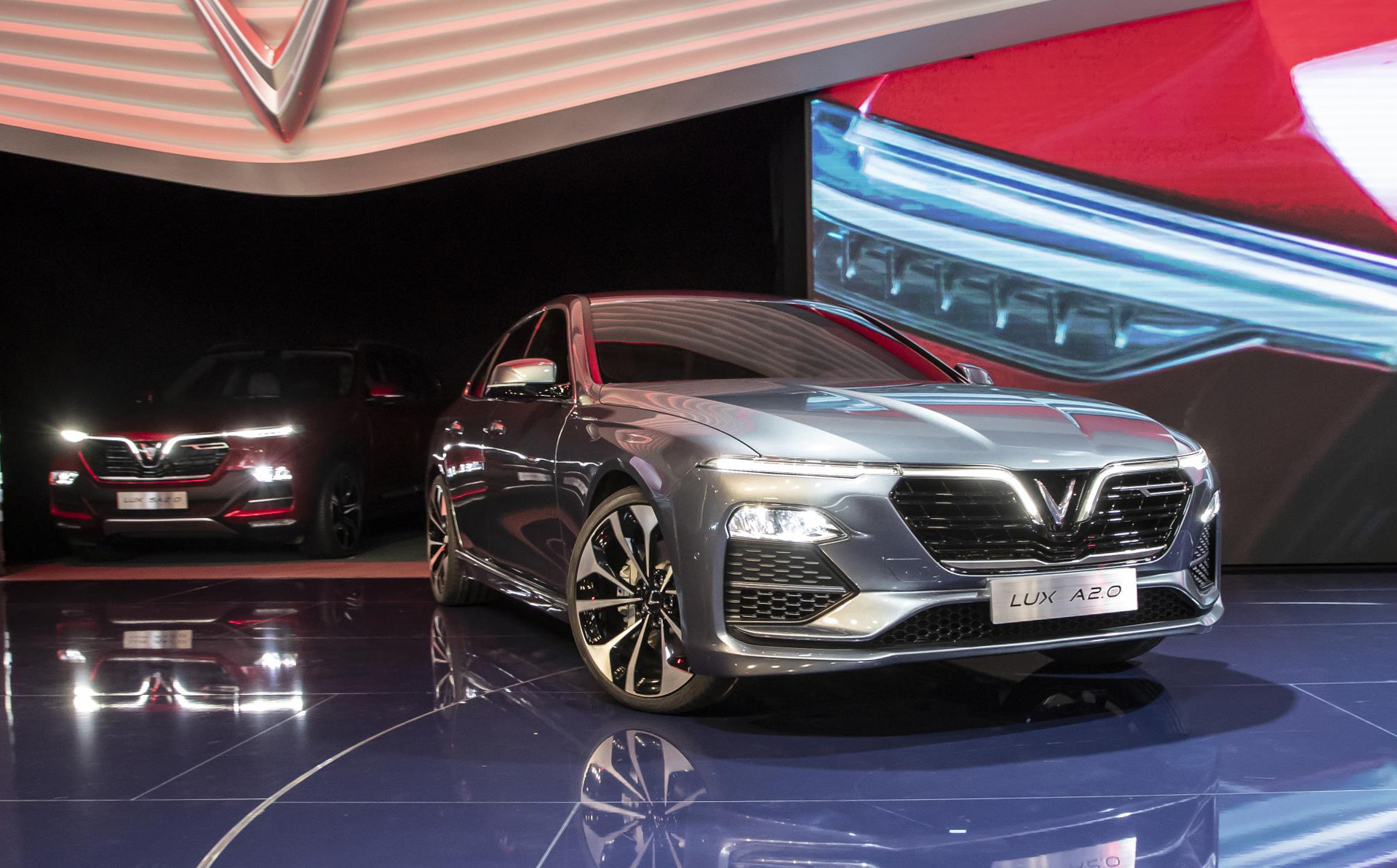
  • Vinfast, set to be Vietnam’s first domestic carmaker, gains credit line

    Vinfast, set to be Vietnam’s first domestic carmaker, gains credit line

    VinFast aims to become Vietnam’s first domestic car manufacturer.

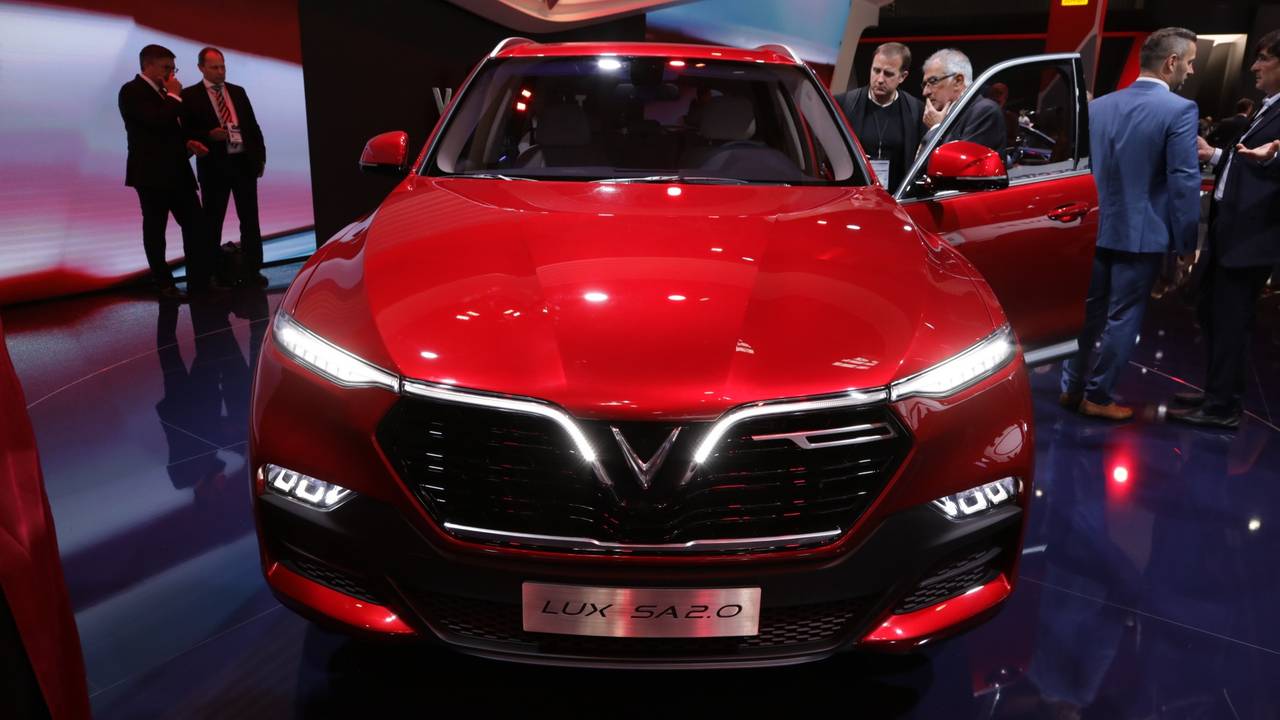
    The company, a unit of Vietnam’s largest conglomerate Vingroup JSC, plans to have its first production models built under its own badge hit the streets next August. Vingroup has earmarked about $3.5 billion for the project.

    Credit Suisse AG and HSBC were the lead arrangers and the financing agreement was guaranteed by German export credit agency Euler Hermes, Vingroup and Vinfast said in a statement.

    The statement also said that in August Vinfast completed syndication of a $400 million term loan facility led by four international banks.

  • Electric vehicles on the fast track in Thailand

    Electric vehicles on the fast track in Thailand

    Experts see bright prospects for electric vehicles (EV) in Thailand with all concerned agencies pursuing the government’s goal of getting 1.2 million units on the road by 2036.

    There are many reasons and data behind the confidence of success, a seminar was told yesterday. The rising number of registered EVs, the development of a locally made EVs, as well as research and development of some EV parts are indications that it could have a major role in Thai society, said Amonrat Kaewpradap, a committee member of the Electric Vehicle Association of Thailand (EVAT), at a panel discussion yesterday titled “The future of Electric Vehicle in Thailand”.

    The discussion was held as part of the Delta Future Industry Summit, organised by Delta Electronics (Thailand), as a venue for exchanging innovative ideas for a sustainable future.

    Amornrat said the number of EVs in use in Thailand was gradually increasing, leading to the continuous growth of infrastructure of charging stations.

    “More stations will boost the confidence for consumers in using EVs and so far, there are 500 charging stations in the country, she said. In 2016, there were 80,194 registrations but the number surged to 102,700 in 2017, or an increase of 20,000 units.She pointed out that the accumulated number of EV registrations in Thailand for Battery Electric Vehicles [BEV] and Plug-in Hybrid Electric Vehicles (PHEV) sharply increased from 2016 to 2017.Incentives will bring down priceAnother indication is the higher imports of EVs, she said, adding that more BEV motorcycles were sold these days, pointing to its popularity.

    Moreover, EV manufacturers are hiking production amid increasing demand from buyers. Also, educational institutions have launched development projects for EV battery, motors and the structure of a light-weight car.She believes the price of EVs could come down in the future as the government will support its usage with incentives.

    Jumpote Himacharoen, director of research and development, Metropolitan Electricity Authority [MEA], said the power agency would provide sufficient electricity to serve the targeted number of EVs. MEA has recently launched an online application on the locations of EV charging stations for the convenience of drivers.

    In a separate panel discussion titled “A Decade into the Future: Predictions for Thai Cities”, participants said smart cities would be the cornerstone of the country’s future urban landscape, with significant investment from the government and private sector.

    Pansak Siriruchatapong, the vice minister of the Ministry of Digital Economy and Society, said the government would expand its smart city project to three more provinces – Chon Buri, Rayong and Chaochengsao – on the Eastern Economic Corridor this year.Currently, Phuket, Chiang Mai, Khon Kaen and Bangkok are the cities earmarked for the pilot program.

    “Within the next five years, Thailand will develop smart cities in all 77 provinces,” he said.He added the two factors driving the development of smart cities are the engagement of community and local government and the connectivity and sharing information with technology solutions.However, Piyapan Tayanithi, Bangkok Bank’s executive vice president, warned that smart or high-technology is a double-edged sword, and back-up measures were needed in the event of malfunctions.

    Piyapan cited an incident late last month when banks’ electronic money transfers, withdrawals and payment services crashed for several hours. The banks attributed the cause to heavy interbank money transfers at the end of the month at large banks.“Simplicity or convenience of a group of people could come along with difficulty or complexity for another group [of people],” he said.

    Hsieh Shen-yen, president of Delta Electronics (Thailand), said: “We are currently witnessing the decline of old technologies such as gasoline cars and the gradual shift to smarter, cleaner technologies to power our lives and manage our cities.“But the shift to the future will only gain real momentum when the public and private sectors work together and get serious about action for climate change and managing urbanization,” he said.