Category: Automotive

Retail News Asia is committed to providing both local and global retailers with the latest Auto and Car news throughout the Asian market. This on a daily base.

  • Still no clue how to stop BMWs from bursting into flames in Korea

    Still no clue how to stop BMWs from bursting into flames in Korea

    BMW cars continue to burn in Korea, and neither the carmaker nor the government has a clear idea of how to resolve the ongoing crisis.

    On Saturday, a 120d model burst into flames in Incheon and the following day, a 2015 BMW 520d model ignited on a highway in Hanam, Gyeonggi. Both models were included on a recall list drawn up by BMW Korea.

    On Monday, a BMW M3 gasoline model not on the recall list caught fire on a highway in Namyangju, Gyeonggi.

    They bring the total of BMW fires in Korea this year to 39.

    Members of the Land, Infrastructure and Transport Committee from the ruling Democratic Party held an emergency meeting Monday, attended by officials from the Transport Ministry and BMW Korea Chairman Kim Hyo-joon. Chairman Kim apologized and the lawmakers pledged to revamp regulations on recall procedures, all of which had been promised before.

    “Democratic Party lawmakers from the Land, Infrastructure and Transport Committee agreed that policies on punitive damages and recall processes have to be strengthened and regulations to support hefty fines [on manufacturers] have to be improved,” said Yoon Kwan-seok, a lawmaker from the Democratic Party who is a member of the committee.

    “Regarding the aftermath measures, the government and the lawmakers will work together to improve the regulations,” Yoon added.


    The Transport Ministry said Monday that it will run a series of tests with the help of external experts to see if software was a factor into the fires.

    BMW Korea insists that faulty exhaust gas recirculation (EGR) modules are to blame for the fires. The EGR reduces gas emissions by recirculating a portion of the gases into the manifold pipe. Industry experts have been raising other possibilities.

    One speculation is that a piece of software called the electronic control unit has been manipulated to decrease the amount of emitted gas to meet the tightened standards on diesel engine emissions after the so-called Volkswagen dieselgate scandal broke out in 2015.

    “There is a possibility that a fire broke out, even if an EGR is fine, because the software had been manipulated to reduce the amount of emitted gas,” said Kim Pil-soo, an automotive engineering professor at Daelim University in Gyeonggi. “It is hard to believe that so many fire cases broke out only in Korea if the hardware was the only problem,” he added.

    The Transport Ministry said it will collect multiple samples, including inspected and non-inspected cars as well as models that are not being recalled to test the possibilities.

    Meanwhile, the first police investigation in a class action suit took place on Monday evening.

    Lee Kwang-duk, a BMW owner and one of the plaintiffs in a class-action lawsuit against BMW Korea, was questioned Monday evening. The plaintiffs claim that BMW Korea covered up the causes of fires on purpose for years.

    “I will ask the police to secure emails that BMW Korea exchanged with its German headquarters and the manufacturers of the EGRs,” Lee said before attending the session. Lee is the owner of a 2014 BMW 520d model that caught fire last month after a friend of his drove the car for one hour and parked it in front of a building in Seongnam, Gyeonggi.

    As of Sunday, 67.9 percent of the 106,000 recalled cars had received safety checkups.

  • Hyundai creates separate sound zones in cars

    Hyundai creates separate sound zones in cars

    Hyundai Motor has developed a sound system for vehicles in which passengers and the driver can hear different songs or make totally private phone calls.

    It is the first such system in the world, the carmaker announced Sunday, and will be offered in Hyundai Motor cars within a year or two.

    Korea’s largest carmaker calls the system a “separated sound zone” and unveiled it on its official website and on YouTube last Sunday.

    In the YouTube video, classical music plays in the front of the car where two parents are sitting, while pop music plays in the back for children.

    Separate sound zones are created by the artful placement of different speakers. There is also software that control the sound’s reflective wave and output level, the carmaker explained.

    Playing different types of music is the most basic thing the sound zones can do, according to the carmaker.

    A driver or passenger could have a private phone call as well. Calls on speaker are usually heard by all people in the car.

    With the system, passengers can enjoy individual choices of music while retaining the ability to converse among themselves, which isn’t possible if they are enjoying private music with earphones.

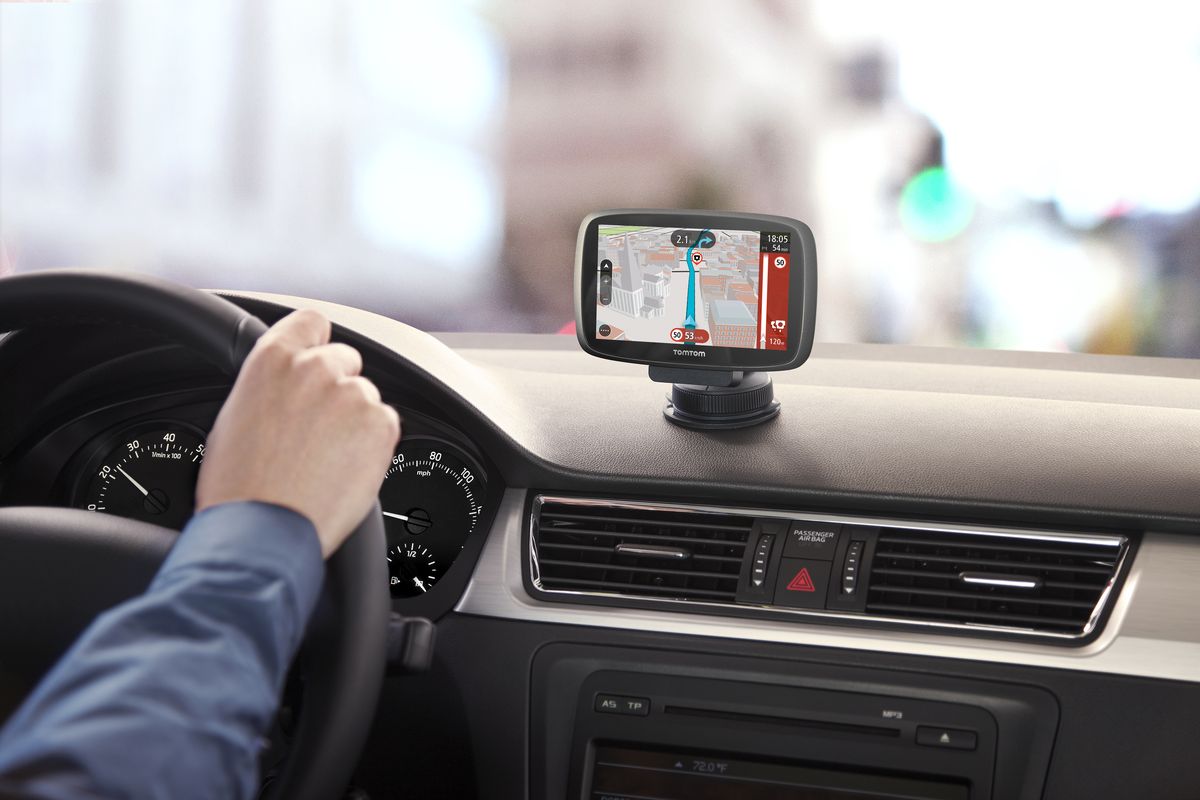
    Sounds that are necessary to the driver but that are disturbing to other passengers can be controlled too, such as audible directions from the navigation system or warning sounds from the driving assistance system.

    Music or direction guides that a driver is listening to won’t be heard by a sleeping child in the back seat.

    Hyundai Motor said it started developing the system in 2014 and is almost ready to install it in mass-produced cars.

    “This sound system will become necessary as the autonomous driving era nears and demands for entertainment inside a car evolve,” said Ih Kang-duck, a researcher in charge of developing the system.

  • How luxury car brands in China show that bigger is better

    How luxury car brands in China show that bigger is better

    China specialises in big numbers and the car market is no different, from 6.7 million passenger vehicle sales in 2008 to 24.7 million in 2017.

    While many articles about business in China tend to wring their hands over the ‘whys’, this topic does not need much social pondering of why Chinese people like cars – people in all countries opt for car ownership when financially able, and you just may have read that the Chinese economy has grown somewhat in the last decade.

    The more intriguing poser is how do car brands ignite passion for their marque in China’s competitive environment?

    The experience of the drive – and the brand

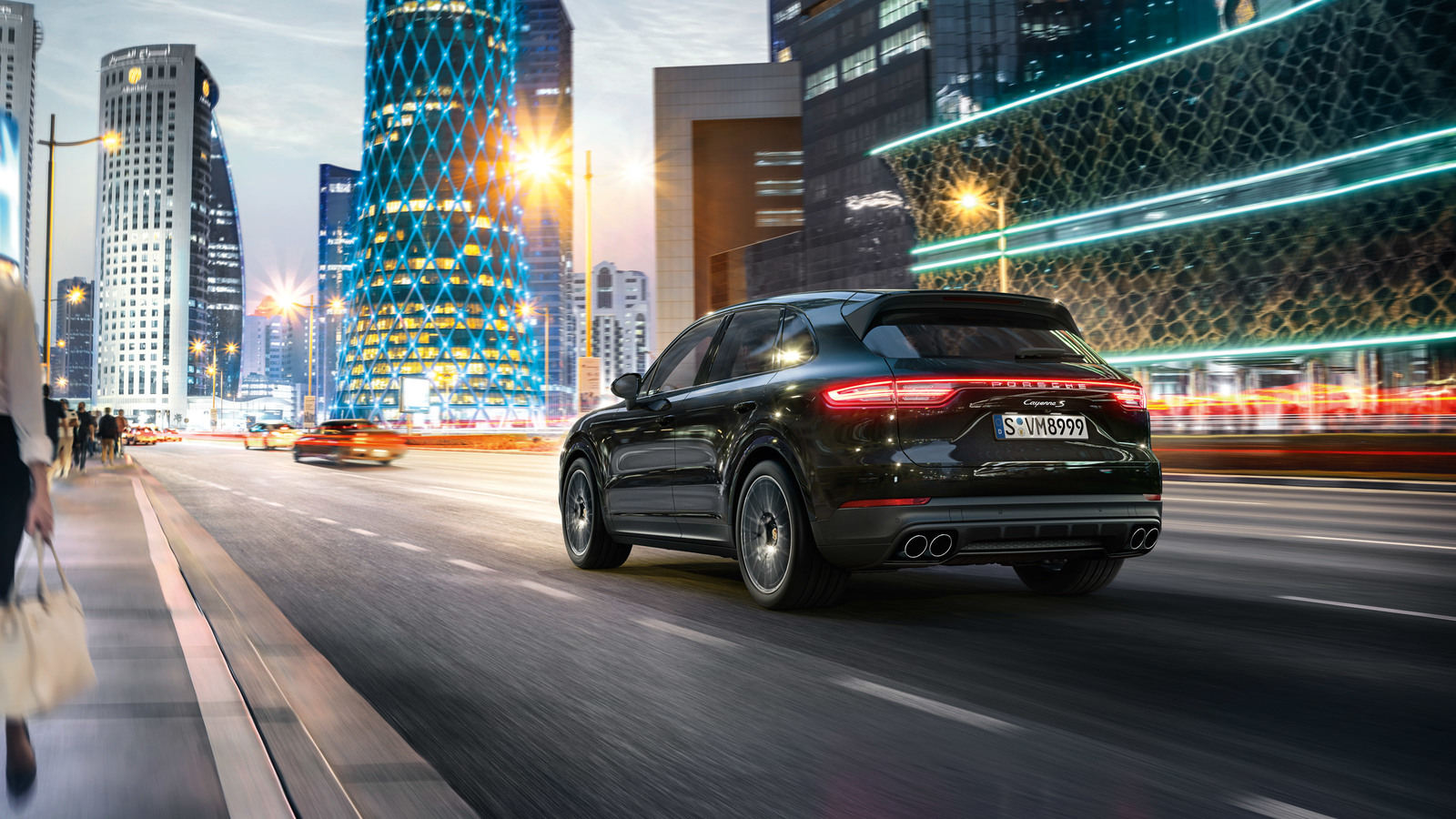
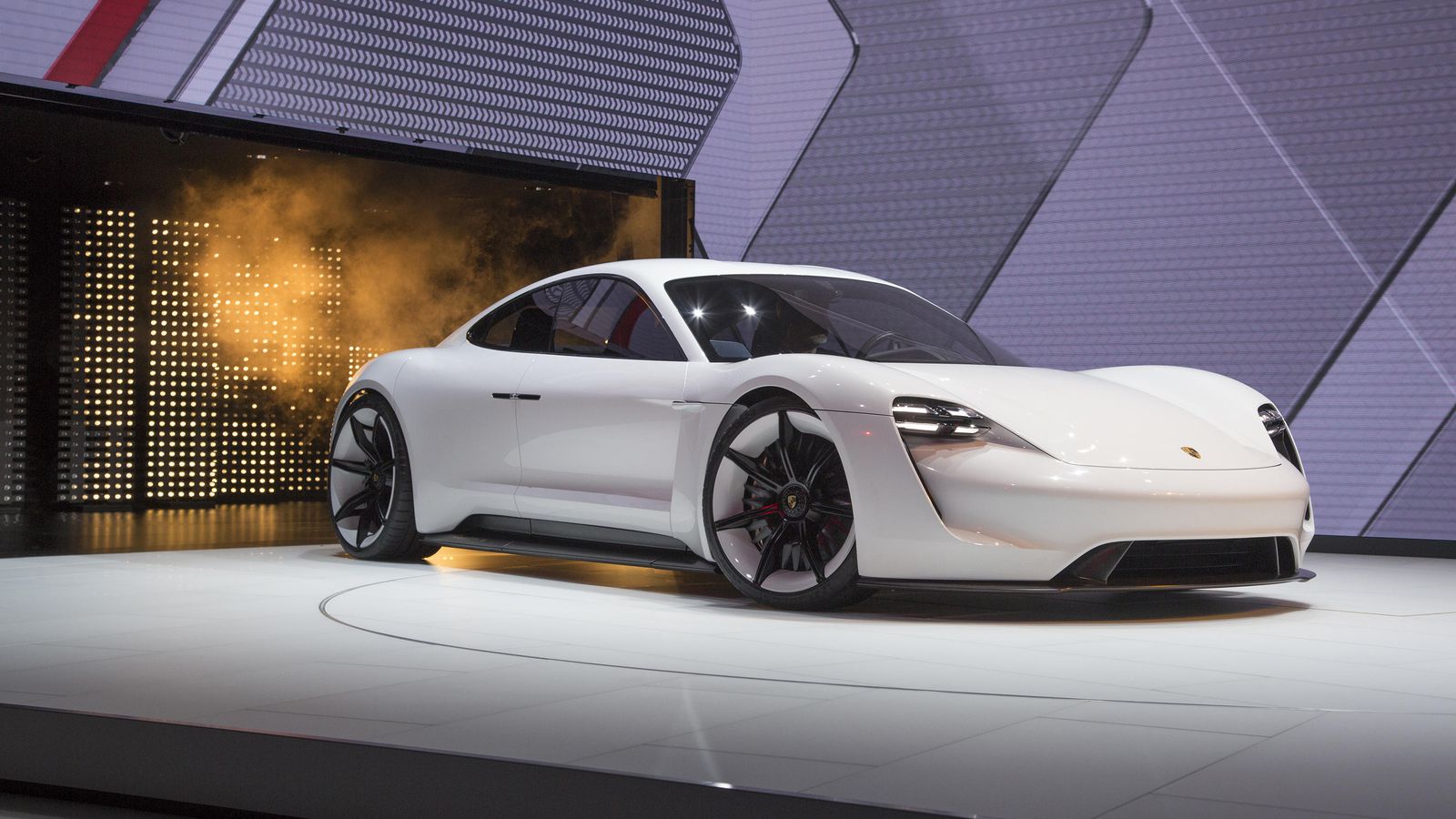
    In something of a pole position in China, Porsche has captured the spirit of Chinese drivers. Popularity rocketed with the launch of the Cayenne and the Panamera. In terms of cars, bigger is always better in China, and flashiness reigns supreme.

    The recent World Premiere of the new Porsche Macan was held in none other than Shanghai, as the CEO, Jens Puttfarken, explained that Porsche was committed to creating not only a vehicle but a lifestyle brand for Chinese customers. The customer in China is, in general, an entire generation younger than in other countries – and China is Porsche’s biggest single market for the third year in a row.

    Porsche have one of the most interactive WeChat mini-programs of car brands. With a campaign of ‘follow your voice’, their mini-program allows the user to choose a car colour, seat their friends on selected seats and then record a voice message which is sent to their chosen friends in WeChat.

    Porsche doesn’t only aim to create a vehicle brand, but a lifestyle brand. The Porsche Experience Center Shanghai is the sixth worldwide and first in Asia, newly completed besides the International F1 Circuit in Jiading district. Potential customers can book test drives via WeChat, and on site there are interactive elements such as racing simulators, kids zones, a café and restaurant, as well as versatile test tracks and even an off-road course for pushing the Cayenne to its limits. As well as ‘experiential’, it’s all ultra-ripe WeChat-posting fruit for each visitor.

    The keyword: ‘Me’

    Mercedes Me is a ‘lifestyle venue’ in a swanky location within Shanghai’s new Bund Financial Center. After the first Mercedes Me was built in Beijing in 2016, the concept clearly works, hence this 2018 addition.

    Quoting directly from the Mercedes press release, the venue delivers “an integrated and personalised customer journey, encompassing three distinct products and services: Food & Beverage, Test-drive and Retail. The overall experience is designed to engage both new and existing customers, and connect them to the lifestyle attributes of the Mercedes-Benz brand.”

    There’s a restaurant, bar and WeChat-photo-friendly designs such as a large, flashy (and flashing) logo outside. Using special on-site tech, visitors can also digitally dream up their personalised car, down to the finest interior details.

    For the car itself, Mercedes have also adapted well to Chinese tastes; WeChat is integrated directly within the infotainment system – no matter how alarming ‘texting + driving’ may sound – and the voice system has regional dialects such as Cantonese and Sichuanese alongside the usual Mandarin option.

    While many car brands have purely functional WeChat mini-programs that let you book a test drive and see the car models (note that in China, people don’t go to their browser and find a website or enter a URL, WeChat is your website in China), Mercedes’ WeChat stands out with richness of information and detailed payment plan details.

    Tesla were first in electric, but will they remain so?

    The Tesla brand immediately switched on interest in China. Chinese consumers like tech, gadgets and a brand that takes them into the desired category of ‘internationalised pioneer’ – someone who is on the edge of the new and not afraid to be first to try. Owning a Tesla is just that, and Tesla focused its energies on the digital gizmos now commonplace in the country:

    Tesla in China took full advantage of WeChat mini-program capability – they show the driver a real-time map of the electric charging stations and with details such as their own acceleration, speeds and energy consumption. If you don’t own a Tesla, you can still use the mini-program to book a test drive. They also promote regular exhibitions and events on the mini-program, and showcase content such as short videos on sustainable living and CO2 reduction.

    Tesla stole a charge on EVs in China, yet they will soon have competition from all brands. The advantage of having an electric car in somewhere like Shanghai is that you pay a drastically reduced price for the registration plate – which currently commands almost RMB 100,000 for a standard petrol car. There was recent announcement that China will remove foreign ownership caps for companies that make fully electric and plug-in hybrid vehicles in 2018, for commercial vehicles in 2020, and the wider car market by 2022. This will likely see a strong influx of not only existing brands offering fully electric cars, but a slew of entirely new brands.

    When a gizmo becomes a gimmick

    Last year, Alibaba rolled out a ‘car vending machine’ which grabbed a few easy headlines, yet was in fact a pure marketing gimmick and not a functional sales platform. Firstly, car buyers in China need to go through plenty of red tape to simply buy and register a car: several trips to various administrative buildings in inconvenient locations. But more importantly, the car-buying aspect is a key momento of affluent life for the Chinese consumer. The sales service, the showroom experience and the like are still all-important, particularly for luxury vehicle purchase. The takeaway? Don’t always believe the headline-grabbing tech news.

    Who wants to share?

    Luxury car ‘sharing’ puts brands on thin ice. While ride-sharing and easy car-hire apps have been very popular, the affluent demographics are not so keen. BMWs were tried in a ‘shared’ concept, only to find that owners who had also chosen a blue BMW were miffed that their own car now looked ‘cheapened’, as it was similar to a general car-for-hire. No other luxury car brand has since attempted a sharing scheme.

    Bigger really is better

    As mentioned, bigger is better. The CEO of Aston Martin, Andy Palmer, was as open as could be with his recent quote: “The DBX SUV exists because of the booming China market,” Palmer told Wards Auto. “Would Aston Martin have done an SUV if not for the China market? Probably not.”

    Aston Martin also revealed a strong trend towards female buyers, as the DB11 Volante was launched in Melbourne a few months ago, with Vice President Simon Sproule telling media:

    “What we can say with fact, is we are now seeing more women as the outright owners and main drivers of the car. In certain markets we’re seeing quite an extraordinary swing towards female buyers. On the V12 coupe in China last year, full year, 50 percent of sales were women. We’ve never seen that for our brand in any market.”

    This also tallies well with Porsche stating that China leads the way for gender balance, with 47% female buyers, after which Russia and the U.S. are second and third with 33% and 22% respectively.

    The takeaways for any brand

    The car market in China reveals modern-day truisms on the expectations of affluent Chinese consumers – you have to be personal, digital and allow your customer to ‘brand’ themselves in the same high-end way that you are strategising for your brand itself.

    Online and offline are both must-haves for any strong luxury brand. Interactive content and booking, locating, testing functionality on a WeChat mini-program as well as branded venues are more than abstract ‘engagement’; they implant the lifestyle values of exclusivity and fun that make Chinese consumers tick.

    Women are the drivers and decision-makers for many luxury sectors, including for the luxury auto industry. As shown above, female buyers make up half of the ownership – and anyone who has lived in China for a while would be able to safely surmise that a good portion of male owners/buyers choices were actually led by their partners.

    The oncoming boom of the EV car market is a society-shaping happening. While the instigation of the global move towards electric cars is related to many factors, the opportunity in marketing communications will have a strong ripple effect to many other luxury categories – related to eco-friendliness, hi-tech connectivity and ‘clean’ living.

    The changes in import tariffs mean that looking only at 2018 H1 sales statistics would be very mis-leading. The word from car companies is that they expect a strong 2H to make up for any deficit, and more importantly, all are still investing into China with full belief of the long-term benefits. Simply put, those with a ‘go big or go home’ China strategy, such as Porsche and other brands mentioned, are the ones that end up winning.

  • Toyota Vietnam recalls 11,300 plus cars with airbag faults

    Toyota Vietnam recalls 11,300 plus cars with airbag faults

    Toyota Vietnam has announced the recall of more than 11,300 cars of three models with faulty airbags.

    The inflator canister of over 5,600 Corolla Altis cars manufactured in 2013 can be penetrated by humidity, the Japanese company said in a statement.

    Thus, it can happen that in some crashes, the activation of the airbag can break the inflator into pieces. These pieces can be pushed through the inflated airbag, causing serious damage to users.

    The same fault is likely in 5,100 Vios cars and 550 Yaris cars manufactured at the same year, which are also being recalled.

    Another 372 Corolla Altis cars manufactured between December 16, 2015 to February 15, 2016 are being recalled for airbag crash sensor faults.

    The electrical insulator of the airbag electronic controller unit can fall off after a period of car operation, turning on the warning airbag symbol on the driver’s control board.

    In the event of a crash, the airbag may not be activated because of this fault.

    Toyota said it has not been aware of any accidents involving these faults so far.

    Customers can bring their vehicles for a free replacement of the faulty parts at Toyota garages, which should take three hours.

    This is not the first time Toyota Vietnam is recalling cars with airbag faults. The most recent one was in March this year and August last year, with over 20,000 vehicles in each occasion.

  • Mitsubishi Motors bolsters crossovers sales

    Mitsubishi Motors bolsters crossovers sales

    Mitsubishi Motors Vietnam managed to boost its sales via crossovers while eyeing the expansion of manufacturing and assembly in the country.

    The firm (MMV) yesterday debuted the all-new Xpander, a next-generation crossover MPV, in Vietnam.

    Manual and automatic models of the seven-seat car will be imported from Indonesia, with orders starting in September, and cost VND550 million ($23,650) to VND650 million ($27,950).

    They will take on the Kia Rondo, Suzuki Ertiga and Toyota Rush.

    The auto maker has to yet reveal the import scheme for Xpander, which won Indonesia’s Car of the Year award this year from leading tabloid Otomotif.

    Early this year, even as many other automakers were struggling to import cars following the introduction of stringent technical regulations by the government’s Decree No. 116, Mitsubishi launched the domestic-assembled crossover Outlander and gained positive cues.

    More than 1,000 Outlander units were sold in the first half of this year, or one third of the total sales.

    Meanwhile, the extensive operations of MMV is under consideration.

    The company has reportedly discussed locations for its second plant in the country with the central province of Nghe An and the southern province of Long An. The first is in Binh Duong province near Ho Chi Minh City.

    The proposed plant, would cost around $250 million and have an annual capacity of 30,000 – 50,000 units, vice chairman of Mitsubishi Motors Corporation, Kozo Shiraji, told Deputy Prime Minister Vuong Dinh Hue during a meeting in January.

    The factory is likely to begin production in 2020.

  • Malaysia PM : ‘Third national car will not be like Proton’

    Malaysia PM : ‘Third national car will not be like Proton’

    The International Trade and Industry Ministry (Miti), which is confident of completing its review of the National Automotive Policy (NAP) by year-end, assured that the third national car mooted by Prime Minister Tun Dr Mahathir Mohamad, will not be like Proton, according to Miti Deputy Minister Dr Ong Kian Ming.

    He said Mahathir’s concept of the national car project is not about going back to Proton, but for energy efficient vehicles (EEV).

    Ong said the NAP needs to look at new mobility pathways, trends in driving patterns, and be adjusted with the improvement in public transportation and vendor development in the ecosystem.

    “There are many things that can be updated in terms of how we want to make the aspiration of Dr Mahathir to propel the automotive industry into something more sustainable and green.

    Inputs from the industry and stakeholders are important to help Miti shape this NAP. We hope the public do not think that Dr Mahathir’s intention is to revive Proton as Proton 2.0. There are many more ideas that he has,” Ong said at the British Malaysian Chamber of Commerce-Shell Premier Luncheon: Sustainability in Business, today.

    He said the third national car project will be open to all inputs and ideas of cooperation.

    “Dr Mahathir has spoken on the possibility of having an Asean car with cooperation with Indonesia, so there is opportunity to explore with other players, but looking at the angle of how the NAP is going at an international level, moving towards electric cars and EEV, and the value chain that comes along it, which includes electronics, artificial intelligence, internet of things – that would be part and parcel of the ecosystem.”

    On the matter of free trade deals, Ong said the government needs to decide on the ratification of the Comprehensive and Progressive Agreement for Trans-Pacific Partnership (CPTPP) first before it can discuss on free trade agreements (FTA) with other countries, but remains committed to the existing FTAs.

    “We’re already negotiating RCEP (Regional Comprehensive Economic Partnership) and is part of the countries negotiating it. Whatever happens to CPTPP will not affect our direct participation in RCEP at this point in time,” said Ong.

    Earlier at the event, Ong spoke about the government’s short term priorities in reforming for sustainability, which are to reduce and restructure national debt, put in place institutional and policy reform and design new narratives and strategies for investment and growth.

    He said ministers will need three to six months to get a complete grasp of their respective ministries.

    Its long term priorities are to realign the country’s fiscal structure and priorities, reform institutions for sound leadership, policy and justice, as well as to change the underlying structure of the Malaysian economy. This will take two to five years, before the 15th General Election.

  • Ford Vietnam recalls over 2,500 Thai-made vehicles for gearshift problem

    Ford Vietnam recalls over 2,500 Thai-made vehicles for gearshift problem

    Ford has recalled all 2015 Thai-made Ranger pick-up trucks sold in Vietnam because of a gearshift problem.

    The US company, which has sold more than 2,500 of these vehicles, said faulty gearshift cables could make the gear shift hard, leading to the driver losing control.

    It has advised customers to take their vehicles to the nearest dealership to fix the problem for free, saying it would only take about two hours.

    It is reported that Ford will introduce the Ranger 2.0 by the end of this year, but in limited numbers.

    Ford is one of many car brands that have suffered a drop in sales after a new government decree this year set tough conditions for imports.

    However, June auto imports saw a 45.6 percent surge, dominated by Thailand, after Vietnam’s quality control regulations were met.

    Ford, which also assembles vehicles in this country, had a 6 percent share of the market as of June 2018.

  • Kia Motors says strong won hit its bottom line in Q2

    Kia Motors says strong won hit its bottom line in Q2

    Kia Motors said Friday that its second-quarter net profit fell 15 percent from a year earlier on a strong won and increased incentives to cut inventories.

    Net profit for the three months that ended on June 30 fell to 331.8 billion won from 389.6 billion won a year earlier, the company said in a statement.

    “The won rose sharply against the dollar. And the company spent more incentives in the U.S. market to reduce local inventories [of sedans],” the statement said.

    The dollar fell to an average of 1,078.57 won in the second quarter from 1,129.43 won a year earlier, according to the Bank of Korea.

    Operating profit declined 13 percent to 352.6 billion won in the June quarter from 404 billion won a year ago. Sales rose 3.5 percent to 14.06 trillion won from 13.58 trillion won during the same period.

  • Vietnam’s motorbike market bucks saturation forecasts

    Vietnam’s motorbike market bucks saturation forecasts

    In the first six months this year, the top five popular brands in the country sold almost 1.6 million motorbikes, the Vietnam Association of Motorcycle Manufacturers (VAMM) reports.

    This is a growth of 4 percent over the same period last year, said VAMM, which represents Honda, Piaggio, Suzuki, SYM and Yamaha in Vietnam.

    Motorbike consumption in the first half this year was 12 times that of cars, which went down two percent year-on-year, it added

    Honda remained the largest player in the motorbike market, accounting for 72.5 percent of 3.28 million motorbikes sold by VAMM members from April last year to March this year, the company informed a conference in May.

    Although semi-automatic motorbikes are still dominant, Vietnamese are showing greater inclination towards scooters. Last year, 48 percent of motorbikes sold in the country were scooters, a three percent increase from 2016, the VAMM report said.

    It said companies have also been producing more sports bikes as they discern greater interest in them from increasing numbers of young Vietnamese men.

    The motorbike market in Vietnam is still growing because people have a demand for this type of transport. High taxes and infrastructure limitations are constraints for cars, VAMM said.

    “Although the market will not see remarkable changes in the future, it will continue to grow steadily with 3-3.5 million motorbikes sold each year,” VAMM said.

    Motorbike market share in Vietnamin percentage; by March 2018HondaOtherHonda

    Last year, a study done by Germany-based Dalia Research found that Vietnam ranked top in the world for having with highest number of people using motorbikes for daily transportation.

    Seventy-nine percent of Vietnamese use motorbikes for commuting, while the number is just 10 percent globally, the study found.

    By the end of 2016, there were 45 million registered motorbikes in Vietnam, a country of over 92 million people, according to the Ministry of Transport.

  • Hyundai Motor union approves pay deal early

    Hyundai Motor union approves pay deal early

    Hyundai Motor’s labor union voted in favor of a modest wage increase late on Thursday, settling pay negotiations before their summer vacation in August for the first time in eight years.

    The speedy deal stands in stark contrast to last year, when a series of strikes and negotiations dragged on into early 2018.

    The challenging business environment for Hyundai Motor, including threat of auto tariffs from the United States and slow global sales, is expected to have influenced the result.

    Of the 42,046 union members, 63 percent voted in favor of the new wage plan on Thursday. The plan includes a monthly base pay raise of 45,000 won ($40.26), an incentive payment worth 250 percent of their ordinary monthly wage and a bonus of 2.8 million won.

    Last year, the union had asked for 154,000 won more a month in base pay, but workers received a 58,000 won raise. It had asked for a 300 percent incentive rate as well.

    The union on Thursday also approved a renewed two-shift working system, where day and night workers will work exactly eight hours without additional time. Previously, night-shift workers had to work about 20 minutes more than those on the day shift.

    Starting Jan. 7, 2019, each assembly line will be adjusted to produce 0.5 more cars per hour in order to compensate for the reduced working hours.

    Hyundai Motor’s labor union, which is affiliated with the umbrella Korea Metal Workers’ Union, is seen as one of the country’s most hard-line unions. Their fierce conflict with company management has faced criticism for not taking into account Hyundai’s business situations.

    Fellow workers gave the Hyundai union a cold shoulder because of the steep discrepancy in wage rates. Unionized workers at the Hyundai Motor labor union receive an average of 90 million won. Average office workers at small and medium-size companies receive an average of 30 million won per year and conglomerate office workers receive around 60 million won. Last year, the union staged 24 strikes, which disrupted the production of 76,900 cars and caused losses worth 1.62 trillion won to Hyundai Motor. In 2016, their strikes caused the company to lose 3.1 trillion won.

    This year, the union staged only 2 strikes, which disrupted the production of 11,487 cars, causing losses of just 250.2 billion won. These are the smallest losses since 2011, when there were no strikes at all.

    “This will be a stepping stone [for the union] to break through its social isolation and perception that it is the ‘royal union,’” said Ha Bu-young, the leader of Hyundai Motor’s union, in a statement on Thursday.

  • Toyota Eyes 53 New Export Destinations for Indonesia-Made SUV

    Toyota Eyes 53 New Export Destinations for Indonesia-Made SUV

    Toyota Motor Manufacturing Indonesia, the local unit of the Japanese automotive giant, aims to expand its export market by shipping its all-new Rush sport utility vehicle to 53 countries in Asia and Africa this year.

    Toyota currently only exports vehicles to the Philippines, but it believes the model, updated early this year, would appeal to a broader market.

    “The Toyota Rush is indeed one product aimed at export. Where previously we only exported it to one other country, this new model will be delivered to 53 countries,” Henry Tanoto, deputy director of Toyota Astra Motor, a joint venture between Toyota Motor Manufacturing Indonesia and the country’s largest car distributor, Astra International, said on Tuesday (24/07).

    The Toyota Rush still leads in Indonesia’s so-called low SUV market segment, with data compiled by the Association of Indonesian Automobile Industries (Gaikindo) showing that 19,508 units were sold in the first semester of 2018, up 69 percent from the same period a year ago.

    Japanese manufacturers have long sought to establish Indonesia as an export hub in the Asia-Pacific region.

    Toyota has pledged $1.9 billion to expand its manufacturing capacity in Indonesia between 2015 and 2019.

    Exports of Indonesian-made completely built-up cars has risen more than 14 percent over the past three years to 231,000 last year. The country exported 110,135 completely built-up cars between January and June, according to Gaikindo data.

  • Thailand approves electric vehicle investment plans of Nissan, Honda

    Thailand approves electric vehicle investment plans of Nissan, Honda

    Thai authorities said today they have approved investment plans worth 29.63 billion baht (RM3.8 billion), including projects by two Japanese automakers to produce hybrid electric vehicles and batteries.

    Nissan Motor (Thailand), a unit of Nissan Motor Co will invest 10.96 billion baht in one venture while Honda Automobile (Thailand), a subsidiary of Honda Motor Co will spend 5.82 billion baht on its project, the Board of Investment (BoI) said in a statement.

    The agency said it also approved a tax break for Thai AirAsia X’s 9.25 billion baht plan to lease six Airbus A330 aircraft, and for Mars Petcare (Thailand)’s 3.5 billion baht investment in pet food.

    The BoI said Thai and foreign firms submitted projects worth 284.6 billion baht in January-June, which it said was “close to” the amount in the first half of 2017, without giving the previous number. The board said the projects were mainly for Thailand’s Eastern Economic Corridor a centrepiece of the junta’s policy to lift growth and targets high-tech investment.

    The agency is sticking to its target of securing 720 billion baht in investment pledges this year, up 12% from last year, as large applications are expected in the second half, it said.

    Meanwhile, Toyota Motor Corp’s Thai unit said Thailand’s total domestic car sales are expected to be 980,000 units this year, up 12% from 2017, and more than previously expected.

    Toyota, which commands about one-third of the Thai vehicle market, also raised its own 2018 car sales in the Southeast Asian nation to 315,000 cars, up 31% from last year, Toyota Motor Thailand’s president Michinobu Sugata told a news conference. Sales have been supported by stronger economic growth and more activities by carmakers, he said.

    In January, the company predicted overall domestic sales at 900,000 cars and its own sales at 300,000 units.

  • Hyundai Mobis finds a job for AI

    Hyundai Mobis finds a job for AI

    Auto parts maker Hyundai Mobis announced Sunday that it has developed artificial intelligence-based software and a chatbot equipped with a deep learning algorithm to speed up its research in smart car technology.

    The artificial intelligence-based software is called Maist, short for Mobis Artificial Intelligence Software Testing, and has been co-developed by a research team at the Korea Advanced Institute of Science & Technology led by Professor Kim Moon-zoo.

    Maist is designed to test different software that is to be installed in cars. According to Hyundai Mobis, installing Maist will double the efficiency of the software development process.

    “About 50-70 percent of the testing process will be done by Maist from now on, allowing researchers to engage in more creative works,” an official at Hyundai Mobis said.

    The chatbot is called Maibot, short for Mobis AI Robot, and is able to search through the lab’s cloud, home to more than 200,000 research cases, to find material that a user is looking for. The algorithm will allow Maibot to become more advanced, Hyundai Mobis said.

  • Korea rush to lobby against U.S. auto tariffs

    Korea rush to lobby against U.S. auto tariffs

    Government officials and representatives from the local auto industry rushed to the United States last week to request that Korea be exempted from higher tariffs on imported cars.

    The Korean delegation, headed by Trade Minister Kim Hyun-chong, met with officials from the White House, Congress and think tanks during their U.S. trip from Wednesday to Friday, arguing that imported cars from Korea should be excluded from the tariff renewal based on Section 232 of the Trade Expansion Act.

    Finance Minister Kim Dong-yeon on Saturday also raised the issue at the G20 meeting held in Buenos Aires, Argentina.

    Kim Hyun-chong’s delegation included Hyundai Motor President Chung Jin-haeng and Korea Automobile Manufacturers Association President (KAMA) Kim Yong-geun, among others.

    The trade minister met with Larry Kudlow, the National Economic Council director, and Mick Mulvaney, the White House Office of Management and Budget director.

    “Kim explained that the revised Korea-U.S. FTA already reflects the concerns that the U.S. has about its automobile industry and security,” said an official from the Ministry of Trade, Industry and Energy on Sunday.

    In March, Korea agreed to extend a 25 percent tariff on Korean pickup trucks in the U.S. to 2041, instead of 2021, ensuring the unfavorable export conditions for Korea’s pickup truck manufacturers continues.

    “He also emphasized the fact that Korea and the United States impose zero tariffs on cars imported from each other’s country based on mutual benefits,” the official added.

    According to the ministry, the U.S. officials agreed with the Korean delegation and showed concern that the new tariffs might have a negative effect on America’s labor market and the economy considering the industry’s complex global supply chain.

    Hyundai Motor President Chung met with lawmakers based in Georgia and Alabama, two states where the automaker runs assembly lines. Korea International Trade Association Vice Chairman Han Jin-hyun mostly met with officials from the U.S. government and think tanks such as the Center for Trade and Economics and the Center for Strategic and International Studies.

    Finance Minister Kim Dong-yeon was also determined to prevent renewed tariffs.

    “Finance Minister Kim Dong-yeon explained to his U.S. counterpart that the two countries have been carrying out fair trade with the renewed Korea-U.S. FTA until now, and expressed his strong opposition to imposing higher tariffs on imported cars from Korea,” the Finance Ministry said in a release. “Kim also emphasized the positive effect that Korea’s auto industry has had in the U.S., such as hefty investment and employment,” the release added.

    U.S. President Donald Trump has been pushing for higher 25 percent tariffs on imported cars on national security grounds. The plan sent jitters through Korea’s auto industry, which relies heavily on exports to the U.S. According to industry statistics, 30 percent of exports to the U.S. last year came from the auto industry.

    Trade Minister Kim will continue to lobby U.S. officials. He will visit the United States from July 25 to July 27.

  • Hyundai, Kia hope to hit targets with SUVs

    Hyundai, Kia hope to hit targets with SUVs

    Hyundai Motor and affiliate Kia Motors said on Friday that they would achieve their sales target for the year by launching new sport utility vehicles in two major auto markets, the United States and Europe, in the second half.

    In separate biannual meetings with overseas sales executives, Hyundai and Kia discussed measures to achieve their sales target of a combined 7.55 million vehicles, up 4.1 percent from the 7.25 million they sold last year, Hyundai Motor Group said in a statement.

    In terms of major challenges in the second half, the company named interest rate increases in the United States, rising oil prices and an unfriendly business environment due to U.S. tariffs on imported vehicles.

    To boost sales in the second half, Hyundai plans to launch a new Santa Fe and upgraded Tucson in the U.S. market in July and November. Kia will launch a Sorento facelift in June.

    The new Santa Fe is the most essential model in determining Hyundai’s annual earnings results this year. If it is well accepted in the United States, Hyundai will come up with strong financial figures at the end of the year, the company said.

    In Europe, Hyundai will gradually the Santa Fe, Tucson and Kona, and Kia will roll out the Sportage SUV. The company has recently set up a task force to attract female customers in Saudi Arabia after the country permitted women to drive cars.