Category: Automotive

Retail News Asia is committed to providing both local and global retailers with the latest Auto and Car news throughout the Asian market. This on a daily base.

  • Huawei launches Internet of Vehicles platform

    Huawei launches Internet of Vehicles platform

    Huawei has launched a new Internet of Vehicles (IoV) platform designed to allow the development of intelligent and connected vehicles.

    The OceanConnect IoV Platform is designed to support hundreds of millions of connections and millions of simultaneous connections to support the evolution of intelligent transportation.

    The platform will help automotive manufacturers pursue digital transformation by introducing capabilities including cloud-based data analytics.

    Specifically, the platform analyzes vehicle big data such as vehicle conditions and driving behaviors to enable the intelligent distribution of content as well as service recommendations based on an analysis of driving behaviors and travel scenarios.

    The IoV platform will also be developed in tandem with vehicle-to-everything (V2X) connectivity to enable vehicles to communicate with each other and their environment, helping to pave the way for the development of intelligent and safe transport systems of the future.

    “The Internet of Vehicles (IoV) leads to in-depth convergence of ICT and the automobile industry. The IoV empowers connected vehicles and intelligent services which enables faster digital transformation for the automobile industry,” Huawei president of cloud core network products Ma Haixu said.

    “During this important transition, Huawei is dedicated to building a fully connected, intelligent world that connects people, vehicles, roads, and other things. Huawei is proud to become a preferred strategic partner of global automobile manufacturers.”

    The first vehicle developed on the OceanConnect platform, the DS 7 CROSSBACK, has been launched in China and Europe, the company said.

  • Lift non-tariff barriers on car imports, Thailand tells Vietnam

    Lift non-tariff barriers on car imports, Thailand tells Vietnam

    Thailand wants Vietnam to lift non-tariff barriers on its completely built-up car units (CBU).

    Earlier this year, the Vietnamese government had stiffened inspections on all CBUs, which are completely assembled units ready to export.

    The new restriction requires CBUs to pass environmental and emissions tests done by a Vietnamese laboratory.

    However, Vietnam lacks the laboratory facilities to handle a large number of cars, and the move could be a new measure to block car imports.

    Vietnam Register is currently the only car testing facility. The agency will test select a car from a shipment at random. The whole process will take about two months, a long time for a shipment to be passed.

    Somchai Harnhiran, Thailand’s deputy minister of industry, said the country’s automotive industry has lost 80 percent of its car exports to Vietnam. He said both governments will discuss this topic further in the future and hopes “for a good sign from both countries.”

    It is also reported that shipments of cars to Vietnam have been stalling for over six months.

    Thailand’s auto makers have reported that around 4,590 units were exported to Vietnam in the first quarter of this year, while the country’s annual target is 65,000 units.

    Auramon Supthaweethum, director-general of the Trade Negotiation Department, said that the country will continue to revisit this issue at every upcoming meeting with Vietnam and will propose mutual recognition arrangements (MRAs) at the Joint Trade Committee meeting in August.

    She explained that MRAs will allow Thailand to inspect its cars before shipping them to Vietnam.

    Vietnam has yet to agree on the MRAs.

    Among 922 imported cars since the beginning of June, 564 cars were from Thailand, according to General Department of Vietnam Customs.

    Beside Thailand, Vietnam has this year imported cars several other countries including China, Germany, Slovakia, Hungary, Spain.

  • Vietnam’s May auto sales slip 0.7 percent year-on-year

    Vietnam’s May auto sales slip 0.7 percent year-on-year

    Vietnam’s total vehicle sales edged down 0.7 percent to 23,065 units in May from a year ago, the Vietnam Automobile Manufacturers’ Association (VAMA) said on Monday.

    Sales by VAMA member-manufacturers edged up 2 percent to 22,374 units in May from the year-ago period, including commercial vehicles, passenger cars and special-purpose vehicles.

    Vietnam’s Truong Hai Auto Corp, which assembles sedans, trucks and buses, led the sales in May, followed by Toyota Motor Corp.

    May sales of passenger cars by VAMA members climbed 20 percent month-on-month, while commercial vehicle sales dropped 18 percent and special-purpose vehicles slumped 40 percent, VAMA said in a report.

  • Chelsea jerseys will soon bear Hyundai logo

    Chelsea jerseys will soon bear Hyundai logo

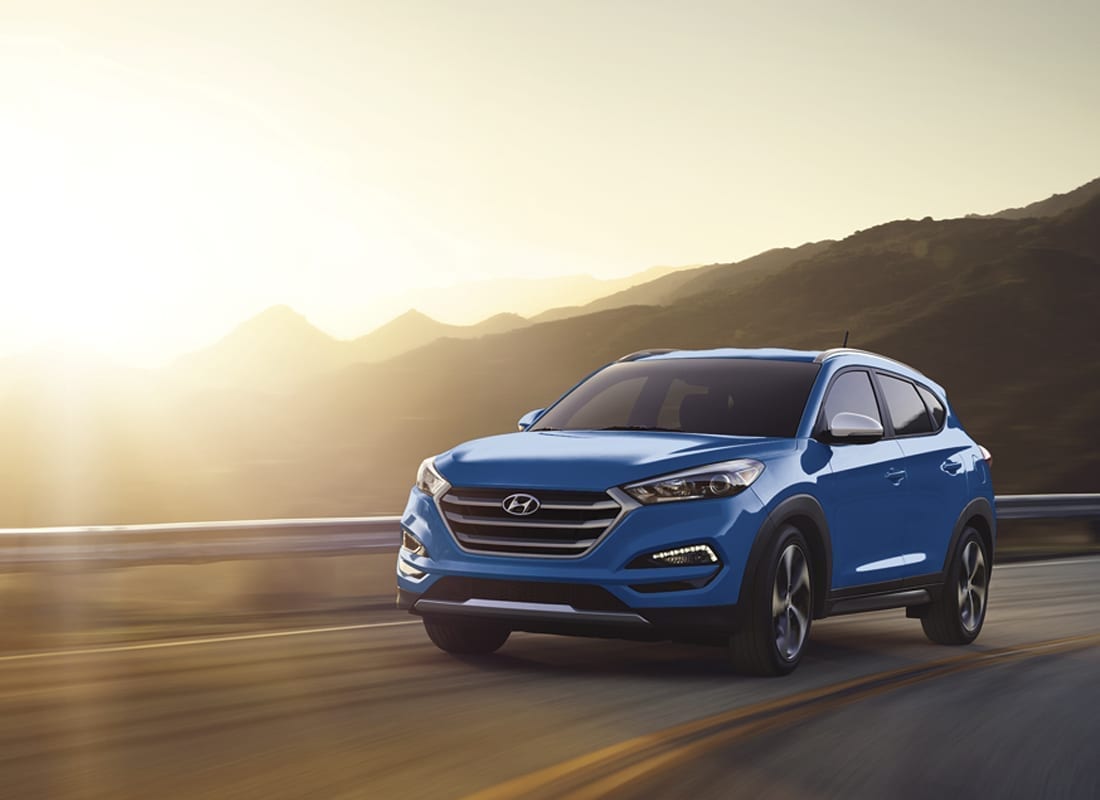
    Hyundai Motor signed a four-year contract with storied English Premier League club Chelsea FC to become its global automotive partner.

    Korea’s biggest automaker announced that it will sponsor the football team until 2022.

    Hyundai Motor’s logo will appear on the sleeves of the team’s new uniform and on the signboards at Chelsea’s home and away games. The automaker will also display its cars at Chelsea’s Stamford Bridge stadium.

    This is the first time Hyundai Motor has sponsored a British football team.

    “For 20 years, Hyundai has been bringing the dynamism, passion and excitement of football to fans around the world,” said Andreas-Christoph Hofmann, vice president of marketing product at Hyundai Motor. “We are thrilled to begin a new partnership with Chelsea, a successful and ambitious club that matches the global scale and challenging spirit of Hyundai.”

    Chelsea’s new uniform that features Hyundai Motor’s logo will debut on July 23, when the team will play against Perth Glory in Australia ahead of the 2018-19 Premier League season.

    Chelsea was founded in 1905 and has won six EPL seasons. It has also won the FA Cup eight times.

    The automotive company has been a FIFA Top Partner since 1999, and has been sponsoring the French football team Olympique Lyonnaise since 2012.

    As official FIFA partners, Hyundai Motor and Kia Motors have recently stepped up their marketing effort for the upcoming Russia World Cup.

    On May 31, Hyundai Motor delivered 530 Santa Fe, Tucson and Starex SUVs to the World Cup venues. Kia Motors sent 420 of its K9, Sorento, Sportage and C’eed models.

    Hyundai’s standalone Genesis luxury brand has sponsored the Genesis Championship, a men’s golf tournament for Korean players, since last year.

  • Chinese Used Car Auction Platform Tiantianpaiche Receives $100M Investment From Autohome

    Chinese Used Car Auction Platform Tiantianpaiche Receives $100M Investment From Autohome

    Chinese used car auction platform Tiantianpaiche has received US$100 million strategic investment Autohome, a Chinese automobile online platform, according to Tiantianpaiche’s announcement on its official WeChat account.

    Autohome also obtained the right to invest as much as US$65 million in the form of convertible notes in Tiantianpaiche in the three years after the completion of this investment. The two companies will deepen their strategic partnership going forward, with more operational cooperation and integration.

    The announcement came a day after Tiantianpaiche’s peer Chezhibao, Nanjing-based customer-to-business used car auction platform, raised a RMB800 million (US$125 million) series D round led by Chinese private equity fund Green Harbor Investment.

    Used car online auction platforms have been raising billions of U.S. dollars in China, trying to compete to become the market leader. But at least a handful of companies are still vying for the number one position, and no clear winner has emerged. For Tiantianpaiche, taking Autohome as a strategic investor could anchor its future and help it better compete in the market place.

    Founded in 2015, Tiantianpaiche focuses on a customer-to-business model connecting sellers of used cars to used car dealerships. After this round, the firm has raised a total of US$353 million in total fundraising. It has more than 40 offline shops in Shanghai, Beijing and Guangzhou. It expects transaction volume on its platform will reach one million vehicles annually in 2020, said the company.

    The proceeds of this round will be used for business expansion to more cities in China and develop new businesses including used car retail and used car financing services.

    Tiantianpaiche raised a total of US$180 million C round last year. Its investors include Tencent, SIG, SB China Venture Capital (SBCVC), Yiche.com and others.

  • Seven-Eleven to use Toyota fuel cell trucks for deliveries next year

    Seven-Eleven to use Toyota fuel cell trucks for deliveries next year

    7-Eleven Japan and Toyota Motor Corporation have agreed on a joint project to reduce CO2 emissions.

    The idea is to conserve energy and reduce carbon dioxide emissions in the store’s distribution and business activities.

    Toyota has been investigating the use of newly developed fuel-cell trucks and fuel-cell generators, and the project will be implemented in stages starting next year. It aims to introduce technologies and systems developed by Toyota for 7-Eleven store activities. Stationary fuel-cell generators (FC generators) and rechargeable batteries will be introduced at stores, managed centrally by building energy-management systems (BEMS), raising the proportion of renewable energy and electric power derived from hydrogen used. A newly developed small-fuel-cell truck will join the distribution process, aiming to achieve zero emissions of substances of concern, including CO2.

    The Seven & I Group is addressing five key issues: Regarding non-wasteful use of products, ingredients and energy, the group seeks to expand renewable energy use in line with the objectives of the Sustainable Development Goals (SDGs) adopted by the UN in 2015. Specifically, the group plans to increase renewable energy use in stores to 20 per cent and reduce CO2 emissions by 27 per cent. 7-Eleven is taking measures to reduce CO2 emissions throughout its entire supply chain to meet its goals, focusing on renewable energy.

    In December, 7-Eleven opened the environmentally, user-friendly 7-Eleven Chiyoda Nibancho store as a flagship of these initiatives. The second such store, the 7-Eleven Sagamihara Hashimotodai Itchome, opened last month with renewable energy accounting for 46 per cent of its electric power use.

    Toyota technologies and systems that use hydrogen will be introduced in stores and distribution sites, with next-generation stores further using renewable energy. Two small-fuel-cell trucks are intended to be introduced in Tokyo next year.

  • Vietnam cars geared for East European roads

    Vietnam cars geared for East European roads

    VinFast, the auto making subsidiary of real estate conglomerate Vingroup, will make cars suited to the domestic market first and target East Europe next.

    Built in automated facility that deploys more than a thousand robots, the cars will be of top quality, priced competitively and backed with attractive offers and good after sales service, group chairman Pham Nhat Vuong said at a recent shareholders meeting.

    Therefore, despite the presence of a number of big players in the domestic market, there was a good chance for cars produced by VinFast to succeed, he said.

    He noted that Hyundai, the South Korean carmaker, was able to gain 10 percent of the US market share in a very short period, and VinFast was well placed to emulate such a feat.

    Vuong stressed that the VinFast production line has a high degree of automation.

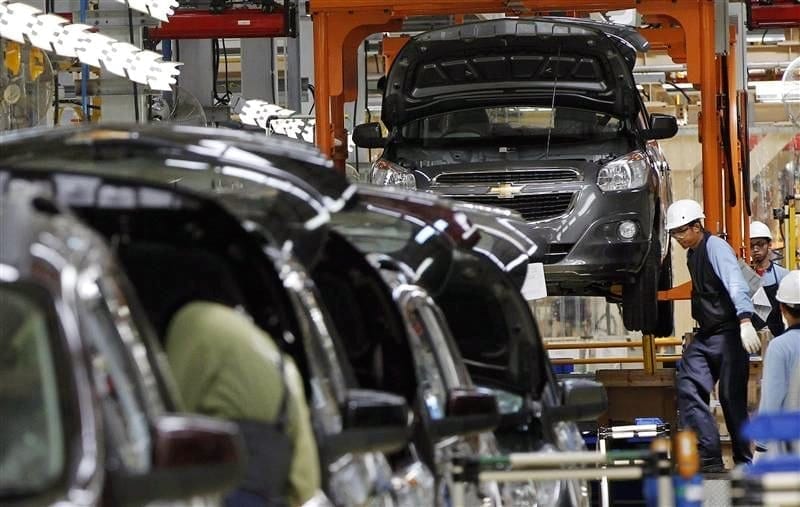
    “Its body shop has a fully automated spot welding system with more than 1,200 robots in service.

    Parts like crankshaft and transmission are also automatically manufactured, ensuring the car’s quality, and making engine run smoothly,” Vuong explained.

    While promoting the cars in both domestic and foreign markets, the focus will be on “down-to-earth” consumers looking for value for their money, the chairman said.

    VinFast will have a very good chance to compete well with carmakers in Eastern Europe as Vingroup understands this market very well, Vuong said. The group chairman is a former long-term resident of the former Soviet Union.

    Vuong said automobile production will be the company’s spearhead in the coming time, but did not rule out the possibility of other products once the brand was well established.

    “Given our supporting ecosystem and great capabilities, it [heavy industry] will be a new horizon for Vingroup,” said the chairman, who’s one among a handful of Vietnamese billionaires.

    Last September, Vingroup broke ground on its subsidiary VinFast’s new car manufacturing complex in the northern port city of Hai Phong. The complex would start manufacturing electric scooters in 12 months, sedans and SUVs in 24 months and electric cars in 3 years. By 2025, VinFast is expected to be producing 500,000 cars a year, making it a leading automobile manufacturer in Southeast Asia.

    The company will be working with German partners in product development and management of the new manufacturing complex. Its cars will be designed by Italian design houses, while main components such as engines will be bought in from the U.S. and European companies.

    However, VinFast will still cooperate with Vietnamese companies to manufacture most car accessories. The company’s products will have a localization rate of 60 percent, making them qualify for tax incentives when exported to other countries in the region.

    The new complex, which would also include a research and development (R&D) center, is expected to attract European experts, and will be cooperating with many large R&D centers in Europe. The company will be using technology transfer contracts to help improve its expertise in product development.

    Its cars will use eco-friendly technologies to meet Euro 5.0 and Euro 6.0 emission standards. VinFast will also be using green energy in its factories and plans to invest in a facility to treat used batteries.

    Vietnam will emerge as the second fastest-growing production hub for cars in Southeast Asia after the Philippines between 2017 and 2021, according to BMI Research, a part of Fitch Group.

  • Geely Holding Announces Management Change at Group Lotus

    Geely Holding Announces Management Change at Group Lotus

    Zhejiang Geely Holding Group (Geely Holding), China’s leading privately-owned automotive group, announced today that Mr. Feng Qingfeng, vice president and chief technical officer of Geely Auto Group, has been appointed to succeed Jean-Marc Gales as chief executive officer of Group Lotus effective immediately. Mr. Jean-Marc Gales has chosen to leave for personal reasons and will become Chief Strategic Advisor to Lotus Chairman, Daniel Donghui Li.

    Geely Holding, which acquired a controlling stake in Group Lotus in 2017, thanked Mr Gales for his contribution to the company over the past four years.

    Daniel Donghui Li, chief financial officer of Geely Holding and Lotus Cars Chairman, said: “Jean-Marc has stabilised and turned Lotus to profitability for the first time in the iconic brands history with new industry leading products and unique business models since joining the company in 2014. Lotus is poised for the next phase of growth under Feng Qingfeng’s leadership, where its expertise in lightweight materials and sport cars-engineering will form part of the wider expansion of Geely ‘s automotive portfolio. At the same time I will welcome Jean-Marc‘s Council as Chief Strategic Advisor to myself and the Board of Directors.”

    Geely acquired a majority holding in UK-based Lotus – a world leader in high-performance lightweight sports cars – as part of its agreement last year to acquire 49.9 percent of the shares of PROTON from HICOM Bhd (DRB) of Malaysia, Lotus’s former parent.

    Feng Qingfeng (Mr. Feng) said: “I am honoured to have been appointed to lead this iconic British sports car group. With Geely’s global synergies and total support I am confident that Lotus has an exciting opportunity to achieve its full potential as a luxury sports brand, based around its engineering legacy and its future product pipeline.”

    In 2017 Group Lotus sold 1600 sports vehicles, an increase of 10% versus 2016, produced at its plant in Norfolk, England. In 2017 the company showed a profit for the first time in history.

  • Auto sales pick up but GM, Renault struggle

    Auto sales pick up but GM, Renault struggle

    The outlook for Korea’s top automobile manufacturers has started to look up as overseas sales increase.

    It wasn’t all rosy, however, as GM Korea, which has been struggling to stay afloat since the beginning of the year, saw sales continue to fall.

    Hyundai Motor, Korea’s top automaker, said Friday its May sales rose 5.7 percent from a year earlier on recovering demand for its vehicles.

    Hyundai Motor sold 387,017 vehicles in May, up from 366,256 units a year earlier, helped by increased overseas sales, the company said in a statement.

    “The monthly results were helped by increased shipments of the Kona SUV to overseas markets, recovering sales in China and robust sales in emerging economies, such as Brazil and Russia,” the statement said.

    Domestic sales climbed 2.1 percent to 61,896 units last month from 60,607 a year ago, and overseas sales were up 6.4 percent to 325,121 from 305,649 during the same period, it said.

    In the January-May period, sales gained 2.4 percent to 1.83 million units from 1.79 million units a year earlier, the statement said.

    Kia Motors said its car sales rose 9 percent in May from a year earlier on recovering demand for its vehicles.

    Kia Motors sold 247,176 vehicles last month, up from 226,826 units a year earlier, the company said in a statement.

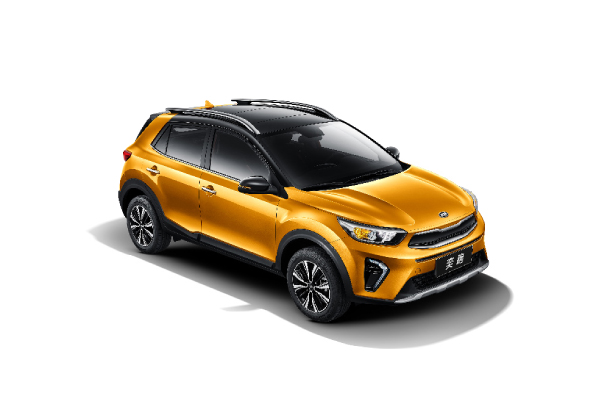
    The monthly sales were buoyed by increased domestic and overseas sales of new and upgraded models, such as the Stonic subcompact SUV, the Stinger sports car, the Rio subcompact and the Sportage SUV, it said.

    Domestic sales climbed 8.1 percent on-year to 47,046 units in May from 43,522. Overseas sales were up 9.2 percent to 200,130 from 183,304 over the same period, the statement said.

    In the January-May period, Kia’s sales grew 3.9 percent to 1.13 million autos from 1.09 million units in the year-ago period, it said.

    Renault Samsung Motors saw its May sales fall 22 percent from a year earlier due to weaker demand for its vehicles.

    Renault Samsung sold 16,101 vehicles last month, down from 20,517 units a year earlier, the company said in a statement.

    Domestic sales dropped 20 percent on-year to 7,342 units last month from 9,222 units. Exports also declined 23 percent to 8,759 from 11,295 during the same period, the statement said.

    In the January-May period, overall sales fell 4.6 percent on-year to 104,097 autos from 109,080, it said. The company’s current lineup includes the SM3 compact, the all-electric SM3 Z.E. sedan, the QM3 subcompact SUV and the SM5, SM6 and SM7 sedans.

    Renault SA owns an 80 percent stake in Renault Samsung.

    SsangYong Motor sales rose 4.6 percent last month from a year earlier, helped by increased exports.

    SsangYong Motor sold 12,920 vehicles in May, up from 12,349 units a year earlier, the company said in a statement.

    Domestic sales fell 5.2 percent to 9,709 units last month from 10,238 a year earlier. But exports jumped 53 percent to 3,229 units from 2,111 during the same period, it said.

    In the January-May period, the maker of the Rexton and Tivoli sport utility vehicles sold a combined 54,514 vehicles, down 5.4 percent from 57,648 a year earlier, the company said.

    Indian carmaker Mahindra & Mahindra Ltd. owns a 72.85 percent stake in SsangYong Motor.

    GM Korea saw sales fall 5.1 percent from a year earlier due to weaker domestic demand.

    GM Korea sold 40,879 vehicles last month, down from 43,085 units a year earlier, mainly because of a sharp decline in domestic sales, the company said in a statement.

    Domestic sales plunged 35 percent to 7,670 units last month from 11,854 a year ago. Exports rose 6.3 percent to 33,209 units from 31,231 during the same period, it said.

    The sales slump was mainly affected by weaker local demand for the Cruze subcompact and midsize Malibu sedans, the statement said.

  • Hyundai Motor plans to join Gwangju-run factory

    Hyundai Motor plans to join Gwangju-run factory

    Hyundai Motor on Friday announced plans to join Gwangju’s city-owned automobile factory project, and the automaker’s labor union is putting up a fight over the plan’s potential effect on employees’ wages.

    Korea’s largest automaker said that it submitted a letter of intent to invest in the construction of the factory, along with other companies, in response to Gwangju’s request.

    “In regard to Gwangju’s business, which will be built inside the Bitgreen National Industrial Complex and aims to foster the local economy and jobs, [Hyundai Motor] proposed a consultation to review the business’ validity and investment possibility,” Hyundai Motor wrote in its letter of intent.

    The carmaker will not participate in the joint venture’s management and will only invest in a certain amount of the project. The workers will be employed by the city of Gwangju.

    The amount of production from the Gwangju plant will depend on the market demand for the car that Hyundai plans to produce there, according to the automaker.

    Gwangju’s auto factory project is slated to be completed by 2020. It is part of the city’s initiative to expand employment, though the salaries at the plant will be half of the Korean auto industry’s average. The plant will be the first automobile factory built in Korea since Renault Samsung Motors’ Busan factory in 1998.

    Hyundai Motor’s participation is likely to send a jolt to the labor market, as employees at the plant will receive an average of 40 million won ($37,233) in annual pay. This is less than half of the wages of unionized Hyundai Motor employees, which are estimated to be around 90 million won a year.

    Hyundai Motor’s labor union on Friday requested the carmaker withdraw the proposal, claiming that its participation in the project would cause a drop in the average wages of Hyundai Motor workers.

    It warned Hyundai Motor that it would stage a protest if the company doesn’t withdraw the letter of intent.

    “The Gwangju employment [project] will standardize full-time workers’ annual salary at around 40 million won,” the labor union said in a statement Friday. “The employees are neither contract workers nor full-time workers, but somewhere in the middle.”

    Although the city government would be employing the workers at the new factory, if Hyundai Motor becomes the biggest shareholder in the joint venture, the lower wages at the Gwangju factory could have an effect on the automaker’s unionized employees.

    Hyundai Motor’s unionized employees’ high wages have been a big headache for the carmaker, which is why the company hasn’t invested much in domestic plants recently and has been steering its capital toward its overseas manufacturing facilities.

    According to industry data, Hyundai Motor and Kia Motors’ Korean production fell to 44 percent of total production in 2017, compared to 73.3 percent in 2006.

    Gwangju’s new auto plant is likely to receive about 500 billion won in investment and will be able to produce about 100,000 cars a year. It will provide jobs to around 12,000 people through direct or indirect employment. Hyundai Motor’s stake in the new factory will likely stay below 20 percent.

    “The plant will not be operated by Hyundai Motor,” an official from the Gwangju city government said.

  • Hyundai, Kia jump ahead in the U.S. hybrid market

    Hyundai, Kia jump ahead in the U.S. hybrid market

    Sales of hybrid vehicles made by Hyundai Motor and its affiliate Kia Motors in the United States rose 7 percent in the first four months of this year from a year earlier, industry data showed Sunday.

    The two Korean carmakers sold a combined 15,930 hybrid models in the January-April period, including 7,927 units of Kia’s Niro crossover and 4,836 units of Hyundai’s Ioniq, according to numbers released by hybridcars.com, a U.S. website.

    The robust sales of Hyundai Motor and Kia Motors came as total sales of hybrid vehicles in the U.S. fell 11.6 percent on-year to 100,456 units.

    Hyundai and Kia trailed Japanese auto giant Toyota and Ford in hybrid sales, which took the first and second places in terms of sales with 56,791 units and 19,583 units, respectively.

    The brisk sales of Hyundai Motor and Kia Motors boosted their combined market share in hybrid vehicles to 15.9 percent in the January-April period, compared with 7.5 percent for the whole of 2011.

  • New US tariffs a headache for foreign automakers

    New US tariffs a headache for foreign automakers

    US President Donald Trump’s threat to impose steep tariffs on auto imports will hit foreign automakers that export a large number of vehicles to the US market, but many also manufacture cars domestically.

    Most of these brands, such as Mercedes and BMW as well as Nissan, Honda and Volkswagen, have at least one auto plant on US soil, where they employ tens of thousands of workers.

    These automakers have invested billions of dollars in their US facilities. Toyota and Mazda announced at the start of the year plans to build a US$1.6 billion joint facility in Alabama that will be capable of producing 300,000 vehicles a year.

    Volvo Cars, which plans to open a plant in South Carolina by the end of the year, has warned that new import duties would affect its investment plans.

    US auto market

    In 2017, about 17.2 million vehicles were sold in the United States, according to AutoData, which compiles figures from manufacturers and dealers.

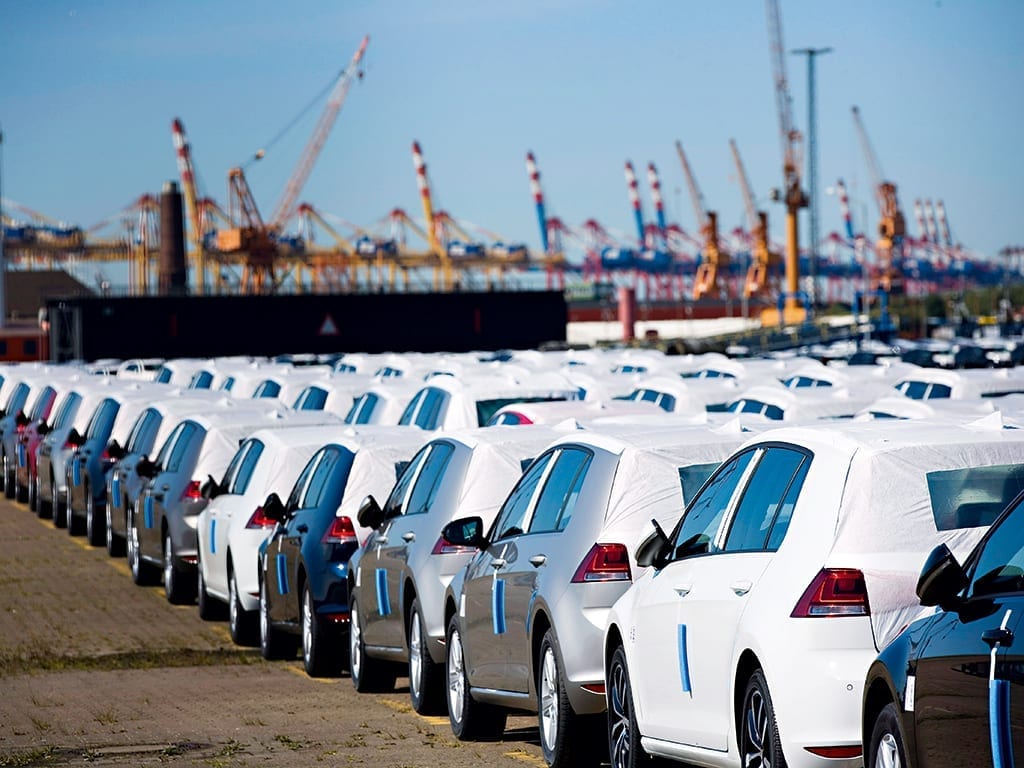
    Nearly 8.7 million of these were imports, according to the Center for Automotive Research, mostly from Mexico and Canada — partners in the North American Free Trade Agreement — as well as from Japan, Germany and South Korea.

    Since the start of this year, the share of domestically-manufactured autos sold in the US has fallen to 50.1%, down from 51.1% over the same period in 2017, according to Edmunds.com.

    At least 82% of Volkswagens sold in the US were imports, according to Edmunds, as well as 55% of Toyotas, 57% of Hyundais, 70% of Mercedes-Benz and 68% for BMW.

    On the other hand, more than half the cars sold in the US by the “Big Three” in Detroit were made locally: 80% for Ford, 60% for General Motors and 55% for Fiat Chrysler.

    Honda is the sole foreign automaker manufacturing a large majority of its locally-sold cars in the United States.

    Major exporter

    The US auto industry is the largest US manufacturing sector which employs about eight million workers, directly or indirectly through related industries.

    It also is one of the largest export sectors, according to the American Automotive Policy Council, an industry body representing the major US manufacturers, General Motors, Ford and Fiat Chrysler, and foreign automakers.

    Auto exports virtually doubled between 2009 and 2015 to US$137.7 billion from US$74.1 billion, according to AAPC, supporting 771,000 US jobs.

    BMW and Daimler, maker of the Mercedes-Benz, notably send US-built cars to the European Union and China.

    BMW, which says its Spartanburg, South Carolina plant is the world’s largest, exported 70% of the 371,284 autos manufactured at the site last year, or about 272,346, representing about US$10 billion in total exports.

    Domestic manufacturing

    Toyota, which employs more than 36,000 people, has 10 factories at locations in Alabama, California, Mississippi and Texas. It produces 1.2 million cars and sells 2.4 million, according to 2017 figures, with the difference made up by imports.

    Honda, which employs 4,000, has factories in Alabama, George, Indiana and Ohio and produces 1.2 million, selling 1.6 million.

    German giant Volkswagen, which has a Tennessee factory with the capacity to produce 150,000 units annually, did not disclose production figures but sold 339,679 autos. It employs 2,444 workers.

    Daimler maintains auto plants in Alabama, Indiana, and South Carolina and has 4,900 local workers. In 2017, it produced more than 286,000 cars and sold 337,246.

    BMW, which employs nearly 9,0000 workers, produced 371,284 automobiles in 2017 in the US, and sold 305,685.

    Nissan maintains two factories in Mississippi in Tennessee and produced 930,000 autos, selling US$1.6 million. It employed 14,400 workers.

    Auto imports

    Volkswagen luxury brands Audi and Porsche have no US factories and as a result import all the vehicles sold in the US market. In 2017, Audi sold 226,511 units while Porsche brought 55,420 to market.

  • GM Korea to offer more Chevys on local market

    GM Korea to offer more Chevys on local market

    GM Korea, the Korean unit of General Motors, will bring in more Chevrolet models produced outside the country if local demand rises, a company executive said Wednesday.

    “Chevrolet is a global brand. We have a very diverse portfolio. We will make sure that customers in Korea will have access to Chevy models brought from around the world,” GM Korea President and Chief Executive Kaher Kazem said in a showcase for the face-lifted Spark.

    The upgraded Spark will go on sale next month in Korea after it is produced at the Changwon plant, 400 kilometers (248 miles) south of Seoul, for local and international markets.

    To select the right Chevrolet models for the Korean market, GM Korea conducted a consumer survey from May 8 to 20. The six models posted on the Chevrolet webpage were the Equinox, Traverse, Tahoe and Suburban sport utility vehicles and the Corvette sports car and Colorado pickup.

    The company didn’t provide the survey results as the poll was for its own reference.

    The Equinox SUV will be displayed at the Busan motor show next month and is expected to hit dealerships within this year, the CEO said, adding that the introduction of Chevy cars fully depends on domestic demand.

    As the demand for SUVs has been on the rise in global markets, carmakers have beefed up their lineups with SUV models in recent years.

    The New Spark is the first model of 15 new and upgraded vehicles GM vowed to launch in the Korean market in the next five years as part of its commitment to bolster its operations in Asia’s fourth-largest economy.

    “We start today with the Chevrolet Spark to open a new chapter together in Korea. The Spark is an extremely important vehicle not only for domestic customers but also for international customers,” Kazem said.

    The Spark comes with eight air bags and other safety features, such as forward collision alert, side blind spot alert, lane departure warning and low-speed collision mitigation braking systems.

    The Spark is available in 48 markets and is the best-selling mini car in the United States, with sales of 176,627 units in the six years through 2017, the company said.

    The 1.0-liter gasoline model with a manual transmission sells at the starting price of 9.8 million won ($9,100), and prices go up to 13 million won depending on options. The price for the Spark with an automatic transmission is higher than the manual model by 1.8 million won, it said.

    GM and the state-run Korea Development Bank (KDB), the two biggest shareholders in GM Korea, recently signed the binding agreement that will permit a combined 7.7 trillion-won lifeline – 6.9 trillion won from GM and 810 billion won from the KDB – to keep the loss-making Korean unit afloat.

    Under the deal, the Detroit carmaker is banned from selling any of its stake in GM Korea before 2023 and is required to keep its holding in the unit above 35 percent until 2028.

    In February, GM announced its plan to shut down one of its four car assembly plants in Korea by May and asked the KDB to extend a financial helping hand to GM Korea. The Korean unit has continued to post net losses worth an accumulated 3.134 trillion won over the past four years through 2017 due to lower demand for its models.

  • Malaysia vehicle sales up 10% in April from a year ago

    Malaysia vehicle sales up 10% in April from a year ago

    Total vehicle sales in April 2018 increased 10.2% or 4,343 units to 47,089 units, compared with 42,746 units a year ago, according to the Malaysian Automotive Association (MAA).

    On a month-on-month basis, April saw a decline of 5.8% or 2,896 units as consumers adopted a wait-and-see attitude due to the general elections.

    Meanwhile, the association said vehicle sales in May are expected to increase, with many car companies announcing zero-rated Goods and Services Tax (GST) prices following the government’s move to abolish the tax on June 1. This will be boosted by promotional campaigns for Hari Raya Aidilfitri.

  • Ex-Ford exec Nair named president of Canadian racing firm

    Ex-Ford exec Nair named president of Canadian racing firm

    Raj Nair, the Ford Motor Co. executive ousted earlier this year over unspecified “inappropriate behavior,” has been named president and COO of Multimatic Inc., the Canadian supplier, on Friday. The appointment was effective May 7.

    Multimatic works extensively with Ford, building the GT supercar — which was created while Nair was Ford’s head of product development — near Toronto.

    “Raj brings an extensive amount of experience in the auto industry both in product development and manufacturing,” Michael Guttilla, the company’s head of sales and marketing, said in an interview. “He is a real good fit for extending what Multimatic’s purpose is.”

    Nair will split time between Canada and the company’s offices in Southfield, Mich., among its other global locations, Guttilla said. He’ll be responsible for each of the company’s business units, including manufacturing and engineering.

    Nair, 53, abruptly left Ford in February after an internal investigation found that “certain behavior by Nair was inconsistent with the company’s code of conduct,” the automaker said.

    Ford has not divulged the nature of the complaint, which a spokesman said was submitted anonymously through a 24-hour company hotline. Ford said it had not previously received any such allegations against Nair.

    “The situation was thoroughly vetted,” Guttilla said. “Multimatic has the highest standards for all of our employees. We expect everybody to live up to and honor those high ethical standards. We have no concern that it will be an issue.”

    Before being named head of North America in May 2017, Nair was Ford’s head of product development and chief technical officer. In addition to the GT in 2016, he oversaw the launch of the the aluminum-bodied F-150, the 50th-anniversary Mustang and a plethora of other prominent vehicles. Nair took delivery of his own GT less than two weeks before leaving Ford.

    Nair started at Ford in 1987 as a body and assembly operations launch engineer and held various positions on more than 11 vehicle programs in 13 assembly plants, according to Ford’s media website. He also worked on assignments in Europe, South America and Asia Pacific.