Category: Automotive

Retail News Asia is committed to providing both local and global retailers with the latest Auto and Car news throughout the Asian market. This on a daily base.

  • Nissan’s 54-year old CFO retires

    Nissan’s 54-year old CFO retires

    Joe Peter, who spent most of his career at General Motors, has retired as CFO of Nissan Motor Co. in Yokohama, Japan.

    Peter, 54, was recruited from GM’s senior finance ranks to Nissan during the 2009 financial crisis as Nissan struggled to stem losses and conserve cash amid crashing world markets.

    His replacement as CFO, effective immediately, is Hiroshi Karube, 62. Karube was previously senior vice president, global controller, accounting and global asset management.

    Efforts to reach Peter were unsuccessful.

    Peter was responsible for Nissan’s worldwide financial planning, control, accounting, treasury, tax, investor relations and merger and acquisition support. He also was a member of Nissan’s executive committee and chairman of the board of directors of the sales finance companies in Japan, United States and Mexico.

    A Detroit native and son of an assembly line worker, Peter rose at GM to the position of CFO of the automaker’s international operations in Shanghai before being recruited to Nissan.

    Karube went to work at Nissan in 1980 and has held several key roles in finance, including global responsibility for accounting and asset management.

  • Tesla plans 6-day stoppage at factory for assembly line fixes

    Tesla plans 6-day stoppage at factory for assembly line fixes

    Tesla will pause production at its California factory for six days at the end of the May to work on fixes to its assembly line for its new Model 3 sedan, sources inside the company told Reuters.

    The Silicon Valley luxury electric car maker previously warned of 10 days of temporary shutdowns this quarter as the company addresses manufacturing problems that have delayed volume production of the Model 3 sedan, which is seen as crucial to Tesla’s long-term profitability.

    Two sources confirmed to Reuters that the next stoppage on the general assembly line at the Fremont, Calif., plant was scheduled for May 26-31.

    A Tesla spokesperson declined to comment.

    Tesla has been struggling to find solutions to manufacturing bottlenecks on the new assembly line that produces the Model 3, a sedan intended for volume production. An over-reliance on robots has complicated that task, CEO Elon Musk has acknowledged.

    Musk, Tesla’s billionaire founder, told employees it was “quite likely” the company would reach a rate of 500 Model 3s per day this week, or 3,500 a week, automotive news website Electrek reported on Tuesday, citing an internal email. Musk also told staff to alert him of “any specific bottlenecks” on the production line.

    The company shut down the Fremont assembly line last month, and also in February, for a few days to rework. The April shutdown, combined with the upcoming one, would add up to the planned 10 days of stoppages.

    Musk has said the planned stoppages are intended to give the company time to perform upgrades that will help it reach a goal of building 6,000 vehicles per week by the end of June. Musk last month said the company was producing 2,000 Model 3 cars a week.

    In order to meet the goal, Musk said last month that all Model 3 production would begin working around the clock. Reuters learned that the teams working on general assembly have already switched to three shifts, a schedule that helps maximize capacity and flexibility.

    Teams working on the body of the vehicle — where the external shell of the car is assembled — are working in two 12-hour shifts.

  • Porsche SE execs, board are safe to travel to U.S.

    Porsche SE execs, board are safe to travel to U.S.

    Top managers and supervisory board members at Porsche SE, Volkswagen Group’s majority shareholder, can still travel to the United States without risk or fear of prosecution, the company’s head of legal affairs said.

    “Porsche SE is convinced that no board member can be accused of offenses, and that the members of the management and supervisory boards can still travel to the United States without restrictions and risk,” Manfred Doess, the holding firm’s legal chief, said on Tuesday at Porsche SE’s annual shareholder meeting.

    U.S. authorities earlier this month issued an arrest warrant against VW Group’s former CEO, Martin Winterkorn, after indicting him on four felony charges in the automaker’s diesel-emissions scandal.

    Porsche SE CEO Hans Dieter Poetsch, VW’s former finance chief who is being investigated by prosecutors in Brunswick, Germany, for suspected market manipulation related to the scandal, told shareholders that he regularly travels to the U.S.

    Doess said Porsche SE has no knowledge of an international arrest warrant against Wolfgang Porsche, the firm’s chairman and a member of VW’s supervisory board.

  • BMW is Recalling some of their cars

    BMW is Recalling some of their cars

    BMW started the company in the opinion of their own cars. This is the second necessary measure from the German automaker. Last year was recalled about 36,000 of the cars, including the BMW 1 Series, 3 Series, Z4.

    The reason have a problem with the electrical part of the machine during the movement of the car. As a result, there is a risk not only stop the machine but also the fire.

    The case was investigated by the British authorities. It identified 19 cases of failures of electronics.

    BMW say that the current problem cars were not covered by initial opinion. Therefore, to increase the security of the owners made an additional request of car.

    At the moment, BMW is conducting additional testing 417 machines. This level of sampling on statistics helps to understand the essence of the problem and corresponds to the code of business ethics prevailing in the automotive industry.

  • BMW Contract Assembler to Make Engines in Malaysia

    BMW Contract Assembler to Make Engines in Malaysia

    Malaysian conglomerate Sime Darby Motors and BMW Group Malaysia open a 132 million ringgit ($33.5 million) engine plant for locally assembled vehicles and to support exports to regional markets including Vietnam and the Philippines.

    Sime Darby Managing Director Dennis Ho tells reporters the plant will produce 10,000 units a year in a single shift.

    The 91,493-sq.-ft. (8,500-sq.-m) engine plant is the first of its kind for contract manufacturer Sime Darby. Until now, locally assembled BMW and Mini models have used engines imported from Germany or Austria.

    The new facility will assemble 3- and 4-cyl. gasoline engines, 4-cyl. diesel engines and 3- and 4-cyl. gasoline engines for plug-in hybrid vehicles. It is the second BMW engine plant in the region after Rayong, Thailand.

    The new engine operation is alongside the assembly plant and regional parts-distribution center.

    Ho says there is no compromise in the quality of engines being built at the plant in Padang Meha 233 miles (375 km) north of Kuala Lumpur. “The standards of the quality checks are similar to those used in Germany,” he says. “The parts and components are imported from Germany.”

    BMW Group Malaysia CEO Harald Hoelzl says Malaysia plays a major role in BMW’s plans for Southeast Asia.

    “In Malaysia, BMW has already successfully achieved a 15% increase in the deliveries of BMW, Mini and BMW Motorrad vehicles, with 3,000 vehicles in the first quarter,” he says.

    Malaysian motoring analyst Paul Tan says the inclusion of diesel engines is interesting because BMW Malaysia no longer has diesel models in its lineup. “This means that the company is likely looking to introduce new oil-burning models soon,” Tan says on his website.

    Sime Darby Chairman Abdul Aziz Wan Abdullah says the company aims to be the preferred contract-assembly partner for the most dynamic automakers in the region.

    “We aim to produce more than 50,000 vehicles (including Mazda and Hyundai vehicles produced at the company’s Inokom plant), as well as the engine parts and components for the vehicles by the year 2020,” he says in a statement.

  • Vietnam’s April car sales fall 4 pct on-year

    Vietnam’s April car sales fall 4 pct on-year

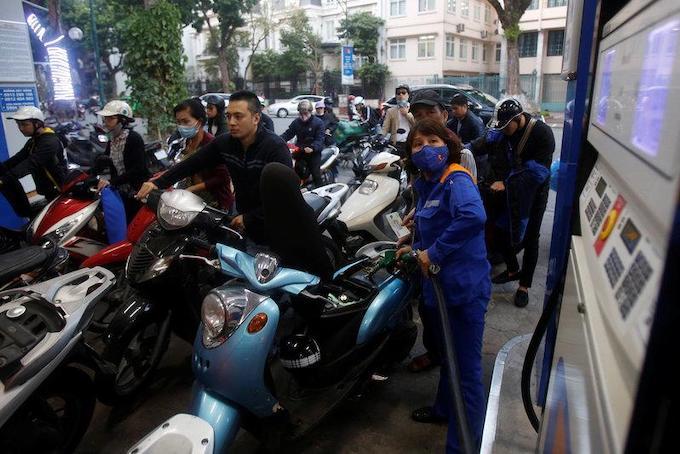
    Toyota remained the leading brand last month, with sales rising 3 percent from a year earlier to 4,234 units. Vietnam’s car sales fell slightly in April, declining 4 percent from a year earlier to 20,557 units, according to data released by the Vietnam Automotive Manufacturers Association (VAMA).

    Sales in April were 2 percent lower than in March, VAMA said in a statement.

    Toyota remained the leading brand last month, with sales rising 3 percent from a year earlier to 4,234 units.

    Truong Hai (Thaco) group, the local assembler and distributor of brands such as Kia, Mazda, Peugeot and Hyundai and a significant player in the commercial vehicle segment, reported a 0.5 percent rise in group sales to 8,679 units in April.

    Ford’s sales were 47 percent lower at 1,359 units in April while Honda sales rose four-fold to 2,815 units.

    For the first four months of this year, total car sales in the country fell 2 percent from a year earlier to 79,115 units, VAMA said.

  • Vietnamese willing to Spend huge Amounts of Money on Super Cars

    Vietnamese willing to Spend huge Amounts of Money on Super Cars

    As many as  8,670 luxury cars of different kinds were sold in Vietnam in 2017, a decrease of 15 percent from 2016, according to one report. However, the amount of money spent on the cars was VND20 trillion.

    According to Choi Duk June, CEO of Mercedes Benz Vietnam, 150 Maybachs were delivered to Vietnamese buyers in 2017. The sales of Maybach in Vietnam are the highest in Southeast Asia.

    This is a luxury model of Mercedes-Benz with three versions in distribution in Vietnam, including Maybach S 400 priced at VND6.899 billion, Maybach S 500 VND10.999 billion and Maybach S 600 VND14.169 billion.

    When launching Maybach S 600 into the market in January 2015, Mercedes Benz then hoped it could sell 10 products a year. However, to its surprise, over 50 products were sold in the year.

    The figure was over 100 in 2016, and Vietnam remained the biggest buyer of Maybachs in 2017, leaving Indonesia, Thailand, Malaysia and Singapore far behind.

    It is estimated that over 300 Maybachs are rolling on Vietnam’s streets.

    The other luxury models also had very good sales. Over 500 S-Class products, priced at VND4-10 billion, were sold in 2017.

    However, the highest growth rate belonged to mid-end luxury models, priced at VND1.5-3 billion. A record number of 2,500 GLCs priced at VND1.939-2.209 billion was sold in 2017, placing GLC as one of the 15 best sellers in the market.

    The other luxury models which sold very well in 2017 included BMW’s Seri 3 and Seri 5, Audi’s A4 and Q5 and Lexus’ ES 250 and NX 200T.

    Car dealers in Vietnam say there is a switch in consumption from common products to mid-end products. A survey by Mercedes Benz found that car buyers tend to be younger.

    In 2014, the average age of car buyers was 42, while it was 39 in 2016 and 38 in 2017.

    Boston Consulting Group’s (BCG) survey showed that Vietnam is getting wealthy thanks to the strong rise of the middle class which has been growing more quickly than any other place in South East Asia.

    Those who have monthly income of $714 and more are classified as middle class. Vietnam expects to have 33 million middle class people by 2020.

    According to the Vietnam Automobile Manufacturers’ Association (VAMA), a total of 272,750 automobile units were sold in 2017, down 10 percent yearly.

  • Lotus Launches The New Exige Sport 410

    Lotus Launches The New Exige Sport 410

    With a stunning combination of raw speed and real-world ability, the Lotus Exige Sport 410 joins a line-up like no other to complete the Exige family of peerless sports cars.

    Starting with the revised Exige Sport 350, the comprehensive Exige range now includes the new Exige Sport 410 and culminates with the extreme Exige Cup 430: each at a distinct price point, performance level and degree of motorsport focus.

    Developed directly from the track focused Exige Cup 430, the Exige Sport 410 is designed to be the ultimate road drive, unrivalled in its class.

    This latest addition to the Exige range packs the advanced chassis, suspension and powertrain set-up from its more powerful stablemate, the track focused Exige Cup 430, with a recalibrated engine producing 410 hp (416 PS) at 7,000 rpm and 420 Nm (310 lbft) on tap from 3,000 rpm to 7000 rpm. The high-performance 3.5-litre, supercharged and charge cooled V6 engine combined with a dry weight of just 1,054 kg (lightest possible dry) delivers a class-leading power to weight ratio of 389 hp / tonne, and makes the Exige Sport 410 the lightest V6 Exige ever.

    Capable of 0-60 mph in just 3.3 seconds, it records fierce in-gear acceleration before reaching a top speed of 180 mph / 290 km/h (Coupe configuration) – equal to the range-topping Exige Cup 430.

    The Exige Sport 410 has been developed to generate 150 kg of downforce, sharing design cues from the Exige Cup 430, adopting a visually arresting revised lightweight front clam panel incorporating wider grilles and carbon fibre air curtains and front splitter.

    As with all Lotus cars, the Exige Sport 410 has outstanding handling and lightweight agility engineered into its very DNA. Conveying an extraordinary level of tactility and precision, it’s developed to perform at its very best with maximum enjoyment and driver feedback on the road.

    Jean-Marc Gales, CEO, Group Lotus plc said, “With every new Lotus we look to move the bar higher and apply technology and development ideas drawn from top-of-the-range models. Our agility as a company means that the lessons learnt today can quickly be incorporated into the cars of tomorrow and the Exige Sport 410 is a perfect example of this. We have taken the Exige Cup 430, the ultimate track-centric Exige, and developed it into the perfect road orientated sports car, ensuring that we stay ahead of rivals when it comes to cars that deliver a truly engaging analogue driving experience.”

    Completing the update to the entire Exige range, the new front clam design also transitions across to the Exige Sport 350, giving a visual refresh to the entry-level model in the Exige line-up.

    Both the Exige Sport 410 and Exige Sport 350 are available in Coupe and Roadster configurations, with the Roadster having a lightweight black removable soft-top which can be easily stowed within the car for open-top driving. The Roadster configuration is not available for the Exige Cup 430.

    The Exige Sport 410 – forged through development

    Reflecting its Sport nomenclature, the new Exige Sport 410 treads the fine balance of cars that retain their focus on road driving yet remain supremely responsive and agile. Whilst Lotus’ Cup variants are developed with circuit driving at heart, the Sport models are tuned to provide the perfect balance of performance, agility and power delivery for the road.

    Working from Lotus’ standpoint as the leader in lightweight design, every gram has been justified, from the standard lightweight carbon front splitter and access panel at the front to the carbon side pods, tailgate and wing at the rear.

    Distinctive in its appearance, thanks to wider aperture grilles in the new front clam panel, the Exige Sport 410’s revised aero configuration provides total downforce of 150 kg (60 kg at the front and 90 kg at the rear); developed through extensive CFD modelling and wind tunnel testing in order to preserve the car’s handling balance and high-speed stability.

    The front splitter helps separate and speed airflow under the car, and the inclusion of air curtain elements into the front clam panel efficiently moves air through to the front wheel cavities to help reduce turbulence and drag created by the front wheels. In addition, the enlarged front clam panel openings, with wider radiator apertures, aid cooling. At the rear, the extended Aluminium diffuser, combined with the new high-mounted wing all contribute to the Exige Sport 410’s enhanced downforce.

    The Exige Sport 410 uses the Exige Cup 430’s 3.5-litre supercharged V6 engine with supercharger and water-to-air charge cooler, calibrated to generate 410 hp (416 PS) at 7,000 rpm and 420 Nm (310 lbft) of torque from 3,000 rpm to 7,000 rpm. The latest addition to the range also employs the oil cooler configuration and larger clutch from the Exige Cup 430, perfectly matched to the close-ratio, six-speed manual transmission with exposed-gear-change linkage.

    Befitting an industry benchmark, the Exige Sport 410 takes the chassis, suspension and dampers from the Exige Cup 430, re-tuning the three-way adjustable Nitron dampers for a road bias and to suit the car’s revised aerodynamic set-up. These can be customised to the driver’s precise requirements (rebound and low and high-speed compression) along with the Eibach adjustable front and rear anti-roll bars, fitted as standard, which complete the car’s class-leading chassis set-up.

    The Exige Sport 410 is fitted with Michelin Pilot Sport Cup 2 tyres (285/30 ZR18 rear and 215/45 ZR17 front), 20 mm wider at the rear deliver improved traction and work in harmony with the car’s ultra-lightweight forged alloy wheels, which are available in either black or silver. Braking is courtesy of AP Racing, with forged, four-piston calipers and performance two-piece J-hook brake discs. With a higher thermal capacity and improved bite, these discs have better debris clearance and impart consistent pedal feel with greater stopping power.

    Performance options for the Exige Sport 410 include a full exhaust system in titanium, removing 10 kg from beyond the rear axle, and a number of high-gloss, visible weave carbon fibre components including instrument binnacle, sill covers, barge boards and roof. A host of motorsport-centric options are also available including electrical cut-off and fire extinguisher controls, airbag deletion, a non-airbag steering wheel, 4-point harnesses and a dealer fit FIA compliant roll cage.

    Centre of attention in the cabin is Lotus’ acclaimed open-gate manual gearshift design giving quick and precise changes. The fine detailing continues with an Alcantara® steering wheel and Lotus’ own carbon fibre sports seats trimmed with either a combination of Alcantara® and leather or optional full leather, both featuring contrast stitching.

    The optional Interior Colour Pack (in a choice of four colours) provides contrasting surrounds to the transmission console, HVAC surround, carbon seat eyelets and electric window bezels. As standard, the centre console and dashboard are trimmed in Alcantara® with the door cards, a combination of Alcantara® and leather. Air conditioning and an integrated entertainment system including iPod® connectivity and Bluetooth® functionality can also be specified.

    Lotus Exclusive

    The new Exige Sport 410 can be personalised through the popular Lotus Exclusive programme. Combining traditional British craftsmanship with modern design, the service inspires customers to spend time tailoring the character of their Lotus with a comprehensive array of options.

  • Increasing Chinese wealth helps drive luxury auto sales growth

    Increasing Chinese wealth helps drive luxury auto sales growth

    Almost half of the automotive sales growth in China this year has come from luxury brands, driven by consumers’ increasing household wealth and consumer confidence.

    According to a report from Scotiabank, in March global automotive sales were up 1.2 percent over the previous year, with China one of the key forces behind this growth. As the Asian market becomes increasingly important to luxury auto brands, OEMs are set to benefit from newly eased regulations in China.

    “China now accounts for close to 30 percent of global luxury auto sales, up from 20 percent in 2012,” said Carlos Gomes, senior economist and auto industry specialist at Scotiabank, Toronto. “As wealth continues to increase in China this share will advance further.”

    Accelerating sales
    Chinese auto sales grew 3 percent in January and February, and growth picked up in March, with a 5.1 percent increase.

    Luxury cars made up half of the year-to-date growth in China. Scotiabank notes that this rise in luxury sales is the greatest seen in China since the government began its anti-corruption campaign.

    Over the past few years, the government’s communist party has been working to curb conspicuous spending, in an attempt to fight corruption in politics.

    As part of the campaign, China’s Finance Ministry implemented a 10 percent import tax on the highest priced automobiles entering the country. The tax affects vehicles retailing for at least 1.3 million yuan, or $205,000 at current exchange.

    As of 2012, China represented 20 percent of the total volumes for the top six premium marques. Today, Chinese consumers make up 30 percent of these brands’ businesses.

    Whereas these brands saw an average volume growth of 15 percent in 2016 and 2017 in China, in the first three months of this year, their year-over-year volumes rose 25 percent.

    The top six marques are projected to have their sales exceed 2.7 million cars this year. This would more than double the number sold just five years ago.

    By 2020, the luxury car industry in China is likely to become the world’s largest. The country is leading the way in the breakaway from reliance on dealerships.

    According to L2, while ultra-luxury auto brands such as Ferrari have a better handle on exclusivity and high-end image, standard high-end automakers are more accessible and have a better grasp on digital performance in China.

    L2’s research in its “China: Luxury Auto” report shows that more than 50 percent of luxury auto brands are available on China’s top retail Web site Tmall. Their presence on the ecommerce site beats out luxury fashion and jewelry brands.

    Along with China, auto sales around the world picked up in March due to growth in emerging markets and a 6.5 percent volume increase in the United States. Scotiabank attributes this to growing wages and incomes.

    “Luxury sales in China are up about 23 percent so far this year, lifting global luxury volumes by about 7 percent year-over-year through March,” Mr. Gomes said. “The key driver of these gains is ongoing increases in household wealth, which is being driven by strengthening global economic growth.

    “As long as that trend persists, luxury volumes will  outperform,” he said. “We expect the global economy to expand 3.8 percent in 2018 and 3.7 percent in 2019. If global GDP slows significantly from our current forecast, luxury volumes would slow as well.”

    Auto outlook
    Foreign automakers are set to benefit from some recently announced regulation changes in China.

    One of the changes relates to the 50:50 rule, which prevented automakers from owning more than half of their Chinese operations. At the time the regulation was implemented in 1994, it was intended to help local businesses by forcing OEMs to enter joint ventures.

    China is rolling this back, allowing automakers to have more ownership over their Chinese sales.

    The nation is also lifting its 25 percent tariffs on foreign cars.

    Tesla’s Elon Musk had complained about the import duties on Twitter, saying that having a 25 percent tax compared to the import duty of 2.5 percent for the United States was similar to “competing in an Olympic race wearing lead shoes.”

    The United States is currently at risk of a trade war with China following President Trump’s announcement of tariffs on steel and aluminum in March. Since then, each side has imposed new tariffs on different goods, escalating the disagreement.

    “The announcement that China will reduce import tariffs from the current 25 percent ‘as soon as possible’ is likely to have most significant near-term impact for luxury automakers,” Scotiabank’s Mr. Gomes said. “For example, tariff reduction will improve the affordability of imported luxury models, spurring even stronger sales going forward.”

  • Volkswagen launches SOL electric brand in China

    Volkswagen launches SOL electric brand in China

    Volkswagen has just launched the SOL brand for electric vehicles and the first product born out of the collaboration is an SUV called the E20X. VW has collaborated with China’s Anhui Jianghuai Automobile Group Corp (JAC). In fact, the E20X is almost identical to another JAC product.

    Volkswagen has provided any specific details on the car yet but it has been mentioned that the car will travel almost 300km on a single charge. The SOL E20X also will include artificial intelligence and intelligent connectivity, according to VW. In the future, VW, JAC, and Zhejiang Tmall Technology Company will collaborate to create a new retail model as well.

    VW did not provide specific details on the SOL brand’s launch, but Chinese consumers should first see the brand and its E20X later this year.

  • KDDI, Nokia trial eMBMS for connected vehicles

    KDDI, Nokia trial eMBMS for connected vehicles

    Japan’s KDDI and Nokia have completed trials of LTE connected vehicle applications including the first vehicle based LTE broadcast trial.

    During a trial on the island of Hokkaido, the companies implemented evolved multimedia broadcast multicast service (eMBMS) technology for two in-vehicle applications.

    These included vehicle-to-network-to-vehicle connectivity, allowing cars to stay in constant contact with a Nokia-based multi-access edge computing (MEC) platform, sending real-time location, direction and speed data to roadside sensors.

    The proof of concept allows drivers to alert the application and allow information to be distributed to other vehicles using eMBMS.

    In addition, eMBMS was applied in a network real-time kinematic (network RTK) trial of LTE for enhance fully automated in-vehicle navigation, demonstrating how eMBMS could more cost-efficiently use existing geo-location systems to communicate to many vehicles in real-time.

    The companies said the trials are a step towards preparing the car industry for the introduction of 5G-based automated vehicles.

    “We are pleased to work with Nokia to demonstrate our leadership in the delivery of mobile networks for IoT and connected car communications,” added Munefumi Tsurusawa, general manager of the connected vehicle technology department and KDDI’s technical planning division.

    “This is an important trial showing how the automotive industry can leverage cellular technology to enhance safety of connect vehicles on the roads.”

  • Hyundai group under pressure from U.S. activist hedge fund with $1 billion stake

    Hyundai group under pressure from U.S. activist hedge fund with $1 billion stake

    A unit of U.S. activist hedge fund Elliott Management revealed on Wednesday that it holds more than $1 billion worth of shares in key affiliates of South Korea’s Hyundai Motor Group and called for more rapid reform of the auto giant’s governance.

    It is Elliott’s latest challenge to South Korea’s family-run conglomerates after it forced Samsung Electronics to increase shareholder returns in 2017, and comes amid a government campaign to boost investors’ power in a country where shareholder activism is rare.

    Elliott Advisors called for a “more detailed roadmap” as to how Hyundai Motor Group will “improve corporate governance, optimize balance sheets, and enhance capital returns” at Hyundai Mobis, Hyundai Motor and Kia Motors.

    The fund did not provide a breakdown of its stakes in Hyundai’s three affiliates but its over $1 billion worth of shares account for around 1.5 percent of the total market value of the three firms.

    Hyundai Mobis shares jumped as much as 6.1 percent to their highest since Jan. 25 in the wake of the announcement. Hyundai Motor rose 4.9 percent, its highest in three weeks, while Kia Motors gained 3.8 percent in morning trade in Seoul. Hyundai Glovis shares rose as much as 4.8 percent.

    “I see Elliott’s call as positive, as it should enhance shareholder value,” said Kim Sung-soo, a fund manager at LS Asset Management.

    “Elliott has declared war against Hyundai but it has not made detailed demands, so further discussions need to be seen.”

    Auto-to-steel giant Hyundai Motor Group announced a plan last week to streamline its complex ownership structure as it responds to calls from the government and investors for greater transparency and better governance at family-controlled conglomerates.

    But worries that the plan would benefit the parent group’s controlling family ahead of investors have hit the share prices of group companies such as parts supplier Hyundai Mobis.

    While Elliott said it was pleased that Hyundai Motor Group had taken a first step toward reform, it added in a statement that “more needs to be done to benefit the companies and stakeholders”.

    “Elliott looks forward to engaging with management and other stakeholders directly on these issues, and to offering recommendations regarding the proposed plan,” the hedge fund said.

    Hyundai Motor Group responded that it was “confident” its restructuring plan would enhance shareholder value, and promised to communicate with investors at home and abroad.

    Last year, South Korea’s new antitrust chief told Reuters he had been in talks with Hyundai Motor Group about unwinding its circular shareholdings, which critics say give too much power to the controlling family at the expense of shareholders.

    Under Hyundai’s plan, Hyundai Mobis is to spin off its domestic module and after-service parts businesses and merge them with logistics affiliate Hyundai Glovis, which is personally backed by Hyundai’s controlling Chung family.

    But some investors complained that Mobis could be giving away the most profitable part of its business too cheaply.

    The plan is yet to be approved by shareholders.

    After the merger, Group Chairman Chung Mong-koo and his son Chung Eui-sun, who is vice-chairman, will buy stakes in Mobis held by other affiliates Kia Motors, Glovis and Hyundai Steel .

    The group has not announced when the family members would buy the Mobis stakes.

    Elliott’s intervention is another headache for Hyundai, which is already struggling with slowing sales in China and the United States and Seoul’s diplomatic row with Beijing last year.

  • Nissan, partner eye early 2020s robotaxi rollout

    Nissan, partner eye early 2020s robotaxi rollout

    Nissan is deepening collaboration with a Japanese mobile gaming and communications giant to develop self-driving taxis.

    Nissan wants the partnership to lift it ahead of its rivals in the nascent vehicle mobility services segment. But when it comes to realizing self-driving taxis that can pick up and drop off customers automatically on public roads without a glitch, the automaker acknowledges there is still a long way to go.

    Last month, Nissan Motor Co. and online tech company DeNA Co. field-tested Easy Ride robotaxis, involving some 300 participants.

    “This represents a big step toward enhancing self-driving cars and the mobility service operation system from the stage of just presenting a conceptual image,” Nissan CEO Hiroto Saikawa said during the launch. “This will help advance our business in offering a new mobility service for many customers in a variety of scenes.”

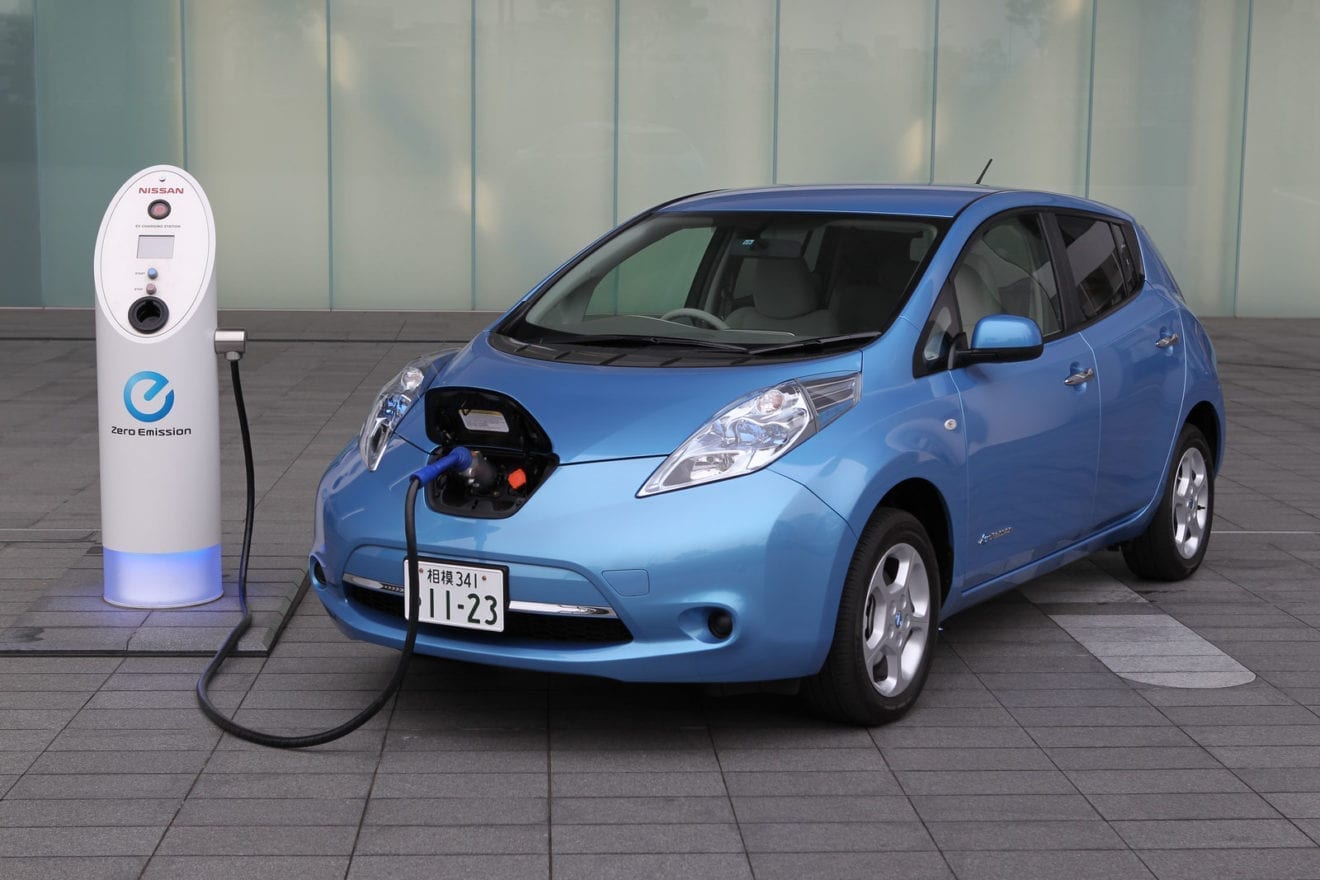
    The robotaxis are based on a modified Nissan Leaf electric vehicle. For their field testing, they traveled about two miles on a preset city route from Nissan’s headquarters in Yokohama to a nearby commercial facility.

    Collaborative effort

    Using a DeNA-designed smartphone app, users could hail a taxi by selecting a pickup time slot and specifying which of a list of preset destinations they wanted. A tablet computer installed inside the vehicle notified the passenger about recommended events in the area.

    Discount coupons for restaurants affiliated with Easy Ride were sent to the user’s smartphone.

    Such an online user experience could not have been possible without the help of DeNA, Nissan officials said.

    “Efficient and effective collaboration with partners who have expertise in their respective fields are the key to remaining competitive in the future,” Saikawa said. DeNA CEO Isao Moriyasu stressed that his company wants to bring innovation to the transportation system as a mobility service provider.

    The companies plan to introduce their robotaxi service commercially in the early 2020s. But they must resolve technical details before introducing a fully autonomous mobility service in a heavily congested urban environment.

    Easy Ride uses Seamless Autonomous Mobility, developed by Nissan from NASA technology, for its fleet operation system. That system allows vehicles to make decisions in unpredictable situations with the combined support of in-vehicle artificial intelligence and humans, according to Nissan. There will be a control center where people monitor Easy Ride fleets.

    Unexpected situations

    But technology challenges remain. Among them: perfecting the robotaxi’s ability to judge where it is most appropriate for loading and unloading passengers. Unexpected complications, such as road construction or a line of parked cars on the roadside, for example, wouldn’t faze a human driver. But altering behavior to accommodate unusual circumstances doesn’t come easily to an AI-powered, sensor-directed taxi without the aid of remote monitoring by humans at the control center.

    At a media test ride in mid-February, an Easy Ride vehicle unexpectedly stopped its self-driving mode just as it was about to get moving when a pedestrian walked in front of it. As a result, another test vehicle was brought in and the procedures had to be repeated.

    Nissan expected such glitches to occur during the field test, and is looking to incorporate the experiences into its development.

    Kazuhiro Doi, a global director of Nissan’s research division, admitted that the experiment was challenging, even in Yokohama’s waterfront area, with its wide streets and relatively light traffic.

    “Self-driving while trying to avoid so many parked cars is actually difficult,” Doi said of the research. “GPS signals are weak or cut off due to high-rise buildings. I thought it would be easy at first, but it has proven to be more challenging.”

  • GM workers storm Korea CEO’s office after company holds back bonus

    GM workers storm Korea CEO’s office after company holds back bonus

    General Motors workers in South Korea forced their way into company executive offices, destroying and removing furniture, shortly after the automaker’s local unit told employees that there will be no bonuses due to a cash crisis.

    A video posted on YouTube showed about a dozen union members storming the CEO’s office in Incheon on Thursday, kicking and throwing chairs before removing a large desk.

    The union, whose representative could not be reached for comment, was protesting the company’s decision and urged the CEO to resign, according to GM Korea’s spokesman.

    Separately, the company confirmed in a statement what it called a “violent incident” at its executive offices that “resulted in significant damage to company property.”

    GM, which is seeking concessions from the union to revive its South Korean business after mounting losses, has proposed a $2.8 billion new investment plan and a $2.7 billion debt-for-equity swap to turn around the unit. After threatening to exit the country altogether earlier, the subsidiary last month said it intends to file for bankruptcy if the union fails to agree to a restructuring plan, putting pressure on employees and the government to help it stay afloat.

    The incident was reported to the police, the company said, adding that it will take legal action against the workers.

    Government reaction

    South Korea on Friday urged GM and the union to reach a wage deal swiftly, saying the government will be able to discuss support for the money-losing unit on condition of an agreement.

    The latest comments, made by the industry minister during a meeting with GM Korea’s CEO, came after the union’s protest over nixed bonuses.

    “Should the industrial conflict seen yesterday and today happen again, it will be difficult for (GM Korea) to gain public support and government support,” Paik Un-gyu, minister of trade, industry and energy, said in a statement.

    GM’s union accepted the company’s demand for a wage freeze and no bonuses for this year, but opposes a proposal to cut benefits as well as its plan to shut down the Gunsan plant.

    “We appreciate the ministry’s interest and encouragement,” a GM Korea spokesman said.

  • Audi aims to double China sales over six years

    Audi aims to double China sales over six years

    Volkswagen’s premium brand Audi aims to double sales in China over the coming six years, sales chief Bram Schot told Automobilwoche.

    “In 2023 we want to sell 1.2 million cars in China,” the German trade magazine quoted him as saying.

    Audi sold 597,000 vehicles in China, its biggest single market, last year.

    The company last year resolved a dispute with dealers in China that could have disrupted the luxury carmaker’s business in the world’s biggest auto market.

    The dispute stemmed from a long-term collaboration between Audi and SAIC Motor Corp that had riled Audi store operators in China, who among others sell Chinese-made vehicles as part of Audi’s existing joint venture with China’s FAW Corp .

    Schot said Audi would continue to work with both SAIC and FAW.