Category: Automotive

Retail News Asia is committed to providing both local and global retailers with the latest Auto and Car news throughout the Asian market. This on a daily base.

  • Indonesia Governement to Slash Taxes on Electric Cars

    Indonesia Governement to Slash Taxes on Electric Cars

    Indonesia plans to scrap some taxes on electric cars as part of efforts to realize the country’s vision of low-emission models making up at least a fifth of all vehicles produced in the archipelago by 2025.

    Depending on the model, electric vehicles are currently subject to up to 40 percent luxury tax and up to 40 percent import tax.

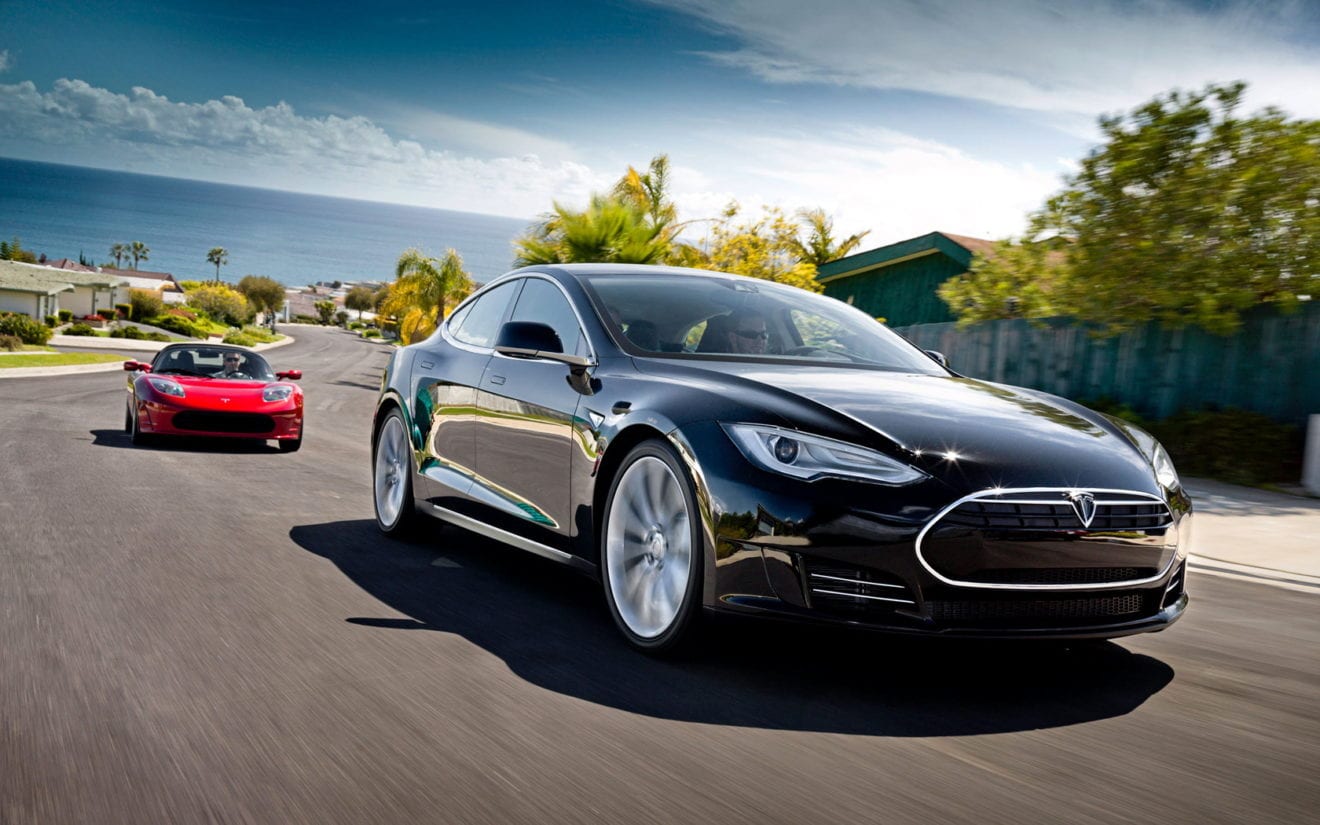
    Prestige Image Motorcars, the importer of Tesla electric cars, is currently selling the Tesla Model X 75D sports utility vehicle for $200,000 in Indonesia – at almost double its price in the United States, due to the added taxes.

    This severely limits the adoption of electric vehicles in Indonesia, restricting it to a niche market, but the government is adamant that it wants to change this.

    “The luxury tax on electric vehicles will be zero percent and import tax will be 5 percent. But [it is not yet final], as we are still discussing it,” Industry Minister Airlangga Hartanto said on Monday (26/02).

    Lower-priced electric vehicles are expected to increase demand and encourage more people to purchase them. This may in turn convince automakers to establish production facilities here.

    Airlangga said the government is currently formulating a roadmap to encourage the local industry to produce more low-emission vehicles, including electric cars.

    “We have completed a stage where we produce cheap and energy-efficient cars. Now we need to move fast to build hybrid cars and electric vehicles,” Airlangga said.

    The minister said the government has set a target requiring 20 percent of all vehicles produced in Indonesia to be hybrid or electric by 2025.

  • Ferrari optimistic about Indonesian sales

    Ferrari optimistic about Indonesian sales

    Citra Langgeng Otomotif, Indonesia’s authorized Ferrari distributor, is optimistic about its sales prospects this year as it continues to strengthen its presence within its specific target market, which has remained relatively immune to the sluggish growth of the the country’s automotive industry.

    The company’s CEO, Arie Christopher, said Ferrari had personally approached its existing and prospective customers to increase the exclusivity of its brand.

    One of the aspects of its exclusivity is maintaining the confidentiality of prices of Ferrari’s vehicles in Indonesia, which are discussed solely between the company and its customers.

    “So far, we are still on track in sales,” he told on Saturday, declining to disclose the sales value recorded in 2017.

    Indonesia’s car sales stood at 1.08 million units in 2017, a mere 1.6 percent growth over the previous year, according to data from the Indonesian Automotive Manufacturers Association (Gaikindo) show.

    On Saturday, Ferrari Indonesia showcased the California T “Superameric,” with livery number 16 and the 488 GTB “Test Driver” with livery number 63 to promote the manufacturer’s global tailor-made customization program.

    The tailor-made program allows customers to customize the interior and exterior appearances of their new Ferraris.

    Arie said the company had delivered 20 tailor-made customized Ferrari cars to Indonesian customers, with six of them agreeing to sign up with the program.

  • Vietnam auto imports plummet over Government’s Decree 116

    Vietnam auto imports plummet over Government’s Decree 116

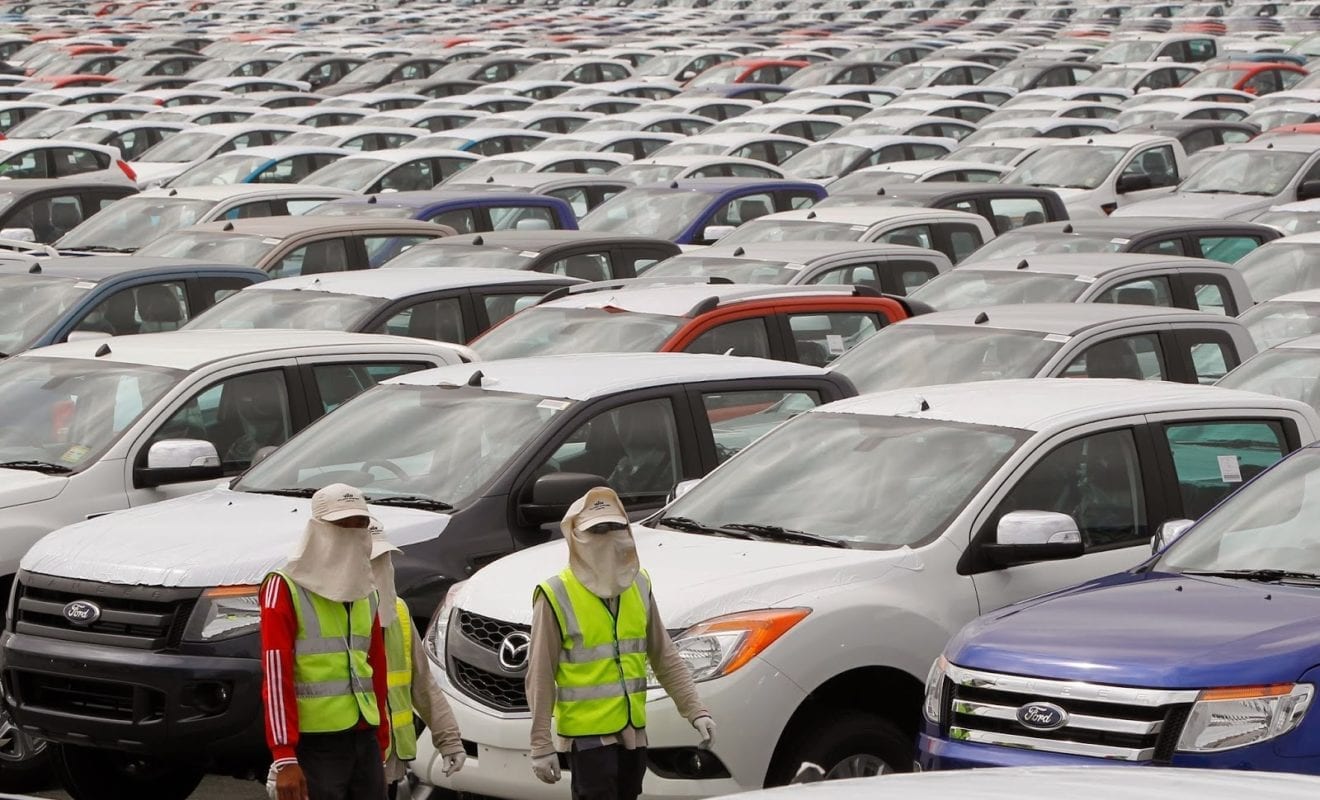
    Automobile imports in Việt Nam plummeted in the first month of 2018, also the time before Tết (Lunar New Year) holiday.

    Only 337 cars of all kinds were shipped to the country, according to data of the General Department of Customs.

    Of the imports, there were only 17 passenger cars with nine seats or less, amounting to US$567,000. Notably, no cars were imported from Indonesia and India.

    In 2017, Indonesia was among the top countries after Thailand with the highest number of exported cars to Việt Nam. India too had a relatively large number of exported vehicles in 2016. However, in January this year, both the countries did not export any car to Việt Nam. Meanwhile, Thailand lost its recognition as the largest import car market in Việt Nam, with only 36 vehicles exported to the country since the beginning of the year.

    Among the automobile export markets to Việt Nam in January 2018, Russia suddenly rose to the top, with 159 vehicles being exported, worth VNĐ274 billion (US$12.03 million), equivalent to VNĐ1.7 billion each. Under a deal on autos signed between Minister of Industry and Trade Trần Tuấn Anh and the Russian Ambassador to Việt Nam Konstantin V.Vnukov in Hà Nội  in December last year, Russia’s joint ventures in Việt Nam are allowed to import duty-free 2,550 complete built-up units and 13,500 sets of automobile parts from 2018 to 2022 as a way of exploring the capacity and tastes of the market.

    China (65 cars) and the United States (42 cars) ranked second and third in exports, respectively.

    According to The Jakarta Post, Indonesia’s four-wheel car manufacturers face a bleak future in exports following a new regulation of Việt Nam, which is poised to build its own automotive industry.

    The Vietnamese Government in November issued Decree No. 116/2017/ND-CP on car manufacturing, assembly, importation and warranty offering, a move that came into effect from January 1, 2018, and tightened car imports. According to Vietnamese Ministry of Industry and Trade (MoIT), Decree 116 is a supportive measure for domestic companies as it sets up a number of technical barriers to limit the import of cars. The decree comes at a time when the import tax of automobiles from within the ASEAN bloc is zero per cent, which also became effective from January 1, 2018.

    Under the decree, car importers in Việt Nam are required to obtain a Vehicle Type Approval (VTA) certification, which details the imported vehicles’ quality, safety and environmental protection. The VTA must be issued by authorities in exporting countries. In addition to this, one sample will be selected from every batch of imported cars for emission, quality and technical safety tests. The inspection will be repeated in the next shipment, even on the same car models.

    “The new rule creates additional costs; a complete inspection may take one to two months, while other cars from the shipment will have to stay at the port and be charged daily for storage,” Kukuh Kumara, Indonesian Automotive Manufacturers Association (Gaikindo) secretary-general said.

    The new rule prompted Gaikindo to send a letter to the MoIT on January 27. The letter claimed that four automakers—Toyota, Suzuki, Daihatsu and Hino—had stopped the planned production of 9,337 vehicles bound for Việt Nam. The units were supposed to be manufactured in the December-March period.

    Kukuh said that Indonesia sent some 30,000 cars to Việt Nam annually, with the four automakers being the biggest exporters.

    According to data of the Central Statistics Agency, Indonesian passenger car exports to Việt Nam from January to November last year was valued at $241.2 million, up significantly from $17.78 million in 2016. Indonesia is also ranked among the top three passenger car exporters to Việt Nam, along with Thailand and China, with a market share of 13.12 per cent.

    Oke Nurwan, international trade director general at Indonesia’s Trade Ministry, said if manufacturers were reluctant to export their cars to Việt Nam, Indonesia could lose some US$85 million between December and March.

    He said the Indonesian government had decided to take a soft approach on the matter by sending on February 26 a delegation to lobby with its Vietnamese counterpart.


  • Scania says Korea keeps its trucks on top

    Scania says Korea keeps its trucks on top

    Sweden commercial vehicle manufacturer Scania said Korea will remain strategic to its Asian business, particularly due to the advanced technology and high environmental regulations imposed on cars.

    “There’s a saying that if you can manage Korean standards, you can manage any country standards [in Asia],” said Kaj Farm, the managing director of Scania Korea at a press conference held Thursday in Gangnam, southern Seoul.

    Executive Vice Presidents Mathias Carlbaum, head of commercial operations, and Christian Levin, head of sales and marketing, joined the event to share the company’s future plans. This was the first time top-level executives from headquarters attended a local press event for Scania.

    The company says Korea is an effective gateway for launching new models before they are sent to other Asian countries, as environmental regulations and safety standards are much stricter. Another advantage is that Korea has an information technology infrastructure that allows the company to test high-tech “connectivity” features that help the company collect data on drivers and their trucks on the road.

    The company chose Korea as the first Asian market to sell its newest lineup, the All New Scania series, launched Feb. 10. The series was its biggest R&D project ever, taking 10 years and 2 billion euros to develop.

    In sales, Korea was Scania’s biggest market in Asia before last year, when China overtook it. In Korea, Scania has an 11.5 percent market share in heavy trucks, a jump from 6.6 percent in 2013. The Korean office’s aim is to keep up slow but steady growth by expanding market share 1 percent each year.

    Scania is pushing R&D to prepare for an era of sustainable transportation with increased energy efficiency, alternative fuels, electrification and so-called “smart transport.” It has already had some success in developing engines for alternative fuels.

    One interesting experiment Scania is conducting in Singapore for the “smart” sector is “platooning,” where four trucks, operating between several freight terminals, drive in a convoy and the only manned vehicle is the one at the very front. The others are connected via Wi-Fi and are led by the car in front.

    “Our target [for the Asian market] is a 70 percent increase [in the number of units sold] from 2016 to 2020,” said Carlbaum, Scania’s commercial operations head. “By then, one third of the total volume for the company will come from Asia. And, in the meanwhile, Korea will remain a core part of this growth strategy.”

  • Renault partners with Chinese online retail giant

    Renault partners with Chinese online retail giant

    China, a strategic market for Groupe Renault, is the top priority in the company’s new mid-term plan, “Drive the Future.” The Chinese joint venture, Dongfeng Renault Automotive Company, has set a target of 400,000 passenger cars sales by 2022 based on nine local models.

    “One of the key objectives of returning to Formula 1 was to leverage its global platform for Groupe Renault,” said Cyril Abiteboul. “China has been identified as a market of strategic importance and partnering with high-profile companies like Alibaba’s Tmall will provide opportunities to significantly improve Renault brand awareness and opinion in China, with a strong presence over the Chinese Grand Prix in April, but also throughout the year.”

    “We are excited to partner with the Renault Sport Formula One Team to make our activity around the Chinese Grand Prix a success and to be working closely together to bring one-of-a-kind experiences with the Renault Sport Formula One Team to our customers,” added Wei Yu, General Manager of Tmall Auto.”

    Alibaba Group’s mission is to make it easy to do business anywhere. The company aims to build the future infrastructure of commerce. It envisions that its customers will meet, work and live at Alibaba, and that it will be a company that lasts at least 102 years.

    Launched in 2008, Tmall caters to consumers looking for branded products and a premium shopping experience. A large number of international and Chinese brands and retailers have established storefronts on Tmall. According to iResearch, Tmall was China’s largest third-party platform for brands and retailers in terms of gross merchandise value in 2016. Tmall is a business of Alibaba Group.

  • Mercedez’s owner warns of supply chain risk from switch to electric cars

    Mercedez’s owner warns of supply chain risk from switch to electric cars

    Daimler AG, owner of the Mercedes-Benz brand, warned that a fall in demand for diesel cars and a switch to electric vehicles could force it to prop up its supplier base.

    Carmakers face increased legal and regulatory scrutiny over pollution levels produced by their diesel-engined vehicles after Volkswagen (VOWG_p.DE) in 2015 admitted to cheating emission tests using engine management software.

    To avoid a total ban on their diesel vehicles, Daimler and other carmakers have stepped up development of electric cars and agreed to update their engine management software to cut down pollution levels.

    Daimler’s suppliers are being forced to invest to help electrify the entire Mercedes-Benz range by 2022, prompting the carmaker to use unusually frank language to warn about the impact of the shift to electrified cars in its report.

    “Due to the planned electrification of new model series and a shift in customer demand from diesel to gasoline engines, the Mercedes-Benz Cars segment in particular is faced with the risk that Daimler will require changed volumes of components from suppliers,” the carmaker said in its annual report.

    “This could result in over- or under-utilization of production capacities for certain suppliers. If suppliers cannot cover their fixed costs, there is the risk that suppliers could demand compensation payments,” Daimler said.

    “Necessary capacity expansion at suppliers’ plants could also require cost-effective participation,” Daimler added.

    Daimler created a risk management committee to oversee its suppliers in the aftermath of the 2008 financial crisis, when some smaller companies ran into cash-flow problems, forcing Daimler to step in.

    Daimler said earlier this month that its profit growth would be dampened this year by spending on new technologies such as electric and autonomous vehicles.

    In its annual report, Daimler also said that political crises and uncertainties could lead to supply bottlenecks for specific raw materials, leading to volatile prices.

    “Generally, the ability to pass on the higher costs of commodities and other materials in the form of higher prices for the manufactured vehicles is limited because of strong competitive pressure in the international automotive markets,” the annual report said.

    Daimler’s report showed that provisions stood at 14 billion euros ($17.3 billion) at the end of 2017, 2.1 billion higher than a year earlier.

    The Stuttgart-based carmaker did not provide a detailed breakdown of the rise but said it was primarily due to increased obligations from sales transactions, provisions for warranty obligations, and provisions relating to legal proceedings.

    Daimler is being sued by owners of diesel-engined Mercedes-Benz vehicles in the United States in a class-action suit which alleges the German carmaker used software to reduce emissions.

    Daimler views the lawsuit as being without merit, but added it could not quantify the legal risks from class-action lawsuits, the annual report showed.

    Among the legal risks faced by Daimler is a regulatory probe tied to raids at several car manufacturers and suppliers, with regard to steel purchasing. Daimler reiterated in its report that it was cooperating in full with the authorities.

    Daimler also said in its report that Chief Executive Dieter Zetsche’s total remuneration for 2017 amounted to 8.61 million euros, an increase from 7.61 million euros a year earlier.

  • Japan’s Honda to recall 350,000 cars in China over engine issue

    Japan’s Honda to recall 350,000 cars in China over engine issue

    Honda Motor Co Ltd will recall roughly 350,000 vehicles in China to resolve a cold-climate engine issue and quell a barrage of customer complaints that has hit the automaker over the past month.

    The recall involves the CR-V sport utility vehicle and the Civic car equipped with a 1.5-litre turbo engine, Honda’s joint venture with Dongfeng Motor Group Co Ltd (0489.HK) said in a statement on Monday.

    The company is calling back those cars to resolve a problem caused by an unusual amount of un-combusted petrol collecting in the engine’s lubricant oil pan.

    The issue in some cases caused a strong odor of gasoline inside the car and in other cases the car’s check-engine light came on. Honda and Dongfeng plan to resolve the issue by updating the engine’s gasoline injection control software.

    Honda officials said there had been no reports of accidents. They said the engine oil issue doesn’t affect the engine or the car’s performance.

    The measure comes after CR-V and Civic owners turned to the Weibo microblog – China’s Twitter equivalent – and other means to air their complaints since mid January.

    The recall points to an emerging pattern in China where customer complaints spiral out of control as they are aired out on Weibo, forcing an automaker to respond.

    Years ago the kind of recall Honda announced on Monday could have been dealt through a so-called customer service action, industry officials and experts say. That refers to what the auto industry calls a “quiet recall”, which is less damaging financially and image-wise, where an automaker fixes a non-safety issue, often free of charge, whenever the customer comes to the dealership.

    “Without Weibo, it would have gone on for years,” said James Chao, chief automotive analyst for IHS Markit in the Asia-Pacific region. “That’s the way it was for the industry in the pre-Weibo, pre-Twitter era.”

    Honda did not say the scale of the move in its statement, but a Beijing-based spokesman and other company officials said Honda and its joint venture partner are likely to call back roughly 350,000 vehicles. “We’re still trying to determine the precise number of cars affected,” the spokesman said.

    Normally un-combusted petrol ends up accumulated in the lubricant oil pan but evaporates under heat from the engine. Such evaporated petrol is by design put back into the engine combustion chamber as fuel.

    The issue involving the CR-V and the Civic has occurred in northern China where temperatures can dip well below the freezing point and when drivers of the affected vehicles drive short distances frequently.

    On short runs, Honda engineers believe the engine doesn’t warm up enough to help un-combusted petrol accumulated in the lubricant oil pan to evaporate.

  • European car sales up 6.8 percent in January, led by French gains

    European car sales up 6.8 percent in January, led by French gains

    Sales of passenger cars in Europe rose twice as fast in January as in the whole of 2017, helped by strong gains at France’s PSA Group and Renault, industry data showed.

    Registrations increased 6.8 percent to 1.29 million cars last month in the European Union (EU) and European Free Trade Association (EFTA) countries, Brussels-based industry body ACEA said on Thursday, from 1.20 million a year earlier.

    By comparison, sales in the region climbed for a fourth straight year in 2017 by 3.3 percent to 15.6 million vehicles.

    “January is usually a strong month, people resorted to buying after holding back on purchases at the end of last year,” a spokeswoman for ACEA said, adding the number of selling days was unchanged compared to the same month a year earlier.

    Sales by PSA including the newly-acquired Opel-Vauxhall brands surged 73 percent to 211,097 vehicles and were still up 12 percent if figures for the former General Motors division were excluded, the data showed.

    French rival Renault posted a 9.5 percent gain to 118,405 models, marginally beating Europe’s biggest automotive group Volkswagen which grew 8.7 percent to 316,783 cars with its volume brands Skoda and Seat contributing a major part to the increase.

    Four of Europe’s five biggest auto markets posted higher sales with only Germany and Spain managing double-digit advances while France and Italy recorded lower single-digit gains.

    Europe’s No. 2 market Britain suffered its tenth consecutive monthly drop, with sales down 6.3 percent in part due to customers being put off from buying diesels, which politicians have targeted over air pollution concerns.

  • Honda aims to double market share in India

    Honda aims to double market share in India

    Japanese carmaker Honda Motor Co plans to double its market share in India within the next few years, the head of its local unit said, as it looks to boost its presence in the world’s fifth-largest car market.

    To be a major player and have a meaningful presence, Honda needs to achieve a 10 percent market share, Yoichiro Ueno, managing director of the carmaker’s India unit, said during the country’s biennial auto show.

    Honda, which sells cars such as the City sedan and CR-V sport-utility vehicle in India, has seen its market share fall to about 5 percent at the end of 2017 from 7 percent three years ago, industry data show, thanks to a slew of new launches from rivals Maruti Suzuki and Hyundai Motor.

    Annual passenger vehicle sales in India crossed 3 million units last year and the country is expected to become the world’s third-largest car market by 2020, trailing only China and the United States.

    One of the challenges for Honda is that lower taxes on small cars in India make them a preferred choice for buyers, and the carmaker has few small cars to offer.

    “Our global line up is different so it is a bit difficult to utilise global resources,” Ueno said, adding car taxation policy in India needed to change to encourage carmakers to bring in products from their global portfolio.

    The Japanese carmaker is utilising only 70 percent of its annual production capacity of 300,000 units in India and needs to ramp up output to be efficient, Ueno said.

  • Opel says to build next-generation Corsa in Spain

    Opel says to build next-generation Corsa in Spain

    Opel, the German carmaker now owned by France’s PSA Group (PEUP.PA), said a new version of its Corsa city car would be built exclusively in Zaragoza, Spain, from 2019.

    This includes a fully electric version that will start rolling off the production line in 2020, Opel said on Wednesday.

    The Opel Corsa has been made in Spain since 1982.

  • Porsche, Audi to develop joint electric car platform to save costs

    Porsche, Audi to develop joint electric car platform to save costs

    Porsche and Audi, Volkswagen’s main luxury car divisions, plan to develop a joint platform for electric vehicles that will enable them significantly cut down on costs, German newspapers quoted their chief executives as saying.

    “By 2025, we’re facing a low single-digit billion euro sum to develop the architecture,” Audi CEO Rupert Stadler told both the Stuttgarter Zeitung and Stuttgarter Nachrichten.

    “If both would act on their own, costs would be 30 percent higher,” Porsche CEO Oliver Blume said, adding Audi was hiring 550 developers for the project and Porsche 300.

    From 2021 onwards, both businesses want to bring several models to the streets based on the joint platform, with Stadler saying that would build two sedan cars in Neckarsulm and two sports utility models at its Ingolstadt base.

    Porsche’s Blume said the sportscar maker could build its first model based on the joint architecture in Leipzig, where it is already assembling its Macan sport-utility model. “I currently see good chances for Leipzig,” Blume said.

  • Vietnam to revise automobile industry laws

    Vietnam to revise automobile industry laws

    The Ministry of Industry and Trade (MoIT) has asked the Ministry of Finance to remove the special consumption tax for locally-manufactured auto parts.

    This is part of a recommendation document that MoIT sent to the finance ministry in order to revitalise domestic automobile industry in the future and reduce the import of autos.

    The MoIT said that it is needed to have more measures to help local automakers cut production cost and accelerate the product’s competition capacity as well as revising policies on tax and fees.

    The ministry wanted the finance ministry to exempt the import tax on materials for part and components manufacturers who invest in Việt Nam, which should be in association with their commitment on long-term investment, volume of products, technology transfer and use of local labour force.

    The MoIT also recommends the application of a tax payment guarantee for a period of eight months instead of the current 30 days.

    The MoIT expected the finance ministry to study to amend and supplement a number of the above contents, which were proposed by Thành Công Group, with regard to laws on value-added tax, special consumption tax, and corporate income tax, in addition to personal income tax and natural resources protection tax.

    Earlier, at the review conference of the industry and trade sector held in Hà Nội on January 15, General Director of Hyundai Thành Công Lê Ngọc Đức proposed that the MoIT, in co-ordination with the finance ministry, consider several recommendations as those mentioned above.

    According to Đức, in order to achieve the goal of developing the automobile industry in Việt Nam, the Government has issued decrees such as Decree 116 on conditions for production, assembly, import and business of warranty service, car maintenance, and Decree 125 that regulates the roadmap for import duty exemptions of parts and components for manufacturers who meet conditions such as emission standards, engine displacement capacity for the car with nine seats and less, passenger car and truck.

    However, he said such privileges were not strong enough to be of significant priority for locally-assembled autos to help them compete with complete built-up units imported from ASEAN.

    Under the ASEAN Free Trade Agreement (AFTA) commitments, a zero per cent tax has been applied on cars imported from the bloc with a localisation rate of 40 per cent or more in the country of origin from January 1.

    A MoIT report showed that the price of an automobile in Việt Nam is currently high in the region but its quality is lower than an imported one.

    “Locally-assembled autos in Việt Nam have a similar price doubling as those seen in regional countries and much higher than other countries which have a stable automobile industry such as Japan and the United States,” said the report.

    “The domestic automobile industry has not yet reached the standards of the real automobile industry because most are at the level of simple assembly; the production line mainly consists of four key stages including welding, painting, assembly and inspection. There is no co-operation, linkage and specialisation between automakers and assemblers and part suppliers. There is no such system used by material suppliers and large-scale parts and components makers.

    “The localisation rate of new autos is only between 7 per cent and 10 per cent on average (compared to the target of 40 per cent in 2005 and 60 per cent in 2010). Currently, locally-produced products with very low technological content are tubes, tires, chairs, mirrors, cables, plastic products and batteries,” the report pointed out.

    MoIT has on numerous occasions warned that if such privileges and incentives were not approved, the domestic automobile industry would find it difficult to compete with imported cars.


  • Indonesia to announce the ‘Metro Kapsul’

    Indonesia to announce the ‘Metro Kapsul’

    Bandung’s city Indonesia administration has said work will start soon on the city’s first light rail transit (LRT) network, which will be called the “Metro Kapsul.” The administration claimed the network will be considerably cheaper to build than similar ones in Jakarta and Palembang.

    To cut costs, the contractor will use locally made materials and employ local talents to do most of the work, everything from research to test and eventually running the system.

    Bandung Mayor Ridwan Kamil said the project will not use any money from the state budget, but will be 100 percent privately funded.

    “It will be 100-percent funded by PP [state-owned construction company Pembangunan Perumahan]. It will not use moeny from the APBD [regional budget] or APBN [state budget],” Ridwan said at the project’s launch in Bandung on Monday (12/02).

    The mayor did not say when actual construction on the project will start as the city administration is still waiting for the building license (IMB) for the track to be approved.

    “[Theoretically] we can start doing the foundation [without the IMB],” Ridwan said.

    Ridwan claimed 98 percent of the Metro Kapsul network will be made of locally made materials. The rest, including its digital technology, will come from Slovenia.

    Construction will start from the network’s Corridor 3, an 8.3-kilometer track which will loop from the city center through the city’s busiest and most densely populated areas.

    “Metro Kapsul will be three times cheaper than the Jakarta LRT or Palembang LRT. Corridor 3 will only cost Rp 1.4 trillion [$98 million] to build, or Rp 150 billion per kilometer,” Ridwan said as reported by local newspaper Pikiran Rakyat.

    According to information uploaded on the website of the Committee for Acceleration of Priority Infrastructure (KPPIP), the 23 km-long Palembang LRT will cost a total of Rp 12.5 trillion, or Rp 520 billion per kilometer.

    PP has signed a build, operate, transfer (BOT) contract with the Bandung administration. The company will retain the rights to operate the network for 30 years.

    According to Ridwan, it may take up to one and a half years to complete construction on Corridor 3.

    “So, maybe, the next mayor of Bandung will have to open it,” he said.

    Ridwan’s tenure as Bandung mayor will officially end in September. The 46-year-old has declared he will run for the governorship of West Java in June’s simultaneous regional elections.

    He said the Metro Kapsul project is proof that Indonesia is not short of great engineering talents.

    “The network’s technology is designed by local engineers in Gedebage and Setrasari in Bandung, then tested in Subang and will be run for the first time in this city,” Ridwan said.

  • Nissan to pump $9.5 billion into China business, eyes top three spot

    Nissan to pump $9.5 billion into China business, eyes top three spot

    Nissan Motor Co plans to invest 60 billion yuan ($9.5 billion) in China over the next five years with its joint-venture partner as it seeks to become a top three automaker in the world’s biggest market.

    Long stuck as a second-tier player in China, Nissan and Dongfeng Group said on Monday they plan to boost their volume to 2.6 million vehicles a year by 2022, up from 1.5 million vehicles last year.

    Nissan plans to achieve the objective, dubbed its “Triple One” strategy, by focusing on electric cars and Venucia, a no-frills local brand Nissan operates in China – two market segments expected to see a surge in demand. It also aims to boost sales of light commercial vans and trucks.

    China’s auto market has been dominated by General Motors Co and Volkswagen AG for nearly two decades, with each of them selling 4 million vehicles last year. Nissan, along with Toyota Motor Corp , Ford Motor Co, and Honda Motor Co, lag far behind, each selling 1 million-plus vehicles a year.

    “We aim to break away from this second-tier group and become a top-3 China automaker,” Nissan’s China chief Jun Seki said in an interview with Reuters.

    “We need to go full-throttle aggressive,” Seki said. “If we didn’t do that, we would fall behind and fail to grab market share otherwise we could take.”

    ELECTRIC STRATEGY

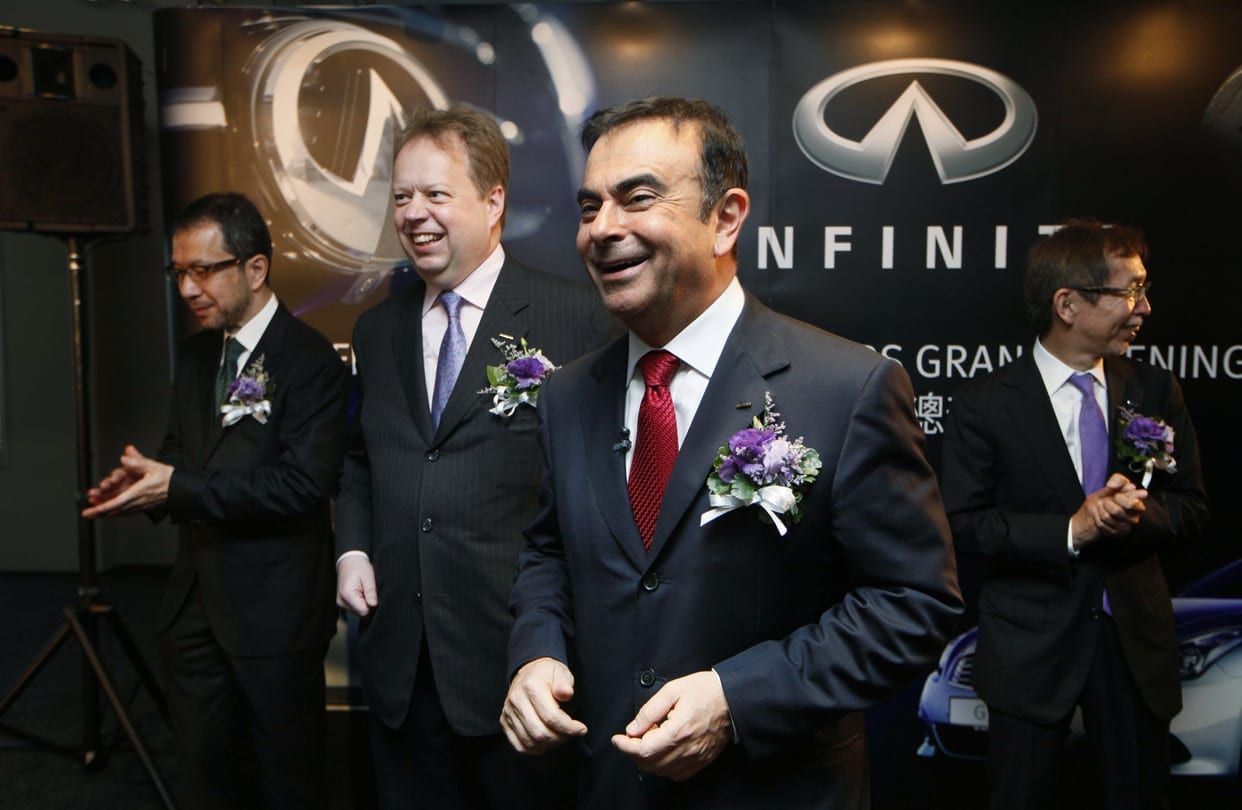
    Part of the strategy is to keep growing the Nissan brand and the company’s premium Infiniti brand, Seki said.

    Nissan and Dongfeng plan to increase the Nissan brand’s annual sales by 500,000 vehicles to 1.6 million vehicles a year by 2022. It also plans to boost Infiniti’s annual sales by 100,000 vehicles to about 150,000 vehicles a year over the same time frame.

    Still, more critical a strategy is Nissan’s electrification plan.

    Seki said the joint venture will launch as many as 20 electrified vehicle models across all brands in an effort to sell roughly 700,000 such cars a year by 2022 excluding electric light commercial vehicles, using a combination of all-electric battery vehicles and so-called “e-Power” hybrids.

    Automakers are scrambling to launch an array of electric and plug-in hybrid vehicles over the coming years, in part to comply with China’s production quotas for such cars. Nissan’s joint venture with Dongfeng sold about 22,000 electric vehicles last year, but they were mostly light commercial e-vans.

    In order to generate large enough EV volume, Nissan plans to come up with lower-cost electric cars by locally sourcing electric motors and other key EV components from suppliers in China.

    In 2019, Nissan for example plans to launch three such lower-cost EVs under the Venucia name. “We expect EV and e-power hybrid business to become profitable,” Seki said, without elaborating.

    NO-FRILLS

    Venucia, which Nissan established jointly with Dongfeng, is another key focus. The brand began selling cars in 2012, competing with China’s low-cost, no-frills indigenous brands such as those run by Geely and Great Wall Motor.

    Seki said shoring up Venucia is a must because indigenous Chinese brands will likely collectively sell as many cars as global brands sell in China. Last year indigenous Chinese brands sold a total of 10.3 million vehicles, compared with global brands’ 13.9 million vehicles.

    Venucia, which uses retired Nissan technologies such as platforms and transmissions, last year sold 143,000 vehicles, up 22.7 percent from 2016.

    Seki said Nissan wants to boost Venucia’s annual volume by more than 400,000 vehicles to be able to sell as many as 600,000 vehicles a year by 2022.

    The effort is likely to face tough competition, however, from established local players such as Baojun, which GM operates jointly with its local China partners.

    “No global automakers have a brand that competes with low-cost local brands except for us and GM,” Seki said. In addition to Baojun, GM operates the Wuling brand in a joint venture with Chinese partner SAIC Motor Corp and Guangxi Automobile Group.

    “Venucia is our clear advantage and we are going to milk it to grow rapidly,” Seki said.

  • One in Three in Southeast Asia Considers Making the Switch to Electric Cars

    One in Three in Southeast Asia Considers Making the Switch to Electric Cars

    One in three people in Southeast Asia admit they consider making the switch to electric cars, a study by Frost & Sullivan has revealed.

    The research, sponsored by Japanese carmaker Nissan, revealed 37 percent of prospective car buyers in the region may end up buying an electric one.

    Survey respondents from the Philippines, Thailand and Indonesia are the most interested in electric motor-powered cars.

    According to the study, with the right incentives and policies, electric cars could be the next big thing in the region.

    “Two-thirds of customers in Asean countries say they’re still worried about safety and finding charging stations for their electric cars,” Nissan revealed the results of the study in a statement on Tuesday (06/02).

    “But they don’t see price as an obstacle. They’re prepared to pay more for electric cars,” the study said.

    The research also recommends policies to be taken by governments wanting to promote the use of electric cars.

    “75 percent of respondents say they will buy electric cars if they don’t have to pay tax, 70 percent say they will be even more enthusiastic about the prospect if charging stations are made available in their apartment complexes and 56 percent say they will abandon conventional cars altogether if there’s a priority lane for electric cars on the streets of their city,” the study said.

    However, the study also revealed a few factors that make Southeast Asian customers reluctant to switch to electric cars.

    “They’re worried the cars will run out of charge before they reach their destination. That’s their main concern. The government and carmakers need to work together to ease it,” the study said.

    “Southeast Asians consider the government plays a very important role in promoting electric vehicles,” Nissan’s senior vice president Yutaka Sanada said in the company’s statement.

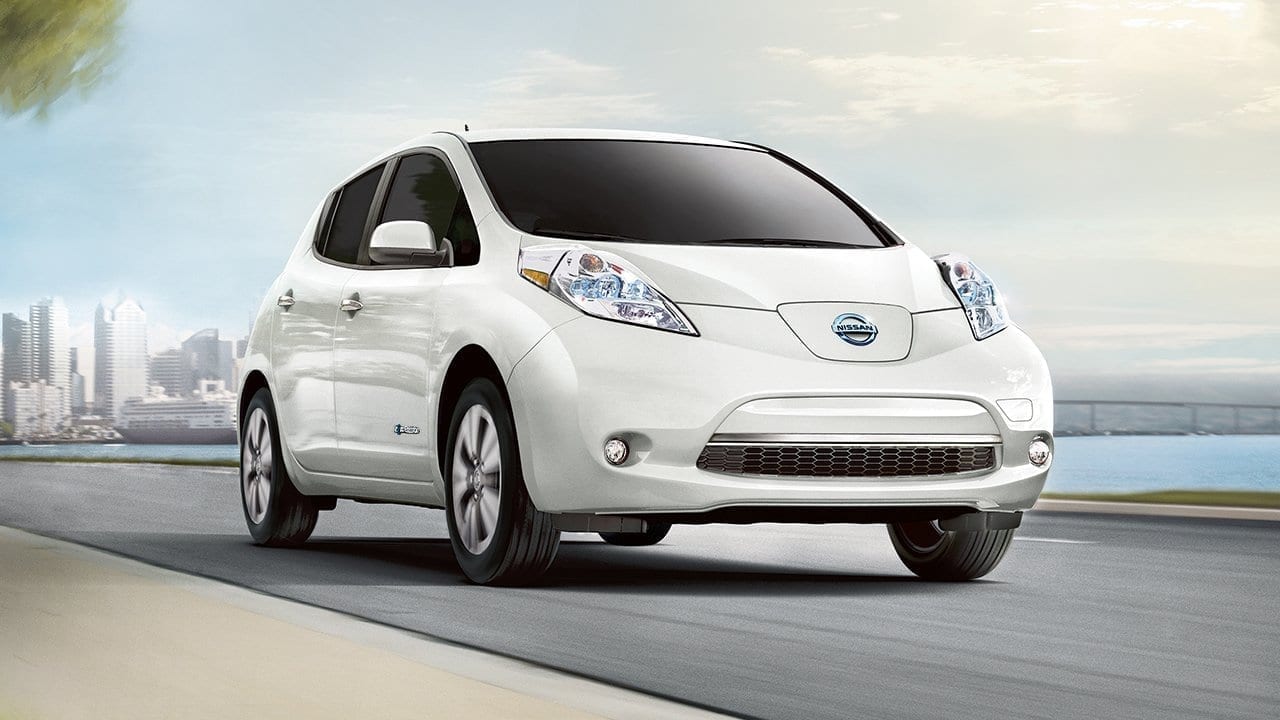
    The Japanese carmaker says it has sold more than 300,000 of its Nissan LEAF electric cars all over the world and not a single one of them has experienced safety issues.

    “In reality the demand for electric cars today is very high. Figures sometimes don’t tell the whole story. If governments and carmakers can assure customers that electric cars are safe and won’t run out of power mid-journey, the market can grow very large indeed,” Frost & Sullivan’s senior vice president Vivek Vaidya said.