Category: Automotive

Retail News Asia is committed to providing both local and global retailers with the latest Auto and Car news throughout the Asian market. This on a daily base.

  • BMW, Mercedes win with diesels in Korea

    BMW, Mercedes win with diesels in Korea

    It’s only been a couple of weeks since the 2018 Winter Olympics in Pyeongchang concluded, but for two of Germany’s major premium brands the hunt for gold in South Korea continues. BMW’s and Mercedes-Benz’s sales are booming and, unlike Europe, diesels have been a major driver of the success.

    Models such as the BMW 520d or Mercedes-Benz E 220d routinely rank as the best-selling imports.

    Typically, when experts talk about strategically important car markets, the Korean peninsula doesn’t come up. Instead the focus lies mainly on the BRIC countries: Brazil, Russia, India and China.

    While China has become the single-biggest market for Mercedes, BMW and Audi, the other three have failed to live up to their potential. Instead, a market of only 1.53 million light vehicles has stepped into the vacuum. Sales of Mercedes cars in South Korea increased by 20 percent last year. Remarkably, that represents a slowdown over 2016, when volumes surged by a third.

    Some of the growth can be attributed to a 2011 free trade agreement with South Korea that first reduced the 8 percent tariff on cars imported from the EU before eventually eliminating it entirely. Executives say what is even more important has been a change in attitude. A rising number of consumers are eschewing brands controlled by large family-owned conglomerates known as the chaebol, including Hyundai, in favor of foreign makes.

    Several such groups have become embroiled in scandals where the government helped keep chaebol executives found guilty of bribery and corruption out of jail. Now it’s no longer considered your patriotic duty to help the domestic brands, especially if you can afford better.

    “There’s a new spending paradigm called YOLO: You Only Live Once,” said IHS Markit senior analyst Andy Bae. “Thanks to supportive financial and promotion programs, YOLO consumers do not hesitate to purchase premium cars from Mercedes and BMW.”

    Mercedes now counts South Korea as its sixth-largest market worldwide, only narrowly trailing France with nearly 69,000 cars sold last year. BMW wasn’t far behind with a little less than 60,000. South Korea even eclipsed Japan last year as BMW brand’s second-biggest market in Asia.

    “There’s a strong relationship between South Korea and Germany, and they are attracted by German products, so we could utilize that,” Mercedes global sales boss Britta Seeger told journalists in Los Angeles last November.

    Seeger might be the best example of the growing importance of understanding South Korea. Prior to her promotion to the board of Mercedes parent Daimler, her first major assignment was running the automaker’s national sales company in South Korea from 2013 to 2015. Her unique experience there is also influencing what decisions she makes now. As part of her goal to open up the brand to new audiences, not just customers, Seeger decided that Mercedes should sponsor eSports competitive video gaming. “It may not be considered a mainstream sport, but it’s the fastest growing sport in the world,” said Seeger, who was attracted by sold-out stadiums around the globe and almost 500 million streaming hours watched per month. “I lived in South Korea. There it’s very normal — like soccer.”

    So, it’s that much more painful that smaller premium brand Audi has effectively been frozen out of this lucrative market after regulators decertified thousands of its diesels and imposed a ban on new registrations in August 2016 because of parent Volkswagen Group’s emissions-cheating scandal. This caused volumes to plummet from a peak of 32,538 in 2015 to less than 1,000 in 2017, crippling its dealer network.

    “Korean customers migrated from Audi to BMW and Mercedes during the sales ban,” IHS Markit’s Bae explained. “VW (Group) is preparing to start sales again.” Perhaps Audi will be able to benefit from what remains of the Olympic spirit.

  • PSA signs Malaysia production deal to boost Asia reach

    PSA signs Malaysia production deal to boost Asia reach

    PSA Group has signed a deal with Malaysian company Naza to jointly produce PSA-branded cars for Malaysia and other Asian markets. It is part of the automaker’s plans to boost its presence in the region after a failed bid to form a partnership with with Proton Holdings.

    PSA said in a statement on Monday that it had signed a share sale agreement and a joint venture agreement to establish a shared manufacturing hub in Gurun, Kedah, in Malaysia. PSA will own a 56 percent stake in the manufacturing hub, but no deal value was disclosed at the press event in Kuala Lumpur.

    The Malaysian plant will have a 50,000-unit capacity. Output of the Peugeot 3008 will begin this year, with the Citroen C5 Aircross following in 2019, PSA said.

    Naza said that with the joint venture it aimed to export 20,000 cars from the plant in the next three years.

    “The Naza Group will have sole responsibility for the distribution of Peugeot, Citroen and DS Automobiles in the domestic market and, with PSA, will explore distribution prospects in other ASEAN markets,” the statement said.

    PSA said the deal formed part of the company’s Push to Pass strategic plan to boost sales. That plan envisages a 10 percent increase in sales by 2018 and a further 15 percent by 2021 versus 2015 for the French group.

    “The creation of the ASEAN (Association of South East Asian Nations) hub in Gurun, Kedah, is a significant leap forward for PSA that will lead to the development of a profitable business in the region as part of our Push to Pass strategic plan,” PSA CEO Carlos Tavares said.

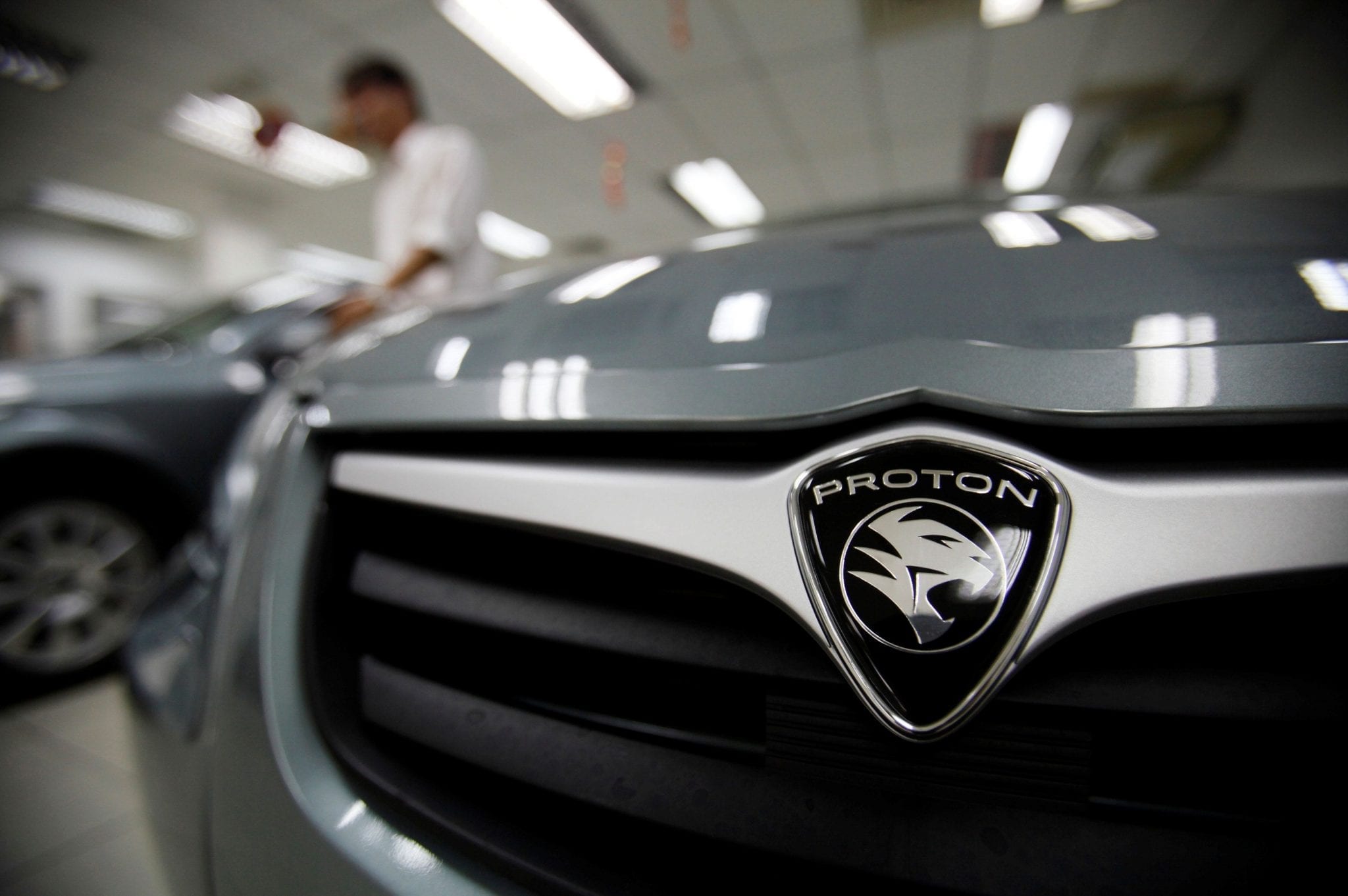
    PSA’s entry into Malaysia echoes that of Chinese manufacturer Zhejiang Geely Holdings Group’s last year. Geely bought a 49.9 percent stake in Malaysia’s Proton, pledging to help the struggling national automaker to strengthen its presence domestically and in the region. PSA was also in the running to form a partnership with Proton.

  • Hyundai’s union says revised trade deal with US ‘humiliating’

    Hyundai’s union says revised trade deal with US ‘humiliating’

    Hyundai Motor’s South Korean labor union on Tuesday called Seoul’s revised free trade deal with the United States “humiliating”, and said the extended tariffs on pick-up trucks mean a missed opportunity to tap into the US market.

    The United States and South Korea agreed to revise a trade pact sharply criticised by US President Donald Trump, Seoul said on Monday, with the nations agreeing to extend US tariffs on Korean pickup trucks by 20 years until 2041.

    “The union has called for domestic (South Korean) production of pickup trucks for the past several years,” the union said in a statement, adding it believes the US pickup truck market “represents the US market’s blue ocean and the future bread and butter of the South Korean auto industry”.

    Although no South Korean automakers currently export pickup trucks to the United States, Hyundai Motor had said last year it planned to launch a model there to catch up with a shift away from sedans.

    The government’s agreement to revise the US-Korea Free Trade Agreement’s auto industry section “is a humiliating negotiation that accepted Trump’s ‘strategy to preemptively block Korean pickup trucks’”, the union said.

    Hyundai was the worst performer among major automakers in the United States as of February, with its sales down 12 per cent year-on-year over the first two months of this year due to its heavy reliance on sedans and its aging SUV models. This compares to the market’s 0.8 per cent drop over the period.

    “Among potential offerings from (Korean) automakers in the US market, Hyundai Motor’s pickup truck is likely to be made locally (in the US),” Yoo Ji-woong, analyst at eBest Investment & Securities, wrote in a note on Tuesday.

    Hyundai Motor said on Monday it was “too early to elaborate on the details such as the estimated timing of the model release and production location”.

  • South Korea agrees to further open auto market to US

    South Korea agrees to further open auto market to US

    South Korea has agreed to further open its auto market to the United States as the two countries prepare to amend their six-year-old free trade agreement, its top trade negotiator said Monday. South Korea’s Trade Minister Kim Hyun-chong said the United States will end tariffs on South Korean-made pick-up trucks in 2041 instead of 2021.

    Each American carmaker will also be able to export 25,000 additional vehicles to South Korea each year without having to comply with domestic safety regulations. South Korea also will ease emission standards for American cars shipped from 2021-2025, when the Asian country is due to set new import regulations.

    Kim said South Korea also won an exemption from increased import tariffs on steel products. The third-largest steel exporter to the United States after Canada and Brazil, South Korea was among 12 countries whose exports of steel and aluminum U.S. President Donald Trump recently said would be hit with heavy tariffs. But South Korea’s steel tariff exemption is subject to a quota of about 2.7 million tons of steel products a year, about 74 percent of its exports in 2017.

    The agreements in principle were announced Monday just hours after Trump said the United States was on the verge of amending its trade agreement with South Korea, which took effect in 2012. They came as a relief to South Korean industries, although the steel companies said they had wanted a larger quota of tariff-free exports to the United States.

    The auto sector is among the most contentious issues in South Korea’s trade dealings with the U.S. The Korean Automobile Manufacturers Association praised the government’s efforts to protect South Korean automakers and avoid major changes on sensitive issues such as adjusting tariffs.

    The revised agreement appears like significant concessions by South Korea but is expected to have little impact on its exports to the United States or its domestic auto market. No local auto companies export pick-up trucks made in South Korea to the United States, according to Kim.

    While U.S. carmakers will be able to ship 50,000 cars to South Korea annually, 25,000 more than before, without being subject to domestic safety regulations no American car brand sold more than 10,000 vehicles in South Korea last year.

    South Korean negotiators managed to avoid changes in treatment of its agriculture sector, a highly sensitive area in domestic politics.

    The two allies started working on amending the free trade pact in August after Trump blamed the arrangement for causing the U.S. trade deficit with South Korea.

    The president told reporters at a Friday news conference that trade deals are being made with various countries and then highlighted South Korea, a key economic and national security partner in Asia. The United States ran a $10.3 billion trade deficit with South Korea last year.

    While the United States posted a trade surplus of $10.7 billion with South Korea in the services sector, it recorded a goods trade deficit of $27.7 billion in 2016, leaving an overall deficit of $17.0 billion.

    After Trump’s remarks, Commerce Secretary Wilbur Ross said he hoped a final agreement with Seoul would be announced next week.

  • BMW raises R&D spending for electric, autonomous cars

    BMW raises R&D spending for electric, autonomous cars

    German carmaker BMW will increase research and development (R&D) spending to an all-time high of up to 7 billion euros ($8.6 billion) this year as part of efforts to bring 25 electrified models to market by 2025.

    The Munich-based maker of BMW, Rolls-Royce and Mini vehicles said that despite higher spending it expects group pretax profit to be over 10 billion euros in 2018, at least in line with last year’s level.

    In its annual report, BMW also warned of a possible impact from trade barriers and any anti-dumping customs duties in the United States and added that Brexit could have an adverse long term effect.

    Spending on developing electric and autonomous cars pushed R&D costs a billion euros higher last year, reaching 6.1 billion euros.

    “Investment will rise by a further high three-digit million euro amount year-on-year, primarily from the ongoing new model initiative as well as continued work on e-mobility and autonomous driving,” BMW said in a statement on Wednesday.

    BMW’s R&D ratio for 2018 is expected to be between 6.5 percent and 7 percent of sales. In the next two years the R&D ratio is expected to remain above its usual target corridor of 5 percent to 5.5 percent range, BMW said.

    LUXURY CARS IN DEMAND

    BMW this month reported a 5.3 percent rise in 2017 operating profit on surging demand for high-margin sports utility vehicles, helping to offset higher research spending.

    Sales of luxury cars are expected to continue rising, contributing to new record unit sales this year, it said.

    “In the automotive segment we expect to achieve new all-time highs in 2018. As long as conditions remain stable, we should see a light increase in deliveries from growth in China and the U.S. in particular,” BMW Chief Financial Officer Nicolas Peter said in a statement.

    BMW did inject a note of caution over trade tensions and Britain’s looming exit from the European Union.

    “A possible introduction of trade barriers, including anti-dumping customs duties, by the U.S. administration could have an adverse impact on the BMW Group’s operations,” BMW said in its annual report.

    Separately, BMW said the prospect of diesel bans had hit the second-hand values of some cars, leading to a rise in the credit loss ratio to 0.34 percent, from 0.32 percent a year earlier, reflecting “the situation in the used car markets in North America and Europe.”

    The increase was mainly due to the debate on diesel engines in parts of Europe, BMW said. BMW said risks related to the residual value of used cars were covered by risk provisions.

    BMW shares traded 0.6 percent higher at 0935 GMT.

  • BlackBerry to provide software for Jaguar Land Rover EVs

    BlackBerry to provide software for Jaguar Land Rover EVs

    BlackBerry Ltd and Tata Motors Ltd’s Jaguar Land Rover (JLR) said on Thursday they reached a licensing agreement to use the Canadian company’s software in the luxury car brand’s next-generation electric vehicles.

    BlackBerry will provide its infotainment and security software to JLR, in the Canadian firm’s latest licensing deal for its autonomous-driving technology after similar agreements with Qualcomm Inc, Baidu Inc and Aptiv Plc.

    BlackBerry’s QNX unit, which makes software for computer systems on cars and has long been used to run car infotainment consoles, is expected to start generating revenue in 2019.

    Its Certicom unit focuses on security technology and serves customers such as IBM Corp, General Electric Co, and Continental Airlines.

    JLR, which was bought by the Tata group in 2008, said last year that all its new cars would be available in an electric or hybrid version from 2020.

    Britain’s biggest carmaker said in January it would open a software engineering centre in Ireland to work on advanced automated driving and electrification technologies.

  • Floodgates could open as Honda imports cars

    Floodgates could open as Honda imports cars

    After stopping car exports to Việt Nam for more than a month, Japanese auto giant Honda Motor suddenly decided to import around 2,000 vehicles from Thailand in early March.

    This is the first batch of automobiles exempt from import tax under the ASEAN Trade in Goods Agreement (ATIGA) to be imported into Việt Nam.

    ASEAN groups Brunei, Cambodia, Indonesia, Laos, Malaysia, Myanmar, the Philippines, Singapore, Thailand and Việt Nam.

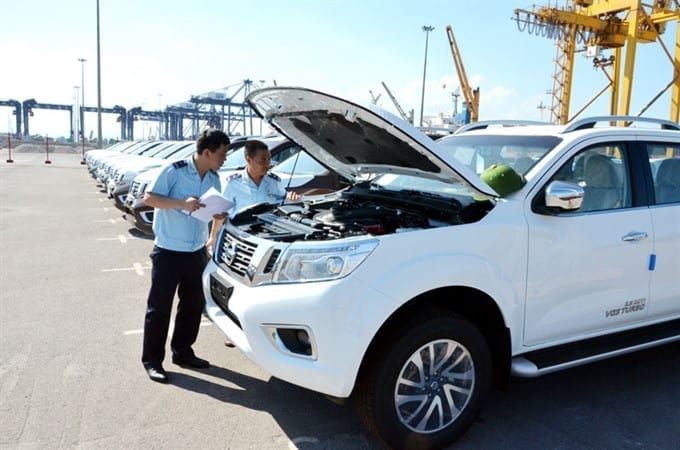
    Lý Thanh Bình, head of customs at HCM City’s Hiệp Phước Port, confirmed that Honda cars including Jazz, Accord, CR-V and Civic were unloaded at the port on March 1. The vehicles will be sold in one or two months after they undergo several mandatory tests as part of the customs clearance process.

    In January, Toyota Motor and Honda decided to suspend exports to Việt Nam saying they are unable to meet Việt Nam’s stringent checks of imported vehicles under the new Decree 116.

    The decree on the production, assembly, import and warranty of automobiles was issued just as Việt Nam eliminated tariffs on automobiles imported from ASEAN members.

    It requires all models of imported vehicles to obtain a Vehicle Type Approval certificate from authorities in the exporting countries.

    The new rule also requires emission and safety tests to be done on every batch of automobiles imported. In the past, only the first shipment of a model was tested.

    Many auto giants from Japan and the US have expressed concern, saying it would be difficult to meet the requirements.

    Some also said the new requirements would cause a huge waste of time and money for importers since one emission test could take two months and cost up to US$10,000.

    The decree is aimed at strengthening quality checks and protecting the local industry.

    The fact that Honda resumed exports to Việt Nam proves that car importers can remove the biggest obstacles like the above-said things that they were facing as they want to import the vehicles under the new regulations.

    Honda had Vehicle Type Approval certificates granted by Thailand where the cars were produced.

    Analysts said Honda’s decision to resume exports to Việt Nam should be considered a big factor for the Vietnamese auto market. This was because after Honda, other companies would also be able to receive similar certificates like Honda to bring their cars back to Việt Nam.

    Because of this, car imports from other countries such as Indonesia and Malaysia are also expected to soon come to Việt Nam.

    The return of Honda and other companies including Ford and Toyota in the near future is expected to drag prices significantly lower, thus fulfilling Vietnamese consumers’ dream of buying cars at lower prices.

    According to an official announcement from Honda Vietnam, its compact SUV Honda CR-V is now listed at VNĐ958 million ($42,076) to VNĐ1.068 billion ($46,907), depending on the model and specifications.

    Compared to their earlier prices, when a 30 per cent tax was in place, the 1.5E and 1.5G models are cheaper by VNĐ178 million ($7,818) and VNĐ188 million ($8,257).

    However, market observers said though tariffs on automobiles imported from ASEAN were eliminated over two months ago, car prices have shown no signs of coming down.

    Some have even seen their prices rise.

    They blamed this on not only a shortage of vehicles on the market but also the increasing cost of importing cars under the new rules.

    The shortage is understandable since only Honda of those that do not assemble in the country have gone through the new import rigmarole. Meanwhile, the number of assembled cars has also decreased because of lack of components imported from abroad, meaning supply has been unable to meet demand.

    Trường Hải Auto Joint Stock Company has hiked the prices of many models after making some cuts before Tết (Vietnam Lunar New Year) in mid-February.

    Consequently, the prices of its Mazda cars are up by VNĐ30-50 million. The Nissan Navara saw its prices cut by VNĐ10-20 million before Tết, but is now back to its earlier rates.

    Housing allure remains for overseas Vietnamese

    According to statistics from the World Bank, overseas remittances to the country last year were worth at $13.8 billion, up 20 per cent from 2016.

    This year, they are expected to go up by 5-7 per cent.

    Analysts said overseas remittances would continue to provide a vital impetus to the economy, especially to the property sector.

    The State Bank of Việt Nam said around 71 per cent of remittances went into business, and 21-22 per cent into the real estate sector.

    This means that on average every year, the sector gets an infusion of around $2.5 billion.

    Experts said the remittances are a reliable and steady source of foreign currency, and help keep foreign reserves buoyant.

    An executive at Savills Vietnam’s international residential sales department pointed out that by nature remittances are a “one-way” source of funding and could match or exceed foreign direct investment and foreign portfolio investment.

    Now they play an important role in economic growth. There are millions of Vietnamese living in the US, Europe and Asia, and a growing number of them are finding their way home to work, invest or retire.

    A thriving economy, constantly improving business environment and laws that allow overseas Vietnamese to own houses in Việt Nam are the reasons why they are investing in the housing sector.

    Experts said the housing market now offers favourable conditions for overseas Vietnamese to make profits.

    It has a wide range of products of high quality and reasonable prices, meeting overseas Vietnamese investors’ every demand, whether investment, settling down in the country or working.

    According to Savills Vietnam, safety, security and after-sales services are also factors that overseas Vietnamese and other foreign customers consider when buying a house in addition to location, price, convenience, architecture and design.

    It is undeniable that the attractiveness of the housing market has contributed to increasing remittances to Việt Nam in the last few years.

    According to the State Bank of Việt Nam’s HCM City branch, around 50 per cent of remittances to Việt Nam are to the southern metropolis.

    Around 22 per cent of the remittances to the city of $5.2 billion went into the housing market.

    Experts said to stabilise the flow of remittances into the country and into the real estate sector, the Government should offer incentives like low fees.

    They also stressed the need to make the housing market more transparent and efficiently provide market information to overseas Vietnamese.

    They wanted the Government to have tough measures to prevent the frequent occurrence of price “fever” in the housing market.

    They also called on real estate developers to carefully study overseas Vietnamese and foreigners’ housing needs and improve the quality of their products and services.


  • German automakers gain ground in South Korea, outselling GM for first time

    German automakers gain ground in South Korea, outselling GM for first time

    Mercedes and BMW both sold more cars in South Korea than General Motors for the first time last month, helped by the growing popularity of German premium brands and as consumers shied away from GM after it announced a major restructuring.

    While home-grown automakers Hyundai Motor and Kia Motors Corp dominate the local market, high-end German vehicles have made inroads in recent years with more diverse offerings for brand-conscious consumers.

    BMW saw the biggest jump with February sales nearly doubling to 6,118 vehicles, industry data showed. That was just a tad behind Mercedes which led the imported car rankings with 6,192 cars, up 12 percent from the same period a year earlier.

    South Korea last year became the sixth biggest market for Mercedes, climbing from eighth place.

    GM’s announcement last month that it plans to shut down of one of its four factories in South Korea and was weighing the fate of the three other plants resulted in domestic retail sales nearly halving in February to 5,804.

    With consumers worried about loss of after-care services and residual value, GM lost its long-held spot as South Korea’s No. 3 automaker, slipping to sixth place.

    The U.S automaker, whose South Korean operations are primarily geared toward exports, is seeking financial aid from Seoul as well as concessions on wages and benefits from its local union to stay operating in the country.

    Talks with the labor union on Wednesday failed to produce concrete results although some 2,500 workers have applied for voluntary redundancy package.

    “We hope to wrap up talks with the labor union and the government swiftly,” a GM Korea spokesman said.

    “A drawn-out restructuring will hurt consumer trust,” he added.

  • Kobe Steel, Toyota hit with U.S. lawsuit over vehicle metal quality

    Kobe Steel, Toyota hit with U.S. lawsuit over vehicle metal quality

    U.S. consumers have filed a lawsuit against Kobe Steel Ltd (5406.T) and Toyota Motor Corp (7203.T) accusing the companies of violating consumer protection laws and engaging in fraud by concealing the use of substandard metal components in vehicles.

    The proposed class-action lawsuit represents the first U.S. consumer complaint filed against Kobe Steel over data fraud, and highlights the legal risks the company faces even after Chief Executive Officer Hiroya Kawasaki announced on Tuesday he would quit to draw a line under the scandal.

    The 112-year-old company, which supplies steel and aluminum parts to manufacturers of cars, planes and trains around the world, admitted last year to supplying products with falsified specifications to around 500 customers, throwing global supply chains into turmoil.

    Kobe, Japan’s third-largest steelmaker, said on Tuesday that the data fraud had gone on for nearly five decades, and that it found new cases of impropriety, widening the number of affected clients to 605, including 222 overseas. The company said Kawasaki would quit on April 1.

    The U.S. lawsuit, filed on Monday in federal court in San Francisco, was brought by two California residents who seek to represent a nationwide class of consumers who bought allegedly defective Toyota vehicles.

    According to the complaint, Toyota’s Prius, Camry, Land Cruiser and Lexus vehicles have all been manufactured with “sub-standard” steel, aluminum and copper.

    The plaintiffs allege that Toyota and Kobe Steel both violated federal and state consumer protection laws by claiming that the vehicles complied with U.S. quality standards.

    “We have not grasped the whole content of the case and we are now looking into the matter,” a Kobe Steel spokesman said on Wednesday.

    Toyota declined to comment on the lawsuit.

    In a special order in November, the U.S. National Highway Traffic Safety Administration asked 29 automakers, including Toyota, to disclose any safety issues for any of their vehicles or engines containing products supplied by Kobe Steel.

    The regulator did not immediately respond to a request for comment on what data it had received in response and whether there was any evidence of faulty materials in Toyota cars.

    Monday’s 40-page lawsuit outlines the ways in which the companies allegedly concealed poor metal quality. It demands compensatory and punitive damages of an unspecified amount.

    According to the complaint, at least six Toyota car models sold or leased to U.S. consumers were manufactured with substandard metal from Kobe Steel. Plaintiffs said the metal could impact vehicle safety and performance.

    Toyota had the duty to disclose any defective vehicle components because it has consistently marketed its automobiles as safe, functional and reliable, the lawsuit says.

    Kobe and Toyota had superior knowledge and access to the facts, the lawsuit alleged, giving rise to fraud by concealment claims.

    Four individuals in Canada who bought cars that use Kobe’s products have already brought class-action lawsuits seeking unspecified damages against Kobe and it subsidiaries.

    Kobe is also undergoing a separate U.S. Justice Department probe.

    A company executive said on Tuesday that it is fully cooperating with the U.S. probe, but it was hard to predict how it would develop.

  • Denso to invest $190 million in Tennessee plant, creating 320 jobs

    Denso to invest $190 million in Tennessee plant, creating 320 jobs

    Japanese auto parts supplier Denso Corp (6902.T) said on Wednesday it will invest $190 million in an existing Athens, Tennessee, plant to produce components for fuel delivery, ignition and exhaust gas systems for automakers in North America.

    The investment will add four production lines and create 320 jobs, the company said in a statement.

    Denso said the plant will have one new production line devoted to gasoline direct injectors and the other three for fuel pumps.

    In October Denso, Toyota Motor Corp’s (7203.T) largest supplier, said it would invest $1 billion in its Maryville, Tennessee, plant to develop vehicle electrification and safety systems, creating around 1,000 jobs.

    Last month, Toyota and Mazda Motor Corp (7261.T) announced a $1.6 billion joint venture assembly plant in Alabama that will employ up to 4,000 workers and produce 300,000 vehicles a year.

  • Jaguar Land Rover needs Brexit detail before building electric cars in Britain

    Jaguar Land Rover needs Brexit detail before building electric cars in Britain

    Jaguar Land Rover (TAMO.NS) is waiting for more information on trading conditions after Brexit before it decides whether to make electric cars in its home market, the boss of Britain’s biggest carmaker said.

    The Indian-owned automaker, which makes just under one in three of Britain’s 1.7 million cars at three factories, is building its new I-PACE electric model in Austria.

    The company is due to decide this year whether to build electric vehicles in Britain but, like its peers, is worried about the imposition of tariffs or customs checks after Brexit, snarling up supply chains and adding costs to production.

    “That makes the decision this year very, very critical and I don’t know whether we can make it,” Chief Executive Ralf Speth said at the Geneva Motor Show.

    London and Brussels hope to agree on a transitional deal this month to maintain free and unfettered trade until at least the end of 2020 ahead of a long-term Brexit agreement to be decided by the end of the year.

    Speth cited the need for support from government and academia but when asked whether Brexit was a factor in the decision-making process, he said:

    “We are waiting for these kinds of decisions. It goes without saying because uncertainty is really challenging us very much and not only us, it’s for the complete industry.

    “You hardly see inward investment any more or every decision is taking longer from every faculty. Therefore it would be … appropriate to get more information about these kinds of deals.”

  • First Vietnam’s duty-free cars arrive from Thailand

    First Vietnam’s duty-free cars arrive from Thailand

    Over 2,000 Honda cars from Thailand—the  first batches of cars to enjoy zero per cent import duty under the ASEAN Free Trade Agreement (AFTA)—have been imported to Việt Nam.

    Under the AFTA commitments, a zero per cent tax is applicable to cars imported from the bloc, with a localisation rate of 40 per cent or more in the country of origin, starting January 1 this year.

    The current batch has Jazz, Accord, CR-V and Civic models.

    A representative of Honda Vietnam said that to import the autos to Việt Nam, the firm had completed procedures to meet the requirements of Việt Nam’s Decree 116 on the conditions for production, assembly, import, business of warranty service, car maintenance and particularly the Vehicle Type Approval certificate granted by the Thailand Department of Land Transport.

    A consulting staff member at Honda’s Mỹ Đình agent said that the new vehicles would be rolled out to the market in May or early June, as it will take one or two months to complete checks on emission, quality and technical safety at ports.

    “The price of each car is expected to fall by more than VNĐ200 million.  This will be a turning point in the Vietnamese automobile market,” said the staff member.

    Earlier, the insiders calculated that with the zero per cent import tax, the price of imported cars from ASEAN countries to Việt Nam would fall by 20-25 per cent.

    Toyota Motor Vietnam and Ford Việt Nam are completing procedures to meet the requirements of the Decree 116 to import cars which are favourites in Việt Nam, such as the Ford Explorer, Everest, Ranger, Toyota Fortuner and Yaris.


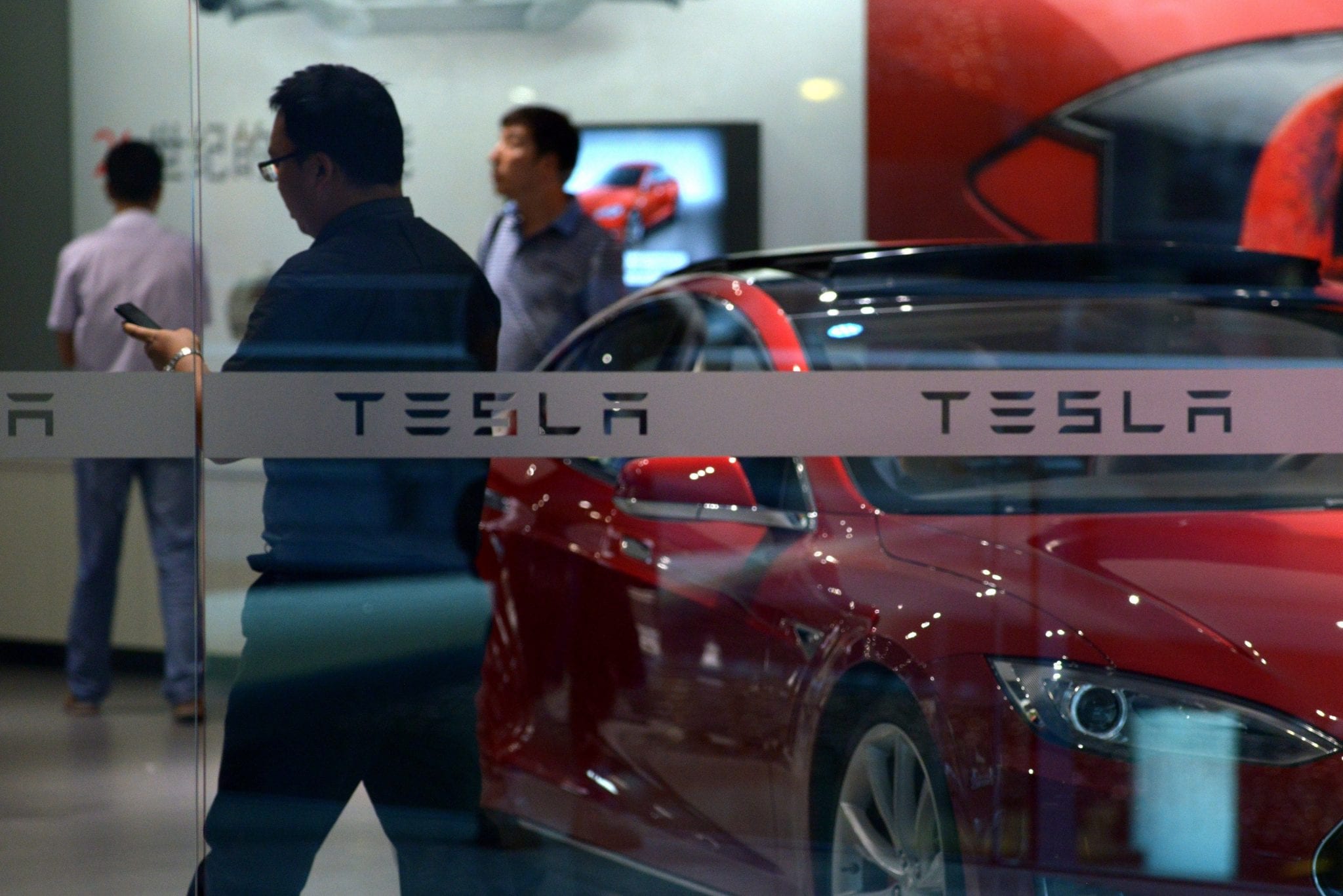
  • Tesla made over $2 billion in China in 2017

    Tesla made over $2 billion in China in 2017

    Unlike most foreign automakers in China, Tesla has yet to establish local production and still solely relies on exporting its vehicles from California to the largest auto market in the world.

    Nonetheless, Tesla managed to double its sales in China last year as it is significantly expanding its presence in the country.

    Tesla was off to a tough start in China in 2014 and 2015, but things started to improve for them in the country in 2016 when they managed to triple their sales to over $1 billion during the year.

    The automaker wasn’t able to maintain the insane growth rate in 2017, but the company confirmed today that it still managed to double sales in China to over $2 billion in 2017.

    They don’t confirm the number of cars sold per market, but it has to represent over 20,000 vehicles based on their average sale price.

    Sales were helped in 2017 by China’s surprising demand for Tesla’s Model X. The vehicle has been extremely popular in the country. For example, look at the number of Model X SUVs at this Tesla owners meet-up in Shenzhen, China last month.

  • Haulage – Self-Driving Vehicles in the Logistic Industry

    Haulage – Self-Driving Vehicles in the Logistic Industry

    At Argentus, we try to stay on top of technological developments from workplace automation to 3D printing. We pay close attention to the technologies that could potentially affect your Supply Chain and its related disciplines.

    The supply chain is intimately connected to increased globalization and technological progress, regarding transportation and hard goods technology and software. This is a fast-evolving field.

    It is exciting for a professional working in this field. A person can expect their skills and knowledge to evolve and grow over the years as changes occur in the Supply Chain technology field. There is a huge potential for professional growth.

    The self-driving car is one of the emerging technologies that have gotten a lot of hype in recent years. Google announced, in 2011, that this technology, due to the growing sophistication of GPS, camera, and computer navigation technologies, was within its grasp. The self-driving car is a technological advance people have been envisioning for most of the 20th century.

    Apple jumped into the game quickly, setting a 2019 target date for shipping its first self-driving car. With this technology being closer than ever, many analysts began looking at the implications a driverless car would have on automotive liability, and safety. People wondered how a self-driving car would affect various industries.

    There are also concerns about the job prospects for a massive number of truck drivers. There are 3.5 million truck drivers in the U.S. alone. Many people are wondering, what impact driverless cars and trucks will have in the field of logistics in general?

    Some speculate that self-driving vehicles will reduce the demand for truck drivers. However, they see an increased need for service providers (3PLs) and logistics planners. Would there be an increase in opportunities for advantages in Supply Chain strategic and efficiency?

    To get a handle on this trend and how it could impact the Logistics field, DHL, the express logistics leader commissioned a report on the topic.

    According to the report from Intelligent Car Leasing, automated driving offers a few key benefits:

    Safety will improve due to a reduction in driver error.

    Having fewer vehicles on the road will lower the environmental impact of these vehicles and reduce fuel consumption.

    Driver rest time would be eliminated so trucks could travel 24/7 and traffic flow would be increased which would offer higher efficiency.

    The report states that autonomous driving could reduce the cost of freight by up to 40% per kilometer.

    This technology’s impact on logistics alone could be staggering. DHL reports that there is a strong case to suggest that self-driving vehicles will be adopted by the logistics industry faster than other industries.

    This technology will probably initially be used in private and secure environments like open-air sites and warehouses. The Logistics field will adopt this technology sooner than other because, according to the report, liability issues are less of a consideration for vehicles carrying freight rather than people.

    Based on the report’s findings, the core areas of Logistics that will be impacted by this technology are:

    Warehouse Operations, including autonomous loading technologies, auto pallet movers, and assisted order picking.

    Line Haul Transportation, including convoys with one live driver in the front and assisted highways trucking. The driver would have oversight of the autonomous vehicles following their vehicle.

    Last-mile delivery, which is the least predictable part of the journey. According to the report, this is the most visionary application of autonomous vehicles. Advances in self-driving vehicles can improve and transform last-mile delivery using parcel station loading, self-driving parcel and shared car technologies.

    Most likely, the near-future outcome of these advances will be some type of hybrid. Control of the vehicle will remain in the hands of a driver, but automation technologies will help with the driving process. This would allow the logistic industry to experience the gains noted above. This said according to Fircroft, autonomous trucks have been impressive.

    Some vehicle manufacturers have already embraced this hybrid approach. Vehicles already have come from these technologies, including adaptive cruise control, which requires some human attention. A number of logistics service providers have already begun to deploy transportation systems that are partially automated.


  • Geely makes US$9b Daimler bet against tech ‘invaders’

    Geely makes US$9b Daimler bet against tech ‘invaders’

    Chinese carmaker Geely has built up an almost 10% stake in Daimler in a US$9 billion (RM35 billion) bet by its chairman that he can access the Mercedes-Benz owner’s technology in the growing battle for the future of automotives.

    The purchase by Li Shufu, Geely’s founder and main owner, means China’s largest privately owned automaker is now the biggest shareholder in Germany’s Daimler.

    Geely said on Saturday there were no plans “for the time being” to raise the stake further. Instead, it will seek to forge an alliance with Daimler, which is developing electric and self-driving vehicles, to respond to the challenge from new competitors such as Tesla, Google and Uber.
    “No current car industry player is likely to win this battle against the invaders from outside without friends. To achieve and assert technological leadership, one has to adapt a new way of thinking in terms of sharing and combining strength. My investment in Daimler reflects this vision,” Li said.

    “Daimler is pleased to announce that with Li Shufu it could win another long-term orientated shareholder, which is convinced by Daimler’s innovation strength, strategy and future potential,” the German company said in a statement.

    Geely officials plan to travel to Stuttgart to meet Daimler executives early this week and also hope to meet top German government officials in Berlin, two sources familiar with the matter told Reuters.

    The Chinese firm plans to use the meetings to underline that it intends to be a supportive long-term investor, they said.

    Daimler had no immediate comment on any meetings. Geely and the German economy ministry declined to comment.

    Chinese investors in German technology companies have tended to take a consensual approach, buying incremental stakes in companies such as robotics firms Kuka and Kion, typically after long consultation with management and other stakeholders.

    In November, Geely asked Daimler to issue new shares so it could buy a stake, as a way to access Mercedes-Benz technology for electric cars and trucks, including battery technology, to help Geely comply with a Chinese crackdown on pollution.

    But the German company turned down the offer saying it did not want to dilute existing shareholders, sources at the time told Reuters.

    Li changed tactics, and quietly amassed a stake of 9.69% worth US$9 billion at Daimler’s current share price.

    The sources said former Morgan Stanley Germany CEO Dirk Notheis was the architect of amassing the Daimler stake, working with former Morgan Stanley China executive Yi Bao.
    Notheis declined to comment, while Bao was not reachable.

    German state secretary at the economy ministry, Matthias Machnig, said separately that EU trade ministers meeting this week in Sofia would discuss how better to protect strategically important European companies from unwanted investors.

    “It is important that Europe keeps a close eye on which key European technologies foreign strategic investors are setting their sights on,” he said.

    Machnig did not comment specifically on Daimler.

    Only two or three auto manufacturers will likely survive, a source familiar with Li’s thinking told Reuters, prompting Geely to seek access to carmakers with a technological edge.

    Daimler is also the only one of Germany’s three carmakers not to be controlled by a family. Volkswagen is majority-owned by the Porsche-Piech clan, while BMW is 47% owned by Susanne Klatten, Germany’s richest woman, and her brother Stefan Quandt.

    Geely’s move poses a challenge to the German carmaker, since Mercedes-Benz already has an industrial alliance to develop cars and trucks with Renault-Nissan, which owns a 3.1% stake in Daimler, and has announced plans to build electric cars with existing Chinese joint-venture partner BAIC Motor Corporation.

    Bernstein Research analyst Max Warburton said: “It’s not clear what Geely wants and how it’s going to work, but we view this move as part of a broader Chinese move to gain involvement in the European automotive industry.”

    “China wants a payback after spending a decade gifting the European auto industry super-normal growth and profits. Now it wants more direct access to technology, brands and profits,” he wrote in a note shortly after the stake was disclosed.

    Zhejiang Geely Holding owns Volvo Cars, LEVC, the maker of London’s black cabs, and last year took a majority stake in sports car maker Lotus, a 49.9% stake in Malaysian automaker Proton, a US$3.3 billion stake in Volvo Trucks and control of flying car start-up Terrafugia.

    Geely sees potential in Daimler because it is developing high-speed connectivity for autonomous cars at a time when Li believes satellite-based internet connections could become more important, the source familiar with his thinking said.

    The source said Daimler and Geely had not held concrete talks about how to structure a potential joint venture, adding: “You know we have to become a stakeholder in order to engage.”

    Swedish truck maker AB Volvo, one of Geely’s other investments, has objected to the Chinese firm’s stake-building in Daimler, citing anti-trust concerns, the source added.
    “We will protect interests of both companies by abiding laws in the country and the company’s governance structure. We are not seeking to have a controlling power in Daimler,” the source added