Category: Automotive

Retail News Asia is committed to providing both local and global retailers with the latest Auto and Car news throughout the Asian market. This on a daily base.

  • Toyota, Mazda to build $1.6 billion plant in Alabama

    Toyota, Mazda to build $1.6 billion plant in Alabama

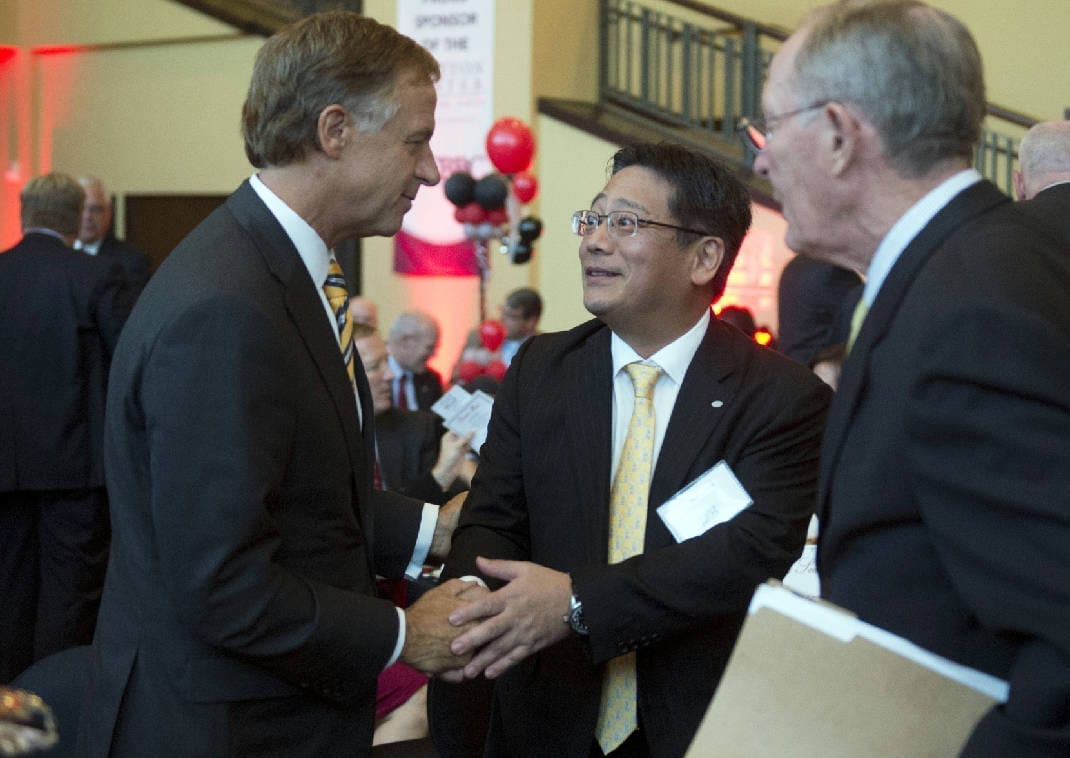
    Alabama will be the site of a new $1.6 billion Toyota Motor Corp and Mazda Motor Corp auto plant, a victory for President Donald Trump who had prodded manufacturers to build new U.S. facilities and threatened tariffs on foreign production, sources said on Tuesday.

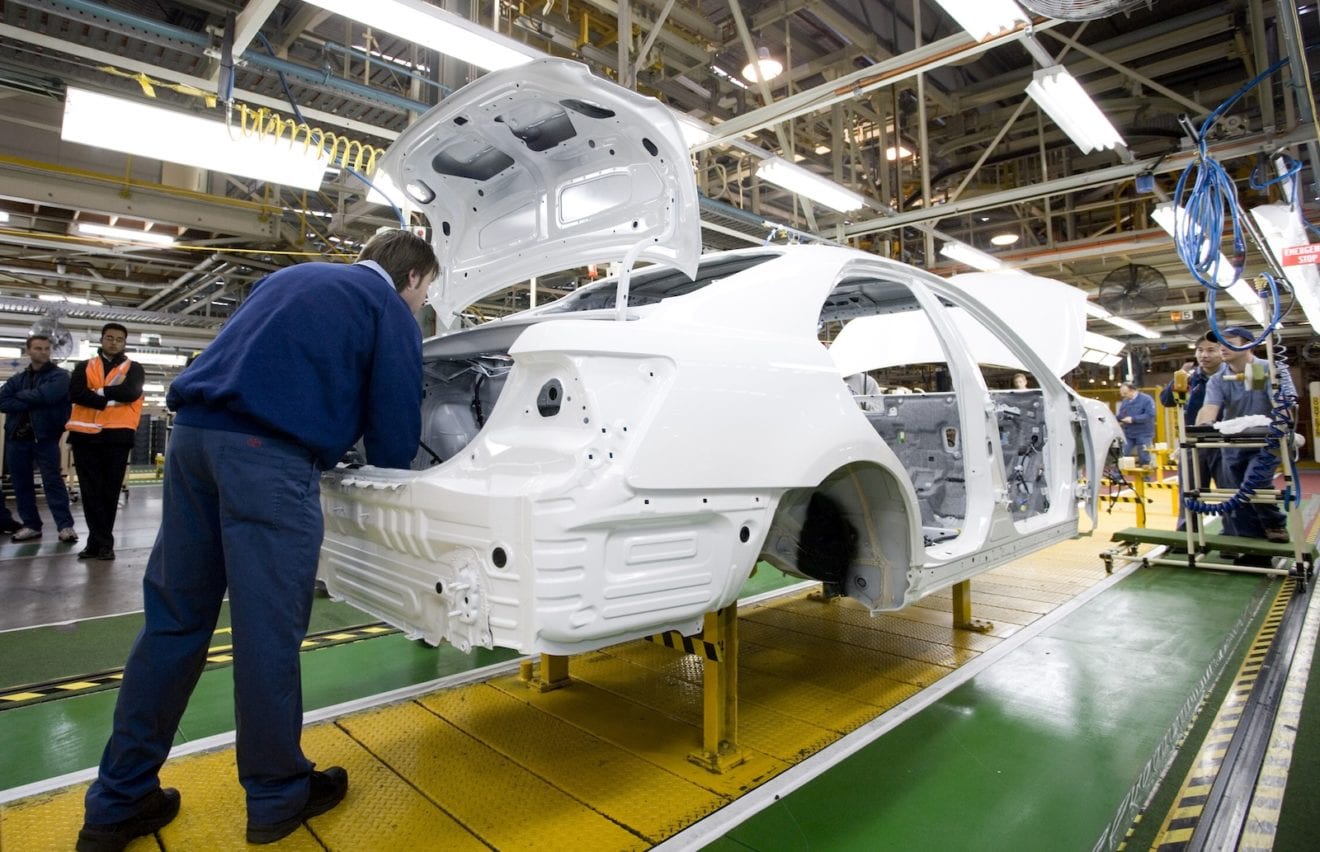
    The plant, which will employ up to 4,000 people and produce about 300,000 vehicles a year, will be located in Huntsville, Alabama, and is a boon for the state, where Toyota has a large engine plant and an existing network of automotive suppliers.

    A formal announcement by company and state officials is expected on Wednesday in Montgomery, sources briefed on the matter said.

    The new plant –in a state Trump won by 28 points in 2016 — could be a political boost to the Republican president, who has urged automakers to build plants in the United States and add jobs. The companies said they expect the plant to open in 2021.

    Trump tweeted in March he wanted “new plants to be built here for cars sold here.” The White House did not immediately comment on Tuesday.

    The announcement also comes at a time of declining U.S. auto industry sales, so it could exacerbate overcapacity and add pressure to cut prices. U.S. new vehicle sales fell 2 percent in 2017, after hitting an all-time record high in 2016, and are expected to fall further in 2018.

    Details of an anticipated tax and incentive package for the investment were not yet known. It has been reported the companies sought at least $1 billion in incentives.

    A Toyota spokesman declined to comment, except to say an announcement was expected soon. A Mazda spokeswoman also declined to comment.

    In recent months, the companies had narrowed their choices down to sites in Alabama and North Carolina.

    Local media last month said the leading site under consideration was in northern Alabama’s Limestone County, near Toyota’s large engine plant in Huntsville. In September Toyota announced a $106 million technology upgrade for the Huntsville plant.

    A Chamber of Commerce of Huntsville website for the “Huntsville Mega Site” touts the fact it has been “certified as development-ready.” The commerce chamber, local and state officials declined to comment on Tuesday on plans for the plant.

    A year ago, President-elect Trump criticized Toyota and threatened hefty tariffs against the Japanese automaker if it built its Corolla sedan for the U.S. market in Mexico.

    “Toyota Motor said will build a new plant in Baja, Mexico, to build Corolla cars for U.S. NO WAY! Build plant in U.S. or pay big border tax,” Trump posted on Twitter in early 2017.

    Toyota and Mazda announced plans for a new plant in August. Toyota said it would shift production of Corollas from Canada to the new venture rather than in Guanajuato, and would build Tacoma pickups in Mexico instead. Mazda plans to build new crossover SUVs at the plant.

    Trump praised the joint venture announcement, saying in August on Twitter: “Toyota & Mazda to build a new $1.6B plant here in the U.S.A. and create 4K new American jobs. A great investment in American manufacturing!”

    In October, Toyota said it would scale back investment in a planned plant in Mexico by 30 percent to $700 million and cut planned annual capacity in half to 100,000 vehicles as it shuffles its production plans to meet market demands.

    Toyota has 10 U.S. plants in eight states in an arc running from West Virginia through Kentucky, Indiana, Alabama, Mississippi and Texas.Toyota and Mazda announced a capital alliance in August and are exploring joint development of technologies for the basic structure of competitive electric vehicles.

    Over the last 30 years Toyota, along with German and Asian automakers, has built a second auto industry in the United States, rivaling the operations of the Detroit Three automakers in size and employment, but with newer, and fewer unionized, plants.

    States covet auto assembly plants because they typically pay above-average wages and spin off jobs at suppliers and service companies. Southern U.S. states have the advantage of good transportation infrastructure, business-friendly regulators and generally anti-union politicians.

    The Alabama Department of Commerce shows 150 of the large automotive suppliers operate in the state, providing the logistical strength that Kristin Dziczek, a researcher at the Center for Automotive Research in Michigan, said helped land the plant.

    Dziczek said that Alabama in 2017 was tied for fifth among U.S. states in auto production, at 9 percent with Tennessee. It was behind Michigan at 19 percent; Indiana at 12 percent, Kentucky at 11 percent; and Ohio at 10 percent.

    “The impact of an auto assembly plant extends beyond its immediate economic impact, and that’s why states offer robust incentives,” said Dennis Cuneo, a site-selection consultant and former Toyota executive. “It creates a halo effect that in turn helps attract other projects.”

    Alabama spent an estimated $250 million to woo Daimler AG’s Mercedes-Benz to put an auto plant in Tuscaloosa two decades ago.

  • Ford India sales up 27% in December 2017

    Ford India sales up 27% in December 2017

    Ford India’s combined domestic wholesales and exports in December recorded 29,795 vehicles, compared to 23,470 vehicles in the same month last year, registering a growth of 27%.

    The company sold 5,087 vehicles in domestic wholesales, compared to 5,566 vehicles the corresponding month last year. Exports in December stood at 24,708 vehicles, against 17,904 vehicles a year ago.

    Ending the year with sustained growth, the combined domestic wholesales and exports in CY 2017 stood at 262,784 vehicles, compared to 238,098 units in CY 2016 – recording its highest production and wholesale volume ever.

    “The year 2017 saw the Indian automotive industry overcome challenges precipitated by the implementation of GST, increased inflation, after-effects of demonetization, rising crude prices and volatile regulatory environment to register growth,” said Anurag Mehrotra, president & managing director, Ford India.

    “At Ford, we remain committed to India as one of our most important markets, and are focused on the strategic pillars like strong brand, right products, competitive cost and effective scale, to build a profitable business.”

    Ford’s efforts on delivering differentiated customer experience and surprisingly affordable service cost continue to win customers. The introduction of several industry-first service initiatives such as service price promise and parts price promise are enabling Ford customers to know the exact costs of routine repairs, parts, and maintenance, even before they walk into a dealership.

    With two of its world-class plants, Ford continues to deliver on the Make in India promise with the commencement of KA+ exports to mature markets like Europe and New Ford EcoSport to North America.

  • BlackBerry software to be used in Baidu’s self-driving platform

    BlackBerry software to be used in Baidu’s self-driving platform

    BlackBerry said on Wednesday it will collaborate with Chinese internet search firm Baidu Inc to tap the fast-growing autonomous vehicle market.

    BlackBerry, which has developed software QNX Hypervisor 2.0 to run complex computer systems in vehicles, said Baidu will use its software for its self-driving open platform, Apollo.

    “By integrating the BlackBerry QNX OS with the Apollo platform, we will enable carmakers to leap from prototype to production systems,” said Li Zhenyu, general manager of Baidu’s intelligent driving division.

    The automotive industry is one of the fastest-growing segments of the technology market, as automakers race to add more features toward building self-driving cars.

    As part of the agreement, BlackBerry and Baidu will also integrate Baidu’s smartphone integration software for connected cars and its AI system to run on the BlackBerry QNX Platform, the Canadian software maker said.

    U.S.-listed shares of BlackBerry were up 4 percent at $12.50 in premarket trade.

  • Japan’s Denso considering $440 million investment in JOLED

    Japan’s Denso considering $440 million investment in JOLED

    Japanese auto parts maker Denso Corp is considering a 50 billion yen ($440 million) investment in organic light-emitting diode (OLED) panel maker JOLED, Kyodo news reported, citing sources close to the matter.

    JOLED, majority owned by a state-backed technology investment fund, sold its inaugural batch of OLED screens this month, and has said it wants to raise 100 billion yen by the end of March to expand its currently limited capacity.

    The move comes amid the growing popularity for OLED screens, which are generally thinner and can show more vivid colors than liquid crystal display (LCD) panels. Smartphone makers have been shifting to OLED, including Apple Inc which has adopted them for its iPhone X.

    Cash-strapped domestic display makers such as Japan Display Inc, which has a 15 percent stake in JOLED, and rival Sharp Corp are struggling to respond to the shift, letting Korean rivals Samsung Electronics Co Ltd and LG Display Co Ltd take the lead.

    The Nikkei reported earlier this month that Japan Display had considered investing in JOLED but decided it did not have the funds. Japan Display has said it wants to start mass-producing OLED screens to better compete with Samsung and that it needs capital to do so but has so far declined to disclose details of any negotiations.

    Kyodo’s report said that Sony Corp and Panasonic Corp, which both own 5 percent in JOLED, are also expected to invest 5 billion to 10 billion yen each.

    Sumitomo Chemical Co and Screen Holdings Co are considering chipping in, and the four companies are together seen investing 20 billion to 40 billion yen in JOLED, Kyodo said.

    A JOLED representative said the company was in talks with various materials and equipment makers about the investment, but that nothing specific had been decided.

    A Denso spokesman said the reported plan wasn’t something the company announced, while a Screen Holdings spokeswoman denied the company was considering the investment. Sony said nothing had been decided, while Panasonic and Sumitomo Chemical declined to comment.

    JOLED was created in 2015 by merging the OLED divisions of Sony and Panasonic.

    Analysts have said it lacks the scale and expertise of display makers which have smartphone-size panels. JOLED is 75 percent owned by state-backed fund, the Innovation Network Corporation of Japan.

  • Hyundai Motor, Kia Motors flag slow sales growth in 2018

    Hyundai Motor, Kia Motors flag slow sales growth in 2018

    South Korea’s Hyundai Motor and Kia Motors on Tuesday flagged only modest sales growth in 2018, suggesting a slow recovery from a slump linked to their lack of SUVs in the United States and diplomatic tensions with China.

    Hyundai and smaller affiliate Kia, which together make the world’s fifth-largest automaker, said demand was expected to soften in the U.S. and Chinese markets as they unveiled a combined sales target of 7.55 million vehicles this year.

    Analysts said that would be a slight increase on 2017, when the automakers are estimated to have sold about 7.3 million vehicles, their lowest in five years.

    “The target for Hyundai and Kia is lower than expected. It seems to be a conservative target, reflecting a slow recovery in China and ongoing U.S difficulties,” Kim Jin-woo, an analyst at Korea Investment & Securities said.

    The 2017 sales figures are due out later on Tuesday but analysts expect the South Korean duo to fall well short of their target of 8.25 million vehicles, marking their third consecutive annual miss.

    Hyundai Motor shares declined 2.2 percent after falling as much as 4.5 percent on Tuesday morning, and Kia Motors stocks were down more than 1.6 percent. The broader market rose 0.2 percent.

    The firms’ sales tumbled last year in China, the world’s largest auto market, amid a chill between Beijing and Seoul over South Korea’s deployment of a U.S. anti-missile system.

    Sales in China and the United States were also hurt by a failure to capitalize on surging demand for sports utility vehicles (SUVs).

    While Hyundai Motor has plans to offer more SUVs in the United States and China, analysts said new models such as the redesigned Santa Fe SUV may come too late in the year to significantly impact sales.

    The expiration of a tax cut on small-engine cars in China also would be a negative for Hyundai’s sedan-heavy line-up, they said.

    Hyundai Motor Group Chairman Chung Mon-koo said in a statement the South Korean automakers would launch 12 new or refreshed models this year.

    They would “actively venture into” new markets like Southeast Asia, as protectionism was expected to grow elsewhere, he added.

    South Korea and the United States will hold talks on a trade deal on Jan. 5 although U.S. President Donald Trump has threatened to withdraw from the pact.

    Chung, 79, skipped his annual New Year speech to employees for a second year in a row. He has not made any public appearances since December, 2016.

  • Volvo’s XC60 makes China debut on Tmall

    Volvo’s XC60 makes China debut on Tmall

    Volvo, the Chinese-owned automaker founded in Sweden, debuted the latest iteration of its best-selling XC60 model on Tmall, Alibaba’s B2C shopping platform.

    The online offer meant that Chinese consumers can buy the new crossover SUV from Volvo, which is a unit of Hangzhou-based Zhejiang Geely Holding Group, a day before it goes on sale through all of Volvo’s other distribution channels in China.

    The XC60 comes in about a dozen colors depending on the market, but the blue version will be available only to Tmall shoppers. All 288 exclusive blue models offered in the initial round of sales on Tmall, starting at RMB 429,900, were sold out within the first 75 seconds.

    Also, 40 of the new cars will be available to Alibaba Super Members for a Super Test-Drive, a service introduced last week as part of Alibaba’s soon-to-launch Auto Vending Machines.

    The announcement is the latest in a series of initiatives from Alibaba in the auto space. Earlier this month, the Chinese technology giant announced a partnership with Ford Motor in which the two companies said they would leverage artificial intelligence, cloud computing, the Internet of Things and e-commerce via Tmall to “redefine the consumer journey and user experience for automobiles.”

    SEE ALSO : Alibaba’s Singles’ Day Sales Hit $10 Billion in one hour

    Tmall is also slated to open its car vending machine next month, although the location has yet to be disclosed. Consumers will browse cars stored in a massive garage-like structure on their smartphones, make their purchase, and then the cars will be delivered to them at ground level. The cars, including the XC60, will also be available for a test-drive.

    “The car vending machine reflects our efforts in New Retail, and we hope working together [with Volvo] to develop this innovative business model can help drive the transformation of the auto industry,” Bo Liu, marketing director of Tmall, said.

    First unveiled at this year’s Geneva Motor Show, the new mid-size SUV replaces Volvo’s highly successful original XC60. The model, which has been around for nearly a decade, represents about 30% of Volvo’s total global sales today.

    Volvo said that the second-generation XC60 is one of the safest cars ever made. It features the latest in safety technology, such as a new Oncoming Lane Mitigation system, which uses a steer assist to help mitigate head-on collisions. The SUV recently captured Japan’s most prestigious automotive award, the Japan Car of the Year, beating finalists including BMW 5-Series and Lexus LC.

    Automakers worldwide have been investing in innovative approaches to auto retail, as China’s automotive market expects significant growth. According to a September McKinsey report, China will contribute over half of global car sales growth through 2022, while the growth in the luxury car category is expected to outpace the rest of the market.

  • China’s Geely buying stake in Swedish truck maker Volvo

    China’s Geely buying stake in Swedish truck maker Volvo

    The Chinese owner of Sweden’s Volvo Cars is buying a stake in truck manufacturer AB Volvo, expanding a portfolio of vehicle brands that includes shares in Malaysia’s Proton and Britain’s Lotus.

    Geely Holding Group said Wednesday the acquisition of shares from Cevian Capital, a fund manager, would give it 8.2 percent of Volvo’s share capital and 15.6 percent of voting rights. Financial terms weren’t disclosed, though analysts estimated the value of the deal at around 27 billion kronor ($3.3 billion).

    The Swedish company, which also makes buses, construction equipment and diesel engines, was the parent of Volvo Cars until 1999, when it was sold to Ford Motor Co. Geely bought Volvo Cars in 2010.

    “We recognize and value the proud Scandinavian history and culture, leading market positions, breakthrough technologies and environmental capabilities of AB Volvo,” said Geely chairman Li Shufu in a statement.

    The transaction will make Geely the biggest single shareholder in Volvo and the second biggest holder of voting rights. Christer Gardell, the co-founder of Cevian Capital, said Geely would be able to provide Volvo with valuable access to the Chinese market and know-how in the field of electric and self-driving vehicles.

    Li said Geely would support Volvo management’s current strategy.

    Geely owns Geely Auto, one of China’s biggest independent automakers. It agreed in May to buy 49.9 percent of Proton and 51 percent of Lotus, which was owned by the Malaysian automaker.

    Geely also launched a new brand, Lynk & Co., in 2016.

  • Aston Martin to recall over 5,000 cars

    Aston Martin to recall over 5,000 cars

    British sportscar maker Aston Martin is recalling around 5,500 vehicles in the United States due to problems with powertrains and battery cables, according to documents posted on the National Highway Traffic Safety Administration’s (NHTSA) website.

    The recalls are expected to begin on Feb. 1, 2018, and come as the owners of the carmaker made famous by fictional spy James Bond prepare for a stock market listing or sale of the company.

    The documents on the NHTSA website say Aston Martin is recalling 3,493 DB9, DBS, Rapide, Virage and Vanquish models that were made between 2009 and 2016 due to problems that can cause the transmission park pawl to not engage, which could make the vehicle roll and increase the risk of a crash.

    The Gaydon, England-based company is also recalling 1,953 DB9 and DBS vehicles manufactured between 2005 and 2009 because their battery supply cables can be damaged when the driver seat is in the full rearward location, which could ultimately increase the risk of a fire, the documents said.

    A spokesperson for the carmaker was not immediately available for comment.

  • Ford Partners With Alibaba to sell Cars In China

    Ford Partners With Alibaba to sell Cars In China

    Online retail giant Alibaba has signed a deal to sell Ford’s electric vehicles in China using gigantic vending machines. Shoppers scan the vehicle they’re interested in  purchasing, using Alibaba’s Taobao app. They then pick a color and other customized options. Next, they snap a selfie that is used to match them with their order. The system then arranges for a test drive of the car, using facial recognition as a way to unlock access to the vending machine.

    The multi-floor vending machine rotates the cars in stock until the one the customer selected is found.  Alibaba customers pay a deposit and are given three days to test the vehicle to determine whether they want to purchase it. Once they decide, they can use the smartphone app to pay for the car or to return it and arrange another test drive.

    Customers are limited to five test periods every two months. They also must qualify as Alibaba Super Members, and have reached a certain level on the company’s credit scoring service.

    Alibaba plans to open two facilities in January 2018 in Shanghai and Nanjing, followed by dozens more across China next year if the concept proves a success.

  • Honda considers developing all solid-state EV batteries

    Honda considers developing all solid-state EV batteries

    Honda Motor is considering developing all solid-state batteries for electric vehicles (EVs) as a growing number of global automakers look to come up with powerful, next-generation car batteries to reduce vehicle emissions.

    Tighter global emissions regulations are forcing automakers worldwide to shift to electric cars, including all-battery EVs that will require capacity to deliver longer ranges and faster charge times, but at lower cost than lithium-ion batteries.

    “We’ve been researching all solid-state batteries,” Honda spokesman Teruhiko Tatebe said.

    “At the moment we’re not developing them with another automaker.”

    Kyodo News reported on Thursday that Honda and Nissan Motor Co were developing all solid-state EV batteries. Nissan was not immediately available for comment.

    A growing number of automakers including Toyota Motor Corp and Volkswagen  are developing all solid-state batteries, which offer more capacity and better safety than conventional lithium-ion batteries by replacing their liquid electrolyte with a solid, conductive material.

    Earlier this month, Toyota said it was considering jointly developing the next-generation batteries with Panasonic to share high R&D costs.

    The automaker is planning to have a production-ready battery in the early 2020s, and has highlighted the need to accelerate the pace of battery development as it and other automakers plan to ramp up the number of electric models they sell in the coming decades.

  • Volkswagen to invest Rs 7,600 crore to launch new models

    Volkswagen to invest Rs 7,600 crore to launch new models

    The Volkswagen Group plans to invest 1billion euros more in India, several people in the know said, as the world’s largest carmaker seeks to launch a flurry of vehicles and expand capacity to shrug off its underperformance in one of the fastest-growing markets.

    The group will spend the money to set up a new manufacturing line at its existing facility at Chakan in Pune, build an engineering centre and develop products, these people said, speaking on the condition of anonymity. Developing electric vehicles is also under consideration, they said.

    The German auto major is reworking its India plan after an aborted attempt for a partnership with Tata Motors to make products for emerging markets, where the most crucial factor that sells a vehicle is its affordability. Despite the group being present in India for more than a decade and half, it could garner only a less than 2% market share between the Volkswagen and Skoda brands.

    Positioning as a premium brand that sits above the likes of market leaders Maruti Suzuki and Hyundai Motor has hurt its performance. The group has now decided to come out with an affordable portfolio on its own for emerging markets, based on the MQB-A0 platform. The new models will be heavily localised to keep the cost low.

    Czech unit Skoda Auto is driving this India and emerging market strategy for the group. Skoda chairman Bernhard Maier visited India towards the end of October, followed by a contingent of 40 senior engineers who came to understand the critical issues here before executing the plan. The group has also conducted one-on-one workshops with over a dozen-and-half vendors to put finishing touches to its emerging market strategy, the people said.

    The Volkswagen board discussed the progress of the plan on December 19 and is hopeful of finalising a blueprint within a quarter, they said. About half a dozen cars are planned with the new MQB-A0 underpinning, including a hatchback each from Skoda and Volkswagen positioned in the Maruti Baleno and Hyundai Elite segment, a mid-size sedan that will replace the Rapid and Vento, and a B-segment SUV that will be benchmarked against the Volkswagen T Cross to take on the Hyundai Creta. Discussions are currently ongoing on the SUV project, codenamed VW216.

    “We believe we are in a good position to tackle new segments in the Indian market now,” Skoda chairman Maier told ET in a statement. “We will invest a substantial amount into the Indian market. We are in the process of ascertaining the total investment,” he said, but declined to get into the specifics. The company is studying volume scenarios of 1,80,000, 2,50,000 and 3,20,000 units for capacity expansion. A chunk of the production will go towards exports.

    Till the time the MQB-A0 car project goes fully on stream by 2022-2023, an existing platform is being upgraded to meet requirements in overseas markets.

  • Toyota expects total sales to rise to record high in 2018

    Toyota expects total sales to rise to record high in 2018

    Japan’s Toyota Motor expects its total vehicle sales to exceed this year’s record by a percent to hit 10.50 million units in 2018, as strong overseas business helps offset weak demand at home.

    For 2017, it expects to sell 10.35 million units worldwide across its Toyota, Lexus, Daihatsu and Hino brands, up 2 percent from a year ago when increased domestic sales helped it post the second-highest sales among global automakers.

    Volkswagen AG, the world’s top automaker, has posted group sales of 9.38 million units for the eleven months to November, up 3.9 percent on the year.

    Toyota, however, expects a 1 percent slide in global production to 10.40 million units next year, compared with 10.52 million this year, as it adjusts existing inventories.

    While Toyota expects overseas sales to boost its global tally, it forecast a 5 percent slide in sales to 1.55 million units at home, where demand has been waning for more than two decades as the population rapidly ages and young people lose interest in car ownership.

    Toyota aims to halve the number of car models it sells in Japan by 2025, although it has pledged to maintain sales of at least 1.5 million passenger cars annually in the country.

  • Hyundai to hike prices by up from January

    Hyundai to hike prices by up from January

    Hyundai Motor India today said it will increase prices of its vehicles by up to 2 per cent from January in order to offset impact of rising input costs.

    The company joins the likes of other automobile companies, including Nissan, Mahindra & Mahindra, Volkswagen, Maruti Suzuki India, Tata Motors, Ford, Toyota Kirloskar Motor, Honda Cars India, Skoda and Isuzu, which have already announced price hikes from early next year.

    “We have been absorbing the increase in input and material costs but now are constrained to increase the prices up to 2 per cent,” HMIL Director Sales and Marketing Rakesh Srivastava said in a statement.

    The revised prices will be implemented from beginning of next year, he added.

    The company sells a range of models from hatchback Eon at Rs 3.29 lakh to premier SUV Tuscon priced up to Rs 25.19 lakh.

    It has been a long standing practice in the domestic automobile industry to announce price hikes in December as companies try to woo customers, who usually postpone purchases to acquire vehicles in the new year.

  • Nissan India set to hike prices from January 2018

    Nissan India set to hike prices from January 2018

    Nissan Group of India on Tuesday announced a price revision across its Nissan and Datsun range of models.

    The prices of the Nissan and Datsun models will rise by up to Rs 15,000 effective 1 January 2018.

    Jerome Saigot, managing director, Nissan Motor India, said: “With the rise in input and manufacturing costs, Nissan has decided for a price hike across all the Nissan and Datsun models with effect from 1 January 2018. The revised pricing will help us to optimize our manufacturing efficiencies and continue to serve our customers pan-India.”

    Recently, Nissan and Datsun have been ranked among top 6 auto companies in India for customer satisfaction. The Datsun redi-GO has been ranked among the top 3 cars in the entry compact segment by the JD Power 2017 India Initial Quality Study.

  • South Korea’s Hyundai says faces headwinds from weaker yen next year

    South Korea’s Hyundai says faces headwinds from weaker yen next year

    South Korean automakers face a major headwind from a weakening Japanese yen, which will boost rivals like Toyota Motor Corp. next year, a Hyundai Motor think tank said.

    The fall in the yen will intensify competition in major markets, such as China and the United States, where overall demand is expected to shrink in 2018, the think tank said.

    It projected that the Korean won would fetch 978 per 100 yen next year, compared with 1,018 this year.

    The re-election in November of Japan’s Prime Minister Shinzo Abe, who favors massive monetary and fiscal stimulus policies, should point to further yen weakness, the think tank said.

    Toyota Motor in November raised its forecast for full-year operating profit, in part due to expectations of a weaker yen, which can make goods exported from Japan cheaper and can boost the value of overseas profits when they are repatriated.

    “The currency environment is expected to deteriorate next year,” Lee Bo-sung, a director of the think tank, the Global Business Intelligence Center, said at a press briefing on Friday. The contents of the briefing were embargoed until 9 am Sunday Seoul time.

    “The weaker yen is expected to be the biggest challenge for South Korean automakers next year, as they are competing against Japanese,” Lee said.

    He said the price gap between Korean and Japanese cars had already narrowed due to the yen’s decline. For example, Hyundai’s Sonata sedan was 10 percent cheaper than Honda’s Accord in the United States in 2011 and the gap is only 2 percent this year, he said.

    A weaker yen and higher profit have also allowed Japanese carmakers to boost investment and gain market share in China and other emerging markets, Hyundai’s stronghold, he said.

    Hyundai Motor has seen its net profit tumble by nearly one-third so far this year, and is on track to miss its annual vehicle sales target by a large margin, having failed to position for a consumer swing to sport utility vehicles (SUVs) and a diplomatic row with Beijing that hit Korean-made products.

    Hyundai Motor said on Friday it plans to roll out three SUVs next year in the United States – the redesigned Santa Fe, the Kona, and the tweaked Tucson, to revive its sales momentum. In China next year, Hyundai and Kia plan to release three China-targeted small SUVs next year.