Category: Automotive

Retail News Asia is committed to providing both local and global retailers with the latest Auto and Car news throughout the Asian market. This on a daily base.

  • BAIC Motor looks to phase out conventional fuel cars by 2025

    BAIC Motor looks to phase out conventional fuel cars by 2025

    Chinese carmaker BAIC Motor Corp aims to stop selling own-branded conventional fuel-powered cars by 2025, said on Tuesday, amid a major push by Beijing to shift automakers toward electric and plug-in hybrid cars.

    BAIC, which also makes vehicles in partnership with South Korean carmaker Hyundai Motor Co and Germany’s Daimler AG, plans to stop sales of conventional petrol engine cars first in Beijing and then nationwide.

    “Our goal is to stop sales of self-developed conventional fuel-powered cars in Beijing by 2020 and stop their production and sales nationwide by 2025,” the newspaper quoted BAIC Chairman Xu Heyi as saying at a launch event for a new energy car innovation center in Beijing.

    China has set strict quotas for electric and plug-in hybrid cars that come into play by 2019, shaking up domestic and international carmakers in the world’s largest auto market.

    Beijing wants so-called new-energy vehicles (NEVs) to make up at least a fifth of Chinese auto sales by 2025 to reduce air pollution and close a competitive gap between its newer domestic automakers and their global rivals.

    In October, domestic rival Chongqing Changan Automobile Co Ltd said it aimed to stop selling conventional combustion-engine cars from 2025, making it one of the first Chinese firms to commit to a total shift to NEVs.

    Earlier this year, China’s vice industry minister said the country had begun studying when to ban the production and sale of cars using traditional fuels, and predicted “turbulent times” for automakers as they were forced to adapt.

    BAIC Chairman Xu said in October the move to ban traditional petrol engine cars was “challenging” for the firm.

  • Morocco announces auto industry deals worth $1.45 bln

    Morocco announces auto industry deals worth $1.45 bln

    Morocco said on Monday it had signed deals for 26 auto industry projects worth a total of 1.23 billion euros ($1.45 billion) as it seeks to build its position as an international hub for the sector.

    The deals include six agreements with French company Renault to expand an “industry ecosystem” allowing the firm to increase local sourcing of car components to 55 percent, according to a government statement.

    Renault has a large factory in the northern Moroccan city of Tangiers that opened in 2012, and an older assembly plant in Casablanca.

    Another 13 of the new projects are planned as part of a manufacturing hub linked to a PSA Peugeot Citroen factory under construction in Kenitra, north of the capital, Rabat.

    That plant is due to open in 2019 and initially produce 90,000 vehicles a year.

    The projects announced on Monday are with companies from France, Spain, Italy, China, South Korea, Japan and the United States, and are expected to create more than 11,500 jobs, the government statement said.

    Eleven of the companies will be operating in Morocco for the first time, Abdel Wahid Rahal, a senior official at the ministry for industry, investment, trade and digital economy, said.

    On Saturday, officials announced a memorandum of understanding with Chinese automaker BYD to build an electric car plant near Tangier that is expected to create 2,500 jobs. They gave no details on the value of the deal.

    Unlike many countries in the region, Morocco has avoided a big drop in foreign investment following the global financial crisis and the Arab Spring uprisings of 2011, partly by marketing itself as an export base for Europe, the Middle East and Africa.

    The kingdom has attracted a number of big auto and aerospace investors in recent years.

  • China’s cars might finally going to make debut in Western markets

    China’s cars might finally going to make debut in Western markets

    After a decade of development, often through buying or benchmarking foreign technology and know-how, Chinese automakers are looking with greater ambition at selling their cars in major Western markets.

    Improvements in car design, technology and marketing at firms including Geely, GAC Motor and Great Wall Motor have brought them a bigger share in their home market, the world’s largest, and give them a better chance of survival in competitive markets in Europe and the United States.

    Once distant dreams of staking a claim in Western strongholds may now be edging nearer.

    “We have in the Western world an outrageous arrogance. We think we’re ahead. It’s going to change,” says Alain Visser, Senior Vice President of Lynk & Co, a new brand set up by Geely.

    “China is passing you at a speed that in our arrogance we don’t even see,” Visser told Reuters earlier this month.

    Hangzhou-based Geely, which owns Volvo Cars and Lotus and makes London black cabs, has its sights set on selling cars in Europe in 2019 and the United States a year later. The Lynk & Co brand, set up in Sweden with Volvo, will spearhead its attack.

    Geely plans only to sell ‘green’ cars – conventional hybrid, plug-in hybrid and all-electric models – in those markets, and would primarily sell through directly-owned stores and online rather than through traditional dealer franchises. It could also offer cars for rent via a subscription model similar to Netflix and Spotify.

    GAC Motor, whose parent Guangzhou Automobile Group partners Honda Motor, Toyota Motor and Fiat Chrysler in China, may beat Geely to the U.S. market, eyeing entry by end-2019. But unlike Lynk & Co, GAC is more likely to sell through a traditional distribution network of franchised retail stores there.

    It’s taken Chinese automakers years to get this far, and, to be sure, there will be significant road bumps.

    “A key obstacle in markets like the United States is a consumer bias against Chinese-made goods,” said Jeff Cai, a Beijing-based senior director at JD Power & Associates. “Our research found most U.S. consumers think China is a third-world country that builds low-quality products.”

    There’s also the thorny issue of China’s trade surplus with the United States – an imbalance high on U.S. President Donald Trump’s radar. Cars shipped in from China would likely increase that surplus.

    Selling direct, online

    Geely’s Lynk & Co aims to open its own flagship store in Berlin in the second half of 2019, and a similar outlet in San Francisco in 2020.

    In some U.S. states, which don’t allow direct selling, Lynk & Co plans a subscription-based sales model, renting cars to consumers on contracts as short as a month. Those deals will include insurance, warranty and other benefits.

    Visser says Lynk wants to test this unconventional retail model because it reckons around a quarter of revenue is lost through the traditional distribution business in dealer margins and discounting. He expects to recoup more than half those ‘losses’ by selling direct.

    Some of those savings will be passed on to customers by selling Lynk & Co cars at a more affordable price, Visser said, adding Lynk & Co aims to sell 250,000 vehicles a year across Europe and the United States – though he gave no firm timescale for that.

    In the United States, selling direct could put Lynk & Co on a collision course with the politically powerful National Automobile Dealers Association (NADA), the lobby group for franchise dealer operators.

    While Visser says NADA has “unbelievable power”, he believes dealers will eventually come around to Lynk & Co’s retail model as it would likely be franchise dealers who get to service Lynk & Co cars, carrying out repairs and regular maintenance – and that’s where dealers make most money.

    No Trumpchi for U.S.

    For its part, GAC Motor is looking at the possibility of building out its overseas presence from the U.S. northeast, two people close to the company said.

    That region, including Massachusetts, Connecticut, Maine and New York, is seen as being more open to foreign cars and to the sport-utility vehicles (SUV) that GAC Motor plans to sell, they said.

    The company said it has not yet decided a U.S. entry point, but would more likely opt to build a sales network with franchise dealers or join an existing dealer group.

    GAC Motor – which says it has developed rather than acquired its technologies – said it was conducting market research to determine the brand’s positioning and identify products for its U.S. business.

    Its first U.S. offering is likely to be an SUV sold in China as the Trumpchi GS8. Given the political sensitivities, the model will be renamed for the U.S. market.

    “We respect culture in the U.S. and understand there’s no precedence to use the current president’s name as a brand name,” the company said through a spokeswoman.

  • INFINITI LAB Hong Kong 3.0 primes startups for success in the future of retail

    INFINITI LAB Hong Kong 3.0 primes startups for success in the future of retail

    INFINITI Motor Company, Ltd. and Nest, a leading venture capital firm and innovation partner, concluded the nine-week INFINITI LAB Global Accelerator 3.0 today with a Demo Day. The seven startups, with two from Hong Kong and the remaining five from Canada, Germany, Mexico, Sweden and the US, pitched their business to more than 100 investors and key retail partners in hope of securing partnerships and funding to propel their businesses to the next phase. Among the investors and partners were retail companies DFS, Nielsen, Hysan, Shanghai Tang and Bluebell Group who attended to hear the startups’ plans to develop technologies that enhance the customer journey for ‘The Future Consumer’.

    INFINITI LAB is a global program that works with startups around the world to address locally
    relevant challenges. During the INFINITI LAB Global Accelerator 3.0, seven startups were chosen from more than 130 applications across the globe to participate in the program, including two from Hong Kong. During the nine-week program, each startup has been exposed to established investors in Asia, and benefited from an intensive business coaching and mentoring program.

    Dane Fisher, General Manager, Global Business Transformation & Brand, INFINITI Motor Company

    “At INFINITI we are constantly striving to innovate to deliver the most personal and rewarding
    customer experience. As INFINITI LAB continues to grow globally, so does our opportunity to
    develop great solutions for our customers and lead innovation in the mobility space. The INFINITI LAB 3.0 is not only helping us to find technology partners to develop the future retail experience, but also inspiring us to become a more agile organization”, said Dane Fisher, General Manager, Global Business Transformation & Brand, INFINITI Motor Company.

    Lawrence Morgan, Nest CEO said,” We are extremely proud to be part of the founders’ entrepreneurial journeys. The unique strengths and solutions the cohort have will truly transform the retail tech landscape for the future consumer, today.”

    The seven startups that successfully completed the Global Accelerator 3.0 were invited to INFINITI’s global headquarters from five different countries. Among the startups involved in the program were Rover Parking from Canada, invited to join following their involvement in the Toronto INFINITI LAB accelerator program earlier this year. Other startups include Wyzerr (USA), actiMirror (Hong Kong), ManoMotion (Sweden), Cove (Hong Kong), Synapbox (Mexico) and Thinqs (Germany).

    As a result of this program, Thinqs has validated their online-to-offline search model in the Asian
    marketplace, and have gained interest from a number of Hong Kong retailers. actiMirror and Rover Parking have secured investment funding connections, and Rover Parking is in discussion to partner with INFINITI to expand their parking network in Canada.

    Cove is in negotiation with property development companies in Hong Kong to launch a pilot project together with INFINITI using INFINITI vehicles to provide a shared mobility solution; while both Synapbox and Wyzerr have already piloted their products within INFINITI and
    have developed global service packages to attract wider corporate partnerships.

    ManoMotion has partnered with V777, an INFINITI LAB 2.0 alumni startup to develop
    a revolutionary prototype – combining advanced hand gesture recognition with Virtual Reality to
    create a concept for the future of digital showrooms. V777 technology was used to launch INFINITI’s all new QX50 at the recent LA Motorshow. ManoMotion is also in discussion to explore longer term product collaboration with INFINITI.

    INFINITI LAB Hong Kong 3.0_Startups

    Ross Garvie, Head of INFINITI LAB said; “This year, focusing on “The Future Consumer” we worked with startups looking at data analytics, shared parking, AR displays, gesture recognition and facial recognition. Each startup was selected as they share INFINITI’s vision to improve the future of retail and enhance the customer journey”.

  • Ford Looks to ‘Auto Vending Machine’ in China During Talks with Tmall

    Ford Looks to ‘Auto Vending Machine’ in China During Talks with Tmall

    Ford Motor Company in China is in talks with Alibaba’s Tmall that could see itmay soon be selling cars through Tmall and an “Automotive Vending Machine” concept.

    The “Automotive Vending Machine” is a multi-storey parking garage that partly resembles a giant vending machine which allows consumer to use their phones to browse through the cars and choose to either test drive or buy a vehicle.

    Once they’ve made their choice, the vehicle is delivered to them on the ground floor.

    According to the Detroit News, the US automaker has signed a three-year agreement signed with Alibaba Group to expand its footprint in China, following a visit to Alibaba headquarters by Ford CEO Jim Hackett and executive chairman Bill Ford Jr.

    Just last month Ford inked a $756 million partnership with Anhui Zotye Automobile Co to build electric vehicles, and more recently Hackett and Ford announced plans to bring 50 new vehicles to market in China by 2025 – including five new models in China.

    This plays well with Alibaba’s efforts to “redefine” the retail experience.

    Their first priority is to come up with new ways for people to buy, maintain and own vehicles using the internet, computers or other technology.

  • VW in talks to buy stake in Russia’s GAZ

    VW in talks to buy stake in Russia’s GAZ

    German carmaker Volkswagen is in talks to buy a stake in GAZ, a Russian manufacturer of light commercial vehicles (LCV), five sources familiar with the talks told.

    It was not immediately clear how big a stake is being discussed or the value of the deal.

    GAZ is a part of the Basic Element group that holds the assets of Russian businessman Oleg Deripaska. Both GAZ and Basic Element declined to comment, while a spokesman at VW headquarters said he does not comment on market speculation.

    “There are talks, they are trying to reach an agreement. Deripaska has long been looking for a partner and VW does not have a Russian partner,” one well-placed industry source said.

    Another well-connected car industry source, two financial market sources and another person familiar with the matter also said talks were under way.

    One of the sources said that a decision on the size of the proposed stake sale has yet to be made.

    A source close to VW also confirmed that talks were in progress but said the possibility of the German group taking a stake in GAZ is not the only mater under consideration.

  • BMW expects jump in electric car sales in 2018

    BMW expects jump in electric car sales in 2018

    BMW expects its sales of electric and hybrid vehicles to jump next year, its research and development chief said as the premium carmaker races to catch up with rivals such as U.S. electric car pioneer Tesla.

    Sales in 2018 will exceed a 2017 sales target of 100,000 vehicles by a medium double-digit percentage, Klaus Froehlich said at an event, without being more specific.

    In the first 10 months of 2017, BMW sold 78,100 electric cars and plug-in hybrids.

    BMW, which launched the i3 electric car in 2013, is gearing up to mass produce electric cars by 2020 and aims to have 12 different models by 2025.

    Chief Executive Harald Krueger said BMW aimed to keep its return on sales around 8 to 10 percent even with the added costs of developing electric cars.

    Carmakers are trying to lower the cost of electric vehicles by investing in the development of affordable but powerful batteries and through modular production systems.

    BMW’s Froehlich said he expected such modular systems to benefit the development of autonomous cars as well.

    BMW earlier this year teamed up with U.S. chipmaker Intel and Israel-based camera specialist Mobileye to develop autonomous driving technologies.

    Frohlich said another carmaker was to join them by the end of the year. He said the aim was to have partners from Europe, North America and Asia.

    So far, U.S.-based Fiat Chrysler and auto parts makers Delphi and Magna have joined the partnership, along with Germany’s Continental.

  • Ford China partnership possibility with Tmall

    Ford China partnership possibility with Tmall

    Ford Motor China may soon be selling cars through Alibaba’s Tmall and via an “auto vending-machine” concept.

    The US automaker yesterday signed a three-year agreement signed with Alibaba Group to expand its footprint in China. It is the latest partnership in a series in China in recent months, and follows a visit to Hangzhou, where Alibaba has its headquarters, by Ford CEO Jim Hackett and executive chairman Bill Ford Jr.

    Last month the company announced a $756 million partnership with Anhui Zotye Automobile Co to build electric vehicles, and earlier this week Hackett and Ford announced plans to bring 50 new vehicles to market in China by 2025, and to build five new models in China.

    Hackett says Ford is collaborating with technology leaders to build on its vision for smart vehicles in a smart world.

    Meanwhile, the Alibaba partnership is based on the companies jointly finding new ways to sell vehicles, which could include an online component. They aim to “redefine” the retail experience and explore sustainability concepts, working together in the fields of mobility, connectivity, cloud computing, AI and digital marketing.

    Their first priority is to come up with new ways for people to buy, maintain and own vehicles using the internet, computers or other technology.

    The partnership will be part of Ford’s efforts to overhaul its China strategy to revive the growth momentum it has lost in recent months, Reuters reports. The agreement could mean that cars bought online are delivered to buyers by franchised Ford retail stores, which would maintain and repair the vehicles.

    Ford could also use Tmall’s new retail concept, the “Automotive Vending Machine”, a multi-storey parking garage that partly resembles a giant vending machine. Alibaba says buyers can use their phones to browse through the cars and choose to either immediately test drive or buy a vehicle, which would be delivered to them on the ground floor.

    Shoppers with good credit would be able to drive away after a 10 per cent down payment, then make monthly payments through Alibaba’s affiliate Alipay.

  • Ford ramps up electric vehicle push in China amid slowing sales

    Ford ramps up electric vehicle push in China amid slowing sales

    Ford Motor Co will launch 50 new vehicles in China by 2025, including 15 electrified vehicles, the U.S. firm said at an event in Shanghai on Tuesday, as it looks to rev up sales growth in the market and shift towards cleaner electric cars.

    Ford’s sales in China have been weak in recent months, and the company is scrambling to come up with electric and hybrid vehicles to comply with strict Chinese quotas over production and sales for so-called new energy vehicles, or NEVs.

    The U.S. automaker is undergoing a broad review of its China operations, part of a strategic re-think under new Chief Executive Officer Jim Hackett, which will likely see the company focus on electric commercial vans as well as electric cars.

    “Between now and 2025, we will launch 50 new vehicles in China, and of those 50 new vehicles, 15 of them will be all-new electrified vehicles,” said Peter Fleet, Ford’s head of Asia Pacific, pointing to big growth in the “utility” segment.

    Fleet also said Ford’s China revenue would grow by 50 percent over the same period.

    China is pushing automakers toward electric and hybrid petrol-electric vehicles, setting tough quotas for NEVs that come into play in 2019, and has signaled a longer-term shift away from traditional internal combustion engine cars.

    The major shift in the world’s largest auto market has jolted some automakers, sparking a spate of recent electric vehicle (EV) joint ventures in the market. Ford has announced an EV tie-up with China’s Anhui Zotye Automobile.

    “We’ve never seen change like we do today,” said Ford Executive Chairman Bill Ford. “Everything is being disrupted” by the development of autonomous vehicles, trends such as ride-sharing and electric vehicles, he added.

    “It’s clearly the case that China will lead the world in EV development, and so we at Ford are investing enormous amounts of money both here in China and globally to bring electrification into fruition.”

  • Top world models draw thousands of visitors at Hong Kong International Boat Show 2017

    Top world models draw thousands of visitors at Hong Kong International Boat Show 2017

    The ‘Hong Kong International Boat Show 2017’, the only boat show in Hong Kong this year, came to a close on December 3 amid the applause of both visitors and exhibitors. Organized by Club Marina Cove, the event featured a prize collection of designer exhibits, which included several award-winning boat models, with some of them being presented for their first time in Hong Kong, and even in Asia. The three-day Show attracted thousands of visitors and reported several immediate sales.

    China Pacific Marine reported an opening day sale of a Jeanneau 54 and a Merry Fisher 795 from France, while Hong Kong Boating also sold a Quicksilver from the U.S., followed by requests for sea trials from potential buyers.

    In addition, positive response was recorded at the hardstand booths, which featured a wide array of watersports equipment and accessories.

    This year’s exhibitors included:

    • Asia Yachting, with its display ofthe Monte Carlo Yacht 105 from Italy, priced over HK$100 million;
    • Marine Italia exhibit –Azimut Grande 27 Metri fromItaly, winner of the “Most Achieved Trophy” in the 80’-125’ category at the World Yacht Trophies 2017;
    • Ferretti Group Asia Pacific– Ferretti Yacht 850;
    • Asia Marine Yacht Services –Galeon 500 Fly from Poland, which was named the European Powerboat of 2016;
    • Absolute Marine – Absolute 58 Fly fromItaly;
    • NextWave, the distributor for the English brand Sealine;
    • Simpson Marine –Beneteau Swift Trawler 44, inaugurallaunch in Asia;
    • Princess Yachts Greater China –Princess 75 Motor Yacht, which won an Asia Boating Award (Best Production Motor Yacht (15m to 24m) in 2016 and Motor Boat & Yachting Award in 2017;
    • Sunseeker Asia; Steering Marine; Wah Hing (China) Marine; Pak Marine; Promax Marine; etc.

    With a rising number of boating and watersports enthusiasts in Hong Kong, the market has become increasingly active with a preference for larger yachts, according to exhibitors.

    Now in its 23rd year, the ‘Hong Kong International Boat Show’, organized by Club Marina Cove, is the most established platform in Southeast Asia for the international boating industry. As the organizer, Club Marina Cove is dedicated to promoting the long-term development of the Hong Kong boating industry by providing a trading platform for the Hong Kong and Asian boating industry.

  • GM venture to recall nearly a million vehicles in China

    GM venture to recall nearly a million vehicles in China

    One of General Motors’s China ventures will recall nearly a million vehicles due to fuel tank problems, the country’s quality watchdog said on Friday, the latest in a spate of major auto recalls in China over the last few months.

    SAIC-GM-Wuling Automobile Co Ltd is a three-way tie-up between SAIC Motor, General Motors and Guangxi Automobile Group, formerly known as Wuling Motors.

    The recall of the 938,686 vehicles involves two models of the venture’s popular Baojun cars, a high-volume, entry-level brand for the Chinese market, which sold more than 2 million vehicles last year.

    GM did not immediately respond to a request for comment.

    This year has seen a number of major car recalls in China, the world’s biggest auto market.

    China’s quality watchdog said in September GM and its China ventures would recall over 2.5 million vehicles over airbag issues. That followed a similar 4.86 million vehicle recall by Volkswagen AG and its Chinese joint ventures.

    GM produces vehicles in China through a joint venture with SAIC, the country’s largest automaker, as well as the three-way venture that is now working on an electric battery car called the Baojun E100 to help meet strict new-energy vehicle quotas.

  • VW brand forecasts record sales of over 6 million models

    VW brand forecasts record sales of over 6 million models

    The Volkswagen car brand expects deliveries to hit a record this year and raised its midterm profitability forecast on Thursday, citing cost cuts and expanding ranges of higher-margin models.

    While the emissions scandal of September 2015 has cost Volkswagen (VW) billions of euros in fines and penalties, it doesn’t seem to have had a lasting effect on the carmaker’s popularity with motorists.

    The world’s largest automaker said it expects to significantly exceed last year’s record 5.99 million VW brand auto sales in 2017, counting on strong momentum in China, Europe and the United States.

    The operating profit margin at the VW brand may climb to between 4 and 5 percent by 2020, the carmaker said, still lagging rivals such as PSA Group and Toyota  but higher than the 4 percent or more VW has previously been indicating.

    The increase brings the VW group’s largest division by sales into line with a more upbeat outlook for overall VW group profit announced earlier in November.

    “We have completed the first five kilometers of a marathon,” VW brand chief executive Herbert Diess said. “We are all aware of the challenges that lie ahead of us.”

    The maker of VW’s top-selling Golf hatchback expects to significantly improve underlying earnings this year from the 1.9 billion euros in 2016, which would mark the brand’s first profit gain year-on-year since 2011, Diess said at a news conference.

    Profit will be driven by a growing number of more lucrative sport-utility vehicles (SUVs), whose share of overall brand sales may triple to about 40 percent by 2020 from currently 14 percent, the CEO said, citing the redesigned Touareg and an all-new T-Cross due to hit dealerships in 2018.

    “With SUVs, we are earnings the money we need to fund the shift towards electric mobility,” Diess said, referring to the brand’s accelerating push into zero-emission vehicles.

    The VW brand, which has been undergoing heavy restructuring for about a year, said it has kept fixed costs broadly stable this year despite growing spending on model launches.

    The carmaker said it will achieve 3,800 job cuts in Germany by the end of 2017, a year after it agreed with unions to slash 23,000 positions via natural attrition by 2020.

  • Subaru Expands Production at Assembly Plant

    Subaru Expands Production at Assembly Plant

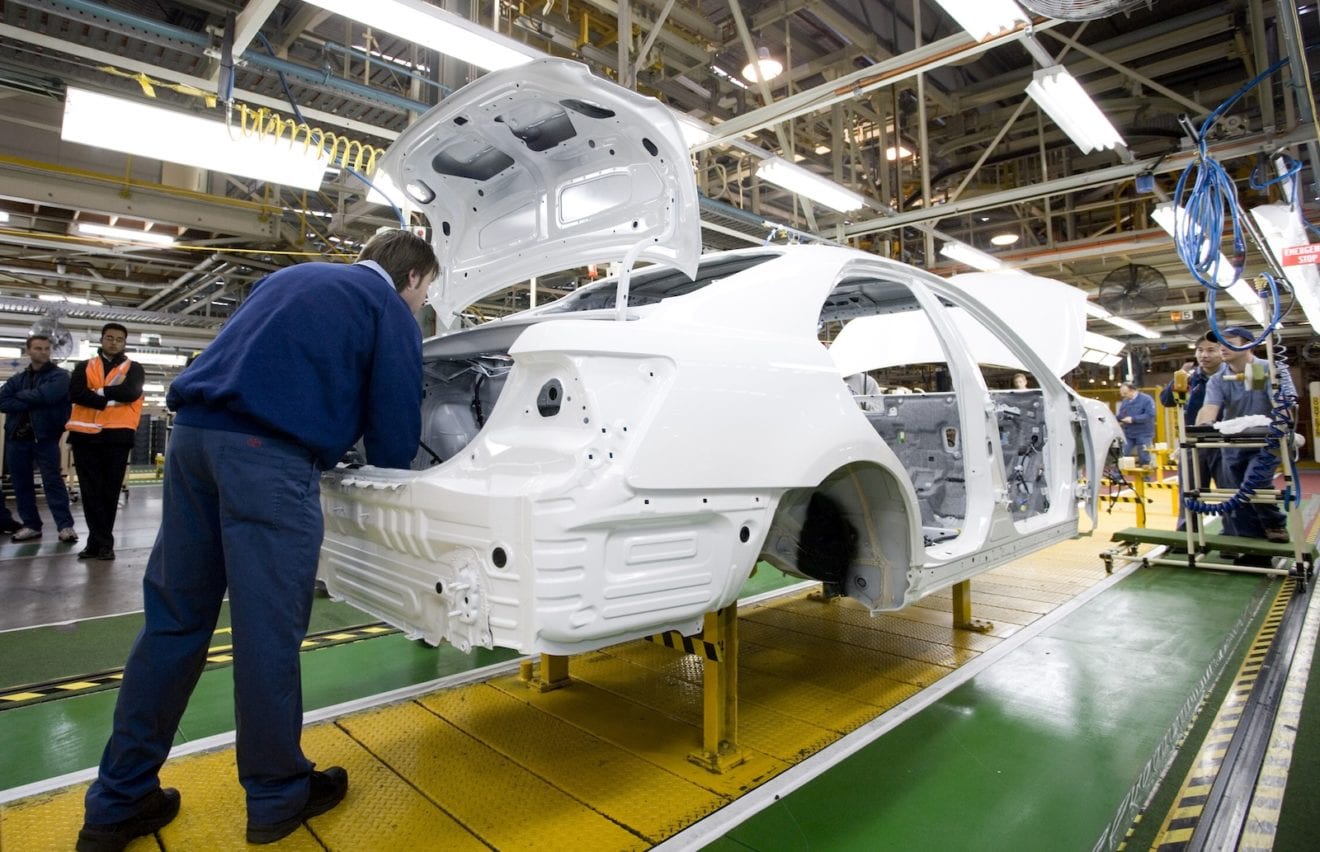
    Subaru of Indiana Automotive unveiled its new Subaru Ascent, which will be manufactured at the automaker’s assembly plant in Lafayette, Indiana. To support the increased production, the company plans to create up to 200 new jobs by 2018.

    As an incentive, Indiana Economic Development Corporation offered Subaru of Indiana Automotive Inc up to $500,000 in training grants based on the company’s job creation plans. These incentives are performance based, meaning until Hoosiers are trained, the company is not eligible to claim incentives. The city of Lafayette and Tippecanoe County support this project.

    “The Subaru Ascent is a great addition to our production mix,” said Tom Easterday, Senior Executive Vice President of SIA. “This great new family vehicle allows us to create hundreds of new jobs at SIA, and also at our suppliers in Indiana and across the country.”

    The company, which is a subsidiary of Subaru Corporation and is the company’s only assembly plant outside Japan, will invest more than $140 million to purchase new machinery and equipment to add production of the Subaru Ascent in 2018 to meet the growing demand for mid-level vehicles in North America. The all-new Subaru Ascent is a three–row crossover vehicle that has the capacity to hold seven or eight passengers.

    SIA currently employs more than 5,600 associates at its location in Indiana and will produce approximately 400,000 vehicles in 2018, including the Subaru Legacy, Impreza, Outback and Ascent. Since the start of the company’s production 30 years ago, the facility has produced more than five million vehicles.

    “Today we witness Subaru’s continued commitment to Indiana as the company unveils the all-new Subaru Ascent and announces its plans to create more jobs for Hoosiers,” Governor Eric J. Holcomb said. “For 30 years, Subaru has spurred economic growth and I’m confident they will witness continued success as we work to take Indiana to the next level by growing our economy and developing the skills of our workforce.”

    “We are pleased that the IEDC recognizes the value that SIA brings to our community,” said Lafayette Mayor Tony Roswarski. “As one of the area’s largest employers, SIA has established itself as a company who offers jobs that can translate to lifetime careers, with tangible and lasting benefits directly impacting quality of life.”

  • Toyota’s November China vehicle sales dip 1.3 pct

    Toyota’s November China vehicle sales dip 1.3 pct

    Toyota Motor’s sales in China fell 1.3 percent in November from a year earlier to 109,600 vehicles, following a 13.5 percent gain in October, the company said on Tuesday.

    The Japanese automaker’s sales during the first 11 months of the year totaled 1.18 million vehicles, up 7.5 percent from the same period a year ago.

  • Tesla cranks up big battery in Australia

    Tesla cranks up big battery in Australia

    Tesla has completed construction of the world’s largest lithium ion battery in Australia, putting it on track to meet a 100-day deadline for switching the battery packs on, the South Australian government said on Thursday.

    Tesla won a bid in July to build the 129 megawatt hour battery for South Australia, the country’s most wind power-dependent state, with a vow from Chief Executive Elon Musk to install it within 100 days of signing a grid connection agreement or give it to the state for free.

    When the grid connection deal was signed on Sept 29, Tesla was already half way through installing the battery packs.

    The Tesla Powerpacks have now been fully installed at a wind farm run by France’s Neoen, and testing is set to begin to provide grid security services in South Australia.

    “While others are just talking, we are delivering our energy plan, making South Australia more self-sufficient, and providing back up power and more affordable energy for South Australians this summer,” state Premier Jay Weatherill said in a statement.

    The state has yet to say how much it would pay for the battery, which is part of a AUS$510 million (US$390 million) plan that includes diesel-fired generators to help keep the lights on following a string of blackouts over the past 18 months.

    Australia’s energy market operator has warned that power supply will be tight this summer, particularly in South Australia and neighboring Victoria, where one of the market’s biggest coal-fired power plants was shut in March.