Category: Automotive

Retail News Asia is committed to providing both local and global retailers with the latest Auto and Car news throughout the Asian market. This on a daily base.

  • Continental Named as CES 2017 Innovation Awards Honoree

    Continental Named as CES 2017 Innovation Awards Honoree

    International automotive supplier and technology company Continental today announced that is has been named a CES 2017 Innovation Awards Honoree in the Vehicle Intelligence category for its Short Range Radar with Trailer Merge Assist and Trailer Length Detection technology. Products entered in this prestigious program are judged by a preeminent panel of independent industrial designers, independent engineers and members of the trade media to honor outstanding design and engineering in cutting edge consumer electronics products across 28 product categories.

    “Technologies that are selected as CES Innovation Honorees demonstrate an incredible level of innovation and engineering in an industry where the bar is set remarkably high,” said Samir Salman, CEO of Continental, North America. “Continental is honored to receive this award which exemplifies our commitment to safety by engineering leading automotive technologies.”

    Continental’s state-of-the-art Short Range Radar with Trailer Merge Assist and Trailer Length Detection is a “black box” sensor mounted in the rear/side area of the vehicle. The radar uses intelligent sensing with a new software feature allowing for the blind spot detection to be enhanced and extended by sophisticated object tracking, measurement and length detection algorithms allowing for the extended warning.

    “The intelligent radar detects the trailer, automatically measures its length and extends the warning zone to the area beyond the trailer,” said Lutz Kuehnke, Head of Advanced Driver Assistance Systems, Continental, North America. “These features reduce the risk of accidents and increases driver confidence while towing and merging a vehicle with a trailer.”

    This is the first blind spot warning system that allows a driver to enjoy the function without driver input even while towing a trailer. Systems without this feature either disable the warning while towing a trailer or experience unintended or false warnings from the trailer.

    The Short Range Radar is just one environmental sensor within Continental’s comprehensive product portfolio of future-oriented advanced driver assistance systems (ADAS). Continental offers ADAS safety products and functions, as well as system solutions for assisted and automated driving including Long Range Radar, Camera, Surround View, High Flash 3-D Lidar and electronic control units.

    Continental’s Short Range Radar with Trailer Merge Assist and Trailer Length Detection will be displayed at CES 2017, which runs January 5-8, 2017, in Las Vegas.

    The prestigious CES Innovation Awards are sponsored by the Consumer Technology Association (CTA)™, the producer of CES 2017, the global gathering place for all who thrive on the business of consumer technologies, and have been recognizing achievements in product design and engineering since 1976.

    Entries are evaluated on their engineering, aesthetic and design qualities, intended function and user value, unique features present and how the design and innovation of the product directly compares to other products in the marketplace. Products chosen as CES Innovation Honorees reflect innovative design and engineering in some of the most cutting edge tech products and services coming to market.

    CES 2017 Innovation Honoree products are featured on CES.tech/Innovation.

    Continental at CES

    Visit Continental at CES 2017, Thursday, January 5 through Sunday, January 8, at North Hall Booth #3128. Continental will also showcase its latest automotive innovations and technologies in a private exhibit at the Renaissance Hotel. An invitation only media event has been scheduled on January 5. Please contact Mary Arraffor details.

  • Porsche Customers Most Satisfied Overall

    Porsche Customers Most Satisfied Overall

    The Porsche brand has ranked highest among all nameplates, according to the latest J.D. Power 2016 U.S. Sales Satisfaction Index (SSI) Study released today. The brand also placed higher than all other luxury manufacturers for the second consecutive year. Porsche improved upon its 2015 standing by 72 points to capture the overall ranking for the second time in the 30-year history of the SSI Study.

    The SSI Study measures satisfaction with the sales experience among new-vehicle buyers and rejecters — those who shop a dealership and purchase elsewhere. Buyer satisfaction is based on four measures: working out the deal (25%); salesperson (19%); delivery process (16%); and facility (15%). Porsche ranked highest among all automotive brands across all four categories. Rejecter satisfaction is based on five measures: salesperson (10%); fairness of price (4%); experience negotiating (4%); facility (3%); and variety of inventory (3%). Porsche improved this year in the areas of price, facility and inventory.

    “Customer satisfaction is our highest priority in our endeavor to deliver a unique and rewarding Porsche experience,” said Klaus Zellmer, President and CEO, Porsche Cars North America, Inc. “We pride ourselves on building exciting and innovative sports cars, but our success is ultimately measured by the approval and appreciation of our customers. I would particularly like to thank our dealer partners who have made it their mission to provide a benchmark experience for their clients who are purchasing a Porsche.”

    The 2016 SSI Study is based on responses from 28,979 buyers who purchased or leased their new vehicle in April or May 2016. The study is a comprehensive analysis of the new-vehicle shopping and purchasing experience and measures customer satisfaction at U.S. dealerships.

  • Sales nosedive at Indonesia Motorcycle Show

    Sales nosedive at Indonesia Motorcycle Show

    Despite attracting more visitors than the last event, this years’ edition of the Indonesia Motorcycle Show (IMOS) failed to record higher transactions following the event’s closing on Sunday.

    According to data released by IMOS organizers, the biennial event, which ran from Nov. 2 to 6, attracted 90,186 visitors, a slight increase of 0.48 percent compared to the 89.751 visitors that attended the event in 2014. This year, only 751 motorcycle units were sold during the event, with a transaction value of Rp 19.39 billion (US$1.48 million), down by almost half compared to the Rp 35.7 billion booked in 2014 from the sales of some 1,500 motorcycle units.

    Responding to the decline, Indonesian Motorcycle Industry Association (AISI) chairman Gunadi Sindhuwinata said the market was not in the best condition this year. He, however, said industry players were optimistic motorcycle sales would bounce back with the improvement of the economy.

    “In the next 10 to 20 years, the [motorcycle] sales can still see growth because the public still needs affordable transportation options,” he said on Monday.

    He added that the performance indicator of the show was not measured only by the number of transactions but also the ability of the show to inform the public of the latest technology.

    In general, the motorcycle market is getting smaller. AISI data show that during January to September, sales dropped by 9.74 percent year-on-year (yoy) to 4,351,397 units. This year, the association set a sales target of 6.5 million motorcycles, a minor increase from the 6.4 million sold last year.

    Agus Nurudin, the managing director of the Indonesian unit of global marketing research firm Nielsen, said based on the company’s latest consumer confidence poll, Indonesian customers had become more rational and had slashed their spending on tertiary goods, including gadgets and vehicles, amid the weak economy.

  • Volvo recalls vehicles in US, Canada for seat belt problem

    Volvo recalls vehicles in US, Canada for seat belt problem

    Volvo is recalling about 79,000 cars and SUVs in the US and Canada because the front passenger seat belt may not hold people in a crash.

    The recall covers certain S60, S90, V60, XC60 and XC90 vehicles from the 2016 and 2017 model years.

    Volvo says in government documents that a buckle stud can come loose, allowing the buckle to separate from a bracket. If that happens, the belt may not hold the front passenger in a crash. The company said Wednesday it has no reports of injuries. It does not expect to find any loose studs but says it’s recalling the vehicles as a precaution.

    Dealers will replace the buckle if needed at no cost to owners starting December 12.

    Volvo began investigating the problem after getting reports of buckle failures starting in August. It traced the trouble to cars made from February 16, 2015, to August 22, 2016

  • Honda plans North American production shifts to make more SUVs

    Honda plans North American production shifts to make more SUVs

    Honda Motor Co is shifting around its North American vehicle production mix and may raise imports from Japan to squeeze out more SUVs as it struggles to keep up with strong U.S. demand for larger models, a factor which has prompted the automaker to trim its annual sales forecast.

    From early next year, Honda will dedicate production at its Alabama plant to its Pilot SUV, Ridgeline pick-up truck and Odyssey minivan, shifting production of its luxury Acura MDX SUV to its plant in Ohio as part of efforts to align its overall production of popular models to better reflect market demand.

    Demand for multi-tasking vehicles from cost-conscious consumers and historically low gasoline prices have ramped up demand for SUVs and other larger models over that of passenger cars.

    So far this year, roughly 59 percent of all new vehicles sold in the world’s No.2 auto market have been light trucks, versus 41 percent passenger vehicles, compared with 55 percent and 45 percent, respectively, a year earlier.

    In comments scheduled for release on Thursday, American Honda Motor Co CEO Toshiaki Mikoshiba told reporters that by also shifting more production of its popular CR-V model to its Indiana plant from Mexico, and producing more of its HR-V models in Mexico, the company planned to lift its production weighting between light trucks and passenger cars more in favor of light trucks, from an even balance currently.

    “While maintaining our current overall capacity (in North America), we’d like to also consider our production options in Japan … to produce more light trucks to respond to strong demand,” Mikoshiba said.

    “So long as we don’t see a sudden reversal in gasoline prices, we believe this would be the right move for the market.”

    Japan’s third-largest automaker by vehicle sales also said that it was considering producing the CR-V and the Civic sedan in Japan to be exported to North America to fill any gaps in local production.

    Honda is planning to market the recently revamped Civic in Japan, which a company spokeswoman said would add to production capacity, while it is also considering marketing the latest CR-V at home.

    Last month, Honda lowered its annual North American vehicle sales forecast to 1.985 million, from its previous expectation for 1.990 million, due in part to the skew in market demand.

  • VW’s Skoda Auto says October deliveries grew 10.6 percent

    VW’s Skoda Auto says October deliveries grew 10.6 percent

    Global deliveries of Skoda Auto, the Czech unit of Volkswagen, grew by 10.6 percent to 97,900 vehicles in October, boosted by growing sales in China and Europe, the company said on Thursday.

    In the January-October period, Skoda said sales had grown by 6.7 percent to 938,800 units.

    The company, the biggest Czech exporter, sold 1.06 million cars in 2015, the second year in a row it topped the 1 million mark.

  • Toyota says production of C-HR model begins in Turkey

    Toyota says production of C-HR model begins in Turkey

    Toyota Motor Corp launched production in Turkey on Wednesday of its C-HR compact SUV crossover and said the model would be exported to all global markets including North America.

    In a statement, Toyota said production was beginning with an initial investment in Turkey of 350 million euros ($390 mln).

  • China October vehicle sales rise 20% at 2.2 million

    China October vehicle sales rise 20% at 2.2 million

    Passenger vehicle sales in China to retail customers rose 20 percent in October from a year earlier, the China Passenger Car Association (CPCA) said on Tuesday.

    Auto retail sales totalled 2.2 million vehicles in October, CPCA said in a statement on its website. For January-October, passenger car sales rose 15.2 percent versus the same period in 2015, it said.

    The China Association of Automobile Manufacturers, whose statistics are generally viewed as the benchmark for the industry, is due to report wholesale data for October on Thursday.

    The CPCA predicted 13 percent growth in passenger car sales for 2016, state media reported earlier on Tuesday.

  • Japan auto parts firm Usui settles U.S. price-fixing allegations

    Japan auto parts firm Usui settles U.S. price-fixing allegations

    Japanese auto parts maker Usui Kokusai Sangyo Kaisha Ltd will plead guilty and pay a $7.2 million fine for fixing the prices of steel tubes sold to car makers, the U.S. Justice Department said on Tuesday.

    Usui worked with other manufacturers to set prices and allocate customers for their steel tubes, which are used in fuel distribution, braking and other automotive systems, the Justice Department said.

    The department said a total of 47 companies and 65 people have pleaded guilty or been charged with price fixing of auto parts during its long-running probe of the industry.

    Attempts to reach Usui Kokusai Sangyo Kaisha were unsuccessful.

  • Tesla buys Grohmann Engineering to help ramp up electric car production

    Tesla buys Grohmann Engineering to help ramp up electric car production

    Electric carmaker Tesla Motors Inc has agreed to buy Germany’s Grohmann Engineering GmbH, which develops automated manufacturing systems for batteries and fuel cells, as the California-based company seeks to expand its production more than sixfold by 2018.

    Unlisted Grohmann Engineering, based in Pruem, Germany, helped Tesla rivals Daimler and BMW build production facilities for electric car batteries.

    Tesla is seeking to raise its global manufacturing capacity to 500,000 vehicles in 2018 from an expected production rate of about 80,000 this year. Its main production facility is in Fremont, California.

    “To date, we have increased the production rate at our Fremont Factory by 400 percent in four years, and we expect this acquisition to accelerate that growth rate,” Tesla said in a blogpost.

    Following the acquisition, which still needs to be approved by the cartel authorities in Germany, several elements of Tesla’s automated manufacturing systems will be designed and produced in Pruem, close to Germany’s border with the Netherlands and Luxembourg.

    The deal, whose financial terms were not disclosed, is expected to add over 1,000 engineering and skilled technician jobs in Germany over the next two years Tesla said in its blog. Grohmann currently has around 700 employees.

    Tesla agreed on Sunday to buy a 74.9 percent stake from company founder and majority owner Klaus Grohmann, and a further 25.1 percent stake belonging to private equity firm Deutsche Beteiligungs AG (DBAG), DBAG said in a statement on Tuesday.

    DBAG said it expected to earn in the mid single-digit million euro range by selling its stake in Grohmann and that Grohmann had revenues of 123 million euros ($136 million) in 2015.

    DBAG said Grohmann had developed production lines for battery cells and batteries for “numerous” German and international automobile manufacturers. Grohmann was also specialized in the industrial production of fuel cells, DBAG said, and was active in the electronic and semiconductor industries as well as the biotechnology and medical technology sectors.

    Grohmann Engineering will be renamed Tesla Grohmann Automation after the deal and will serve as the initial base for Tesla Advanced Automation Germany with other locations to follow, Tesla said.

    The deal is expected to close next year.

  • Nissan expects sales growth to slow in China, U.S. in near term

    Nissan expects sales growth to slow in China, U.S. in near term

    Nissan Motor Co Ltd on Monday said its sales growth in the world’s two biggest auto markets is likely slow in the near term as consumer tax breaks end in China while U.S. tastes move away from the automaker’s main area of focus.

    Japan’s second-biggest automaker by sales, which earlier blamed a strong yen for a 19 percent drop in second-quarter profit, made the comments after growth in Chinese and North American retail vehicle sales outperformed many markets in April-September.

    Sales in China in the six-month period grew 3.8 percent from a year prior, and Nissan’s head of operations in the country, Jun Seki, expects double-digit sales growth for calendar 2016, aided by economic incentives aimed at stimulating demand.

    “But as the government’s small-car subsidies wind down at the end of the year, we’re expecting to see a slowdown in sales early next year, and see single digit growth for the year,” Seki told reporters at Nissan’s Yokohama headquarters via telephone.

    Nissan also said recent growth in China’s auto market was due mainly to rising demand for local brands. In response, the automaker said it would further promote its China-only Venucia brand.

    The automaker sells almost a quarter of its output in China, and around 40 percent in North America.

    Its North American retail vehicle sales rose 5.4 percent in April-September. But it said demand growth was peaking and that any additional growth had been limited by its dependence on sales of sedans, at a time when low fuel prices had boosted demand for petrol-guzzling sport utility vehicles.

    Aggressive buying incentives for its sedans had also crimped profit margins, Nissan said.

    The automaker on Monday nevertheless kept its operating profit forecast at 710.0 billion yen ($6.80 billion) for the year through March, down 10.5 percent from a year prior, and said it continues to expect sales of 5.6 million vehicles.

    It also said it still expects the domestic currency to average 105 yen to the U.S. dollar and 120 yen to the euro.

    Earlier, Nissan said yen strength was responsible for July-September operating profit falling 19 percent to 163.9 billion yen – a result that still beat the 154.5 billion yen average of 10 estimates from analysts surveyed by Thomson Reuters I/B/E/S/. For April-September, profit fell 14 percent.

    Nissan raised its exposure to the strong yen at the start of the business year in April as it has been exporting its Rogue SUV crossover model from Japan to North America to meet demand.

  • BMW warns profits under pressure as car margins slip

    BMW warns profits under pressure as car margins slip

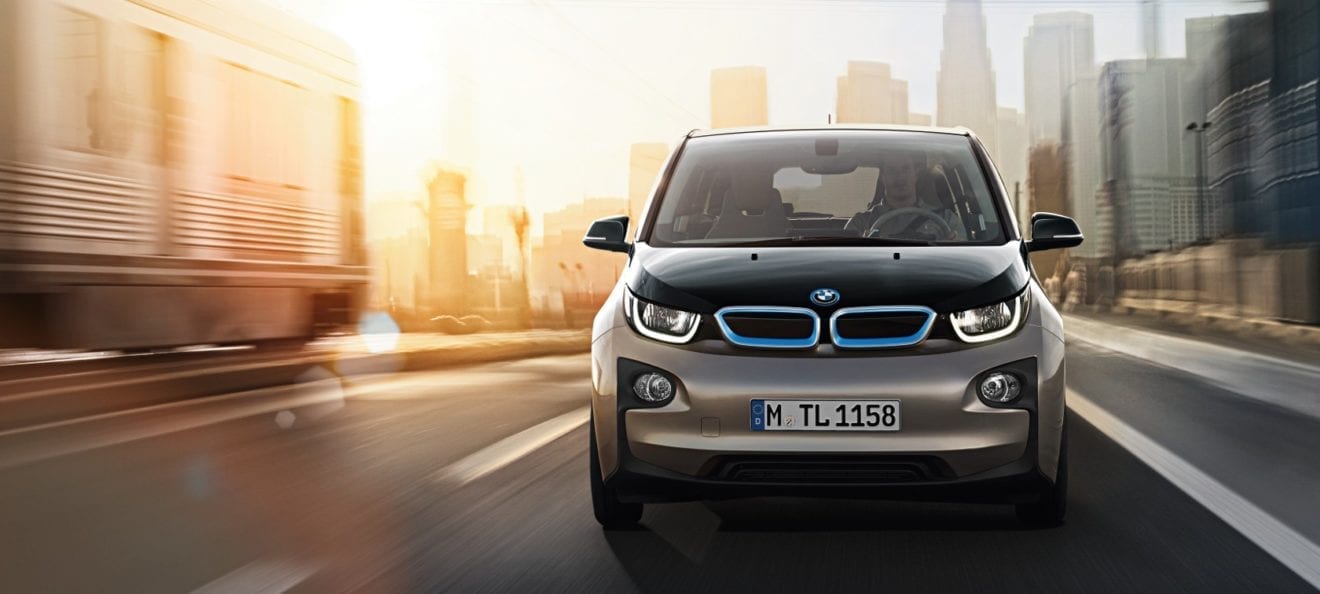
    BMW’s profit margins on cars fell in the third-quarter, hit by spending on more engineering staff and new electric car technologies against a backdrop of stiffer price competition in the U.S. luxury car market.

    BMW and its rivals are struggling to maintain profit levels amid heavy investment in new technology including electric and self-driving cars, cleaner diesel engines as well as new ride-hailing business models to rival Uber.

    The Munich-based carmaker reiterated its full-year target of a slight increase in group pretax profit but warned that margins would remain under pressure due to continued investment.

    “Costs generally rise towards the end of the year so we expect this to have a dampening effect on earnings,” Chief Financial Officer Friedrich Eichiner told analysts on a call on Friday to discuss BMW’s results.

    “Capital expenditure will also be higher in the last three months of the year, mainly due to the start of production and ramp-up of the new BMW 5 Series,” Eichiner said, adding that research and development spending would remain high into 2017.

    While sales of BMW, Mini and Rolls-Royce cars rose 7.1 percent in the quarter ending in September, the return on sales at BMW’s core automotive division fell to 8.5 percent from 9.1 percent a year earlier.

    By contrast, archrival Mercedes-Benz Cars’ (DAIGn.DE) third-quarter operating margin was 11.4 percent while Audi’s was 6.9 percent for the first nine months of the year.

    BMW’s shares took a hit in early trading, but had recovered by late afternoon to trade unchanged at 1530 GMT, outperforming German blue-chips .GDAXI which were 0.8 percent lower overall.

    BMW said the dip in automotive profits was mainly attributable to higher personnel expenses as staff numbers rose 3.6 percent, along with changes in the mix of vehicle models sold.

    Customers are migrating to less profitable smaller sport utility vehicles (SUVs) while BMW’s popular 5-series is at the end of its lifecycle and competing with a brand new Mercedes-Benz E-class.

    BMW said sales in the United States, a market where sales of highly profitable large sport utility vehicles has been strong, had fallen 3.6 percent in the quarter.

    “Pricing remains a challenge in North America in particular,” Eichiner told analysts.

    The more competitive sales environment has already forced German premium auto maker Audi to cut its sales forecast for the year and to warn that its operating margin would remain below its 8 to 10 percent target range this year.

    BMW said it plans to keep the return on sales at its automotive division between 8 and 10 percent, a goal it has achieved for the last 26 quarters in a row.

    At a group level, BMW said third-quarter earnings before interest and taxes (EBIT) were 2.38 billion euros ($2.6 billion), in line with a 2.37 billion consensus forecast in a Reuters poll and little changed from 2.35 billion last year.

    The group benefited from a profit boost from its financial services business and a gain from derivatives hedging.

    “Operational performance on a group level came in as expected but for automotive below expectations,” DZ Bank analyst Michael Punzet said in a note on Friday.

  • Singulato is China’s latest e-car newcomer to rev up with big fundraising

    Singulato is China’s latest e-car newcomer to rev up with big fundraising

    Little-known Chinese electric car start-up Singulato Motors is expected to say this week it raised around $600 million in a second fundraising – the latest such move illustrating China’s headlong ‘gold rush’ into all-electric battery cars.

    The apparent ease with which Chinese electric car start-ups can raise new funds is largely down to government subsidies and favorable policies. Subsidies can total around 110,000 yuan ($16,285) a car, or around a third of the sticker price of a model such as the BYD e6.

    While China today is reminiscent of Detroit in the early 20th century, with a host of new car makers arriving on the scene, Beijing is expected to phase out subsidies from 2020 – potentially crushing the start-ups’ survival rate.

    China has made a priority of making smart, connected electric cars. Entry barriers are relatively low, and Beijing sees the sector as a way for its auto industry to challenge, and even overtake, established global automakers, several of which have instead focused more on cleaner hydrogen fuel cell propulsion technology.

    Shen Haiyin, Beijing-based Singulato’s 42-year-old co-founder and CEO, says his company has raised about $700 million in total, much of it from an investment fund run by the municipal government of Tongling City in Anhui province as part of a “strategic partnership”.

    Tongling city mayor Ni Duping said the decision to invest in Singulato is part of a strategy to promote the new energy automotive industry. “We believe this effort will definitely allow Tongling to accelerate the city’s industry transformation,” he said in a statement.

    The company plans to invest in technology and build what Shen says will be a state-of-the-art electric vehicle (EV) production plant in Tongling capable of making 200,000 cars a year, by around 2020.

    The two-year-old start-up, with 140 employees, plans to roll out its first product, a crossover sport utility vehicle, by late next year or early 2018. Production will be outsourced, at least initially, to an existing automaker with excess manufacturing capacity, Shen said.

    “We’re targeting our EVs at young city dwellers in Beijing, Shanghai, Shenzhen and other large cities where buying a gasoline car is becoming more difficult because of purchase restrictions imposed by the government,” Shen told Reuters in his modest office.

    “If they buy an EV, they could buy a car immediately as EVs are exempt from purchase restrictions. Tech-savvy young people are naturally going to gravitate toward EVs.”

    Battling road congestion and air pollution, more Chinese cities are restricting new vehicle purchases – holding auctions and lotteries to sell a limited number of license plates. In Beijing, drivers of gasoline cars are barred from driving on one weekday per week. All-electric battery cars and heavily electrified plug-in hybrids are usually exempt.

    EASY MONEY

    Singulato’s fundraising follows an around $1 billion financing deal for another Chinese EV start-up WM Motor, again largely involving a municipal government.

    Other well-funded Chinese electric car start-ups include Future Mobility, LeEco’s LeSee, Next EV, Ch-Auto’s Qiantu Motor, and Changjiang Auto, as well as U.S.-based Chinese-funded start-ups Atieva and Faraday Future.

    LeSee, which aims to launch an all-electric luxury car, for example, raised more than $1 billion in a latest financing, mostly from Chinese investors including state-owned enterprises and a local municipality.

    Some 289,000 ‘new energy’ vehicles, including all-electric battery and plug-in electric vehicles, were sold in China in January-September. Full-year sales are likely to fall well short of a 700,000 target, according to a top official at the China Association of Automobile Manufacturers.

    MOVING IN-HOUSE

    Singulato’s Shen, who made his money as a tech entrepreneur in Tokyo, plans to aim straight for the electric car mass market rather than follow Tesla Motors’ model of first making a high-profile electric battery super sports car to stir up buzz around a new brand.

    Shen declined to elaborate on his pricing strategy beyond saying his cars would compete on price with Tesla’s $35,000 Model 3.

    For its first model, Singulato has developed in-house the electric propulsion and smart, connected systems, while doors, seats, panels and other basic parts were outsourced to Beijing-based IAT Automobile Technology Co.

    For future models, Singulato plans to design, develop and manufacture more on its own, and has been scouting global automakers for talent.

    “Compared to gasoline cars, EVs don’t have complex mechanical systems like the engine and transmission. They’re much easier to engineer and manufacture,” Shen said.

    “We think an even bigger differentiator will be how connected and intelligent the car is going to be, and we’re focusing on that more than the car itself.”

  • Potential bidders for Takata may balk at GM bankruptcy precedent

    Potential bidders for Takata may balk at GM bankruptcy precedent

    As auto supplier Takata Corp (7312.T) prepares for a possible U.S. bankruptcy filing, potential bidders are poring over a recent U.S. court ruling that could expose a buyer to liability for the company’s defective air bags, sources have told Reuters.

    Takata faces potentially billions of dollars in costs from the world’s largest automotive recall, stemming from millions of its air bags that were equipped with malfunctioning inflators.

    The Japanese company has said it is seeking a financial backer. But interested bidders, if the parts maker goes up for sale, want Takata to put its U.S. business into bankruptcy first, the sources said.

    Generally, U.S. bankruptcy law allows a bidder to buy assets free and clear of lawsuits and other liabilities, and the selling company uses the money to repay its creditors.

    General Motors used the strategy when it filed for Chapter 11 bankruptcy in 2009. The automaker quickly sold its best assets to a so-called “new GM,” scrubbed free of billions of dollars of debt, which enabled the company to withstand an economic crisis.

    In July, the 2nd U.S. Circuit Court of Appeals in Manhattan held that General Motors Co (GM.N), the “new GM,” could be sued over faulty ignition switches made by “old GM.”

    The ruling set what some see as a troubling precedent.

    “What that says to me: buyer beware,” said Henry Jaffe, a bankruptcy lawyer with Pepper Hamilton in Wilmington, Delaware who represents debtors and creditors. Jaffe said the ruling could undercut what bidders are willing to pay for Takata.

    Takata’s air bags use a chemical compound that can explode with excessive force after prolonged exposure to hot conditions and have been linked to at least 16 deaths globally, mainly in the United States. About 100 million Takata air bag inflators have been classified as defective, leading to continuing safety recalls.

    Last month, the company received proposals from five bidders, all of whom have presented plans that require Takata to file for a GM-style bankruptcy protection.

    Takata’s creditors include automakers who want to be reimbursed for millions of dollars spent on recalls. They may also demand that any buyer of Takata’s assets share in some of those costs. The automakers could also try to use the tools of bankruptcy to protect themselves from lawsuits by car owners for the faulty air bags, according to bankruptcy attorneys.

    The U.S. government is also likely to play a role. Takata is operating under a five-year, $200 million consent decree with the U.S. National Highway Traffic Safety Administration.

    Given the uncertainties, bidders could propose using “holdback,” bankruptcy lawyers said. Some sale money would remain in escrow and be used to settle any unanticipated legal claims against the buyer. Over time, unused money would be released to the Takata bankruptcy estate.

    Takata and its creditors would likely resist a holdback, lawyers said.

    In Japan, Takata Chief Financial Officer Yoichiro Nomura told reporters on Friday that the company hoped to reach an agreement with its automaker customers on a restructuring by year end. He said the company preferred to avoid bankruptcy.

    Takata has posted a net loss in three of the past four financial years, but it remains one of the auto industry’s biggest suppliers of air bag systems. The company is also one of the world’s top seatbelt producers, and makes steering wheels, electronic control units and child safety seats.

    ‘GIVE A BUYER HEARTBURN’

    To get a sale approved quickly, a Takata buyer may have to assume some legal obligations, an approach used by “new GM” which took on 15 categories of liabilities.

    “That will give a buyer heartburn,” said Bill Weintraub at Goodwin Procter in New York, who worked with ignition switch plaintiffs on the GM appeals court case.

    GM has said it plans to ask the U.S. Supreme Court to review the July ruling, which it said wrongly punishes it, the buyer, for mistakes made by “old GM,” the seller. The company and business groups have argued that the ruling, if allowed to stand, will depress the value of assets that are sold in bankruptcy.

    Those who are close to GM and Takata are quick to point out the situations of the two companies differ in key ways.

    Takata’s air bags have been subject to headline-grabbing recalls for years. By contrast, GM knew its ignition switches were faulty when it introduced them in 2002 but concealed the problem until 2014, five years after its bankruptcy sale.

    Because of the concealment, the court of appeals reasoned that GM’s customers had been denied the opportunity to object or file a claim over the ignition switch defects as part of GM’s bankruptcy and sale. To remedy the lack of notice, the court said car owners could pursue a class action against the buyer of GM rather than the bankruptcy estate.

    Takata’s notoriety could work to the advantage of bidders, ensuring potential claims have been identified.

    “You have a known problem,” said bankruptcy lawyer Ed Weisfelner, who also represented some ignition switch plaintiffs in the GM appeal case.

    The GM ruling only binds U.S. Bankruptcy Courts in one of 11 U.S. judicial circuits, and Takata may look to other courts.

    In its appeals case, GM cited precedent in the 3rd U.S. Circuit, which it said is more protective of buyers in bankruptcy sales.

    Takata’s main U.S. subsidiary, Michigan-based TK Holdings Inc, is incorporated in Delaware, giving the company access to the state’s prominent bankruptcy court and 3rd U.S. Circuit precedent.

    “Any bankruptcy judge will be really nervous about this one,” said John Pottow, a professor at University of Michigan Law School who specializes in bankruptcy.

  • Japanese manufacturers pitch new products at Indonesia motorcycle show

    Japanese manufacturers pitch new products at Indonesia motorcycle show

    Japanese motorcycle manufacturers are promoting their products at the Indonesian Motorcycle Show 2016 in Jakarta, with Suzuki Motor Corp. using the biennial event to unveil its latest models.

    Suzuki took the wraps off the GSX-R 150 and GSX-S 150 sport motorcycle models at the five-day show, which runs until Sunday, giving the Indonesian public an opportunity to see its latest products before their official launch in the first half of 2017.

    “We are very proud to introduce the GSX-R 150 and GSX-S 150 for the first time in the world,” Kazumasa Watanabe, manager of Suzuki’s motorcycle marketing group for the Association of Southeast Asian Nations, said at the show Wednesday.

    He described the Suzuki GSX-RR technology, on which the new models are based, as the company’s “highest achievement” in the GSX series that helped Suzuki win the 12th round of MotoGP, the world’s most prestigious motorcycle race, in Britain on Sept. 4.

    Kawasaki Heavy Industries Ltd. also unveiled its Kawasaki Ninja 650, while Honda Motor Co. released the prices of its All New Honda CBR250RR, introduced last July, which are $4,900 for the standard model and $5,300 for the model equipped with an anti-lock braking system.

    In the scooter category, Yamaha Motor Co. introduced the three-wheeled Tricity 155 in Indonesia after it was launched globally five months ago.

    Indonesia’s three-wheeler market is still very new, but Mohammad Masykur, assistant general manager for marketing at PT Yamaha Indonesia Motor Manufacturing, was optimistic about its future.

    “The presence of Tricity in Indonesia will give a new color to the Indonesian automotive world,” he said, adding that the company’s “Leaning-Multi Wheel technology will make a difference on the Indonesia road.”