Category: Automotive

Retail News Asia is committed to providing both local and global retailers with the latest Auto and Car news throughout the Asian market. This on a daily base.

  • Tata Motors Jaguar Retail sales up 70% at 17640 units

    Tata Motors Jaguar Retail sales up 70% at 17640 units

    Jaguar Land Rover, the UK’s leading manufacturer of premium luxury vehicles, today reported its best ever September retail sales of 61,047 vehicles, up 28% compared to September 2015. The month’s performance has been driven by strong sales of the Land Rover Discovery, Discovery Sport, the Range Rover Evoque and the Jaguar F-PACE, as well as solid sales in China.

    Jaguar Land Rover delivered solid retail sales growth across all key regions year on year, with China up 50%, Europe up 32%, UK up 30%, North America up 23% and other overseas markets up 3%. Jaguar Land Rover sold 434,025 vehicles in the first nine months of 2016, 24% up on the same period in the prior year.

    Commenting on the performance, Andy Goss, Jaguar Land Rover Group Sales Operations Director said, “September is always an important month for the automotive industry and we are proud of our results. Performance was strong in China and Europe, where collectively we sold almost 23,000 cars this month alone.

    “With the new Discovery launched in Paris this month and sales starting for the first locallybuilt Jaguar in China – the XFL, our British line-up continues to expand and delight in markets across the world.”

    Jaguar recorded its best September ever, with retail sales reaching 17,640 vehicles, up 70% on the previous year, reflecting the strong launch of the F-PACE as well as continued solid sales of the XE. Calendar year-to-date sales for Jaguar were 103,366 up 72% year-on-year.

    Land Rover strengthened its position as a world-leading manufacturer of all-terrain SUVs, with its strongest ever September sales of 43,407 vehicles, up 17% year-on-year. The strong sales were led by the Discovery Sport, retailing 12,838 vehicles, up 50% compared to last September, and Range Rover Evoque retailing 11,761 vehicles, up 53%. Calendar year-to-date sales for Land Rover reached 330,659 vehicles, 14% up on the prior year.


  • Toyota with Daihatsu gets ready to enter small-car market

    Toyota with Daihatsu gets ready to enter small-car market

    The world’s largest carmaker, Toyota Motor, is finally getting ready to enter the Indian small-car market and challenge the dominance of Maruti Suzuki and Hyundai Motor in their bread-and-butter segment. The Japanese automaker and its unit specialising in small cars, Daihatsu Motor, are expected to drive in a new range of vehicles to India starting 2020-2021.

    A few days ago, Toyota and its fully owned Daihatsu unit announced plans to establish an internal company that will be responsible for compact vehicles for emerging markets, from product planning to production preparation. India is an integral part of this move. The structure of this new internal company is likely to be formed by January, 2017.

    The groundwork has already been done through various studies commissioned over the years, said people in the know of the plans. The Toyota-Daihatsu combine will target the A and B segments, where vehicles are typically priced below Rs 10 lakh. This segment, where Toyota currently has only a limited presence here with the Etios range, is the mainstay for Maruti and Hyundai Motor India.

    The branding for the products is yet to be defined. The new cars under the venture may be branded Toyota or Daihatsu, or it could be an all-new brand in line with how Toyota introduced a ‘Scion’ brand in North America in 2003 — the brand was discontinued this year.

    Through the proposed internal organisation, the objective is to develop and launch competitive compact vehicles in emerging markets based on Daihatsu’s approach to manufacturing affordable, high-quality products. While the small car champion will take the lead responsibility in this new initiative, in India, it will seek to gain from the parent’s understanding of the market.

    Vikram Kirloskar, vice chairman of Toyota Kirloskar, the Indian unit of Toyota, told ET that the initial target of the new company would be Asian countries and that joint decisions would be made to enable the effective use of both companies’ existing bases of operation.

    “We are happy to note that India is among the countries being considered as the responsibility of Daihatsu as the Indian market has strong need for compact vehicles in the B Segment and A Segment which is Daihatsu’s strong point. The priority would be to strengthen operations in each country by first enhancing the collective capabilities of the Toyota Group,” he said.

    More details on the initiative will be known by January of 2017, when the formal structure will be defined, Kirloskar said, while declining to comment on products or timelines.

    A person in the know of the plans said the vehicles would come around 2020 and conform to the BS-VI emission guidelines that would come into effect that year.

    It makes sense for Toyota to launch compact cars in India around 2020, by when the market would grow more than 70% from now and the buying power of the middle class would be much higher, said Gaurav Vangaal, senior analyst for forecasting at IHS Markit Automotive. “But then, countering the already strengthening Maruti and Hyundai won’t be an easy task, though the cars will be from Toyota,” he added.

    Daihatsu will be responsible for the development, procurement and production preparation for compact vehicles for emerging markets based on “DNGA”, a Daihatsu vehicle architecture now being defined, and Toyota will support these efforts by providing knowledge and resources. The business plans will be formulated jointly and, in India, the Toyota-Daihatsu combine is likely to use Toyota’s existing facility on the outskirts of Bengaluru. It factory has an annual capacity to produce 3.1 lakh vehicles and is being underutilised.

    Kirloskar said Toyota is learning about Daihatsu’s strengths, such as its work processes and approach to manufacturing at both its production and development workplaces. Daihatsu, on the other hand, is receiving various kinds of support related to the evolution of automobile manufacturing, such as information related to advanced technologies, starting with hybrids.

    “We are hopeful that by sharing and unifying strategies for the future, mutual synergies will be steadily achieved and result would be seen in India as well,” he added.

    Daihatsu has twice in the past attempted to enter the Indian market — first in late 2000 and then a few years later.

    According a person in the know of Toyota’s plans, the sourcing executives of Daihatsu have already met vendors to discuss a few projects.

    Another said future growth for the company would likely come from Asia. “The needs of these markets are different from the developed world; they can be catered only through Daihatsu’s small car,” he added.

    Daihatsu will launch a new generation Agya or Ayla — a small car sold in Indonesia — by 2019 and it is the same car which is being explored for the Indian market, said year another person. “The company has also studied the possibility of launching the B segment SUV for India.”

  • Fuji Heavy recalls 100,000 Subaru cars to fix air pump switch

    Fuji Heavy recalls 100,000 Subaru cars to fix air pump switch

    Japan’s Fuji Heavy Industries said on Thursday it was recalling about 100,000 of its Subaru-branded vehicles in Japan to fix a problem with an air pump switch located in the main fuse box.

    The recall covers models including the Legacy and Imprezza, along with Exiga and Forrester crossover SUVs produced in 2006-2013.

    The Japanese automaker said it was also planning to recall models overseas, but declined to give further details.

  • High-end luxury car market hit hard

    High-end luxury car market hit hard

    The bottom may already be falling out of the high-end luxury car segment because of the gloomy economy, but Indonesia’s tax amnesty scheme seems to be exacerbating the situation.

    This segment groups super sports car and ultra luxury limousine brands, namely Ferrari, Lamborghini, McLaren, Aston Martin, Rolls-Royce and Bentley.

    From January to August this year, a total of 91 of these cars were registered here, according to the Land Transport Authority. This is down 27 per cent or about a quarter from the 125 units registered in the same period last year.

    This is in stark contrast to the total year-to-date registrations for the overall car market, which soared 71 per cent from 33,673 to 57,468.

    According to some dealers, the high-end luxury car segment has been particularly quiet in the past couple of months since the start of the Hungry Ghost Festival, a period when prospective buyers traditionally refrain from making big-ticket purchases.

    Pang Cheong Yan, managing director of Wearnes Automotive, said: “Generally, people are becoming more cautious as they are not sure how long this current economic climate will continue.”

    Mr Pang, who is in charge of the Aston Martin and Bentley brands, added that it did not mean that this group of buyers is “less rich”.

    “They are just not willing to spend on discretionary items.”

    Melvin Goh, chief executive officer of EuroSports Global, said that the wealthy are being “more careful with their spending”. EuroSports distributes Lamborghini and Zonda, among other brands.

    Mr Goh said: “Business sentiment is weak and this has affected the Lamborghini business. Fortunately though, we have the LP580-2 Coupe and Spider priced below S$1 million and these are still selling.”

    Mr Goh explained that the S$1 million mark is a psychological barrier for many people, so anything just below it becomes a “magic number”.

    Besides the economy, however, some dealers said that Indonesia’s tax amnesty scheme is also hurting their business.

    The director of a high-end luxury brand, who declined to be named, said that as many as 30 per cent of his customers are wealthy Indonesians and “this group is gone”.

    He said that many are “scrambling for cash” to pay the taxman after having declared their assets to the authorities.

    “As for the rest who still have spare cash, they won’t spend until they are in the clear.”

    The head of another high-end luxury dealership agreed. He said that while the large majority of his customers – up to 90 per cent – are Singaporeans, some of the remaining 10 per cent are also feeling the heat from the tax amnesty issue.

    “For now, they are not going to be seen spending any of their money on expensive cars.”

  • India auto sales soar 20% in September ahead of festive seasons

    India auto sales soar 20% in September ahead of festive seasons

    Demand is expected to slowdown in the coming months, however.

    During Sep-16, domestic sales of passenger vehicles rose 20% YoY and two wheelers grew 22% YoY, ahead of Diwali and Dussera in Oct-16.

    MayBank KimEng’s channel checks suggest the demand for automobiles is 10% more than in the previous two festive seasons.

    “We expect demand to normalize lower in Nov and Dec as dealers start cutting inventories,” it said in a report.

    The Society of Indian Automobile Manufacturers (SIAM) confirmed the uptrend by revising up its sales growth forecast to 10-12% for FY17 from 6-8%.

    “We will wait for two more months of retail sales data before deciding whether to revise up our growth forecasts,” said MayBank KimEng.

  • Ford Philippines retail sales up 32% in Q3

    Ford Philippines retail sales up 32% in Q3

    Retail sales of Ford Philippines surged to 8,244 units in the third quarter of 2016, up 32 percent from a year earlier.

    The demand for the EcoSport, Ranger, and Everest models helped grow the carmakers’s Philippine sales, Ford said in a statement on Thursday.

    Car sales stood at 24,993 units in the year-to-date, up 50 percent year-on-year.

    “Our full lineup of global Ford vehicles is contributing to another exceptional year of growth. EcoSport, Everest and Ranger continue to be the main drivers, but the rest of our showroom, including vehicles like Explorer, Fiesta and Mustang are helping build on the broad-based appeal for the Ford brand in the market,” said Lance Mosley, managing director of Ford Philippines.

    Ford Philippines is the local distributor of America’s Ford Motor Co.

  • GM Korea sales plunge 12.4 pct on-year in September

    GM Korea sales plunge 12.4 pct on-year in September

    GM Korea Co., the local unit of U.S. automaker General Motors Co., said Tuesday its sales dropped over 12 percent from a year earlier last month as both its domestic sales and exports suffered heavy losses.

    In September, the company sold 45,113 vehicles globally, down 12.4 percent from the same month last year, the company said in a press release.

    Domestic sales tumbled 14.1 percent on-year to 14,078 cars, while exports retreated 11.16 percent to 31,035 vehicles.

    In the first nine months of the year, the company’s global sales slipped 4.4 percent to 434,573 cars despite a 12.3 percent on-year spike in domestic sales as its outbound shipments plunged 10 percent on-year to 306,583 units over the cited period.

  • Henrik Fisker launches new electric car company

    Henrik Fisker launches new electric car company

    Henrik Fisker, whose previous automotive venture collapsed in 2013 owing U.S. taxpayers $139 million, said on Tuesday he plans to launch a new electric car company next year to compete with Tesla.

    Fisker declined to say who is funding his new California-based venture, called Fisker Inc, and a new battery subsidiary, Fisker Nanotech.

    The Danish automotive designer’s previous venture, Fisker Automotive, once was a rival to Tesla Motors Inc (TSLA.O) in the nascent market for electric luxury cars. Founded in 2007, Fisker Automotive built fewer than 2,000 cars through 2012 while burning through $1.4 billion in private investments and taxpayer-funded loans from the U.S. Department of Energy. Fisker left the company in March 2013, before it filed for bankruptcy protection.

    In 2014, Fisker was purchased out of bankruptcy by Chinese auto parts maker Wanxiang Group Corp (000559.SZ), and renamed Karma Automotive. Wanxiang also acquired bankrupt U.S. battery maker A123. It relaunched the Fisker Karma gasoline-electric hybrid sports car in August as the Karma Revero.

    In an interview, Fisker said his new company plans a battery-powered model aimed at the Tesla Model S, which is priced at about $65,000. He did not specify when production would begin.

    A second smaller Fisker electric car will follow, Fisker said, and will target the upcoming Tesla Model 3, which is expected to start at about $35,000.

    Fisker said his new electric cars will be powered by a long-range battery that uses graphene to extend its range and life and reduce charging time. The company is targeting a 400-mile driving range between charges, Fisker said.

    Fisker said his new venture is not connected with Wanxiang.

  • Japan’s Murata aims to boost automotive revenue with Sony battery buy

    Japan’s Murata aims to boost automotive revenue with Sony battery buy

    Japanese electronics components supplier Murata Manufacturing Co Ltd wants its enlarged battery business to help double automotive-related revenue when the years of rapid expansion in the smartphone market have passed, its chief executive said.

    Murata is adding to its small battery operations after agreeing in July to buy most of Sony Corp’s battery division by the end of March 2017 for an undisclosed amount. In the business year through March 2016, that division generated sales of about 160 billion yen ($1.56 billion).

    “We want to enter the automotive battery business through the acquisition,” Tsuneo Murata said in an interview on Tuesday.

    Components makers have seen profits soar in recent years due to the rise of smartphones. Murata, which earns about 60 percent of revenue from smartphone parts, expects operating profit to have grown six times over the four years through March, helped by business from customers such as smartphone leaders Apple Inc and Samsung Electronics Co Ltd.

    The company is currently benefiting from a trend toward higher-performance smartphones that use more of its components, such as capacitors and frequency filters. But to guard against any future slump, it aims to boost other sources of income.

    “I believe batteries will be a powerful weapon,” said Murata, one of the sons of the founder of the Kyoto-based firm.

    The CEO said he wants batteries to help the automotive proportion of revenue to reach 20 to 30 percent in about 10 years, from 13 percent in the year ended March.

    In the Sony deal, Murata has bought the division responsible for selling the world’s first lithium-ion battery in 1991, but which Sony said in a July earnings briefing was losing money partly because it could not supply a major smartphone maker.

    Murata intends to apply Sony’s battery technology to automobiles, the CEO said.

    “South Korean battery makers may look dominant in the market right now,” Murata said. “But there are many purposes in the automotive industry alone and I think various battery makers will grow by focusing.”

  • Toyota, Daihatsu to set up joint emerging markets company

    Toyota, Daihatsu to set up joint emerging markets company

    Toyota Motor Corp on Tuesday said it will set up a joint internal company with subsidiary Daihatsu to develop and market compact vehicles in emerging markets, as Toyota aims to expand market share in other Asian markets.

    The Japanese automaker plans to establish the new unit in January, it said in a statement, adding that its operations would be led by compact carmaker Daihatsu, a Toyota group company which was absorbed by the automaker earlier this year.

    Daihatsu will be responsible for development, procurement and production preparations for compact cars while the two companies will use existing production sites to manufacture the compact vehicles.

    Toyota said the companies were considering possible markets including Vietnam, India and Pakistan.

    “With the establishment of the internal company, Toyota intends to learn the very fundamentals of Daihatsu’s competitiveness and change the way we work,” Toyota Executive Vice President Shigeki Terashi said in a statement.

    The companies intend to develop Daihatsu into a global brand as they focus on growing markets for entry-level compact cars, which are becoming smaller and energy efficient due to environmental and traffic concerns.

    Daihatsu holds around a 16 percent market share of the passenger car market in Indonesia, where it manufactures the Ayla and other vehicles in a joint venture with Astra International. In Malaysia, it operates a joint venture which has a market share of around 32.5 percent.

  • Japan’s Mitsubishi Motors to resume sales after latest cheating scandal

    Japan’s Mitsubishi Motors to resume sales after latest cheating scandal

    Japanese automaker Mitsubishi Motors Corp (7211.T) will resume domestic sales of eight vehicle models on Oct. 1, the company said on Friday, after correcting overstated mileage readings in its second cheating scandal this year.

    Japan’s sixth largest automaker has admitted it falsified the mileage on 12 models, including the Pajero and Outlander SUV, taking a blow to its reputation.

    The latest suspension came after a two-month suspension in sales of four minivehicle models this year, including two produced for Nissan Motor Co. (7201.T), following the initial admission of incorrect fuel economy readings.

    The market value of the company has tumbled since that scandal broke, prompting it to seek financial assistance from Nissan, which agreed to buy a controlling one-third stake for $2.2 billion.

    Japan is Mitsubishi’s fifth-largest market, following markets including Asia ex-Japan, Europe and other regions. Its home country comprised roughly 10 percent of its vehicle sales during 2015/16.

  • Tesla posts 70 percent rise in quarterly deliveries, backs 2016 target

    Tesla posts 70 percent rise in quarterly deliveries, backs 2016 target

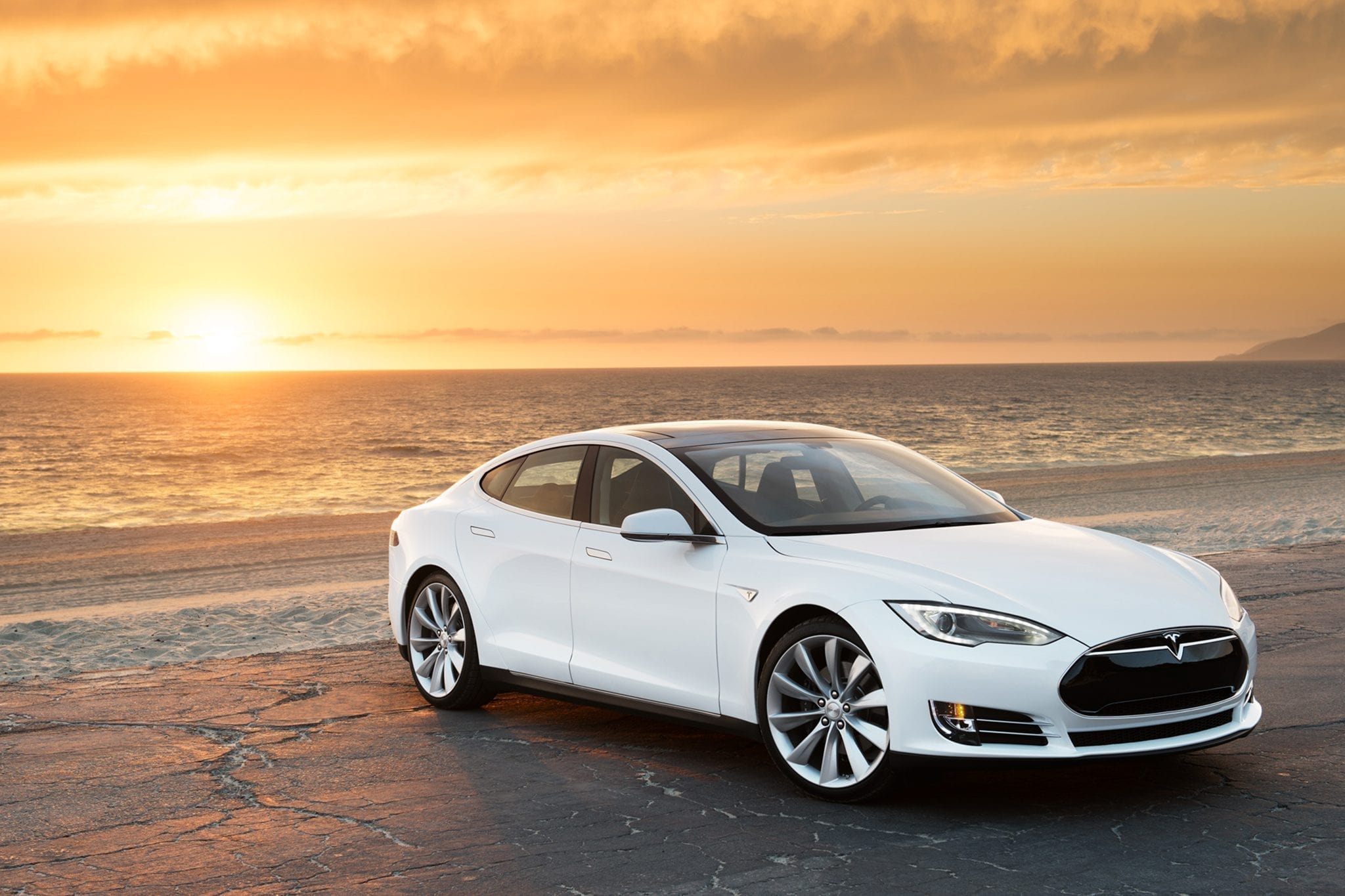
    Tesla Motors Inc said on Sunday its third-quarter deliveries rose 70 percent to 24,500 cars, following production improvements, cheaper lease deals and reports of discounts on some vehicles.

    Deliveries are a key metric of performance for the luxury electric vehicle manufacturer, which had missed these targets in the previous two quarters.

    The improved deliveries for the third quarter bring Tesla closer to meeting its second-half 2016 target of 50,000 vehicles, which it reiterated on Sunday. It said in a statement that fourth-quarter deliveries would be “at or slightly above” the third quarter’s.

    However, the third-quarter figures included 5,150 vehicles in transit at the end of the second quarter, as Tesla reported in July. Another 5,500 cars in transit would be counted in the fourth quarter, it said.

    Meeting the third-quarter target was a priority for the money-losing Silicon Valley carmaker, which is hoping to raise funds from the equity market later this year for multiple efforts, including building out its factory for the Model 3 mass-market sedan due in late 2017 and the planned acquisition of SolarCity Corp (SCTY.O).

    Tesla experienced production problems earlier this year and began to resolve them in June. It said in July that production would improve from 2,000 cars a week to 2,200 in the third quarter and 2,400 in the fourth.

    Production rose in the third quarter to 25,185 vehicles, implying just shy of 2,000 vehicles per week.

    The company will release third-quarter financial results in early November.

    Chief Financial Officer Jason Wheeler said in August that if second-half production and delivery targets are met, the company had a “great chance of being non-GAAP profitable,” without specifying a time period.

    In September, Tesla began advertising its inventory cars, for showrooms or test drives, “at favorable prices and ready for expedited delivery.”

    Some analysts expressed concern that discounts, reported extensively on online Tesla forums, would undermine margins.

    Last week, Chief Executive Officer Elon Musk published a memo telling employees to follow the company’s policy of not offering discounts on new cars.

    Musk was responding to a research note published on Tuesday by Pacific Crest Securities analyst Brad Erickson criticizing Tesla for offering discounts on Model S inventory cars, not those built-to-order for specific customers, to boost third-quarter sales.

  • Honda reports another Takata airbag rupture in fatal Malaysia crash

    Honda reports another Takata airbag rupture in fatal Malaysia crash

    Honda Motor Co Ltd said on Wednesday that the driver-side airbag inflator ruptured during a fatal crash in Malaysia, in the fourth death this year in the Southeast Asian country linked to airbags from supplier Takata Corp (7312.T).

    The incident on Sept. 24 took place in Johor, a state in southern Malaysia, and involved a 2009 Honda City. The car was part of a product recall announced by Honda in June last year, that required the replacement of the Takata driver’s front airbag, the company said in a statement.

    No details of the victim were provided.

    Honda said it had confirmed with Malaysian police during an inspection that the Takata single stage driver’s airbag inflator had ruptured in the crash, but said the official cause of death had not been determined.

    The passenger’s airbag inflator did not rupture, Honda said.

    Takata could not immediately be reached for comment outside regular business hours.

    Honda recalled more vehicles in Malaysia earlier this year to replace air bag inflators, as part of a global recall involving potentially deadly air bags from supplier Takata.

    Driver-side inflators supplied by Takata ruptured in three other fatal crashes involving Honda cars in Malaysia earlier this year.

    Takata’s defective air bag inflators have been linked to at least 14 deaths globally so far and more than 100 injuries, and sparked the largest-ever auto recall.

    About 100 million Takata air bag inflators have been declared defective worldwide. In the United States, nearly 70 million inflators have been declared defective.

  • Audi Q5 gains size, power

    Audi Q5 gains size, power

    Audi aims to retain its leadership position in luxury crossovers with a second-generation Q5 that adds size, technology and power to the outgoing model.

    The redesigned Q5 shown Thursday at the Paris auto show is longer, wider and taller with a longer wheelbase, but still lighter than the outgoing model, Audi says. The Q5 rides on Audi’s next-generation platform for vehicles with longitudinally mounted engines, known as MLB Evo.

    More than 1.6 million Q5s have been sold globally since the crossover debuted in 2008, and the stakes are high for the second generation. Audi has a new assembly plant in Puebla, Mexico, to build the Q5.

    “The first Audi Q5 was for many years the world’s best-selling SUV in its class. It was no easy task to design its successor, but that is precisely why it is so very exciting,” Audi AG Chairman Rupert Stadler said in a statement. “With the new Q5 we are setting the bar a notch higher.”

    The Q5 in Europe will be offered with four diesel options and one turbocharged gasoline engine. In the U.S., the Q5 gets a 252-hp turbocharged 2.0-liter four-cylinder engine, adding 32 hp from the outgoing Q5’s 2.0-liter mill.

    The same complement of technology and driver assist systems Audi offers on the A4 sedan and Q7 large crossover will be added to the Q5, including Audi’s virtual cockpit digital instrument cluster, its latest MMI infotainment system and driver aids such as adaptive cruise control, lane assist and traffic-jam assist, which allows for limited hands-free driving at slow speeds.

    A sportier SQ5 model with a 3.0-liter turbocharged V-6 will also be offered to American consumers, according to an Audi spokesman.

    U.S. sales will begin in the first half of 2017, likely in the second quarter after European deliveries begin early next year.

  • BMW recalls 110,000 cars in Japan over Takata airbags

    BMW recalls 110,000 cars in Japan over Takata airbags

    BMW Group said today it is recalling about 110,000 cars in Japan over potentially faulty airbag inflators made by Takata Corp., as part of the auto industry’s largest ever global call back.

    The automaker recalled 44 models including its 1-series 116i and 118i hatchbacks and the 3-series 320i sedan to replace passenger-side airbags made by the supplier, according to a filing to Japan’s transport ministry.

    Affected vehicles were produced between 2004 and 2012.

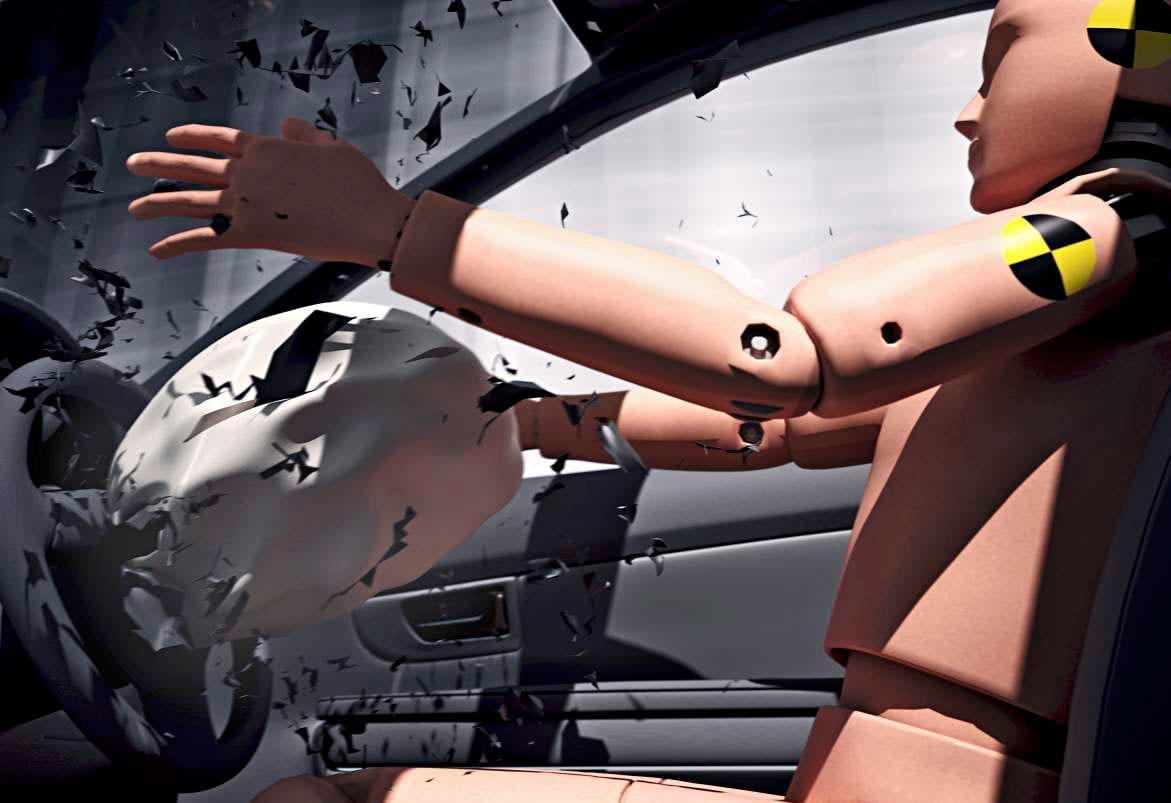
    Defective Takata airbags have been linked to at least 14 deaths and 150 injuries worldwide as the ammonium nitrate-based propellant used in its inflators has a tendency to explode following prolonged exposure to hot, humid conditions, spraying metal shrapnel at the car’s occupants.

    Today’s recall comes after Japan’s transport ministry in May ordered automakers to recall an additional 7 million vehicles in Japan equipped with Takata airbag inflators which do not contain a drying agent, in phases by 2019, following an expanded recall by U.S. authorities.

    Battered by the recalls, Takata is looking for a financial backer to help overhaul its business and carry ballooning costs as its stock price has crumbled almost 90 percent since early 2014 and it faces potentially billions of dollars of liabilities.