Category: Automotive

Retail News Asia is committed to providing both local and global retailers with the latest Auto and Car news throughout the Asian market. This on a daily base.

  • Nissan returns to Japan’s most exclusive address

    Nissan returns to Japan’s most exclusive address

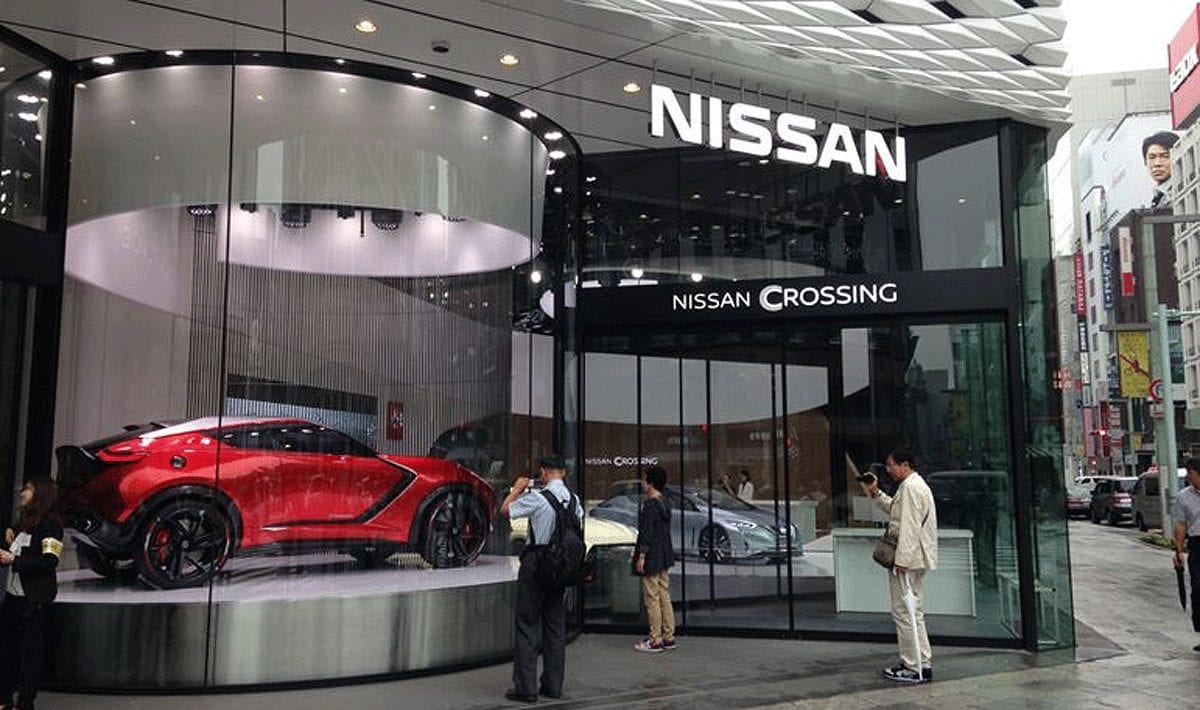
    Nissan Motor Co.’s flagship showroom has returned to Japan’s most exclusive, priciest address — Tokyo’s glitzy Ginza district, flush with department stores and geisha clubs.

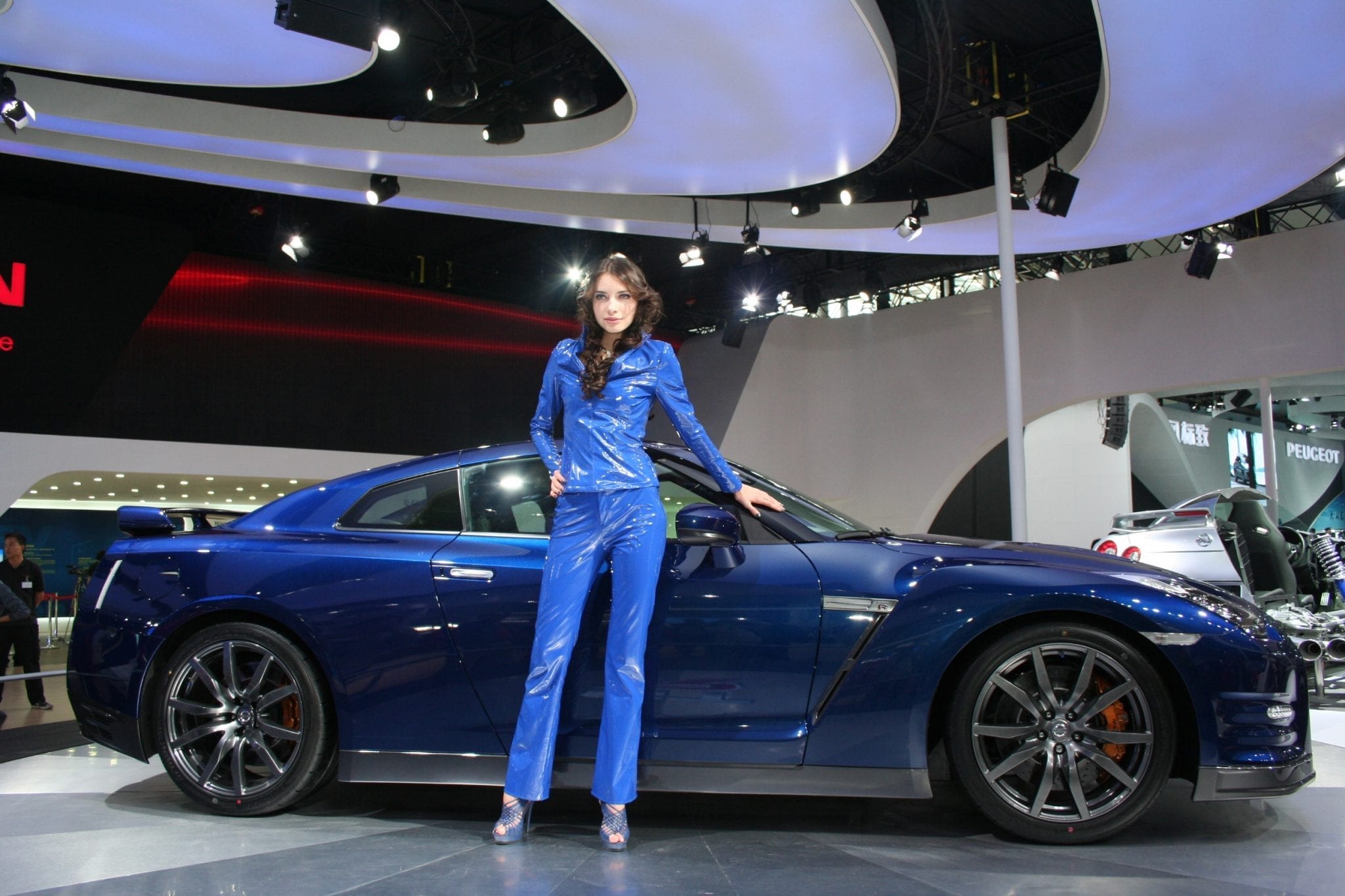
    A sleek new two-story showroom sits at the shopping district’s main neon-soaked intersection, with the brand’s signature models such as the GT-R sports car and Leaf electric vehicle looking down on the well-heeled throngs through floor-to-ceiling glass walls.

    Nissan is back at the landmark locale after a two-year hiatus.

    Japan’s No. 2 automaker had had a showroom at the intersection since 1963, when models of a different kind — women in swimsuits — helped christen the gallery and show off the Fairlady 1500 convertible then on display. Nissan later moved across the street to another building owned by Sapporo Beer, which still manages the property.

    The showroom was shuttered in 2014 to renovate the entire building. Nissan offered a sneak peek of the new digs to journalists Friday, ahead of its public opening this weekend.

    Reborn as “Nissan Crossing,” the revamped gallery boasts two floors of displays featuring concept cars such as the IDS Concept and more pedestrian fare such as the Serena family van.

    The goal is to showcase how Nissan is repositioning of itself as a global leader in next-generation mobility, from EVs to self-driving cars. The Serena, for example, is the first vehicle featuring Nissan’s new ProPilot semiautonomous driving technology.

    To make sure passersby don’t miss the cars, the picture-window facade embedded with LED lights grabs their attention with colorful light shows. Once inside, Nissan invites them to stay awhile at a trendy cafe, where visitors can indulge in custom latte art that features cocoa-powder images of their own face dusted on top of their foamed milk.

  • Hyundai to debut Genesis premium brand in China in two-three years

    Hyundai to debut Genesis premium brand in China in two-three years

    South Korea’s Hyundai Motor will launch its standalone premium auto brand Genesis in China within two to three years, betting on a luxury lane to profit as competition bites at the lower end of the world’s biggest auto market.

    Genesis brand chief Manfred Fitzgerald told Reuters in a recent interview the company is considering building Genesis models in China “For sure. But there are also other examples of (automakers) who live pretty well off of importing cars,” he said, citing Toyota Motor Corp’s Lexus.

    The plans come as Hyundai tries to reverse out of 10 straight quarters of falling profit, hit in part by weakness in China.

    Rolling out Genesis in key markets like China marks a shift for a company better known for making value-for-money cars and lacking the brand cachet and tradition of Germany’s BMW BWMG.DE, Mercedes-Benz and Audi. That trio dominates the luxury market globally – and in China.

    “The luxury customer in China is very brand-conscious,” said U.S. national Fitzgerald, 53. The former executive with Audi’s Lamborghini brand was speaking at the first, and so far only, standalone Genesis store, in a glitzy mall in Hanam on the outskirts of Seoul featuring cars like G80 sedans that can fetch up to 74 million won ($67,100).

    “If you don’t get your brand right, you can have the best product in the world, it won’t work,” said Fitzgerald. “In two, three years’ time we will be entering China,” he said, declining to give sales targets for a global rollout that will follow launches in Korea late last year and in the United States last month.

    In China, imported cars carry a duty of more than 20 percent, putting pressure on automakers to produce locally.

    DISTRIBUTION DEBATE

    Genesis will open more standalone outlets, said Fitzgerald, and is exploring unspecified locations for its first U.S. store. The Genesis line-up currently features two models, a range that the company plans to expand to six by 2020, including two sport utility vehicles.

    Consultants like Eric Noble, president of California-based consultancy CarLab, say getting the sales channel right for premium cars is as important as the product itself.

    For now, over 300 of Hyundai’s more than 800 U.S. dealerships will also be selling the Genesis brand, posing an added challenge for differentiating it from Hyundai. By comparison, Toyota’s Lexus is sold through separate dealerships.

    “From a product standpoint, the prospects of the (Genesis) brand are encouraging,” said Noble. “But from a distribution standpoint, at least here in North America, it is much more problematic.”

    ‘TIPPING POINT’

    Hyundai Motor Group Chairman Chung Mong-koo, now 78, took the helm in 2000 and turned Hyundai and its Kia Motors (000270.KS) affiliate into the world’s fifth-largest automotive group by making inexpensive but reliable small cars.

    But the veteran’s 45-year-old son and vice-chairman Chung Eui-sun has sought to move Hyundai up the value chain. He spearheaded the move last November to hive off the Genesis sedan into a standalone brand, tapping a segment growing faster than the mass market to generate higher margins.

    Fitzgerald said meeting with the younger Chung was a “tipping point” in his decision to join a company long known for promoting from within.

    “He definitely gave me the feeling that no matter how long and how troublesome and how tedious this might be, they are in for it and they want to succeed.”

  • Kumho Tire auction to start in November

    Kumho Tire auction to start in November

    Creditors of Kumho Tire gave formal notice this week that they will hold an open auction for their respective holdings in the South Korean tyre manufacturer with preliminary bidding scheduled to start in early November.

    The creditors involved are eight financial institutions including Woori Bank, state-owned Korea Development Bank and KB Kookmin Bank. Together they own 42% of the equity in the tyre manufacturer, worth some KRW760bn (US$680m) based on the current share price.

    Kumho Tire graduated from a four-year creditor-led debt restructuring programme at the end of 2014 after it suffered a severe liquidity crisis in 2009.

    The 50 year-old tyre manufacturer currently employs around 5,000 people in South Korea. It has nine tyre plants worldwide, three in South Korea, four in China and one each in Vietnam and the US. It generated global sales of KRW3.04 trillion (US$2.7bn) last year.

    In the first half of 2016, the company generated revenues of KRW1.45trn and earnings of KRW55.8bn.

    The auction will be organised by Credit Suisse bank which expects the final round of bidding to take place in January 2017 with a buyer expected to be selected shortly after that. The controlling equity stake is expected to cost around KRW1trn, including fees.

    Park Sam-koo, the current chairman of the former owner of the company,Kumho Asiana Group, will have the right of first refusal to buy back the shares by matching the highest bid in the final auction. He has previously indicated that he would be interested in taking back control of the tyre manufacturer but it is unclear whether he has the financial backing to do so.

    Other global tyre companies will be given the chance to bid and private equity companies are also expected to feature in the auction.

  • Renault, Nissan buy French tech firm to develop mobility apps

    Renault, Nissan buy French tech firm to develop mobility apps

    Renault SA and Nissan Motor Co announced on Tuesday they would buy French software development company Sylpheo as they compete with global automakers and tech firms to develop new services including ride hailing and car sharing.

    The French and Japanese automakers said that the acquisition, under which they would absorb Sylpheo’s 40 engineers and consultants, would boost their software development and cloud engineering expertise.

    “The Sylpheo team of software developers and cloud engineers joining the Alliance will have a unique opportunity to work on our next generation of connected cars and other advanced technologies,” said Ogi Redzic, Renault-Nissan’s senior vice president of Connected Vehicles and Mobility Services.

    “They will be playing a critical role in this new era of tremendous change for the global auto industry.”

    Automakers from Toyota Motor Corp (7203.T) to General Motors (GM.N) have been investing in software firms and mobility start-ups to position themselves for the rise of autonomous driving, ride-sharing and other connected services which threaten the traditional vehicle ownership model that has dominated the past century.

    Sylpheo will develop the applications for the alliance’s connected car service platform, a Renault spokeswoman said. She said the acquisition was part of the alliance’s recruitment push to hire 300 technology experts to better compete in the fast-growing mobility services sector.

    These services will be integrated with autonomous driving technologies. In July, Nissan launched a suite of semi-autonomous driving functions in one of its Japanese minivan models which enables the vehicle to drive on single lane motorways and navigate congestion.

    The two companies plan to launch more than 10 vehicles with autonomous drive technology by 2020. Nissan is aiming to develop autonomous multiple-lane driving functions, including lane changes, by 2018, and functions for full urban driving, including intersection turns, by 2020.

  • GM Korea to sell 10 Chevrolet Aveo compacts online

    GM Korea to sell 10 Chevrolet Aveo compacts online

    GM Korea said on Sept. 19 it will sell 10 units of its new Chevrolet Aveo compacts via Auction, a local online shopping site affiliated with eBay Korea, on Sept. 26.

    This is the first time in Korea that a carmaker has decided to sell vehicles online.

    Even though the unprecedented online car sale seems more like a marketing activity, industry watchers say other carmakers could follow suit considering consumer reaction, especially among youngsters who prefer online shopping rather than visiting physical shops.

    “Through the collaboration with Auction, we hope to appeal to female drivers in their 30s and 40s, the new Aveo’s target customers,” a GM Korea official said.

    In August, Ticket Monster, a daily-deal site, stirred controversy after it sold 20 Jaguar XF sedans via its website without consulting the carmaker’s UK headquarters. Jaguar Land Rover Korea at the time hinted at a legal action for damage to its brand value and creating confusion.

    The retail price of the Aveo is 17.79 million won (US$16,000). GM Korea plans to offer diverse benefits to those who purchase the car online, including online cash points worth 5 million won.


  • Baidu, NVIDIA enter self-driving car alliance

    Baidu, NVIDIA enter self-driving car alliance

    Chinese internet giant Baidu and GPU maker NVIDIA have teamed up to use artificial intelligence in the creation of a cloud-to-car autonomous car platform for local Chinese and global car makers.

    The partnership combines Baidu’s cloud platform and mapping technology with NVIDIA’s self-driving computing platform to develop solutions for HD maps, Level 3 autonomous vehicle control and automated parking.

    “We’re going to bring together the technical capabilities and the expertise in AI and the scale of two world-class AI companies to build the self-driving car architecture from end-to-end, from top-to-bottom, from the cloud to the car,” NVIDIA CEO Jen-Hsun Huang said.

    NVIDIA and Baidu have a long history of working together on AI. Using GPUs, Baidu researchers such as Andrew Ng have achieved some of the key breakthroughs that have made the modern AI boom possible, spawning hundreds of startups over the past few years.

    Amidst the growing excitement over the future of AI, Baidu and NVIDIA continue to share a common goal of using AI for the good of society.

    “We can start applying these capabilities to solve the grand challenges of AI, one of which is intelligent machines. One of the intelligent machines we would like to build in the future is the self-driving car,” said Huang.

    He said that meant making driving safer, significantly reducing the number of traffic fatalities, while making transportation accessible to all — including the disabled, elderly and children.

    Developing a fully autonomous car is an end-to-end systems problem — from the in-car supercomputer, to AI algorithms, to an always-updated 3D map in the cloud, said Huang.

    The solution is expected to be available to local Chinese automakers as well as global brands.

  • Indonesia to look into Ford’s sales after report on tax avoidance

    Indonesia to look into Ford’s sales after report on tax avoidance

    Indonesia’s tax office said it will look into whether Ford Motor Co (F.N) had avoided paying appropriate taxes, after a local newspaper reported that the U.S. car maker modified imported Everest model vehicles sold in the country to pay a lower tax rate.

    Suara Pembaruan, citing an unnamed source, said Ford modified the seven-seater vehicles made at its Thailand factory into 10-seaters before importing them and then subsequently changing them back into seven-seaters for sale. It said the modifications happened from 2007 to 2014. (bit.ly/2coZtbk)

    An imported seven-seater like Ford’s Everest is subject to a luxury goods sales tax of 40 percent in Indonesia, compared with the 10 percent tax imposed on an imported 10-seater, the newspaper said in the report on Wednesday.

    “I will study the case,” Ken Dwijugiasteadi, director-general of taxes, told reporters on Thursday. “We will investigate anyone who carries out a tax violation.”

    Ford imported, sold and delivered its Everest vehicles to its dealers in Indonesia in both 7-seat and 10-seat configurations, a Ford spokesman said in an email.

    “We have always strictly complied with all Indonesia government regulations and policy, including all import-related tax and customs requirements, related to each of our Ford vehicles officially marketed and sold in the country,” he said.

    Ford announced in January it is closing all operations in Southeast Asia’s biggest economy, but if the car maker is proven to have caused state losses, it may have to pay back taxes of up to four times the amount it owed, according to Indonesian law.

    The automaker, which had a less than 1 percent market share in Indonesia, is also facing a potential lawsuit from its dealers there who demanded around $75 million in compensation after its move to withdraw from Southeast Asia’s biggest car market.

  • Thai auto sales pose dilemma for Vietnam

    Thai auto sales pose dilemma for Vietnam

    Statistics from the General Department of Vietnam Customs show that the foreign sector controls roughly 80% of the local car and automobile (excluding motorbike) retail market with a sales volume eclipsing all of Southeast Asia.

    thai auto sales pose dilemma for vietnam hinh 0

    Auto distributors and original equipment manufacturers (OEMs) based out of Thailand hold the largest share of the retail market followed by the Republic of Korea (RoK) and China in descending order of magnitude.

    Compared to Vietnam, Thailand’s success at attracting top brands the likes of Ford, Toyota, Honda and Nissan, is in large part attributable to the countries more favourable tax structure.

    Taxes and fees account for up to 50% of the final sales price of a vehicle manufactured in Vietnam, a figure that is more than 20% higher than the comparable taxes and fees charged in Thailand.

    Prior to the emergence of the ASEAN Economic community (AEC) the Vietnam government was able to regulate the local auto industry via the imposition of import tariffs and local taxes as appropriate.

    However, with the arrival of the AEC at the beginning of 2016 and the elimination of import tariffs pursuant to the ASEAN Trade in Goods Agreement, Thai auto sales in Vietnam have shot up rapidly.

    Under the agreement, the import tax on automobiles from Thailand and other ASEAN members – Myanmar, the Philippines, Malaysia, Singapore, Laos, Indonesia, Cambodia, Brunei and Vietnam – have dropped by 40-50% in 2016.

    They will continue to fall by another 30% in 2017 and be eliminated entirely by the end of 2018.

    Meanwhile, the Vietnam government has not concurrently reduced the taxes and fees on local manufacturing of autos and this explains, in large part, why vehicles produced in Thailand are less expensive.

    Notably, Thailand also has more than 2,000 OEMs, which has aided the country’s rise to become the biggest hub for auto and part exports not only to Vietnam but the entire Southeast Asian region.

    Without a doubt, say many leading experts, after 2018, the complete roll back of the import duty will put ownership of an automobile within reach of the majority of Vietnamese citizens.

    This, they say, could lead to explosive sales growth and a myriad of adverse consequences for the nation.

    It’s problematic because its puts excessive pressure on the public transport infrastructure, overburdens traffic systems and potentially threatens traffic congestion that would choke off commerce.

    Not to mention the threat to public health brought about by pollution and auto accidents, they say, noting the elevated need for the government to advocate strongly for effective policies that reduce auto use throughout the nation.


  • Audi says August sales up 2.9 percent on Chinese demand for compact cars

    Audi says August sales up 2.9 percent on Chinese demand for compact cars

    Audi increased global sales 2.9 percent in August on strong demand in its key Chinese market for luxury compact cars including the A3 and Q3 models.

    The Volkswagen-owned division on Tuesday said deliveries rose to 132,350 autos last month from 128,647 a year earlier, with eight-month sales up 4.9 percent at 1.23 million.

    Sales in China were up 8.8 percent at 49,154 cars, expanding year-to-date registrations in Audi’s largest market 6.8 percent to 361,315.

    German luxury rival BMW earlier on Tuesday reported a 5 percent increase in brand sales to 142,554 cars, with eight-month sales up 5.5 percent at 1.28 million.

  • VW’s Audi steps up collaboration with Chinese tech groups

    VW’s Audi steps up collaboration with Chinese tech groups

    Volkswagen’s luxury car unit Audi has agreed to deepen collaboration with Chinese internet technology groups to offer more digital services in the world’s largest car market.

    Audi and FAW-Volkswagen, VW’s joint venture with FAW Car Co Ltd (000800.SZ), have signed letters of intent with Alibaba (BABA.N), Baidu (BIDU.O) and Tencent (0700.HK), Audi said on Sunday. Financial terms were not disclosed.

    Parent Volkswagen has been hobbled by a scandal over the rigging of emissions tests, distracting it in a race with global carmakers to develop computer-aided services for drivers.

    VW’s CEO told a newspaper on Sunday that it has to remain in control of its relationship with car users, which is why it stopped talks with U.S. ride-hailing service Uber and technology giants Google (GOOGL.O) and Apple (AAPL.O).

    Under the agreement with online search company Baidu, Audi aims to improve the use of smartphone apps in its cars.

    Its projects with social network and online gaming group Tencent include helping drivers to make better use of the WeChat communication app.

    The alliance with Alibaba aims to develop more real-time traffic news services and 3D maps.

    VW in May took a $300 million stake in smaller ride-sharing company Gett.

  • Honda recalls 668,000 more cars in Japan over Takata air bags

    Honda recalls 668,000 more cars in Japan over Takata air bags

    Honda Motor Co on Thursday said it was recalling about 668,000 vehicles in Japan to replace air bag inflators supplied by Takata, as part of an expanded nationwide recall announced earlier this year.

    Japan’s second-largest automaker said it had recalled models including its Fit subcompact hatchback model, and the Civic and Accord sedan models over passenger-side air bags. Vehicles produced between 2009 and 2011 were affected, it added.

    The latest announcement takes Honda’s global tally of recalled air bags to about 51 million, around half of the roughly 100 million slated for recall worldwide over inflators which are at risk of exploding with excessive force.

    Defective air bags have been linked to at least 14 deaths and 150 injuries worldwide, and are at the center of the auto industry’s biggest ever product recall.

    Thursday’s recall comes after Japan’s transport ministry in May ordered automakers to recall an additional 7 million vehicles in Japan equipped with Takata air bag inflators which do not contain a drying agent, in phases by 2019, following an expanded recall by U.S. transport authorities.

    Without a drying agent, the ammonium nitrate-based propellant used in Takata inflators has a tendency to explode violently following prolonged exposure to hot, humid conditions, spraying metal shrapnel into vehicle compartments.

    Honda, once Takata’s largest customer, has said that it would stop using Takata-made inflators in its new models, and has stopped procuring replacement inflators from the company.

    Battered by the recalls, Takata is looking for a financial backer to help overhaul its business and carry ballooning costs as its stock price has crumbled almost 90 percent since early 2014 and it faces potentially billions of dollars of liabilities.

  • Daimler plans at least six electric car models

    Daimler plans at least six electric car models

    German carmaker Daimler plans to roll out at least six, and possibly as many as nine, electric car models as part of its push to compete with Tesla and Volkswagen’s Audi, a person familiar with Daimler’s plans told Reuters.

    The maker of Mercedes-Benz cars remains on track to unveil a new electric car at the Paris motor show next month. In July, the German carmaker said it had accelerated development of premium electric cars, a segment currently dominated by United States-based rival Tesla.

    German trade magazine Automobilwoche earlier cited company sources as saying Daimler would bring to market more than six electric car models between 2018 and 2024.

    German firms are investing heavily in electric cars, a segment once neglected by the industry as customers shunned their limited operating range and high cost.

    But a growing political backlash against diesel fumes and recent advances in battery technology to increase the reach of an electric car by up to 50 percent have spurred major investments by Volkswagen, Daimler and suppliers such as Bosch and Continental.

    Reuters’ source said Mercedes would also make an SUV model with a plug-in hybrid engine powered by fuel cells, which would have a range of up to 50 km (30 miles) on battery power and would then run on electricity generated by hydrogen.

  • Tesla’s Musk says new Autopilot likely would have prevented death

    Tesla’s Musk says new Autopilot likely would have prevented death

    Tesla Motors Co Chief Executive Elon Musk said on Sunday the automaker was updating its semi-autonomous driving system Autopilot with new limits on hands-off driving and other improvements that likely would have prevented a fatality in May.

    Musk said the update, which will be available within a week or two through an “over-the-air” software update, would rely foremost on radar to give Tesla’s electric luxury cars a better sense of what is around them and when to brake.

    New restrictions of Autopilot 8.0 are a nod to widespread concerns that the system lulled users into a false sense of security through its “hands-off” driving capability. The updated system now will temporarily prevent drivers from using the system if they do not respond to audible warnings to take back control of the car.

    “We’re making much more effective use of radar,” Musk told journalists on a phone call. “It will be a dramatic improvement in the safety of the system done entirely through software.”

    Tesla’s Autopilot, introduced in October, has been the focus of intense scrutiny since it was revealed in July that a Tesla Model S driver, Joshua Brown, was killed while using the technology in a May 7 collision with a truck in Florida.

    The National Highway Traffic Safety Administration (NHTSA) has been investigating Tesla’s Autopilot system since June because of the fatal accident. The agency had been briefed on the changes by Tesla and would review them, spokesman Bryan Thomas said. He declined to offer an update on the Tesla investigation.

    Musk said it was “very likely” the improved Autopilot would have prevented the death of Brown, whose car sped into the trailer of a truck crossing a highway, but he cautioned that the update “doesn’t mean perfect safety.”

    “PROBABILITY OF SAFETY”

    “Perfect safety is really an impossible goal,” Musk said. “It’s about improving the probability of safety. There won’t ever be zero fatalities, there won’t ever be zero injuries.”

    One of the main challenges of using cameras and radars for a braking system is how to prevent so-called false positives, in which a car might think an overhead highway sign, for example, was an obstacle to be avoided.

    Using radar and fleet learning, rather than relying primarily on cameras, would solve that problem, Musk said.

    “Anything metallic or dense, the radar system we’re confident will be able to detect that and initiate a braking event,” he said.

    Silicon Valley-based Tesla is known for its innovation in luxury electric vehicles but some critics, including rival carmakers, have said it was hasty in rolling out Autopilot. Tesla stood by Autopilot after the fatality.

    The revised system will sound warnings if drivers take their hands off the wheel for more than a minute at speeds above 45 miles per hour (72 kph) when there is no vehicle ahead, Musk said.

    The warning will sound after the driver’s hands are off the wheel for more than three minutes when the Tesla is following another car at speeds above 45 mph. The dashboard also will flash a pulsing light.

    If the driver ignores three audible warnings in an hour, the system will temporarily shut off until it is parked, Musk said.

    Advanced Autopilot users, rather than new users, were most likely to ignore warnings to put their hands back on the wheel, Musk said.

    Besides the fallout from the fatality, Musk has had to prepare for the Model 3 mass-market vehicle due late next year and completion of its Nevada battery factory, while trying to sell skeptical investors on the merits of a proposed acquisition of SolarCity.

    On Sept. 1, SpaceX, where Musk serves as CEO, sustained what he later called “the most difficult and complex failure” in the commercial space company’s history when a Falcon 9 rocket exploded on its launch pad in Cape Canaveral, Florida.

    “One of the worst weeks ever, really,” he told reporters.

    Musk said he had wanted to improve Autopilot’s capabilities last year but was told it was impossible to do so without incurring more “false positives,” such as a car braking suddenly for a harmless tin can.

    In July tweeted publicly that he was encouraged by talks with supplier Bosch about improvements to radar.

    “I wish we could have done it earlier,” he said on Sunday. “The perfect is the enemy of the good.”

  • Volkswagen sets up shop in Malaysia to handle direct sales here

    Volkswagen sets up shop in Malaysia to handle direct sales here

    Volkswagen Passenger Cars Malaysia (VPCM) Sdn Bhd will be the official distributor of Volkswagen cars in the domestic market.

    VPCM is managed by European automotive retail specialist, Porsche Holding Salzburg, the car distributor said in a statement.

    The announcement comes after a series of consolidation exercises within Volkswagen Malaysia over the past six months.

    Alin Tapalaga, one of two managing directors to lead VCPM, said the company would be increasing the Completely Knocked-Down model line-up, and continue to import Completely Built-Up models into the country.

    Moving forward, Volkswagen Group Malaysia will concentrate its business interest in Malaysia on the Audi brand, as well as its vehicle assembly operation in Pekan, Pahang.

    Meanwhile, VPCM is introducing a five-year manufacturer warranty for all Volkswagen cars purchased from today, while launching the new Jetta and all-new Passat within the next few months.

    The Volkswagen franchise in Malaysia was previously handled by DRB-Hicom Bhd.

  • India becomes Honda’s biggest 2 wheeler market

    India becomes Honda’s biggest 2 wheeler market

    Riding on a sustained double-digit growth in scooter volumes, Japanese auto major Honda has seen India emerge as its biggest two-wheeler market this financial year.

    Honda Motorcycle and Scooter India (HMSI) recently overtook the company’s volumes from the Indonesian market.
    Into the sixth year of the split with its Indian partner Hero, HMSI has sold 1.23 million units during the April-June quarter, 16 per cent more than the 1.06 million units sold in Indonesia.
    The corresponding volumes for India and Indonesia last year was 1.01 million and 1.03 million units, respectively. With this increased volume, India now brings 29 per cent of Honda’s global two wheeler sales compared to 25 per cent a year ago.
    In Indonesia, for instance, it commands 80 per cent share; the share in Vietnam is 70 per cent of the market.

    “Considering the low two-wheeler penetration in India, we believe that it will continue to lead the global two-wheeler market, as new demand will continue to come from rural and semi-urban areas in the future. The road infrastructure is increasing rapidly while public transport is not able to meet daily commuting needs of millions,” said Y S Guleria, senior vice-president, sales and marketing, HMSI.

    Honda is the second-biggest two-wheeler player in the Indian market.

    It is also present in the passenger vehicle market, where it is the sixth-largest player and has a five per cent share.

    In the two wheeler market, however, Honda enjoys a 28-per cent market share though Hero MotoCorp is the leader with a 37-per cent share. In the scooter segment, Honda sits on a strong 59-per cent share. It is this segment that is driving the company’s India volumes.

    Scooters account for two-thirds of HMSI’s India sales, up significantly from 54 per cent a year ago. The scooter market has grown 24 per cent this year so far on a rising base, helped by double digit growth for last two consecutive years. Motorcycles, as a segment, did not do well for last two years due to weakness in rural markets on sub normal monsoon. That is set to change this year.

    Improved sentiments in rural markets due to good rainfall and higher wages of the government employees will be positive growth triggers for the industry. Guleria said the Indian market has been showing constant growth in recent years while other big markets such as Indonesia and Brazil have been showing downtrend due to their economic slowdown.
    HMSI saw a capacity addition in June this year with the opening of its dedicated scooter plant in Gujarat that added 1.2 million unit annual production capacity. HSMI aims to end this year with total sales of 5.4 million units, up 26 per cent from last year’s 4.28 million units. Honda globally is expected to sell 18 million units this year.