Retail News CRM

Category: Automotive

Retail News Asia is committed to providing both local and global retailers with the latest Auto and Car news throughout the Asian market. This on a daily base.

  • Revolutionizing Auto-Updates: Kia Introduces Industry-First Plant Remote OTA for Seamless Driving Experience

    Revolutionizing Auto-Updates: Kia Introduces Industry-First Plant Remote OTA for Seamless Driving Experience

    Kia India has recently unveiled an innovative feature in its line of vehicles, the Plant Remote Over-The-Air (OTA) feature, as part of its ongoing commitment to provide seamless and smart mobility options geared toward improving the overall customer ownership experience.

    The Plant Remote OTA Feature

    The Plant Remote OTA feature will be available in Kia India’s latest models with integrated Connected Car Navigation Cockpit (CCNC) technology. This revolutionary feature guarantees that every connected Kia vehicle will receive the latest software updates remotely before departing the factory. This ensures that customers can enjoy an enhanced driving experience, with their new cars already upgraded and ready for use immediately upon delivery.

    Atul Sood, the Senior Vice President for Sales & Marketing at Kia India, expressed his excitement about the rollout of this feature. He emphasized how it embodies Kia’s commitment to spearheading innovation that genuinely heightens the customer journey. According to him, through this initiative, every vehicle will leave the factory equipped with the latest software, significantly enhancing the customer ownership experience by making it more convenient, intelligent, and future-ready. He added that this achievement further cements Kia’s vision for connected mobility, displaying the brand’s dedication to inspiring movement through advanced technology and significant innovation.

    Benefits for Customers

    One of the key benefits of this initiative is that it substantially reduces the need for manual intervention or visits to the dealership. As soon as customers take delivery of their new vehicle, they can instantly access a comprehensive suite of connected services and features.

    Additional Implementations

    The Plant Remote OTA feature, which is compliant with the Connected Car System 2.0 (CCS 2.0) through leveraging Controller OTA functionality, further solidifies Kia India’s position as a leader in tech-driven mobility solutions. The Plant OTA will also be incorporated across all future connected models, thus bridging the gap between production and delivery via timely features and security updates. This will significantly boost customer satisfaction levels and enhance the overall ownership experience.

    Questions & Answers

    What is the Plant Remote OTA feature introduced by Kia India?
    The Plant Remote OTA feature ensures that every connected Kia vehicle is updated with the latest software remotely before it leaves the factory, providing customers with an upgraded and ready-to-drive experience right from the point of delivery.

    How does the Plant Remote OTA feature benefit customers?
    This feature eliminates the need for manual intervention or visits to the dealership, enabling customers to access a full suite of connected services and features immediately upon receiving their vehicle.

    Will the Plant Remote OTA feature be included in future Kia models?
    Yes, the Plant OTA feature will be incorporated into all future connected models, facilitating timely feature and security updates between the production and delivery stages, thereby enhancing customer satisfaction and the overall ownership experience.

  • Riding on Risk: The Perilous Reality of Motorbike Travel in Vietnam

    Riding on Risk: The Perilous Reality of Motorbike Travel in Vietnam

    Motorbikes, possessing the rapidity of a car but the simplicity of a bicycle, inherently pose a high risk to safety, particularly when traversed on less than optimal roads. As an individual who has spent a significant time commuting through the city by both motorbike and car, I have come to deeply comprehend a sobering reality: motorbikes, the primary mode of transportation in Vietnam, are also the most perilous. The danger lies not only in their petite, vulnerable structure, but also in the habits and attitudes of the people and a transportation infrastructure that is inadequately equipped to provide adequate protection for riders.

    The Danger Lurking in Motorbikes

    In developed nations, cars are predominantly the preferred choice of transport. This preference is not solely attributed to the affluence of the people, but also to the inherent safety cars provide. The occupants in a car are shielded by a robust metal structure, airbags, seatbelts, anti-lock braking systems, collision sensors, rear-view cameras, and blind spot warnings. Motorbike riders, on the other hand, are left completely vulnerable to the tumult of traffic. A minor brush or an abrupt swerve can easily result in a fall, leading to grave injury or even fatality.

    In my personal observation, most roadway accidents in Vietnam invariably involve motorbikes. They occur on a daily basis, whereby a minor wobble, a sharp brake, or an inattentive pedestrian can rapidly escalate into catastrophe. Although car accidents are not unheard of, the possibility of fatal consequences is significantly less.

    A Closer Examination of the Risks

    Another factor contributing to the danger of motorbikes is their sheer volume. In major cities such as Hanoi and Ho Chi Minh City, it is commonplace for a family to own two or three motorbikes. The narrow city roads, swarming with millions of bikes, generate chaos. Riders are compelled to evade cars, dodge pedestrians, navigate around buses, and occasionally mount pavements when confronted with traffic jams. These behaviors are born out of the necessity for convenience and the habit of seeking shortcuts, yet they continually place riders in precarious situations.

    Further exacerbating the situation is the lack of traffic awareness amongst a subset of riders. Unconventional helmet use, running red lights, driving against the traffic, over-speeding, and phone usage while driving are prevalent practices. As motorbikes are compact and agile, riders often experience a sense of freedom, forgetting the grave implications one moment of negligence can bring about. Unlike car drivers, who are subjected to more stringent licensing procedures and have higher financial liabilities, many motorbike users obtain their license with minimal training. Some even resort to stand-ins for their tests or commence riding before achieving the legal age.

    The Psychological Aspect and Infrastructure Hurdles

    There is also a psychological element at play. Car drivers generally exhibit more caution as even a minor collision can result in costly repairs. Motorbike riders, conversely, often downplay minor incidents and adopt aggressive or reckless behavior to save a few minutes. This overconfidence often results in motorbike accidents that are unforeseen and frequently unavoidable.

    The infrastructure in Vietnam further exacerbates the risk. Numerous roads lack specially designated lanes for motorbikes, exhibit faded lane markings, inconsistent speed bumps, and poorly positioned traffic lights. Rain can render the roads slippery, while manhole covers and potholes, barely noticeable to cars, can easily cause a motorbike rider to lose control.

    Reassessing Motorbike Use

    Motorbikes undoubtedly play an integral role in Vietnamese life, especially in narrow lanes, rural regions, or areas with underdeveloped transport infrastructure. However, as urban areas aspire to more sophisticated transportation systems, it is imperative to alter our mindset. Rather than solely relying on motorbikes, we should consider public transport, small cars, e-bikes, or bicycles as safer and more sustainable alternatives. The authorities must also enact stronger measures: assign lanes for motorbikes, strictly enforce traffic regulations, and educate about road safety from an early age. Riders must comprehend that they are operating a high-risk vehicle and not simply indulging in convenient transportation.

    Observing from the safety of my car, as hundreds of motorbikes jostle under the rain, amid exhaust fumes and blaring horns, the realization is stark: a single wrong move or abrupt stop could swiftly result in tragedy.

    Motorbikes have been an integral part of Vietnamese life for generations, but they also present a significant risk that needs to be reconsidered. Traffic safety is not just the responsibility of the government; it is a personal choice. We can choose to decelerate, to exercise caution, and to opt for safer vehicles to safeguard ourselves and our loved ones. After all, the ultimate objective is not the speed or convenience of the journey, but to return home safely every time.

    Questions & Answers

    Why are motorbikes considered dangerous?
    Motorbikes are considered dangerous due to their small, exposed structure, the riders’ habits and mindset, and a transportation infrastructure that inadequately protects riders.

    What factors contribute to motorbike accidents in Vietnam?
    The sheer volume of motorbikes, lack of traffic awareness among some riders, psychological factors, and infrastructure issues contribute to motorbike accidents in Vietnam.

    What measures can be taken to improve safety for motorbike riders?
    To improve safety for motorbike riders, authorities can assign designated lanes for motorbikes, strictly enforce traffic regulations, and educate about road safety from an early age. Additionally, riders can choose safer vehicles and exercise more caution while driving.

  • Nissan India Celebrates Export of 1.2 Million Vehicles: Triumph for Made-in-India Cars Globally

    Nissan India Celebrates Export of 1.2 Million Vehicles: Triumph for Made-in-India Cars Globally

    Nissan India Reaches Export Milestone

    Nissan India has marked a significant achievement with the announcement of its 1.2 millionth vehicle export. The Japanese automotive company has primarily centred its focus on the Magnite model, with occasional offerings of fully imported models such as the X-Trail. Nissan India exports vehicles to the AMIEO region, comprising Africa, Middle East, India, Europe, and Other markets.

    The milestone vehicle, a Magnite, is destined for the Gulf Cooperation Council (GCC) region. It was officially unveiled by Saurabh Vatsa, the Managing Director of Nissan Motor India, at Kamarajar Port in Ennore, Tamil Nadu. While the Magnite has been the mainstay, Nissan India has a history of exporting various models. These include the Sunny, Kicks, and Micra, which have been shipped to regions such as Africa, the Middle East, Latin America, and Southeast Asia.

    Changes in Model Exports Over Time

    Over time, however, these models were phased out due to lacklustre sales performance following the introduction of BS6 emission standards. At present, the Magnite is exported to 65 countries and is available in both left-hand (LHD) and right-hand (RHD) drive versions.

    Saurabh Vatsa, Managing Director, Nissan Motor India, commended this achievement, attributing it to the collective efforts of their teams and the global trust in their Made-in-India cars. He stated, “The Nissan Magnite continues to be a global success story, representing our focus on design, quality, and innovation that transcends borders.”

    Updates to the Magnite Model

    In December of the previous year, Nissan introduced a minor facelift to the Magnite, including subtle cosmetic changes and additional features. However, the mechanical aspects of the vehicle remain the same. The Magnite is offered with two petrol engine options: a 1.0-litre naturally aspirated engine and a 1.0-litre turbocharged engine. The former delivers 72 bhp and 96 Nm of peak torque, while the latter offers 99 bhp and 160 Nm (or 152 Nm with automatic transmission) of torque.

    Questions & Answers

    What milestone has Nissan India recently achieved?
    Nissan India has recently announced the export of its 1.2 millionth vehicle.

    Which regions does Nissan India export its vehicles to?
    Nissan India exports its vehicles to the AMIEO region, which includes Africa, the Middle East, India, Europe, and other markets.

    What changes were made to the Nissan Magnite in its latest update?
    In its latest update, the Nissan Magnite received a mild facelift with subtle cosmetic enhancements and additional features. The mechanical aspects of the vehicle, however, remain unchanged.

  • Rolls-royce Unveils Phantom Centenary Collection: An Exquisite Tribute To A Century Of Automotive Excellence

    Rolls-royce Unveils Phantom Centenary Collection: An Exquisite Tribute To A Century Of Automotive Excellence

    Rolls-Royce has introduced the Phantom Centenary Private Collection, a 25-unit series based on the Phantom, in celebration of the model’s 100th anniversary. The automaker describes the collection as the most intricate and technologically advanced private series it has ever produced, with more than 40,000 hours dedicated to its development.

    Exterior Design

    The exterior of the Centenary Private Collection is completed in a classic Black & White style. The paint finish is further enhanced with Rolls-Royce’s Super Champagne Crystal finish, which incorporates champagne-coloured iridescent glass flakes in the clear coat to add an additional layer of depth. The Spirit Of Ecstasy hood ornament is influenced by the original design and is made from 18-carat gold with a 24-carat gold plating. The hood ornament also carries a custom ‘Phantom Centenary’ hallmark from the Hallmarking & Assay Office in London, while the base is completed in enamel. The Rolls-Royce badges and unique ‘Phantom’ wheels are finished in 24-carat gold and white enamel.

    Interior Inspiration

    The interior of the car draws from past Phantom models and honors the company’s founders. The rear seats, inspired by the ‘Phantom of Love’, a custom-made model from 1926, feature artwork embedded into the seat upholstery. This artwork highlights the Phantom’s history and includes depictions of the company’s original Conduit Street premises in London, special Phantom models, and significant Phantom owners over the past century. The seat artwork is a result of a 12-month collaboration with a fashion atelier.

    Thoughtful Details

    The front seats feature laser-etched upholstery with artwork referencing codenames of past Phantoms. The gallery includes 3D-printed brushed aluminium fins arranged vertically, each bearing sculpted letters that form quotes from various reviews over the years. This artwork is backlit, with the lighting programmed to mimic the shimmer of fireworks.

    The doors also showcase remarkable craftsmanship. The rear doors feature artwork depicting landscapes where Sir Henry Royce, the company’s co-founder, had his summer and winter homes, achieved through 3D ink layering, laser etching, and 24-carat gold inlays. The front doors present a depiction of the Goodwood-era Phantom’s Journey across Australia.

    Attention to Every Inch

    Not to be overlooked are the seatback tables, one of which features a wood-inlay representation of the 1925 Phantom 1, while the other shows the current model. This artwork is also carefully embroidered onto the leather-finished back of the table. The Starlight headliner displays floral artwork inspired by the trees at the company’s Goodwood headquarters and references to prior Phantoms.

    Even the engine bay features a bespoke white-finished engine cover with gold inlays, highlighting Rolls-Royce’s attention to detail and commitment to luxury.

    Questions & Answers

    What is the Phantom Centenary Private Collection?
    The Phantom Centenary Private Collection is a 25-unit series based on the Rolls-Royce Phantom, produced to celebrate the nameplate’s 100th anniversary.

    What unique features does the collection have?
    The collection is characterized by its intricate artwork, lavish materials, and advanced technologies. Key features include the Super Champagne Crystal finish, laser-etched upholstery, 3D-printed gallery artwork, and numerous gold inlays.

    What inspired the design of the collection?
    The collection draws inspiration from past Rolls-Royce Phantom models and pays homage to the brand’s founders. The unique artwork embedded into the interior of the cars references the history of the Phantom and the landscapes connected to the company’s co-founder, Sir Henry Royce.

  • Okxe Unveils Inaugural Branch In Hanoi: A Major Step In Expanding Electric Vehicle Network In Vietnam

    Okxe Unveils Inaugural Branch In Hanoi: A Major Step In Expanding Electric Vehicle Network In Vietnam

    The inauguration of Okxe Vietnam’s inaugural branch in Hanoi, Yadea Okxe Tay Ho, marks a crucial stage in the expansion of the Okxe Station network. This move further reinforces the firm’s strategy to expand its electric vehicle sector, with the goal of advocating for a more sustainable and eco-friendly means of transportation. According to Okxe, making top global electric vehicle brands more accessible to Vietnamese shoppers is a part of their mission. They aim to provide “a one-stop-shop for every bike you’re looking for, at Okxe.”

    Strategic Collaborations

    In the past, Okxe partnered with VinFast for the distribution of electric motorcycles in Ho Chi Minh City. Currently, they have chosen Yadea, a leading electric motorcycle brand from China, as a strategic ally, providing Vietnamese consumers with another high-quality alternative in the electric vehicle market.

    Yadea Okxe Tay Ho Launch

    At Yadea Okxe Tay Ho, customers have the opportunity to browse a variety of contemporary electric motorcycles. This is complemented by after-sales services, official warranties, and consultations with professional staff. Their aim is to provide a holistic customer experience, starting from test rides to personalized recommendations, to assist customers in making informed purchasing decisions.

    Expansion and Customer Experience

    The opening of Yadea Okxe Tay Ho is part of a larger plan to increase operations and enhance customer experiences. By widening the availability of electric vehicles throughout its Okxe Stations, the company aims to advocate for eco-friendly transport in major urban areas.

    An Okxe representative explained, “This effort is more than just business expansion. It’s an important milestone in our journey to promote green mobility in Vietnam. Our objective encompasses more than just individual customers; we strive to assist businesses and organizations in transitioning to electric vehicles in a convenient and sustainable manner.”

    Electric Vehicle Community and Support

    On October 10, Okxe collaborated with Yadea to inaugurate the Okxe Tay Ho electric motorcycle showroom, referred to as a “Station”. This serves not just as a place to purchase bikes, but also as a social hub for users to connect, exchange experiences, and interact with others passionate about green mobility.

    In the near future, Okxe plans to establish the Yadea Hanoi Club, beginning at Yadea Okxe Tay Ho. This club will organize events and workshops where members can share tips on usage and maintenance, thereby fostering a dynamic community of electric vehicle users.

    Furthermore, the company intends to set up free EV charging stations at the station, allowing clients to recharge their vehicles and unwind, thereby enhancing the overall user experience. Okxe is committed to creating a comprehensive EV bike ecosystem where users can connect, engage, and develop together.

    These initiatives are in line with Okxe’s long-term development strategy and mission of “Supporting Your Driving Life”. The firm aims to support users throughout their entire vehicle ownership journey. In the future, Okxe plans to extend its station network to more locations, offering a wider product range from top domestic and international electric vehicle brands, thereby providing even more options to Vietnamese consumers.

    Questions & Answers

    What is Okxe’s mission?
    Okxe’s mission is to bring leading global electric vehicle brands closer to Vietnamese consumers. They aim to provide all types of bikes in one place at Okxe.

    What does the inauguration of Yadea Okxe Tay Ho signify?
    The opening of Yadea Okxe Tay Ho indicates a crucial stage in Okxe’s expansion strategy. It also marks the firm’s commitment to advocate for sustainable and eco-friendly transportation.

    What future plans does Okxe have for improving user experience?
    Okxe aims to enhance the user experience by setting up free EV charging stations at the station and allowing customers to unwind while their vehicles recharge. They also plan to further expand their network and offer a wider range of products from top-tier electric vehicle brands.

  • Mercedes-benz Unveils Vision Iconic Concept: A Blend Of Classic Elegance And Cutting-edge Technology

    Mercedes-benz Unveils Vision Iconic Concept: A Blend Of Classic Elegance And Cutting-edge Technology

    Unveiling the Mercedes-Benz Vision Iconic Concept: A Fusion of Retro Design and Modern Technology

    Mercedes-Benz has recently revealed its Vision Iconic Concept, a luxurious spectacle of automotive engineering, at its design house located in Shanghai, China. The brand asserts that the new concept vehicle draws heavily from the golden age of car design, specifically the 1930s. The Vision Iconic Concept is said to encapsulate the quintessence of what makes a Mercedes-Benz vehicle.

    Inspiration and Innovation

    The Concept maintains design elements reminiscent of classic cars, yet also incorporates a range of advanced technological features. The vehicle’s visually striking design includes an upright radiator grille similar to the one found on the 1956 300Sc model. This grille, however, is accentuated with radiant, illuminated elements. The car’s sloping roofline and elongated bonnet might bring to mind the Mercedes 300 SL. The iconic Mercedes logo adorns the front of the vehicle, while the illuminated star motif on the headlights adds a contemporary, luxurious touch.

    Blending Classic and Modern Interior Design

    The interior decor upholds the design of Mercedes’ vintage cars, but with a fresh twist. New elements have been introduced to enhance modern aesthetics and practicality. The Mercedes-Benz Vision Iconic Concept boasts a unique, floating glass dashboard centerpiece aptly named the ‘Zeppelin’. This feature combines analogue components with digital displays, creating a seamless blend of past and future. A continuous bench seat and an elegantly designed rear section recall memories of the legendary 300 SL. The car’s 4-spoke steering wheel, complete with a Mercedes logo encased in a glass sphere, adds to the luxurious feel of the vehicle.

    Advanced Features

    Beyond its visual appeal, the Mercedes-Benz Vision Iconic Concept is packed with an array of advanced features. It includes steer-by-wire technology, providing quicker maneuvering and precise control. Other notable features in the prototype include Level 2 Advanced Driver-Assistance Systems (ADAS). Mercedes-Benz is also contemplating the development of Level 4 autonomous driving for the vehicle.

    Questions & Answers

    What is the design inspiration behind the Mercedes-Benz Vision Iconic Concept?
    The design of the Vision Iconic Concept is primarily inspired by the golden era of automotive design in the 1930s. It incorporates elements from classic Mercedes-Benz models like the 1956 300Sc and the Mercedes 300 SL.

    What unique interior features does the Vision Iconic Concept have?
    The car’s interior features a unique floating glass dashboard centerpiece called the ‘Zeppelin’. The design also includes a continuous bench seat and an elegantly designed rear reminiscent of the legendary 300 SL.

    What advanced features does the Mercedes-Benz Vision Iconic Concept offer?
    The vehicle is equipped with advanced features such as steer-by-wire technology and Level 2 Advanced Driver-Assistance Systems (ADAS). Mercedes-Benz is also considering the development of Level 4 autonomous driving for the vehicle.

  • Hyundai Appoints First Indian Ceo In Landmark Move For Global Auto Industry

    Hyundai Appoints First Indian Ceo In Landmark Move For Global Auto Industry

    Hyundai Motor India Limited (HMIL) made the exciting announcement today that Mr. Tarun Garg will assume the role of Managing Director and Chief Executive Officer. Subject to shareholder approval, his tenure will commence on January 1, 2026. This appointment marks a significant landmark for HMIL; for the first time since its inception 29 years ago, an Indian national will lead the company. Mr. Garg currently holds the position of Whole-time Director & COO at HMIL. As he assumes his new role, the present Managing Director, Mr. Unsoo Kim, will be transitioning into a strategic position at Hyundai Motor Company (HMC) in South Korea.

    A Milestone for Hyundai and India

    Mr. Garg’s appointment is a testament to Hyundai’s faith in Indian leadership and the nation’s burgeoning importance in the global automotive industry. HMC singled out his capabilities for this position. Over the past two years, Mr. Garg diligently worked alongside global management in anticipation of this promotion.

    HMC President and CEO, Mr. Jose Munoz, celebrated Mr. Garg’s appointment, recognizing it as a momentous occasion in HMIL’s nearly three-decade history. He commended Mr. Garg’s transformative and innovative leadership style, remarking on his in-depth understanding of the Indian market, and attributing HMIL’s record-breaking sales for three consecutive years, record profits, and India’s largest IPO in 2024 to his guidance. He also acknowledged Mr. Garg’s focus on customers, teams, and long-term investment. Mr. Munoz ended his remarks by thanking Mr. Kim for his immense contributions to HMIL’s success.

    A Vision for the Future

    Mr. Garg expressed deep gratitude for the faith and trust placed in him by the Hyundai Motor Group. He acknowledged the transformative phase of India’s automotive sector and expressed his eagerness to contribute to HMIL’s continued growth. He emphasized the importance of excellence in all aspects, from design and engineering to sales and service, and expressed his gratitude to Hyundai’s talented employees, dealer partners, and suppliers.

    Mr. Garg affirmed that he and his team would remain committed to enhancing HMIL’s 29-year legacy of customer satisfaction and loyalty, shaping the future of mobility, and building enduring relationships in India.

    Questions & Answers

    What does Mr. Garg’s appointment mean for Hyundai Motor India Limited (HMIL)?
    Mr. Garg’s appointment marks a significant milestone in HMIL’s history. He is the first Indian national to lead the company since it was established 29 years ago, reflecting Hyundai’s strong confidence in India’s leadership capabilities and its growing strategic importance in the global automotive landscape.

    What are Mr. Garg’s achievements as COO at HMIL?
    Under Mr. Garg’s guidance as COO, HMIL achieved record sales for three consecutive years, record-breaking profits, and completed India’s largest IPO in 2024.

    What is Mr. Garg’s vision for HMIL?
    Mr. Garg aims to continue HMIL’s growth in the Indian market, maintaining a strong focus on excellence across all areas, from design and engineering to sales and service. He is committed to strengthening HMIL’s legacy of customer satisfaction and loyalty and to shaping the future of mobility in India.

  • Nissan Expands Retrofitting Program To Include Br10 Ez-shift, Enhances CNG Systems For Customer Convenience

    Nissan Expands Retrofitting Program To Include Br10 Ez-shift, Enhances CNG Systems For Customer Convenience

    Nissan Motor India recently extended its Compressed Natural Gas (CNG) retrofitting program to include the new Nissan Magnite BR10 EZ-Shift (AMT). This move comes in light of the successful implementation and positive customer reception of a similar program for the Nissan Magnite BR10 Manual Transmission earlier this year. This move is a reflection of Nissan’s ongoing dedication to providing efficient, customer-focused, and accessible mobility solutions.

    Expanded Retrofitting Program

    The BR10 EZ-Shift (AMT) variant’s certification makes it possible for a broader customer base to choose a factory-approved, high-quality retrofit solution. The retrofit solution combines the reliable performance of Nissan with the cost-effectiveness of CNG.

    Nissan also integrated a revamped fueling system, guided by customer feedback, response, and international best practices. The CNG filling valve has been relocated from the engine compartment to within the fuel-filling lid. This alteration is expected to offer better convenience, faster refueling, and enhanced ergonomics for daily users. The CNG retrofit comes with a three-year or 100,000 km warranty for the new Nissan Magnite.

    Affordable Retrofitting Kit

    Boosting its value proposition, Nissan announced a Maximum Retail Price (MRP) of ₹71,999/- for the CNG retrofitting kit. This price reduction comes after the recent Goods and Services Tax (GST) rate cut from 28% to 18%. As of September 22, 2025, the revised price has been effective across all authorized Nissan CNG retrofitting centers in India and remains stable despite the upgrade.

    Safety Measures and Warranty Plan

    The new Nissan Magnite is recognized as the safest B-SUV, equipped with six standard airbags across all models. It has been awarded a prestigious 5-star rating in overall passenger safety from GNCAP, which includes a perfect score in Adult Occupant Protection (AOP) and a 3-star rating in Child Occupant Protection (COP).

    Furthering their commitment to customer satisfaction, Nissan Motor India has introduced a unique 10-Year Extended Warranty Plan for the new Nissan Magnite.

    Questions & Answers

    What is the new development in Nissan’s CNG retrofitting program?
    The program has been expanded to include the new Nissan Magnite BR10 EZ-Shift (AMT), following the program’s successful implementation for the Nissan Magnite BR10 Manual Transmission.

    What changes have been made in the CNG filling system of the new Nissan Magnite?
    The CNG filling valve has been relocated from the engine compartment to within the fuel-filling lid for greater convenience, quicker refueling, and improved ergonomics.

    What safety measures does the new Nissan Magnite have?
    The new Nissan Magnite has been recognized as the safest B-SUV, featuring six airbags as standard across all models, a 5-star rating in overall passenger safety, a perfect score in Adult Occupant Protection, and a 3-star rating in Child Occupant Protection.

  • Skoda Celebrates 25 Years In India With Limited Edition Octavia Rs Launch

    Skoda Celebrates 25 Years In India With Limited Edition Octavia Rs Launch

    Skoda Auto India is celebrating its 25th anniversary with the launch of the highly-anticipated Skoda Octavia RS. The performance saloon will be available in limited quantities and will be brought to the Indian market through the Completely Built-Up (CBU) route. The vehicle is priced at Rs 49.99 lakh (ex-showroom) and has been much sought after by Indian auto-enthusiasts, building on its legacy since its debut in 2004.

    The Launch Statement

    Ashish Gupta, Brand Director of Skoda Auto India, expressed his excitement at the launch of the Octavia RS. He emphasized the overwhelming response the car has received and its ability to ignite the passion of driving enthusiasts across India. As Skoda celebrates 25 successful years in India, its commitment to delivering world-class cars is stronger than ever, and the RS badge stands as a testament to this. Gupta further expressed excitement to welcome a new generation of enthusiasts into the Skoda family, building on the strong legacy that defines the brand.

    Performance Features of Skoda Octavia RS

    Beneath the hood, the Octavia RS boasts a 2.0 TSI turbocharged petrol engine that delivers peak power output of 265 Hp and max torque of 370 Nm. This power is delivered to the wheels through a seven-speed DSG automatic transmission, enabling the car to accelerate from 0 to 100 kmph in a mere 6.4 seconds. The top speed is electronically limited at 250 kmph.

    Design Features of Skoda Octavia RS

    The Octavia RS embodies Skoda’s bold design aesthetics, featuring full LED Matrix headlights, LED tail lamps with dynamic indicators, and sleek black styling elements. With its 19-inch Elias anthracite alloy wheels and low-profile 225/40 R19 sports tyres, the car exudes an unmistakably sporty, aggressive stance. The Octavia RS combines sleek proportions with practicality, offering segment-leading boot capacity and five vibrant colour options.

    Interior Features of Skoda Octavia RS

    The interior of the Octavia RS strikes a harmonious balance between sportiness and luxury. It features Suedia/Leather upholstery with red contrast stitching, sports front seats with advanced adjustability, heating, and massage functions along with ambient lighting. Customers will also benefit from three-zone climate control, wireless charging, and a state-of-the-art infotainment system compatible with Android Auto and Apple CarPlay.

    Safety Features of Skoda Octavia RS

    The Octavia RS is equipped with state-of-the-art safety features including Adaptive Cruise Control (ACC), Autonomous Emergency Braking (AEB), Lane Assist, and Intelligent Park Assist. The car also includes 10 airbags, a 360-degree Area View camera, ISOFIX child seat mounts, a Head-Up Display, and advanced driving stability systems.

    Warranty

    In line with all Skoda models, the Octavia RS comes with an industry-leading ownership package, including a 4-year/100,000 km warranty.

    Questions & Answers

    What is the price of the Skoda Octavia RS?
    The Skoda Octavia RS is priced at Rs 49.99 lakh (ex-showroom).

    What is the top speed of the Skoda Octavia RS?
    The top speed of the Skoda Octavia RS is electronically limited at 250 kmph.

    What safety features does the Skoda Octavia RS offer?
    The Octavia RS comes equipped with state-of-the-art safety features including Adaptive Cruise Control (ACC), Autonomous Emergency Braking (AEB), Lane Assist, and Intelligent Park Assist, among others.

  • Ferrari Unveils SC40 Supercar: A Modern Tribute To The Iconic F40

    Ferrari Unveils SC40 Supercar: A Modern Tribute To The Iconic F40

    The esteemed Italian automobile manufacturer, Ferrari, has recently unveiled its latest creation, the SC40 supercar, in Maranello. This unique model is the latest addition to the Special Projects Program and draws its inspiration from the iconic F40 supercar. An exclusive client specifically commissioned the SC40, which is modeled after the mid-rear-engined 296 GTB. It shares its structural design, rear-wheel drive chassis, and V6 turbo-hybrid powertrain with the 296 GTB.

    The Power Behind the SC40

    The Ferrari SC40 employs the same powertrain and chassis as the 296 GTB. This indicates that the SC40 is equipped with a potent 3.0-liter V6 engine, capable of generating up to 830 horsepower in its hybrid configuration.

    While the SC40 and the 296 GTB share the same power unit, the SC40 stands out with distinct visual features that pay homage to the F40 supercar. These include smoked Lexan louvres and an open-mesh rear face that serves to cool the turbocharged engine. In addition, the SC40 insignia is etched in relief on the side of the rear wing. The side profile is marked by triangular carbon-fiber accents and large intercooler air intakes, which are modern reinterpretations of the classic NACA ducts and louvres that defined the F40’s design.

    Modern Design Meets Classic Aesthetics

    Directed by Flavio Manzoni at the Ferrari Styling Center, the SC40 is a harmonious blend of classic design elements and contemporary aesthetics. Although the SC40 is inspired by the F40, Ferrari asserts that it has a number of unique distinguishing features. These include vertical lines that shape the front wings, door cuts, and engine cover. The front of the SC40 is characterized by headlights positioned at the outer corners of the bonnet, a full-width lower air intake, and rectangular brake intakes. The car is finished in a bespoke Bianco SC40 paint, which completes the exterior transformation.

    The F40 was one of the first cars to utilize carbon-Kevlar, and this material has made a return in the SC40, being used in areas such as the footwells, behind the seats, and on the steering wheel and dashboard. The interior also boasts charcoal Alcantara and red Jacquard fabric, imparting a sporty feel with a high-end, race-inspired touch.

    Questions & Answers

    What is the power output of the Ferrari SC40?
    The Ferrari SC40 features a 3.0-liter V6 engine capable of generating up to 830 horsepower in its hybrid configuration.

    What are some unique features of the Ferrari SC40?
    The SC40 stands out with distinct visual features that pay homage to the F40 supercar. These include smoked Lexan louvres, an open-mesh rear face, triangular carbon-fiber accents, large intercooler air intakes, and a bespoke Bianco SC40 paint finish.

    What materials are used in the interior of the Ferrari SC40?
    The SC40’s interior uses carbon-Kevlar in areas such as the footwells, behind the seats, and on the steering wheel and dashboard. The cabin also features charcoal Alcantara and red Jacquard fabric.

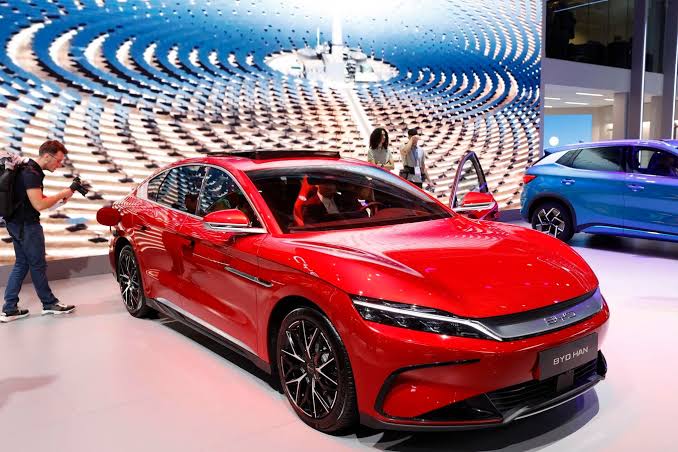
  • BYD Recalls Over 115,000 Vehicles Amid Safety Concerns: Tang And Yuan Pro Models Affected

    BYD Recalls Over 115,000 Vehicles Amid Safety Concerns: Tang And Yuan Pro Models Affected

    Chinese vehicle manufacturer BYD has announced its largest vehicle recall to date, affecting over 115,000 vehicles from the Tang series and Yuan Pro models produced between 2015 and 2022. The recall has been triggered by concerns regarding design defects and battery-related safety risks.

    Recall Details

    BYD has presented a plan to the State Administration for Market Regulation to recall 44,535 Tang series vehicles. These vehicles, produced between March 2015 and July 2017, have been identified as having potential component design flaws that may lead to abnormal functionality, according to the market regulator’s statement released on Friday.

    The recall also includes 71,248 Yuan Pro electric vehicles, produced between February 2021 and August 2022. These vehicles are being recalled due to issues related to the manufacturing process, specifically concerning the installation of the batteries.

    Previous Recalls

    This recall follows earlier instances where BYD had to recall vehicles due to safety concerns. In January, the company recalled 6,843 Fangchengbao Bao 5 plug-in hybrid off-road SUVs due to potential fire risks. Prior to this, nearly 97,000 vehicles from the Dolphin and Yuan Plus EV series were recalled due to a manufacturing fault in the steering control unit that posed a fire risk. This recall took place in September 2024.

    Questions & Answers

    What is the reason for BYD’s recall of its Tang series and Yuan Pro vehicles?
    The recall is due to identified design defects and battery-related safety risks in these vehicles.

    How many vehicles are affected by this recall?
    The recall affects over 115,000 vehicles, including 44,535 from the Tang series and 71,248 Yuan Pro electric vehicles.

    Has BYD had to recall vehicles in the past?
    Yes, BYD has had to recall vehicles in the past due to safety concerns. In January, the company recalled 6,843 Fangchengbao Bao 5 vehicles due to fire risks, while in September 2024, nearly 97,000 Dolphin and Yuan Plus EVs were recalled due to a manufacturing fault in the steering control unit that also posed a fire risk.

  • Tata Motors Restructures Into Two Entities, Aiming For Enhanced Business Focus

    Tata Motors Restructures Into Two Entities, Aiming For Enhanced Business Focus

    In a major strategic move, Tata Motors has announced a significant restructuring of its company. As of October 14th, the company was divided into two separate entities – Tata Motors Passenger Vehicles and TML Commercial Vehicles. Despite the split, the passenger vehicles division remained listed on the stock exchange under the name “Tata Motors.” However, this will change as of October 24th when the name will officially become “Tata Motors Passenger Vehicles,” complete with a new logo.

    Consolidation of Commercial Vehicle Division

    Tata Motors has also unveiled plans to consolidate its Commercial Vehicle (CV) division and all associated investments under one dedicated entity. Concurrently, the Passenger Vehicle (PV) business and its related assets will be placed in a separate company. This move is intended to streamline operations and create a sharper focus on the different business segments.

    The restructuring has had a notable impact on the company’s share price, which has seen a significant drop since the division was announced. This change, however, reflects the separation of the commercial vehicle business rather than a reduction in investor value.

    Specialized Entities for Robust Operations

    The restructuring has led to the formation of two specialized entities. Tata Motors Passenger Vehicles Limited will be responsible for cars, SUVs, EVs, and the Jaguar Land Rover business. In contrast, the newly formed Tata Motors Limited will concentrate exclusively on commercial vehicles like trucks, buses, and pickups. This strategic split is intended to enhance business focus and unlock greater value in India’s vibrant automotive sector.

    The newly formed Tata Motors Commercial Vehicles Limited (TMLCV) is set to be renamed Tata Motors Limited once the necessary regulatory approvals have been secured. Until then, TMLCV shares will remain unlisted, a process that typically takes between 45 to 60 days. Meanwhile, the previous derivative contracts expired on Monday, and fresh F&O contracts for Tata Motors Passenger Vehicles Limited (TMPVL) started trading on Tuesday. However, TMLCV won’t be available for F&O trading immediately.

  • Royal Enfield Himalayan 750: Anticipated Adventure Motorcycle Nears Market Debut In India

    Royal Enfield Himalayan 750: Anticipated Adventure Motorcycle Nears Market Debut In India

    Royal Enfield is reportedly in the process of introducing the Himalayan 750 model to the Indian market. This much-anticipated adventure motorcycle has been making regular appearances for some time. Recently, a new version of the Himalayan 750 was observed during testing within the country. Despite no official announcement of the launch date, the growing frequency of test sightings suggests that the motorcycle’s market premiere is imminent.

    Design and Features

    Royal Enfield has previously provided a preview of the Himalayan 750, which is to be introduced alongside the electric Himalayan motorcycle. The latest sightings suggest that this specific model will feature alloy wheels. This could indicate that the Himalayan 750 will be available in two versions at launch. In terms of design, the Himalayan 750 appears to share the taillight design with its 450 counterpart, and includes a single-sided upswept exhaust, a rear luggage rack, and bears a similar overall design to the Himalayan 450. The test vehicle was also spotted with a saree guard, which suggests that it is very close to being ready for production.

    As of now, the full list of features for the Himalayan 750 has not been revealed. However, the recently spotted test vehicle was seen with a tripper dash, indicating it will feature music control and Google Maps functionality, among other things.

    Performance Specifications

    The Royal Enfield Himalayan 750 is set to be the brand’s initial offering in the 750cc category. Its power unit is expected to be equipped with a slipper and assist clutch for smooth transmission. The 750cc engine is anticipated to deliver a power and torque output of approximately 55 hp and 60 Nm, respectively.

    Questions & Answers

    What is the latest on the Royal Enfield Himalayan 750?
    The latest model, which is expected to feature alloy wheels, has been spotted undergoing testing in India, suggesting it is nearing its market debut.

    What will the design of the Royal Enfield Himalayan 750 look like?
    The design appears to include a single-sided upswept exhaust, a rear luggage rack, a saree guard, and bears a resemblance to the Himalayan 450, particularly with its shared taillight design.

    What is expected of the Himalayan 750’s performance?
    The power unit is likely to be equipped with a slipper and assist clutch for smooth transmission, and the 750cc engine is anticipated to deliver a power and torque output of approximately 55 hp and 60 Nm, respectively.

  • Ferrari Unveils Unique Sound Strategy For First Electric Vehicle: Authenticity Over Simulation

    Ferrari Unveils Unique Sound Strategy For First Electric Vehicle: Authenticity Over Simulation

    Ferrari is on the brink of releasing its debut electric vehicle, causing mixed feelings amongst fans of the brand. Despite some concerns surrounding the introduction of an electric offering, the Maranello-based automaker is making concerted efforts to ensure that all aspects of the vehicle are perfected. Among these, significant attention is being given to the vehicle’s sound, which had been rumored to mimic that of a traditional internal combustion engine. Ferrari, however, has been transparent about its approach to the sound of their forthcoming electric model.

    Ferrari’s Authentic Sound Approach

    In a clear stance, Ferrari has dismissed the concept of simulating engine noises for their electric vehicle. Instead, the luxury car maker aims to embrace what it refers to as the ‘authentic’ sound of the motor. The company further expressed its intention to enhance the auditory output of the power units.

    If Ferrari can realize this goal, it could mark a significant moment within the automotive industry. Other traditional car manufacturers have grappled with the challenge of creating a satisfactory sound experience for electric vehicles. This comes in light of the absence of the familiar rumble found in performance vehicles powered by gasoline engines.

    Automakers have made numerous attempts at curating suitable sounds for electric vehicles to date. Notable examples include Dodge’s efforts using what was termed a “Fratzonic Chambered Exhaust”. In contrast, other manufacturers have opted to leave the natural sound of the electric motors untouched. Ferrari, however, is pursuing a unique strategy.

    Finding Inspiration in Unexpected Places

    The solution to Ferrari’s acoustic challenge was found in the unlikely form of an electric guitar. Inspired by the instrument’s engineering, Ferrari plans to capture and then enhance the vibrations generated by the drivetrain components. This optimal balance will be attained through a highly sensitive sensor positioned on the rear axle. This sensor will pick up the frequencies of the powertrain and amplify them, projecting the sound into the vehicle’s environment.

    The design approach specifically employs an accelerometer to capture vibrations from the drive unit, which are subsequently amplified to match the sound of the electric motor. Ferrari asserts that the resulting sound will provide practical utility, offering valuable feedback to the driver.

    Ferrari further clarified that the latency between the vibrations and sound is imperceptible to the human ear. During high-speed driving, the driver will be able to hear the motor accelerate, regenerate, or even disengage. This is due to the front motors of the forthcoming Elettrica model, which are designed with a disconnect feature, enabling the vehicle to switch to rear-wheel drive.

    Questions & Answers

    What approach to sound is Ferrari taking for its electric vehicles?
    Ferrari is aiming to capture and enhance the ‘authentic’ sound of the electric motor, rejecting the idea of simulating traditional engine noises.

    What technology is Ferrari using to capture the sound of its electric vehicles?
    Ferrari is using a high-precision sensor, similar to an accelerometer, positioned on the rear axle to capture the frequencies of the powertrain, which are then amplified and projected into the surroundings.

    What will the sound offer to the driver of the Ferrari electric vehicle?
    Ferrari claims that the resulting sound will be functionally useful, providing real-time feedback to the driver about the speed, regeneration, and engagement status of the motor.

  • After Flipkart, Royal Enfield Begins Selling 350 CC Motorcycles On Amazon

    After Flipkart, Royal Enfield Begins Selling 350 CC Motorcycles On Amazon

    Royal Enfield, a well-known motorcycle manufacturer, has recently made its entry into the online retail sector by offering its motorcycles for sale on Flipkart. Advancing its ventures in the e-commerce domain, the company has now disclosed its collaboration with Amazon India. This partnership expands consumers’ options for purchasing the company’s 350 cc range of motorcycles directly from these platforms.

    The array of motorcycles now accessible on Amazon includes the Royal Enfield Classic 350, Hunter 350, Bullet 350, Meteor 350, and Goan Classic 350. This offering mirrors the company’s previous approach with Flipkart, which excluded the more costly and larger models such as the Himalayan 450, Guerrilla 450, Scram 440, and the 650 cc range, including models like the Continental GT650, Interceptor 650, among others.

    Partnership Benefits

    Royal Enfield has communicated that its partnership with Amazon India will yield flexible payment options, thereby simplifying the process for customers to acquire a motorcycle. At present, these models are available in five cities, specifically Ahmedabad, Chennai, Hyderabad, New Delhi, and Pune, via a dedicated Royal Enfield brand store on Amazon.

    The company assures that deliveries and after-sales services will be handled by the dealership chosen by the customer in their city. Besides motorcycles, the online store also presents a range of accessories, riding gear, and merchandise. This step follows the company’s previous collaboration with Flipkart, which catered to customers in Bengaluru, Gurugram, Kolkata, Lucknow, and Mumbai.

    Questions & Answers

    What does Royal Enfield’s partnership with Amazon India entail?
    This collaboration enables the company to offer its 350 cc range of motorcycles directly on the Amazon platform. It also provides flexible payment options for customers.

    Which models are available through this online offering?
    The range includes the Royal Enfield Classic 350, Hunter 350, Bullet 350, Meteor 350, and Goan Classic 350.

    What additional services does Royal Enfield provide to online customers?
    In addition to delivering motorcycles, the company also offers after-sales services to be handled by the chosen dealership in the customers’ city. The online store features a variety of accessories, riding gear, and merchandise.