Category: Automotive

Retail News Asia is committed to providing both local and global retailers with the latest Auto and Car news throughout the Asian market. This on a daily base.

  • Brussels Urges Volkswagen To Compensate All EU Dieselgate

    Brussels Urges Volkswagen To Compensate All EU Dieselgate

    Brussels on Tuesday called on Volkswagen to pay out all European consumers – and not just German ones – affected by the “Dieselgate” scandal in which the automaker tampered with vehicle emissions to cheat pollution tests.

    EU Justice Commissioner Didier Reynders said in a statement that VW “is not willing to work with consumer organisations to find appropriate solutions for consumers,” noting that it so far is only making payouts to German and US purchasers of its affected vehicles.

    “All consumers need to be compensated,” Reynders said.

  • Vietnam’s carmaker VinFast eyes more countries for its European strategy

    Vietnam’s carmaker VinFast eyes more countries for its European strategy

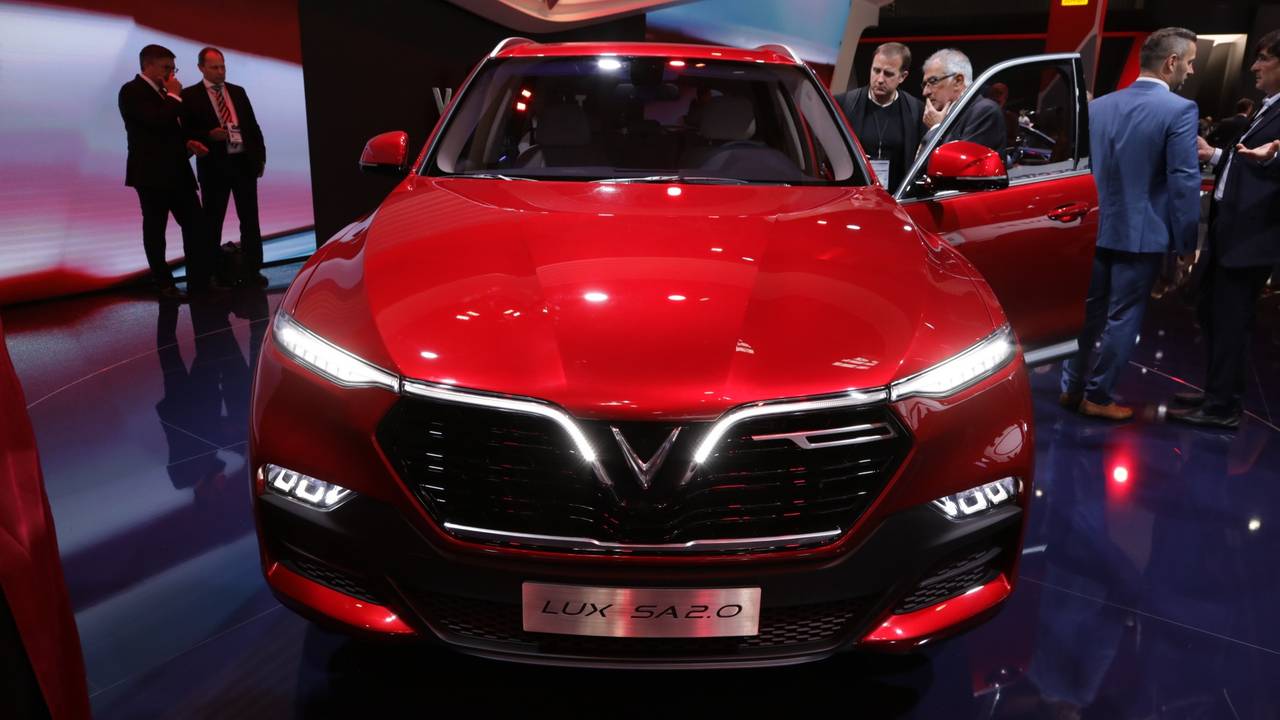
    Vietnamese carmaker VinFast could add other markets in 2023 to expand its European strategy beyond a planned debut in Germany, France and the Netherlands next year.

    The company, a unit of Vingroup Jsc, Vietnam’s largest conglomerate which some have called “Vietnam’s answer to Tesla,” will debut in Europe next year with two battery-electric SUVs models, the midsized VF e35 and the seven-seater VF e36, both designed by Italy’s Pininfarina.

    The two models launch in Vietnam, North America and Europe around mid-2022, after an unveiling planned later this year.

    VinFast became Vietnam’s first fully-fledged domestic car manufacturer when its first gasoline-powered models built under its own badge hit the streets in 2019.

    VinFast’s B2B Sales Vice President Emiel Hendriksen said on Thursday it was also looking at Italy, Scandinavia, Switzerland and Austria for a second step in its European strategy.

    “We’re considering those countries for 2023,” he said during a presentation at Pininfarina headquarters in Turin.

    VinFast will initially rely on a direct distribution model in Germany, France and the Netherlands, based on property showrooms, but could later consider an agency model for sales in other countries, Hendriksen said.

    The company sold about 30,000 vehicles domestically last year and had set a target of selling 15,000 electric vehicles in 2022, although its representatives did not provide detailed forecasts for the European market on Thursday.

    Earlier this year sources said parent Vingroup JSC was considering an U.S. initial public offering (IPO) of its car unit that could value VinFast at about $60 billion, though an initial second-quarter deadline for the deal mentioned by one of the sources was delayed.

    VinFast Europe CEO Bich Tran said any IPO decision was up to the company’s headquarters in Vietnam.

    “Our European plans are independent from any IPO. We’re carrying on with our plans, everything in Europe is moving as planned,” she said.

  • Volvo Cars To Go Leather-Free In All Pure Electric

    Volvo Cars To Go Leather-Free In All Pure Electric

    Volvo Cars is taking an ethical stand for animal welfare in its fully electric cars. Starting with the new C40 Recharge, all-new fully electric Volvo models will be completely leather-free. In the coming years, Volvo Cars will launch a completely new family of pure electric cars. By 2030 it aims to offer only fully electric cars – all of them leather-free.

    As part of its ambitions to go completely leather-free, Volvo Cars is working actively to find high-quality and sustainable sources for many materials currently used in the wider car industry. By 2025, the company is aiming for 25 percent of the material in new Volvo cars to consist of recycled and bio-based content, as it looks to become a fully circular business by 2040. As part of its climate action plans, it also aims for all its immediate suppliers, including material suppliers, to use 100 percent renewable energy by 2025.

    Volvo Cars has created a new interior material – Nordico. It will consist of textiles made from recycled material such as PET bottles, bio-attributed material from sustainable forests in Sweden and Finland, and corks recycled from the wine industry.

    The company’s move towards leather-free interiors is also driven by a concern about the negative environmental impacts of cattle farming, including deforestation. Livestock is estimated to be responsible for around 14% of global greenhouse gas emissions from human activity, with the majority coming from cattle farming.

    Instead of leather interior options, Volvo Cars will offer its customers alternatives such as high-quality sustainable materials made from bio-based and recycled sources.

    For example, Nordico, a new interior material created by Volvo Cars, will consist of textiles made from recycled material such as PET bottles, bio-attributed material from sustainable forests in Sweden and Finland, and corks recycled from the wine industry – setting a new standard for premium interior design. This material will make its debut in the next generation of Volvo models.

    Instead of leather interior options, Volvo Cars will offer its customers alternatives such as high-quality sustainable materials made from bio-based and recycled sources.

    Volvo Cars will also continue to offer wool blend options from suppliers that are certified to source responsibly, as the company looks to ensure full traceability and animal welfare in its wool supply chain. Volvo Cars is also looking to reduce the use of residual products from livestock production commonly used within or in the production of plastics, rubber, lubricants and adhesives, either as part of the material or as a process chemical in the material’s production or treatment.

    The company takes this step because it believes that while going leather-free is a step in the right direction, doing so alone does not make a car interior vegan.

    By aiming to actively replace these materials as much as possible, Volvo Cars takes a strong and ethical position to do what it can to help stop animal harm, by contributing to a reduced demand for these materials containing animal products.

  • Tesla Shanghai’s Jan-Sept 2021 Production To Reach 300,000 Units Despite Chip Shortage

    Tesla Shanghai’s Jan-Sept 2021 Production To Reach 300,000 Units Despite Chip Shortage

    Tesla’s Shanghai factory is expected to produce 300,000 cars in the first nine months of the year, capped by a delivery rush in the end of the July-September quarter, despite a global semiconductor shortage, two sources said. The factory makes the electric Model 3 sedans and Model Y sport-utility vehicles for domestic and international markets, including Germany and Japan.

    Around 240,000 vehicles were shipped from the factory in the first eight months, including many for export, according to data from the China Passenger Car Association. Tesla has not announced details on the factory’s production.An official in the area where Tesla’s factory is located said it is expected to produce 450,000 vehicles this year, including 66,100 for export.

    The sources requested anonymity, as they were not allowed to speak to media. Tesla did not immediately respond to a request for comment.

    In August, an official in the area where Tesla’s factory is located said it is expected to produce 450,000 vehicles this year, including 66,100 for export.

    Tesla is hiring managers for legal and external relations teams in China as it faces public scrutiny in the country over data security and customer service complaints.

  • ExxonMobil Launches Mobil Super TM SUV Pro Synthetic Engine Oil

    ExxonMobil Launches Mobil Super TM SUV Pro Synthetic Engine Oil

    ExxonMobil Lubricant has launched Mobil SuperTM SUV Pro synthetic engine oil for SUVs in India. Basically, the company is trying to tap into the growing demand for SUVs with the branding. The engine oil is based on ASTM D6891 (Seq. IVA) test results versus API SN engine test requirements. The company claims that it offers 79 percent better engine wear protection as well, especially in stop-and-go traffic conditions, and helps to improve fuel-economy.

    Deepankar Banerjee, Chief Executive Officer (CEO), ExxonMobil Lubricants Pvt Ltd. Said, “People are turning to SUVs to more easily maneuver through dense traffic, handle bad weather conditions, and drive over rugged terrain. To meet the needs of SUV owners, we are introducing Mobil Super SUV Pro which is specially formulated with active ingredients for SUV engines. Whether you use your SUV for daily commute or weekend drives, our new Mobil Super SUV Pro is packed with features to deliver All-in-One Protection for every terrain, making it easier for all SUV owners to care for their cars.”

    The engine oil has been developed to provide superior low-speed pre-ignition protection to prevent internal engine damage along with all-weather protection for longer engine life. It also provides heat-activated anti-wear protection. The Mobil Super SUV Pro is suitable for both diesel and petrol engines and meets American Petroleum Institute (API) SN Plus and European Automobile Manufacturers’ Association (ACEA) A3/B4 Standards. Mobil Super SUV Pro is available in 1, 3.5, and 5-litre pack sizes at Mobil Authorized Retail stores, Mobil Car Care stores and Amazon.

  • Royal Enfield To Witness Exit Of Key Management Personnel

    Royal Enfield To Witness Exit Of Key Management Personnel

    Royal Enfield is witnessing a shakedown in its top management, after Chief Executive Officer Vinod Dasari stepped down from his position in August 2021. The company’s COO B. Govindrajan has been appointed Executive Director to lead the company, and replace Dasari. Now, according to the latest reports, the company will likely see a fresh round of exits from its senior management. According to reports, Lalit Malik, the Chief Commercial Officer of Royal Enfield has already put in his papers, and Shubhranshu Singh, Global Head of Marketing is already serving his notice period.

    The resignations and shakedown in Royal Enfield’s senior management comes at a crucial time when the brand is expanding in overseas markets, to grab a leadership position in the mid-size motorcycle segment. With the launch of the Royal Enfield 650 Twins three years ago, Royal Enfield has been on the product offensive and has recently launched the all-new Classic 350, built around an all-new platform with the J-Series engine also shared with the Meteor 350. The shakedown in the top management couldn’t have come at a worse time, when multiple new products are being planned, with Royal Enfield planning to introduce a new product every quarter.

    In fact, other reports suggest that Royal Enfield has let go of nearly 100 employees as part of its annual performance review. The measures are being described as “right-sizing” the workforce as part of the brand’s Project Restore initiative. The initiative intends to attain a 25 percent operating margin for the brand, and average sales volumes of 50,000 units a month. In August 2021, Royal Enfield reported a 9 percent decline in monthly sales, with domestic sales slipping by 18 percent. The only silver lining is the 164 percent jump in exports, but overseas sales volumes are a meagre 6,790 units in August 2021, compared to domestic sales volumes of 39,070 units in the same month.

    The coming months will be critical for Royal Enfield, as the brand struggles to find replacements for its senior management, and at the same time, go forward with its new product offensive, as well as stabilize sales volumes.

  • Cadillac Lyriq Sold Out In 90 Mins

    Cadillac Lyriq Sold Out In 90 Mins

    The Cadillac Lyriq has been the long-talked-about electric SUV that the luxury brand by GM has been working on and already it has been sold out in 90 minutes. The car which is also due to come in 2022 and now Cadillac has announced the “Debut Edition” has been reserved. So far Cadillac has only opened reservations for the “Debut Edition”.

    The luxury EV play costs upwards of $60,000 and the car will have a 100 kWh battery that has 335 bhp in power and coughs up 482.8 kilometers of range. It even supports 19.2kW AC charging and can even do 190 kW DC fast charging. It is also one of the first cars to feature GM’s ADAS stack called Super Cruise powered by Cruise, the self-driving car company capitalized by GM.

    “2023 Cadillac LYRIQ Debut Edition reservations are full, but more vehicles will be available to order through your Cadillac dealer starting the Summer of 2022. Contact your dealer for more details,” announced Cadillac.

    Deliveries for the Lyriq are supposed to start in Q2 of 2022 but that could change considering the global semiconductor shortage. It joins the likes of the Ford F-150 Lightning and Tesla Cybertruck as major EVs that will be delivered to consumers in 2022. Rivian has already started deliveries of the R1T and will soon launch new trims of the car in 2022.

  • Honda Targets Annual Sales Of 70,000 Prologue Electric Vehicles In U.S. From 2024

    Honda Targets Annual Sales Of 70,000 Prologue Electric Vehicles In U.S. From 2024

    Honda Motor Co’s U.S. unit said on Monday it is targeting initial annual sales of 70,000 for its planned electric Prologue sport utility vehicle when it goes to market in 2024. Honda plans to add additional electric vehicle models as it aims to have sold a total of 500,000 electric vehicles in the United States by 2030, and to achieve 100% zero-emission vehicles sales in North America by 2040. It comes as President Joe Biden signed an executive order last month setting a target to make half of all new passenger vehicles sold in 2030 zero-emissions vehicles.

    The Honda Prologue is being co-developed with General Motors Co and is based on the Detroit automaker’s Ultium platform, a modular platform and battery system. Honda and GM are also co-developing an electric Acura-brand SUV. GM will assemble the Prologue and the Acura SUV — both of which will go on sale in 2024 — but Honda has not disclosed which plant will build the vehicles or the name or volume targets for the Acura.

    Following the GM-built models, Honda will introduce a series of electrified vehicles through 2030 based on the Honda-developed e-Architecture, a new EV platform led by Honda, and will assemble electric vehicles at Honda plants in North America.

    Dave Gardner, executive vice president of national operations at American Honda Motor Co, said in a statement Honda will initially focus Prologue sales on California and other states like Texas and Florida. He said Honda plans to add hybrid-electric systems to more U.S. models. “Our strategy is focused on introducing a higher percentage of hybrids in core models in the near term, making a committed effort to achieve higher volume leading to the introduction of our Honda Prologue,” Gardner said.

  • China Tells Firms To Boost Cyber, Data Security Oversight On Connected Vehicles

    China Tells Firms To Boost Cyber, Data Security Oversight On Connected Vehicles

    China’s industry ministry published a notice on Thursday telling companies to step up cyber and data security oversight over connected vehicles, saying that security risks in the industry had become increasingly prominent.

    All relevant companies should establish data security management systems and regularly assess risks from network attacks, the Ministry of Industry and Information Technology said in a statement.

  • Stellantis To Push Into Challenging Indian Market With Citroen

    Stellantis To Push Into Challenging Indian Market With Citroen

    Carmaker Stellantis plans to launch a new model in India and Latin America next year under its Citroen brand, the group said on Thursday, as it aims to push out of its European turf and branch further into emerging markets where it has less exposure.

    The plan marks Citroen’s return to India, a market it left in the 1930s, and comes at a time when some other foreign carmakers are leaving the country after struggling to make a profit.

    Stellantis, which was formed earlier this year by the merger between Fiat Chrysler and Peugeot-maker PSA, has brands like Jeep and Ram in the United States, but is still aiming to reduce its reliance on Europe.

    The company said it plans to produce a new version of the Citroen C3, positioned as a city car in Europe, in India and Latin America for launch in the second half of 2022.

    Citroen said it would be the first of three models which it will produce and aim at India and Latin America over the next three years.

    Stellantis has said it expects India to become the world’s third-biggest car market after China and the United States by 2030 with total new cars in the country reaching 4-5 million cars a year.

    Still, the country has proved challenging for many foreign carmakers, which compete with local manufacturers such as Maruti Suzuki there as well as South Korea’s Hyundai. Ford last week said it was stopping production in India.

    Stellantis aims to grow sales outside Europe to 30% of its revenue by the middle of this decade, compared to 15% now.

  • Lightyear Raises $110 Million To Bring Its Solar Electric Car To Market

    Lightyear Raises $110 Million To Bring Its Solar Electric Car To Market

    Lightyear which is a startup that has been developing electric cars based on solar power has announced a $110 million in a round of funding that will enable it Bira its vehicle to the markets The company came to prominence when it was spun out of Solar Team Eindhoven which was basically a group of engineering students from the Technical university of Eindhoven who were competing in the world solar challenge with their  Stella and Stella Lux energy positive solar cars. These cars were producing more energy than they consumed.

    The Solar Team Eindhoven even recently unveiled a solar RV also, but Lightyear has graduated to becoming a full fledged automotive player than a college project. The project which was announced back in 2019 promised an electric sedan with integrated solar cells and that enabled it to give a whopping range of 725 kilometres based on the WLTP cycle.

    The team at Lightyear has made bold claims of an 724 kilometre range

    “We reached the $110 million funding milestone with the help of one of the largest international insurers in the Netherlands, Cooperation DELA. This investment aligns with their long-term focus on sustainability. Together, we can work on our shared mission of bringing clean mobility to everyone, everywhere,” said the company.

    “It is great to see the acknowledgment from investors, which is a testament to the confidence that they have in Lightyear. Thanks to the trust and funding received from our investors, we can further grow as a company and bring our Lightyear One exclusive model on the market in 2022,” said Lex Hoefsloot, the CEO and cofounder of the company.

    It still plans to deliver the first units to the market in 2022 but it must be noted that this car will not come cheap as it will cost upwards of $100,000 at around $170,000 for a starting price.

  • Covid restrictions put the brakes on car sales

    Covid restrictions put the brakes on car sales

    The Vietnam Automobile Manufacturers Association said its members sold only 7,714 vehicles in August, the lowest number in seven years.

    Their sales were down 68 percent year-on-year for the month and 47 percent from July.

    The Vietnam Automobile Manufacturers Association said its members sold only 7,714 vehicles in August, the lowest number in seven years.Their sales were down 68 percent year-on-year for the month and 47 percent from July.

    It marked the fifth consecutive month of decline for the industry, which attributed the slump to social distancing amid Covid-19 in many provinces and cities, especially Hanoi and Ho Chi Minh City.

    The country’s largest automaker and non-member TC Motor, which assembles Huyndaicars, saw sales plummet by 60 percent year-on-year in August to 2,182.

    VAMA members have sold 157,777 vehicles so far this year, up 8 percent from 2020.

    Car sales increased sharply in the second half of 2020 after a 50 percent cut was made to registration fees, which are substantial at 10-12 percent of the vehicle price. There have been no rate cuts this year.

    TC Motor’s sales for the year were down 2 percent to 40,248 units, the first time ever its sales have declined.

  • Tesla Rolls Out FSD Beta V10 To Early Access Fleet

    Tesla Rolls Out FSD Beta V10 To Early Access Fleet

    Predictably, and for once on time, Tesla has rolled out the v10 of the full self-driving beta software which Elon Musk described as mind-blowing just a few weeks ago. Perhaps, as most have noticed, the most mind-blowing thing is that Tesla and Musk delivered.

    The software enables the self-driving capability for Tesla’s EVs that have the full self-driving package, but this capability is still adorned with astrix of level 2 autonomous capability, not level 4 which is the bare minimum number for self-driving cars that can operate in a hands-free manner.

    Elon Musk had indicated earlier that the full self-driving software will be deployed soon when it hits v10 which now it has at least for the early access fleet, but soon if it is bug-ridden, it could be deployed to a wider audience. Many users have started reporting that they have received the update and posted screenshots of the same on Twitter.

    One of the more notable changes is that the driver visualizations have been updated with a more modern and minimal look. Elon Musk has promised that it could be there for many other users by the end of the month with a download button in the offing but Musk has flattered to deceive not once but on numerous occasions.

    Tesla announced earlier in the year that will stop using radars on its cars and will have a vision-based self-driving system that will use algorithms trained on its Dojo supercomputer which are processed on the device on the FSD computer on the vehicle itself. This has led some authorities to downgrade the safety rating of Tesla vehicles.

  • Apple Adds More Drivers For Testing Self Driving Cars In California

    Apple Adds More Drivers For Testing Self Driving Cars In California

    It is no secret that Apple is lagging behind the likes of Google, Aurora, Cruise, Tesla, and many more when it comes down to self-driving technology. It even lost its lead of project titan aka the Apple Car project – Doug Field – to Ford recently. But now there are signs that it is ramping up testing of its self-driving car software with it increasing the number of pilots it has for tests in the last month.

    In August, Apple’s autonomous driving program consisted of 69 vehicles and 92 pilots as per a filing with the California DMV. Now that number has risen to 114 registered drivers as of September 10 which is just last week. This number is still lower than the peak of 154 drivers which was achieved in October 2020. There are signs that Apple is increasing its fleet after almost halving it in 2020.

    Waymo and Cruise have the most vehicles with each having 616 and 201 autonomous cars on the prowl in California. Apple just has 69 cars and is yet to apply for a driverless permit. DMV filings also reveal that Apple’s vehicles were involved in two collisions since last August achieving a total of five in the year. It has been reported that Apple’s system for autonomy disengaged at the time of the accident and the other vehicle was to blame for the two recent incidents.

    Apple has been developing a self-driving system for the last couple of years and this system will be applied to a chassis that will be powered by an electric powertrain with unique battery technology. Recently, after the exit of Field, Apple elevated Apple Watch software boss and healthcare head, Kevin Lynch to being the head of the Apple Car project. Lynch himself reports to Apple COO Jeff Williams and the overall project is under Apple AI chief and senior VP, John Giannandrea.

    Apple has been also on the lookout for a manufacturing partner having had chats with Hyundai, Magna, Kia, Toyota and Nissan for a contract manufacturer agreement, something that’s yet to be closed. Many believe Apple could be launching its car by 2025, but many Apple watchers believe that may not be true and the project isn’t as further along as many believe. Regardless, this will like also be the last major product launch under CEO Tim Cook who has been at Apple since 1998 and recently completed a decade at the top of the Silicon Valley giant.

  • General Motors Invests In Oculii, Radar Software Maker For Self-Driving Cars

    General Motors Invests In Oculii, Radar Software Maker For Self-Driving Cars

    General Motors Co’s venture capital arm has invested millions of dollars in Oculii, a U.S. startup maker of software for radar sensors used in self-driving cars, Oculii co-founder Steven Hong said. GM can use Oculii’s low-cost software to boost the resolution of radars and scale up its partially automated vehicles and full self-driving cars, he told Reuters in an interview.

    The investment is a “fantastic signal they’re serious about the technology and bullish about radar in general,” said the Stanford University graduate who founded Oculii with his father, Lang Hong, an engineering professor at Wright State University. He declined to disclose the financial details.

    Tesla Inc eliminated radar sensors from its volume models this year, rekindling questions about the safety and performance of its advanced driver assistant system. Radars, which measure the distance between objects, enable a car to accelerate or brake to match its speed with that of the vehicle in front. Radars also work well in adverse lighting and weather conditions. Tesla Chief Executive Elon Musk has called additional sensors like lidars and radars “crutches,” doubling down on cheaper cameras and artificial intelligence for its driving automation system.