Category: Automotive

Retail News Asia is committed to providing both local and global retailers with the latest Auto and Car news throughout the Asian market. This on a daily base.

  • Mounting An iPhone On Your Motorcycle Could Lead To Camera Damage

    Mounting An iPhone On Your Motorcycle Could Lead To Camera Damage

    Tech giant Apple has issued a new warning for iPhone users particularly those who ride motorcycles. The company has shared a support document that suggests that mounting your iPhone on the motorcycle could lead to potential damage to the device. The damage would extend to the camera, which could result in the camera module being broken. The iPhone’s optical image stabilization (OIS) could be damaged as a result of the prolonged vibrations, bringing a drop in the camera quality.

    In its statement, Apple said, “Exposing your iPhone to high amplitude vibrations within certain frequency ranges, specifically those generated by high-power motorcycle engines, can degrade the performance of the camera system.” The manufacturer further added that long-term direct exposure to high-amplitude vibrations within certain frequency ranges may degrade the performance of these systems and lead to reduced image quality for photos and videos. It is recommended to avoid exposing your iPhone to extended high-amplitude vibrations.”

    The issue though isn’t just with Apple but most modern smartphones equipped with OIS and another tech to help you take better shots and iron out movement, vibrations, and other effects. The issue is specific to high-powered motorcycles that are heavy on vibrations, which travel from the engine to the handlebar.

    Essentially, the Apple iPhone’s camera module comprises a sensor that helps compensate for your hand movements to help you get a more stable shot. The sensor moves using little springs correcting the little undulations. On a modern-day iPhone 12 Pro, the camera module can move up to 5,000 times per second. When the iPhone is exposed to the vibrations for a prolonged period, the springs connected to the sensor break. That’s when the phone won’t be able to focus correctly and will give you random blurriness in the pictures instead. This will also extend to the video that will record without clarity.

    A simple way to counter this issue is to use a high-quality phone case that gives the phone enough protection from vibrations. However, it does not completely protect your iPhone camera from damage.

  • Sales Of Maruti Suzuki Ciaz Crosses The Three Lakh Milestone

    Sales Of Maruti Suzuki Ciaz Crosses The Three Lakh Milestone

    Maruti Suzuki reports that the total sales of the Ciaz sedan have crossed the three lakh milestone. The Maruti Suzuki Ciaz was launched in 2014 and it becomes the fastest model in its segment to achieve the landmark. The Ciaz is offered only with a 1.5-litre petrol engine which makes 102 bhp at 6,000 rpm against 138 Nm at 4,400 rpm. Customers can choose between a 5-speed manual gearbox and a 4-speed torque converter automatic unit. Prices for the Maruti Suzuki Ciaz start at ₹ 8.72 lakh and go up to ₹ 11.71 lakh (ex-showroom, Delhi).

    Speaking on the milestone, Shashank Srivastava, Senior Executive Director, Maruti Suzuki India Limited, said, “Since its launch in 2014, Ciaz has redefined the segment with its class-leading space, design and sophistication & has witnessed a resounding success in the highly competitive premium sedan segment. The milestone of 3 Lakh sales demonstrates customer’s faith and confidence in the brand”.

    Recently, Maruti Suzuki issued a massive recall for petrol models of the Ciaz, Ertiga, Vitara Brezza and XL6 vehicles. According to the company’s regulatory filing on the Bombay Stock Exchange, a total of 181,754 units, manufactured between May 4, 2018 and October 27, 2020, are said to be affected. The carmaker has said that the recall is for the inspection and replacement of the vehicle’s motor generator unit, which may have a potential safety defect. The company further stated that the inspection and replacement will be done free of cost.

  • Vietnam’s biggest auto expo canceled again

    Vietnam’s biggest auto expo canceled again

    The Vietnam Motor Show, the biggest automobile expo in the country, has been canceled for the second year running over Covid-19 impacts.

    This year’s show was originally scheduled to be held next month.

    Members of the Vietnam Automobile Manufacturers’ Association (VAMA) and the Vehicles Importers Vietnam Association (VIVA) said in a joint statement the VMS 2021 has been canceled as was VMS 2020.

    Earlier, the VMS 2021 organization board had planned to postpone the expo to the last week of November or the second week of December, but found that such plans were not feasible. The board is expected to make an official announcement about the cancellation soon.

    The VMS 2019 in HCMC drew the participation of 15 firms that displayed over 100 new cars. Many firms in the supporting industry also participated in the event that drew over 200,000 visitors.

    Vietnam’s car sales rose 27 percent year-on-year to over 166,500 units in the first seven months, thanks to a surge in the first quarter.

  • Volvo’s Global Sales Down By 10% In August

    Volvo’s Global Sales Down By 10% In August

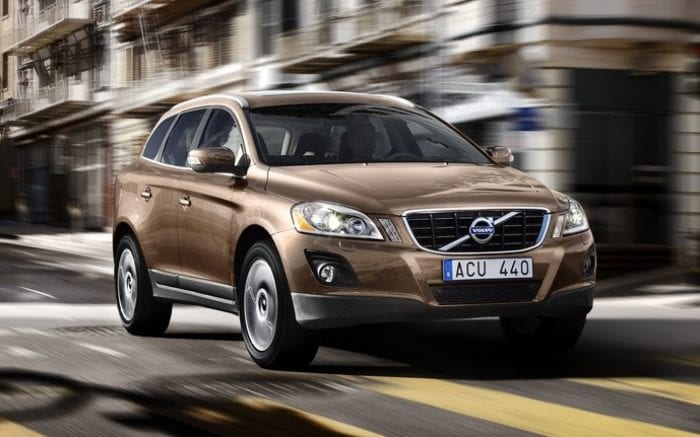
    Volvo Cars reported global sales of 45,786 cars in August, down 10.6 percent compared with the same period last year. Overall underlying demand in the car industry and for Volvo Cars’ products remained very robust. Since mid-July, supplier shut-downs due to Covid-19 in South East Asia, especially in Malaysia, has worsened an already strained supply situation. These material shortages have led to temporary production halts at Volvo Cars’ facilities in Sweden, Belgium, China and the US, with reduced production volumes as a result.

    Volvo Cars continue to monitor the situation and currently expects that, for the second half of 2021, it will be challenging to achieve the volume levels achieved during the same period in 2020. This will have an impact on revenue and profit. In the first eight months of the year, the company sold 483,426 cars globally, up 26.1 percent compared with the same period last year.

    The sales of Volvo Cars’ Recharge line-up of chargeable models remained strong and accounted for 24.2 percent of all cars sold in the month. In Europe, Volvo Cars reached an all-time high as 47.0 percent of all cars sold in August were from the Recharge line-up.

    The US reported a solid sales performance in August with 10,686 cars sold, a 3.0 percent increase compared with the same period last year. The increase was led by strong customer demand, mainly for the XC90 – which was the best-selling model – followed by the XC60.

    In Europe, Volvo Cars reached an all-time high as 47.0 percent of all cars sold in August were from the Recharge line-up.

    For the month of August, sales in China were impacted by the Covid-19 outbreaks in South East Asia. This led to lowered retail deliveries despite strong underlying demand and order intake. Total volumes for the month reached 13,112 cars, down 17.2 percent compared with August last year.

    European sales for the month were 13,052 cars, a 25.4 percent decline compared with the same period last year. The decline in sales was related to the material shortage, which affected the production volumes and, consequently, the sales performance in the region.

  • Hyundai’s Global Sales Down By 7.6 Percent In August 2021

    Hyundai’s Global Sales Down By 7.6 Percent In August 2021

    Hyundai Motor Company has announced its global sales for the month of August 2021. Compared to 318,700 units sold in August 2020, the automaker recorded a decline in sales of 7.6 percent as it sold 294,591 units in the last month. On a month-on-month (MoM) basis, Hyundai recorded a de-growth of 6 percent selling 313,451 units in August 2021. The automaker expects the sales could drop further for the rest of this year amid adverse business conditions caused by issues like global chip shortage and COVID-19 resurgence.

    Sales at Hyundai’s home market, Korea, slipped by 6.5 per cent year on year to 51,034 units. Compared to 59,856 units sold in July 2021, the carmaker has registered a Month-on-Month (M-o-M) de-growth of over 14 per cent. The carmaker says the sales were mainly affected due to the COVID-19 resurgence and the disruption of the semiconductor supply chain.

    For markets other than Korea, sales declined 7.8 percent to 243,557 units compared with 264,110 units a year earlier. On a month-on-month (MoM) basis, the automaker witnessed a drop of 4 per cent selling 253,595 units in July 2021.

    Last month, Hyundai has recorded a 2.3 percent growth in India.

    However, there was good news emerging out of India as the carmaker saw a growth of 2.3 percent last month. The South Korean automaker sold 46,866 units last month compared to 45,809 units sold in the corresponding month in 2020.

  • German Decision On Tesla Subsidies Expected By End Of Year

    German Decision On Tesla Subsidies Expected By End Of Year

    Germany will probably decide by the end of the year how much state aid U.S. electric vehicle maker Tesla will receive for its planned battery cell factory near Berlin, an economy ministry spokesperson said on Sunday. The European Union in January approved a plan that includes giving state aid to Tesla, BMW and others to support the production of electric vehicle batteries and help the bloc to reduce imports from industry leader China.

    The EU’s approval of the 2.9 billion euro ($3.45 billion) European Battery Innovation project, which includes more than 40 companies, follows the launch in 2017 of the European Battery Alliance to support the industry during the shift away from fossil fuels.

    The European Union in January approved a plan that includes giving state aid to Tesla, BMW and others to support the production of electric vehicle batteries.

    Tesla plans to invest 5 billion euros in its battery cell factory at Gruenheide near Berlin to complement its nearly finished electric car factory at the same location, according to estimates from the German economy ministry.

    The unusually high investment volume means that the U.S. car manufacturer can count on German state subsidies of 1.14 billion euros, Tagesspiegel newspaper reported on Sunday.

    This chimes with a February report by Business Insider, which said Tesla stands to receive at least 1 billion euros in public funding from Germany for setting up its battery cell factory near Berlin.

    The economy ministry spokesperson said there was no final sum yet because talks with the carmaker and the European Commission are ongoing, adding that a final decision is likely before the end of the year.

    Tesla Chief Executive Elon Musk last month said he hoped the first cars at its planned gigafactory in Gruenheide could be built in October or soon afterward.

    Tesla CEO Elon Musk last month said he hoped the first cars at its planned gigafactory in Gruenheide could be built in October or soon afterward.

    Tesla has pushed back the expected opening of the gigafactory to late 2021, blaming German bureaucratic hurdles. The plant has also faced local resistance because of environmental concerns.

    Economy Minister Peter Altmaer last Thursday said that carmaker Opel will receive a 437 million euro government grant for its battery cell factory in Kaiserslautern as part of the wider European initiative to create a homegrown battery industry.

  • Tesla’s China Output Was Halted For Days In August Due To Chip Shortage

    Tesla’s China Output Was Halted For Days In August Due To Chip Shortage

    Tesla temporarily halted some operations at its Shanghai factory last month as the global shortage of semiconductors hit the electric car maker, Bloomberg News reported on Thursday, citing people familiar with the matter.

    Part of a production line at the China plant was halted for about four days in August because of a lack of key chips, the report said.

    Shortages with the availability of electronic control units caused output delays mainly for Tesla’s Model Y sports utility vehicle crossover, according to the report.

    Production at the Chinese factory is now back to normal.

    Tesla did not immediately respond to a query on the report.

    Last month, world’s largest automaker Toyota Motor Corp said it would slash global production for September by 40% from its previous plan following car makers worldwide in cutting production due to the months-long chip shortage.

  • Chinese EV Maker Nio Cut Sales Forecast Due To Chip Supply Shortage

    Chinese EV Maker Nio Cut Sales Forecast Due To Chip Supply Shortage

    Chinese electric vehicle (EV) maker Nio Inc on Wednesday cut its delivery forecast for the third quarter this year due to uncertain and volatile semiconductor supplies. Nio cut its delivery forecast for the third quarter to around 22,500 to 23,500 vehicles from a previous 23,000-25,000 vehicles. It delivered 5,880 electric sports-utility vehicles last month, up 48% from a year earlier.

    Li Auto Inc, which sells extended-range electric vehicles, said it sold 9,433 vehicles last month, up 248% from a year earlier. It targets 10,000 units monthly sales in September. Xpeng Inc sold 7,214 cars in August, up 172% year-on-year. Its chief executive He Xiaopeng said it expects monthly deliveries to reach 15,000 units in the final quarter this year.

    A prolonged global chip shortage has caught major automakers including Ford Motor, Honda Motor, General Motors, and Volkswagen off guard, forcing many to idle or curtail production. The shortage was unlikely to resolve soon as the pandemic rages on in many parts of the world, China’s top auto industry body said last month. U.S. listed shares of Nio were down 4.3% at $37.63 in premarket trading, while Xpeng fell more than 2%. Li Auto, Nio, and Xpeng are three leading Chinese EV startups that compete with U.S. electric car maker Tesla Inc and local companies including Geely and Great Wall Motor.

    Separately, Tesla had sold 32,968 China-made vehicles in July, including 24,347 for export, according to data from the China Passenger Car Association last month. However, local sales of China-made Tesla vehicles had plunged 69% month-over-month to 8,621 cars in July. The company makes electric Model 3 sedans and Model Y sport-utility vehicles in a Shanghai plant. China sales, which account for nearly a third of its total sales, is closely watched as a sign of the automaker’s health in its second-biggest market, where it has invested heavily.

  • China’s Xiaomi Completes Business Registration Of Electric Vehicle Unit

    China’s Xiaomi Completes Business Registration Of Electric Vehicle Unit

    Chinese smartphone giant Xiaomi Corp said on Wednesday it has completed the official business registration of its electric vehicle unit, marking the latest milestone in its push into the automotive sector. The new unit, to be called Xiaomi EV Inc, opened with registered capital of 10 billion yuan ($1.55 billion) and Xiaomi CEO Lei Jun as its legal representative, Xiaomi said in a statement. Some 300 staff have so far been employed to join the EV unit and it continues to recruit talent, it said.

    The smartphone maker, which became the world’s second top-selling brand behind Samsung in the second quarter, confirmed its foray into electric cars in March, pledging to invest $10 billion over the next 10 years.

    Lei said at the time the push into electric vehicles would mark his “last major entrepreneurial project.”

    Xaiomi said it purchased autonomous driving technology startup Deepmotion for over $77 million.

    Xiaomi said on Wednesday it has since conducted more than 2,000 interview surveys and visited over 10 industry peers and partners. However, it has revealed few details of its strategy for the automotive sector or vehicle types it intends to launch.

    Last week, the company said it purchased autonomous driving technology startup Deepmotion for over $77 million, in an effort to boost research and development.

    Earlier in August, Reuters reported that Xiaomi had entered talks with beleaguered real estate giant Evergrande Group to purchase a stake in the latter’s automotive unit.

    In response to the news, a Xiaomi spokesperson wrote on the company’s social media account that it is in touch with several automakers but has yet to decide which one to work with.

    Xiaomi’s second-quarter earnings last week beat analyst estimates, with revenues and net profits increasing 64% and 87.4% respectively. The company’s share of the global smartphone market has surged following the retreat of its chief rival, Huawei Technologies Co Ltd in the face of U.S. government sanctions.

  • Suzuki Expects 60% Drop In September Production Due To Chip Shortage

    Suzuki Expects 60% Drop In September Production Due To Chip Shortage

    India’s top carmaker Maruti Suzuki said on Tuesday that the global chip shortage will hurt production at its plants in the states of Haryana and Gujarat in September. Total production volume across both locations could be around 40% of normal output, it said in a regulatory filing.

    Top Indian carmakers, like their global peers, have been hit by semiconductor supply chain disruptions during the pandemic, which drove up demand for chips used in electronics like computers as people worked from home, and hit output at many automakers.

    Tata Motors and Mahindra and Mahindra Ltd have already warned of the impact from rising commodity prices and a global shortage of semiconductors, combined with pandemic uncertainty.

    In July, Tata Motors said it expected the chip supply crunch in the second quarter to be greater than in the first, likely resulting in wholesale volumes for its Jaguar Land Rover to be about 50% lower than planned.

    Analysts earlier said Maruti was better positioned than rivals as it was not dependent on a single vendor for chips.

    However, Maruti Chairman RC Bhargava has indicated the semiconductor crisis was not over and that it is difficult to predict what happens next.

  • Kia Workers Accept Wage Deal Without Strike For The First Time In A Decade

    Kia Workers Accept Wage Deal Without Strike For The First Time In A Decade

    Workers’ Union at Kia Motors has voted to accept the company’s wage proposals without a strike for the first time in 10 years. According to a report from IANS, the carmaker said that 68 percent of 26,945 workers have voted in favor of the wage, which includes an increase of 75,000 won ($64.30) in monthly basic pay, two months of wages in performance-based pay, and cash bonuses worth 5.8 million won. The report also mentioned that over 1,600 out of the 28,604-member union abstained.

    The company has rejected the Union’s demand to extend the retirement age from current 60 to 65, however, the company reinstated fired workers.

    The automaker and the workers’ Union reached a tentative wage deal early this week without staging a strike amid the ongoing COVID-19 pandemic. This is the first time that Kia will sign a wage deal without industrial actions. They will sign the wage agreement on Monday.

    Last month, Hyundai Motor Company and its union signed this year’s wage deal without strikes for the third consecutive year.

  • Ferrari Boss Has No Fears Over Electric Future

    Ferrari Boss Has No Fears Over Electric Future

    Ferrari, the sports car maker synonymous with roaring petrol engines, welcomes the shift to electric powertrains and is confident of retaining its lead in the market for high-performance cars, its chairman said on Monday.

    The European Union last month proposed an effective ban on the sale of new petrol and diesel cars from 2035 as part of its measures to combat global warming, posing a challenge to automakers that have made powerful engines a key selling point.

    But Ferrari Chairman and acting CEO John Elkann told analysts on Monday the company known for its ‘Prancing Horse’ logo saw the change in technology as an opportunity.

    “We see the regulation as welcome,” Elkann said, as Ferrari stuck to its main 2021 targets after reporting second-quarter core profits just ahead of expectations.

    “The opportunity set by electrification, electronics, and other technologies that are coming available will allow us to make even more distinct and unique products,” he said.

    Elkann, the scion of Italy’s Agnelli family which controls Ferrari through its investment company Exor, was speaking weeks before new CEO – technology industry veteran Benedetto Vigna – takes the helm on Sept. 1.

    One of Vigna’s tasks could be to forge new partnerships, along the lines of Ferrari’s existing tie-up with Britain’s Yasa, now part of Daimler, to help with the shift to an electric era, Elkann said.

  • Tesla Updates Mobile App With New User Interface & Features

    Tesla Updates Mobile App With New User Interface & Features

    Tesla has released version 4 of its mobile app which receives a massive overhaul of the user interface and adds a ton of new features. Users can unlock their vehicles using the app and remotely also manage the climate control system of the car apart from many other connected car functions. Version 4 is clearly the most comprehensive update to the app.

    Via the app users can also access the after-sales experience and book the car for servicing and repairs. It also lets users know the charge levels of the car remotely which is quite critical.

    Here are the new features that Tesla lists in its official release notes:

    — Refreshed vehicle and energy homepage
    — Streamlined Summon experience
    — Enhanced phone key support – vehicle no longer needs to be selected
    — Send commands to vehicle immediately upon opening app
    — Use Go Off-Grid to seamlessly disconnect your home from the Grid with Powerwall
    — Shop the Tesla catalog and view and manage your orders (available in select countries)
    — View Supercharging history and ability to pay outstanding Supercharging or service balance (available in select countries)

    Tesla is one of the first automotive companies to push over the air updates and has its own app.

    Tesla has also added support for widgets on iOS which was introduced in iOS 14 last year. Tesla has also added the supercharger billing experience in the app which comes at a time when the manufacturer is opening up the network to third-party vehicles.

    This update comes at a time when Elon Musk has said that it is close to rolling out its full self-driving software to users who opted for the package. Musk estimates after the release of the next beta, in 4 weeks the software update should be rolled out to users.

  • Tesla Plans To Deploy FSD Software To Public In Four Weeks

    Tesla Plans To Deploy FSD Software To Public In Four Weeks

    Tesla has said that it plans of releasing the final version of its full self-driving software to the public in a month’s time. As of now it is still in a beta stage being tested by internal Tesla employees and members of the beta program. This program has been ongoing for almost a year now. This software is different from AutoPilot as it allows the car to drive by itself using computer vision on highways and city streets. This, however, is still considered to be level 2 autonomous system.

    Recently, Tesla’s CEO revealed that the current beta build of the FSD software 9.2 isn’t great but he has noticed great improvements in the 9.3 software which is he already using. Elon Musk had stated that the program will come out of beta once it hits version 10. The FSD software has been promised to users who have opted for the FSD package. This release has been in limbo for a while.

    Now, Musk has announced plans to accelerate the release stating that v10 of the software will be pushed to early access members in a beta stage next week. Musk expects testing for the v10 build to last 4 weeks before a wider release.

    “We should be there with Beta 10, which goes out a week from Friday (no point release this week). It will have a completely retrained NN, so will need another few weeks after that for tuning & bug fixes. Best guess is a public beta button in less than 4 weeks,” he said.

    This release is going to be an over-the-air update for the folks who have purchased the FSD package and will be downloadable by a push of a button. Tesla has moved to a full vision-based system for its autonomous technology using cameras on its cars that ping back some data to its Dojo supercomputer which trains algorithms using a neural network. Tesla’s process the information based on these algorithms in real-time using a the FSD chip that’s present on many of its vehicles.

    Tesla will deploy the next generation of its FSD hardware next year with a new chip and camera system that Musk says will debut with the Cybertruck.

  • 95 pct made-in-Vietnam auto parts for foreign brands

    95 pct made-in-Vietnam auto parts for foreign brands

    Nearly 95 percent of auto parts produced in Vietnam are for foreign brands, showing a lack of localization in the industry.

    Of the 287 items that have been approved by the Ministry of Science and Technology as of Aug. 17, 15 were registered for VinFast cars.

    The rest were all for foreign brands. A total 226 were for Toyota, 15 for Ford and 10 for Honda.

    This means Toyota accounts for nearly 79 percent of the registered items.

    None of these items include parts for Hyundai and Mazda vehicles, although TC Motor (which assembles Hyundai cars) and Thaco (which assembles Mazda cars) have both previously affirmed they had “high” localization rates.

    TC Motor claims the rate at around 20 percent.

    Most parts are frames, chairs, and wires that are considered basic. There are no complicated parts like engines and gearboxes.

    Vietnamese officials have been calling for a higher localization rate of cars produced in the country for over two decades but the target has not been achieved.