Category: Automotive

Retail News Asia is committed to providing both local and global retailers with the latest Auto and Car news throughout the Asian market. This on a daily base.

  • Czech Car Sector To Make 250,000 Fewer Vehicles This Year Due To Chip Shortage

    Czech Car Sector To Make 250,000 Fewer Vehicles This Year Due To Chip Shortage

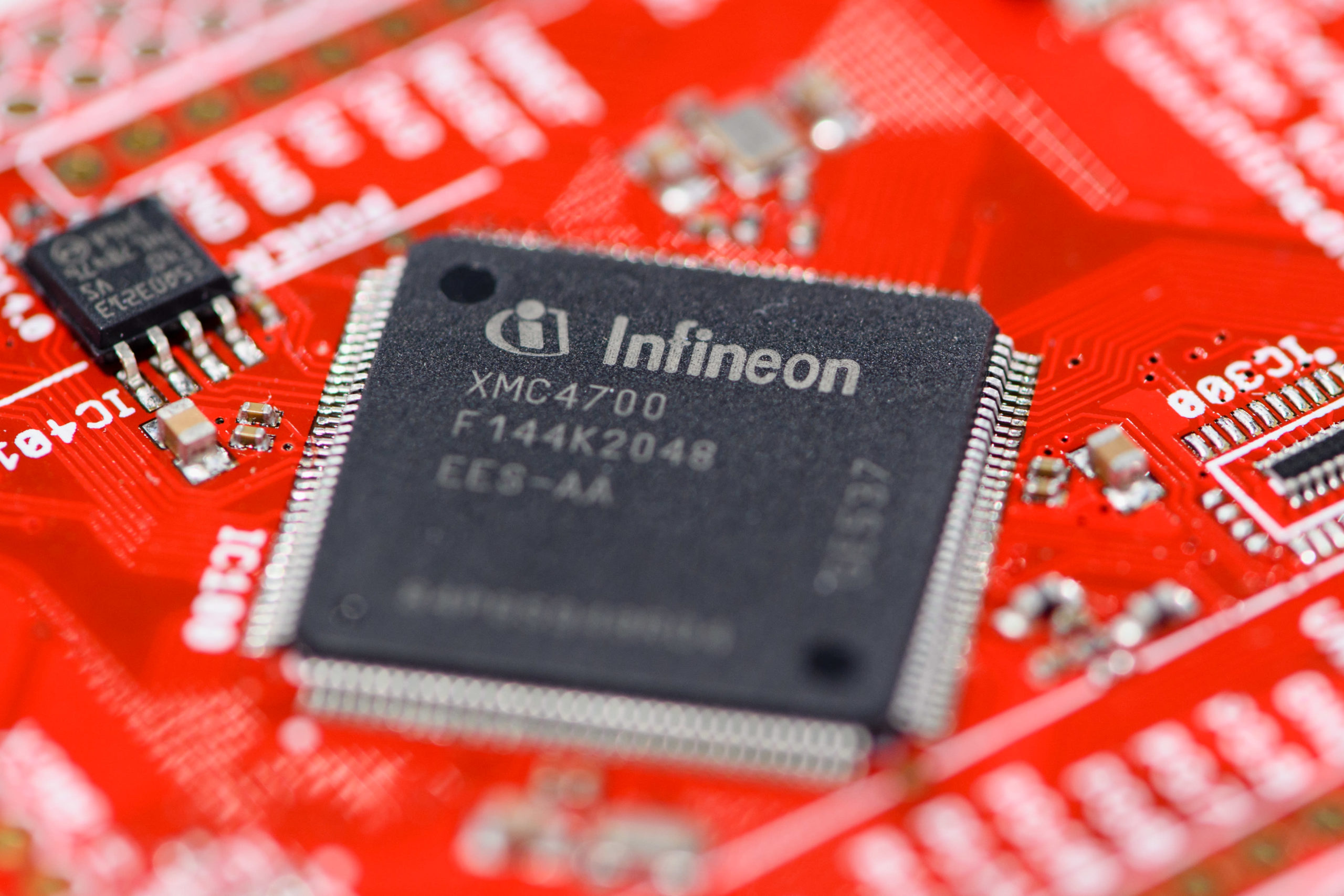
    Czech car makers will produce a quarter a million fewer cars than expected this year due to the global shortage of chips and the automotive sector will lose 200 billion crowns ($9.14 billion) in sales, the Auto Industry Association (AutoSAP) said on Sunday. AutoSAP said domestic passenger car production dropped by 53.1% in September year-on-year, to 56,157 cars. It said the chip shortage impact would exceed that of pandemic shutdowns last year, and called on the government to activate an aid program created amid the coronavirus pandemic last year to compensate firms for wages of idled workers.

    AutoSAP said production rose 2.9% year-on-year cumulatively in the January-September period to 831,653 cars. “Already since August, production has been significantly affected by output curbs and the September statistic confirms the negative trend,” AutoSAP said.

    The country’s biggest producer, Volkswagen’s Skoda Auto, has said it would significantly limit or shut production at its Czech plants from next week, possibly until the end of the year. The car sector is the backbone of the highly industrialized Czech economy, employing 180,000 workers, and makes up a quarter of industrial output.

    SAP said 120 billion crowns in revenue would be lost at carmakers and a further 80 billion at parts suppliers. The 200 billion crowns in revenue equal to about 3.3% of the country’s expected nominal gross domestic product this year.

    The other car makers with assembly plants in the Czech Republic are Hyundai — which has been the least affected by the chip shortage — and Toyota.

  • Hyundai Motor Aims To Develop Chips

    Hyundai Motor Aims To Develop Chips

    Hyundai Motor’s global chief operating officer said on Wednesday the South Korean automaker wants to develop its own chips to reduce reliance on chipmakers. A global shortage of semiconductors, triggered partly by surging demand for laptops and other electronic products during the pandemic, has shuttered some auto production lines globally this year. Hyundai temporarily suspended some factories, but the company’s global COO Jose Munoz told reporters the worst has passed for the industry chip shortage, adding Hyundai had the “toughest months” in August and September.

    “The (chip) industry is reacting very, very fast,” Munoz said, adding Intel is investing a lot of money to expand capacity. “But also in our case, we want to be able to develop our own chips within the group, so we are a little bit less dependent in a potential situation like this,” he said. “This takes a lot of investment and time, but this is something we’re working on.”

    He said the company’s parts affiliate Hyundai Mobis would play a key role in the in-house development plan. He also said Hyundai Motor aims to deliver vehicles at the level of its original business plan in the fourth quarter, and offset some of its production losses next year.

    Along with Toyota and Tesla, Hyundai is among a handful of automakers that increased global sales despite the chip shortage. Hyundai decided not to cut orders during the pandemic, after seeing the Asian markets recover more strongly than expected, Munoz said. Munoz, president of Hyundai Motor North America, said the company is on track to produce electric cars in the United States in 2022, and is looking into both enhancing its existing factory in Alabama and increasing its production capacity.

    He said the U.S. government needs to extend a proposed $4,500 tax credit incentive to U.S. electric vehicles made at non-union factories as well as union ones. “American workers are the same,” he said. “We would like this to be equal for all.” U.S. factories of Tesla and foreign automakers such as Hyundai and Toyota Motor are not unionized.

  • Honda To Launch New EV Brand In China Next Year

    Honda To Launch New EV Brand In China Next Year

    Japan’s Honda Motor will launch a new electric vehicle brand in China next year, it said on Wednesday, and will only launch battery-electric, hydrogen fuel-cell or petrol-electric hybrid vehicles therefrom 2030. Known for its fuel-efficient internal combustion engines, Honda sold over 1.6 million vehicles in China last year. The new brand will be called “e:N Series” and it plans to roll out 10 models with partners GAC and Dongfeng Motor over the next five years, Honda said.

    Its two joint ventures, GAC-Honda and Dongfeng-Honda, plan to build new EV-only assembly plants that are expected to begin production in 2024. The planned new models will use a new vehicle operating system and are being developed based on an auto product platform designed for electric vehicles.

    Honda will set up an e:N Series section in all its existing retail stores. Over time, Honda also plans to set up dedicated e:N Series retail stores but did not provide detail on that plan. Honda has roughly 1,200 Honda brand stores currently.

    China’s sales for electric, plug-in hybrid and hydrogen fuel-cell vehicles are expected to reach three million this year, the China Association of Automobile Manufacturers said on Tuesday.

    Honda will continue to sell existing gasoline-powered models even after 2030, it said.

  • September auto sales plunge

    September auto sales plunge

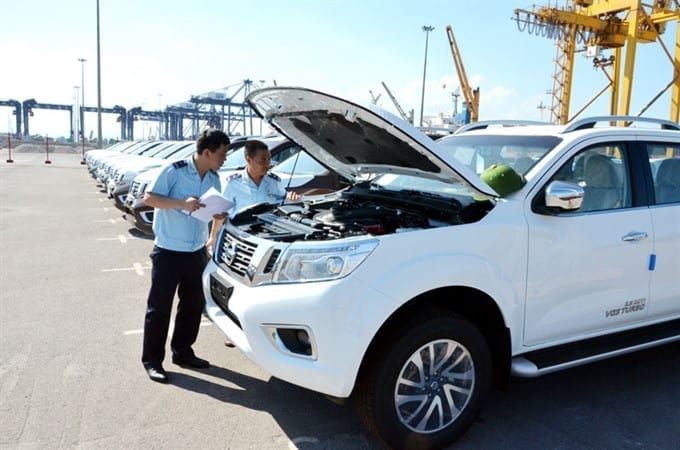
    Auto sales in Vietnam plunged 50 percent year-on-year to 13,537 units in September as Covid-19-triggered social distancing forced dealers to close.

    This is the second monthly lowest figure this year behind August with 8,884 units sold, according to Vietnam Automobile Manufacturers Association (VAMA).

    In the first nine months, sales rose 5 percent year-on-year, compared to 40 percent in the first half, showing a decline in sales in the third quarter when strict social distancing measures were imposed in Ho Chi Minh City and Hanoi.

    Truong Hai Auto Corporation (Thaco) led in sales in the first nine months with 65,764 units sold, up 10 percent year-on-year.

    The remaining four companies in the top five saw sales decline.

    Toyota came in second with 38,055 units sold, down 7 percent.

    It was followed by Mitsubishi, Ford and Honda.

    The hatchback VinFast Fadil was the best-selling car in September, followed by the sedan Hyundai Accent and SUV Kia Seltos.

  • Jaguar Land Rover Trials World-First Digital Supply Chain For Leather

    Jaguar Land Rover Trials World-First Digital Supply Chain For Leather

    Jaguar Land Rover has trialed the use of secure blockchain technology to ensure full transparency within a sustainable leather supply chain. In a world-first, Jaguar Land Rover partnered with supply chain traceability provider Circular, leading UK leather manufacturer Bridge of Weir Leather Company and the University of Nottingham to trial the use of traceability technology in the leather supply chain. As well as tracking compliance, the digital process enabled Jaguar Land Rover to assess the carbon footprint of its leather supply network, working with UK-based Bridge of Weir Leather Company to trace its lowest carbon leather from farm to the finished article – all part of Jaguar Land Rover’s commitment to reducing the environmental and ethical impact of its products across their lifecycle.

    Jaguar Land Rover is committed to offering customers more sustainable and responsible material choices for their vehicle interiors, such as the premium natural fibre Eucalyptus textile interior available on Range Rover Evoque, and Kvadrat – a refined high-quality wool blend textile that’s paired with a suede cloth made from 53 recycled plastic bottles per vehicle – available on Evoque, Range Rover Velar and Jaguar’s all-electric I-Pace

    As part of the Innovate UK-funded research, a ‘digital twin’ of the raw material was created, allowing its progress to be tracked through the leather supply chain simultaneously in the real world and digitally. A combination of GPS data, biometrics and QR codes was used to digitally verify the movement of leather at every step of the process using blockchain technology.

    Defining the verification process has created a repeatable blueprint for tracing a single piece of leather at every stage. It can be used across Jaguar Land Rover’s global supply chain and by other industries that rely on leather, such as fashion and footwear.

    The project is part of Jaguar Land Rover’s Reimagine strategy: a sustainability-rich combination of modern luxury, unique customer experiences, and positive societal impact.

    Reimagine aims to achieve net zero carbon emissions across its supply chain, products and operations by 2039. Jaguar Land Rover will work with industry experts to improve sustainability, reduce emissions and collaborate on next-generation technology, data and software development leadership.

    Dave Owen, Jaguar Land Rover Executive Director of Supply Chain, said: “We are currently restructuring our supply chain as part of Reimagine, with a focus on transparency and sustainability. The outcome from this world-first trial will allow us to further improve the sustainability of the leather supply chain around the globe, ensuring the complete traceability of raw materials from origin to vehicle.

    Through InMotion, its venture capital and mobility services arm, Jaguar Land Rover previously announced an investment in Circulor, allowing the company to source premium materials with greater transparency as to the provenance, welfare, and compliance of suppliers throughout its networks.

    The technology could be deployed to trace other commodities. Circulor is already using blockchain to improve the traceability of minerals used for electric vehicle batteries. Blockchain technology is impossible to modify or tamper with, giving customers greater confidence that the sustainable supply chain is authentic, and all materials have been sustainably sourced.

  • Volvo Car India Announces Lifetime Parts Warranty Scheme

    Volvo Car India Announces Lifetime Parts Warranty Scheme

    Volvo Car India announced a new “customer lifetime parts warranty” scheme across its model range. Under the new scheme, parts bought after the standard period of warranty and installed at an authorized workshop will carry a lifetime warranty and will be applicable on genuine parts bought from October 1, 2021. The coverage period begins on the date of purchase of the part and remains till the time the ownership of the car does not change. However, the scheme will lapse when the ownership changes. Under this scheme, both parts and the labor costs are covered. The initiative has been taken to provide customers reassurance on aftersales services given the high spare parts and replacement cost in luxury cars.

    Jyoti Malhotra, Managing Director, Volvo Car India said, “It is for the first time in India that such an initiative has been offered to the luxury customers. This is a unique offer in the automotive industry that gives the customer carefree and secure car ownership. In the unlikely event of customers requiring a part changed for their car, the company will give a lifetime warranty on the part. The warranty commences on the date of purchase of the part and will follow the combination of car and car owner. If the car has a new registered owner, the warranty will end.”

    Moreover, the company also reaffirmed that any genuine Volvo part which will require repair or replacement because of material or manufacturing defect will be repaired or replaced free of charge by an authorized dealer. However, the scheme is not applicable of normal wear and tear of parts, consumables, batteries, accessories, and Software which is not associated with a hardware replacement. Also, parts replaced under new car warranty or extended warranty or goodwill warranty would not be covered under this scheme.

  • Mercedes-Benz Vietnam recalls 1,700 cars

    Mercedes-Benz Vietnam recalls 1,700 cars

    Mercedes-Benz Vietnam is recalling more than 1,700 C200 cars locally assembled from 2014 -2018 to remove a generator-related software bug.

    The recalled cars were produced between Dec. 2014 to Feb. 2018. Short-circuited diodes in their generator were making coils overheat, leading to fire risks, the carmaker said. The recall will run from Sept. 25, 2021 to Dec. 31, 2025.

    The solution is to update the engine control software to optimize generator operation. The free update would take about 30 minutes at authorized Mercedes-Benz dealers in Vietnam.

    These vehicles were manufactured from Nov. 2016 to Feb. 2017. The solution is to replace the entire steering shaft, a procedure lasting about 1.5 hours.The German carmaker also made two other recalls in Vietnam from Oct. 1-7. These relate to several different models, including 49 A-class cars, CLA, and the imported GLA that have an error in the steering shaft mechanism.

    Mercedes-Benz sold 2,558 units in Vietnam in 2020.

  • Apple Developing A System For iPhone To Control ACs, Seats, Stereo In Cars

    Apple Developing A System For iPhone To Control ACs, Seats, Stereo In Cars

    Apple already has CarPlay which is highly successful as it allows users to beam the interface and features of their iPhone onto the infotainment system of their vehicles. It allows to get navigation, voice recognition via Siri and also taps into contacts and music streaming services. But Apple as per a Bloomberg report by Mark Gurman is working on a bolder system that will enable the iPhone to control core features of a car like the air conditioning, the seats, and even the stereo. The initiative internally is apparently called “IronHeart” and is in the early stages of development and will likely require the compliance of automakers.

    The automotive market is clearly a long-term goal for Apple as it also has its electric self-driving car project in the works called Project Titan. But that project is a long-term play and has had many issues, but in the meanwhile, Apple has made solid inroads with CarPlay. One of the latest automobile-focused features that Apple introduced in 2020 was CarKey which has even been emulated by Google.

    But IronHeart takes things to another level and it will provide inside and outside temperature and humidity readings. It will have information around temperature zones, fans, and defroster systems. There will be settings embedded for surround sound speakers, EQ settings which Apple doesn’t even provide for Apple Music, and fader and balancer settings; things that are standard in a car infotainment system that allows the user to sculpt the sound of the sound system in the car.

    Users will also be able to control the seats and armrests and it will also embed the car telematics data and will pull information from the speedometer, tachometer, and fuel instrument clusters – basically, Apple is trying to combine all the functions that are found in both the infotainment screen and the instrument cluster and make it accessible right from the iPhone. Apple is turning CarPlay into the interface for the car itself and potentially with access to such data, Apple could allow third parties to develop more apps over these core functions.

    Apple has faced resistance from major manufacturers like Tesla with the adoption of CarPlay. The updates that Apple is working on will reduce the reliance on the core car infotainment interface and most users will likely default to Apple’s interface. Apple could also use this information that will further help its efforts to make its own car which has been a tumultuous project since 2015.

  • Geneva Motor Show Cancelled For The Third Time

    Geneva Motor Show Cancelled For The Third Time

    Due to industry-wide issues relating to the COVID-19 pandemic, the foundation Comité permanent du Salon international de l’automobile, as organiser of the Geneva International Motor Show (GIMS), has announced that the 2022 edition of the show will be canceled. The decision to cancel GIMS 2022 was made with the best interests of both car manufacturers and automotive fans in mind. The direct and indirect issues relating to the ongoing COVID-19 pandemic left the organisers with no alternative.

    On the one hand, direct issues of the pandemic include continued travel restrictions for international exhibitors, visitors, and journalists. On the other hand, indirect issues of the pandemic, such as the semiconductor shortage, have presented car manufacturers with new priorities that they need to solve first. These issues led to several recent cancellations, which resulted in the final confirmation of the show’s postponement

    Maurice Turrettini, President of the Comité permanent du Salon international de l’automobile said, “We have pushed very hard and tried everything to reactivate the Geneva International Motor Show in 2022. Despite all our efforts, we have to face the facts and the reality: the pandemic situation is not under control and presents itself as a big threat for a large indoor event like GIMS. But we see this decision as a postponement, rather than a cancellation. I am confident that the Geneva International Motor Show will come back stronger than ever in 2023.”

  • Battery Giants Face Skills Gap That Could Jam Electric Highway

    Battery Giants Face Skills Gap That Could Jam Electric Highway

    The South Korean battery giants powering many of the world’s electric vehicles face a skills shortage that could drag on the global race towards zero-emissions transport. The country’s three major players, which command a third of the global electric vehicle (EV) battery market, told Reuters they were all grappling with a shortage of research and engineering specialists as demand for the technology balloons. LG Energy Solution (LGES), SK On, and Samsung SDI Co Ltd all rank in the top-six global battery makers, and supply the likes of Tesla Inc, Volkswagen and Ford Motor Co among others.

    Yet they are facing growing demands from big automakers and can’t find enough technicians with the training needed to keep advancing cutting-edge tech such as solid-state batteries. “Although we are seeing such a growth in the industry, it appears that we are facing a shortage of talent,” an official at LGES said. “It is crucial to recruit external talents as well as nurturing our own talent.” This was echoed by its two big domestic rivals, with SK On describing the sector’s expansion as “exponential”.

    Indeed the global battery sector has doubled in size over the past five years and South Korea is short of almost 3,000 graduate degree-level positions in areas such as research and design, according to the most recent data from the Korea Battery Industry Association, from late 2020. LGES, SK On and Samsung SDI currently have a total of about 19,000 employees.

    The Korean crunch reflects a growing talent shortage across a wider global battery market that, according to IHS Markit forecasters, will triple in size to almost $90 billion by 2025. The EU’s European Battery Alliance planning group, for example, says “re-/up-skilling” is needed in the bloc because its battery industry needs 800,000 new workers by 2025.

    If the global skills gap is not plugged, some industry experts say it could slow the pace of advances in batteries, which are being counted on to clean up road transport, one of the biggest sources of greenhouse gas emissions. “Talent demand in the battery industry outweighs supply, and battery makers are anxious to ensure that they have got this small group of people who can work on this technology, and won’t be left behind in the fast-growing market,” said Samsung Securities analyst Cho Hyun-ryul.

    ‘COMPETITIVE PACKAGES’

    In a sign of the skills pressure, LGES – South Korea’s No.1 battery maker by volume – plans to launch a new “battery-smart factory department” at the prestigious Korea University next spring with guaranteed jobs for graduates.

    More immediately, executives have been flying to the United States to lead recruiting events at schools there. The LGES CEO and his managers went to Los Angeles last month while the SK Innovation CEO and staff hosted an event in San Francisco on Saturday.

    These companies are not only competing with other established Asian players, including market leader CATL from China and Japan’s Panasonic, but fast-growing U.S. and European rivals like Sweden’s Northvolt bridging the technology gap.

    The talent shortage in South Korea is being compounded by some existing employees moving to foreign competitors that had offered better pay, according to two industry sources with knowledge of the matter. They declined to be named due to the sensitivity of the matter.

    Northvolt, which counts Volkswagen as a client, has previously said that some of its employees were recruited from top battery makers, including LGES and Panasonic.

    “We do have few people working for Northvolt that are from South Korea, which is obviously a very impressive country when it comes to battery manufacturing and development with several well-respected companies active in this space,” a spokesperson for the company told Reuters last week.

    “We try to offer competitive packages to our employees – everyone working here is a shareholder in the company for instance,” he added, though did not specify pay details.

    Battery specialists in South Korea newly graduated with doctorate degrees can earn as much as 100 million won ($85,000) a year, and those without that level of qualification average about 80 million won after gaining a few years of experience, according to two sources at major South Korean battery firms.

    South Korea’s average annual salary was 37.4 million won in 2019, according to tax agency data.

    ‘WIN FOR AMERICAN AUTOS’

    The Korean sector has also been mired in internal conflict, with LGES and SK Innovation, which wholly owns SK On, locked in a two-year dispute over technology, trade secrets and staff poaching until April this year when they settled their differences.

    In a signs of the global importance of the two conglomerates, U.S. President Joe Biden – who has made boosting EVs a top priority – described the settlement as “a win for American workers and the American auto industry.”

    “We need a strong, diversified and resilient U.S.-based electric vehicle battery supply chain,” he added.

    Even in the face of the growing skills gap, the worldwide demand for their products has supercharged the battery makers’ expansion plans.

    LGES expects its production capacity to reach 155 gigawatt-hours (GWh) of batteries by the end of this year and plans to raise that to 430 GWh in 2025 that could power about 7.2 million EVs.

    SK Innovation aims to boost its annual production capacity more than five-fold to 220 GWh by 2025 and last week announced the plan to invest 10.2 trillion won with Ford to build three battery plants in the United States.

    Richard Kim, principal analyst at IHS Markit, said the skills gap was likely to be a problem for years to come.

    “The labour shortage in the battery industry has already been a global issue, and the reality is that there has been an imbalance of supply and demand of manpower as many companies start to expand their capacity,” he added.

  • Jaguar XF Joins The Land Rover Defender In The Latest James Bond Flick No Time To Die

    Jaguar XF Joins The Land Rover Defender In The Latest James Bond Flick No Time To Die

    Jaguar Land Rover are one of the official partners for the latest James Bond flick, No Time To Die. The movie has been awaiting a release for a while but the 25th Bond film and finally hit the theatres globally including India on September 30, 2021. The movie will see actor Daniel Craig reprise his role as the MI6 agent for the last time, and joining him will be a slew of JLR cars including the Land Rover Defender as well as the Jaguar XF. In fact, it’s for the first time that the XF will feature in the 007 universe.

    Without sharing any spoilers, Jaguar tells us that the XF will be part of a thrilling chase sequence. The filming for this sequence took place in Matera in the south of Italy, with two XF saloons weaving through the narrow, twisting city streets, driving across piazzas and down cobbled steps in pursuit of the agent. It’s also a part of a few scenes shot in London.

    Chris Corbould, No Time To Die’s special effects and action vehicle supervisor, said, “The Jaguar XF was an exciting choice for this high-intensity car sequence. We always look to push the boundaries to extreme limits in our stunts, and this extends to the capabilities of the vehicles too. There is no compromise with this particular scene. There were only inches to spare in the narrow alleyways and no margin for error, the XF shows its performance and driving dynamics.”

    Anna Gallagher, Jaguar Brand Director, said, “The Jaguar XF is a car designed to tackle any journey with an unrivalled balance of luxury, comfort and refinement. Whether it’s a high-speed pursuit through twisting streets and piazzas of Southern Italy, where the car filmed it’s No Time To Die chase sequences, or the bustling streets of London – the XF really is a car for every occasion.”

    Apart from the Jaguar XF, the new Land Rover Defender will also be a part of the movie along with Triumph Motorcycles, and of course, Aston Martin cars. No Time To Die is now playing in theatres worldwide.
  • Tata Punch Introduces Engine, Design, Launch Expectations

    Tata Punch Introduces Engine, Design, Launch Expectations

    Tata Motors will pull the wraps off the Punch micro SUV on October 4, 2021. The Indian carmaker will begin accepting pre-bookings for the car on the same day itself. However, select Tata Motors dealers are already taking unofficial bookings for the mini SUV for a token amount ranging up to ₹ 11,000. The Indian carmaker is expected to launch the Punch in the coming weeks, probably around Diwali. It will be the first SUV to employ the ALFA-ARC (Agile Light Flexible Advanced Architecture), developed under Impact 2.0 design language. Here’s all you can expect from the Tata Punch micro SUV.

    The soon-to-be-launched Punch will be the brand’s new entry-level SUV and will be slotted below the Nexon subcompact SUV in the product lineup. The Punch stays true to the HBX concept in terms of design, as the production version has not deviated much from the concept model. The carmaker had previously confirmed that about 90 per cent of styling elements would be retained from the concept.

    The upcoming Tata Punch is likely to be offered in four trim options – Pure, Adventure, Accomplished and Creative. There will be three mono-tone and six dual-tone colour options to choose from. The mini SUV looks like a baby Safari with its aggressive front end sporting a signature split lighting design. It will come equipped with premium features like projector headlamps with LED DRLs, LED taillamps and beefy bumper, underbody and side cladding, faux roof rails and sporty alloy wheels.

    On the inside, the micro SUV will sport a minimalist dashboard with a dual-tone black and white paint scheme. Based on the previous teasers, we can say that the micro SUV will feature a Harman-sourced touchscreen infotainment system with Apple CarPlay and Android Auto. It will also get a multi-functional flat-bottom steering wheel, analog-digital instrument panel, automatic climate control, engine start-stop button, fabric upholstery, and more. The top-spec model is likely to get the iRA connected car tech.

    The Tata Punch is likely to be powered by a 1.2-litre Revotron petrol engine tuned to make 85 bhp of maximum power with a peak torque of 113 Nm. The same mill also does duty on the Tiago entry-level car and the Altroz premium hatchback. Transmission options could include a 5-speed manual as standard along with an optional AMT unit.

  • Tesla Vehicle Deliveries Hit Another Record In Q3

    Tesla Vehicle Deliveries Hit Another Record In Q3

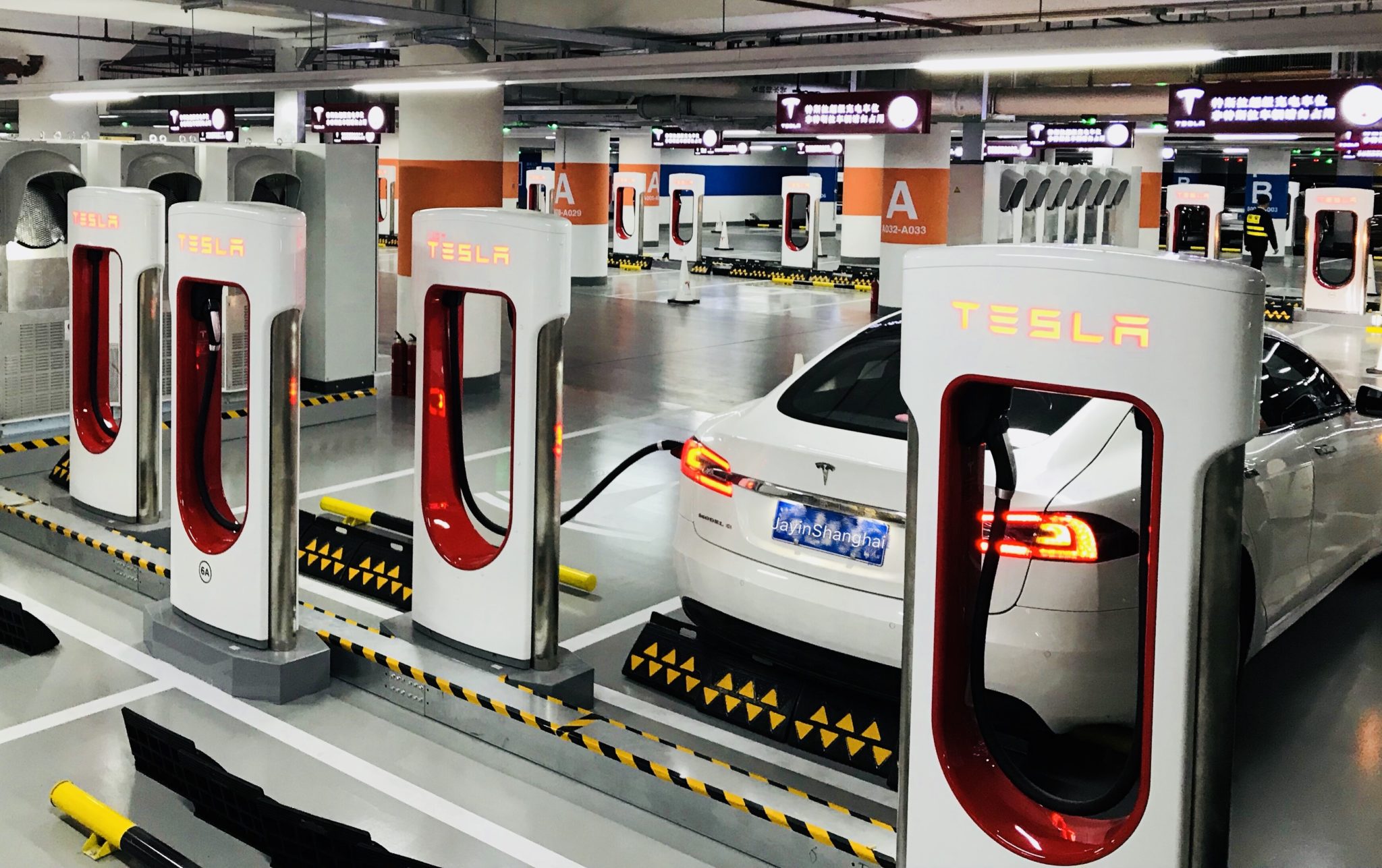
    Tesla Inc said on Saturday it had delivered a record electric cars in the third quarter, beating Wall Street estimates after Chief Executive Elon Musk asked staff to “go super hardcore” to make a quarter-end delivery push.

    Tesla has weathered the chip crisis better than rivals, with its overall deliveries surging 20% in the July to September period from its previous record in the second quarter, marking the sixth consecutive quarter-on-quarter gains.

    In China, rising exports to Europe and the introduction of a cheaper Model Y helped boost Tesla’s production, analysts said.

    Musk said Tesla suffered an extremely severe parts shortage earlier in the third quarter and had urged employees to make quarter-end delivery push, Reuters reported last month, citing an internal company email.

    “The end-of-quarter delivery wave is unusually high this time,” he said in the email.

    Tesla delivered 241,300 vehicles globally in the July to September quarter, up 73% from a year earlier. Analysts had expected the electric-car maker to deliver 229,242 vehicles, according to Refinitiv data.

    General Motors, Honda and some of its bigger rivals posted declines in U.S. sales in the third quarter, hit by a prolonged chip shortage. GM’s third-quarter U.S. sales fell nearly 33% to its lowest level in more than a decade.

    Tesla said it delivered 232,025 of its Model 3 compact cars and Model Y sport-utility vehicles and 9,275 of its flagship Model S and Model X cars to customers in the quarter.

    Total production in the third quarter rose over 15% to 237,823 vehicles from the prior quarter.

    Gary Black, portfolio manager at the Future Fund and a Tesla bull, said that Tesla’s deliveries were driven by record deliveries in China, which was “putting to rest any notion China demand is slowing.”

    Tesla faces scrutiny from both regulators and the public and growing competition from local rivals.

    Tesla has not released its September China sales yet, and in August, its Shanghai factory exported more than two thirds of its vehicles to Europe and Asian countries.

  • Continental Restructures Technology Unit, Downsizes Board

    Continental Restructures Technology Unit, Downsizes Board

    Continental’s tyres business and the ContiTech division, focused on rubber technologies, will become independent group sectors, while its Automotive Technologies branch will split into five business areas including a new focus on smart mobility and user experience.

    German car parts maker Continental announced plans for a restructuring that will combine from the start of next year business activities around connectivity, mobility, and high-performance computers, it said on Thursday. Its tyres business and the ContiTech division, focused on rubber technologies, will become independent group sectors, while its Automotive Technologies branch will split into five business areas including a new focus on smart mobility and user experience, a statement said.

    The restructuring is a further step by Continental to reorganise its business after spinning off its powertrain unit Vitesco in mid-September.

    Continental will combine business activities around connectivity, mobility, and high-performance computer

    “Mobility of the future is sustainable, automated and connected,” Chief Executive Nicola Setzer said in a statement. “We are thus making the most of the potential presented by our unique strong technology position in all of these fields.”

    As part of the restructuring, management board members Helmut Matschi and Frank Jourdan will step down, nearly three years before the end of their contracts. That will shrink Continental’s board to five members from Jan. 1.

  • Triumph Extends Partnership With Distinguished Gentleman’s Ride

    Triumph Extends Partnership With Distinguished Gentleman’s Ride

    Triumph Motorcycles will continue as the main partner and supporter of the Distinguished Gentleman’s Ride for five more years, having supported the charity motorcycle fundraiser since 2014. The Distinguished Gentleman’s Ride, or DGR, as it’s also known, was initially founded to raise both funds and awareness for prostate cancer research and men’s mental health. The DGR has gone on to become an iconic and stylish global event on the motorcycle charity calendar each year, uniting classic and vintage bike riders the world over on a single-day event every year.

    In 2014, the DGR raised a total of $1.5 million, taking place in 58 countries with around 20,000 riders dressing up to participate in the event. In 2019, the event grew to raise a record-breaking $6 million, with 1,16,000 riders participating across 104 countries. As the DGR’s major sponsor since 2014, Triumph Motorcycles has supported DGR founder Mike Hawwa and his team in helping develop the DGR into the global event that it is today.

    “In 2014 when we first partnered with Triumph Motorcycles, I was incredibly excited. They are the only motorcycle manufacturer that I felt perfectly fit with The Distinguished Gentleman’s Ride. We’ve done some wonderful things since then; together we have been able to reward some of our top and most dedicated fundraisers with brand new bikes from the modern classic range and built the custom one-of-one 2021 Triumph Thruxton ₹ Today, 8 years later as we announce the 5-year continuation of this partnership, I am even more excited than I was in 2014 because, with the next 5 years, I know that we can do even more together with the goal of raising funds and awareness of men’s health,” said Mike Hawwa, Founder/Director of The Distinguished Gentleman’s Ride.

    The 2020 COVID-19 pandemic presented a challenge to organize the group ride event that the DGR is. Despite the difficulties and challenges, the DGR developed a new format that made it possible for riders to show their support and passion safely, with the Ride Solo Together event. The DGR community achieved its most global event ever in 2021, with 171 countries and 2,531 locations riding solo together, all connected together through social media.