Category: Automotive

Retail News Asia is committed to providing both local and global retailers with the latest Auto and Car news throughout the Asian market. This on a daily base.

  • Lamborghini Urus Sales Hit 100 Units Milestone In India

    Lamborghini Urus Sales Hit 100 Units Milestone In India

    Automobili Lamborghini has achieved a new sales milestone in India by selling 100 units of its super-luxury SUV – the Lamborghini Urus. Currently the most affordable Lamborghini model in India, the Urus was launched in January 2018, and the first car was delivered the same year in September. Within one year, the company managed to sell 50 units of the car in India, and despite the coronavirus pandemic the Italian marque has managed to sell the next 50 units in less than 18 months. In fact, before the pandemic, the company was delivering one Urus every week, which is huge for a car in this uber-luxury segment.

    Sharad Agarwal, Head of Lamborghini India, said, “When we launched Urus, we always knew that it’s going to be a gamechanger for us. Also, because it’s a car that comes with the dynamics of a sports car, but also has the versatility of an SUV. And limitations what we have in the Indian market with our congestions and roads we knew that it is a right answer or a right Lamborghini for an India user. When we launched the car, we delivered the first Urus in September 2018 and we were delivering one Urus every week, till we were hit by the pandemic. There were challenges in the market and also on the supply side, but the good thing is we are now back on track, we are now back on delivering almost one Urus every week, and now we could achieve the fastest hundred in the super-luxury segment, and this makes it really, really special.”

    The Lamborghini Urus has been a big contributor to the company’s sales in India. In 2019, the company sold a total of 65 units in the country and posted a growth of 30 percent compared to 2018, and this big boost to the sales was thanks to the Urus. With the pandemic hitting sales sharply in 2020, Lamborghini still managed to cross the 50 unit sales mark last year. The company sold 52 units in 2020 and is looking to grow on this momentum in 2021 spearheaded by the Urus.

    Talking about the expectations from 2021, Agarwal said, “The segment is slowly coming back. There are still challenges. Last year we saw that the segment was about -30 percent. This year, my anticipation is that the segment should come close to the 2019 level. As a brand, we are still going strong and we have set a target for us that we want to have another record year of performance in India despite what we face in terms of market conditions. So, we can say that 2021 will be another record year in terms of our volumes in the country. So, well definitely do much more than what we did in 2019.”

    The Lamborghini Urus has currently priced in India around ₹ 3.10 crore (ex-showroom, India) and it still commands a waiting period of about 10 months, and despite that, the company says, its order bank is growing healthier and healthier. Moreover, Lamborghini also says that the demand is not restricted to metros alone, but is growing in each part of the country, across the length and breadth. The Urus is powered by a 4.0-litre Twin Turbo V8 engine, which is tuned to produce 641 bhp and 850 Nm of peak torque. The SUV can go from 0-100 kmph in 3.6 seconds and reach 200 kmph in 12.8 seconds, before reaching the electronically limited top speed of 306 kmph.

  • Volvo Cars Initiates First Ever Over-The-Air Software Update On XC40 Recharge

    Volvo Cars Initiates First Ever Over-The-Air Software Update On XC40 Recharge

    Volvo Cars is rolling out its first ever over-the-air (OTA) software update on the XC40 Recharge, the company’s first fully electric car. Starting soon, XC40 Recharge drivers in Europe will receive a range of updates, including new features, bug fixes and stability improvements to the car’s infotainment and propulsion systems. The introduction of OTA updates means that customers no longer have to visit a workshop in order to enjoy the latest software and new, updated features on their electric Volvo.

    It also means that a new Volvo is no longer at its finest when it leaves the factory, but keeps improving over time as additional OTA updates are launched.

    The update is available automatically and XC40 Recharge drivers only have to accept the download and installation.

    “The benefits of over-the-air updates are obvious,” said Henrik Green, chief technology officer. “Yesterday you still had to drive to the workshop in order to get the latest updates to your car. Today you simply click OK and your electric Volvo takes care of the rest. It couldn’t be easier.”

    Features included in this latest software update are a new base software for the car’s main electronic systems, an increase in charging speed and an improved driving range.

    There are also updates to the Android Automotive operating system that powers the car’s infotainment system, as well as an important safety-related propulsion bug fix.

    Finally, the software package also includes updates to a variety of items such as Bluetooth connectivity, climate timers, the car’s digital owner’s manual and the 360-degree camera. The update is available automatically and XC40 Recharge drivers only have to accept the download and installation.

  • Groupe Renault And Faurecia Collaborate On Hydrogen Storage Systems

    Groupe Renault And Faurecia Collaborate On Hydrogen Storage Systems

    Faurecia and Groupe Renault today announced their decision to collaborate on hydrogen storage systems for hydrogen light commercial vehicles. Starting at the end of 2021, Faurecia will supply hydrogen storage systems for a first fleet of light commercial vehicles. These systems will be developed and produced at its global centre of expertise in Bavans, France. As volumes, increase production will be extended to a new plant dedicated to hydrogen storage systems that Faurecia is building in Allenjoie, France.

    Faurecia will supply hydrogen storage systems for a first fleet of light commercial vehicles.

    Mathias Miedreich, Executive Vice President of Faurecia Clean Mobility said, “Fuel cell electric vehicle technology is set to become significant in the powertrain mix by 2030, and as such Faurecia is dedicating important resources to accelerate its deployment.”

    This collaboration on hydrogen storage systems is embedded in Renault’s strategy to offer market-ready H2 solutions for light commercial vehicles and target over 30% share of this market in Europe.

  • Toyota recalls Hilux trucks for brake problem

    Toyota recalls Hilux trucks for brake problem

    Toyota will recall 1,935 imported Hilux trucks due to a safety issue related to their brake system.

    The batch was produced in Thailand between June and December 2018 and imported by Toyota Vietnam.

    The company said the problem has occurred due to a degrading of the resin piston within the brake booster due to improper molding.

    “If this were to occur, repeated operation of the brake pedal may cause the piston to break, potentially causing loss of braking assist and therefore increasing the vehicle stopping distance,” it said in a statement.

    Toyota will coordinate with its dealers to recall, inspect and replace the brake booster free of charge. The replacement will take between half an hour and four and a half hours.

    According to Toyota Vietnam, the recall will begin on March 5 and last three years.

    In the case of Hilux not imported by the company, it will obtain approval from its parent in Japan before carrying out the replacement.

  • 2021 Harley-Davidson Pan America 1250 Launched Globally

    2021 Harley-Davidson Pan America 1250 Launched Globally

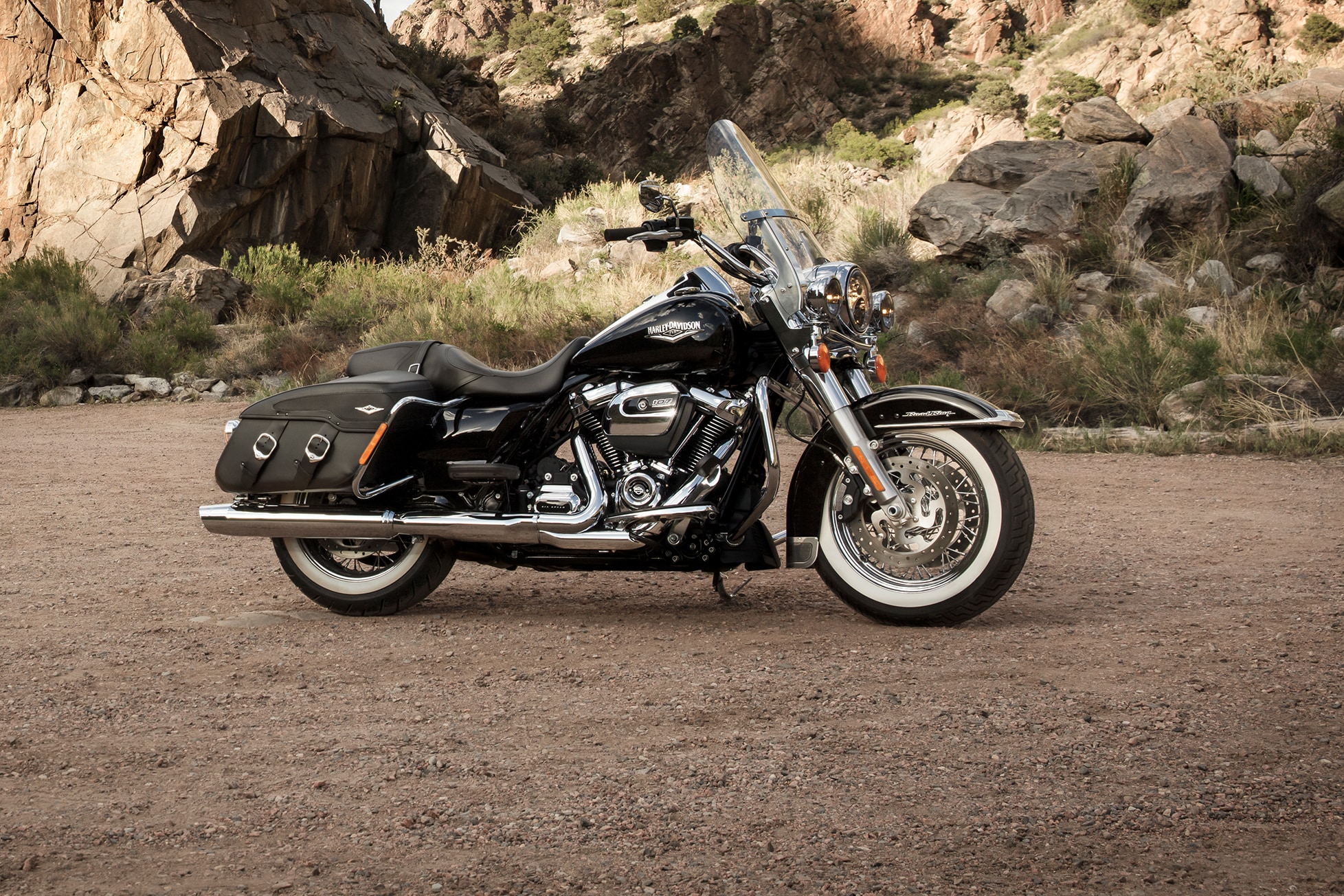
    Three years after we first got a glimpse, Harley-Davidson has launched its first-ever adventure motorcycle globally, the Pan America 1250. Harley will sell two variants of the Pan America, the Pan America 1250 and the Pan America 1250 Special. While the stance of the Pan America is typically that of an ADV, the face is what has divided opinions. While some may like the Max Max-esque, post-apocalyptic, scourge of the earth sort of a design, others may not be too fond of it! Good thing is, you are not going to mistake it for some other motorcycle when you see it on the road. The front end gets a wide fairing, with Harley’s ‘Daymaker LED headlights’ and a tall windscreen. View it in profile and you see the sculpted fuel tank along with Harley’s signature V-Twin engine, but more on that later. You get an exposed sub-frame at the rear along with split seats and an upswept exhaust.

    The quirky Pan America gets a 1,252 cc Revolution Max V-Twin which is first of its kind from the company. The engine is liquid-cooled and it makes 150 bhp at 9,000 rpm along with 127 Nm of peak torque at 6,750 rpm. The engine is paired to a 6-speed gearbox. Harley claims that the Pan America 1250 has a fuel efficiency of 48 miles per gallon or 20.4 kmpl, which is quite impressive indeed.

    Talking about the chassis, the Pan America is built on a low alloy steel trellis frame along with a one-piece cast Aluminium swingarm. The motorcycle is suspended on 47 mm BFF forks up front and a linkage-mounted piggyback mono-shock at the rear, both adjustable for compression, rebound and preload. Both suspension units get a travel of 191 mm. Up front, the motorcycle gets 320 mm twin discs gripped by a radially mounted Brembo 4-piston calliper. The rear wheel gets a 280 mm single disc with a 2-piston calliper. The motorcycle gets 19-inch alloy up front and a 17-inch alloy at the rear and both are wrapped in Michelin Scorcher adventure radial tyres.

    In terms of features, the motorcycle gets a 6.8-inch TFT touchscreen display along with Bluetooth phone connectivity via the H-D app. The Pan America also gets an inertial measurement unit (IMU) which supplies data to ABS, traction control, drag torque slip control and hill hold control. There are also five riding modes to choose from – road, sport, rain, off-road and off-road plus. Each riding mode has different settings for other electronics.

    Now there are a few differences between the Standard model and the Special. The Pan America 1250 Special gets semi-active suspension along with vehicle load control, tyre pressure monitoring system, standard centre stand, adjustable rear brake pedal, Aluminium skid-plate, heated hand grips, steering damper, adaptive ride height and tubeless spoked wheels. The colour options are different on both motorcycle variants as well.

    Prices for the H-D Pan America 1250 start at 14,000 pound sterling while the Pan America 1250 Special gets a starting price of 15,500 pound sterling. Converted to Indian rupee, the starting prices come to ₹ 14.27 lakh and ₹ 15.80 lakh respectively.

  • VinFast eyes 2,000 electric charging stations

    VinFast eyes 2,000 electric charging stations

    Automaker VinFast plans to have over 2,000 charging stations set up nationwide this year to expand its electric vehicle ecosystem.

    The subsidiary of Vietnam’s largest private conglomerate, Vingroup, is looking to partner with other businesses to install these stations in apartment buildings, offices, malls, supermarkets, and other locations.

    It said in a statement that these stations will have over 40,000 charging ports for cars and bikes. The company installed the first of those last month at a mall at Vinhomes Ocean Park in Hanoi’s Gia Lam District.

    Also last month, VinFast announced three electric self-driving SUVs would hit the market this year.

    The company has acquired licenses to test autonomous vehicles in California, the U.S., which is earmarked to be its first global market.

    VinFast sold 31,500 cars in Vietnam last year. Since entering the auto industry three years ago the company now has a plant in the northern province of Hai Phong and R&D centers in Australia, Germany and the U.S.

  • Three VinSmart phone models make US debut

    Three VinSmart phone models make US debut

    Three smartphone models produced by VinSmart, a unit of Vietnamese private conglomerate Vingroup, have been sold in the U.S. since earlier this year.

    Carrier AT&T distributes the phones under the names Fusion Z, Motivate, and Maestro Plus through its own stores and some retail chains like Walmart.

    The model codes match those of three VinSmart models licensed by the U.S. Federal Communications Commission (FCC) to be sold in the U.S.

    Their prices range from $39 to $89, including promotions and a two-year warranty.

    All three 4G models have six-inch screens and operate on the Android 10 operating system.

    VinSmart was partnering with AT&T to produce smartphones, with around two million units in the first batch.

    VinSmart declined to comment on the reports.

    The three phones are part of 10 smartphone models approved by the FCC, including Vsmart Aris, the latest mid-range model produced by VinSmart and is being sold in Vietnam.

    VinSmart’s factory, located in Hoa Lac Hi-Tech Park in Hanoi, is capable of producing 125 million smartphone units annually.

  • Bentley Aims To Revolutionize Sustainability Of Electric Motors

    Bentley Aims To Revolutionize Sustainability Of Electric Motors

    Bentley Motors has announced a three-year research study that aims to revolutionize the sustainability of electric motors. Supporting Bentley’s commitment to offering only hybrid or electric vehicles by 2026, the result could see recycled rare-earth magnets used in selected ancillary motors for the very first time.

    The study, titled RaRE (Rare-earth Recycling for E-machines), intends to build on work completed at the University of Birmingham in devising a method of extracting magnets from waste electronics. Furthermore, the project will scale up this process and repurpose the extracted magnetic material into new recyclable magnets for use within bespoke ancillary motors.

    Adding to the sustainability benefits that RaRE will provide, the bespoke motors created through this method promise to minimize complexity through manufacture while supporting the development of the UK supply chain for both mass production and low volume components.

    Commenting on Bentley’s research ambitions, Dr. Matthias Rabe, Member of the Board for Engineering, Bentley Motors, said, “As we accelerate our journey to electrification, offering only hybrid or electric vehicles by 2026, and full electric by 2030, it is important that we focus on every aspect of vehicle sustainability, including sustainable methods of sourcing materials and components. RaRE promises a step-change in electrical recyclability, providing a source of truly bespoke, low voltage motors for a number of different applications and we are confident the results will provide a basis for fully sustainable electric drives.”

    This study will run in parallel to Bentley’s OCTOPUS research program which aims to deliver a breakthrough in e-axle electric powertrains, utilizing a fully integrated, free from rare-earth magnet e-axle that supports electric vehicle architectures. As with OCTOPUS, RaRE is an OZEV funded project delivered in partnership with Innovate UK.

  • Electric Vehicles Should Be Mandatory For All Government Officials

    Electric Vehicles Should Be Mandatory For All Government Officials

    The Ministry of Road Transport and Highways (MoRTH) has taken several significant steps to encourage electric mobility in India. Transport Minister Nitin Gadkari has advised people to use electric vehicles rather than petrol or diesel vehicles. According to a report from ANI, the Union Minister suggested that electric vehicles (EVs) should be mandatory for all government officials. To initiate the same, the minister said that he will make e-vehicles mandatory for officials of his department.

    The minister gave his remarks during the launch of ‘Go Electric’ campaign to create awareness of the benefits of electric mobility and EV charging infrastructure in India. Moreover, this campaign also focuses to make people aware of the advantages of electric cooking in the country.

    Gadkari told ANI, “If 10,000 electric vehicles are brought into use in Delhi, then about Rs 30 crores per month spent on fuel can be saved, and it will reduce pollution. I will make electric vehicles mandatory for officials of my department.”

    During the launch event, Gadkari also mentioned that electric fuel is a major alternative for fossil fuels which have an import bill of Rs 8 lakh crores. He further added by saying, “When compared to conventional fuels, the electric fuel has low cost, reduced emissions and it is also indigenous.”

    He also urged Power Minister R K Singh to make usage of electric vehicles mandatory for his department, as he will do so for his departments. During the event, he also stated the potential of electric cooking in the country, which will help in reducing import dependence on gas. He said, “Why don’t we provide subsidy on electric cooking appliances. We already provide subsidy on cooking gas.”

  • Japan’s Toyota, Honda Can Likely Cope With Global Chip Shortage

    Japan’s Toyota, Honda Can Likely Cope With Global Chip Shortage

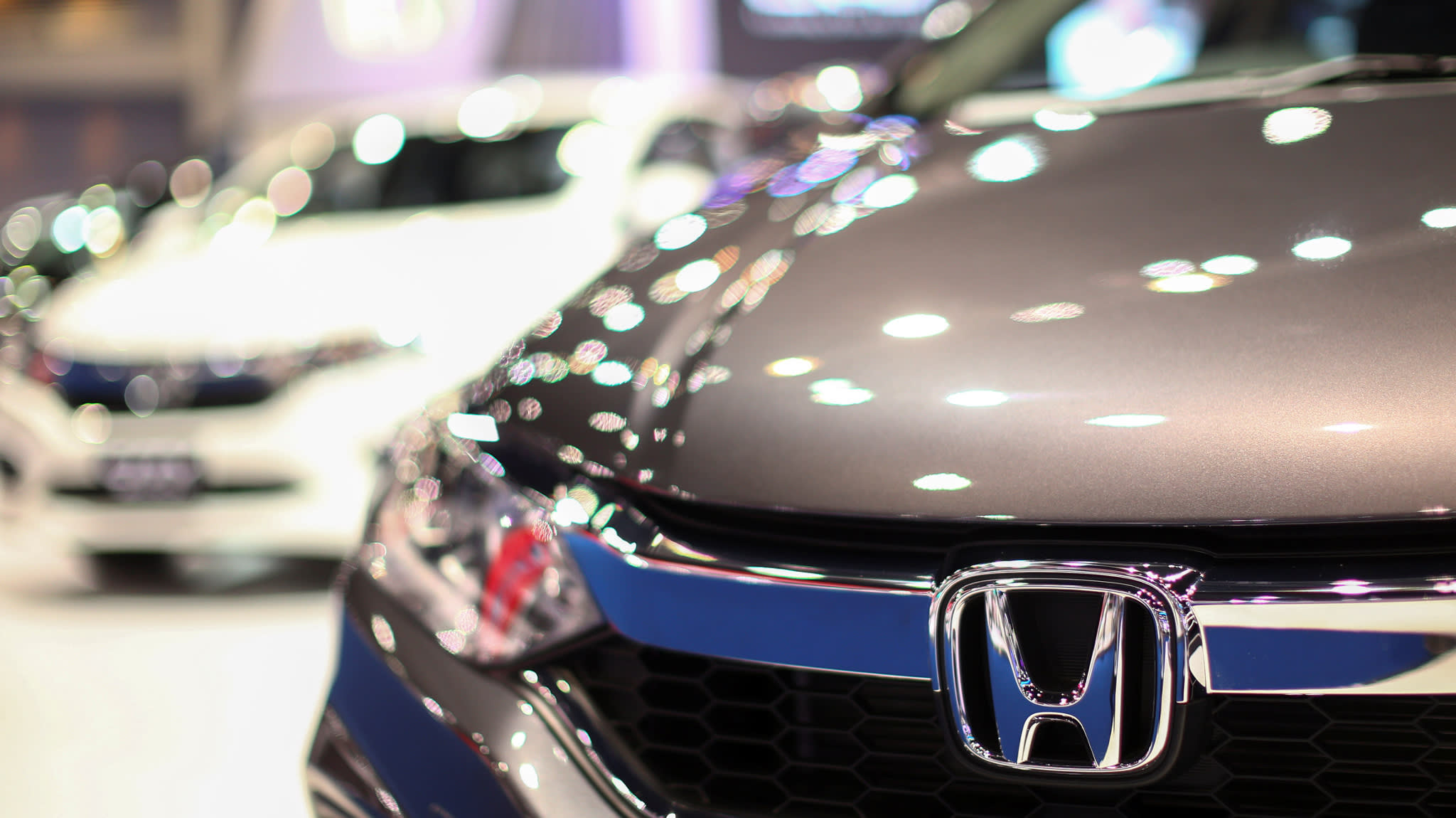
    The global semiconductor chip shortage is not likely to significantly affect the financial profiles of Japan’s Toyota Motor Corp or Honda Motor Co, ratings agency Fitch said in a statement on Wednesday. The automakers have enough financial flexibility to absorb more costs and maintain significant rating headroom, even if the shortage persists till the second half of 2021, according to the statement. 

    The automobile industry has been grappling with a shortfall in chip supply since the end of last year, driven by coronavirus lockdowns in Southeast Asia and bulk-buying by U.S. sanctions-hit Chinese tech giant Huawei Technologies, among other reasons.

    The shortage prompted top U.S. automaker General Motor to extend production cuts at three North American plants last week, while Honda Motor and Nissan Motor were set to sell a combined 250,000 fewer cars in the current financial year.

    Toyota and Honda have enough financial flexibility to absorb more costs and maintain significant rating headroom

    Meanwhile, Toyota shrugged off the issue in its quarterly report last week and said it has up to a four-month stockpile of chips, with no immediate hit to production expected.

    “We believe the shortage should ease or even be resolved in the second half of 2021 as suppliers boost production for automotive clients,” Fitch said.

    Top economic and national security officials in the White House have launched a new effort to help the U.S. auto industry fight the chip shortage, a White House official said on Thursday.

    The issue could impact nearly 1 million units of global light vehicle production in the first quarter, according to data firm IHS Markit.

  • Royal Enfield Renews Partnership With American Flat Track In 2021

    Royal Enfield Renews Partnership With American Flat Track In 2021

    Royal Enfield North America has announced that the brand has renewed its partnership with Progressive American Flat Track for the 2021 season. Under the partnership, Royal Enfield North America will be an official OEM partner with Progressive American Flat Track (AFT) for 2021, and will return with its fleet of motorcycles to the AFT Fan Zone at select rounds, where fans will be able to see the bikes, and also have access to official MotoAnatomy X Royal Enfield flat track apparel. In the inaugural Progressive AFT campaign in 2020, Royal Enfield came off with an impressive performance, with Johnny Lewis’s dominating AFT Production Twins victory aboard the Royal Enfield Twins FT in October 2020.

    “The partnership between Progressive American Flat Track and Royal Enfield sums up everything that’s good about our sport these days,” said Michael Lock, CEO of Progressive AFT. “This famous and historic brand is re-asserting itself for the modern era and we are delighted to assist in showcasing the brand values, the bikes and the people behind it’s recent success. Royal Enfield will be visible in the Fan Zone, helping to evaluate the track, pioneering a new approach to racing with Build Train Race and, importantly, racing in the fast-growing AFT Production Twins class. We are very grateful for their contribution as we grow the sport.”

    Royal Enfield North America is also poised to further grow its Build Train Race program, which highlights, celebrates, and encourages the involvement of women in flat track racing. In 2021, nine women will build and race their own custom INT 650 Twins at this season’s Chicago Half-Mile (5/29), Port Royal Half-Mile (7/24), New York Short Track (8/14), and Charlotte Half-Mile (10/8).

    “We are excited to further our commitment to the American Flat Track community,” said Bree Poland of Royal Enfield. “Last year was a good experience and we can’t wait to get back out there to showcase the brand. We are incredibly honored that the Build Train Race program has been invited back, showing strong support for bringing more women into the world of motorsports.”

    The 2021 Progressive AFT season kicks off with a Volusia Half-Mile doubleheader event at Volusia Speedway Park on Friday, March 12 and Saturday, March 13, 2021.

  • Google’s Waymo Self Driving Car Unit Starts Robo-Taxis In San Francisco

    Google’s Waymo Self Driving Car Unit Starts Robo-Taxis In San Francisco

    Waymo is the pioneer of self-driving cars, but it has been beaten to the punch by Chinese rivals AutoX and Baidu to deploying robo-taxis. Well, this wasn’t going to stand for long as it has started tests of its robo-taxis in San Francisco.

    Waymo had deployed its ride-sharing service in Phoenix, Arizona earlier in 2020 called Waymo One. For the first time, it had also started testing the service without safety drivers in the area, but now a more full-fledged expansion is happening.

    Experts have predicted that the pandemic is accelerating the adoption of autonomous vehicles for transportation and delivery. Overall, global trust for autonomous vehicles has also grown by leaps and bounds in the last three years as the technology has progressed.

    Waymo has Chrysler Pacifica and Jaguar I-Pace electric SUVs which have driven over 20 billion autonomous miles through computer simulations and 20 million autonomous miles on public roads in 25 cities.

    Now Waymo employees in San Francisco will use the Waymo One app to hail rides. They will be prompted for pick-up and drop-off points before being given an ETA. This is similar to a typical ride-hailing app.

    Till 2019, Waymo had a fleet of 153 cars and 268 safety drivers in San Francisco alone, though its latest fleet size is unknown, though presumably, it has increased. These vehicles were deployed in San Francisco to deliver packages for non-profits after the pandemic induced halt in testing.

    “We’re beginning with a limited number of cars and riders and will scale over time. These rides are being offered with a single-vehicle operator,” a Waymo spokesperson said.

    “The initial program starts this week and will last for several, but we plan to grow it over time. We don’t have any specific timelines to share about when (or where) we’ll be offering a public service. It’s worth bearing in mind this is for early product testing and continuous improvement, and there are many further steps we’d need to go through … before we could deploy a service to the public,” Waymo added in a statement.

    Waymo has a permit from the public utility commission in California that’s part of the procedures to run an autonomous vehicle passenger service pilot. This is separate from the California Department of Motor Vehicles (DMV) under which 66 companies have permits.

    Waymo One currently delivers rides with a network of 600 autonomous cars from Phoenix 24 hours a day, seven days a week. It also has a partnership with LYFT to deploy 10 cars on the Waymo One platform.

    Currently, it is on track to having more than 60,000 Pacifica minivans from Chrysler and 20,000 i-pace electric SUVs from Jaguar. It also has a deal with Daimler for developing self-driving semis.

  • Bosch, Microsoft Join Forces To Develop Vehicle Software Platform

    Bosch, Microsoft Join Forces To Develop Vehicle Software Platform

    Bosch will work with Microsoft on a software platform for vehicles, it said on Thursday, as it strives to get a foot in the door to the fast-growing market for electromobility and automated driving technologies. By using cloud technology, the software platform will ensure that vehicles’ control units and computers can get software throughout their lifetime, the German auto supplier said.

    By using cloud technology, the software platform will ensure that vehicles’ control units and computers can get software throughout their lifetime

    The technology is based on Microsoft Azure and includes software modules from Bosch, it said, adding that they plan to use the software platform in-vehicle prototypes by the end of 2021. “We are thus creating the conditions for wireless updates to work just as smoothly and conveniently on vehicles as they do on smartphones,” said Bosch Managing Director Markus Heyn.

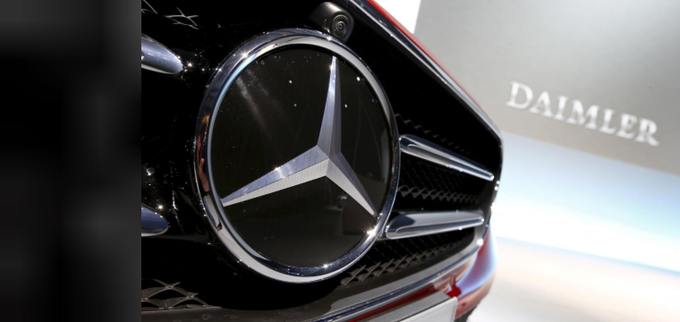
    The companies will also cooperate to adapt existing software tools to let automakers and suppliers to simplify and accelerate their own software updates. Last week, German carmaker Volkswagen AG announced similar cooperation with Microsoft to use its cloud computing services to help it streamline its software development efforts for self-driving cars.

  • Jaguar Land Rover To Cut 2,000 Jobs Globally

    Jaguar Land Rover To Cut 2,000 Jobs Globally

    Jaguar Land Rover said on Wednesday it would cut 2,000 jobs from its global salaried workforce, just days after announcing its luxury Jaguar brand will be entirely electric by 2025 and e-models of its entire lineup will be launched by 2030. “The full review of the Jaguar Land Rover organization is already underway,” the company said in an emailed statement. “We anticipate a net reduction of around 2,000 people from our global salaried workforce in the next financial year,” it said.

    However, it added that the organizational review did not impact hourly paid, manufacturing employees. JLR, owned by India’s Tata Motors, said earlier that its Land Rover brand will launch six fully electric models over the next five years, with the first in 2024.

    Known for its iconic, high-performance E-Type model in the 1960s and 1970s, Jaguar faces the same challenges as many other carmakers as it transitions to electric vehicles while trying to retain the feeling and power of a luxury combustion engine model.

    Last month, Tata Motors said it was concerned by semiconductor shortages and Brexit-related supply disruptions as its luxury car sales recover, although the Indian automaker added these had not yet hit production.

    Tata Motors posted three straight quarters of losses as the COVID-19 crisis dented sales, exacerbating uncertainties over Britain’s exit from the European Union, weak demand and rising costs, but had bounced back to clock a profit in its third-quarter to the end of December. The 2,000 reductions in JLR’s non-factory jobs was reported earlier on Wednesday.

  • Tesla Cuts Prices Of Base Variants Of Model 3, Model Y On Its Website

    Tesla Cuts Prices Of Base Variants Of Model 3, Model Y On Its Website

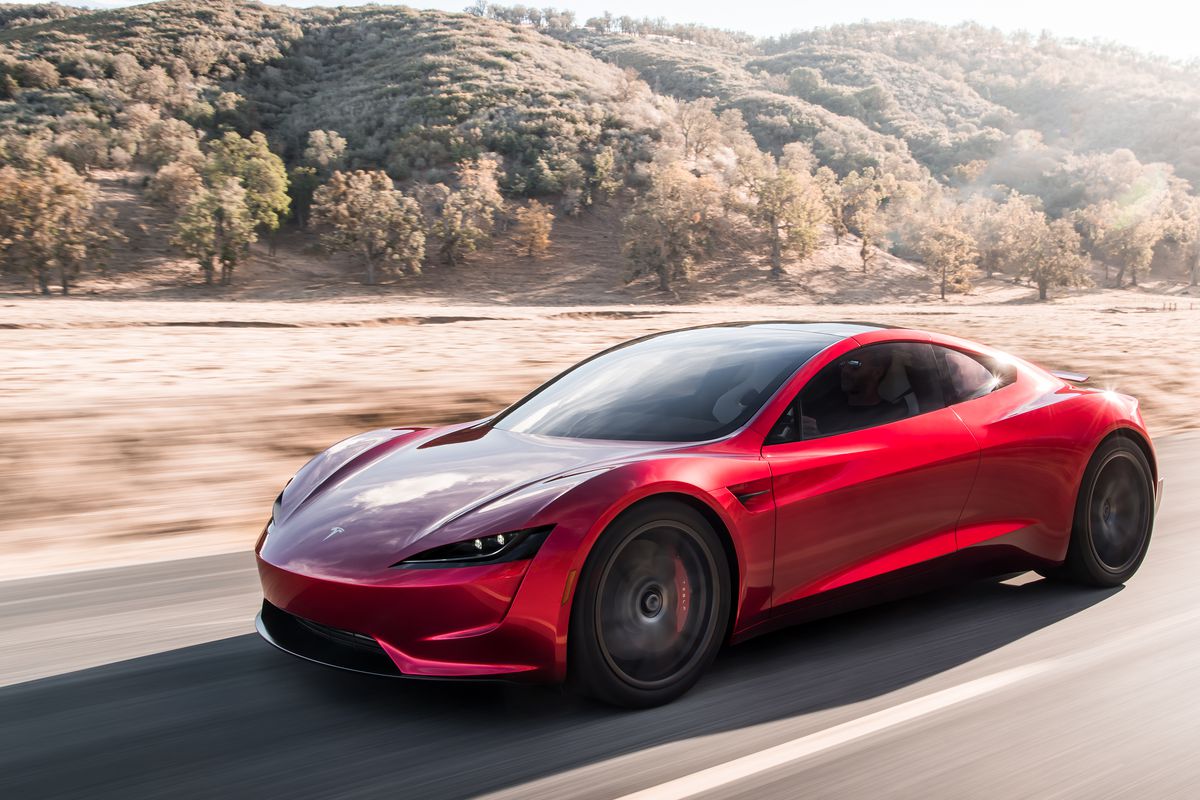
    Tesla Inc has reduced the price of its cheaper variants of the Model 3 sedan and the Model Y sports utility vehicle (SUV), while raising prices for their performance variants, the electric-car maker’s website showed. The price of its Model 3 Standard Range Plus has been lowered to $36,990 from $37,990, while the Model Y Standard Range’s price came down to $39,990 from $41,990, according to the website.

    The carmaker has been making various models in its lineup more affordable at a time when legacy automakers are trying to make inroads in the electric vehicle market.

    The standard range of the Model Y was launched in January, bringing its SUV’s price closer to that of the Model 3 sedan, the electric-car maker’s least expensive car.

    The prices for the Performance variant of the Model 3 rose to $55,990 from $54,990 and Model Y to $60,990 from $59,990, the website showed.

    The price cuts come as Tesla looks to ramp up its deliveries. Overall, the company delivered 499,550 vehicles during 2020, above Wall Street estimates of 481,261 vehicles.