Category: Automotive

Retail News Asia is committed to providing both local and global retailers with the latest Auto and Car news throughout the Asian market. This on a daily base.

  • Maruti Suzuki To Increase Car Prices From April

    Maruti Suzuki To Increase Car Prices From April

    Maruti Suzuki has announced that it will be increasing car prices across its model line-up from April 2021. In a regulatory filing, the country’s largest car manufacture said “Over the past year the cost of company’s vehicles has been impacted adversely due to increase in various input costs. Hence, it has become imperative for the company to pass on some impact of the above additional cost to customers through a price increase in April 2021.” Maruti Suzuki India has not announced the quantum or percentage of the price hike, but it has said that the price hike will vary for different models.

    It is quite common for Original Equipment Manufacturer or OEMs to increase vehicle prices in India at the start of the new financial year. In fact, Maruti Suzuki India had also increased its prices in January 2021, making this the second price revision in just three months. Among other OEMs, Isuzu Motor India has also announced its plan to the prices of its D-Max Regular Cab and the D-Max S-Cab in India, by ₹ 1 lakh, from April 1, 2021. And we expect a few other manufacturers to join the bandwagon soon.

    Currently, Maruti Suzuki India has 15 models in its combined line-up from Arena and Nexa brands. While its most affordable model, the Alto its priced between ₹ 3 lakh to ₹ 4.48 lakh, its flagship model, the S-Cross is priced from ₹ 8.39 lakh, going up to ₹ 12.39 lakh.

  • Honda Africa Twin To Get Radar System

    Honda Africa Twin To Get Radar System

    The Honda Africa Twin is likely to get radar-assisted cruise control, after Ducati, BMW and KTM already introduced similar systems on their range-topping adventure bikes. The radar-powered adaptive cruise control system, made by Bosch, has already made its debut in production models of the KTM 1290 Super Adventure S, the Ducati Multistrada V4 S and the BMW R 1250 RT. And now, patents filed recently by Honda show that its flagship adventure tourer, the Honda Africa Twin, will be getting a radar-assisted adaptive cruise control system as well. The difference is that, perhaps Honda’s system will be indigenously developed, rather than just a plug and play device sourced from Bosch.

    Honda’s patents suggest the use of cameras alongside the radar sensors, so the system will use another layer of monitoring tech, and allow the on-board computer to make a better-informed judgement of what’s happening in its surroundings. The advantage of using cameras is that, while the radar system can sense approaching vehicles, or other vehicles in close proximity, accurately measuring distances, cameras can be used to pick up additional information, like brake lights, road signs and traffic lights.

    The front radar on the Africa Twin patent filings seem to be similar to the systems used by BMW, Ducati and KTM. And the new Africa Twin already seems to have a spot under the headlights, probably designed keeping in mind the positioning of a radar sensor. But it’s the rear section which has a different design. Honda’s Africa Twin design patents show not one, but two rear radars, mounted on the number plate hanger, and these sensors are fitted at an angle to offer a wide detection zone. So, with the dual radars, the area covered will not just be the area behind the bike, but also on each side as well.

    Honda’s system also mentions the use of transponders to broadcast information from the sensors to other vehicles, or to roadside receivers. So, these should add one more dimension to the warning system, that of vehicle-to-vehicle communication, or vehicle-to-infrastructure system, allowing safety systems like radars or cameras on one car or motorcycle to pass on to other similarly-equipped vehicles. With the rapid induction of such technology, Honda is likely to introduce the latest tech within the next couple of years, both on the next-generation Africa Twin, as well as on the Honda Gold Wing.

  • Tesla’s In-Car Cameras Raise Privacy Concerns: Report

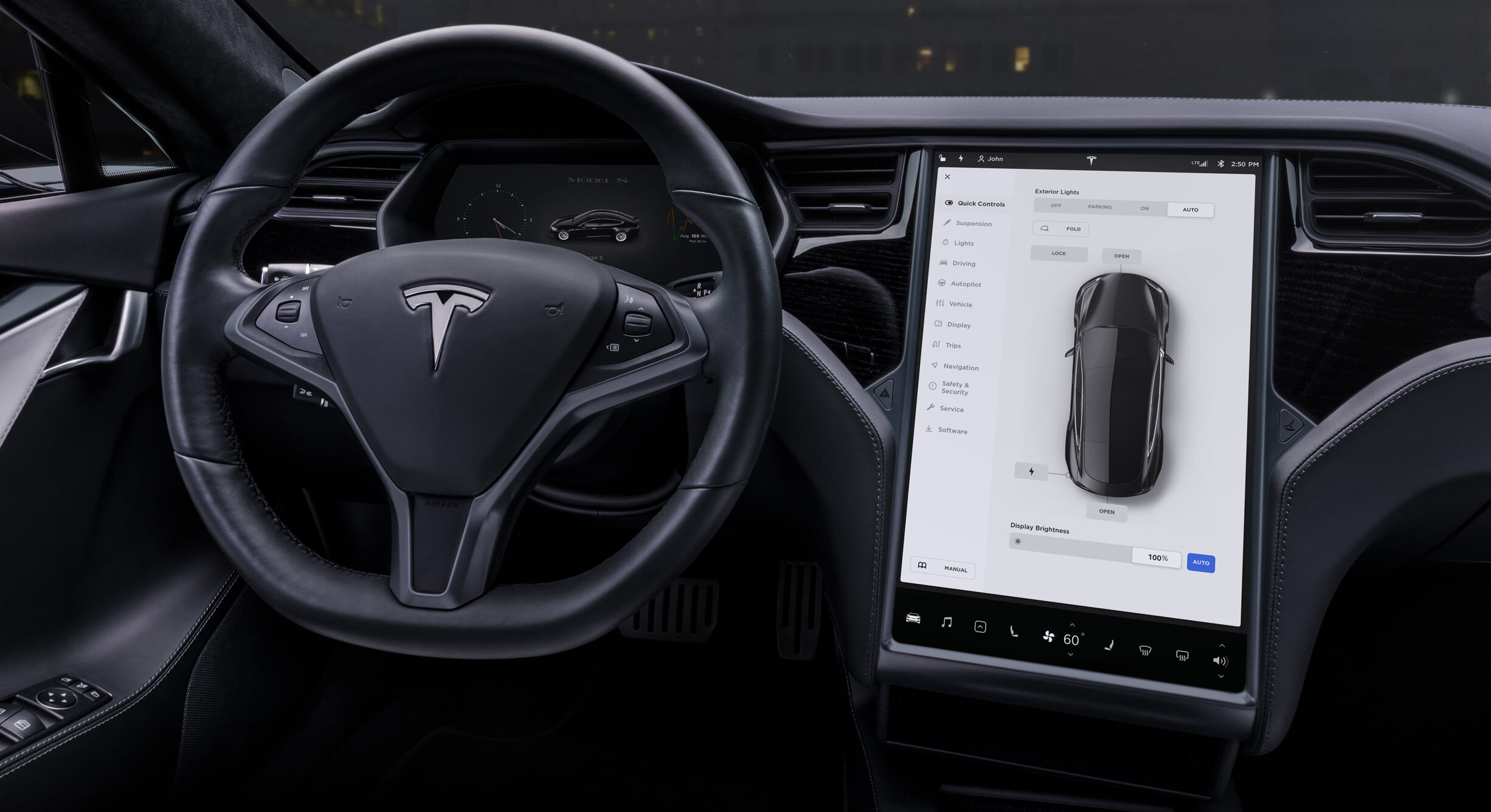
    Tesla’s In-Car Cameras Raise Privacy Concerns: Report

    Tesla’s use of in-car cameras to record and transmit video footage of passengers to develop self-driving technology raises privacy concerns, influential U.S. magazine Consumer Reports said on Tuesday.

    Consumer Reports said the usage potentially undermines the safety benefits of driver monitoring, which is to alert drivers when they are not paying attention to the road.

    “If Tesla has the ability to determine if the driver isn’t paying attention, it needs to warn the driver in the moment, like other automakers already do,” said Jake Fisher, senior director of Consumer Reports’ auto test center.

    Tesla Inc’s use of in-car cameras to record and transmit video footage of passengers to develop self-driving technology raises privacy concerns

    Automakers such as Ford Motor and General Motors, whose monitoring systems do not record or transmit data or video, use infrared technology to identify drivers’ eye movements or head position to warn them if they are exhibiting signs of impairment or distraction, the magazine said.

    Tesla did not immediately respond to a Reuters request for comment.

    The Palo Alto, California-based carmaker’s internal cameras are also a point of contention in China, where the military banned Tesla cars from entering its complexes, citing security concerns.

    Tesla Chief Executive Officer Elon Musk said last week his company would be shut down if its cars were used to spy.

  • Japan Car Makers Scramble To Assess Impact Of Renesas Auto Chip-Plant Fire

    Japan Car Makers Scramble To Assess Impact Of Renesas Auto Chip-Plant Fire

    Toyota, Nissan, Honda and other Japanese automakers scrambled on Monday to assess the production impact of a fire at a Renesas Electronics automotive chip plant that could aggravate a global semiconductor shortage. “We are gathering information and trying to see if this will affect us or not,” a Honda spokesman said. Other car makers including Toyota and Nissan said they too were assessing the situation. The effect on car makers could spread beyond Japan to other auto companies in Europe and the United States because Renesas has around a 30% global share of micro control unit chips used in cars.

    Renesas said it will take at least a month to restart production on a 300mm wafer line at its Naka plant in northeast Japan after an electrical fault caused machinery to catch fire on Friday and poured smoke into the sensitive clean room.

    Two-thirds of production at the affected line is automotive chips. The company also has a 200mm wafer line at the Naka plant, which has not been affected. Concerns on the impact of the fire on production sent auto shares sliding in Tokyo on Monday, with the big three, Toyota, Honda and Nissan, down more than 2% by the midday break. Renesas shares tumbled as much as 5.5% and were down 3.9% midday. The benchmark Topix index shed 1.1%.

    “It will probably take more than a month to return to normal supply. Given that, even Toyota will face very unstable production in April and May,” said Seiji Sugiura, senior analyst at Tokai Tokyo Research Institute. “I think Honda, Nissan and other makers will also be facing a difficult situation.”

    Semiconductors such as those made by Renesas are used extensively in cars, including to monitor engine performance, manage steering or automatic windows, and in sensors used in parking and entertainment systems.

    Nissan and Honda had already been forced to scale back production plans because of the chip shortage resulting from burgeoning demand from consumer electronic makers and an unexpected rebound in car sales from a slump during the early months of the coronavirus pandemic. Toyota, which ensured parts suppliers had enough stocks of chips, has fared better so far.

    “It could take three months or even half a year for a full recovery,” said Akira Minamikawa, analyst at technology research company Omdia. “This has happened when chip stockpiles are low, so the impact is going to be significant,” he added.

    Renesas said it customers, which are mostly automotive parts makers rather than the car companies, will begin to see chip shipments fall in around a month. The company declined to say which machine caught fire because of the electrical fault or which company made it. The Japanese government promised help for the auto industry.

    “We will firmly try to help the Naka factory achieve swift restoration by helping it quickly acquire alternative manufacturing equipment,” Chief Cabinet Secretary Katsunobu Kato told a regular news conference on Monday.

    The latest incident at the Naka facility comes after an earthquake last month shut down production for three days and forced Renesas to further deplete chip stocks to keep up with orders. The plant was closed for three months in 2011 following the deadly earthquake that devastated Japan’s northeast coast.

  • Targeting Tesla, China’s Geely To Launch New Premium EV Brand

    Targeting Tesla, China’s Geely To Launch New Premium EV Brand

    China’s Geely plans to roll out electric vehicles under a new marque with different branding and sales strategies, people familiar with the matter said, as the Volvo owner looks to take on its main EV rival Tesla with higher-end vehicles. The brand, positioned in the premium segment and named “Zeekr”, will be housed under Geely’s to-be-launched EV entity Lingling Technologies, according to three people, who declined to be named as the plan is not yet public. Reuters reported the plans for Lingling last month.

    Geely, the owner of Volvo Cars and 9.7% of Daimler AG, will roll out models under the new marque based on its open-source EV chassis, announced in September and called Sustainable Experience Architecture (SEA), the sources said.

    It will be a new attempt to go up-market by Geely, and backs founder and Chairman Li Shufu’s long-held ambition to make premium cars “like Mercedes-Benz” in a bid to take on EV leader Tesla Inc.

    Geely will open showrooms, or “hubs”, in city centres to sell cars at a fixed price, departing from traditions to sell cars through dealerships – marketing tactics pioneered by Tesla, which last year saw sales expand quickly in China, the world’s biggest car market.

    The plan follows a flurry of tie-ups by Geely earlier this year as the automaker pursues its goal of becoming a leading EV contract manufacturer and engineering service provider.

    “Traditional gasoline cars and electric vehicles are two race tracks of business. Geely does not have a clear advantage in electric vehicles at the moment so it appears that it wants to complete its own innovation by creating a new brand,” said Alan Kang, analyst at auto consultancy LMC Automotive.

    China’s automakers largely compete with entry-level and mass-market manufacturers including Volkswagen and Toyota, but EV maker Nio Inc sells cars with higher prices and counts BMW as a rival.

    Hangzhou-based Geely also plans a broad array of sales and marketing strategies to seek deeper relationships with the EV buyers. It will open lifestyle lines for clothing and accessories and launch a car owner’s club, tactics used by Nio, sources said.

    Zeekr is also considering rolling out a share ownership plan that allows customers to become shareholders of Lingling, which management hopes will boost sales and the relationship between brand and customers.

    Geely declined to comment. Shares of its Hong Kong-listed company Geely Automobile fell 3% on Friday as Chinese equities dropped after a rise in global bond yields prompted selling in high-priced consumer and material stocks.

    Many conventional automakers have used a new brand to launch their EV units. Geely’s rivals including Great Wall, and SAIC Motor have rolled out their respective new standalone EV brands.

    China’s government has heavily promoted new energy vehicles (NEVs) – such as battery-powered, plug-in petrol-electric hybrid and hydrogen fuel cell cars – in response to chronic air pollution and a warming climate, spurring interest from technology companies and investors alike. China forecasts NEVs will make up 20% of its annual auto sales by 2025 from around 5% in 2020.

  • Honda Temporarily Cutting Production At All U.S., Canada Plants

    Honda Temporarily Cutting Production At All U.S., Canada Plants

    Honda Motor Co said late Tuesday supply chain issues will force a halt to production at a majority of U.S. and Canadian auto plants for a week. The Japanese automaker added the issue will result in some production cuts next week at all U.S. and Canadian plants, citing “the impact from COVID-19, congestion at various ports, the microchip shortage and severe winter weather over the past several weeks.”

    “In some way, all of our auto plants in the U.S. and Canada will be impacted,” Honda said.

    Some U.S. and Canadian plants are expected to have smaller production cuts next week, but a spokesman for Honda added “the timing and length of production adjustments could change.”

    The company declined to specify the volume of vehicles impacted but said “purchasing and production teams are working to limit the impact of this situation.”

    The company added when production is suspended Honda workers “will continue to have the opportunity to work at the impacted plants.” Honda workers were notified of the production cuts Monday.

    Sam Fiorani, vice president of global vehicle forecasting at AutoForecast Solutions, said Honda typically produces about 30,000 vehicles a week in the United States and Canada.

    The production issues are hitting Honda plants in Ontario, Ohio, Alabama, and Indiana. Honda said its Mexico operations have not announced any production cuts.

    The chip shortage, which has hit most of the global automakers, stems from a confluence of factors as carmakers, which shut plants for two months during the COVID-19 pandemic last year, compete with the sprawling consumer electronics industry for chip supplies.

    General Motors Co has cut production at many plants and warned it could shave up to $2 billion from this year’s earnings.

    GM’s U.S. rival Ford Motor Co previously said the shortage could hurt 2021 profit by up to $2.5 billion and said it had curtailed production of its flagship F-150 pickup.

  • BMW Expects At Least Half Of Sales To Be Electric Cars By 2030

    BMW Expects At Least Half Of Sales To Be Electric Cars By 2030

    BMW expects at least half of its sales to be zero-emission vehicles by 2030, setting a more conservative target than some rivals in the race to embrace cleaner driving. In the short term, the German carmaker forecast on Wednesday a big rise in pretax profit for this year, with a strong performance in all areas – from MINIS through its upmarket BMW brand to top-of-the-range Rolls-Royces. Its shares rose as much as 4.9% to a 2-1/2 year high of 84.42 euros, buoyed by its forecast for a strong recovery from a pandemic-hit 2020.

    BMW said around 90% of its market categories would have fully-electric models available by 2023 and the electric BMW i4 would be launched three months ahead of schedule this year.

    Bernstein analyst Arndt Ellinghorst said BMW had entered 2021 “very confidently.” “In terms of electromobility, BMW is making good progress and is taking significantly fewer risks than VW,” he said.

    Volkswagen has said it expects 70% of European sales at its core VW brand to be electric by 2030 and this week unveiled ambitious plans to expand in electric driving – including building half a dozen battery cell plants in Europe – sending its shares sharply higher.

    BMW said around 90% of its market categories would have fully-electric models available by 2023 and the electric BMW i4 would be launched three months ahead of schedule this year. The carmaker said its MINI brand would be fully electric “by the early 2030s” and electric models would account for at least 50% of group deliveries by 2030.

    When asked if BMW could set a date for ending sales of internal combustion engines, as some rivals have, Chief Technology Officer Frank Weber said: “it’s not us who decides on the end of the internal combustion engine, but it’s the markets.”

    In an industry chasing electric carmaker Tesla and facing tightening CO2 emissions standards in Europe and China, some automakers have promised a faster shift in technology, despite the huge costs and manufacturing changes involved.

    Sweden’s Volvo said this month its lineup would be fully electric by 2030, and Ford said in February its lineup in Europe would be too. Sales of electric and plug-in hybrid cars in the European Union almost trebled to over 1 million vehicles in 2020 and accounted for more than 10% of overall sales, taking zero-emission models from niche products into the mainstream.

    Chief Executive Oliver Zipse told a news conference that BMW could accelerate its plans if consumers embraced electric models more quickly than expected.

    “Should demand in certain markets shift completely to fully electric vehicles in the coming years – we can deliver,” he said.

    Last week, BMW said 2021 had started well after its profit recovered in the second half of 2020 from pandemic shutdowns, thanks largely to strong sales in China.

  • BMW’s New-Gen iDrive System To Provide Level 2 Autonomous Capability

    BMW’s New-Gen iDrive System To Provide Level 2 Autonomous Capability

    BMW has shown off its next-generation iDrive system, which is the software and hardware platform which comprises the infotainment system and in-car experience that has been prevalent since the dawn of the new millennium. Now, approaching its eighth generation, it has a new curved display that starts behind the steering wheel extending across the dashboard.

    BMW has basically merged the 12.3-inch instrument cluster with the 14.9-inch infotainment system — curved into a single unit facing the driver. Of course, not every vehicle will have the same screen size, but the panels will have the appearance of being “floating”.

    This new system will debut on the iX electric SUV as well as the i4 electric sedan. The big deal here is that the onboard computer will be able to process 20 to 30 times, more data than the previous models. This will enable greater synergy with the sensors that the cars will come equipped with enabling higher levels of autonomy.

    BMW’s chief technology officer Franker Weber himself describes the new iDrive as a major step towards fully autonomous technology — with support for level 2 and level 3 systems.

    “It is not an evolutionary step from what we had in the previous generation,” Weber said. “It’s an all-new, all-new system when it comes to sensors, computing, and the way it was developed,” he added.

    Level 2 systems include lane-keeping, blind-spot detection, automatic emergency braking, and adaptive cruise control. Level 3 autonomous driving involves more automation called conditional automation where the driver still has to be in a position to take over the control of the vehicle when requested. This feature is however is contingent on approval from local authorities.

    Weber hasn’t confirmed whether BMW will be providing access to level 3 automation however, he has hinted that level 3 testing is ramping up on the new version of iDrive.

  • Volkswagen Takes Aim At Tesla With Own European Gigafactories

    Volkswagen Takes Aim At Tesla With Own European Gigafactories

    Volkswagen plans to build half a dozen battery cell plants in Europe and expand infrastructure for charging electric vehicles globally, accelerating efforts to overtake Tesla and speed up mass adoption of battery-powered cars. The world’s No. 2 carmaker, which is in the midst of a major shift towards battery-powered cars, said on Monday it wants to have six battery cell factories operating in Europe by 2030, which it will build alone or with partners.

    “Our transformation will be fast, it will be unprecedented,” Chief Executive Herbert Diess told Volkswagen’s Power Day, which also featured the CEOs of BP, Enel and Iberdrola in an effort to match some of the buzz of Tesla’s Battery Day last September.

    “E-mobility has become core business for us,” he added.

    Volkswagen, whose shares rose as much as 3.8%, did not specifically say how much the plan will cost. It said in December that it planned to spend 35 billion euros ($41.7 billion) on e-mobility as a whole by 2025.

    The group had been laggard on electrification until it admitted in 2015 to cheating on U.S. diesel emissions tests and had to deal with new Chinese quotas for electric vehicles. It now has one of the most ambitious programs in the industry.

    Volkswagen said the European factories will have a joint production capacity of up to 240 gigawatt hours (GWh) a year, adding the first 40 GWh would come from Sweden’s Northvolt, with production starting in 2023.

    As part of the deal, Volkswagen will raise its 20% stake in Northvolt and also take over the Swedish firm’s stake in a planned battery cell venture in the German city of Salzgitter, which will form the second factory from 2025.

    This will be followed by a factory in Spain, France or Portugal in 2026 and a site in Poland, Slovakia or the Czech Republic by 2027. Two more plants will be set up by 2030.

    While the first two factories are already reflected in Volkswagen’s financial planning, the group is currently in “deep discussions” about how the subsequent plants fitted with financial targets, board member Thomas Schmall said.

    Volkswagen is also working on a major expansion of charging infrastructure, a lack of which is still seen as a big barrier to the mass adoption of battery-powered cars. Via existing efforts and partnerships with oil major BP as well as top European utilities Enel and Iberdrola, Volkswagen aims to operate about 18,000 public fast-charging points in Europe by 2025.

    This represents a five-fold expansion of the existing fast-charging network, Volkswagen said, adding it would invest 400 million euros in the initiative.

    In North America, Volkswagen targets 3,500 fast-charging points by the end of 2021 via its Electrify America unit, while in China, the world’s largest car market, the group aims for 17,000 by 2025.

    In China, where Volkswagen last year acquired 26.5 percent of battery maker Guoxuan High-tech Co Ltd, the carmaker now aims to sell more than 2 million electric vehicles a year by the end of the decade.

    Shifting to design, Volkswagen unveiled plans to have a new unified prismatic battery cell from 2023, which will support cost cuts generated by the higher level of in-house cell production and could impact its current suppliers.

    South Korean battery makers’ shares, including in LG Chem, whose unit LG Energy Solution makes batteries for Volkswagen, and SK Innovation, fell as much as 5.8% and 5.3% respectively on Tuesday after the news.

    Electric vehicle makers, including Tesla, are using cylindrical battery cells, which resemble flashlight batteries and are relatively inexpensive and easy to manufacture.

    Prismatic cells, which resemble a thin hardcover book, are housed in a rectangular metal case and are more expensive. Pouch cells, another alternative, are thinner and lighter, and resemble a flexible metal mailing envelope.

    “On average, we will drive down the cost of battery systems to significantly below 100 euros ($119) per kilowatt hour,” Schmall said. “This will finally make e-mobility affordable and the dominant drive technology.”

  • Volkswagen Plans Six European Battery Cell Plants By 2030

    Volkswagen Plans Six European Battery Cell Plants By 2030

    Volkswagen plans to have six battery cell production plants operating in Europe by 2030 to secure supply for the world’s No.2 carmaker’s electric vehicle ambitions. The plants, to be built in partnerships, will have a production capacity of 240-gigawatt hours a year, VW said.

    “E-mobility has become core business for us. We are now systematically integrating additional stages in the value chain,” Chief Executive Herbert Diess told VW’s Power Day.

    “We secure a long-term pole position in the race for the best battery and best customer experience in the age of zero-emission mobility,” Diess added on Monday.

    The group also said it would enter partnerships with oil major BP and top European utilities Enel and Iberdrola to expand electric vehicle charging infrastructure, still seen as a major hurdle to the mass adoption of battery-powered cars.

  • Samsung To Develop Autonomous Driving Chip For Google’s Waymo

    Samsung To Develop Autonomous Driving Chip For Google’s Waymo

    Samsung Electronics recently won a project for Google parent Alphabet’s autonomous driving unit Waymo to develop chips for next-generation self-driving cars, South Korean media reported on Monday.

    Samsung will develop a chip that computes data collected from various sensors installed in autonomous vehicles or centrally controls functions by exchanging information with Google data centers in real-time, South Korean newspaper Herald Business reported, citing an unnamed industry source.

    The project is expected to be carried out by Samsung’s logic chip development division System LSI’s Custom SOC Business Team, it added.

    Samsung Electronics declined to comment regarding client company matters. Alphabet did not have an immediate comment.

  • GM Builds Pickups Without Certain Modules Due To Global Chip Shortage

    GM Builds Pickups Without Certain Modules Due To Global Chip Shortage

    General Motors Co said on Monday that due to the global semiconductor chip shortage the U.S. automaker is building certain 2021 light-duty full-size pickup trucks without a fuel management module, hurting those vehicles’ fuel economy performance. The lack of the active fuel management/dynamic fuel management module means affected models, equipped with the 5.3-litre EcoTec3 V8 engine with both six-speed and eight-speed automatic transmission, will have lower fuel economy by one mile per gallon, spokeswoman Michelle Malcho said.

    Malcho emphasized all trucks are still being built, something GM has repeatedly stressed it would try to protect as pickups are among GM’s most profitable models. She declined to say the volume of vehicles affected. “By taking this measure, we are better able to meet the strong customer and dealer demand for our full-size trucks as the industry continues to rebound and strengthen,” Malcho wrote in an email.

    The change runs through the 2021 model year, which typically ends in late summer or early fall, she said. Malcho said it would not have a major impact on the Detroit automaker’s U.S. corporate average fuel economy (CAFE) numbers.

    “We routinely monitor our fleet for compliance in the U.S. and Canada, and we balance our portfolio in a way that enables us to manage unforeseeable circumstances like this without compromising our overall (greenhouse gas) and fuel economy compliance,” she said.

    GM’s fleetwide fuel economy in the 2018 model year was 22.5 miles per gallon and was projected to rise to 22.8 mpg for 2019, according to a report by the Environmental Protection Agency. To meet federal CAFE requirements, automakers like GM often use credits from either earlier years where they faced less stringent rules and performed better than the requirements or buy credits from other automakers.

    GM said last month the chip shortage could shave up to $2 billion from this year’s earnings. It subsequently said it expected global chip supplies to return to normal rates by the second half of the year. The shortage, which has hit automakers globally, stems from a confluence of factors as carmakers, which shut plants for two months during the COVID-19 pandemic last year, compete with the sprawling consumer electronics industry for chip supplies.

  • Honda Confirms Participation At EICMA 2021

    Honda Confirms Participation At EICMA 2021

    Honda has become one of the first motorcycle brands to confirm participation in the 2021 edition event of one of the world’s most well-known motorcycle trade shows. The EICMA event, held every year in Milan, Italy, is scheduled to take place between November 23-28, 2021. But this year’s event may not see participation from many brands, and it’s still some time away to actually see which way the COVID-19 situation blows, in Europe, as well as across the world. BMW Motorrad has already announced that it won’t be attending any motorcycle shows going forward, and the confirmation from Honda is actually a strong statement, considering the EICMA is possibly the most important two-wheeler event around the world.

    “It is a concrete and conscious approach to protect the value of the event, the public and the whole sector of reference involved, with the structure of EICMA S.p.A. and the manufacturers committed to facing up to the complexity of the organization of the event in a context in continuous development,” Honda said in a statement.

    “The path towards EICMA 2021 is distinguished by a reasonable expectation and a more flexible vision compared to the past. Sharing this new orientation therefore implies a surplus of compactness by all the players involved and the positive confirmation of Honda, together with the other significant names which have already assured their presence, go in exactly this direction. We hope that we can soon communicate other confirmations.”

    “The common objective is that we can once again gather around our passion for the products of this industry and re-conquer the freedom to do what EICMA has been doing for over one hundred years: creating opportunities for companies and offering the public visitor experiences which are increasingly exciting and thrilling.”

    The 2020 edition of the EICMA had to be canceled due to the COVID-19 pandemic. BMW Motorrad has announced that it will focus on its own small motorcycle events and customer events, and will not participate at the EICMA show. With the global economy under pressure, it’s still a matter of speculation of how many brands will eventually turn up at the 2021 EICMA show. But this year’s event is likely to be smaller than before, and it’s still uncertain how the COVID-19 situation pans out over the next few months. Even though vaccination drives are going on around the world, audience participation at the EICMA 2021 is likely to be significantly lower than in previous years.

  • Auto sales up 21 pct in 2021

    Auto sales up 21 pct in 2021

    Auto sales in the first two months of the year jumped by 21 percent to 40,017 units.

    Passenger vehicles dominated sales at 71 percent, according to the Vietnam Automobile Manufacturers Association.

    Local company Truong Hai Auto (Thaco) led the market with 14,964 units representing a 39 percent year-on-year increase.

    It was followed by Toyota (6,848), and Mitsubishi (4,605).

    Honda and Ford rounded off the top five.

    Last year sales had fallen by 8 percent to 296,634 units as the Covid-19 pandemic badly affected the economy, hitting people’s incomes and discretionary spending.

  • Nissan Appoints Guillaume Cartier Chairperson Of The AMIEO Region

    Nissan Appoints Guillaume Cartier Chairperson Of The AMIEO Region

    Nissan Motor announced Guillaume Cartier as its new Chairperson for the Africa, Middle East, India, Europe and Oceania (AMIEO) region. Effective April 1st, Cartier will lead all Nissan operations in the region, which covers more than 140 markets across four continents with a population of around 3.8 billion people, representing more than 30 percent of global vehicle sales.

    With over 25 years’ experience at Nissan and in the Alliance in global and regional leadership positions, Cartier will lead the new region as the Nissan NEXT transformation plan continues to gather pace and with key models in Europe including Qashqai and Ariya launching soon, and as the brand continues to grow in the AMIO markets, thanks to a powerful vehicle line-up ranging from the iconic Patrol to the recently launched Magnite in India.

    Cartier said: “I am thrilled to be leading this culturally rich and diverse region into a period of unprecedented change for the automotive industry and with a refreshed range of Nissan models and technologies coming to the market.”

    Currently Vice-Chairperson of the AMIEO region and AMI President, Cartier first joined Nissan in 1995 as after-sales manager and went on to hold a number of senior management positions in the Alliance, including AMI Chairperson, head of the Global Datsun Business Unit, Executive Officer and Senior Vice President for Mitsubishi Motors, and Senior Vice President for Sales and Marketing in Europe. Cartier will report to the vice-chief performance officer and chief quality officer, Christian Vandenhende. Cartier will replace Gianluca De Ficchy, who served for three years as Chairperson of Nissan Europe and latterly of the expanded AMIEO region.