Category: Automotive

Retail News Asia is committed to providing both local and global retailers with the latest Auto and Car news throughout the Asian market. This on a daily base.

  • New GTX Brand Joins The Volkswagen ID. Family

    New GTX Brand Joins The Volkswagen ID. Family

    We knew it would happen sooner or later but Volkswagen is all set to bring in a sporty top-of-the-range model to its electric vehicle range – the new ID.4 GTX. The car will be unveiled on April 28 and the company has already teased the logo. Similar to GTI and GTE, it stands for its own product brand.

    We’ll know more about the car itself, but we know a few details for now. Volkswagen says that the GTX models will impress when it comes to performance and design. An additional electric motor on the front axle brings the all-wheel-drive into the ID. Family. The additional motor switches on intelligently within a few milliseconds when very high performance or strong traction are required. In the new “Traction” driving mode, it is even permanently activated.

    Klaus Zellmer, Board Member for Marketing and Sales at the Volkswagen brand said, “Now the X is building the bridge to the mobility of the future. Sustainability and sportiness are not mutually exclusive but complement each other intelligently. ”

    The new product brand for the ID. Family gives the ACCELERATE corporate strategy a further boost. Volkswagen wants to become the most desired brand for sustainable mobility. The goal is to increase the share of pure electric cars in Europe to 70 percent of sales by 2030. Volkswagen wants to become climate neutral by 2050; around 16 billion euros will be invested in e-mobility, hybridization and digitization by 2025.

  • Hyundai To Suspend Production At South Korea Plant Due To Chip Shortage

    Hyundai To Suspend Production At South Korea Plant Due To Chip Shortage

    It was earlier this week when Hyundai Motor suspended production at its Asan plant because of a chip shortage. The South Korean carmaker has announced that it will again halt production at its Sonata-producing plant for two days next week due to an electric parts shortage. According to a report from IANS, the automaker will stop operation at its Asan plant on Monday and Tuesday. This Hyundai plant is located around 100 km south of Seoul that produces the Grandeur and Sonata sedans.

    Hyundai has seven plants in South Korea, of which five are located in Ulsan whereas the other two facilities are located in Asan and Jeonju. Moreover, the company has ten overseas plants wherein four facilities are in China and one each in India, Brazil, Czech Republic, Turkey, Russia, and the US. The combined capacity of these plants is around 5.5 million units.

    The carmaker expects the four-day suspension will result in over 4,000 vehicles in production losses. Moreover, the company had also suspended operations at its Ulsan plant, situated 414 km southeast of Seoul, from April 7 to April 14 due to a parts shortage. Moreover, Hyundai produces Ioniq 5 and Kona EV cars at its Ulsan plant.

    The suspension comes because of a shortage of semiconductor parts used in Kona’s front vehicle camera system, along with an issue in Hyundai Mobis Company’s production line, which rolls out the traction motor for the Ioniq 5. The carmaker expects production losses of 6,000 units of the Kona and 6,500 units of the Ioniq 5.

  • Nissan To Focus On Fuel-Sipping Technology And Electrification In China

    Nissan To Focus On Fuel-Sipping Technology And Electrification In China

    Japan’s financially challenged Nissan Motor Co is expected to show off a new “must-succeed” car and explain its green-car strategy for China at the Shanghai auto show which starts on Monday, two company officials told Reuters. The car Nissan plans to show off at the motor show is the significantly redesigned X-Trail sport-utility vehicle (SUV). A similar SUV called the Rogue hit the U.S. market last year. The new X-Trail will be available in China later this year.

    The new car is powered by a fuel-sipping three-cylinder, petrol-powered turbo engine, which one of the sources said might face an uphill battle in gaining acceptance in China where similar technologies have proven unpopular.

    The car is a “must succeed, a must-win car for us,” one of the two sources said. Both sources spoke on the condition of anonymity because they are not authorized to speak with reporters.

    In addition to the X-Trail’s China debut, Nissan’s chief operating officer Ashwani Gupta is expected to tell reporters in Shanghai virtually from Japan on Monday that Nissan’s green car strategy is two-pronged: the company will focus on fuel efficiency-enhancing petrol-electric hybrid technology, as well as battery-electric cars to make its lineup of vehicles in China greener.

    Nissan will focus on fuel efficiency-enhancing petrol-electric hybrid technology, as well as battery-electric cars to make its lineup of vehicles in China greener.

    In January, Nissan said all its new vehicles in key markets, including China, would be electrified by the early 2030s, as part of its efforts to achieve carbon neutrality by 2050.

    The strategy comes as regulatory pressure in China grows on carmakers to slash emissions.

    China is a key pillar of Nissan’s turnaround strategy, which involves focusing on producing profitable cars for China, Japan and the United States, rather than chasing all-out global growth pursued by ousted boss Carlos Ghosn.

    The company is scrambling to slash its production capacity and model line-up by a fifth and to cut fixed costs by 300 billion yen ($2.8 billion). Nissan aims to achieve a 5% operating profit margin and a sustainable global market share of 6% by the end of fiscal year 2023.

    It wasn’t immediately clear how much detail Nissan plans to share on its China strategy on Monday.

    The two sources said Nissan nonetheless plans to start taking “pre-orders” in China for its upcoming electric Ariya SUV before the end of this year.

    Nissan also plans to launch a hybrid “e-Power” version of the Sylphy compact car this year and an e-Power X-Trail as early as next year.

    A company spokeswoman said Nissan plans to showcase in Shanghai the redesign X-Trail crossover, as well as the introduction of Nissan’s e-power petrol-electric hybrid technology to China. She declined to comment otherwise.

  • Bentley’s 2021 Pikes Peak Race Car Unveiled

    Bentley’s 2021 Pikes Peak Race Car Unveiled

    Bentley has revealed its 2021 Pikes Peak Racecar. The Continental GT3 Pikes Peak, designed and built to compete for the Time Attack 1 record at this year’s Pikes Peak International Hill Climb, will be the first competition, Bentley, to run on renewable fuel, ahead of a goal to offer sustainable fuels to Bentley’s customers around the world.

    The modified Continental GT3 racer, based on Bentley’s race- and championship-winning car, will power its way through the 20 km course running on biofuel-based gasoline. Various blends of fuels are currently being tested and evaluated, with possible Greenhouse Gas (GHG) reductions of up to 85 percent over standard fossil fuel. This first step marks the start of a longer program that will investigate both biofuels and e-fuels for their potential to power the Bentleys of past and present in a sustainable way.

    Bentley’s ambitious and transformational Beyond100 program will see the brand become the world’s leading sustainable luxury mobility company, with the entire Bentley model range offered with Hybrid variants by 2023 ahead of Bentley being BEV-only by 2030. The adoption of renewable fuel for this project signals the start of a long-term ambition for Bentley, initiating a research and development program that aims to offer renewable fuels to Bentley customers in parallel to Bentley’s electrification program. This two-strand strategy is set to maximize the pace of Bentley’s progress towards outright carbon neutrality, as part of its Beyond100 journey.

    To break the record, the car will have to complete the nearly 5,000 ft climb, which includes 156 corners, at an average speed of more than 126 kmph to cross the finish line in less than nine minutes and 36 seconds. To help achieve this ambitious target, Bentley has once again turned to three-time Pikes Peak champion and former “King of the Mountain’ Rhys Millen (NZ) – who holds individual class records. It was with Millen that Bentley captured its two existing Pikes Peak records – the Production SUV record attained in 2018 with a Bentayga W12, and the outright Production Car record scored in 2019 with a Continental GT.

    With the start line at 9,300 ft, the course climbs to 14,100 ft – where the air is 1/3 less dense than at sea level. This environment means that the Continental GT3 Pikes Peak features modifications both to its aerodynamics package and its engine, turning it into the most extreme iteration of a Continental GT – ever.

    The biggest rear wing ever fitted to a Bentley dominates the rear of the car, sitting above a highly efficient rear diffuser that surrounds the transaxle gearbox. This rear aerodynamic package is balanced by a two-plane splitter at the front, flanked by separate dive planes.

    The biggest rear wing ever fitted to a Bentley dominates the rear of the car, sitting above a highly efficient rear diffuser that surrounds the transaxle gearbox.

    The engine is Bentley’s proven racing power unit, developed from the 4.0-litre turbo V8 fitted to the Continental GT V8. For the Continental GT3 Pikes Peak, engine modifications together with the use of carefully selected biofuel will ensure the engine develops significant horsepower despite the rarefied conditions it will operate in. Short side-exit exhausts will ensure the car sounds as dramatic as it looks.

    Further modifications include cooling air scoops in place of the rear windows, and the obligatory stopwatch mounted to the roll cage next to the steering wheel, to allow Rhys Millen to keep track of his sector times up the mountain.

  • Honda Motorcycle Scooter India Sets Up New Overseas Business Vertical

    Honda Motorcycle Scooter India Sets Up New Overseas Business Vertical

    Honda Motorcycle and Scooter India (HMSI) has announced setting up a new overseas business vertical with the aim to promote India as a global export hub for Honda. HMSI says that the new vertical will spearhead the company’s ambition to export two-wheelers to other global markets. The new overseas business vertical aims to unlock new synergy by integrating Honda 2Wheeler India’s export-import sales function with quality, purchase, development, homologations, manufacturing and logistics. It will be located at HMSI’s Manesar facility.

    Elaborating on Honda’s vision for the new overseas business expansion, Mr. Atsushi Ogata – Managing Director, President & CEO, Honda Motorcycle & Scooter India Pvt. Ltd. said, “With an eye on the future, Honda 2Wheelers India aims to further consolidate its No. 1 position in Honda’s global motorcycle business while unlocking the next chapter of ‘Make in India, for India & the World’ in the BS-VI era. With this major organizational restructuring, the company is strengthening its business constitution and improving competitiveness to meet the high expectations from Global Honda”.

    HMSI started exporting its two-wheelers with the launch of Honda Activa in 2001. It was in 2015 that Honda reached the 10 lakh milestone for two-wheeler exports. Currently, HMSI exports to 35 markets across Europe, Central & Latin America, Middle-East, Japan and the SAARC nations. Honda also says that the recent mid-size motorcycle launches in India, like the CB500X, CB650R and the CBR650R have solid potential to further help the company to establish India as hub for global markets.

  • Auto sales make recovery in Q1

    Auto sales make recovery in Q1

    Auto sales rose by 36 percent year-on-year in the first quarter to 70,952 units, with all categories of vehicles achieving double-digit growth.

    Passenger vehicles and commercial vehicles were up 34 percent and 43 percent, according to the Vietnam Automobile Manufacturers Association (VAMA).

    Truong Hai Auto Corporation, or Thaco, which assembles several brands of cars and trucks, led the market with a 37 percent share, followed by Toyota (20.2 percent) and Mitsubishi (10.7 percent).

    Hyundai Accent was the best-selling car in the first quarter with 4,804 units, followed by Mitsubishi Xpander (4,602) and VinFast Fadil (4,148).

    Last year sales had fallen by 8 percent to 296,634 units as the Covid-19 pandemic badly affected the economy, hitting people’s incomes and discretionary spending.

  • Renault To Partly Idle Spanish Plants Until End Of September Over Chip Shortage

    Renault To Partly Idle Spanish Plants Until End Of September Over Chip Shortage

    French carmaker Renault has started negotiations with unions to extend the partial idling of three of its four factories in Spain until the end of September as a preemptive measure in case a global semiconductor shortage lingers. Carmakers around the world have been impacted by the shortage of chips used in engine management and driver-assistance systems, which come mainly from Asia, especially Taiwan.

    Renault had already partly idled its Spanish plants in response to the shortage, on the expectation that chip supply would return to normal in the second half of the year.

    It is now proposing further stoppages at factories in Palencia and Valladolid for a total of between 31 and 39 days, a company spokesman said on Tuesday, as a precautionary measure in case the shortage extends into the third quarter.

    That would involve putting up to 9,000 workers on furlough, he said. The actual idling will depend on future chip supplies.

    The UGT union said in a statement Renault intended to cease output at the factories at its key European production hub for one to three days a week between April and late September.

    The COVID-19 crisis has driven up demand for chips used in consumer electronics such as laptops and phones, and manufacturers are struggling to keep up.

    Some Chinese suppliers have also been hit by U.S. sanctions imposed under former President Donald Trump.

    Renault is due to disclose first-quarter revenues next week and may update its sales projections. The company at this point expects it may sell 100,000 fewer cars in 2021 because of the chip shortage, a spokesman reiterated on Tuesday.

    The group said last month it would start producing five new hybrid SUV models in its “second home” Spain in 2022-2024.

  • Hyundai Staria Minivan Technical Specifications Unveiled

    Hyundai Staria Minivan Technical Specifications Unveiled

    Almost a month after Hyundai showcased the upcoming Staria minivan, it has now revealed its technical specifications. Now under the skin, the Hyundai Staria is very similar to the new Kia Carnival. It measures 5,253 mm in length, 1,997 mm in width, and has a massive wheelbase of 3,273 mm. Then, it stands 1,990 mm tall for the passenger version and 2,000 mm for the commercial van. The Hyundai Staria will be offered in 2 to 11 seating configuration where the two or three-seat version is designed for business use and the total cargo capacity nearly measures at a whopping 5,000 litres.

    In Europe, the Hyundai Staria will be sold exclusively with a 2.2-liter, four-cylinder, diesel engine that will belt out around 172 bhp and 431 Nm of peak torque. Gearbox options include a six-speed manual transmission or an eight-speed automatic transmission. In other markets, the Staria will likely get a 3.5-liter naturally aspirated petrol engine that will put out around 265 bhp and 331 Nm of peak torque. Going forward, the Hyundai Staria range will also see the addition of an eco-friendly fuel-cell variant.

    Hyundai says that the new Staria will be a sophisticated minivan. It is equipped with a multi-link independent rear suspension and it has tuned the powertrains for lower noise, vibration, and harshness (NVH) levels. Even though it’s boxy to maximize available space inside, the upper part of the body has been aerodynamically optimized to lower the drag coefficient and improve efficiency, further boosted by tinkering with the underbody. It will be available in eight exterior colours and five interior themes, including two-tone finishes. The regular versions of the minivan are scheduled to go on sale in the second half of 2021 in Europe but we have no confirmation from the Korean brand on its India arrival.

  • Volkswagen Taigun Cabin Image Officially Released

    Volkswagen Taigun Cabin Image Officially Released

    The Volkswagen Taigun has been one of the much-anticipated launches for 2021. Expected to go on sale in India ahead of the festive season, the German carmaker has already revealed a fair bit about the SUV, however, so far the cabin of the SUV was kept hidden. But not anymore. Yes, Volkswagen India has officially released an image of the upcoming Taigun’s interior, giving us a good look at the SUV’s dashboard, center console and a section of the front seats.

    Now, visually, the design and styling are different, but the dual-tone black and grey color treatment is very similar to that of the T-Roc. The center stage on the dashboard is taken by the large touchscreen infotainment display, which is expected to be a 10-inch unit, and beside it, we see a large instrument cluster, which is also a fully digital unit. The Taigun also gets a flat-bottom steering wheel with controls for music, telephony, and possible cruise control. Overall the cabin comes with some sharp lines and boxy elements, like the air-con vents and the gaps for the inner door handles. Below the central vents, we have more bottoms for other in-car functions, including the air-con system. We also get to see a pair of USB charging ports, a 12V charging socket and an engine start-stop button. The SUV also gets a bunch of storage pockets, a central armrest and two-tone fabric, and faux leather upholstery.

    As for the exterior, the Taigun comes with a blast of chrome on the front grille and even around the fog lamp housing. Enhancing the SUV feel of the vehicle is the skid plate upfront and the plastic cladding on the profile, while the roof rails too make it look a bit taller and upfront, plus we also get LED headlights and DRLs. Volkswagen will also have a GT variant on offer, which will get some plush features like red brake calipers and a big dose of chrome with the addition of features on the inside, and a GT badge on the grille. At the rear section of the SUV comes attractive LED taillights connected by a large LED light bar that adds to the premium design, with the centrally positioned Taigun lettering.

    Under the hood, the Taigun will come with two turbocharged petrol engines – 1-litre TSI and 1.5-litre TSI. There is no diesel engine on offer. The first one will be the 1-litre engine that also powers the Polo and Vento, and is tuned to make 113 bhp and 175 Nm of torque. It comes mated to a 6-speed manual and an optional 6-speed automatic transmission. VW will also offer a 1.5-litre TSI engine, borrowed from the T-Roc, which makes 148 bhp and 250 Nm of torque and will be available with a 6-speed manual and a 7-Speed DSG.

  • Royal Enfield’s 350 cc Motorcycles Get A Significant Price Hike

    Royal Enfield’s 350 cc Motorcycles Get A Significant Price Hike

    Most two-wheeler manufacturers have increased the prices of their models in India April 2021 onwards. Royal Enfield too has increased the prices of its 350 cc range of motorcycles significantly. In fact, some of the models get a price hike of over ₹ 10,000. The motorcycles already received a price hike of up to ₹ 3,000 in January 2021. The Himalayan and the 650 cc twins were updated for 2021 and their current prices reflect the increase already. Here are the updated prices for all the 350 cc Royal Enfield motorcycle models.

    The Bullet 350 range gets the biggest increase, with prices being increased between ₹ 7,000 to ₹ 13,000 depending on the variant. Similarly, prices for the Classic 350 range have been increased by ₹ 10,000, for the dual-channel ABS variant. The Meteor 350 range sees an increase in prices by up to ₹ 6,000. The prices in the table above are on-road, Delhi).

    The Interceptor 650 and the Continental GT 650 were launched with new colors in February 2021 and prices for those two bikes range from ₹ 275,467 to ₹ 313,367 (ex-showroom, Delhi). These prices too are at least ₹ 6,000 more (variant-to-variant) than the prices introduced in January 2021. Similarly, the 2021 Himalayan was launched in February 2021, with prices starting at ₹ 2.01 lakh (ex-showroom, Delhi).

  • Kumho Tire eyes expansion of Vietnam plant

    Kumho Tire eyes expansion of Vietnam plant

    South Korea’s Kumho Tire plans to invest $305 million to expand its plant in Vietnam.

    The expansion, when completed in the first quarter of 2023, is expected to nearly double the plant’s capacity to 9.3 million tires a year.

    “After considering our plans to increase exports to North America and potential U.S. anti-dumping duties, we came to the conclusion that increasing the capacity of the Vietnamese plant would be the best solution,” a Kumho executive said.

    The $200-million plant in the My Phuoc 3 Industrial Park in the southern province of Binh Duong was built in 2008 to manufacture passenger car and light truck radial tires and is the company’s only plant in Southeast Asia.

    In January, China’s Jinyu Tire invested $320 million to expand its factory in the southern province of Tay Ninh.

  • Mercedes-Benz Global Sales Up By 22.3% In Q1 2021

    Mercedes-Benz Global Sales Up By 22.3% In Q1 2021

    Mercedes-Benz cars sold 590,999 passenger cars globally in the first quarter of 2021 driven by China and US retail sales as well as strong demand for plug-in hybrids and all-electric vehicles. This marks a jump of 22.3 percent in sales globally compared to the same period last year. In Europe, one in four cars sold by Mercedes-Benz and smart was an xEV.

    Globally, plug-in hybrids and all-electric cars made up about 10 percent of overall sales, with approximately 59,000 units and thereof more than 16,000 all-electric vehicles sold. The EQA too has been well received after it was launched in January this year. The company already has 20,000 orders for the EQA. Given the strong start, the company is looking to bring in 3 new models the EQS, EQB, and the EQE this year.

    The current worldwide shortage of supply in certain semiconductor components affected deliveries in the first quarter and will continue to affect sales in Q2. The company monitors the situation closely and is in constant contact with the suppliers.

    Sales of Mercedes-Benz in the Asia-Pacific region rose 46.6 percent due to the continuing strong sales development in China: where a new record was achieved with 222,520 cars delivered in Q1. In January, sales in China almost reached the milestone of 100,000 vehicles within a single month. In the Europe region, brand deliveries were despite ongoing lockdown measures in many markets at the beginning of the year slightly above Q1 2020. In Germany, Mercedes-Benz sold a total of 54,446 cars down by 15.4 percent while sales in the North America region totaled 88,318 units showing strong growth of 12.5 percent.

    In India, the company recorded a growth of 34 percent over Q1 202

  • Leo Burnett India Introduces ‘StreetEye’

    Leo Burnett India Introduces ‘StreetEye’

    Leo Burnett is a global multi-disciplinary consultancy firm that specializes in, advertising, brand consultancy, communication, marketing, and so on. While the company isn’t active in the business of road safety, Leo Burnett recently introduced a first-of-its-kind product in India. Called the ‘StreetEye’, this two-wheeler mounted device is designed to detect potholes and alert a two-wheeler rider of the same in real-time. StreetEye was conceptualized, designed, and manufactured by Leo Burnett and the project was sponsored by Acko Insurance.

    India has one of the densest road networks in the world. Traffic data from 2019 suggests that 4,775 road accidents were caused by pot holes, resulting in 2,140 deaths. So a device that can be mounted on a two-wheeler and alerts motorists of pot holes well in time, has the potential to save thousands of lives and even prevent injuries to two-wheeler users.

    Leo Burnett says that the StreetEye device uses stereo cameras and light detecting to map potholes on the road’s surface and alert the rider so that he/she can take adequate action to avoid the same. The device has a pot-hole detection range of up to eight meters. The device will be light and gets a sleek design. And it is encased in a weatherproof body.

    Speaking about the prospective launch Rajdeepak Das, CEO, and Chief Creative Officer, Leo Burnett said “At Leo Burnett we believe the only way to predict the future is to create it ourselves. We have always been driven by our HumanKind philosophy which puts people and problems at the center of all our initiatives. The teams at Leo Burnett have been tirelessly researching, developing, and testing various versions of StreetEye to find a solution to one of the vital problems i.e. accidents due to potholes. And we are very excited about this product and would be launching it soon in the market.”

    The StreetEye device is yet to be launched in India and so far,

  • Tesla Scouts For Showroom Space In India, Hires Executive For Lobbying

    Tesla Scouts For Showroom Space In India, Hires Executive For Lobbying

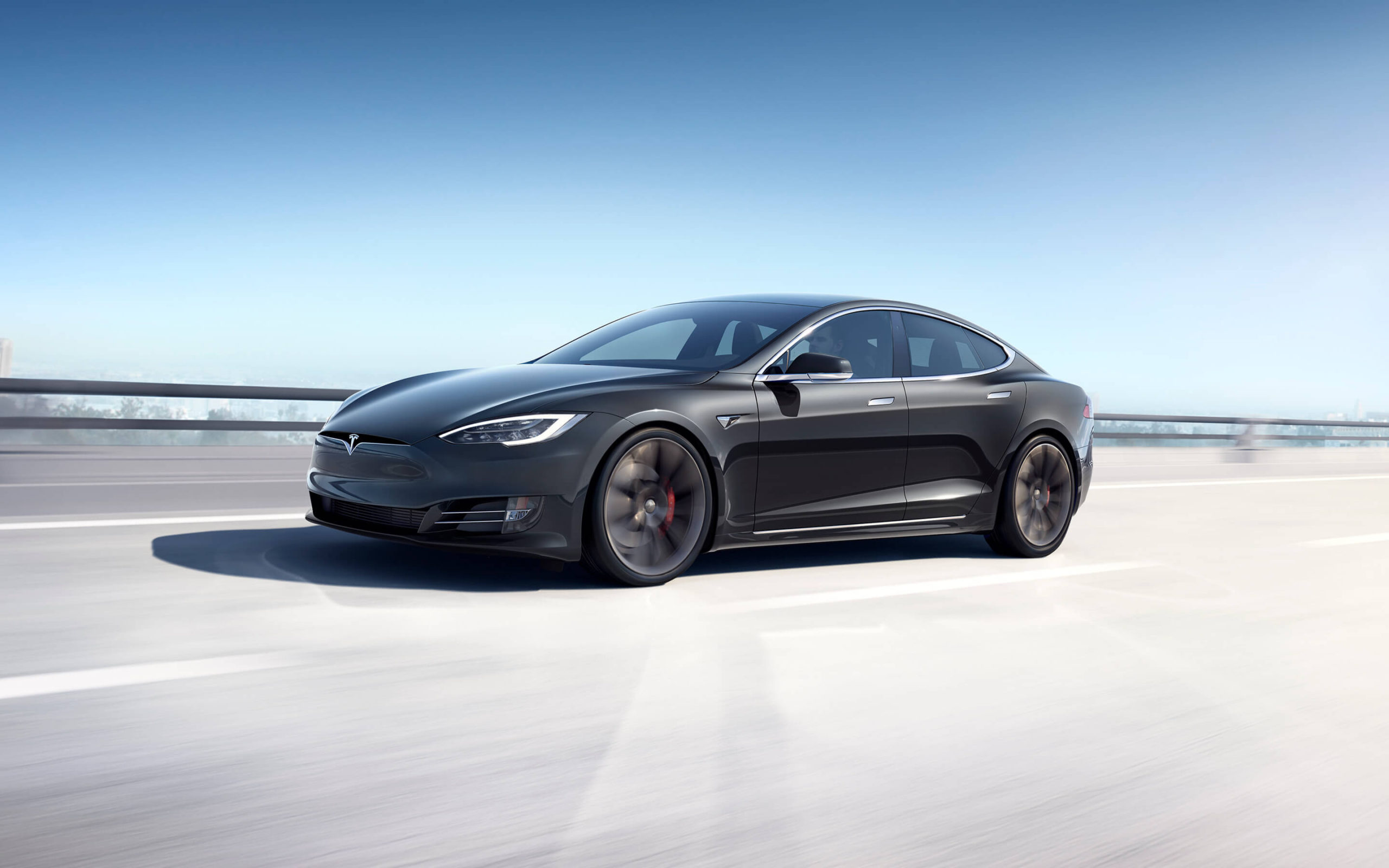
    Tesla in January registered a local subsidiary in India, which is expected to import and sell the Model 3 sedan by as early as mid-2021. Tesla has recruited Manuj Khurana, a former executive of India’s investment promotion body Invest India.

    Tesla Inc is scouting for locations to open showrooms in three Indian cities and has hired an executive to lead its lobbying and business efforts ahead of its planned entry into the country, sources familiar with the discussions told Reuters. The electric-car maker in January registered a local company in India, where it is expected to import and sell the Model 3 sedan by as early as mid-2021, seeking to target rich customers in a niche market.

    The world’s most valuable automaker by market capitalization is looking for commercial properties as large as 20,000-30,000 square feet each to open showrooms and service centers in the capital New Delhi, financial hub Mumbai in the west and tech city Bengaluru in the south, three sources said.

    Separately, Tesla has recruited Manuj Khurana, a former executive of India’s investment promotion body Invest India, in the first major hire to lead its policy and business development efforts in the country, two other sources said. Tesla did not respond to a request for comment, while Khurana declined to comment.

    In October, Tesla CEO Elon Musk said on Twitter the company will enter India in 2021 “for sure”, though the billionaire had issued similar tweets in the past. The search for showroom space and Khurana’s appointment signal Tesla is moving faster.

    Global property consultant CBRE Group Inc – hired for the showroom searches by Tesla – has been surveying places for several weeks and is focussing on locations that will give the company easier access to affluent customers, sources said.

    Some luxury car showrooms in upmarket areas of metro cities are typically between 8,000-10,000 square feet, but most showrooms are far smaller in India where high-end real estate space is usually in short supply and property prices in New Delhi and Mumbai are among the highest in the world.

    “If you look at Tesla’s showrooms globally, they are like experience centers. It would look at replicating that with some modifications for the Indian market,” said one of the sources, all of whom declined to be identified as the talks are private.

    CBRE said it does not comment “on work we may be doing on behalf of our clients”.

    Khurana has previously been on a government panel on the future of transportation led by Prime Minister Narendra Modi’s top scientific adviser. In his new role, he is also handling Tesla’s market-entry process in India, two sources said.

    But India isn’t likely to be an easy market to crack for Tesla. The country has negligible charging infrastructure and high taxes on imported cars, as well as low adoption of electric vehicles (EVs). India recorded just 5,000 EV sales out of the total 2.4 million cars sold last year, while in China new energy vehicle sales touched 1.25 million.

    However, analysts say India’s rising number of affluent consumers makes it a market the automaker can’t ignore as the government increases its focus on promoting clean cars.

    While Tesla plans to import cars at first, India’s road minister told Reuters last month that the government is ready to offer incentives to ensure the carmaker’s production cost would be less than in China if it commits to local manufacturing.

  • Tesla Tells China Car Cameras Not Activated Outside North America

    Tesla Tells China Car Cameras Not Activated Outside North America

    Cameras in Tesla cars are not activated outside of North America, the U.S. automaker said on its Chinese social media page on Wednesday, seeking to assuage security concerns in the world’s biggest car market.

    Tesla faces scrutiny in China where the military in March banned Tesla cars from entering its complexes, citing security concerns over cameras in its vehicles, sources told Reuters.

    “Even in the United States, car owners can freely choose whether to turn on its (the camera system’s) use. Tesla is equipped with a network security system with world-leading security levels to ensure user privacy protection,” the electric carmaker wrote on Weibo, China’s Twitter-like social media site.

    At a virtual forum in Beijing in March, held not long after reports of the ban surfaced, Tesla founder Elon Musk emphasized the company’s business motivations for protecting user privacy.

    “There’s a very strong incentive for us to be very confidential with any information,” Musk said.

    “If Tesla used cars to spy in China or anywhere, we will get shut down.”

    China is a key battleground for electric vehicles. In 2020 Tesla sold 30% of its global total in the country.