Category: Automotive

Retail News Asia is committed to providing both local and global retailers with the latest Auto and Car news throughout the Asian market. This on a daily base.

  • Porsche To Build EV Battery Cells Factory In Germany

    Porsche To Build EV Battery Cells Factory In Germany

    In a bid to speed up its e-mobility drive, the German carmaker Porsche is reportedly planning to set up a factory to produce battery cells for electric vehicles. This plan was confirmed by the company’s CEO to a local German newspaper. The European carmakers are looking to ramp up production of the electric cars to meet stringent environmental rules in the European Union. Moreover, they are also aiming to reduce their dependence on battery suppliers in Asia.

    In an interview with a local newspaper, Oliver Blume said that “Battery cells are a key technology for Germany’s automobile industry which we must also have in our own country.” He also said the carmaker wants to play a pioneering role in this step.

    He also confirmed that the battery cell factory would be built in the Swabian town of Tuebingen, Germany. Moreover, the company will purchase EV batteries from its parent company, which plans to build half a dozen battery cell plants across Europe. Volkswagen also intends to expand infrastructure for charging electric vehicles across the globe.

    Blume further said, “But there will also be a segment for high-performance battery cells. It’s a Porsche domain. Just as we developed high-performance internal combustion engines, we now want to be at the forefront of high-performance batteries.”

  • Volkswagen Mulls Board Change That Could See Labour Chief Move On

    Volkswagen Mulls Board Change That Could See Labour Chief Move On

    Volkswagen is considering a change to its supervisory board that could lead to the replacement of Bernd Osterloh, the head of its powerful works council who clashed with CEO Herbert Diess last year, sources familiar with the matter said on Thursday.

    Osterloh’s departure, if confirmed, could weaken resistance to faster and more drastic restructuring at the German carmaker.

    Last year, the 64-year-old opposed an attempt by Diess to extend his contract as the CEO strives to cut costs and free up resources to invest more in electric vehicles.

    One source said Osterloh had been offered the position of personnel director at Traton, Volkswagen’s truck unit that was spun off and separately listed in 2019.

    Osterloh’s departure could weaken resistance to faster and more drastic restructuring at the German carmaker.

    A second source said the group was considering proposing a new labor representative to its board but did not give a name.

    The company, its main shareholder Porsche SE and the works council declined to comment.

    Five sources in total said Volkswagen would in the near future debate an important change in the composition of its supervisory board, adding no final decisions had been taken.

    The move follows a surge in Volkswagen’s shares, as investors warm to its efforts to overtake Tesla and become a world leader in electric cars.

    The shares have risen by more than half in value so far this year, giving the company a market value of 132 billion euros ($159 billion).

    Osterloh has been a member of Volkswagen’s supervisory board since 2005. Labour representatives make up half the board, under Germany’s system of corporate governance.

    Should Osterloh leave the supervisory board, as would be required should he take up an executive role at Traton, the most likely candidate to replace him would be deputy works council head Daniela Cavallo, the sources said.

    Any nomination would be subject to a confirmatory vote by shareholders at the annual meeting in July.

  • Tesla To Setup India Headquarters In Mumbai

    Tesla To Setup India Headquarters In Mumbai

    Tesla is all set to roll out its first electric car in India this year and the American EV manufacturing company has started establishing its base in our market. It had registered itself in Bengaluru earlier this year and according to it is now setting up its office in Lower Parel-Worli area in Mumbai. The company will be establishing its production base in Karnataka and is evaluating a few ready commercial projects in Lower-Parel for a 40,000 sq ft office.

    Tesla has started hiring for top positions from IIM Bengaluru alumni. Manuj Khurana has been appointed as Head – Policy and Business Development for India operations. The company has also hired Nishant Prasad as Charging Manager who will head Tesla’s supercharging, destination charging, and home charging business. He was earlier head of Charging Infrastructure and Energy Storage at Ather Energy. And finally, Tesla India has Chithra Thomas as its country HR Leader, who was earlier working at Walmart and Reliance Retail. “Tesla India is moving full speed ahead with building a local team. We are excited to see the progress. Hoping to see you (Musk) in India when Tesla delivers the first cars,” Tesla Club India said in a tweet on Wednesday.

    Last week, Union Road Transport and Highways Minister Nitin Gadkari invited Tesla to start manufacturing EVs in India. During his address at The Raisina Dialogue 2021, he said that it is a golden opportunity for the company to start manufacturing in India. Gadkari also added that Indian EV makers are also improving the quality of their models and local manufacturing means they are able to price their products at a competitive price. Similarly, Tesla will also benefit if it engages in local manufacturing.

  • New-Generation Skoda Octavia Launch Delayed Due To The COVID-19 Lockdown In Maharashtra

    New-Generation Skoda Octavia Launch Delayed Due To The COVID-19 Lockdown In Maharashtra

    The new-generation Skoda Octavia was slated to go on sale towards the end of this month in the country. However, in light of the lockdown imposed in the state of Maharashtra, the launch has been indefinitely delayed. Zac Hollis, Director – Sales and Marketing, Skoda Auto India confirmed the development in a tweet. The automaker will be rescheduling the launch as the current situation improves. The new-generation Octavia was originally slated for launch in 2020 but was delayed due to the pandemic. We expect Skoda to announce a new launch date once the situation improves in the state.

    The 2021 Skoda Octavia has got plenty of upgrades over its predecessor. The sedan is longer by 19 mm at 4689 mm, and wider by 15 mm at 1829 mm. The design language has seen notable improvements and the model gets a new chrome grille, new headlamps with Matrix LED technology, a new bumper design and a sculpted bonnet. The bot-lid now gets more prominent Skoda lettering along with the LED taillights with the signature pattern.

    The cabin of the new-generation Skoda Octavia will be feature-laden and will come with a two-spoke multi-function steering wheel sporting knurled scroll wheels and a new control button. The model also gets a 10.25-inch digital instrument console and a 10-inch touchscreen infotainment system. The lower variants will sport an 8.25-inch display. Other features will include Trizone Climatronic, keyless entry, electric parking brake, acoustic side windows, and more.

    The India-spec fourth-generation Skoda Octavia is likely to get the 2.0-litre TSI with 188 bhp and 320 Nm and it will be offered only with the DSG automatic transmission. Skoda could also offer the Karoq’s 1.5-litre TSI four-cylinder petrol engine that develops 148 bhp and 250 Nm. Details though are yet to be confirmed.

    Maharashtra continues to be one of the worst affected states in terms of COVID-19 cases, with the second wave of the virus harsher than ever. The state reported over 67,468 new cases in the last 24 hours (at the time of filing this report). Maharashtra also reported its worst Covid-19 related death tally in a single day after recording 568 fatalities in the last 24 hours. In light of the growing cases, the Maharashtra government announced a statewide lockdown from April 22, after 8 pm, and will be in effect till 7 pm on May 1, 2021.

  • Tesla Apologises After Customer Protested At Autoshow, To Share Car Data With Chinese Regulator

    Tesla Apologises After Customer Protested At Autoshow, To Share Car Data With Chinese Regulator

    Tesla Inc apologised to Chinese consumers for not addressing a customer’s complaints in a timely way, and said it would launch a review of its service operations in the world’s biggest auto market. The unusual public apology from Tesla followed criticism in state media, and an incident at the Shanghai auto show that got wide attention in China’s social media. An unhappy customer by clambered atop a Tesla at the auto show to protest the company’s handling of her complaints about malfunctioning brakes. Videos that went viral on Monday showed a woman wearing a T-shirt emblazoned with the words “The brakes don’t work” and shouting similar accusations while staff and security struggled to restore calm.

    The trouble for Tesla in China overlapped with new questions in the United States about the safety of the company’s Autopilot partially-automated driving systems. Police in Texas are investigating a fatal crash involving a Tesla Model S that hit a tree and burst into flames. Rescuers found victims in the passenger and rear seat, not the driver’s seat. Federal regulators are investigating the crash, and have a total of 24 probes underway of accidents involving Teslas operating on Autopilot.

    Tesla sells roughly 30% of its cars in China, made at its Shanghai factory. But it has faced occasional criticism over issues such as complaints of battery fires. Monday’s incident led state broadcaster CCTV to call for an investigation of reported brake problems on Tesla cars, while China’s anti-graft watchdog weighed in with a commentary saying such disputes should be resolved within the rule of law. “Individuals should not take extreme measures, and enterprises should not be arrogant and unreasonable,” the Central Commission for Discipline Inspection said late on Tuesday.

    On Wednesday, a representative at Tesla’s store in Zhengzhou, where the protesting customer came from, told local state media the automaker will share data related to the brake incident with local market regulators for investigation.

    Tesla said on Monday that the woman was a vehicle owner who had been involved in a collision earlier this year. It cited “speeding violations” for the crash, adding in a social media statement that it had been negotiating with her about returning the car, but the talks had stalled over a third-party inspection.

    Last month, Tesla came under scrutiny in China when the military banned its cars from entering its complexes, citing security concerns over cameras in its vehicles, sources said.

    That prompted founder Elon Musk to say that if Tesla used cameras to spy in China or anywhere, it would be shut down. Earlier this month, Tesla said cameras in its cars are not activated outside of North America.

    The woman whose protest started it all will be detained for five days, Shanghai police said on Tuesday.

    Police said the woman and a female accomplice – identified only by their surnames, Zhang and Li – “caused chaos” at the trade fair on Monday when they arrived at the Tesla display “to express their dissatisfaction due to a consumer dispute.”

    Zhang was ordered detained for “disrupting public order,” while Li received a warning, police said. Zhang and Li could not be contacted for comment.

  • Daimler Cuts Hours For Up To 18,500 Workers Over Chip Shortage

    Daimler Cuts Hours For Up To 18,500 Workers Over Chip Shortage

    Daimler will cut working hours for up to 18,500 employees and temporarily halt production at two plants in Germany due to a shortage of semiconductor chips that has hit global car production, it said on Wednesday.

    “Currently, there is a worldwide supply shortage of certain semiconductor components,” a spokeswoman said. “We continue to play things by ear.”

    “The situation is volatile, so it is not possible to make a forecast about the impact,” she added.

    Daimler, which makes Mercedes-Benz cars, said workers at its plants in Bremen and Rastatt would have their hours shortened.

    The global shortage stems from a confluence of factors as carmakers, which shut plants during the COVID-19 pandemic last year

    The move will halt production at the factories but allow staff to continue working on special projects. The production halt will take effect from April 23 for one week, initially.

    The global shortage stems from a confluence of factors as carmakers, which shut plants during the COVID-19 pandemic last year, compete with the sprawling consumer electronics industry for chip supplies.

    Cars have become increasingly dependent on chips – for everything from computer management of engines for better fuel economy to driver-assistance features such as emergency braking.

    The shortage of chips has hurt vehicle production at carmakers including General Motors Co, Volkswagen AG and Ford Motor Co.

    Earlier on Wednesday, automaker Stellantis said it would replace digital speedometers with more old-fashioned analogue ones in one of its Peugeot models, in a fallout from the shortage of semiconductor chips.

  • Harley-Davidson Reports Positive First Quarter Results For 2021

    Harley-Davidson Reports Positive First Quarter Results For 2021

    Harley-Davidson has reported a positive start to 2021 with the first quarter results of the calendar year showing good results in the crucial home market of North America. Sales in North America grew 30 percent although year-on-year sales in Europe, Middle East, Africa (EMEA) as well as Latin America took a beating. Sales in Asia Pacific remained flat, and from all indications, CEO Jochen Zeitz’s Hardwire strategy to focus on the strengths of the brand, and cut down operations in

    “I am very pleased with the pace of recovery that we have seen across our business, as demonstrated by the strong financial results this quarter. The actions we have taken to reshape the business are having a positive impact on our results, especially for our most important North American region,” said Zeitz, who is the Chairman, President, and CEO of Harley-Davidson.

    “We can see the initial signs of consumer excitement and optimism returning and I am confident Harley-Davidson in 2021 is a significantly leaner, faster, and more efficient organization which is ready to win and successfully deliver on our 5-year Hardwire strategy, as the most desirable motorcycle brand in the world,” added Zeitz.

    Despite global motorcycle sales being affected by the COVID-19 pandemic, Harley-Davidson sold 44,200 units between January and March 2021, a 9 percent increase on the 40,400 units sold in the same period a year ago. North America (32,800 units) remains Harley-Davidson’s strongest market in 2021, followed by Asia Pacific (5,850 units), EMEA (4,900 units) and Latin America (700 units). Revenue for the first quarter in 2021 is reported at $1,423 million, a 10 per cent increase over the same period a year ago, while net income is at $259 million, an increase of 272 percent over just $70 million in the same period a year ago.

  • Jaguar I-Pace Black Edition Unveiled

    Jaguar I-Pace Black Edition Unveiled

    Jaguar has added a new Black Edition in the I-Pace range for the SE and HSE variants. The Black package adds a dark, glossy finish to the grille, mirror caps, window surrounds, and rear badges, while the 20-inch, five-spoke wheels are finished a gloss black look as well. And even the Black Badge Edition is available in all body colors that you generally see on the Jaguar I-Pace. On the inside, there are Ebony leather sports seats and a matching headliner. The cabin trim is finished in gloss black. A full panoramic roof and privacy glass are also part of the package.

    Needless to say, mechanically the Jaguar I-Pace Black Edition remains unchanged. It is powered by electric motors making a total of 390 bhp and 696 Nm of peak torque. There’s an 11-kilowatt onboard charger and 100-kilowatt DC fast charger. According to Jaguar, the base version of the I-Pace can cover 286.2 miles or 460.6 km on a charge. The SE Black brings down this figure to 279.9 miles or 450.5 km, and the HSE Black offers 279.0 miles or 449 km of rang on a full.

    Jaguar had also introduced the Black Badge edition recently and the new I-Pace’s Black edition follows up on the same styling language. The theme is largely the same by adding lots of glossy, dark accents to the sports car. Deliveries of fhe standard Jaguar I-Pace will start in May this year and we expect Jaguar to introduce the I-Pace Black Edition in our market soon.

  • Bike maker hopes to electrify regional markets

    Bike maker hopes to electrify regional markets

    The man behind Dat Bike, the only made-in-Vietnam motorbike brand, is holding fast to his dream of becoming the Elon Musk of the bike industry.

    Dat Bike, a startup brainchild of Nguyen Ba Canh Son, a former Silicon Valley developer, got a shot in its arm in 2018 by raising $2.6 million in seed funding from a group of investors led by Singapore venture capital firm Jungle Ventures.

    Jungle Ventures rarely invests in premature projects like Dat Bike, so the decision was described as “exceptional.” This is true, considering that Son and his Dat Bike were firmly rejected until then.

    “You should never dive into electric bike making,” an investor told Son bluntly a few years ago.

    “You are gifted, but you sell what no one wants. This is not the right time for electric bikes in the market. I will consider an investment if you come up with another project,” the investor added.

    Son also believed then that the market was not ready for him. He saw that the way brands advertised electric bikes usually disappointed the customers as the real life performance failed to match the marketing hype.

    Electric bikes these days can only cover just half the range and power of their petrol-fueled rivals. Currently, the electric bike owners are mostly young students, who are not allowed to ride powerful motorcycles.

    The rejections did not deter Son, who constantly kept in mind the motivation that made him take the plunge. When Son was a developer in Silicon Valley, he became bored with the job at a property management agency. The workload was heavy but meaningless and the handsome remuneration did not stop him from quitting his job and looking for a new path that would deliver value and convenience to people.

    Around this time, the production of electric vehicles was an emerging, attractive business in the U.S. However, startups often failed due because they were premature for the market. Son believed he had a better chance making electric bikes for Vietnam.

    He returned to Vietnam in 2018 with all his money and loans, pouring everything into his dream project, Dat Bike.

    Son wanted his bikes to have the ability to replace petrol-fueled ones that were polluting the local air. He wanted that buyers not have to compromise neither power nor convenience when using the greener alternatives.

    Starting with roughly $1 million, Son invested in a factory and then opened a flagship store in HCMC. The number of buyers was relatively modest at a few hundred, a month, but since November 2020, things have been looking up with revenues rising 35 percent a month since November 2020.

    Dat Bike has been recognized by the Ministry of Transport as Vietnam’s first domestic electric bike manufacturer that sources parts locally. Standing out from other competitors was a factor that influenced Jungle Ventures to invest in Dat Bike.

    Consumers are more and more likely to switch to greener products, but they are not ready to compromise the convenience of regular vehicles. Amit Anand, founding partner with Jungle Ventures, said it was noteworthy that public awareness of the need to preserve and protect the natural environment has been rising.

    “It is just something most brands don’t pursue right now. They mostly import finished units or assemble parts. This lack of core development and control results in the market lagging behind in power and design, making it difficult for people to make the switch. Dat Bike offers the customer a better option,” Anand said.

    A Dat Bike representative affirmed Anand’s statement, saying they believe that they are a game-changer in the market. Dat Bike is focused on high-end quality, which is expected to help the startup convince bike buyers to switch to greener alternatives.

    Dat Bike claims that its first generation products rival petrol bikes in power and range. Its 5,000W motor helps accelerate from 0-50 km/h in just three seconds, three times more powerful than other electric bikes in the market. One full charge can help maintain the power enough for 100km, roughly double the capacity of other competitors.

    Dat Bike currently uses the lithium-ion batteries, the same one used by the latest Tesla models. The battery has a life expectancy of 10 years.

    Lithium-ion is one of the safest battery chemistries available and can be dumped at recycling yards.

    The startup claims that its batteries get fully charged in roughly three hours, 100 percent faster than other contenders in the Vietnam market. It aims to shorten the charging time to just one hour in near future.

    “I heard doubts expressed when people first saw our latest model, but I’m not worried at all,” said Son. “The design is not one size fits all. And this is the just the first step of many to come.”

    He said the design can be easily tailored to a variety of customer tastes. Developing new designs is much less challenging than ensuring the electric engines will rival or even surpass that of petrol engines, which is Dat Bike’s focus right now.

    Since its entry into the market, Dat Bike’s supply has fallen short of demand due to limited budget and small production capacity. The investment from Jungle Ventures is slated to help the startup complete orders from Vietnam and other countries in the region.

    Dat Bike plans to expand by building its supply chain in Southeast Asia, where the vast majority of households own two-wheeled vehicles. Trade within Southeast Asia is tariff-free, compared to huge taxes for imported bikes in Thailand, Indonesia, Malaysia and the Philippines. The tariff scheme grants local companies huge advantages compared to outsiders and that may help Vietnam’s electric bike makers become a regional powerhouse.

    China, India and Southeast Asia are the three largest bike markets in the world. While the first two have been almost occupied by domestic manufacturers, Dat Bike is probably the first local maker in the region. The startup’s pioneering position is another main factor that has influenced Jungle Ventures.

    “Dat Bike is exceptional among our projects, one of the few that we decided to invest in at a very early stage. We want to back Son and help him make his dream to be the ‘Elon Musk’ of bike industry come true,” said Anand.

  • Royal Enfield Apparel Business To Focus On Brand Partnerships

    Royal Enfield Apparel Business To Focus On Brand Partnerships

    Royal Enfield is bullish on its range of apparel and merchandise and sees the business post healthy growth in the next couple of years, with double-digit growth figures in the financial year 2020-21. Puneet Sood, Head of Apparel Business, Royal Enfield said that the brand’s line-up of casual wear, motorcycle riding gear and accessories offers accessibility not just in price but also availability. And he says that the Royal Enfield apparel range is not just for Royal Enfield customers, but for “anybody in love with motorcycling”.

    “We intend to keep growing organically. Revenue has grown over the past few years, and even during 2020, despite the COVID-19 pandemic, we recorded double digit growth. Our apparel range is available through multiple channels, and the idea is to target anyone who is in love with motorcycling. The motorcycling community decides where we go from here, and we’ve taken feedback seriously, so you’ve seen a dedicated range of women’s riding gear, as well as customization of apparel and helmets through the Make It Yours program,” Sood said.

    Over the past few months, Royal Enfield has launched brand partnerships with names like Levi’s and Knox. The Royal Enfield X Levi’s range of riding denims have been well-received in the market, and Royal Enfield followed that up with a new range of jackets and riding gear with British safety experts Knox, introducing riding jackets with Knox armour, as well as riding gloves and knee guards. But it’s not just brand partnerships, and Royal Enfield’s own range of riding gear has been well-received, not just in India, but also in overseas markets.

    “We launched a new range of credible riding jackets, which are well-ventilated, and with proper safety certification, which can be used not just by our own community here in India, but everywhere around the world. Our range of mesh jackets have been well-received, and new range of riding gloves are also doing very well,” said Sood.

    Royal Enfield’s apparel range is now offered across the globe in geographies wherever Royal Enfield motorcycles are offered on sale. Speaking about markets, Sood added that the response to Royal Enfield’s lifestyle range has been “amazing,” particularly in markets like Europe and Asia-Pacific. The focus, Sood adds, is to make the right products. The partnership with brands like Levi’s worked very well, and Royal Enfield is exploring more such partnerships, which will be purpose-led, and will focus on both products as well as brands.

  • Car imports from China increase sixfold

    Car imports from China increase sixfold

    Vietnam imported 3,945 completely built-up (CBU) cars from China in Q1, six times over the same period last year, according to the General Department of Vietnam Customs.

    Despite the surging number of cars imported from China, the country was the third-largest car supplier of Vietnam, after Thailand and Indonesia.

    Up to 80 percent of the completely built-up (CBU) cars imported to Vietnam in Q1 were from Thailand and Indonesia. The number of imported cars from Thailand was 19,300 units, up 56 percent year-on-year, while those from Indonesia stood at 8,950 units, down 26 percent year-on-year.

    Thailand and Indonesia have always led the list of Vietnam’s car suppliers ever since the ASEAN Trade in Goods Agreement (ATIGA) took effect in 2018, owing to the zero import tariff. Meanwhile, imported Chinese cars are dealt an import tariff of 47-70 percent.

    Vietnam imported around 35,300 CBU cars in Q1, a year-on-year increase of 31.1 percent.

    Auto sales rose by 36 percent year-on-year between January and March to 70,952 units, according to Vietnam Automobile Manufacturers Association (VAMA).

  • Tesla To Launch Self Inspection Over Services In China

    Tesla To Launch Self Inspection Over Services In China

    U.S. electric vehicle maker Tesla Inc will launch self-inspection and address customer service issues in China, it said on Weibo late on Tuesday.

    The statement comes after an unhappy customer clambered onto a Tesla car at the Shanghai Auto Show on Monday over a dispute with the company, creating a social media stir and criticism of Tesla from state media.

  • Tesla Drives On Autopilot Through A Regulatory Grey Zone

    Tesla Drives On Autopilot Through A Regulatory Grey Zone

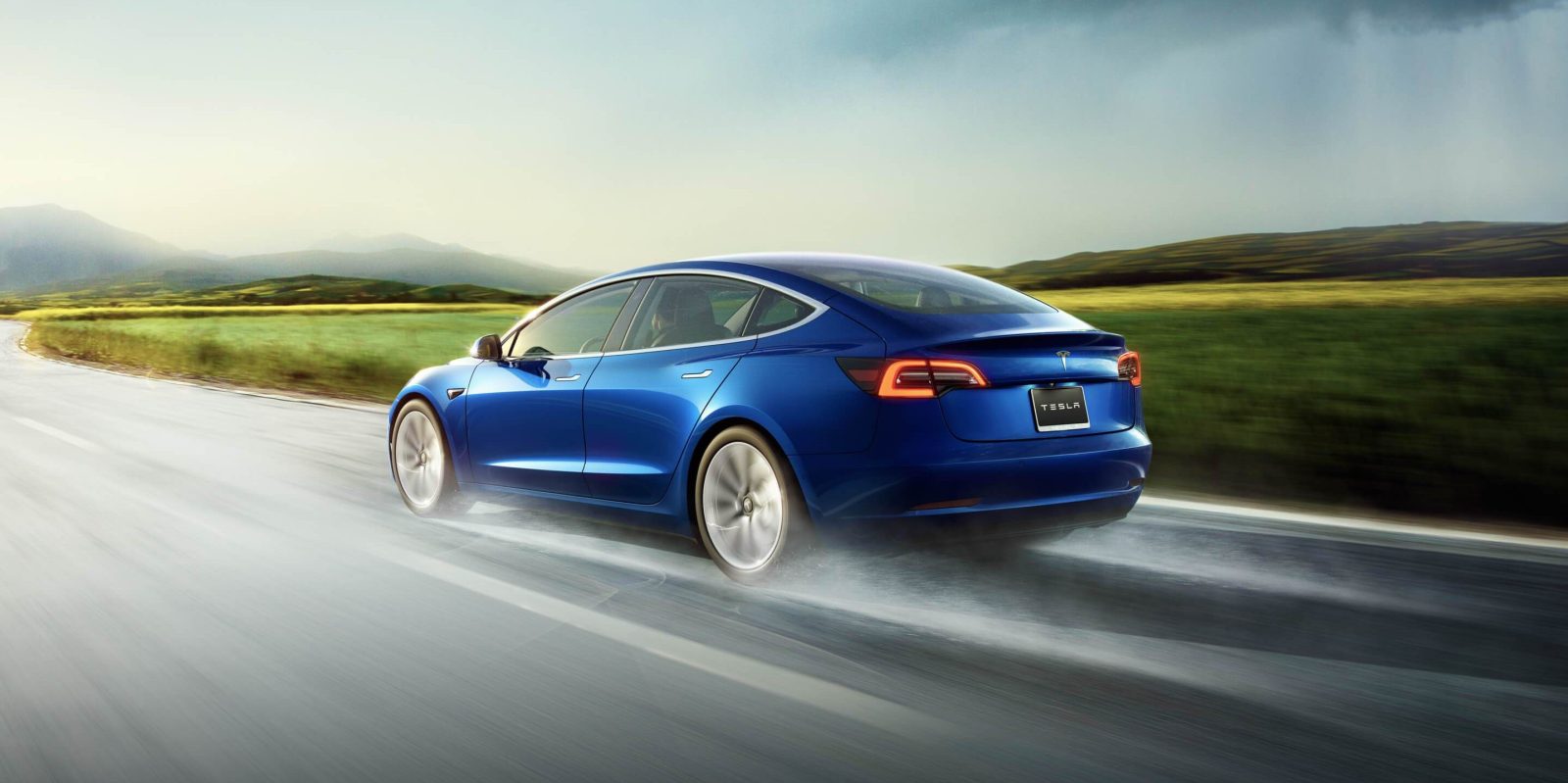
    The fatal crash of a Tesla with no one apparently behind the wheel has cast a new light on the safety of semi-autonomous vehicles and the nebulous U.S. regulatory terrain they navigate. Police in Harris County, Texas, said a Tesla Model S smashed into a tree on Saturday at high speed after failing to negotiate a bend and burst into flames, killing one occupant found in the front passenger seat and the owner in the back seat.

    Tesla Chief Executive Elon Musk tweeted on Monday that preliminary data downloaded by Tesla indicate the vehicle was not operating on Autopilot, and was not part of the automaker’s “Full Self-Driving” (FSD) system.

    U.S. federal road safety authority has yet to issue specific regulations or performance standards for semi-autonomous systems such as Autopilot, or fully autonomous vehicles (AVs).

    Tesla’s Autopilot and FSD, as well as the growing number of similar semi-autonomous driving functions in cars made by other automakers, present a challenge to officials responsible for motor vehicle and highway safety.

    U.S. federal road safety authority, the National Highway Traffic Safety Administration (NHTSA), has yet to issue specific regulations or performance standards for semi-autonomous systems such as Autopilot, or fully autonomous vehicles (AVs).

    There are no NHTSA rules requiring carmakers to ensure systems are used as intended or to stop drivers misusing them. The only significant federal limitation is that vehicles have steering wheels and human controls required under federal rules.

    With no performance or technical standards, systems such as Autopilot inhabit a regulatory grey area.

    The Texas crash follows a string of crashes involving Tesla cars being driven on Autopilot, its partially automated driving system which performs a range of functions such as helping drivers stay in lanes and steer on highways.

    Tesla has also rolled out what it describes as a “beta” version of its FSD system to about 2,000 customers since October, effectively allowing them to test how well it works on public roads.

    Harris County police are now seeking a search warrant for the Tesla data and said witnesses told them the victims intended to test the car’s automated driving.

    Adding to the regulatory confusion is that traditionally NHTSA regulates vehicle safety while departments of motor vehicles (DMVs) in individual states oversee drivers.

    When it comes to semi-autonomous functions, it may not be apparent whether the onboard computer or the driver are controlling the car, or if the supervision is shared, says the U.S. National Transportation Safety Board (NTSB).

    California has introduced AV regulations but they only apply to cars equipped with technology that can perform the dynamic driving task without the active physical control or monitoring of a human operator, the state’s DMV told Reuters.

    It said Tesla’s full self-driving system does not yet meet those standards and is considered a type of Advance Driver Assistance System that it does not regulate.

    That leaves Tesla’s Autopilot and its FSD system operating in regulatory limbo in California as the automaker rolls out new versions of the systems for its customers to test.

    NHTSA, the federal body responsible for vehicle safety, said this week it has opened 28 investigations into crashes of Tesla vehicles, 24 of which remain active, and at least four, including the fatal Texas accident, occurred since March.

    NHTSA has repeatedly argued that its broad authority to demand automakers recall any vehicle that poses an unreasonable safety risk is sufficient to address driver assistance systems.

    So far, NHTSA has not taken any enforcement action against Tesla’s advanced driving systems.

    White House spokeswoman Jen Psaki said NHTSA is “actively engaged with Tesla and local law enforcement” on the Texas crash.

    The NTSB, a U.S. government agency charged with investigating road accidents, has criticized NHTSA’s hands-off approach to regulating cars with self-driving features and AVs.

    “NHTSA refuses to take action for vehicles termed as having partial, or lower level, automation, and continues to wait for higher levels of automation before requiring that AV systems meet minimum national standards,” NTSB Chairman Robert Sumwalt wrote in a Feb. 1 letter to NHTSA.

    “Because NHTSA has put in place no requirements, manufacturers can operate and test vehicles virtually anywhere, even if the location exceeds the AV control systems limitations,” the letter said.

    REVIEWING REGULATIONS

    NHTSA told Reuters that with a new administration in place, it was reviewing regulations around AVs and welcomed the NTSB’s input as it advanced policies on automated driving systems.

    It said the most advanced vehicle technologies on sale required a fully attentive human driver at all times.

    “Abusing these technologies is, at a minimum, distracted driving. Every State in the nation holds the driver responsible for the safe operation of the vehicle,” NHTSA told Reuters.

    NTSB also says NHTSA does not have any method to verify whether carmakers have adopted system safeguards. For example, there are no federal regulations requiring drivers to touch the steering wheel within a specific time frame.

    “NHTSA is drafting rules on autonomous vehicles, but it has been slow to regulate semi-autonomous vehicles,” said Bryant Walker Smith, a law professor at the University of South Carolina. “There is a growing awareness that they deserve more scrutiny priority and regulatory action.”

    New York has a law requiring drivers to keep at least one hand on the wheel at all times but no other states have legislation that could prevent the use of semi-autonomous cars.

    When it comes to AVs, 35 states have enacted legislation or state governors have signed executive orders covering AVs, according to the National Conference of State Legislatures.

    Such rules allow companies such as Alphabet’s Google and General Motors, among others, to test their Waymo and Cruise vehicles on public roads.

    But regulations differ by state.

    AV regulations in Texas state that vehicles must comply with NHTSA processes, though there are no such federal regulations. The Texas Department of Public Safety, the regulator charged with overseeing AVs, did not respond to a request for comment.

    Arizona’s transport department requires companies to submit regular filings to verify, among other things, that vehicles can operate safely if the autonomous technology fails.

    While most automakers offer vehicles with various forms of assisted driving, there are no fully autonomous vehicles for sale to customers in the United States.

    RED FLAGS

    Concerns about the safety of autonomous driving technology, however, have been mounting in recent years and Tesla has warned about its limitations.

    In February 2020, Tesla’s director of autonomous driving technology, Andrej Karpathy, identified a challenge for its Autopilot system: how to recognize when a parked police car’s emergency flashing lights are turned on.

    “This is an example of a new task we would like to know about,” Karpathy said at a conference during a talk about Tesla’s effort to deliver FSD technology.

    In just over a year since then, Tesla vehicles crashed into police cars parked on roads on four separate occasions and since 2016 at least three Tesla vehicles operating on Autopilot have been in fatal crashes.

    Tesla says it has used 1 million cars on the road to collect image data and improve Autopilot, using machine learning and artificial intelligence.

    U.S. safety regulators, police and local government have investigated all four incidents, officials told Reuters.

    At least three of the cars were on Autopilot, police said. In one of the cases, a doctor was watching a movie on a phone when his vehicle rammed into a police trooper in North Carolina.

    Tesla did not immediately respond to a request for comment.

    Accidents and investigations have not slowed Musk’s drive to promote Tesla cars as capable of driving themselves.

    In a recent Tweet, Musk said Tesla is “almost ready with FSD Beta V9.0. Step change improvement is massive, especially for weird corner cases & bad weather. Pure vision, no radar.”

    Tesla also says it has used 1 million cars on the road to collect image data and improve Autopilot, using machine learning and artificial intelligence.

    Tesla’s Karpathy said he has ridden in his Tesla for 20 minutes to get coffee in Palo Alto with no intervention.

    “It is not a perfect system but it is getting there,” he said in a “Robot Brains” podcast in March. “I definitely keep my hands on the wheel.”

  • Walmart leads US$2.75bn investment in self-driving car startup Cruise

    Walmart leads US$2.75bn investment in self-driving car startup Cruise

    Walmart has led a US$2.75 billion investment into self-driving carmaker Cruise, valuing the company at $30 billion.

    The investment marks increasing faith in the concept by the international retail giant which has already partnered with Cruise in a trial delivery service in Scottsdale, Arizona, announced last November.

    “Over the years we’ve been doing a lot to learn more about the role autonomous vehicles can play in retail, and we’ve seen enough to know it’s no longer a question of if they’ll be scaled, but when,” said John Furner, president, and CEO at Walmart US, explaining the investment.

    He said the new funds would help San Francisco-based Cruise work with Walmart to achieve its goal of developing a last-mile delivery ecosystem “that’s fast, low-cost and scalable”.

    Cruise’s all-electric fleet of self-driving cars – based on the Chevrolet Bolt EV – has already attracted substantial investment from Microsoft, General Motors and Honda.

    Furner said Walmart has been impressed by Cruise’s “differentiated business model” since the two companies began their pilot project last year, its unique technology, and unmatched driverless testing. “We also value our shared commitment to a zero-emissions future.

    “As delivery has become a staple in our customers’ lives, we’re focused on growing our last-mile ecosystem in a way that’s beneficial for everyone – customers, business, and the planet. With their all-electric fleet powered by 100-per-cent renewable energy, Cruise is a natural partner as we work to take collective action on climate change,” Furner said.

    “We’re doing this not only in our own operations where we are targeting zero emissions by 2040 and have set a goal to be powered by 100-per-cent renewable energy by 2035, but also throughout the supply chain and our environmental initiative, Project Gigaton, one of the largest private-sector consortiums for climate action.”

    Meanwhile, Cruise says it plans to begin deploying a limited number of its Origin vehicles for ride-hailing services in Dubai from 2023, its first overseas commercial service.

    “We are focused on our path to commercialization right now but the IPOs happening in the space right now are a great indication of the strength of the industry and the opportunity self-driving presents,” a Cruise spokeswoman told Reuters in a statement.

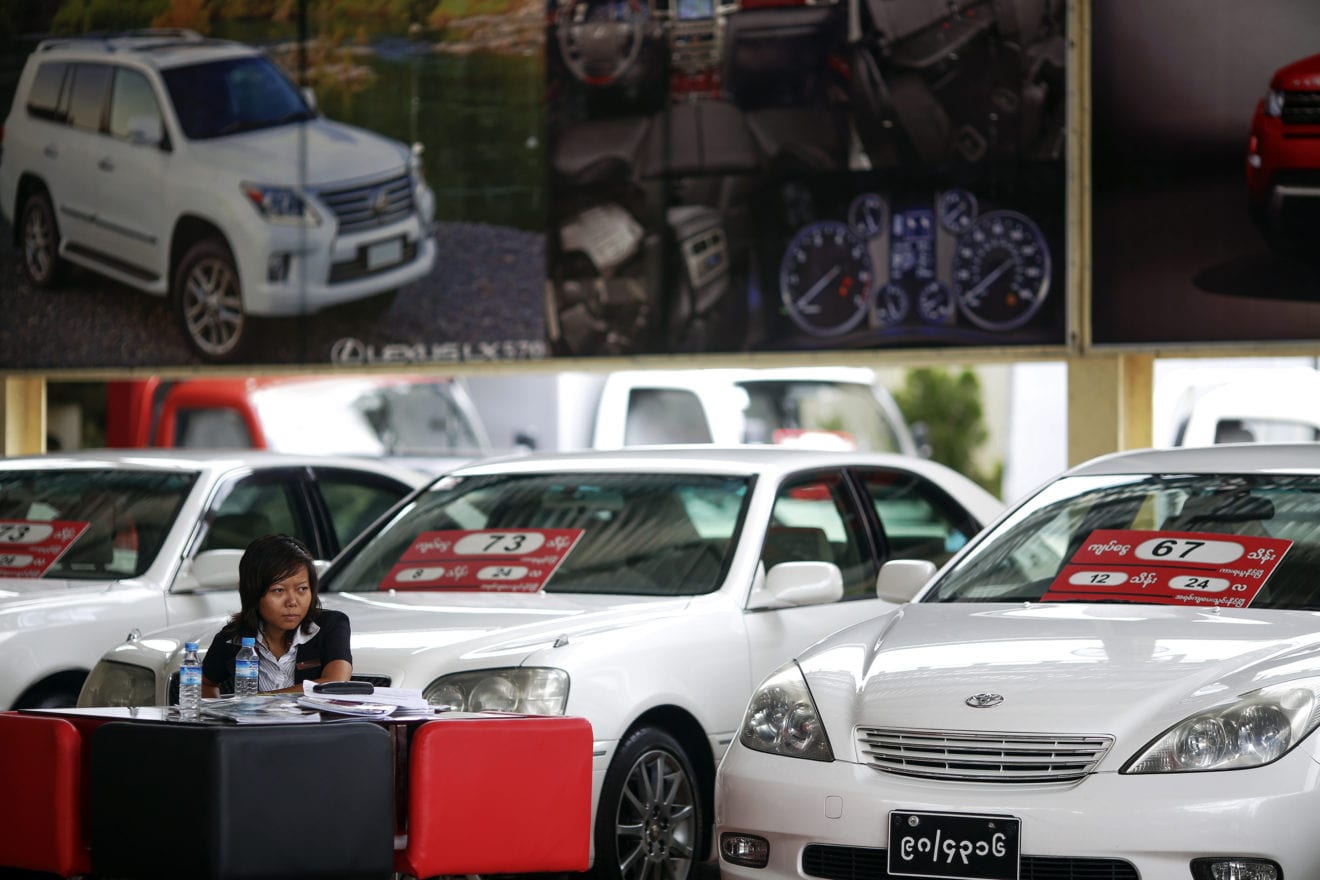
  • Used automobile import quotas fail to attract interest

    Used automobile import quotas fail to attract interest

    The auction of import quotas for used cars at low tariffs under a free trade deal has been canceled after it failed to attract interest.

    Under the Comprehensive and Progressive Agreement for Trans-Pacific Partnership, a certain number of used cars can be imported annually, and the Ministry of Industry and Trade auctions the right to import them.

    This year, the quota was for 72 vehicles, and the deadline for bidding was March 31, but no bids were received for them.

    The auction was first held last year, and two importers won the quota for 66 cars.

    According to a car dealership, enterprises are not interested in bidding since they have to comply with stringent import regulations.
    “Car dealerships prefer buying cars that are manufactured locally since the procedures are a lot less complicated.”

    The annual quota will increase to 150 by 2034. The ministry said the auction would continue to be held next year.