Category: Automotive

Retail News Asia is committed to providing both local and global retailers with the latest Auto and Car news throughout the Asian market. This on a daily base.

  • Volkswagen Expects Chip Supply To Remain Tight In Coming Months

    Volkswagen Expects Chip Supply To Remain Tight In Coming Months

    Volkswagen expects semiconductor supplies to the car sector to remain tight in coming months, the head of the carmaker’s namesake brand was quoted as saying on Saturday.

    “I think the situation will remain tense,” Ralf Brandstaetter, CEO of the Volkswagen brand and member of the carmaker’s management board, told German news agency dpa.

    He said a fire at a factory operated by automotive chip maker Renesas Electronics Corp, as well as snowstorms in Texas that have hurt factory production, had effectively idled output.

    “The impact will certainly be felt in the coming months,” Brandstaetter said, adding Volkswagen’s procurement task force was busy around the clock dealing with the issue which remained at the top of the agenda of Volkswagen’s management board.

    Volkswagen AG has been unable to build 100,000 cars due to the shortage, CEO Herbert Diess said in March, adding the group would not be able to make up for the shortfall in 2021.

    Brandstaetter said the situation was expected to ease somewhat in the second half of the year.

    Wayne Griffiths, president of Volkswagen’s Spanish brand SEAT, said last month the challenges caused by the shortage were likely to intensify in the second quarter.

  • Intel To Invest $600 Million To Expand Chip, Mobileye R&D In Israel

    Intel To Invest $600 Million To Expand Chip, Mobileye R&D In Israel

    Intel Corp said on Sunday it will invest another $600 million in Israel to expand its research and development (R&D) and confirmed it was spending $10 billion on a new chip plant. The announcement was made during a one-day visit to Israel by Intel Chief Executive Pat Gelsinger as part of a European tour that included Germany and Belgium last week. Intel is investing $400 million to turn its Mobileye unit headquartered in Jerusalem into an R&D campus for developing self-driving car technologies. Another $200 million will be invested in building an R&D centre, called IDC12, in the northern port city of Haifa next to its current development centre.

    Intel said the “mega chip design” facility will have a capacity of 6,000 employees. Gelsinger, on his first European tour since taking charge of the company in February, in a statement issued on Sunday predicted: “a vibrant future for Intel and Israel for decades to come”.

    In recent years, Intel has bought three Israeli tech companies – Mobileye in 2017 for more than $15 billion, artificial intelligence chipmaker Habana in 2019 for $2 billion, and Moovit a year ago for $1 billion. During his brief visit, Gelsinger met with Intel and Mobileye management and Israeli Prime Minister Benjamin Netanyahu. Israel’s Finance Ministry in early 2019 said Intel would get a $1 billion grant to build an $11 billion chip plant, although at the time Intel would not confirm the amount.

    On Sunday, Intel said the investment would be $10 billion and the first phase of construction has begun. Its current Fab 28 plant at the company’s Kiryat Gat site produces 10 nanometres (nm) chips. Intel has not disclosed whether the new plant will produce smaller chips, which can increase efficiency, but in March it said it was building two 7 nm chip plants in Arizona for some $20 billion.

    Intel Israel’s exports grew to a record $8 billion in 2020 from $6.6 billion in 2019, accounting for 14% of total high-tech exports and 2% of Israel’s GDP. Intel is the largest employer of Israel’s high-tech industry with nearly 14,000 workers.

  • Volkswagen’s CEO To Step Aside At Skoda

    Volkswagen’s CEO To Step Aside At Skoda

    Volkswagen boss Herbert Diess is stepping down as head of the supervisory boards at subsidiaries Seat and Skoda to focus on building up a stronger software-development team, a person familiar with the matter said on Thursday.

    Volkswagen declined to comment.

    Handelsblatt had reported the news earlier.

    At Seat, Diess would be succeeded by current technology head Thomas Schmall and at Skoda by Murat Aksel, head of procurement on the Volkswagen board, the source added.

    Volkswagen has been heavily focused on regaining lost ground in the fast-growing field of software-heavy electric cars, where United States and Chinese manufacturers are seen as having a lead.

  • Triumph Motorcycles India Increases Prices Of Select Models

    Triumph Motorcycles India Increases Prices Of Select Models

    Triumph Motorcycles India has increased the prices of the Street Triple R and the Rocket 3 range in India by up to ₹ 1.05 lakh. The Street Triple R is now priced at ₹ 9.15 lakh, the Rocket 3 R is now priced at ₹ 19.35 lakh and the Rocket 3 GT is priced at ₹ 19.95 lakh. All prices are ex-showroom. In the last few months, Triumph has had multiple launches in India such as the Trident 660, Triumph Tiger 850 Sport, the updated Bonneville range and the updated Street Twin. Additionally, the company’s upcoming launches are the 2021 Street Scrambler and the Scrambler 1200 range

    The Triumph Street Triple R gets a price hike of ₹ 31,000 while the Rocket 3 R gets a significant price hike of ₹ 85,000. The Rocket 3 GT gets the biggest price hike of ₹ 1.05 lakh, on its previous ex-showroom, price. The Triumph Tiger 900 range is likely to get a price increment as well. The Street Triple R gets the same 765 cc in-line 3-cylinder engine as the Street Triple RS, but the power and torque outputs are slightly different. The R makes 116 bhp at 12,000 rpm and 77 Nm of peak torque at 9,400 rpm while the RS makes 121 bhp and 79 Nm of peak torque. The steering geometry is slightly different of the Street Triple R, which gets a different rake and trail.

    The Rocket 3 and the Rocket 3 R get the 2,500 cc in-line triple-cylinder, liquid-cooled engine, which is actually the biggest two-wheeler production engine in the world. It makes a massive 165 bhp at 6,000 rpm and 221 Nm of peak torque at 4,000 rpm. The torque output is also the highest of any production motorcycle in the world.

  • Ford To Decide On India Investment Plan In Second Half Of 2021

    Ford To Decide On India Investment Plan In Second Half Of 2021

    Ford Motor Co expects to firm up capital allocation plans for India in the second half of 2021, a senior executive said in an email to staff, as the automaker overhauls its strategy in a loss-making market. Dearborn, Michigan-based Ford has tasked senior executive Steven Armstrong with evaluating investment plans for India in his new role as transformation officer, South America, and India, the automaker said in a separate statement this week.

    “We have a lot of work to do as we continue to assess our capital allocations in the market,” Dianne Craig, president of Ford’s International Markets Group (IMG), said in an email to staff on Wednesday, referring to India.

    “While we expect to have an answer in the second half of this year, the appointment of Steven…will help focus our efforts and speed up the process,” she said.

    IMG includes India, where the company employs more than 16,000, and 100 other markets.

    Ford India head Anurag Mehrotra will report to Armstrong, who previously headed the Changan Ford joint venture in China and will take on his new role from May 1, the company said.

    Confirming that the company expects to reach a capital allocation decision in the second half of the year, a Ford India spokesman said that the country is an important market and a source of global powertrains for its Ranger SUV.

    Ford has said previously it will allocate capital consistent with its plan to generate consistently strong cash flows and achieve an 8% company adjusted EBIT (earnings before interest and tax) margin.

    The automaker beat Wall Street’s first-quarter profit estimate late on Wednesday, telling investors all its markets under IMG were profitable except for India.

    CEO Jim Farley, who is overseeing an $11 billion global restructuring of Ford, wants to boost profits in India but the country is a lower priority than some other markets, sources said previously.

    Ford is not the first western automaker to struggle to win over India’s frugal buyers and turn a profit in a market dominated by Suzuki Motor Corp’s and Hyundai Motor’s extensive line-up of mainly low-cost cars.

    General Motors exited the domestic market in 2017 after 20 years, while Harley-Davidson Inc packed up last year after a decade of unsuccessful efforts to gain a foothold.

    Ford entered India 25 years ago but has a less than 2% share of the passenger vehicles market in the world’s second most populous nation, where car penetration is lower than in the U.S. and China.

    A tie-up with domestic automaker Mahindra & Mahindra, now called off, would have ended most of Ford’s independent operations in India but allowed it to launch new vehicles faster, at a reduced cost, and with lower investment.

    The two companies planned to develop at least three new SUVs and share powertrains.

    Ford will now need to pick vehicles from its global portfolio to sell in India, or develop new ones, a source said.

    The joint venture would have also helped Ford tackle low plant utilization in the country, which remains one of its biggest problems, the person added.

    Two years ago Ford used only around 60% of its total annual production capacity of 440,000 units across two Indian plants, with the pandemic reducing it to as little as 20% last fiscal year.

  • Elon Musk Says Next Self Driving Beta Update Will Blow Minds

    Elon Musk Says Next Self Driving Beta Update Will Blow Minds

    Elon Musk is well known for his hyperbole, especially when it comes down to Tesla and its AutoPilot technology. For the last couple of months, Tesla has been beta testing a fully self-driving feature that is available to just a few 1,000 customers as a part of its early access program. Now, the world’s second-richest man says, an incoming update to the full self-driving beta will “blow your mind”. Musk in his typical style dropped nuggets of information while replying to tweets. He said the update will come in two weeks and he said the safety would also be higher with pure vision.

    “Gating factor in achieving & proving higher safety with pure vision than with vision+radar. We are almost there. FSD Beta V9.0 will blow your mind,” Musk tweeted to a Twitter handle called @teslaownersSV.

    To another user, he even said that the feature was also coming to the Canadian market in a couple of months. He cited the delay due to the differences in driving conditions between the US and Canada.

    The incoming update called version 9 will remove reliance on radars and instead will be fully dependent on cameras that are installed in the cars. Musk for the longest time has been against radars and LiDARs stating that they are too expensive and not required.

    Tesla has been often criticised for its AutoPilot technology as experts believe that it is not fully self-driving tech. For this Tesla has also developed its chipset based on the ARM architecture and trained algorithms on the DOJO supercomputer. Musk is optimistic that he has the holy grail of self-driving, but he often overestimates things especially when commenting on Twitter.

    Recently, Tesla has also been in the news for all the wrong reasons as a Model S crashed with two fatalities while it was on AutoPilot.

  • Uber App In U.S. To Enable Users To Book COVID-19 Vaccines And Rental cars

    Uber App In U.S. To Enable Users To Book COVID-19 Vaccines And Rental cars

    Uber Technologies Inc said on Wednesday it was launching new features in its app to allow U.S. customers to book COVID-19 vaccine appointments and reserve rental cars. Customers would be able book an appointment at a Walgreens pharmacy to receive a vaccine and an Uber ride to travel there, the company said in a product presentation.

    The feature, which expands an Uber and Walgreens partnership announced in February, reflects the wider availability of COVID-19 vaccines in the United States, where every state has opened up vaccinations to all adults.

    For Uber, more vaccinations mean a quicker return to pre-pandemic travel and higher revenue, which has tumbled during the health crisis. Business has already begun to improve with March the best month since the pandemic’s full force was felt.

    Sundeep Jain, Uber’s chief product officer, said the company was “evaluating opportunities” to expand the vaccine program to other countries.

    The company also announced partnerships with Avis Budget Group Inc, Hertz and other vehicle rental agencies.

    From Wednesday, U.S. customers can book rental cars through the Uber app, with Uber offering up to 10% of the rental cost as a credit to the user to spend on other Uber services.

    In May, users in Washington D.C. can have their rental car delivered to and collected from their home, after paying a fee to Uber, which will rollout the service nationwide this year.

    Jain said users will be able to handle most rental car paperwork digitally, but declined to comment on the financial details of the partnerships.

    Uber’s smaller rival Lyft Inc already offers car rentals in partnership with Sixt SE.

    Uber also said it would expand an option to reserve rides in advance to more U.S. and European cities and allow customers to book and collect food delivery orders during a ride-hail trip.

  • Honda Motorcycle And Scooter India To Halt Production Temporarily

    Honda Motorcycle And Scooter India To Halt Production Temporarily

    Honda Motorcycle and Scooter India (HMSI) will temporarily halt manufacturing at its four plants in India, from May 1, 2021 to May 15, 2021 keeping in mind the current COVID-19 scenario in the country. The company said it will utilize these days to carry out maintenance activities at all its plants. Keeping an eye on the fluid COVID-19 situation, HMSI will review its production plan accordingly, in the coming months. The company also said that all Honda office associates will continue to work from home and extend all possible support to customers and business partners. Only essential staff will be working at its plants and offices across the country. Honda has four manufacturing facilities in India in Manesar in Haryana, Tapukara in Rajasthan, Narsapura in Karnataka, and Vithalapur in Gujarat.

    Other automotive manufacturers such as Hero MotoCorp have decided to temporarily halt manufacturing operations in view of the escalating COVID-19 situation in India. In a press statement, Hero MotoCorp said that the company has decided to proactively halt operations temporarily at all of its manufacturing facilities across the country, including its Global Parts Centre (GPC).

    Maruti Suzuki India too announced that it has advanced its annual maintenance shut down from June to May 2021. This coincides with the Government of India’s call for companies to free up industrial oxygen consumption, which could instead be used for medical purposes. The carmaker will shut both its Gurugram and Manesar plants, in Haryana, from May 1 to May 9, 2021. In fact, the company has also said that Suzuki Motor Gujarat, the wholly-owned plant of Maruti’s parent company Suzuki Motor Corporation has also taken the same decision for its factory.

  • Luxury Brand Genesis Gears Up To Make Its Foray Into The European Market

    Luxury Brand Genesis Gears Up To Make Its Foray Into The European Market

    Last year in September, Hyundai Group’s premium car brand- Genesis hired Dominique Boesch as its first Managing Director for the European market and now the company is all set to make its foray into the market. Genesis took to Twitter through its European handle to share the news and the tweet read, “The Genesis journey continues. All roads lead to Europe. Get ready to join us on this thrilling new adventure.”

    Dominique Boesch had joined Genesis from Audi AG where he held the role of Sales Director in France before serving as Managing Director in Korea, Japan, and China, respectively, over his twenty-year tenure. After more than 10 years in Asia, Boesch returned to headquarters as head of European sales, and, most recently, he was leading the brand’s future Global Retail Strategy.

    In Europe, Genesis will go against the likes of Mercedes-Benz, BMW, Audi, and Jaguar Land Rover among others. Genesis hasn’t revealed any plans about its product line-up or models it will launch initially to start its operations with. It also showcased the electrified G80 at Auto Shanghai 2021 and it will be the brand’s first EV. It will go on sale alongside the conventional G80, GV70 crossover, and the GV80 SUV in the global markets, and the same is expected even in Europe.

  • Volkswagen Begins Construction Of New Electric Plant In China

    Volkswagen Begins Construction Of New Electric Plant In China

    Volkswagen Group China has begun construction of an all-new MEB plant at Volkswagen Anhui recently. As the third of the Group’s pure-electric vehicle manufacturing facilities in China, following completion of the Anting (SAIC VW) and Foshan (FAW-VW) plants, the Volkswagen Anhui plant will be powered by green energy from day one. Due for completion mid-2022, the plant is set for the start of production in the second half of 2023.

    By 2025, Volkswagen Group China plans to deliver up to 1.5 million new energy vehicles (NEVs) per year. Dr. Stephan Wollenstein, CEO of Volkswagen Group China, said, “As China is the world’s largest single market for NEV vehicles, we need to strengthen our local competence, and Volkswagen Anhui is a significant part of it. With the plant to be powered by green energy from day one, we are demonstrating our commitment to reducing carbon emissions beyond our fleet.”

    The new body shop will cover roughly 141,000 square meters and makes up part of the total project area, together covering around 500,000m2. The new plant will incorporate a number of energy-saving strategies as part of comprehensive efforts to reduce overall carbon emissions, including the adoption of low energy consumption production equipment. A supplier park for batteries and components is also planned for construction in the area.

    Volkswagen Anhui will have a staff of around 500 on board by 2025, with a focus on R&D and engineering innovations. Combining R&D, quality assurance, pre-sales manufacturing, and testing under one roof, Volkswagen Anhui will provide the Group with a faster time-to-market for new e-mobility products.

  • Ford Plans To Set Up A New Battery plant Near Detroit In 2022

    Ford Plans To Set Up A New Battery plant Near Detroit In 2022

    Ford is planning to open a battery development center near Detroit by the end of 2022 according to a report published by IANS. The American carmaker says that it wants to control the key technology for electric vehicles and the 2,00,000 sq.ft. will be equipped to design, test, and even for small manufacturing of battery cells and packs. The lab will also be used to develop electronic controls and other items and Ford is planning to move its operations in-house.

    Going ahead, the company wants to manufacture its battery packs on a large scale in a bid to make sure that enough batteries are manufactured to accelerate the transition from conventional combustion engines to electric vehicles. “We now see that the market is going to develop very quickly, and we will have sufficient scale to justify having greater levels of integration. We will no longer take an approach of hedging our bets and planning around the uncertainty of how fast that will play out,” Hua Thai-Tang, Chief Product and Operations Officer- Ford told IANS.

    The move comes at a time when the global auto industry is racing to control supplies including precious metals needed to make batteries and individual cells that form big battery packs to run as many as 300 new electric models coming out in the next two years. Ford’s new CEO – Jim Farley plans to take a turn from Ford’s previous path of buying technology and batteries from supply companies. That said, the company is still open to join hands with suppliers, universities and start-ups for the technology.

    Ford has already discussed the transition to battery power with the Biden administration. The company is already in a trade secret fight with its battery suppliers like SK Innovation, and LG Energy Solution. The U.S. International Trade Commission decided in February that SK stole 22 trade secrets from LG Energy and so it should be barred from importing, making or selling batteries in the United States for 10 years. So the decision gave SK four years to make batteries for Ford. SK is in contract with Ford to make batteries for an electric version of Ford’s F-150 pickup, the nation’s top-selling vehicle. The dispute was settled earlier this month when SK Innovation agreed to pay $1.8 billion along with an undisclosed royalty.

  • Mercedes-Benz EQS Listed On India Website Ahead Of Launch

    Mercedes-Benz EQS Listed On India Website Ahead Of Launch

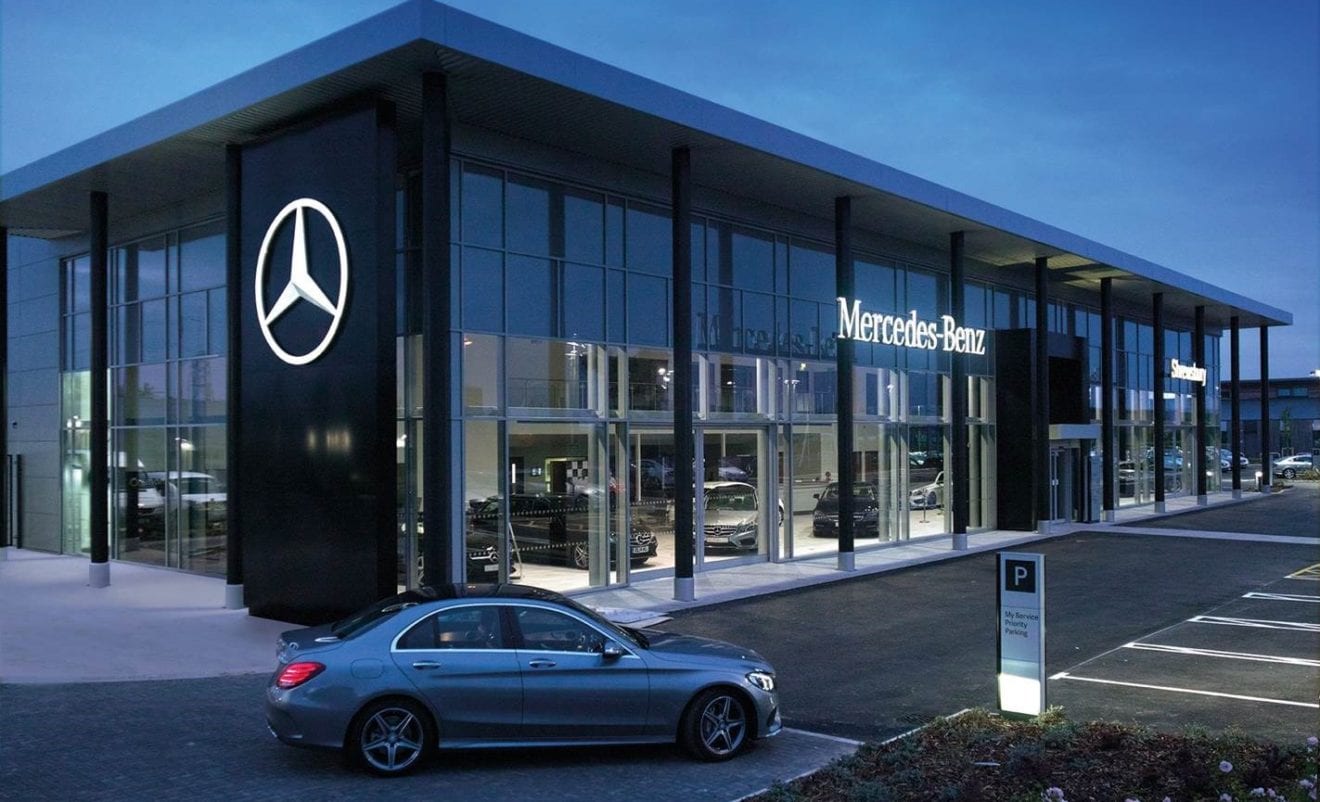
    The all-new Mercedes-Benz EQS made its global debut earlier this month. Interestingly, the electric sedan now has been listed on the official website with the ‘Coming Soon’ title, which suggests that it could be launched in the Indian market this year. The model page listing has also revealed several key details and specifications of the electric vehicle ahead of its launch. It will be the second all-electric model from Stuttgart-based luxury carmaker, after the EQC electric SUV that was launched last year.

    As per the listing on the official website, the luxury electric sedan will be available in two trims – EQS 450+ and EQS 580 4MATIC. The EQS 450+ is the base variant that features a single electric motor on the rear axle for a total of 328 bhp and 568 Nm of peak torque. The EQS 580 4MATIC is an all-wheel-drive (AWD) range-topping trim and gets an electric motor on both front and rear axles. Total output in combination here is 516 bhp and a whopping 855 Nm of peak torque, good for a 4.1 seconds sprint to 100 kmph from a standstill.

    The S-Class of electric sedans is based on the EQS Vision concept which was showcased by the carmaker in 2019. It will be placed at the top in Mercedes-Benz’s EQ line-up, which currently includes EQC, EQA, and the EQB globally.

    Aesthetically, the electric sedan comes with all characteristics of the S-Class sporting LED headlamps with integrated LED DRLs, connected by an LED strip, and LED taillights, again connected by an LED strip. On the inside, it showcases the new 56-inch MBUX Hyperscreen which is essentially a massive glass dashboard incorporating three individual information displays – an instrument cluster, a center infotainment system, and an auxiliary passenger-side touchscreen.

    The Mercedes-Benz EQS comes with a 107.8 kWh Lithium-Ion battery, promising a 770 km WLTP cycle certified drive range on a full charge. However, the carmaker has not provided detailed variant-wise range options. The car comes with a standard onboard charger of 11 kW with an optional 22 kW charger. The EQS can be charged from 10 to 80 percent in 35 minutes using a 110 kW DC fast charging, while a 240-volt household wall charger will take 11 hours for the same range.
  • Tesla To Add EV Components Recycling Facilities At Shanghai Factory

    Tesla To Add EV Components Recycling Facilities At Shanghai Factory

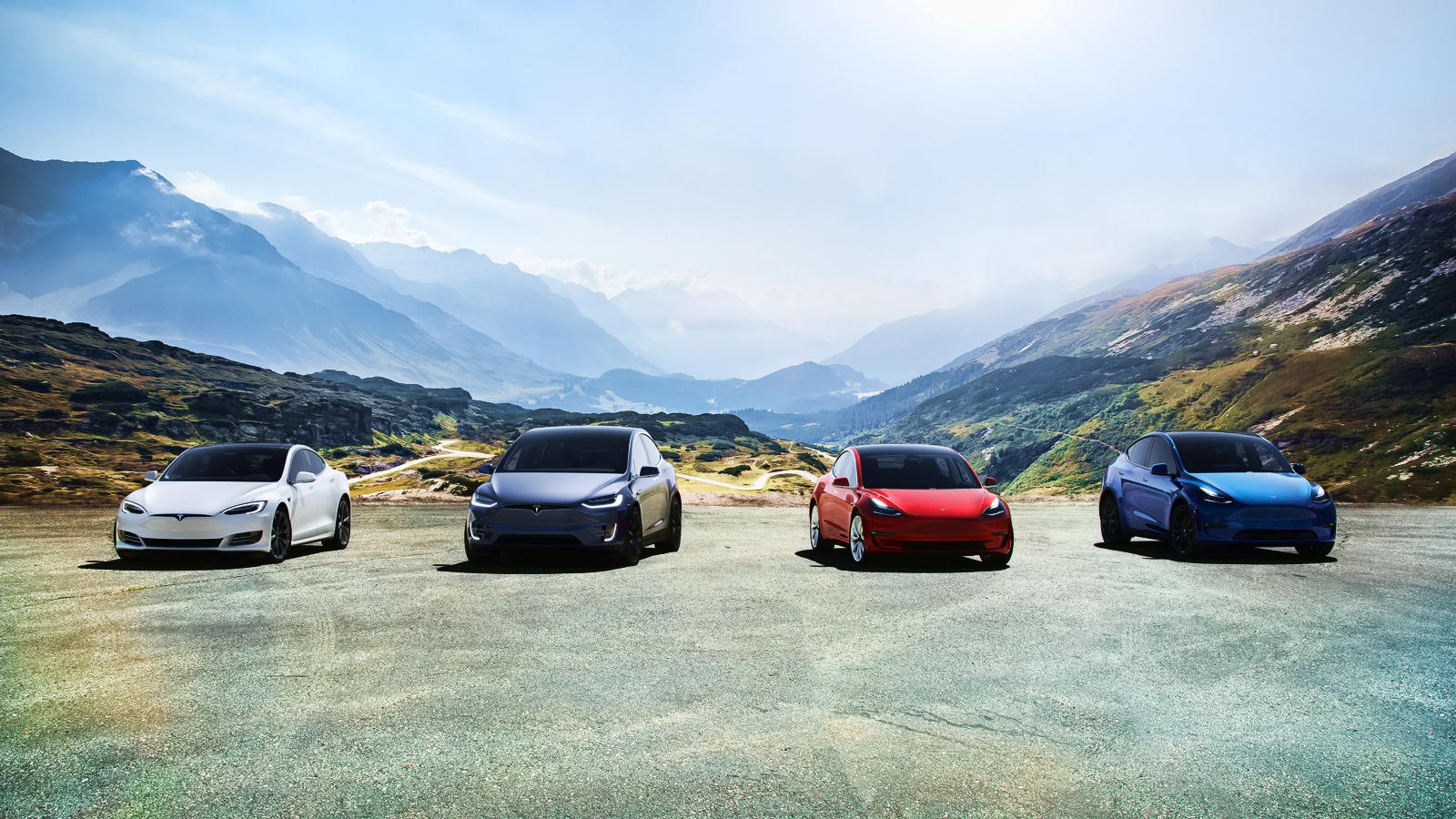
    U.S. electric vehicle (EV) maker Tesla Inc plans to add facilities at its Shanghai factory to repair and reproduce key components such as electric motors and battery cells, a document submitted by Tesla to Shanghai authorities shows.

    China, the world’s biggest car market, sold over 1.3 million electric and plug-in hybrid vehicles last year. China’s regulators are adding rules on the recycling of key EV components to save materials and protect the environment.

    The document also said Tesla will add manufacturing capacities for car structures and electric motor controllers. It did not put detailed figures of its manufacturing capacities.

    Tesla, which is making electric Model 3 and Model Y vehicles, is expanding the manufacturing capacity of EV components to localize the supply chain. It also added a factory to make EV chargers in Shanghai last year.

    Tesla, which said on its website that materials in a Tesla car’s battery are recoverable and recyclable, did not immediately respond to a request for comment.

    Tesla sold more than 35,000 locally-made vehicles last month in China and is exporting China-made cars to Europe.

  • Tesla Cars In China Are Being Stopped On The Highway

    Tesla Cars In China Are Being Stopped On The Highway

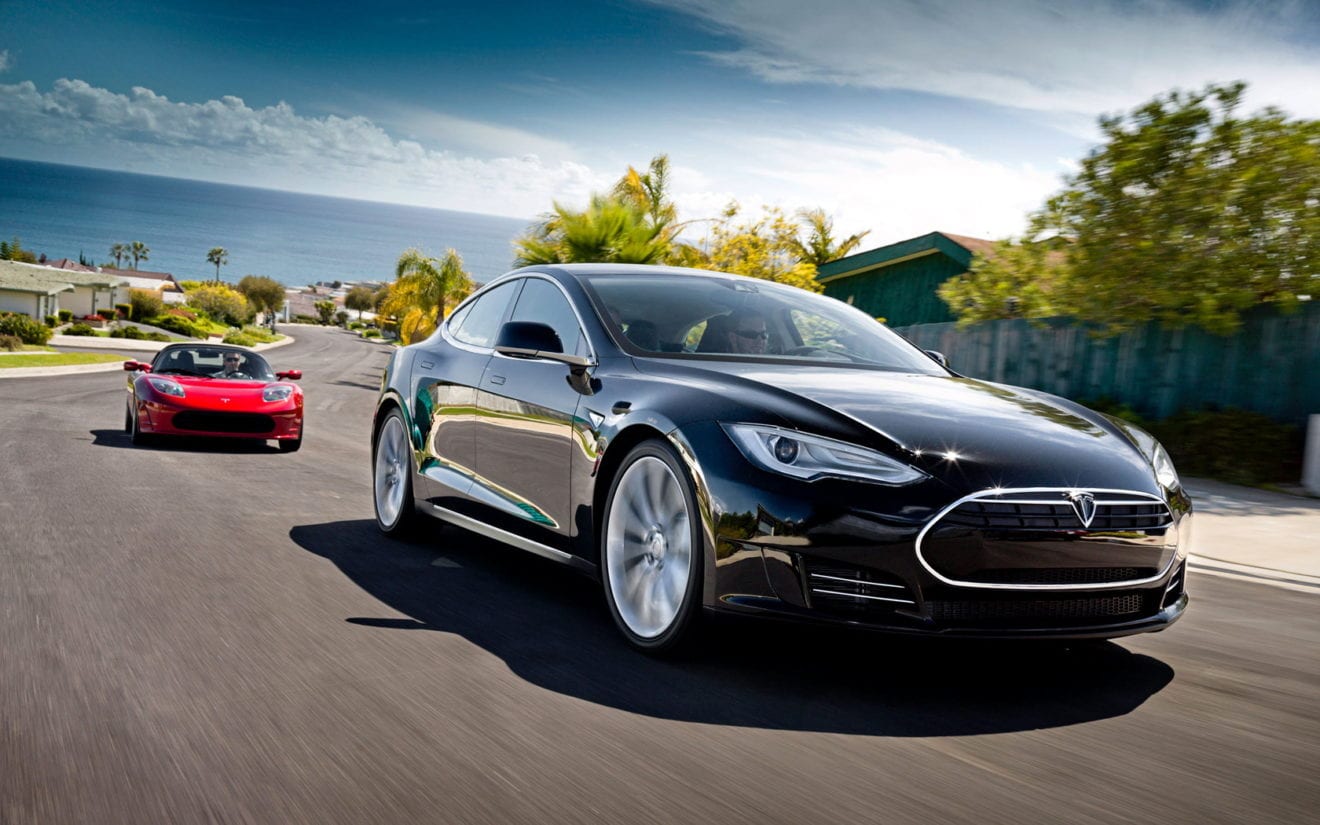
    In China, many Tesla owners have reported that they are being stopped on the highway by the police over safety concerns. This is particularly true in the Guangzhou district of China. This comes in the wake of numerous safety concerns around Tesla cars especially after the recent fatal accident of the Tesla Model S in the US state of Texas. This is also happening in the wake of a protest by a Tesla owner at the Tesla showcase during the Shanghai Motor Show which was concluded last week.

    “The traffic accident occurred in the north of Dongjiang Avenue, Zengcheng District, Guangzhou on April 13, according to a statement released by Zengcheng public security bureau on Wednesday. A car caught fire after colliding with the cement barrier on the right side of the road and another car, leading to one passenger dead, said the statement,” said reports on Chinese news portals like the Global Times.

    “This afternoon, we have proactively contacted the Zhengzhou Municipal Market Supervision Administration and reported the relevant situation. In order to protect the rights and interests of consumers, we are willing to cooperate fully and provide the raw data of the vehicle half an hour before the incident to the third-party appraisal agency or the technology designated by the government. The regulatory authority or the consumer himself,” said one Weibo user.

    There were many such instances of posts by Tesla users on Chinese social networks. However, the police have come out and said that it was just doing a general exercise around traffic. It has denied isolating just Tesla owners, however, the owners are staying that they felt targeted exclusively.

  • Tata Motors Updates Its Standard Operating Procedures Amidst COVID-19 Crisis

    Tata Motors Updates Its Standard Operating Procedures Amidst COVID-19 Crisis

    Tata Motors has updated its standard operating procedure (SOP) to ensure the well-being of its employees as the country continues to witness skyrocketing COVID-19 positive cases. The new SOP will be mandated across the company. Tata Motors is focussing on expediting vaccinations, providing support to affected employees and their family members. Tata Motors has its headquarters based in Mumbai and production units in Chakan, Ranjangaon, Pantnagar, Lucknow, Sanand, Dharwad and Jamshedpur and the new SOP will be followed at all these locations.

    The lockdown enforced in various parts of the country is expected to impact vehicle demand for the time being. So the company has come up with a comprehensive ‘business agility plan’ to protect and serve the interests of its customers, dealers and suppliers. It is calibrating and matching supplies with retail demand in a bid to ensure that optimal levels of inventory are maintained with dealers to meet the customer demands whenever they arise and also be prepared for a rebound in demand once the situation returns to normalcy. It is also reviewing and planning to maintain the supply of raw materials to cater to this volatile demand outlook and work closely with the vendors to keep up with the inventory levels.

    Delhi and Mumbai are two of the worst impacted metro cities that’s been recording a perpetual rise in COVID-19 positive cases and eve Lucknow has taken a major hit. States like Delhi, Maharashtra, Uttar Pradesh (Lucknow) and Jharkhand (Jamshedpur) are also under partial lockdown. The second wave of COVID-19 is proving out to be even more threatening and is claiming more lives. Over 3.52 lakh new positive cases and 2,812 deaths have been registered in the country in the last 24 hours which is at all-time high for the fifth day in a row.