Category: Automotive

Retail News Asia is committed to providing both local and global retailers with the latest Auto and Car news throughout the Asian market. This on a daily base.

  • Tesla To Buy More Than $1 Billion Of Australian Battery Minerals A Year

    Tesla To Buy More Than $1 Billion Of Australian Battery Minerals A Year

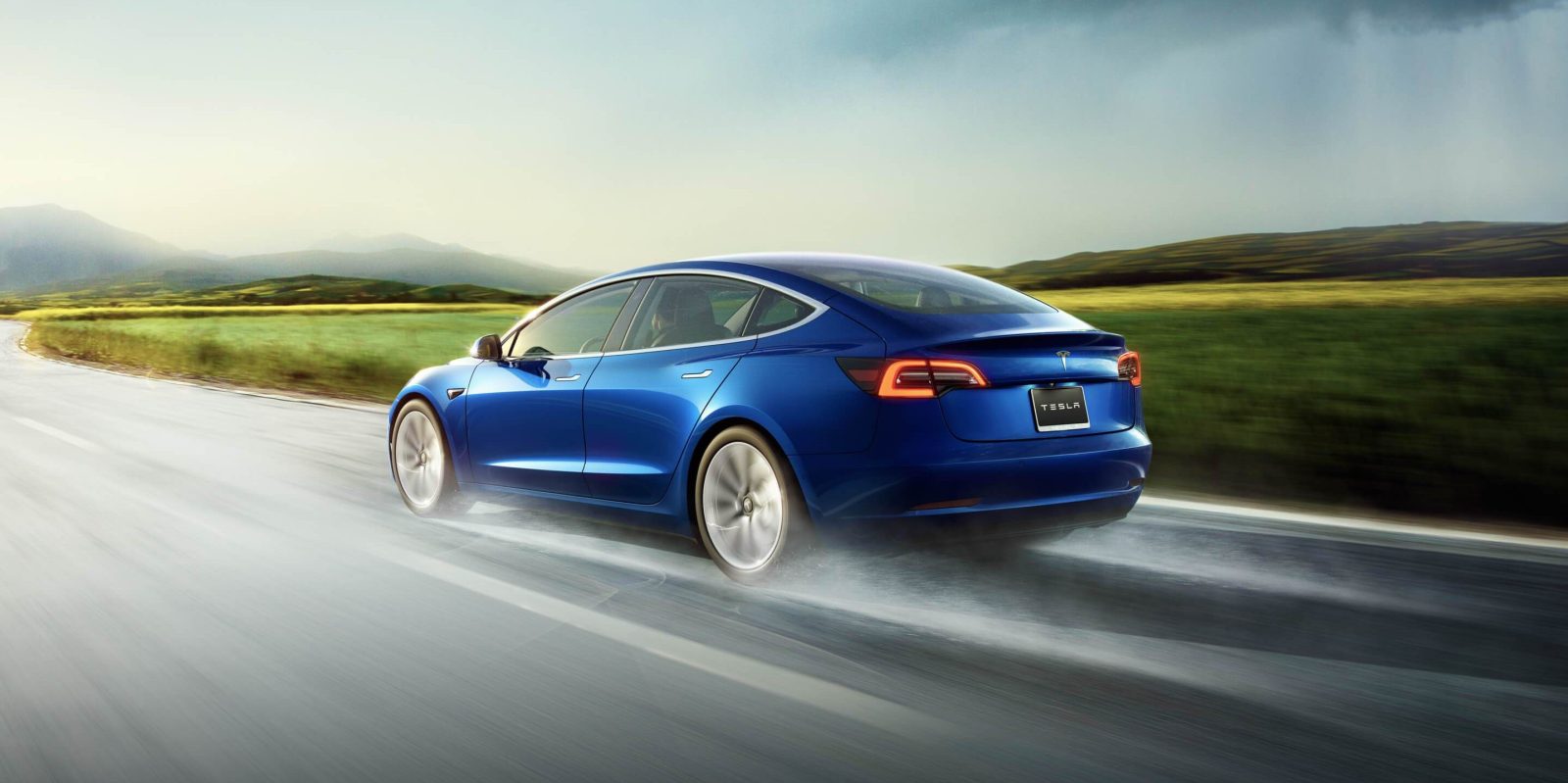
    Tesla said it expects to spend more than $1 billion a year on battery raw materials from Australia given the country’s reliable mining industry and responsible production practices. Robyn Denholm, chair of the U.S. carmaker, said on Wednesday that Australia, which is rich in minerals used for batteries like lithium and nickel, is poised to benefit as developing supply chains for electric vehicle batteries and the green energy age focus on environmental, social and governance (ESG).

    “We expect our spend on Australian minerals to increase to more than $1 billion per annum for the next few years,” Denholm, an Australian, told a Minerals Council of Australia event.

    Tesla already sources three-quarters of its lithium feedstock from Australia and over a third of its nickel, Denham said, without specifying a dollar figure.

    “Australian mining companies do have a good reputation, great expertise, professionalism and are preferred by manufacturers increasingly concerned about meeting both today’s and the future’s ESG requirements,” she said in Canberra.

    The comments are in line with a new policy underway by U.S. President Joe Biden’s Administration to rely on allies to supply of the bulk of the metals needed to build electric vehicles.

    The U.S. will then focus on processing those metals domestically into battery parts, part of a strategy designed to placate environmentalists, two administration officials with direct knowledge told Reuters last month.

    Australia, alongside Canada and Brazil, are among the countries expected to benefit.

    Australia’s exports of hard rock lithium known as spodumene are expected to hit A$1 billion ($773 million) this year while its nickel exports are expected to be valued at A$4 billion, government figures show.

    Tesla also supplies batteries to Australia to store energy captured from rooftop solar panels which shore up reliability in its energy network. Australia has the world’s highest per-capita density of rooftop solar panels.

  • Tesla Recalls Nearly 6,000 U.S. Cars Over Potentially Loose Bolts

    Tesla Recalls Nearly 6,000 U.S. Cars Over Potentially Loose Bolts

    Tesla Inc is recalling nearly 6,000 U.S. vehicles because brake caliper bolts could be loose, with the potential to cause a loss of tire pressure, documents made public on Wednesday show.

    The recall covers certain 2019-2021 Model 3 vehicles and 2020-2021 Model Y vehicles. Tesla’s filing with the National Highway Traffic Safety Administration (NHTSA) said it had no reports of crashes or injuries related to the issue and that the company will inspect and tighten, or replace, the caliper bolts as necessary.

    Tesla said that loose caliper bolts could allow the brake caliper to separate and contact the wheel rim, which could cause a loss of tire pressure in “very rare circumstances.” The company said that in the “unlikely event” there is vehicle damage from a loose or missing fastener, it will arrange for a tow to the nearest service center for repair.

    The filing with NHTSA said Tesla was made aware in December of a field incident involving a 2021 Model Y vehicle with a missing fastener on the driver-side rear brake caliper.

    The company has since taken measures to prevent the loosening of the bolts in the assembly process

  • Rimac Nevera Electric Hypercar Unveiled

    Rimac Nevera Electric Hypercar Unveiled

    After a long wait, Rimac Automobili has finally unveiled the Nevera, an all-electric, hypercar that has been designed and engineered to surpass anyone’s expectation of an electric car. The Nevera is the production-ready iteration of the Rimac C_Two concept car, which was revealed at the International Geneva Motor Show in 2018. Since then, Rimac’s engineers have refined the new flagship car. The Nevera was developed in-house at Rimac’s headquarters in Croatia and only 150 examples of the car will be made.

    Underlining his own commitment to the project, Mate Rimac will personally test and sign off each of the Neveras, before they are delivered to customers from the company’s current production site on the outskirts of Zagreb, Croatia.

    Nevera’s monocoque construction includes a bonded carbon roof, integrated structural battery pack, and rear carbon subframe, is forming the largest single carbon fibre piece in the entire automotive industry. Weighing less than 200 kg and utilizing 2200 carbon fibre plys and 222 aluminum inserts, the monocoque encases the car’s battery to form a compact yet incredibly strong structure with a torsional stiffness of 70.000 Nm/degree.

    The unique H-shaped, liquid-cooled, 120kWh, 6960-cell battery was designed from scratch by Rimac and sits at the heart of the Nevera. Capable of producing 1.4MW of power, the Lithium/Manganese/Nickel battery also forms an integral part of the car’s core, adding 37 percent structural stiffness to the carbon fibre monocoque. The battery’s optimum positioning low and central within the car’s floor contributes to an ultra-low centre of gravity. This helps create a 48/52 front/rear weight distribution.

    Four bespoke surface-mounted permanent magnet motors drive the Nevera’s four wheels individually. Together, they enable 1914 horsepower and 2360 Nm of torque, which is triple the output of a ‘conventional-engined’ supercar. The front and rear wheels are each connected to a pair of single-speed gearboxes.

    With the ability to sprint to 96.5 kmph in 1.85 seconds and continue the acceleration all the way to a 412 kmph which is its top speed, the Nevera opens up a new dimension in hypercar performance. Accelerating from rest to 161 kmph requires just 4.3 seconds and it maintains acceleration throughout a full-throttle cycle, achieving 300 kmph from rest in 9.3 seconds, shredding a whole 2.5 seconds from the initial targets.

    Rimac’s All-Wheel Torque Vectoring 2 (R-AWTV 2) system replaces traditional Electronic Stability Program and Traction Control systems to further bolster grip and traction. Meanwhile, the Nevera’s R-AWTV 2 system enables infinitely variable dynamic responses to road and track conditions by calibrating the amount of torque supplied to each wheel. R-AWTV 2 calculates the precise level of torque to channel through each wheel for ultimate stability and exceptional agility. Both predictive and responsive, R-AWTV reads the road and makes over 100 calculations per second to tailor the level of torque to achieve the desired driving style.

  • Hyundai To Slash Combustion Engine Line-Up, Invest In EVs

    Hyundai To Slash Combustion Engine Line-Up, Invest In EVs

    Hyundai Motor Group will slash the number of combustion engine models in its line-up to free up resources to invest in electric vehicles (EVs), two people close to the South Korean automaker told Reuters. The move will result in a 50% reduction in models powered by fossil fuels, one of the people said, adding the strategy was approved by top management in March. “It is an important business move, which first and foremost allows the release of R&D resources to focus on the rest: electric motors, batteries, fuel cells,” the person said, without giving a timeframe for the plan.

    While Hyundai did not specifically address a Reuters query on its plans for combustion engine models, it said in an email on Thursday that it was accelerating the adoption of eco-friendly vehicles such as hydrogen fuel cell vehicles and battery EVs. The automaker added that it aims to gradually expand battery EV offerings in key markets such as the United States, Europe, and China with a goal for full electrification by 2040.

    Hyundai Motor Group, which houses Hyundai Motor Co and Kia Corp and Genesis, aims to sell about one million EVs per year by 2025 to achieve a 10% share of the global EV market. Facing tightening CO2 emission targets in Europe and China, all major automakers are accelerating their shift to EVs. The huge cost of developing electric motors and increasing the driving range of car batteries has already led some to say their days of investing in conventional engines are over. “Hyundai has stopped developing new powertrains for internal combustion engine cars,” one of the people said.

    PSA Group said in November, shortly before merging with Fiat Chrysler to form Stellantis, that it was no longer investing in combustion engines. Daimler has recently revamped its combustion engines and executives say the new generation will see it through the electrification process. Some carmakers have already announced plans to go fully electric, with Sweden’s Volvo, which is owned by China’s Geely, saying it would do that by 2030. Ford Motor Co says its line-up in Europe will be fully electric by the same date.

    For Hyundai, which together with Kia is one of the world’s top ten auto groups, the move is particularly important because it has one of the broadest ranges of engine and transmission technologies in the industry. The group will finalize its strategy to switch to all-electric models within the next six months, one source said. In April, Hyundai said it would cut the number of its gasoline models in China to 14 from 21 by 2025, while launching new electric models every year starting in 2022. In February, the group said it was no longer in talks with Apple to develop an autonomous vehicle. Sources familiar with the matter said the idea of the group becoming a contract manufacturer for Apple encountered strong internal opposition.

  • Royal Enfield’s Parent Company Eicher Motors’ Net Profit Skids In FY2021

    Royal Enfield’s Parent Company Eicher Motors’ Net Profit Skids In FY2021

    Eicher Motors Limited (EML), the parent company of iconic motorcycle brand Royal Enfield has announced its consolidated financial results for the quarter and for the financial year ended March 31, 2021. For FY 2020-21, Eicher Motors’ total revenue from operations down by 5 percent to ₹ 8,720 crore, compared to ₹ 9,154 crore recorded for FY 2019-20. Net profit for the period was recorded at ₹ 1,347 crore, down 26 percent as compared to ₹ 1,827 crore for the same period last year. Royal Enfield sold 6,09,403 motorcycles during the year, down 13 percent from 6,97,582 motorcycles sold in FY 2019-20.

    For the quarter ended March 2021, Eicher Motors’ total revenue from operations was at an all-time high at ₹ 2,940 crore, up 33 percent, compared to ₹ 2,208 crores in the same quarter a year ago. Net profit in Q4 of FY 2020-21 was ₹ 526 crore, up 73 percent, compared to ₹ 304 crore during the same period last year. From January to March, 2021, Royal Enfield sold 2,03,343 motorcycles, an increase of 25 percent from 1,63,083 motorcycles sold over the same period in FY 2019-20.

    Commenting on Eicher Motors’ performance, Siddhartha Lal, Managing Director of Eicher Motors Ltd., said, “It has been a challenging year for the industry with the COVID-19 pandemic leading to disruption in production, supply chain, and retail operations. We remained agile and responded swiftly by reworking our immediate priorities and providing relief to communities as well as ensuring the safety and well-being of our employees, partners, and customers. During the year, there were challenges also on account of factors such as supply chain constraints and commodity price increase. However, demand continues to be good.

    “Royal Enfield witnessed very good pick up in the second half of the year, and registered a strong performance in Q4. We have seen encouraging demand coming from rural as well as urban segments. The launch of the Meteor has been well received by consumers and has witnessed excellent response. We have also been able to significantly increase our retail market presence in India and globally through this year. The commercial vehicle industry also showed equal resilience and saw good recovery in the latter half of the year. VECV gained market share across segments. In the heavy-duty segment, VECV volume grew by 6% in FY21 compared to last year against a decline of 21% in industry volume. Overall, both at Royal Enfield and at VECV, we have managed to tide over a tough year, and despite imminent challenges that persist, we remain steadfast on our strategic long term goals.”

  • Ford Boosts EV Spending, Aims To Have 40% Of Volume All-Electric By 2030

    Ford Boosts EV Spending, Aims To Have 40% Of Volume All-Electric By 2030

    Ford Motor Co on Wednesday outlined plans to boost spending on its electrification efforts by more than a third and said it aims to have 40% of its global volume be all-electric by 2030 in a move to have investors value it more like a technology company.

    Under a plan dubbed “Ford+,” the No. 2 U.S. automaker said it now expects to spend more than $30 billion on electrification, including battery development, by 2030, up from its prior target of $22 billion. It has launched the all-electric Mustang Mach-E crossover and plans to introduce electric versions of the Transit van and F-150 pickup.

    In premarket trading, Ford shares were up about 2%.

    “This is our biggest opportunity for growth and value creation since Henry Ford started to scale the Model T,” Ford Chief Executive Jim Farley said in a statement.

    Ford plans to develop two dedicated EV platforms, one for full-size trucks and SUVs, the other for cars and smaller SUVs.

    Ford and other global automakers are racing to shift their gasoline-powered lineups to all-electric power under pressure from regions like Europe and China to cut vehicle emissions. U.S. President Joe Biden has called for $174 billion to boost U.S. EV production, sales and infrastructure.

    Ford rival General Motors Co has said it aspires to halt U.S. sales of gasoline-powered passenger vehicles by 2035. The Detroit automaker said last year it was investing $27 billion in electric and autonomous vehicles over the next five years.

    Some analysts see Ford as trailing its rivals in the electrification race, but Ford officials disagree with that view, pointing to the Mach-E rollout and its other plans.

    Ahead of an investor meeting, Ford said it expects to deliver an 8% operating margin in 2023.

    The Dearborn, Michigan-based company also said it is forming a new unit, called Ford Pro, to focus exclusively on commercial and government customers, a segment Farley sees as a huge growth opportunity for the company.

    The company is targeting increasing revenue for the commercial market for hardware and related services addressable by Ford to $45 billion by 2025, up from $27 billion in 2019.

    Ford said it will also aim to develop EV batteries, from lithium-ion versions to lithium-ion phosphate for commercial vehicles and eventually low-cost solid-state batteries in partnership with startup Solid Power, in which the automaker has invested.

    Last week, the automaker announced a memorandum of understanding to form a battery joint venture with South Korea’s SK Innovation, to make battery cells at two U.S. plants.

    Ford also said it expects to have 1 million vehicles capable of receiving over-the-air software updates on the road by the end of the year, and scaling that to 33 million by 2028.

    It sees the overall market for connected functions like driver-assist technologies, new features and upgraded software content, and EV charging hitting a projected $20 billion by 2030.

    Sources previously told Reuters Ford plans to develop two dedicated EV platforms, one for full-size trucks and SUVs, the other for cars and smaller SUVs.

    The sources said Ford is planning to launch at least nine all-electric cars and car-based SUVs and at least three electric trucks, vans and larger SUVs, including second-generation editions of the Ford F-150 Lightning and Mach-E at mid-decade.

  • Pitstop To Offer Doorstep Service For Electric Vehicles

    Pitstop To Offer Doorstep Service For Electric Vehicles

    Bengaluru-based car repair and service provider, Pitstop recently announced its foray into electric vehicle servicing. Quoting Mckinsey’s future of mobility report, Pitstop says that there is a growing demand for electric vehicles in India, especially electric two-wheelers, and the company seeks to provide EV servicing facilities at the customer’s doorstep for both two-wheelers and four-wheelers.

    Talking about the services the Pitstop aims to provide, the company’s Founder and CEO, Mihir Mohan said, “With the exception of body repair or modifications that include lifting, 80 to 85 percent of two-wheeler operation can be completed at the client’s doorstep.”

    Pitstop was started in 2015 began as a car washing company, however, now the company has become a multi-branded car servicing company with over 250 garages across India. The company says that by 2030, sales of two-wheeled electric vehicles are predicted to reach 8 to 9 million accounting for about 35 to 40 percent of all two-wheeled vehicles sold.

    Pitstop says that while more and more electric vehicles and charging infrastructures are coming up, the EV service market is still largely untapped and there is a lack of service network for repair. And that the area the company aims to focus on.

    Pitstop says that it has developed the ability to automate diagnosis with the use of sensors and scanners, and now, it is completely equipped to support electric vehicles. To that effect, the company aims to formalize and professionalize India’s $ 7 billion four-wheel-drive service industry.

  • Elon Musk Reaffirms 1.1 Second kmph Time For Telsa Roadster EV Is Possible

    Elon Musk Reaffirms 1.1 Second kmph Time For Telsa Roadster EV Is Possible

    The second-generation Tesla Roadster was revealed about three years ago but the EV maker took quite a while to materialize it. Finally, it is expected to arrive later this year or early in 2022 but one production-ready version is already on display at the Petersen Automotive Museum with some details of its specifications. The most interesting of all is that the readout at the museum claims a 0-100 kmph sprint in an earth-staggering 1.1 seconds when the Roadster is equipped with the SpaceX package.

    Now what’s even more interesting is that Elon Musk took to Twitter to confirm the specifications. Replying to one of the tweets he reaffirmed it’s possible with “the SpaceX rocket thruster option package. The Roadster will possibly be equipped with cold air thrusters, supplied by compressed air tanks with the thrusters hidden behind the license plate, that’ll help propel the all-wheel-drive sports to manic speeds. Now without the SpaceX package, the EV maker is claiming 1.9 seconds to triple-digit speeds, which still is fast enough to give something like the mighty Bugatti Chiron with a W16 engine, a sweat.

    Now going with what Musk has claimed earlier, the Tesla Roadster is not just about speed. It will deliver quite an impressive electric range of 998 km with a tri-motor configuration. One of them will be positioned in the front and the remaining two at the rear that will power all four wheels. It will get its juices from a 250 kWh battery pack and it will put out an unbelievable 10,000 Nm of peak torque helping it to clock 160 kmph in just 4.2 seconds. Now that’s quicker than what many sportscars take to clock triple-digit speeds.

  • Renault-Nissan Workers In India To Strike Over COVID Fears

    Renault-Nissan Workers In India To Strike Over COVID Fears

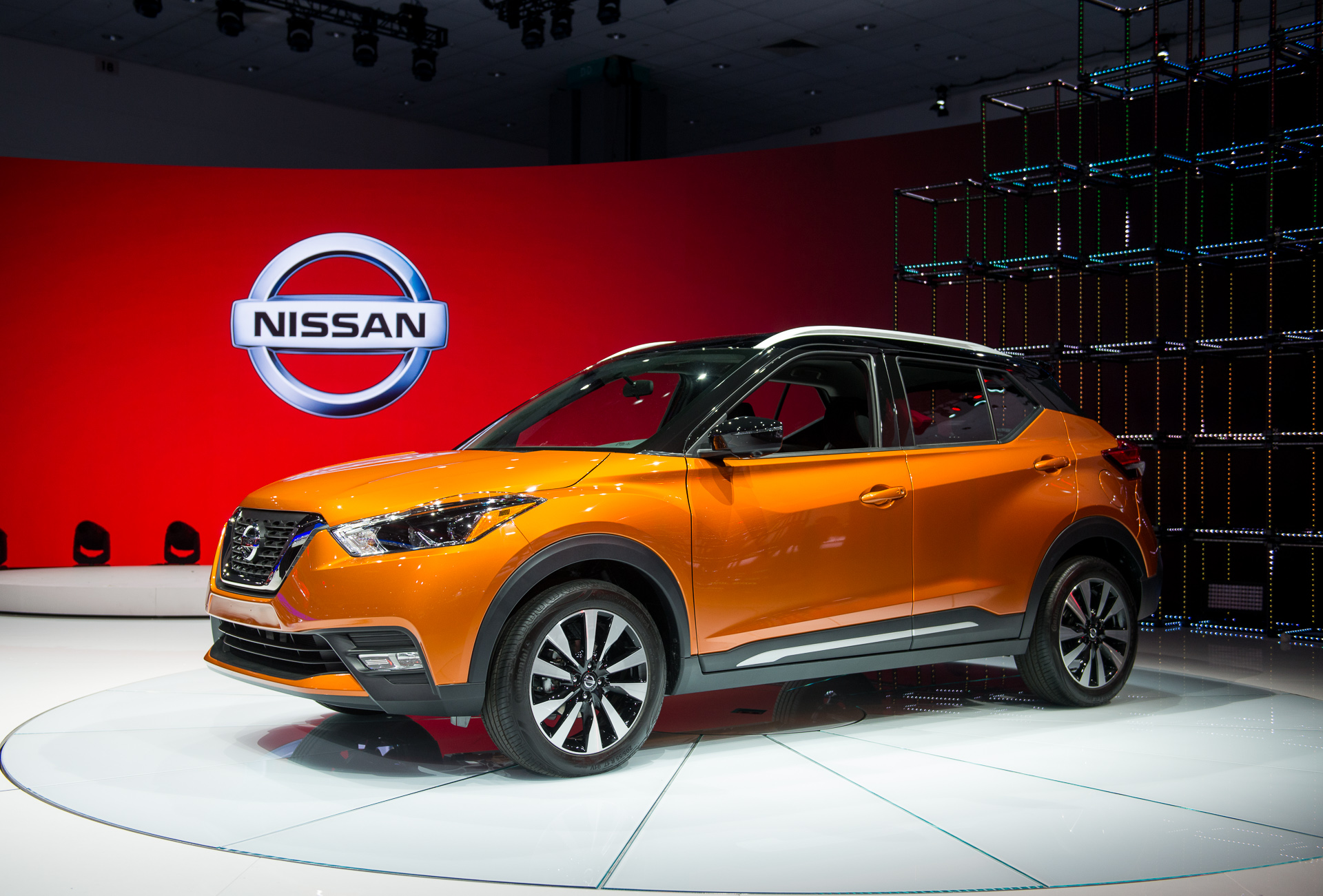
    Workers at Renault-Nissan’s car plant in southern India will go on strike on Wednesday as their COVID-related safety demands have not been met, a union representing the workers told the company in a letter on Monday. The strike threat at the plant in Tamil Nadu, jointly owned by Nissan Motor and alliance partner Renault, comes ahead of a court hearing over allegations from workers that social distancing norms were being flouted and factory health policies did not sufficiently address the risk to lives.

    “Due to unsafe working conditions and as the union demands have not been met … members of this union will not report to work from the first shift on Wednesday,” the union said in a letter dated May 24. The letter added that workers would not return until they felt safe.

    The union represents around 3,500 workers at the plant.

    Nissan, which owns a majority stake in the plant, declined to comment, saying the matter was in court.

    Renault-Nissan told an Indian court last week it rejected claims that COVID-19 safety protocols were being ignored at the factory, adding it needed to continue production to meet orders.

    The legal battle highlights the challenges companies face in India amid a huge wave of COVID-19 infections.

    Several Hyundai Motor Co employees, fearing for their health, have halted work at the automaker’s plant in Tamil Nadu state and are staging a sit-in protest, two sources at the Hyundai Motor India Employees Union told Reuters.

    Hyundai Motor India did not immediately respond to a request for comment.

    The legal battle highlights the challenges companies face in India amid a huge wave of COVID-19 infections.

    It was not immediately clear how long the protest would continue and the extent of production disruption for Hyundai.

    Tamil Nadu is one of the worst-hit states of India’s surge in COVID-19 infections, with more than 30,000 cases a day.

    The state, an auto hub known as India’s Detroit, has imposed a lockdown until May 31 but has allowed some factories, including auto plants, to continue operating.

    Hyundai’s union told the company on May 15 its workers feared for their lives and should be given fully paid leave while the state lockdown is in place.

  • BYD Rolls Out 1 Millionth Electric Passenger Car In China

    BYD Rolls Out 1 Millionth Electric Passenger Car In China

    Chinese automaker BYD is celebrating the rollout of its one-millionth electric passenger car, becoming the first automaker globally to do so. The one-millionth car is the Han EV that rolled off the production line at BYD’s headquarters and manufacturing facility in Shenzhen, in China. The occasion marked the presence of officials from the Chinese government, industry heads, media guests, and about 100 BYD vehicle owners. With no Covid cases reported, China is able to host public events.

    Speaking about the rollout, Wang Chuanfu, Chairman and President of BYD Co., Ltd. said, “BYD shoulders the responsibility and mission of upward development for China’s new energy vehicle brands. From zero to one million vehicles, this is BYD’s response to the call for global auto industry transformation. It also sets a benchmark in the journey of the new energy vehicle industry in China starting from nothing, alongside the greater national journey for a country dominated by traditional automobiles to one that is a leader in the field of sustainability.”

    He added, “The journey to one million vehicles would not be possible without the support of car owners every step of the way, and BYD recognizes that the ‘green dream’ can only be achieved hand-in-hand with all our customers.”

    Beginning operations in China in 2003, BYD’s new energy vehicle (NEV) journey commenced in 2004 with the ET electric concept car at the Beijing Auto Show. This was followed up with the F3DM – the world’s first mass-produced plug-in hybrid NEV model unveiled in 2008. The BYD Han was launched in 2020 and the automaker says it’s a top-selling model in China, competing with the German luxury sedans.

    Rolf Petter Almklov, Commercial Counsellor, Royal Norwegian Embassy in Beijing, and Wang Chuanfu, Chairman & President – BYD at the rollout ceremony

    BYD says the one million EV production milestone coincides with the first batch of 100 fully-electric BYD Tang SUVs being readied for Norway. The Scandinavian country will be at the center of the automaker’s ambitious plans for the European market, it says. A total of 1500 Tang SUVs will be delivered to Norway before the end of the year as part of BYD’s European and global strategy. The first batch will be delivered to customers in Norway in the third quarter of the year.

    The BYD Tang SUV promises a range of 505 km (NEDC) and can sprint from 0-100 kmph in 4.6 seconds. The battery capacity stands at 86.4 kWh. BYD will be bringing only electric cars to the European market and the company already retails its electric bus product range in Europe.

  • Mercedes-Benz India Extends Warranty And Service Plans To Support Customers languagedropdown

    Mercedes-Benz India Extends Warranty And Service Plans To Support Customers languagedropdown

    Mercedes-Benz India has announced a host of warranty and service initiatives to support its customers during the COVID-19 pandemic. Given the ongoing lockdown, the carmaker is offering an extension on timelines to honor warranty claims and warranty protection against lapsed service. This means Mercedes-Benz car owners, whose warranty or free service plans have or will expire between April 15 and May 31, 2021, will now get an extension on these benefits until June 30, 2021. The announcement comes just a day after rival Audi India announced a similar initiative.

    These benefits are for Mercedes-Benz car owners, whose warranty or free service plans have or will expire between April 15 and May 31, 2021

    In addition to the extension on standard warranty package and protection against lapsed service, Mercedes-Benz India will also support claims related to extended warranty and motor vehicle insurance (Daimler Financial Services Insurance), until June 30, 2021. This is for customers whose extended warranty or motor insurance has lapsed between April 15 and May 31, 2021. Also, if the vehicle’s standard warranty is expiring during the aforementioned dates and the customers wish to purchase an extended warranty, they will get an extension till June 30. Mercedes-Benz India says that it will also continue to support its customers with the Road-Side Assistance program with special permissions, wherever required.

    Talking about the initiative, Martin Schwenk, MD & CEO, Mercedes-Benz India, commented, “In the current challenging situation it remains our endeavor to assure our customers of complete peace of mind when it comes to their vehicles. Through these specially crafted service initiatives along with our service teams’ ongoing support working remotely, our customers will continue to enjoy a hassle-free vehicle ownership.”

  • Vietnam sees 480 pct surge in cars imported from China

    Vietnam sees 480 pct surge in cars imported from China

    Vietnam imported 6,633 completely built-up (CBU) cars from China in the first four months, a 480 percent surge over the same period last year.

    Industry insiders explain the increasing popularity of cars imported from China to good designs and modern features.

    Despite the major increase, however, China remained the third-largest CBU car supplier for Vietnam in the first four months behind Thailand and Indonesia.

    Thailand dominated auto imports with 25,732 vehicles, a 74 percent year-on-year increase, according to the General Department of Vietnam Customs. It was followed by Indonesia with 13,873 units, up 4.7 percent.

    The two countries together accounted for 79 percent of April’s CBU imports.

    Thailand and Indonesia have led the list of Vietnam’s car suppliers ever since the ASEAN Trade in Goods Agreement (ATIGA) took effect in 2018, owing to the zero import tariffs.

    Vietnam’s total car imports in the first four months marked a 56.5 percent year-on-year growth at 50,161 vehicles.

    The nation’s auto sales in the first four months surged 58 percent year-on-year to 101,309 units, signaling a recovery from last year’s pandemic blows.

  • Vietnamese automaker acquires South Korean retail chain

    Vietnamese automaker acquires South Korean retail chain

    A THACO spokesperson said that the agreement will be signed this week. South Korean retail giant E-mart, owned by the Shinsegae Group, will stop operating its outlets in the country. Under the buyout deal, THACO will operate the chain as a franchisee and pay a royalty to E-mart.

    The South Korean established the E-mart Vietnam Co. in 2014 after three years of doing market research in the country.

    It opened its first megamarket in HCMC’s Go Vap District at the end of 2015, covering an area of 12,000 square meters. The megamarket consists of a shopping area, restaurants and a kids’ playground.

    It hiked its charter capital by 62.5 percent to VND2.7 trillion ($117.8 million) in 2018.

    The E-mart Vietnam management board said 95 percent of products it sold were domestically produced.

    Rumors had surfaced at the end of last year that E-mart will exit the Vietnam retail market, but the company denied them.

    South Korean newspaper The Korea Times cited the retail giant as saying it was selling its Vietnam operations due to difficulties in expanding the business. It had planned to open a second megamarket in HCMC’s Tan Phu District in mid-2018, but the plan was not realized.

    THACO has announced plans to open 10 supermarkets in Vietnam by 2025.

  • Burry Of ‘Big Short’ Fame Reveals $530 Million Bet Against Tesla

    Burry Of ‘Big Short’ Fame Reveals $530 Million Bet Against Tesla

    The family office run by “Big Short” investor Michael Burry has disclosed a short position against Tesla Inc worth more than half a billion. Scion Asset Management said in a regulatory filing on Monday that it had bearish put options on 800,100 shares in Tesla as of the end of the first quarter that was worth $534 million. Put options give investors the right to sell shares at certain price in the future.

    One of the investors profiled in the book “The Big Short’ and the film of the same name for betting more than a billion dollars against the U.S. housing bubble, Burry has been skeptical of Tesla’s sky-high valuations.

    In February, he tweeted “my last Big Short got bigger and Bigger and BIGGER,” referring to Tesla’s surge in market capitalization. “Enjoy it while it lasts,” he said.

    Powered by strong sales and its first annual profit, Tesla shares jumped more than eight times last year and hit a record high of $883 per share in January. But they have since fallen as hedge fund managers raise concerns that it is overvalued.

    The shares closed at $576 per share on Monday, valuing the electric car maker at around $555 billion.

    Burry also said last year that the green regulatory credits which Tesla has relied on to generate profits will dwindle as Fiat Chrysler increases sales.

    Stellantis, formed through the merger of Italy’s FCA and France’s PSA, said this month it expects to achieve its European carbon dioxide emissions targets this year without environmental credits bought from Tesla.

    Scion, which does not hold external capital, also lifted its exposure to energy last quarter, adding 530,000 shares in Golden Ocean Group, 323,823 shares in SunCoke Energy and 225,000 shares in Occidental Petroleum.

  • Android Automotive Will Be In 10 Cars By End Of 2021

    Android Automotive Will Be In 10 Cars By End Of 2021

    Google has already announced at wireless Android Auto is soon going to be going to a legion of cars by mainstream manufacturers. At Google IO 2021, it also announced a new digital car key feature that works via NFC and ultra-wideband. It is also saying that we will see 10 new models based on its Android Automotive operating system by the end of the year. Android Auto and Automotive are different. Android Auto is a technology that basically allows the user to beam and mirror the smartphone interface and features using the infotainment system onto the car, while Android Automotive is a full car operating system based on Android.

    Google has partnered with GM and Renault in addition to its existing partnership with Volvo and its electric subsidiary Polestar. It has also added Nissan and Ford to the list. Overall there will be more than 10 car models. This means the new GM Hummer EV — yes, it will be based on Google’s new car operating system.

    After facing a strict fine in Italy, Google is also making it easier for third-party app developers to bring their navigation, EV charging, parking and media apps directly to the car interface. Android for Cars App Library is being extended to support the Automotive OS. This way developers can make one app that works both with the core Android OS for gadgets like phones and tablets and Android Auto. It also means that one app can work across different makes and models. This wasn’t possible earlier which added friction to the process of bringing new apps to Android Automotive.

    Google is working with a bunch of  Early Access Partners — Parkwhiz, Plugshare, Sygic, Chargepoint, Flitsmeister, SpotHero and many more to bring their apps to Android Automotive. Already third-party apps like Spotify support Cars App Library for Android Auto, now with that being extended to Automotive, that app should be presumably coming to cars using Android Automotive.

    Android itself is based on Linux and 2 years ago, Google modified it further to work on cars as an alternative and more scalable option to Android Auto which was running on the phone but the interface of the phone was being beamed on to the car using a USB connection or a combination of wifi and Bluetooth. This mean core Google features like Maps, and Assistant were embedded inside the car on a system level.

    The first cars based on this system were the Polestar 2 and the Volvo XC40 Recharge which is also coming to India later this year.