Category: Automotive

Retail News Asia is committed to providing both local and global retailers with the latest Auto and Car news throughout the Asian market. This on a daily base.

  • Baidu’s Apollo Aims To Offer Robotaxi Service to 3 Million Users In 2023

    Baidu’s Apollo Aims To Offer Robotaxi Service to 3 Million Users In 2023

    Chinese tech giant Baidu said on Thursday its smart driving unit Apollo plans to cater to a total of 3 million users in China with a fleet of 3,000 robotaxis in 2023.

    Baidu also announced that it is partnering with BAIC Group’s electric vehicle (EV) brand ARCFOX to develop Apollo Moon, EV robotaxis that are set to be mass-produced at a cost of 480,000 yuan ($74,766.36) per unit.

    The duo will produce 1,000 Apollo Moon EVs in the next three years, Baidu told a press conference in Beijing.

  • General Motors To Supply Electric Batteries, Hydrogen Fuel Cell Systems For Wabtec Locomotive

    General Motors To Supply Electric Batteries, Hydrogen Fuel Cell Systems For Wabtec Locomotive

    General Motors Co will supply electric batteries and hydrogen fuel cell systems for rail supplier Wabtec Corp’s locomotives, in a move extending the No. 1 U.S. automaker’s reach outside the automotive sector. Wabtec, based in Pittsburgh, is developing locomotives powered by electric batteries and hydrogen fuel cells in response to rail industry demand to eliminate carbon emissions. It has a test electric locomotive model and intends to build a second-generation version, with deliveries starting in 2023. “The rail industry is on the cusp of a sustainable transformation with the introduction of batteries and hydrogen to power locomotive fleets,” Wabtec Chief Executive Rafael Santana said in a statement.

    Under the nonbinding memorandum of understanding, GM will supply Ultium electric batteries and Hydrotec hydrogen fuel cell power cubes. Terms of the deal were not disclosed. “Wabtec’s decision to deploy GM’s Ultium battery and Hydrotec hydrogen fuel cell systems further validates our advanced technology,” GM President Mark Reuss said. Ultium is a key part of GM’s strategy to roll out efficient and cost-effective electric vehicles, and closing a deal with Wabtec would help spread development costs over a larger volume of batteries. GM is developing a hydrogen fuel-cell-powered commercial truck with truck maker Navistar.

    GM’s Ultium batteries will be built by the company’s joint venture with South Korea battery maker LG Energy Solution, which is building plants in Ohio and Tennessee. The hydrogen fuel-cell systems will be assembled by GM’s joint venture with Honda in Brownstown, Michigan.

    Last month, Wabtec announced that its FLXdrive all-electric locomotive, during a test program with BNSF Railway in California, delivered more than an 11% average reduction in fuel consumption and greenhouse gas emissions for the entire train – the equivalent of over 6,200 gallons of diesel fuel saved and about 69 tons of CO2 emissions reduced. It is also developing hydrogen fuel-cell-powered locomotives.

    The 430,000-pound electric locomotive, with a battery capacity of 2.4-megawatt hours (MWh), uses 18,000 lithium-ion battery cells, Wabtec’s chief technology officer, Eric Gebhardt, said in a recent interview. It generates its energy largely through regenerative braking.

    The company intends to build a second-generation electric locomotive with a battery capacity of more than 6 MWh, a level it says can reduce fuel consumption and carbon emissions by up to 30%. Gebhardt compared that capacity to 100 Tesla vehicles.

    Wabtec expects to begin shipments of the second-generation electric locomotive in mid-2023, he said. The company has not disclosed volume targets.

  • MV Agusta May Resurrect Cagiva Elefant Name

    MV Agusta May Resurrect Cagiva Elefant Name

    MV Agusta may revive the Cagiva name, with the iconic Cagiva Elefant adventure bike making a comeback. In an interview to an Italian publication, MV Agusta CEO Timur Sardarov spoke about the motorcycle brand’s future plans, including new products, as well as two new engines that the brand is working on, a 550 cc and a 950 cc, which will include new models. More importantly, Sardarov also talked about a new adventure bike, with the name Elefant, taken from the iconic Dakar-winning Cagiva Elefant adventure bike.

    MV Agusta owns the Cagiva name, but so far it’s not clear whether the Elefant name will be introduced under the MV Agusta brand or as a separate Cagiva Elefant model. In fact, a few years ago, it was widely reported that MV Agusta will revive the Cagiva motorcycle name, but that it will be launched as an electric mobility brand. The latest comments from MV Agusta’s top boss seems to suggest that Cagiva could also be a sub-brand, under the MV Agusta umbrella.

    “Cagiva is a brand that belongs to MV Agusta. Our marketing department is evaluating the possibilities of products with the Cagiva brand and we are also considering whether to define Elefant as a ‘sub-brand’ of MV Agusta or as Cagiva Elefant. The decision has not yet been made,” Saradrov is quoted as having said in the interview.

    Cagiva is an Italian motorcycle manufacturer founded in 1950 by Giovanni Castiglioni in Varese. The brand has a rich history and at one point even owned Ducati and MV Agusta, as well as Moto Morini. In the late 1990s, MV Agusta became the main brand comprising Cagiva and Husqvarna. The brand has been inactive for more than a decade, and with fresh impetus and growth to the MV Agusta brand, Cagiva may just as well make a comeback in the next few years.

    The Sardarov family originally came on board as investors in MV Agusta, but assumed full control in 2019, signaling the end of the Castiglioni family’s historic ownership of the MV Agusta and Cagiva brands. Under the Russian businessman’s leadership, the MV Agusta brand has slowly stabilised, and made appreciable moves to address concerns regarding reliability and ownership experience. Currently, MV Agusta is busy updating its Euro 5 range, and once that is completed, new models will be developed, in the 550 cc and 950 cc platforms.

  • Volkswagen, Ford To Exit Auto Finance Business In India

    Volkswagen, Ford To Exit Auto Finance Business In India

    The auto financing arms of Volkswagen AG and Ford Motor Co plan to stop giving new credit to car buyers and dealers in India and will exit from the country, sources aware of the development told Reuters. Volkswagen Finance Private Ltd, the German carmaker’s finance arm, stopped giving loans to car buyers in India last year and in May told dealers of all VW brands, which includes Volkswagen, Skoda and Audi, to find another financing, two sources with direct knowledge of the talks said.

    As some customers failed to make repayments, the finance unit has suffered losses, and will close for business by Dec. 31, the sources said.

    More than 50% of Volkswagen group dealers use credit from the finance arm, they said.

    Volkswagen Finance Private Ltd said in a statement that it had acquired a major stake in Indian loan brokerage portal KUWY Technologies to service its retail customers.

    It is in talks with dealers and will review its business strategy by the end of the year, the company said.

    The auto finance arms are classified as non-banking financial companies (NBFCs) and they compete with banks for providing credit. But banks have access to cheaper funding so can offer loans at lower rates than those offered by NBFCs or shadow lenders.

    To offset the disadvantage, Volkswagen and Ford would offer incentives to those dealers who have used their credit finance, the sources said.

    Dealers typically need credit to buy cars from automakers which they then sell on to customers.

    Volkswagen’s plan to exit the financing business has surprised dealers, coming weeks ahead of the launch of Skoda’s new sport-utility vehicle (SUV) to boost sales in India, the two sources said.

    Skoda dealers have been asked to find new financing by the end of the month – a tight deadline ahead of a new model launch, one source said.

    Ford Credit, the automaker’s financing arm, stopped lending to car buyers at the end of last year and will cease credit to dealers by June 30, two separate sources said.

    The decision to exit the financing business comes at a time when Ford is finalizing a new strategy for India after ending ties with Mahindra & Mahindra on Dec. 31.

    A Ford Motor India spokesperson said the company regularly assesses market conditions for its credit business and the decision to discontinue was conveyed to dealers in October – before it made any announcement on the Mahindra partnership.

    “We are confident the auto financing sector in India can support Ford customer and dealer new financing needs. Our team continues to service our existing book of business,” the spokesperson said, adding that 25%-30% of its dealers do business with Ford Credit.

  • Auto sales down in Vietnam

    Auto sales down in Vietnam

    Auto sales rose 53 percent year-on-year in the first five months to 126,894 units.

    Passenger vehicles accounted for 70 percent and commercial and special-purpose vehicles for the rest, according to the Vietnam Automobile Manufacturers Association (VAMA).

    Truong Hai Auto Corporation, which manufactures its own vehicles and assembles foreign brands such as Kia and Mazda, led with nearly 44,000 units, a 67 percent rise.

    It was followed by Toyota with over 24,100 units, up 16 percent.

    Mitsubishi, Honda and Ford made up the top five.

    Last year sales had fallen by 8 percent to 296,634 units as the Covid-19 pandemic badly affected the economy, hitting people’s incomes and discretionary spending.

  • Volkswagen Multivan Revealed For European Markets

    Volkswagen Multivan Revealed For European Markets

    Volkswagen Commercial Vehicles has revealed the all-new Multivan, which is a replacement to the Caravelle and will be targeted for the European markets. The Multivan is no longer built on the Transporter platform (on which the Caravelle was based) but is now based on the Volkswagen Group’s MQB platform, which just goes to show you the flexibility of this platform, which spawns everything from a Polo to now the Multivan.

    The Multivan has an all-new exterior design that pays homage to the DNA of its predecessors, dating back to the 1985 Transporter T3, with a horizontal design line and full-width grille and headlights, to give it a modern and dynamic look. The A-pillars have been remodeled to improve visibility, while unique front and rear light signatures give it a fresh look. The front air intakes, painted in the same color as the vehicle, have been reduced, paying tribute to the heritage of the rear air-cooled engines of the first three generations.

    The Multivan measures 1,941mm wide, 4,973mm long, up to 1,903mm high, and with a wheelbase of 3,124mm. A longer version, measuring 5,173mm is also available. Overall, it means the new generation has a longer wheelbase and wider, lower profile, all designed to improve aerodynamics, lower fuel consumption and increase range. The model is available with wheels up to 19 inches, and in three specifications: “Multivan”, “Life”, and “Style”.

    Optional is a panoramic glass roof, with LowE laminated safety glass to reduce incoming thermal radiation by 44 percent, as well as an electrically operated rear hatch and power sliding doors, which can be operated via gesture control for ease of entry.

    The Multivan is fitted with LED headlights as standard but can be upgraded to interactive IQ.LIGHT – LED matrix headlights, which offer a permanent full beam, without blinding oncoming drivers and dynamic cornering to provide precise illumination during bends. The IQ.LIGHT system also features an illuminated LED lateral bar in the radiator grille as a further element of the daytime running lights.

    Inside, the new Multivan is more flexible and spacious than ever, with a new modular, lightweight seating system and an innovative table. With space for up to seven seats, the rear five seats, which are up to 25 percent lighter, can be moved and removed to suit, while the second row can be moved 180-degrees to create a conference-style seating configuration. The full-width bench seat for the third row has been replaced by individual seats to allow single seats to be removed for complete flexibility.

    An innovative multi-function table has been designed for the new Multivan. Using the central track, it can be moved between any of the seating rows, and for the first time can be used as a centre console between the front seats. The table, which is completely removable, features adjustable height, three cup holders, and a storage bin.

    Enabling the flexible seating and table track system is the completely flat floor from front to rear seats with no center console, made possible by the removal of the traditional handbrake. Instead, the parking brake is activated electronically by button, or automatically. The new Multivan is offered only with an automatic DSG gearbox controlled via shift-by-wire technology, meaning the gearstick has been removed to further increase occupant space, with controls ergonomically integrated into the instrument panel.

    In base version the Multivan offers 469 liters of luggage space behind the third row of seats, extending to 1,844 liters (1,850 litres with panoramic glass roof) behind the second row. The full cargo capacity up to the front seats is 3,672, extending to a maximum 4,053 liters in the longer version fitted with the panoramic glass roof.

    The cockpit area has been completely redesigned alongside a new multi-function steering wheel. All key features in the new Multivan are now on one line of sight, with a secondary line for other functions to make operation as intuitive as possible. Touch controls provide direct access to settings such as air-conditioning, seat heating, and audio volume.

    On the central console are the 10.25-inch ‘Digital Cockpit’ display and the 10.0-inch infotainment touchscreen. Centrally arranged between the two on a high-gloss black surface are the new, minimalist shift-by-wire DSG controls. Integrated next to this are two USB-C sockets as standard and a tray for optional inductive smartphone charging. For the first time on a Volkswagen Commercial Vehicles model, a head-up display is available.

    The standard infotainment system is called ‘Ready 2 Discover’, which includes an integrated eSIM to deliver online safety and convenience features. We Connect can be used free of charge for an unlimited period, with services such as breakdown assistance, vehicle status, and parked position.

    We Connect Plus, available free for three years, provides extra services such as the ability to lock and unlock the vehicle or control the optional auxiliary heater remotely via smartphone. In combination with the more advanced, optional Discover Media and Discover Pro navigation systems, We Connect Plus includes further navigation-related services, such as online map updating and traffic information. We Connect Plus also provides additional services for the eHybrid, such as allowing owners to pre-set the vehicle inside temperature and to manage the charging process via smartphone.

    All infotainment systems can be combined with a Harmon Kardon sound system developed specifically for the Multivan. In addition to 14 high-end loudspeakers behind precision laser-cut panels, a 16-channel Ethernet amplifier with 840 watts of music output, and four sound settings, the system uses the ‘Fraunhofer Sonamic Panorama Algorithm’, which is able to separate out the individual sources of a stereo recording and distribute them evenly across a U-shaped acoustic stage, to create the optimum sound.

    The Multivan features more than 34 drivers assist systems enhancing safety, comfort, and convenience. Standard is the Front Assist area monitoring system, which includes City Emergency Braking, Dynamic Road Sign Display, and the Lane Assist system.

    Other new systems include Car2X – allowing local communication with other vehicles and the highways infrastructure in order to provide warnings of any danger, side protection, crosswind assist, turn-off assist, which warns of any oncoming traffic when turning across a carriageway, and an exit warning system, which warns when opening a door of any bicycles or vehicles approaching from behind.

    The Multivan also debuts IQ.DRIVE Travel Assist, which allows semi-autonomous driving by combining the predictive Adaptive Cruise Control and Lane Assist to make long-distance journeys safer and easier.

    Also available on the new Multivan is Area View, a real 360-degree representation of the vehicle using four cameras, visible on the 10-inch infotainment display, to making parking and maneuvering as safe and easy as possible.

    Based on the Volkswagen Group’s MQB platform, the new Multivan, which has a towing capacity of up to 2,000kg, is available with three powertrains, including for the first time in a Volkswagen Commercial Vehicles model, a plug-in hybrid (PHEV) option.

    The new Multivan eHybrid combines a 1.4 TSI 147 bhp engine with an 85kW electric motor to produce a combined power output of 215 bhp, providing silent, zero-emission driving when in electric-only mode for short, urban trips while giving customers the flexibility to enjoy longer journeys. The eHybrid uses a bespoke six-speed DSG gearbox.

    The 13kWh lithium-ion battery is housed under the Multivan’s flat floor, saving interior space and lowering the vehicle’s centre of gravity to improve handling. The charging point is located on the right-hand side of the front wing.

    The front-wheel-drive Multivan is also available with two four-cylinder turbocharged petrol engines: a 1.5 TSI and a 2.0 TSI. A four-cylinder turbo diesel will be introduced next year. Be rest assured though that the Multivan will not come to India.

  • Alibaba To Develop Self-Driving Trucks With Logistics Unit Cainiao

    Alibaba To Develop Self-Driving Trucks With Logistics Unit Cainiao

    Chinese e-commerce leader Alibaba Group Holding Ltd plans to develop self-driving trucks with logistics subsidiary Cainiao, Chief Technology Officer Cheng Li said on Thursday.

    Cheng also said Cainiao aims to introduce 1,000 autonomous delivery robots in China over the next year.

    The announcement comes as dozens of startups, automakers, and large technology firms, such as internet search leader Baidu Inc, accelerate work on self-driving vehicle systems, which are widely expected to bring a sea change to the transportation industry.

    Other self-driving truck makers include U.S. firm TuSimple Holdings Inc, which listed shares in April.

  • Mercedes-Benz India Has No Plans To Launch The EQS Or Any Other EV This Year

    Mercedes-Benz India Has No Plans To Launch The EQS Or Any Other EV This Year

    Despite the challenges caused by the second wave of the COVID-19 pandemic, Mercedes-Benz India has been among the select few carmakers that have stayed on course with regard to product launches. The Stuttgart-based luxury carmaker has confirmed that it will launch 15 new models in India this year, however, that will not include any electric vehicles. When asked about the launch timeline for the EQS, during the post-launch interaction for the Maybach GLS 600, Santosh Iyer, VP – Sales & Marketing, Mercedes-Benz India confirmed that the company has no plans to launch the EQS or any other EV at least for next one year.

    Talking about the company’s product plan with regards to the EQS and other electric vehicles, Iyer said, “The EV portfolio for Mercedes-Benz is strong. You already saw the EQA, the EQB, there are many products that are getting launched. So, we’ll pick up the right products and definitely, surely introduce them in India. But, for now, the EQC remains our key driver when it comes to the volumes here. Again, we are struggling with the availability of EQC so no point in again launching more EVs and putting some confusion in the market at this stage. Also, EQS is available for sale only in the last part of the year, even worldwide. So, nothing in the next one year at least as far as the EQS or anything else goes.”

    Iyer pointed out that a lot of these electric vehicles introduced globally are high on demand worldwide, and they will make it other markets gradually. Assuring that India is a priority market for the brand, he said that there is no point in launching a product and not being able to cater to the demand. Right now, it’s even struggling with the demand for the EQC. So, before bringing a high-value product like the EQS electric sedan, the carmaker wants to get some volume and certain clarity.

    Having said that, Mercedes-Benz India has already listed its flagship electric vehicle – the EQS on its official website. When asked what that means for the Indian market, Iyer said, “For us electric is not an option. It is something that the automotive industry will transform, and we take pride that in India we were the first to start, and we’ll now continue to bring in new products. As regards that EQS, I think that a statement in terms of our brand, in terms of our commitment to electric.” He further added, “I think the EQS transforms, it makes a paradigm shift into the technology scape, into the luxury space apart from being a very good EV in terms of driving, in terms of battery charging, and some of the other dynamics. So, it was natural for us when there is a global unveil of such a product, which is now our flagship when it comes to the EV story to be there on our website.”

    The Mercedes-Benz EQS is the company’s flagship electric vehicle, and it was just in April 2021 that the sedan version of the EV made its debut. Mercedes also plans to introduce an SUV version of the EQS, which is likely to make its global debut in late 2022. The EQS sedan comes with a 107.8 kWh Lithium-Ion battery, promising a 770 km WLTP cycle certified drive range on a full charge. However, the carmaker has not provided detailed variant-wise range options. The car comes with a standard onboard charger of 11 kW with an optional 22 kW charger. The EQS can be charged from 10 to 80 percent in 35 minutes using a 110 kW DC fast charging, while a 240-volt household wall charger will take 11 hours for the same range.

  • Royal Enfield To Launch Most Number Of Models In FY 2022

    Royal Enfield To Launch Most Number Of Models In FY 2022

    Royal Enfield is getting ready to launch the most number of new motorcycle models this year than ever before, and several models are planned during the current financial year. As Royal Enfield looks to strengthen its grip on the mid-size motorcycle segment, not just in India, but across the world, the company is looking to introduce several new models in FY 2022. Royal Enfield’s Classic 350 is the brand’s highest-selling model, and the company is getting ready to launch a new model of the Classic 350, based on the new Meteor 350 platform, with an all-new 350 cc engine and double-cradle frame.

    During a recent conference call with analysts, Royal Enfield CEO Vinod Dasari said, “We have a very exciting pipeline. This year will probably see the highest number of new models that is seen from Royal Enfield in a year. And that is just the beginning of the pipeline.”

    Over the past few months, Royal Enfield launched the all-new Meteor 350, built on a new 350 cc platform, and launched the updated Himalayan, apart from introducing new colors on the 650 Twins, the Interceptor 650, and the Continental GT 650. While Dasari did not elaborate on the new models that Royal Enfield will be launching during this financial year, the new Classic 350, and a 650 cc cruiser are expected to be introduced.

    “We will continue to have one new model every quarter. Because there is a delay due to COVID right now, I don’t think we will squeeze everything in but there are some very big models coming in. We are very excited about it. We will have to do all the marketing and market preparedness for that,” Dasari added.

    Royal Enfield has also trademarked several new names, like Hunter, Sherpa, Roadster, as well as Shotgun and Scram more recently. Two new cruiser models on the 650 Twins platform are expected to be introduced, while the 350 cc J-Platform of the Meteor 350 could also see a retro roadster, called the Hunter 350, apart from the new Classic 350. The Scram name could be for a production scrambler based on the 650 cc platform, while the Sherpa could be a new, lighter adventure model based on the Himalayan.

  • Michelin To Hike Tyre Prices In India, Africa And Middle East

    Michelin To Hike Tyre Prices In India, Africa And Middle East

    Michelin today announced that it will be hiking tire prices in India, Africa & the Middle East region. The increase in price is effective from June 18 in India and July 1 for the Middle East region and is applicable to all Michelin Group brands. This is the second price hike this year by Michelin as the first one was made very recently in March 2021, where tire prices were hiked by 8 percent.

    In a statement by the company, it said, that it will increase its tyre prices by up to 6 per cent on passenger car, light truck and motorcycle tyres as well as up to 8 per cent on both on- and off-road commercial tyre. The hike in price has been attributed to the increase of raw material cost, global transportation cost and prevailing market dynamics

    Price changes may vary across specific products within each brand portfolio.

  • Apple In Talks With CATL And BYD For Batteries

    Apple In Talks With CATL And BYD For Batteries

    The Apple Car project or as it is called internally at Cupertino – Project Titan has been in the works for now 7 years. But in the last year, work on it has progressed and Apple has been actively courting potential suppliers, but this process has been a struggle. Now a fresh report comes via Reuters, which claims that the Cupertino-based giant is courting Chinese battery maker CATL which has become the world’s largest supplier of EV batteries. In addition to this, Apple is also engaging BYD which is the fourth largest manufacturer of batteries. The Cupertino-based company is said to be in the early stage of discussions with the Chinese majors.

    Reportedly, Apple has moved so far ahead that it has started making battery factories but it needs suppliers to run them -this is similar to how Tesla has Panasonic running a big chunk of the Nevada Gigafactory. Apple is working on lithium-ion phosphate batteries that are cheaper to produce because they use iron instead of nickel and cobalt. It has also been working on self-driving technology and has targeted 2024 as the production year for the Apple Car.

    Apple has been developing its own battery technology but it is not known if these discussions involve CATL or BYD using Apple’s battery designs. Likely, this will be the case as that’s how Apple has historically operated and this is becoming a common practice in the EV space with Tesla also adopting such tactics with its custom battery chemistry.

    President Joe Biden has proposed a $174 billion budget for attracting EV manufacturers in the US. Apple wants to cash in on this. Many battery makers are also ramping up production in the US thanks to the incentives being offered by the newly minted Biden government, reversing the anti-environment trend of the Trump government.

    China’s rise as the world’s biggest EV market has also given a boost to its local suppliers which have elevated players like CATL and BYD. Apple previously was also in talks with LG Chem, so there is a possibility that it will use a combination of Chinese manufacturers and South Korean manufactures. In China, the government has given subsidies to companies like CATL which makes it an ideal partner especially if a facility is to be set up in China.

    Apple has been in talks with Foxconn and even traditional companies like Magna for manufacturing the car. It could also use BYD as a manufacturing partner for the Apple Car. Apple will likely need a mix of different players to make the Apple Car project come to life.

  • Bosch Opens German Chip Plant

    Bosch Opens German Chip Plant

    Robert Bosch opened a 1 billion euro ($1.2 billion) chip plant in Germany on Monday, a record investment by the leading automotive supplier as it stakes a claim to equipping the latest electric and self-driving cars. The plant, located in a semiconductor hub near Dresden, opens as the automotive industry battles a global chip shortage, and will increase Bosch’s ability to serve carmakers directly, relying less on third-party manufacturers.

    “Every chip that we make here in Dresden is one chip less that is lacking. That helps,” management board member Harald Kroeger told Reuters in an interview.

    Addressing an online opening ceremony, Chancellor Angela Merkel said semiconductor shortages were hampering Germany’s economic recovery, and that it was important to strengthen resilience against external supply disruptions.

    “We aren’t in pole position – we have to catch up,” Merkel said. “We must be ambitious. Our competitors around the world aren’t sleeping.”

    The Bosch plant will make specialist power-management chips and Application Specific Integrated Circuits (ASICs) that are designed to carry out a single task, such as triggering a car’s automatic braking system.

    It will not however address shortages of products like microcontrollers which have forced automakers to halt production and are expected by industry leaders and analysts to extend into next year.

    “The fab (chip fabrication plant) may help to insulate Bosch and its key customers somewhat,” said Asif Anwar at Strategy Analytics. “But it is unlikely to serve as a gap filler to the current shortages being experienced in the automotive market.”

    The Bosch plant, which received 200 million euros ($243 million) in state aid under a European Union investment scheme, will start making chips for power tools in July, with output of automotive chips to follow from September.

    “The state-of-the-art technology in Bosch’s new semiconductor factory in Dresden shows what outstanding results can be achieved when industry and government join forces,” said European Commission Vice-President Margrethe Vestager.

    Kroeger said Bosch supported a broader strategic push by Brussels to revive Europe’s semiconductor industry. A recently unveiled plan targets doubling the region’s share of global chip production to 20% by 2030.

  • Lamborghini Huracan Evo RWD Spyder India Launch Date Revealed

    Lamborghini Huracan Evo RWD Spyder India Launch Date Revealed

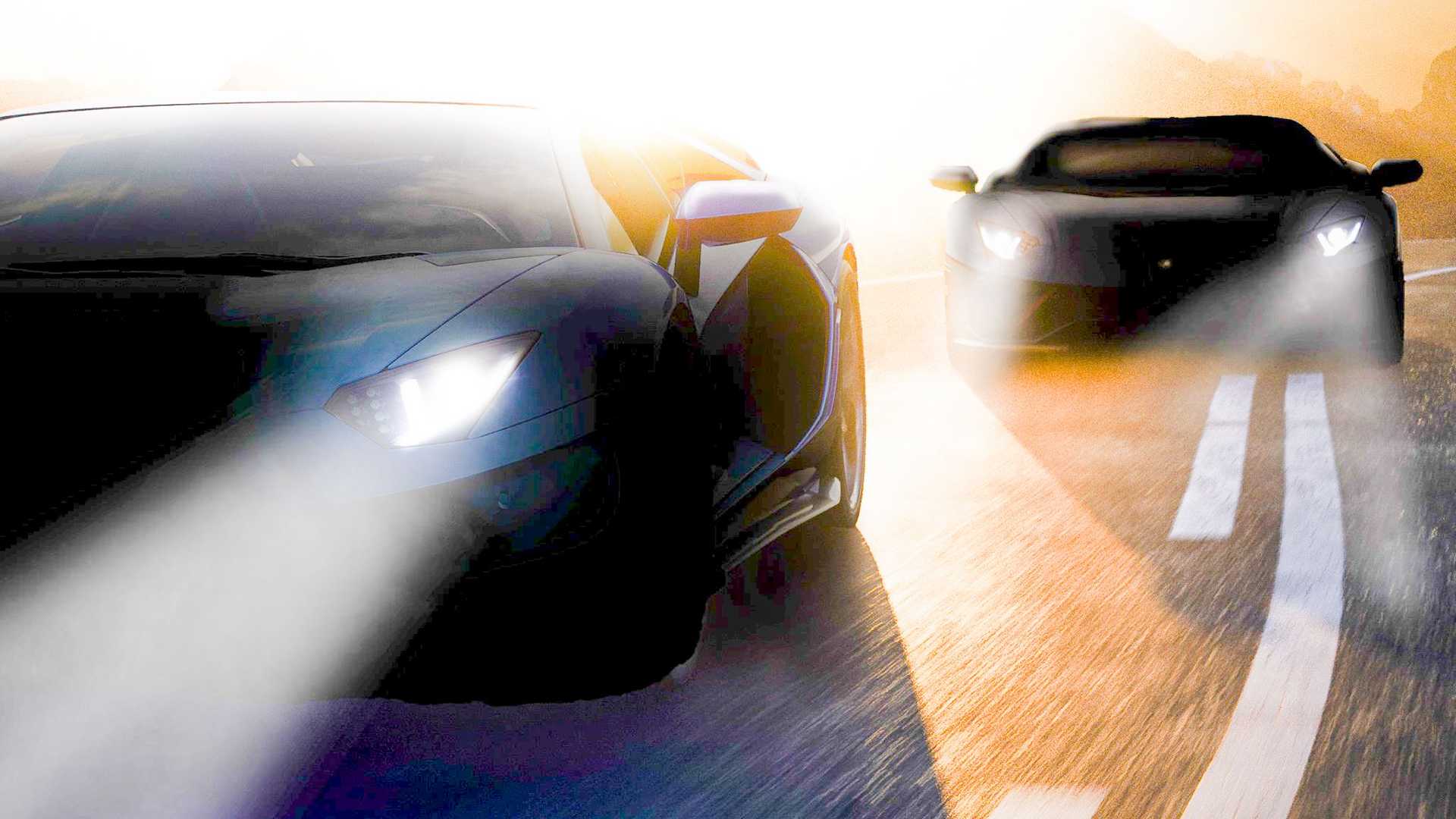
    The Lamborghini Huracan Evo RWD Spyder went on sale globally last year and is all set to hit our market on June 8, 2021. The car is powered by the same 5.2 litre V10 motor from the coupe version. It’s also the same engine that powers the regular Huracan but Lamborghini has upgraded the engine with bits like titanium valves, revised intake, and lighter exhaust. This enables the car to churn out a whopping 602 bhp and 560 Nm of peak torque although it is about 28 bhp and 40 Nm lesser than the AWD version. The engine comes mated to a seven-speed dual-clutch transmission then sends power to the rear wheels.

    Despite power and torque figures being almost identical to the RWD Coupe, the Spyder is marginally slower taking 3.5 seconds to clock triple-digit speeds, which is 0.2 seconds slower than the RWD Coupe. Then, it can clock a top speed of 324 kmph while the coupe does 325 kmph for the coupe, which is a minor difference. The Huracan also gets Lamborghini’s Aerodinamica Lamborghini Attiva, a new active aerodynamic tech allowing the car to switch between maximum downforce and low drag setups by adjusting flaps at the front and rear. This helps the car to create maximum vertical downforce. Lamborghini also says that it has specially tuned the car’s Performance Traction Control System for potent torque delivery and traction to maintain maximum agility even around corners. The carmaker claims that dynamic performance will be identical to that of the RWD Coupe.

    Now speaking about its looks, the RWD Spyder gets similar updates we already saw the RWD Coupe which also bagged our sports car of the year award. It gets a new front splitter, bespoke rear diffuser, and a new rear bumper. Compared to the RWD Coupe, the Spyder is about 120 kg heavier due to the structural updates and the mechanism for the folding soft-top roof. It takes 17 seconds to operate the roof and at speeds of up to 50 kmph. The car also sports a rear windscreen that can be raised and lowered individually.

  • Volvo Cars India To Set Up Digital Technology Hub In Bengaluru

    Volvo Cars India To Set Up Digital Technology Hub In Bengaluru

    Volvo Car India announced that it is expanding its Digital Technology Hub at Bangalore which will help strengthen its digital presence in India. The company has appointed Jonas Olsson as the Head of Digital Technology Hub with effect from June, 1 2021. Olsson comes from Volvo Group India, where he was HR Director Region APAC, and was part of the Group IT Leadership Team. His experience with Volvo Group IT spans over 20 years, with the past 15 years in India, and he has played an instrumental role in leading the set-up of Volvo Group’s IT-delivery center in Bengaluru.

    Volvo Cars India seeks to leverage on the talent available in the country, by being an attractive and inclusive employer and offering the value proposition to contribute to the organization’s journey of creating the cars of tomorrow.

    Jyoti Malhotra, Managing Director, Volvo Car India said, “Olsson’s rich experience will value add and strengthen Volvo Car India’s core strategy of going digital in all its customer offerings in the future. We welcome him in his new assignment and are confident that he will play a key role in strengthening our digital footprint in India”

  • Mercedes-Benz Introduces ‘Direct To Customer’ Retail Sales Model In India

    Mercedes-Benz Introduces ‘Direct To Customer’ Retail Sales Model In India

    Mercedes-Benz India today introduced its new retail sales model called ‘Retail of the Future’ (ROTF). With this new model, the company plans to promote a ‘direct to customer’ retail approach to creating a more customer-centric brand. To the effect, under this business model, Mercedes-Benz India will own the entire stock of cars, sell them via appointed Franchise Partners, invoice the new cars to the customers directly, process the order, and fulfill them. This would also mean that the company will offer one transparent price across India. The new retail model will be applicable only for new car sales, whereas other verticals like – customer service, pre-owned cars, and allied businesses will remain unchanged.

    Talking about the introduction of the new retail sales model, Martin Schwenk, MD & CEO, Mercedes-Benz India said, “This long-term strategic move will strengthen our customer focus by introducing a fundamental transition in the retail business in the market. It also will deliver a win-win solution for both customers and Franchise Partners, underscoring our clear vision for a future that is sustainable, empowering and digital. The advent of new sales channels has brought sweeping changes in customers’ aspirations and requirements and being a customer-obsessed brand, we have adapted our current business models to meet our customers’ aspirations and needs.”

    Commenting on Mercedes-Benz India’s new retail model, Vinkesh Gulati, President, FADA India said, “The agency model introduced by Mercedes India will be an out-of-the-box thinking by the company. Even though the model has tested waters internationally, India is a unique market where customer physic is very different as they change Dealers and even brands on any additional discount. Even though on the face of it, this model looks beneficial for the dealer community dealing in Premium Brands with low Volume but we will need to see if this model can work with mass-market brands so that every dealer can benefit from it.”

    Now, for customers, this might not be a big change. They will still have to visit the showroom or go online to purchase the vehicle, and, they will continue to the facilitated by the franchise representatives. What will change, however, is they’ll get uniform and transparent pricing, larger stock availability for choosing, and better customers service as that will become the major focus areas for dealerships. However, things will be widely different for franchise partners, the dealers, who will be operating on reduced risks and liabilities right now. A direct-to-customer retail model would mean they won’t have to worry about inventory cost, warehousing of the stockpile, which is added cost to dealers right now.

    However, this also means that dealers won’t be able to offer selective discounts or deals to attract buyers to compete with other dealers and gain more margin. Instead, now, in order to compete with other franchise partners, dealers will have to offer improved customer service, which will be measured based on what the company calls the CSI rating. In short, dealers will get commissions instead of sales margin.

    As for Mercedes-Benz India, it will be responsible for centrally managing the selling price of all new cars. The company will also be owning and managing the entire stock of new cars and will have to take care of order processing and fulfillment. This means the company will stop wholesale despatches to dealers. The company says that this new retail model will allow Mercedes-Benz to have better control over volume scalability and achieve price stability within segments. The company will also get improved forecasting with regards to the market trends and customer insight, along with better inventory management.

    Mercedes-Benz India will implement its new Retail of the Future sales model starting from the fourth quarter (Q4) of the 2021 calendar year.