Category: Automotive

Retail News Asia is committed to providing both local and global retailers with the latest Auto and Car news throughout the Asian market. This on a daily base.

  • Vietnam begins to make switch to online car sales

    Vietnam begins to make switch to online car sales

    Three auto brands have begun to sell online as they seek to take advantage of the country’s e-commerce boom.

    Since January this year customers have been able to go to the VinFast website, select the model, customize color and interiors, and indicate mode of payment.

    They can then go to the nearest showroom to complete the purchase. VinFast offers to deliver the car to the customers’ doorstep. Customers who want to pay in installments can submit their profiles online. Mercedes launched online sales March. Customers can customize their vehicles and a dealership is suggested to them. The sales procedures are however completed in person.

    TC Motor, which assembles Hyundai vehicles, last month began to allow customers to compare its cars online and see how much they cost after promotions, taxes and fees.

    Auto companies are actually late in adopting technology in sales, Nguyen Trung Kien, chief technology officer at digital marketing company Novaon MarTech, said.

    “When customers become familiar with online transactions, online sales options are inevitable.”

    It has taken a long time for auto companies to start offering online sales since theirs are expensive products and customers are used to the idea of physically touching them before making a purchase decision, he said.

    But with the development of technology, auto manufacturers could now go directly to customers and gradually cut out the middlemen, and also get to know their customers’ needs more, he added.

    But industry insiders expect it to take a long time to change customers’ preference from shopping offline for cars to online.

    “There are many perks in online shopping for cars but to make the decision customers still need to come to showrooms and see with their own eyes and touch with their own hands,” the marketing director of a Japanese auto company in Vietnam, who asked not be identified, said.

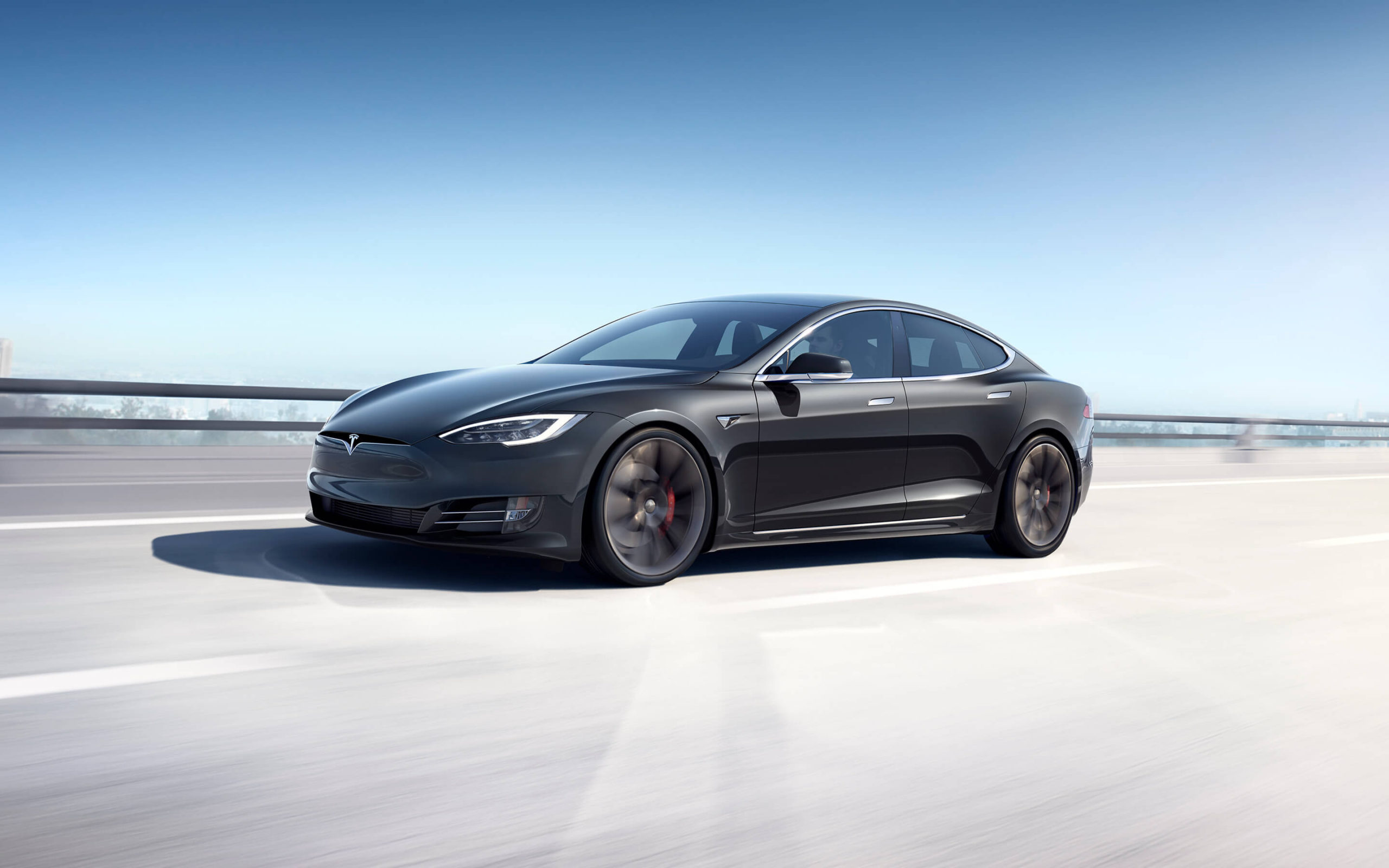
    In order to reach the same level as Tesla, meaning customers do not need to test drive the cars before making the purchase, auto manufacturers need to first create firm trust in product quality, the marketing director added.

    Auto sales in Vietnam rose 53 percent year-on-year in the first five months to 126,894 units, according to the Vietnam Automobile Manufacturers Association.

  • Honda Gold Wing Tour First Batch Sold Out In India In 24 Hours

    Honda Gold Wing Tour First Batch Sold Out In India In 24 Hours

    Honda 2Wheelers India launched the 2021 Gold Wing Tour in the country last month and the first batch of the motorcycle has been sold out. The manufacturer’s flagship offering flew off the shelves as soon as bookings opened with all units sold in just one day. Honda though has not disclosed the number of units that were allocated for India under the first batch. It’s unclear at the moment when the company plans to introduce the second batch of the tourer.

    Power on the new Honda Gold Wing Tour comes from the BS6-compliant 1833cc, in-line six-cylinder, liquid-cooled engine that develops 124.7 bhp at 5500 rpm and 170 Nm of peak torque at 4500 rpm. The motorcycle gets two transmission choices – a 6-speed manual and a 7-speed dual-clutch automatic. Colour options on the motorcycle include the Pearl Glare White as well as Gunmetal Black Metallic with Matte Morion Black.

    The feature list is comprehensive on the 2021 Honda Gold Wing Tour that is aimed to maximize comfort on the road. It gets A 7-inch TFT-screen with gyrocompass navigation, Apple CarPlay, Android Auto connectivity, upgraded audio and speaker system, and Smart Key operation. The tourer is also loaded on the safety front and packs Hill Start Assist, ABS, Honda Selectable Torque Control, Dual Combined Brake System, and Idling Stop. There are four riding modes – Tour, Sport, Rain and Econ.

    The new Honda Gold Wing Tour also received visual upgrades over the older model. This includes sharper styling, all-LED lighting, and new alloys. The bike also gets a revised pillion seat for added comfort and a bigger top box. The Gold Wing is underpinned by a die-cast, aluminum frame, and a double-wishbone front suspension along with a preload-adjustable pro-link mono-shock at the rear. Braking duties are performed by twin discs at the front and a single disc at the rear with Combined Braking System.

  • Shell Plans To Exit California Joint Venture With Exxon Mobil

    Shell Plans To Exit California Joint Venture With Exxon Mobil

    Royal Dutch Shell Plc plans to leave Aera, its California-based oil and gas-producing joint venture with Exxon Mobil Corp, four people familiar with the talks said.

    Shell has divested numerous carbon-intensive assets this year, selling its refinery in Washington state to Holly Frontier Corp and its stake in a Houston-area refining joint venture to Petroleos Mexicanos as it shifts new investments to renewables and power.

    The company is also considering a sale of its assets in the Permian Basin of Texas, Reuters previously reported.

    Aera produces about 125,000 barrels of oil and 32 million cubic feet of natural gas each day, accounting for about 25% of the state’s oil and gas production. Exxon, Occidental Petroleum Corp and others are looking to shed unwanted assets and raise cash, according to industry experts.

    Shell has notified Exxon of its plans to exit the venture, the people said, speaking on the condition of anonymity as the talks are private. A Shell spokesperson declined to comment, citing company policy.

    The joint venture, headquartered in Bakersfield, California, produces primarily in the San Joaquin Valley. Shell has previously sold all of its California oil refining operations, some of which had pipeline connections to the fields.

    California still produces roughly 360,000 barrels of oil per day even as it has introduced the most stringent state-level rules on greenhouse gas emissions. Last year, an executive order required that by 2035 all-new cars and passenger trucks sold in California be zero-emission vehicles, and that the state reduce the dirtiest forms of oil extraction.

    Oil prices have soared this year, gaining more than 50% as demand has rebounded as COVID-19 pandemic travel restrictions are lifted. The price increase has prompted many oil producers to put assets up for sale. The rush to sell is amplified by investor pressure to reduce fossil-fuel investments to stem global climate change brought by carbon emissions.

    Shell and other Europe-based oil producers such as BP Plc and TotalEnergies have pledged to lower emissions through increased investment in renewables while divesting some oil and gas holdings.

    Shell, one of the world’s largest oil companies, said this year it would aim to cut the carbon intensity of its products by at least 45% by 2035, and by 100% by 2050 from 2016 levels. A Dutch court has ruled that Shell’s efforts are not enough, ordering it to lower emissions by 45% by 2030 from 2019 levels.

    More deal-making could take place this year, with Chevron looking to shed about $1 billion of assets in the Permian Basin of Texas and New Mexico. Exxon, Occidental Petroleum Corp and others are looking to shed unwanted assets and raise cash, according to industry experts.

  • Volvo Cars To Harness Real-Time Data From Customer Cars To Set New Safety Standards

    Volvo Cars To Harness Real-Time Data From Customer Cars To Set New Safety Standards

    The next generation of Volvo cars are set to be the company’s safest ever, thanks to cutting-edge software and hardware levels, coupled with continuous and more rapid improvements to safety features with the help of real-time data. Volvo Cars has always taken a data-driven approach to safety, using traffic data from real-life situations to develop new safety technologies and make its cars even safer. For its next generation of cars, Volvo Cars is now looking towards processing data from customer cars in real-time, if customers choose to share data and help Volvo Cars make its cars safer.

    Volvo Cars and Zenseact are investing in a data factory that will contain over 200 PebiBytes (225 million gigabytes) of data within the next few years.

    By allowing customers to choose and be a part of improving safety levels and traffic safety in this way, Volvo Cars can make continuous and much faster improvements to its cars, constantly improving safety levels. This data would include continuous inputs on the car’s environment from sensors like the high-resolution LiDAR delivered by technology company Luminar.

    Volvo Cars engineers would be able to validate and verify autonomous drive (AD) features quicker, to promote a safe roll-out of AD technology. Thanks to the data generated from millions of kilometers driven by tens of thousands of Volvo drivers around the globe, engineers would be able to validate AD features for specific geographic locations much quicker than with a limited number of cars on a test track.

    Verified updates to existing systems and new features can be rolled out rapidly through over-the-air updates, increasing the safety of Volvo cars step by step. The first car to benefit from this new approach to safety development is the company’s first SUV on a completely new electric-only technology base.

    To process the real-time traffic data they will collect, Volvo Cars and Zenseact are investing in a data factory that will contain over 200 PebiBytes (225 million gigabytes) of data within the next few years. By using artificial intelligence (AI) capabilities, data can be crunched at record times. Customers will be able to choose whether this data is collected about them, and all collected data will be aggregated with adequate safeguards for customer privacy.

    Volvo Cars engineers would be able to validate and verify autonomous drive (AD) features quicker, to promote a safe roll-out of AD technology.

    The use of real-time data is part of Volvo Cars’ longer-term vision for a future where collisions simply no longer happen, by equipping its cars with some of the best sensors available and advanced, continuously improving safety and autonomous drive systems.

    Volvo Cars’ forthcoming fully electric flagship SUV will have industry-leading safety technology as standard, helping the company to save even more lives as it sets a new standard for automotive safety. It will come with state-of-the-art sensors, including a LiDAR developed by Luminar and an autonomous driving computer powered by the NVIDIA DRIVE Orin system-on-a-chip, as standard.

    By combining this state-of-the-art hardware with software by Volvo Cars, Zenseact and Luminar for the next generation of its well-established collision avoidance technology, Volvo Cars expect its new safety package to reduce fatalities and accidents as a whole.

    Over time the car will improve and have the hardware and software capabilities to allow the car to take over on its own, in case the driver does not respond in life-threatening situations after repeated warnings. So while the driver always remains in ultimate control, the car and its safety technology can both support and watch over the driver like an extra pair of eyes and brains.

  • Honda Cars India To Hike Prices Across Range From August 2021

    Honda Cars India To Hike Prices Across Range From August 2021

    Honda Cars India plans to increase the prices of its entire model range effective from August 2021. As reported by PTI, the Japanese automaker has cited an increase in input cost as the primary reason for the price hike. The carmaker looks to offset the impact of a sharp increase in the procurement cost of various essential commodities like steel and precious metals. However, the company hasn’t revealed the quantum of the hike, which is expected to vary from model to model.

    This will be the third price hike this year as the company had earlier increased prices in April because of rising input costs. In January 2021, prices of Honda cars were hiked as the company cited a rise in input costs to hike prices. The carmaker has four models in its product line-up for the Indian market, including the City and the Amaze sedan.

    Rajesh Goel, Senior VP and Director, Marketing and Sales, Honda Cars India today PTI, “The prices for raw materials like steel, aluminium and precious metals have increased sharply and many of them are at an all-time high, impacting our input costs significantly.”

    He further added that the carmaker is presently working out the details of the price hike which could be implemented from next month.

    “Our endeavour is to keep the cost of acquisition lower, so we are currently deliberating on how much of the additional cost we can absorb and how much will be inevitable to be passed on to our customers. The revised prices will be implemented from next month,” Goel noted.

    With input costs going up, Maruti Suzuki India last month announced that it would increase prices of its entire product portfolio in the second quarter of the financial year 2022. The Indo-Japanese auto major has already effected a price increase in April 2021.

  • New Recycling Techniques Set To Make Electric Vehicles Greener

    New Recycling Techniques Set To Make Electric Vehicles Greener

    Researchers in Britain and the United States have found ways to recycle electric vehicle batteries that can drastically cut costs and carbon emissions, shoring up sustainable supplies for an expected surge in demand.

    The techniques, which involve retrieving parts of the battery so they can be reused, would help the auto industry tackle criticism that even though EVs reduce emissions over their lifetime, they start out with a heavy carbon footprint of mined materials.

    As national governments and regions race to secure supplies for an expected acceleration in EV demand, the breakthroughs could make valuable supplies of materials such as cobalt and nickel go further. They would also reduce dependence on China and difficult mining jurisdictions.

    “We can’t recycle complex products like batteries the way we recycle other metals. Shredding, mixing up the components of a battery and pyrometallurgy destroy value,” Gavin Harper, a research fellow at the government-backed Faraday Institution in Britain, said.

    Pyrometallurgy refers to the extraction of metals using high heat in blast furnaces, which analysts say is not economic.

    Current recycling methods also rely on shredding the batteries into very small pieces, known as black mass, which is then processed into metals such as cobalt and nickel.

    A switch to a practice known as direct recycling, which would preserve components such as the cathode and anode, could drastically reduce energy waste and manufacturing costs.

    Researchers from the University of Leicester and the University of Birmingham working on the Faraday Institution’s ReLib project have found a way to use ultrasonic waves to recycle the cathode and anode without shredding and have applied for a patent.

    The technology recovers the cathode powder made up of cobalt, nickel and manganese from the aluminium sheet, to which it is glued in the battery manufacture. The anode powder, which would typically be graphite, is separated from the copper sheet.

    Andy Abbott, a professor of physical chemistry at the University of Leicester said separation using ultrasonic waves would result in cost savings of 60% compared with the cost of virgin material.

    Compared with more conventional technology, based on hydrometallurgy, which uses liquids, such as sulphuric acid and water to extract materials, he said ultrasonic technology can process 100 times more battery material over the same period.

    A switch to a practice known as direct recycling, which would preserve components such as the cathode and anode, could drastically reduce energy waste and manufacturing costs.

    Abbott’s team has separated battery cells manually to test the process, but ReLib is working on a project to use robots to separate batteries and packs more efficiently.

    As supplies and scrap levels take time to accrue, Abbott said he expected the technology to initially use scrap from battery manufacturing facilities as the feedstock and the recycled material would be fed back into battery production.

    In the United States, a government-sponsored project at the Department of Energy called ReCell is in the final stages of demonstrating different but also promising recycling technologies that refurbish battery cathode to make it into new cathode.

    ReCell, headed by Jeff Spangenberger, has studied many different methods, including ultrasonics, but focused on thermal and solvent-based methods.

    “The U.S. doesn’t make much cathode domestically, so if we use hydrometallurgy or pyrometallurgy we have to send the recycled materials to other countries to be turned into cathode and shipped back to us,” Spangenberger said.

    “To make lithium-ion battery recycling profitable, without requiring a disposal fee to consumers, and to encourage growth in the recycling industry, new methods that generate higher profit margins for recyclers need to be developed.”

    There are challenges for direct recycling, including continuously evolving chemistries, Spangenberger said. “ReCell is working on separating different cathode chemistries.”

    Early electric vehicle battery cells typically used a cathode with equal amounts of nickel, manganese, cobalt or 1-1-1. This has changed in recent years as manufacturers seek to reduce costs and cathode chemistries can be 5-3-2, 6-2-2 or 8-1-1.

    The approach at Faraday’s ReLib project is to blend recycled with virgin material to get the required ratios of nickel, manganese and cobalt.

  • Nissan Bets On UK ‘Renaissance’ With Battery Plant And New Vehicle

    Nissan Bets On UK ‘Renaissance’ With Battery Plant And New Vehicle

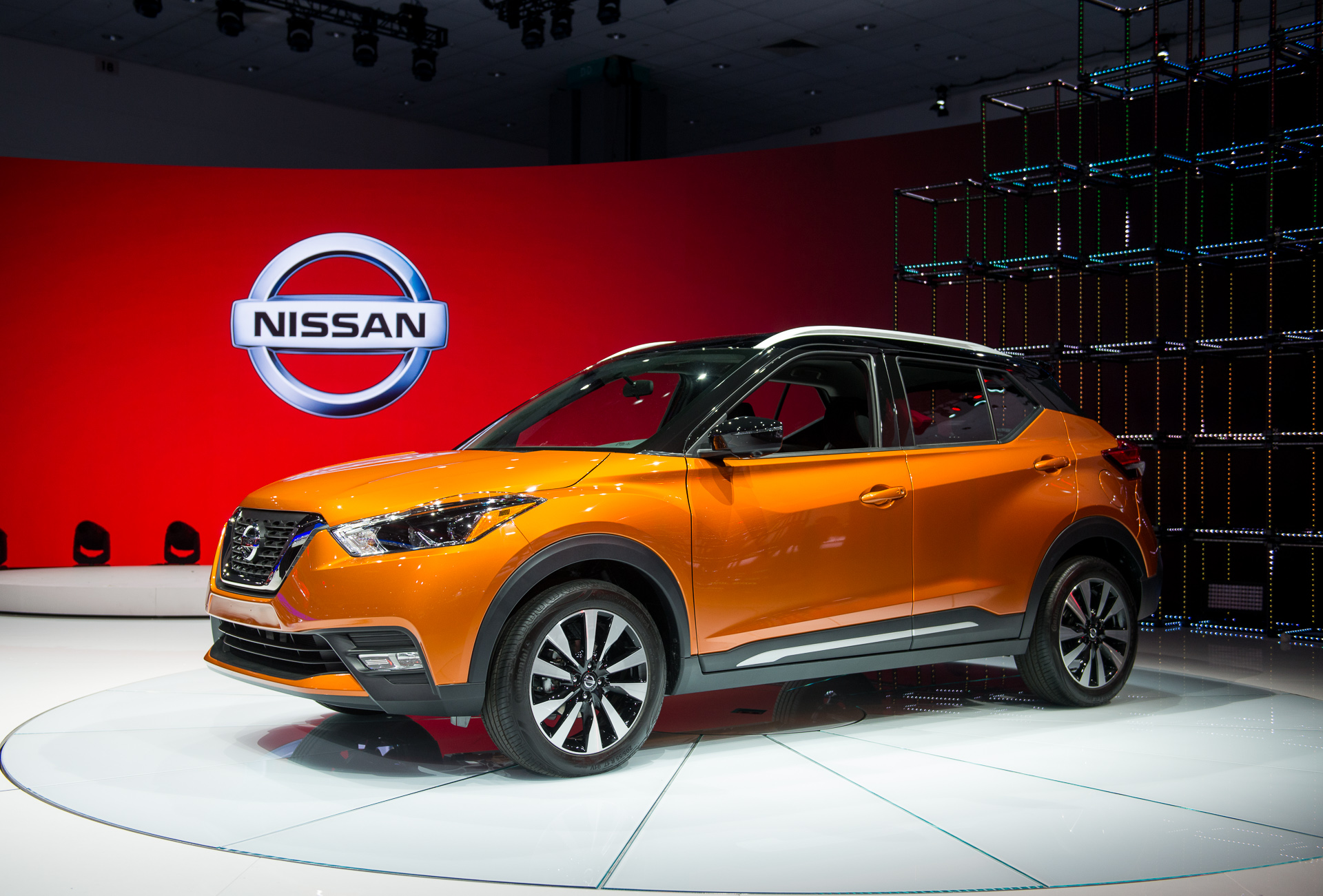
    Nissan Motor Co bet on Britain to supercharge its European electric future on Thursday, pledging $1.4 billion with its Chinese partner to build a giant battery plant that will power 100,000 vehicles a year including a new crossover model.

    Facing the most profound technological shift in a century, the titans of the auto industry are racing to secure battery supply close to the factories where they will make the new cleaner electric vehicles of the future.

    Nissan cast its backing for the 9 gigawatt-hour (GWh) plant as illustrative of rejuvenation of Britain’s automotive industry, which has for five years grappled with the fear that Brexit could cut off the rest of the European market.

    “This project is the demonstration of the renaissance of the British car industry,” Ashwani Gupta, Nissan’s chief operating officer, told reporters at the Sunderland plant, which exports 70% of its vehicles to the European Union.

    British Prime Minister Boris Johnson said Nissan’s move was “a major vote of confidence in the UK and our highly skilled workers in the North East”. Nissan said Britain had backed the plan, but did not detail any guarantees or incentives.

    The 1 billion-pound ($1.4 billion) investment by Nissan, its Chinese partner Envision AESC and local government in northeast England will create 6,200 jobs at the Sunderland plant and in British supply chains.

    Nissan will spend up to 423 million pounds to produce a new-generation all-electric crossover vehicle at the plant, where it already produces the LEAF electric vehicle and the Qashqai crossover SUV. The new vehicle has yet to be named and there is no launch date.

    As world powers try to slash carbon emissions by scrapping the fossil-fuel guzzling internal combustion engine, Britain has pledged to ban the sale of new diesel and petrol cars from 2030.

    Going electric, though, is hard.

    China dominates the production of electric vehicle batteries and the processing of the minerals used to make them, though the United States and Europe are trying to catch up.

    Western leaders, including Johnson, are loath to sacrifice hundreds of thousands of automotive jobs – often in politically sensitive constituencies – by importing batteries from China, rather than manufacturing domestically.

    And unless Britain can build both battery production and supply chains, it risks losing its four-decade reputation as the investor-friendly gateway for top companies seeking to export to the rest of Europe.

    Envision could invest an additional 1.8 billion pounds in the battery plant to expand generating capacity to up to 25GWh and create 4,500 new jobs in the region by 2030. There is potential on-site for up to 35GWh.

    “We also want to build the supply ecosystem in the country – but you do need critical mass,” Zhang Lei, Envision Group founder and chief executive, told Reuters.

    Zhang said the battery plant could supply other manufacturers and hoped that, once it expanded capacity, it would be able to export, including to Europe.

    Still, Britain is far short of the installed battery capacity it will need to power electric cars in the long term and there are risks the technology will be superseded.

    “Battery development and production is currently in a complete state of flux – chaos even,” said Bob Hancké, associate professor of political economy at the London School of Economics. “Any investment now runs the risk of closing of technologically more advanced options a few years from now.”

    Nissan said the new crossover, to be built on the Alliance CMF-EV platform shared by partners Renault and Mitsubishi, would be exported to European markets.

    Japan’s capital has used Britain as a gateway to Europe since the early 1980s, when then Prime Minister Margaret Thatcher persuaded Nissan to build a plant in Sunderland on an old airfield.

    Japanese investors worried the Brexit vote – which was particularly strong in Sunderland – would scupper their bets.

    A new trade deal agreed with the EU last year allows the free trade of cars but with a dangerous twist about rules of origin – at least 40% of the value of a car has to be produced in the United Kingdom or EU to be sold in the bloc.

    That requirement rises to 55% from 2027 – a crucial detail that would mean an imported battery, which can make up half the vehicle’s sale price, would close off the European market to British-based car factories.

    The new model takes Nissan’s total capital investment in the Sunderland plant past 5 billion pounds.

  • Suzuki Hayabusa Bookings Begin Again

    Suzuki Hayabusa Bookings Begin Again

    Suzuki Motorcycle India has reopened the bookings for the 2021 Hayabusa. The company sold out the first batch of 101 motorcycles in April 2021 in just a couple of days after opening bookings. While deliveries of the first batch have already begun, the company says that the second batch of the Hayabusa is likely to come to India in August 2021. The motorcycle was showcased in a new-generation avatar last year and made its way to India earlier this year. The new-gen Suzuki Hayabusa is priced at ₹ 16.40 lakh.

    The new Hayabusa gets comprehensive updates for the first time in 13 years. The bike now features improved aerodynamics, as well as an updated electronics suite too. It gets a 1,340 cc, four-stroke, fuel-injected, liquid-cooled, DOHC, inline-four engine which makes 187 bhp at 9,700 rpm and 150 Nm of peak torque at 7,000 rpm. Top speed is still rated at 299 kmph and kerb weight sees a marginal drop of 2 kg to 264 kg.

    Along with the updated engine, the motorcycle also gets a wide variety of electronic rider aids and a six-axis inertial measurement unit (IMU). The USP is the Suzuki Intelligent Ride System (S.I.R.S) under which you get three riding modes and three user-defined modes, with different settings for traction control, anti-lift control, engine brake control and so on.

  • Volvo And Google Extend Partnership For VolvoCars.OS

    Volvo And Google Extend Partnership For VolvoCars.OS

    Volvo and Google have announced that they are extending their partnership for Android Automotive which will not hook into a new user experience that the Swedish brand is developing called VolvoCars.OS. VolvoCars.OS uses an assortment of operating systems be it Android Automotive, QNX, and Linux. But the big deal is that it will hook into the cloud, or Android Automotive in its electric cars, and will also have a new front end for in-car displays.

    This is a more integrated approach mirroring what Google is doing with its other platform – wearOS on the smartwatch platform which is now merging with Samsung’s Tizen OS or even on the phone with its partnership with Reliance Jio in India for the Jio Phone Next. It is integrating more closely with OEMs and creating a more unique and customized experience.

    Of course, on the car, especially on Volvo’s cars, which are known the world over for their safety. This new UI is going to optimize safety. As always, this starts with a high-resolution infotainment screen and even a heads-up display, and everything will be available through voice, embedding the Google Assistant at the heart of the experience. Volvo and Google are already doing this, but what they will probably end up making is something more unique for Volvo than something stock that makes every Android Automotive car feel the same.

    “Our teams have spent a lot of time with Google to further develop and improve our user experience for the next generation of Volvo Cars,” said Henrik Green, chief technology officer, Volvo.

    “Especially in terms of safety, serenity, and simplicity, we have made great strides thanks to a deeper integration of design and technological development. We are convinced that it will allow us to create even better Volvo cars and set a new industry standard,” he added.

    Of course, these cars will also integrate better with mobile phones and the phone will act like a key leveraging a car key feature that Google unveiled at Google IO earlier this year. Volvo will also have an app that will connect you to everything else that comes with owning a modern electric car, the company claims in an official release.

    It is building features for paying for charging and connecting the with home devices and also pre-cooling and preheating the vehicle remotely. All these cars will also support OTA updates, but that’s something that has become a standard-issue these days with connected cars.

  • Volkswagen Polo GTI Facelift Unveiled

    Volkswagen Polo GTI Facelift Unveiled

    Now before getting into the details of the new Volkswagen GTI facelift, let us tell you how these official pictures of the 2021 model year surfaced online. So we actually don’t know whether it is one of Volkswagen’s marketing strategies, or Ralf Brandstatter – CEO, Volkswagen Passenger Cars got so excited by looking at these official pictures of this new hot hatch, that he couldn’t help sharing them on his linked in profile. Yes! This is how the range-topping 2021 Volkswagen Polo GTI was unveiled, almost two years after the global debut of the line-up.

    In terms of design, the new GTI gives you exactly what you expect of a facelift as the changes remain subtle and it’s a predictable evolution if you will. It gets fully redesigned headlights along with the slim DRLs extending to the new grille, just like the Golf GTI. Then, there are wider taillights and the overall design has been spruced up with the usual red accents, dual exhaust tips, and a honeycomb grille. It also sports chunkier two-tone alloy wheels with upgraded brakes featuring red calipers and other sporty elements include contrasting black mirrors and roof.

    On the inside, it gets VW’s Discover Pro and Discover Media systems as optional, and the car also receives Volkswagen’s new ‘digital cockpit’ dashboard setup, as used by the Golf and ID 3. Other elements include a 9.0-inch touchscreen unit, panoramic sunroof, voice control, wireless charging, Beats sound system, and 18-inch alloy wheels. In the safety department, the new Polo gets Volkswagen’s Travel Assist system for the first time, which includes adaptive cruise control, lane assist, side assist and rear traffic alert. Autonomous emergency braking is also standard, as is a driver alert system and automatic post-collision braking.

    The new Polo GTI also comes with three driving modes – Eco, Normal and Sport with the last one tuned for enhanced exhaust note. The Polo GTI also gets a bespoke, performance-oriented chassis tune, lowering the body by 15 mm compared with the standard Polo and adding a large stabilizer on the car’s front axle, rigid coupling rods at the front and stiffer axle-locating mounts at the rear. Now Brandstatter is promising a powerful TSI engine under its hood, but mechanical details are not confirmed yet. We expect it to feature the same 2.0-litre, four-cylinder Turbo TSI motor tuned for optimum performance and it should come with the options of both six-speed manual and DSG transmission. Talking about the India context, the new Volkswagen Polo GTI is based on the sixth-generation Polo and both models are not likely to join VW India’s line-up anytime soon.

  • Energica Unveils Liquid-Cooled Electric Motor

    Energica Unveils Liquid-Cooled Electric Motor

    Italian electric motorcycle manufacturer Energica has joined hands with Italian engineering company Mavel, to co-design a new liquid-cooled electric motor that will be used in Energica’s upcoming electric motorcycle range. Called the EMCE (Energica Mavel Co-Engineering), the new liquid-cooled powertrain increases peak power to 126 kW (169 bhp), compared to the outgoing unit’s figures of 110 kW (147 bhp). The motor also offers an increased range by 5-10 percent, while decreases overall weight by as much as 10 kg. The new motor will be used in the firm’s electric motorcycle models for the 2022 model year.

    “The introduction on the market of the new EMCE engine was scheduled for release in 2022, but following the difficulties of our supply chain – due to the global pandemic situation – we decided to anticipate this timing and instead, in just 6 months we have developed this co-engineering with Mavel, into our current model year production,” said Giampiero Testoni, CTO of Energica.

    According to Energica, the new motor features innovative rotor and stators’ geometries that minimize energy losses and maximize performance. The innovative and patented cooling of the rotor is capable of generating an internal flow of air that laps the magnets and cools them. This allows the engine to exploit its potential even at high speeds. According to Energica, the new EMCE powertrain will be introduced in electric motorcycles in Europe later this year, followed by the US, and then Asia. Energica however, doesn’t have a presence in India yet.

  • Canoo Reveals Renders Of Manufacturing Campus In Oklahoma, USA

    Canoo Reveals Renders Of Manufacturing Campus In Oklahoma, USA

    Canoo, the electric car startup which went public recently via a SPAC merger has shared renders of its manufacturing campus that will be built in Oklahoma. Canoo calls it the mega micro-factory and it is scheduled to be opened up in 2023. In the Tulsa region, it is expected to create more than 2000 jobs. Canoo recently lost both its co-founders, with one, Ulrich Kranz, who led the development of BMW’s i3 and i8 electric cars and then moved to Faraday Future has joined Apple. In fact, Canoo was of great interest to Apple with the company interested in its skateboard. But Apple being Apple wanted to acquire Canoo while the team at Canoo wanted to retain its independence.

    “Oklahoma has always been a pioneer in the energy industry, and this partnership with Canoo shows that our state is an innovation leader in electric vehicle technology,” said Governor Stitt.

    “We are thrilled to partner with Canoo and Chairman & CEO Tony Aquila to provide high-paying jobs for Oklahomans and position America as the global leader for vehicle manufacturing for decades to come,” he added.

    It is developing an all-purpose delivery van and a modular pickup truck. It has a 400-acre campus which will be Tulsa. In a tweet, Canoo shared a 55-second video showcasing the concept design of the campus that it will start building soon.

    As per the tweet, it is right now in a design phase and remains on track to be up by 2023. It expects the facility to be over 1 million square feet. It plans on beginning production and delivery of its first vehicles by Q4 2022 with the help of a third-party manufacturer.

    “We invested millions of dollars to find the right location for our manufacturing facility. We’re proud to be American-made and to bring more than 2,000 jobs to Oklahoma,” said Tony Aquila, Investor, Chairman & CEO, Canoo, Inc.

  • Nissan Will Build The First EV Factory In UK

    Nissan Will Build The First EV Factory In UK

    Japanese automotive giant Nissan will be making the first battery facility in the UK as per Sky News. The factory is slated to open in Sunderland in 2024 and is expected to produce batteries in 200,000 electric cars every year. Nissan will be partnering with Chinese specialist Envision AESC to build the batteries. It will produce 6 gigawatts of battery capacity per year which is far more than 1.9-gigawatt-hours of capacity that an existing Envision AESC Sunderland plan has. Of course, all of this is made to look tiny compared to what Tesla has in the US with the 35-gigawatt hour Gigafactory in Nevada.

    Of course, the cost is in the hundreds of millions and the British government will be contributing to the cost. The cost, however, is not known.

    “It is hoped the new plant will be producing batteries in time for 2024 when the level of UK-made components in UK-made cars is required to start increasing in line with the terms of the UK’s trade deal with the European Union – where most of Nissan’s Sunderland-assembled cars are sold,” reported the BBC.

    “Industry sources expect the scale and size of the new facility may closely match that of a new facility in Douai, France, recently announce by Renault – which is a major shareholder in Nissan and a partner in a global manufacturing alliance,” the report added.

    Nissan of course is known for the Leap EV which is also made in Sunderland. It could be there is a new electric car launch on the cards.

  • EU Extends Investigation Into Samsung’s EV Battery Plant In Hungary

    EU Extends Investigation Into Samsung’s EV Battery Plant In Hungary

    EU competition enforcers have extended a near two-year investigation into Hungarian state aid for South Korean manufacturer Samsung SDI Co Ltd’s electric vehicle (EV) battery factory after Hungary submitted new data to back its case.

    Samsung SDI, an affiliate of South Korean tech giant Samsung Electronics Co Ltd, began production at the Hungarian plant in 2018, making batteries for 50,000 EVs a year.

    The European Commission opened an investigation in October 2019 to assess whether Hungary’s plans to grant 108 million euros ($128.5 million) in state aid complied with the bloc’s competition rules.

    “Hungary now argues that Samsung could have benefited from an investment grant and a tax exemption in an alternative location outside the EU, which would have increased the viability of the alternative location with respect to Hungary,” the Commission said.

    It said Budapest has also produced new documentary evidence to show that Samsung’s search for a location for the plant had also included a number of new production facilities in Europe and an alternative location in a less developed region in the EU.

    Extending the EU investigation will allow third parties to comment on the Hungarian aid.

    Earlier this year, Samsung said it would invest 942 billion won ($849 million) to expand the plant.

  • Porsche Cayenne Turbo GT Breaks Cover

    Porsche Cayenne Turbo GT Breaks Cover

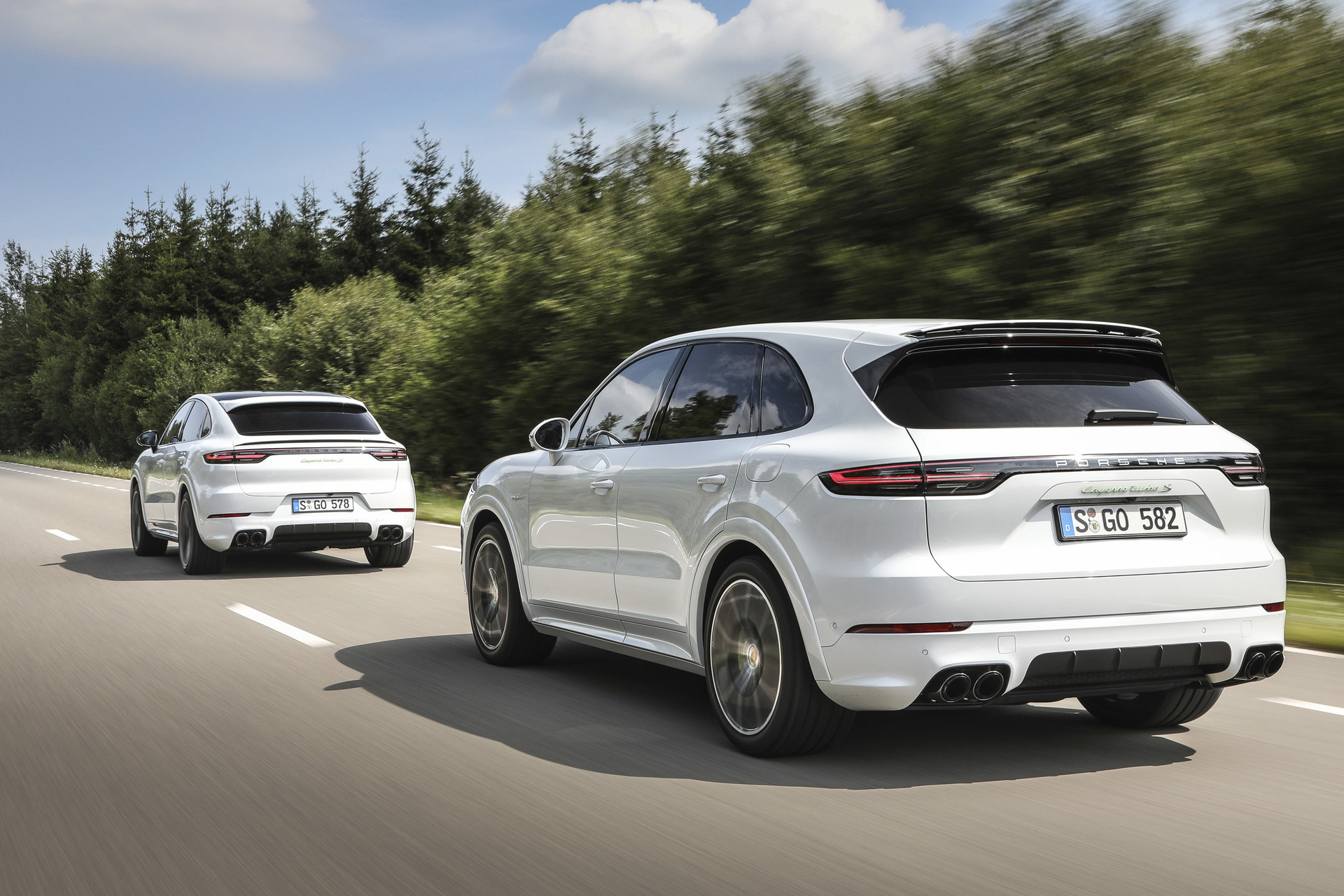
    Porsche has revealed the new Cayenne Turbo GT and yes, it looks absolutely stunning. But let’s directly talk about the engine. The Cayenne Turbo GT gets a 4-litre biturbo V8 which pushes out 632 bhp and 850 Nm of torque. The Cayenne GT Turbo gets 90 bhp more power and an increase of 80 Nm as well compared to the Turbo Coupe. The 0-100 kmph sprint takes 3.3 seconds (0.6 s less than Turbo Coupe ) and top speed is now 300 km/h (an increase of 14 kmph). With even sportier lines and available exclusively as a four-seater Coupé, the Cayenne Turbo GT comes with all available chassis systems fitted as standard and performance tyres developed specially for this model.

    The powertrain and chassis also have a unique set-up specifically tuned for the Cayenne Turbo GT. This has been proven by Porsche test driver Lars Kern, who lapped the 20.832 km Nurburgring Nordschleife with the Cayenne Turbo GT in a time of 7:38.9 minutes, setting a new official SUV record.

    Compared to the Cayenne Turbo Coupé, the Turbo GT rides up to 17 millimeters lower. Based on this, both the passive chassis components and active control systems have been re-engineered and optimized for handling and performance. They also feature specific calibration to guarantee perfect interaction between them. As an example, the rigidity of the three-chamber air suspension has been increased by up to 15 percent, and the damper characteristics of the Porsche Active Suspension Management (PASM) as well as the application of the Power Steering Plus and rear-axle steering have also been adapted. The Porsche Dynamic Chassis Control (PDCC) active roll stabilisation system now operates with performance-oriented control software.

    The result is even better roll stability as well as more precise turn-in behavior at higher cornering speeds. In line with this, the Porsche Torque Vectoring system allows higher torque bias ratios. The comprehensively optimized front axle also improves handling. Compared to the Turbo Coupé, its front wheels are an inch wider and the negative camber has been increased by 0.45 degrees to give the new 22-inch Pirelli P Zero Corsa performance tyres, specially developed for the Turbo GT, a larger contact patch. Braking duties are performed by the standard-fit Porsche Ceramic Composite Brake (PCCB) system.

    The faster-shifting eight-speed Tiptronic S and the Porsche Traction Management (PTM) system have also been modified. There is also additional water cooling for the transfer case. The standard sports exhaust system, with its central tailpipes, is unique to the Cayenne Turbo GT. From the middle of the vehicle, the exhaust system, including the rear silencer, is made from lightweight and particularly heat-resistant titanium. An additional weight saving is achieved through the omission of the centre silencer.

    Optionally available with paintwork in the new Arctic Grey color, the Cayenne Turbo GT gets a GT-specific front apron with striking spoiler lip and enlarged side cooling air intakes, which create a unique front view. A contoured carbon roof and black wheel arch extensions, together with 22-inch GT Design wheels in Neodyme, dominate its side view. The carbon side plates fitted lengthwise to the roof spoiler are GT-specific, as is the adaptively extendable rear spoiler’s lip, which is 25 mm larger than that fitted to the Turbo. This increases downforce at the car’s top speed by up to 40 kilograms. The rear view is rounded off by a striking diffuser panel made of carbon.

    Inside you get eight-way adjustable sport seats and each come GT-specific with perforated seat centre panels in Alcantara, contrast accents in Neodyme or Arctic Grey and ‘turbo GT’ lettering on their headrests. With the Turbo GT, Porsche also brings in the next-generation Porsche Communication Management (PCM) system. PCM 6.0 is fully compatible with Apple CarPlay but now also allows for in-depth integration of Apple Music and Apple Podcasts. In addition, the infotainment system now also includes Android Auto, which means that all popular smartphones can now be integrated.