Category: Automotive

Retail News Asia is committed to providing both local and global retailers with the latest Auto and Car news throughout the Asian market. This on a daily base.

  • Ride-hailing firm Grab to launch electric cars in Vietnam

    Ride-hailing firm Grab to launch electric cars in Vietnam

    Ride-hailing firm Grab plans to launch electric car services in Vietnam and Indonesia after piloting a program in Singapore at the end of this year.

    Grab is partnering with South Korea’s automotive manufacturer Hyundai Motor to encourage the adoption of electric vehicles in Southeast Asia.

    Both parties will test new business models including battery and electric vehicles leasing, thus lowering the entry barrier for its driver as the cost to own an electric car is high.

    Grab had said in an earlier report that some of the concerns that make drivers reluctant to use electric vehicles are their price, lack of charging stations and long waiting time for the battery to be fully charged.

    Russell Cohen, Grab’s managing director of operations, said that the company hopes governments will have incentive policies and essential infrastructure like charging stations so that electric vehicles will have many opportunities to develop.

    Grab and Hyundai have been partners since 2018. In 2019, the ride-hailing firm purchased 200 Hyundai Kona electric cars for its car-hiring service GrabRentals in Singapore.

  • Tesla Owner Gets Ticket For Parking At GM Plant

    Tesla Owner Gets Ticket For Parking At GM Plant

    In a crazy incident, a Tesla owner was fined with a parking ticket at a GM plant in Wentzville in the US. Apparently, the parking ticket was issued as the attendant thought the vehicle was not an American car. In many American factories, they have dedicated parking lots for brand-owned vehicles, foreign vehicles and made-in-America vehicles. In the case of this parking lot, it was just meant for American vehicles but the attendant didn’t realise the Model 3 in question was as American as a car gets.

    The car was parked in the lot which was meant for non-GM vehicles, so the mistake was quite clear, but regardless the news of this ticket was quite surprising. GM even bothered to comment on the situation.

    “Wentzville, like many of our manufacturing sites, has a parking policy and designated parking locations for GM vehicles, non-GM domestic vehicles and foreign nameplates. Plant security inadvertently thought the Tesla was a foreign car and wrote a ticket accordingly,” the Detroit based automaker revealed.

    The Model 3 is the best-selling electric car in the world. It is also the best-selling executive sedan in the world. It was also voted most American-made vehicle by cars.com’s American-made index just last week.

    In fact, the Model 3 has more American DNA than even GM’s vehicles including the Chevrolet Colorado and GMC Canyon which are manufactured at the Wentzville assembly plat. This ticket was revealed on a Facebook group called Useless, Unsuccessful and/or unpopular signage and has gone viral since.

  • Apple Car Team Rejigged Again

    Apple Car Team Rejigged Again

    The one thing that the Apple Car project at the legendary company has lacked is consistent management. After more changes late last year, a slew of executives left the Cupertino-based giant earlier this year revealed a report by Bloomberg. Three top members of the tear Benjamin Lyon, Jaime Way, and Dave Scott left, but Apple has made amends by hiring some more people like Ulrich Kranz who helped BMW make the i3 and i8 and was more recently the co-founder of Canoo.

    Apple has promoted Hanns Teppeiner, who was the co-founder and former president of robotic toy car startup Anki that was even featured by Apple at WWDC 2013. Similarly, Tim Cheng, formerly of Drive.Ai, a self-driving company Apple acquired two years ago has also been promoted.

    Apple also recently hired Hans Lee, the co-founder of Freedom Robotics which creates software to control fleets of robots. Martin Levihn, who now leads AI-based decision-making for self-driving cars has also been promoted. Apple also promoted Paul Costa who has been a longtime Apple hardware engineer.

    Day-to-day operations of the Apple Car project is run by Doug Fields who was a VP at Tesla for the Model 3’s development.  He spent five years at Telsa before returning to Apple where he used to be the VP for Mac hardware engineering. Before Apple, he used to be the CTO at Segway. He reports to Apple’s AI boss John Giannandrea who joined Apple previously in 2018 from Google. Giannandrea was handed reigns of the project from Bob Mansfield, an Apple veteran and a trusted confidant of Steve Jobs who used to run hardware engineering, before Dan Riccio.

    Bob Mansfield had retired but was pulled out of retirement by Tim Cook to run the project, but he has retired again and this time around it seems like it is for good. Recently at a conference, Tim Cook eluded to keep some secrets when asked about the Apple Car. In the past, he has called the self-driving car the mother of all AI projects.

  • Honda’s First All-Electric SUV To Be Called Prologue

    Honda’s First All-Electric SUV To Be Called Prologue

    Honda today announced that its first new mass-market battery-electric vehicle will be called Prologue, signaling a new electrified era that will lead to the company’s vision for 100% zero-emission vehicle sales in North America by 2040. An all-new SUV coming to market in early 2024, the battery-electric Honda Prologue will be, according to the company ‘highly competitive’ but specific details about the new vehicle will be released over the coming months.

    In addition to the Honda Prologue, the company will introduce an all-electric Acura SUV in the 2024 calendar year. Both will utilize the highly flexible global EV platform powered by Ultium batteries based on the company’s strategic partnership with General Motors. Honda also plans to launch a new series of EV models in the second half of the decade based on a new e:Architecture, with development led by Honda.

    In April 2021, Honda global CEO, Toshihiro Mibe, announced a vision to achieve carbon-neutrality for its products and corporate activities by 2050, including key targets for sales of electrified vehicles. This vision calls for the sales ratio of battery-electric and fuel cell electric vehicles in North America to progress from 40% by 2030 and 80% by 2035 to 100% by 2040.

    Honda has a long history in bringing electrified vehicles to market in the U.S., beginning almost a quarter-century ago with the EV Plus electric vehicle (1997); to America’s first hybrid, the Honda Insight (1999); the Honda FCX (2002), the industry’s first fuel cell vehicle in the hands of individual customers, and the Clarity series (2017). As Honda prepares for the launch of Prologue, the company will introduce hybrid-electric systems to more core models to continue to reduce CO2 emissions and bridge customers to the volume of battery-electric vehicles now in development.

  • Chinese EV Battery Maker CATL Extends Deal With Tesla

    Chinese EV Battery Maker CATL Extends Deal With Tesla

    Chinese electric vehicle battery maker CATL said on Monday it has extended a battery supply deal with U.S. EV maker Tesla Inc to 2025.

    Ningde-based CATL said in a stock exchange filing that it would supply battery cells to Tesla, which is making Model 3 sedans and Model Y sport-utility vehicles in Shanghai, until December 2025.

    Other Tesla battery suppliers include Panasonic Corp and LG Energy Solution.

  • Chinese Automaker Geely Auto Scraps STAR Market Listing Plan

    Chinese Automaker Geely Auto Scraps STAR Market Listing Plan

    China’s Geely Automobile Holdings Ltd said on Friday it is dropping plans to list new shares on the mainland’s Nasdaq-like STAR Market.

    Zhejiang-based Geely Auto, China’s highest-profile automaker thanks to parent Zhejiang Geely Holding Group’s investments in Daimler AG and Volvo Cars, is listed in Hong Kong with a market capitalization of HK$255 billion ($32.85 billion).

    In September, Geely Auto said in a filing that it planned to raise 20 billion yuan ($3.10 billion) from the STAR Market listing.

    Geely Auto is aiming to sell over 1.5 million vehicles this year. It also said would seek external funding for its newly-launched electric Zeekr brand.

    In February, Geely Auto said it abandoned the merger plan with sister company Volvo Cars.

  • China’s Automaker Great Wall Aims To Sell 4 Million Cars In 2025

    China’s Automaker Great Wall Aims To Sell 4 Million Cars In 2025

    Great Wall Motor is targeting an annual sales of 4 million vehicles in 2025, Chairman Wei Jianjun said on Monday, as China’s top pickup truck maker sees an increase in the demand for leisure use.

    Great Wall’s revenue is expected to reach 600 billion yuan ($92.86 billion) in 2025, Wei said in a briefing on the company’s strategy at its headquarters.

    Great Wall, which sold 1.1 million cars last year, aims for 80 percent of its annual sales in 2025 to be new energy vehicles, including battery-electric, plug-in hybrid, and hydrogen fuel cell vehicles.

    It targets to sell 2.8 million cars in 2023 with a product lineup of more than 60 models, Meng Xiangjun, a senior executive at Great Wall said.

    China, the world’s largest auto market, rolled out supportive policies for hydrogen fuel-cell vehicles last year, which require local governments and companies to build a more mature supply chain and business model for the industry.

    Baoding-based Great Wall is building a car plant in China with BMW for electric vehicles. The company plans to be carbon-neutral in 2045, earlier than China’s overall target of 2060.

    Great Wall, which competes with Geely and BYD, is also planning to manufacture cars in Russia and Thailand.

  • Toyota-Backed Self-Driving Startup Pony.ai Considers Going Public

    Toyota-Backed Self-Driving Startup Pony.ai Considers Going Public

    Self-driving tech company Pony.ai, backed by Toyota Motor, is considering going public in the United States to help fund its goal of commercializing driverless ride-hailing services, its chief executive said. The startup, active in the United States and China, plans to install its technology in hundreds of vehicles next year, rising to tens of thousands in 2024-2025, he said.

    Self-driving startups such as Alphabet Inc’s Waymo and General Motors Co’s Cruise have been racing to raise capital as the industry prepares to scale up operations.

    Still, beyond the time taken to address technological challenges and the massive cost of producing self-driving cars, the industry still has to persuade global regulators as well as the public as to the safety of full automation.

    “For autonomous driving, it’s a big opportunity. But at the same time, it’s a long-term, big opportunity,” CEO James Peng said in an interview with Reuters.

    “So it requires a long lead way for spending. That means all the autonomous driving companies need to raise enough funding to support their operations,” he said.

    The comments come as Pony.ai on Friday said it had tapped Lawrence Steyn, vice chairman of investment banking at JPMorgan Chase & Co, as chief financial officer to help “accelerate its commercial growth and global deployment”.

    “We’re still debating and considering,” said Peng, when asked about the time frame for a public share sale.

    “It’s just a different way of raising funds.”

    Pony.ai, founded by former Google and Baidu Inc engineers Peng and Lou Tiancheng in 2016, has so far raised more than $1 billion, including $462 million from Toyota, valuing the startup at $5.3 billion as of late last year.

    Earlier this month, it said it had begun driverless testing on public roads in California’s Fremont and Milpitas ahead of the planned launch of a robotaxi service next year. It has also been testing driverless vehicles in Guangzhou, China.

    The firm has operated robotaxi services with safety drivers behind the wheel in some parts of China, as well as in Irvine, California. That has yielded diverse data which it could use to train its driver system and tap a talent pool in both countries, Peng said.

    He said the next big challenge is to reduce manufacturing costs for driverless vehicles while expanding into more cities and regions and ensuring safety in different environments.

  • Lucid Air Reveals It Has Over 10,000 Reservations For Its First Car

    Lucid Air Reveals It Has Over 10,000 Reservations For Its First Car

    Lucid Motors has revealed that now it has 10,000 reservations for the Lucid Air, the electric car which many believe is going to be the first credible rival to the Tesla Model S. These numbers may not blow your mind but considering the vehicle is from a rather small company and the vehicle is quite expensive at upwards of $70,000 going all the way to $169,900 for the Dream Edition. Lucid Motors has faced some delays with production by now Peter Rawlinson, Lucid’s CEO and the former head of the Tesla Model S project has revealed that these issues are ending. Rawlinson has revealed that it is now producing quality validation prototypes in its factory in Arizona and is on track to start deliveries.

    ” We achieved a landmark last Friday when we started building our quality validation production run of cars. We completed our pre-production run very successfully. The quality validation builds are the cars that we eventually will sell directly to customers once we got the quality right. This is a big step in our mission to industrialize,” he said.

    Rawlinson is indicating that the first deliveries of the vehicle will happen in the second half of the year stating that the top-of-the-line Dream Edition will launch first. The dream edition will have over 809 kilometers of range and over 1000 bhp making it the chief rival to the Tesla Model S Plaid.

  • Car imports from China up 6.5-fold

    Car imports from China up 6.5-fold

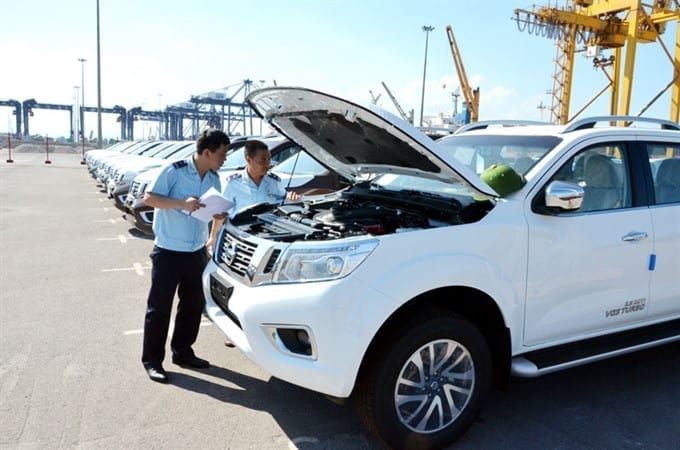
    Vietnam imported 9,400 vehicles from China in the first five months of the year, 6.5 times higher than in the same period last year, according to the customs department.

    Of them, nearly 5,600 were special purpose vehicles and 2,840 were trucks, with passenger cars accounting for the rest.

    China remained the third-largest source of vehicles for Vietnam behind Thailand and Indonesia.

    Thailand dominated with 33,140 vehicles, double the figure from the same period last year, and Indonesia accounted for 18,340 units, up 16.2 percent, with the two accounting for 80 percent of imports.

    Under the ASEAN Trade in Goods Agreement that took effect in 2018, import tariffs on vehicles within the bloc are zero.

    Vietnam’s imports jumped by 78 percent to over 65,700 units.

    Auto sales rose 53 percent to 126,894 units, according to the Vietnam Automobile Manufacturers Association.

  • Porsche Setting Up Battery JV With Customcells For An EV Future

    Porsche Setting Up Battery JV With Customcells For An EV Future

    Porsche has made waves around the world with its Taycan and Taycan Cross Turismo EVs which have been dubbed as the most driver-centric EVs in the world, more so than even Tesla’s groundbreaking vehicles. To further an electrified future, like all things Volkswagen group, it is forming a joint venture with Customcells that will create high-performance batteries that will significantly reduce charge times.

    Like Porsche, Customcells is also a German company hailing from the Southern German region specializing in lithium-ion batteries aiming to create packs that have higher energy density than what Porsche is already using in cars like the Taycan.

    More importantly, it is part of a broadened push towards enhancing the battery supply chain in Europe which is currently dominated by Asia. The Volkswagen group has been making huge investments in this space as the EU has stricter emissions norms which means European manufacturers have to go green faster than automakers around the world.

    One of the keys to achieving better battery efficacy is enhancing the energy density which in turn results in less raw material being used. It will also cut battery production costs and help make electric cars more affordable.

    As a part of the JV, Porsche doesn’t disclose its investment but does say it is a number upwards of 10 million Euros and it holds an 80 percent stake in the venture. The production facility in the equation will have an aim to deliver 100 kWh of capacity which could service about 1000 cars per year. This is a tie-in from what Porsche chief executive officer Oliver Blume said in April which was indicative of the legendary German sports cars marquee ramping up its e-mobility plans for a German factory in Tuebingen for battery production. It so happens this JV with Customcells is based in Tuebingen.

    Porsche parent, Volkswagen has even broader plans of building 6 battery cell plants across Europe and expand its infrastructure for the charging of electric vehicles.

  • Carmakers In Chennai Allowed To Operate At Full Capacity

    Carmakers In Chennai Allowed To Operate At Full Capacity

    Global carmakers such as Renault-Nissan, Hyundai Motor and Ford Motor Co may operate with their full workforces in India’s automaking hub from Sunday, despite worker protests over safety in the pandemic. Tamil Nadu state, one of the country’s worst-hit, allowed industrial units with export commitments to operate at 100% capacity, boosting its flourishing automobile industry.

    New cases in the state have fallen from more than 30,000 a day in May to about 8,000 but still account for one-seventh of all cases in India, which is second only to the United States in total infections.

    Renault-Nissan Fights Court Battle With Indian Workers On Operations During COVID-19 Surge

    “Any company which exports or supplies to export-oriented industries will be allowed to operate at full capacity as cases have come down,” a senior state government official said.

    An Indian court tasked industrial safety officials this month with visiting carmakers in the southern state to draw up uniform safety guidelines.

    The Madras High Court was responding to a case filed last month by workers at the Indian unit of the French-Japanese alliance of Renault SA Nissan Motor.

    They asked for operations to be halted, saying social distancing norms were being flouted and the risk to their lives outweighed the health benefits provided by the company.

    Labour unions for global carmakers have written letters of protest, arguing that hundreds of workers in the automaking hub of Chennai have fallen ill with COVID-19 and dozens have died. Ford and Hyundai also halted work at their plants last month after workers protested and some went on strike

  • New Harley-Davidson Electric Motorcycle To Be Called LiveWire One

    New Harley-Davidson Electric Motorcycle To Be Called LiveWire One

    It was a few months ago that ‘LiveWire’ was turned into a standalone electric vehicle sub-brand of Harley-Davidson. Now, VIN filings with the National Highway Traffic Safety Administration (NHTSA) have revealed that the next electric motorcycle from Harley-Davidson will be called LiveWire One. It is likely to be revealed on July 8, 2021. The documents also reveal that the LiveWire One will have a power output which is equivalent of 101 bhp. The LiveWire One will have an internal code name, which is ‘XB’ while the model code will be LW1. Another fascinating fact is that the first-ever Harley-Davidson motorcycle was called the Model One. So, the reference to ‘One’ could be a throwback to Harley’s century-old legacy.

    While Harley-Davidson did not update the LiveWire for 2021 in USA, it did so for the model sold in Australia and the power output dropped from 103.5 bhp to 101 bhp, which is similar to the data found in the NHTSA VIN filings. So, in all probability, we will see a slightly updated/restyled version of the original LiveWire electric motorcycle, which was launched in 2019. The documents also reveal that the new Livewire One will be considered a 2021 model, despite being introduced in the middle of 2021.

    The original LiveWire gets Harley-Davidson’s full-electric Revelation powertrain which used to put out 103.5 bhp of power and 116 Nm of instant torque. The LiveWire had claimed acceleration from 0 to 100 kmph in just 3 seconds and roll-on acceleration from 100 kmph to 129 kmph in 1.9 seconds. The LiveWire is loaded with electronics, which includes cornering ABS, cornering enhanced traction control, rear-wheel lift mitigation, as well as a drag-torque slip control system that manages rear wheel slip and prevents rear-wheel lock due to the regenerative braking.

    A 4.3-inch full-color TFT touchscreen panel offers the rider controls to seven riding modes, including four pre-programmed modes – Road, Rain, Sport and Range. Additionally, there are three more fully customizable modes, where the power (maximum rate of acceleration), regeneration (braking effect when off-throttle), throttle response, and traction control settings can be fully customized.

    While we would love to see the new LiveWire One being launched in India, Harley is likely to consider the same next year.

  • Elon Musk Considers Tesla Making An HVAC To Advertise Car Air Purification Systems

    Elon Musk Considers Tesla Making An HVAC To Advertise Car Air Purification Systems

    Elon Musk often does weird things and the latest one is him considering making a Tesla-branded HVAC system leveraging the work Tesla has done to develop one for its cars. He also believes the system is so good that it could act as an advertisement for the system that Tesla has implemented in its cars which breaks his no-ad rule.

    Tesla was one of the first car manufacturers to improve the air quality inside the car. It was one of the first to implement a HEPA filter into the HVAC system of its higher-end electric cars. Tesla claims the system can theoretically remove 99.97 percent of the dust, pollen, mold, bacteria, and airborne particles which are of the size of 0.3 microns. All these things, the Tesla HVAC systems handle very well.

    While talking up the HVAC system on the new Model S and also talking about an update that’s inbound for the HVAC system which makes it more silent Musk also talked about how it could be scaled up for home use.

    “Oh man, home HVAC that is super energy efficient, quiet & purifies the air would be great. We developed it for the car, but it can be scaled up for home use,” said the billionaire.

    This is not the first time Musk has talked up the HVAC. He once claimed it was 10 times better than one on any other non-Tesla car. “Most people have no idea just how good the Tesla air purification system is. Literally, 10X better than any other car. Maybe we should advertise informationally just so people know stuff like this exists,” he said a while ago.

  • BMW And Volkswagen Join Quantum Technology Consortium

    BMW And Volkswagen Join Quantum Technology Consortium

    BMW and Volkswagen have joined the Quantum technology consortium which features 10 German corporations that strive to develop quantum computing applications for vehicles. The Quantum technology and application consortium (QUTAC) will develop further the fundamentals of quantum computing and applications that could be used in the automotive space.

    The founding members of this consortium include BASF, BMW, Boehringer, Ingelheim, Bosch, Infineon, Merck, Munich Re, SAP, Siemens and Volkswagen Group.

    “It is clear to the BMW Group that quantum computing is a pioneering technology that holds great potential for a multitude of applications – from materials research to battery cell chemistry and the future of automated driving using quantum machine learning,” says BMW’s Frank Weber.

    “This technology is at an early stage of development and we want to provide the best possible support for cutting-edge research and its transfer into industrial applications,” he added.

    The stimulus and future package that the German government has released accommodates for a boost in the development of Quantum Computer technology. The intent is to work together, identify, develop, run trials and share new-age applications. Applications could be developed for logistics, transport, chemicals and the financial sector which these German corporations can explore. The results and decisions that the consortium comes up with are intended to benefit all participants in the ecosystem, especially in Germany. The QUTAC has to set forth specific steps – which includes the need for the identification of quantum computing in the German economy, and the identification of applications and their implantation at an industrial scale.