Category: Automotive

Retail News Asia is committed to providing both local and global retailers with the latest Auto and Car news throughout the Asian market. This on a daily base.

  • BMW Group Invests In Innovative Method For CO2-Free Steel Production

    BMW Group Invests In Innovative Method For CO2-Free Steel Production

    The BMW Group announced that it is investing in an innovative method for CO2-free steel production developed by American startup Boston Metal, through its venture capital fund, BMW i Ventures. Over the coming years, Boston Metal plans to expand the new method for steel production on an industrial scale. The investment is part of the BMW Group’s far-reaching sustainability activities aimed at significantly reducing CO2 emissions across the supplier network.

    With its versatile properties, steel is one of the most important materials in car production and will be no less important for future vehicle generations. Even with the dynamic ramp-up of electromobility, steel will remain an important building material for car bodies and many components. BMW Group press plants in Europe process more than half a million tonnes of steel per year.

    The blast furnaces used in conventional steel production generate carbon dioxide. The startup Boston Metal uses electricity for its new technology, which, by means of an electrolysis cell, produces molten iron that is later processed into steel. If electricity from renewable energies is used for this process, then steel production is carbon-free. The young company will build demonstration facilities for this process over the next few years and further develop it for use on an industrial scale.

    The BMW Group established close contact with Boston Metal already last year in the context of its own research activities and through the BMW Startup Garage. The company is now investing in the startup as part of its i Ventures activities.

    To safeguard reserves of raw materials, the BMW Group has set itself the goal of further increasing its percentage of recycled raw materials, so-called secondary material, by 2030 and using raw materials multiple times in a circular economy.

    All steel waste produced at the press plants – for example, when doors are punched out – is either reused through a direct material cycle or sent back to the steel producer via steel traders and processed into new steel. The use of secondary material reduces CO2 emissions substantially compared to primary material, conserves natural resources and also reduces the amount of energy needed for production.

  • Volkswagen To Cut Up To 5,000 Jobs

    Volkswagen To Cut Up To 5,000 Jobs

    Carmaker Volkswagen plans to cut up to 5,000 jobs in Germany by offering early or partial retirement to older employees in a move that could cost 500 million euros ($598 million), the Handelsblatt newspaper reported on Sunday.

    The newspaper quoted a spokeswoman confirming that the company had agreed on the plan with the works council to open partial retirement to those born in 1964, while also offering early retirement to older employees.

    Handelsblatt cited company sources as saying Volkswagen was putting aside 500 million euros for the plan as it would compensate the employees who leave by topping up their pension, although it would save billions in the longer term.

    The newspaper said Volkswagen is also extending a hiring freeze until the end of the year. It had previously only been in place until the end of the first quarter. External hires can only be made in areas like information technology and software.

    The Volkswagen Group said in January it would cut overhead costs by 5% and procurement costs by 7% over the next two years.

  • Kia Teases Its First Dedicated Electric Vehicle The EV6

    Kia Teases Its First Dedicated Electric Vehicle The EV6

    Kia has revealed the first official images of the EV6 – its first dedicated battery electric vehicle. Now, we have to tell you here that it’s not the company’s first EV, because if you remember, it already has the e-Niro and the Soul EV in its all-electric portfolio. The EV6, however, is built on a platform that has been developed specifically for electric vehicles. The new platform Electric-Global Modular Platform, or E-GMP, will see Kia build next-generation electric cars under a new design philosophy that embodies Kia’s shifting focus towards electrification.

    The teaser images give us an idea of what to expect in terms of design. It is sleek and the coupe-like roofline integrates well into the rear spoiler. The silhouette also points out at a slight ducktail too. The front end is sleek and modern and it looks like the EV6 has a short overhang. The headlights are slim and the LED pattern gives it a unique look.

    Karim Habib, Senior Vice President and Head of Kia Global Design Centre said, “EV6 is the embodiment of both our brand purpose, ‘Movement that inspires’, and our new design philosophy. It has been designed to inspire every journey by offering an instinctive and natural experience that improves the daily lives of our customers, and provide user ownership that is simple, intuitive, and integrated.”

    As part of the company’s brand transition, Kia’s new dedicated battery electric vehicles will be named according to a new naming strategy. All of Kia’s new dedicated BEVs will start with the prefix ‘EV’ which makes it easy for consumers to understand which of Kia’s products are fully electric. This is followed by a number that corresponds to the car’s position in the line-up.

  • Harley-Davidson To Follow Used-Car Model To Woo Young Riders

    Harley-Davidson To Follow Used-Car Model To Woo Young Riders

    Harley-Davidson is looking to increase focus on the used motorcycle market in the United States, in the brand’s latest efforts to increase customer base. And to do this, Harley-Davidson plans to roll out a certified pre-owned bike program, known as H-D Certified, to position well-tended bikes as a substitute for entry-level models.

    The strategy is similar to what carmakers have been following to position well-maintained used vehicles as a substitute for low-margin, “entry-level” new models. The used bikes program is part of a new five-year turnaround strategy outlined by new Harley-Davidson CEO Jochen Zeitz, part of the latest efforts to expand the brand’s appeal beyond middle-aged and affluent riders.

    The 118-year-old American brand has been steadily losing market share in the brand’s domestic US market amid declining retail sales for six years. Harley-Davidson’s latest five-year plan has been dubbed “The Hardwire” and under the new plan, Harley is following a “70-20-10” structure, with 70 percent of its efforts going to the core business, 20 percent into expansion into new segments that offer clear potential for more profit, and 10 percent for testing ideas for long-term growth, including plans for smaller displacement models in new markets, like in China, with the Qianjiang Group, and in India, with Hero MotoCorp.

  • Maruti Suzuki Records 19.3% Production Growth In February 2021

    Maruti Suzuki Records 19.3% Production Growth In February 2021

    Maruti Suzuki India has announced production figures for the month of February 2021. India’s leading carmaker said its total production increased by 19.3 percent to 1,68,180 units in February against 1,40,933 units produced in the same month last year. The numbers recorded last month are slightly better than what the automaker posted in February 2020. The total number of passenger vehicles manufactured last month were 1,65,783 units in comparison to 1,40,370 units in the corresponding month last year, witnessing a growth of 18 percent.

    The Indo-Japanese carmaker manufactured 1,60,975 units in January 2021 as against 1,68,180 units, witnessing a marginal month-on-month (MoM) growth of 4 percent. The production of mini hatchbacks – Alto and S-Presso in February 2021 decreased marginally by 4 percent to 28,213 units as compared to 29,676 units produced in the same month last year. However, compact vehicles such as WagonR, Celerio, Swift, Dzire, Ignis, Baleno, and the Glanza saw production growth of 21.22 percent with 91,091 units against 75,142 units manufactured a year ago. The Maruti Suzuki Ciaz compact sedan saw a decline in production by 34.13 percent to 1,943 units as compared to 2,950 units manufactured in February 2020.

  • Volvo Cars Reports 29.1% Sales Growth In The First Two Months Of 2021

    Volvo Cars Reports 29.1% Sales Growth In The First Two Months Of 2021

    Volvo Cars’ global sales performance remained strong in February after the company posted a 29.1 percent growth for the first two months of the year, compared with the same period last year. Total sales during the period amounted to 110,383 cars as US, Europe and China reported a growth in volumes. The sales increase was driven by an ongoing recovery from the Covid-19 pandemic in China compared to last year, a solid performance on the US market, and increased sales in Sweden.

    For the month of February, Volvo Cars sold a total of 50,795 cars, up 27.8 percent compared to the same month last year and the company’s best February sales performance ever.

    For the month of February, Volvo Cars sold a total of 50,795 cars, up 27.8 percent compared to the same month last year

    Its Recharge line-up of chargeable models, with a fully electric or plug-in hybrid powertrain, continued to grow in popularity among customers and accounted for 26.6 percent of all Volvo cars sold globally in February. In Europe, Recharge cars represented 44 percent of the overall sales volume.

    In China, Volvo Cars sold 29,243 cars in the first two months, up 160.6 percent year-on-year, as the company managed to more than recover lost sales due to Covid-19 shutdowns last year.

    US sales continued to grow year-on-year and reached 17,315 cars in January and February, up 23.7 percent compared with the same period last year. The strong increase was led by the brand’s premium SUVs which accounted for 80 percent of total sales. The company’s European sales grew 5.5 percent in the first two months of 2021 to 48,784 cars, compared to the same period last year, driven mainly by increased sales in Sweden.

  • Porsche Introduces 2 New e-Bikes

    Porsche Introduces 2 New e-Bikes

    We all knew Porsche as the carmaker but now the company is expanding its range of e-mobility products by introducing 2 new ebikes. Available in Europe for now, the Porsche eBike Sport and the Porsche eBike Cross are the first e-bikes from the carmaker. The full-suspension carbon frame featuring an organic shape inspired by the lines of the Porsche Taycan, the powerful, latest-generation Shimano motor and the Magura high-performance brakes are just three of the features that ensure top performance. Both models were developed in collaboration with eBike expert Rotwild and are manufactured in Dieburg, Germany.

    The Porsche eBike Sport is perfect for daily rides, whether in the city or countryside, on the way to work or enjoying some free time. The new, powerful and ultra-compact Shimano EP8 motor, which provides motor support up to 25 kmph, and Shimano electronic gear shifting system guarantee optimum performance.

    Thanks to the Magura high-performance brakes that are integrated into the handlebars, the Porsche eBike Sport has a clean and compact cockpit. The elegant and puristic design is emphasized by M99 LED lights from lighting specialist Supernova, which are embedded in the handlebar stem and aerodynamic seat post. In addition, high-quality suspension components such as the Magura upside-down suspension fork and the Fox rear shock absorber, in combination with smooth-running tires, provide a sporty and balanced ride on asphalt or gentle terrain.

    The Porsche eBike Cross is at home in the countryside, off the beaten path and away from roads. The powerful motor, newly developed by Shimano, demonstrates its full ability in difficult terrain and delivers maximum performance while maintaining a natural riding sensation. The Magura-MT Trail high-performance brakes have extra-large, heat-resistant brake discs that ensure optimum deceleration, while the mechanical Shimano XT 12-fold shifting system enables fast gear changes according to the rider’s needs and the terrain.

    The hydraulically adjustable Crankbrothers Highline seat post ensures the seat can be quickly adjusted to varying degrees in order to find the perfect position. The ergonomically designed handlebars guarantee full control at all times. They feature the Shimano color display, which shows not only speed but also distance and range in real-time. The clean design is rounded out by a full-suspension carbon frame, which perfectly combines the spirit of adventure with style.

    Both models were inspired by the sporty character of the Porsche Taycan. The wheels draw inspiration from the naturally shaped carbon frame of the vehicle’s fly line. The elaborate design, developed by Studio F. A. Porsche, ensures optimum reflection of light.

  • All-New Suzuki Hayabusa Teased For India, Launch Soon

    All-New Suzuki Hayabusa Teased For India, Launch Soon

    The all-new Suzuki Hayabusa finally broke cover last month and it turns out the new offering will come to India sooner than we were expecting. Suzuki Motorcycle India has released a teaser video on its social media handles for the new Hayabusa with the caption, “The ultimate superbike, coming soon.” It is likely that the all-new superbike will arrive in India in the next quarter of the year, and will be one of the first markets outside Japan to get the offering. It needs to be noted that India was one of the last markets globally where the second generation Hayabusa was sold before the model had to be pulled off the shelves with the transition to BS6 emission norms.

    The third-generation Suzuki Hayabusa has seen a comprehensive overhaul over its predecessor. The model gets a revised twin-spar aluminum frame and swingarm. The design language is an evolution over the older model and makes it instantly recognizable. There are plenty of changes including the new LED position lights on either side of the headlamp, new DRLs and air intakes on the side. The fairing has been completely revised and gets larger air scoops, while the LED taillight is all-new as well.

    Power on the 2021 Suzuki Hayabusa comes from the 1340 cc, liquid-cooled, DOHC, 16-valve, in-line four-cylinder engine. The motor has been thoroughly updated for Euro5 compliance. There are new internal components including an exhaust header pipe, optimized cam profiles, 1 mm education in throttle body inner diameter and a 12 mm extension in the overall intake pipe. While Suzuki says that the engine’s performance has been improved, power figures have seen a reduction with the model now producing 187 bhp at 9700 rpm and 150 Nm of peak torque at 7000 rpm. The motor is paired with a 6-speed gearbox. Compared to the second-gen model, the new Hayabusa is lighter by 4 kg but still tips the scales at 264 kg (kerb).

  • VinFast to produce batteries for electric cars in Vietnam

    VinFast to produce batteries for electric cars in Vietnam

    Automaker VinFast has signed a memorandum of understanding on strategic cooperation with Taiwan’s ProLogium Technology Co.. Ltd. on production of batteries for electric cars in Vietnam.

    Under the MoU signed Wednesday, the two parties will set up a joint venture to manufacture solid-state batteries for electric cars. The joint venture will be licensed to use ProLogium’s patented solid-state battery pack assembly technology.

    This is a strategic step for VinFast in mastering battery technology for electric vehicles, laying a foundation for its research and development of smart and advanced electric vehicles in the future.

    Founded in 2006, ProLogium is the world’s leading solid-state battery maker. In 2017, ProLogium became the first company in the world to have a test line for solid-state battery technology for automotive applications.

    Its solid-state batteries have passed safety tests in Europe and China, which are the world’s largest electric vehicle markets.

    It is also cooperating with large electric cars manufacturers to test a new battery technology and expects to deploy it for mass-production in 2023-2024.

    By using solid-state batteries, VinFast electric cars will be able to go longer distances, reduce charging time, and increase the total number of times they can be charged.

    VinFast’s partnership with ProLogium is a part of its plan to become a global smart electric car brand.

    In January, VinFast introduced three new electric self-driving car models. It is also setting up electric charging stations nationwide, aiming at 40,000 charging ports for electric bikes and cars by the end of 2021.

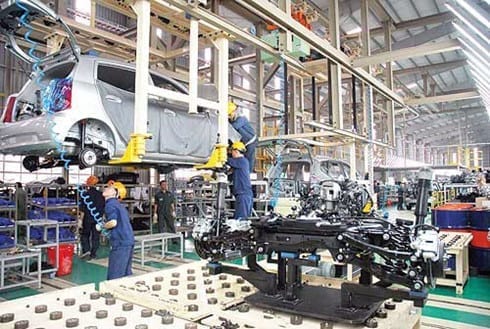
    VinFast sold 31,500 cars in Vietnam last year. Since entering the auto industry three years ago the company now has a plant in the northern province of Hai Phong and R&D centers in Australia, Germany and the U.S.

  • Jaguar I-Pace India Launch Rescheduled, Dealer Network Gets Charging Stations Ahead Of Launch

    Jaguar I-Pace India Launch Rescheduled, Dealer Network Gets Charging Stations Ahead Of Launch

    The Jaguar I-Pace was originally scheduled for launch on March 9. However, the company has now announced that the wait will be a tad longer by a few weeks with the launch rescheduled to March 23, 2021. The I-Pace will be India’s second luxury electric offering after the Mercedes-Benz EQC and is likely to be priced around ₹ 1 crore (ex-showroom) mark. On the bright side, Jaguar Land Rover India also announced that 22 of its dealerships across 19 cities are ready with charging stations to support the brand’s first electric offering.

    JLR India says the retailer charging infrastructure extensively covers the metro cities and key urban hubs across the country. In addition, the dealer staff has been trained by the automaker on EVs, which enable them to answer all queries and concerns of the customer.

    Rohit Suri, President & Managing Director, Jaguar Land Rover India said, “Electric Vehicles will not just be a new mobility solution, but owning one will also be a new ownership experience. We recognise this and have worked relentlessly with our Retailers to ensure that owning an EV is truly a hassle-free experience for our customers.”

    At present, about 35 EV chargers have been installed at JLR dealerships pan India and the company is in the process of installing more. In addition, the Jaguar I-Pace can be charged Tata Power’s EZ Charge Network with over 200 charging points across the country located at malls, residential complexes and highways. In addition, Jaguar India will set-up a 7.4 kW AC wall-mounted charger for customers using a domestic charging cable.

    The Jaguar I-Pace marks a new era for the automaker, which plans to go all-electric by 2025. The model will be powered by twin electric motors developing 394 bhp and 696 Nm of peak torque. The range stands at 480 km on a single charge from the 90 kWh lithium-ion battery. 0-100 kmph comes up in 4.8 seconds. The electric offering will be available in three variants – S, SE, and HSE.

  • Ford recalls nearly 2,500 vehicles to update engine software

    Ford recalls nearly 2,500 vehicles to update engine software

    Ford Vietnam has issued a recall order of 2,470 Ranger and Everest vehicles to update the software in the transmission control module (TCM) and powertrain control module (PCM).

    The recall program will begin on March 16 this year and last until March 15, 2023.

    The affected vehicles were produced between September 2019 to February 2020 in Thailand and imported by Ford Vietnam for distribution in the local market.

    According to the company, the issues could cause problems for transmission oil pumps, which can lead to torsional vibrations while the engine accelerates and decelerates and lead to transmission malfunction, increasing the risk of collision.

    Authorized dealerships will provide free inspection and repair and the whole process will take about two hours to complete.

    Ford Vietnam said it will still carry out the replacement for drivers of Ford Ranger and Ranger Raptor models imported to the country by the Ford Motor Company.

    Ford sold 24,663 vehicles last year, accounting for 8.7 percent of total car sales, according to the Vietnam Automobile Manufacturers Association.

  • Volkswagen’s Market Value Crosses 100 Billion Euro Mark For The First Time Since 2015

    Volkswagen’s Market Value Crosses 100 Billion Euro Mark For The First Time Since 2015

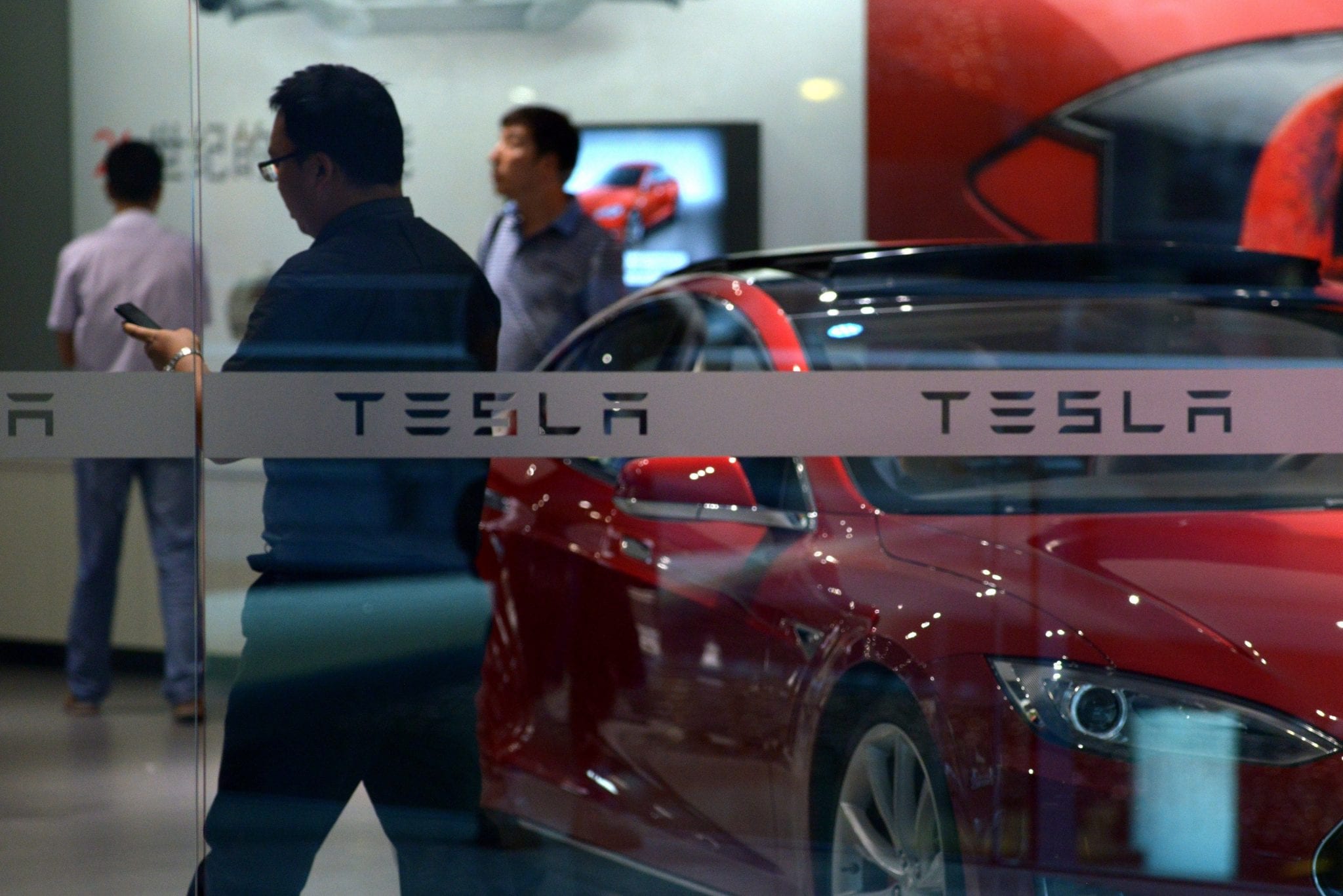
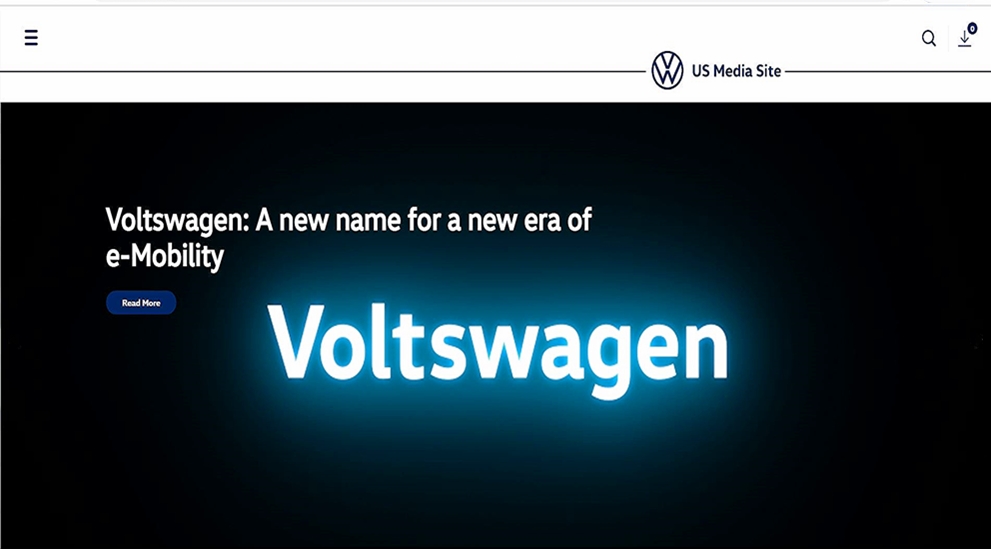
    When the market value of Germany’s Volkswagen briefly rose above the 100-billion-euro mark on Wednesday for the first time since 2015, the boss of the normally staid carmaker took to Twitter, Elon Musk-style, to crow about it.

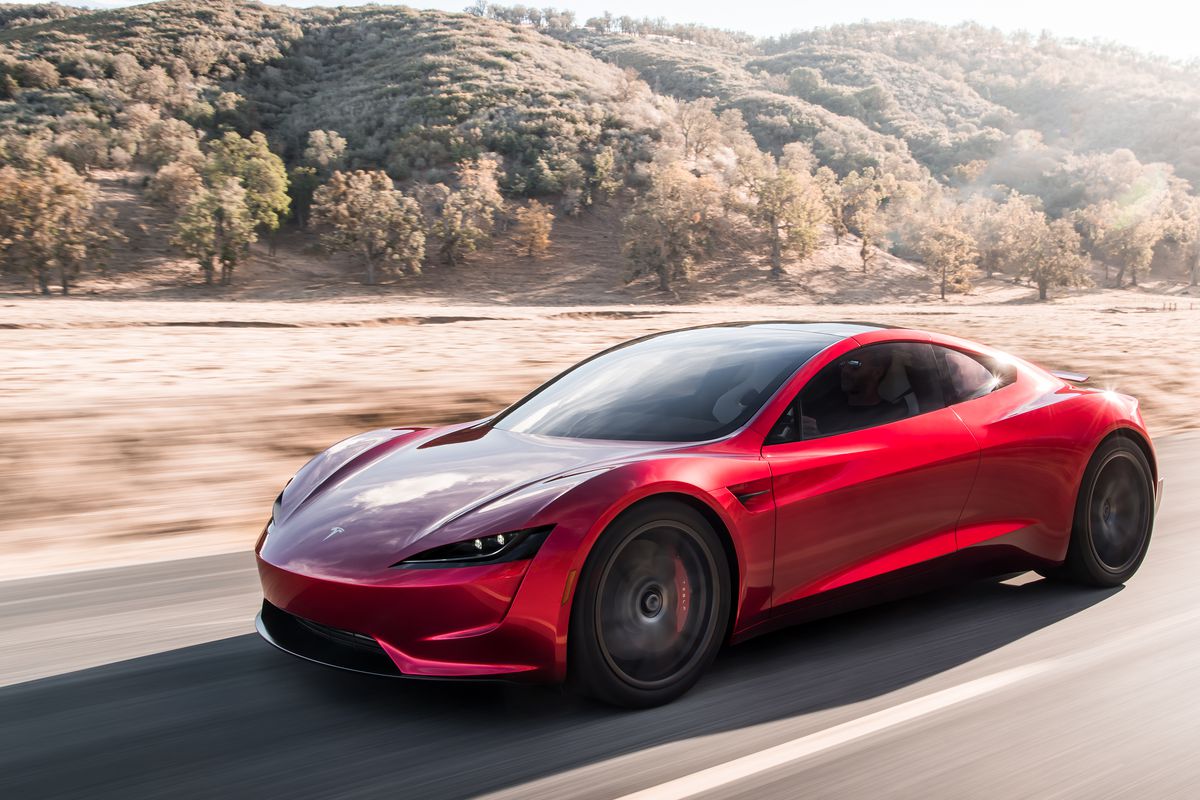
    VW shares soared as much as 6% after investment bank UBS raised its price target on the stock by 50% and said the company’s new electric vehicle platform was set to challenge Tesla’s dominance in the battery electric vehicle (BEV) market.

    Herbert Diess, chief executive of VW Group, highlighted the UBS note on Twitter and shared the market capitalization milestone.

    “The market has been waiting for our #BEV-ramp-up and wanted to see some proof points,” Diess posted.

    Traders reacted with comparisons to Tesla chief Elon Musk who frequently uses Twitter to talk up products developed by his companies, cryptocurrencies or other buzzing technologies.

    The comparison, at least for now, must end there.

    Diess sent his first tweet using the “@Herbert_Diess” handle less than two months ago and has since tweeted 51 times. While he has managed to amass almost 25,000 followers in this time, Musk can boast of 48.3 million.

    “The sheer fact that he started his own account apart from the official VW account tells me, that between the lines he wants to express: We are here,” a Germany-based trader said.

    Though unrelated and more a market-moving tweet, another trader highlighted instances of a probe by the U.S. Securities and Exchange Commision on Musk’s tweet in 2018 that he was considering taking Tesla private at $420 a share.

    But despite recent share price gains — up 20% this year — VW’s market capitalization is just one-sixth that of Tesla. Shares trade 7.5 times 12-month forward earnings; possibly its role in the EV transition is not fully priced.

    Despite recent share price gains – up 20% this year – VW’s market capitalisation is just one-sixth that of Tesla

    Tesla meanwhile trades at 160 times 12-month forward earnings, levels many consider bubble-like.

    On the market capitalization gap, UBS said VW’s only takes into account its EV business out to 2025, and doesn’t price its cash flow-rich legacy business, indicating there is room for the share price to rise.

    It added that VW would likely “master” the transition to close the volume gap with Tesla in 2022.

    At 300 euros, UBS has the most bullish price target on VW. Analysts’ median price target on its shares was 191 euros, according to Refinitiv data.

    Preferred shares, which are listed in Germany’s benchmark DAX index, hit January 2018 highs on Wednesday, while ordinary shares rose as much as 5.6% to their highest since July 2015, two months before the diesel scandal broke.

    VW closed 4.7% higher at 185.18 euros per share on the day, taking its market value to 99 billion euros.

  • GM Extends Vehicle Production Cuts Due To Semiconductor Chip Shortage

    GM Extends Vehicle Production Cuts Due To Semiconductor Chip Shortage

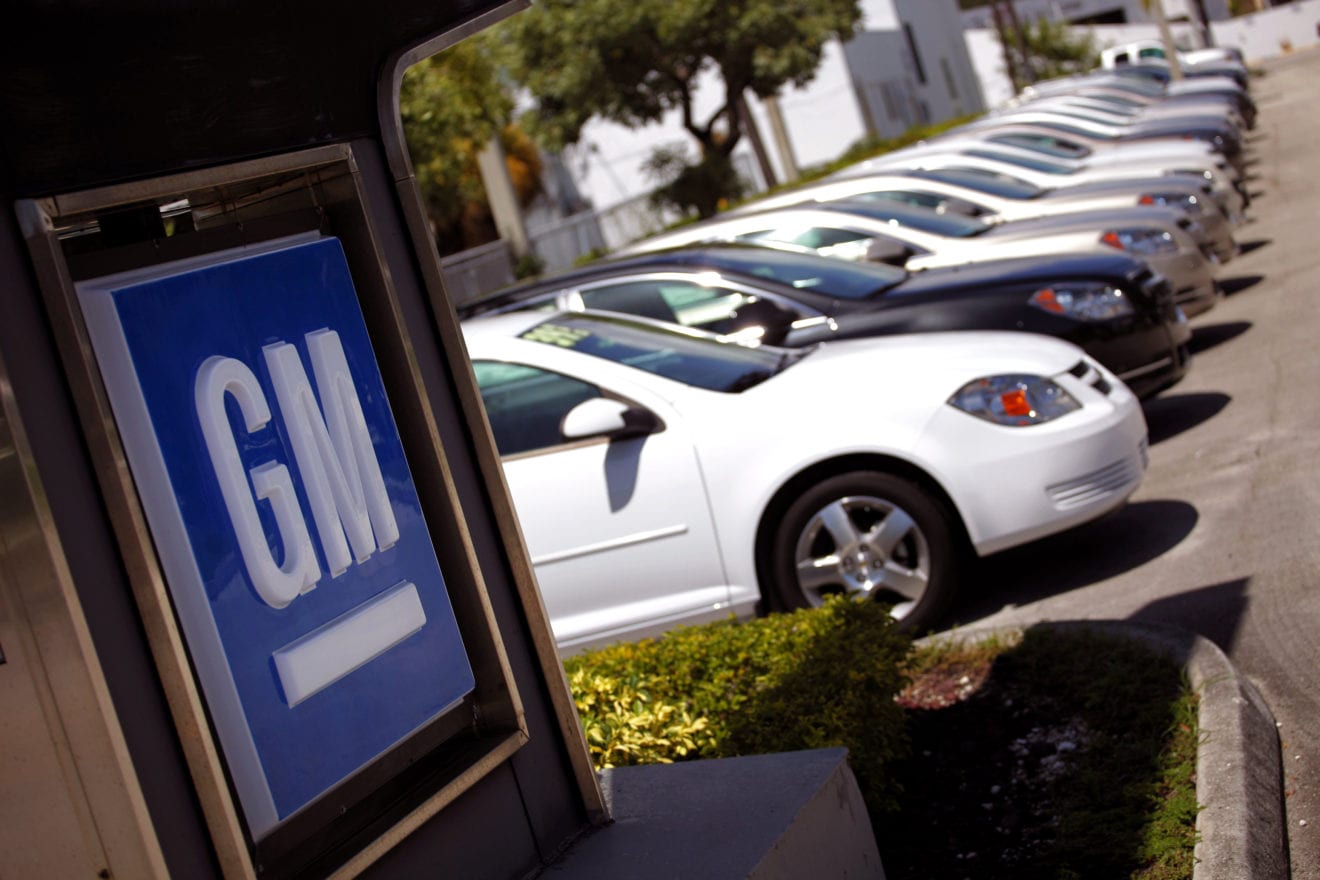
    General Motors Co said on Wednesday it was further extending production cuts at three North American plants and adding a fourth to the list of factories hit by the global semiconductor chip shortage. The extended cuts do not change GM’s forecast last month that the shortage could shave up to $2 billion from this year’s earnings. GM Chief Financial Officer Paul Jacobson subsequently said chip supplies should return to normal rates by the second half of the year and he was confident the profit hit would not worsen.

    The U.S. automaker did not disclose the impact on volumes or say which supplier or parts were affected by the chip shortage, but said it intends to recover as much of the lost output as possible.

    “GM continues to leverage every available semiconductor to build and ship our most popular and in-demand products, including full-size trucks and SUVs,” GM spokesman David Barnas said. “We contemplated this downtime when we discussed our outlook for 2021.”

    The chip shortage, which has hit automakers globally, stems from a confluence of factors as carmakers, which shut plants for two months during the COVID-19 pandemic last year, compete against the sprawling consumer electronics industry for chip supplies.

    Consumers have stocked up on laptops, gaming consoles and other electronic products during the pandemic, leading to tight chip supplies. They also bought more cars than industry officials expected last spring, further straining supplies.

    GM said Wednesday it would extend downtime at plants in Fairfax, Kansas, and Ingersoll, Ontario, to at least mid-April, and in San Luis Potosi, Mexico, through the end of March. In addition, it will idle its Gravatai plant in Sao Paulo, Brazil, in April and May.

    The automaker did not disclose the impact on volumes or say which supplier or parts were affected by the chip shortage

    The Detroit automaker had previously extended production cuts at three North American plants into mid-March and said vehicles at two other plants would only be partially built. Following Wednesday’s cuts, forecasting firm AutoForecast Solutions estimated GM could lose more than 216,000 units globally due to the shortage.

    Ford Motor Co said last month the lack of chips could cut company production by up to 20% in the first quarter and hurt profits by as much as $2.5 billion. It had previously cut production of its top-selling F-150 pickup truck. Stellantis said Wednesday the chip shortage could weigh on 2021 results.

    Some automakers, including Toyota Motor Corp and Hyundai Motor Co, avoided deeper cuts by stockpiling chips ahead of the shortage.

    Industry officials and politicians have pushed U.S. President Joe Biden’s administration to take a more active role in dealing with the chip shortage.

    Last week, Biden said he would seek $37 billion in funding to supercharge chip manufacturing in the United States. An executive order also launched a review of supply chains for such critical products as semiconductor chips, electric vehicle batteries and rare earth minerals.

    Complicating matters was a severe winter storm in Texas last month that killed at least 21 people and led to the shutdown of several chip plants. Semiconductor industry officials said customers would face knock-on effects in several months.

  • Volvo To Produce Only Electric Vehicles By 2030

    Volvo To Produce Only Electric Vehicles By 2030

    Chinese-owned Swedish automaker Volvo said Tuesday it will produce only electric vehicles by 2030 and sell them all exclusively online. Volvo is among a growing crop of companies planning to ditch fossil fuel vehicles in the next few years, as demand for zero-emission cars rises and governments put pressure on firms to cut pollution. Indian-owned Jaguar said last month it would produce only electric vehicles from 2025, while US auto giant Ford said it would aim to have an all-electric fleet in Europe by 2030.

    “The company intends to only sell fully electric cars and phase out any car in its global portfolio with an internal combustion engine, including hybrids,” Volvo said in a statement. The company said half of its cars should be electric in 2025, with online sales accounting for half of its volume.

    China’s Geely Holding bought a struggling Volvo Cars in 2010 from Ford and has since helped it enjoy a renaissance as a maker of high-quality vehicles. However, last month Geely Auto said it would not go ahead with a planned merger with Volvo but the two companies would instead reinforce their collaboration on electric vehicles. Volvo is due later Tuesday to unveil its second all-electric vehicle, a C40 SUV, and is readying a smaller model especially suited for European road conditions.

    The company says its move to online sales will provide more transparency on pricing and options for its customers. “If you ask people it is quite a big irritation that you don’t have a clear picture of the price,” company boss Hakan Samuelsson said.

  • VinFast eyes global market, to open car plant in US

    VinFast eyes global market, to open car plant in US

    VinFast plans to set up an automobile plant in the U.S. as part of its strategy to start selling there in 2022, Bloomberg reported on Tuesday.

    The company, a subsidiary of conglomerate Vingroup, did not provide details about when it will be set up or where.

    Bloomberg quoted its CEO Thai Thanh Hai as saying: “VinFast’s vision is to become a global smart electric car company and the U.S. is one of the first international markets that we will focus on.

    “We will initially develop high-end models for the U.S.”

    The company also plans to open 35 showrooms and service centers this year in California state where it has received a license to test autonomous vehicles on public streets.

    Malaysian newspaper The Star quoted Hai as saying VinFast believes it can win over American and other overseas customers leery of buying an automobile from a Vietnamese company they know little or nothing about by offering top-quality vehicles with high safety standards and advanced technology.

    The company has R&D centers in Australia, Germany and the U.S.

    VinFast, founded by Vietnam’s first billionaire Pham Nhat Vuong, began selling cars with BMW-licensed engines in 2019.

    Last year it sold 31,500 units, all in Vietnam, where 296,634 cars were sold in all.