Retail News CRM

Category: Automotive

Retail News Asia is committed to providing both local and global retailers with the latest Auto and Car news throughout the Asian market. This on a daily base.

  • Hyundai Motor India drops 6% in debut after country’s biggest IPO

    Hyundai Motor India drops 6% in debut after country’s biggest IPO

    Shares of Hyundai Motor India dropped as much as 6% in their market debut on Tuesday, after a tepid response from retail investors to the pricing of the country’s largest initial public offering.

    The stock listed at 1,934 rupees on the National Stock Exchange, below its offer price of 1,960 rupees, and traded down 4% at 1,882.10 rupees by 12.48 p.m. (Hanoi time), giving the company a valuation of 1.53 trillion rupees ($18.2 billion).

    Hyundai, India’s No. 2 carmaker with a market share of 15%, was targeting a valuation of $19 billion through the IPO.

    Its record $3.3-billion IPO was oversubscribed more than two-fold last week, led largely by institutional investors, but pricing concerns deterred retail investors who worried they would not be able to make gains on the listing.

    Shares of Indian rivals have also slipped in recent weeks as car sales slow after two years of record highs, with customers delaying purchases on worries about stubborn inflation.

    “Hyundai’s issue has been stiffly priced and that seems to be weighing down on its listing as well,” said Arun Kejriwal, founder of Kejriwal Research.

    “Besides, the volumes seen so far are driven only by institutional investors, and is rather poor for an IPO of Hyundai’s size.”

    Tuesday’s listing in Mumbai is Hyundai Motor’s first debut outside its home market of South Korea and comes at a time when India’s equity markets have risen sharply.

    With competition from domestic rivals Tata Motors and Mahindra & Mahindra, Hyundai Motor plans to use proceeds from its sale of a stake of 17.5% in the Indian unit to invest in research and launch new products.

    “Hyundai Motor will play a crucial role in Hyundai Motor India’s long-term growth through our collaboration in R&D, design, manufacturing,” the Korean automaker’s CEO, Jaehoon Chang, said at a listing ceremony in Mumbai.

    Seven of India’s 10 largest IPOs, including Hyundai India, reported listing day losses ranging from 5% to 27%, according to data from Dealogic.

    While Hyundai’s market valuation is much smaller than Indian market leader Maruti Suzuki’s $45 billion, analysts have expressed concerns over the narrower gap in their price-to-earnings (P/E) ratios.

    The issue had valued Hyundai at 26 times its fiscal 2024 earnings, not far off the multiple of 29 for Maruti.

    Some major brokerages, however, see long-term value in the stock.

    Nomura started coverage of Hyundai with a “buy” rating and price target of 2,472 rupees. The brokerage said it liked Hyundai’s high concentration of SUVs in the portfolio, which accounted for 67% of sales in the April-to-June 2024 quarter.

    Similarly, Macquarie analysts began coverage with an “outperform” rating and price target of 2,235 rupees, saying Hyundai’s SUV-centric portfolio commanded a P/E premium.

    “We shall leverage our deep understanding of consumer preferences to successfully expand our passenger vehicle portfolio,” Hyundai India’s chief operating officer Tarun Garg said at the listing ceremony.

    Shares of Maruti and Tata Motors were down 1%, in line with the Nifty Auto index.

  • VW investors demand faster progress in dieselgate reforms

    VW investors demand faster progress in dieselgate reforms

    Volkswagen needs to do more to regain the confidence of investors in the wake of its emissions scandal, despite a swift recovery in earnings, several shareholders told the German carmaker at its annual meeting on Wednesday.

    The world’s largest automaker reported better-than-expected first-quarter profits and has announced a raft of plans to recover from the biggest business crisis in its history, including cost cuts and investment in cleaner cars.

    But some shareholders said its emissions test cheating on diesel engines would continue to haunt it for years if it did not publish the results of an investigation into the scandal, address outstanding claims and improve corporate governance.

    “I am shocked and speechless, that was the case at the time and it still is today,” said Gerd Kuhlmeyer, head of staff shareholders group Community of VW, referring to a scandal that broke 20 months ago. “An end of ongoing investigation proceedings and possible further effects is not in sight.”

    Volkswagen (VW) has agreed to spend up to $25 billion in the United States to address claims from owners, environmental regulators, states and dealers and offered to buy back about 500,000 polluting U.S. vehicles.

    But it still faces billions of euros in claims from about 3,500 customer lawsuits and about 2,000 investor suits globally.

    The German group, which is tightly controlled by its founding families and home state of Lower Saxony, rejected calls by Kuhlmeyer and other investors for it to publish the results of a company-commissioned investigation by U.S. law firm Jones Day into the scandal, saying it couldn’t for legal reasons.

    “There is no written concluding report by Jones Day and there will not be one,” VW Chairman Hans Dieter Poetsch said.

    “I ask for your understanding that VW for legal reasons is prevented from publishing such a final report,” he told the gathering of about 3,000 shareholders.

    TRUST

    The carmaker initially pledged to inform shareholders about the findings of the Jones Day report which was used as the basis for a $4.3 billion settlement with the U.S. Justice Department, but has since abandoned this plan.

    It says the report was incorporated in the “statement of facts” published by the Justice Department, and that as part of the settlement deal it cannot publish separate findings.

    But some shareholders criticized this explanation.

    “Your reference to the statement of facts agreed in the U.S. is completely insufficient and almost insulting to all those who are interested in complete clarification of responsibilities,” said Christian Strenger, supervisory board member at DWS Deutsche Asset Management GmbH.

    Hermes EOS, representing large institutional investors, called on VW to seek agreement with U.S. authorities to be allowed to publish at least a summary of Jones Day’s findings.

    “That’s the only way to regain lost trust with investors and to win back customers,” Hans-Christoph Hirt, head of Hermes EOS said. “Only then, it can be found out whether the company is drawing the right conclusions.”

    VW shares have bounced back from their post-scandal lows, but are still trading below the level when it broke in September 2015. At 1500 GMT, the stock was up 0.2 percent at 144.6 euros.

    Separately, Chief Executive Matthias Mueller said VW would support without reservation Larry Thompson, a former U.S. deputy attorney general, who has been picked by the Justice Department to oversee the company for three years.

    Thompson and his team will have access to VW documents and assess the efforts of its board of management and senior management to comply with environmental laws.

    “I see this as an opportunity,” Mueller said. “The work of the monitor can and will contribute to bringing risk management, compliance and integrity within the group to new levels.”

  • Kia pins hopes on overhauled K9

    Kia pins hopes on overhauled K9

    Kia Motors on Tuesday started to receive preorders for the overhauled version of its K9 large-size sedan, a model which is expected to play a decisive role as the company seeks to change its image and diversify its brand.

    The automaker sees the success of the K9 as representative of the entire K series. If the K9 sells well, the company will be free to shift its resources from revitalizing the struggling K lineup to introducing an electric car lineup, a segment which the automaker has not yet had the chance to fully enter.

    “Kia Motors needs to build up its brand since it is still more known for its recreational vehicle lineup,” said Kwon Hyug-ho, executive vice president at the auto company at a media event for the K9 on Tuesday.

    “After successfully launching the overhauled K9, Kia Motors may make a separate brand for the electric vehicle lineup. The K series survives only when the K9 survives,” he added.

    Kia Motors, the second-largest carmaker in Korea by sales figures, is not particularly well known for its eco-friendly vehicles, while its affiliate Hyundai Motor has been arduously developing a range of emission-free vehicles including the hydrogen-fueled Nexo.

    Kia Motors has only one fully electric car model under its roof, the Soul, and a couple more models with hybrid engines such as the Niro SUV and the K5 and K7 sedans.

    “The premium E emblem at Kia Motors is currently exclusive to the Stinger,” Kwon said. “We may incorporate the future electric car range under the E brand,” he added.

    Kia Motors is known to have considered launching the Stinger as an independent premium brand last year just like Hyundai Motor did with Genesis. Concluding that the global market still lacks understanding of the Kia brand, the automaker resorted to launching it topped with the distinctive E emblem.

    The new K9 is the first fully overhauled version since it was introduced to the Korean market in 2012.

    Standing at the top of the auto company’s K series – the name of its sedan lineup – the latest K9 came with a range of new design elements and top-notch safety technology.

    Changes in the front and rear lamp design stand out among the upgrades, with dual LED lights featured within the lamps. Kia Motors calls the new design “Duplex lamps.”

    The new K9 also came with a revamped grille design that offers a more energetic and dynamic ambience, according to the carmaker.

    In terms of safety features, Kia Motors officials said the new K9 is equipped with some of the most cutting-edge technology.

    One notable new feature in the K9 is the windows, which automatically close when the car goes through a tunnel. The K9 is the first vehicle produced by Hyundai Motor Group to include the feature.

    The technology has been designed to operate on Korean roads and is linked with domestic map data. It is also equipped with other functions such as lane following assist, blind-spot view monitor and rear cross-traffic collision-avoidance assistance systems.

    The automaker plans to sell some 20,000 units of the K9 per year in Korea, rivaling not only domestic models such as the Genesis G80 and EQ900 and SsangYong Motor’s Chairman, but also imported cars such as the Mercedes-Benz’s E-Class.

    Kia Motors plans to sell 6,000 units overseas this year, though the exact timeline for exports has not been determined.

    The price for the lowest trim equipped with a 3.8-liter petrol engine starts at 54.9 million won ($51,600). There are two other engine options: the 3.3-liter turbo petrol and 5.0-liter petrol.

  • Geely Defies Global Expansion Pause with Plans for New Auto Plant in Vietnam

    Geely Defies Global Expansion Pause with Plans for New Auto Plant in Vietnam

    Geely’s ambitious plan is to construct a US$168-million manufacturing plant in northern Vietnam is set to unfold as scheduled, despite broader concerns cast by its chairman and founder, Li Shufu. Just last Saturday, Shufu pointed out the global automotive industry is grappling with a “serious overcapacity,” leading Geely to pause new plant constructions and expansions at existing facilities, according to British news agency Reuters.

    Geely’s Promising Venture in Vietnam

    The Vietnam plant is a collaboration between Geely and local distributor Tasco, with Geely holding a significant 64% stake. Groundbreaking is slated for this quarter in Thai Binh Province, where a sprawling 30-hectare site will eventually operate at a capacity of 75,000 vehicles annually in its initial phase.

    These vehicles will include models from Geely and its Chinese counterpart, Lynk & Co, specifically designed to cater to domestic demand and facilitate exports to countries with free trade agreements with Vietnam. The factory holds the potential for future expansion as it may begin assembling a wider variety of Geely vehicles.

    All cars produced at the plant will be constructed from “completely knocked down” kits—meaning they are assembled from parts sourced from various locations. The first vehicles are expected to hit the Vietnamese market early next year, while Geely currently offers the Coolray CUV imported from Malaysia.

    Geely is a prominent player in China’s automotive sector, boasting a diverse portfolio that includes brands like Zeekr and Galaxy, along with a stake in the premium Swedish manufacturer Volvo. With 22 factories in China and three spread across the globe, Geely’s growth ambitions are clear.

    The Race for Automotive Investment in Vietnam

    Interestingly, Geely isn’t the only Chinese automaker eyeing Vietnam. Chery, another industry titan, plans to break ground on their own factory in Thai Binh Province in the third quarter through its partner Geleximco. With an investment of $800 million, Chery’s venture will focus on producing Omoda and Jaecoo models, with other potential vehicles in the pipeline.

    While Chery sets its sights on this strategic investment, major players such as BYD and SAIC have also explored opportunities in Vietnam but have yet to make significant moves. At present, the majority of Chinese passenger vehicles sold in Vietnam are imported from China, Thailand, or Malaysia.

    In a noteworthy development, the number of Chinese automotive brands in Vietnam jumped to 14 last year, surpassing Japan’s nine for the first time. However, their market presence remains relatively small compared to established Japanese and Korean brands, as well as the domestic contender, VinFast.

    As Geely prepares to roll out its manufacturing plant, the automotive landscape in Vietnam is likely to get even more interesting—where the thrill of competition could soon turn up the heat among industry giants.

    Questions & Answers

    What is Geely’s investment in the Vietnam plant?
    Geely is investing US$168 million in its new manufacturing facility in northern Vietnam.

    What models will be produced at the new plant?
    Initially, the factory will produce vehicles from Geely and Lynk & Co, catering to both domestic and export markets.

    When will the first vehicle arrive for Vietnamese consumers?
    The first vehicle is expected to be available to Vietnamese customers early next year.

  • Pham Nhat Vuong, Vietnam’s richest man, donates $800M to boost automaker VinFast’s ambitions

    Pham Nhat Vuong, Vietnam’s richest man, donates $800M to boost automaker VinFast’s ambitions

    Billionaire Pham Nhat Vuong, the chairman of the private conglomerate Vingroup and recognized as Vietnam’s wealthiest individual, has injected a staggering VND20.5 trillion (approximately US$790 million) into the automaker VinFast between November and May. This generous contribution is part of his promise of VND50 trillion made last year, as disclosed by the company on Monday.

    Financial Support Fuels Expansion

    In the past six months, VinFast has also secured a loan of VND30.57 trillion from its parent company, reinforcing its financial backbone. Vingroup remains committed to supporting VinFast, pledging a maximum of VND35 trillion to ensure the company’s sustained growth. Vuong, who wears multiple hats as CEO and founder of VinFast, experienced a remarkable surge in his wealth—an increase of $3 billion over the last two months—bringing his total fortune to over $10 billion, according to Forbes.

    Impressive Growth Amid Losses

    VinFast reported exceptional growth for the first quarter, showcasing a 150% increase in revenues year-on-year, reaching VND16.31 trillion. The company delivered a remarkable 36,330 electric cars and an astonishing 44,904 motorcycles and bicycles during this period, translating to impressive increases of 296% and 473% respectively. However, despite these successes, VinFast also reported a loss of VND17.69 trillion, which marks a 20% rise in losses compared to the previous period. To respond to the challenges and capitalize on its momentum, the company plans to adjust its sales target for the year from 200,000 to 280,000 units, as shared by deputy CEO Thai Thi Thanh Hai.

    Who knew the complex world of electric vehicles could be this exhilarating?

    Questions & Answers

    How much has Pham Nhat Vuong invested in VinFast?
    Pham Nhat Vuong has gifted VinFast VND20.5 trillion (around US$790 million) over the past six months.

    What has been VinFast’s recent sales performance?
    VinFast delivered 36,330 electric cars and 44,904 motorcycles and bicycles in the first quarter, marking significant increases in both categories.

    What loss did VinFast report despite impressive growth?
    The company reported a loss of VND17.69 trillion, a 20% increase compared to the previous period, even amid record revenue growth.

  • Thailand’s Car Sales Surge Back to Life After Nearly Two-Year Decline

    Thailand’s Car Sales Surge Back to Life After Nearly Two-Year Decline

    Domestic car sales in Thailand experienced a glimmer of hope in April, marking a 1% year-on-year increase—the first boost in nearly two years, as reported by the Federation of Thai Industries (FTI). This slight recovery comes as a welcome surprise amid a string of declines in both vehicle production and exports.

    Ongoing Challenges in Vehicle Production

    Despite the uptick in sales, production figures told a different story. In April, car manufacturing dipped by 0.4% from the previous year, totaling 104,250 units. This marks the 21st consecutive month of declining production, following a relatively steep 6.1% drop in March. Meanwhile, the export of vehicles fell by 6.3% compared to the same period last year, although this decline represents a gentler decrease than the 14.9% seen in the prior month.

    Thailand’s Role in the Automotive Landscape

    As Southeast Asia’s premier auto manufacturing hub, Thailand plays a crucial role as an export base for some of the globe’s leading car manufacturers, including heavyweights like Toyota, Honda, and China’s BYD. While car sales may be on the rise, the industry continues to grapple with production challenges—proving that the road to recovery is still a winding one. Who knew car sales could be just as turbulent as a roller coaster ride!

    Questions & Answers

    What factors contributed to the rise in car sales in Thailand?
    The increase in car sales is attributed to growing consumer demand, providing a much-needed boost after an extended period of decline.

    How has production been affected recently?
    Car production fell by 0.4% in April compared to the same time last year, marking the 21st straight month of decreased output.

    What is Thailand’s position in the automotive sector?
    Thailand remains Southeast Asia’s largest automotive production center and serves as an export base for major car manufacturers like Toyota, Honda, and BYD.

  • Citroen C3 CNG Introduced With 28 km/kg Mileage

    Citroen C3 CNG Introduced With 28 km/kg Mileage

    Citroen India has made its foray into the Compressed Natural Gas (CNG) vehicle market with the introduction of the C3 hatchback. Customers will have the opportunity to equip this model with a retrofitted CNG kit through the company’s certified retrofit program, accessible via the brand’s dealerships. This additional feature will cost consumers Rs 93,000, taking the total price of the vehicle to Rs 7.16 lakh. This initiative is aimed at customers seeking more economical operational costs and a decrease in emissions.

    The C3’s CNG Capabilities

    Citroen India asserts that the C3’s 1.2-litre naturally aspirated engine is specifically designed to harness the potential of factory-tested CNG. The hatchback promises a mileage of up to 28.1 km/kg and boasts an operational cost of just Rs 2.66 per km. The CNG option is available with the Live, Feel, Feel(O), and Shine variants of the hatchback. To provide additional incentive for customers, Citroen is also offering a comprehensive warranty for the vehicle and CNG components, covering a period of three years or 100,000 km.

    Design and Comfort Considerations

    According to Citroen, the integration of the CNG system does not compromise on the boot space and maintains easy access to the spare wheel. The design of the CNG nozzle allows it to fit within the petrol filler port, providing hassle-free refuelling. In a bid to ensure ride quality is not compromised with the addition of the CNG kit, the company has made several modifications including revamped rear shock absorbers, reinforced suspension springs, and an added anti-roll bar.

    Kumar Priyesh, the Business Head and Director of Automotive Brands at Stellantis India, which oversees Citroen India, expressed his delight at the launch. He emphasized the company’s commitment to delivering accessible, cost-effective, and environmentally responsible mobility solutions with the introduction of the CNG retrofitment option for the Citroën C3.

    Priyesh also noted the company’s pride in providing solutions in line with India’s evolving fuel ecosystem and environmental goals, especially as CNG infrastructure is expected to grow significantly across the country, with an anticipated network of over 7,400 stations by FY2025.

    Questions & Answers

    What is the cost of the CNG retrofitment for the Citroën C3?
    The cost of the retrofitment is Rs 93,000.

    What modifications have been made to the Citroën C3 to accommodate the CNG kit?
    The vehicle has been modified with rear shock absorbers, strengthened suspension springs, and an anti-roll bar to maintain ride quality with the CNG kit installed.

    What is the expected expansion of the CNG infrastructure in India?
    By FY2025, it is expected that there will be more than 7,400 CNG stations across India.

  • Rezvani Knight Is Lamborghini Urus-Based Batmobile

    Rezvani Knight Is Lamborghini Urus-Based Batmobile

    Rezvani, a boutique manufacturer of exotic automobiles, has made a name for itself by designing vehicles reminiscent of fighter jets. The brand has recently unveiled its latest creation, the Rezvani Knight, a car modelled after the Lamborghini Urus. Notably, the Knight takes on a military aesthetic and offers customers the choice of upgrading the vehicle with bulletproof armour. Earlier, Rezvani made headlines for its work on the Jeep Wrangler, which served as the foundation for the Tank, and the Cadillac Escalade, which gave rise to the Vengeance.

    Revamping the SUV Space

    Rezvani has positioned the Knight and its other two SUVs as revolutionary models in the typically uninspiring SUV market. The Knight is characterized by its hard edges and sleek grey finish. The SUV incorporates carbon fibre elements in its body, bearing the foundational shape of the Urus but with a more angular design. Additional features include slim running lights integrated with the headlights and a roof-mounted light bar. The vehicle’s robust front bumper is matched by a bold hood, and a sizable wing is situated above the rear window. The Knight comes standard with unique 22-inch wheels and 33-inch all-terrain tires.

    Enhancement Options

    Customers have the opportunity to upgrade the Knight’s exterior with a variety of protective features. These include bulletproof windows, body armour, a thermal imaging system, and puncture-resistant tires. These features are part of the Dark Knight package, which also offers a steel ram bumper, electrically charged door handles to ward off unwanted adversaries, magnetic deadbolts, a fortified suspension system, and an intercom system.

    Moreover, Rezvani offers a selection of bullet-resistant vests and helmets, gas masks, a first-aid kit, and a pepper spray dispenser. The company also purports that the vehicle provides protection against electromagnetic pulses and comes equipped with strobe lights, blinding lights, and sirens for additional security.

    Powerful Performance

    Rezvani alleges that the Lamborghini’s twin-turbocharged V-8 engine can be boosted to as much as 800 horsepower, depending on the customer’s preference. This marks a significant increase from the 657 hp found in the non-hybrid Urus, despite the latest Urus SE plug-in hybrid trailing closely behind at 789 horsepower. Rezvani maintains that the Knight can accelerate from zero to 60 mph in a mere 3.0 seconds, paralleling the speed we noted in a 2023 Urus Performante.

    Questions & Answers

    What is the inspiration behind Rezvani’s new vehicle, the Knight?
    The Knight, designed by boutique exotic automaker Rezvani, takes inspiration from fighter jets, featuring a militaristic design based on the Lamborghini Urus.

    What are some of the unique features of the Rezvani Knight?
    The Knight offers distinctive features such as bulletproof windows, body armour, a thermal imaging system, and puncture-resistant tires. It also includes security features such as electrically charged door handles, magnetic deadbolts, and a fortified suspension system.

    How does the performance of the Rezvani Knight compare to other vehicles in its class?
    Rezvani claims that the Knight’s twin-turbocharged V-8 engine can be enhanced to deliver as much as 800 horsepower. The vehicle can purportedly accelerate from zero to 60 mph in just 3.0 seconds, matching the performance of the 2023 Urus Performante.

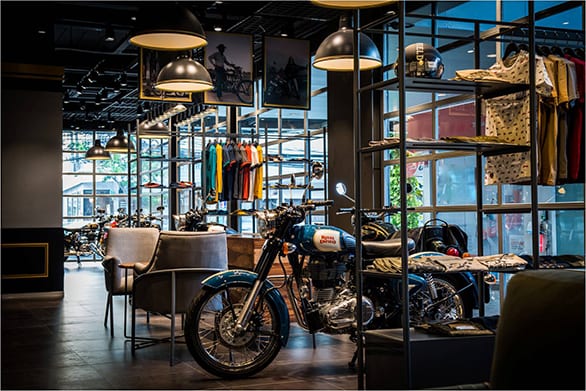
  • Royal Enfield Flying Flea C6 Electric Bike To Launch In 2026

    Royal Enfield Flying Flea C6 Electric Bike To Launch In 2026

    Royal Enfield, a leading motorcycle brand, has announced its foray into the electric motorcycle market with the introduction of its new brand, Flying Flea. The first model under this brand will be the C6, scheduled for launch in the fourth quarter of the fiscal year 2026. The company plans to follow up with the introduction of model S6, an entirely different product that will further diversify the brand’s offerings. Information pertaining to the operations and dealership network for the new electric vehicle brand is yet to be disclosed.

    The Flying Flea C6

    The Flying Flea C6 was first unveiled at the EICMA exhibition and has subsequently been showcased in India. The motorcycle’s test model has been spotted during multiple trial runs, providing insights into its unique features and design elements. The C6 sports circular LED lighting, a sleek frame with an aluminium chassis and girder forks, a design infused with a blend of retro and modern aesthetics that is indicative of the brand’s distinct style. Other notable features include a split seat configuration and black alloy wheels.

    The aerodynamically designed body of the bike integrates a magnesium casing that facilitates airflow. Although Royal Enfield has not yet revealed the specifications of the C6, it is anticipated that the vehicle will offer a range of approximately 100 kilometers, making it suitable for urban use. To further enhance its city-riding capabilities, the company has focused on reducing the weight of the motorcycle to less than 100 kilograms.

    Technological Innovations

    Royal Enfield has invested significantly in incorporating advanced technology into the design of the C6. It is expected to be the most feature-packed motorcycle ever produced by the company, with a round touchscreen display that provides a host of functionalities including voice control, connectivity, and more. The bike is powered by Qualcomm’s Snapdragon processor to support these advanced features. During the C6’s unveiling, Mario Alvisi, Royal Enfield’s Chief Growth Officer for Electric Vehicles, stated that the motorcycle will boast the most innovative and state-of-the-art features.

    Questions & Answers

    When is the launch of Royal Enfield’s first electric motorcycle, the Flying Flea C6, scheduled?
    The Flying Flea C6 is slated for launch in the fourth quarter of the fiscal year 2026.

    What are the notable design features of the Flying Flea C6?
    The C6 is designed with circular LED lighting, a sleek frame with an aluminium chassis and girder forks, a split seat configuration, and black alloy wheels. The motorcycle’s body includes a magnesium casing that regulates airflow.

    What advanced technology features will be incorporated into the Flying Flea C6?
    The C6 will be equipped with a round touchscreen display that enables various functions such as voice control, connectivity, and more. It will be powered by Qualcomm’s Snapdragon processor.

  • April Sees Impressive 21% Year-on-Year Surge in Auto Sales

    April Sees Impressive 21% Year-on-Year Surge in Auto Sales

    The latest sales figures reveal a significant dip in vehicle sales, with a total of 20,766 passenger vehicles sold in April—evidently a 7% decline compared to March. The commercial vehicle sector mirrored this trend, seeing sales drop to 8,619 units, also down by 7%. In contrast, special-purpose vehicles rose by 11%, reaching 200 units.

    Domestically assembled vehicles faced a similar fate with a 7% decrease, resulting in 13,890 units delivered. Alarmingly, Vietnam’s imports of completely built-up (CBU) vehicles fell sharply, plummeting 60% to just 15,695 units.

    Yet amidst the fluctuations, Toyota kept its crown as the market leader, selling 5,566 units in April. Close behind were Ford with 3,997 units, Mitsubishi at 2,038, THACO Mazda contributing 2,736, and THACO Kia with 2,055 units. The Mitsubishi Xpander stood out as the best-selling model of the month, registering 4,031 units sold, followed by the Ford Everest with 1,090 and the Toyota Yaris Cross at 1,030.

    Shifts in Vehicle Preferences

    The SUV trend remains robust, leading the product categories with sales of 5,867 vehicles. MPVs followed with 3,798 units, while sedans accounted for 3,292.

    In the realm of commercial vehicles, pickup trucks and minivans continued to reign supreme. Notably, the hybrid segment is basking in positive growth, with sales of hybrid vehicles reaching 973 in April alone—an impressive total of 3,535 since the start of the year, reflecting an 82% upswing from the previous year.

    A Booming Start to 2025

    As for the first four months of 2025, the market showcased a remarkable rebound, achieving total sales of 101,834 units—a 23% increase year-on-year. Passenger car sales climbed 22%, while commercial vehicles jumped 27%, and special-purpose vehicles skyrocketed by 49%.

    The surge in sales of imported vehicles saw a healthy 35% rise, alongside a 13% increase in domestically assembled units. Experts believe this momentum, fueled by rising consumer demand and supportive policies from automakers, bodes well for the automotive sector as it gears up for an even more prosperous second and third quarter.

    As the industry gears up for future challenges, one can’t help but wonder what surprise moves automakers might unveil next.

    Questions & Answers

    What were the total sales figures for passenger and commercial vehicles in April 2025?
    A total of 20,766 passenger vehicles and 8,619 commercial vehicles were sold in April.

    Which brand retained its market leadership in April?
    Toyota maintained its market leadership with 5,566 units sold.

    How did the hybrid vehicle segment perform?
    The hybrid segment saw a significant rise, recording 973 vehicles sold in April and a total of 3,535 so far in the year, which is an 82% increase from last year.

  • BYD Surpasses Toyota as Singapore’s Best-Selling Car Brand for the First Time

    BYD Surpasses Toyota as Singapore’s Best-Selling Car Brand for the First Time

    In an electrifying twist in the automotive landscape, BYD has officially claimed the title of Singapore’s top-selling car brand for the first time this year, outpacing Japanese giant Toyota. With its sights firmly set on global expansion, the Chinese electric vehicle manufacturer has demonstrated remarkable sales prowess, demonstrating the power of innovation in a competitive market.

    BYD Surges Ahead

    During the first four months of 2025, BYD reported sales of 3,002 vehicles, capturing a remarkable 20% of the total car sales in Singapore, according to government data. In contrast, Toyota managed to sell 2,050 units, while Tesla lagged behind with 535 vehicles sold in the same timeframe. This impressive performance marks a significant shift in a market traditionally dominated by Toyota, which recorded sales of 7,876 cars in 2024 compared to BYD’s total of 6,191.

    The Strategy Behind Success

    BYD’s surge in sales highlights its strategic direction toward international markets, particularly amidst fierce price wars in China. Recent reports reveal that the leading automaker from China aims to sell half of its vehicles outside its home market by 2030—a bold target that positions it as a serious contender against established global players.

    Entering the Singapore consumer car market in 2022, BYD has gained traction at a swift pace, eclipsing Tesla’s growth. In 2023, BYD’s sales nearly doubled to 1,416 units, while Tesla saw a modest increase of just 7%, reaching 941 units.

    The Price of Ownership

    Owning a car in Singapore is no small feat, given the city-state’s reputation for high vehicle ownership costs. For instance, the popular compact BYD Atto 3 SUV is priced at a minimum of S$165,888 (approximately US$127,500), while other models like the Toyota Corolla Altis come in at around S$170,888. Despite these premium prices, BYD’s growing presence reflects a shifting consumer preference toward more sustainable vehicle options.

    As BYD expands its footprint in Southeast Asia, with Thailand currently its largest overseas market, plans are in place for further expansion into Europe and Latin America, redefining the boundaries of the automotive industry.

    Will BYD maintain its momentum in Singapore? Will prey meet its rival head-on in the price wars? And can we expect to see a BYD-branded amusement park with all the thrills of eco-friendliness?

    Questions & Answers

    **What led to BYD overtaking Toyota in Singapore?**
    BYD’s strategic focus on international expansion and significant sales growth in electric vehicles have positioned it ahead of Toyota for the first time this year.

    How does the pricing of cars in Singapore compare between BYD and its competitors?
    The compact BYD Atto 3 SUV starts at S$165,888, while the Toyota Corolla Altis is priced around S$170,888, highlighting the competitive pricing in a notoriously expensive car market.

    What are BYD’s future expansion plans?
    BYD is looking to grow its footprint beyond Singapore, targeting markets in Europe and Latin America, aiming to have half of its sales occur outside China by 2030.

  • VinFast Plans to Launch 100+ Electric Vehicle Service Centers Across the Philippines

    VinFast Plans to Launch 100+ Electric Vehicle Service Centers Across the Philippines

    VinFast, Vietnam’s rising star in electric vehicle (EV) manufacturing, is gearing up to revolutionize the automotive landscape in the Philippines. In an exciting announcement, the company revealed a partnership with four key Philippine firms to roll out over 100 authorized service centers throughout the country in 2025.

    Forging Strategic Partnerships

    The collaboration features prominent names like Goodyear Philippines, Tire King and Rubber Products, Power Tread Services, and Marcjan Cavite. These partners will manage VinFast service centers, ensuring that maintenance, repairs, and customer support for EVs meet global standards—something that has become a hallmark of the VinFast brand.

    Excitingly, VinFast and Goodyear plan to kick off their endeavor with the launch of 50 authorized service centers this year, while Marcjan Cavite will launch eight, and Tire King and Power Tread will each establish seven. These centers aren’t just ordinary workshops; they must adhere to stringent regulations regarding facilities, equipment, and technician qualifications. Genuine parts and exceptional service will be prioritized for VinFast vehicle owners.

    Supporting the Network Expansion

    To assist in this ambitious rollout, VinFast is committed to providing extensive support to its partners. This includes personnel training, technical consulting, and operational expertise, ensuring a smooth and rapid expansion of their service network.

    This latest initiative builds on previously signed memoranda of understanding with Philippine partners JIGA and Motech, firmly positioning VinFast to enhance after-sales services while expanding its footprint in the burgeoning EV market.

    Just shy of a year since VinFast made its debut in the Philippines, the company is already making waves with its innovative smart EV models, competitive sales strategies, and an expanding after-sales network.

    Charting a Path for Sustainable Future

    In its quest for a greener tomorrow, VinFast is dedicated to cultivating a comprehensive “For a Green Future” ecosystem in Southeast Asia. This ambitious vision focuses on developing robust charging infrastructure and service centers—an operational model that has already proven effective in Vietnam and is now being replicated in dynamic markets like the Philippines.

    For those wondering if the EV boom will take off as swiftly as a VinFast model off the assembly line, one might find it hard to resist a ride in one of their electric beauties!

    Questions & Answers

    What are the partnerships VinFast has formed in the Philippines?
    VinFast has partnered with Goodyear Philippines, Tire King and Rubber Products, Power Tread Services, and Marcjan Cavite to establish over 100 authorized service centers.

    When will the service centers be operational?
    The first wave of 50 service centers is expected to launch in 2025, with additional centers rolling out throughout the year.

    How does VinFast support its service partners?
    VinFast provides comprehensive support, including training for personnel, technical consulting, and operational expertise, to facilitate the rapid establishment of its service network.

  • VinFast Announces Plans for 100+ EV Service Centers Across the Philippines

    VinFast Announces Plans for 100+ EV Service Centers Across the Philippines

    Vietnam’s electric vehicle manufacturer VinFast is revving up its presence in the Philippines with an ambitious plan to establish over 100 authorized service centers by 2025. This initiative is the result of a strategic partnership with four significant Philippine companies: Goodyear Philippines, Tire King and Rubber Products, Power Tread Services, and Marcjan Cavite.

    New Horizons for EV Maintenance

    Under the recently signed memoranda of understanding (MoUs) and service level agreements (SLAs), these firms will run official VinFast service centers, offering maintenance, repairs, and dedicated customer care, all in accordance with VinFast’s stringent global standards.

    The rollout is set to be swift, with VinFast and Goodyear Philippines collaborating to introduce 50 authorized centers this year alone. Meanwhile, Marcjan Cavite plans to launch eight centers, while Tire King and Power Tread each target seven. These facilities are designed to meet high standards for equipment and technician qualifications, ensuring that VinFast owners receive only genuine parts and premium services.

    A Commitment to Excellence

    VinFast is also extending a hand of support to its partners, offering training, technical consulting, and operational expertise to facilitate the rapid establishment of this service network. This latest expansion builds upon previous agreements with Philippine partners JIGA and Motech, further underscoring VinFast’s determined strategy to bolster its EV ecosystem and enhance after-sales services in the country.

    Since entering the Philippine market nearly a year ago, VinFast has been making waves with its innovative EV models, competitive sales strategies, and a burgeoning after-sales network. Its broader ambition in Southeast Asia is to foster a “For a Green Future” ecosystem, focusing heavily on building charging infrastructures and service centers—a successful model already thriving in Vietnam and now actively being pursued in the promising Philippine market.

    As electric vehicles soar in popularity, VinFast is not just plugging into a trend; it’s setting the pace for the future.

    Questions & Answers

    What companies is VinFast partnering with in the Philippines?
    VinFast is collaborating with Goodyear Philippines, Tire King and Rubber Products, Power Tread Services, and Marcjan Cavite to establish service centers.

    How many service centers does VinFast plan to open this year?
    VinFast, in partnership with Goodyear Philippines, plans to launch 50 service centers this year, along with additional centers by its other partners.

    What support will VinFast provide to its service partners?
    VinFast will offer comprehensive support including personnel training, technical consulting, and operational knowledge to ensure a swift rollout of the service network.

  • Honda Sees Impressive Growth in Motorcycle and Auto Sales Across Vietnam

    Honda Sees Impressive Growth in Motorcycle and Auto Sales Across Vietnam

    Honda Vietnam is riding a wave of success, announcing substantial sales growth for April across both its motorcycle and automobile divisions. The figures reveal an impressive year-on-year increase of 6.9% in motorcycle sales and a remarkable 18.9% in car sales, showcasing the brand’s resilience in a dynamic market landscape.

    Motorcycle Sales Break New Ground

    In April alone, Honda Vietnam sold an astonishing 170,986 motorcycles, marking the kickoff of the 2025–2026 fiscal year on a high note. Despite lingering market uncertainties, this robust figure signals a steady appetite for motorbikes among consumers. Honda isn’t just making waves domestically; the company exported 17,953 motorcycles to various international markets, underscoring its expanding global reach.

    Automobile Segment Booms

    The automobile sector also celebrated a spectacular performance, with 2,142 units sold in April—a dynamic increase of 18.9%. This surge reflects a lively recovery in the domestic automobile market, highlighting the effectiveness of Honda’s product strategies and innovative marketing campaigns. The company’s incentive programs have clearly struck a chord with consumers eager for quality and reliability.

    As Honda continues to throttle forward, one can only wonder what new heights await. Will they unleash a surprising new model? Only time will tell!

    Questions & Answers

    What were Honda’s motorcycle sales figures in April?
    Honda Vietnam sold 170,986 motorcycles in April, reflecting a 6.9% increase from the previous year.

    How many motorcycles did Honda export in April?
    The company exported 17,953 motorcycles to various international markets last month.

    What was the sales performance of Honda’s automobile segment?
    In April, Honda sold 2,142 automobiles, which marks an impressive 18.9% increase year-on-year.

  • Proton Launches $134,000 EV in Singapore, Boosting Brand Growth in Retail Sales

    Proton Launches $134,000 EV in Singapore, Boosting Brand Growth in Retail Sales

    Proton Makes a Charge into Singapore’s EV Market

    In a strategic comeback, Malaysia’s national carmaker Proton is re-entering the Singaporean automotive scene after a decade, unveiling its first electric vehicle, the e.MAS 7. Set to start at approximately S$174,000 (around US$134,000), this move aligns perfectly with Singapore’s growing commitment to sustainable mobility.

    A Showcase of Innovation

    The e.MAS 7 was introduced at The Car Expo 2025 in Singapore over the weekend, generating excitement among attendees and industry experts alike. Available in two variations—Prime and Premium—this electric vehicle features a cutting-edge 12-in-1 electric drive system paired with an advanced Aegis short blade battery, underscoring Proton’s commitment to innovation and performance.

    Proton’s return dovetails with Singapore’s ambitious plans for greener initiatives, reflecting a wider trend in consumer demand for electric vehicles. The city-state has seen a steady increase in electric vehicle adoption, with market share rising from 12% in 2022 to 18% in 2023. Projections suggest this could soar to 55% by 2027.

    A Limited Edition Launch

    As part of its reintroduction, Proton plans to release a limited Founders Edition of the e.MAS 7. Automotive enthusiasts can expect this model to be available in Singapore showrooms as early as this August, with local dealer Vincar stepping in as Proton’s official distributor. Vincar will also establish a flagship showroom in the prominent Leng Kee motor belt to enhance its presence.

    While Proton has not confirmed pricing details for Singapore, automotive news sources estimate the e.MAS 7 will start at around S$174,000. Comparatively, the model is priced starting at RM105,800 (approximately US$32,400) in Malaysia, where it has quickly risen to become the best-selling electric vehicle in the first quarter of 2025.

    A New Era for Proton

    Proton’s last engagement in Singapore dates back to 2014, prior to the company’s acquisition by Chinese automotive group Geely, which has since revitalized the brand’s product offerings. Geely’s influence extends across several platforms in Singapore, including well-known names like Lotus, Polestar, Volvo, and Zeekr.

    Proton’s resurgence not only marks a pivotal moment for the brand but also contributes to the broader evolution of the retail automobile market in Southeast Asia, where consumer trends are increasingly leaning towards sustainable options.

    Conclusion

    Proton’s entry with the e.MAS 7 not only signifies the brand’s expansion into a competitive market but also underscores a pivotal shift in consumer preferences towards electric vehicles. As adoption rates climb, this development may shape future strategies across the automotive sector.

    Questions & Answers

    1. What is Proton’s new electric vehicle model? Proton has introduced the e.MAS 7, its first electric vehicle, in its comeback to the Singapore market.

    2. How much will the e.MAS 7 cost in Singapore? The anticipated starting price for the e.MAS 7 in Singapore is around S$174,000 (US$134,000).

    3. What are the expected consumer trends for electric vehicles in Singapore? Electric vehicle adoption in Singapore is projected to grow significantly, from 18% in 2023 to an estimated 55% by 2027.