Category: E-Tailing

Retail News Asia is committed to providing both local and global retailers with the latest E-Commerce & Etail news throughout the Asian market. This on a daily base.

  • Dloky, new Local Promotion Social Medium for Retail

    Dloky, new Local Promotion Social Medium for Retail

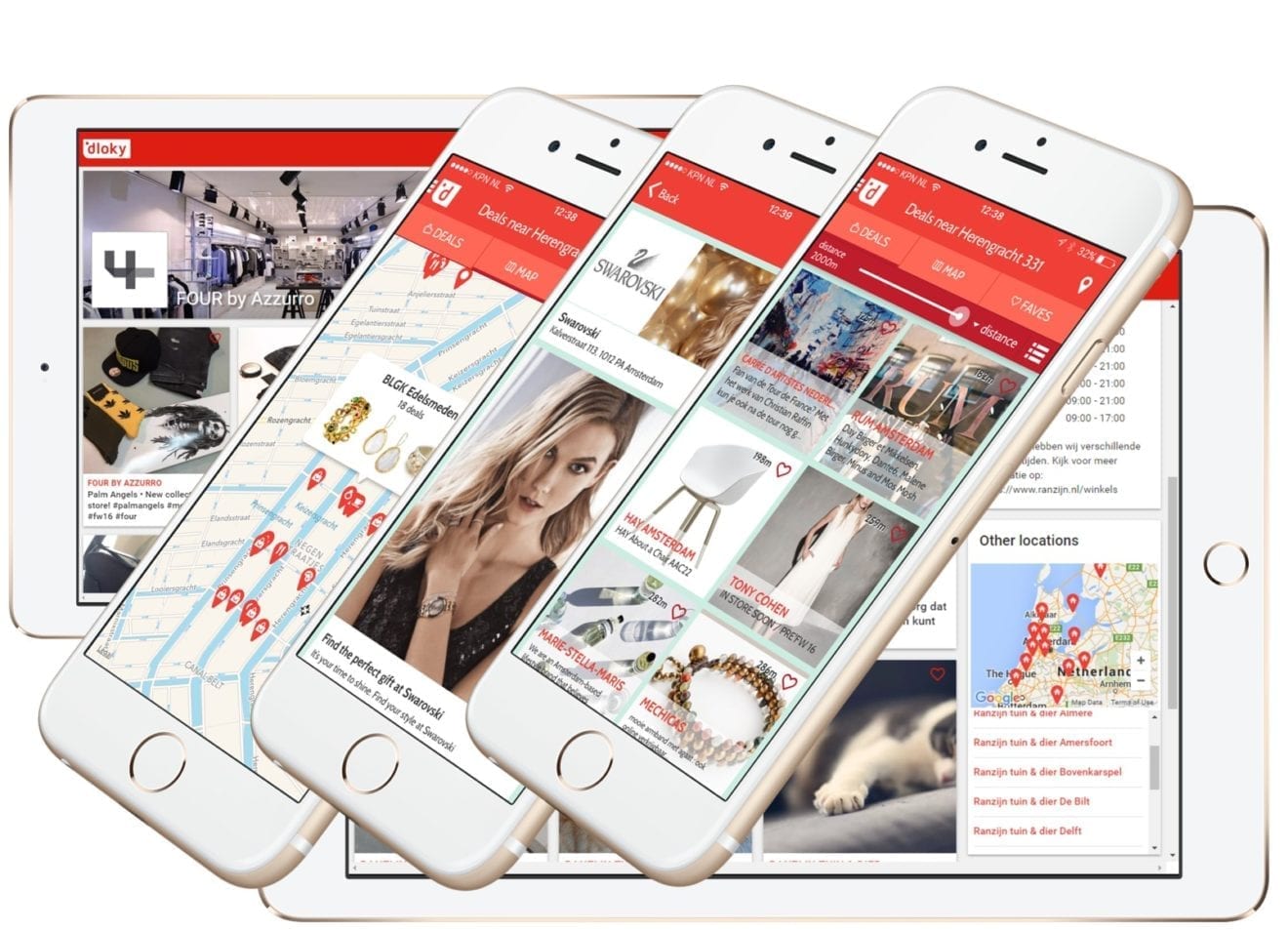
    Dloky is a new Social Media Network for Retail and Hospitality businesses worldwide based on GPS Proximity Marketing and Local Promotion. Dloky started in 2015 as mobile app for iOS and Android and recently the web platform was added.

    Mobile Advertising

    Users can customize their page by setting the search distance, selection of categories, businesses and saving promotions in favorites. Login is not required however possible to save settings over multiple devices and browsers.  

    Proximity Marketing

    Dloky is a free and worldwide open platform for Retail Businesses as well. Businesses can sign up, add and manage all their locations/stores and promotions. Dloky will import large numbers of locations, at no costs. Each store/location and promotion get a dedicated page and relevant URL. Promotions can be posted for all Retail locations combined or for a specific city or location. Accounts can be managed centrally or locally. Dloky is specifically tailored for complex Retail company structures. Many international locations, combinations of franchises, partly or fully owned stores, multiple Admins or multiple Retail Brands or Concepts etc. Apps and Website have the same structure and are linked through App indexing. Dloky plans to offer paid advertisements within relevant categories and locations on the longer term.

    Increase Traffic to physical Stores

    Goal of Dloky is to increase traffic to physical stores. Dloky started in the Netherlands in 2015 and more than 1000 Stores have signed-up such as Fashion; Azzurro, Oger, State of Art Cosmetics: Marie-Stella-Maris Book Stores; Boekenvoordeel Jewelry: Swarovski, BLGK Edelsmeden Galeries: Carré d’Artistes, GaleriesPR2 Shoes: vanHaren, Bristol  Home: Friday Next, HAY  Garden: Ranzijn, Sports, DIY, Beauty etc.

    SEO

    The web application is public and specifically designed for SEO. Each promotion gets an own relevant URL and link back to the Retailers website and web shop, creating relevant and effective backlinks. Retailers have full control on their local promotions. Dloky is currently widely used in the Netherlands by Retail as an alternative for unsolicited physical mail now that the Netherlands is starting to ban unsolicited mail because of environmental reasons.   

    Facebook-coupling

    Also small retailers with a single store love Dloky. With the very efficient Facebook coupling, the Dloky is setup in seconds. The Dloky page can sync with the Facebook page and Facebook posts can be copied automatically in Dloky. Therefor Dloky is a very nice addition to a Local Business Facebook page, post for your followers in Facebook and automatically for potential customers nearby in Dloky. 

  • New way to sell bags for Christian Dior

    New way to sell bags for Christian Dior

    Christian Dior China has become the first luxury brand to sell top-end bags on messaging and social network WeChat.

    With an eye on Chinese Valentine’s Day (Qixi) on August 9, it offered its limited-edition Lady Dior bag on the platform this week. It was to be available until today, but sold out on Tuesday.

    As a special extra, consumers were able to drag online pictures of decorations on to the bag, so it could be tailored for their preferences.

    Buyers could pay through WeChat for the bag, priced at 28,000 yuan (US$4210).

    Other luxury brands, including Cartier, Longchamp and Montblanc have already launched online sales platforms on WeChat, providing special services and discounts.

    For the first half of this year, Dior’s net profits fell 30.2 per cent to €74 million ($82.8 million).

  • Shopping by mobile devices rises

    Shopping by mobile devices rises

    More shoppers are using smartphones and tablets to do business with Korean online retailers – both Koreans and foreigners.

    Chinese shoppers – particularly those who have visited Korea and fallen in love with its products – have been a particular boon to the online shopping business.

    According to Statistics Korea, online shopping transactions rose 18.8 percent in June compared to a year ago, hitting 5.18 trillion won ($4.64 billion). Mobile shopping via mobile devices surged 34.4 percent during the same period, and accounted for 51.2 percent of total online shopping, or 2.65 trillion won.

    “Mobile payment services have improved recently so more customers are using mobile devices compared to the past,” said an official from Statistics Korea.

    Mobile device transactions accounted for only 29 percent of all online transactions in April 2014. The figure topped 40 percent early last year and surpassed 50 percent in December. It continues to grow.

    Even though transactions rose from a year ago, they dropped from the previous month. Online shopping transactions dropped 0.3 percent in June compared to May and mobile shopping fell 2.2 percent during the same period.

    By sector, people purchased more cosmetics and travel services online, while the figure for food, including agricultural produce, livestock and fishery products fell.

    People spent 52.1 percent more on cosmetics in June compared to the previous year, and the figure for travel services increased by 42.3 percent.

    “The number of Chinese tourists visiting Korea rose in general, and they were interested in buying cosmetics at both brick-and-mortar stores and online retail shops,” an official at Statistics Korea said.

    According to Statistics Korea, Chinese tourists visiting Korea rose 201 percent from 223,000 in June 2015 to 671,000 in June 2016. The outbreak of Middle East respiratory syndrome (MERS) lowered the number of tourists last year. The first MERS fatality in Korea occurred on June 2, 2015.

    “More Chinese entered Korea and this also helped travel services transactions grow,” said an official at the agency.

    Statistics Korea surveyed a total of 983 online retailers for its data.

    Meanwhile, foreigners buying Korean goods rose 83 percent year-on-year in the second quarter of this year compared to the previous year, hitting 497.4 billion won.

    Koreans buying goods through foreign online retailers increased by 5 percent during the same period, recording 411.8 billion won.

    Chinese purchasing goods through Korean online retailers jumped 103.1 percent year on year in the second quarter of this year to record 373.2 billion won. The figure for Japan rose 72.1 percent and the European Union (EU) countries increased by 95.7 percent.

    “Cosmetics were the most popular products for foreigners and they accounted for 67 percent of total transactions by foreigners,” said Sohn Eun-rak, a director at the statistics agency.

    Americans purchasing goods through Korean retailers were the highest at 266.9 billion won in the second quarter, followed by the EU (79.2 billion won) and China (33.2 billion won)

    The most popular items that Koreans bought from foreign online retailers were clothes and fashion-related goods. Koreans bought 149.4 billion won worth of fashion related goods from foreign online retailers in the second quarter of this year, down 1.6 percent compared to the previous year.

    BY KIM YOUNG-NAM

  • New Zalora CEO appointed

    New Zalora CEO appointed

    Zalora has appointed a new CEO, Parker Gundersen, who joins the online fashion retailer from DFS Group, the travel retail subsidiary of  Louis Vuitton Moet Hennessy.

    The new Zalora CEO has more than 15 years of retail and leadership experience in key management positions across Asia, the Middle East and North America.

    parker G

    From 2011 to 2015, Parker served as GM for DFS Singapore, and recently held the position of VP for DFS North America, overseeing the company’s operations and business development function in the region. Prior to DFS, Parker worked in management consulting in the Strategy & Operations practice at Deloitte Consulting.

    Romain Voog, CEO of Global Fashion Group, said Gundersen’s experience in retail across Asia and his strong leadership skills will be instrumental in strengthening Zalora’s leadership in Southeast Asia’s e-fashion space.

    Parker holds degrees in economics and management from the University of St. Thomas and has an MBA from The Kellogg School of Management at Northwestern University.

  • Duck Scarves spreads wings to mall

    Duck Scarves spreads wings to mall

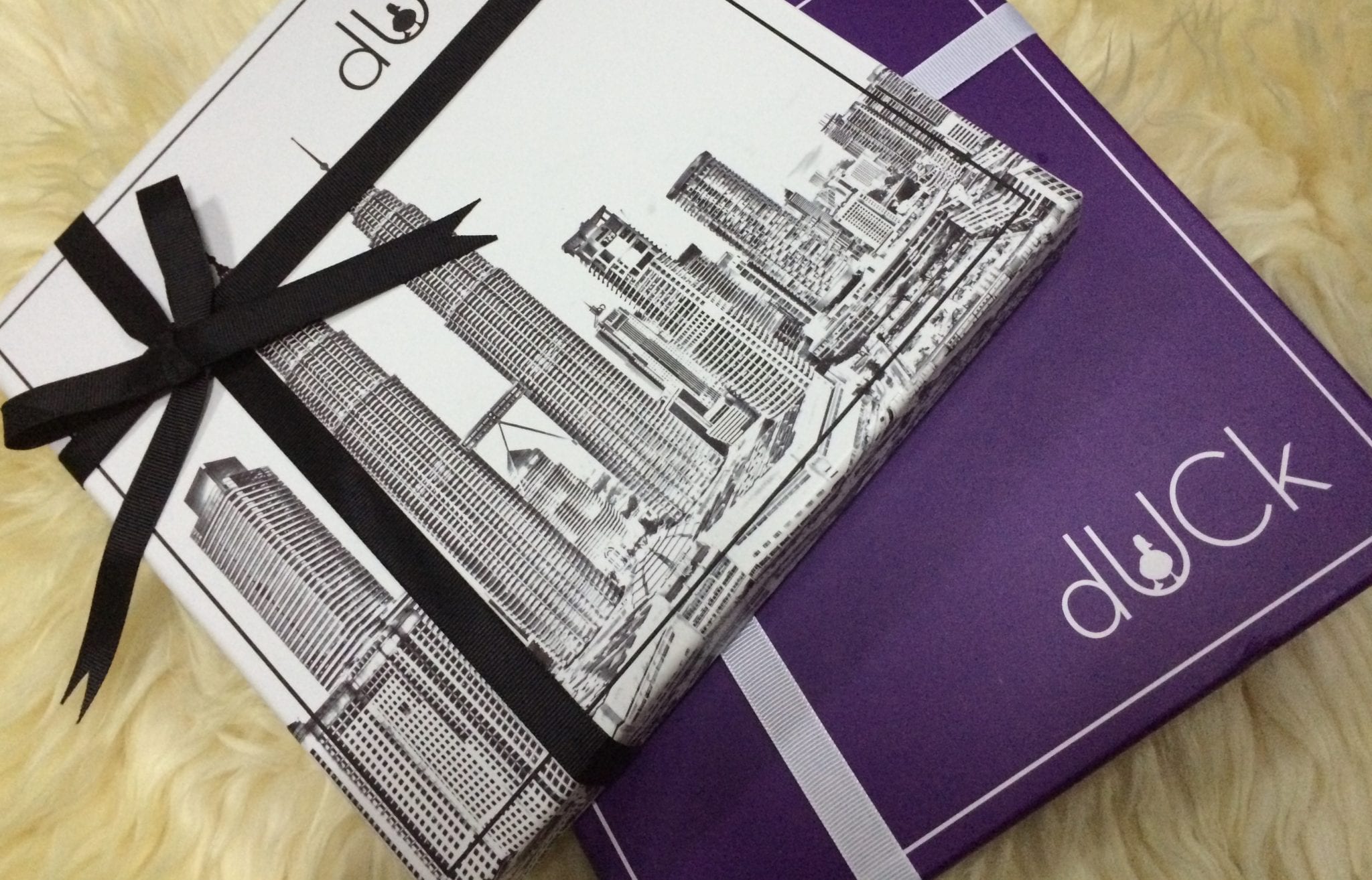
    Founded by Malaysian blogger and fashion entrepreneur Vivy Yusof, online fashion outlet Duck Scarves has come to ground, opening its first store, in Pavilion Kuala Lumpur.

    duck scarves

    Since launching in May 2014, Duck products have become known for their presentation and packaging, as well as design and quality. Each scarf comes with special hem detailing and a shiny Duck charm.

    Duck’s new store has a minimalist design with a spacious layout and ample light. Its grey and white palette is accented by purple, the brand’s main colour. It features a private fitting area.
    The Duck brand revolves around a character named D, and its evolution echoes her life and adventures.

  • Sainsbury’s China doubling product range

    Sainsbury’s China doubling product range

    With the success of its trial with Tmall Global, Sainsbury’s China is doubling its product range.

    Citing “increasing demand”, the British supermarket retailer is about to release 100 more items, such as tea bags, coffee and pasta.

    “Chinese online shoppers are increasingly demanding high-quality international products,” says Sainsbury’s CFO John Rogers.

    “Many customers also want to replicate tastes and occasions they have enjoyed or heard about through international travel. Products to make a British breakfast and English afternoon tea have therefore proved hits.”

    Sainsbury’s started with Tmall last September, joining such British retailers as Asos, Burberry and fellow grocer Waitrose, which sell products on Alibaba’s Royal Mail online outlet.

    Rogers says the trial with Tmall has taught the company much about China’s digital market, including the importance of sales.

  • Inditex Group to introduce m-payment in Sept

    Inditex Group to introduce m-payment in Sept

    Mobile payment is coming to stores belonging to fashion retailer Inditex Group in September, chairman and executive Pablo Isla announced recently during the company’s annual general meeting.

    Inditex has eight brands and more than 7,000 stores throughout the world. These brands include Zara, Pull&Bear, Massimo Dutti, Bershka, Stradivarius, Oysho, Zara Home and Uterqüe.

    Initially, the company’s in-house developed application, InWallet, will facilitate mobile payment at any of the group’s brands in Spain. The service will also allow all receipts to be issued electronically. Isla said the new service has been designed to enhance the shopping experience and aims to significantly simplify the purchase and returns process.

    Customers can activate the service directly from the online app and add the payment cards they want to use on the account in a safe and secure way.  The app has been developed entirely in-house by Inditex as part of the group’s efforts to continually upgrade technology to improve the overall customer experience.

    Isla also announced that the RFID technology rollout across all Zara stores is on track for completion by the end of this year and due to be rolled out in the rest of the group’s brands starting next year.

    Meanwhile, the Inditex chief has launched an ambitious recycling program that would collect customers’ unwanted clothing when shopping online.

    Under the plan, between 1,500 and 2,000 clothes collection containers will  be installed in several Spanish cities in collaboration with Caritas. Simultaneously, Zara will continue installing containers in the bricks and mortar stores, and in September all Zara stores in Spain will have a container for recycling.

    Caritas will sort the clothing to further the garment’s life through its distribution channels or allow for recycling for the development of new textile raw materials.  The pilot test will initially trial in Madrid with the aim of gradually introducing the scheme all over Spain.

    Inditex said it will donate €3.5 million ($3.9 million) over two years to this project, which will also encompass the modernization of Cáritas’s garment sorting and treatment plants.

  • Nippon Express, Alibaba to team up in China-bound shipping

    Nippon Express, Alibaba to team up in China-bound shipping

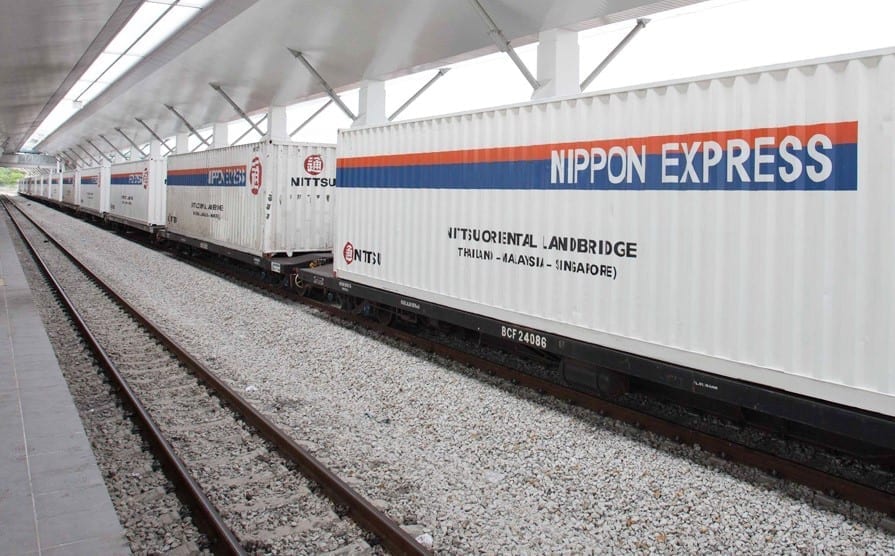
    Nippon Express will work with e-commerce giant Alibaba Group Holding to ship Japanese goods to China for around 30% less than current prevailing rates.

    The Japanese shipper will transport goods from companies doing business on Alibaba’s TMall.com platform to China, while an Alibaba affiliate will handle home delivery. Goods can either be flown across the sea when ordered or shipped by surface in advance and stored in warehouses.

    Nippon Express is Japan’s largest business-to-business and international shipper, enabling it to hold down costs by purchasing space on ships and aircraft in bulk. In teaming up with TMall, which controls 60% of China’s online retail market, the shipper aims to handle half of all online purchases headed there from Japan.

    Currently, Japan Post ships 90% of online purchases traveling to China via airmail with its express-mail service. But a fee hike of around 30% in June to 1,400 yen ($13.68) for packages up to 500 grams has raised headwinds to the service’s use. Nippon Express will keep fees for similar items around 1,000 yen, aiming to pick up customers put off by the increase. Both services take four to six days for delivery in China.

    Nippon Express and Alibaba will also take on the complex business of dealing with customs for companies on TMall. China updated rules on cross-border e-commerce in April and now requires such information as what is being shipped, prices and logistics to be submitted electronically. Nippon Express will be the first Japanese logistics company to create a digital link with Alibaba allowing this data to be combined and submitted in one neat package.

    China’s cross-border e-commerce retail market is expected to grow roughly twelvefold from 2014 levels to $245 billion in 2020, according to U.S. professional services company Accenture.

    A number of Japanese companies are competing to offer better and cheaper shipping options to China, creating new chances for even smaller businesses here to access that enormous market. Yamato Holdings inked a partnership in April with companies including JD.com, TMall’s smaller rival, to offer international shipping and home delivery. ANA Holdings plans to offer a service handling everything from customs procedures to delivery starting in September.

    Such Japanese products as cosmetics and household goods have gained a sterling reputation for safety and quality in China. Consumers there are on track to buy 2.33 trillion yen ($22.8 billion) in goods from Japan online in 2019, according to the Japanese trade ministry. This is roughly triple the 2015 level.

    E-commerce is growing more important to Japanese companies as a source of continuous demand from China. This stands in contrast to consumption by Chinese tourists in Japan, who have been spending less per capita of late.


  • Millennials driving force behind Taobao Marketplace

    Millennials driving force behind Taobao Marketplace

    Millennials are the driving force behind Taobao Marketplace, with more than 70 percent of buyers in their 20s and 30s, according to Chris Tung, chief marketing officer at Alibaba Group.

    “As users continue to engage with the platform in more meaningful ways, we are fostering next-generation consumption features, such as virtual reality, to transcend the overall user experience,” he said in a media statement during the Taobao Maker Festival held recently at the Shanghai World Expo Exhibition Center.

    The festival celebrates Taobao merchants by showcasing creative ideas and designs to the world, including gadgets, fashion and high-tech products. The festivities also include various performances by artists, music groups and celebrities from across Asia.

    Created in 2003 as an online shopping destination for Chinese consumers, Taobao Marketplace has evolved into an interactive lifestyle platform driven by a young consumer population who wants to do more than just shop.

    “It is a destination for innovators, entrepreneurs and creatives to showcase and experiment amongst a community of 423 million Chinese consumers on our China retail marketplaces that come to Mobile Taobao to explore, discover and be entertained,” explained Daniel Zhang, chief executive officer of Alibaba Group.

    In 2010, Alibaba Group launched the Mobile Taobao app to transition its flagship C2C shopping platform to more a interactive platform to explore opportunities in mobile commerce.

    Today, the Taobao platform supports millions of entrepreneurs across China with user engagement across e-commerce, digital media, travel, social and local services. On average , it has around 150 million daily active users on Mobile Taobao. Users launch the Taobao app an average of seven times per day and spend more than 20 minutes each day on the app. They browse an average of 19 products during a 24-hour period,

    Moreover, mobile Taobao users post more than 20 million reviews and comments every day.

    “We hope the Taobao Maker Festival will inspire young makers to continue innovating and reaching the world through the Taobao ecosystem,” Tung said.

  • Flipkart trumps rivals in Jabong bid

    Flipkart trumps rivals in Jabong bid

    A year ago, Jabong’s founders turned down $700 million plus from Amazon; this week they sold for $70 million to Flipkart’s Myntra.

    Indian eCommerce site Flipkart has sealed a shock deal to acquire Jabong, the nation’s third largest online fashion retailer.

    The news came just a day after rival bidder Snapdeal presumed it had won the battle.

    Flipkart’s success is expected to provide a crucial advantage in its battle to ‘own’ the clothing eCommerce space, giving it an advantage of scale and local knowledge in fighting off US-based Amazon.

    Flipkart’s subsidiary Myntra will reportedly pay US$70 million for the troubled Jabong business. That’s a fraction of an offer from Amazon in early 2015 which valued Jabong at between $700 million and $1 billion.

    “The acquisition…. holds an important lesson to all investors and entrepreneurs,” observed Harsimran Julka of Tech in Asia. “Exit when you don’t want to sell.”

    Jabong is one a growing group of failing Southeast Asian eCommerce websites owned by Germany’s Rocket Internet which has witnessed the value of its businesses shrink dramatically over the last 12 to 18 months. It has sold off Foodpanda, Zalora and Lazada websites in several regional markets in a bid to stem growing losses.

    “The acquisition of Jabong is a natural step in our journey to be India’s largest fashion platform,” said Ananth Narayanan, CEO of Myntra. “We see significant synergies between the two companies especially on brand relationships and consumer experience.”

    Julka wrote that in buying Jabong, Myntra will acquire one of the best sourcing systems, catalogs, and loyal customer bases, especially amongst women buyers, within India.

    “With Myntra’s app-only experiment going kaput last year, the company lost a lot of traction in India.

    “The buyout will also give a boost to profitability of Flipkart, as the fashion category is the most profitable of all eCommerce segments, with gross margins as high as 80 per cent.”

  • Social Commerce blossoms on mobile Taobao

    Social Commerce blossoms on mobile Taobao

    On the way to becoming the world’s largest e-tailing market (US$590 billion in 2015), online shopping in China has become a highly social activity.

    Wary Chinese consumers don’t swallow advertising at face value and they don’t take vendors at their word – they check the internet for product reviews, swap links to favoured products and seek out third-party opinions, especially those of people they trust. According to a recent McKinsey report, two-thirds of China’s consumers cite recommendations from families and friends as the most important factor in purchasing decisions. In the US, only one out of three people say the same.

    In other words, in China, shopping is also sharing. So pronounced is this trend that Alibaba Group, owner of China’s largest online marketplaces, insists it’s not so much in the e-commerce business these days as it is in the social commerce business. And since more sharing equals more sales, the company is doing everything it can to make it easier for users to interact with one another when shopping online – going beyond offering the standard eCommerce fare of user-generated product recommendations and ratings by establishing online communities, encouraging shoppers to share photos of their latest online purchases and even adding monetary incentives to encourage greater social participation.

    The tip of the social-commerce spear is Mobile Taobao, Alibaba’s hugely popular mobile shopping app. With 369 million monthly active users, Mobile Taobao is “not only China’s, but the world’s largest social commerce platform,” according to Jiang Fan, who leads Mobile Taobao’s business at Alibaba.

    The app, which offers access to Alibaba shopping sites Taobao Marketplace, Tmall.com and Juhuasuan, generates up to 20 million product reviews every day, and involves 5 million users sharing content with friends. Users “like to share whatever they find- fun things, fun merchandise – with their friends through social media,” Jiang said last month during an investor conference at Alibaba headquarters in Hangzhou, China. “We don’t view ourselves [merely] as a shopping app,” he said. “Our community is not only about us serving the consumers, but consumers themselves helping each other.”

    To drive greater customer engagement, Mobile Taobao has been developing new social commerce features within the app. One such addition is the hosting of special interest groups calledquanzi(circles) where hobbyists and other like-minded individuals can talk about their pastimes and favourite products. Taobao says it now hosts more than 1000 circles covering interests such as wedding planning, fishing, infant care and many others.

    “We want to get people together to allow them to discuss and generate content that can serve more people,” said Zhang Jiehan, a Taobao product manager.

    Photo sharing is also a hit with users, said Jiang. “Every day after [mobile shoppers] complete their transactions they like to share what they’ve bought,” he said, “so we have a specific app for buyers to show off their products.” This feature currently generates about 1.5 million daily reviews, he added.

    One of the most popular social functions on Mobile Taobao is a Q&A feature called Wendajia (ask others) that lets shoppers with questions about a particular product get answers from members of the Taobao community. Wendajia helps free consumers from the drudgery of combing randomly through product reviews or resorting to asking sometimes biased and unhelpful vendors for answers. “The essence here is mutual assistance,” Zhang said. “The new feature builds a direct and effective communication channel between people who have purchased and people who want to purchase.”

    Crowdsourced Q&As have been around for a while, of course. But Wendajia is innovative in the way Taobao identifies and proactively reaches out to users who can provide feedback. When a buyer submits a question, Taobao employs big data and a sophisticated algorithm to spot members of the online community who are most likely qualified to answer the question, typically those who have recently purchased the product. After zeroing in on up to 12 potential candidates, the system then sends out messages to their smartphones soliciting responses.

    Wendajia has proven to be a boon to buyers because they don’t have to wait hours or days for fellow shoppers to stumble on their questions and provide answers. One-fourth of all questions are answered within one minute and 60 per cent of questions within 10 minutes, Jiang said.

    “This greatly optimises the pre-shopping decision process,” he said. Every day, it receives as many as 1 million questions, and 2 million consumers participated in answering.

    China’s widespread adoption of smartphones and the reach of the mobile internet has undoubtedly contributed to the growth of social commerce by making participation easy, ubiquitous and dynamic. Still, Mobile Taobao isn’t relying solely on user enthusiasm and social goodwill to foster greater user involvement.

    Last year, Alibaba rolled out a program to encourage bloggers, writers and noteworthy online expertsto post content on Mobile Taobao by paying them small sales commissions for product recommendations that lead to purchases. More recently, Taobao began offering similar incentives for the general public to encourage social participation.

    Through an upgrade to Taobao’s existing membership program, which previously awarded points only for online spending, users can earn additional points by posting product reviews and links, answering consumer questions and interacting with the Taobao community in other ways. While there are no cash awards, amassing points entitles users to benefits such as coupons for car-hailing app Didi Chuxing and service upgrades such as late check-out times at participating hotels.

    In social-media-crazed China, such perks may not be necessary. Just being part of the conversation seems to be enough to keep people involved. According to media research firm ComScore, the average Mobile Taobao user spends more than 25 minutes a day on the app, compared with Amazon Mobile’s nine minutes.

    As Taobao shopper Cici Wang notes, social-commerce features like Wendajia have value “because of the volunteer work offered by ordinary users, which makes it trustworthy.” Indeed, having armies of consumers keeping each other informed and vendors honest is seen as a positive development as e-commerce morphs into social commerce, says Zhang, the Taobao product manager. Digital word-of-mouth provides merchants with continuous feedback and compels them to maintain quality products and services.

    “In the long term, it drives healthy growth of the platform,” Zhang said.
  • DMI, Wing launch mobile payments in Cambodia

    DMI, Wing launch mobile payments in Cambodia

    Enterprise mobility vendor DMI has teamed up with Cambodian mobile banking service provider Wing to offer mobile payment services in the market.

    The companies have developed an app for iOS and Android to allow customers to transfer, deposit and withdraw money via any mobile phone.

    Using the app, customers can pay bills, top up their mobile credit, send money to other users, donate to charity and find the nearest Wing Cash Xpress outlet.

    Cambodia has a significant unbanked population – only around 10% of the population of 15.5 million are in possession of bank cards. The mobile app is designed to address this customer segment.

    The app is available in both English and Khmer and has been designed by DMI to be quick to set up and use.

    “Following the launches of hundreds of mobile solutions all over the world, DMI is very proud to deliver a project in Cambodia for Wing,” DMI International COO Daniel Karlstrom said.

    “DMI is one of the leading technology companies in Cambodia and our collaboration has resulted in a world-class solution that is tailored for the Cambodian market and developed in-country by our Khmer team.”

  • Datapipe drives Baozun digital transformation

    Datapipe drives Baozun digital transformation

    Datapipe, a leading global provider of managed hosting and cloud services for the enterprise, has led the cloud migration and digital transformation of China’s largest brand eCommerce services provider Baozun Inc.

    Baozun has shifted its IT systems to Datapipe’s managed cloud, tapping Datapipe’s expertise as a Managed Services Provider to handle its cloud migration and maintenance. Results include decreasing the time to on-board new clients by 500 per cent, reducing the cost of hosting by 20 per cent, reducing maintenance  from 200 man hours to virtually zero, freeing Baozun’s IT team of over 20 employees to focus on core business activities. Datapipe also reduced Baozun’s server downtime to zero per cent, enabling Baozun to guarantee a 99.95 per cent uptime to its clients – which include over 100 global brands in over 50 countries.

    With operations across China, Hong Kong, Taiwan and the rest of Asia Pacific, Baozun offers end-to-end brand eCommerce solutions to more-than 100 international clients. These include brands in the apparel, appliances, electronics, home and furnishing, food and health, cosmetics, insurance and automobile categories. Baozun helps these companies operate eCommerce sites on China’s most popular online marketplaces, such as Alibaba’s Tmall and JD.com. Key to ensuring their clients’ success is the ability for Baozun to provide scalable, highly available and secure end to end solutions integrating front end shopping experiences with supply chain management and distribution systems.

    Colin Chan, VP of Asia at Datapipe says Baozun has hundreds of global business partners, spanning millions of customers and transactions.

    “Given the scope of its operations, ‎and the unique nature of eCommerce in China, where some days have 1000-times the transaction and visitor numbers than others, the challenge of ensuring infrastructure is able to scale up to meet business demand‎ is very real. We’re pleased to work with Baozun, by migrating their core workloads to a 100 per cent scalable cloud environment and providing management of their infrastructure 24×7.

    “With their IT now supporting their ever-growing business, Baozun is better positioned to take aim at the multi-trillion dollar eCommerce opportunity in China and Asia wide.”

    Prior to working with Datapipe, all of Baozun’s data ran on web servers hosted externally – unsustainable given the business’ rapid growth, because as transactions volumes grew, so too did the server load; consequently, server sizes increased, placing significant pressure on its IT team around maintenance, cost, speed and scale.

    Tony Wu, CTO at Baozun, says Datapipe came highly recommended. “They brought significant expertise in managing cloud environments – including for other large eCommerce ‎businesses in China. They delivered a high-level of customer support, were very affordable and are able to provide open source as well as private cloud services to meet our unique needs. By Datapipe managing our cloud deployment, Baozun is able to focus on other crucial technology processes, accelerating our growth and delivering shareholder value.”

    China surpassed the US last year to become the world’s largest retail eCommerce market, and is expected to cross US$1.21 trillion in retail eCommerce sales in 2017, according to eMarketer. While eCommerce is growing strongly, running an eCommerce business comes with its own set of unique challenges, particularly around scale. When online promotions are launched, for example, Baozun sees significant spikes in sales volumes – up to 100x that of a normal day. On Singles Day in 2015 (11 November), Baozun processed 650,000 orders in the first hour and 3.5 million orders within a span of 24 hours.

    Datapipe recently drove the eCommerce transformation of Challenger Technologies Limited, Singapore’s largest electronics retailer. The company is seeing rapid growth across Asia-Pacific. It has doubled regional manpower year-on-year, with close to 100 employees now in Hong Kong and double the customer base in the region.

    Datapipe is the managed hosting and cloud services provider with the most complete set of services, global locations, and industry leading partners. Datapipe delivers choice, control and confidence in architecting, deploying, and managing multi-platform hybrid IT solutions tailored to individual customer needs. Optimising mission-critical and day-to-day enterprise IT operations, Datapipe enables businesses to transform, innovate, and scale. Backed by a global team of experienced professionals and next-generation data centers Datapipe provides comprehensive security, governance, orchestration, and analytics solutions.

  • MapR debuts data science-led Quick Start solution

    MapR debuts data science-led Quick Start solution

    MapR Technologies has made available the MapR Risk Management Quick Start Solution for financial services, powered by the MapR Converged Data Platform.

    With more data available to detect, identify and avoid loss from fraud, cybercrime, or regulatory non-compliance, financial services companies can engage with MapR data scientists and deploy the MapR Converged Data Platform to quantify and manage risk.

    “With this new Risk Management Quick Start solution, we have created a proven, repeatable and demonstrable approach to identifying fraud and other illicit activities using the scale and reliability of the MapR Converged Data Platform,” said Dave Jespersen, VP of worldwide services, at MapR Technologies.

    Traditional messaging and processing technologies are insufficient to handle the increasing scale and complexity of risk management and its associated data. With the MapR data science-driven approach to risk management combined with the MapR platform, important vulnerabilities can be identified, modeled and analyzed to detect fraud, money laundering, identity theft, rogue trading and terrorist financing.

    The MapR Financial Services Risk Management QSS is data science driven and delivers a working data science model and solution and a path forward from a five week consulting engagement.

    Two QSS paths are offered including the fraud detection path of the QSS that uses predictive analytics models to tackle vulnerabilities beyond fraud, and the anti-money-laundering path of the QSS that uses advanced anomaly detection to identify hard-to-detect risk management challenges.

  • Amazon India rolls out Prime

    Amazon India rolls out Prime

    Online retailer Amazon India has rolled out the global Prime membership service, giving customers access to unlimited free one- and two-day delivery on more than 100,000 products.

    It is also introducing its Prime video service, giving members access to movies and TV shows from India and around the world.

    “Prime provides unlimited convenience all year long,” says Amazon India VP and country head Amit Agarwal.

    Offering a free two-month trial period, Amazon.in has revamped its on-site and app experience.

    Members can also use Prime Early Access to buy top deals 30 minutes early every day.

    “Since its international inception, Prime continues to evolve as we add millions of additional items that can be delivered incredibly fast and free,” says Amazon Worldwide Prime VP Greg Greeley.