Category: E-Tailing

Retail News Asia is committed to providing both local and global retailers with the latest E-Commerce & Etail news throughout the Asian market. This on a daily base.

  • GrabBike Indonesia Records 300% Growth

    GrabBike Indonesia Records 300% Growth

    Online app-based transportation service GrabBike recorded a growth of 300 percent (year to date) until the first half of 2016.

    “Our growth has been outstanding since last January when Grab did a rebranding as the service provider with the most complete vehicle reservation platform,” Public Relations Manager for Grab Express and Grab Bike Dewi Nuraini said in a statement on Thursday, July 14, 2016.

    Dewi says Grab’s machine learning technology and data analytic capabilities are the significant driving growth factors and allow major efficiency.

    In addition, the company also gradually reduces subsidy for every trip completed by 50 percent. “This indicates the high involvement of the users on Grab’s multi-service platform,” Dewi said.

    One of Grab’s four monthly active users in Indonesia averagely uses more than one Grab services. Besides the app-based motorcycle taxi or GrabBike, Grab has a private car rental, taxi order, and courier service.

    Dewi said Indonesia has become the largest market for Grab, based on the number of trips completed on the entire platform. Therefore, Grab specifically focuses its business in Jakarta.

    “Grab also plans to expand its multi-service platform to more than eight major cities in Indonesia,” said Dewi.

  • Businesses in Indonesia Capitalize on Pokemon GO Popularity

    Businesses in Indonesia Capitalize on Pokemon GO Popularity

    “We are excited to announce that Pokémon GO is officially available to Trainers in Germany,” Pokemon Go announced on Wednesday (13/7) on its official website.

    With an official Indonesian release imminent, savvy businesses across the country have begun harvesting the game’s unique featured — requiring players to travel around and explore different areas to find and catch Pokémon.

    The National Museum, Jakarta, suggested players, known as Pokémon trainers, hunt the little monsters through the institution’s grounds on Monday.

    “Are you a Pokémon master/trainer? Come hunt Pokémon at the National Museum. It will add to your knowledge in a fun way!,” the Museum National tweeted.

    Motorcycle taxi ride-hailing application Go-Jek also did not want to miss the opportunity to benefit from the game.

    “Wanna seek Pokémon? Go with Gojek,” the ride hailing app said.

    Qraved.com, a Jakarta-based restaurant search and reservation site, joined the parade after launching a list of restaurants close to Pokéstops — places where players can get free items to enhance game experience — around the Sudirman area.

    The app — created by license owner Pokémon Company, multinational consumer electronics and software company Nintendo and Google’s spin-off software developer Niantic — itself, according to Quartz, has seen its players in the US alone spend $1.6 million each day on in-app purchases.

  • Bangkok commerce group launches WeMall

    Bangkok commerce group launches WeMall

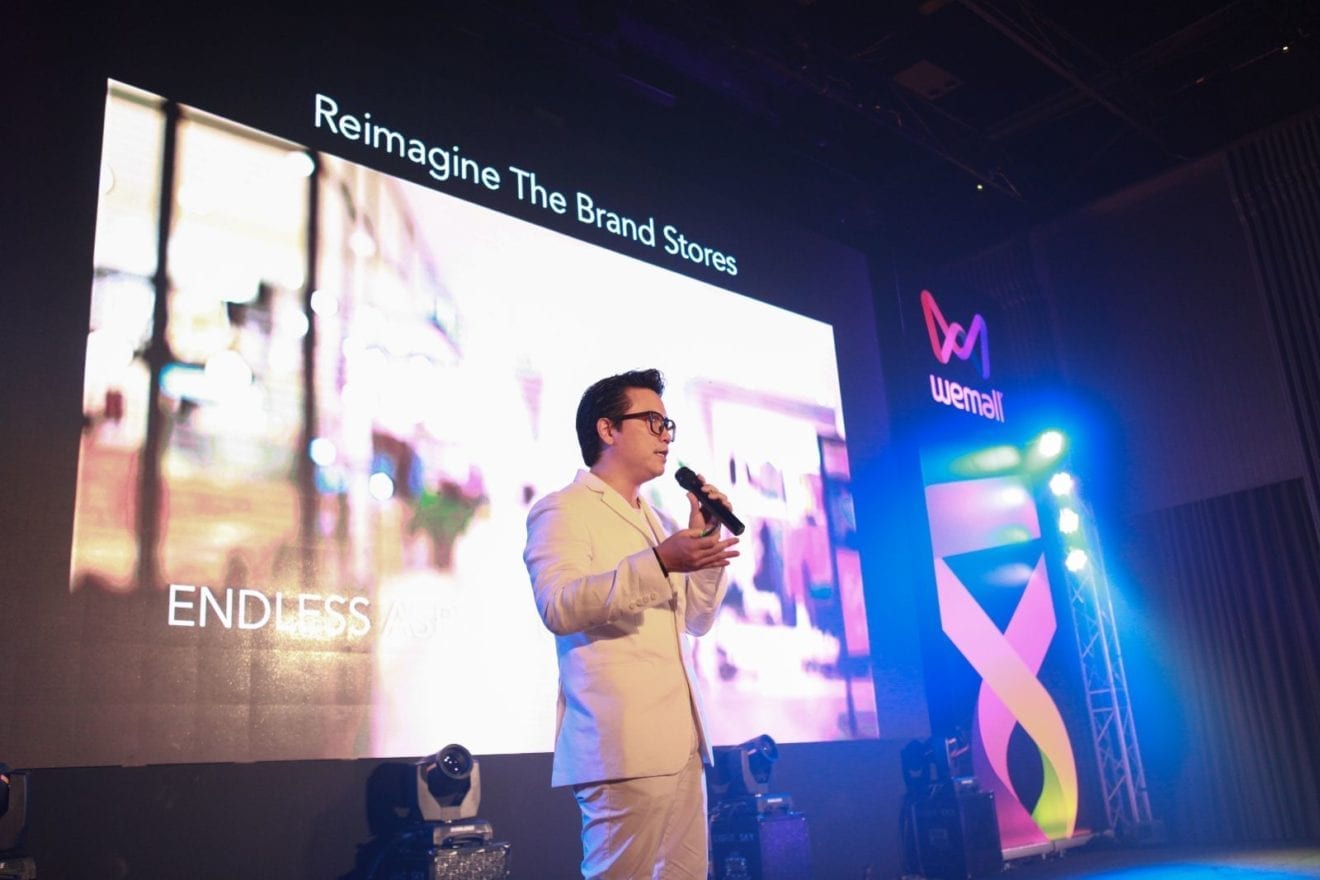
    Bangkok company Ascend Commerce has spent more than Bt300 million (US$8.555 million) branching into eCommerce by developing WeMall, which it hopes will feature more than 1000 brands next year.

    Ascend Group CEO Punnamas Vichitkulwongsa says the ASEAN eCommerce industry has outpaced the global growth rate. Thailand’s share of the $15 billion online retail market in the region is around $2 billion, with the country ranking fourth behind Singapore, Indonesia and Malaysia.

    appwemall

    Ascend GM Seubsakol Sakolsatayadorn says online shopping now accounts for 2.3 per cent of the total retail-market value in Thailand, with the growth rate for developed nations ranging between 10 and 12 per cent.

    He says WeMall will focus on end-to-end services and promote itself as the branded marketplace with trusted mechanics for online shoppers. The outlet offers two forms of partnerships, full-scale services and self-formulated services.

    “Brands can run their own online outlets via ready-to-use features. When the business climate turns increasingly competitive, they will be able to adjust their strategy in a timely manner.”

    WeMall has been running trial services for a month, during which it attracted more than 2 million visitors, and more than 60,000 products were sold and delivered.

    “In its pivotal phase,” says Seubsakol, “WeMall features more than 15,000 items from more than 1100 brands in nine main product categories: beauty and healthcare, home appliances, electronic devices, computers and laptops, lifestyle, mums/kids/babies, cellphones and tablets, and cameras and gadgets.”

  • Innovate or die: Singapore retailers advised to reinvent as brick and mortarshops lose luster

    Innovate or die: Singapore retailers advised to reinvent as brick and mortarshops lose luster

    Some brands are even advertising via Snapchat.

    In a fast-paced and technologically-savvy city-state such as Singapore, brick and mortar shops of retailers, however traditional, may not be adequate anymore.

    According to a report by Cushman and Wakefield, Italian luxury brand Prada, for example, has announced plans to advertise via Snapchat, and will be offering their range of goods online.

    Additionally, the Singapore Tourism Board is using WeChat and Baidu Connect, and other online travel services and social review sites to reach out to independent Chinese travelers.

    “Thus, it is essential for all major stakeholders to reinvent their operations to drive the retail scene forward,” the report noted, highlighting the inevitable paradigm shift.

    Meanwhile, to combat the surge of e-commerce, the report said retailers are increasing F&B components in shopping malls and department stores, as such experience-based concepts are irreplaceable by online retail.

    “For instance, Muji Café and Meal will be opening their second outlet in Raffles City, and a cluster of 16 restaurants will open in Wisma Atria’s Japan Food Town. In addition, Robinsons the Heeren welcomed Angela May Food Chapters in this quarter,” the report added.


  • The Salvation Army joins start-up ShopBack Singapore on its Social outreach

    The Salvation Army joins start-up ShopBack Singapore on its Social outreach

    The Salvation Army partners ShopBack Singapore, one of the top Cashback sites in Southeast Asia, to introduce the #ShopBackGivesBack outreach. The budding start-up’s first foray into social responsibility encourages shoppers to shop and do good.

    From now till 31 August 2016, ShopBack Singapore will make a $10 donation to The Salvation Army for every first purchase made by users who sign up for a free account at https://www.shopback.sg/salvationarmy. No minimum spend is required from user to initiate the gifting.

    “The name #ShopBackGivesBack was chosen as it serves as an apt representation of both our business and social responsibility outreach,” said Ms. Josephine Chow, Country Head of ShopBack Singapore. “The backbone of our business involves giving cash back to the online shoppers. In line with GSS, we invite Good ShopBack Samaritans to indulge in shopping while doing good for The Salvation Army.”

    The international charity organisation has been serving the underprivileged in the local community without discrimination. Throughout its 81 years of establishment in Singapore, The Salvation Army has launched several diverse social programmes to cater to a wide range of needs in society.

    “The Salvation Army has come a long way in identifying social needs and doing our best to help people who truly need relief from difficult circumstances. We are pleased to partner ShopBack Singapore in its initiative to give back to the community. With the support of ShopBack Singapore and its kind shoppers, we can continue to provide better care for abandoned and abused children, families in material need, elderly requiring nursing care, and other needy segments in Singapore,” said Colonel Lyndon Buckingham, Territorial Commander, The Salvation Army, Singapore, Malaysia and Myanmar Territory. ShopBack SG 2

    To foster the spirit of giving and buying this GSS, ShopBack Singapore will be raising the Cashback tier from up to 30% to 40% for the Good ShopBack Samaritans. They will also get to enjoy exclusive voucher codes to help them save more as they shop from over 500 online stores such as Taobao, Guardian, Expedia and Cathay Cineplexes.

    Injecting social responsibility into a company’s core at an early development stage

    Most people tend to associate social responsibility with large corporations. They are more entrenched in their respective fields and tend to have more resources to execute social responsibility on a greater scale, which translates to a bigger impact.

    “In spite of resource constraints, ShopBack Singapore is keen to tighten its belt, step forth and give back to society,” said Mr. Henry Chan, Co-Founder of ShopBack. “We applaud this initiative and give the team our full support to take #ShopBackGivesBack further. This social responsibility outreach will serve as a good initiative to explore different ways of giving back while maintaining a sustainable business.”

    Currently less than two years old, ShopBack is seeing a steady 20% month-on-month growth across the region in five markets, garnering at least six orders per minute for its online retail partners. The desktop-first Cashback site just launched its mobile app last week, which topped the Shopping Category for free apps in less than 24 hours.

    Moving forward, ShopBack Singapore will look into the option of Cashback donation to involve over 250,000 local users in the #ShopBackGivesBack outreach. With the integration of charity organisations such as The Salvation Army as one of ShopBack’s payout options, shoppers will then be able to donate their accumulated Cashback straight to the desired organisation without forking out cash from their wallets.

  • Inamall launch opens doors for RI businesses

    Inamall launch opens doors for RI businesses

    The launch of a marketplace dedicated to Indonesian-made products on Chinese e-commerce giant Alibaba’s platform will open doors for local small and medium enterprises (SMEs) to break into the Chinese market.

    Over the weekend, Trade Minister Thomas Lembong and a number of officials took part in officiating Inamall in China, which is currently accessible through Alibaba’s subsidiary marketplace Tmall Global. Prior to the announcement, Inamall had reportedly been active since last year.

    Inamall will feature exclusively Indonesian-made products, with a particular emphasis on food and beverages. Some Indonesian brands that have entered this marketplace include coffee brands Kopi Luwak and Kapal Api, along with snack products ranging from Kusuka chips to Inaco Nata De Coco.

    Through the partnership with Alibaba, Indonesia now has a direct access to a lucrative online market, which would allow Indonesian producers to sell their products directly to Chinese consumers without the hassle of distributors.

    Indonesian ambassador to China and Mongolia Soegeng Rahardjo elaborated during the event that since Inamall’s soft launch last year it has been visited by up to 400 million Chinese users, thus highlighting the extensive interest in Indonesian products in the People’s Republic.

    The interest, Soegeng noted, arose because members of the Chinese public had less faith in their local products because of safety issues, especially when it comes to food and beverage products. With this perception by Chinese people, Indonesian products will get a better foothold in their market.

    “But the challenge now is how [Indonesian vendors] are able to maintain the quality of their goods, maintain their capacity and ensure the continuity of their production so that outside markets are able to consistently come back to an Indonesian product,” he said during the Inamall launch in Hangzhou last week, as reported by Antara.

    Adding to that, the director of the Indonesian Chamber of Commerce and Industry (Kadin) in China, Liky Sutikno, noted that Inamall would enable Chinese consumers to develop emotional connections with Indonesian products, enough for them to buy again and again if they adore the product, thus creating precious brand loyalty.

    At the same event, the managing director of the Global Alibaba Group, K. Guru Gowrappan, noted that Alibaba’s intentions in Indonesia are to help build the country’s e-commerce ecosystem so that local SMEs will be able to thrive.

    Alibaba had already begun to extend its reach into the Southeast Asian e-commerce market, with its recent purchase of a controlling stake in Singapore-based platform Lazada earlier this year.

    Commenting on this partnership, the Communications and Information Ministry’s e-business director general, Azhar Hasyim, said that having their products able to transcend borders directly into a market like China would be massively beneficial for Indonesian SMEs.

    In terms of online traffic, Azhar says that with many Indonesians being familiar with Chinese websites and online services, the market exposure could increase as a result on both sides.


  • Singapore’s EDB, MasterCard enter smart city alliance

    Singapore’s EDB, MasterCard enter smart city alliance

    The Singapore Economic Development Board has entered an agreement with MasterCard to help Singaporean companies build innovative solutions in urban mobility, tourism and trade.

    The announcement was made at the World Cities Summit 2016 being held this week at the Sands Expo & Convention Centre, Marina Bay Sands in Singapore.

    The two parties said they will focus on tackling some of the biggest urban challenges of our time in the next two years: how to promote mobility, tourism and trade while enabling seamless experiences and sustainable growth.

    MasterCard and the EDB in partnership with other Singapore-based companies plan to work together to design and build technology platforms in the three mentioned.

    In tourism, the goal is to help Singapore residents and visitors navigate the city state’s attractions easier and in a more connected way. In urban mobility, the platform will strive to ensure that residents and visitors have an easy time using the local transit system. In trade, the goal is to digitize and automate how companies buy, sell and pay each other.

    For each of these three areas, solutions will be designed and developed out of Singapore, further enhancing Singapore’s ability to create innovative products and services which are exportable and can be globally deployed.

    “We are happy to work with MasterCard to enable the creation of new solutions in the identified themes. This is in line with EDB’s drive for Singapore to be a hotbed for innovation and creation of new businesses, which in turn will contribute to economic growth and the creation of good jobs,” said Kelvin Wong, assistant managing director at EDB.

    In major cities around the world including London, Athens and Bogota, MasterCard is already working with local authorities and other technology companies to make public transport more accessible and more efficient.

    Ari Sarker, co-President MasterCard Asia-Pacific: “For many years, Singapore has been setting the benchmark for what it means to become a smart city and a smart nation.

    Since 2012, Singapore has been one of MasterCard’s global R&D Centers (MasterCard Labs) – which most recently launched the first commerce application for SoftBank Robotics’ humanoid robot Pepper.

    Earlier this year, MasterCard also teamed up with IBM to offer smaller merchants in Singapore and across the Asia-Pacific region market insights that integrate IBM Watson Analytics with insights based on aggregated and anonymized transaction data through MasterCard Advisors Local Market Intelligence (LMI).

  • China’s large retailers report slower growth in 2015

    China’s large retailers report slower growth in 2015

    China’s large retailers registered slower growth last year, with brick-and-mortar stores under continuous pressure due to booming e-commerce, a report showed Thursday.

    The sales volume of the country’s top 100 retailers topped 4.13 trillion yuan ($613.6 billion) in 2015, up 22.4 percent year on year, down by 3.8 percentage points compared with 2014, according to a report released by China General Chamber of Commerce, a retail industrial guild and retail market data provider.

    Among them, brick-and-mortar stores posted a continuous slowdown in growth, with sales only rising 3.2 percent year on year.

    Chinese Internet giant Alibaba’s T-mall e-commerce platform was the top seller last year, followed by JD.com and Suning.com.

    The report pointed out that foreign retailers saw their market share in China decrease further last year, with fewer foreign players making it into the top 100, and slower sales growth.

  • Adidas Group India plans shopping app

    Adidas Group India plans shopping app

    Sportshoe brand Adidas Group India is planning to launch a shopping app by December, primarily to drive customer engagement through content and loyalty programs, as well as boost online sales.

    It is a significant move as it indicates increasing fragmentation in online fashion shopping, as most brands do not have independent shopping apps, reports Live Mint.

    With its app, Adidas is aiming to strengthen its online presence as brands and offline retailers adopt omnichannel strategies to offer customers access to products across physical stores via their mobile phones and websites.

    “Our engagement with consumers does not end in incremental sales,” says Adidas Group India’s senior eCommerce director Abhishek Lal. “Shopping is just a small fraction. We are planning an app and rewards program to increase engagement with the brand.”

    Separate apps will be rolled out for Adidas and its subsidiary Reebok India.

    Adidas is currently available on online stores such as Amazon India, Flipkart and Myntra, and online channels contribute 10 to 15 per cent of the company’s overall sales, says Lal.

    Other brands are already building online stores to reduce their dependence on the likes of Amazon India and Myntra. Leading the way is Madura Garments with two online stores, Abof and Trendin. Its brands include Allen Solly, Louis Philippe and Peter England.

    By launching an app, Adidas is also trying to tap into social commerce by offering content and creating communities of fashion followers.

    “Social commerce is complementary to pure play eCommerce, and also the way forward for us,” says Lal. “There is no history of a single-brand app yet, so it is hard to assess what the outcome will be.”

    Adidas has also expanded its omnichannel presence since its launch early last year. Adidas plans to bring about 400 stores under the omni-channel loop by December. Those already involved in the strategy have had their revenue grow about 3 to 5 per cent.

    “There has been some impact on revenue because of omni-channel,” says Lal. “A lot of sales were lost because sizes were not available in stores. There was also a lot of cross-selling. We have a brand called Neo which is available only online, so a lot of people walked into the stores and bought Neo on the tab. That is an upsell opportunity.”

  • New Ippin mall offers Japanese goods

    New Ippin mall offers Japanese goods

    An eCommerce company that sells printer inks and sanitary napkins, C-Connect, has launched Ippin, an online shopping mall that specialises in direct sales and distribution from Japan to other countries.

    Ippin not only sells products made in Japan, but also “Produced by Japan” and “Popular in Japan” items. Customers can buy directly from 18 regions and countries, though the initial target is mainly China and Southeast Asian countries.

    Categories include food, fashion, cosmetics, children’s and baby items, and electric appliances.
    Independent websites are provided for each country, such as China, Singapore and Malaysia, with recommended item rankings and payment methods (16 currencies) to suit the market, such as credit cards, Alipay and Paypal.

    Users can choose from three languages (English, Chinese and Japanese) with more to be introduced.

    C-Connect was founded in 2009.

  • New Tax Tariff for Online Retailers in Indonesia ?

    New Tax Tariff for Online Retailers in Indonesia ?

    The new regulation implies that those individuals and companies that generate revenue and profit through online retailing (including sales through Facebook or Instagram pages) are required to report their income and fulfill their tax obligations.

    In general, a corporate income tax rate of 25 percent applies in Indonesia. Small and medium-enterprises with an annual turnover below IDR 50 billion (approx. USD $3.8 million) obtain a 50 percent tax discount (imposed proportionally on taxable income of the part of gross turnover up to IDR 4.8 billion). In 2013, Indonesia’s Finance Ministry issued a regulation that set a one percent income tax tariff on individual and institutional taxpayers with an annual gross turnover below IDR 4.8 billion (approx. USD $363,636).

    However, the main problem for Indonesian authorities is that it faces difficulties to monitor transactions of the nation’s small and medium-sized businesses. Most of these businesses do not have legal entities or taxpayer identification numbers (NPWP).

    Meanwhile, the idEA estimates that Indonesia’s e-commerce retailers see an increase of at least 30 percent (y/y) in income during the Idul Fitri holiday (4 – 8 July 2016) as it detected a shift in consumer behavior. According to the idEA an increasing amount of Indonesian consumers prefer to shop online rather than visit offline stores.

  • MPPA increases stake in MatahariMall.com to 10%

    MPPA increases stake in MatahariMall.com to 10%

    With the acquisition, MPPA hopes to benefit from wider access to e-commerce as its development will remain strong this year. The Company views e-commerce in Indonesia is an enormous market and will continue to grow.

    The investment and partnership with MatahariMall.com is a new opportunity to foster O2O e-commerce components that encourage the sale contribution in the future. The relationship will improve MPPA’s position as the leading multi-format modern retailer in Indonesia, as well as contribute to a sound financial outlook going forward. MPPA takes advantage to secure a new opportunity to display and market the Company’s exclusive brand throughout Indonesia via e-commerce.

  • Ksubaka’s PlaySpots Deliver Friso Gold Engagement Campaign

    Ksubaka’s PlaySpots Deliver Friso Gold Engagement Campaign

    Ksubaka today announced that it has successfully delivered an interactive in-store engagement campaign in CRV, WuMart and MerryMart retail stores in China for Friso Gold.

    The objectives:

    The campaign objectives were to attract in-store shoppers to a Friso Gold interactive experience and communicate to mums that Friso helps prevent heat and constipation in babies because the Friso Gold molecules are smaller and easier to digest.

    Equally as important, was to collect data through an onscreen shopper survey to verify that the Friso Gold Interactive Experience was effectively reaching the target audience and educate new potential customers about the product benefits.

    The campaign experience:

    Ksubaka designed a Friso Gold interactive experience, which was provisioned over-the-air to 231 playSpots across 37 retail stores (comprising a mix of CRV, WuMart and MerryMart) within the Ksubaka media network. The gameplay involved catching as many small Friso molecules as possible within 30 seconds, while avoiding the larger molecules falling from a competitor’s product. Shoppers caught the molecules by moving a baby back and forth on bottom of the screen. To emphasise the difference between small and large molecules, when the baby caught the Friso molecules they smiled and raised their hands in happiness and when they caught the large molecules the frowned and cried. 

    At end of the gameplay, key product messages were reiterated along with a pack shot and the shopper was offered a 1 for 1 discount by scanning a WeChat QR Code to get a coupon. The short survey was then displayed on-screen asking shoppers for a little information on their preferences.   

    The results:

    Working to a set of agreed KPIs, the Ksubaka Friso Gold 31 day campaign delivered:

    • Campaign Exposures – 4.4 million +193% on KPI
    • Shopper Impressions – 6.6 million +200% on KPI
    • Mojo engagement – 82K +64% on KPI (Mojo is a completed shopper brand engagement that ends at the reward screen)
    • Total number of surveys completed 1.3k

    “The Friso Gold campaign is an excellent example of how Ksubaka is able to drive mass consumer engagement at the point of purchase while, at the same time, giving live and meaningful insight for brands,” said Julian Corbett, CEO and founder, Ksubaka.

  • Alibaba hosts intellectual property event

    Alibaba hosts intellectual property event

    Chinese online commerce giant Alibaba Group has hosted an inaugural Rights Holders Collaboration Summit involving international brands and the intellectual property (IP) enforcement community to enhance collaboration in the fight against infringements.

    More than 100 Chinese and international brands as well as trade associations attended the event, including Adidas, Apple, Burberry, Hewlett Packard, Louis Vuitton and Mars, the Chinese British Business Council (CBBC) and the Quality Brand Protection Committee (QBPC).

    Alibaba also announced the launch of the IP Joint-Force System, an online platform designed to streamline IP-related communications between the group and brands. The system aims to build a more collaborative working relationships with international brands as Alibaba continues its fight against counterfeits and IP infringement.

    New challenges

    With eCommerce becoming a way of life and the internet sector continues to evolve, brands and online marketplaces alike face new IP enforcement challenges, says Alibaba Group chief platform governance officer Jessie Zheng.

    “As the leading online marketplace, we have a responsibility to all our constituents to govern our platform and find innovative solutions. The Rights Holders Collaboration Summit and IP Joint-Force System are a couple of the many ways Alibaba is working closely with rights holders in our efforts to eradicate counterfeits both online and offline.”

    All brands in the “Good Faith Takedown” program are eligible for the IP Joint-Force System, which came into effect this month. This Alibaba program was launched last year to expedite the notice-takedown process for brands that submit valid counterfeit complaints. Many of the more than 700 brands involved in the program are participating in the first phase of the IP Joint-Force System, including Adidas, Apple, Mars, Philips and Procter & Gamble.

    With more than a billion products listed across its marketplaces at any given time, Alibaba Group’s data analytics and processing technologies enabled it to remove more than 120 million infringing product listings last year, which is eight times the number of counterfeit products removed based on takedown requests from brands.

    Dedicated support

    For the IP Joint-Force System, each participating brand is assigned a dedicated online portal and Alibaba account manager to enhance collaboration, heighten transparency around IP enforcement efforts, and reinforce mutual understanding and trust. The system enables Alibaba to directly and efficiently seek information from rights holders regarding suspected counterfeit product listings.

    It also lets brands identify the authenticity of a product and easily notify Alibaba of any infringements. Alibaba will then initiate the Good Faith Takedown process and immediately remove the listing without subsequent correspondence with the brand.

    “The IP Joint-Force System is a revolutionary industry solution that will redefine how IP enforcement is conducted in the digital age – where brands and eCommerce marketplaces work collectively and strategically to combat counterfeiters,” says Alibaba Group head of global IP enforcement Matthew Bassiur.

    “This is one of several game-changing approaches Alibaba will be advancing to both simplify and greatly enhance our overall enforcement process.”

  • Brexit to bring cheaper British goods into China, JD director

    Brexit to bring cheaper British goods into China, JD director

    Chinese e-commerce giant JD.com said on Friday British goods will come into Chinese market at cheaper prices after the country voted to leave the European Union (EU).

    “British products will be more competitive,” Tony Qiu, director of JD Worldwide, made the remarks in Paris at a news conference after discussing with French companies about coming out on top in the Chinese market.

    Since British people voted to leave the EU last Friday, the pound has dropped almost 8 percent against the dollar, accompanied with plunges in global stock markets.

    He said it’s not clear yet whether the Brexit will impact the company’s business.

    JD does have the ambition to sell goods to the European people in the long run, he added.

    JD.com, China’s second largest e-commerce platform, has already partnered with French brands, such as L’Oreal and Evian, to direct sell French cosmetics and drinks through its on-line channel.

    JD.com together with Alibaba Group, the biggest player in the field of e-commerce, account for about 80 percent of online retail sales in China.

    In late June, Wal-Mart sold its online retail site Yihaodian to JD.com. The deal will see Wal-Mart become a retailer inside Yihaodian rather than have a separate online store entirely. The partnership with JD.com is seen as a way for the US giant to gain a stronger foothold in the highly competitive Chinese e-commerce market.