Category: E-Tailing

Retail News Asia is committed to providing both local and global retailers with the latest E-Commerce & Etail news throughout the Asian market. This on a daily base.

  • RIP Ensogo Asia shuts down sites

    RIP Ensogo Asia shuts down sites

    Ensogo Asia has closed down all of its online stores as the online retailer appears on the brink of collapse.

    Following the resignation of its co-founder Kris Marszalek, the Singapore-based tech company said it will cut its financial support to its sales and marketplace business units in Indonesia, Thailand, Hong Kong and the Philippines.

    “These business units will be shut down. All staff have been informed and communications will be made to customers in the coming days,” the company said in a statement.

    Australian internet entrepreneur Patrick Grove founded Ensogo, formerly iBuy. Grove also established the online businesses iProperty and iCar under Catcha Group.

    Recently the company reported growth averaging more than 100 per cent in the first quarter, after the launch of a cross-border marketplace business in January. It said the number of suppliers had skyrocketed from 3141 in the fourth quarter of 2015 to 13,599 in the first quarter of 2016. The first three months saw US$8.2 million in gross merchandise value.

    As of the end of March 2016, however, Ensogo reported A$22.6 million (about US$17 million) in receipts from customers, while total cash was only A$17.6 million, a 64 per cent decline from A$29 million by the end of last year. Earlier this year the company, which is headquartered in Singapore and listed in Australia, laid off employees.

  • Wal-Mart’s deal with China’s JD.com may be copied by others

    Wal-Mart’s deal with China’s JD.com may be copied by others

    When the world’s largest retailer makes a move, other retailers pay attention. Wal-Mart Stores Inc.’s decision to enter into a strategic alliance with the second largest Chinese e-commerce retailer, JD.com Inc., may inspire others to seek out local partnerships to make inroads in this major market.

    “For some in the industry, this will be a ‘Good Housekeeping’ seal of approval,” said Christian Magoon, chief executive officer of Amplify Investments, which recently launched the Amplify Online Retail ETF IBUY, -0.52% .

    “If Wal-Mart is comfortable and, with their scale, couldn’t crack the Chinese market on their own, it will be a case study for others. It could be a bellwether moment to see if this strategic partnership is the best model.”

    Wal-Mart announced Monday that it will sell its Yihaodian website to JD.com and receive about 5% of the company’s total shares outstanding. Wal-Mart WMT, +0.51% will open a flagship Sam’s Club China store on JD.com JD, +0.33%  and leverage the online retailer’s supply chain assets.

    Wal-Mart has had problems growing in the Chinese market, amid food regulatory and food safety controversies.

    “Wal-Mart was trying to go on its own and I think this is kind of a throwing in the towel,” Magoon said. At the same time, it is an acknowledgment that Wal-Mart needs to grow in China to be in a good position for the future. “If Wal-Mart is going to compete, they’re going to have to go big,” Magoon said.

    To compete in China, retailers have to go online, said Charlie O’Shea, Moody’s lead retail analyst.

    “JD.com has a solid platform online in China, and we know China’s online business is expanding rapidly because they’re not at the level of brick-and-mortar like the U.S.,” said O’Shea.

    JD.com also has a proprietary system that allows them to control the “last mile” with customers, or the final leg of the delivery process that gets merchandise into the buyer’s hands. O’Shea describes the last mile as “critical.”

    Analysts at UBS view the deal as a “good move on many levels,” though Wal-Mart’s share price may not reflect that.

    “While this deal isn’t a needle mover for Wal-Mart shares, it shows the retailer can be shrewd when the opportunity presents itself,” the bank wrote in a Monday note.

    UBS believes there are more opportunities like this one in the retailer’s portfolio, which currently spans 28 countries.

    “Wal-Mart has identified China as its highest potential international growth market,” they wrote. “We believe it remains fully committed to this geography, despite the sale.”

    UBS rates Wal-Mart stock at neutral with a price target of $67.

    Wal-Mart shares were up 0.4% in Tuesday trading, and up 16.5% for the year so far. JD.com shares are down 0.4% in Tuesday trading, and down 35% for the year so far. The S&P 500 is up 2.1% for the year to date.


     

  • Wal-Mart China partners with JD.com

    Wal-Mart China partners with JD.com

    Chinese eCommerce giant JD.com has formed a strategic partnership with Wal-Mart China.

    The agreement covers a range of business initiatives, both online and offline. For Wal-Mart, the alliance expands its eCommerce activities and gives its stores and Sam’s Clubs potential traffic from JD.com’s online customer base and same-day delivery network.

    JD.com will leverage Yihaodian‘s strong brand and business in eastern and southern China and in key product categories such as high-quality grocery and household goods. JD.com customers will also gain access to new and imported items from Wal-Mart and Sam’s Club.

    JD.com will now control the brand, website and app for eCommerce platform Yihaodian, while Wal-Mart will retain the subsidiary’s direct sales business. JD.com CEO Richard Liu says he looks forward to “further developing” the brand.

    Sam’s Club China will also have a flagship store on JD.com. It will offer same- and next-day delivery through JD.com’s nationwide warehousing and delivery network, which covers a population of 600 million consumers.

    “Sam’s Club’s unique, high-end product selection meets the demand from China’s increasingly affluent consumers for high-quality, imported products,” says Liu.

    Wal-Mart president/CEO Doug McMillon says the two companies share similar values. “We also look forward to offering customers a tremendous number of quality imported products not previously widely available in China.”

    Wal-Mart’s China stores will be listed as a preferred retailer on JD.com’s O2O JV Dada, China’s largest crowd-sourced delivery platform, allowing customers to order fresh food and other items from Walmart stores for two-hour home delivery.

    Walmart will continue to run its own physical stores.
    Walmart Stores has 11,527 stores under 63 banners in 28 countries, and eCommerce business in 11 countries.

  • Amazon chooses Oregon for latest offline store

    Amazon chooses Oregon for latest offline store

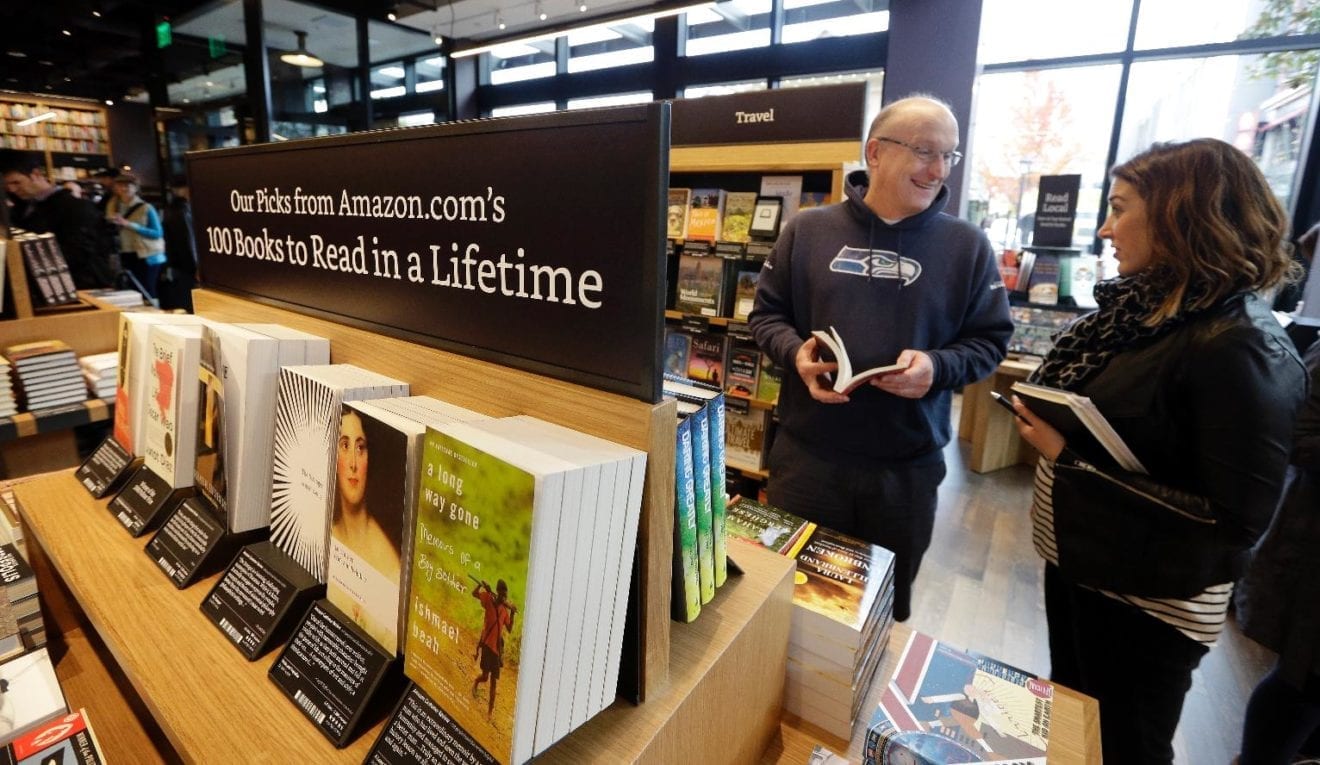
    Online retail giant Amazon has decided on Oregon as the location of its third brick and mortar store.

    The new store will open at the Washington Square mall just outside Portland, in what US media describe as a “bookish metro area” – Tigard.

    The retailer appears to be choosing sites which house Apple stores and are frequented by university students.

    Amazon’s first bookstore opened in Seattle’s University Village mall and its second in San Diego’s Westfield UTC mall.

    amazon-books-washington-squarejpg-8af21425db3e2dba

    While Amazon describes its stores as bookstores, John Mutter, editor of bookseller newsletter Shelf Awareness, prefers to call it “an electronics store that sells books”.

    “It has a very misleading name,” he said.

    One of the US’ much-loved specialist bookstores Powell’s Books is headquartered in Portland and CEO Miriam Sontz told USA Today it was no surprise Amazon should choose the city for one of its first physical locations.

    “When asked why he robbed banks, Willy Sutton reportedly replied ‘because that’s where the money is.’ I am certain that Amazon has the data to show that opening a store in the Portland area will be financially beneficial to the company,” she said.

    Mutter predicts Amazon will open 12 to 18 stores over the next two years or so.

  • Alibaba expansion plan targets 2 billion

    Alibaba expansion plan targets 2 billion

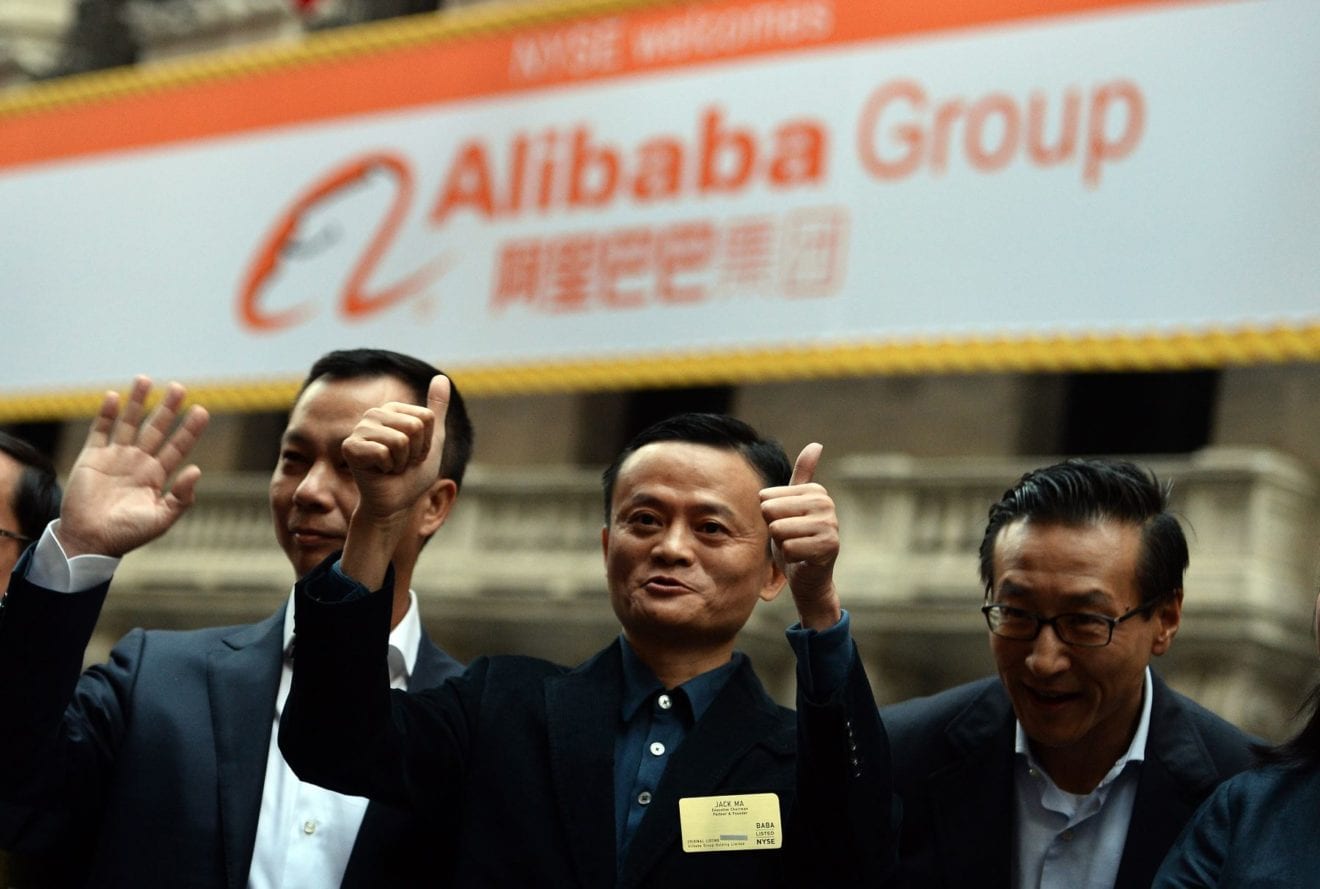
    Chinese eCommerce pioneer Jack Ma has unveiled an Alibaba expansion plan aiming to quadruple its customer numbers to 2 billion by 2036.

    Alibaba is also aiming for a record 6 trillion yuan (US$912 billion) in gross merchandise volume (GMV) in 2020 from 3.09 trillion yuan this year.

    Ma has also pledged to intensify the fight against counterfeit products and intellectual property rights violation, saying the company is more confident than ever it can solve the problem.

    Alibaba became the world’s largest retailer (by its own definition of retailer) in April, surpassing Walmart. The company says its online trading accounts for 10 per cent of all retailing in China and has generated 15 million jobs.

    Alibaba, whose gross sales totalled $9.3 billion in 2014, hit a record $14.3 billion in sales on Singles’ Day alone last year, a Chinese holiday in November. This is more than double the eCommerce sales in the US from Thanksgiving, Black Friday and Cyber Monday combined.

    The company also holds the title of the biggest IPO in history, raising $25 billion in four days in September 2014, $7 billion more than Visa and $9 billion more than Facebook and General Motors.

  • Amazon To March Into Indonesia With $600 Million: Winners And Losers

    Amazon To March Into Indonesia With $600 Million: Winners And Losers

    Amazon.com has said it plans to expand its e-commerce empire to Indonesia, with a $600 million investment for the first year.
    It makes perfect business sense. Indonesia’s e-commerce space is only about $3.2 billion in sales, a tiny fraction of its $150 billion retail market. Indonesia is also the world’s 4th most populous country with 250 million population.

    When Amazon moves in, the market shudders. Who are the movers and shakers in the Indonesian e-commerce space right now?

    It turns out Amazon will be competing with start-ups backed by Alibaba Group and its buddy SoftBank.

    Lazada, a direct-sales marketplace that spans the entire ASEAN, has 75% of its transactions coming from Indonesia. It was founded by Rocket Internet and was recently valued at $1.5 billion through an investment from Alibaba. It generated $1 billion GMV last year and made $275 million in sales.

    Tokopedia is an Indonesian pure play. It is backed by SoftBank and Sequoia Capital.

    Bukalapak is smaller than Tokopedia and is 49% owned by local media conglomerate PT Elang Mahkota Technologi, or Emtek Group.

    Warehouse logistics companies can benefit if Indonesia’s e-commerce picks up. Mega Manunggal Property  is one stock we can look at.

  • Hogan Lovells launches mobile app for doing business in Indonesia

    Hogan Lovells launches mobile app for doing business in Indonesia

    Hogan Lovells (in association with Dewi Negara Fachri & Partners) has launched an innovative new app called “How To Indo” to help businesses navigate the legal landscape when doing business in Indonesia.

    The app will change the way that anyone doing, or considering doing, business in Indonesia can access relevant legal guidance.

    Anyone with an Apple or Android device will be able to access key guides on what you need to know about doing business in Indonesia. From M&A and infrastructure transactions to Hogan Lovellsfinancing arrangements, from restructuring and insolvency to managing a dispute, these guides cover the key legal issues in doing business in Indonesia.

    Mark Cooper, Corporate Partner, Singapore said:

    “We hope that this innovative product leads the way in helping clients to navigate the regulatory landscape in Indonesia and makes it easier for them to take informed business decisions.”

    The app is available to download today:

    Click here to download the Apple version.

    Click here to download the Android version.

  • Wirecard and Verifone Partner to Bring Complementary Payment Services and Solutions

    Wirecard and Verifone Partner to Bring Complementary Payment Services and Solutions

    Wirecard AG and Verifone have entered into a strategic alliance to rapidly expand the point-of-sale market in Asia Pacific beginning with Indonesia. As the world’s fourth most populous country, Indonesia is considered one of the largest and fastest growing markets for payment solutions according to analysts.

    The five-year strategic alliance brings together the technology portfolio and geographic strengths of both companies through in-country companies like Wirecard’s PT Prima Vista Solusi and locally established Verifone teams, to enable financial institutions, retailers and various industry verticals to benefit from best-of-breed payment solutions.

    “Working as a strategic development partner to Verifone, Wirecard will provide software platforms for payment acceptance and processing that run on Verifone terminals, as well as in-depth market expertise, said Rudy Khowara, managing director of Wirecard Global Point-Of-Sales. “Furthermore, unique segment-specific features will be created through collaboration with our extended ecosystem of clients and partners.”

    Though Indonesia is largely a cash-dominated society, the payment cards market is developing significantly with payments card transaction volume increasing by about 124 percent in 2015 as compared to 2010 according to the Lafferty Group.

    “We are delighted to partner with Wirecard to spur the growth of new payment solutions and electronic commerce in Indonesia, where we are establishing a local team and permanent presence,” said Steve Aliferis, president of Verifone Asia Pacific. “With Wirecard as our preferred partner, we are working to offer banks and merchants access to the best technology solutions available and drive payment acceptance of all forms across diverse environments.”

    Through their respective subsidiaries in Asia, PT Prima Vista Solusi and Verifone Systems International, the two companies will collaborate to deliver a complete suite of payment commerce services. Wirecard will provide software platforms for payment acceptance and processing as well as in-depth market expertise.

    Safe Harbor Statement under the Private Securities Litigation Reform Act of 1995 for VeriFone Systems, Inc.

    This press release includes certain forward-looking statements within the meaning of the Private Securities Litigation Reform Act of 1995. These statements are based on management’s current expectations or beliefs and on currently available competitive, financial and economic data and are subject to uncertainty and changes in circumstances. Actual results may vary materially from those expressed or implied by the forward-looking statements herein due to changes in economic, business, competitive, technological and/or regulatory factors, and other risks and uncertainties affecting the operation of the business of VeriFone Systems, Inc., including many factors beyond our control.

    These risks and uncertainties include, but are not limited to, those associated with: successful collaboration with Wirecard to spur the growth of payment solutions in Indonesia, execution of our strategic plan and business initiatives and whether the expected benefits of our plan and initiatives are achieved, short product cycles and rapidly changing technologies, our ability to maintain competitive leadership position with respect to our payment solution offerings, our assumptions, judgments and estimates regarding the impact on our business of the continued uncertainty in the global economic environment and financial markets, our ability to successfully integrate acquired businesses into our business and operations, our ability to protect against fraud, the status of our relationship with and condition of third parties such as our contract manufacturers, distributors and key suppliers upon whom we rely in the conduct of our business, our dependence on a limited number of customers, the conduct of our business and operations internationally, our ability to effectively hedge our exposure to foreign currency exchange rate fluctuations, and our dependence on a limited number of key employees.

    For a further list and description of the risks and uncertainties affecting the operations of our business, see our filings with the Securities and Exchange Commission, including our annual report on Form 10-K and our quarterly reports on Form 10-Q. The forward-looking statements speak only as of the date such statements are made. Verifone is under no obligation to, and expressly disclaims any obligation to, update or alter its forward-looking statements, whether as a result of new information, future events, changes in assumptions or otherwise.

  • Visa, Amex to launch Apple Pay in HK

    Visa, Amex to launch Apple Pay in HK

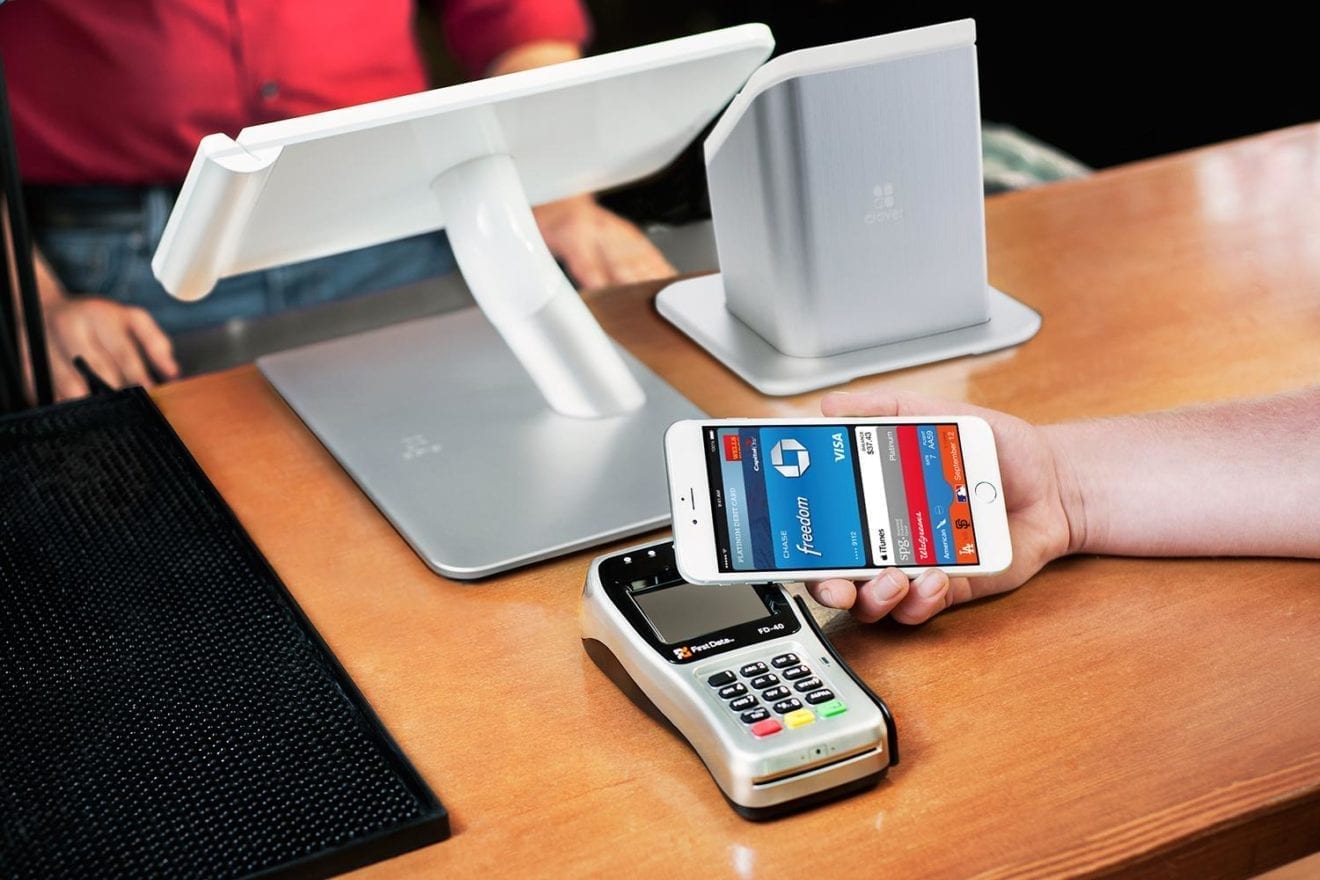
    Visa and American Express have both revealed plans to support mobile payment service Apple Pay in Hong Kong starting this summer.

    Customers in the region with American Express and Visa cards will be able to use Apple Pay to pay for purchases where contactless payments from the credit or charge cards are accepted.

    Apple Pay supports the iPhone 6s, iPhone 6s Plus, iPhone 6, iPhone 6 Plus, iPhone SE and Apple Watch for in-store payments, and these devices plus the iPad Air 2, iPad mini 3, iPad mini 4 and iPad Pro for payments from within apps.

    The platform uses the Visa Token Service to ensure card numbers are not stored on the device or on Apple servers.

    Instead a unique device account number is assigned, encrypted and securely stored in the Secure element on a user’s device device. Each transaction is authorized with a one-time unique dynamic security code. Customers can use Apple’s TouchID fingerprint authentication system to approve payments.

    “Visa is proud to support issuers in Hong Kong who want to launch Apple Pay to bring their customers a more secure and convenient way to pay. In Hong Kong contactless payments have become a necessity for everyday life,” commented Caroline Ada, country manager for Visa Hong Kong and Macau.

    “American Express was the first card issuer to bring Apple Pay to Card Members in the Asia Pacific region. Our customers love the ease and security of Apple Pay in their daily spending, dining and leisure activities,” added American Express VP and general manager for card services for Hong Kong and Taiwan Susanna Lee.

  • Alipay to offer cross-border Grab payment

    Alipay to offer cross-border Grab payment

    Ant Financial’s Alipay and ride-hailing company Grab have partnered to allow Chinese travelers to take advantage of cross-border payment when using Grab’s services in Singapore and Thailand.

    Starting today, Alipay users in Singapore and Thailand can pay for their taxi and private-hire car rides booked through the Grab mobile app with their Alipay accounts.

    Previously, Chinese travellers had to pay for their rides either by cash or their dual currency credit card. The Alipay option allows Chinese travelers to pay for their fares in Renminbi, without having to worry about exchange rate fluctuations.

    The deployment will soon be extended to other Southeast Asian markets that Grab currently operates in, such as Malaysia and Indonesia.

    “By collaborating with partners like Grab, we provide Chinese travelers the kind of convenience they are used to in China – no matter where they are in the world,” Ant Financial VP of international business Sabrina Peng said.

    Alipay last month partnered with Uber, Grab’s rival in Southeast Asia, in a similar deal which allows the latter’s passengers worldwide to pay for rides in Renminbi.

    Alipay has been working with local merchants in 69 overseas markets. As of May 2016, Alipay is accepted in more than 70,000 retail stores outside of China, and tax reimbursement via Alipay is supported in 24 countries and regions, including South Korea, Germany and France.

  • China Jo-jo Drugstores Inc Institutional Investor Sentiment Worsened in Q1 2016

    China Jo-jo Drugstores Inc Institutional Investor Sentiment Worsened in Q1 2016

    China Jo-jo Drugstores Inc institutional sentiment decreased to 0.75 in 2016 Q1. Its down -0.25, from 1 in 2015Q4. The ratio turned negative, as 3 hedge funds increased or opened new stock positions, while 4 reduced and sold holdings in China Jo-jo Drugstores Inc. The hedge funds in our partner’s database now possess: 148,237 shares, up from 123,312 shares in 2015Q4. Also, the number of hedge funds holding China Jo-jo Drugstores Inc in their top 10 stock positions was flat from 0 to 0 for the same number . Sold All: 2 Reduced: 2 Increased: 1 New Position: 2.

    China Jo-Jo Drugstores, Inc. is a retailer and distributor of pharmaceutical and other healthcare products found in a retail pharmacy in the People’s Republic of China. The company has a market cap of $28.55 million. The Company’s operating divisions include retail drugstores, online pharmacy, wholesale business selling products similar to those the Company carries in its pharmacies, and farming and selling herbs used for traditional Chinese medicine . It has a 32.5 P/E ratio. The Firm has 59 store locations under the store brand Jiuzhou Grand Pharmacy in Hangzhou.

    About 6,781 shares traded hands. China Jo-Jo Drugstores Inc has declined 14.29% since November 10, 2015 and is downtrending. It has underperformed by 14.11% the S&P500.

    According to Zacks Investment Research, “China Jo-Jo Drugstores, Inc., through its contractually controlled affiliates, operates a retail pharmacy chain in China offering both western and traditional Chinese medicine. Its contractually controlled affiliates include Hangzhou Jiuzhou Grand Pharmacy Chain Co., Ltd., Hangzhou Jiuzhou Clinic of Integrated Traditional and Western Medicine General Partnership, and Hangzhou Jiuzhou Medical & Public Health Service Co., Ltd. The chain has stores throughout Hangzhou, the provincial capital of Zhejiang Province.”

    California Public Employees Retirement System holds 0% of its portfolio in China Jo-Jo Drugstores Inc for 29,300 shares. Citadel Advisors Llc owns 25,965 shares or 0% of their US portfolio. Moreover, Citigroup Inc has 0% invested in the company for 434 shares. The New York-based Morgan Stanley has invested 0% in the stock. Renaissance Technologies Llc, a New York-based fund reported 79,800 shares.

  • ASDP Launches Mobile E-Ticketing

    ASDP Launches Mobile E-Ticketing

    State-owned ferry operator PT ASDP Indonesia Ferry has launched a mobile e-ticketing service to facilitate passengers when buying ferry tickets during Eid holiday.

    “We launch this mobile e-ticketing service to anticipate the surge in the number of vehicles heading to Merak seaport,” said PT. ASDP President Director Danang S on Friday (17/6).

    He added that the e-ticketing service is applied at di km 43 and km 68 of the rest area on Tangerang-Merak toll road.

    The government also provides the same service during the returning season after Ied Day at Hotel 56 Kalianda, Lampung.

    Danang went on to say that the mobile e-ticketing services gives a one-stop service for the passengers by stopping at rest areas.

    He also predicted that the number of passengers crossing through Merak seaport this year would increase by 8 percent compared to that of the previous year.

  • UnionPay Expansion Plan With Duty-Free Shopping Privileges

    UnionPay Expansion Plan With Duty-Free Shopping Privileges

    UnionPay International (UPI), an international payment network, has launched the 2016 Global Airport Campaign, its third edition since the inaugural annual campaign in 2014. This year’s Global Airport Campaign is the largest to date, featuring 120 participating duty-free shops at 80 airports, including 16 of the busiest airports across the world. Duty-free outlets located at the Heathrow Airport in London, United Kingdom, Haneda International Airport in Tokyo, Japan, and Chicago O’Hare International Airport in the United States of America are some of the notable inclusions in this year’s campaign.

    As part of the 2016 Global Airport Campaign, UnionPay Cardholders with card numbers starting with “62” can enjoy exclusive shopping discounts, complimentary gifts and more at airports located in 28 countries and regions in Asia Pacific, the Middle East, Africa, Europe and America. Top duty-free groups in the world, including Dufry, DFS, Lotte Duty Free, World Duty Free Group, The Shilla Duty Free Group, Everrich Duty Free, King Power, Blue Sky and China Duty Free are also on board the campaign to offer special shopping privileges to UnionPay Cardholders at participating outlets across the world.

    “We are delighted to launch our biggest ever Global Airport Campaign this year, with participation by over 120 duty-free shopping outlets globally. Over the years, the Global Airport Campaign has seen tremendous growth in size and in scale. This year, the number of participating outlets has doubled that of 2014, with new duty-free groups such as Blue Sky and Loop Duty Free coming on board for the first time. This is testament to the effectiveness of the campaign in boosting traveler spending, and we hope that shoppers will continue to benefit from this campaign and enjoy wonderful shopping experiences at all their favorite destinations across the world,” said Wenhui Yang, General Manager of UnionPay International Southeast Asia.

    In Singapore, the participating duty-free outlets are DFS and The Shilla Duty-Free. Starting this month, shoppers can enjoy up to 5 percent in discounts and vouchers, and participate in lucky dips to win additional shopping vouchers when they pay with their UnionPay cards at Shilla Duty-Free and DFS stores.

    UnionPay Cardholders in Singapore can also enjoy special discounts and privileges at their favourite Asia Pacific destinations such as Bangkok, Bali, Hong Kong, Tokyo, Seoul, Taipei, Kuala Lumpur and London, just to name a few.
    Other participating cities offering exclusive duty-free shopping privileges for UnionPay cardholders include Barcelona, Cape Town, Osaka, Los Angeles, Madrid, Moscow, New York, Paris, Rome, San Francisco and Toronto.
    For the full list of participating duty-free outlets and details of the privileges.

    UPI focuses on supporting the growth of UnionPay’s global business. With an acceptance footprint covering 157 countries and regions globally, UnionPay serves the world’s largest cardholder base by providing quality, cost-effective and secure payment services to over five billion cardholders worldwide.

    In Singapore, UnionPay enables efficient and cost-effective payment services that are tailored to the needs of local businesses and consumers. UnionPay cards are accepted at over 80 percent of retail, lifestyle and food and beverage establishments locally, as well as at almost all the automated teller machines (ATMs) across the island.

  • ShopBack, Budimas, Kechara, NKF, and World Vision Launch #ShopBackGiveBack

    ShopBack, Budimas, Kechara, NKF, and World Vision Launch #ShopBackGiveBack

    ShopBack Malaysia, the top online Cashback site in the country, announces the launch of its inaugural #ShopBackGiveBack initiative today.  Shoppers are now able to channel the Cashback they get from online purchases to four non-profit organisations – Kechara Soup Kitchen (KSK), The Budimas Charitable Foundation (Budimas), The National Kidney Foundation (NKF) of Malaysia, and World Vision Malaysia, to support their projects.

    Each charity organisation is committed to a different cause. For instance, KSK offers the homeless and urban poor vegetarian food, basic medical, as well as job matching and welfare assistance; while Budimas devotes efforts to improving the children’s lives through education, better living environment and food supplies.

    Moreover, NKF Malaysia subsidises dialysis treatment for kidney failure patients; and World Vision Malaysia will dedicate funds toward their work on clean water and healthcare programmes, which will help over 16,000 people in 7 countries.

    To relieve burdens of underprivileged groups, #ShopBackGiveBack enables users to gain incentives in the form of Cashback via their travel, F&B, IT, beauty, healthcare, household and groceries purchases, and then donate it to charity organisations without forking out extra.

     Every effort helps to build a better future

     “The act of giving is embedded in ShopBack’s DNA as the core of our business involves giving Cashback to the online shoppers. Although we are a startup and may have certain resource constraints compared to bigger corporations, we are keen to help and contribute to the best of our capability,” said Gil Carmo, Country Head of ShopBack Malaysia.

    “We believe any effort that we can make today, will create a difference to someone’s world tomorrow. Every kind action counts. This is the same message that we wish to convey to every shopper. We sincerely welcome like-minded companies to join and support #ShopBackGiveBack,” Gil added.

    Established in February 2015, ShopBack Malaysia collaborates with over 500 international and online e-retailers such as Groupon, Lazada, Agoda, TaoBao, Hermo, HappyFresh, Taobao, Zalora and more to incentivise shoppers with up to 30% hard cash whenever they make a purchase online.

    Currently, there are more than 280,000 Malaysians benefiting from ShopBack’s daily Cashback offer and promotions. Anyone can sign up for free and cash out their Cashback once it exceeds RM10, or opt to transfer their extra savings to help the needy through #ShopBackGiveBack.


  • Amazon Named Top Retailer on Social Media

    Amazon Named Top Retailer on Social Media

    Web giant Amazon have been named as the top retail brand on social media, according to Social Insights on the Retail Industry, a report by social media monitoring firm Brandwatch. Making up the top three were two other retailers, Etsy (2nd) and Ebay (3rd), with Walmart the top Bricks & Mortar retailer in fourth. Target made up the top five.

    A comprehensive study analysing and scoring the world’s top retail brands and their visibility, sentiment and mentions on social media, the Retail Social Report examined over 10 million interactions over four months, giving each retailer a score across five categories: Social Visibility, General Visibility, Net Sentiment, Reach Growth and Social Engagement & Content.

    The key findings from the study, which awarded retailers a total score out of a possible 500, included the following:

    • The top five retailers all scored upwards of 300, with Amazon scoring 349, Etsy 336, eBay331, Walmart328 and Target 320
    • Positions 5-10 in the study were held by Toys R Us (with a score of 320), Lowes (315), Kohls (307), Sephora (299) and Bed, Bath & Beyond (292)
    • The individual category winners were: Amazon (General Visibility), Sanborns (Social visibility), Sams Club (Net Sentiment) Kmart (Reach Growth) and Debenhams (social engagement & content
    • Facebook is the clear leader in engagement, with consumers nearly three times as likely to share brands’ content on the platform than they would on Twitter.
    • Surprisingly, 99% of all content retailers share on Facebook is visual, with only 1% exclusively status copy.
    • The average response time from a retailer on social media is 7hours and 33 minutes, with Petco having the quickest average response time

    The study also found that when it comes to responsiveness, retail brands scored better than other industries, such as automotive and television networks with a retailers’ tweets a third more likely to be a direct response to a consumer.

    When it comes to gender, retailers’ online audiences are predominantly female and in terms of engagement, women are twice as likely to comment on a retail brand’s social media post than men are. As an illustration, Amazon’s online audience is 56% female and primarily interested in books and family, Etsy’s audience is 86% female with a core interest in fashion, fine arts and family while eBay’s online audience is 65% female and interested in shopping, fashion and family.

    The report has also identified that consumers have continued to adopt an additional step in their shopping routine, normalising the behaviour of ‘showrooming’. The art of ‘showrooming’ explores the decision making process that consumers implement before they make a purchase. However, pre-purchase research goes both ways with 80% of consumers researching products online before they buy in store, with 41% looking in store before they ultimately purchase items online.

    James Lovejoy of Brandwatch said: “Customer service has always been core to the reputation of the retail industry, but as the number of communications channels increases, providing a quality experience for consumers is increasingly difficult.

    Most retailers now will recognise the important part digital plays and that it is now imperative to develop a clear social media intelligence strategy if retailers want their customers to remain loyal advocates of their brand.”