Category: E-Tailing

Retail News Asia is committed to providing both local and global retailers with the latest E-Commerce & Etail news throughout the Asian market. This on a daily base.

  • WearYouWant establishes itself as a trusted digital partner

    WearYouWant establishes itself as a trusted digital partner

    WearYouWant, Thailand’s leading online fashion and beauty marketplace is fast becoming a trusted digital partner for industry brand names and distributors; creating a solid online presence in Thailand’s booming internet industry. Working with large, international brands and distributors, as well as smaller and more localized businesses, WearYouWant offers a uniquely customized e-commerce platform with a strong focus on targeted visibility and curation of merchants’ products.

    CEO and Co-Founder of WearYouWant Julien Chalte explains how the e-commerce site stands out for businesses.

    “Brands want to go digital, and need to, but may lack the knowhow, time and resources to be hands-on and do so effectively. WearYouWant personalizes the experience, creating and servicing every aspect of a merchant’s outlet, from the graphic design of marketing materials to uploading pack shot images.  

    “When I look at our monthly pay outs to our merchants it is great to see that we are indeed delivering growth to both the smaller independent designer with only one storefront and the big international brands at the same proportional scale. The secret for us has been to keep the dual focus of B2B and B2C and grow the two at the same pace. That has made us and our big and small merchants successful.”

    Minor International PCL, one of Thailand’s leading and largest distributors of lifestyle brands such GAP, Esprit, Bossini and Red Earth, value the partnership with WearYouWant.

    James Richard Amatavivadhana, Chief Executive Officer of Minor International PCL, says, “Digital development is rising so fast in Thailand that it is important for us to incorporate the strongest digital sales channels. The future of retail is changing, but the core principles of trust, confidence and transparency still reign, especially when it comes to e-commerce. WearYouWant has empowered us to grow digitally and has enabled us to create a flagship online outlet allowing widespread visibility to our brands and products as well as an assurance to consumers that the products they shop are genuine.”

    Sam Naghi, owner and MD at Sam’s Sports shop, is another merchant on WearYouWant’s platform selling mainly sport shoes that applauds the e-commerce website for the tremendous impact it has created on the business, by creating visibility and increasing their sales volume online.

    “Partnering with WearYouWant has made a huge difference for us. We have a whole new revenue stream and a digital storefront where both our products and brand gets noticed by customers we would have been unable to reach ourselves”, he said.

    WearYouWant recently received the Best e-Commerce Website Award 2016 from the Ministry of Commerce’s Department of Business Development in two categories:  Best in e-Commerce Management and Best in e-Commerce Trusted Website. The award was presented during the Thailand e–Commerce Day held at e-Biz Expo 2016 at the Queen Sirikit National Convention Center.

    The first half year of 2016 ends 30th June and WearYouWant’s own forecast indicates at this point in time, a 120% growth in turnover in the first half of the year in 2016 compared to first half of the year in 2015.

  • Card usage adds THB 113 billion to the Thai economy in the past five years – the largest increase in Asia

    Card usage adds THB 113 billion to the Thai economy in the past five years – the largest increase in Asia

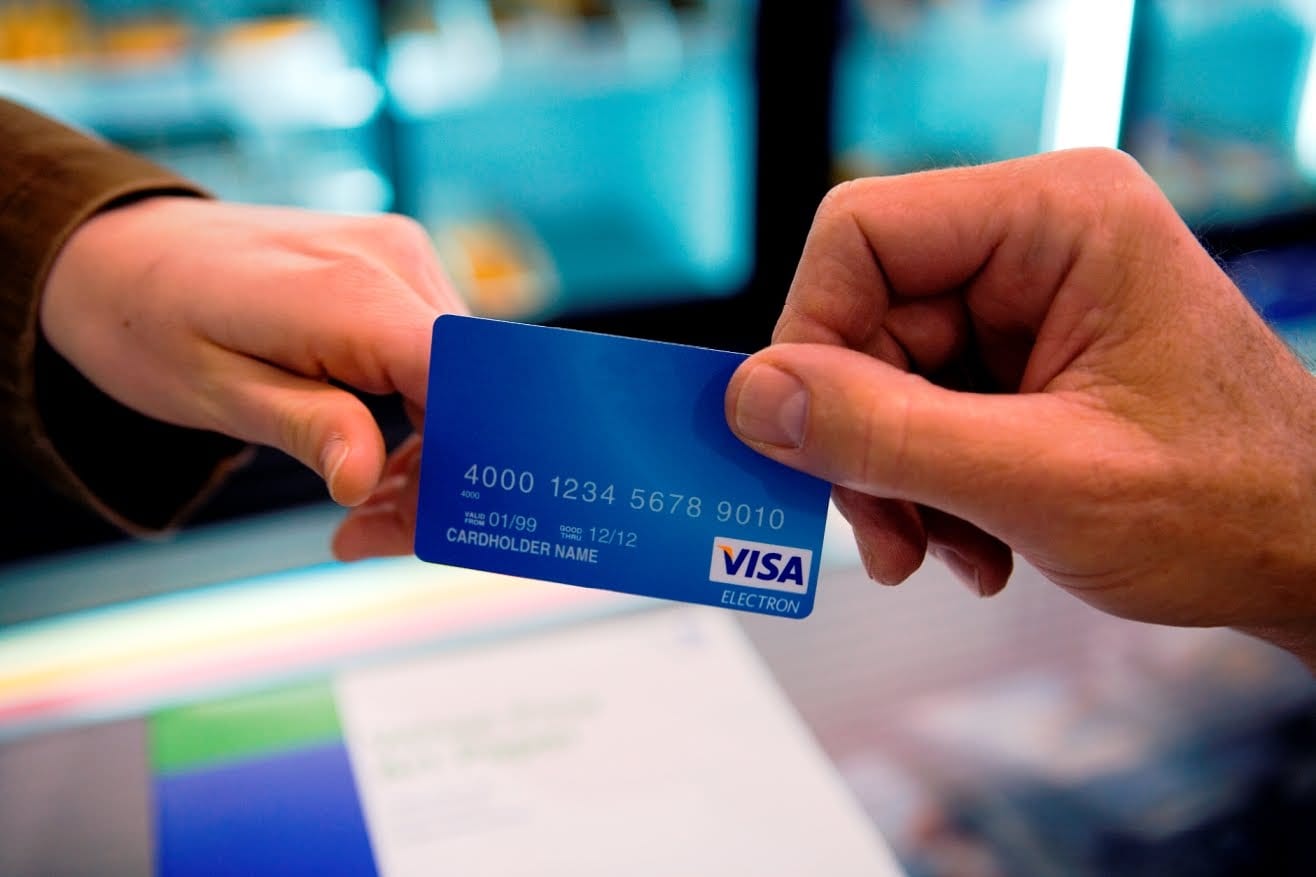
    Increased use of electronic payments, including credit, debit and prepaid cards, added US$3.18 billion (approximately THB 113 billion) or 0.19% GDP growth to Thailand’s economy from 2011 to 2015, the largest weighted average increase in Asia, according to research conducted by Moody’s Analytics for Visa.

    Thailand’s growth triples that of the regional average GDP increase of 0.06% with Vietnam following at 0.14% and Singapore at 0.1%. Increased electronic payment usage also created the equivalent to an average of 75,730 jobs in Thailand per year in the same period.

    Suripong Tantiyanon, Visa Country Manager, Thailand said: “These findings reinforce the many positive benefits that electronic payments bring to local economies not just in Thailand but all over the world. This research also suggests that the right public policies can create an open, competitive payment environment, and contribute to economic growth and job creation.”

    “In Thailand, Visa has partnered with financial institutions, merchants, technology companies, and government agencies such as Tourism Authority of Thailand to make electronic payment accessible to everyone – accelerating electronic acceptance, growing commerce both online and offline, facilitating tourism, and in general bringing the benefits of card payments nationwide,” added Mr. Suripong.

    The Moody’s Analytics study analyzed the impact of electronic payments on economic growth across 70 countries between 2011 and 2015. The Visa-commissioned study found that increased use of electronic payment products, including credit, debit and prepaid cards, added US$296B to GDP, while raising household consumption of goods and services by an average of 0.18 percent per year.

    In addition, Moody’s economists estimate that the equivalent to 2.6 million new jobs were created on average, annually, over the five-year period as a result of increased use of electronic payments. The 70 countries in the study make up almost 95 percent of global GDP.

    “Electronic payments are a major contributor to consumption, increased production, economic growth and employment creation,” noted Mark Zandi, Chief Economist, Moody’s Analytics. “Those countries which saw large increases in card usage also saw larger contributions to overall growth in their economies.”

    Findings from the study were shared in the report, “The Impact of Electronic Payments on Economic Growth,” which also indicated that the electronification of payments benefited governments and contributed to a more stable and open business environment. Additionally electronic payments helped to minimize what is commonly referred to as the grey economy — economic activity that is often cash-based and goes unreported.  As a result, electronic payments provided a higher potential tax revenue base for governments, while also bringing the added benefits of lower cash handling costs, guaranteed payment to merchants and greater financial inclusion for consumers.


    Highlights of the global study include:

    • Growth Opportunities:

    Card Penetration: Real consumption grew at an average of 2.3 percent from 2011 to 2015, of which 0.01 percent is attributable to increased card penetration. This implies that card usage accounted for about 0.4 percent of growth in consumption. Since consumption growth is, on average, faster in emerging economies, those countries also have more to gain by increasing card usage.

    Card Usage: Countries with the largest increases in card usage experienced the biggest contributions in growth.  For example, big increases in GDP were recorded in Hungary (0.25%), the United Arab Emirates (0.23%), Chile (0.23%), Ireland (0.2%), Poland (0.19%) and Australia (0.19%). In most countries, card usage increased regardless of economic performance.

    • Contribution to Employment:

    Increased card usage added the equivalent to almost 2.6 million jobs on average, per year, across the 70 countries sampled between 2011 and 2015. Notably, the two countries with the greatest average job increases were China (427,000 jobs added) and India (336,000 jobs added), which both had large gains in employment due to the combination of fast growing labor productivity and increased card usage.

    • Emerging Markets and Developed Countries:

    Both emerging markets and developed countries experienced gains in consumption due to higher card usage. Increased card usage added 0.2 percent to consumption in emerging markets, compared with 0.14 percent in developed countries between 2011 and 2015. The corresponding figures for GDP were 0.11 percent for emerging economies and 0.08 percent for developed countries, and suggests that all markets, regardless of current card penetration rates, can benefit from increases in consumption due to increases in card usage.

    • Potential Future Growth:

    Across the 70 countries in the study, Moody’s found that every 1 percent increase in usage of electronic payments could produce, on average, an annual increase of approximately $104 billion in the consumption of goods and services. Assuming all future factors remain the same, this could result in an annual average increase of 0.04 percent to GDP attributable to card usage.

    The study highlights that expanding electronic payments alone will not necessarily increase a country’s prosperity — it requires the support of a well-developed financial system and healthy economy to have the greatest impact. The report recommends at a macro-level, to encourage the further electronification of payments, countries must promote policies that streamline regulation, create a robust financial infrastructure, and lead to greater consumption.

  • eBay Korea Partners With GS25 to Offer Online-Offline Services

    eBay Korea Partners With GS25 to Offer Online-Offline Services

    eBay Korea has joined forces with nationwide convenience store chain GS25 to offer consumers a combined online-offline sales service.

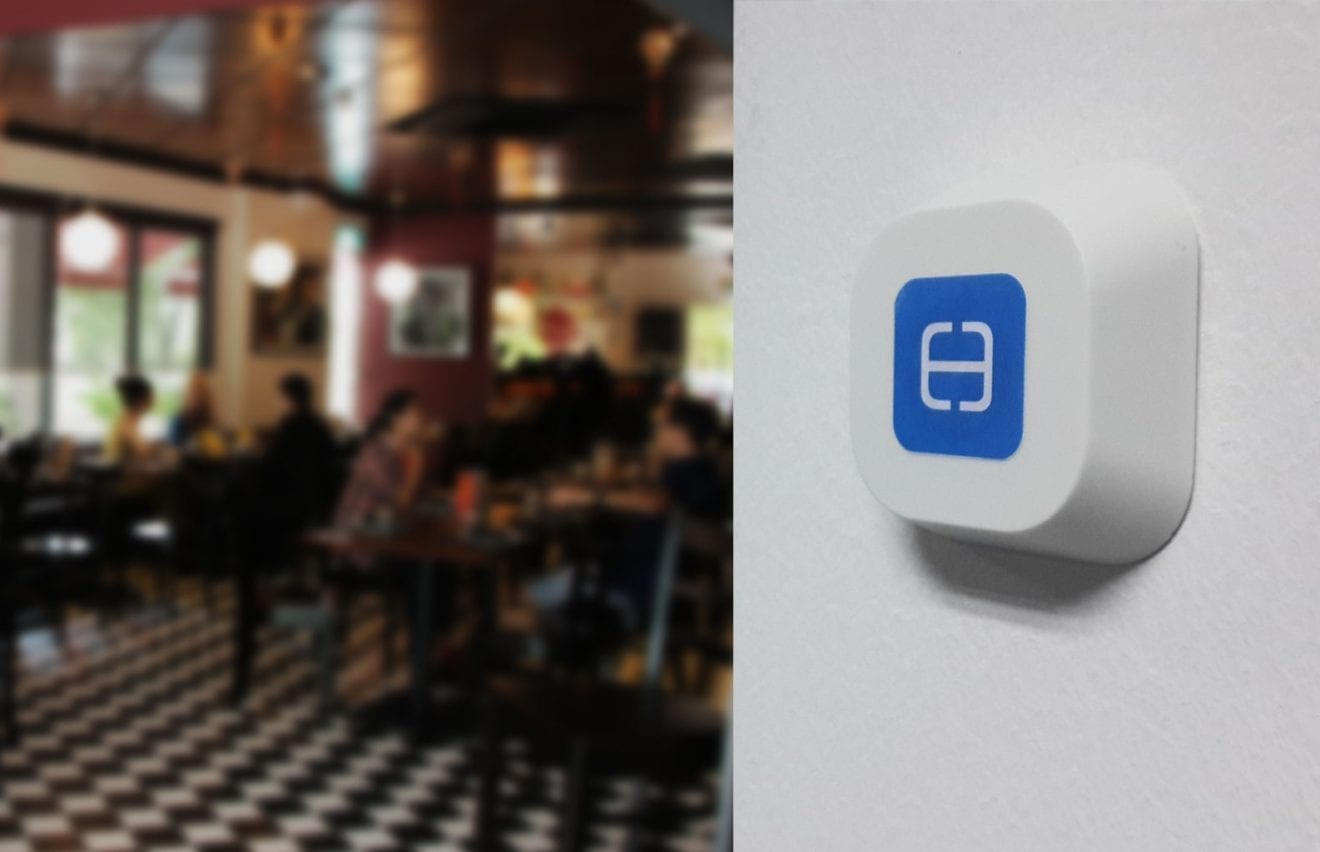
    The partnership will see the launch of the “Smile Box” service, in which deliveries are made to an unmanned box for single-person households and female customers. The service is available 24 hours a day, and customers will be able to receive their deliveries ordered online from Gmarket, Auction and G9 at their nearest GS25 store.

    The service will begin in August with a trial installation of Smile Boxes across 50 GS25 stores in Seoul, with the plan to gradually expand it nationwide. The boxes will be installed in areas with a high number of deliveries (determined through analysis of Gmarket and Auction delivery information) that have a large concentration of single-person households.

    This “customer-centric endeavour is the future for online and mobile shopping,” said an eBay Korea representative. “We hope to build an enhanced, more convenient shopping environment for our customers.”

  • Drone deliveries now possible in Korea

    Drone deliveries now possible in Korea

    Flying drones for business will become legal in South Korea from next month, allowing the possibility of drone deliveries.

    Laws about drone flights have been revised by the Ministry of Land, Infrastructure and Transport. Previously, aeronautical laws permitted only a limited number of businesses to use drones for work related to agriculture, photography and surveys.

    Now businesses will be able to use drones so long as their use does not pose harm to public safety, lives, property or national interests such as security and defence.

    Also modified is the stipulation for drones not needing approval and inspection from “below dead weight of 12kg” to “below maximum take-off weight of 25kg”.

    Drones that are flown at the same location will need only one approval for a maximum of six months. Within certain limits, flying drones out of sight and night flights will also be allowed.

    These amendments will allow business owners to grow their businesses through drone deliveries.

    Original reporting by Korea Bizwire.

  • China online payments tightened

    Service providers and their millions of users are affected by a significant regulatory change to China online payments announced by the Chinese Central Bank.

    From July 1, third-party online payment service providers must ensure that all user accounts bear the real name of the account holder. In addition, accounts will be categorised into three types based on security requirements, capped with maximum annual payments.

    The policy was created with an aim of preventing large deposits of money into third-party payment accounts unprotected from bank deposit insurance.

    China’s third-party mobile payments market reached RMB9.31 trillion (US$1.4 trillion) last year, up 57.3 per cent from 2014. Analysts expect the industry will continue to grow at a fast rate in the coming years, reaching RMB52.11 trillion by 2018.
    Mobile payments have become a useful tool for companies in their China market strategy. The two largest third-party online payment platforms in China are Alipay and WeChat.

    Dominant player

    Dominating with roughly half of the market, Alipay is a subsidiary of Alibaba Holding Group, serving Alibaba’s B2B eCommerce network similar to how PayPal works with Amazon and eBay. Alipay co-operates with Visa and around 65 banks, including the Bank of China, China Construction Bank, the Agricultural Bank of China, and the Industrial and Commercial Bank of China.

    As well as being the primary payment method for Alibaba.com and Taobao, it serves more than 500,000 external merchants, covering online retail, gaming, communications, air tickets, commercial services and utility bill payments.

    Its international version, Alipay Global processes payments in RMB and automatically converts them to the merchant’s currency of choice. It supports 12 currencies, with exchange rates decided by either the Bank of China or China Construction Bank. Alipay Global’s transaction fee is 2 to 3 per cent.

    Account procedure

    To set up a service account with Alipay China, a company must first register an account, providing company information for verification. Once approved, an application can be made and a QR code issued.

    Applicants must provide a business licence, ID card information and public bank account details. If the applicant is not the company’s legal representative, a power of attorney must be provided.

    WeChat Payment was launched by Tencent Holdings in 2013. It is different to Alipay in that it serves as both a payment platform and an instant messaging service. It also differs from Tencent’s TenPay, which is similar to Alipay. WeChat Pay can be used to pay in stores, on websites, WeChat shops and third-party apps, with its payment procedure easier and for both customer and company alike.

    Paying through WeChat has revolutionised how retailers and customers interact, with a huge number of customers depending on its social media and instant messenger service.

    To set up a service account, a company first needs to apply for an official WeChat account, specifying reasons for the application and supplying the category or type of company.

    Applicants need to supply the full name of the contact person, phone number and email address; the website address of the company (not necessary for non-IT companies); full company name; description of the product; customer service number; and company bank account information.

    For non-financial entities such as Alibaba and Tencent to provide third-party online and mobile payment services in China, a payment business licence must first be obtained. Regulations stipulate that the business scope, qualifications and contribution ratio of foreign-invested institutions applying for the licence will be decided by the People’s Bank of China and State Council separately.

    Pile of documents

    Meanwhile, Apple Pay has entered the China market, partnering with China UnionPay and nearly 20 Chinese banks. In its first two days, more than three million bank cards were linked to its service, which uses Near-Field Communication (NFC) contactless payments as opposed to QR codes, which are used by Alipay and WeChat Pay.

    Apple Pay, along with Edenred and Sodexo, is among the few foreign-invested companies with a Chinese payment business licence.

    Applicants for the licence must be companies established in the China and must submit a pile of documents to a local branch of the People’s Bank of China – a written application specifying the name, domicile, registered capital and organisational structure of the applicant business, payment business being sought, a copy of the company’s business licence, articles of association, verification certification, financial and accounting reports audited by an accounting firm, feasibility study report, acceptance materials on anti-laundering measures, certification on technical safety testing and authentication, resumes of senior management personnel, certification that the applicant and senior management personnel are free of criminal records, relevant materials of major capital contributors, and an authenticity statement regarding the application materials.

    Entry into China’s lucrative third-party online payments can unlock huge market potential, but the requirements are strict and the application process and approval is by no means easy.

    In comparison, the process for obtaining an online payment QR code is relatively straightforward, but the recent restrictions imposed on payment account types and security checks might change both the way third-party online payment platforms work as well as consumer behaviour.

    • From China Briefing, published by Dezan Shira & Associates. Dezan Shira is a specialist foreign direct investment practice providing corporate establishment, business advisory, tax advisory and compliance, accounting, payroll, due diligence and financial review services to multinationals investing in China, Hong Kong, India, Vietnam, Singapore and other ASEAN countries.
  • E-commerce firm Shopmatic launches in Hong Kong

    E-commerce firm Shopmatic launches in Hong Kong

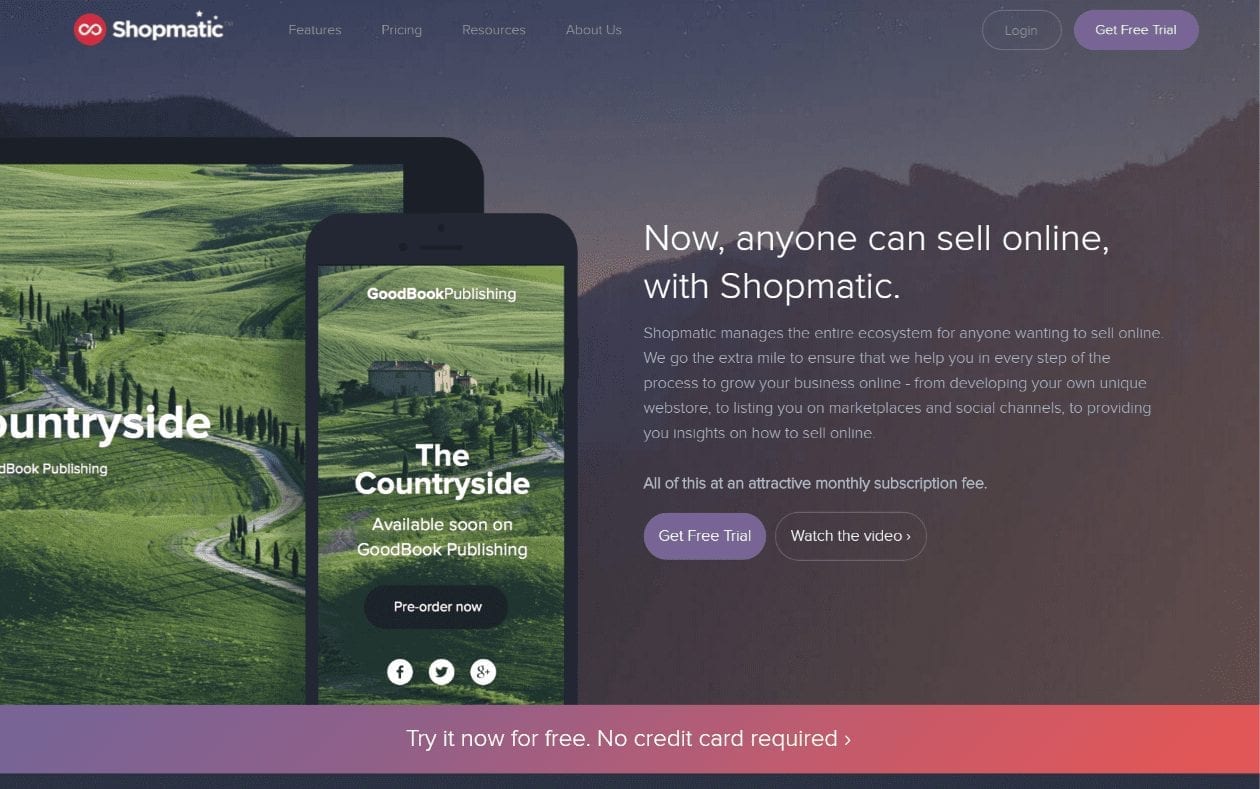
    Following its recent investments in India and Singapore, e-commerce solutions provider Shopmatic launched its Hong Kong business operations recently.

    This move is expected benefit Hong Kong online stores, SMEs and entrepreneurs as the platform enables business owners to build and manage their businesses on one single platform.

    Services encompass an entire ecosystem from developing a unique web store to listing businesses on marketplaces and social media channels, to giving insights on how to sell online.

    At a fixed monthly subscription rate of only US$38 per month, businesses can conveniently and easily sell products and services online in Hong Kong and the region.

    As an incentive for new subscribers, Hong Kong merchants who sign up for Shopmatic for the first time will get to enjoy a 15-day trial period during which they can establish their site and experience the entire service.

    Industry analysts have estimated that almost 90 percent of Hong Kong consumers shopped online in the past 12 months, while one-third of the e-shoppers made online purchases within the same week a survey was conducted by Nielsen.

    Shopmatic said it will further strengthen its Asia network by expanding into other countries in this region such as Australia, Indonesia, Malaysia and the Philippines later this year.

    “We are confident that we can help the Hong Kong online stores expand into the region. We also see huge potential in the ways in which we can help Hong Kong SMEs expand their businesses from offline to online for its mature traditional retail model,” Anurag Avula, CEO and Co-Founder, Shopmatic, said.

  • Orchard Rd turns to WeChat to drive sales

    Orchard Rd turns to WeChat to drive sales

    A post on Chinese social media platform WeChat touts Orchard Road as a prime spot for a selfie, with its backdrop of high street brands and clean surroundings.

    Another post raves about the value of the dishes at seafood restaurant chain Fish & Co, where appetisers cost between $3.90 and $11.90.

    The Orchard Road Business Association (Orba) set up the WeChat account two months ago to promote the shopping street directly to consumers in China.

    “In China, without a WeChat account, it’s impossible to communicate with the consumers,” said Mr Steven Goh, Orba’s executive director.

    Like many businesses in Singapore, Orba is looking to the Chinese to provide a boost to the flagging retail and tourism sectors.

    The Orchard Road Business Association recently hired a marketing agency in China to come up with twice-weekly posts on its WeChat platform that use the lingo of the mainland Chinese to introduce the brands in Orchard Road. PHOTO: ORCHARD ROAD BUSINESS ASSOCIATION

    Competition from online shops and weak consumer sentiments have translated into lower retail sales. Tourism growth is expected to slow to a crawl this year, as tourists tighten their belts ahead of a weakening global economy.

    The Chinese, however, offer hope.

    Last year, Chinese visitor arrivals grew 22 per cent year-on- year to 2.1 million. Although their expenditure of $2.54 billion was a 4 per cent dip from the 2014 figure, they were still the top spenders among visitors here.

    In recent years, Orba has sent teams to different cities in China regularly to promote the street.

    Recently, it hired a marketing agency in China to come up with twice-weekly posts on its WeChat platform that introduce – in the lingo of the mainland Chinese – the brands in Orchard Road.

    Its efforts complement those of the Singapore Retailers Association (SRA), which roped in Chinese payments firm UnionPay International as a partner of its Great Singapore Sale this year.

    SRA extended the sale to 10 weeks and started it a week later than usual to coincide with most of China’s summer holidays.

    Other retailers are also taking the initiative to cater to the Chinese.

    Retail shop Taula Jewellery in Clarke Quay widened its range in March to include fashion jewellery and items with prices starting from $29, instead of $49 previously. Its Chinese customers prefer fashion jewellery to precious metal jewellery such as silver and gold, and like good deals, owner Kanika Mittal, 35, noted.

    Department store Takashimaya is “displaying more prominently” products that are more highly discounted and appealing to Chinese tourists, who make up 30 per cent of its foreign customers, said a spokesman.

    SRA executive director Anthony Gan said the Chinese tend to look for goods and services tax refund service, shops that accept UnionPay, Mandarin-speaking staff and special offers.

    The spending patterns of Chinese tourists have evolved, said UnionPay International South-east Asia general manager Yang Wenhui. He said it was “seeing spending on hotels, supermarkets, dining, airlines and retail grow at a much faster rate than luxury goods in general”.

    Tourism consultant Edward Chew said Chinese tourists no longer “purchase everything they come across”, with many international brands now available in China.

    The former Singapore Tourism Board regional director for Greater China said: “We need to distil what Singapore is good for and strong in and what’s unique about our retail scene, and actively promote them to the Chinese traveller in Singapore.”

  • Samsung Pay e-wallet to launch in Singapore on June 16

    Samsung Pay e-wallet to launch in Singapore on June 16

    Samsung Pay, the Korean electronics giant’s e-wallet system, will launch in Singapore on June 16.

    At launch, those holding Visa and MasterCard credit or debit cards issued by POSB Bank, DBS Bank, OCBC Bank, Standard Chartered Bank and Citibank will be able to use a compatible Samsung phone to pay at almost all retail outlets that accept credit cards.

    Singapore will be only the fifth country to have Samsung Pay. It was launched in South Korea last August, followed by the United States in September. In March this year, Samsung Pay made its debut in China, while it was launched in Spain just earlier this month.

    “We are excited to bring this service to Singapore consumers and we hope to introduce value-added services to drive and lead innovation in mobile commerce,” said Mr Thomas Ko, vice-president and global general manager of Samsung Pay.

    Samsung Pay allows users to register their credit card details on selected Samsung smartphones with Near-Field Communication (NFC) wireless technology. Once registered, users can tap the phones for payment on almost all credit card payment terminals here.

    This is because Samsung Pay uses a proprietary Magnetic Secure Transmission (MST) technology that works with both traditional magnetic-stripe credit-card terminals and NFC contactless payment terminals.

    Unlike other contactless payment methods that are limited to transactions of $100 or less, Samsung Pay does not have this limit due to its MST technology.

    Four Samsung Galaxy smartphones – the S6 edge+, Note 5, S7 and S7 edge – are compatible with Samsung Pay at launch. Fingerprint authentication is required for each transaction.

    As of February this year, Samsung Pay has over five million registered users and recorded more than US$500 million (S$672 million) worth of transactions globally.

    Rival mobile payment service Apple Pay was launched in April with support for American Express-issued cards only. But as of last month, Apple Pay also accepts Visa and MasterCard credit and debit cards issued in Singapore from five major banks – POSB, DBS Bank, OCBC Bank, UOB Bank and Standard Chartered Bank.

    Apple Pay only works with contactless NFC payment terminals. This limits Apple Pay to only around 30,000 payment terminals in Singapore.

    It also has a $100 cap for most transactions. But UOB has lifted this limit for some merchants, such as Singapore Petroleum Company, Caltex, Metro and The Coffee Bean & Tea Leaf.

  • Niologie China receives RMB20m. boost

    Niologie China receives RMB20m. boost

    Hong Kong women’s apparel company Niologie Limited has received a capital injection of RMB20 million (US$3.034 million) for its wholly owned subsidiary Niologie China from one of China’s largest fashion brands.

    Shanghai La Chapelle Fashion gains a direct holding of 16 per cent of the shares of Niologie China through the investment co-operative agreement with its wholly owned subsidiary Shanghai La Chapelle Enterprise Management.

    Originating in Hong Kong, Niologie China’s Tanni brand is a mid- to high-end lifestyle store brand with romantic European styling encompassing women’s apparel, handbags, footwear and accessories as well as houseware products. A significant characteristic of the brand, which entered mainland China in 2010, is its floral prints, designed exclusively by a UK team.

    Shanghai La Chapelle believes the investment complies with its “product-oriented, fashionable and high-quality” brand philosophy, and will help it consolidate its leading position in China’s apparel market. Through the investment in Tanni, the group aims to enrich its mid-range to high-end product mix and accelerate the development of its multi-brand strategy, while the brand itself can leverage the group’s channels and supply-chain management capability for expansion and improved margins.

    “With the constantly changing fashion trends in apparel and the need to satisfy consumers’ requirements for a more sophisticated shopping experience, apparel retailers have to adjust their sales model in order to capture first-mover advantages and expand market share amid intense market competition,” says La Chapelle executive VP Wang Yong.

    “The Tanni brand has an independent design team, offers individualised products, stable domestic and overseas product channels, an excellent marketing system and speedy and stable logistics systems enabling a fast market response.”

    Founded in 1998, La Chapelle designs, markets and sells apparel products with a focus on mass-market women’s casualwear. Its retail network comprises 7893 outlets in about 2500 locations across China.

    Founded in 2010, Niologie China is the first women’s apparel brand chain in China to introduce European lifestyle-brand shops. The company has directly run shops in major business districts in Beijing, Nanjing, Hangzhou, Shenyang, Dalian and Harbin.

  • Chinese etailer Globalegrow boosts authenticity promise

    Chinese etailer Globalegrow boosts authenticity promise

    Chinese etailer Globalegrow says it has taken steps to ensure what foreign customers order is what they get at a time foreign shoppers are increasingly wary of the authenticity of Chinese-sourced products.

    Globalegrow, whose full name is Shenzhen Global E-Grow Electronic Commerce Co, operates several eCommerce websites in the US, including SammyDress.com, RoseGal.com and Zaful.com, providing consumers direct access to “affordable, trendy fashion”.

    A company spokesperson said while its primary focus is on maintaining low prices, it considers it of equal importance that customers are assured its products and services meet their needs and expectations.

    “To that end, the company has developed a two-year plan to enhance its quality assurance and customer service procedures.’

    That plan includes:

    • In-house inspection of all Globalegrow products before shipping, to ensure all consumers receive the high-quality items that they expect.
    • In-house advertising, in which the company will photograph 100 per cent of the items sold on its websites to ensure accurate representation of its products.
    • Streamlined and clarified return policies.

    The company has already increased its customer services agent staffing levels by 150 per cent during the last six months and now has agents available 24/7 to respond to customers via email or on live chat.

    Globalegrow says it has also enhanced its vendor selection process and has ended relationships with vendors that “were not meeting its standards of honesty, quality, and trust”.

    “The company follows a four-step process that includes reviewing product quality, inspecting factories and production processes, verifying certifications and qualifications and instituting an ongoing process for continuing assessments and feedback.

    “Globalegrow is dedicated to honesty, quality, and trust, and welcomes feedback and suggestions as it continues to develop its international business offering direct-to-consumer affordable fashion,” the spokesman said.

    Founded in 2007, Globalegrow describes itself as a cross-border eCommerce enterprise that imports products to China and exports Chinese products all over the world.

  • Malaysia’s Axiata Digital invests $16 mn in e-commerce enabler StoreKing

    Malaysia’s Axiata Digital invests $16 mn in e-commerce enabler StoreKing

    Malaysian telecom operator Axiata Group Berhad has invested $16 million in Bangalore-based StoreKing, an e-commerce startup that helps retailers to sell products in small towns, through wholly owned unit Axiata Digital.

    This is Axiata Digital’s first investment in India, StoreKing said in a statement.

    Axiata Group, however, is not new to India; it owns about 20% of Indian telecom operator Idea Cellular Ltd.

    StoreKing, run by LocalCube Commerce Pvt. Ltd, ties up with retail store owners in small towns to provide self-service shopping experience to rural shoppers via its digital kiosks.

    The company had earlier raised $6 million from Luxembourg-headquartered venture capital firm Mangrove Capital Partners. Mangrove Capital is an early-stage investor in internet and software startups, and counts voice chat app Skype and instant messaging aggregator Nimbuzz among its past portfolio companies.

    StoreKing has roughly 16,000 mobile kiosks across south India, and delivers about 150,000 orders every month. The startup plans to reach 100,000 retailers by 2017 and up to 250,000 by 2019. It also plans to expand to Axiata’s markets in the near future.

    “StoreKing has created a platform that solves the fundamental constraints in our markets with last-mile logistics and payments, while building trust amongst mass-market consumers. It is pivotal in bringing the rest of our consumers into the digital sphere,” said Mohd Khairil Abdullah, CEO, Axiata Digital.

    The Bangalore-based startup was founded in 2012 by Sridhar Gundaiah, a computer science engineer who previously worked with online travel agency Via.com, and Govardhan Krishnappa, who previously worked with Via Adz and MACS Infosolution. Gundaiah had also founded a location-based startup Yulop and in the past worked at Yellow Tag and EDS.

  • Is There a Tech Bubble in China?

    Is There a Tech Bubble in China?

    Wealthy Chinese investors are in a bind. All the usual, typically safe investment vehicles—commodities, stocks, even stable real estate—have been anything but usual or safe over the last couple months. The Chinese economy has slowed and inflation has picked up, the yuan has been under pressure, oil has tanked, and gold markets have been rattled. Real-estate markets in previously inviolable zip codes like Manhattan, a longtime sure bet for foreign investors looking to park their money in the stability of multi-million-dollar apartments, have started to sway.

    With the new reality of so much risk and little hope for returns in these markets, Chinese investors are pushing their money toward technology start-ups, according to Reuters. Investments in these companies more than doubled last year, according to CB Insights research, leaping to $32.2 billion. So far this year, venture-capital investments have already climbed to $4.7 billion. That stands in stark contrast to the Shanghai Composite Index, which is down nearly 20 percent in 2016. Established-enough Chinese start-ups like the ride-hailing Uber competitor Didi Kuaidi have benefited the most. The company saw its valuation jump 25 percent to about $20 billion—dwarfing its American competitors.

    We’ve watched this movie before in the U.S. As investors got tired of waiting to wade back into the muck of traditional markets in the wake of the financial crisis, they looked for new places to strike gold. They set their sights out West, to Silicon Valley, pouring their money into small start-ups with huge funding rounds, hoping for a payday. The result was the birth of dozens of new billion-dollar companies. On a hope, a prayer, and the blood, sweat, and tears of many a millennial, these unicorns hung on and continued to raise money. But now, the chickens are coming home to roost.

    Last month, Fidelity marked down investments in 19 start-ups, including onetime Silicon Valley standouts Dropbox and Zenefits (the markdown, however, seems like the least of Zenefits’s worries). Millennial darling Snapchat got similar treatment from Fidelity last fall. Others, like Jawbone, and again, Zenefits, have laid off workers. Funding has started to dry up, yet even those able to raise capital are struggling. Oscar, the health-care app pegged to Obamacare exchanges, closed a round last month that boosted its valuation to $2.7 billion. But on Tuesday, the company reported that it was bleeding money, losing more than $100 million in 2015.

    American investors thought they were trading risky investments for the kinds of returns they could only dream of, but it appears the risk in their their start-up bets were just as great. Now, as Chinese investors make similar calculations, they may face a similar fate.

  • Under Armour app gets personal with fitness freaks

    Under Armour app gets personal with fitness freaks

    Under Armour has launched UA Shop, a mobile app dedicated to elevating the consumer shopping experience built on the Under Armour Connected Fitness platform.

    Under Armour appIntegrating data from the world’s largest digital fitness community allows the Under Armour app provides “a deeply personalised experience” based on athlete inspiration, workout history and previous purchase history. UA Shop is available for download on the App Store and will be available soon on Google Play.

    “UA Shop is the next step in our connected fitness evolution as Under Armour becomes a true Math House,” said Jason LaRose, senior VP, revenue, at Under Armour. “This app was created to maximise our digital platform and complement our existing in-store experiences by bringing consumers a way to find the products they want, when they want it. We are now able to provide custom experiences across our various categories specific to our diverse customer base.”

    The UA Shop app will bridge the brand’s digital communities with Under Armour’s core business – performance apparel, footwear and equipment. UA Shop will connect consumers to the right gear driven by data through in-app recommendations. For example, a consumer living in a warmer climate who has logged several runs through MapMyRun might be exposed to UA CoolSwitch apparel and running footwear, a technology that pulls heat away from the skin and allows the user to feel cooler, longer. Meanwhile a customer in the Northeast who prefers hiking might see the latest Armour baselayer and outerwear. The Under Armour app is the only retail app on the market powered by the health and fitness information of more than 170 million members worldwide.

    UA Shop is also the first app in the Under Armour Connected Fitness suite that will launch with the new Under Armour Account – the creation of a single profile for all Under Armour apps. Members of UA Record and MapMyFitness can sync their existing account information to UA Shop, with MyFitnessPal and Endomondo integration being added soon. Additional features of UA Shop include one-touch purchasing with Apple Pay, expanded product content and customer reviews, and apparel tag scanners for enhanced in-store experiences.

  • Malaysia’s Ebizu raises $3m from Singaporean investors

    Malaysia’s Ebizu raises $3m from Singaporean investors

    Malaysia-based retail advertising and intelligence technology provider, Ebizu Sdn Bhd, has secured a round of Series A investment amounting to $3 million from undisclosed Singapore investors to fuel its regional expansion plans.

    Ebizu’s operations has grown to a team of 130 people spread across offices in Malaysia, Singapore and Indonesia.

    Established in 2013, Ebizu, an O2O (Online to Offline) solutions provider which specializes in retail advertising and location intelligence, has expanded within the Southeast Asia region. Co-founder Rohit Maheswaran said, the company has been aggressively enhancing its solution as well as expanding its beacon and retailer network in the past five months. “Behind all these, negotiations for investments were being conducted and we were glad to see so many interested parties. This round of  funding will help us maintain the intensity of our growth,” he said.

    “We emphasise on helping physical retailers and brands reach out and engage with their consumers, our product is evolving to become more data driven, so that merchants and brands can acquire and retain customers with more precision,” Maheswaran said.

    He added that Ebizu’s brand new geo-behavioural intelligence and insights platform will help advertisers target online and offline ads better. Seeing the accelerated growth in digital ad spend and mobile advertising, Ebizu was formed to bridge the gap between brick and mortar retailers and mobile technology utilization.

    The company’s integrated retail solutions empower the offline retailers with knowledge of the customer’s journey, enabling retailers to reach and engage shoppers’ on-the- go with promotions, vouchers and loyalty campaigns, engaging them at the right time and optimizing sale conversions.

    Currently, Ebizu’s merchant network consists of 1,900 retail outlets with the target of 5,000 to be reached by the end of 2016. It also has around 5,000 geofenced points of interest and 10,000 BLE beacons installed across Malaysia and Indonesia, at the moment, with hopes to grow that network to 25,000 by year end.

    At the end of last year, it was named the 2015 Asia Pacific BLE (Bluetooth Low Energy) in Connected Retail Company of the year by Frost & Sullivan.

  • Restructure for Rakuten Europe

    Restructure for Rakuten Europe

    A restructure of Rakuten Europe will see the Japanese eCommerce company exit two countries to focus on France and Germany.

    Following a strategic review of its operations in Europe, Rakuten has decided to close its operations in the UK and Spain, due to the high capital cost of growth relative to the size of the businesses. The company says the move will “ensure it is fit to capitalise on future opportunities in the region”.

    “Rakuten will focus its eCommerce marketplace investment in France and Germany as the businesses there have the scale and potential for sustainable growth,” it said in a statement.

    Rakuten has started to talk with employees around the its plans to close the Rakuten UK marketplaceand its Cambridge operations and the Rakuten Spain marketplace and its Barcelona operations.

    The company will also start serving Austrian merchants from its German operations base after closing its dedicated Austria portal, currently managed out of Vienna.

    Rakuten says the marketplaces will close by the end of August, subject to completion of the consultation process with impacted employees in relevant jurisdictions, as well as other legal processes.

    “Rakuten will continue to evolve the eCommerce business model in countries across Europe, including initiatives such as the launch of a new Price Club to enhance membership loyalty in France and Rakuten Pro in Germany, a low-commission model for merchants aimed at enhancing service quality,” the statement said.

    “Rakuten will also continue to grow its presence in Europe across its diverse business portfolio, from eCommerce to digital content businesses such as Wuaki and Kobo, to the Viber messaging platform and the adtech business Rakuten Marketing.

    Headquartered in Tokyo, Rakuten Inc is one of the world’s leading internet services companies, offering a wide variety of services for consumers and businesses with a focus on eCommerce, finance, and digital content. It is Japan’s largest online retail portal, long referred to as “Japan’s Amazon”.