Category: E-Tailing

Retail News Asia is committed to providing both local and global retailers with the latest E-Commerce & Etail news throughout the Asian market. This on a daily base.

  • Singapore home to unique online sake service

    Singapore home to unique online sake service

    Rare and seasonal editions stored in a snow cave for a year are being offered by a new online sake service in Singapore.

    Introduced by Sisi Limited, the Sakemaru service delivers premium sakes to customers every month. Subscriptions are priced from S$50 (US$37) a month, and to mark the launch a trial promotion is being offered at a 50 per cent discount for the first month.

    Benefits include special logistics and cold storage, product from specially selected breweries, and sake sommeliers.

    Leading the sommelier team is Japan International Trading CEO Tadashi Okushima, who first became a sake sommelier in 2007. He is a certified teacher of sake traditions, and in 2014 was appointed Japan’s first honourable sake sommelier.

    Sisi CEO Taichi Abe, who is also a sommelier, says sake has seasons. Breweries produce rare limited editions of sake every season. Unpasteurised and unfiltered, the limited-edition sakes have a taste that is totally different from the general line-up.

    Winter is the brewing season, and fresh sake nouveau is similar to a sparkling wine. Through spring and summer the sake matures, its taste becoming soft and smooth.

    By autumn, after nine months of maturing, sake becomes mild and rich.

    Sakemaru stores its rare sake in a specially designed room made entirely from snow. The snow cellar is an ancient Japanese way to keep food fresh. The advantage of storing the sake under snow is that there is no vibration from electricity, it is dark with high humidity.

    Japan has about 1500 sake breweries, each producing dozens of labels.

    Founded a year ago, Sisi is a platform for introducing Japanese culture worldwide. Its services include trading, promotion, branding and business localisation.

  • Asian mPOS use booming

    Asian mPOS use booming

    The fast-growing population of smartphones and tablets are driving an Asian mPOS boom.

    Mobile point-of sale (POS) terminals will take on a significant role in businesses, handling 40 per cent of all retail transaction value by 2021, up from an expected 12 per cent in 2016, finds Juniper Research.

    The company says mPOS is enabling smaller merchants in emerging markets, particularly across India, Southeast Asia and Latin America, to accept card payments and grow their businesses.

    With larger retailers adopting mPOS in retail sales, Juniper forecasts the use of mPOS systems to account for more than one in three POS terminals by 2021

    “We are seeing several vendors tailor their software to the needs of specific industries, integrating mPOS capabilities as part of broader cloud-based business software,” said James Moar, research author.

    “These additional services can then make use of the sales data directly to manage inventory, monitor staff performance and other functions, which can all add more value to a business and justify a higher margin.”

  • Chow Tai Fook takes it slow in China after profit slump

    Chow Tai Fook takes it slow in China after profit slump

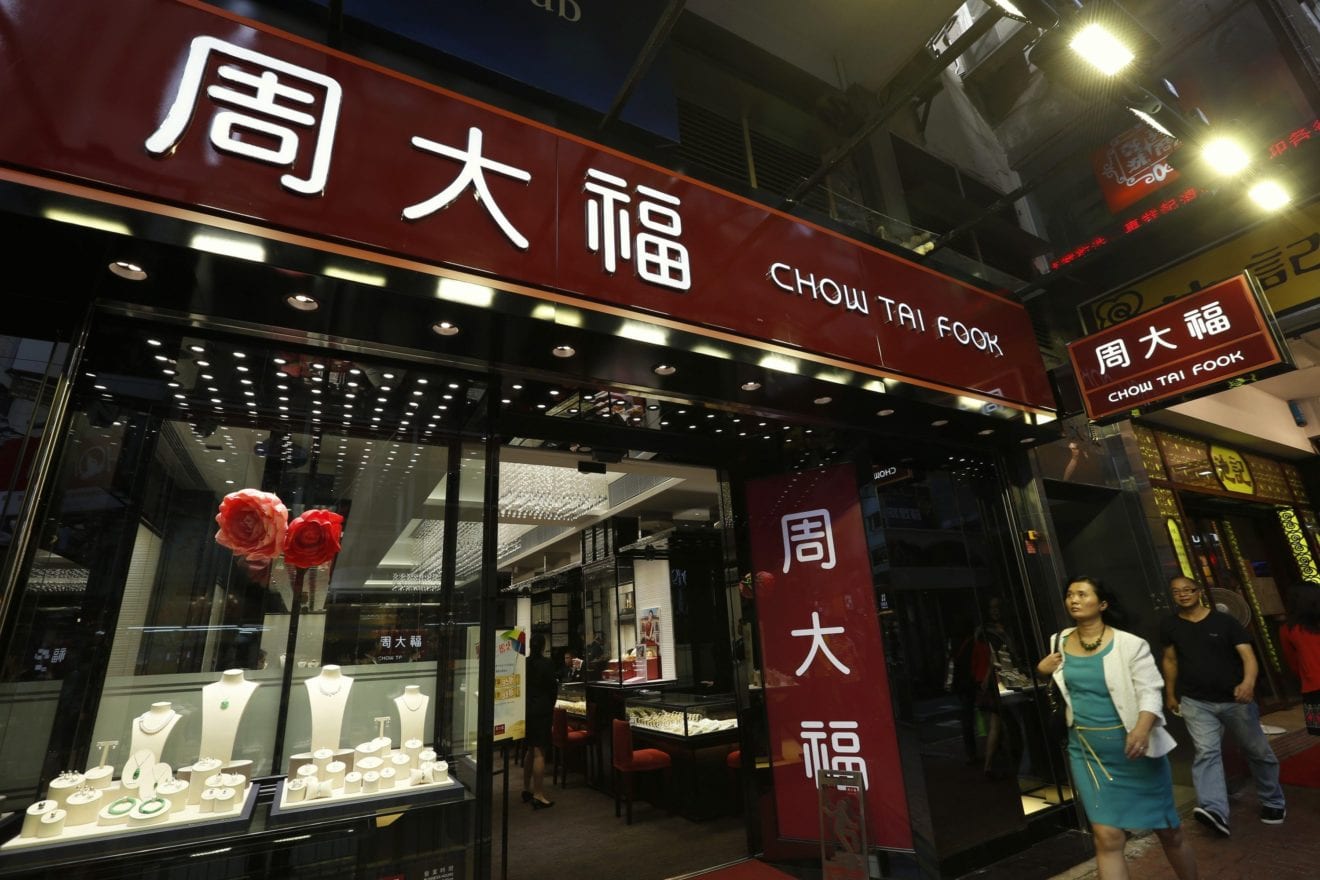
    Chow Tai Fook Jewellery Group, the world’s largest listed jewelry chain, will be more “selective” in expanding in mainland China, after it posted on Tuesday the steepest decline in full-year profit since it listed locally due to the economic slowdown.

    Listed in 2011, the jeweler saw its net profit plunge 46% to 2.94 billion Hong Kong dollars ($379 million) for the 12 months ended in March, in line with its profit warning issued on May 12. Full-year revenue fell 12% to HK$56.59 billion from a year ago. Its mainland business contributed more than half of its revenue.

    “The market is still subject to short-term volatility,” said Chairman Henry Cheng Kar-shun, son of Hong Kong billionaire Cheng Yu-tung whose business empire includes developer New World Development and transport companies. “But we are cautiously optimistic about the long-term growth prospects in the greater China market.”

    Chow Tai Fook’s retail network expanded to 2,300 points of sales in mainland China, Hong Kong, Macau, Taiwan and South Korea as of end-March, with a net addition of 62 from a year ago. Managing Director Kent Wong Siu-kee told reporters that net store openings will be similar to last year, but a majority of them will be in third- and fourth-tier Chinese cities, citing lower business costs there.

    The group will shut down seven to eight stores in Hong Kong and Macau to cut cost, although it does not have large-scale layoff plans this year. Last year, it lost about 9% of its staff in Hong Kong and 6% in mainland China. “The pie [of luxury retail] is so much smaller than before,” said Cheng, but added that the retail downturn was cyclical rather than structural.

    Hong Kong retailers still face challenges as sales fell for the 14th consecutive month in April, with a dwindling number of tourists from mainland China. Sales of jewelry and watches fell 16.6%, according to official statistics, although the decline has narrowed.

    Michael Cheng, Asia-Pacific retail and consumer leader at PricewaterhouseCoopers, expects the luxury sector to recover in 2017 due to a low base effect. “Luxury is a sector so much subject to volatility in the macro market,” he said on Tuesday, adding that more luxury retailers would offer deeper discounts and turn to the “affordable luxury” segment for opportunities.

    Other retailers have a more aggressive China strategy. Rival Tse Sui Luen Jewellery reported a 40% fall in net profit last year, dragged down by a slackening retail market in Hong Kong. The Hong Kong-listed jeweler is counting on the domestic mainland market to drive revenue growth.

    “At least half of our income will come from mainland China,” TSL’s Financial Officer Estella Ng told reporters in late May, adding that the group would open at least 100 sales points there in the next two years.

    Chow Tai Fook’s shares closed 4.8% higher at HK$5.87 on Tuesday before the earnings announcement. Their shares have plummeted 34% from a year ago, widely underperforming the benchmark Hang Seng Index. Analysts at JP Morgan gave it an “underweight” rating with a price target of HK$3.50 as of mid-May, citing “no positive catalysts” for the stock in the short term.

    Despite its weak earnings performance, the jeweler declared a special dividend of HK$0.22, bringing total dividends for the year — including its interim and final payout — to HK$0.8, up from HK$0.28 last year. Analysts said the special dividend was a sweetener to boost its share price, but the management justified it as a move to reward shareholders.

    Nikkei staff writer Joyce Ho in Hong Kong contributed to this story.

  • CatchPlay Launches Streaming Service in Indonesia Amid Land Grab

    CatchPlay Launches Streaming Service in Indonesia Amid Land Grab

    Taiwanese film distribution and production company CatchPlay group has launched a streaming video-on-demand service in Indonesia with the country’s state-owned telecommunications giant Telkom Indonesia after offering such a service in Taiwan in March.

    The cost of the service is $1.42 for local or Hollywood library titles, $2.15 for new releases, or a paid subscription of $4.81 per month.

    With a population of 260 million people, Indonesia is a logical market to expand outside of Taiwan, said Daphne Yang, CEO of CatchPlay, which will provide the latest Hollywood movies, as well as local films to subscribers. “It’s the biggest market in Southeast Asia. Also, not just in population, it’s a very vibrant market in terms of social networks,” Yang tells. “It’s the number four Twitter country in the whole world [and] number four in terms of user base on Facebook as well. We think that level of involvement in social networking would definitely help entertainment content consumption. We see a lot of potential in this country.”

    Indonesia has seen such online video players coming into the market as Neftlix, Hooq and iFlix in the past six months. “The market’s at a very early stage of development and it’s a land grab – it’s all about driving up consumption and then converting that to payment and using the telecommunications integration and carrier billing model as the way forward for that,” said Vivek Couto, executive director of research and consulting firm Media Partners Asia.

    However, there are only 5.5 million fixed broadband users in the country, and the infrastructure is insufficient to provide for the growth of the OTT market, he said. But the number of mobile broadband users will be close to 90 million by the end of 2016, according to Couto. “While Indonesia lags Singapore and Hong Kong and is also trailing Thailand and Malaysia, there is growing investment in next-generation fixed and mobile infrastructure, but progress is slow, especially outside Jakarta,” said Couto.

    “There has been an increasing trend of OTT adoption in Indonesia,” says Harsh Upadhyay, analyst at Singapore’s Analysys Mason. “This growth suggests that interest from end users has been high.” But he also highlights that fixed and wireless high-speed coverage “is not entirely available even in big cities of Indonesia.”

    CatchPlay thinks the key to entering the Indonesian market is to find the right partner, in their case the telecommunications giant Telkom, which is the top IPTV service provider in Indonesia. Over the past nine months, it has reached 1.6 million subscribers for its IPTV service, explains Yang. As was evident in the blocking of Netflix at the beginning of the year in Indonesia due to content deemed inappropriate by Telkom, the telecommunications giant holds the power in the bargain. Yang said its new service would be provided only to adults who have a password to the Telkom’s Indihome IPTV service.

    The Indonesian government has also brought out suggested regulations in the past few months regarding OTT services. Foreign companies should set up permanent business establishments, pay taxes and evaluate joint ventures with local OTT players, they suggest. In the recent draft regulation, the government is also trying to restrict access to certain content and services.

    Said Upadhyay: “The regulation also specifically mentions the objective of protecting Indonesian telecom operators, and hence raises important questions around net neutrality and competition. The regulation threatens the openness of the Indonesian OTT market and is likely to discourage international OTT providers from offering services to Indonesians.”

  • Alibaba makes unconventional strides in Korea

    Alibaba makes unconventional strides in Korea

    Alibaba Group is raising its profile here in a slow, yet unconventional way, as its business strategy is far from that of other companies whose primary goal is to maximize profit.

    China’s largest e-commerce company was not well known to Korean customers before it surprised the world in 2014 with its record-breaking initial public offering at the New York Stock Exchange.

    In the same year, the company made its first noteworthy appearance here, with Chairman Jack Ma visiting Seoul to meet President Park Geun-hye to discuss business collaboration with Korean companies.

    Alibaba and its key affiliates have since formed partnerships with local companies in what critics say is a move to diversify its revenue streams, as other overseas information and communication technology (ICT) giants have done.

    But revenue generation has not been the core of its business and partnerships, given its two-year operations here. The company, instead, has focused on building an environment in which small Korean companies can sell things abroad.

    This is in line with its corporate vision: Making transactions easier anywhere. The Alibaba founder identified the need to build such an environment in China when he established the firm in 1999. He said he wants to apply the same philosophy to other countries, including Korea.

    “Alibaba does not have any plans to directly open an online shopping platform in Korea, as our ultimate goal is to become a company helping other firms to benefit from e-commerce,” he said last year when celebrating the launch of the Korea Pavilion on its business-to-customer (B2C) retail site, Tmall.

    The Korea Pavilion was Alibaba’s first official country pavilion on its website, selling genuine Korean products to Chinese customers.

    He then dispelled concerns that the company may become a potential threat to local e-commerce operators. The Alibaba chief made it clear that Alibaba hopes to become a “facilitator” to help Korea’s e-commerce grow, allowing small companies to sell their products to Chinese customers.

    All of its partnerships in Korea have so far come under this corporate motto.

    Major collaborations include the Korea Exemplary Food Exhibition project, for which the nation’s Ministry of Agriculture, Food and Rural Affairs and 1688.com, Alibaba’s business-to-business (B2B) online trading site in China, joined hands. This was in October 2014, in the e-commerce giant’s bid to introduce Korean food to the Chinese B2B market.

    In May, its cloud-computing affiliate, Alibaba Cloud, partnered with two Korean firms ― SK C&C and Bankware Global. During the announcement, Alibaba allowed its two local partners to announce their visions through the collaboration.

    This symbiotic corporate management policy is part of Alibaba’s efforts to make the company last for more than 100 years, which will cross three centuries, according to the Alibaba chief.

  • Shopping by phone keeps rising

    Shopping by phone keeps rising

    More Koreans are shopping online via smartphones and tablets than on their laptop or desktop computers.

    According to Statistics Korea Thursday, online shopping transactions rose 11.3 percent in April compared to a year ago, hitting 4.76 trillion won ($4.0 billion). Mobile shopping via mobile devices surged 31 percent during the same period, and accounted for 50.7 percent of total online shopping, or 2.41 trillion won.

    “Mobile payment services have been introduced to allow customers to purchase goods via mobile devices more easily than before, and retailers are improving their mobile apps to attract more customers,” said Sohn Eun-rak, a director at Statistics Korea. “Moreover, customers like to purchase goods via smartphone because retailers offer more promotions and discounts in their mobile apps.”

    Mobile shoppers accounted for only 29 percent of all online shoppers in April 2014. The figure exceeded the 40 percent-level early last year and finally surpassed 50 percent in December.

    Even though transactions rose from a year ago, they dropped from the previous month. Online shopping transactions dropped 8 percent in April compared to March and mobile shopping fell 9.2 percent. In March, overall online shopping transaction recorded 51.7 trillion won, but then fell back to the 40 trillion won-level.

    By sector, people purchased more cosmetics online, while the figure for travel and reservation services fell.

    People spent 32.5 percent more buying cosmetics in April compared to the previous year, while they spent 2.1 percent less for travel and reservation services.

    “The number of Chinese tourists visiting Korea rose 12.1 percent year-on-year in April, and they were interested in buying cosmetics at both brick-and-mortar stores and online retail shops,” said Sohn. He added that reservation service dropped because fewer people went to the movies.

    “In April 2015, there were more people visiting theatres due to hit movies such as ‘Avengers: Age of Ultron’ and ‘Furious 7,’” Sohn said. “Moviegoers in general fell by 2.72 million in April from a year ago, and I think this might have affected the reservation services sector.”

    About 60 percent of online shoppers bought goods such as clothes, shoes, cosmetics and baby supplies via their mobile devices, according to the data.

    Shoppers buying goods at online-only retailers rose 4.2 percent year-on-year in April, while it rose 23.3 percent for retailers that have both online and brick-and-mortar stores.

    Statistics Korea surveyed a total of 991 online retailers.


  • Central Department Store app launched

    Central Department Store app launched

    A Central Department Store app has been launched to keep customers informed about in-store promotions, aiming to drive traffic in the lacklustre market in Thailand.

    In the Thai language, Central Smart Shopper lets users key in such factors as date, store branch and budget. It then shows a list of available promotions from about 20 credit-card companies.

    Executive VP for marketing Piyawan Leelasompop says the aim is to capture younger-generation shoppers. “They are eager to change, and one day we could foster the relationship and build brand loyalty.”

    Part of retail giant Central Group, the department store has invested more than 10 million baht (US$280,000) to develop the app, and targets 100,000 downloads by year-end. It plans to further develop the app to link to online shopping.

    This follows Central Group acquiring the Thai market for online fashion marketplace Zalora, as well as a slump in Thai spending. Thailand’s retail sector slowed to 2.8 per cent growth last year, according to the Thai Retailers Association.

    Central Group will kick off a one-and-a-half-month sale on Friday at its 64 branches nationwide, including Central Department Stores. It will invest 100 million baht in the campaign to offer discounts of up to 80 per cent.

  • Brand building shifts from billboard to online

    Brand building shifts from billboard to online

    From billboard and television, the Philippine market is slowly shifting to online in brand building, capitalizing on the growth of mobile penetration and the use of electronic commerce.

    According to leading global market research and insights company TNS, brands in the Philippines have leveraged on the social media-savviness of the Philippine market in pushing their brands which are now using Facebook twice as much in the previous year to push their products.

    Anne Rayner, global head of Communications Research, in a press briefing said electronic commerce is picking up and growing three times as fast as the global average.

    Rayner said 81 percent of brands on Facebook in the Philippines use this medium to market their products, which is almost double than the 47 percent global penetration.

    In the Philippines, Rayner said, 11 percent of purchases are now made via mobile.

    The study also showed that almost two thirds of product research (62 percent) is happening online in the Philippines – and much of this is happening in-store while people shop.

    “This highlights just how vital it is for retailers and businesses to understand which touchpoints are most important to driving sales, as it may not be those in the physical store,” Rayner said.

    Rayner clarified though that the Philippines remains a TV-heavy market but that studies would indicate a shift to mobile as half of the population are connected.

    “This has allowed them to increasingly watch videos on their smart phones during peak TV times in the early evenings. In one year, the Philippines emerged from the most TV-heavy market to just in the top 10. Brands should embrace on how to reach consumers,” Rayner said.

    “In the Philippines, it’s all about mobile and Facebook is very critical. Social media now looks like TV,” she added.

    When it comes to customer relations management, Rayner said, Filipinos prefer social media rather than call centers such that it would be better to set up service centers to handle after-sales.

    Rayner also said billboards in the Philippines are overused and brands should use them for deliberate, specific strategies on top of other media, depending on the products.

    A study done by TNS a few years ago showed that the Philippines was a country of billboards, but Rayner said this has changed.

    “Studies show that from telcos to infant nutrition, billboards are not a good value for money, just because brands become visible (through billboards) does not mean they are impactful. Billboards just become wallpapers,” Rayner added.

    Car dealerships, for example, use TV and billboards to drive sales.

    E-commerce in the Philippines in 2015 grew nine percent, three times faster than the global average, with 20 percent of Filipinos buying through ecommerce, half of which are via mobile.

    Rayner said the Philippines has overcome the accessibility challenge in e-commerce but trust issue remains a hurdle.

    She said most e-commerce purchases are for travel.

    According to Rayner, growth of e-commerce in the Philippines is hampered by the fact that most fast-moving consumer goods are purchased on last-minute, where Filipinos go to their old reliable retail outlets for their purchases.

    The TNS study revealed thaton average, Filipinos use five different touchpoints before making a purchase. Touchpoints are the different ways that consumers interact with a business.

    From traditional methods like customer service call centers to newer interactions like social media, the array of touchpoints now available for businesses has completely changed the marketing landscape.


  • Samsung Pay wins Citi support for Singapore launch

    Samsung Pay wins Citi support for Singapore launch

    Samsung has secured the support of Citibank as it readies the release of its mobile payments service in Singapore.

    Samsung has already won around Singapore’s major banks as it prepares for the launch of its service in Q2.The company is hoping the deal with Citi will give it the edge over rival Apple, which last week announced that it had lined up five major banks, extending the use of the mobile wallet beyond a limited earlier release for AmEx cardholders.

    Samsung says it will be able to tap in to Citibank’s extensive customer base and merchant network to promote greater adoption and usage of digital payments in the country.

    The South Korean consumer electronics giant says it has signed up ‘thousands’ of consumer to enter into beta tests of Samsung Pay ahead of its launch later this quarter.

  • UberEats Singapore hits the road

    UberEats Singapore hits the road

    UberEats Singapore has launched, the ride-hailing app’s food-delivery service making its Asian debut.

    Using the standalone app, Singaporeans can order food from about 100 restaurants. While deliveries are initially limited to the central business and commercial area, the company plans to expand its service coverage as well as menu.

    Making its debut in Toronto early this year, the app expanded to four major US cities in March, and Uber began signing up restaurants and testing the service in Singapore last month.

    Singapore was also the first Asian market to have Uber’s ride service, in February 2013.

    UberEats is up against entrenched food-delivery services such as Rocket Internet-backed FoodPanda and Deliveroo, whose investors include Accel and DST Global. Using the map-routing algorithms Uber uses to connect drivers and passengers as quickly as possible, UberEats Singapore promises delivery within 35 minutes.

    It has raised US$9 billion in funding so far, and the delivery driver program is separate from ride-sharing, though drivers can do both.

  • BeautyFresh has bold Asian ambitions

    BeautyFresh has bold Asian ambitions

    Singapore cosmetics startup BeautyFresh is eyeing the eCommerce potential in its home market and broader Asia.

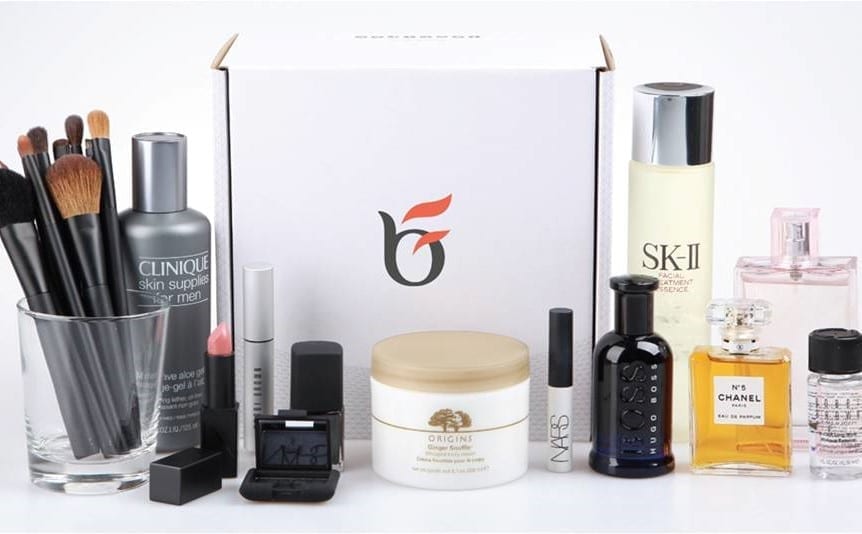
    Stocking more than 70 international brands including Chanel, Dior, Jo Malone and Nars, the company ensures authenticity of its products by scanning them with ultraviolet light to check for defects. Employees also check to ensure products are not near expiry dates.

    Director Jack Wong has a background in online security, so is using his expertise to ensure that client data is secure. The web developments and encryption of the BeautyFresh site are similar to those of online banking (signified by a green lock in the URL).

    Meanwhile, market research firm Mintel says that a growing number of Chinese consumers are going online to buy international beauty products.

    Jo Malone_BeautyFresh.com (1)

    Its research shows that 58 per cent of Chinese consumers bought foreign products online from a domestic shopping website in the six months to the end of November last year. The top three countries buying beauty products were South Korea (47 per cent), Japan (29 per cent) and France (27 per cent).

    According to the report, cross­-border eCommerce grew more than digital retail generally last year, a trend that is expected to continue.

    While cross-border eCommerce is increasingly competitive and provides great sales opportunities, the report warns that brands need to be increasingly responsive to consumer demand.

    Quality of products (63 per cent) and prices (38 per cent) are the top concerns for Chinese online buyers.

    BeautyFresh offers free delivery on orders worth US$40 or more, and offers a 30-day money back guarantee.

  • Southeast Asian economies lure Alibaba

    Southeast Asian economies lure Alibaba

    Southeast Asian economies are reaching a stage similar to China’s at the end of the last decade, when eCommerce began to take off, according to Alibaba Group executive vice-chairman Joseph Tsai.

    “I don’t blame you guys for having some degree of excitement about Southeast Asia when you look at the economies here,” he has told a Singapore conference staged by Google and local sovereign wealth fund Temasek.

    For example, he said, the per-capita GDP of Indonesia, the world’s fourth most-populous country, was about $2900. “That’s roughly the same as China’s per-capita GDP in 2009 and into 2010, a period when Alibaba’s C2C marketplace Taobao began to soar, adding about $50 billion in gross merchandise volume.”

    This was one reason Alibaba had invested about $1 billion in Singapore-based Lazada Group last month. Launched in 2012, Lazada now has shopping websites in Indonesia, Malaysia, the Philippines, Singapore, Thailand and Vietnam. It began by selling inventory to customers from its own warehouses but now also runs marketplaces for third-party sellers, as well as using its own logistics networks for deliveries.

    “We’re very excited about our investment in Lazada,” Tsai said. “It is starting from a very small base, but the potential is very, very big.”

    By adding marketplaces in Southeast Asia, Alibaba can offer merchants already selling on its platforms a chance to sell into new markets. “It’s very, very helpful to be able to present something that is more of a geographically diverse platform,” Tsai said. Online healthcare and fintech companies such as Alibaba-affiliate Ant Financial, poised for rapid growth in China, could expand their services to Southeast Asia.

    Tsai said he sees promise in the wide use of the mobile internet in Southeast Asia, a trend that typically gives rise to greater engagement and more purchases by online shoppers.

  • Alfa goes all-out in RI e-commerce battlefield

    Alfa goes all-out in RI e-commerce battlefield

    Publicly listed retail giant PT Sumber Alfaria Trijaya, also known as Alfa Group, is stepping up efforts to intensify its presence in the e-commerce industry with the relaunch of its e-commerce platform on Monday.

    Alfacart.com, an online platform that serves as a complementary feature to physical Alfa outlets, was introduced Monday as the new name for the group’s Alfaonline.com, which was established in 2013.

    “This rebranding strategy is necessary as we want to create a full-fledged e-commerce business,” Alfacart CEO Catherine Hindra Sutjahyo told reporters.

    As a subsidiary of Alfa Group, which also owns minimarket chain Alfamart, grocery store Alfamidi and drugstore Dan+Dan, Alfacart aims to see its sales increase six-fold this year, from its 2015 figures, resting its optimism on untapped e-commerce potential in Indonesia.

    Catherine, however, refused to disclose a specific 2016 sales target.

    Alfacart plans to offer four lines of products, namely fashion, gadgets and electronics, daily necessities and lifestyle items.

    The company is targeting middle-class females and males aged 25 to 35 years old in big cities who are concerned with practicality and time efficiency and prefer to make purchases online.

    As one of its strategies to expand its business, Alfacart, Catherine said, would apply the online-to-offline ( O2O ) strategy to cater to Indonesia’s unbanked: those do not have access to bank accounts, savings and credit cards.

    The feature will enable Alfacart customers to order goods online through an application or website and pick up their purchases at one of the 7,000 Alfamart stores nationwide that have been integrated with Alfacart.

    “Alfamart has about 11,750 outlets nationwide, 7,000 of which are already integrated with Alfacart,” Alfacart chief operating officer and chief marketing officer Haryo Suryo Putro said, adding that the company will concentrate on providing services in the country’s major cities before expanding to smaller ones.

    In addition, Alfacart also allows small and medium enterprises to partner with the company.

    “Although we are selective in choosing our partners, our requirements are simple,” Ernest Tjahjana, the company’s chief commercial officer said, explaining that applicants only need to attach a copy of their tax registration numbers ( NPWP ) and identity card ( KTP ) to apply as a partner.

    In recent years, a growing number of e-commerce fashion, retail, and other businesses have been racing to provide the best online services to Indonesian customers.

    Some of them include an affiliate company of Djarum Group, Blibli, online marketplace Lazada and grocery delivery app HappyFresh.

    Based on data from idEA, the number of online shoppers in Indonesia hit 7.4 million last year, out of a total 250 million people in the country. This shows that the opportunity for e-commerce businesses to grow is still huge.

    Despite the growing number of e-commerce businesses in Indonesia, some have struggled to turn a profit here.

    Many foreign giants, such as Japan’s Rakuten and Germany’s Lamido — who both sell consumer products — exited the market. Clothing site Paraplou, travel booking site Valadoo and financial technology firm Inapay did the same.

    Alfacart’s Catherine, which was also a former director of Zalora Indonesia, acknowledged this was one of the main challenges in the e-commerce industry.

    “One of the biggest challenges in sustaining an e-commerce business is how to make it profitable in the long run,” she said.

  • Indonesia Revises E-Commerce Regulation

    Indonesia Revises E-Commerce Regulation

    Indonesia has one of the biggest economies in the Asia-Pacific region and its rate of internet adoption is one of the fastest in the world. So naturally, e-commerce in the region is starting to boom.

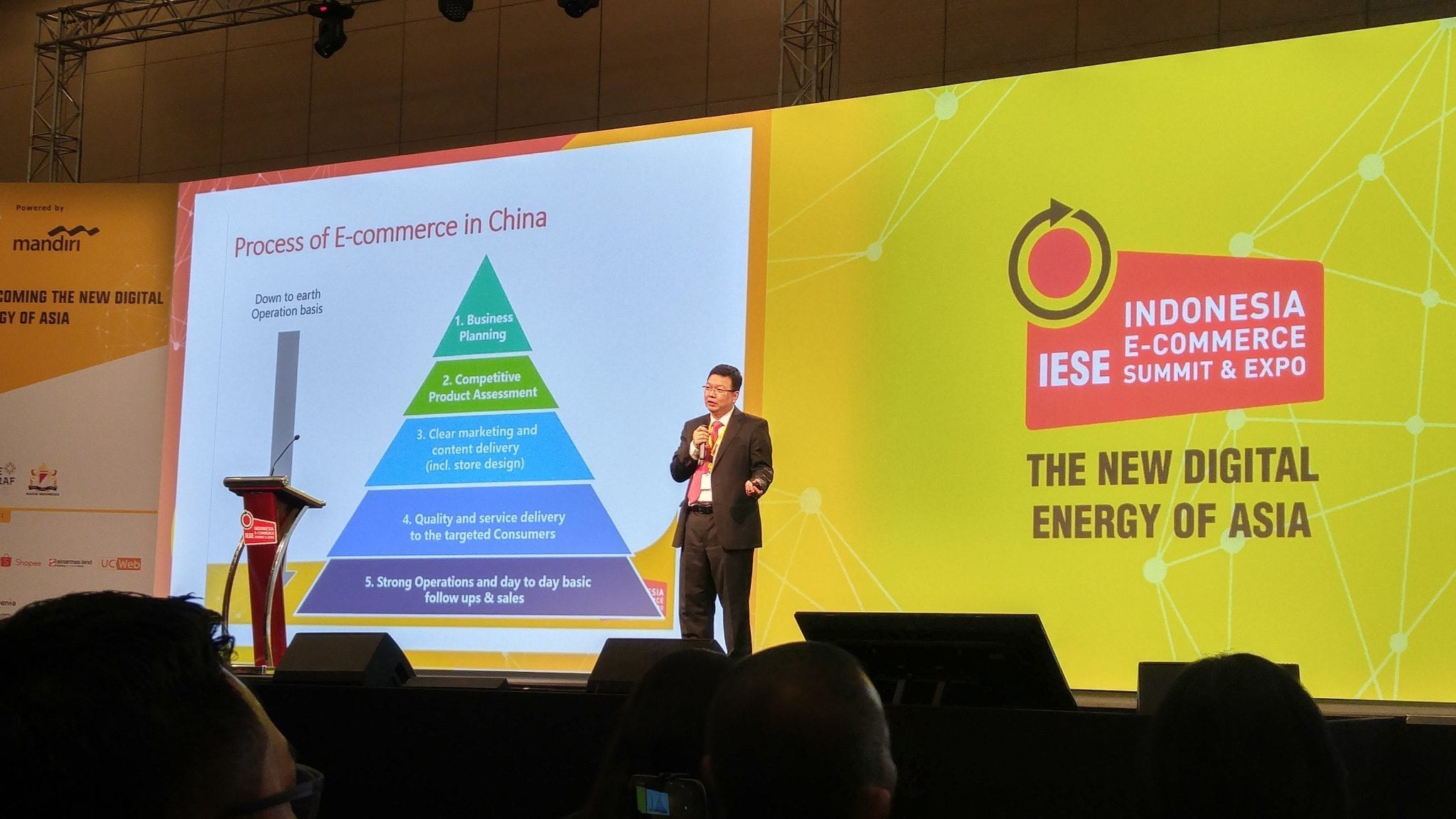
    According to Alibaba Group Executive Vice Chairman Joseph Tsai, Indonesia’s per capita GDP is about the same as China’s was in 2009, when Alibaba’s marketplaces really began to take off. Alibaba has taken steps to get a stake in the region, investing US$1 billion in Southeast Asia e-commerce platform Lazada, a Singapore-based company with extensive operations in Indonesia.

    To help help drive e-commerce growth in Indonesia, the government has made moves to open the country up to foreign e-commerce investment and expertise.

    Indonesia’s Investment Coordinating Board (BKPM) is finalising guidelines for foreign e-commerce investment. The new BKPM regulations will allow 100 percent foreign ownership for e-commerce businesses with a minimum investment of Rp100 billion (about AU$10.3 million) or businesses that create 1,000 jobs.

    The guidelines, however, limit foreign ownership to 49 percent for businesses investing below the Rp100 billion mark. The moves are designed to encourage big e-commerce investment from major players, while offering some protection to Indonesia’s local SMB e-commerce players.

    The removal of e-commerce businesses from Indonesia’s ‘negative investment list’ (which outlines business activities that are either entirely closed or conditionally open to foreign investment) provides a significant opportunity for foreign investment into one of South-East Asia’s fastest growing e-commerce markets.

    “I think this is the right time for Indonesia to aim to become the largest digital nation in Asia,” said Rosan Roeslani, Chairman of Indonesian Chamber of Commerce and Industry.

    “What this country needs is not only money but also know-how, which is why we invited incubators to come to Indonesia,” he said.

    “We have also talked about how we can get more start-ups to go through seed stage. One of the possibilities is to encourage big e-commerce players to spin their people off their company… We have not come out with the conclusion yet, but the government is very open for solutions,” he said.

    Indonesian President Joko Widodo is looking to make the country South-East Asia’s largest digital economy by 2020. The lifting of foreign ownership restrictions has been praised by those in the industry who welcome the injection of foreign capital and expertise.

    The removal of e-commerce from the negative list is part of Indonesia’s e-commerce roadmap, which was released earlier this year. The roadmap includes a list or proposals aimed at making it easier for e-commerce firms to operate in the country. Key elements of the roadmap include:

    • Government financied developments of logistics facilities and improvements to communication infrastructure
    • Government financing for start-ups in the form of grants and funds, as well as regulation for crowdfunding
    • Streamlining business licensing processesand increasing consumer protection regulationE-Commerce Regulation
    • Tax breaks for tech start-ups
    • Increased cyber security
  • Alfamart to launch click and collect

    Alfamart to launch click and collect

    Alfamart is going to utilize its 10,000 store network as pickup points for its new online shopping platform Alfacart. Alfacart, the new e-commerce platform will carry one million products from sellers, and is expected to generation IDR1tn (US$70m) transaction. The existing shopping website Alfaonline will be replaced. The advantage of Alfacart over the other e-commerce players lies with its large store network of more than 10,000 throughout Indonesia. The retailer is also expected to be opening another 1,200 stores this year.

    “We understand there are some players in the market but the high cost of last mile is still a concern,” said Sumber Alfaria president Hans Prawira, “We have presence in the market very close to shoppers.”

    E-commerce is due to boom in Indonesia

    With the growth in investment and acceptance of internet and mobile shopping, Indonesia is seen as the next frontier after China and India in Asia. The government wants e-commerce to become the backbone of its growing digital economy and leading players like Alibaba are also accelerating their expansion into Indonesia.

    Even though logistics is still a challenge due to underdeveloped infrastructure and the sheer size of the country, it is only a matter of time before we see the boom of e-commerce.