Category: E-Tailing

Retail News Asia is committed to providing both local and global retailers with the latest E-Commerce & Etail news throughout the Asian market. This on a daily base.

  • Lalamove Delivers Lifestyle Services with LINE

    Lalamove Delivers Lifestyle Services with LINE

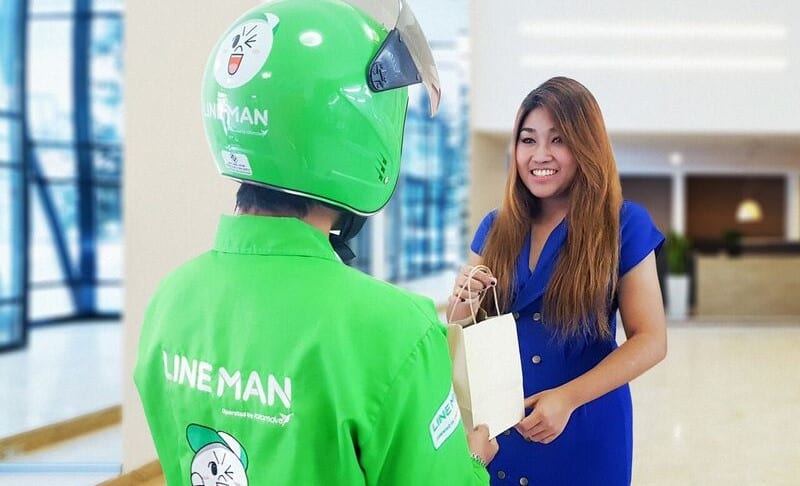
    Hong Kong based on-demand delivery app Lalamove is partnering with the world’s leading mobile platform LINE to expand on its delivery services in Bangkok.  The LINE MAN app is aimed at bringing reliable on-demand services to consumers as well as providing convenience to their increasingly busy lifestyles.  LINE MAN is one of LINE’s first ventures to “be more than a chat app” and LINE has chosen Thailand to be the first market to launch LINE MAN.

    The LINE MAN smartphone platform offers three services: document and package delivery, food purchase and delivery, and convenient goods purchase and delivery.  The delivery of all 3 services is provided by Lalamove, and currently limited to within Bangkok for now with plans for expansion.  LINE has a large user base of over 33 million in Thailand.

    Lalamove-LINE_3

    The announcement follows a global conference in March 2016 where LINE revealed a five-year plan to create a ‘smart portal’. The goal is to close the loop between businesses and LINE users and go beyond their original chat app strategy.

    Santit Jirawongkraisorn, Co-founder and Managing Director of Lalamove Thailand believes partnering with LINE is a natural progression. “This year, we have been marketing our online delivery services primarily to small and medium sized businesses. The addition of LINE MAN will bring Lalamove’s high quality services that many businesses have enjoyed to general consumers, which appeals to the Lalamove strategy and brand.”

    Meanwhile, the choice of Lalamove to deliver LINE MAN services demonstrates real confidence in the logistics app profile. According to Ariya Banomyong, Managing Director of LINE Thailand, “LINE MAN aims to offer best quality lifestyle services and help businesses leverage digital tools to connect with consumers, and Lalamove, as a leading on-demand delivery service provider in Thailand, made them a natural choice for LINE MAN”.

    LINE MAN will offer courier services through the Lalamove fleet of motorcycles, with cash payments.  Consumers will be able to order food via restaurant database app, Wongnai.

    LINE MAN is free to download at the Google Play store and Apple store.

    https://onelink.to/lineman

  • 11street Academy is the First E-commerce Certification Programme in Malaysia

    11street Academy is the First E-commerce Certification Programme in Malaysia

    11street (www.11street.my), one of the largest online marketplaces in Malaysia, launched ‘11street Academy’, the first ever e-commerce certification programme in the nation, targeting to help at least 1000 sellers and entrepreneurs to grow their businesses online.

    According to Hoseok Kim, Chief Executive Officer of 11street, this initiative aims to impart every facet of e-commerce knowledge to help sellers expand their online businesses. “We have been receiving overwhelming response to 11street’s existing and basic training courses, which is an introductory level of e-commerce training session for the past one year. Majority of our sellers who took up the basic courses has purportedly reported a hike in month-on-month sales.”

    “As a result, they have been yearning to deepen their knowledge in e-commerce to explore untapped opportunities in hopes of maximizing their online businesses. Hence, with the launch of 11street Academy, we will be offering up to advance level of e-commerce-related education to reinforce many more local sellers with in-depth knowledge, expertise and know-hows to achieve significant growth and success in e-commerce,” Kim added.

    Photo 1_Low Res

    11street Academy will kick start by offering a well-structured education program with a comprehensive syllabus to enhance sellers with state of art knowledge. This includes essential marketing skillsets offered by our partners, Google AdWords and Facebook, which allow online sellers to proceed to the next level as the market matures while fulfilling their drive in finding more effective ways to excel in e-commerce.

    Kim further shared, “Working hand-in-hand with Malaysia Digital Economy Corporation (MDEC), Google AdWords and Facebook, we are committed to fuel the success of Malaysian online sellers by providing top-notch e-commerce trainings offered only by industry leaders in which we strongly believe will help our sellers’ businesses bloom and generate greater revenue.”

    “11street Academy’s strategic collaboration with the partners, including MDEC is the forefront of an emerging informative e-commerce community, which intends to empower Malaysian SMEs and entrepreneurs to grow their business, and coherently boost the economic growth in Malaysia,” said Chief Executive Officer of MDEC, Datuk Yasmin Mahmood.

    Denise Gamo, Head of SMB Marketing at Google Malaysia also said, “According to Google’s Consumer Barometer study, Malaysia is a mobile-first nation with a 70% smartphone penetration and 1 in 3 Malaysians exclusively using their mobile device to access the Internet. By attending the workshop, the audience will better understand Malaysia’s digital landscape, consumer behaviours and learn about platforms such as Google My Business and Google AdWords on Search, YouTube, and on the Display Network. With these, the sellers will be geared with knowledge, tools and online presence that is crucial in reaching their potential customers.”

    Facebook will provide custom Blueprint Training that will include extensive e-learning modules, offering sellers an opportunity to learn more effective ways to leverage Facebook advertising to drive real business results.

    Sandhya Devanathan, Group Head of e-commerce, Retail, Financial Services and Travel, for Facebook in Southeast Asia added that, “Mobile News Feeds are the new storefront for retailers looking to reach Southeast Asia’s mobile first consumers. We know that 94% of Malaysians discover products and brands on Facebook while 62% make a purchase after discovery. There’s an unprecedented opportunity for businesses in Malaysia to connect with the 18 million people on Facebook – 94% of them connecting through mobile devices. We’re committed to helping support and educate partners similar to these workshop sessions that will ultimately help e-commerce companies in Malaysia build and grow their businesses.”

    Apart from the basic syllabus, the advanced courses established under 11street Academy will also cover a large breadth of topics such as ‘Marketing, Advertising & Promotion’, ‘Shipment & Inventory Management’, ‘Product Photography – Theory & Practical’, ‘Sale & Online Supply Chain Management’ and many more.

    Learning the Ropes of E-commerce with 11street

     With no fees required, 11street Academy will be opened to all Small and Medium Enterprises (SMEs), businesses owners, and individual online sellers aged 18 and above and it only targets 100 participants per batch every month.

    Participants are required to attend 5 classes to complete the full course within 4 weeks. To graduate with certification, attendees are required to pass its qualification exam, complete the given assignments with a set minimum class attendance.

    The certification programme is open for registration from 16 May 2016 onwards on a first come, first served basis, whereby shortlisted candidates will be informed via email. For those who are interested, please register at https://bit.ly/registeracademy.

    Kim also shared, “11street Academy is our long term commitment to build a strong seller ecosystem because we value their contribution and we view sellers as the strongest support to the evolution of entire e-commerce market when it comes to providing the best products and services to local consumers. The programme is scheduled to operate for at least 12 months and shall be extended as we foresee an overwhelming response from our sellers.”

    “By supporting them to grow via the most recent 11street Academy’s e-commerce certification programme, we hope that our sellers will be able to grow their businesses and increase sales by implementing effective online retailing strategy and practices,” Kim concluded.

  • Lazada opens m-commerce tech hub in Thailand

    Lazada opens m-commerce tech hub in Thailand

    Southeast Asian e-commerce company Lazada Group has opened a tech hub in Bangkok, Thailand to drive strategic mobile development initiatives.

    The Lazada Tech Hub in Thailand will focus on advancing the design and engineering of Lazada’s mobile shopping and selling sites and apps for Southeast Asia.

    With almost 30 million app downloads and more than 60% of its GMV represented by mobile sales by the end of December 2015, Lazada Group has been investing in m-commerce through new app and mobile site initiatives.

    In the next few months, Lazada Tech Hub aims to hire more than 50 staff, including iOS and Android developers, Go Programming Language developers, and Quality Assurance automation engineers. The tech hub team will operate from EmQuartier in Central Business District Bangkok.

    Lazada Group opened its first tech hub in Ho Chi Minh, Vietnam in November 2012. A second tech hub was opened in Moscow, Russia in February 2015. Together, the three tech hubs are dedicated to driving product engineering and technology infrastructure.

    “Mobile innovation is a discipline any serious online player must build, and having the best talent is critical to designing products and solutions that are not only intuitive but improve the quality of experience and life for our consumers and sellers,” Lazada CTO for operations Ifor Evans said.

    “We believe that Thailand attracts a highly-skilled talent pool. And, as the leading shopping and selling destination, Lazada is both enviably-positioned and committed to raising the bar for mobile and tech development in the region.”

  • iQor Philippines on Pace for Record Expansion in 2016

    iQor Philippines on Pace for Record Expansion in 2016

    iQor, a global provider of integrated customer and product support services, today announced that the company has embarked on a significant expansion initiative that will add over 175,000 square feet of additional contact center space across the Philippines. Upon completion, the company will add an additional 3,150 high-tech training and production workstations.

    “The Philippines is a tremendous market for us. As one of the first movers, we’ve continued to invest in the region and have been able to continue to raise the bar in performance,” says Gary Praznik, iQor’s COO, Retail and Consumer Services. “Our growth can be traced directly back to the hard work and dedication of our entire Philippines family.”

    “Recognition of who we are and what we offer is really resonating with clients, employees, their family and friends,” adds Saurabh Bhaskar, iQor SVP of Operations, Philippines. “One of the most attractive opportunities within our company is our customer service leadership training. Recently, iQor was recognized by HR.com as having the top Call Center Leadership Training Program for 2016. Joining iQor means you have direct access to the best Call Center Leadership Training in the industry. For those interested in Customer Interactions such as customer care, social media support and collections, there is no better place to work and improve your career.”

    iQor opened its Philippines Operation in 2005. Recent expansion sites include; SM Mall Clark (2016), Robinsons Mall Dasmarinas (2015) and SM Mall Dasmarinas (2014). Today, iQor Philippines has over 12,000 employees across the region supporting a variety of customer interactions including; customer care, social media, collections and technical support. iQor Product Support Services division has helped expand relationships into the world’s top consumer electronics, retail and telecom companies.

    There has never been a better time to join iQor!


  • The rise of mCommerce in Malaysia

    The rise of mCommerce in Malaysia

    Online payment gateway provider iPay88 has seen a sharp rise in mobile traffic with its total online payment transactions representing close to 70% of the Malaysian market.

    Chan Kok Long, executive director of iPay88 said this was refelctive of the growth of mCommerce in the market.

    In year 2015, iPay88 recorded that 3.7 million online shoppers who made purchases through its systems used mobile devices. A year ago it was only 2.0 million.

    It is also seeing a rise in merchants actively promoting mobile purchases in 2016 following the mCommerce waves. In the last few years, the percentage of mobile traffic have also increased substantially, with the number being 27% in 2014, to 38.4% in 2015, up until 48.6% in 2016 so far.

    In the first quarter of 2016 alone, 1.6 million shoppers have purchased through their mobile devices on iPay88, the company said.

    With the rising number of mobile device users increasing, the mCommerce trend is predicted to follow suit. Mobile penetration has reached 136% in 2015, with 47% of Malaysians using their smartphones to online shop.

    Statistia, one of the leading statistics companies on the Internet projects the value of retail goods purchased via mobile to exceed USD$1 billion in 2018. Paypal has also cited that 28% of the 4.9 billion payments it processed in 2015 were from mobile devices.

    A survey on mobile shopping last year ranked Malaysia third in terms of mobile shopping growth rate in Asia, at over 20%, from 25.4% in 2012 to 45.6% in 2014. Many popular international online stores including Amazon, Apple, Walmart and Google Play have recorded an increasing number of consumers purchasing on their mobile.

    In Malaysia, 35% of the purchases on smartphones go to ticketing, while 29% goes to marketplace/group buying, but airline tickets are the most commonly purchased items on Malaysian tablets.

    Additionally, the rise of new platforms such as Uber and Grabcar that leverage on mobile booking and transactions also contribute to the rise of popularity in mobile usage and purchasing.

    “No doubt the availability of cheap smart phones and laptops have made the Internet accessible to a whole new demographic. The advent of tablets and smart watches has also broadened the spectrum of Internet usage,” Chan said.

  • UberJEK Launched in Jakarta

    UberJEK Launched in Jakarta

    UberJek, an app-based transport service, has officially started operation on Sunday, May 15. Aris Wahyudi, UberJEK’s co-founder, claims cheaper tariffs compared to its competitors.

    “Our tariff is different from those of the competitors. Our tariff will continue to drop from the first kilometer,” Aris said after UberJEK launch at Euro Management Indonesia, Sunday, May 15, 2016.

    He illustrated that on kilometer 1-5, the tariff is Rp2,500 per kilometer; on kilometer 6-10, it’s Rp2,000; above 11 kilometers, customers will be charged for Rp1,500 per kilometer.

    He added, other benefit of using UberJEK is no minimum tariff set for short distance travels. Thus, customers wanting to travel within 1 kilometer can pay Rp2,500. “We do not set a minimum distance, unlike our competitors. The benefit of using UberJEK is in short distance travels.”

    To attract customers, in addition to cheaper tariffs, UberJEK also entices its customers with giveaways. It is part of the promotional strategy to introduce UberJEK to the market. UberJEk claims to have earmarked seven million smartphones as giveaways for customers.

    UberJEK was founded by Aris and three other Indonesian businessmen in late October 2015. Aris said UberJEK services can now be enjoyed in 30 cities in Indonesia with a total of 2,200 drivers.

  • China still driving Alibaba sales

    China still driving Alibaba sales

    In posting its strongest revenue growth for the past four quarters, Alibaba has rounded off its fiscal year on a positive note.

    Although growth at the international division picked up strongly, it is China that has underpinned the group’s success.

    Alibaba sales jumped 39 per cent to 24.2 billion yuan (US$3.7 billion) in the three months ended March. Net income rose 85 per cent to 5.3 billion yuan.

    Despite the more challenging economic headwinds in China, Alibaba’s revenue from its various retail platforms in the country surged by 41 per cent over the quarter. Part of this is down to the growing audience, with active buyers across the various marketplaces growing by 16 per cent to an astonishing 423 million customers. Mobile platforms also saw growth with the number of monthly active users rising by 17 per cent to just over 410 million.

    This uplift was boosted by the rise in average revenue per buyer which increased by almost 11 per cent over the same period in the prior year. For mobile users the increase was even sharper, up by just under 109 per cent on the prior year.

    Much of this success can be attributed to three main factors:

    The first is reach. Here, Alibaba’s investment is allowing it to reach large swathes of the Chinese population – including in rural areas through its Rural Taobao platform – in a way that other eCommerce firms struggle to do. That it now has a presence in over 14,000 rural villages is a major advantage when it comes to growing its user base.

    The second factor is customer engagement and understanding. While many of its platforms are based around eCommerce, they are much more than just distribution systems. Taobao, for example, has a strong community element where consumers can look for news, understand trends, and interact with brands. This helps to drive up activity and user engagement which, in turn, aids sales conversion.

    The third factor is the group’s continued success with Western brands expanding into China. Arguably Alibaba is now the Chinese partner of choice for foreign firms, both because of its distribution network and its capability in providing intelligence and insight into consumer trends and habits. This ability to attract Western brands has made Tmall the destination for many Chinese shoppers. It is notable that in March alone, more than 100 new international brands joined the Tmall Global platform.

    As successful as Alibaba is in China, it has found international more challenging. However, the group is now taking a more selective approach to expansion, focusing on embryonic or underdeveloped eCommerce markets where its expertise can drive growth. The stake acquired in Lazada, an eCommerce platform in Southeast Asia, is typical of this strategy. Expect more such investments over the coming year.

    Despite its dominance in China, Alibaba’s growth prospects remain good – especially as it builds its content and entertainment business, and expands into services like cloud computing.

  • Indonesia to apply e-planning, e-budgeting systems by 2018

    Indonesia to apply e-planning, e-budgeting systems by 2018

    The government will apply e-planning and e-budgeting systems by 2018, according to National Development Planning Minister Sofyan Djalil.

    “We will improve the process while drafting the Government Working Plan 2017. This is an initial step in the process of applying e-budgeting and e-planning systems,” Minister Djalil, who is concurrently chairman of the National Development Planning Board, said here, Wednesday.

    The implementation of the National Development Planning Congress 2016 is also being streamlined to make it more effective by taking into account the aspirations of the regions, he emphasized.

    Starting this year, the ministry will, in stages, hold discussions with the regional governments to optimally prepare the Government Working Plan 2018.

    The government will change the planning system from “money follow functions” to “money follow programs.”

    “The money follow functions” system had resulted in the creation of several duplicate programs, he pointed out.

    “The Government Working Plan 2017 will implement the money follow programs,” the minister stated.

    He also shed light on the allocation of special funds for infrastructure development in various regions.

    By following the presidential instructions in certain provinces, the funds will be utilized to develop special economic zones, boost the tourism industry, and realize food sovereignty.

    The Government Working Plan 2017 will also include the promotion of mental revolution, legal enforcement, and disciplinary measures to ensure balanced physical and non-physical development.

  • Line Thailand expansion plans include business

    Line Thailand expansion plans include business

    Mobile platform Line Thailand has announced bold plans, targeting business uses.

    Part of Korea’s Naver internet service company, Line sees Thailand as its second-largest strategic market following Japan.

    Line Thailand MD Ariya Banomyong says the company aims to boost its presence not just as a mobile messenger but as a smart portal providing innovative and “useful” services.

    Banomyong says many businesses are wondering how to access customers seeking specific answers, and that ultimately Line would be more than just a message service. Already the company has launched a mobile delivery agent service, Line Man, and established a joint venture with Bangkok’s mass transportation business BTS, Rabbit Line Pay, which supersedes the Line Pay mobile payment business started last June.

    “I believe we definitely need to dominate the mobile food-delivery business because street foods are a very important part of Thai life,” says Banomyong. “Before Line Man, only a few restaurants offered a delivery service.”

    Banomyong aims to start localised services that can be adopted in major Line markets like Korea and Japan. “The Thai subsidiary will boost co-operation with startups here to seek new business opportunities.”

    Line services launched in Thailand in 2012, so far attracting 33 million subscribers – nearly half the country’s population. Line has added such services as official accounts, sponsored stickers and a content creators’ B2B market.

    For the offline-to-online sector, the company has started Line Shop, Line Gift Shop and Line At, an official account service for small- and medium-sized enterprises (SMEs).

    “Only about 500,000 out of 2.8 million SMEs in Thailand are online,” says Banomyong. ”To offer them a broader online environment, we provide a simple yet effective platform with lower costs.”

    In December, the company also started the television content-streaming service Line TV in collaboration with media groups such as GMM. Its Line Music service has recorded more than 7 million cumulative downloads.

  • Online fraud forecast to reach $25bn by 2020

    Online fraud forecast to reach $25bn by 2020

    Online fraud is expected to reach $25.6 billion in value by 2020, up from $107.7 billion last year, according to new research.

    This means that by the end of the decade, $4 in every $1000 of online payments will be fraudulent, says a new study from UK company Juniper Research.

    Online Payment Fraud: Key Vertical Strategies & Management 2016-2020 says the implementation of Chip and Pin services at POS (point of sale) locations in the US will most likely be a key factor driving online fraud. It argued that the greater security afforded by Chip and Pin technology will persuade fraudsters to switch their attention from the in-store environment to the CNP (card not present) space.

    Three hot areas for online fraud are identified in the report: eRetail (65 per cent of fraud by value in 2020, up from $16.6 billion); banking (27 per cent, $6.9 billion); and airline ticketing (6 per cent, $1.5 billion).

    It also claims that eRetail will be particularly susceptible to online fraud, with the value of this fraud sector growing at twice the rate of banking and seven times that of airline ticketing. The research highlights two key areas for fraud within eRetail: the buy-online, pay in-store approach, and electronic gift cards.

    It is argued that the continuing migration to online and mobile shopping, of both digital and physical goods – reaching more than $1.7 trillion last year – will provide a further incentive for fraudsters to focus attention on these channels.

    Meanwhile, the research claims that though banks can counter online banking fraud through new technologies such as 3D-Secure and device fingerprinting, these measures often only provide temporary respite as fraudsters soon find new practices.

    Similarly, while extensive efforts to deploy sophisticated fraud detection and prevention (FDP) systems have reduced fraud significantly for some major airlines, that industry has also seen fraudsters shift their focus to other perceived weak spots in the system.

    “A few larger airlines claim they have reduced eTicket sales fraud to less than 0.1 per cent,” says research author Gareth Owen. “When thwarted, however, fraudsters quickly move on to easier pickings, such as frequent flyer fraud.”

    Juniper offers a white paper, Managing the Risk of Fraud, free on its website together with further details of the research and an interactive forecast. Juniper has been analysing the digital commerce and FinTech sector for more than a decade.

  • ChoDienTu Vietnam beats Lazada in funding race

    ChoDienTu Vietnam beats Lazada in funding race

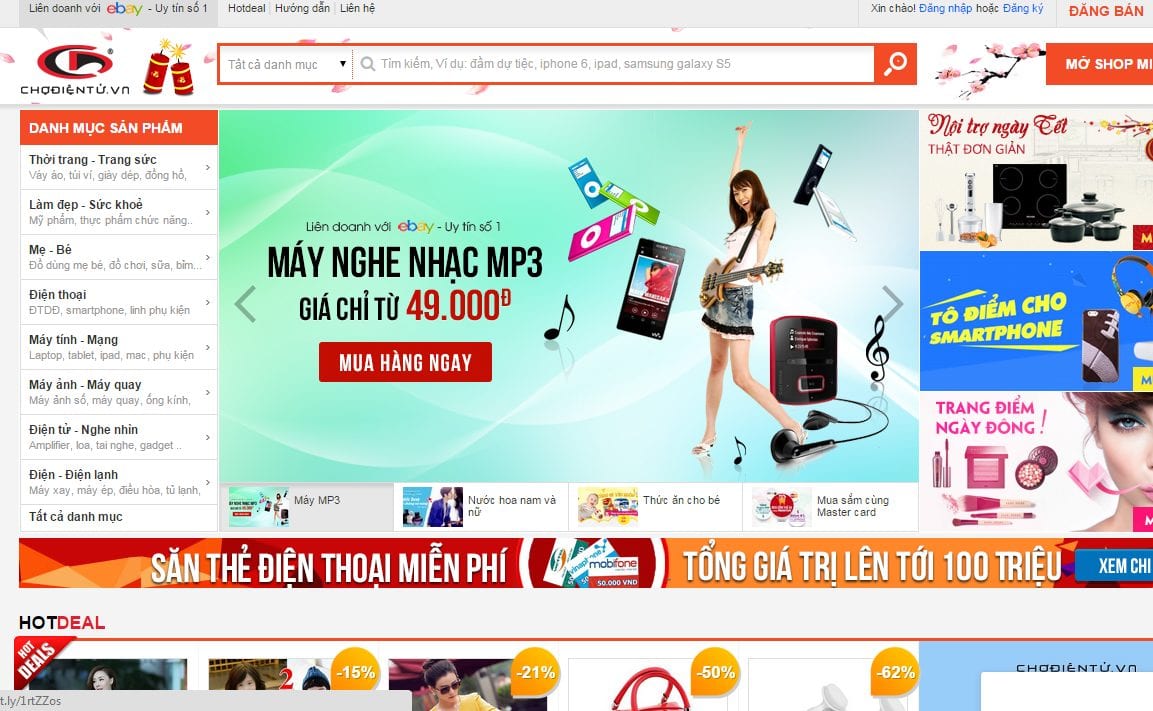
    Vietnam’s first eCommerce marketplace, ChoDienTu.vn, ranked second in sales revenue last year to Lazada in the local market – yet its total funding is 50 times smaller.

    “ChoDienTu.vn has chosen an in-depth strategy of silently investing into infrastructure services to create long-term values and improve service quality to buyers and sellers,” says chairman Nguyen Hoa Binh of the PeaceSoft-group, which owns ChoDienTu. Its second-place ranking was announced in the latest eCommerce report of the Vietnam eCommerce and Information Technology Agency (Vecita).

    “In the face of eCommerce fever in the past few years, many deep-pocketed players have been giving big discounts and promotions to buy growth, then shutting down after losing millions of dollars because of an inefficient burn rate,” says Binh.

    Over the past six years, PeaceSoft-group has grown into a multi-services ecosystem encompassing NganLuong.vn online payment platform, eBay.vn cross-border buying platform and ShipChung.vn shipping and cash-on-delivery platform. It has also formed a strategic partnership with the country’s first warehousing and fulfilment platform BoxMe.vn.

    Addressing the potential threat posed by Alibaba’s acquisition of Lazada in Southeast Asia, Binh’s reaction was: “With our so-called ‘people’s fight’ strategy, if Alibaba is the crocodile in the Yangtze River, then we will be a school of piranhas to fairly compete as they come to Vietnam.”

    PeaceTech, a subsidiary of PeaceSoft-group, is a joint venture with eBay with majority control in the hands of veteran Vietnamese technopreneurs.

    “Over the past 11 years, total funding into ChoDienTu has been estimated as much as 50 times less than that spent by our number-one competitor, Lazada.vn, over a far shorter period,” says Binh.

    “This means eCommerce does not necessarily need as much money as people may think, but the most critical thing is to have a team of people with a really in-depth local understanding.”

  • Uber to Launch UberPOOL in Jakarta

    Uber to Launch UberPOOL in Jakarta

    PT Uber Teknologi Indonesia will launch uberPOOL service in Jakarta this week.

    President Director of PT Uber Teknologi Indonesia Mike Brown said that uberPOOL is a carpooling service in urban areas. According to him, it could result in a more economically efficient travel.

    “A saving of up to 50% of uberX tariff could be achieved and [it is] more economically efficient compared to regular taxis,” Brown said on Sunday, May 8, 2016, in Jakarta.

    He added that the service enables Uber partners to maximize the time at hand to travel. On the other hand, Jakarta will benefit from it through reduced congestion, pollution and less parking issue.

    Car or travel pooling exists among Indonesian people, he noted. Therefore, uberPOOL service will be launched in Jakarta and can be used in other cities in Indonesia.

    Brown claimed that UberPOOL has resulted in positive impacts to the cities where the service is available. According to him, people have been travelling with less number of cars.

    He made an example that Los Angeles has seen reduced mileage by 7.9 million miles of travel and reduced carbon dioxide emission by 1.4 metric tons.

    He believed that the carpooling service could reduce and even eliminate private car ownership.

    However, regulation could be a stumbling block for the service, Brown said. The service from Uber could operate if supported by the regulation, according to him. Regulation should be made to support a secure, comfortable, safe and humane transport, he said.

  • How big brands can make online marketplaces work

    How big brands can make online marketplaces work

    Online marketplaces, those giant shopping sites like eBay and Amazon Marketplace, can be a mixed blessing for brands and merchants.

    Marketplaces offer retailers broad exposure to millions of consumers, as well as delivery, payment and other solutions. Still, most marketplaces leave merchants wanting in one very important aspect: brand control. While the platforms provide virtual shelf space for listing products, merchants are generally limited to one-size-fits-all templates for their online storefronts—thus restricting their ability to set themselves apart from rivals with brand-building presentations and content.

    Not all marketplaces are created equal, however. In China, where marketplaces are overwhelmingly favored by online shoppers, e-commerce leader Alibaba Group has been returning branding power to merchants through the company’s Tmall.com B2C marketplace.

    Tmall, which positions itself as China’s top online destination for domestic and foreign branded merchandise, has developed a suite of tools that allows merchants to customize their Tmall.com storefronts with the logos, fonts and colors for which they’re known the world over, as well as with videos, interactive features and other content. Moreover, merchants can combine these tools with Alibaba’s trove of data on shopping behavior to tailor their storefronts to individual consumers visiting their e-shops at any given moment.

    This approach gives merchants far more than a place on the internet to list and sell products. It offers them the ability to present their brands as effectively as they do on their company-run websites, boosting their opportunity to reach consumers among Alibaba’s 400-million-plus active buyers and build lasting customer relationships. Merchants “have total control,” said Paul Fu, the San Mateo, California-based head of Alibaba’s User Experience Design team.

    This is a significant departure from the “one webpage to serve them all” marketplace model. Tmall offers as many as 55,000 different storefront templates across about 30 different business sectors for merchants to choose from. Another 3,000 templates exist for product pages, and there are a thousand designs for marketing material such as e-mails and SMS alerts, according to Fu. If these packaged solutions don’t satisfy certain merchants, they can design their own right down to the page breaks and <p> tags, and then upload the code to Tmall.

    Major international brands have used this enhanced flexibility to build unique and engaging Tmall storefronts. For example, GoPro, the U.S.-based maker of wearable video cameras, produced a series of videos that appear on its storefront showing GoPro cameras being used in extreme situations, such as geologists staring into the mouth of a volcano or snowboarders doing double backflips as they race down a mountain.

    The Tmall storefronts of other household names such as Starbucks, L’Oreal, Maserati and Zara also offer fully branded experiences that experiences that mirror the look and feel of their corporate e-commerce sites, including multipage navigation according to product category and even full brand histories. Still others take the experience a step further in an attempt to boost the time consumers spend on their pages. Case in point: L’Oreal in the past has given consumers easy-to-follow guides and tips for using its beauty products.

    L’Oreal engaged consumers with hair-coloring tips posted on the company’s Tmall storefront.

    Fu says that Tmall storefronts are based on so-called “responsive” design, which means they look as good on mobile devices as they do on the web. But customization options for Tmall storefronts go even deeper.

    Using consumer data collected by Tmall, merchants can present not just personalized product recommendations based on shopping history to storefront visitors, they can also offer different homepages tailored to particular types of shoppers. For example, German personal-care brand Nivea displays three different storefronts on Tmall depending on whether a shopper is a first-time visitor, new buyer or loyal fan. First-time visitors are shown low-cost products that may tempt them to experiment with the brand. Fans, meanwhile, see sets of higher-value products bundled together as a way to boost their total purchase.

    Three different customers, three different mobile presentations. First-time visitors, new buyers and loyal fans all see products tailored specifically to them when they visit Nivea’s Tmall site.

    By making it possible for merchants to tag and manage their customers by attributes and personalize storefronts for each visitor, individual customers are exposed to highly relevant content, which drives higher conversion rates. Fu said after Nivea implemented personalized storefronts, “the data showed that the browsing conversion rate was improved by 70 percent and transactions increased by 150 percent—more than double the previous number of purchases,” he said. Browsing conversion is the rate at which shoppers click through to find out more about a product.

    Fu says Alibaba analyzes buyers based on five different behaviors: attention, interest, decision, action and sharing, all of which are part of the Tmall shopping cycle. A certain product may draw the attention of a shopper, which prompts him or her to click through to the seller’s store where they can learn more about the item. Then they decide whether or not to bookmark it or add it to their shopping cart; a purchase constitutes action. Sharing comes after, once a consumer tells a friend about their purchase or leaves a review on a merchant’s Tmall store.

    “We provide this capability for the seller to do these kinds of very sophisticated analyses,” Fu said. “Later, because we opened up this technology and data [to merchants], the seller can come up with their own model to do the analysis.”

    Still more tools are to come. Merchants currently log into a content-management system of sorts that lets them set up and manage their storefronts, including text, photos and slide show placement. They can also choose the products they want displayed as recommendations when a shopper is viewing, say, hand cream or razors or a sweater. Up next is a tool that will allow merchants to create banner advertisements on the fly, rather than turning to a designer to handle what is often a time-consuming task. That’s expected this quarter.

    Tmall also helps merchants synch their online stores with their bricks-and-mortar outlets. Fu said the goal is to make sure all points of sale are linked up, including mobile, desktop and offline. One key advantage for merchants to this so-called “omnichannel” approach is the ability to manage inventory across physical and virtual sales channels. Another is the ability to know a buyer’s location so that the nearest warehouse is used for shipping, which speeds up delivery.

    “All areas of the ecosystem are working together for merchants,” Fu said. “Before they had to figure this out on their own. But now we’ve come up with a system, and built the right tools to help them.”

    * Originally published by Alizila.com – the independent, but Alibaba Group-funded website of news about the Chinese eCommerce giant.
  • Deals just got personal

    Deals just got personal

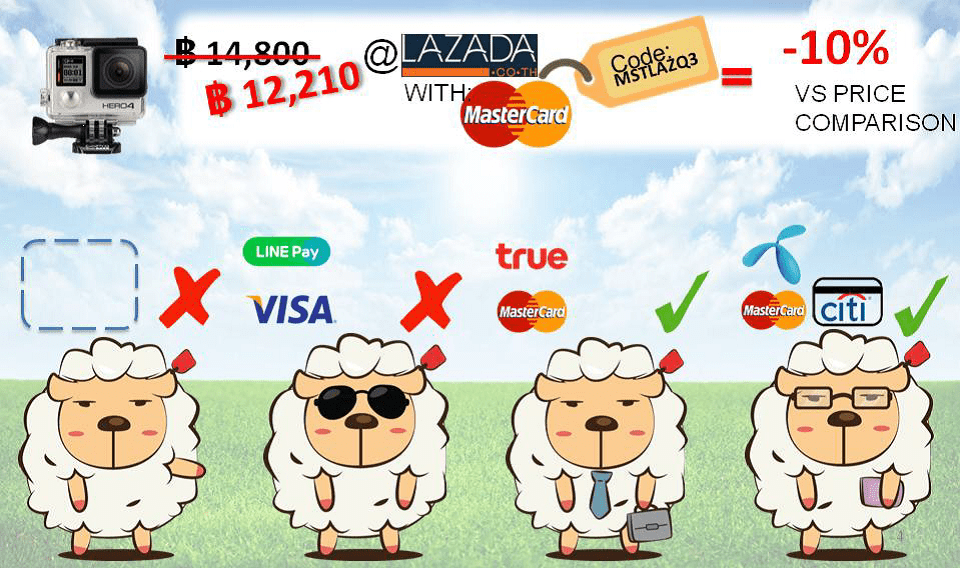
    A GoPro costs the same for everyone? Wrong. Having a MasterCard might easily save a shopper additional 50 dollars on the best price. Because with many big online-shops like Lazada, that MasterCard allows the shopper to use special coupon codes for an extra discount.

    “In the last 6 months, we have slowly seen the death of the one big “blockbuster deal” for everyone.”, explains Dealsheep co-founder David Appold. “More and more, the best deals and promotions are restricted: You can only get them if you fulfill certain conditions.” Needing a master card is just one possibility; extra savings might also hinge on whether you have phone provider A rather than phone provider B, an account with a specific bank, or having installed payment apps like LINE Pay on your phone.

    ds 2

    Online shopping used to be so simple: Price comparison found best deal for everyone.

    The downside: Finding the best deal has become a lot more complex. “Instead of just comparing the prices at different shops, shoppers now need to take into account which promotions and coupon codes they can and cannot use.”, said Pomme Upaiboon, co-founder and head deal hunter at dealsheep.com.

    But people are unique and so is the “best deal”: It might look different from one person to the next.

    The startup’s solution: Help users figure out which deals are available to them personally. “The best and cheapest deal does not help you, if you do not actually have meet the conditions for buying it.”, added Ms. Upaiboon. “So we figured we should give our users an easy way to see which deals work for them.”

    “For the user it is actually quite simple.”, explained Mr. Appold. “They set up what we call their ‘privilege portfolio” on our platform: The credit cards, bank accounts, and phone providers they have. That takes around 30 seconds.

    From then on, we do the rest and know exactly which deal works for the user and can tell him or her which discount coupon code and shop is the cheapest for the product they want. Of course, we do not need their actual credit card numbers and other personal information. All we need to know is whether they have that MasterCard or dtac phone or not, because that is what determines which coupon codes work for them.”

    Keeping track of all relevant coupon codes and their conditions can be overwhelming.

    The startup first premiered the new feature during the Mobile Challenge Asia Pacific (MCAP) held on Hawaii, USA, where the team represented Thailand. Since then the team has refined the feature which appears to be new-to-the-world and has so far not even been attempted by more mature players in the deal hunting and coupon code space in the US and elsewhere. Dealsheep plans to go live with the deal personalization within May.

  • Shopee Holds Young Entrepreneur Program

    Shopee Holds Young Entrepreneur Program

    Singapore-based marketplace company, Shopee, has been holding Young Entrepreneur Program. The program–which has been started from March 2016–is carried out to find Indonesia’s new young business talents.

    “Some 230 students have been participating in the program,” said Chris Feng Shopee’s CEO on Wednesday in Indonesia Convention Exhibition, BSD, Tangerang.

    The student only event has been participated by 89 universities from 19 cities in Indonesia. It has been held by Shopee to encourage more youth to get involved in business or to become entrepreneurs.

    According to Chris, when starting a business young entrepreneurs are faced with three challenges, namely business knowledge, technology and capital. To face the challenges, Shopee is determined to help them by establishing Campus Competition and Shopee University.

    Shopee provides photography and digital marketing classes to enhance business knowledge. Whereas to tackle capital issue, Shopee is holding a competition with a commitment value of Rp100 billion.

    The Rp100 billion fund is used for investment of trainings and capital aid. It will also be used to help young entrepreneurs to develop online businesses.

    “We have selected three candidates to win a prize of capital aid,” Chirs said. The three candidates will be judged and the winner will be announced end of April.