Category: E-Tailing

Retail News Asia is committed to providing both local and global retailers with the latest E-Commerce & Etail news throughout the Asian market. This on a daily base.

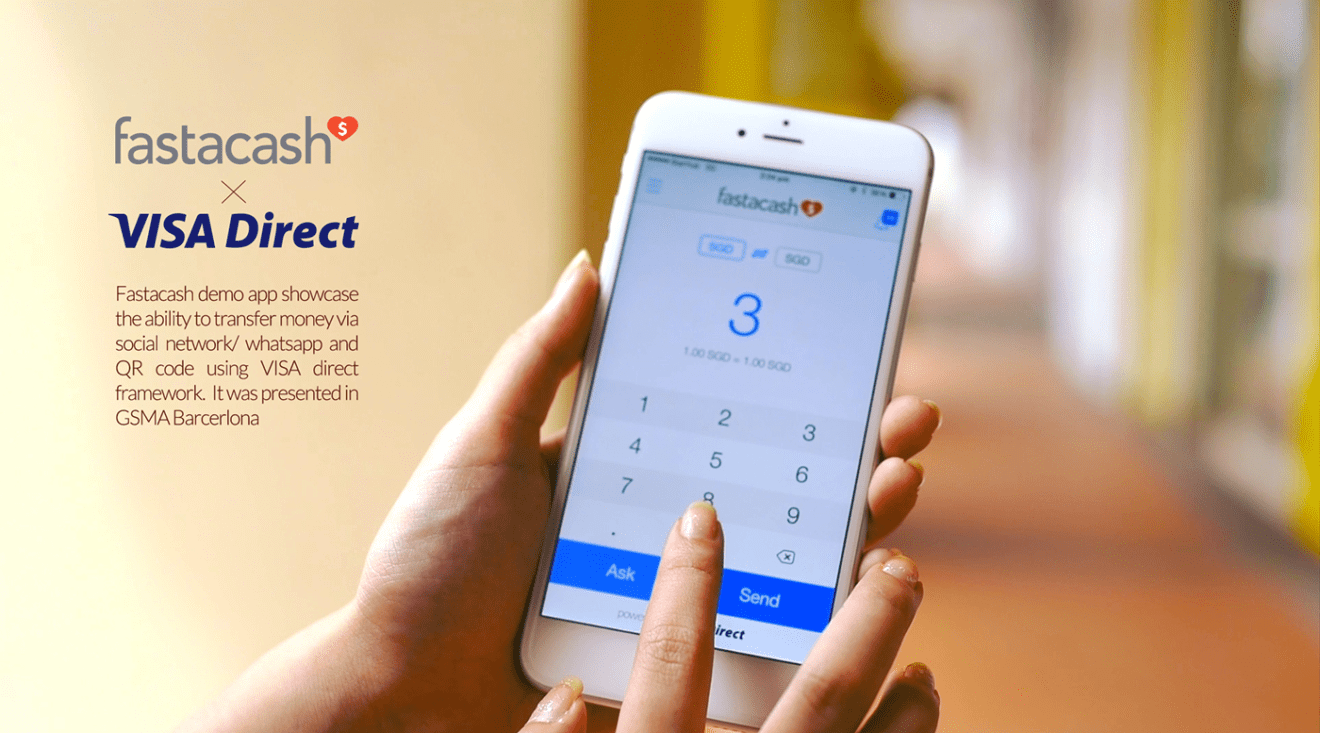
  • Fastacash to launch payments via social network in Myanmar

    Fastacash to launch payments via social network in Myanmar

    Fastacash, a global platform enabling payments across social networks, has made a strategic investment in Myanmar focused company, MyPAY.

    MyPAY, which is developing a mobile payment system, also has a strategic partnership with MySQUAR,  a social network in Myanmar with approximately 1.5 million user accounts.

    Along with the investment, fastacash will also provide the technology platform to MyPAY to enable payments through the social network. fastacash will also support MyPAY’s go-to-market activities, including market insights and global partnership management.

    Through the fastacash platform, anyone using MyPAY will be able to transfer money, and airtime to their social connections, and make payments at retail points. MyPAY is expected to leverage MySQUAR’s user base of approximately 1.5 million user accounts.

    “In MyPAY we have found a strong local partner. Together we will make social payments a reality – for the very first time – in one of the last large untapped markets. Building a presence in Myanmar is aligned with our strategy to be a global leader in social payments, given Myanmar’s prominence as a large domestic market and receive market for global remittances,” said Vince Tallent, Chairman and CEO of fastacash.

    We see tremendous opportunity for both peer-to-peer and person-to-merchant payments in Myanmar. Together with fastacash, MyPAY is going to introduce a mobile money app, compliant with Myanmar law, to make payments easier for consumers and merchants in Myanmar. With fastacash’s technology, we are able to leverage social networks such as MySQUAR. Together, we are empowering a connected market where ninety percent of people are unbanked and underserved by traditional financial institutions,” said Nicolas Nguyen, CEO of MyPAY.

    Myanmar is one of Asia’s fastest emerging economies, with its gross domestic product (GDP) rising 8.5 percent in FY2014 (IMF), and forecast to rise 7.7 percent in FY2015. McKinsey estimates the country’s economy will quadruple from US$45 billion in 2014 to US$200 billion by 2030. Economic growth in the country is expected to be tied to demographic trends and mobile and social penetration.

    The country’s young population, with 47% under the age of 24, are expected to drive the consumption of mobile and social networks.

    Myanmar’s mobile penetration is estimated to rise from 10.5% in 2014 to 57% in 2016, boosted by the entry of foreign telecom companies. Mobile is expected to present a huge opportunity for Myanmar; by 2016 nearly 15 million people will be able to access the internet, mainly via their mobile devices. As only 4.8% of citizens have a bank account, a large opportunity exists for mobile money services.

    fastacash has live services in India, Indonesia, Russia, Singapore and Vietnam. Through partnerships with banks, money transfer operators, mobile network operators and social networks, it builds social payment capabilities within their services and mobile applications. Its partners include financial institutions such as DBS Bank (Singapore), Axis Bank (India), Oxigen Wallet (India), Techcombank (Vietnam), Doku (Indonesia), MOBI.Dengi (Russia), as well as VISA Europe.

  • Online Sales Boosted Chinese Retail in September

    Online Sales Boosted Chinese Retail in September

    According to the National Bureau of Statistics of China, retail sales reached 2,527.1 billion yuan, up by 10.9% in September as against 10.8% in August 2015. The iShares China Large-Cap ETF was up 2.6% from a year ago as of October 19. China Xiniya Fashion Limited lost 43.1%, whereas China Mobile Limited gained 4.5% over the same period.

    Retail sales jumped in rural areas more than in urban areas

    Retail sales in rural areas rose 380.3 billion yuan, up by 12.1% year-over-year. In contrast, retail sales in rural areas rose by 2,146.8 billion yuan in September, up 10.7% year-over-year. In terms of different consumption patterns, catering services saw a 12.1% jump in September, increasing 272.1 billion yuan from a year ago. Retail sales of goods rose 2,254.9 billion yuan, up by 10.7%.

    Online retail sales are picking up in China

    Online retail sales of goods and services were up 2,591.4 billion yuan, increasing 36.2% year-over-year. Of that, the online retail sales of physical goods totaled 2,151.0 billion yuan. Online retail sales jumped 34.7%, accounting for 10.0% of the total retail sales of consumer goods. The online retail sales of non-physical goods were 440.4 billion yuan, a rise 43.6%. Of the total online retail sales of physical goods, food, clothing, and other commodities went up by 42.7%, 26.3%, and 37.7%, respectively.

    Internet retailers Alibaba, 500.com, and China Dangdang have lost 20.1%, 32.7%, and 42.2%, respectively, over the past year as of October 19. An uptick in Chinese retail sales is a positive sign, as it implies that domestic demand is rising with better consumer sentiment and may boost growth in the struggling economy.

    For more information, read China’s Growth Rate Fell below 7% in September. For the latest updates on the economic front, refer to our Global ETF Analysis page.

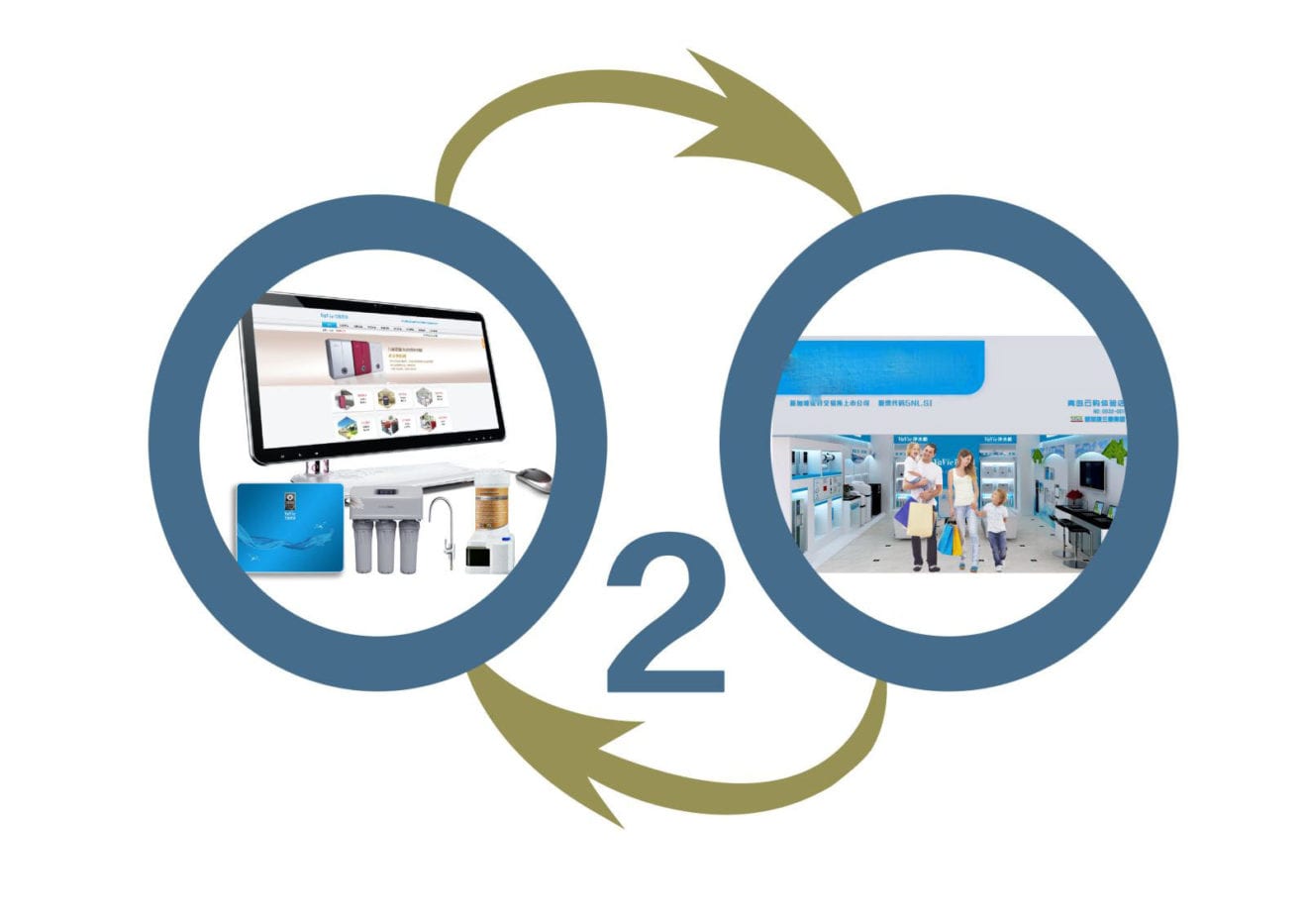
  • How some retailers are using O2O strategies to boost sales

    How some retailers are using O2O strategies to boost sales

    A slowdown in mainland tourist inflow has prompted Hong Kong’s retailers to step up efforts to attract those who are still making their way to the city.

    To grab the attention of the visitors, shops and other tourism-dependent entities are launching new online-to-offline marketing campaigns.

    One key way of reaching the customers has been to gather information on people visiting Ocean Park, the marine-life theme park that is popular with Chinese tourists.

    Mainlanders seeking to visit Ocean Park normally book their tickets through agents and have to leave some sort of contact information, usually their phone numbers.

    Now some marketing firms are gathering those telephone numbers and using them to craft O2O campaigns for their retail sector clients.

    Hooking up with the ticket agents, the marketing firms gain access to those phone numbers. Then they approach the ticket buyers by asking if they are willing to receive some Hong Kong-related information and promotions.

    Once the consent is secured, they will send discount e-coupons to the visitors on behalf of retailers, as Kevin Ng, a consultant with the Hong Kong Productivity Council, told a seminar recently.

    Since people who have bought Ocean Park tickets will definitely come to Hong Kong, such marketing activities will be very specific and targeted, leading to a greater chance of doing business.

    Sheung Wan is known for its cluster of shops selling Chinese herbs and dried seafood. Even those traditional businesses have begun using the innovative O2O route to win more business, according to Ng.


  • SCMP Group tries on retail e-commerce with Hong Kong’s My Dress

    SCMP Group tries on retail e-commerce with Hong Kong’s My Dress

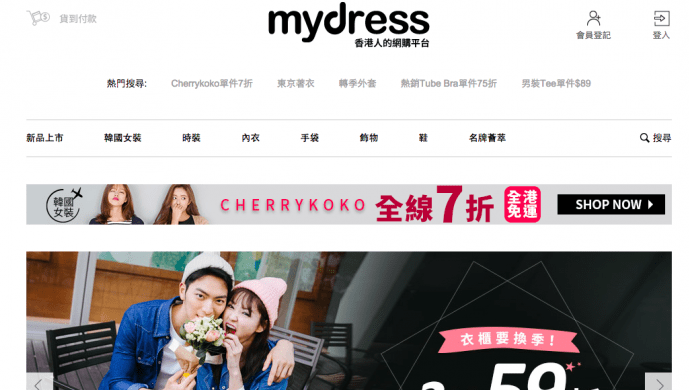
    SCMP Group Ltd announced today that it is acquiring a majority stake in MyDress Holdings Ltd, operator of MyDress.com.

    SCMP Group acquired a 56.65 per cent share of MyDress Holdings Limited with its investment of HK$39.7 million (US$5.12 million), according to a company disclosure.

    E-commerce platform MyDress was launched in 2013 and sells an affordable selection of fast fashion apparel and accessories for men and women, from undergarments to bags, sourced from over 50 brands.

    Google has ranked MyDress as the most searched fashion e-commerce website on mobile devices in Hong Kong.

    Co-founders and key executives of MyDress, Edmund Wong and Leon Lai, will continue to runMyDress and manage its daily operations while working with SCMP on further development.

    “I initially started MyDress as a fashion and content portal, where people could post pictures of outfits. After two years, I met Leon, who is experienced in the e-commerce industry [in] Hong Kong,” Wong, Co-founder and Director of MyDress told e27. 

    “We thought that there should be an e-commerce platform for Hong Kong people, which is why we started selling clothing. Initially, we were only selling women’s. We only started selling men’s wear about four months ago,” he added.

    At the moment, MyDress website content is only in Chinese, but the English version will be launching later this week.

    Wong said talks with SCMP were made about 18 months prior to the official acquisition.

    Through a joint venture partnership with Hearst, SCMP Hearst publishes the Chinese editions of Cosmopolitan, CosmoBride, Harper’s BAZAAR, Esquire, ELLE, ELLE and operates Cosmopolitan.com.hk,amongst others, in Hong Kong.


  • Honestbee secures $15m for Asian expansion

    Honestbee secures $15m for Asian expansion

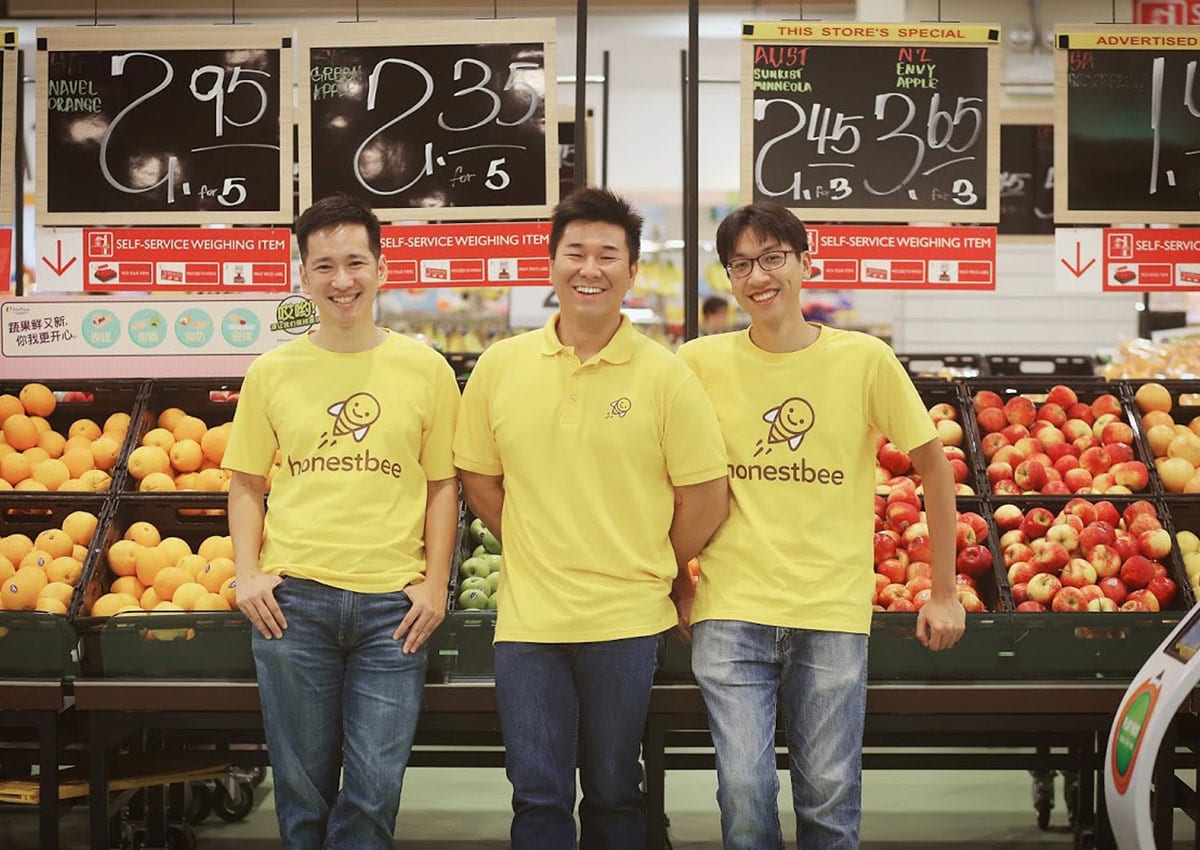
    Honestbee, Singapore’s fast-growing, on-demand grocery concierge and delivery service has raised first round funding of US$15 million.

    And behind the cash are some seriously experienced eCommerce and online business experts, including:

    • Pejman Mar Ventures, early investors in Dropbox, Lending Club and DoorDash.
    • Gideon Yu, former CFO of Facebook and YouTube; co-owner of the San Francisco 49ers.
    • Owen T Van Natta, founding team of Amazon search company A9.com and former COO of Facebook.
    • Steve Chen, Google Ventures advisor, as well as co-founder and former CTO of YouTube.

    Honestbee partners with supermarkets and specialty stores such as NTUC FairPrice, the Pet Lovers Center, and gourmet boutiques and specialty stores, Gastronomia Da Paolo, Mmmm!, The Butcher’s Dog, Crystal Wines, GNC and Four Seasons Organic, in Singapore. This enables these traditional grocery companies to significantly increase their revenue through Honestbee’s on-demand eCommerce platform where they fulfil customers’ orders in as little time as within the next hour.

    “We are very excited and blessed to have been able to attract support from some of the most successful entrepreneurs and investors with unparalleled track records in the world,” said Honestbee co-founder, Isaac Tay.

    “Honestbee will benefit tremendously, as we now have immediate access to the top minds who have built the most valuable technology companies in the world today, such as Amazon, YouTube, Google, Square, Dropbox, DoorDash and Palantir.

    “We started with a mission to create a highly elastic and trained workforce that would bring invaluable convenience to our customers through our concierge and delivery services. Most people in Asia are time-starved due to the demands of their job and a large proportion of the population do not possess their own vehicles. With our on-demand delivery service, time-crunched customers can enjoy the widest choices from their favourite stores, even at the last minute, when they shop through Honestbee,” he said.

    Formation 8, which led the funding round, believes the ‘hyper-local on-demand market’ plays a significant role in the way commerce will evolve.

    “Given the increasing population density across all the key cities in Asia due to job and wealth creation, this is right time and opportunity,” said Formation 8 founder, Brian Koo.

    “Consumers now demand higher levels of access to convenience. With Honestbee’s superior partnership network and its strong focus on building a world class technology company, they will be well-positioned to quickly own this market.”

    Honestbee has expanded its team to almost 100 people in just eight months, and continues to scout the best talent from around the world. With aggressive plans to expand across Asia, Honestbee expects to be in at least six other Tier 1 cities by June 2016.

    Last week, Honestbee launched in Hong Kong, offering a one-stop shop for a range of products to meet the needs of busy customers.

    According to a Goldman Sachs report, the online grocery shopping market in Asia is currently estimated at US$18 billion with online carts typically being 1.8 times larger than store-based retail at checkout.

    The willingness to use digital retailing options in the future is highest in the developing markets, with Asia Pacific at 60 per cent in a recent Nielsen report, signaling the great potential for growth in online grocery delivery services in the region.

    “In light of the potential, however, this space is under-penetrated, with intended providers facing challengers in both services and delivery,” said Tay.

    Honestbee’s solution to these challenges – a model that has proven successful in this sharing economy – is to use someone else’s spare time to shop and deliver groceries, thus freeing up customers to spend their time doing more of what they enjoy.

    “With a crowdsourced workforce, orders are fulfilled by concierge shoppers who shop at top supermarkets and boutiques stores, and a delivery team which brings the orders to customers’ homes, all within-the-next-hour golden time slots of choice. This eliminates the cost of infrastructure building, such as the need for warehousing, additional manpower and equipment. In return, honestbee brings increased efficiency and convenience to customers, as well as improved margins for partners.”

  • Estee Lauder wants more South Korean web sales

    Estee Lauder wants more South Korean web sales

    Estee Lauder has acquired a stake in Korean skincare products maker Have & Be Co. to grow in South Korea’s nearly $600 million online beauty products market. Skincare and fragrance maker Estee Lauder Cos. is making a concerted move to acquire market share in South Korea’s beauty products e-commerce market.

    Estee Lauder, No. 73 in the Internet Retailer 2015 Top 500 Guide, purchased an undisclosed stake in Have & Be Co., a Seoul-based cosmetics and beauty products maker that develops the Dr. Jart+ and Do the Right Thing brands of moisturizers and skin renewal products.

    Have & Be was started online in 2005 by Chinwook Lee, a South Korean dermatologist. Today the company sells online and in stores in 15 countries, including the U.S. In its core market of South Korea, Have & Be has  e-commerce sites for Dr. Jart+ and Do the Right Thing. In the U.S. Have & Be sells through other retail e-commerce sites including Sephora.com.

    Estee Lauder isn’t saying much about how it intends to grow Have & Be Co and Dr. Jart+ online, but Dr. Jart+ will remain a stand-alone e-commerce site. “Dr. Jart+ will remain an independent company and it will not be integrated into any ELC operations, including e-commerce,” says an Estee spokeswoman.

    But growing online in general and in Asia e-commerce markets such as China and South Korea specifically is a top priority for Estee Lauder. For the 2015 fiscal year ended June 30, Estee Lauder disclosed that e-commerce accounted for 8% of all sales of about $10.78 billion and that e-commerce sales increased year over year by 28%. Based on those metrics, Internet Retailer estimates  web sales for Estee Lauder totaled $862.4 million compared with $673.8 million in fiscal 2014.

    In China the overall e-commerce market for skincare product sales is projected to grow 41.7% to an $8.36 billion in 2015 from $5.90 billion in 2014, according to research firm Frost and Sullivan. In comparison, in the more mature and concentrated South Korea e-commerce market, web sales for skin care products will grow more slowly, according to research firm Euromonitor International. This year e-commerce sales for skincare and related products in South Korea will reach $594.8 million, up 8% from $550.0 million in 2014, says Euromonitor.

    In China in fiscal 2015, web sales for Estee Lauder doubled, the company reports. In South Korea Estee Lauder will use its investment in Have & Be to build market share with an established brand, CEO Fabrizio Freda says. “This investment gives our company a strategic opportunity to develop a partnership with one of Korea’s most promising high-growth skin care brands,” he says.

  • Alibaba confounds China slowdown with 32% revenue rise

    Alibaba confounds China slowdown with 32% revenue rise

    The Chinese e-commerce giant Alibaba has reported a stronger than expected 32% rise in second-quarter revenue, even as the value of transactions on its platforms grew at a slower pace.

    Revenue from mobile platforms, an increasingly important area for the company, nearly tripled to $1.66bn (£1.1bn), with mobile gross merchandise volume (GMV) accounting for 62% of total transactions on Alibaba’s China retail marketplaces.

    “Mobile is the trend and Alibaba is capturing that trend,” said Tian Hou, an analyst at TH Capital Research.

    Alibaba’s New York-listed shares were up 10% in premarket trading. Shares of Yahoo, which owns 15% of Alibaba, were up 7%. The total value of transactions on Alibaba’s retail marketplaces in China rose 28% to $112bn, but this was the slowest growth in more than three years.

    The lower GMV growth was not unexpected. In early September, Jane Penner, Alibaba’s head of investor relations, said the total value of transactions during the quarter would be smaller than originally expected due to lower order values. Revenue rose to $3.49bn in the three months to the end of September.

    The jump in revenue added weight to recent comments from Jack Ma, Alibaba’s founder and chairman, that concerns about slowing consumption in China were overdone.

    The earnings report comes about two weeks before Alibaba’s singles day shopping festival on 11 November, which last year netted sales of more than $9bn .

    The company reported net income attributable to shareholders of $3.58bn, or $1.40 per share. Alibaba earned 57 cents per share, beating the average estimate of 54 cents.

    Alibaba, facing increasing competition from its rival JD.com, has been branching out from its core online shopping platforms in an attempt to stem a slowdown in revenue growth. During the quarter, the company invested $4.6bn in Suning Commerce Group in a move to bolster its ability to compete in logistics and electronics – two areas of strength for JD.com.

    The company has also poured more money into ventures outside China, for example by investing in One97 Communications, the parent of the Indian online retailer Paytm, and taking part in a funding round for the Indian e-commerce company Snapdeal.com.

    Alibaba shares closed at $76.35 on Monday, down about 36% from their record high of $120 in November 2014. Yahoo closed at $33.40.

  • Dyn Evolves Internet Performance Space with Launch of Internet Intelligence

    Dyn Evolves Internet Performance Space with Launch of Internet Intelligence

    As Singapore gears up to become the world’s first Smart Nation, keeping communities and businesses connected to the Internet is crucial to support better living and working. Likewise, companies are beginning to realise that the performance of the Internet has an impact on their website, app or service and eventually, customer experience, reputation, and revenue. Dyn, the worldwide leader in Internet Performance, announced today availability of Internet Intelligence (II), a SaaS-based product that provides companies with a new and unique view of the Internet by looking at performance between a company’s customers and its Internet assets.

    “The variabilty of the Internet is both good and bad. Every path will eventually have problems, but there are many paths to choose from. Companies need to monitor their options constantly and play the optimisation game. The belief that Internet performance is uncontrollable is a myth. Although the Internet is an unpredictable and complex space, Internet Intelligence allows companies for the first time to monitor, alert and plan for their complex Internet Infrastructure from a single platform,” said Martin Ryan, Vice President and Managing Director Asia Pacific at Dyn.

    As an increasing number of companies migrate to the cloud, the ability to mitigate risk and control cloud becoming a business imperative.

    Almost 40% of organisations in Singapore are using cloud computing; while more than 35% are planning or implementing cloud strategies.

    II enhances availability, reachability, and performance

    Internet Intelligence is a vendor-agnostic SaaS offering that shows a company’s full global cloud provider, Content Delivery Network (CDN) and data centres on one dashboard, allowing IT executives to see how real-time availability, reachability, and performance issues impact their own customers. By alerting issues directly in the dashboard or via email, companies of all sizes and IT sophistication can quickly isolate and fix small issues before they become costly problems.

    “Distil Networks blocks malicious bots from disrupting many of the world’s top websites. To keep companies safe, we need visibility and continuous monitoring of key peering relationships and providers that our customers use,” said Engin Akyol, CTO of Distil Networks. “Dyn’s Internet Intelligence goes beyond anything else on the market because it pinpoints the exact location of an external network issue and allows us to mitigate the situations before they become larger problems.”

    For example:

    • Availability — An hour of downtime costs the average business US$163,000. For a large enterprise, like a consumer streaming movie service, it’s estimated that a recent 42-minute outage cost in excess of US$500,000. Internet Intelligence detects outages and performance problems and directs how to reroute traffic so the effect is minimised or unnoticed for customers.

    Through a consolidated single view across all Internet assets, II allows companies to accurately manage and deploy to their cloud providers, identify issues in real-time while performing root cause analysis of problems and effects and create plans for how to improve and expand their Internet infrastructure – all of which benefit the end-user experience with Managed DNS is increasing focus on cloud computing in Asia Pacific, with 58.6% of organisation decision-makers

    A study conducted by Frost & Sullivan has found identifying it as their #1 priority in the next 12 months.

    • Reachability — Just because a company’s infrastructure is reporting that it is available, this doesn’t mean that customers can reach it. Reachability – whether customers can actually reach your Internet assets – needs to be monitored. In cases where a business is using a single cloud instance, an outage or failure will have a detrimental impact on reachability – and unless businesses are monitoring their reachability and mitigating for failures, they have little choices for rerouting if a disruptive event occurs.
    • Performance — Many businesses use CDNs to accelerate web page load. Amazon calculated that a slowdown of just one second can cost US$1.6 billion in sales per year, 7 percent of annual revenue. Businesses need to quickly recognise Internet inefficiencies and outages to avoid accumulating latencies. II’s real-time dashboard alerts companies when routes rise above expected traffic thresholds for cloud providers, CDNs and data centres to find the root cause of the issue. For CDNs, II also ranks a company’s selected CDN against others so they can choose a better option if available.

    “The recent outages at AWS East and Skype remind us that all Internet assets are vulnerable to variability, and downtime and poor performance can be very costly,” said Robert Mahowald, IDC VP Cloud and SaaS. “Dyn’s Internet Intelligence offerings allow companies to have constant vigilance and employ self-healing Internet Performance strategies that can mitigate the risk of the dynamic Internet.”

    When Internet Intelligence is combined with Dyn’s Traffic Management product for load balancing and geographic routing, companies can make changes to the routes of their traffic, allowing them to provide their customers with the best experience possible.

    II is the newest product within Dyn’s Internet Intelligence product suite, which has been heavily adopted by service providers and some of the largest enterprises, like Visa, TripAdvisor and Ancestry.com.

  • Xiu.com Signs Online Retail MOU With UK Trade & Investment

    Xiu.com Signs Online Retail MOU With UK Trade & Investment

    As a leading Chinese e-commerce company’s representatives and invited by UK Trade & Investment and British Embassy Beijing, Xiu.com’s CEO Ji Wenhong and Director of Overseas Division Summer Lu attended business meeting of the state visit on Oct. 21 and gave a speech at the Sino-UK Retail Summit on Oct. 22.

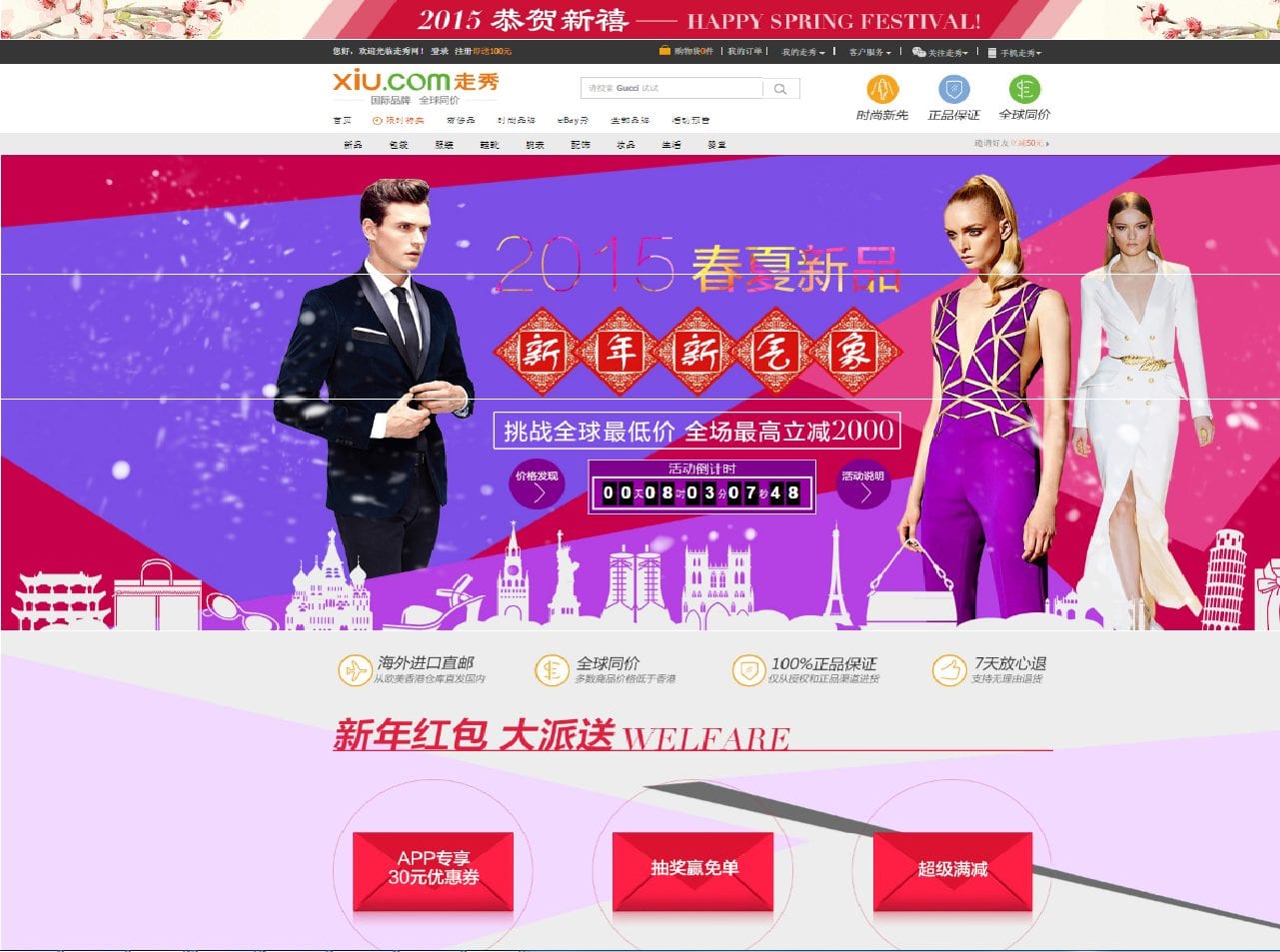
    Xiu.com has signed a MOU with UK Trade & Investment and provides an e-commerce platform for brands of U.K reaching Chinese consumers.

    Under the agreement, Xiu.com and UKTI work together to help U.K. companies seize the rising opportunity of online shopping in China and globally. Xiu.com also promises to provide U.K. brands a precise online selling solution, which based on numerous operational data collected in the past seven years.

    Several U.K. brands have begun to sell on Xiu.com. Henri Lloyd, an apparel brand specializing in sailing and a sponsor of Formula 1 sailing tour, is among them and it sells products on Xiu.com at the same price in Europe.

    Another example is historic Scottish cashmere brand Johnstons of Elgin, which produces cashmere products for Hermes and Burberry. In China, high end cashmere products cost as much as 10,000 RMB in Chinese stores, on Xiu.com consumers only need to pay about 1,000 RMB for the products of same quality.

    Also, Xiu.com and U.K. government have jointly introduced Cheany, a U.K. shoe brand never sold into China before, to Chinese online shoppers.

    Xiu.com, a partner of UKTI in e-commerce, opened its U.K. office in London in 2014 to connect more U.K. brands.

    Xiu.com also joins “Shopping is Great”, which is part of GREAT Britain Campaign, an initiative that promotes creative ideas from Britain in business innovations. Xiu.com will mark all U.K. products on xiu.com with its LOGO.

    This March, Prince William’s visit to China is one of many activities of GREAT Britain Campaign and Xiu.com delivered a speech at an event organized by U.K. government during Prince William’s visit as well.

    Singles’ Day, the world largest online shopping festival is approaching and Xiu.com is working hard to get the most of it. Maureen Mou, Xiu.com’s Senior Vice president says, more than 600 overseas brands plan to join the promotion on Xiu.com at this year Singles’ Day and promises to sell their products at 20% to 40% discount.

  • Stradivarius China goes online

    Stradivarius China goes online

    Inditex brand Stradivarius has opened its own online store in China to complement its existing online store on T-Mall.

    Stradivarius, a sister brand to Zara, has 65 bricks & mortar stores in China. The direct site went live last month, less than six months after the brand made its T-mall eCommerce debut in the world’s most populous country.

    A formal launch event took place at Shanghai’s Union Building, dubbed “The Event Paper: Asia edition”. From its rooftop terrace, the guests were able to enjoy stunning views of the Bund, the Chinese financial capital’s most cosmopolitan district.

    The party was attended by international top model Liu Wen and Cate Underwood, the star of the brand’s FW15 collection campaign.

  • Alibaba seeks Youku Tudou buyout

    Alibaba seeks Youku Tudou buyout

    Alibaba is bidding to buy the remaining shares in Youku Tudou, dubbed ‘China’s Youtube’ in a deal which values the company at US$5.2 billion.

    The eCommerce already owns 18.3 per cent of the online video on demand service and says it will pay cash for the balance from its cash assets.

    Youku Tudou is publicly listed and Alibaba has offered a premium of 30.2 per cent over the pre-offer share price. The bid already has the support of the site’s founder Viktor Koo.

    Alibaba CEO Daniel Zhang said digital products, especially video, “are just as important as physical goods in eCommerce”.

    “Youku’s high-quality video content will be a core component of Alibaba’s digital product offering in the future,” he said.

  • Lazada promises ‘biggest ever’ online sale

    Lazada promises ‘biggest ever’ online sale

    eCommerce giant Lazada plans a month-long mega sale in six Southeast Asian countries under its now annual promotion ‘Online Revolution’.

    Lazada, part of Germany’s Rocket Internet group, says more than 10 million products will be offered to 550 million consumers in six countries, in partnership with a raft of international and local brands.

    The Online Revolution will launch in full scale in Singapore, Indonesia, Malaysia, the Philippines,Thailand and Vietnam on November 11 and culminate in a three-day finale ending on December 12.

    Brands and merchants in Southeast Asia and other international markets such as China, Hong Kong, the US and the UK will join the sale to offer goods across 13 categories. These categories include new additions such as groceries, liquor and automotive in some markets as well as current favorites such as electronics, home & living, health & beauty, fashion, kids & toys, and travel. Brands that have signed up include Microsoft, Xiaomi, Philips, Tefal, Pierre Balmain, Desigual, Spektre Sunglasses, Date Sneakers and Gas Jeans.

    “We are going to bring the most exciting selling month of 2015 to Southeast Asia. With flash sales, best deals, exclusive promotions and app-only incentives, Online Revolution will give plenty of reasons for consumers to tune in and stay engaged,” said Maximilian Bittner, CEO of Lazada Group.

    “It is a unique opportunity for brands and merchants to reach a large audience and accelerate their growth. We are thrilled to have the strong endorsement from thousands of partners – from sellers and service partners, to banks, and telecoms companies. And, we welcome more to join us in spreading the benefits of online shopping to consumers through Online Revolution,”  said Bittner.

    During the month-long Online Revolution campaign, Lazada will feature weekly product category highlights, a curated brands’ showcase and exclusive promotions with partner banks, on top of daily deals. Beyond online, it will run a TV advertising campaign to keep the Online Revolution branding on top of consumers’ minds.

    To help sellers maximise revenue, Lazada says it has been introducing new and improved services. Its ‘Fulfillment by Lazada’ (FBL) is a network of fulfillment centers, hubs, delivery fleet and service specialists that takes care of the fulfillment of a customer’s order through to delivery, efficiently. This lowers cost for the sellers and allows them to focus on marketing and boosting their business. Lazada, recently, also rolled out a Seller Center Android app. The app comes with enhanced search, notifications and language support, on top of all the Seller Center features to help marketplace sellers manage their business on-the-go.

    Small and medium business owners will also receive support through training, such as in stock planning and packaging capacity, to prepare them for a smooth operation with the expected spike in orders. Last year, sales from Lazada’s Online Revolution on December 12 alone hit more than 10 times that of a normal day.

  • New Burberry collection premieres on Snapchat

    New Burberry collection premieres on Snapchat

    Burberry first launched its Womenswear Spring/Summer 2016 collection on Snapchat.

    As finishing touches were being made in Burberry’s headquarters in London, looks from the collection were shared live on the mobile platform.

    The colletion include classic coats and functional pieces mixed with elements of regalia including metallic cording, crested buttons and hand-embroidered military motifs. English lace and floor length satin dresses were paired with leather biker jackets, and regimental tailoring with tie-dye tulle. There’s also the Burberry Rucksack in gabardine-constructed nylon and the Belt Bag in black English suede.

    Burberry followers were offered a glimpse into the brand’s design studios, and a special appearance by Anna Wintour receiving her invitation to the show.

    The live show took place the following day in its custom-built show venue in London’s Kensington with British singer Alison Moyet performing with a 32-piece orchestra conducted by Joe Duddell. But it also featured a Snapchat-curated montage of crowd-sourced Burberry show related video and imagery, giving followers a complete view of the event – from the red carpet to the backstage

    British singer Alison Moyet performed the live soundtrack to the show, accompanied by a 32-piece orchestra conducted by Joe Duddell from an orchestra pit in the centre of the runway. The performance was filmed for Burberry’s channel on Apple Music. The full show soundtrack, “Alison Moyet Live for Burberry”, will be available to purchase through the iTunes Store and for streaming through Apple Music.

    Meanwhile, the company announced it will be also offering a selection of its make-up collection, through Kakao Giftshop and LINE in Japan.

  • The new niches in China’s ecommerce market

    The new niches in China’s ecommerce market

    Alibaba’s sales is only 5 percent of total retail in China and JD.com’s sales of electronics products represent about 2 percent to 5 percent of total electronics retail as well, according to Dangdang.com’s CEO Li Guoqing.

    If you only look at the Chinese ecommerce giants’ recent financial report, most people would agree that the competition has settled because Alibaba alone has accounted for about 80 percent of the market share in online shopping sales. The combined sales from Alibaba and JD.com have close to about 90 percent of the Chinese online retail market.

    However, at least one executive of a Chinese e-retailer thinks the position of those leaders is not secure. “The size of the business is not equal to competitive advantage and competitive threshold.  The market will be settled only if the marketing leaders have some unique edges and generate difficult barriers to entry,” says Li Guoqing, cofounder and CEO of Dangdang.com, in a speech in One Thousand Ecommerce Professionals Seminar in China:

    Alibaba’s sales only account for about 5% of retail sales of China and that is not a enough barrier to entry. At same time, JD.com’s electronics sales only represent 2% to 5% sales of electronics products in China. If some companies get a right new business model, there are still plenty of chances to beat those current leaders.

    Li says people seldom know Vipshop, the number 4 internet retailer China 500, and Yhd.com, the number 7 internet retailer China 500, three years ago, but now they have become ecommerce leaders in their categories in China.

    In other words, new horizons may be coming for niches within China’s ecommerce market in the same way that we see companies like Warby Parker and Zappos coming up in the USA. Keep on a lookout for these small well-branded niche companies in China, while you look past the big guys like Alibaba and JD.

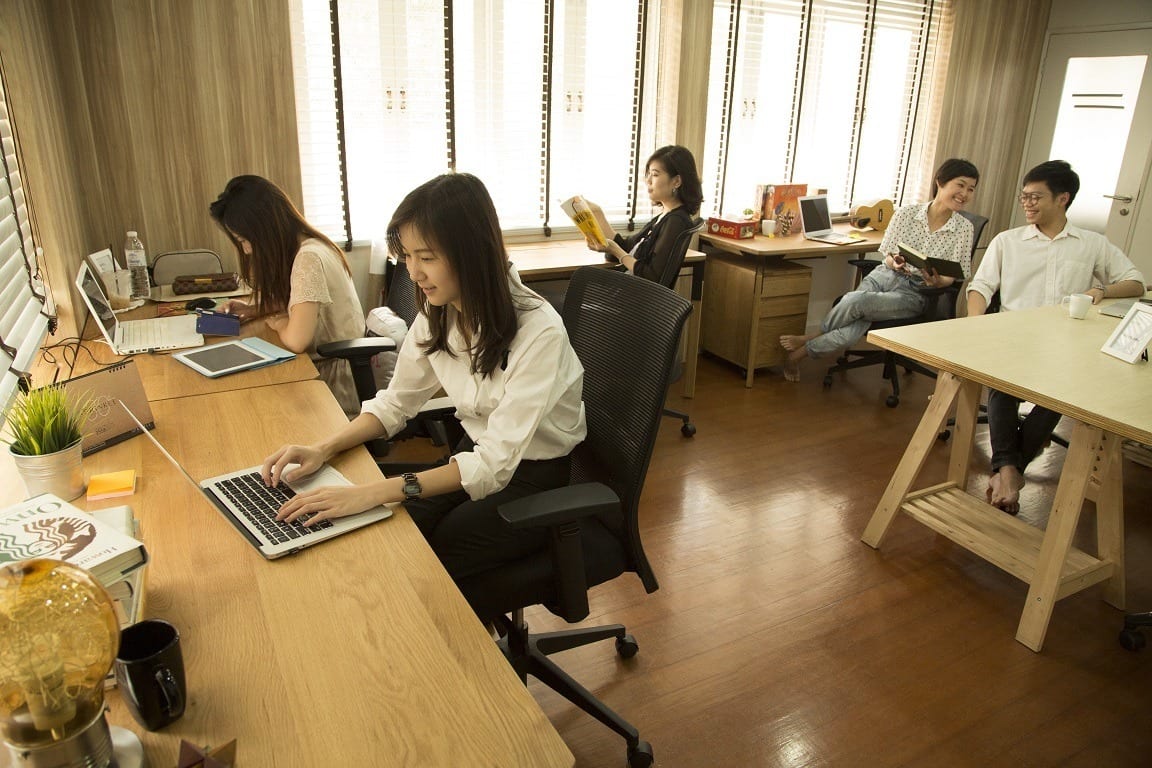
  • Thai Hubba is building a marketplace of fully-automated offices

    Thai Hubba is building a marketplace of fully-automated offices

    Thai co-working space Hubba has raised a pre-series A funding round, it announced yesterday. The company got US$350,000 in a round led by US-based venture capital firm 500 Startups. The round was joined by 500 Startups’ Southeast Asian fund 500 Durians and Thai fund 500 Tuk Tuks.

    Singapore-based VC Golden Gate Ventures and Thailand-based VC Ardent Capital also participated. Several local angel investors got involved as well, including Computerlogy CEO Vachara Aemavat, Playlab CEO Jakob Lykkegaard Pedersen, and Stock2morrow CEO Piyaphan Wongyara.

    Under the deal, Ruangroj “Krating” Poonpol, venture partner at 500 Tuk Tuks, will join Hubba’s board of directors.

    Hubba’s investors will be working with startups that use the company’s spaces to help mentor them, and even to potentially invest in some of them, Amarit says. The company will also work together with its investors on joint programs and activities going forward.

    Working together

    Hubba was the first co-working space in Thailand, founded by brothers Amarit and Charle Charoenphan in 2012. Today the company has a presence in seven locations and holds minority stakes in other co-working spaces like Punspace in Chiang Mai, Thailand, and Toh Lao in Vientiane, Laos.

    In the last three years, it has worked to build up the country’s startup ecosystem through its co-working space business as well as community activities and events. Last year, it also launched Pah Creative Space, a co-working space for designers and other creative freelancers.

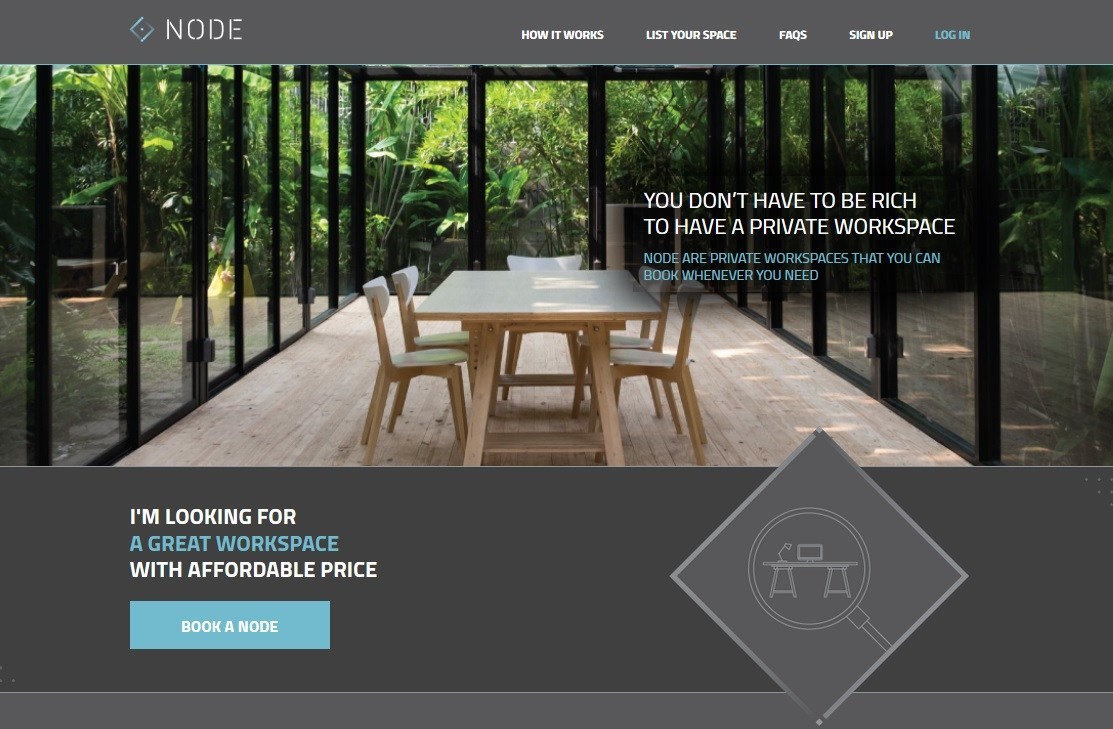
    Hubba will use the new funding to fuel two new projects, Amarit says. One of them is Hubba-to, a planned artisan co-creation community that the company plans to launch in partnership with Thai real-estate developer Sansiri. The other is Node, a prototype for an “automated office” that will “enhance efficiency and reduce unnecessary expense.”

    “It’s going to work like Airbnb for private rooms and office spaces,” Amarit says. Node offers spaces that can be rented out for specific time slots and used for offices, meeting rooms, and so on. Landlords can list their properties on the site and wait for bookings to come. Payment via credit card is handled by the site. The listings include WiFi and amenities such as pens and notepads, and are cleaned by Node staff after use.

    Node (Airbnb for working space) screenshot

    “Our killer feature is that we will have what is called Node Plus,” Amarit explains. “[Those] are spaces that have been fully equipped with IoT (internet of things) and technology that allows spaces to be fully booked on-demand and managed remotely with no need for staff (locks, lights, AC, WiFi, and security).”

    The automation will help keep operating costs and booking fees down, Amarit says. Node takes a 20 to 30 percent commission from property owners.

    Taking the Airbnb approach to professional spaces is an interesting twist on the model used by Wework, the US-based co-working space decacorn, which sub-leases existing office space to entrepreneurs and freelancers.

    “I think everyone in the co-working world is amazed and in awe of Wework and its lofty projections,” Amarit says. “However, I think the markets we work in are definitely different from Wework, so we can’t just clone it. We need to find our own Southeast Asian model and Hubba-to and Node may be the way forward.”

    Hubba expects the funding to give it enough time to pursue “multiple growth trajectories.”

    “We will look to raise again in 2016 as we build traction and momentum for both projects,” he says.