Category: E-Tailing

Retail News Asia is committed to providing both local and global retailers with the latest E-Commerce & Etail news throughout the Asian market. This on a daily base.

  • Filipinos Purchased Over 120,000 Items from Lazada on November 11

    Filipinos Purchased Over 120,000 Items from Lazada on November 11

    November 11 has become the largest online shopping day in the world. For Lazada Philippines (www.lazada.com.ph), the country’s leading one-stop shopping and selling destination, 11/11 marked the start of its highly anticipated Online Revolution Sale and the beginning of the Christmas shopping season.

    Lazada sent online shoppers into a frenzy starting midnight of November 11 with customers purchasing 120,000 items across different product categories. Over 5,000 units of smartphones were sold on that day alone. Discounted and exclusive cellphone models from top brands such as Alcatel, Lenovo, ASUS and Cherry Mobile were the day’s bestsellers. Lazada also sold over 4,500 packs of disposable diapers, a clear indication that Filipino parents are embracing the convenience of online shopping. Hundreds of early Christmas shoppers were able to snap up this season’s hottest toy, the hoverboard or 2-wheeled scooter for as low as P7,999.

    As projected, Lazada exceeded its online sales records with a 6x increase in sales over its October average – the best uptake among all the countries in Southeast Asia where Lazada operates. The site registered 2.4 million visits and orders came from all over the country. 70% of total orders came from areas outside of the National Capital Region.  

    This year’s Online Revolution Sale broke new ground for Lazada as 60% of its orders came from shoppers using mobile devices. The Lazada mobile app was downloaded over 3x more on November 11 compared its average downloads during October. The app was ranked as the overall #1 app on the Apple App Store, ahead of Facebook, Instagram and YouTube.  It continues to be the number one shopping app on both App Store and Google Play Store.

    The big sale on Lazada continues and will culminate in a Grand Christmas Sale on Dec. 10 – 12. On top of deals and discounts, Lazada is also raffling off Cebu Pacific airline tickets to international destinations weekly and a brand new Hyundai Eon in the grand draw. 


  • JD.com seeks Alibaba probe

    JD.com seeks Alibaba probe

    China’s second largest online retailer, JD.com, has lodged a formal complaint with Chinese regulators, alleging its larger rival Alibaba is attempting to restrict competition.

    China’s competition regulator, the State Administration for Industry and Commerce (SAIC), imposed a new regulation on October 1 preventing eCommerce platforms from restricting their sellers from participating in promotions on rival platforms.

    According to a letter from JD.com, it has evidence of Alibaba “forcing” merchants to deal exclusively with one eCommerce site during promotional activities.

    JD.com claims merchants have been told if they participate in Alibaba’s 11.11 promotion, they must not participate in promotions on rival platforms – eg: JD.com. If they do, they face “punishment or sanctions”.

    But an Alibaba spokesman, Rico Ngai, told Reuters the company “strongly denies the accusations”.

    “Alibaba welcomes competition as it benefits consumers, merchants and service providers,” he said.

    But JD.com claims Alibaba’s behaviour has “harmed merchants’ interests” and “not only obstructed normal market competition, but also seriously harmed consumers’ interests”.

  • Shopping drives Baidu growth

    Shopping drives Baidu growth

    Chinese search engine Baidu is experiencing rapid growth as more and more Chinese shop online.

    Releasing its September quarter sales results, the US Nasdaq-listed business says Online to Offline is driving a massive growth in mobile users, gross merchandise value and mobile map usage.

    “With mobile accounting for nearly two-thirds of Baidu’s search traffic and China squarely in a mobile age, Baidu is pioneering and redefining the mobile experience for users in China,” said Robin Li, chairman and CEO of Baidu.

    “We further extended the reach of our platform by deeply integrating and connecting search and maps with transaction services,” he said.

    Jennifer Li, Baidu’s CFO, said the momentum in transaction services gives the company confidence to continue investing.

    Mobile search monthly active users (MAUs) were 643 million for the month of September 2015, an increase of 26 per cent year on year. Mobile maps MAUs were 326 million for the month of September 2015, an increase of 34 per cent.

    And Gross merchandise value (GMV) for transaction services totalled RMB60.2 billion (US$9.5 billion) for the third quarter of 2015, an increase of 119 per cent year on year.

    The company’s payment service, Baidu Wallet reported a 520 per cent increase in activated accounts to reach 45 million at the end of September.

    Total revenues in the third quarter of 2015 were RMB 18.383 billion (US$2.892 billion), a 36 per cent increase from the corresponding period in 2014. Mobile revenue represented 54 per cent of total revenues for the third quarter of 2015, compared to 37 per cent for the corresponding period in 2014.

    Operating profit in the third quarter of 2015 was RMB2.512 billion ($395.2 million), a 35.9 per cent decrease from the corresponding period in 2014.

  • 11.11.2015: A new twist to Asian retailing’s biggest day

    11.11.2015: A new twist to Asian retailing’s biggest day

    China’s Singles Day – 11.11.2015 –  the biggest shopping festival in the world, will no doubt once again break international eCommerce records this Wednesday.

    But while watching numbers tick astronomically higher is exciting, retailers should be paying attention to what Alibaba is doing differently this year: omnichannel.

    For the first time, Alibaba is bringing part of Singles Day (also known as Double 11, or Guangun Jie) offline. It has promised that more than 1000 retail brands encompassing over 180,000 stores across 330 cities in China will join the 11.11 Festival.

    Customers will be able to price match in-store goods with TMall discounts. Some areas will be able to deliver products within two hours, essentially turning stores into distribution centres.

    Much like Alibaba’s 2014 mobile shopping push made mCommerce a “new normal,” you can expect 2015 to begin a boom in omnichannel. Retailers will do well to begin strategising through a smart integration of their physical stores and digital commerce now.

    Here are two guidelines to consider when reassessing how your physical and digital presences can complement each other in this new omnichannel world:

    Make the store a customer solution

    The consumer does not make a distinction between a brand offline and online – and neither should retailers. Physical stores create interesting opportunities to reduce customer friction points or quickly resolve customer problems. Extend in-store services to add incremental customer value or create a good atmosphere.

    We recently helped GrandVision, the world’s largest eyewear conglomerate, create a retail experience centered around eye care. They wanted to emphasize their medical-grade professionalism and commitment to demystifying eye care for consumers.

    Design points such as having an eye-testing facility placed in the middle of each store emphasises their dedication to this cause, and informational content placed across all digital channels means customers could empower and inform themselves across desktop, mobile or in-store digital panels.

    By consolidating all consumer interactions with GrandVision into one platform, everything from booking an eye exam to buying lenses have been made seamless both offline and on. The one view of consumers helps give store associates the tools they need to better understand customer motivations, provide support and make the store an integral part of customer interactions with the brand.

    Make your store experiential

    Retail used to be rooted in the transaction, but now that technology has decoupled transactions from physical spaces, retailers have tremendous freedom to build a memorable experience in stores.

    We helped Audi design an interactive experience for its flagship showroom in Beijing, using screens and responsive content to let customers cycle through endless customisations of their ideal Audi cars. The Audi City showroom cut down on costly retail rents while allowing Audi to showcase all inventory and imprint its brand message of “Vorsprung durch Technik (advancement through technology).”

    Physical store experiences properly integrated with digital are part of the equation for brand differentiation and continued relevance. Consumers go seamlessly from online to offline and back. Retailers need to learn to do the same.

  • 40 per cent of online trade in China fake or substandard

    Chinese lawmakers have been urged to tighten controls on online trade after a report suggested counterfeit and low quality goods accounted for just over 40 per cent of sales.

    The report on the implementation of the latest iteration of the Law on the Protection of the Rights and Interests of Consumers also notes that China is now the biggest online marketplace in the world, overtaking the $300bn US market, and was valued at 2.8trn yuan ($442bn) last year.

    An article notes that complaints concerning online purchases rose 357 per cent to reach 77,800 last year, according to data from the General Administration of Quality Supervision, Inspection and Quarantine (AQSIQ).

    This has prompted calls for the Chinese government to bring in new legislation to govern e-commerce, particularly with regard to the rights of consumers and the responsibilities of retailers.

    The report (in Chinese) was presented at a plenary meeting of the National People’s Congress (NPC) Standing Committee, which was presided over by Chairman Zhang Dejiang.

    The revelations come as China’s online retail platforms, and particularly Alibaba, have come under intense scrutiny of late over counterfeit listings, and the measures taken by the sites to take them down.

    Earlier this year, the State Administration for Industry and Commerce (SAIC) accused Alibaba of being ‘lax’ in what it allows traders to sell on its online retail platforms, prompting a war of words between the company and Chinese government.

    Alibaba’s chief executive Daniel Zhang said during the company’s financial results conference last week that the company “remains committed to providing a trusted consumer experience with authentic products by driving merchants that peddle counterfeit products off our marketplaces.”

    .

  • 11.11.2015: Here’s what to expect on Wednesday

    11.11.2015: Here’s what to expect on Wednesday

    There are just days to go before Alibaba Group holds its 11.11 Global Shopping Festival. Merchants are laying on stock and pre-packing popular products to ready them for shipment. Delivery companies are training hundreds of thousands of temporary workers hired to help deliver the massive volume of parcels generated during the November 11 online sale, held on China’s Singles Day holiday.

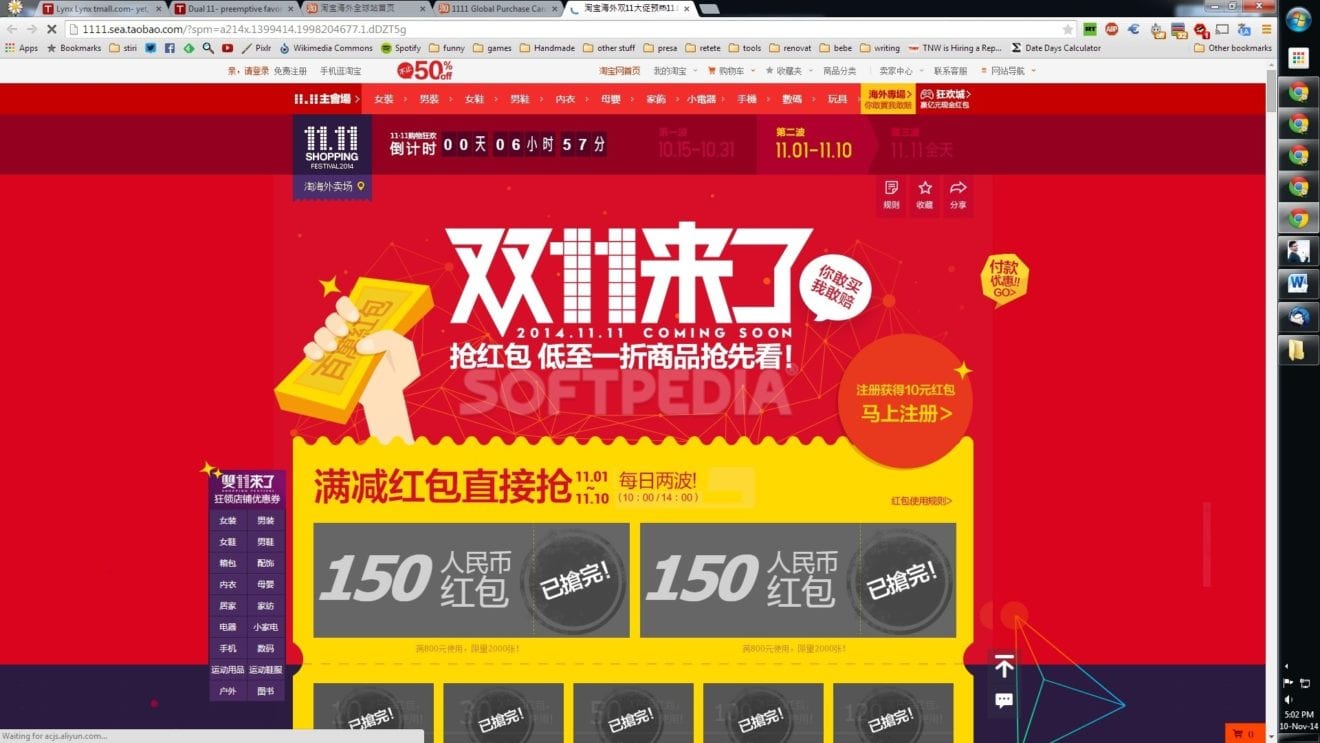
    Consumers are gathering digital discount coupons for use during the 24-hour shopping frenzy, locking in deals in pre-sales events, and limbering up their clicking fingers. For members of China’s young and tech-savvy spending class, the 11.11 sale is a race against time as they log on at midnight to vie to complete web purchases for limited stocks of coveted products while millions of others are jamming the Internet trying to do the same. Last year, the total value of purchases on Alibaba’s websites blew past RMB 1 billion (US$157 million) in GMV just three minutes after the sale began. Twenty-four hours later, the total was $9.3 billion – enough to set a Guinness World Record.

    Will this feat be surpassed this year? China Post, the PRC’s postal service, estimates that 760 million packages will be generated by Singles Day sales held by all Chinese online-shopping websites on Nov. 11. That’s up significantly from 540 million packages produced last year, according to the post office.

    For its part, Alibaba Group – which started the sale in 2009 are runs China’s largest online marketplaces – isn’t making predictions. If past is prologue, though, then last year’s results might be indicative. Check out the infographic at the end of this story to see the 2014 sale highlights.

    This year, Alibaba is pushing its 11.11 festival in new directions by involving more international merchants and shoppers. The event will feature more than 6 million products from over 40,000 merchants and more than 30,000 brands from 25 countries, including the US, China, Japan, South Korea and European nations. Participating international brands include P&G, Unilever, Burberry, Estee Lauder, Zara, Huggies, Macy’s, Costco, Apple, Nike, Friso, Topshop, and Uniqlo, to name a few.

    Through Alibaba’s China and international marketplaces including AliExpress, its global B2C website, merchants will be selling directly to consumers in more than 200 countries and regions, according to Alibaba. Still, the company expects the majority of transactions to occur In China, where key product categories for the sale include baby and maternity, fashion and apparel, cosmetics, electronics and home appliances, health and nutrition, grocery, and fresh foods.

    Alibaba is also pushing several other initiatives for 11.11.

    The company has lined up brick-and-mortar retailers to participate through mobile and omnichannel commerce. More than 1,000 retail brands, with 180,000 brick-and-mortar stores in 330 cities across China, have joined the event. They’ll be offering smartphone-enabled shoppers a more integrated and interactive shopping experience whether shopping online or in participating stores. Omnichannel will also give merchants greater insights into customer demographics and shopping habits, according to Alibaba.

    Underscoring the trend in China toward shopping by smartphone instead of PC, nearly 43 per cent of sales took place on mobile phones during the 11.11 sale last year. mCommerce is expected to play an even bigger part this year. The sale will feature marketing campaigns for mobile shoppers, such as rewards of discount e-coupons to consumers who shake their phones while using the Taobao or Tmall mobile applications during promotional periods.

    Ordering the goods is one thing. Delivering them quickly is another. Alibaba’s logistics affiliate, Cainiao Logistics, is bolstering domestic and international shipping capabilities for the sale to ensure faster deliveries to consumers.

    Cainiao, the backbone of a network of 3000 logistics companies linked by centralised information platform, estimates that its partners will deploy more than 1.7 million delivery personnel, 400,000 vehicles, 5000 warehouses and 200 airplanes to handle deliveries for the sale. Cainiao has also launched a “Hassle-Free Logistics Service” consisting of 49 international delivery partners and 74 warehouses that can support 4 million cross-border package deliveries per day, the company says.

    This formidable infrastructure will soon be tested. The countdown to 11.11 has begun.

  • Tmall.com fresh food offer expanded for 11.11

    Tmall.com fresh food offer expanded for 11.11

    As Chinese consumers continue to upgrade their diets with food ordered online directly from international outlets, Tmall.com is gearing up for this year’s 11.11 Global Shopping Festival by offering a wider assortment of international food and beverages for the giant 24-hour e-sale.

    On offer at the Tmall.com fresh foods subsite (miao.tmall.com) is beef from Australia, apples from the U.S., pineapples from the Philippines, lobsters from Canada, avocados from Mexico, kiwi fruit from New Zealand, and crabs from Russia, along with a host of other overseas delicacies.

    Tmall has added wine to the mix: Overseas wineries that have recently opened Tmall virtual stores include California’s Robert Mondavi and Penfolds from Australia. Currently Tmall’s fresh food vertical has listings for more than 100,000 products from more than 70 countries and regions.

    For food and beverage companies participating in the 11.11 festival this year, the sale is less about discounts and more about opening Chinese consumers’ eyes to the high-quality foreign products that, thanks to cross-border e-commerce, they can buy direct from overseas by shopping on Tmall. It’s also a chance to raise brand awareness and introduce new products and trends to millions of Chinese consumers.

    “Our goal for 11.11 is to get Chinese customers to be more discerning,” said Pete Yu, business development manager for Dole (Shanghai) Fruits and Vegetables Trading Co, the international fruit brand’s branch in China. “While good at discovering delicacies, we hope they can also tell the quality of fruit and understand the significance of quality.”

    Dole launched its Tmall shop in September, 2014, offering a variety of fresh-fruit imports such as pineapples and bananas from the Philippines, pears from Belgium, oranges from Australia and longans from Thailand. During the Nov. 11 sale last year, the company completed 17,000 orders.

    Yu said that this year, Dole aims to offer consumers quality fruits at affordable prices, rather than try to shift huge volume at deep discounts.

    “We believe Chinese customers will gradually accept idea of being healthy, and will be willing to pay a slightly higher price for fruits that meet international standards” such as Dole’s non-GMO papayas, he said. He added that the company is satisfied with the progress Dole’s eCommerce business has achieved so far.

    “Like many other international brands in the fresh food industry, our growth is strong and steady.”

    Yu’s insights were echoed by Li En, deputy director of eCommerce at Ocean Family, which has been selling high-end fresh seafood including shrimps from Argentina and king crabs from Chile on Tmall since 2011.

    Ocean Family has a strong offline wholesale network reaching tables of many luxury restaurants and supermarkets, Li said. Selling direct to online shoppers through Tmall provides direct exposure to potentially millions of new customers around the country.

    “By offering the best products and services at reasonable prices on Nov.11, we want to attract more customers to try new products, building a virtuous circle,” he said.

    Some food sellers join the 11.11 festival – the largest online sale in the world – to launch new products during a period of peak Tmall traffic. During a special 11.11 promotion last year, Tmall said it sold more than 90,000 live lobsters from Canada, which subsequently became a popular fresh food item sold on the site throughout the year.

    This year, crawfish from the US states of Washington and Louisiana are slated to make their China market debut.

    “Chinese people have the tradition of eating crawfish, but the water and habitat of crawfish have been polluted in China,” said Yu Zhongyan, CEO of Aichen (Shanghai) Trading Co, which runs a fresh food store on Tmall. Shoppers who order crawfish online during the 11.11 festival can expect to have the live crustaceans shipped by air and delivered directly to their homes within 48 hours.

    “We are confident that wild crawfish from the US will be welcomed by Chinese consumers,” Yu said.

    At this year’s 11.11 Global Shopping Festival kick-off ceremony, Tmall signed strategic collaboration agreements with fresh food associations and government bodies from 25 countries to facilitate fresh food imports. Cainiao, Alibaba’s logistics arm, and its partners can deliver fresh food to homes in more than 246 Chinese cities within 24 hours.
  • Alibaba goes Dutch

    Alibaba goes Dutch

    Alibaba says new relationships sealed with Dutch organisations in recent days will help continue to lay the groundwork for European expansion of its eCommerce businesses.

    Alibaba Group says it has established several partnerships and collaboration agreements with Dutch organisations including airline KLM and the Dutch Consulate.

    Announced during a visit to Alibaba’s campus in Hangzhou, China, by a delegation of Dutch companies and government officials, the agreements included the launch of a Holland “pavillion” onTmall Global, an Alibaba online marketplace that provides a streamlined sales and logistics channel for overseas companies to sell directly to Chinese consumers.

    Alibaba, which is positioning its shopping websites as a cost-effective gateway to China for foreign brands and merchants, has in recent months established a number of online pavillions showcasing the products of countries such as the US, UK, France and South Korea. Built in partnership with the Dutch Consulate, the Holland pavilion on Tmall Global will feature popular Dutch brands such as Nutrilon, Hero Baby, Philips and Friso, Alibaba said in a statement.

    Meanwhile, Dutch supermarket chains Albert Heijn and Attent have launched new flagship stores on Tmall Global, while Alibaba’s travel website, Alitrip, has announced agreements with KLM and theNetherlands Board of Tourism & Conventions. The latter struck a deal with Alitrip to establish a destination page for Chinese travellers on the website and to “explore new ways of collaboration,” according to Alibaba.

    KLM agreed to launch an Alitrip.com flagship store selling airline tickets and other services to Chinese travellers.

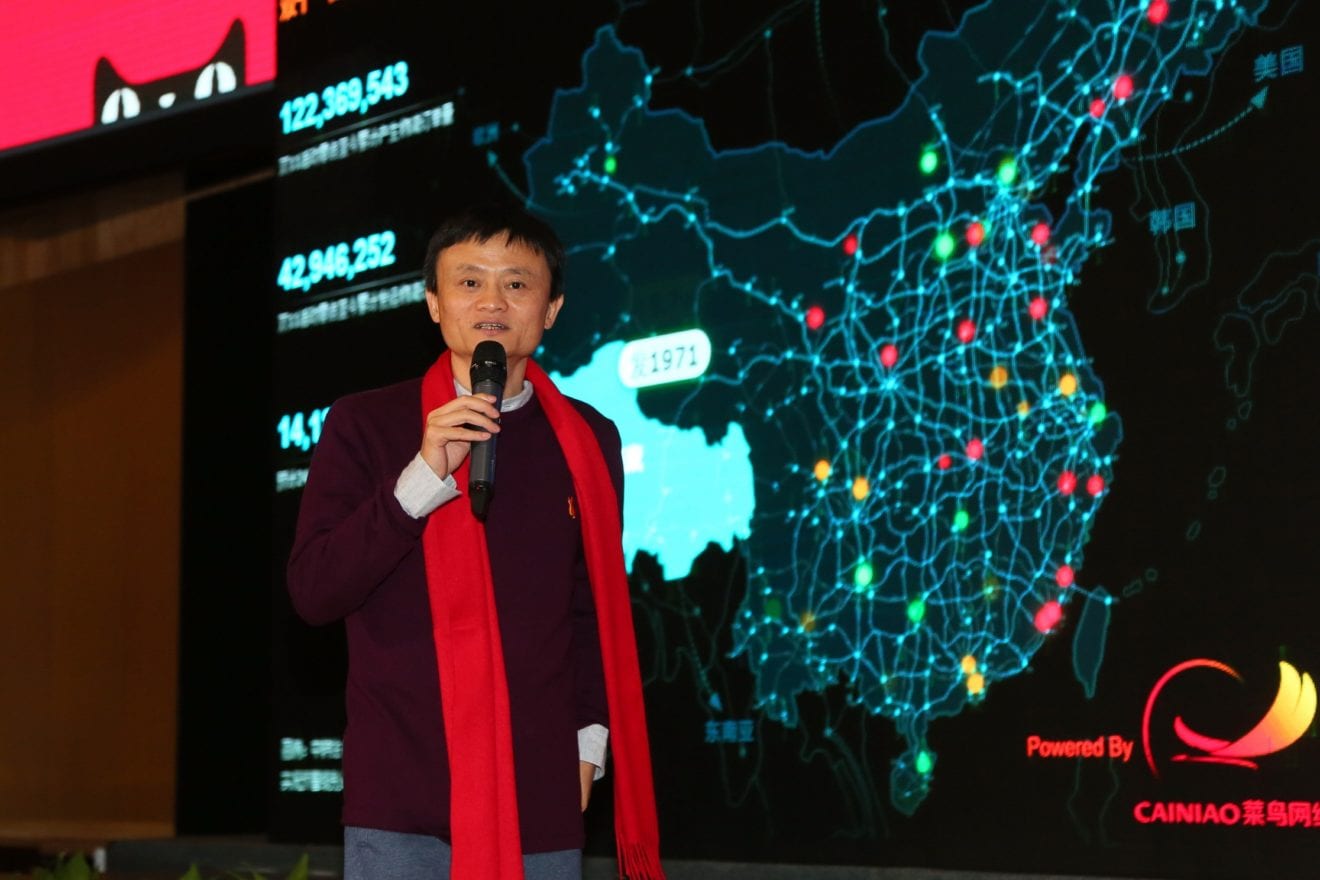
    The visiting Dutch delegation included Dutch King Willem-Alexander, who is touring the PRC as part of an official state visit. Alibaba Group executive chairman Jack Ma, who hosted the delegation with other Alibaba executives, said in a speech that “Holland is a nation that can make impossible possible… Alibaba is also a company that loves to take challenges, loves to innovate, and loves to try new things”.

    “Many people said 16 years ago our dream was impossible, but we have made it a reality today,” Ma said. “Now we have over 120 million people shopping on our marketplaces each day, where they have access to products and fresh produce from far-away countries around the world such as Holland.”

    Alibaba, which dominates China’s eCommerce market, has said that increasing the size of its global e-commerce operations is a key long-term strategy. The company has been beefing up its European ties, this month announcing the expansion of its London office and the establishment of a new office in Milan, with locations in Germany and France to follow. Ma was recently appointed as a business advisor to UK Prime Minister David Cameron.

    Alibaba also plans to highlight international eCommerce and cross-border shopping during its upcoming 11.11 Global Shopping Festival, a massive 24-hour sale to be held Nov. 11. More than 80 Dutch brands currently offer products and services on Alibaba’s Tmall and Tmall Global marketplaces, and many will participate in Tmall’s 11.11 festival promotions, the company said.

  • FedEx prepares for eCommerce boom

    FedEx prepares for eCommerce boom

    FedEx Asia Pacific is predicting a record breaking Singles Day in Asia this November 11.

    “Due to the huge popularity of the occasion in recent years, China’s State Post Bureau anticipates that this year will see a maximum of 140 million packages being handled per day on the days immediately following Singles’ Day – an increase of 40 per cent compared to the same period last year,” said FedEx in a statement.

    “The rise of eCommerce is particularly pronounced in our region, and this translates into ever-increasing volumes of shipments at this time of year,” said Karen Reddington, president, FedEx Express Asia Pacific.

    “Our strategic investments, operational strength of our network, and more than 17,000 dedicated team members across the region – backed by more than 300,000 of their colleagues worldwide – are poised to deliver a holiday season to remember.”

    Globally, FedEx is also expecting record volumes on the US’ Cyber Monday (November 30) and the first two Mondays in December, when the company expects to move more than double its average daily volume.

    It expects a record-breaking 317 million shipments between Black Friday (November 27) and Christmas Eve – a 12.4 per cent increase over last year’s peak seasonal volume.

    FedEx says it has added 7000 delivery vehicles to its fleet and added 30 aircraft to its fleet over the last year. Across its network 55,000 package handlers, drivers and other support positions have been added to help meet the peak demand.

    FedEx Express is the world’s largest express transportation company, covering more than 220 countries and territories.a

  • FeedMe Guru plans Asia city rollout

    FeedMe Guru plans Asia city rollout

    FeedMe Guru, a technology platform that analyses professional reviews to shortlist the Top 600 restaurants in every major city, has been launched in Hong Kong.

    The app, developed by two Harvard Business School students, was revealed before an audience of over 400 influential bloggers, chefs, restaurateurs and media personalities in Hong Kong this week.

    High profile sponsors for the event including Drawing Room Concepts, Jouer, Maximal Concepts, andBlack Sheep Restaurants among others.

    Guru, the name of the company’s proprietary tech engine and algorithm, analyses restaurant reviews across hundreds of magazines, blogs and food guides to shortlist the most critically acclaimed and popular restaurants in town. Shortlisted restaurants are organised by keywords so users can use this free platform to easily find good food and satisfy their cravings, whether it is for old school dim sum or a fancy French meal.

    “People eat out all the time. There are so many meals to eat but so little time to plan. Existing solutions do not make this any easier. Review sites are plagued with fake reviews. Googling through multiple magazines and blogs is time consuming. In contrast, FeedMe Guru is a free mobile app currently available on the iOS store that gives users handy shortlists of the most popular and highest rated restaurants within seconds. Users can just sit back and let the guru crawl for good food,” says Kelvin Lam, co-founder of FeedMe Guru.

    Fellow co-founder Dominic Law, adds: “We are focused on serving the young professionals in town. This generation is used to discovering everything lifestyle-related on social media, through pictures and short comments. We have specifically designed our app to feature the Instagram pictures and comments of our partner food bloggers for each shortlisted restaurant.”

    The co-founders, passionate foodies with a keen interest in entrepreneurship, started incubating this food-tech idea while at business school, and have both moved back to Hong Kong to work on the venture. They were selected at Rise, the largest tech conference in the city, to exhibit as part of the Alpha program, and to pitch at Breakthrough HK. They have also been enlisted into IBM’s SoftLayer Catalyst Incubation Program.

    With strong backing by their school and various incubators, as well as deep relationships with influencers in the food and beverage scene, the co-founders are looking to launch FeedMe Guru across major cities in Asia in the coming months. Their vision is to be the go-to restaurant discovery platform for users globally.

  • Sequoia-backed marketplace wants to bring Thai retailers online

    Sequoia-backed marketplace wants to bring Thai retailers online

    When I first visited Thailand not too long ago, one of the first things that hit me were the numerous open-air markets – like the huge Chatuchak market in Bangkok. Shops and market stalls of all shapes and sizes peddled a huge variety of goods, from clothes to trinkets to household items.

    Thailand’s retail sector is expected to hit US$179.2 billion in 2016. Despite growing smartphone and credit card usage in the country, however, a lot of retailers haven’t jumped on the ecommerce bandwagon yet, leaving a lot of opportunity on the table.

    The founding duo of Thailand-based Zilingo, Ankiti Bose and Dhruv Kapoor, saw that opportunity for themselves when they visited the country on vacation. Ankiti is an ex-McKinsey consultant from Mumbai, India, who later worked for global venture capital firm Sequoia. Together with IIT (Indian Institute of Technology) graduate Dhruv, they decided to create a way for these retailers to find new customers online.

    Ankiti, the startup’s CEO, was always fascinated by the startup side of the VC business, she tells Tech in Asia. After that Thailand trip, she was convinced it was time to cross over to being an entrepreneur.

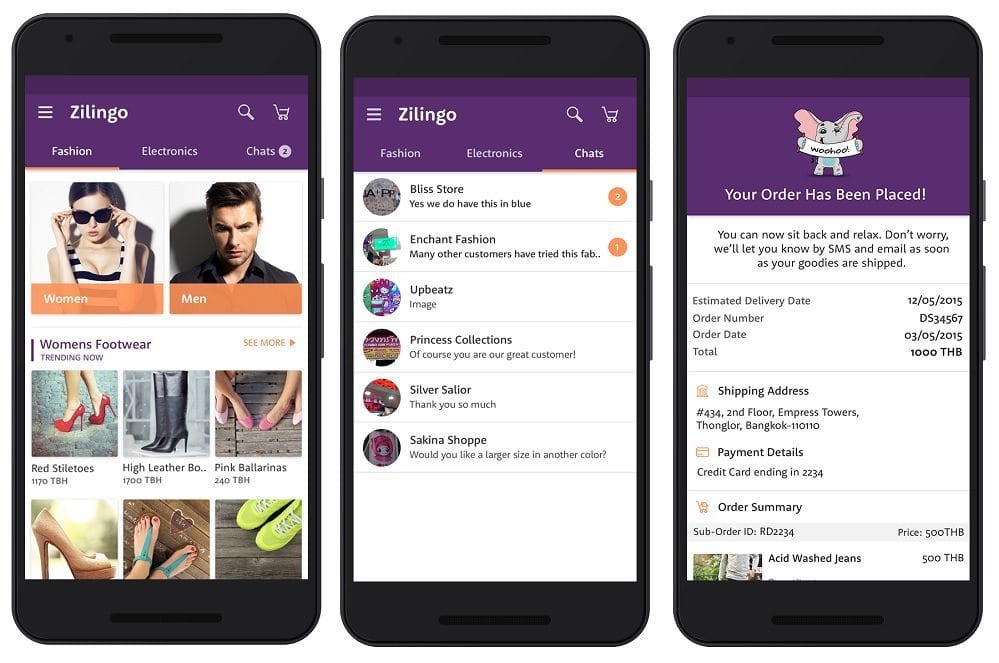
    Zilingo is a mobile-first online marketplace that allows merchants to list their inventory, set their prices, and fulfill online orders. Users can browse through available stores and products, then order and pay with their credit card.

    Zilingo screenshots

    Zilingo’s services include shipping, packaging, payment options, an analytics dashboard for mobile, order tracking, refund and cancellation options, and consultation on pricing strategy. The app also provides chat, through which a customer can get directly in touch with a merchant.

    The startup doesn’t charge merchants for listing, or any other fees, providing most of its services for free. It only takes a cut out of successful sales, wanting to encourage adoption and to “only charge for things that actually add value to the [merchants’] business.”

    Zilingo has only recently gone live, and is available to buyers and merchants across Thailand. Within November 2015, buyers from Singapore, Indonesia, and Hong Kong will also have access to the platform’s Thai sellers. Other Southeast Asian countries will follow, according to the startup. There are currently over 300 sellers on the site, Ankiti says.

    The company has already raised external funding, to the tune of US$1.88 million. The funding comes from Sequoia India, Teru Sato of Beenext, and Freecharge’s Kunal Shah and Sandeep Tandon.

    “We are delighted to back Ankiti and Dhruv, a highly talented and committed founding team, in their efforts to build a mobile-first marketplace for Thailand,” says Shailendra Singh, managing director at Sequoia India. “We liked the team and their mobile-first product so much, that we agreed to invest at the concept stage. It’s early days for the company, but we’re excited about the prospects for Zilingo.”

    Are you eager to shop from Thai retailers online? Do you think Zilingo has found a good way to digitize Thailand’s merchants?

  • Lazada launches online Christmas sale

    Lazada launches online Christmas sale

    The country’s biggest online retail firm, Lazada Philippines, has announced the launch of its month-long Christmas sale, bubbed as Lazada Online Revolution, from November 11 to December 12, slashing prices of over 200,000 goods  across 13 product categories up to 95 percent.

    November 11 or 11/11 is known in China as “Singles’ Day” celebrating bachelors and bachelorettes and e-commerce retailers have turned it into the world’s biggest online shopping event.

    Last year, they sold over $9 billion worth of products on “Singles’ Day”.

    Lazada introduced the 11/11 holiday in the country to mark the start of the Christmas shopping season and has hauled record sales since then.

    For 2015, Lazada Philippines expects to break new records, with over two million visitors to its website and mobile app on the date.

    Big brands and merchants in electronics, fashion, kids and toys as well as home goods are joining the sale.

    Online merchants will also come up exclusive items on flash sales and P99 deals on November 11.

    Participating brands include ASUS, Lenovo, Alcatel, Cherry Mobile, Bosch, Belo, Huggies, Mamy Poko, Timex and Giordano watches.

    As an early treat for Lazada shoppers, the retail firm will sell special items for P11 each.  Lazada bestsellers, such as Sandisk 8GB flash drives, 5600 mAH Powerbank and 4-layer shoe racks could be purchased for P11 starting today until 11/11/

    The P11 deals will be announced everyday at 11:11 a.m. on one of Lazada’s social media channels (Twitter: lazadaph, Facebook: lazadaph, Instagram: lazadaph).

    “We’ve been working hard with our merchants and suppliers to bring these deals to our customers,” according to Lazada Philippines CEO Inanc Balci. “We  believe that online shopping will provide a lot of convenience to shoppers especially during the holiday season.”

    “By shopping online, they can avoid heavy traffic, long lines and crowded areas,” he pointed out.

  • Five Manchester City online stores launched in Asia

    Five Manchester City online stores launched in Asia

    English Premier League club Manchester City has partnered with EZ Shopnet to launch five online stores serving Asian fans.

    Manchester City online stores will be launched for customers in China, Hong Kong, Japan, Korea andSoutheast Asia.

    As the club’s new online retail partner for Asia Pacific, Hong Kong-based EZ Shopnet will help to meet fast growing demand across Asia Pacific for official Club merchandise. Each of the five stores operates in local languages and currencies, with local customer support enabling the club to get official merchandise to its fans quickly and cost effectively.

    Manchester City is following the lead of rivals Manchester United and Chelsea in cashing in on the growing fan base for EPL across broader Asia. It recently opened a regional management office in Singapore.

    Omar Berrada, group commercial director for City Football Marketing, which brokers Manchester City’s commercial partnerships and manages all of its retail and licensing, said that through EZ Shopnet, the club can get even closer to its growing fan base across Asia Pacific and deliver them a better and quicker service.

    “We have seen an enormous growth in our followers in the region and we are extremely happy that they will have easier access to official City kits and our wide range of merchandise than ever before.”

  • Alibaba in Singles Day sales clash

    Alibaba in Singles Day sales clash

    China’s two largest internet retailers have clashed in the run-up to Singles Day, the world’s biggest online sales day, on 11 November.

    Alibaba has been accused by its smaller rival JD.com of “forcing retailers” to promote their sales exclusively with its own outlet, Tmall.

    JD.com has lodged a complaint with the Chinese industry and commerce watchdog but Alibaba denies the allegation.

    The retail giant claims its rival is “panicking because they’re losing”.

    “They simply can’t match our customer and merchant experience and logistical scale because Alibaba wins with customers and merchants as we provide a superior experience for users on our platforms,” said Jim Wilkinson, Alibaba’s senior vice president of international corporate affairs.

    The Wall Street Journal reported that a shoe retailer called Mulinsen had declined to promote JD’s Singles Day event.

    Singles Day began in the early 1990s as a day for people not in relationships to treat themselves, in the spirit of Valentines Day.

    The Chinese State Administration for Industry and Commerce (SAIC) has accepted the complaint and warned retailers “not to use malicious marketing methods to engage in competition” ahead of the event, according to the Xinhua news agency.

    A recent change in legislation bans online retailers limiting promotional activity by their merchants on other platforms.

    Last year, Alibaba recorded $9.3bn (£5.9bn) sales during the annual event, which it adopted in 2009.

  • Singapore startup Semantics3 in new funding round

    Singapore startup Semantics3 in new funding round

    Singaporean software startup Semantics3 Friday said it has successfully closed a $1.55 million round of bridge funding, with Brussels-based seed investor E-Merge bringing $1.5 million to the table.

    The company will use the latest funding, which also saw participation from early-stage investor Zillionize, to expand its business team and ramp up sales efforts. The company had raised $600,000 from the two investors in a previous financing round in March 2013.

    “We are at break even, but we’re not profitable yet,” chief executive Varun Sivamani told CNBC.

    Semantics3’s proprietary software allows companies to more efficiently track their products. Conventional barcodes are unable to track products and prices in real time across the internet, which creates a conundrum for e-commerce retailers.

    The four-year-old startup’s over-the-top software solves this problem by allowing them to use their barcodes to access detailed information about any item in their inventory, and track the price of their products in real time across a variety of websites.

    While competitors Indix and Factual have more funding and a larger share of the market, Semantics3’s software is currently being used by retailers, as well logistics, industrial supply, and insurance companies, including Liberty Mutual and American Family Insurance, the company said.

    The brain child of three students from the National University of Singapore, Semantics3 in 2013 became the first Singaporean startup to make it into the prestigious Y Combinator accelerator program that has also seen participation from bitcoin wallet provider Coinbase and Codeacademy.

    With some 99 percent of Semantics3’s customers based in the US, the company is looking forward to stress testing some of its software’s new features during the Black Friday sales in the US later on this month.