Category: E-Tailing

Retail News Asia is committed to providing both local and global retailers with the latest E-Commerce & Etail news throughout the Asian market. This on a daily base.

  • Online seafood retailer iChef rolls out nationwide store pick-up

    Online seafood retailer iChef rolls out nationwide store pick-up

    Online seafood company iChef is expanding its physical retail operations even as more grocery retailers are moving into the online space with e-concierge shopping services and free deliveries.

    Four-year-old iChef opened its second store at the basement level of The Cathay this week, and is also rolling out pick-up services around the island. Its first outlet is in Tai Seng, where the company’s offices are.

    A subsidiary of Suki Group – which operates eight chain restaurants here, including Sakura International Buffet, Saboten and Chabuton – iChef sells packaged frozen seafood items, such as snow crabs, oysters and prawns, as well as frozen beef and chicken, on e-commerce site Qoo10.

    The items sold by iChef come from the same seafood wholesalers that supply items served in the Suki Group of restaurants.

    Customers can head down to the stores to make their selection, or choose to pick up their online orders, made via Qoo10, from either outlets. Otherwise, free delivery is provided only on orders of $80 and above.

    It is also introducing store pick-up services across its 10 Nihon Mura sushi restaurants across the island.

    Singapore’s online grocery retailer space has exploded recently, with nearly a dozen marketplaces opening up to offer fruits, vegetables, seafood, meats and other grocery products to busy consumers. Supermarket giants NTUC and Cold Storage offer a selection of its in-store inventory on its online store, while others like GoFresh, focuses on selling fresh produce such as fruits, vegetables and meats.

    Homegrown start-up honestbee is a grocery buying concierge service that has its staff of shoppers pick up items directly from nearby supermarkets located close to a customer, while e-commerce services such as Qoo10 and Rakuten offer specialised perishable food items from its sellers, including frozen oysters, king crabs and salmon fish roe, as well as fresh seafood flown in directly from Japan.


  • China forecast to lead APAC in online spending

    China forecast to lead APAC in online spending

    China will lead the Asia-Pacific region in online spending this holiday season with $150 billion in sales forecast, new research from Adobe Digital Index reveals.

    China’s booming economy has led to the highest anticipated online spend in the region (55 percent), with nearly half of the country’s consumers surveyed (49 percent) predicting an increase in their online spend for the period.

    The average Chinese Internet user is predicted to spend a total of $210 online during November and December, driving one-fifth of total online sales for the year.

    Adobe’s global Online Shopping Prediction is based on an analysis of 55 million product SKUs and aggregated and anonymous data of more than one trillion retail websites over the last seven years. The holiday season represents 20 percent of worldwide online spending – with Austria and the US at the top of the list.

    Across the rest of APAC, consumer spend is expected to remain steady year-on-year with 14 percent and 16 percent of Australians and Singaporeans respectively, anticipating they will increase their total spend this holiday season.

    Japan is expected to see the second highest online spend in the region with $37 billion in online sales (a 5 percent year-on-year growth) predicted, followed by Australia at $7 billion.

    The survey found that consumers in APAC are not only shopping online more, they are also becoming increasingly efficient, with 20 percent or more in each country surveyed saying they expect to spend less time holiday shopping this year compared to last – a saving that could give them more time to spend with their families and friends.

    “Holiday shopping is a huge investment and consumers get more sophisticated every year with their online and mobile shopping in order to secure the most popular gifts at the best prices,” said Tamara Gaffney, principal research analyst, Adobe Digital Index.

    Meanwhile, Gaffney said Southeast Asia is expected to lead the charge in mobile shopping with 21 percent of e-commerce purchases to be transacted via smartphones and around 10 percent via tablets.

    Japanese shoppers won’t be too far behind, with 24 percent of e-commerce purchases predicted to be made via smartphones and 6% via tablets.

    Consumers are also finding online shopping less stressful than heading to the stores. In Australia, almost one-in-five (19 percent) consumers rated offline shopping as extremely stressful, compared to only 6 percent who said the same about online shopping. China is the only country in the region where online and offline shopping are seen as equally stressful.

  • iTrueMart enters Philippines, plans to invest $55 million

    iTrueMart enters Philippines, plans to invest $55 million

    iTrueMart, Thailand’s leading e-commerce retailer, has launched its first e-commerce site in the country, iTrueMart.ph, and targets to be the dominant local e-commerce player in two years.

    In 2016, the online retailer, one of the companies under Bangkok-based Ascend Group, plans to invest over USD$150 million (more than P7 billion) in the ASEAN Economic Community (AEC) as part of its regional expansion.

    “The investment will be used for e-commerce optimized fulfillment centers, logistic hubs, expansion of our own fleet, marketing, and ramping up assortment and inventory,” announced Ascend Group CEO Punnamas Vichitkulwongsa.

    “We are debuting our operations in the Philippines. Vietnam, Indonesia, Myanmar, Cambodia, Malaysia, and Singapore will follow later in 2016. We are committed for long-term success in the Philippines and everywhere else that we go to,” he underscored.

    “Competition in the e-commerce sector in the Philippines is still considered low. With the market still in its infancy, there are still plenty of opportunities for new players,” Dean Krstevski, Chief Operating Officer E-Commerce of Ascend Group, reasoned.

    “Now that the e-commerce market is being developed, brands are increasingly looking for partners to sell their products online, which we see as a great advantage that will help us speed up our market entry. We are confident of our success in the Philippines because we have a strong team with extensive experience in both online and offline retail.”

    They are investing about US$4-5 million in the Philippines this year and easily $50 million in 2016.

    The Philippines is iTrueMart’s second destination in AEC, bringing access to a variety of products, various payment channels and competitive pricing currently limited to metropolitan shoppers.

    “E-commerce will have huge potential when the AEC fully materializes,” confirmed Ascend Group CEO Punnamas Vichitkulwongsa.

    According to a study by Ystats SE Asia eCommerce, the volume of ASEAN’s mobile Internet users rose 56% in 2015. Up to 56% of the Thai and Vietnamese populations are now accessing the Internet via their smartphones, a figure close to the Philippines’ 50% rate.

    Recognizing the growing number of mobile-Internet users, the Ascend Group is confident that online shopping in the region will also grow.

    Furthermore, “iTrueMart.ph is not a newcomer to the market as the team is backed by the strong success of iTrueMart in Thailand,” according to iTrueMart General Manager Seubsakul Sakolsattiyathorn.

    During the past year, the number of visits to iTrueMart.com increased 424%.

    Since October, 2014, the retailer averaged 4.6 million  visits per month. iTrueMart.com receives 7,000 orders per day on average, with the highest volume of daily orders at 10,000, the highest record in Thailand’s online retail industry.

    Add to that, iTrueMart.com’s delivery averages at two days throughout Thailand and it enjoys the lowest e-commerce return rate in the country.

    Under the slogan “Great Value, Everyday,” iTrueMart.ph works only with authorized distributors of international brands and act as authorized dealer of local brands so customers can be guaranteed that all products on the website are genuine.

  • How Agencies Are Adapting to China’s E-Commerce Boom

    How Agencies Are Adapting to China’s E-Commerce Boom

    This week, Saatchi & Saatchi China announced it was bringing on 48 hires from a local e-commerce services provider called Bysoft. It’s the latest example of how international agencies are adjusting their offer to cater to China’s e-commerce boom.

    In China, now the world’s largest e-commerce market, almost anything can be bought online – from exotic imported produce to cheap locally made clothing, from iPhones to Cadillacs. Online purchases are a greater percentage of retail in China than anywhere else. This year 15.9% of retail will be via digital, according to eMarketer. In the U.S. that figure is just 7.1%.

    Given China’s rapid embrace of e-commerce, “marketers and agencies are having to adapt at warp speed to build capabilities and potential capabilities in this area,” said Greg Paull, Hong Kong-based principal of agency-management consultancy R3 Worldwide.

    Agencies are trying different tactics. WPP China CEO Bessie Lee told an investors’ conference last week that two WPP companies, Kuvera and Salmon, were doing “a very hard-core e-commerce service. What does that mean? It means managing the e-commerce storefront for our clients, finding warehousing, managing warehousing, finding logistics partners for our clients, doing CRM (and) customer service for our clients for their online stores.” The agencies do marketing but are also distributors and store managers for clients, Ms. Lee said, adding: “So this is new money that we probably never had before.”

    Like many agencies, Dentsu’s Carat is expanding its e-commerce team. When Chinese internet giant Alibaba hosted its massive one-day online shopfest on Nov. 11, logging $14.3 billion in merchandise sales, Carat had a 28-hour war room for clients including Mondelez, handling everything from media optimization to brand-shop management to product replenishment to competitor tracking. China’s e-commerce boom also factored into a new partnership between Dentsu’s Carat, Mondelez and internet giant Tencent to work together on data, research and content.

    The company that Publicis Groupe-owned’ Saatchi hired staff from, Bysoft, has cast itself as a one-stop solution that includes digital marketing and operations, with a warehouse and fulfillment system for brands, and a client list including Adidas and Durex. Two of the hires were Cyril Drouin, Bysoft’s CEO, who takes charge of Saatchi’s China e-commerce strategy, and Christine Wang, Bysoft’s managing director. (Saatchi says it wasn’t an acquisition of Bysoft, but a recruitment of talent from the company.)

    Did you know 40%+ shoppers impulse buy and 71% in-store phone usage is checking prices? Gain deep understanding of consumer behavior and why this enables digitally-centric brands to gain advantage.

    Learn more

    Bysoft, founded in 2003, is one of dozens of standalone e-commerce agencies to pop up in China; many promise brands a range of services from marketing to operations, which is attractive to some brands. Alibaba-backed Baozun handles digital marketing, store operations, customer services and warehousing and has clients including Nike and Burberry. It had a $110 million initial public offering on the Nasdaq this year.

    The Chinese e-commerce market is fast-changing and complex, with different platforms than elsewhere – not only Alibaba’s marketplaces, but also online superstore JD.com and many verticals. Many brands are still figuring out their strategy, and the big question is how agencies will eventually fit into the landscape.

    “Are marketers going to push their business into a standalone e-commerce agency or into the existing creative digital agencies?” Mr. Paull asked. The argument in creative agencies’ favor is that “in the end an e-commerce customer is still a customer, and the work needs to be treated with same brand integrity you would treat any other work.”

  • Uber wants to deliver everything, not just people

    Uber wants to deliver everything, not just people

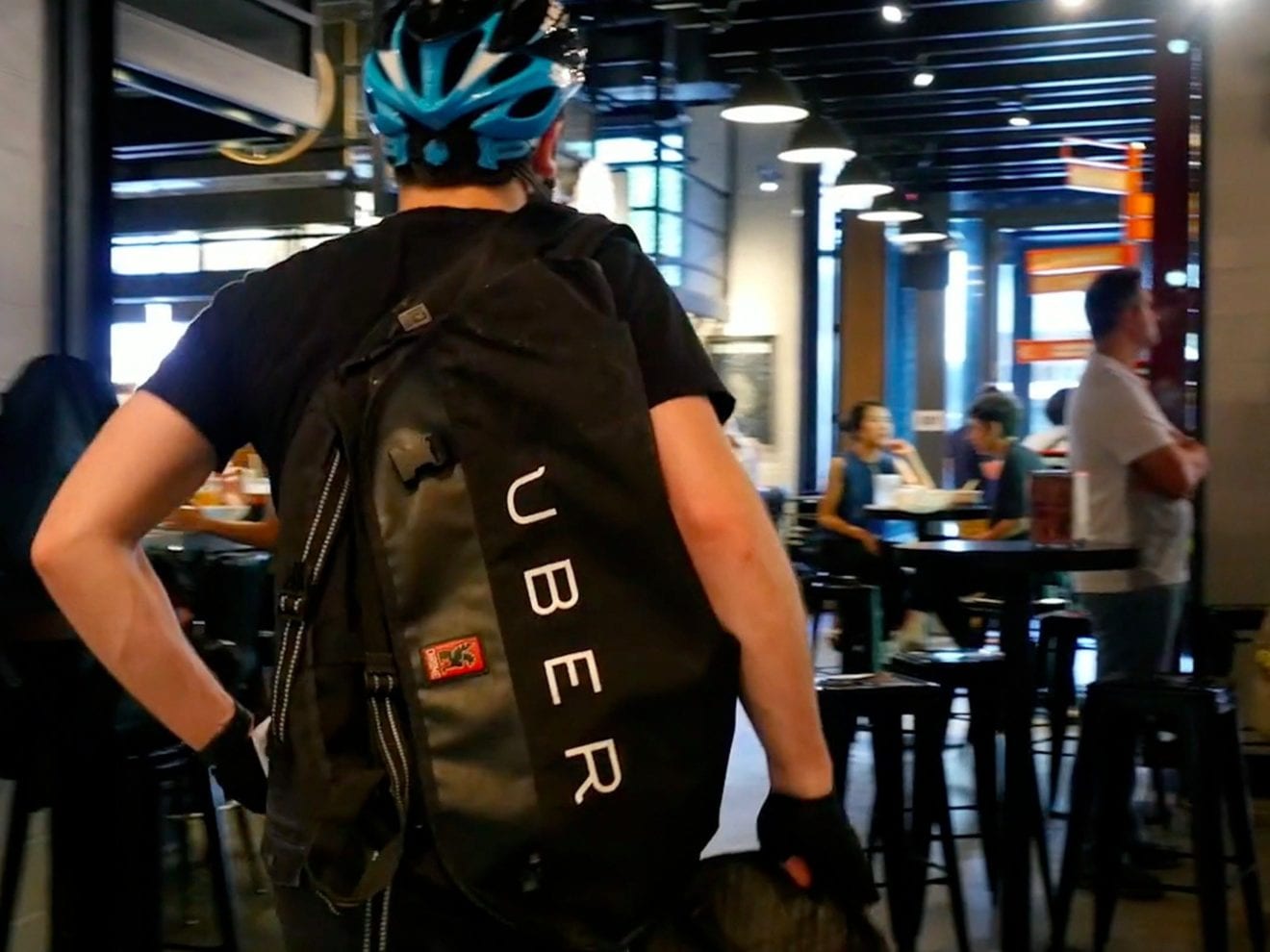
    Uber is not a taxi company, it’s a delivery company. And whether its cars are moving human beings or, as they are already in the US, physical products (and no, it’s not just cats and ice cream), what it’s really delivering is information about how to make cities more efficient.

    Jo Bertram, regional general manager for the UK, Ireland and Nordics at Uber, told that the company’s ambition to provide on-demand delivery for restaurants and businesses will reduce congestion in cities, and cut the time between ordering a product and receiving it.

    “Our mission is to make getting anything in your city more convenient, affordable and reliable than picking it up yourself,” she said.

    So far Uber has tried a limited number of delivery experiments in London, mainly for PR but also to test its infrastructure. In New York however it has already launched UberRush, a full-scale delivery service that lets restaurants and shops send products on-demand, for a relatively low cost.

    Bertram said Uber’s task is to apply what it has learned providing taxis in 350 global cities (including Bogata, Nairobi, Bangalore and 12 in the UK) to other forms of urban infrastructure. “We already provide the ability to get a car at the touch of a button,” she said. “Now imagine if you could use that same network of drivers and allow you to also get other things.”

    Don’t miss

    For businesses, on-demand delivery provides a competitive edge that bigger rivals might not be able to match, Bertram said. It also gives them the chance to scale more quickly, as they are able to reach customers who would otherwise be too far away to buy their product. Finally it provides “customer loyalty and satisfaction” Bertram said. “To get something within an hour? That’s pretty amazing.” It also means travelling long-distance to a one-stop superstore isn’t necessary. “Customers can think about buying local,” she said.

    “We believe it’s a positive thing for the city in which we operate.”

    What’s next is not necessarily transitioning delivery to robots, self-driving cars or drones, she said, but being able to combine multiple deliveries into one trip — vastly reducing the cost. That’s the concept between the UberPool ride-sharing service, and the concept is increasingly applicable to deliveries too.

    “Imagine if you could combine UberPool and UberRush?” she said, under a slide labelled “One More Thing”. With clever match-making tech, the price of instant delivery could be dramatically reduced.

    Eventually Uber drones might be possible, she admitted — but autonomous delivery is “five to ten years off” even if you assume questions around insurance and liability are settled, which they are not. Regulations — as Uber has seen constantly in regard to its core taxi product — are also a potential headache.

    “It’s almost impossible for us to think ahead,” she said. “But we’re always looking at pushing the boundaries of the services we offer.” But one prediction is possible — that “by 2025 there will be no need to own a private car”.

    “We’re able to start solving, or helping to solve some of the really big transportation problems in our cities,” she said.

  • 11street plans monthly ‘Love 11 Day” discounts

    11street plans monthly ‘Love 11 Day” discounts

    Malaysian online marketplace 11street plans a new mobile shopping app – and a monthly ‘Love 11 Day’ when it plans to launch surprise, snap deals and giveaways.

    The Korean-headquartered online retailer says it is now ranked a top 40 website in the country and its online marketplace now has more than 7 million products on offer.

    11street CEO Hoseok Kim has unveiled an RM11 million giveaway running until December 31. Shoppers can redeem daily offers of deals and coupons with up to 90 per cent discounts.

    Kim said the 11th day of every month was chosen for the promotion because of its symbolic similarity to the company’s brand name.

    Meanwhile, Kim says almost 50 per cent of traffic to 11street is now from mobile devices.

    According to Nielsen, the growth of connected devices have paved the way for a positive increase in the eCommerce sector with 47 per cent of Malaysians using their smartphones to shop online.

    “Today, the 11street mobile shopping app is already one of the most popular apps in Malaysia. Listed as one of the top three shopping apps on the Malaysian Google Play store, we are pleased by this achievement as we have always placed great importance in offering a convenient mobile shopping experience for all users.”

    11street Malaysia - Love 11 day

    He says in 2016, 11street will strengthen its focus to serve mobile shoppers through a two pronged approach by providing more curated content with an improved user interface and user experience designs, along with additional personalised features for greater customer experience. 11street will also be offering more mobile exclusive value deals and discounts.

  • Asos Mobile Apps in China Go Live

    Asos Mobile Apps in China Go Live

    In a first for the UK’s largest independent online fashion and beauty retailer, ASOS has launched mobile apps for iPhone, iPad and Android to the Chinese market.

    Developed using retail technology specialist Red Ant’s award-winning RetailOS mobile commerce accelerator, the apps are:

    • Fully transactional mobile app designed specifically for the 700 million-strong Chinese smartphone user market
    • Feature rich and fully shoppable with hybris commerce platform and Alipay
    • Features include Catwalk for all products, access to personal profiles, wish lists and Chinese social sharing

    Red Ant’s CEO Dan Mortimer said: ‘As the UK continues to forge stronger and more profitable business relationships with China, we are delighted to be the mobile partner of choice in the Far East for one of the world’s most successful and reputable online retailers. The local knowledge and expertise of our team on the ground in Asia has been invaluable in developing an app which makes the most of the commercial opportunities presented by the world’s biggest mobile market.’

    ASOS’ General Manager – China, Daniel Jenks, said: ‘ASOS is dedicated to delivering the best possible experience to our customers in China, and the launch of our apps, backed by Red Ant’s expertise, is a significant step towards ensuring they receive a high-quality, mobile-first service which meets all of their needs in an increasingly sophisticated marketplace. We’re delighted with the results so far and in the space of a few weeks, app downloads and sales have exceeded our expectations to form a substantial mix of our sales.’

  • E-commerce market on path of growth

    E-commerce market on path of growth

    Computer and electronics, beauty and cosmetics as well as fashion are potential categories for e-commerce in Thailand. The Thai e-commerce market in 2014 was valued at Bt2.03 trillion, with business-to-business (B2B) deals worth Bt1.23 trillion, business-to-consumer (B2C) valued at Bt0.41 trillion and business-to-government (B2G) valued 0.31 trillion.

    Surangkana Wayuparb, the chief executive officer of Electronic Transactions Development Agency (ETDA), said that the agency has spent seven months conducting the e-commerce survey, covering all industries in Thailand, representing 502,676 people from eight sectors: manufacturing, retail and wholesale, transport, accommodation, information and communication, insurance, art, entertainment and recreation as well as other services.

    B2B e-commerce was valued at Bt1.230 trillion, a contraction of 0.33 per cent over 2014, while B2C was valued at Bt474,648.91 million, a growth of 15.29 per cent over 2014 and B2G was valued at Bt402,883.74 million, growing 3.96 per cent year on year.

    “It is a huge opportunity for e-commerce business in Thailand since the new Thai generation believes in shopping via online channels. The 4G will also be a factor in driving the growth of the e-commerce market in Thailand,” said the CEO.

    The e-commerce market in Thailand was worth Bt2.03 trillion in 2014 of which B2B was worth Bt1.234 trillion or 60.69 per cent, followed by B2C Bt411,715 million or 20.25 per cent and B2G valued Bt387,552 million.

    In 2015, the top three industries expected to generate the most e-commerce are accommodation services, worth Bt658,909.76 million or 38.4 per cent, followed by manufacturing, valued at Bt350,286.83 million or 20.4 per cent, as well as retail and wholesale industry, valued at Bt325,077.48 million or 19 per cent.

    She also said that the top three industries that |gained the highest e-commerce value in 2014 were accommodation services valued at Bt530,159.13 million or 38.1 per cent, followed by manufacturing valued at Bt440,614.78 million, gaining 26.6 per cent, and information and communications valued at Bt264,863.74 million, growing 19.11 per cent.

    Computer and accessories, cosmetics and beauty as well as fashion are the three top categories for online retail and wholesale business.

    Art and entertainment business, games online, music and e-movies are the main categories in the online entertainment business.

    Surangkana said that the global and domestic economies are factors in driving the e-commerce market in Thailand and the government incentives or tax privileges will play a part in driving the e-commerce market of the country as a whole.

    She said that the top four online transactions for e-commerce business in 2014 were e-banking at 54.25 per cent, followed by credit and debit card 22.39 per cent, mobile payment at 14.53 per cent, and others at 8.83 per cent.

    However, mobile payment has high potential for growth because the modern lifestyle will mean using mobiles to pay transaction fees in the near future.

    She said that the total US B2C e-commerce market was valued at US$359.3 billion in 2014. Meanwhile, China’s B2C market was worth $322.1 billion. Japan and Korean were valued at $118.59 billion and $25.4 billion, respectively.

    Thailand and Malaysia had B2C market valued at $11.7 billion and $9.6 billion respectively.


  • Brands, retailers the biggest losers on Singles Day

    Brands, retailers the biggest losers on Singles Day

    While consumers reaped the rewards on Singles Day, at least one retail consultant is questioning the damage done by the US$14 billion 24-hour spendathon.

    “The clear winners are consumers, marketplaces and couriers and delivery companies,” explains Richard McKenzie, partner with Oliver Wyman. “However, for sellers and brand owners, the picture is less clear.

    “While the event undoubtedly helped top line sales for some, some of those sales are not truly incremental. Additionally, GMV growth on Singles’ Day is much faster than overall GMV growth, meaning the pull forward effect could be exacerbated. In 2014, a significant proportion of sales were returned within 10 to 15 days.”

    McKenzie says given the heavy discounting – not to mention the additional advertising and operating costs before and during Singles’ Day – he questions how many sellers and brand owners are making incremental profits.

    “For product categories that are purchased on a regular basis, having a competitive offer on Singles’ Day can prevent customers from trying competitors’ products, while not participating could mean losing some customers during the event and in the future. For products purchased infrequently, the bottom-line benefits of heavy discounting on Singles’ Day are unclear.

    “For example, in the UK, many retailers initially embraced the Black Friday retail event (similar to Singles’ Day) over the past two years, but some have already declared that they will not participate anymore, for the reasons discussed here.”

    McKenzie also points out mall foot traffic declines sharply during such online events.

    “Going forward, sellers and brand owners need to carefully consider what they want to achieve from Singles’ Day – beyond a simple spike in sales.

    “Leveraging the opportunity to increase brand awareness and consumer stickiness could make participation truly meaningful.”

    But given the huge sales revenues and records being set, McKenzie says Singles’ Day is definitely here to stay.

  • Costco Korea starts selling online

    Costco Korea starts selling online

    The American membership-only warehouse club Costco Wholesale Korea has opened its online shopping mall this week.

    It is the first among the Asian countries Costco has entered, and its fifth international online shopping site after the US, England, Canada and Mexico.

    Customers who are Costco Korea members who register online can shop online at the store.

    The products sold are categorised under 11 different groups: digital, home electronics; furniture, home interior, toys, Christmas; sports, fitness; garden, patio; clothing, fashion accessories; jewellery, watches, accessories; beauty, health; tools, living, cars; stationery, office supplies; and food.

    Compared to other online malls which don’t have a paid membership, the number of items offered is much lower. All prices include shipping.

    Costco has chosen to abstain from selling fresh food online. This could be interpreted as an acknowledgement that the company currently doesn’t have a distribution system fast enough to assure the freshness of the products. For now, customers will be able to purchase processed foods, grains, dried foods, and snacks.

    Industry observers say that since Costco’s online mall lacks fresh food, and has a lot of foreign brands among the products it carries, its pool of consumers should not overlap with domestic retailers.

    Furthermore, the fact that only customers with current membership can use the online mall is another limitation of Costco’s internet penetration potential.

    However, based on the success Costco has achieved through its domestic offline stores, some observers are predicting that once Costco expands its logistics infrastructure, increasing the number of products it can handle and distribute through the online site, its influence on the domestic online market could be great.

    Costco already ranks No.1 in consumer satisfaction among the five largest hypermarket retailers in Korea (Emart, Homeplus, Lotte Mart, NH Hanaro Mart, Costco), according to a report from the Korea Consumer Agency.

  • Kering ratchets up legal fight with Alibaba

    French-headquartered luxury brand owner Kering has unsuccessfully sought to fast track its legal suit against Alibaba after what it considered “greatly troubling” comments by Jack Ma.

    Kering, which owns Gucci and Yves Saint Laurent among others, filed suit against the Chinese eCommerce giant in May after it considered more passive efforts to get Alibaba to stop selling counterfeit versions of its goods on its websites were not bearing fruit.

    Last week Kering has asked a US judge to waive the mandatory obligation of mediation between the two parties, citing a quote by Ma in a magazine article.

    Kering’s lawyers say the company was “greatly troubled” by Ma being quoted in Forbes saying there was no chance of settling.

    “I would [rather] lose the case, lose the money… But we would gain our dignity and respect,” Ma was quoted saying.

    Kering’s lawyers argued if this is indeed Ma’s position, mediation would be futile.

    But Judge Kevin Castel disagreed, on Monday urging the parties to continue with mediation.

    “Needless public comments can undermine talks. Yet public positions and positions in confidential talks have been known to vary… The Court strongly recommends that the parties proceed to mediation,” he wrote in an order.

    Kering maintains Alibaba is a giant conduit for counterfeiters and alleges the company has knowingly made it possible for traders to sell fake good on its sites.

    According to a letter to the judge, seen by Reuters, Kering’s counsel said of the interview: “It leaves the impression… that Alibaba‘s request for mediation was not made in good faith, but rather as a tactic to delay this case and to force Plaintiffs to expend resources spinning their wheels in an expensive and time-consuming mediation.”

    An Alibaba spokesman Bob Christie said Ma had made the comments prior to Kering agreeing to Alibaba‘s proposal to mediate.

    “If they want to return to the path of litigation, instead of mediation, we will vigorously defend our legal rights and reputation,” he said in an email to Reuters.

  • Myanmar card payments on the rise as MPU widens network

    Myanmar card payments on the rise as MPU widens network

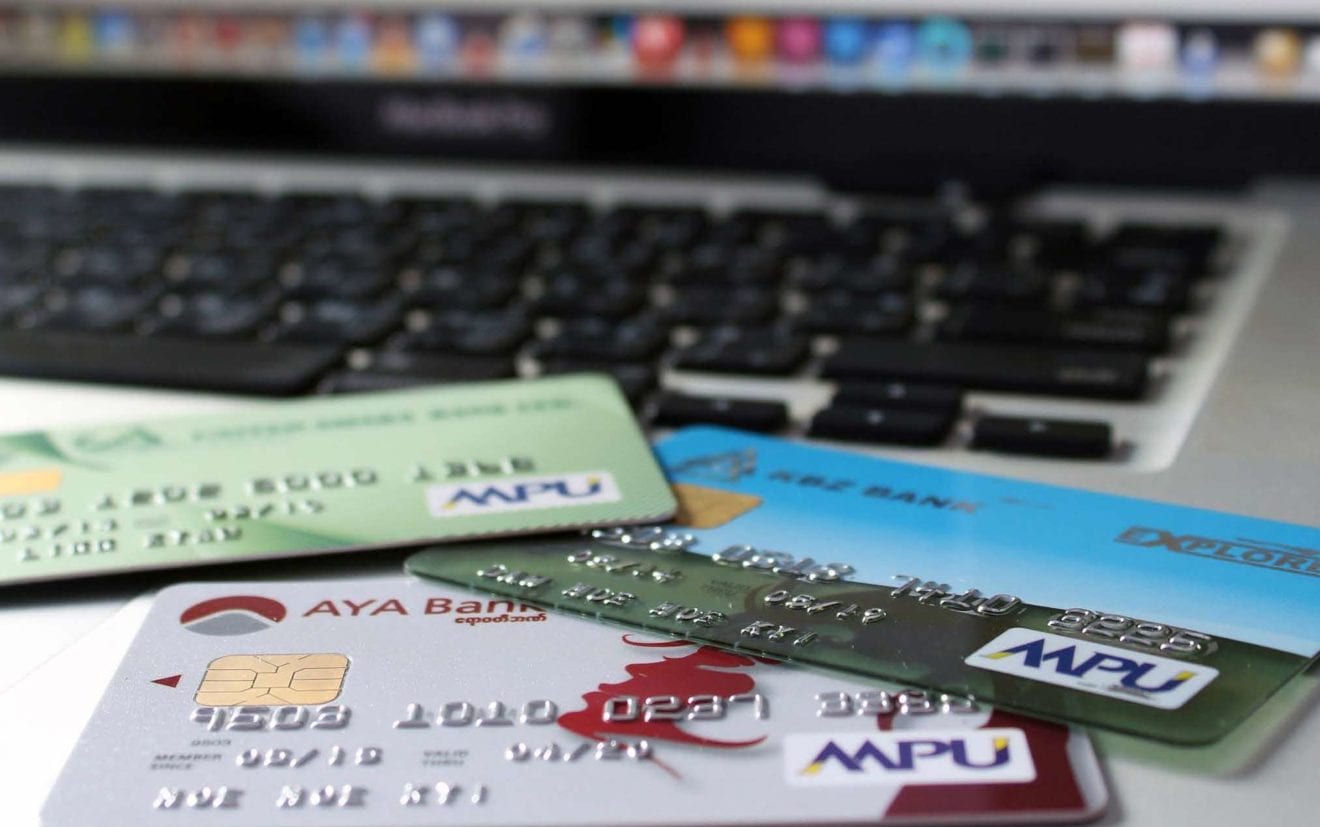
    Card payments in Myanmar are set to rise over the next few months as local shops and supermarkets sign up to Myanmar Payment Union, signalling the beginning of a shift in one of the world’s last cash-based economies.

    MPU got off to a slow start when it launched in 2012, but with the rise of connectivity, this is starting to change. Card transactions jumped from K40 million in September to K70 million in October, said MPU chair U Mya Than.

    Growth is driven by the participation of large retail chains, he said.

    Myanmar’s largest supermarket group City Mart Holding began accepting MPU payments in April, and now gives customers the option to pay by card in seven of its 20 outlets.

    Last month, Capital Diamond Star Group introduced card payments for the first time at its Capital Hypermarket stores.

    City Mart spokesperson Daw Khin May Day said the group’s decisions depend partly on the availability of infrastructure and the internet connection.

    “For customers holding MPU cards, this is one additional payment type, but usage is still quite low as a percentage of total payments,” she said. If the connection cuts out, shoppers pay in cash.

    City Mart has plans to accept additional types of payments and currently offers Visa and MasterCard services in three of its stores, she said.

    “We are aiming for a totally cashless society, but some customers and retailers are not ready for this yet,” said U Mya Than.

    The network will widen quickly with greater participation from shopping centres, he said, adding that most small retailers still prefer to take cash.

    Retail outlets in a new shopping centre being built by Shwe Taung Group of Companies in downtown Yangon will also accept card payments, he said. A Shwe Taung spokesperson said they were not ready to make an official announcement.

    Myanmar Information Technology is supporting MPU to help develop software, computerised systems and better connection lines, according to U Mya Than. The arrival of foreign operators such as Norway’s Telenor, Qatar’s Ooredoo and Japan’s KDDI has markedly improved connectivity, he said. In the past, disputes often broke out between customers and banks over faulty ATM machines, leading banks to install CCTV cameras to check if the connection had cut out.

    Myanmar now boasts around 1.2 million card users, although less than 10 percent of its 51.4 million population has access to banking services.

    Since October 2012, the number of point of sale, or POS, terminals in the three main cities – Yangon, Mandalay and Nay Pyi Taw – has jumped from 200 to 3000, and ATM machines now number 1600, from 20, according to MPU data. ATM transactions still outnumber card payments by 10 to one.

    Banks first offered credit cards in May this year, while debit cards have been on offer since 2011. Fifteen banks issue MPU cards and another eight are preparing to issue them.

    MPU recently signed an agreement with Japan Credit Bureau and China Union Pay to issue co-branded cards, which U Mya Than says he hopes will be introduced to the market before the end of the year.

  • Online Shoppers Rose in China, Supported Alibaba’s Revenue Growth

    Online Shoppers Rose in China, Supported Alibaba’s Revenue Growth

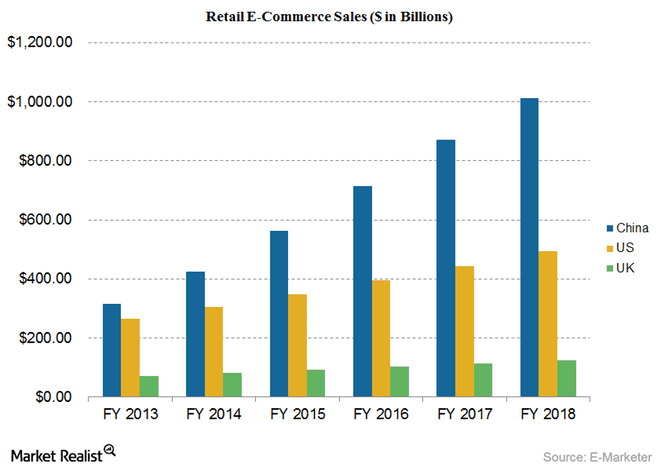
    According to eMarketer, China and the US accounted for ~55% of the global Internet retail sales in fiscal 2014. It also mentioned that China and the United Kingdom have a higher proportion of “online-to-total retail sales compared to the US.” It’s important to note that ~27.5% of China’s population bought goods and services online in fiscal 2014 while 10% of the total retail transactions were through the online mode.

    In comparison, 73% of the United Kingdom’s population made online transactions. E-Commerce accounted for 13% of the overall retail sales in fiscal 2014. While the United Kingdom is positioned eighth in total retail sales, it’s third in global online retail sales.

    part2

    Alibaba, Amazon, and eBay will look to capitalize on the huge potential of rising online sales. This could be positive for their revenue and bottom line.

    Online shoppers rose in China

    According to eMarketer, there were 148 million online shoppers in China in 2010. The shoppers accounted for 11% of the population and 32% of the total Internet users in the country. By the end of fiscal 2013, the number of online shoppers in China grew to 302 million. The shoppers accounted for 22% of the population and almost 49% of total Internet users in the country. By the end of fiscal 2020, the online shoppers will likely to grow to 700 million. Alibaba saw its revenue rise from $1.8 billion in 3Q13 to $3.5 billion in 3Q15.

    Amazon is part of the iShares U.S. Consumer Services ETF (IYC) and the First Trust Dow Jones Internet IndexSM Fund (FDN). It accounts for 6.80% and 11% of the ETFs, respectively.

  • Uber Introduces Helicopter Service in Indonesia

    Uber Introduces Helicopter Service in Indonesia

    California-based ride-sharing app Uber, in collaboration with local aviation service PremiAir, is introducing helicopter service in Indonesia on Friday, offering a new way to travel amid Jakarta’s heavy congestion.

    The service, which called UberCHOPPER, is the first helicopter charter service in Indonesia that is accessible for anyone through car-hailing app Uber application.

    “PremiAir is excited for UberCHOPPER, a collaboration between PremiAir and Uber apps. We introduce an alternative transportation, catering our market needs on flexibility and comforts travel between or within the city,” Tony D. Hadi, PremiAir managing director, said in a statement.

    UberCHOPPER has previously been available in New York, Austin, Cannes and Hong Kong.

    “Uber is all about bringing amazing experiences to people on-demand using the power of new technology – whether it’ a safe, reliable ride around Jakarta, opportunities to pitch ideas to venture capitalists or an aerial tour of the city,” Karun Arya, Uber spokesperson, said.

    UberCHOPPER is free of charge for today. The app users can order the service through the app then wait for Uber’s premium car to pick them up to helicopter pick-up points in Jakarta–which available in Grand Indonesia in Central Jakarta or Halim Perdanakusuma Airport in East Jakarta.

    “With UberChopper we aim to give a number of lucky riders the ability to experience a unique helicopter ride, touring Jakarta skies and witness the breathtaking views of the city at the push of a button.”

    Uber also invited some people, who considered influential, to try out Uber Chopper service. Artist such as Tarra Budiman, RAN, Kunto Aji, Rene Suhartono, Ernanda Son, Olivia Blue and fashion blogger Rachel Theresia were among the first to try the premium service. Especially for the influencers, Uber provides flight from Halim Airport to Grand Indonesia.

  • AirAsia launches all-new mobile app

    AirAsia launches all-new mobile app

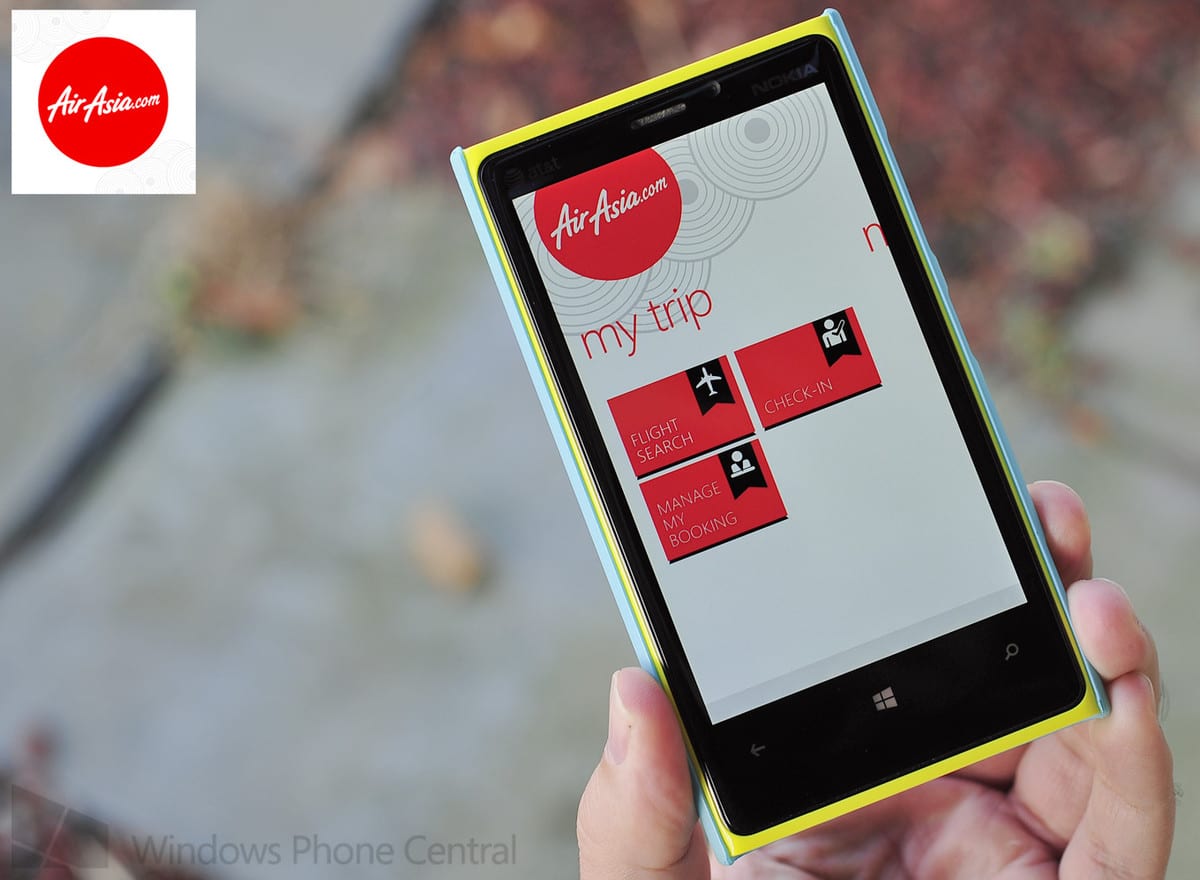
    AirAsia has launched its all-new mobile application offering innovative new features, smoother functionality and an improved interface to provide guests with an enhanced and seamless flying experience.

    In a statement today, AirAsia said its mobile app has been nominated as the “World’s Leading Low-Cost Airline App’ at the upcoming World Travel Awards.

    AirAsia Group Chief Commercial Officer Siegtraund Teh said the company constantly invests in technology and innovation to make flying easier and more enjoyable for guests.

    “There have been over nine million downloads of the AirAsia mobile app on both iOS and Android platforms, and we hope that more people will discover the convenience of our new and improved mobile app,” he said.

    The new app’s features include “Add to Calendar”, which automatically links upcoming flights to the calendar; faster and simpler flight booking process; and improved mobile check-in and Manage My Booking experience where guests can easily include various add-ons to their flight bookings.