Category: E-Tailing

Retail News Asia is committed to providing both local and global retailers with the latest E-Commerce & Etail news throughout the Asian market. This on a daily base.

  • mCommerce boom raises cybersecurity risk

    mCommerce boom raises cybersecurity risk

    Asia’s mComerce boom is creating a growing target for online fraud and cybersecurity risks, according to fraud consultancy Fico Group.

    Criminals who used to focus on ATM skimming are turning their attention online in an effort to compromise credit and debit card data. These attacks can be far more lucrative, with more details stolen and a lower chance of getting caught, warns Fico.

    “The demographics suggest that this this will soon become a very big data problem.  In the next 15 years, Asia is expected to add another 1 billion internet users, which comes on top of the 700 million it has today, making it the world’s largest market for online consumers.”

    With fraud challenges growing, the issues and technologies needed to address them will be discussed this week in Bali, Indonesia, where Fico will hold its regional Fraud Forum with bank executives from across Asia Pacific.

    The last year alone has seen an average 22 per cent increase in shopping on mobile phones across 13 Asia-Pacific markets, according to a 2015 study from Visa. Indonesia, China and Taiwan reported the highest rates of growth for 2015 at 36 per cent, 34 per cent and 28 per cent respectively.

    With these card-not-present (CNP) transactions, the retailer never sees the customer or their physical card, and the cardholder doesn’t enter their PIN. At last year’s Fico Asia Pacific Fraud Forum in Singapore, 94 per cent of attendees said that cases of online or CNP fraud had increased at their organisation.

    Spotting and finding anomalies in this pool of data requires sophisticated self-learning and adaptive technologies so banks can catch fraud vectors as quickly as criminals exploit them. Fico is currently testing the geolocation abilities of mobile devices and integrating them with the Fico Falcon Platform, which protects 2.5 billion payment cards worldwide. By validating whether a consumer’s phone is in the same place where their card is being used, the system can reduce false positives while focusing on the most likely incidents of fraud. Banks can also send SMS messages to the consumer’s mobile to validate a transaction in real time.

    Maintaining trust in shopping from mobile devices will also require a new approach to cybersecurity. Data breaches at poorly protected retailers can threaten ecommerce sales. Predictive analytics is needed, rather than signature-based solutions, so that so-called “zero day” attacks can be identified and controlled.

    Raed Taji, head of global fraud consulting for Fico in Asia Pacific, said: “We are seeing rapid changes in customer behavior which then open up opportunities for fraud. In Australia, for example, cash withdrawals from ATMs have fallen 20 per cent in three years, thanks to

    tap-and-go card and mobile payment technologies. The focus on online fraud is growing very rapidly, so we must stay nimble to reduce losses.”

    Dan McConaghy, president for Fico in Asia Pacific, added: “Digital disruption to financial services may present fraud challenges, but it also presents opportunities for us to stop criminals. If consumer payments shift toward a new form of payment, fraudsters will seek out the most vulnerable element – which increasingly means a mobile device.

    “By investing in an analytics-based solution, lenders can add a powerful tool to their arsenal to stay ahead of new criminal fraud patterns.”

  • Lazada sees opportunities in upcountry expansion

    Lazada sees opportunities in upcountry expansion

    Lazada, Southeast Asia’s largest online shopping website, is pushing its business development in Thailand in a drive to capitalise on the lucrative and rapidly growing e-commerce market.

    The company has set up two subsidiaries: Lazada Express, the logistics arm; and helloPay, the mobile payment arm.

    Having logistics and mobile payment services will help Lazada facilitate its customers and boost sales.

    In June, Lazada relocated its local representative office to a new facility to support its existing 800 employees here. The company has 6,000 employees located in Southeast Asia.

    “Thailand and Indonesia are the two largest e-commerce markets in terms of sales for Lazada in Southeast Asia,” said Alessandro Piscini, chief executive of Lazada Thailand.

    Lazada has an online footprint in six countries in the region.

    However, Mr Piscini said Thailand’s online retail industry remains tiny, accounting for less than 1% of the total retail market, compared with 10% each in China, Japan, South Korea and France.

    “We believe Thailand will soon grow at the same pace as other developed markets, helped by an expected surge in mobile data users because of the arrival of 4G commercial service nationwide,” he said.

    Lazada sees a strong opportunity for online shopping upcountry because the number of retail stores there remains small, Mr Piscini said.

    As of Nov 30, Lazada’s sales from the provinces accounted for 60% of its annual gross merchandise value (GMV), worth 10 billion baht.

    “Thailand’s sales represented 25% of Lazada’s total sales in Southeast Asia,” he said.

    Lazada recorded GMV of US$1.1 billion from the six Southeast Asian countries, with a combined 8 million buyers.

    Lazada Thailand provides more than 2 million product items from 7,000 online merchants on its website. The top three best-selling categories are health, beauty, and home and living.

    Mr Piscini said Lazada had expanded its warehouse operation by 60% to support the business growth.

    Lazada and a group of partners announced the Online Festival yesterday, to be held from Dec 10-12. The company will offer discounts of up to 90% across 14 product categories.

  • Uber says obtains government approval to operate in Jakarta

    Uber says obtains government approval to operate in Jakarta

    Uber Technologies Inc said on Tuesday it had received the green light from the Jakarta governor to operate in the Indonesian capital after giving assurances that it would comply with local tax rules and other requirements.

    Jakarta police had earlier this year deemed the U.S. car-hailing service illegal, saying its drivers did not pay the correct taxes and the company did not have the licence needed to operate as a form of public transport.

    In a statement, Uber said it is working with the office of the city’s governor, Basuki “Ahok” Tjahaja Purnama, and Indonesia’s investment coordinating board to establish itself as a legal entity in Indonesia, pay taxes, have adequate insurance and ensure its “partner vehicles” undergo regular inspection.

    “Previously there was tremendous regulatory ambiguity,” Uber spokesman Karun Arya said in an email. “Governor Ahok has now provided clear direction for Uber in terms of specific requirements for Uber and other ride sharing platforms to operate and thrive in Jakarta.”

    Uber has registered with Indonesia’s investment coordinating board as a technology or web company, Mr Arya added. There was no immediate comment from the Jakarta governor’s office.

    Privately owned Uber has grown aggressively worldwide with its matchmaker service for drivers and passengers, but a lack of regulation for the relatively new business model has brought it to the attention of authorities.

    The company is also facing stiff competition from rivals U.S.-based Lyft, China’s Didi Kuaidi, Southeast Asia’s GrabTaxi and India’s Ola, which recently formed a global ride-sharing partnership.

    In Indonesia, Uber currently operates in Bali, Bandung and Jakarta, a city notorious for its traffic congestion and lack of public transport.

    In an email, Uber said it planned to expand to more cities in Southeast Asia’s largest economy next year, and would boost the number of its drivers to 100,000 by 2017 from more than 12,000 currently.

  • MatahariMall.com, Pos Indonesia in Tandem to Boost E-Commerce

    MatahariMall.com, Pos Indonesia in Tandem to Boost E-Commerce

    Pos Indonesia will also install MatahariMall.com “eLockers,” allowing customers to physically pick up their items purchased online from lockers located in ten post offices in the Greater Jakarta area and Bandung.

    Using these services, online shoppers can also arrange delivery of their reserved items to these pickup points, instead of their home or office address, to avoid missing goods upon arrival.

    Pos Indonesia also agreed to provide logistic and delivery services to Mataharimall.com for domestic shipments.

    Like MatahariMall.com, the Jakarta Globe is affiliated with the Lippo Group.

  • Yahoo co-founder joins Didi Kuaidi as adviser

    Yahoo co-founder joins Didi Kuaidi as adviser

    Didi Kuaidi has appointed Yahoo co-founder Jerry Yang as a senior adviser to the ride-hailing app firm as it battles Uber Technologies for market share in China.

    Mr Yang, an independent director of  Alibaba Group which backs Didi Kuaidi, will also be an observer on the board, the company said in a statement yesterday.

    Mr Yang’s new positions at Didi Kuaidi add another link in the web of relations between the Chinese ride-hailing company and its investors, Alibaba and Japan’s SoftBank Group Corp.

    Mr Yang, Alibaba founder and executive chairman Jack Ma and SoftBank CEO Masayoshi Son all sit on the board of Alibaba.

    SoftBank was also an early investor in both Yahoo and the Chinese e-commerce behemoth, and the three men maintain close ties.

    Their “bromance” has now been extended to Didi Kuaidi, the biggest ride-hailing rival to Uber.

    SoftBank also owns stakes in other ride-hailing services that have forged a global anti-Uber alliance, namely India’s Ola and South-east Asia’s GrabTaxi. Didi Kuaidi and Alibaba also own stakes in the US arm of this faction, Lyft.

    Meanwhile, in Jakarta yesterday, Uber said it has received the green light to operate in the Indonesian capital after giving assurances that it would comply with local tax rules and other requirements.

    Jakarta police had earlier this year deemed the US car-hailing service illegal, saying its drivers did not pay the correct taxes and the company did not have the licence needed to operate as a form of public transport.

    In a statement, Uber said it is working with the office of the city’s governor, Mr Basuki “Ahok” Tjahaja Purnama, and Indonesia’s investment coordinating board to establish itself as a legal entity in Indonesia, pay taxes, have adequate insurance and ensure its “partner vehicles” undergo regular inspection.

    “Previously there was tremendous regulatory ambiguity,” Uber spokesman Karun Arya said. “Governor Ahok has now provided clear direction for Uber in terms of specific requirements for Uber and other ride-sharing platforms to operate and thrive in Jakarta.”

    Uber has registered with Indonesia’s investment coordinating board as a technology or Web company, Mr Arya added. There was no immediate comment from the Jakarta governor’s office.

    In Indonesia, Uber also operates in Bali and Bandung.

    Privately owned Uber has grown aggressively worldwide with its matchmaker service for drivers and passengers, but a lack of regulation for the relatively new business model has brought it to the attention of the authorities.

  • Kakao Bank, South Korea first internet-only banks

    Kakao Bank, South Korea first internet-only banks

    The country’s Financial Services Commission said Sunday it awarded a preliminary license to Kakao for a business to be named Kakao Bank.

    “An Internet bank is meant to give non-financial players, including IT firms, chances to enter the banking sector if they have feasible business plans to improve the financial market and customer rights”, the FSC said earlier’.

    Kakao Bank and K Bank will individually apply for the final approval after satisfying the human and material requirements.

    For Kakao Bank, Korea Investment Holdings Co. will take part as a major shareholder with 50 percent share, while Kakao and Kookmin Bank own 10 percent share each.

    Kakao, KT and Interpark were reported to be the three applications accepted by the FSC. It is the first time in 23 years that a new commercial bank has opened in the country’s banking industry. Once they receive the official approval form the FSC, they need to start operation within six months.

    According to the agency, Kakao’s Kakao Bank gained high scores for innovative services based on its immensely popular mobile messenger app KakaoTalk with 40 million users.

    The banks holding a stake in the two winning consortiums, on the other hand, rejoiced at the FSC approval, but are also facing financial burdens, as well as possible power struggles within the consortium.

    Currently, top-tier banks offer an annual rate of 3 percent to 5 percent, while secondary financial institutions, such as mutual savings banks or capital services, charge 15 to 34 percent.

    “Kakao’s rival, the K-Bank consortium, includes South Korea’s second-largest mobile carrier KT, Woori Bank, GS Retail and China’s Alipay, which is affiliated with e-commerce company Alibaba”.

    Nonparticipating banks geared up to expand their online banking platforms and increase their range of mid-interest rate loans to defend against the incoming Internet-only banks.

    FSC Chairman Yim Jong-yong has been a strong advocate for the web-based bank, saying he expects the online-banking industry to raise the competitiveness of the Korean banking industry as a whole. However, many difficulties are expected in order to pass the bill.

    The bank also aims to go global as it has secured ties with Tencent, China’s biggest social-networking and mobile games company, and the USA online retail giant eBay, which also owns Korea’s two leading shopping sites Gmarket and Auction.

  • India is now Alibaba Group’s second largest market

    India is now Alibaba Group’s second largest market

    For Alibaba.com, the business-to-business arm of the world’s largest e-retailer Alibaba Group India is the second largest market globally.

    “India is the second most important market for Alibaba globally, next only to China for us,” said Timothy Leung, head of global business development, Alibaba. The business-to-business subsidiary of Alibaba Group launched an online platform to provide Indian small and medium enterprises (SMEs) access to global counterparts.

    “India is at a critical point at present and from here we will see sharp upswing in ecommerce. We are very excited in building this consortium for SMEs,”he added.

    The company has 4.5 million registered users from India, with the country accounting for the second-highest paid users on the platform after China. SMEs in India can also avail assistance in terms of financing, logistics (domestic and cross-border), inspections and certifications, technology and SME trade-linked education on this platform. The Chinese company has partnered with enterprises such as ICICI Bank, Kotak Mahindra Bank, Crisil Rating, Tally, Capital Float, Jeena, SGS and Mypacco to help Indian SMEs expand their business.

    “There are at similarities in our experience in Chinese and India markets in terms of population size, kind of SMEs and also the core path in the ecommerce. We are also looking at our experience in the past in China and match it with what is happening in India,” added Leung.

    Citing similarities with the Chinese market Leung said that in China, B2B side of the business spearheaded the growth for Alibaba. The company through its B2B platform brought buyers and suppliers together and then ventured into supporting different aspects of the ecosystem.

    “That’s what we trying to build here. Other than matching buyers and supplier we are trying to develop the ecosystem,” Leung said.

    On the consumer side of the business also the Chinese major and its financial arm Ant Financial have picked up stakes Indian ecommerce companies Paytm and Snapdeal. Founder Jack Ma was in India three times in one year and also met the prime minister.

    The recently launched initiative, known as SMILE, hopes to connect Indian manufacturers with quality Chinese suppliers on Alibaba.com, provide Indian sellers the trading support and facilitate the global sales of Indian products through the platform.

    Talking about the fast growing ecommerce industry in the country, Leung said that 16 years ago when Alibaba started China went from becoming a no-internet country to one of the most advanced ecommerce ecosystems in the world. India is at much advanced stage and growing at a very fast rate when compared to China of those times.

  • Wirecard brings mobile Tcash service to Indonesian retailers

    Wirecard brings mobile Tcash service to Indonesian retailers

    Wirecard’s Indonesian subsidiary PT Prima Vista Solusi has teamed up with PT Finnet Indonesia and PT Telekomunikasi Selular (Telkomsel) to support the acceptance of contactless, NFC-based electronic money “TCASH” at major retailers with their nationwide network.

    Customers at the retail stores can pay for their purchases and utility bills using their NFC mobile phones. Wirecard provides the NFC point-of-sale acceptance, which is integrated with the retailer’s front-end store system for optimal transaction speed and accuracy.TCASH is an electronic wallet product of Telkomsel, a subsidiary of PT Telekomunikasi Indonesia (Telkom) and Singapore Telecommunication Ltd (SingTel). The wallet enables Telkomsel’s subscribers to pay for bills, goods and services through their mobile phones, which are embedded with the TCASH NFC stickers, both online as well as point-of-sales. Telkomsel is Indonesia’s largest cellular operator with network coverage of more than 95 percent of the population in Indonesia.PT Finnet Indonesia, a joint venture between Telkom (Cq. PT. Multimedia Nusantara) and Yayasan Kesejahteraan Karyawan Bank Indonesia (Cq. PT. Mekar Prana Indah) was formally formed in January 2006 to provide IT infrastructure and services to support financial transactions nationwide. Syaiful Rahim Soenaria, Director of Business and Services, PT Finnet Indonesia (Finnet) stated: “Finnet is proud to engage strong partners like Wirecard Indonesia to continuously expand our service infrastructure, as well as bringing in innovative value-added solutions for our clients in Indonesia. It is our goal to provide the public sector with a good variety of electronic payment transaction methods for more convenience and security.”

    Ms Widhayati Darmawan, Managing Director of PT Prima Vista Solusi said: “The partnership with Telkomsel and Finnet to broaden TCASH acceptance in major retailers in Indonesia is a showcase of Wirecard’s commitment in providing relevant technologies to facilitate cashless transactions. With an approximately 250 million population and sizeable unbanked segment, Indonesia presents good potential in terms of the addressable market for electronic money and micro payment solutions.”

  • Foodpanda Singapore to deliver food in 30 minutes

    Foodpanda Singapore to deliver food in 30 minutes

    foodpanda is promising to drastically reduce delivery time in Singapore to 30 minutes. This, it said, will be achieved by its own fleet of over 500 couriers, along with advanced delivery technology.

    “foodpanda’s service is all about delivering the most popular dishes around Singapore from kitchen to doorstep as quickly as possible. Having our own foodpanda fleet of riders means our service is now more consistent and speedier than ever, ensuring food consistently arrives on time,” said Jakob Angele, CEO for foodpanda Singapore.

    Using proprietary technology with advanced algorithm, delivery routes of riders are intelligently optimized.

    Recently, it signed partnerships with new healthy and popular restaurants to offer an even wider choice of healthy options at home and in the office. New partner
    restaurants include Sushi Burrito, District 10, The Assembly Ground and Nandos.

    foodpanda also exclusively offers delivery of hearty soups, stews, salads and sandwiches from The Soup Spoon.

    Anna Lim, Executive Director of The Soup Spoon Pte Ltd, says foodpanda’s fleet has allowed them to focus on more pressing elements such as service and the quality of food.

    “With foodpanda, we don’t have to dispatch our own staff or hire a third party delivery company anymore, which saves us an incredible amount of time,” she said. “We are also very pleased that each driver now has a receipt printer allowing them to have a copy of the bill – a common customer request.”

  • Where eBay Is Delving into Groceries

    Where eBay Is Delving into Groceries

    eBay is getting into groceries – in Korea, that is. It will offer perishables such as vegetables, meat and dairy through Korea’s Gmarket and IAC platforms.

    The Partnership Program Director for eBay Korea Ju Cheol Lee said, “We’ve aligned with a top Korean retail brand and put the final touches to the platform, giving our customers an easy and efficient experience when buying these goods on eBay.”

    According to the company announcement, “Korean shoppers, particularly single households and double-income families, are increasingly looking to buy small bundles of fresh produce online and have it delivered the same day. With this in mind, eBay Korea has partnered with Homeplus, one of the largest retail chains in Korea with more than 100 branches, to create a new offering called Homeplus Pavilion.”

    eBay said the partnership signals a shift to meet evolving consumer demands and a tie-in with a successful and established offline retail brand.

    “The new arrangement will mean more than 30,000 items can be ordered from Gmarket-IAC and supplied to homes the same day via Homeplus’ logistics system and arsenal of cold storage trucks. The service currently encompasses 88 stores nationwide but will expand over time.”

    In the US, marketplaces are trying to get into the groceries business – Amazon Fresh, in the case of Amazon, is competing with other services including those from grocery store chains. Amazon is also working to expand delivery of meals from local restaurants.

    But would US consumers ever consider purchasing perishable food like meat and dairy via eBay?

  • China Jo-Jo Drugstores turns a profit

    China Jo-Jo Drugstores turns a profit

    Chinese pharmacy retailer China Jo-Jo Drugstores has finally turned a profit, thanks to booming online sales and partnerships with health insurers.

    The US-listed retailer achieved second quarter sales of US$22.6 million, up 22.4 per cent on the same period last year. And it turned a loss of $40,000 last year into a $150,000 profit for the quarter.

    Year to date, revenue totaled $43.9 million up 25.7 per cent year on year, gross profit of $8.4 million was up 58.3 per cent and gross margin of 19 per cent compared to 15.1 per cent last year.

    “We are pleased with China’s Jo-Jo’s mid-year progress as the company continues to focus its efforts in growing the online pharmacy division which experienced triple-digit growth in the period,” commented Lei Liu, chairman and CEO.

    “ In large part, due to strategic cooperation with large insurance companies and fast-growing private healthcare insurance programs, our online pharmacy sales have expanded quickly in this quarter. The consumer demand for expanded online pharmacy services continues to play an integral role in the rebalancing of the company’s revenue mix while providing the opportunity to enhance organic sales growth at our physical chain drugstores,” he said.

    “China Jo-Jo continues to explore new sales and marketing channels to grow its consumer base including establishing programs to promote “mobile app” shopping with major vendors.”

    The company also continues to optimise its product mix across its online storefronts and physical stores.

    Retail drugstore sales, accounted for approximately 58 per cent of the total revenue for the three months ended September 30, and increased by $697,097, or 5.6 per cent.

    Same-store sales decreased by approximately $343,219, or 2.9 per cent, while new stores contributed $952,255 in revenue.

    Online pharmacy sales increased by approximately $3,609,016, or 122.4 per cent for the quarter. China Jo-Jo continues to operate several online pharmacy storefronts including China Jo-Jo’s own official branded store in addition to working with other B2C’s online platforms which direct customers back to China Jo-Jo’s own websites.

    Its own branded website sales in the quarter increased by 406.2 per cent, primarily as a result of the active cooperation with large insurance companies in China, to sell online products to customers who have purchased health insurance from them.

  • Amazon China and Baidu join hands

    Amazon China and Baidu join hands

    The two Internet giants in China, Baidu and Amazon have reached in an agreement to strengthen their respective positions in the strong Chinese market.. The two companies, digital heavyweights, formalized the agreement Thursday, December 3, 2015 in a press release.

    As an element of partnership Baidu search engines will be installed by default on Kindle ebook reader produced by Amazon, as well as the Fire tablets that are sold in China. In return, Amazon will be included into the mobile application store of Baidu. Amazon will also be incorporated in Baidu’s online video platform iQIYI. This announcement was made following the release of Youku Tudou by Alibaba, another heavyweight of the Chinese web.

    Baidu is growing in the music industry online with Baidu Music by merging its activities in this sector with Taihe Entertainment Group, covering China as well as Taiwan and Hong Kong. The company has a catalog of 10,000- 700,000 compositions and recordings. Baidu Music is attempting to enter into a direct competition with QQ Music (Tencent) and especially Apple, which offers Apple Music. The latter was launched in China in September 2015. Baidu has also signed a partnership with Ctrip and Qunar in October.

  • Asian eCommerce boom reshaping logistics sector

    Asian eCommerce boom reshaping logistics sector

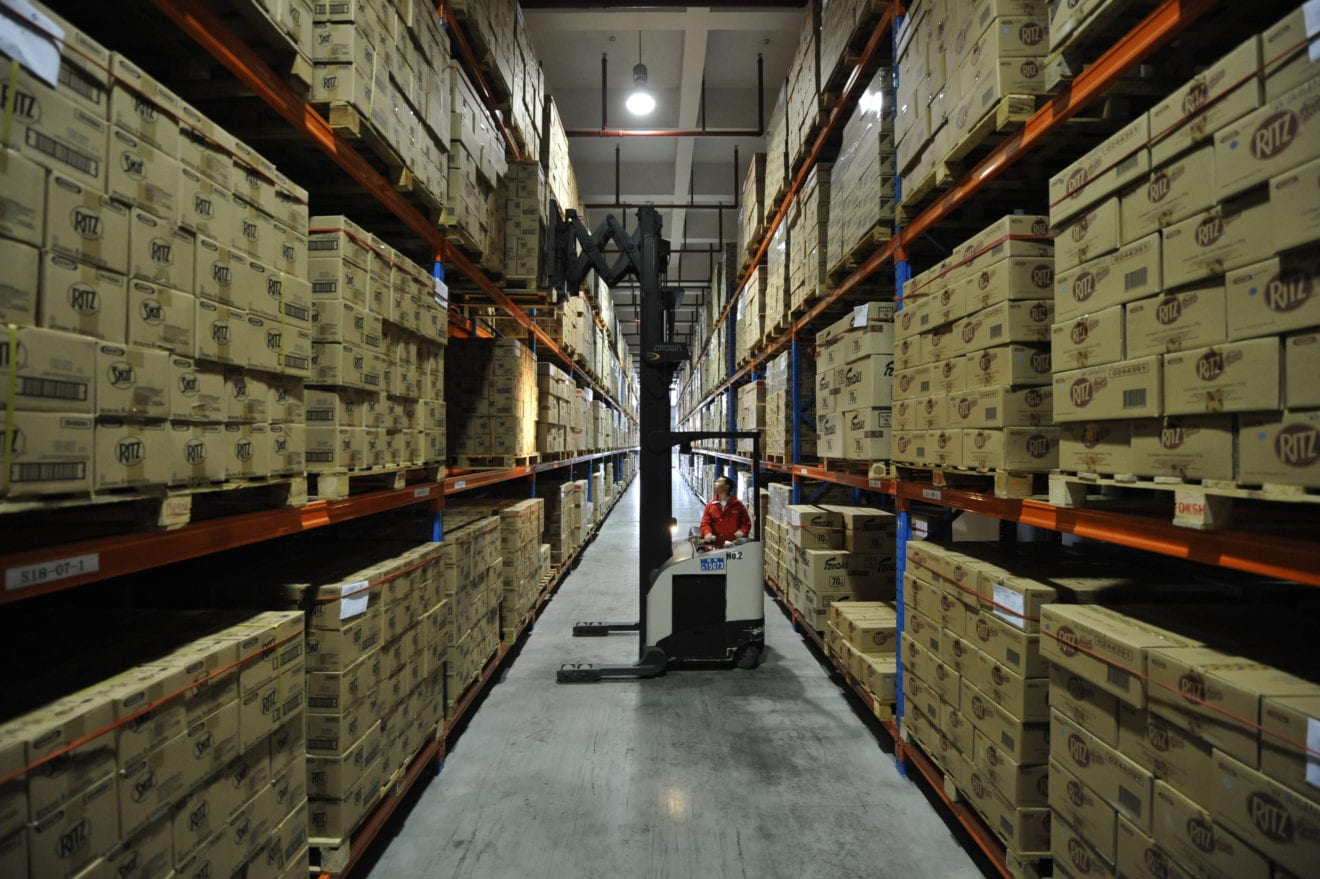
    The Asian eCommerce boom is driving major changes in logistics developments and networks across the region, according to CBRE’s latest Global & Emerging Logistics Hubs report.

    “With a trickle-down effect to inventory management, this is leading to changes in the global supply chain network,” said Dennis Yeo, regional head, industrial & logistics services with CBRE Asia.

    “Speed-to-market is more important than ever. The service demands brought about by eCommerce – for example, shorter delivery times to consumers – has changed the entire retail supply chain of getting goods to consumers, including regional distribution strategies. The technical ability of locations and buildings to support the ever-increasing demands for both scale and speed of output is an ever-more important determinant of market position.”

    In Asia, the eCommerce and e-tailing market has been particularly strong, with eCommerce upending the traditional bricks-and-mortar distribution networks, forcing retailers and third-party logistics firms to adapt to an increasingly demanding consumer.

    “eCommerce shipments are smaller in size and require more technology and expertise to execute efficiently. As a result, modern logistics facilities are being developed in the traditionally strong logistics hubs of Tokyo, Seoul and Taipei. Besides the developed markets, the new consumer class in the emerging markets is creating opportunities for logistics development in in China, India and Vietnam,” said Yeo.

    Hong Kong under threat

    Meanwhile, the report concludes that while Hong Kong will remain one of the top global logistics hubs in the world, for the next decade, the territory will be in strong competition with several emerging Asia hubs including China’s Beijing, Hangzhou, Nanjing, Suzhou, and South Korea’s Busan.

    “Hong Kong has maintained its global logistics hub status due to its efficient transportation network and highly developed logistic services. It ranks third in the World Bank’s Logistics Performance Index,” said Darren Benson, executive director, industrial & logistics, brokerage services, CBRE Asia.

    “As the traditional global gateway to China, Hong Kong is likely to remain the hub for global distributors, due to its local trade and transport regulations and its ease of connectivity via seaports.“

    Hong Kong is currently the fourth largest global seaport by container volume, while emerging hubs such as Shanghai, Shenzhen and Busan rank first, third and fifth respectively. These emerging locations share a number of characteristics, including significant investments in infrastructure, new trade policies and agreements, and more advanced supply chains and technologies. As these cities continue to improve their regional transportation infrastructure so their viability for international trade increases.

    The shift in global supply chain dynamics and creation of new logistics hubs in Asia may also be spurred by China’s plans to revive the Silk Road trade route.

    In 2013, China launched a new strategic initiative, known as “one belt, one road,” which aimed to revive the importance of the Silk Road. The new Silk Road has two parts: the Silk Road Economic Belt, a land-based route that will connect central China to the Middle East and Eastern Europe, and the Maritime Silk Road, a sea-based path that will link South China to Southeast Asia, East Africa and Europe.

    In Asia, low-end manufacturing – such as garment and textiles production and electronics component assembly – has steadily been moving from Southern China to Western China and Southeast Asia. Southern China, encompassing the Pearl River Delta, has traditionally been the light industrial manufacturing center of the world, however, as wages continue to rise and China attempts to move up the manufacturing value chain, there has been a shift to more sophisticated heavy industry manufacturing.

  • Apple Pay China launch slated for February

    Apple Pay China launch slated for February

    Tech giant Apple will launch its mobile payment system Apple Pay in China by early February, according to a report in the Wall Street Journal.

    Citing people familiar with the discussions, the newspaper says Apple has reached agreement with China’s four state-run banks to clear the way for the payment system to be used via its iPhone smartphones.

    The move will place it in direct competition with local online payment platform Alipay, run by Alibaba Group, and its affiliated company Ant Financial, and UnionPay, the state run monopoly credit card system.

    But while the banks are on board, the Wall Street Journal claims Apple may yet face more hurdles before it can launch the service, with banking and eCommerce regulations overseen by a number of government agencies.

  • Mozido Brings NFC Mobile Wallet Services to Indonesia

    Mozido Brings NFC Mobile Wallet Services to Indonesia

    Mozido, a provider of mobile wallets for payment and commerce solutions, today announced it has launched NFC mobile payment and loyalty services for Telkomsel Indonesia, in partnership with Verifone Mobile Money and financial services provider Finnet Indonesia.

    Mozido powers Telkomsel’s NFC-based TWallet application for its 140 million subscribers, enabling them to seamlessly tap and pay with their mobile device at participating merchant locations. Mozido also provides Telkomsel’s merchants with a mobile coupon management system that provides retailers the ability to send their own branded coupons directly to targeted TWallet consumers. Participating merchants span the verticals of fast food, cinema and supermarkets, and include McDonald’s, Wendy’s, Coffee Bean and Tea Leaf, Baskin Robbins, 7 Eleven, Cinema XXI, GraPARI, Alfamart and Indomaret.

    Previously, the mobile money services for the TWallet, which provide consumers with account balance, bill payment, airtime top-up, person-to-person transfers, and transaction history, was a USSD (unstructured supplementary service data) service, disconnected from the wallet. Now, with Mozido’s NFC mobile payments wallet, accountholders are able to use the services seamlessly from their mobile wallet application. Mozido works in partnership with Finnet Indonesia to connect users with Indonesia’s banks nationwide.

    “Indonesia’s 255 million people are ready for mobile solutions that enable payments, financial inclusion, and consumer engagement. Mozido is privileged to quickly expand our presence in this important region by powering TWallet for Telkomsel’s 140 million subscribers,” said Michael Liberty, founder of Mozido. “We look forward to working with Telkomsel to bring unprecedented levels of convenience and consumer engagement through mobile payment and marketing services for consumers and merchants.”