Category: E-Tailing

Retail News Asia is committed to providing both local and global retailers with the latest E-Commerce & Etail news throughout the Asian market. This on a daily base.

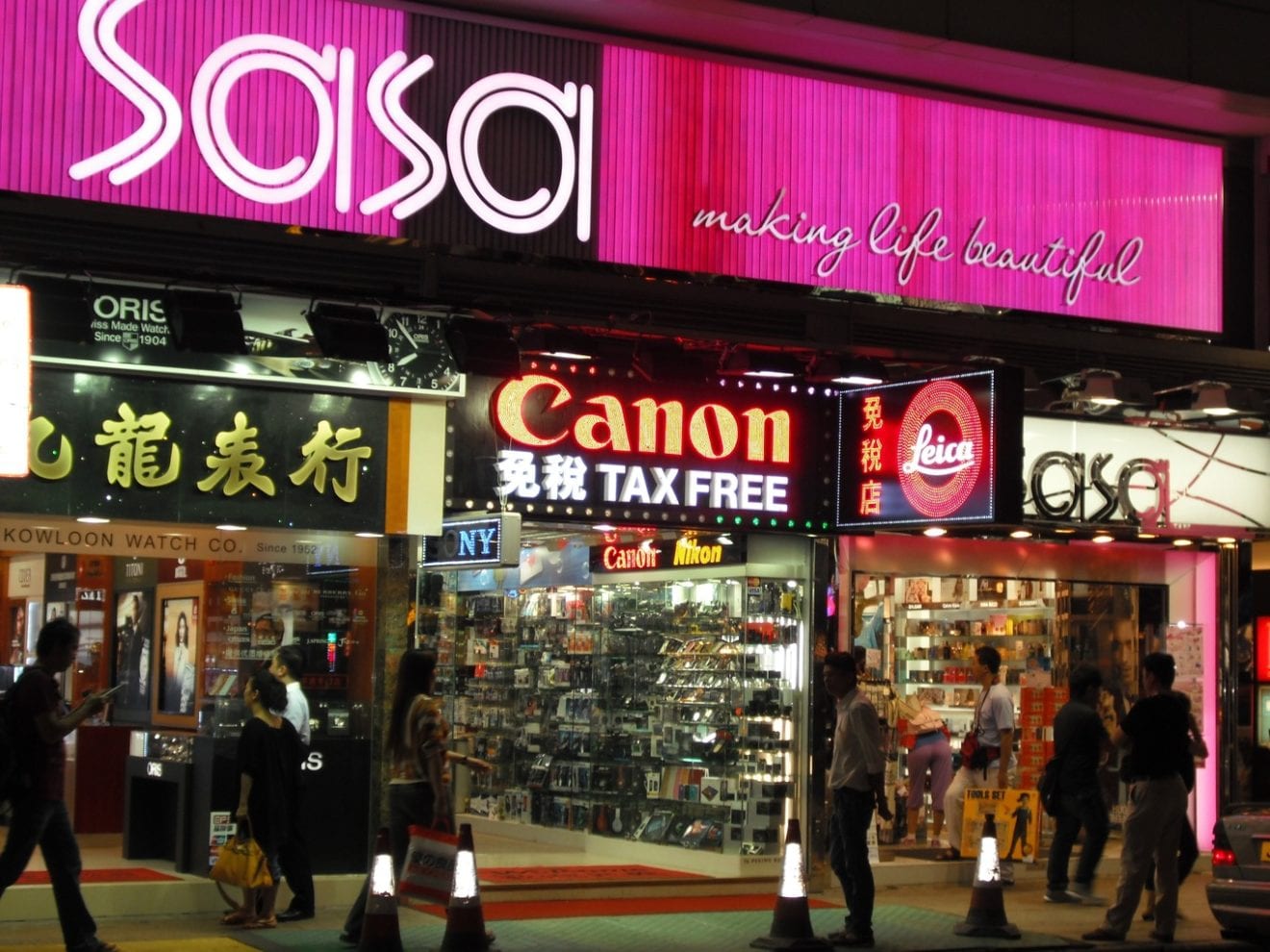
  • Sa Sa plans new store concepts

    Sa Sa plans new store concepts

    Hit by falling sales in the tourist downturn, Hong Kong beauty retailer Sa Sa plans new store concepts and diversification to restore growth.

    Reporting a 10.6 per cent decline in sales to HK$3.778 billion in the first half of the current year, and a 55 per cent plunge in profit to $153 million, Sa Sa revealed a strategy to “develop other businesses beyond traditional operations”, including tapping the opportunities of O2O and cross-border eCommerce.

    “The group’s O2O initiatives will initially launch in Hong Kong and gradually extend to mainland China. For the China market, the O2O initiatives will significantly broaden product offerings in its physical stores through online sales and cross border fulfillment. The group aims to use different channels and to leverage a variety of online partners to increase online exposure, including operating physical stores to promote O2O in Free Trade Zones, and cooperating closely with major China online operators, all with their unique positioning and correspondingly different opportunities,” the company said in its interim report.

    New store concepts are also on the drawing board.

    “The group’s strategy for new store concepts includes introducing more trendy and lifestyle concepts to attract young and trend-setting customers, much improved product display, and more emphasis on enhancing the shopping experience.”

    Sa sa says it also aims to place more emphasis on the unique shopping experience with Sa Sa through improved product displays, while changing the mindset of its beauty consultants to one that is more receptive to consumer preferences.

    “In addition, the group will substantially strengthen its online marketing efforts, including the use of social media channels to improve interactivity.”

    Hong Kong & Macau

    Sa Sa says its first half year was marked by pressure from a series of negative factors in the retail market of Hong Kong during the first half of the year. Retail sales in Hong Kong and Macau decreased by 11.1 per cent to $3.010 billion.

    “The cosmetics market in Hong Kong continues to face strong headwinds due to the slowing of mainland China tourist arrivals, their reduced spending, and weak local consumption sentiment. The one-visit-one-week policy for mainland visitors is gradually taking its toll on the market, while the strength of the Hong Kong dollar and depreciating yuan will continue to make shopping overseas more attractive for both mainland China and local consumers. Intensifying competition within the cosmetic industry is a further challenge, with ongoing discount and promotion programmes having an ongoing impact on profitability,” the company reported.

    “Although rental pressure is expected to moderate in a slowing market, rental reductions still lag behind weak sales performance. In the face of these challenges, The group rationalised its retail network from 287 to 281, a net decrease of three stores each for both “Sasa” stores and single-brand counters.”

    Mainland China

    In Mainland China, the stores’ profitability continued to improve, but weak operational and product management led to a decline in turnover, as well as an increase in the inventory provision. Overall turnover for Mainland China operations decreased to HK$148.9 million, a decrease of 8.7 per cent in local currency terms, while same store sales growth in local currency decreased by 9.8 per cent for the period. Loss for the period amounted to HK$24.5 million. The group has recognised the need for more management resources to improved management, and is currently using external management resources on a contract basis to allow for more time to develop its own management structure and training. The group is also seconding experienced staff from Hong Kong to improve attractiveness of product offerings and inventory management.

    Taiwan

    Turnover in the group’s Taiwan business decreased to HK$130.2 million during the period, representing a drop of 2.2 per cent in local currency terms. Same store sales fell 8.7 per cent in local currency. The number of mainland China consumers in Taiwan is expected to increase in view of the country’s enhanced infrastructure and retail space, and the introduction of unlimited visa quotas for high-end Mainland Chinese tourists who have greater spending capacity. The group has already opened stores in tourist locations to tap the potential of increasing in mainland Chinese tourist arrivals.

    Singapore & Malaysia

    Flat sales across the Sa Sa Singapore network has prompted a rethink of the brand’s local network.

    In the first half year, Sa Sa reported turnover of HK$112.8 million (S$20.445 million) in Singapore, remaining flat in local currency terms over the same period last year.

    “The group will continue to build scalability and profit potential by closing inefficient stores and opening stores in new malls with good potential,” the company said in its interim trading statement.

    Meanwhile, turnover for Sa Sa Malaysia was HK$141.9 million, an increase of 2.5 per cent in local currency terms over the same period last year. However, same store sales decreased 8.5 per cent in local currency.

    “Sales and profit growth were restrained by the implementation of GST [on April 1], which adversely impacted store productivity during the transitional period. This effect is expected to be normalised in the second half.”

    Chairman’s view

    Chairman and CEO Dr Simon Kwok put on a brave face on the results:

    “Sa Sa has a long track record of delivering outstanding success in all economic climates and in the face of the most severe headwinds and difficulties. We firmly believe that in spite of the current difficult business environment we are now facing, we can still turn challenges into opportunities and further consolidate our competitive advantages. The flexibility of our business model, with an ability to rapidly adapt to new circumstances, markets and trends, will continue to support our position as a leading provider of beauty products in the Asia Pacific. We also believe that the resilience and adaptability of our loyal staff and the forward vision of our outstanding management team will ensure that we deliver sustained, satisfying growth for many years to come.”


  • A mobile app enables Chinese consumers to buy from overseas retail websites

    A mobile app enables Chinese consumers to buy from overseas retail websites

    15 million consumers have posted reviews to Red, which has sold $110 million worth of products in its first six months.

    Nearly 600 million Chinese consumers connect to the Internet via mobile devices, and many of them are part of China’s emerging middle class that craves foreign goods. A startup has sold more than $100 million in six months by letting those consumers shop for imported products via a mobile app.

    The app, called Red, was launched in January 2014, but at that time did not sell any products, only allowing consumers to review foreign products. Since then, some 15 million consumers have written reviews of products from overseas brands, says Charlwin Mao, who created Xingyin Information Technology Co., Ltd., the operator of Red, in Shanghai two years ago.

    Mao, 31, who received his MBA from Stanford University, named the app Red after Stanford’s school colors.

    As Chinese consumers came to learn about foreign products, they wanted to buy them, Mao says. That led him in December 2014 to add e-commerce capabilities to the app, enabling consumers to buy some of the items that others review. In the following six months Chinese consumers bought 700 million yuan ($110 million) worth of goods through the app. Mao says many items sell out in two hours because he offers only items that are hard to find in China.

    “China has a huge demand for imported brands, but many consumers lack information about overseas brands. For example, many oversea products’ descriptions are written in foreign languages and are hard for Chinese people to understand,” Mao says. “My solution was to develop an app that enables China’s younger-generation shoppers to discover the best global products from peer reviews, not from salespeople.”

    Today, he says, about 15 million users write about 1 million posts every month and they lead others to respond, such as by “liking” 20 million posts per month. 82% users are under 30 years old and 90% are female, according to Mao.

    Most of those posting content to Red are Chinese consumers traveling abroad or Chinese living overseas. China’s Minister of Commerce, Gao Hucheng, said in a recent press meeting that more than 100 million Chinese visited other countries in 2014 and they bought more than 1 trillion yuan ($157 billion) worth of products during their trips.

    Red offers about 10,000 products. It owns about 80% of the merchandise it sells, with the rest being sold by outside merchants through the Red app. Popular categories on Red include cosmetics and fashion. There are products on Red from U.S. supplements retailer GNC Holdings Inc., No. 164 in the Internet Retailer 2015Top 500 and fashion boutique Otte as well as from Japanese brands Panasonic, Casio and Kose.

    Red operates a warehouse inside of a cross-border e-commerce free trade zone in the city of Zhengzhou, where imported products can be stored, then pass through an expedited inspection by  Chinese customs after an online shopper places an order. Red’s customers typically receive their orders in two to three days.

    Companies that sell products through online communities like the one Red created are appealing to investors, Zhu Xiaohu, managing director of GSR Ventures, said at a recent cross-border conference in Guangzhou. GSR has invested in Red as well as in LightInTheBox Holding Co. Ltd., a Beijing-based company that sells Chinese products online to consumers outside of China. “E-retailers, like LightInTheBox, need to invest a lot of money on ads to get new users,” Zhu said. “Now many investors like companies selling through an online communities because these companies can generate traffic without pouring money into marketing.”

    Mao says his company has raised tens of millions in funding and is now seeking a Series B infusion of capital.

  • C2C marketplace Shopee officially launches in

    C2C marketplace Shopee officially launches in

    Southeast Asia’s latest mobile consumer-to-consumer (C2C) marketplace, Shopee, has officially launched in Indonesia, offering users an easy-to-use mobile application to browse, shop and sell.

    The platform was soft-launched in June 2015 in countries including Indonesia, Singapore, Malaysia, Thailand, Vietnam, Philippines and Taiwan.

    According to Shopee CEO Chris Feng, the platform is equipped with a secure payment method, an integrated logistics fee calculation and social-led features to create a more secure, fun and fuss-free online shopping and selling experience.

    According to a 2015 fourth-quarter report from Southeast Asia Digital Landscape, Indonesia has already reached 79 million active social media users. Furthermore, almost 65 percent of Indonesians use social media to buy and sell things.

    “Shopee is eager to take part in supporting Indonesia’s growth in global retail e-commerce by bringing a shopping experience that is able to integrate social media and online shopping functions to maximize social interaction between sellers and buyers,” Chris explained.

    Various application features have been introduced including the “Shopee Guarantee”, which ensures users that there will be a full refund if purchased products are not received in the agreed condition.

    “The feature that I like the most from Shopee is the live chat, because it allows me to chat directly with buyers,” said Inez, the owner of Theodora Mardjuki online shop. “I like the Instagram importer feature that makes it easier for me to upload pictures of products that I want to sell on Shopee,” said another online seller, Stephanie Winarto.

    Since it was first launched, the application has been downloaded more than one million times and ranks first in Google Play’s Shopping category in Indonesia. Shopee is now available for download for free on the Apple App Store and Google Play in Singapore, Malaysia, Indonesia, Thailand, Vietnam, the Philippines and Taiwan.

  • iTrueMart Grows 1000% with the Help of AWS e-commerce Platform

    iTrueMart Grows 1000% with the Help of AWS e-commerce Platform

    iTrueMart, a leading e-commerce destination for quality brands for home appliances, electronic products, and best value merchandises, announced its expansion throughout all 10 ASEAN countries. The online retailer is one of the fastest growing e-commerce websites with 1000% growth in 2014. iTrueMart has been able to double its online users every 3 months this year and has grown from 100,000 users per month during its inception to its current 1.6 million users per month.

    iTrueMart runs its e-commerce platform using Amazon Web Services (AWS), which provides a low cost set-up with flexibility and full capacity to serve customers. With AWS as its partner, iTrueMart is able to focus on delivering better services to happier customers. AWS allows the online retailer to grow exponentially by cutting the development process by 2-3 months and running daytime campaigns at 400% of its normal capacity in just a few hours. iTrueMart can additionally handle a 10-fold increase or more in customer visits during promotional periods while easily adding new features and functions to the website whenever they are needed. The AWS framework allows iTrueMart to maximize its use of cloud technology while maintaining the use of older technologies and platforms. Chief Technology Officer (CTO), Chaiwat Ratanaprateepporn, said, “Our developers have been able to evolve more in the deployment process and DevUp culture, and they can now deploy features faster and take better care of their services.”

    With the ease of AWS and its e-commerce platform, iTrueMart is committed to growing and expanding in Southeast Asia. iTrueMart is currently planning other services, such as offering an e-payment business as well.

    For more information about iTrueMart’s use of Amazon Web Services (AWS) e-commerce platforms, please visit

  • Jumei doubles sales, but still in the red

    Jumei doubles sales, but still in the red

    Jumei International, the Chinese online retailer of beauty products, has reported a sales increases of 99.9 per cent – but it still posted a quarterly operating loss.

    In the quarter to September 30, net revenue reached RMB1.9 billion (US$305.5 million). Total net GMV increased by 35.6 per cent to RMB2.3 billion (US$358.7 million), driven primarily by a 30.8 per cent rise in the number of active customers and a significant 89.5 per cent boost in total orders.

    But gross profit as a percentage of net revenues decreased to 26.2 per cent (from 38 per cent)in the same period of 2014, primarily due to the company’s shift in strategy from beauty product marketplace sales to merchandise sales that started in September 2014, and inventory optimisation activities for Jumei Global.

    The net loss attributable to Jumei’s ordinary shareholders was RMB86.9 million (US$13.7 million), compared with net income attributable to Jumei’s ordinary shareholders of RMB120.0 million in the same period of 2014.

    Leo Chen, founder and CEO of Jumei, appeared upbeat about the results however.

    “Our third quarter net revenue growth continues to be strong… driven by Jumei Global and rapidly shifting consumption patterns in China as consumers upgrade their tastes, preferences and expectations for products. We continue to strengthen our position as a leading import cross-border eCommerce platform in China and are pleased to see both active customers and number of orders grow rapidly while maintaining a high repeat purchase rate,” he said.

    “We continue to add world renowned brands such as Shiseido and KOS to our Jumei Global platform. This is the first time these Japanese beauty groups have directly authorised a cross border eCommerce company in China to carry their merchandise. This means that going forward, new products by both brands will be launched simultaneously in Japan and on Jumei Global in addition to those already on offer in Jumei’s domestic platform. Chinese consumers will now be able to access international beauty trends at the same time they take place in the brand’s home markets.”

    In the fourth quarter of 2015, the company says it expects total net revenues to be between RMB1.83 billion and RMB1.93 billion, representing a year-over-year growth rate of 80 to 90 per cent.

  • Alibaba launches Taiwan, Hong Kong venture funds

    Alibaba launches Taiwan, Hong Kong venture funds

    China’s Alibaba has announced two venture funds to help entrepreneurs with projects who can leverage the resources of Alibaba’s ecosystem.

    A HK$1 billion (US$130 million) venture fund – named Entrepreneurs Fund for Hong Kong – will be managed by venture capital firm Gobi Partners.

    A second – Entrepreneurs Fund for Taiwan – will have initial capital of NT$10 billion (US$316 million) and be managed by CDB Capital, a division of China Development Industrial Bank (CDIB).

    As well as cash, the two new funds will offer 200 internship opportunities annually for graduates and final year students of local tertiary educational institutions. Successful applicants will be able to work for between six and 12 months at Alibaba Group companies in Mainland China.

    Andrew Lee, the former CFO of EnTie Bank will act as executive director of the Taiwan fund, with directors including Charles Yen, co-founder and principal of the AAMA Taipei cradle program and Joseph Tsai, senior EVP of Cathay Financial.

    The fund will be headed by Cindy Chow as executive director. Other directors include Dr Allan Zeman, founder and chairman of the Lan Kwai Fong Group, and Savio Kwan, an independent business consultant who served as president and COO of Alibaba from 2001 to 2003.

    The funds are intended to help entrepreneurs and position Hong Kong and Taiwan as business hubs engaged regionally and globally, with a mandate to invest in qualifying companies in the startup, growth and expansion phases. Selected ventures will be able to leverage the platforms in the Alibaba ecosystem to offer products and services to mainland China and globally, given that Alibaba operates in eCommerce, logistics, mobile platforms, cloud computing and financial services.

    Said Joseph Tsai, executive vice chairman of Alibaba Group: “At Alibaba, our mission is to make it easy to do business anywhere. We are passionate about fostering entrepreneurial spirit and hope the resources provided by the fund will help unleash potential for innovation and entrepreneurship.”

  • RedMart offers 1-hour delivery of orders from food, retail partners

    RedMart offers 1-hour delivery of orders from food, retail partners

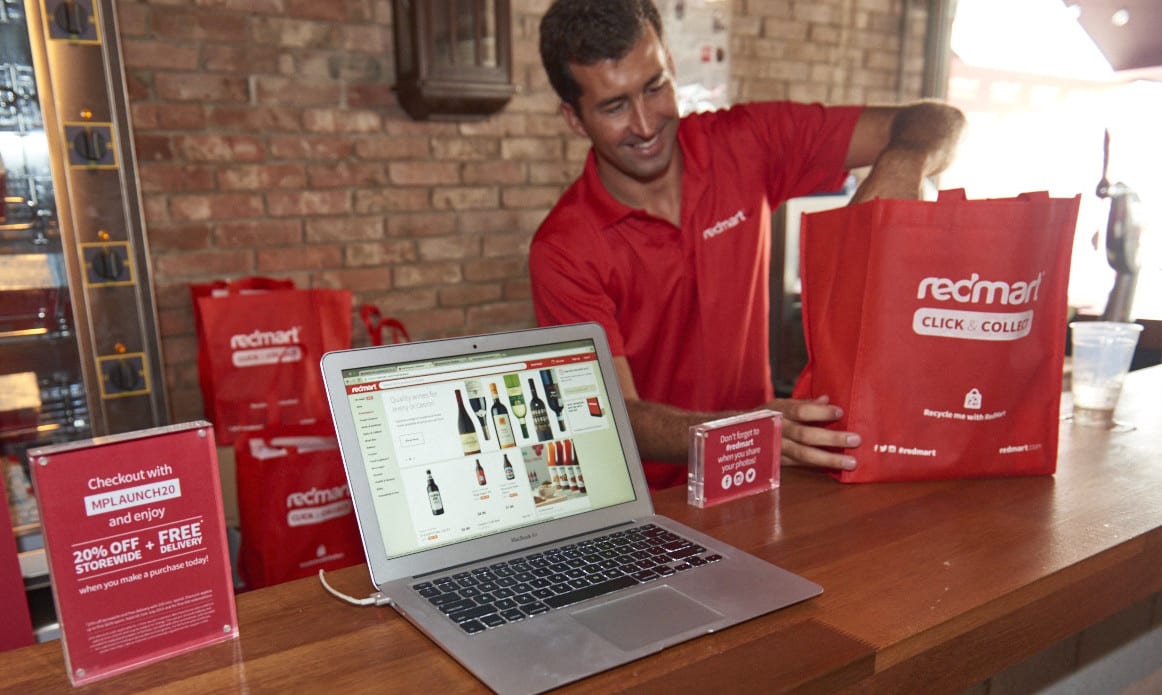
    Singapore based online grocery service provider RedMart has launched an on-demand marketplace, RedMart Relay, which will allow customers to order products from participating food and retail partners, in selected parts of Singapore.

    These products, including food, household items, apparel and electronic items will be delivered by “runners” – personal shoppers who go to the participating stores, purchase the products, and deliver directly to the customer, within one hour of ordering. The service will be accessible via a mobile App.

    RedMart’s co-founder and CEO, Roger Egan, told The Business Times that the launch of RedMart Relay was a natural next step for the company following the introduction of RedMart Marketplace, which is for groceries, earlier this year.

    “Whilst groceries will always be the foundation of what we do and remains a core part of our business, our new on-demand marketplace allows us to leverage our extensive delivery network and is all part of our long-term strategy to become an ‘everything store’, delivering a wide range of products to consumers across Singapore within the hour.”

    Mr Egan noted that when the company launched RedMart Marketplace, it partnered with Singapore’s best niche grocers, restaurants and speciality shops to “offer over 25,000 products, the largest product range of any grocer in Singapore”.

    Marketplace products are picked up from partners, consolidated, and delivered along with the regular RedMart grocery order, he said. Customers are clearly appreciating this “one stop shop” and “our marketplace has been growing at 30-40 per cent per month”, Mr Egan said.

    “With RedMart Relay we are now extending this marketplace model to be “on-demand”, where we collect from retail partners or restaurants and deliver directly to our customers within an hour,” he said.

    Mr Egan added that RedMart Relay has two main advantages over other e-commerce companies and marketplaces.

    “First, we have more engaged customers, with more frequent repeat purchases. Our customers buy from us around twice a month and that frequency is increasing. With RedMart Relay, we can now develop an even deeper relationship with our customers and deliver a much wider range of products to them, whenever they want.”

    The other advantage for RedMart Relay, according to him, is its extensive delivery network which is seamlessly integrated into the marketplace.

    “We can offer customers and marketplace partners faster, cheaper delivery than ‘software only’ marketplaces which typically partner with third party couriers. We encourage any retailer who is looking to leverage the e-commerce wave to contact us and see how RedMart Relay can help grow their business.”

    Vikram Rupani, the company president and another co-founder, added that the company was founded with the mission to “save people time for the important things in life”.

    “Our grocery service is delivering on this promise, and now we’re taking it one step further with RedMart Relay – effectively bringing RedMart’s promise of convenience to just about any product, from any store, anywhere in Singapore, he added.

    Initially the RedMart Relay service will be available to customers living in Tiong Bahru, Telok Blangah, Keppel, Sentosa, West Coast, Tanjong Pagar and Marina Bay neighbourhoods.

    The company plans to launch it nationwide by early 2016.

  • China’s Online Retail Giant Dangdang Set to Open 1000 Real-world Bookstores by 2018

    China’s Online Retail Giant Dangdang Set to Open 1000 Real-world Bookstores by 2018

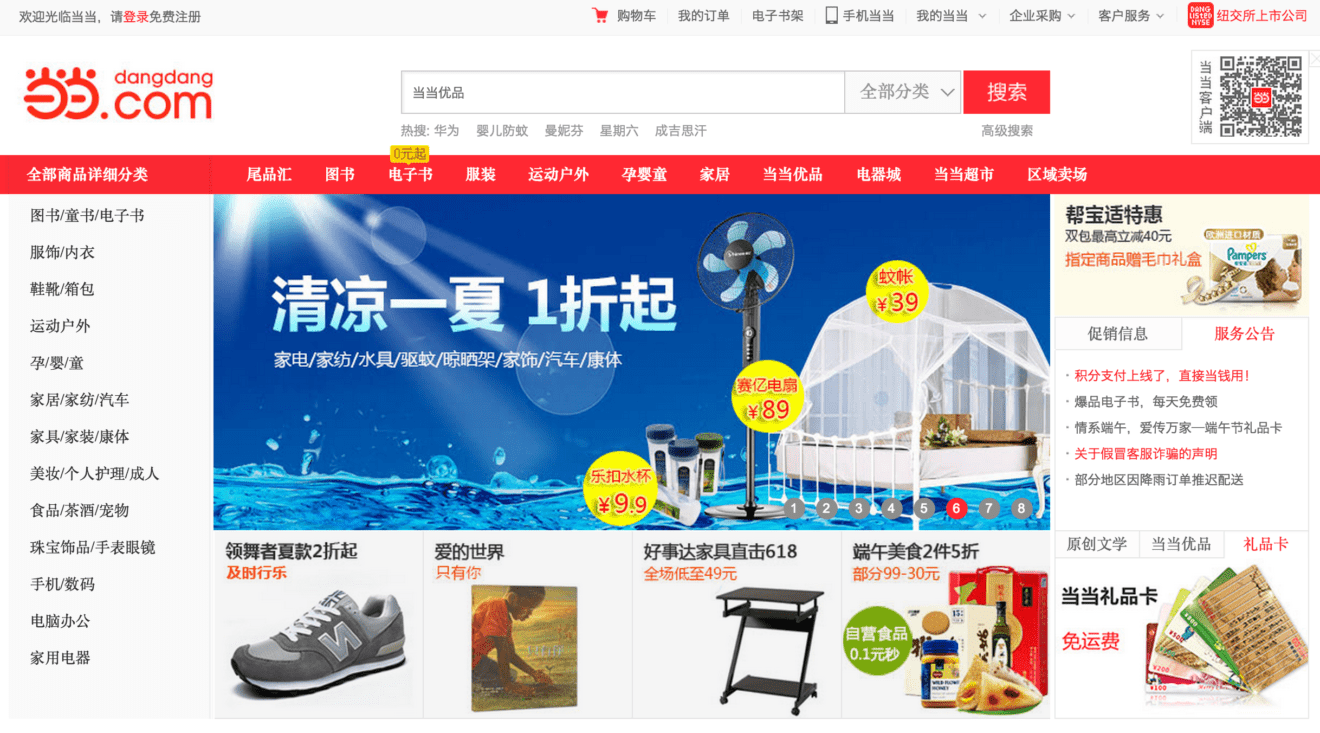
    Dangdang, a Chinese online retail giant, is eyeing to open 1,000 real-world bookstores within three years.

    The ambitious plan is contrary with the recent trend in which everything moves to go online. With the advent of online bookshops, several traditional ones have either cut back their activities or declared bankruptcy.

    Yi Yali, a traditional bookstore owner, shared that “the bookstore business has been in a decline since 2010 due to rising costs. This includes expensive human resources and rents.”

    It was between 1997 and 2010 when “real bookstore business reached its peak with its rapid growth,” Yi said, adding that a number of “featured bookstores have emerged at that time.”

    However, for Ying Changlong, General Manager of Shenzhen Publication and Distribution Group, the conventional bookstore business has not yet entered the so-called “sunset” industries.

    “It is the failure of business strategies rather than the fall of brick-and-mortar bookstore industry itself,” Ying said. “The biggest challenge for traditional bookstore lies in its single form, which makes it hard to build strong ties with customer. As such, bookstore operators need to be more creative.”

    One of the most successful business models is the one utilized by the Taiwan-based Eslite and Beijing-based SDX Joint Publishing Company. The two team up with other retailers like art galleries and coffee shops to create a “one-stop cultural shop.”

    Dangdang.com assistant executive Zhang Wei remarked that the firm wants to follow this scheme.

    “Our bookstores in the first- and second-tier cities will be as large as one to two square kilometers, and they will become a cultural complex with sales of books and other related products with higher profit,” Zhang said. “Meanwhile, we will team up with renowned shopping malls in an attempt to substantially cut bookstores management costs.”

    Simultaneously, the bookstore will also combine its online and offline businesses with its customer services.

    The first offline bookstore, occupying 1,200 square meters, is set to be launched in Changsha City next month.

  • Thai e-commerce firm expands to Metro Manila

    Thai e-commerce firm expands to Metro Manila

    Ascend Group, Thailand’s leading e-commerce retailer, has launched iTrueMart.ph e-commerce website to serve the Philippine market as it sees a huge potential in the country, with the onset of the Asean Economic Community.

    iTrueMart.ph aims to become the dominant e-commerce player in the Philippines by 2017, says Punnamas Vichitkulwongsa, chief executive of Ascend Group, the company behind iTrueMart.

    Following its success in Thailand, iTrueMart is now looking to expand into the Asean Economic Community with the Philippines as its next destination, he says. iTrueMart.ph hopes to bring an unrivaled shopping experience with access to a variety of products, various payment channels, and competitive pricing that are currently only available for metropolitan shoppers to customers in all provinces in the Philippines.

    “E-commerce will have huge potential when the AEC fully materializes,” says Vichitkulwongsa.

    According to a study by Ystats SE Asia eCommerce, the volume of Asean’s mobile Internet users rose 56 percent in 2015. Up to 56 percent of the Thai and Vietnamese populations are now accessing the Internet via their smartphones, a figure close to the Philippines’ 50 percent rate. “Recognizing the growing number of mobile-Internet users, we are confident that online shopping in the region will also grow. The AEC is an emerging and interesting market for e-commerce through which entrepreneurs can expand their businesses,” says Vichitkulwongsa.

    “At present, iTrueMart has already been tapping into the AEC market with over $150 million Uinvestment planned for 2016. The investment will be used for e-commerce optimized fulfillment centers, logistic hubs, expansion of our own fleet, marketing, and ramping up assortment and inventory. We are debuting our operations in the Philippines and that will be followed by Vietnam, Indonesia, Myanmar, Cambodia, Malaysia and Singapore later in 2016. We are committed for long-term success in the Philippines and everywhere else that we go to,” he says.

    Seubsakol Sakolsatayadorn, general manager of the iTrueMart division at Ascend Commerce, says iTrueMart.ph is not a newcomer to the market as the team is backed by the strong success of iTrueMart in Thailand. “During the past year, the number of visits to iTrueMart.com has increased by as much as 424 percent. Since October 2014, the average number of visits recorded was 4.6 million per month. iTrueMart.com receives 7,000 orders per day on average, with the highest volume of daily orders at 10,000. This marks the highest record in Thailand’s online retail industry,which puts iTrueMart.com at the forefront of Thailand’s e-commerce sector. Moreover, iTrueMart.com’s delivery averages at two days throughout Thailand and it enjoys the lowest e-commerce return rate in the country which confirms the trust and shows the high quality of the products offered on the website,” says Sakolsatayadorn.

    Dean Krstevski, chief operating Officer E-Commerce of Ascend Group, says the decision to launch in the Philippines stemmed from the fact that competition in the e-commerce sector in the Philippines is still considered low. “With the market still in its infancy, there are still plenty of opportunities for new players. Now that the e-commerce market is being developed, brands are increasingly looking for partners to sell their products online, which we see as a great advantage that will help us speed up our market entry. We are confident of our success in the Philippines because we have a strong team with extensive experience in both online and offline retail,” says Krstevski.

    Under the slogan “Great Value, Everyday,” iTrueMart.ph works only with authorized distributors of international brands and act as authorized dealer of local brands so customers can be guaranteed that all products on the website are genuine. The current focus of the site is on smartphones and gadgets and it will expand into consumer electronics, computers and laptops, health and beauty and moms and kids in the future.

    iTrueMart.ph offers free delivery and free returns with cash on delivery payment as an option for customers. To deliver the best possible end-to-end customer experience, iTrueMart.ph is starting off delivery in the Luzon area and will further expand from the beginning of next year. iTrueMart.ph is targeting to have 100 vehicles in its delivery fleet by the year-end, operating out of its own fulfillment center in Pasig.

    With 45 percent of the traffic coming from mobile devices, iTrueMart.ph has a mobile version while a mobile application will be rolled out by the first quarter of 2016.

    “iTrueMart.ph is determined to become the dominant e-commerce player by 2017 and the second largest e-commerce player by the end of this year through partnerships with key local brands and authorized distributors, as well as attractive Christmas campaigns, where customers are offered great value and guaranteed delivery before Christmas Eve. Our goals are to be the top-of-mind e-commerce brand, to have great assortment at best prices, to provide the best end-to-end customer experience and to become the most trusted online shopping platform,” says Krstevski.

  • JD.com posts huge GMV sales increase

    JD.com posts huge GMV sales increase

    JD.com, China’s second largest eCommerce player, has reported a 76 per cent increase in core GMV sales in the third quarter to RMB111.0 billion (US$17.5 billion).

    Excluding Paipai.com – which the company is closing down by the end of this year – unique customers, annual active customer accounts increased by 62 per cent to 126.9 million year on year.

    Net revenues for the quarter RMB44.1 billion (US$6.9 billion), an increase of 52 per cent from the third quarter of 2014.

    The company fulfilled 329.7 million orders during the quarter, an increase of 85 per cent from the 178.2 million of the same period in 2014.

    But JD.com still fininshed the three months with a loss of RMB530.8 million (US$83.5 million) and a net margin of negative 1.2 per cent.

    “This was another quarter of strong growth, as JD.com increasingly becomes China’s source for fast, worry-free shopping online,” said Richard Liu, founder and CEO.

    “Our partnership with Tencent’s dominant Weixin and Mobile QQ platforms puts JD.com at the fingertips of virtually every Chinese mobile online consumer, and continues to drive rapid user growth. Looking ahead, we will stay focused on enhancing user experience, deepening ties with leading brands and working to further expand JD.com’s leadership in mobile eCommerce.”

    Sidney Huang, JD.com’s CFO, said third quarter results were “very healthy, with encouraging user growth and robust performance across all of our product categories”.

    “As China’s direct B2C eCommerce leader, JD.com is benefitting from the industry-wide shift to direct-sales eCommerce as we continue to invest strategically in our core business and high-growth initiatives,” he said.

    As at September 30, JD.com had approximately 90,000 merchants on its online marketplace and a total of 94,615 full-time employees.

  • Vipshop sales soar

    Vipshop sales soar

    Vipshop, the Chinese online discount retailer, says it boosted sales by as much as 63 per cent in the last quarter.

    The US-listed company says it expects revenue to be between RMB8.6 billion (US$1.349 billion)  and RMB8.7 billion ($1.365 billion). But that is less than its earlier guidance of RMB9.1 billion to RMB9.3 billion.

    “The weaker-than-expected preliminary third quarter results for total net revenue are partially driven by the warmer-than-expected fall weather in China, which caused customers to delay purchases of relatively higher-priced autumn and winter apparel,” the company said in a stock exchange disclosure.

    The preliminary, unaudited results are based on management’s initial review of operations for the quarter to September 30, and remain subject to change based on management’s ongoing review of the third quarter results.

  • Bizpluss.in targets $20 billion sales

    Bizpluss.in targets $20 billion sales

    Indian B2B eCommerce startup Bizzplus.in has added 32 suppliers from China to its portfolio, giving 50 brands direct access to its Indian business customers.

    And the company says it aims to become a US$20 billion turnover business within the next three years.

    Its next priority is to add suppliers from the UK, UAE and Europe as it aims to supply 100,000 retailers in the first phase of its growth plan.

    Among the 50 new Chinese suppliers are TCL, Toshiba and G’Five.

    “This new venture will disrupt the long supply chain and will directly connect the retailers and suppliers between India and China for better pricing,” said Yasharth Verma, executive director of Bizpluss.

    “Today with 100 per cent production, the demand is only for 50-60 per cent compared to 120 per cent before. Suppliers from electronics, electrical home appliances and home furnishing are the top categories from China region. Next, we will get children products and garments from European countries,” he said.

  • Paipai.com axed to fight counterfeiting

    Paipai.com axed to fight counterfeiting

    China’s number 2 eCommerce player JD.com has axed its consumer to consumer online storePaipai.com in a bid, it says, to cut sales of counterfeit goods.

    The store will be closed by December 31 and after a transitional period of three months, the company will completely close down the website of Paipai.com.

    “The shutdown of the C2C platform is in line with the company’s policy to combat the marketing and sale of counterfeit products and the company will make persistent efforts to protect the interests of consumers and brands,” JD.com said in a statement.

    Paipai.com, along with another site Wanggou, were acquired from WeChat parent Tencent in March 2014. The combined businesses have a goodwill and intangible asset value of US$400 million, making it a very expensive gesture in the war against counterfeit goods in Mainland China.

    The company says it has yet to calculate the book value of the loss given the two websites are accounted for in the books as a combined entity and Wanggou will continue to operate.

    While JD.com is amputating a limb, Alibaba is undergoing a high profile battle in the US courts with French luxury brand owner Kering which alleges Alibaba has failed to take sufficient steps to counter the trading of counterfeit goods on its various websites, as reported by Inside Retail Asia last week.

  • Pitney’s Borderfree Expands Online Catalog to Woo China

    Pitney’s Borderfree Expands Online Catalog to Woo China

    Pitney Bowes Inc. subsidiary Borderfree is expanding its online shopping catalogue for Chinese online customers to serve their penchant for America-based consumer products. The company intends to provide these customers with more options for American brands in fashion, sports apparel and lifestyle accessories ahead of the upcoming holiday season.

    In particular, Borderfree has extended its partnership with China’s e-commerce giant Alibaba Group Holding’s subsidiary company, Ant Financial’s Alipay (an online payment services provider). This will allow China-based consumers to purchase directly from the retailer’s websites using localized payments. Borderfree’s collaboration with Ant Financial helps obliterate currency and logistics barriers, allowing leading global retailers to explore the Chinese soil.

    Borderfree realizes that customer security is paramount in online transactions and hence, is working closely with payment and marketing platform “Alipay ePass” (which allows U.S. merchants to gain access to Chinese consumers with an Alipay account), to woo in major crowd this holiday season. On the other hand, this deal also enables Alipay’s 400 million registered customers to access the products of a wide range of international retailers including Aéropostale, MotoSport, Bloomingdale’s, Macy’s and Saks Fifth Avenue at comparable prices.

    In our opinion, the incredible growth of online shopping in China, which likely accounts for over 40% of the world’s retail e-commerce according to EMarketer, is enough to bank on the profitability of this particular deal. Moreover, the fact that the U.S. happens to be the leading e-shopping destination of the world further brightens the commercial attractiveness of Pitney Bowes.

    Earlier in June, Pitney Bowes completed the acquisition of Borderfree to complement its e-commerce business. Encouragingly, this gave the company a first-mover advantage for exploring a multibillion-dollar market, which enjoys a double-digit growth rate. Notably, company sources suggest that the rapidly growing Chinese e-commerce sector is emerging as the key driver of the nation’s overall economic growth, primarily fueled by increased Internet penetration and surge in smartphone ownership.

    We believe the approaching holiday season will witness colossal growth in online purchase data, and this bodes well for Pitney Bowes’ profitability. Moreover, integration of the Borderfree business with its global e-commerce business will help the company reap significant cost-synergies in the long run.

    Pitney Bowes currently has a Zacks Rank #3 (Hold). A better-ranked stock in the industry is Advanced Emissions Solutions, Inc., that holds a Zacks Rank #2 (Buy).


  • ASOS launches mobile apps for iPhone, iPad and Android in China

    ASOS launches mobile apps for iPhone, iPad and Android in China

    Developed using retail technology specialist Red Ant’s award-winning RetailOS mobile commerce accelerator, the apps are:In a first for the UK’s largest independent online fashion and beauty retailer, ASOS has launched mobile apps for iPhone, iPad and Android to the Chinese market.

    • Fully transactional mobile app designed specifically for the 700 million-strong Chinese smartphone user market
    • Feature rich and fully shoppable with hybris commerce platform and Alipay
    • Features include Catwalk for all products, access to personal profiles, wishlists and Chinese social sharing

    Social media buzz suggests it has been well-received by ASOS customers and the fashion industry:

    • “I appreciate the fashion sense of ASOS’ fashion buyer, the items on the app attracted me so much and the app is more convenient than selecting on the website. I can also share the items with my friends from my phone, it is very warm and useful for us.”

    Men’s Health Assistant Editor Yu Qing

    • “Cool! Finally I can view the ASOS products in clear categories instead of spending a lot of time searching for what I want on Tmall. It’s more convenient.”

    Rayll Beauty Fashion Editor Kich

    ASOS’ general manager – China, Daniel Jenks, said: “ASOS is dedicated to delivering the best possible experience to our customers in China, and the launch of our apps, backed by Red Ant’s expertise, is a significant step towards ensuring they receive a high-quality, mobile-first service which meets all of their needs in an increasingly sophisticated marketplace. We’re delighted with the results so far and in the space of a few weeks, app downloads and sales have exceeded our expectations to form a substantial mix of our sales.”

    Red Ant’s CEO Dan Mortimer said: “As the UK continues to forge stronger and more profitable business relationships with China, we are delighted to be the mobile partner of choice in the Far East for one of the world’s most successful and reputable online retailers. The local knowledge and expertise of our team on the ground in Asia has been invaluable in developing an app which makes the most of the commercial opportunities presented by the world’s biggest mobile market.”