Category: E-Tailing

Retail News Asia is committed to providing both local and global retailers with the latest E-Commerce & Etail news throughout the Asian market. This on a daily base.

  • Zilingo gains seed funding for mobile-first e-store

    Zilingo gains seed funding for mobile-first e-store

    Thai startup Zilingo gives market traders an international eCommerce gateway.

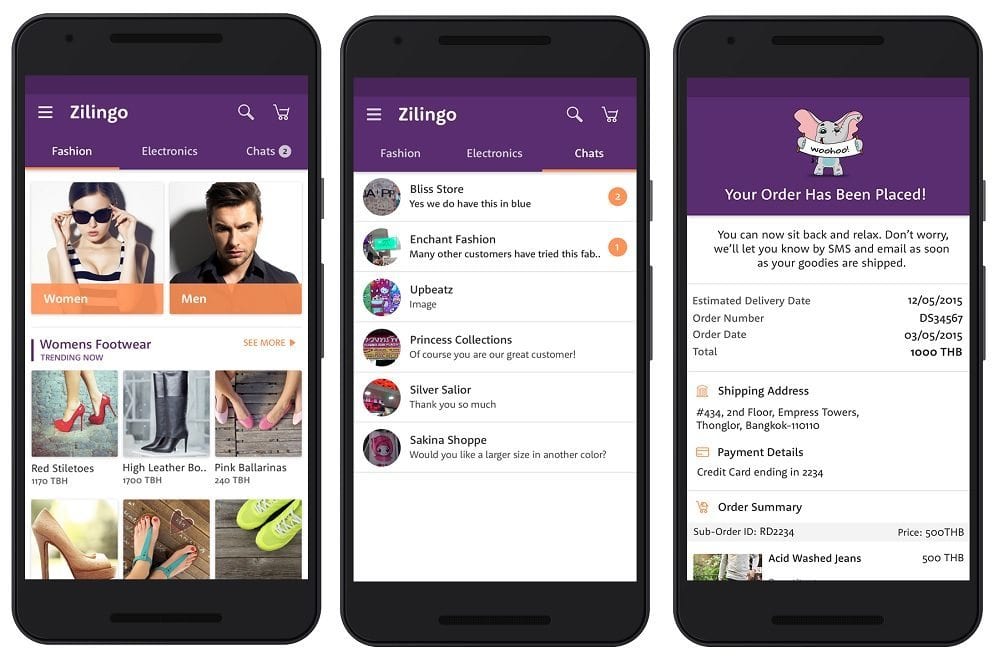
    Zilingo is a mobile-first online marketplace that allows merchants to list their inventory, set their prices, and fulfill online orders. Users can browse through available stores and products, then order and pay with their credit card, according to a report on TechInAsia.

    Zilingo’s services include shipping, packaging, payment options, an analytics dashboard for mobile, order tracking, refund and cancellation options, and consultation on pricing strategy. The app also provides chat, through which a customer can get directly in touch with a merchant.

    The concept was created by Ankiti Bose and Dhruv Kapoor, who saw an opportunity for themselves when they visited the country on vacation. Bose is an ex-McKinsey consultant from Mumbai, India, who later worked for global venture capital firm Sequoia. Together with IIT (Indian Institute of Technology) graduate Kapoor, they decided to create a way for these retailers to find new customers online.

    The startup doesn’t charge merchants for listing, or any other fees, providing most of its services for free. It only takes a cut out of successful sales, wanting to encourage adoption and to “only charge for things that actually add value to the [merchants’] business.”

    Zilingo has only recently gone live, and is available to buyers and merchants across Thailand. Within November 2015, buyers from Singapore, Indonesia, and Hong Kong will also have access to the platform’s Thai sellers. Other Southeast Asian countries will follow, according to the startup. Bose says there are currently more than 300 sellers on the site, Ankiti says.

    The company has already raised external funding, to the tune of US$1.88 million from Sequoia India, Teru Sato of Beenext, and Freecharge’s Kunal Shah and Sandeep Tandon.

    “We are delighted to back Ankiti and Dhruv, a highly talented and committed founding team, in their efforts to build a mobile-first marketplace for Thailand,” says Shailendra Singh, Sequoia India MD.

    “We liked the team and their mobile-first product so much, that we agreed to invest at the concept stage. It’s early days for the company, but we’re excited about the prospects for Zilingo.”

    Thailand’s retail sector is expected to be worth US$179.2 billion in 2016. Despite growing smartphone and credit card usage in the country, however, a lot of retailers haven’t jumped on the eCommerce bandwagon yet, leaving a lot of opportunity on the table.
  • Blogmint to expand in Indonesia

    Blogmint to expand in Indonesia

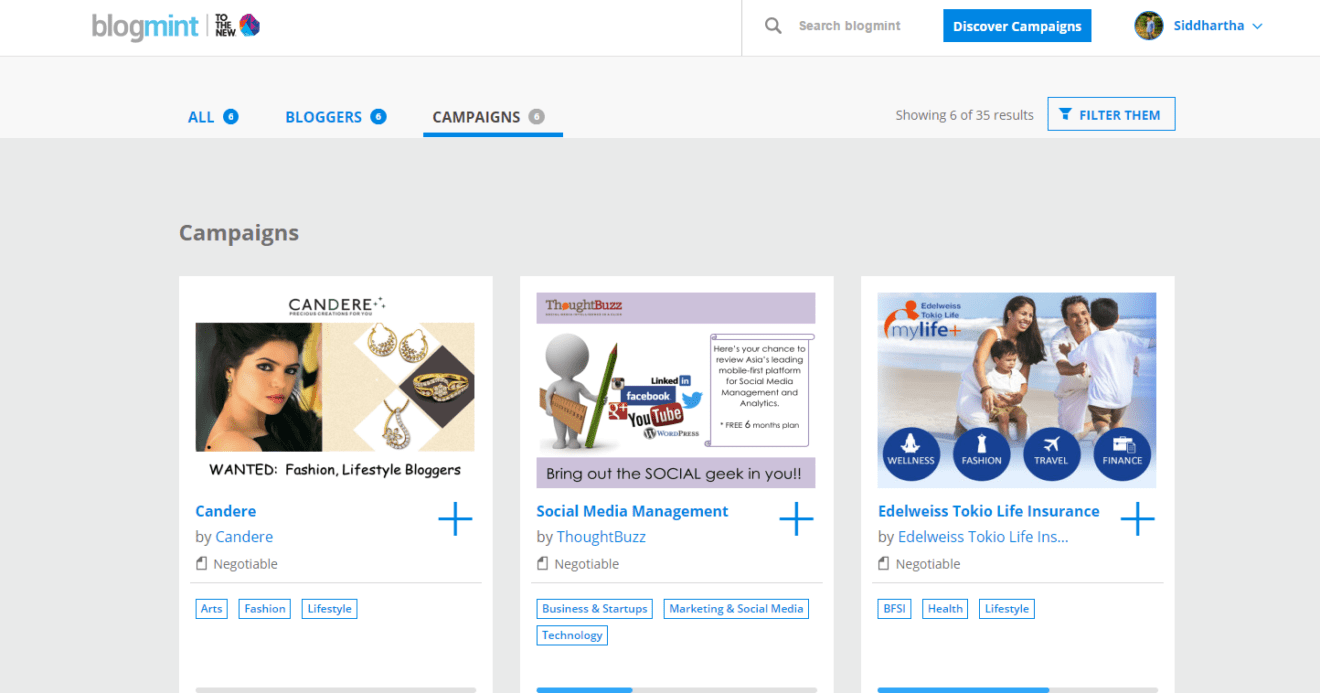
    Blogmint, a product-based influencer marketing platform, on Thursday announced its expansion into Indonesia. Part of The New Ventures, Blogmint helps brands connect and collaborate with 20,000 social media influencers, including bloggers, vloggers, Twitterati and Instagramers.

    According to a recent report from McKinsey, marketing-inspired word of mouth generates more than twice the sales of paid advertising, and these customers have a 37 per cent higher retention rate, says Blogmint. According to the company, social media influencers are a source of inspiration for thousands of loyal followers and are seen as authentic and trustworthy, so brands, both big and small, are increasingly engaging social influencers as part of their marketing mix to connect with social and mobile-first consumers.

    “Influencer Marketing is the next big thing in digital marketing, and Indonesia, like other Asian markets, is untapped. This, along with the fact that Indonesia has a vibrant influencer community, we have huge expectations from this market” said Irfan Khan, CEO of Blogmint.

    “Blogmint aims to have on board more than 20,000 influencers in Indonesia during the next 9-12 months. In the longer run, we see ourselves as the market leader in the influencer marketing segment in APAC, helping brands and agencies collaborate with influencers across the region in a few clicks”, he added.

  • Xiaomi Brand Dominates Singles Day In China

    Xiaomi Brand Dominates Singles Day In China

    Celebrated every Nov. 11, Singles Day is a tradition that dates back to 1993 which initially involved bachelors from Nanjing University who would like to go out, meet, and party with others. The celebration soon included single women and became a huge holiday in China where single individuals go out in massive meet-and-greet events.

    Singles Day is China’s version of USA’s Black Friday, where Chinese businesses spur sales by offering attractive deals and huge price cuts on their products. Xiaomi, already a popular smartphone brand that offers cheap smartphones and other mobile devices, initiated its Singles Day strategy from Nov. 1, offering daily promos and sweet deals and ultimately culminated its run on the big day itself, according to Digital Trends.

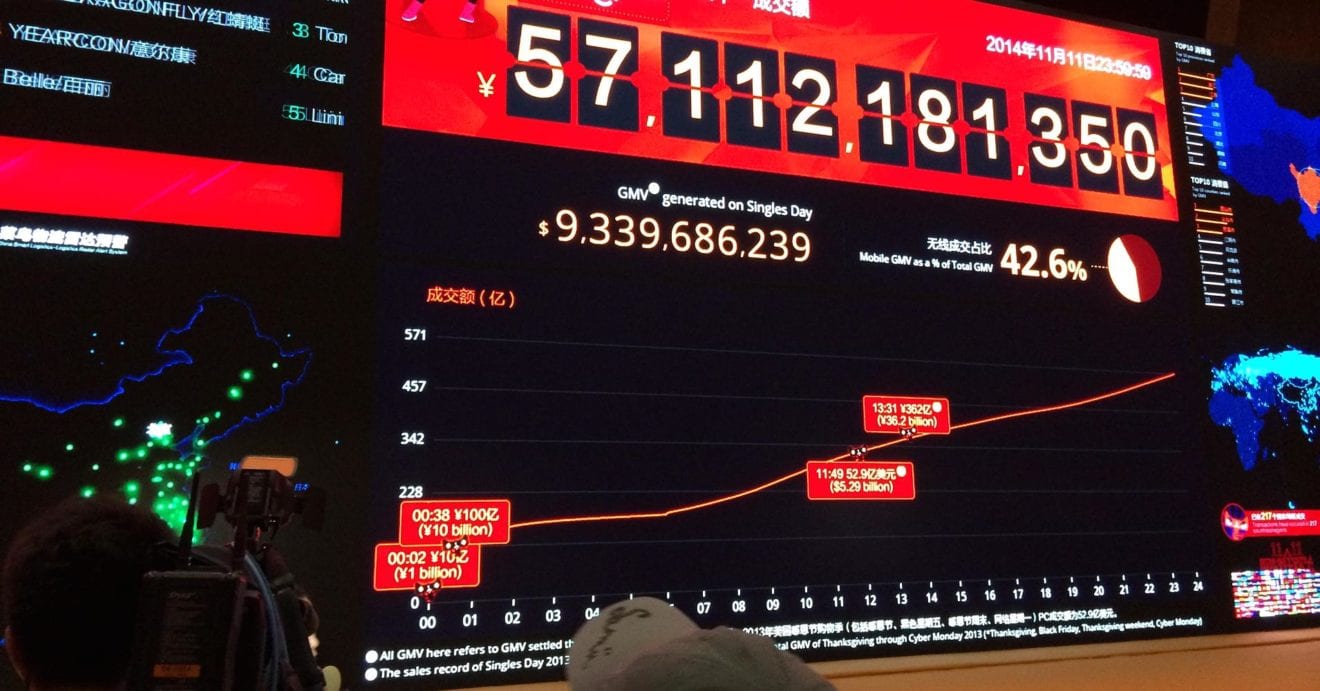
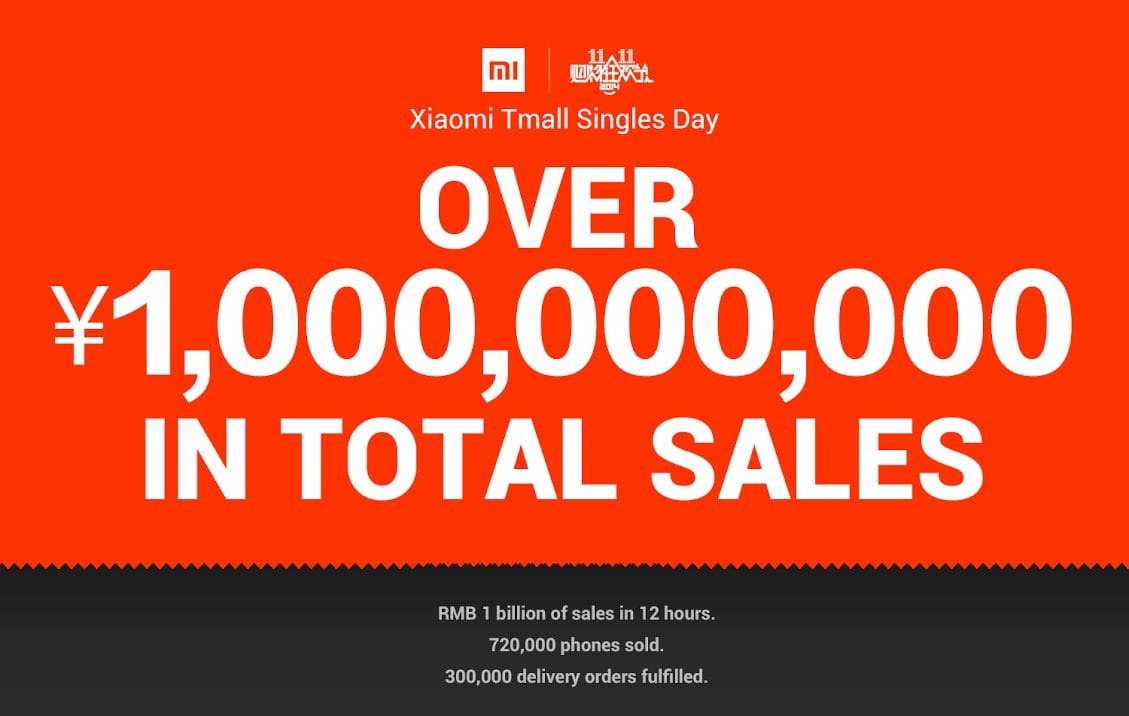
    During the build-up, Xiaomi even provided a teaser on a new smartphone. The strategy proved to be successful, as the smartphone maker immediately raked in $16 million by 12:12 am on Nov. 11. Thirteen minutes later, sales reached $31 million. Two minutes before 1:30 am, Xiaomi already has $63 million in the bank. By the end of Singles Day, Xiaomi’s sales reached a whopping $188 million.

    According to a statement by the China-based smartphone manufacturer, the $125 Redmi Note 2 was their bestselling smartphone. Xiaomi’s smartwatch, the Mi Band Pulse, was the company’s most popular device, which did not come as a surprise, given its $16 price tag.

    Xiaomi’s success is based on its strategy of providing cheap smartphones with high-end features, and China is its biggest market. Recently, top competitor Huawei has overtaken Xiaomi as China’s top smartphone vendor in the last quarter, CNBC reports.

    Meanwhile, China-based online market company Alibaba also broke its own record on Singles Day. The e- ommerce giant clocked in $14.3 billion in sales via its online payment service. On last year’s Singles Day, Alibaba registered $9.3 billion in sales. This year’s figure represents a 60 percent jump from the previous year, indicating the company’s continued growth in a crowded Chinese market.


  • Alibaba smashes Singles’ Day records, so why did shares dip?

    Alibaba smashes Singles’ Day records, so why did shares dip?

    November 11 is a day of sombre reflection across much of the West, with Commonwealth nations observing Remembrance Day while Veterans’ Day is an official public holiday in the US.

    It’s a world away in China, though, where it’s Singles’ Day – an idea begun in 1993 by four lonely Chinese students who reckoned the 11th day of the 11th month (note the four single ‘one’ digits) would make a great day to celebrate being unattached.

    It became a sort of anti-Valentine event, where those without partners bought themselves gifts and – as you do in China – enjoyed lots of karaoke.

    Enter e-commerce giant Alibaba – owned by Jack Ma, up until February China’s richest man – which swooped on the event to offer discounts on its goods.

    November 11 in China has since morphed into an orgy of online spending. More and more firms have jumped on the bandwagon to make it the world’s biggest day of internet shopping.

    On Wednesday, Singles’ Day smashed sales records by midday. Shoppers were out in droves, racking up $5 billion of sales in the first 90 minutes on Alibaba, roughly double last year’s haul in the same period, reports the Financial Times. Alibaba also netted nearly twice the entire take of last year’s Cyber Monday – the day the US, fresh from feasting on Thanksgiving turkey, feasts on shopping deals – itself a record.

    Alibaba’s sales on the day rose 60% from last year to $14.3 billion. Another online retailer, JD.com, reported record transactions of more than 20 million.

    But despite beating records, Alibaba shares dipped nearly 2%. Why weren’t investors impressed?

    It’s because those concerns about China’s slowing growth still won’t go away – a point that Jack Ma himself highlighted on Thursday. Although he believes the government’s 7% GDP target for this year is achievable, he told CNBC: “I believe the next five to 15 months will be a tough time for China for various reasons, of course, one, the anti-corruption will definitely have some effect.”

    Jasper Lawler, a market analyst at CMC Markets, adds that Alibaba continues to be used as a US proxy for Chinese economic health “so shares dropped alongside industrial production figures”.

    Another batch of mixed data from China on Wednesday did little to allay concerns that the world’s second largest economy is slowing.

    “Industrial production growth matches its weakest since 2008, although retail sales improved,” wrote Mike van Dulken and Augustin Eden at Accendo Markets. Coupled with Alibaba’s new Singles’ Day record “we have further evidence of the nation’s shift from export-led to consumer economy”.

    Michael Hewson, chief market analyst at CMC Markets UK, remains concerned about retail sales in China.

    “The latest October retail sales numbers did improve to 11%, from 10.9% in September, which is still below the levels we were seeing at the end of last year of 11.8%,” he writes.

    “Furthermore this modest improvement doesn’t really chime with the stories circulating out of China at the beginning of October during Golden Week about surging sales in the restaurant, cinema and travel sales sector.

    “According to some reports, turnover at restaurants and retailers totalled more than one trillion yuan during the seven days, which equates to over $156 billion, so for retail sales to only improve 0.1% does seem rather at odds with the early October optimism.”

    Alibaba shares closed on the New York Stock Exchange at $79.85 on Wednesday, down more than 20% in the year to date. However, they’ve recovered from a yearly low on September 28 of $57.39 to trade currently at $80.00.

  • Ethnic e-tailer Craftsvilla raises Rs 220 crore

    Ethnic e-tailer Craftsvilla raises Rs 220 crore

    Etsy-like marketplace for ethnic products, Craftsvilla.com, has raised $34 million – or Rs 220 crore – led by existing investors Sequoia Capital India and Lightspeed Venture Partners. Russian internet billionaire Yuri Milner also participated in the latest financing round personally, through DST Global partners’ fund, by putting $5 million in the four-year-old firm. Craftsvilla’s other existing investors Nexus Venture Partners and Global Founders Capital, a VC fund founded by Rocket Internet’s Samwer brothers, were also part of the latest fund-raise, valuing the company at $200 million, post the investment.

    With its Series C round of funding in place, the Mumbai-based e-tailer is looking to go public in the next 12-18 months, Manoj Gupta, co-founder & CEO, Craftsvilla, told TOI. The plan comes at a time when most e-commerce majors have put their IPO plans on hold.

    Kribha Handicrafts, which runs Craftsvilla.com, is currently clocking $120 million in gross merchandise value, or GMV annual run rate. GMV is an industry jargon for sales made on an online retailer’s platform without factoring discounts and returns.

    “We are looking at a valuation of at least a billion dollars in the next 12-18 months before we go public. Our aim is to hit $500 million in GMV over the next one year,” Gupta said. The online retailer is in the process of appointing independent directors as it prepares to go public, he said.

    The ethnic e-tailer plans to use a significant chunk of the fresh capital for marketing and international expansion having entered Malaysia and with an Indonesia launch on the anvil. “Craftsvilla has risen to category leadership in the ethnic space with a lean marketplace model that has scaled in an unusually capital-efficient manner. We are excited to continue to back them as they grow to the next level,” said Shailendra Singh, MD, Sequoia Capital India. All told, the e-tailer had raised $20 million (excluding the fresh infusion) across two rounds of financing since it began operations.

    Founded in 2011 by Gupta and his wife Monica, Craftsvilla sells products across categories including clothing, handicrafts, jewellery and art, among others. It claims to have 25,000 sellers on its platform, selling close to 3.5 million products. The online ethnic wear market is pegged at around $300-500 million in size with the bigger horizontal e-commerce players like Flipkart, Snapdeal and Amazon aggressively pushing their presence in the segment.

    Margins in the ethnic category are higher compared to other segments, sometimes ranging as high as 60-80%. “We typically get a 20% commission on products sold,” Gupta of Craftsvilla said. The e-tailer is looking to launch private labels over the next few months, which offer better margins to e-commerce players.

  • Singles Day set to shatter records

    Singles Day set to shatter records

    Singles Day spending tomorrow will undoubtedly shatter last year’s record spend of US$9.3 billion, predicts KPMG.

    November 11 is known in China as Singles’ Day, an annual one day event which sees online retailers slash prices of products and China’s shoppers treat themselves to a wealth of discounted goods. Popularised by eCommerce giant Alibaba in 2009, Singles’ Day in China has now become the world’s biggest online retail sales day, eclipsing all other promotions days including Black Friday and Cyber Monday.

    Last year’s sales fell just short of $10 billion, but Jessie Qian, partner in charge, consumer markets with KPMG China, says that barrier will surely be broken tomorrow

    “We expect that China Singles’ Day spend this year will be bigger than ever, illustrating the buying power of the Chinese consumer and the increasing prominence of the date in the Chinese retail calendar.”

    KPMG recently survey 10,000 online Chinese luxury consumers – China’s Connected Consumers – also revealed that the maximum amount Chinese consumers felt comfortable paying online for a single item was RMB 4200 – more than double the RMB 1900 found in 2014.

    The study also found that Chinese luxury shoppers are increasingly open to buying luxury products online. For most categories, from jewellery to cosmetics, and wine to leather goods, respondents reported a willingness of 75-95 per cent to buy online.

    “Not only did we see a higher amount spent on average for popular categories such as bags, women’s apparel and cosmetics, but we also noted a significant increase in spending on watches and jewellery,” said Qian.

    “All these illustrate that online luxury shopping is set to grow as Chinese consumers are growing increasingly more comfortable with online purchasing.”

    Qian concluded: “With the speed of change around new channels in China, companies must develop the right strategies to survive and thrive in an increasingly disruptive environment. Formulating an effective online to offline (O2O) strategy will be essential for retailers to remain competitive in the digital age with the increasing smartphone technologies and the need to harness social media platform.

    “Meanwhile, using analytics to turn the transactional data into insights to improve products and user experience, as well as to unlock new opportunities, will be crucial for e-retailers to stand out in the increasingly competitive market.”

  • New Yahoo Hong Kong-Taiwan cross-border eCommerce platform

    New Yahoo Hong Kong-Taiwan cross-border eCommerce platform

    Yahoo Hong Kong has launched its Yahoo Hong Kong-Taiwan cross-border eCommerce platform today.

    In the first stage, more than 100 Taiwanese brands accredited with the Made in Taiwan Smile Logo will enter the Hong Kong market – in categories ranging from food to fashion and to beauty and cosmetics.

    Stage two will see Yahoo adding Hong Kong products for sale into Taiwan.

    Yahoo says it wants to create the largest cross-border eCommerce network between the two markets.

    Jacky Wang, VP, eCommerce group, Yahoo Taiwan & Hong Kong said that with the launch of the new platform, geographical boundaries are eliminated.

    “We are delighted to bring Hong Kong consumers the best, original quality products of Taiwan through the 11.11 Online Shopping Festival. This allows e-merchants from both places to reach the huge online buying customer base, which is extremely beneficial to them in increasing sales and for online branding.

    “Yahoo Hong Kong’s B2B2C Flagship store will start operating this month, through which Hong Kong consumers can purchase a wide variety of Made In Taiwan products on the platform,” said Wang.

    “Soon, Taiwan consumers will also be able to purchase Hong Kong’s popular products, such as cookies and palmiers which are popular with Taiwanese.”

    All of the more than 100 Taiwanese e-merchants joining the Yahoo Hong Kong eCommerce platform are selling 100 per cent original, Made In Taiwan Smile logo-accredited quality brands.  These include Dr Morita facial masks, Taiwan’s famous pineapple cake brand SunnyHills and other brands, including meat jerky, tea leaves and noodles.

    The e-merchants crossing the border to Hong Kong with Yahoo will receive all-round cross-border one-stop merchant solutions from Yahoo Taiwan and Yahoo Hong Kong. These range from a special starter package to support for logistics, cash flow and store operations and management, offering detailed guidance to help their brand to take the initial step in cross-border eCommerce, and satisfying the expectations of the online shoppers in Hong Kong and Taiwan.

    SunnyHills has sold more than 10,000 boxes of cakes online into Hong Kong this year already.

    Damian Lee, GM, said Yahoo Hong Kong and Taiwan have the highest reach rates and Yahoo’s online shopping platform is the best one in Taiwan.

    “With the largest volume of traffic flow and the highest popularity, it offers us the best virtual support for our products and backing for our brand. It also provides one-stop logistics and cash flow solutions that lower our cross-border costs and management time, offering the best O2O eCommerce shopping experience to consumers in the most effective way.”

    What Hongkongers and Taiwanese want

    Francis Che, head of insights, strategy and research with Yahoo APAC shared the latest eCommerce promotion and analysis research.

    • Hong Kong has an online buying population of 2.9 million, representing 53 per cent of the total online population.
    • 74 per cent of Hongkongers have used overseas buying services, or overseas cargo or shipping services to buy products from all over the world.
    • Over 30 per cent of the online buying population hopes that online buying apps can proactively notify them of the offers and discounts of nearby stores and recommend some stores for purchases.
    • The older buying population (aged 40 plus) use mobile devices to browse online shopping sites is growing rapidly.
    • The most sought after items purchased online in both markets is the same: Apparel. For the full top 10 list, refer to the chart below:

    Yahoo

    Meanwhile, Yahoo Hong Kong will launch the 11.11 Online Shopping Festival offers on November 11, including the sale of an Oto Adelle One Massage Chair at just $999 (Value: $14,800), with the Oto Lite Footie (Value: $1680) bundled together as a gift.

  • New rules will ‘wipe out’ Chinese online payment agents

    New rules will ‘wipe out’ Chinese online payment agents

    New regulations proposed by the Chinese government will deliver an immediate boost to state-ownedChina UnionPay, potentially forcing its smaller Chinese online payment agents out of business.

    The ‘Method of Network Payment Service Management for Third-Party Payment Agents’, proposed in August 2015, is set to restrict consumers’ daily and annual spending on online purchases through private third-party payment agents such as Alipay and Tenpay. But the new law exempts China UnionPay, giving it a clear market advantage.

    According to Timetric, the new law will present serious challenges for small private third-party agents trying to get a foothold in the online retail market.

    Under the draft law, the transaction amount made through third-party payment agents will be determined on the level of security measures incorporated within the online platform. Furthermore, all private third-party payment agents will be forbidden from offering financial services such as deposits, loans, financing or currency exchange services to consumers.

    Chinese regulators say the law aims to protect consumer interest and privacy and clamp down on counterfeit products and poor customer service offered by online private third-party payment agents.

    But in practice it appears on the surface to be a tool to protect UnionPay’s market dominance in the short term and protect the government’s interests, rather than those of consumers.

    “If implemented, the new legislation is anticipated to wipe out smaller private third-party agents, due to the increased operational costs of implementing multiple security measures”, said Kartik Challa, an analyst at Timetric.

    In China, UnionPay (CUP) is the sole scheme provider of payment cards. According to central bank regulations, all banks and card issuers operating in the country are required to route their Yuan-based transactions through CUP’s electronic payment network. However, following a complaint filed by the US against China via the WTO with regards to discriminating against foreign companies in 2012, the WTO directed the Chinese government to open up its payment cards market to foreign operators. Consequently in October 2014, the Chinese government announced its decision to allow foreign companies to set up their own payment card clearing businesses, effective from June 1, 2015.

    Ultimately, says Challa, the move will open the way to stronger competition for CUP – but not in the short term.

    “This move by the Chinese government is anticipated to intensify competition in the Chinese payment cards market, and end CUP dominance as the country’s only authorised card clearing organisation. However, Visa and MasterCard have a long way to go before they can make a dent in CUP’s market share, as they need to build up infrastructure from scratch”, comments Challa.

    China is one of the largest and most mature eCommerce markets in the world, increasing at a CAGR of 56.99 per cent over the last four years, from US$68.7 billion in 2010 to $417.3 billion in 2014.

    Factors, such as the rapid adoption of smartphones, growing internet penetration as well as availability of secure online payment mechanisms and a growing preference for online shopping – especially among the rural population– contributed to this growth.

    Timetric is a provider of online data, analysis and advisory services on key financial and industry sectors. It provides integrated information services covering risk assessments, forecasts, industry analysis, market intelligence, news and commentary.a

  • Groupon woes continue

    Groupon woes continue

    Groupon – which has exited three Asian markets this year – continues to struggle globally with ts flawed discounting model.

    Operating on wafer thin margins in the first place, the company has taken a severe hit from currency exchange fluctuations in the third quarter.

    Globally, gross billings grew by six per cent when the exchange rate impact is excluded; similarly, global revenue increased by a more positive seven per cent on a constant currency basis.

    But after taking into effect the strengthened value of the US dollar against foreign currencies this year, Groupon saw its net losses grow by some $6.4 million to $27.6 million.

    As reported by Inside Retail Asia in September, the listed US eCommerce business has closed its doors in Thailand, the Philippines and Taiwan. Outside Asia it has already exited Greece and Turkey and will now close operations in Panama, Morocco, Puerto Rico and Uruguay.

    Neil Saunders, CEO of Conlumino, says the impact of currency fluctuations is worsened by the fact that the company operates off relatively low margins, especially outside of its North American heartland, and as such does not have much of a buffer against their deleterious effect.

    “The margin position is partly down to the multiple systems that Groupon operates across the globe which increase complexity and do not allow for economies of scale. While this is something the company has been remedying by moving to a common platform, we believe that the benefits have, so far, been fairly modest.”

    Saunders says margins are also held back by a further issue, arising from Groupon’s revenue mix.

    “At present, the company divides itself into three main segments: Local, Goods, and Travel. Local is concerned with deals from service providers like restaurants, events and activities. Goods is focused on consumer products like jewellery, electronics and apparel. And Travel is about holiday, flight and accommodation deals.

    “Recent growth in the more mature Local part of Groupon’s business has slowed considerably. Indeed, in Q3 growth was just under eight per cent. Comparatively, Travel and Goods have both seen strong growth, up 20 per cent and 18 per cent, respectively. This rebalancing of the revenue mix has diluted margins, mainly because Goods are far less profitable for the firm.”

    Saunders says gross profit as a percentage of gross billings for Goods is 13 per cent compared to 30 per cent in Local and 18 per cent in Travel.

    “To be fair, the margin performance of Goods has improved over the past year – but not by much. Over future quarters, we see the prospects for margin gains to be slight given that Groupon has to work harder on Goods deals in a market that remains very promotional.”

    Saunders believes there is little comfort ahead for Groupon in the fourth quarter.

    “Groupon is forecasting that revenues will come in at $865 million, at best. This is quite some way below the $883 million generated last year.

    “In our view, such anemic numbers do not paint a rosy picture for future profits. They also bode badly for the start of the new fiscal year – an issue the new CEO, Rich Williams, who is replacing Eric Lefkofsky who’s stepping into the role of chairman, will have to deal with,” Saunders concluded.

  • 11Street – RM11million giveaway for Year End, and new strategies for mobile and shocking deals

    11Street – RM11million giveaway for Year End, and new strategies for mobile and shocking deals

    11street (www.11street.my), one of the largest online marketplaces in Malaysia, revealed new strategic business plans for its mobile app and signature ‘Shocking Deals’ at ‘LOVE 11’ Day, its inaugural Korean – inspired celebration event at Lot 10 today.

    Among the key announcements Hoseok Kim, CEO of 11street, made at the press conference was:

    ·      Unveiling of their biggest giveaway of the year  – deals totalling to RM 11 million up for grabs for Malaysian shoppers. Starting from today until 31 December, shoppers can redeem daily offers of deals and coupons with up to 90% discounts.

    ·      Marking the 11th of each month as ‘LOVE 11’ Day for consumers to enjoy significant giveaways

    ·      One of their top business strategies include doubling its variety of product listings for its ‘Shocking Deals’ promotions to help consumers continue finding what they love at 11street

    ·      Another business focus would be on a stronger mobile app strategy for an enhanced shopping experience with more curated content with an improved user interface and user experience designs with additional personalized features. in line with this, 11street will be offering more mobile exclusive value deals and discounts.

    ·      Exclusive Premiere of Thematic TVC – will be available nationwide via free to air TV networks and 11street’s YouTube channel starting from November 16th.

  • Uber to triple number of drivers, launch ‘UberPool’

    Uber to triple number of drivers, launch ‘UberPool’

    Uber is set to expand its pool of drivers and will launch “UberPool”, a carpooling service, in Bangkok next year.

    The private car company will increase the number of its drivers from 30,000 to 100,000 by next year as currently it can only serve around 85 percent of customers with an estimated wait time of 5.5 minutes. 

    Uber also plans to launch “UberPool”, a carpooling service on the Uber app that matches customers with fellow riders heading in the same directions to split costs, The Nation reported.

    About 2 million Bangkokians have taken an Uber ride since its launch last year. The company wants to cut its pick-up time to three minutes, said Chan Park, general manager for Southeast Asia.

    The areas with the highest demand for Uber are Ratchaprasong Junction, Sathorn road, and Suhkumvit road. 

    For the cheaper UberX, the business has grown 12-fold since its launch six months ago. 

    “Thailand is a huge potential market. The firm’s business focus will be consumer-centric so that it will create business opportunities in Thailand. It also has plans to expand to big cities,” said Barry Levy, acting managing director of Uber Thailand. 

  • Indian eCommerce growth fastest in Asia

    Indian eCommerce growth fastest in Asia

    The Indian eCommerce growth rate is now the highest in Asia – yet online still accounts for less than one per cent of total retail sales.

    Gene Alvarez, MD and VP at research house Gartner, told a symposium in Goa this week that India represents a US$7 billion market, growing at more than 40 per cent every year.

    “Currently B2C commerce leads the market in India, while B2B is limited to organisations that drive online sales while trying to cut costs in dealing with their partners and distributors.”

    More than 40 per cent of digital commerce transactions came from a mobile device in 2014, and that proportion is likely to exceed 50 per cent in 2015. Due to the low internet penetration in India, mobile has leapfrogged the PC, and consumers are using mobile as the primary channel for online shopping.

    “There is a lot of hype due to the high growth and high expectation of the market, and many companies are fast expanding to grab market share and increase visibility. However, the fierce competition is pushing up costs while the average order value remains low. Players need to execute on the basics to ensure the growth is sustainable,” said Alvarez.

    Gartner identified the top five things Indian digital commerce players should focus on to drive growth:

    • Customer Experience: This is the most important differentiator of a digital commerce service as price becomes transparent across sites. Providers that can design a compelling user interface, personalise landing pages, search results and product feeds based on the shopper’s behaviour, and effectively engage shoppers to make them loyalty customers, will win over those that cannot.
    • Product Range: Due to the nascent nature of India’s digital commerce market, product range and choices are still quite limited even on major marketplaces. Providers will need to expand the product ranges to make the service attractive to shoppers through organic growth and partnership. Focusing on a few categories, such as consumer electronics, fashion and grocery can also be the right strategy to deeply penetrate a product segment and become the go-to site for that category.
    • Delivery: This is a key challenge in India given the less developed logistic infrastructure and the lack of last-mile connectivity in remote areas. Providers will have to partner with multiple logistic providers to leverage their strengths in national, regional and local delivery, as well as with retail stores as pick-up stations to offer reasonable delivery speed and costs. They also need to consider putting in place reverse logistics for returns, which significantly impacts the customer experience.
    • Payment: Payment has a big impact on the conversion rate, and a frictionless payment process greatly helps increase digital commerce sales. India has relatively low credit card penetration, and most of digital commerce is done via cash on delivery. Despite regulatory challenges, digital commerce providers should work with payment providers to offer a frictionless payment experience.
    • Customer Service: Besides offering immediate help on site and via the contact center, and making processes and cost information transparent, digital commerce providers should think carefully about their return strategy. A generous return strategy encourages sales especially for categories such as fashion and consumer electronics.

    This week’s Gartner Symposium/ITxpo is a major gathering of CIOs and other senior IT executives. The event delivers independent and objective content with the authority of Gartner, a leading IT research and advisory organisation, and provides access to the latest solutions from key technology providers.

  • 360° Divers prepare to open up new underwater worlds in Asia Pacific

    360° Divers prepare to open up new underwater worlds in Asia Pacific

    360° Divers, the revolutionary virtual reality underwater video capturing service that is said to be the only app a diving enthusiast will ever need, has announced its upcoming release to be within next month (December 2015). 360° Divers is currently shooting amazing 360° underwater landscapes, shipwrecks and liveaboards around Asia Pacific. According to our interview, they are still looking for more dive locations and dive centers to collaborate with. The most outstanding dive centers and dive locations will be listed in the app complete with maps, dive spots and useful information regarding liveaboards.

    RadjaAmpat

    360° Divers have an innovative application that offers edutainment (education plus entertainment) by being an immersive application, taking its users in an immersive 360° underwater journey in all of Southeast Asia’s best dive spots so they may almost realistically view through the app and decide on their next adventure. Practicality wise, the application will also be offering access to the latest and updated information on every dive location in Asia and the Pacific. Beginning from dive lodgings to dive locations and liveaboards. It uses the latest Virtual Reality techniques and offers special headsets and wearables to be able to explorer the underwater world  by yourself at home and see where liveaboards go. Cardboard headsets can be ordered on the website and it seem they ship around the world for less then 10$.

    cardboard-final-640x640-640x640The said app is founded and built with the leadership and clever insights of the company’s founder. The app will be made available in the Apple App Store, Google Play, and the Windows Store. It will be working in both iOS and android-run devices. Whether there will be a desktop version or not is still unknown and much awaited. The app will be free to download while the dive content will be under a subscription fee says Imelda Samaria, part of the dive team and script writers.


  • Jewelry.com Selects VoyageOne to Expand and Sell Products in China’s B2C Online Marketplaces

    Jewelry.com Selects VoyageOne to Expand and Sell Products in China’s B2C Online Marketplaces

    Jewelry.com announced that is has chosen VoyageOne, a pioneer in B2C “cross-border” ecommerce solutions and services, to help launch its direct-to-consumer online expansion plans for China.

    With over 14 years in the industry, Jewelry.com is one of the foremost online retailers in North America. VoyageOne provides localized branding, online marketing, merchandising campaigns, operational support, a local entity with inventory in China and local customer service support.

    “We are very proud to have reached a strategic partnership agreement for the online presence of our products leveraging VoyageOne’s turnkey solutions and services,” said Ofer Azrielant, President of Jewelry.com. “One of the great untapped opportunities for us is China’s online marketplaces including worldwide leader, Alibaba’s Tmall Global. Now we are able to provide our jewelry assortment to online shoppers in China while empowering them to express their individuality and taste in an entirely new way.”

    “We quickly learned that VoyageOne has the technology, domain expertise and proven track record of helping U.S.-based retailers to quickly and efficiently deploy an online presence in China, enabling brands to sell products directly to consumers while preserving brand values. We are also excited to be part of the largest Tmall Global Single’s Day aka 11/11 which is the one the largest online events in the world” said Jon Azrielant, Director of Marketing for Jewelry.com.

    “Jewelry.com recognized the importance of leveraging an integrated turnkey B2C cross-border ecommerce platform, localized business practices and operational methodologies right from the beginning to pave the way for success in China.” said Dennis Zhang, Founder and CEO of VoyageOne.

    VoyageOne’s Ecom360™ is a proprietary solution that provides U.S.-based retailers and brands with cost-effective and streamlined access to China’s Direct-to-Consumer “cross-border” ecommerce and online marketplaces, enabling them to ship directly from their U.S. warehouse to consumers in China.

    “We’re extremely excited to partner with Jewelry.com to deliver memorable online shopping and customer service experiences for their new customers in China.” said Patrick Hoss, Sr. Vice President of VoyageOne. “Today, online shoppers in China can easily purchase their favorite jewelry from https://Jewelry.tmall.hk and receive their packages shipped directly from the U.S. to their doorsteps in a matter of few days!” added Hoss.


  • One-Day Global Sale Sees Online Shopping Soar in Thailand

    One-Day Global Sale Sees Online Shopping Soar in Thailand

    WearYouWant, Thailand’s leading online fashion & beauty marketplace has become part of the global success story of Singles Day 2015, the world’s biggest online shopping day held on November 11th each year.

    Figures just in overnight reveal a staggering +1000% increase in turnover for WearYouWant compared to the same Wednesday last month, while order volumes soared to a growth of over 700%. Proof that Thai consumers are not only eagle-eyed when it comes to spotting big fashion brand discount, but are fast-becoming a growing e-commerce market to be reckoned with within the ASEAN Economic Community.

    WearYouWant retails high-profile international and local-designer brands from its Bangkok base, and recently received Series B funding from Japanese digital fashion marketplace StartToday.  During the run-away success of Singles Day, Thai consumers took advantage of discounts on over 14,000 fashion and beauty products. With 65% of the one-day shoppers being female, shoes, beauty and women’s clothing topped their online shopping lists.

    Singles Day Sale has been embraced  by e-commerce market globally, especially within the fashion-related  industry.

    This is the first year WearYouWant held this online sale nationwide, offering discount on their products from 11 am until 11pm. This Chinese ‘bare sticks holiday’, so-named because of the date’s single digits, is a day for singletons to celebrate and in more recent times to look for love. The Singles Day sale has become a huge global e-commerce extravaganza, with Chinese consumers alone spending more than USD 4 billion in the first hour of 2015’s sale.