Category: E-Tailing

Retail News Asia is committed to providing both local and global retailers with the latest E-Commerce & Etail news throughout the Asian market. This on a daily base.

  • Sainsbury’s lands in China through tie-up with ecommerce giant Alibaba

    Sainsbury’s lands in China through tie-up with ecommerce giant Alibaba

    Sainsbury’s has launched in China through a partnership with Alibaba’s Tmall website five years after first exploring an entry into the country.

    The grocer began testing the waters in China this week, Retail Week has learned, and is initially focusing on selling “high-quality ambient product” to tap into the growing demand in China for premium organic ranges.

    China’s online grocery market is forecast to grow five-fold to almost $180bn (£115bn) by 2020, according to IGD. It will be worth almost $70bn more than the other top nine online grocery markets combined in 2020.

    However, confidence in the growth prospects of the Chinese economy has taken a hit of late as fears grew the economy’s growth was slowing quicker than expected.

    Chinese consumers are placing a growing emphasis on the provenance of products after a series of food supply scandals in the country.

    In January last year Walmart recalled a donkey meat product in China after tests by The Shandong Food and Drug Administration revealed it contained DNA of other animals, including foxes.

    Sainsbury’s is selling own-brand long-life British milk from a Devonshire dairy on its Tmall website. Other products being sold include a baby range and the components of British afternoon tea, including speciality teas, coffees and biscuits.
    A Sainsbury’s spokeswoman said: “‘We are trialling a small number of ambient products for sale on the Alibaba platform, including So Organic and Taste the Difference lines, for sale through the Chinese online market.”
    It is understood Sainsbury’s is not planning to open any physical stores in the country.

    Sainsbury’s first sent a six-man team to China in order to explore the possibility of opening stores in China in 2010.

    However, plans were shelved, and it is believed top executive Darren Shapland stood down as a result in 2011. Shapland had been asked to study the possibility of overseas expansion, including China.

    The Sainsbury’s spokeswoman said it was too early to say how the launch is progressing, but the grocer may release initial results as early as next week.

  • ShopClues partners with South Korea to help merchants sell products in India

    ShopClues partners with South Korea to help merchants sell products in India

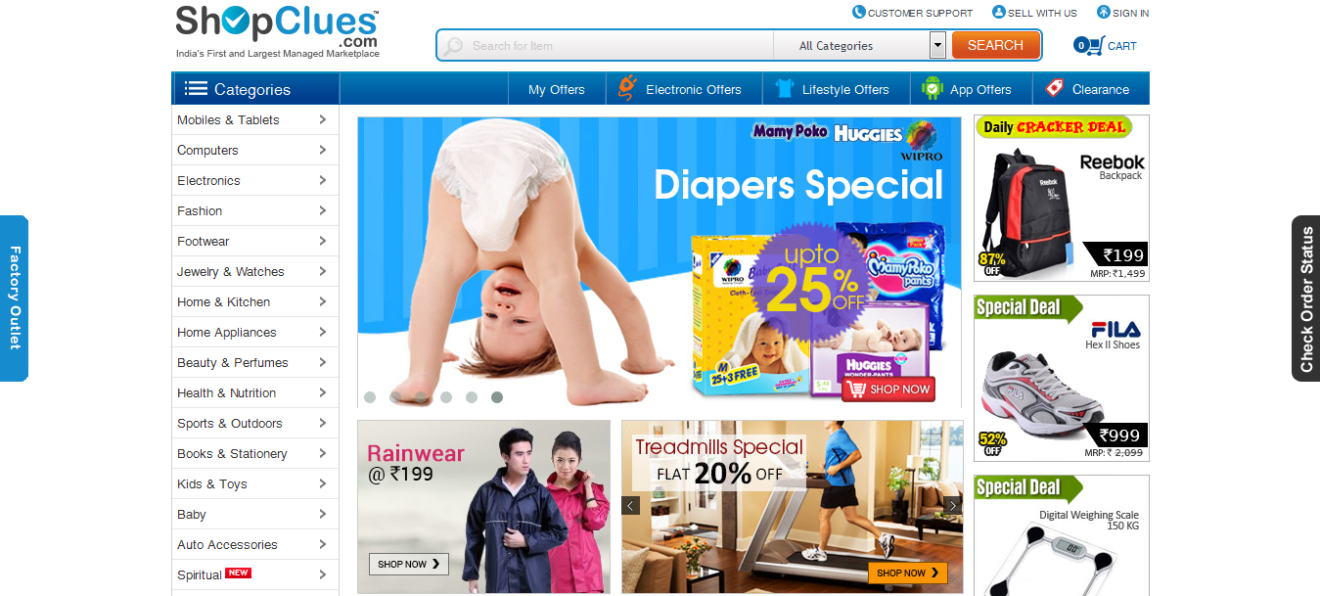
    ShopClues has partnered with a South Korean trade body to enroll 30,000 wholesale merchants, allowing them to sell directly to Indian businesses and consumers through its online marketplace.

    ShopClues will provide cataloguing, delivery payment and customer support to members of the Korean International Trade Association (KITA), similar to the terms of a partnership it stitched with Chinese online B2B platform DHgate in May, opening up the Indian market to wholesalers from southeast Asian countries.

    Indian merchants do not have many options to buy goods directly from overseas ecommerce platforms. Chinese ecommerce giant Alibaba Group has 4.46 million Indian buyers and sellers registered with Alibaba Wholesale.

    But Amazon India’s Global Selling Programme launched in June and eBay’s Powership programme allow only exports by Indian merchants. ShopClues is also in talks with wholesale platforms in Thailand, Malaysia and Indonesia. These alliances are essential for the company to be able to meet its 2015-16 target of $1.5 billion (Rs 10,000 crore) in gross merchandise value, or the total retail price of all the goods sold on its platform.

    In financial year 2015, ShopClues achieved GMV of Rs 2,500 crore. “The merchants on-boarded from DHgate as well as KITA are an overlap between our wholesale marketplace for consumers and small businesses as well as private marketplace for B2B sourcing for the 1.25 lakh merchants registered on Shop Clues,” said Sanjay Sethi, cofounder and CEO of the Tiger Global-backed company.

    “More importantly, it helps smaller merchants and those in Tier 2 and 3 cities who want to stock up certain goods for their physical retail outlets.”

    The Korean merchants will sell products including cosmetics, home and kitchen appliances, electronic goods and car accessories on ShopClues. They will be charged a fee for services provided by ShopClues.

    “We do the payment processing, including exchange services, and charge the merchant for it. Apart from this, the fulfilment services are also charged.Access to the ShopClues platform is free,” said Sethi. The turnaround time will be 14-45 days, depending on the volume of an order and whether the products have to be custommade, Sethi said.

    On plans for enrolling merchants in Thailand, Malaysia and Indonesia, Sethi said, “Currently, we have not built the entire ecosystem for the SE Asian markets to buy or source from Indian merchants, though we will look at exports going ahead.”

  • JD.com partners with Korean shopping site Lotte.com

    JD.com partners with Korean shopping site Lotte.com

    China’s online direct sales company JD.com has partnered with South Korea’s online shopping site Lotte.com.

    Under the deal, JD.com customers will be able to purchase products from Lotte through JD Worldwide, the company’s cross-border platform.

    Products will cover categories including baby and maternity, cosmetics, fashion, everyday household products, home appliances, food and Lotte-branded products.

    “The demand for products through Korean Mall has been strong and partnering with Lotte will help us meet the growing needs of our users,” said JD Mall CEO Haoyu Shen.

    The announcement follows the successful launch in late March of Korean Mall, which sells authentic imported Korean products on JD Worldwide. Since its launch, dozens of Korean brands started to sell their products to Chinese consumers through Korean Mall. The best-selling product categories include personal care products and cosmetics.

    Lotte.com CEO Hyeong Jun Kim said JD.com’s users are the ideal audience for the company as they look to develop their business in China.

  • Starbucks execs optimistic on mobile ordering and China

    Starbucks execs optimistic on mobile ordering and China

    Starbucks is investing heavily in ‘mobile order and pay’, with plans to roll out the feature across the US by the end of this month, CFO Scott Maw said at the Goldman Sachs retailing conference on Thursday.

    Previously, the coffee giant had set itself the end of the year as a deadline to finish implementing the service nationwide, with the Android version poised for release a little earlier.

    “We have a winner, and it’s running ahead of our expectations,” Maw told analysts and investors at an investment conference in New York.

    The mobile ordering and pay feature was introduced last year and is gaining traction. In June Starbucks announced it will spend £30m on a technological revamp of its UK business and Starbucks’ UK MD Mark Fox told Retail Gazette that mobile has played a valuable role in the retailer’s success. Last year, the Seattle based chain process over $2bn in mobile transactions.

    Next year, the app will add suggestions for orders based on consumer data.

    Starbucks has recognised the power of e-commerce and is wielding it to allow for its next revolution: delivery.

    Supposedly, the hazelnut latte maker hasn’t been hampered by the economic stagnancy in China,

    the company “is not seeing any material impact on profitability or revenue,” Maw said. “The number of transactions that we’re seeing is good,” and this quarter’s results are “going to stack up really well in China,” he added.

  • Jakarta’s motorcycle startup game has another contender in the form of Wheel Line

    Jakarta’s motorcycle startup game has another contender in the form of Wheel Line

    With the evident popularity of Jakarta’s motorcycle startups like Go-Jek and HandyMantis, it’s fair to say that the city’s transport and delivery nervous system has potential to be rewired. Now, those two firms see another competitor in the form of Wheel Line.

    Wheel Line is an on-demand courier and transportation company that utilizes motorcycle taxis, or “o-jeks” as they’re called in the archipelago. The company is brand new compared to its competitor Go-Jek, which has been around for a few years already, as it just launched in early January.

    “I have a wine business that requires delivery to our customers which are located in diverse part of Jakarta, Depok, Tangerang, and Bekasi, and I found it hard to find a reliable courier service that can be trusted with the goods,” explains Wheel Line’s founder Chris Wibawa as he recalls the startup’s inception. “What is awesome about Wheel Line is that we stand by our motto, to deliver within two hours and also, we handle one order at a time to ensure care and precision.”

    Wibawa says one strength his company has is that, at this stage, Wheel Line can pay close attention to each individual customer. The startup also offers customizable orders that can include additional requests. For example, a customer could order several different items in a single delivery parcel. These can also include things like delicate objects and perishable foods, not unlike the offerings of Wheel Line’s competitor HandyMantis.

    Wheel Line charges customers based on the delivery zone they’re located in. According to Wibawa, there are eight zones. The first zone costs Rp 30,000 (US$2.30) and the price goes up to Rp 120,000 (US$9.25). The zones are calculated based on a radial distance from Wheel Line’s office in Muara Karang.

    Wibawa didn’t comment on the details of his startup’s revenue, but he did say:

    This market still has a lot of room to explore and expand…We provide A to Z services for our customers, not only in delivering goods or merchandise but also buying movie tickets, exchanging invoices, and more.

    Currently, Wheel Line does not have a mobile app, as it simply takes orders via email and telephone. The same goes for its running mate HandyMantis. This is something the startup will need to create if it hopes to stay competitive with Go-Jek, a company that already has apps for Android and iOS, and claims more than 2,500 drivers.

    Currently, Wheel Line is a fully bootstrapped operation and all marketing to date has been done through word-of mouth. However, Wibawa says he is open to hear about opportunities and potential partnerships. “For now we have a centralized process which is effective since it allows us to supervise more closely and provide the best service to our customers,” says Wibawa.

  • Jakarta’s HappyFresh gets $12M more in the bag to boost grocery delivery in Asia

    Jakarta’s HappyFresh gets $12M more in the bag to boost grocery delivery in Asia

    Indonesia-based grocery delivery app HappyFresh announced today it raised US$12 million in a series A funding round led by Vertex Ventures, the venture arm of Temasek Holdings and Sinar Mas Digital Ventures (SMDV), the venture arm of Indonesia’s Sinar Mas Group. Other participating investors include Asia Venture Group, Beenext, Ardent Capital, 500 Startups, and Cherry Ventures.

    After launching its next-hour online grocery delivery service in March in Indonesia and Malaysia, HappyFresh decided to expand to Thailand and Taiwan.

    “We are very happy to partner with Vertex […] and SMDV […] We are looking forward to benefitting from their strong networks to further expand our footprint across Southeast Asia,” says HappyFresh CEO and co-founder Markus Bihler. “We will continue to invest in enhancing our product and service […] building HappyFresh into the region’s leading food tech group.”

    HappyFresh is an early mover in the food marketplace industry in Southeast Asia. Established in October 2014, the firm has partnered with well-known supermarkets, including Ranch Market and Farmer’s Market. The company employs personal shoppers who choose products in-store. HappyFresh claims its on-demand logistics network allows for next-hour delivery. The company is headquartered in Jakarta with operations in Malaysia, Indonesia, Thailand, and Taiwan. The founding team includes Markus Bihler, Benjamin Koellmann, and Fajar Budiprasetyo.

    Koellmann a Manila launch is slated for October, while HappyFresh is also exploring other Indonesian cities for expansion, like Surabaya. Koellmann and his partners have also created HappyRecipe, a spinoff of the startup’s core offering. HappyRecipe lets users read blog posts to get inspired about cooking. It also offers up various ready-made recipes, which users can follow to purchase specific ingredients and prepare dishes at home.

    “We have very strong and experienced local managing directors who run each market with a local team, and they are supported by our headquarters here in Indonesia,” says Koellmann. “Data science and customer insights are at the core of our DNA.”

    HappyFresh faces many competitors in Asia including Go-Jek in Indonesia with its Go-Food service, as well as names like Indonesian meal-kit delivery service Black Garlic, as well as Tesco Lotus and Tops Shop Online in Thailand. Singapore-based RedMart and Indonesia’s Sukamart can also be seen as a regional contenders.

    “This is a business model which clearly benefits the supermarkets and the consumers. Its capital efficient model allows it to scale easily and very quickly,” says Joo Hock Chua, managing director of Vertex, who will join the board of HappyFresh. “Markus and his team are experienced entrepreneurs and they have demonstrated strong execution capability. Vertex is happy to lead this round of investment. We will bring our experience and global network to help HappyFresh.”

  • Pedder Red Launches E-Commerce Site

    Pedder Red Launches E-Commerce Site

    Pedder Red, Pedder Group’s in-house private-label that specialises in contemporary shoe fashion, is proud to announce the launch of its e-commerce site, pedderred.com, offering free shipping & returns to customers in Hong Kong, Macau and Singapore.

    The site will carry all Pedder Red releases including more than 70 styles of edgy pumps, popular skater slip-ons, stylish booties and handbags. The “TRENDS” section will display a frequently refreshed, curated selection of popular and best-selling items; while the “SHOE WANTED” section highlights the season must-haves. Pedderred.com also offers online-only pre-ordering on key items and special promotions.

     The online store launches with Pedder Red’s Autumn/Winter 2015 collection titled “Who Cares”. Celebrating modern femininity with a salute to the rebellious, carefree attitude and style of street fashion, the collection includes exquisitely designed shoes using materials such as studs, zippers, crystals, neoprene and tweed as well as modern and chic prints like leopard and plaid.

    “Pedder Red fans can now shop anytime, anywhere,” said Peter Harris, President of the Pedder Group. “It is with great enthusiasm that we launch pedderred.com, extending our brand access from our store network to the wider world of omni-channel retailing, connecting to our existing and new audiences, continuously growing the Pedder Red community of shoe lovers.”

  • Alibaba feels China pain as it trims sales forecasts

    Alibaba feels China pain as it trims sales forecasts

    E-commerce giant Alibaba has succumbed to the crisis gripping the Chinese economy a year after the company became the world’s biggest float.

    Founder and former English teacher Jack Ma became an overnight billionaire when Alibaba launched on the New York Stock Exchange in September 2014, as the firm raised a record-breaking $25 billion (£16.3 billion) in a float valuing the company at $186 billion.

    Alibaba is the biggest player in the Chinese e-commerce market — where spending is set to hit $1 trillion by 2019 — accounting for 80% of online sales in China.

    The firm is also among the top picks of UK retail investors, according to fund manager Hargreaves Lansdown.

    But the company admitted today that a weakening Chinese economy has taken its toll on business, as it slashed forecasts for the total value of transactions it expects to take place in the current quarter.

    This will now be “mid-single digits lower” than the giant’s initial estimates for the quarter.

    Alibaba’s head of investor relations, Jane Penner, said consumers were still willing and able to spend but that the company had been seeing a “negative impact of the magnitude of the spending”. Average order values are also lower, Penner added.

    What is Alibaba?

    The latest fears over the e-commerce giant come a month after it reported its slowest growth in transactions for more than three years.

    Shares in the company are now below their $68 float price after a near-5% slump overnight to $60.91. The stock has halved since the end of May, when Alibaba’s shares hit $119 — valuing the company at a staggering $300 billion.

    The latest bad news out of China comes hard on the heels of a dramatic slump in imports — fuelling fears of a hard landing for the world’s second biggest economy — and a month of turmoil in global stock markets following Beijing’s sudden devaluation of the yuan.

    China also cut its official growth estimates for 2015 this week. China has also cut interest rates five times since November and intervened directly to stem plunging stock markets.

    Rathbones investment director Jane Sydenham said: “Investors are beginning to adjust to what was initially quite a shock in terms of the renminbi devaluation, share repurchases — normally those kind of activities on the part of central banks signal something really quite serious.

    “It’s taken some time for investors to adjust to the fact that clearly, growth is slowing, perhaps more than we’d thought.”

    Despite the gloom from Alibaba, shares rallied in China for the second day running on hopes of more government stimulus.

    Asian markets rose on Wednesday

    Shanghai’s main market gained 2.3% after the finance ministry set out plans to boost infrastructure spending and speed up reform of its tax system to support the economy.

    Japan’s Nikkei also saw its biggest single gain in seven years — rising 7.7% — as markers rallied on comments from prime minister Shinzo Abe raising hopes of a corporate tax cut and a new trans-Pacific trade deal.

  • Germany’s Metro, China’s Alibaba in e-commerce tie-up

    Germany’s Metro, China’s Alibaba in e-commerce tie-up

    German retail giant Metro said today it is teaming up with Chinese online retailer Alibaba to tap the potential of the booming e-commerce market in China.

    Metro, which operates more than 80 Cash and Carry wholesale stores in China “is now expanding its channels” by opening an online shop in China offering Metro’s own brands, as well as supplier brands from Germany, it said in a statement.

    “In the first phase, over 100 products in the categories of dairy, canned foods, coffee, and chocolate from Metro Cash & Carry Germany as well as cosmetics goods from Real are to be offered online,” the statement said.

    The product assortment would subsequently be expanded to include more food items from Metro Cash & Carry and non-food from its Real supermarket brand.

    “E-commerce is one of our strategic growth drivers in China,” said chief executive Olaf Koch.

    “Opening the flagship store again shows our clear confidence in the Chinese market. This platform enables us to deliver more quality imported goods and German brands to the Chinese customers,” he said.

    Metro and Alibaba said they would also explore possible cooperation in other areas, such as supply chain and market data.

  • E-business lifts Thailand Post

    E-business lifts Thailand Post

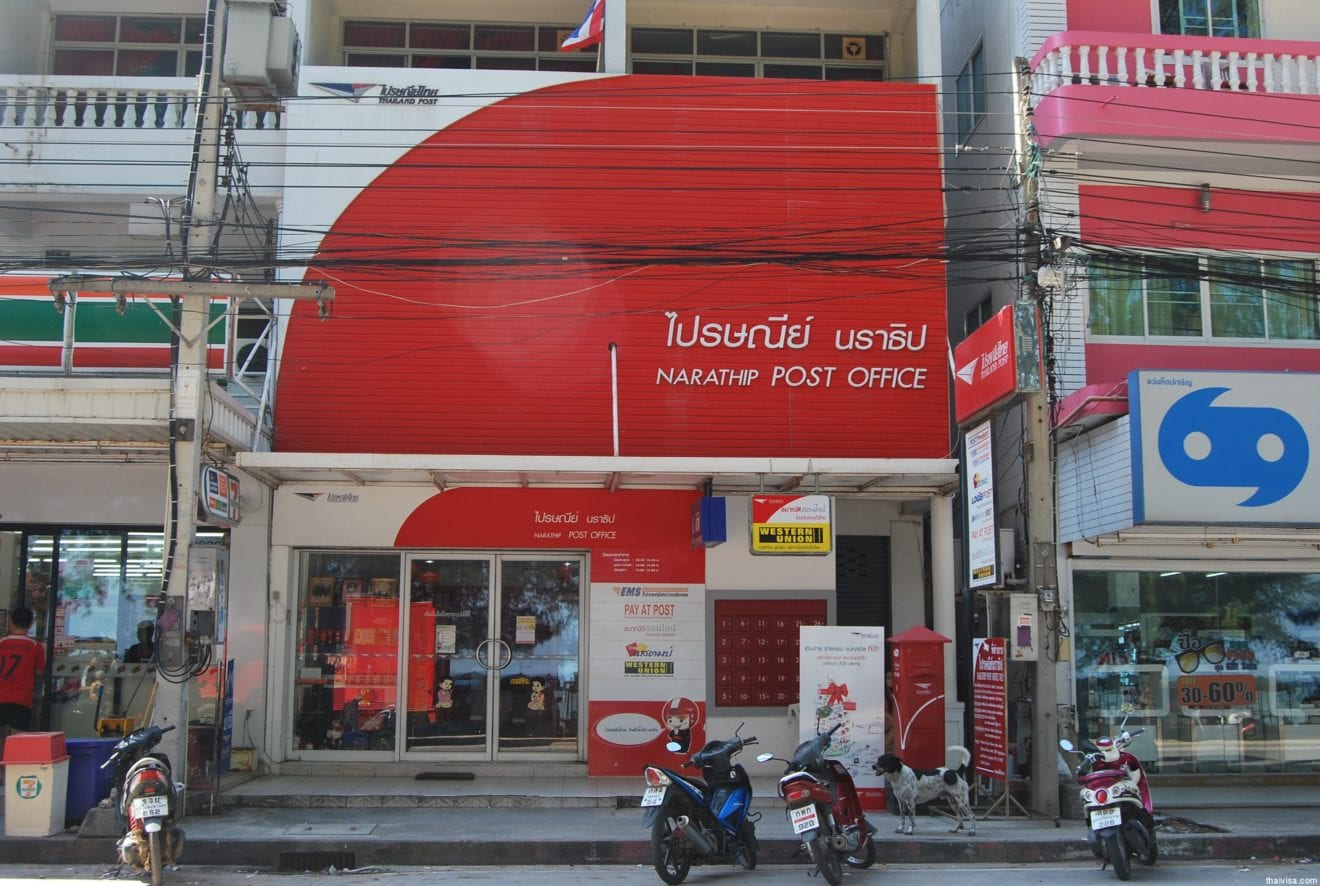
    A man walks past red postboxes outside the Thailand Post branch at Government House. The booming e-commerce market has spurred greater demand for the state enterprise’s express parcel service, despite continued issues with mishandled packages. CHANAT KATANYU

    Thailand Post expects to maintain its stellar profit growth of 10% and reach 2 billion baht this year, supported by the higher-margin express parcel business and booming e-commerce market.

    But the state enterprise’s revenue is forecast to increase by just 1% to 22 billion baht, due to the sluggish economy.

    Piyawat Mahapauraya, deputy president of Thailand Post, said the local e-commerce market grows by 20% a year on average, spurring greater demand for the express parcel service.

    Thailand Post reported consolidated first-half revenue of 11.04 billion baht.

    Of the total, emergency mail service and parcel delivery were still the highest revenue source at 5.13 billion baht or 46.4%, followed by mail service (4.86 billion), retail business (440 million) and payment services (287 million).

    Thailand Post is on the verge of overhauling its delivery processes for emergency mail service and parcels to tackle persistent delivery problems.

    Up to 1,200 parcels were lost during the first half. In addition, 280 parcels were damaged and 3,000 were delayed or arrived after the guaranteed delivery date.

    “We are adopting advanced technologies to address the delivery problem by installing CCTV at all post office branches nationwide,” Mr Piyawat said.

    Damaged parcels amount to fewer than 1% of parcels delivered, he said, and Thailand Post aims to have zero cases of damaged goods within a few years’ time.

    To boost its corporate image and reputation, the postal service has launched a campaign of indemnification for damage incurred by the emergency mail service.

    The campaign, running until this November, lets customers use the screening process of the post office’s service point and confirm that the parcel was “checked”.

    Thailand Post guarantees a payout of 1.5 times the value of a parcel found to be damaged during the delivery process (not to exceed 3,000 baht per parcel).

    The campaign will apply at 17 post offices in Bangkok as a pilot project, Mr Piyawat said.

  • Why Concern Over Apple Growth in China Is Overblown

    Why Concern Over Apple Growth in China Is Overblown

    Apple stock has taken it on the chin in the past several weeks. The stock is down around $110 from an intra-day high of $135 just a few months ago. Most of this decline is due to pervasive fear about declining economic growth in China, and concern over the huge stock market crash there. It seems that, all of a sudden, China has morphed from being one of the premier emerging markets to a huge headwind for global growth.

    Now, attention is turning to the multinational companies that do a lot of business in China, such as Apple. But before investors panic, a dose of calm is appropriate. Here’s why Apple remains one of the strongest businesses on the planet, and will continue to reap tremendous growth in China for many years.

    Tim Cook to the rescue
    CEO Tim Cook has taken the unusual step of contacting the media to address the issue. He emailed CNBC’s Jim Cramer on Aug. 24 to discuss the state of Apple’s business in China, and had this to say:

    I get updates on our performance in China every day, including this morning, and I can tell you that we have continued to experience strong growth for our business in China through July and August. Growth in iPhone activations has actually accelerated over the past few weeks, and we have had the best performance of the year for the App Store in China during the last two weeks.

    Although at times, we should take CEO-speak with a grain of salt, these are strong statements. It’s unlikely Cook would do this if he were not confident in what he was saying. It’s valuable for investors to have a boots-on-the-ground perspective from someone as close to the situation as Cook. And judging by Apple’s recent performance in China, it’s hard to envision the situation changing all that dramatically in a matter of a few weeks.

    Growth In China remains compelling
    The other reason I’m not worried about Apple in China is because I think there is still plenty of growth potential there, even if GDP comes in lower than previously expected. The emerging middle class in China is pushing millions of consumers upward, and Apple is a hugely successful, growing brand.

    Apple’s revenue in China more than doubled last quarter, year over year, thanks to the ongoing success of the iPhone 6. That made China Apple’s fastest-growing geography by a wide margin. There’s little reason to think consumers in China just stopped buying Apple products and services, especially now that we have information directly from management.

    LTE penetration remains low in China, Apple continues to gain share there, and everything coming from the company itself is nothing but positive about China. Even as it pertains to Apple’s other products, the results are very good. For example, Tim Cook stated on the last conference call with analysts that Apple claimed its highest ever PC share in China last quarter, thanks to 33% revenue growth of Macs. Revenue for the App Store also more than doubled in China last quarter.

    Last but not least, retail remains a tremendous catalyst in Apple’s favor. As Cook articulated on the most recent conference call, Apple opened its 22nd retail store in China last quarter. The company is aggressively expanding its retail operations, and is on track to have 40 stores open there by the middle of next year. That’s yet another indicator of strong demand in China.

    Don’t sell on panic
    Apple stock right now is a good bargain. At around $110, the stock trades for 13 times trailing earnings per share and 11 times forward EPS estimates. These valuation multiples represent meaningful discounts to the broader market. While there’s no guarantee that Apple stock won’t get even cheaper, it makes no sense to me to sell at these prices. That’s particularly true because I believe the China fears are way overblown.

    Apple enjoys the luxury of commanding premium prices for its products. Nothing about that has changed in the past few weeks, despite the panic selling. If anything, Apple is a buy here, not a sell, and the market may be in for a big surprise when Apple next reports earnings.

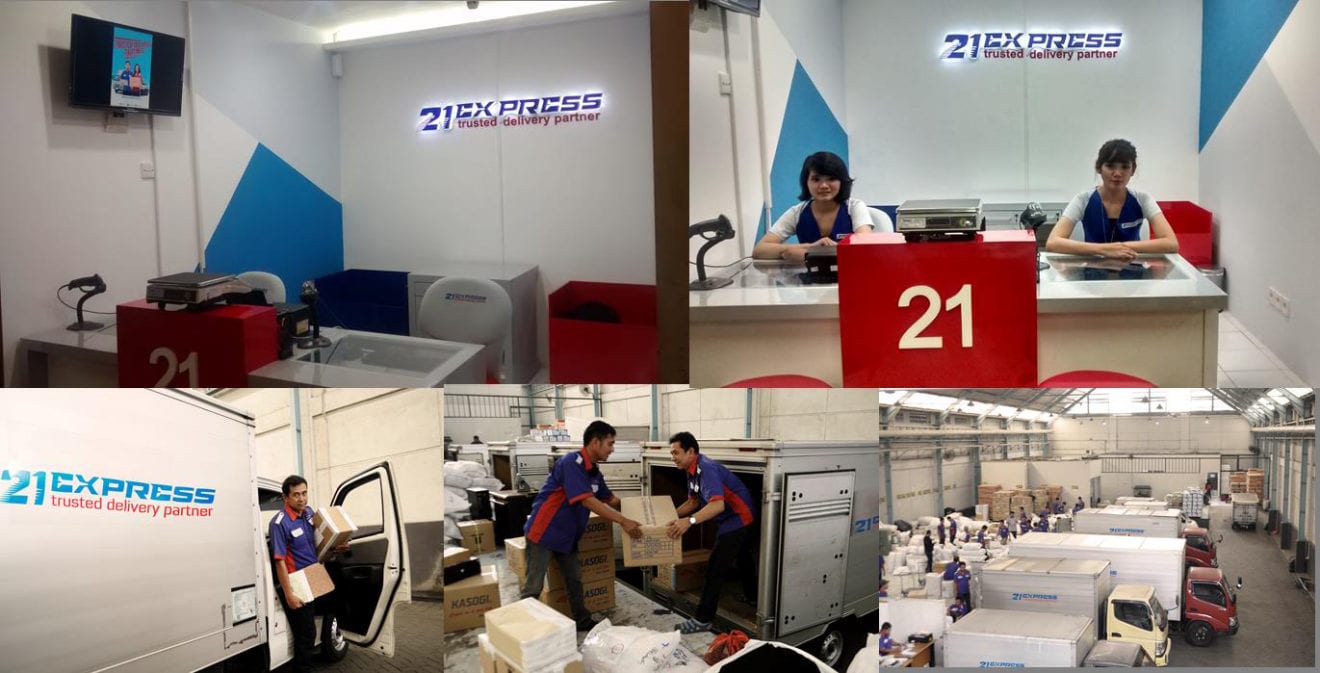
  • Logistics firm 21Express to tap Indonesia’s e-commerce boom for higher growth

    Logistics firm 21Express to tap Indonesia’s e-commerce boom for higher growth

    Founder and CEO 21Express Tjia Anastasia told reporters on Wednesday that the company’s plan to enter the retail courier business is driven by the high demand from retail sector for domestic and international shipments.

    “We have seen a fast growth in e-commerce since about 2010.This growth has really impacted the logistics business as companies have to send packages to Indonesia regularly,” Fany Wyadi, managing director of 21Express, said.

    As online shopping becomes increasingly popular in smaller cities, the Jakarta-based company expects to see shipments growth double or even treble in the next year from the current 130,000 packages each month, said Fany. 21Express’ clientele is dominated by corporates who account for 70 per cent of the business while it has already signed up three of the country’s top e-commerce players as clients, Fany said, declining to divulge further.

    According to independent research body IDC, e-commerce market in Indonesia grew by 42 per cent from 2012 to 2015.

    The high growth is encouraging e-commerce businesses to find reliable partners so that the delivery of goods and documents can be done in time. For example, one of the leading retail optical networks of the country Optik Melawai, has partnered with 21Express to send stock glasses and sales tools to hundreds of outlets in Indonesia. Tjia explains that its first partner is serving the retail customers of a communication equipment distributor firm to distribute its high value products.

    “We are the pioneer company behind the successful sales and distribution of mobile phones in Indonesia and one of the companies that is believed to transmit the tools and medical material to the corners of Indonesia,” Fany said.

    Backed by more than 200 units in its fleet, the company currently has 30 official outlets in Indonesia with an additional 50 partners that franchise the service. The company said, it was in the process of adding 200 new outlets by the end of the year.

  • Indonesia’s eFishery raises undisclosed pre-Series A funding

    Indonesia’s eFishery raises undisclosed pre-Series A funding

    INDONESIA’S eFishery, a smart fish feeder manufacturer, said it has secured pre-Series A funding from Dutch aquaculture investment fund Aqua-spark and Indonesian venture capital (VC) firm Ideosource.

    eFishery did not disclose the investment amount, but said the funds would be used to scale its distribution network nationwide, and also to ramp up manpower.

    “eFishery is a perfect example of a company that is solving real problems in a lucrative market,” said Andrias Ekoyuono, vice president of business development at Ideosource.

    According to the Food and Agriculture Organisation, more than 96% of fish farming activities worldwide is concentrated in Asia. In Indonesia alone, the overall market size for aquaculture is US$5.4 billion.

    As an Internet of Things (IoT) startup for fish and shrimp farming, the Indonesian firm said it is tackling one of the largest challenges in commercial aquaculture: Feeding operations.

    Fish feeding traditionally makes up between 50% and 80% of fish farming overhead costs, eFishery said in a statement.

    Overfeeding negatively impacts the environment in many ways, as a great deal of fish food ultimately goes to waste. It also harms the health of a farmer’s stock. Underfeeding means fish may not survive.

    The result of unmeasured and inexact fish feeding methods on a commercial scale inevitably means economic losses for farmers, the company said.

    eFishery offers a transformative, affordable, tech-based solution to solve the problem, in the form of an automatic smart feeder that uses sensors to measure fish appetite and appropriate feed amounts.

    Designed for both small and large-scale farmers, the system can sense appetites, automatically distribute feed, and give real-time reports of consumption on the farmer’s smartphone, the company claimed.

    “The problem we are solving is the inefficiency of feeding in the fish farming business,” said eFishery cofounder and chief executive officer Gibran Chuzaefah Amsi El Farizy.

    “I saw the problem when I was a fish farmer myself. Fish feeding is done inefficiently by labourers, and farmers don’t have any technology to control the feeding yet.

    “We built this product to make the fish and shrimp farming business more efficient, convenient, and accountable,” he added.

    eFishery said it makes makes money from selling smart feeders to farmers and distributors. It also charges a monthly subscription fee for the software used to monitor and analyse fish feeding activities in real-time via tablet or smartphone.

    On average, its smart feeding system reduces the amount of feed used by 21%, the company claimed.

    eFishery said it has sold hundreds of units in the past two years, and currently has over 17,000 fish and shrimp farms in its pipeline, which include orders from Thailand, Singapore, India, China, Brazil, and countries in Africa.

    “We are very excited to solve the global challenge of fish feeding with eFishery,” said Aqua-spark partner Amy Novogratz.

    “Indonesia has about 3.3 million fishponds and 2.7 million fish farms. When brought to scale, it could have a massive impact across a global industry plagued by this challenge.

    “It has the potential to set a new standard for aquaculture and make the industry more transparent, data-driven, and accountable – all factors that will make businesses in this sector more investment-friendly,” she added.

    eFishery said it will use the newly acquired capital for three purposes: To engage distributors, find local partners, and expand its market share aggressively in Indonesia.

    It is also developing a software-side platform, and will create a better dashboard for customers, as well as add more features and fish compatibility for its device.

  • MatahariMall Sets Its Sights High in Booming E-Commerce Scene

    MatahariMall Sets Its Sights High in Booming E-Commerce Scene

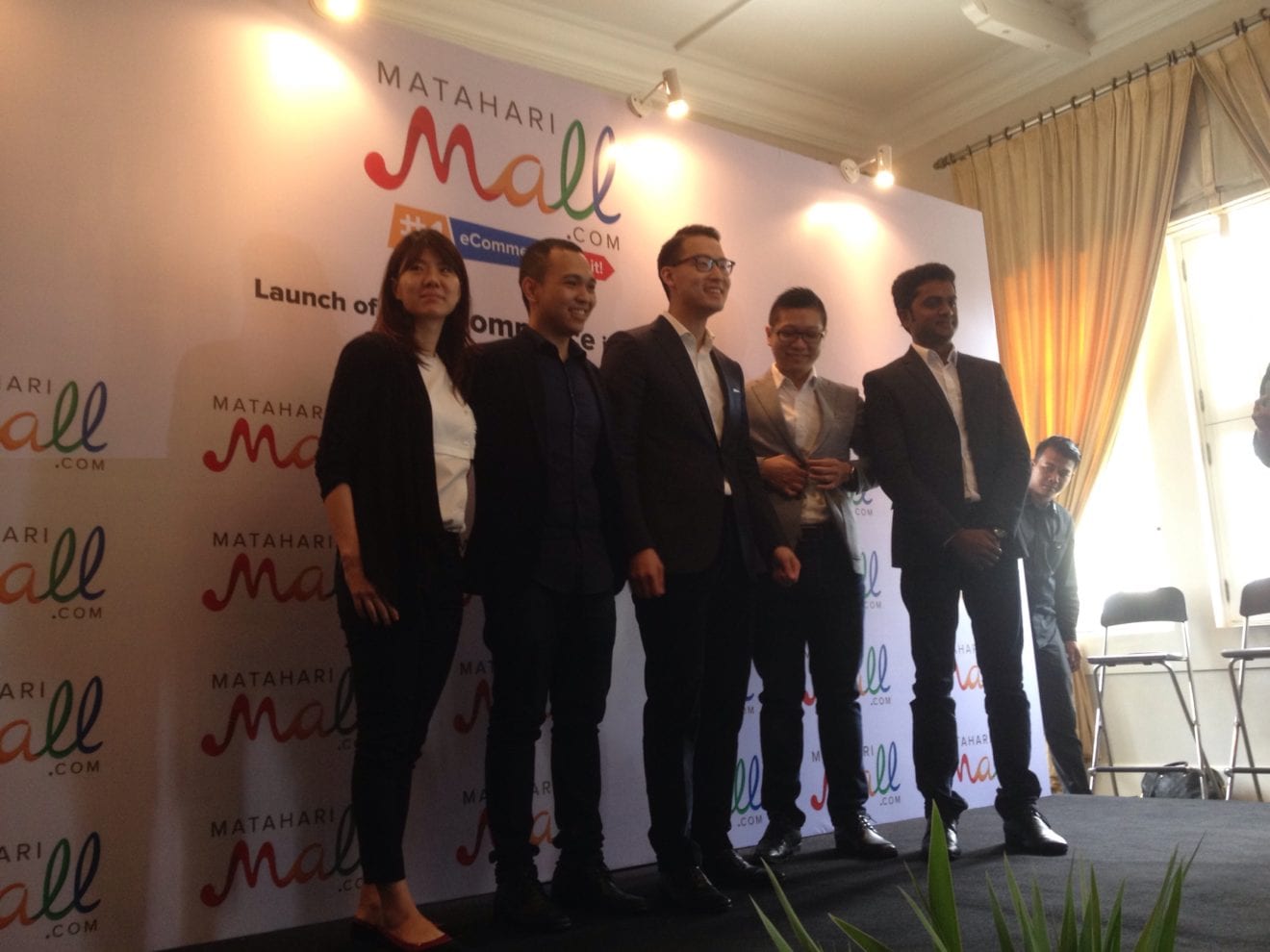
    Since its soft-launch earlier this year, MatahariMall has garnered nearly 200,000 customers with 200,000 different products in its inventory offered by some 1,200 vendors, according to Hadi.

    It has also set up a 10,000-square-meter warehouse located near Halim Perdanakusuma airport in East Jakarta.

    Backed by Lippo, one of the nation’s biggest retail groups, MatahariMall offers an online-to-offline service that would allow customers to order their goods online and collect them at a nearby Matahari department store or Hypermart supermarket.

    Both Matahari and Hypermart are affiliated with the Lippo Group, as is the Jakarta Globe.

    The service will later also be expanded across Lippo’s network, to outlets such as the Books & Beyond bookstore chain, Hadi said.

    “We are very proud of the team,” said the Lippo Group’s John Riady. “The growth numbers are very strong and the team is very focused. Lippo and our other investors are fully committed to doing anything we can to support MatahariMall as it pioneers e-commerce in Indonesia.”

    Undeterred by the current economic slowdown, Emirsyah Satar, the MatahariMall chairman, said the site aimed to capture a 20 percent share of Indonesia’s online retail market over the next five years, banking on the country’s expanding middle-class population.

    “We can see that Indonesia’s e-commerce still lags behind our neighbor countries,” he said. “In fact, we see the economic slowdown as a momentum to boost online retail, because most people are now looking for more affordable products.”

    Lippo’s much-publicized venture has lured in a series of seasoned executives from Indonesia’s tech industry, including Hadi from Zalora, another popular e-commerce site; Emirsyah from Garuda Indonesia; and ex-Google Indonesia head Rudy Ramawy as vice chairman.

    Adrian Suherman, previously the CEO of aCommerce, a Thai e-commerce logistics provider, also recently joined the MatahariMall team as a commissioner.

    The Lippo Group in April appointed Credit Suisse and Bank of America Merrill-Lynch to lead its $200 million first-round financing, with Britain’s Rothschild as financial advisers.

  • 11street Grows Local E-Commerce Landscape through Major Participation in MDeC’s #MYCYBERSALE

    11street Grows Local E-Commerce Landscape through Major Participation in MDeC’s #MYCYBERSALE

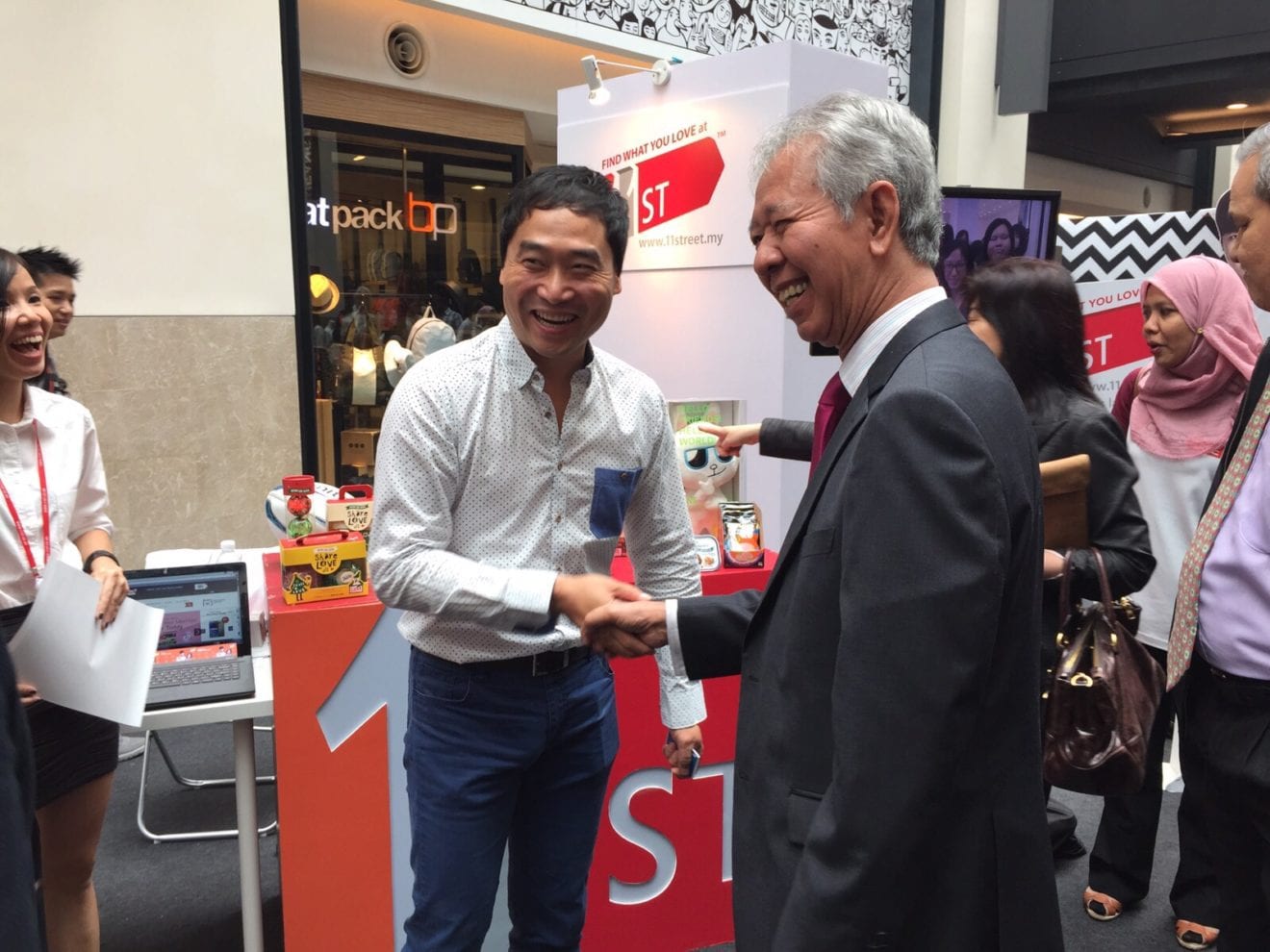
    11street, one of the largest online marketplaces in Malaysia, today announces its participation in the nation’s biggest cyber sale event, #MYCYBERSALE 2015 (www.mycybersale.my), as part of its commitments to enhance Malaysia’s e-commerce eco-system.

    Organized by Multimedia Development Corporation (MDeC), #MYCYBERSALE 2015 will see thousands of online stores gather from 28 September to 2 October with a common goal to stimulate the domestic e-commerce market. #MYCYBERSALE 2015 mobile app has also been developed to attract more local and foreign consumers to shop online. Extending the shopping period from 3 days to 5 days, this event is expected to surpass last year’s success[1] and to continue boosting the online shopping culture in Malaysia.

    11street’s Vice President of Merchandising Division, Bruce Lim says, “A national online event like this is not to be missed as it would definitely spur online shopping demands in the country. As a leading global e-commerce player, 11street is dedicated to empower our sellers with intensive industry knowledge to meet market demands. We urge local SME sellers to grab the opportunity and join us to be part of this annual cyber sale. As a result, sellers will be able to broaden their market reach and increase by leveraging on our resources and promotions strategically at this event.”

    Expect Shockingly Good Deals and Discount Coupon Giveaways from 11street at #MYCYBERSALE 2015

    To enthuse Malaysian shoppers to buy online, 11street will be lining up a series of discounted products, deals and attractive giveaways for #MYCYBERSALE 2015. Consumers can look forward to irresistible discounts during the event period, of which one of them continues to be the significant lowest price guaranteed ‘Shocking Deal’ to surprise local consumers with great offer.

    Before #MYCYBERSALE 2015 begins, 11street will also be initiating an exclusive promotion for Malaysian consumers to download free shopping credits in Malaysian Ringgit from 14 September to 27 September on a daily basis. This is to offer them a fun shopping experience online, and for those that logon 11street online and mobile platforms for a minimum of 3 consecutive days will be rewarded with up to 50% bonus coupons.

    According to statistics released by MDeC, #MYCyberSALE 2014 saw a total of 4.7 million Malaysian visitors (16% of populations) made 77,000 online orders during the 3-day sales period, of which 57% of them accessed the site via mobile devices.