Category: E-Tailing

Retail News Asia is committed to providing both local and global retailers with the latest E-Commerce & Etail news throughout the Asian market. This on a daily base.

  • Japan’s Kakaku.com launches Priceprice.com in India

    Japan’s Kakaku.com launches Priceprice.com in India

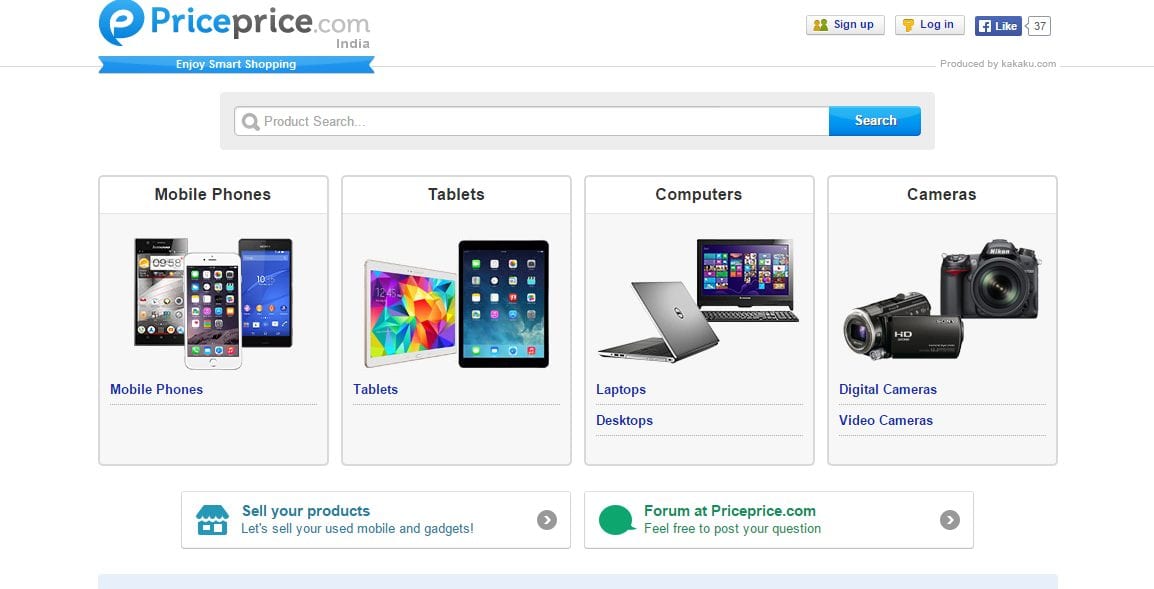
    Japan’s Kakaku.com has launched the Indian version of Priceprice.com, a price comparison site for mobile phones, tablets, computers and household appliances.

    Priceprice.com shows online shoppers a list of products from various sites, sorting the results from lowest to highest price, to easily show the best available price for that product.

    Kakaku.com is the largest price comparison site in Japan with approximately 50 million monthly users. Eighteen years after its founding, Kakaku.com has strengthened its management expertise and in recent years, the company has expanded its service globally. Following the launch in the Philippines, Thailand and Indonesia, Priceprice.com has established its position as the largest price comparison site in Southeast Asia with approximately 5.3 million unique users in all three countries.

    “We have now launched a new site in one of the fast-growing eCommerce market, India, where we dedicate ourselves continuously to offer pleasurable shopping experience for consumers,” the company said in a statement.

    The site not only compares prices. Users can access forums for each product allowing a place for people to ask questions about a product or for users to exchange opinions with other users. Shoppers can also see the ratings and reviews written by users who have actually used the products.

    “As we continue to improve product search and comparison functions, we also hope to include price information from offline retailers to further expand our services,” the company said.

  • One of China’s top 10 e-retailers grows Q2 revenue 30%

    One of China’s top 10 e-retailers grows Q2 revenue 30%

    September 4, 2015, 10:56 AM

    The Beijing-based web-only retailer’s total net revenues in the second quarter of 2015 were 2,312.3 million yuan ($373.0 million), a 29.8% increase from 1781.65 ($280 million) in the corresponding period in 2014. Net loss for the quarter was 21.2 million yuan ($3.4 million), compared to net income of 28.8 million yuan in the second quarter of 2014, or 1.6% of total net revenue in that quarter.

    “During the second quarter of 2015, we expanded our leading position in China’s books and media market, gained additional share in the baby, children and maternity destination category and continued to enjoy some of the highest conversion rates in the industry,” executive chairwoman of Dangdang Peggy Yu Yu said in a statement accompanying the earnings report.

    Dangdang.com was founded by Chinese book publisher Li Guoqing and his wife Peggy Yu Yu, who says she was inspired by Amazon.com when she studied in the United States.  In terms of sales, Dangdang.com is one of the largest book and media e-retailers in China and the company has gradually expanded into other categories, such as electronics and apparel.

    Dangdang also has invested heavily in serving mobile shoppers. “Mobile orders remained close to record levels at 40% of total orders, and we improved monetization of our mobile platform with a sharp increase in mobile advertising revenue,” Yu said. “Our digital business is gaining momentum, driven by our growing catalog of e-books, including original content.”

    Dangdang’s size is still small compare to leading e-retailers, however its executives contend it can challenge the Chinese e-commerce leaders, Alibaba Group and JD.com.

    “I don’t think the position of those leaders is secure. As we all know, the size of the business is not equal to competitive advantage and competitive threshold.  The market will be settled only if the marketing leaders have some unique edges and generate difficult barriers to entry,” Dangdang cofounder and CEO Li Guoqing said last month in a speech at the One Thousand E-commerce Professionals Seminar in China.  “Alibaba’s sales only account for about 5% of retail sales of China and that is not enough barrier to entry. At same time, JD.com’s electronics sales only represent 2% to 5% sales of electronics products in China. If some companies get a new business model, there are still plenty of chances to beat those leaders.”

    Also, Li said few people knew Vipshop, No. 4 in the Internet Retailer China 500, and Yihaodian, No. 7, three years ago, but now they have become e-commerce leaders in their categories in China. Wal-Mart Stores took full control of Yihaodian in July. Vipshop is a discount fashion retailer.

    • Dangdang.com is No. 10 in the Internet Retailer 2015 China 500. JD.com is No. 1. Alibaba is not ranked in the China 500 because it does not own merchandise but rather provides a platform for more than 8 million merchants to sell. However, the gross merchandise value of goods sold on Alibaba’s online marketplaces totaled $109 billion in the first quarter, while JD.com reported $18.5 billion in GMV. By contrast, Dangdang’s GMV in the second quarter was 1,890.6 million yuan ($304.9 million), a 32.1% increase from the same period in 2014.

    For the second quarter ended June 30, Dangdang reported:

    • The combination of product revenue from its own sales and GMV from marketplace sellers reached 4,130.3 million yuan ($666.2 million) and grew 31.8% year-over-year.
    • Active customers were 9.7 million, an increase of 15% from 8.4 million 2014.
    • Total orders for the second quarter of 2015 were approximately 19.5 million, a 19% increase from 16.4 million in 2014.

    For the first six months of 2015, Dangdang reported:

    • Net revenues were 4093.99 million yuan ($644.30 million), up 18.5% from 3454.25 million yuan ($543.58 million) in the same period of 2014.
    • Net income of 7.62 million yuan ($1.2 million), compared with a $35.1 million yuan ($5.52 million) net loss in same period of 2014.
  • Online security ‘paramount’ for shoppers

    Online security ‘paramount’ for shoppers

    A sense of security is paramount for nearly one quarter of shoppers when evaluating whether to purchase goods from a retailer online, according to a new survey from Worldpay, a payments provider.

    Assuring customers they are in safe hands throughout the entire payment experience should be a priority for retailers, according to 3500 online shoppers polled globally.

    Similarly, for one in four online shoppers, seeing payment authentication and digital certificate logos displayed prominently on a retail site’s homepage is the single most reassuring element in the purchasing process. Forty-six per cent of consumers globally admit this would help address their concerns.

    Transparency around online security is particularly important in China, where 70 per cent of shoppers said they feel more secure shopping when payment authentication and certificate logos are clearly displayed, indicating that this simple measure will go a long way in addressing the misgivings of online customers.

    Shoppers also want security transparency when retailers store personal and payment details. Thirty-one per cent of shoppers worldwide say they don’t want a retail website to store their payment details, and South Koreans and Australians are most averse to the idea with over 50 per cent saying they don’t want this information stored online. In China and Japan, 65 per cent of shoppers expect reassurance that their details will be kept safe by the retailer and want a clear explanation of how this will be done.

    Stuart Thornton, VP of business development in APAC with Worldpay, said: “Nagging doubts about the security of their payment details can add up over the multiple stages of the purchasing journey for shoppers and stop them from ever clicking ‘buy’, even if they really want a product. When selling online, retailers need to step in and reassure customers that their information is in safe hands, from the second they start browsing a site to the moment they receive an email confirming their purchase”.

    At checkout, shoppers expect the ability to use their preferred payment method and want the process to be simple and intuitive. Sixty-five per cent globally have abandoned their purchase at the checkout stage as a result of not being able to pay how they wish.

    Nearly 60 per cent of shoppers worldwide would drop out of a purchase if their preferred payment method was displayed on a retail site’s homepage but wasn’t available at checkout. Forty per cent of shoppers globally admit they would not take the time to look for their preferred payment method at checkout if it was not easy to find. This figure is even higher in Japan, where 62 per cent of shoppers say they wouldn’t search for their preferred payment method if it wasn’t already clearly indicated on the website.

    Retailers must also manage consumer expectations by clearly indicating what they can expect at each stage of the payments journey, particularly when redirecting them to a third-party website. Ninety-four per cent of shoppers globally say this is important, and one-fifth would instantly drop a transaction if ushered to a third-party site without warning. In Japan, nearly 30 per cent of shoppers would drop out if unexpectedly redirected to a third-party site to enter additional details.

    “Purchasing products online demands a certain level of trust between retailers and shoppers, and making the process simple and transparent is absolutely essential,” said Thornton.

    “Retailers will struggle to inspire confidence in their customers if they cannot deliver on shoppers’ expectations and give them peace of mind throughout the online shopping journey”.

    The need for retailers to act as a source of reassurance for shoppers is equally strong when it comes to handling errors or providing customer support. Nearly two-thirds of online shoppers (64 per cent) want a clear and immediate explanation of exactly what went wrong. When it comes to additional support, 27 per cent want to be able to call customer support, while 24 per cent want the option to email a support representative.

    Clear error messages also head off any potential confusion as to whether a transaction has been processed. Ninety-six per cent of shoppers say it is important they receive an email confirming that their order has been processed and their payment accepted.

    Adds Thornton: “If there is one thing to take away from these findings it is that the online payments journey is inextricably linked to the user experience. If retailers cannot reassure customers that their transaction will be quick, secure, and managed to the highest standard of professionalism throughout the payment journey they will struggle to keep shoppers engaged”.

    The research was carried out in partnership with KAE Marketing Intelligence, which conducted a desktop analysis of 350 top retail sites and surveyed 3500 online shoppers in 14 countries across North America, South America, EMEA, and APAC.

  • Blackmores, Sanger to open stores on JD.com

    Blackmores, Sanger to open stores on JD.com

    JD.com says it has secured partnerships with Australian brands Blackmores, a leading Australian natural health company, and Sanger Australia, the Australian meat sales and marketing business of the Bindaree Beef Group.

    Both brands will open stores on JD.com’s direct sales channel and will use the company’s same-day delivery services. Sanger Australia will also leverage JD.com’s cold chain logistics network to ensure that its meat products are delivered fresh to Chinese customers from Australia.

    The announcements follow the successful launch in late June of a dedicated Australian Mall for authentic imported Australian products on JD.com’s cross-border platform, JD Worldwide. Since its launch, dozens of Australian brands have successfully sold their products to Chinese consumers through Australian Mall. The most popular product categories in the first two months of the program include health  care, baby care products and fresh food.

    “We’re pleased to be working with leading Australian brands to build winning eCommerce strategies for this market and help them take advantage of our large and growing base of upwardly mobile Chinese consumers,” said Carol Fung, VP of JD.comand president of JD.com’s FMCG Business Unit.

    “Blackmores is a long-time partner, and we are very excited to be expanding the range of their outstanding healthcare products available to our rapidly growing user base. With demand for Australian fresh produce growing exponentially, the addition of Sanger Australia’s world-class beef to our platform is an outstanding development for our customers.”

    Blackmores Asia MD Peter Osborne said his company has been working with JD.com since 2013.

    “Our increased engagement is testament to our strong relationship and commitment to growing our China business. Working with JD.com not only ensures we get our products to consumers quickly, but will also enable us to initiate targeted and specialised marketing campaigns leveraging JD’s data analytics capabilities.”

  • Capillary Technologies raises $45m for expansion

    Capillary Technologies raises $45m for expansion

    Singapore-based Capillary Technologies has secured $45 million in new funding to expand its back end services to multichannel retailers.

    Capillary Technologies offers a cloud-based platform which powers end-to-end customer engagement, loyalty and social CRM solutions for more than 170 major brands across 20,000 stores, serving over 150 million consumers primarily in Asia, including India, South East Asia, China and the Middle East.

    Customers include industry leaders such as Pizza Hut, KFC, Puma, United Colors of Benetton, Pantaloons, Arvind Brands, Madura Garments, Red Tag, Bata, Courts, Lee and Timberland.

    The company says it has raised $45 million in a series C funding round led by an affiliate of private equity firm Warburg Pincus. Existing investors Sequoia Capital and Norwest Venture Partners also participated.

    Capillary will use the capital infusion to expand its offerings to enable clients to develop an omni-channel view of their customers, both organically by broadening its product suite, as well as inorganically via the acquisition of MartJack, Asia’s leading multi-channel commerce provider.

    Capillary’s cloud-based platform, which can integrate into virtually any point-of-sale device, offers a one-stop solution for retail marketers to engage with their customers, by capturing and analysing customer data, and enabling targeted customer communications to increase loyalty and engagement. By combining big data with a robust analytics engine, Capillary optimises the relevance and profitability of personalized offers to consumers in real-time, significantly increasing both loyalty and sales.

    “Warburg Pincus needs no introduction for the kind of strategic direction and commitment they bring to the table, in addition to the investment. This funding round validates our model and vision of enabling retailers to harness the power of the cloud and to provide a deeper connect for consumers across channels. It also puts us on the path to being one of Asia’s true product bellwethers, which will establish us as a strong contender on the global map of Enterprise SaaS solutions,” said Aneesh Reddy, co-founder and CEO of Capillary Technologies.

    “The retail sector in Asia is undergoing a significant transformation, as organised retail develops in tandem with eCommerce, and as retailers invest in tools to drive consumer loyalty and retention across online and offline channels,” said Nitin Nayar, MD of Warburg Pincus.

    Concurrent with the capital raising, Capillary has also expanded its portfolio in areas of multi-channel commerce enablement, online-to-offline, predictive analytics and customer experience to expand its product and customer service capabilities.

    MartJack is Asia’s leading multi-channel commerce platform serving over 250 companies, including major global brands such as Walmart, Unilever, Future Group, Lulu, Clarks, Body Shop and Aramex, who use its cloud platform to develop online storefronts enabling digital commerce with shoppers.

    Its ready-to-use software platform provides a one-shop digital commerce solution to brands across Asia, featuring 30+ payment partners, 10+ logistics partners and 70+ service partners (e.g. digital marketing, web development, catalog management, design services).

  • US wine giant Robert Mondavi to launch online in China

    US wine giant Robert Mondavi to launch online in China

    Famed Californian winery Robert Mondavi is to join Alibaba Group’s Tmall.com online shopping marketplace to reach more consumers in China, the world’s largest wine-consuming market.

    Robert Mondavi says its exclusive Tmall flagship store will be the California company’s first and only online sales channel in China. The outlet will sell US-bottled labels such as Robert Mondavi Winery, Robert Mondavi Private Selection, Woodbridge by Robert Mondavi, and Twin Oaks by Robert Mondavi. The Robert Mondavi brand is owned by alcoholic beverage maker Constellation Brands, which bills itself on its website as the world’s top premium wine producer.

    Philip Kingston, senior vice president of international for Constellation Brands, said the company in recent years has “seen a very encouraging uptake in Chinese tourists visiting our wineries in California, as well as wine sales in China.”

    Opening a store on Tmall – China’s largest B2C online marketplace and part of Alibaba Group, whose retail shopping sites in the PRC have 367 million annual active buyers – “allows us to sell our wines to Chinese consumers in a marketplace which we believe will build our brand,” Kingston said in a statement.

    “It also strengthens our presence in China as we expect to benefit from Alibaba’s sophisticated data-analytics capabilities and extensive customer insights.”

    The growth and sheer size of China’s consumer class in recent years has made the country a top market for the world’s vintners. China’s wine consumption in 2014 was more than double that of second placed US, according to data from research firm IWSR.

    Tmall said with the opening of the Robert Mondavi Wines flagship store, it was launching a  “Tmall Vineyard Direct” program, promising to connect with more wineries around the world to allow them to sell directly to Chinese consumers through Tmall. Gary Clubb, head of Tmall international business development, said  “working directly with the winery itself is key to a robust supply chain and allows us to leverage the power of the Alibaba ecosystem to pioneer innovative sales and marketing campaigns to the 367 million buyers on our platforms”.

    Tmall has been aggressively recruiting Western retailers and brands selling products in a range of categories, from fast-moving consumer goods to apparel, to build up Alibaba’s cross-border online sales.

  • Jeweller Plukka to list Down Under

    Jeweller Plukka to list Down Under

    Hong Kong jeweller to celebrities Joanne Ooi is heading to Australia to raise cash to expand her jewellery retail brand Pukka internationally.

    Pukka is set to be listed on the Australian Stock Exchange in October and Ooi is in Sydney and Melbourne this week drumming up institutional support for her high end, handcrafted jewellery designs which have already caught the eye of celebrities such as Lady Gaga and Miranda Kerr.

    Ooi, a former creative director at Chinese-inspired luxury fashion brand Shanghai Tang, created Pukka back in 2011 in partnership with Hong Kong restaurateur Jai Waney. It has a limited range of core designs in stock and a catalogue of made-to-order lines.

    Ooi and Waney work directly with renowned designers – including names like Bernard Delettrez and Sidney Chung – to create exclusive pieces for sale on Pukka’s online stores.

    One third of the shares in Pukka will be listed in Australia, raising an anticipated AU$10 million which will be used to fund expansion into the US.

    While the brand has focused online for its first three years, it opened a single retail outlet in Hong Kong’s Landmark Atrium earlier this year.

    “There is no substitute for a woman to be able to see and touch fine jewelry in person,” Ooi said in a recent interview with CNBC. “[We found that] offline transaction values are much higher than online purchases.”

    Unlike many Hong Kong based design and retail businesses, it is targeting expansion in the west, rather than Mainland China.

    “[Expanding into the United States] is the most economically efficient mode of branding and marketing a global luxury brand,” Ooi told CNBC.

    “Branding among fashion opinion leaders in the United States confers a level of credibility and authority, which is difficult to achieve by just marketing in the Asian market.”

    Pukka’s jewellery does not come cheap. Its most affordable line is $300 and its most expensive circa $150,000.

    The Australian IPO is fully underwritten by advisers KTM Capital.

  • SingPost invests in Hong Kong ventures

    SingPost invests in Hong Kong ventures

    SingPost has revealed investments in two Hong Kong companies as it continues its aggregation of interests in eCommerce and logistics businesses in the broader Asian region.

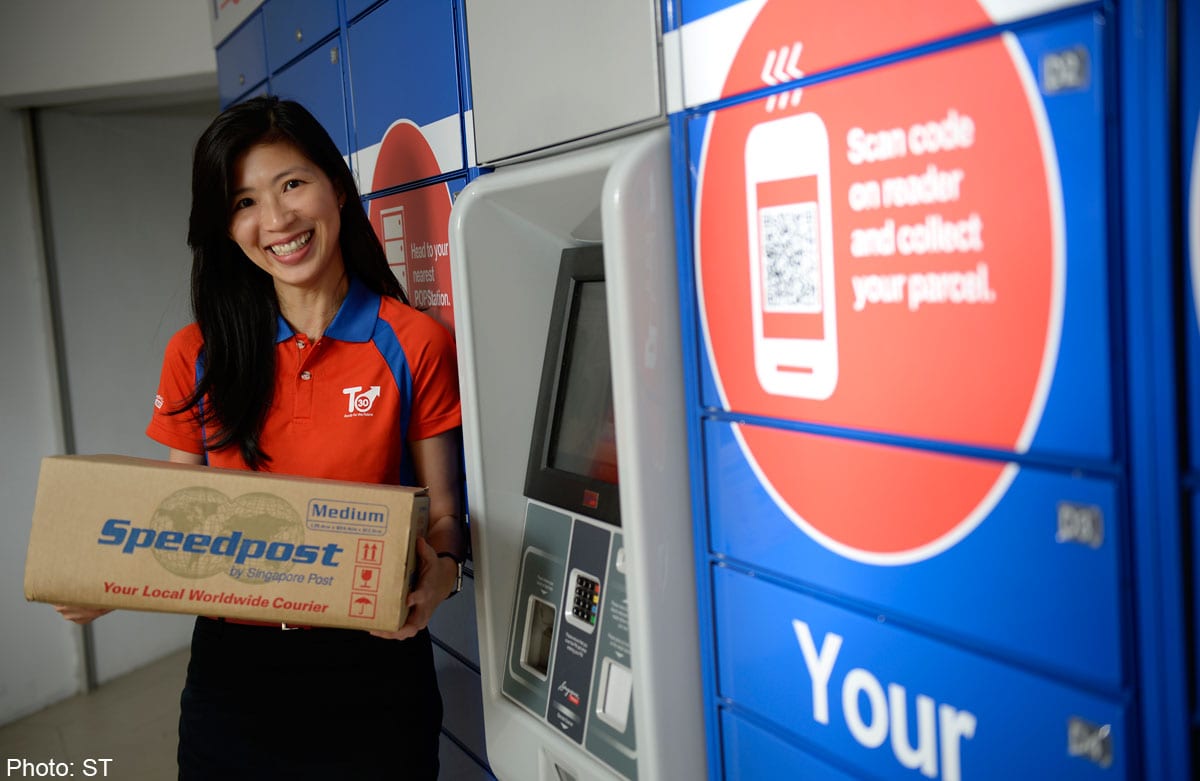
    SingPost subsidiary Quantium Solutions Holdings has spent HK$8 million (about $1.5 million) acquiring 1 million new shares in E Link Station, representing about 50 per cent of the business. Founded last May, E Link Station is creating “a rapidly expanding network of self-collection parcel service points”, a concept with similarities to SingPost’s POPStations across the island state.

    “ELink… is an extension of how we approach parcel deliveries elsewhere in many parts of the world – that is, we give customers flexibility through multiple channels that include locker storage and redemption centres,” explained Dr Wolfgang Baier, group CEO of SingPost.

    The second, larger deal sees SingPost take a 33 per cent stake in Morning Express & Logistics for HK$39.6 million (S$7.2 million). ME provides logistics, documents and parcel delivery services in Hong Kong. The Singaporean company has an option to take a further 33 per cent stake for the same amount if certain terms and conditions are fulfilled.

    “Morning Express gives us a strong last-mile and parcels capability in Hong Kong and extends our eCommerce value chain there, adding on to our warehousing, freight forwarding and front-end eCommerce,” said Baier.

    “As a company, Morning Express has 28 years in the logistics business and they are led by a professional management whose thinking is remarkably similar to ours.”

    Baier said Hong Kong, as a gateway to China, is a priority market for SingPost and a node in its pan-Asian network through which it serves its customers and partners.

    SingPost is 14.51 per cent owned by Chinese eCommerce giant Alibaba Group.

  • Happy Fresh pilots next hour grocery delivery in Southeast Asia

    Happy Fresh pilots next hour grocery delivery in Southeast Asia

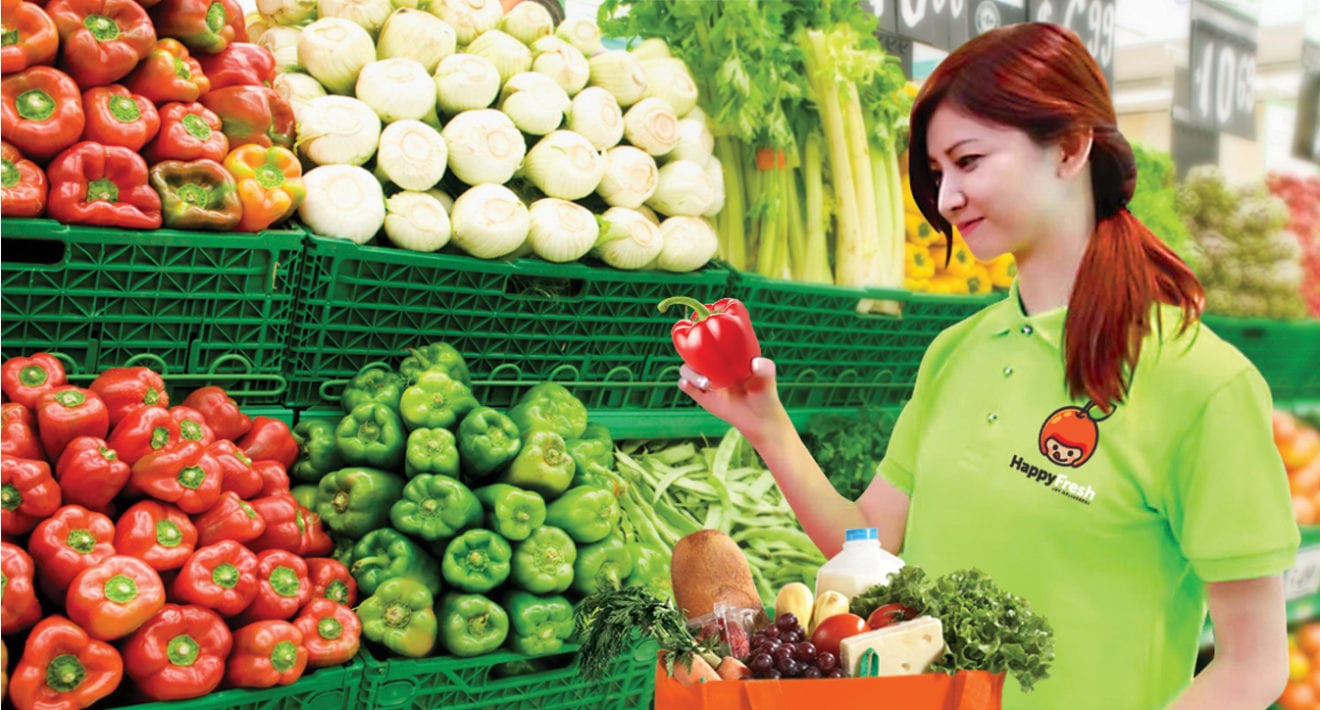
    Groceries delivered to customers’ doorstep in an hour by professional shoppers. This was the promise of online grocery delivery service Happy Fresh when it started last March in Kuala Lumpur and Jakarta.

    Today, the service is available as well in Bangkok and will soon open in Taipei.

    “Our plan is to become Southeast Asia’s leading food marketplace company, and we want to operate in all major, traffic-congested mega cities in the region,” said Markus Bihler, Group CEO and Co-founder of HappyFresh.

    Bihler is optimistic that online grocery delivery in the region is poised for take off.

    “The outlook for the retail industry in Southeast Asia has never been more promising. Opportunities abound in this region with its ever more sophisticated and food-loving consumers, growing populations and steady economies,” he said, adding that Kuala Lumpur and Jakarta, in particular, are very interesting markets.

    “Spending power and credit card penetration are higher in KL than in Jakarta, and in general people are more used to buying things online there. Jakarta, on the other hand, is interesting because we really feel we can solve a huge problem here. We all know about the infrastructure challenges this city faces, and the traffic problems this often leads to,” he explained.

    Happy Fresh believes that with online grocery shopping, it’s one fewer trip customers need to make, which often translates into several hours saved that they can now spend on other activities.

    “In Indonesia, Bihler he said middle and upper-income consumers will continue to drive the growth of modern, online retailers as customers are increasingly quality-conscious, demanding higher levels of service and quality,” Biller said.  “Demand for processed foods and dairy is growing, particularly in urban areas, driven by changing lifestyles as people work longer hours and seek greater convenience.

    Happy Fresh targets to bring the service to the capital cities of Southeast Asia one step at a time.

    Though it does not plan to set up a physical store, it partners with the most established offline grocery retailers in a locality. In-house trained professional shoppers who pick  the best fresh products for customers also provide an advantage.

    Delivery hours are based on the opening hours of its partner stores, which is usually between 10 a.m. and 10 p.m.

    “Our message to our partners is simple: Focus on what you are really good at, which is running grocery stores. Then let us help you bring your brand and your products to an incremental set of customer groups: those one mobile devices, those who would like to order from their home, office or wherever they happen to be, and those who value the convenience of next hour delivery,” he said.

    Happy Fresh also strive to help partners reach customers that are normally outside of their catchment area or would have otherwise ordered a pizza rather than next hour ingredients for home cooking.

    Bihler said they offer ready to use solution to its retail partners at no upfront cost, a  fleet of drivers, and customer service agents. “In short: we help supermarkets grow, reach new customers and move into digital,” he said.

    “The food industry is among those that will always remain a physical, haptic, very sensual core. Yet – as any other – it will see heavy disruption by mobile technologies, ever-changing supply chains and faster lifestyles,” he added.

  • Indonesia’s Snapcart Turns The Humble Receipt Into Big Data For Brands And Retailers

    Indonesia’s Snapcart Turns The Humble Receipt Into Big Data For Brands And Retailers

    Smartphones could give retailers and brands unprecedented insight into consumer spending and behavior just by allowing you to photograph your receipt.

    That’s the premise of a new technology startup that launched in Indonesia today. Snapcart is backed by Ardent Capital — the VC firm behind Southeast Asia’s logistics network aCommerceand numerous e-commerce startups — and it aims to turn oft-discarded receipts into data gold mines.

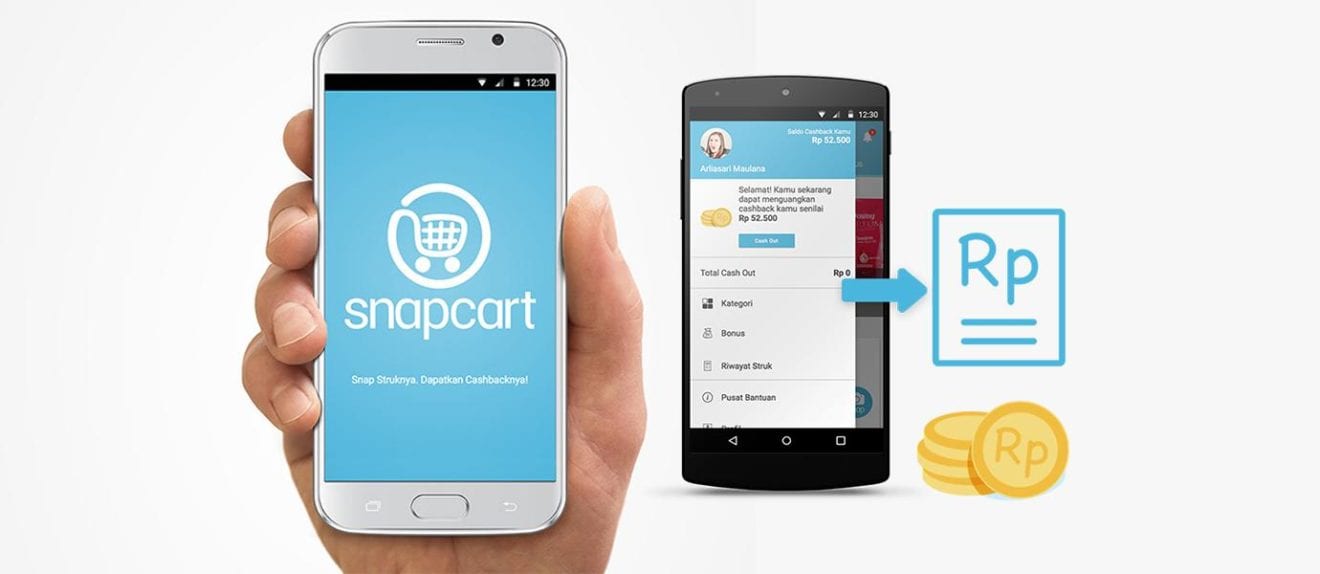
    The theory is simple. Physical retailers and brands know little about consumers and their shopping habits beyond survey-based data and estimates from research firms like Nielsen. Yet, the precious information is contained within a small piece of paper that shoppers typically throw away with little regard: the receipt. Snapcart is incentivizing users to take photos of their receipts and upload them into its app in exchange for cashback and rewards.

    On paper, it’s a win-win — what consumer doesn’t like free stuff? And what brand or advertisers isn’t willing to pay up (incentives) to get fresh insight into their customers?

    The concept isn’t entirely new. Ibotta, a U.S. company backed by over $20 million from investors, provides cash back for access to similar data. Unlike Ibotta, which requires users to photo both their receipt and individual product barcodes for in-store purchases, Snapcart uses artificial intelligence to pull product information right from a receipt, so users take just one photo.

    Jakarta-based Snapcart has launched with two prominent, global brands — Nestlé and L’Oréal — but says it is in talks with another 20 or so partners. Founder Reynazran Royono — formerly with Proctor and Gamble and Boston Consulting — told TechCrunch he came up with the idea when reflecting on his experience as a consultant and a spell at e-commerce firm Berniaga.com, now OLX.co.id. Online retailers have access to a treasure trove of shopper data that physical retailers can only dream of, Royono said, and Snapcart aims to help change things.

    The main challenge looks to be gaining scale among shoppers — Snapcart claims it has 12,000 pre-launch installs of its app. Snapcart said it will initially work with brands, which it is leveraging for marketing and other opportunities for exposure among consumers, and over time it plans to include physical retailers through in-store integrations. It is first focused on grocery items, because they are daily necessities, but will branch out into other verticals over time, Royono explained.

    The company is starting live in Indonesia, Southeast Asia’s biggest country with a population of 250 million and ample opportunity, but Royono said he plans to expand across Southeast Asia towards the end of 2016. Snapcart is currently raising new funding, which he said should give it a good 18 months of runway.

    “Snapcart is the most promising big data business in Southeast Asia we’ve seen so far,” Adrian Vanyl, CEO of Ardent Capital, said in a statement. “For brands, it is data they’ve fantasized about, but never had any practical way to actually collect.”

  • aCommerce serious about their Series B with new recruits and them joining shows confidence in our company

    aCommerce serious about their Series B with new recruits and them joining shows confidence in our company

    Veteran Cross-Border and Logistics Ecommerce Executive Leaves Arvato Bertelsmann to Join aCommerce as Group Chief Logistics Officer

    Mitch Bittermann to strengthen the cross-border and logistics capabilities of the growing end-to-end ecommerce enabler en route to Series B and arrival of ASEAN Economic Community

    Southeast Asia’s leading end-to-end ecommerce enabler confirmed the hire of Mitch Bittermann as their Group Chief Logistics Officer. Mitch joins aCommerce from arvato, where he was the General Manager for the Hong Kong branch and Head of arvato’s APAC Solution and Design team. As the Group CLO, Mitch will build and lead aCommerce cross-border initiatives to fulfill the increasing demand for easy intra-regional transactions in Southeast Asia as well as cross-border logistics with US, Europe and particularly, China. Mitch joins aCommerce at a time when eyes are increasingly on the region for both investment and ecommerce.

    “I’m excited to join the team at aCommerce. They’ve been at the forefront of driving ecommerce innovation in the region and are closely followed by many in the logistics space. The opportunity for cross-border in Southeast Asia is huge, with China outbound cross-border volume rapidly increasing as well as the upcoming ASEAN Economic Community (AEC) integration, the region will be a launchpad for new innovative distribution solutions,” said Mitch Bittermann, aCommerce Group CLO.

    With the ASEAN Economic Community (AEC) just around the corner, intra-regional cross-border transaction volume is expected to increase rapidly as it will open borders and stimulate trade and commerce across Southeast Asia through better logistics capabilities.

    Companies like Amazon and London-based ASOS already count Southeast Asian countries like Singapore, Thailand, and Indonesia as their fastest growing markets in Asia. Only last year, Amazon-owned Shopbop held a successful cross-border Black Friday/Cyber Monday campaign in partnership with Line and aCommerce. AEC will be a force-multiplier for this trend and allow more companies to extend their campaigns to the overseas audience.

    “With ecommerce in Southeast Asia heating up and the region being strategically positioned next to China, the world’s manufacturing and sourcing hub, there’s been a rapid increase in demand for cross-border logistics services across our client base,” said Paul Srivorakul, aCommerce Group CEO. “Having Mitch’s expertise in international logistics, we will be building out our next generation of cross-border logistics products and services to continue accelerating ecommerce in Southeast Asia.”

    Mitch helped set up Arvato’s cross-border operations in Singapore and Hong Kong serving customers in Asia and globally. With more than 10 years at Arvato, Mitch has worked on a multitude of international logistics projects including building up customer service operations in Canada, setting up distribution centers in Thailand and Europe and driving global freight optimization projects.

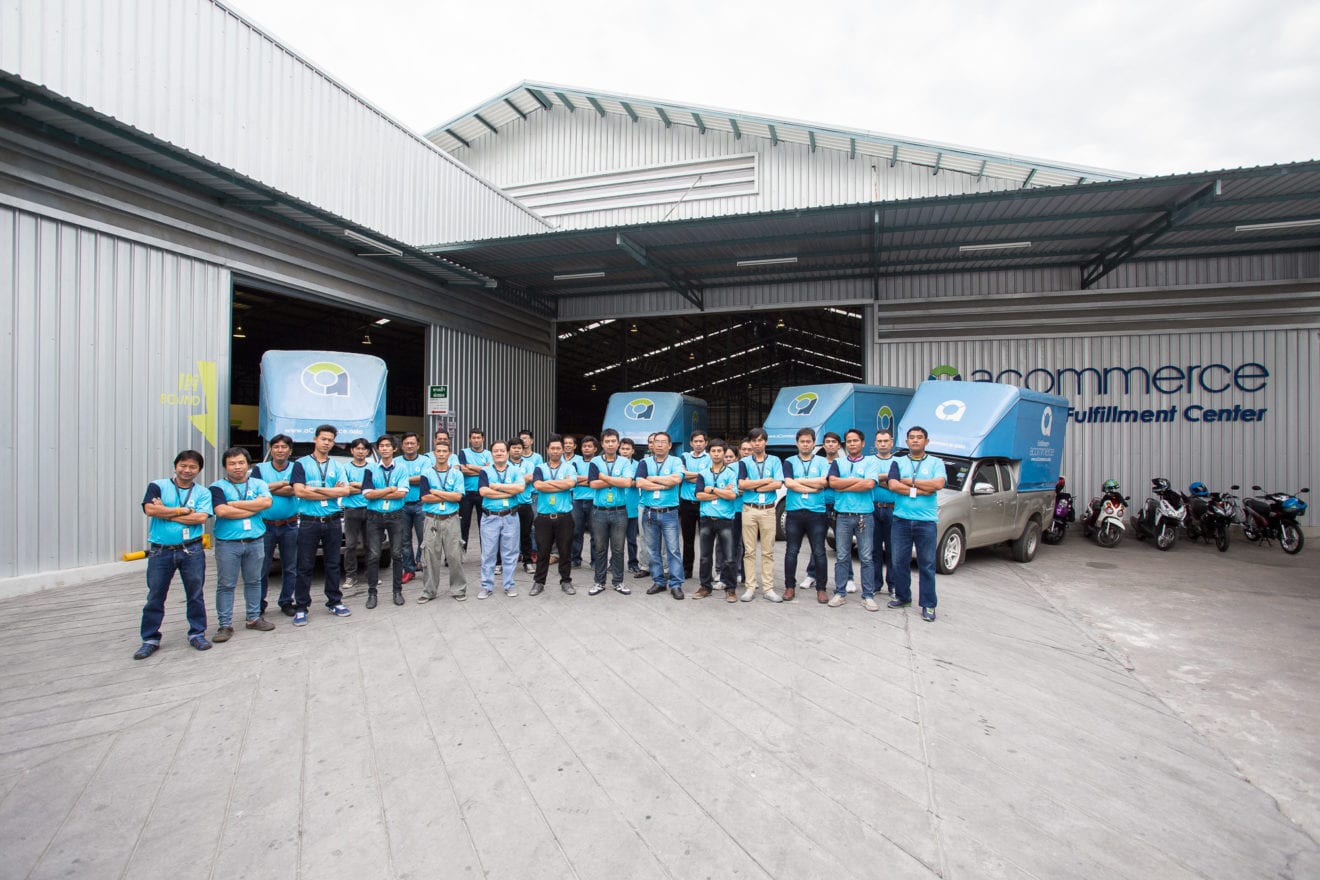
    En route to Series B fundraising, aCommerce has been strengthening its management team with recent additions of a new CEO and COO for Indonesia. Snorre Larstad (CEO) and Hadi Kuncoro (COO) joined aCommerce earlier last month to drive the next phase of growth of aCommerce Indonesia, which recently became aCommerce’s biggest regional operation in Southeast Asia surpassing Thailand and Philippines with 360 employees.

    “With our long term mission to make ecommerce easy in Southeast Asia, we’ve tackled the in-country logistics bottlenecks with our fulfilment centers, last-mile delivery solutions, and cash-on-delivery platform across Thailand, Indonesia, and the Philippines. Our next goal is to make intra-regional transactions as easy as possible too,” said Peter Kopitz, aCommerce Group COO.

  • Online to offline seen as a marriage of convenience

    Online to offline seen as a marriage of convenience

    The eating habits of urban Chinese have changed dramatically since the proliferation of takeaway food delivery apps brought restaurant-quality meals to almost everyone’s front door.

    Engineer Zhao Baijun, 29, now eats in more often than he eats out.

    “Before these apps, most restaurants did not offer deliveries. I had very few choices, mostly fast food chains,” he said.

    Besides the convenience for busy people like Zhang, online to offline means extra sales for traditional food suppliers and beyond. Connecting online to offline is the new Holy Grail for the biggest players in China’s Internet shopping explosion, whether they be domestic or overseas operators.

    Recently, China’s largest e-commerce company Alibaba and electronics retailer Suning agreed a multi-billion dollar deal on platforms, logistics and payments.

    Alibaba will pay about 28 billion yuan (US$4.5 billion) for 19.99 percent of Suning, becoming its second-largest shareholder, while Suning will buy no less than 28 million new shares in Alibaba for 14 billion yuan.

    Suning owns more than 1,600 stores and 3,000 aftersales service centers which will now be “seamlessly connected” with Alibaba’s online network. A Suning online sales center on Tmall.com, part of Alibaba’s retail operation, completes the new setup. The arrangement was described as a “wedding” by Alibaba chairman Jack Ma.

    “If we do not integrate with offline, we will not have a future,” he said. The deal is set to reshuffle China’s e-commerce deck and help Alibaba in its battle against archrival JD.com.

    E-commerce companies are queueing up to find stores to align themselves with.

    In its quest for existing networks of physical stores, JD.com announced it had taken a 10 percent stake in domestic supermarket chain Yonghui Superstores for 4.31 billion yuan.

    Early last year, Alibaba became the main shareholder of Hong Kong-listed department store operator Intime. In July, after the cap on the number of shares foreign firms can hold in Chinese e-commerce platforms was lifted, Walmart took a 100 percent stake in Yhd.com.

    The local advantages of Yhd.com combined with Walmart’s global procurement resources, retail stores and supply chain will be a huge fillip to Walmart’s campaign to win over China’s consumers.

    For Zhao, the most important aspect of the rapidly evolving industry is that he can have a decent meal in the comfort of his own home.

  • Amazon lures investors back from Alibaba

    Amazon lures investors back from Alibaba

    China is no longer in vogue with e-commerce investors, as money returns to the US and Amazon.com following a brief fling with Alibaba Group Holding and its 367 million customers.

    With a market value of more than US$240 billion, Amazon is once again the world’s most valuable e-commerce company, a spot it lost after Alibaba’s record-setting US$25 billion initial public offering in September. Alibaba’s current market capitalisation is at about US$180 billion, down more than 30 per cent from its peak in November.

    Alibaba reported earnings on Wednesday showing that quarterly sales grew at their slowest pace in three years, with transaction volume falling short of estimates.

    Investors viewed Alibaba as a profitable alternative to the free-spending ways of Jeff Bezos, Amazon’s chief executive officer. Now, concerns are focused on China’s cooling economy and slower consumer spending, as well as Alibaba’s reluctance to aggressively pursue business in the US. Meanwhile, Amazon impressed investors last month when it reported a surprise second-quarter profit, thanks to its fast-growing cloud-computing business and spending discipline.

    “You can’t overlook the China slowdown,” said RJ Hottovy, an analyst at Morningstar Inc. in Chicago. “Chinese consumer spending trends are in a slowdown.”  Among investors, JPMorgan Chase & Co, Wellington Management Group and TIAA-CREF Investment Management reduced their share holdings in Alibaba by an average of 42 per cent in the past three quarters, while increasing their holdings in Amazon by 65 per cent, according to data compiled by Bloomberg.

    For now, the e-commerce giants are mostly steering clear of each other’s home turf. Amazon is focusing its overseas growth ambitions on India after investments in China failed to gain traction. Alibaba in June announced plans to sell its US website 11 Main, and is looking to Russia and Brazil to expand. Rather than sell Chinese goods in the US, Alibaba is focused on encouraging American businesses to sell into China.

    While Alibaba initially benefited from interest in a new investment opportunity at its market debut, Amazon has the advantage of being publicly traded for almost two decades, said Kirthi Kalyanam, director of the Retail Management Institute at Santa Clara University.

    “Familiarity creates a big advantage for Amazon,” Mr Kalyanam said. “This is Wall Street saying, ‘If you think Alibaba is going to come into the US and take on Amazon, think again.’”

  • Super Delivery concept launches in Japan

    Super Delivery concept launches in Japan

    An eCommerce venture relaunched in Japan this week claims to be the world’s largest wholesale website.

    Super Delivery, launched domestically by Raccoon Co back in 2002, offers apparel and general merchandise produced or developed in Japan for supply to 134 countries. This week it opened to the world.

    It has launched with some 400 manufacturers displaying more than 100,000 items for sale on the website. More than 930 shops and companies are  registered with the eCommerce marketplace as buyers.

    Among products being sold on the portal are numerous traditional Japanese handicrafts. Echizen Shikki Kyodo Kumiai (Echizen lacquerware cooperative association) in Sabae, Fukui Prefecture, which deals with lacquerware products that have a history of more than 1500 years, will sell  over 1000 items, mainly bowls and dishes.

    Those who use the Super Delivery service can confirm the wholesale prices of products after they register themselves with the website as members, and can pay for products they buy by credit card or electronic money transfer.

  • ‘Trust us’ urges Alibaba.com

    ‘Trust us’ urges Alibaba.com

    Chinese internet giant Alibaba.com has enhanced its vetting of suppliers to boost confidence with its online customers.

    The company says it is adding new features to service designed to reassure buyers – many of them retailers in North America and Europe – that they can trust the sellers offering merchandise on Alibaba.com.

    The Alibaba Trade Assurance program, introduced in January, has been limited to transactions completed via bank transfers, but will soon also cover purchases made with credit cards, Sunny Chhabra, a US-based global marketing and business development executive with Alibaba.com, told delegates to a conference in Las Vegas.

    In addition, the program, which until now will only covered Chinese suppliers selling on the business-to-business Alibaba.com platform, will be extended to other manufacturers and distributors in other countries. India will be the next country added, he said.

    Already 54,000 Chinese suppliers, or about half the number that offer to fill bulk orders on the Alibaba site, participate in Alibaba’s Trade Assurance program. An Alibaba subsidiary called OneTouch vets companies that wish to participate. If a buyer purchases from a participating supplier Alibaba will refund the buyer’s deposit, up to a specified amount, if the goods are not delivered on time or are not of the quality specified.

    “If the supplier is at fault, the buyer gets their money back, Chhabra said. “You’ll be covered by Alibaba. We’ll go after the supplier to recoup our losses.”

    To receive compensation for poor quality, he noted, the buyer will have to engage a service that inspects the goods, either at the factory or at the buyer’s warehouse.

    Buyers now can filter suppliers at Alibaba.com by those participating in Trade Assurance. When a prospective buyer hovers over a participating supplier the amount Alibaba will guarantee appears. That amount varies based on feedback from buyers. If a supplier gets good reports from customers then Alibaba gradually increases the amount it will guarantee.

    When a retailer or other buyer purchases from a participating supplier, the two parties sign a contract on Alibaba.com and the purchase is completed on the site. That’s a departure for Alibaba.com, which, since its introduction in 2003, has served as a way for retailers, wholesalers and other bulk buyers to find mainly Chinese suppliers, but has never been a transactional site. One of the advantages for Alibaba is that now that transactions are completed on the site the Chinese eCommerce giant for the first time gets accurate information about what products companies are buying and how much they are paying, Chhabra said.

    Alibaba executives also said the company has begun allowing some foreign suppliers to sell on 1688.com, a site that until now has enabled Chinese retailers and other companies to buy from Chinese suppliers.

    Alibaba reported that its revenue from international wholesale transactions, mainly Alibaba.com, totaled $201 million, six per cent of revenue and a 12 per cent year on year increase. Revenue from domestic wholesale, mainly 1688.com, was $161 million, five per cent of revenue and a 41 per cent increase over the same period a year ago.

    The bulk of Alibaba’s revenue, more than $2.5 billion, came from its huge online marketplaces in China, primarily Taobao, where some 8.5 million sellers offer products in a wide-open online bazaar, and the more brand-friendly Tmall, which features products from such major Western companies as Nike, Apple, Burberry and Juicy Couture.

    Those Chinese marketplaces, which together account for roughly 80 per cent of online retail sales in China, accounted for 78 per cent of Alibaba’s revenue in the quarter.