Category: E-Tailing

Retail News Asia is committed to providing both local and global retailers with the latest E-Commerce & Etail news throughout the Asian market. This on a daily base.

  • This German duo launched an eyewear brand in Indonesia

    This German duo launched an eyewear brand in Indonesia

    When German entrepreneur Marc Uthay set his eyes on Southeast Asia in 2013, he thought the e-commerce market was already pretty cramped. There was Rocket Internet’s everything store, Lazada – essentially an Amazon clone. Zalora, another Rocket-backed venture, specialised in fashion. On top of them, a range of local and foreign e-commerce start-ups offered everything from gadgets to shoes.

    But after some research, Uthay did find a promising niche: eyewear. He discovered that although millions of people in Southeast Asia need prescription glasses or contact lenses, the variety of brands and styles available was limited and the infrastructure to order online not well developed.

    The goal was to capture a chunk of the eyewear industry in Southeast Asia by selling online. Uthay got Christian Csermak on board to help kickstart the company in Southeast Asia. Csermak previously built a custom-made eyewear brand in Germany, called Mercy Would – with a concept similar to Warby Parker in the US.

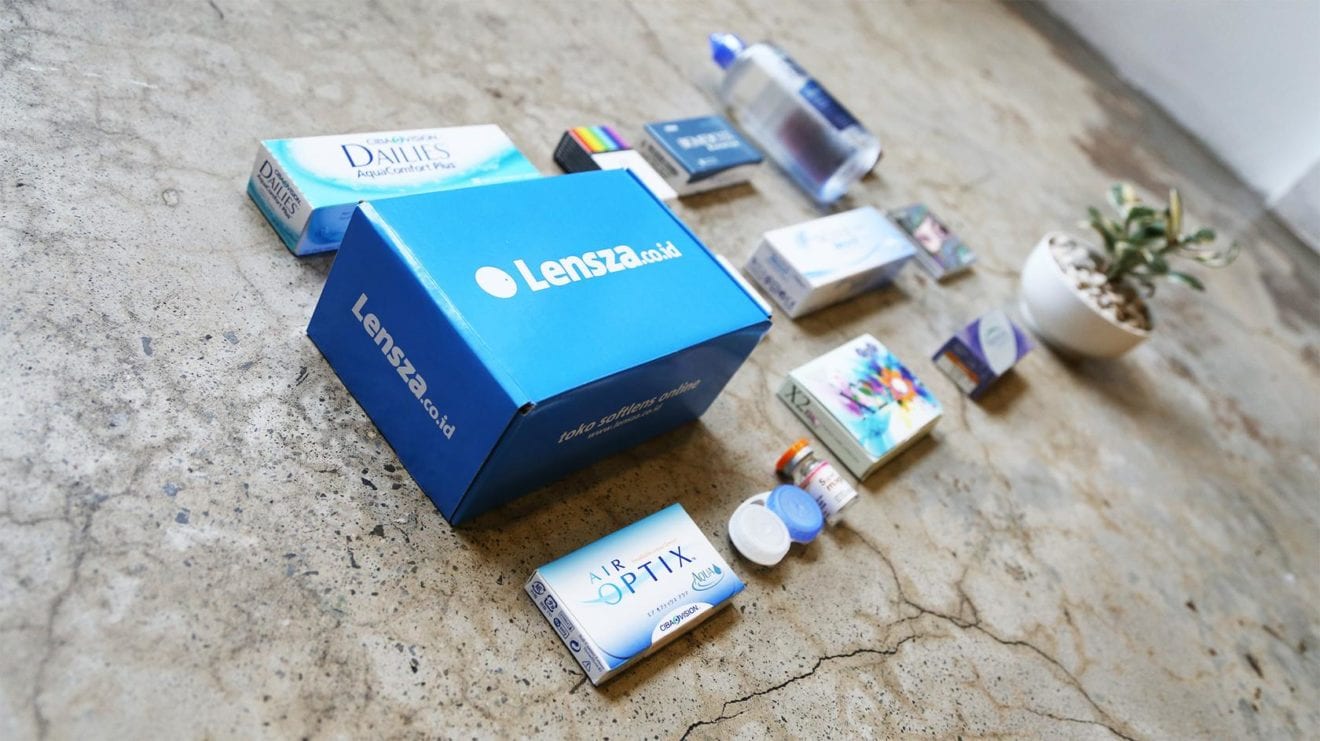
    Uthay’s and Csermak’s first milestone was to build Lensza, a one-stop shop for contact lenses and eye-care products. Lensza covers a broad range of lenses from different manufacturers, with an emphasis on coloured lenses, which are popular in Asia. They launched the site in early 2014. But the goal was never to build just an e-store.

    Once Lensza was up and running, Uthay and Csermak drew up a concept for a new, Warby Parker-like fashion eyewear brand for the Indonesian market. They named it Franc Nobel. The first collection of frames launched in June.

    Currently, Franc Nobel’s frames are imported, but Uthay plans to bring the entire production to Indonesia in the near future.One challenge, Uthay says, is that people like to try out glasses before they commit to buying a pair. The start-up is testing various methods to address this.

    Late last year, Uthay and Csermak raised a “low six-digit” round of seed funding from Crystal Horse Investments for their lens and eyewear ventures. For now, they are focusing on the Indonesian market. Expansion across the region could be tough, because similar concepts already exist in other markets.
    One direct competitor in Southeast Asia is Four Eyes, which started in the Philippines in 2013 and is also available in Singapore. Another is Specsdirect in Malaysia.

  • aCommerce recruits new CXOs for Indonesia operations

    aCommerce recruits new CXOs for Indonesia operations

    Norwegian international management executive Snorre Larstad​ will take the lead as aCommerce Indonesia CEO. Larstad previously worked as a chief strategy office for the Morris Group in China.

    Meanwhile, the company has also hired H​adi Kuncoro to lead its Indonesian operations for IT and supply chain management. This follows stints by Kuncoro in co-founding an Islamic fashion e-commerce company​ and a successful founding role at Rocket Internet’s Zalora Indonesia.

    Commenting on the leadership appointments, Paul Srivorakul, group CEO of aCommerce, said,“We’ve seen unparallelled growth in Indonesia and it is on track to become our most important strategic market.”

    Srivorakul added, “With Snorre’s experience scaling and managing huge and complex international retail businesses and Hadi’s success rate in building massive ecommerce operations in Indonesia we are confident that this pairing will streamline our incredible growth and gear us up for the next phase of our commercial development in Indonesia.”

    Indonesia recently became aCommerce’s biggest regional operation, with August seeing it reach a manpower count of 360 staff, surpassing the growth of its operations in Thailand and the Philippines. July 2015 also saw aCommerce Indonesia double its warehouse capacity to 9332 square metre. A new Pondok Ungu fulfilment center of more than 5232 square metres was added to supplement the current 4100 square-metre Halim facility.

    aCommerce Indonesia currently powers ecommerce for major brands and retailers such as Matahari Mall, HP and L’Oreal. According to official statements, the demand for aCommerce’s services in Indonesia exceeded forecasts due to the rapidity and growth of heady new entrants to the Indonesian e-commerce space and the growth in major clients signed.

    This internal round was targeted at funding the development of further competencies in marketing, technology platforms, expanding warehouse space and recruitment. The addition of Snorre and Kuncoro to the team brings significant knowledge capital to aCommerce as its scales up operations in Indonesia and the region.

    In a media release, Snorre stated: “This is an exciting time to be in the ecommerce industry in Indonesia. With ecommerce still accounting for much less than one per cent of retail in Indonesia, I will be continuing the work of positioning aCommerce as the key driver of ecommerce industry development across the archipelago.”

    Snorre succeeds previous CEO Hadi Wenas, who has taken up the role of CEO as M​atahariMall.com.​ Previous co-CEO Adrian Suherman has shifted to an executive role within the Lippo Group.

    Snorre speaks fluent Chinese and his twenty years in international management have predominantly taken place in Asia, with a career involving roles across the retail, manufacturing, supply chain, shipping, strategy and financial advisory sectors. Snorre had also previously worked for AT Kearney as a strategy consultant, advising CXOs on M&A, supply chain and growth strategies across multiple industries on a global scale.

    A member of i​dEA​ and deputy chief of the Indonesia L​ogistics Association, new COO​ Kuncoro previously served as the COO of First Logistics and as VP and operations director at Zalora Indonesia. Kuncoro brings deep domain experience in r​etail management, supply chain and domestic and cross-border logistics across consumer goods and retail industries.​

    Indonesia is slated to become the biggest ecommerce market in Southeast Asia, with a recent AT Kearney report estimating the market to grow to reach $30 billion in value over the next few years, up from the $1.3 billion in 2013.

    “In Indonesia, we envision that the industry is about to enter into a rapid growth phase. aCommerce will be at the forefront of providing the solutions for any obstacle in the growth path of the ecommerce industry,” said Snorre.

    According to aCommerce, the latest CXO recruitments are in preparation for a Series B round and further scaling of its operations in Indonesia and the region. Earlier this year, it raised a $5 million internal bridging round in preparation for a Series B round of funding.

  • Korea’s GearX finds favour online

    Korea’s GearX finds favour online

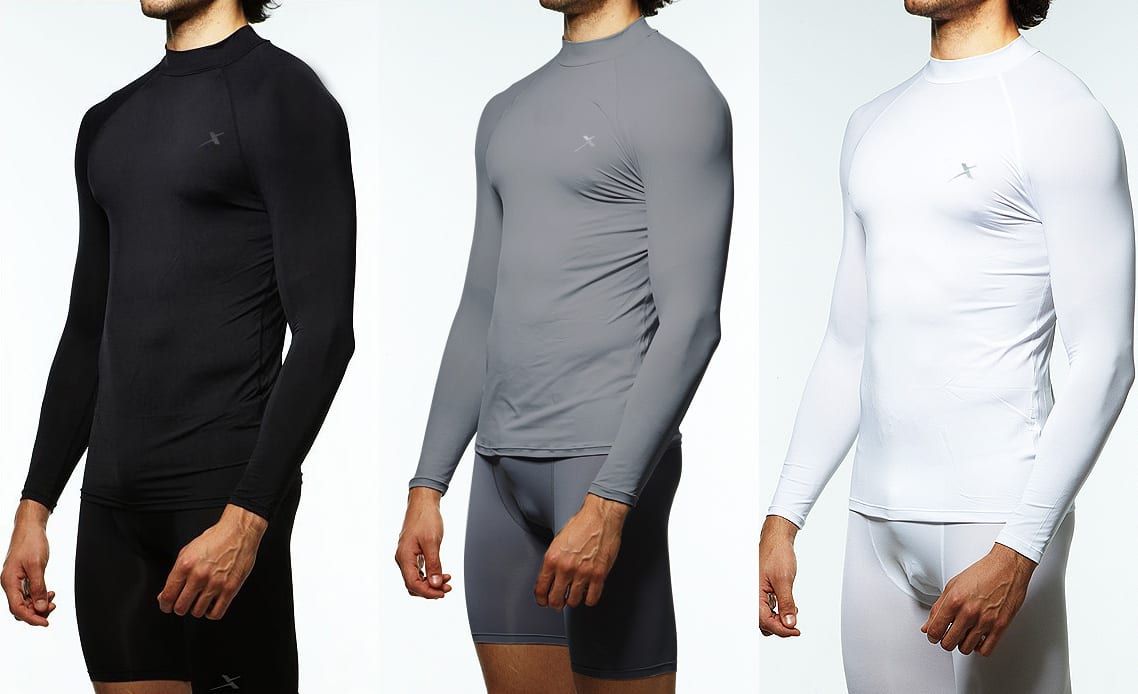
    Korean underwear brand GearX says sales of its functional sportswear online is booming – especially in Japan, China, Southeast Asia and America.

    While not revealing actual sales figures the company says its online mall is succeeding because the brand is building popularity by maintaining reasonable prices for products that boast excellent functions, “contrary to a number of global functional wear brands that started out as offline businesses and formed high price range”.

    Now, Lee is planning to expand GearX’s product range to include functional yoga outfits, running and cycling apparel.

    GearX is running its shopping mall in multiple languages including English, Chinese, andJapanese using the Global Service of cafe24, Korea’s largest shopping mall solution provider. GearX’s products are also available on global online shopping malls such as Amazon.com of America and Qoo10 of Singapore.

    GearX’s products include base layer, rash guard, and underwear; all of them offer fast-drying, UV blocking, and antibacterial features. GearX applies a seamless sewing technique on the clothing to achieve excellent flexibility. Thus, all of GearX products fit the body without extreme tightness.

    “From the very beginning, we focused on developing a highly functional fabric that relieves heat, maintains coolness, and repels insects. As a result, we have become Korea’s first, and only, functional clothing manufacturer to acquire a patent for the fabric,” said Sang-hun Lee, president of GearX.

    “After successfully developing the fabric, he had also developed and introduced a sewing technique that would not irritate the skin considering the the fact that the product is in direct contact with the skin.”

  • Vipshop doubles income

    Vipshop doubles income

    Chinese online discounter Vipshop Holdings has doubled its profit in the second quarter to June 30.

    It reported total net revenue soared 77.6 per cent to US$1.5 billion, its gross profit by 78.6 per cent to $360 million and its income by 192.5 per cent to $70.6 million.

    Chairman and CEO Eric Shen said the strong quarter was largely driven by expansion of mobile operations and continuing growth in customers and orders in its our core flash sales business.

    “Our smooth and swift execution on the mobile front – with 76 per cent of our gross merchandise value now coming from mobile devices – has helped set us apart in the market, and further clarifies the unique value of our flash sale model for on-the-go shoppers,” he said.

    “Our cross-border expansion, supplier financing initiatives and logistical enhancements have further improved our ecosystem for brands and customers. Going forward, we will focus on expanding our market share and scaling our operations through enhancing the customer shopping experience, attracting new customers and elevating our brand value in China and globally.”

    Donghao Yang, CFO, said Vipshop was on track to meet its 1.5 million sqm warehouse target by the end of the year.

    “We also continue to expand our local delivery and services network, which we are currently using to deliver over 70 per cent of our total orders across almost all provinces in mainland China.”

    The number of active customers for the second quarter of 2015 increased by 47.2 per cent to 14.2 million from 9.7 million in the prior year period. The number of total orders for the second quarter of 2015 increased by 55.2 per cent to 44.9 million from 28.9 million in the prior year period.

  • Alibaba counterfeit guide launched

    Alibaba counterfeit guide launched

    Alibaba Group has launched an English-language version of its online system for reporting intellectual property (IP) infringements that occur on its giant Chinese e-shopping marketplaces Taobao.com and Tmall.com.

    The system, called TaoProtect, is designed to make it easier for companies to report merchants who are selling counterfeit products on the Taobao and Tmall platforms, facilitating the efficient removal of infringing product listings. Through TaoProtect, companies can also file complaints for other IP violations such as copyright infringement, patent infringement and unfair use of trademarks.

    TaoProtect is similar to another IP-complaint system operated by Alibaba called AliProtect that covers global wholesale marketplace Alibaba.com, global shopping website AliExpress and China wholesale marketplace 1688.com.

    The debut of the English version of TaoProtect will make the system more accessible to Western companies, said Xinghao Wang, Alibaba Group’s U.S.-based senior intellectual property protection manager. “Because the success and integrity of our marketplaces depend on consumer trust, we have comprehensive policies and practices in place to fight IP infringement,” Wang said, including the use of data-analysis technology to monitor the sites for counterfeit-product listings.

    Due to the sheer size of Taobao and Tmall – Alibaba’s China retail platforms host some 10 million active sellers – the company also works with rights holders to make its efforts more effective. That’s where TaoProtect comes in, Wang said. By providing an online system for alerting Alibaba to infringement on Taobao and Tmall, Alibaba is better able to identify suspicious listings that may be missed by the company’s internal countermeasures, he said.

    Wang noted that filing a complaint does not automatically result in takedowns. To safeguard the rights of all parties, the TaoProtect process is set up to determine whether complaints are legitimate, and to ensure that Taobao and Tmall merchants who abide by the platforms’ established rules are not unfairly penalised.

    The reporting system helps serve a larger purpose, too, he said: “Information received through TaoProtect and AliProtect is an essential part of the rule-making effort, and the data in the reporting system may also be used in the monitoring system.”

    In the video, the founder of a US maker of innovative cutting tools explains how he uses AliProtect to keep copycats at bay.

    “The more popular your products are, the higher the likelihood that someone is going to be copying you at some point, that form of flattery that no one really wants,” says TJ Scimone of Slice. By using AliProtect, he says he successfully got knock-offs of his products “shut down (and) off the site.”

  • Amway China in online push

    Amway China in online push

    US direct selling retailer Amway is planning a major push in China where it sees potential with younger consumers.

    Globally, Amway sold US$10.8 billion worth of household goods last year, down eight per cent on 2013.

    In China it has spent a year testing online sales models, creating 10 WeChat accounts and 12 apps through which its sellers can interact with customers. Online already accounts for 30 per cent of its China sales – with mobile sales about one fifth of that and expected to grow to half within 10 years.

    Last week Amway held a digital strategy launch in Guangzhou where it revealed plans to allow consumers to shop through its online platforms and apps with Amway taking responsibilities for delivering the goods to purchasers. That marks a significant variation from its traditional model of having its sellers deliver goods personally.

    Chief marketing officer Frances Yu said the company knows its strength lies in a solid offline relationship it has with customers. “The same will be upgraded further when we move online.”

    Mobile eCommerce will potentially cut costs for Amway’s direct selling staff as they won’t have to rent physical store space, have capital tied up in inventory or cover delivery charges. Amway will assume responsibility for storage and distribution.

    “Our entrepreneurs will be able to spend more time with their clients,” said Yu.

    Amway has opened 10 ‘experience’ stores in China to link online with offline, display products to prospective customers and build brand awareness. Eight more are planned.

    Amway also wants to double its sales distributor network from 60,000 currently to 120,000 by 2025.

  • Amazon India launches Beauty Store

    Amazon India launches Beauty Store

    Amazon India has launched a luxury Beauty Store on its eCommerce portal.

    “We are excited to offer a wide selection of handpicked luxury beauty products. Customers can now order their favorite luxury beauty brands from the comfort of their homes with Amazon.in,” said Samir Kumar, director of category management with Amazon India.

    The store will offer products from 17 luxury brands covering hair, skin and body treatments.

    The brands include L’Occitane, Crabtree & Evelyn, Kama Ayurveda, Forest Essentials, Davidoff, Calvin Klein, Dermalogica, Ren, Temple Spa, Leighton Denny, Jo Hansford, Shaze, Dr. Lipp, Eve Snow, Pangea Organics and The Camel Soap Factory.

    It targets both men and women.

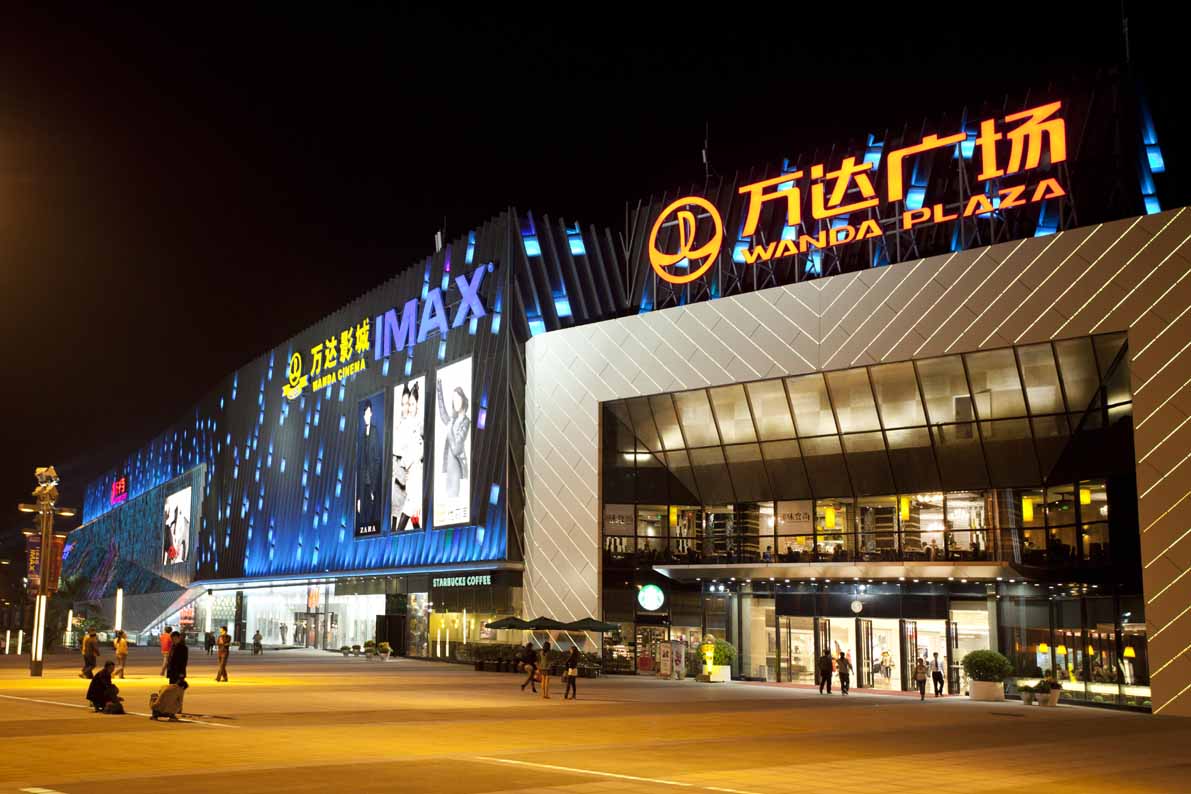
  • Ffan: Wanda’s online store goes live

    Ffan: Wanda’s online store goes live

    Nearly a year after three giant Chinese companies teamed up to take on Alibaba, the newly-mintedeCommerce store finally and quietly launched this week.

    The site, Ffan, is the result of a billion-dollar joint venture between Tencent, Baidu, and Wanda Group, a conglomerate best known for its chain of movie theatres and malls.

    The joint venture started with US$814 million in its pocket in August 2014, with Wanda holding a 70 per cent stake, and Tencent and Baidu splitting the remainder evenly. In January, it secured venture capital funding to the tune of US$161 million.

    Local commerce

    The new estore is designed to take on Alibaba’s eCommerce dominance, with a focus on helping people buy local products and services. That’s why visitors to Ffan can choose their city to see local deals.

    Baidu declined to comment on today’s launch and Tencent has yet to reply to Tech in Asia’s inquiry.

    At first glance, Ffan looks odd and rather bare. The only two product categories on the top navigation bar are “food” and “movie tickets.” Browsing through the city-specific food section reveals that most of the products are from retailers at Wanda’s shopping malls across the country. Indeed, users can browse through the Ffan site or accompanying mobile app according to their nearest mall.

    Wanda – a private company which boasted assets of RMB 534.1 billion yuan (US$85.6 billion) in 2014 – has reportedly been plotting a leap from offline retail to ecommerce for several years, but today’s launch doesn’t reveal much that should worry Alibaba or arch-rival JD right now. It’s not a general ecommerce store like Alibaba’s Tmall or JD, and the offerings are slim.

    Sill, Wanda has the reach – across malls, cinemas, hotels, resorts, theme parks, and several other areas – to challenge Alibaba in terms of the fast-growing interest on the web for local, on-demand products and services.

  • MatahariMall aims for 20% of Indonesian e-commerce market by 2020

    MatahariMall aims for 20% of Indonesian e-commerce market by 2020

    MatahariMall, which is planned to be launched next September, is eyeing 20 per cent of the e-commerce market in Indonesia by 2020. That year, the total market volume is projected to reach US$20-30 billion, compared to US$1.3 billion currently.

    It was told by MatahariMall’s Chairman Emirsyah Satar to Berita Satu. He stated that the team uses Alibaba as their role model. As we know, MatahariMall is the first marketplace to use O2O (Online to Offline) concept since the very beginning.

    Satar said, “Currently, the e-commerce market in Indonesia is worth around $1.3 billion. It’s so low, not even one percent of the total national retail sales. In other countries, e-commerce could cover 5-8 per cent of total retail sales. So, we estimate that out market volume would reach around US$20-30 billion by 2020.”

    “Our network footprint is quite strong and well-distributed all over Indonesia. We also have the experience of doing offline retail. Users may inspect their desired products before purchasing them, thanks to the support by Matahari and Hypermart. So, they may touch, feel, and even return the product should they feel that the it doesn’t meet their expectation,” he continued.

    MatahariMall has been accessible at the moment, although it’s still in form of a teaser page. Satar claimed that the number of buyers is already quite significant.

    Challenges of the e-commerce industry

    Satar pointed out two main challenges of the e-commerce industry in Indonesia, which are infrastructure and regulation. Infrastructure refers to the poor distribution of the Internet network, while regulation refers to the government’s law.

    “For instance, the regulation that requires merchants to fill out their TIN or ID number before posting at marketplace. I don’t think it’s urgent, as the industry is still infant. It should be enforced once the right time comes,” he said.

    The government, led by the Minister of Communication and Information Rudiantara, is currently formulating the roadmap for e-commerce in Indonesia, as President Joko Widodo stated in the opening of Indonesia Convention Exhibition (ICE) last Tuesday.

  • GrabTaxi launches its Uber-like GrabCar in Jakarta

    GrabTaxi launches its Uber-like GrabCar in Jakarta

    More than a year after its initial launch, GrabTaxi’s Uber-like GrabCar is now available in Jakarta, Indonesia’s capital.

    GrabCar signs up car owners to become part of their on-demand fleet. It’s the newest transportation option from GrabTaxi, which now covers regular taxis, premium cars, and motorcycle taxis in Jakarta.

    Price-wise, a GrabCar ride is cheaper than a regular taxi in the city. In contrast to a metered taxi, the rate will be fixed. GrabCar is available as a new tab within the GrabTaxi app, and interested users can calculate the fare for their usual routes. But for now, actual rides are only available for trips between two vicinities: Semanggi and Kemang.

    To introduce the new service, GrabBike offers rides for free from August 9 to August 31.

    GrabCar is a direct competitor to Uber, which has been available in Jakarta since mid-2014, offering either UberBlack for premium cars or UberX for cheaper rides. Uber’s cars are available everywhere in the city, yet GrabCar has one large advantage over Uber in Indonesia at this point: it allows cash payments. Few Indonesians have credit cards, which poses a challenge to Uber’s growth. But since Uber has already introduced cash payments elsewhere, it might follow suit in Indonesia as well.

    GrabCar, which is part of the Malaysian startup MyTeksi, is already available in countries like the Philippines and Singapore.

  • Popular Vietnam restaurant ratings website Foody to launch in Indonesia

    Popular Vietnam restaurant ratings website Foody to launch in Indonesia

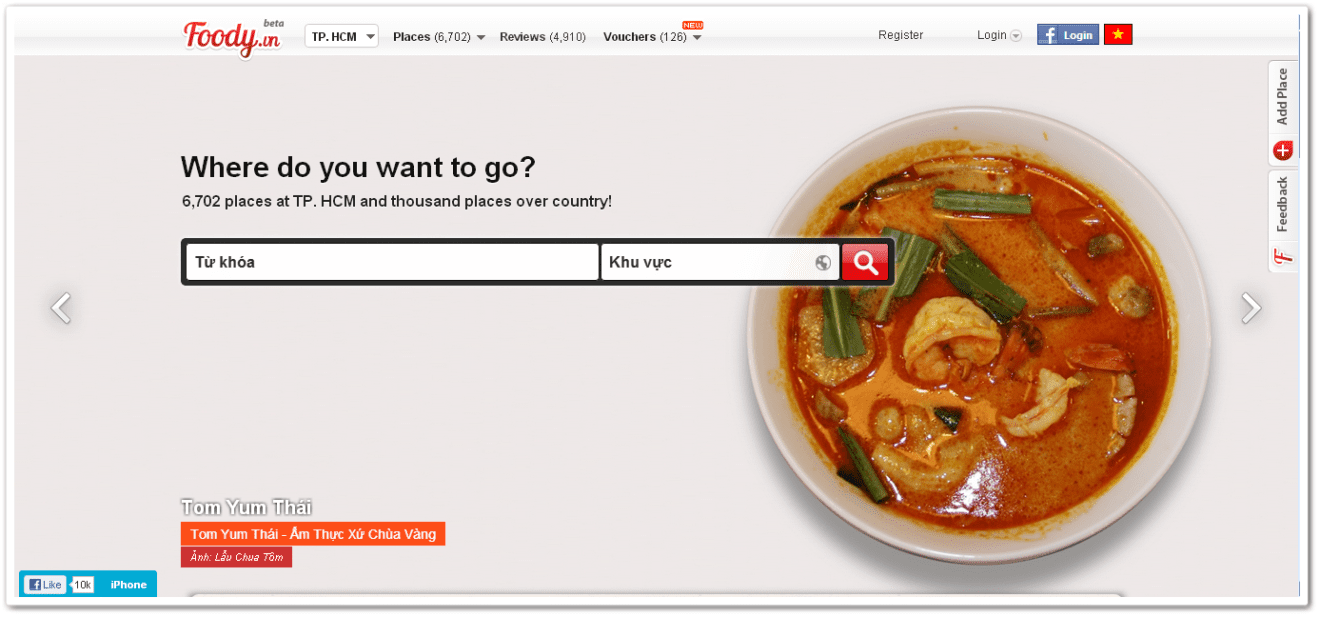
    Foody, a Vietnamese start-up providing online crowd-sourced reviews about local businesses, mostly restaurants and hotels, will launch its website in Indonesia on August 10, news website VnExpress reported Monday.

    Dang Hoang Minh, a co-founder, was quoted as saying that after Indonesia his company would expand to some other Southeast Asian countries, possibly Malaysia, Laos, and Cambodia.

    The expansion plan was announced not long after Foody received a fourth round of funding since it was founded in 2012.

    US’s Tiger Global Investment is the latest investor to pump money into the young company, whose website now boasts around eight million visits a month.

    Foody had earlier got funding from Japan’s CyberAgent Ventures and Pix Vine Capital and Garena of Singapore.

    But it has not disclosed any of the amounts.

  • Online Retailer MatahariMall Sets 20% Market Share Target

    Online Retailer MatahariMall Sets 20% Market Share Target

    Lippo Group’s new e-commerce unit MatahariMall is embarking on an ambitious expansion plan, aiming for a 20 percent market share of Indonesia’s web-based retail sector by 2020, its chairman said on Wednesday.

    MatahariMall.com chairman Emirsyah Satar said the potential of the e-retailer, which is slated for an official launching in September, is similar to Chinese e-commerce giant Alibaba’s in light of Indonesia’s huge untapped e-commerce market.

    Indonesia’s  e-commerce market is currently worth around $1.3 billion, constituting only 1 percent of the national retail market.

    “The e-commerce markets of other countries can reach between 5 and 8 percent of total retail sales, so we are confident the market volume can expand to between $20 billion and $30 billion by 2020,” Emirsyah said at the MatahariMall office in Jakarta.

    Unlike other online retailers, MatahariMall will offer the O2O, or Online to Offline, system that would allow customers to order products online and see the products first-hand at a nearby Matahari or Hypermart store, both of which are affiliated with the Jakarta Globe through Lippo Group.

    “We have a very solid footprint network in Indonesia and we have the experience in offline retailing through Matahari and Hypermart,” said the former president director of Garuda Indonesia.

    MatahariMall, Emirsyah added, is also partnering with various top brands in the lifestyle, fashion, automotive and electronics sector to enrich the array of products available to customers.

    “We believe MatahariMall.com will be the [region’s] best and biggest online retail store,” he added.

    Emirsyah is also urging the government to support the online retail industry through Internet infrastructure and regulations that support a growing local industry.

    MatahariMall has appointed Credit Suisse and Bank of America Merrill Lynch to lead its first round of financing for an amount expected to be between $200 and $250 million. This financing would make MatahariMall the most valuable e-commerce company in the country.

    The online retailer has also built a main warehouse of 10,000 square meters in Halim, East Jakarta, that can accommodate thousands of products.

    Lippo Group, one of Indonesia’s largest business conglomerates, has committed to invest $500 million for the next three years in its e-commerce arm.

  • Tmall global celebrates new partnership again

    Tmall global celebrates new partnership again

    Tmall Global, part of the Alibaba Group B2C Tmall.com business in China is celebrating its relatively new partnership with The Shilla Duty Free and The King Power International Group of Thailand.

    As reported last May, the trio are aiming to enhance the duty free shopping experience for Chinese travellers to these two countries with their newly-launched innovative ‘World Duty Free service’ which is described as the first of its kind in China created to offer consumers and travellers ‘a seamless solution for purchase and pickup of duty free goods’

    The partnership allows Chinese consumers to enjoy more savings and increased convenience by pre-purchasing products and discount vouchers on Tmall Global before they travel, and then collect their purchases or use their discount vouchers at the duty free stores in South Korea and Thailand through their Alipay receipt or barcode from their mobile phones.

    The ‘World Duty Free’ service also allows merchants to target specific consumer groups from China and thereby discover trends and demands of hundreds of millions of Chinese shoppers across Alibaba Group’s China retail marketplaces.

    Alvin Liu, general manager of Tmall Global said: “The World Duty Free service is an important strategic initiative of Alibaba Group’s globalization strategy. This project connects Tmall Global, Alipay and various major duty free retail groups from around the world to create an integrated e-commerce model offering a seamless cross-border shopping experience for Chinese travellers.

    “We want to make the duty free shopping experience as simple and easy as possible for our customers. The new service will save them time in exchanging foreign currency, queuing, product wrapping and tax refunds. In the future, Tmall Global aims to bring more duty free shops onboard to broaden coverage to other popular destinations around the world.”

    Tmall Global claims to be the first and only e-commerce platform in China to partner with a Korean duty-free store chain. To commemorate the launch of this new service, The Shilla Duty Free is offering a promotion of up to 50% off the price of selected items, while King Power is also offering a free RMB500 ($80) coupon for purchases above a certain level.

    Tmall Global now claims to be in discussion with dozens of duty-free companies in other countries to offer this service for Chinese travellers travelling to other destinations. Tmall Global also plans to work with other Alibaba Group businesses such as Alipay and Alitrip to provide an integrated and comprehensive travel and shopping experience to Chinese consumers.

    Around 5,400 overseas brands from 25 countries and regions have opened stores on Tmall Global, which is used by a growing number of brands from the U.S., Germany, Australia, South Korea, Japan, Taiwan and Hong Kong as a stepping-stone into China.

  • China’s Too Large for Retailers to Ignore

    When it comes to online retail markets, China is in a class by itself. The country is already home to the world’s largest e-commerce market, and there’s room for more growth.Chinese consumers are attaining middle class spending power at a historically unprecedented rate and using it to treat themselves to personal luxuries.

    That spending has made the country the world’s fastest growing “vanity goods” market—increasing by 15% year over year—for such purchases as high-end fashion and beauty goods, jewelry, and personal care items.China presents a vast growth opportunity for international retailers, and like any business expansion, requires a considered approach.

    It’s important to understand the market, its nuances and challenges in order to succeed.In 2013, online purchases accounted for 8% of the country’s total retail sales. E-commerce transactions totaled USD $305 billion that year, and Singles Day, the popular online shopping holiday in November, accounted for USD $5.7 billion of that total.

    E-commerce in China already outpaces that in the US, and within 5 years it’s expected to dwarf the combined online retail markets of the US plus the UK, France, Germany, and Japan.That booming growth is due in part to the rise in mobile phone usage among Chinese consumers, which helps them bypass brick-and-mortar shopping obstacles such as distance and traffic.

    It also owes something to Chinese internet-use habits. According to a McKinsey & Company report, Chinese internet users are online for as many as 6 hours more per week than the average US user, giving them more time to search for and purchase products.China is a huge nation with a middle class that will soon top 630 million people—more than 8 times larger than the US “Baby Boomer” generation that was once the world’s leading middle-class consumer demographic.

    According to McKinsey, only 4% of China’s urban residents were middle class as recently as 2000. By 2020, 75% of Chinese urbanites will have middle class status and newfound spending power.In general, Chinese shoppers like international brands and upscale goods, so offshore retailers have a certain cachet. French wines, American electronics, and Italian designer clothing are popular prestige purchases among Chinese shoppers.

    In a competitive market, your company’s “outsider” status can be an asset, especially if it’s backed up by excellent quality control and responsive customer service.Beyond that, experts recommend getting to know particular regions, rather than treating such a populous and diverse nation as a monolithic market. For example, McKinsey reports that certain cities are stronger markets for particular luxury items. By 2025, the firm expects Shanghai and Beijing to be among the top 20 global cities for upscale spirits consumption, while Hong Kong will rank first for luxury beauty goods, with Shenzen, Shanghai, and Beijing also in the top 20 for that category.

    Determine which cities and regions are a good match for your product line, and give serious thought to how you will market to those areas, as the most popular channels may be ones your company is not currently using.

    The McKinsey report on Chinese consumer internet habits makes the point that online video and instant messaging are more popular with Chinese online shoppers than email and search, which are prevalent in the US. Mobile sales accounted for 12% of all Chinese online sales in 2014, so all online efforts should be designed to display well on mobile devices.Promote sales timed to major in-country shopping holidays, such as Singles Day in the fall and the Lunar New Year in the spring.

    Shoppers expect deals at these times and will go elsewhere if your shop doesn’t provide them.As an online merchant, your customers can reach you from anywhere, but as the Australia China Quarterly points out, Chinese shoppers tend to prefer familiar outlets such as Tmall, Alibaba’s B2C platform. (For perspective, US e-tail giant Amazon recently opened a Tmall shop of its own.) If you sell from outside the country or use Tmall, you won’t need a Chinese business license, and that can save you time and money. The potential drawback for small merchants is the fee schedule. For Tmall Global, the fees include a USD $25,000 security deposit, in addition to annual fees and transaction fees.

    In order to save on fees and avoid tying up cash in a security deposit, offshore merchants always have the option to sell independently. To do so successfully, Daria said, “such merchants must seek out a payment services provider that supports multicurrency transactions and has established relationships with in-country banks and with UnionPay, which is the government-backed bankcard and interbank network for all of mainland China.”

    Globally, there are more than 3 billion UnionPay cards in use across 141 countries. A reliable and efficient shipping carrier is a must as well; look for one that can streamline the customs paperwork for your shipments into China.No matter what size your online business is, China is a market worth exploring. Capturing even a small percentage of this large and robust market can yield rewards now and in the future as China’s economy and purchasing power continue to grow.

  • SE Asian consumers switch to ecommerce

    SE Asian consumers switch to ecommerce

    International information technology players have been piling in.

    Japanese telecoms group Softbank has made a string of acquisitions across Asia. It invested $250m in the region’s ride-hailing app GrabTaxi at the end of last year. In Indonesia, it invested $100m in online marketplace Tokopedia and mobile device retailer Trikomsel.

    Singaporean blue-chip companies such as Singapore Press Holdings and MediaCorp, the latter controlled by Temasek Holdings, Singapore’s government-controlled investment company, have also been involved in a raft of deals.

    This month, Temasek said it would partner with United Overseas Bank to set up a venture and debt financing fund of nearly $500m to help finance the growth of ecommerce and other technology and healthcare initiatives around the region.

    Online sales account for only 1 to 2 per cent of total retail sales in many southeast Asian countries, providing ample scope for the kind of breakneck growth that online trade has enjoyed in China — where ecommerce now accounts for 11 per cent of total retail sales, up from 2.5 per cent just five years ago, according to estimates by FT Confidential Research, a Financial Times research service.

    But ecommerce operations in Southeast Asia are often hindered by factors such as high logistics costs and the limitations of online payment systems. In Indonesia, more than 95 per cent of ecommerce transactions are settled in cash on delivery, and more than 90 per cent of visits to ecommerce sites do not result in sales.

    Nevertheless, online retailers Lazada and Zalora, both owned by German tech investor Rocket Internet, have built up robust online sales across the region. They have tackled logistical constraints by investing heavily in their own in-house logistics and supply chain providers.

    Chinese ecommerce giant Alibaba, meanwhile, is expanding its international ecommerce site AliExpress across the Asean region. It recently acquired a 14.5 per cent stake in Singapore Post, which last year announced plans to spend $145m on a regional ecommerce logistics hub. Its rivals in the logistics sector include Singapore-based aCommerce, which is backed by Japan’s NTT Docomo.

    A number of pan-Asean online payment systems are in the process of being established, meanwhile, such as 2C2p and Coda Payments.

    As ecommerce expands, consolidation is set to follow. Many domestic start-ups have focused excessively on building initial sales volume at the expense of profitability. At some point soon, a shake-out appears inevitable.