Category: E-Tailing

Retail News Asia is committed to providing both local and global retailers with the latest E-Commerce & Etail news throughout the Asian market. This on a daily base.

  • Mobile Accounts for Almost Half of China’s Retail Ecommerce Sales

    Retail sales on tablets, smartphones and other mobile devices will reach $333.99 billion this year in China, according to eMarketer’s latest estimates of retail sales around the world, up 85.1% from 2014. That figure represents 49.7% of all retail ecommerce sales in the country this y

    This estimate puts retail mcommerce sales in China at nearly 450% of those in the US, where such sales are expected to rise 32.2% in 2015. Even more striking, in the US, retail mcommerce sales will represent 22.0% of the retail ecommerce total and just 1.6% of all retail sales this year. That compares with 7.9% of total retail sales in China coming from mobile.

    These figures indicate that China’s retail market is more digital—and specifically, more mobile—than its US counterpart. This speaks to both the power of mobile in China as well as the power of the desktop (and the store) in the US.

    “An overwhelming majority of China’s internet users now regularly access the internet via mobile phones—87.4%, vs. 74.6% of US internet users,” said Monica Peart, eMarketer’s forecasting director. “The sheer number of mobile internet users pushes retail ecommerce activities toward mobile devices in a way that is not yet seen in the US, where desktop computers still factor quite prominently for shopping activities.”

    eMarketer estimates that around the world, digital buyers will spend $1.672 trillion on retail ecommerce sales this year, or 7.3% of total retail sales. By 2019, retail ecommerce will account for 12.4% of total retail sales around the world. eMarketer does not estimate retail mcommerce sales on a global basis.

    eMarketer’s forecasts and estimates are based on an analysis of quantitative and qualitative data from research firms, government agencies, media firms and public companies, plus interviews with top executives at publishers, ad buyers and agencies. Data is weighted based on methodology and soundness. Each eMarketer forecast fits within the larger matrix of all its forecasts, with the same assumptions and general framework used to project figures in a wide variety of areas. Regular re-evaluation of available data means the forecasts reflect the latest business developments, technology trends and economic changes.

  • Tmall.com promotes same-day grocery delivery in China

    Tmall.com promotes same-day grocery delivery in China

    Tmall.com, China’s largest business-to-consume platform and a unit of Alibaba Group, said on Friday that it has launched a CNY1 billion (USD161 million) online grocery promotional campaign targeted at Beijing users, and teamed up with Cainiao, the logistics affiliate of Alibaba Group, to offer same-day delivery services to Beijing city residents.

    Online grocery shopping is a rapidly growing e-commerce segment and a strategic area of interest for Alibaba Group. The convenience of online grocery shopping has already drawn in millions of users. According to Kantar Worldpanel, China’s FMCG (fast moving consumer goods) e-commerce penetration rate was 36 percent in 2014, while McKinsey states that 40 percent of Chinese consumers have bought food online.

    Tmall Supermarket will run its promotion three times a day, allowing Beijing-based internet users a chance to win “red packets” that subsidize their grocery purchases. The promotion will end by the end of this month.

    Beijing residents who order from Tmall’s supermarket before 11 am will be eligible for same-day delivery service. In the future, Tmall Supermarket and Cainiao plan to roll-out same-day delivery services to Shanghai and other Chinese cities.

    Jeff Zhang, President of Alibaba Group’s China Retail Marketplaces said Tmall Supermarket will draw on Alibaba Group’s complete e-commerce ecosystem – including Alibaba’s advantage in logistics, strength in online payments, big data and cloud computing, to bring consumers the most convenient and secure online shopping experience for quality products.

    Tmall Supermarket was established in 2012 and provides a one-stop shopping solution for Chinese users looking to purchase authentic food products, cosmetics, beverages, snacks, imported items, etc. In the past year, Tmall Supermarket’s Beijing area GMV soared more than 700 percent with 90 percent of consumers shopping on their mobile phones.

  • Flipkart launches 20 pick-up centres to mitigate delivery issues

    Flipkart launches 20 pick-up centres to mitigate delivery issues

    A pilot project, Flipkart claimed, has received an overwhelming response from customers with more than 80% of shipments picked up through the stores over a period of 6 months. Banking on the success of the first phase launch, the company aims to open 100 such centres by March 2016.

    Logistics and good customer experience are the most common sticking points for e-commerce companies in India. As a result, most online retailers are increasingly partnering with logistics firms to address the problem.

    “Our efforts are focused on expanding our delivery network without compromising on the customer service levels and expectation,” said Neeraj Aggarwal, Senior Director (Delivery Operations) at Flipkart. “We also plan to offer several value added services like instant returns, spot trials, open box deliveries and exclusive product demos at these experience zones to enhance customer engagement.”

    Online retailer Flipkart on Tuesday introduced 20 pick-up centres for its customers in 10 cities across the country. These so-called ‘experience zones’ will allow customers to walk into a centre at their own convenience and collect products ordered online.

    The centres have been set up by Flipkart’s logistics and delivery unit Ekart.

    Unavailability of customers during delivery and restricted entry of delivery boys into informationtechnology parks, gated communities and educational institutions are among the primary reasons that leads to customer dissatisfaction with the delivery process, Flipkart said in a statement.

    Flipkart expects this alternative delivery model to catapult customer convenience, while enhancing scale and reach in supply chain expansion.

    The company said these collection points will form a key element of Flipkart’s rural expansion strategy. “Flipkart plans to expand their reach into Tier 4 towns and rural areas by making the entire town serviceable from a pick-up centre, a reliable alternative to door delivery in small towns,” it said.

  • Flipkart launches financial assistance programme for vendors

    Flipkart launches financial assistance programme for vendors

    Online retail major Flipkart on Friday launched its financial assistance programme Growth Capital Initiative for sellers across the country. The company has tied up with leading banks and financial institutions such as Bajaj Finserv, Axis Bank, NeoGrowth, Lendingkart and Capital First, for the same.

    The platform will compare lending services between different financial players and enable access to capital. While Flipkart will play the role of a curator, the platform will create an arena and ecosystem of financial services for sellers that will be governed by the market forces.

    “Lack of funding has often emerged as one of the key hurdles for small businesses. In fact, most of the lending organisations consider them as ‘un-bankable’ which results in a lot of SMEs/units closing down or borrowing from other sources at higher rates. We see a huge unmet demand in this sector. Our initiative will provide simple, hassle-free and competitive options to sellers to avail financial services,” said Ankit Nagori, Chief Business Officer at Flipkart.

    With this initiative, sellers across India will be able to gain quick access to loans with basic documentation and within minimum turn-around-time. Our focus is to simplify the whole capital fund gathering process so that they can make timely investment and focus on developing their businesses, added Nagori.

    Rivals Snapdeal already has a financial assistance arm for vendors in place since last year while Amazon has tie-ups with various financial institutions in the country for the same. In addition, there are start-ups like Lendingkart.com and Capital Float that assist vendors in online e-commerce to seek easy loans.

  • Now, you can shop on Twitter

    Now, you can shop on Twitter

    Twitter has announced that the company is launching a product and place pages that allows users to discover and purchase items within the service.

    According to the Verge, the new pages will organise related tweets about products and brands on dedicated pages.

    A product page will let people see others’ tweets about that product, prices, and, sometimes, a buy button.

    The company is also rolling out what it’s calling Collections, a way for brands and celebrities to curate products and recommend them to followers.

    This is the second new feature Twitter has unveiled this week after announcing Project Lightning, a news platform that would allow users to follow events instead of people.

  • HonestBee triggers Singapore food fight

    HonestBee triggers Singapore food fight

    A new player in Singapore’s online grocery market – honestbee – is set to bring a unique approach and ramp up the competition.

    Jonathan Low, co-founder of the new concept, describes honestbee as “an Instacart-like service which assigns a freelance runner to buy groceries on your behalf from the nearest supermarket”.

    Honestbee is the latest entrant in Singapore’s online grocery battle, and it’s eager to prove it can deliver the goods. Casual observers probably won’t spot many differences between the service and its competitors, which now include RedMart, PurelyFresh, and GoFresh. Even supermarkets like Cold Storage are upping the ante with a revamped online shopping site.

    Indeed, they all seem to work the same way. After entering your postal code, the site tells you what merchants are available in the area. You then select one of its partners – from supermarkets like Cold Storage and Sheng Siong to smaller setups like Pet Lovers Centre and Gastronomia.

    Next comes putting items in your shopping cart, picking a time slot, and checking out. The service waives delivery fees for basket sizes above a certain amount. And, if all goes well – and it usually does – the delivery guy rings your doorbell at the appointed time.

    So far so good. But where honestbee really shines is its promise of delivering groceries to you within an hour, writes Terence Lee on TechInAsia.com.

    “Well, more like two hours, as the case was for me. I made my purchase at 11.30am, and the earliest time slot I could choose was 1pm to 2pm. One-hour ranges are the best anyone can do in Singapore now, though honestbee wants to eventually introduce 30-minute slots.”

    The startup is part of a rising class of “on-demand” services that aims to give you what you want, as soon as you want it. Uber pioneered the idea of using existing resources (idle private vehicles) and summoning them to anyone through an app. Instacart takes the same concept to groceries, and honestbee applies the same model to Singapore.

  • Goxip mixes fashion, celebrities and shopping

    Goxip mixes fashion, celebrities and shopping

    Star-gazers – those who focus on the celebrities, that is – now have an app they can use to find fashion matching what their idols are wearing.

    A Hong Kong startup has launched an app called Goxip which uses social media, photo recognition technology and news feeds to connect fashion lovers with online retailers.

    So when 25 year old Tina in a downtown Hong Kong cafe sees Fan Bingbing wearing a stunning new dress on a red carpet stroll she can copy the image on Goxip, crop the photo and wait while the app digitally searches online stores around the world for something similar.

    The app’s creators – Juliette Gimenez and YC Lau – hope Goxip will become “the commerce layer, in between the world of [celebrity news] content and the retailers,” according to an interview.

    It’s aimed at ‘ordinary people’ who cannot afford to splurge $5000 on designer rags worn by a Hollywood superstar – but want something as similar as they can. Meanwhile, fast fashion apparel brands are constantly studying catwalks and red carpets to spot new trends and cuts they can incorporate into their next weekly or fortnightly release.

    Goxip helps the two parties meet – hopefully resulting in online sales for the retailer.

    Behind the app is a system constantly searching for new trends and celebrity revelations.

    “When you read the news, you can go straight to the article. Or you can shop. We have a snap and crop function. I like this dress, so I crop. I like this red dress for my cocktail party. I crop, take a photo, type the style and a list of clothing that matches your desire is listed,”.

    Gimenez, Goxip’s CEO, worked with group-buying startup uBuyiBuy.com in 2010 which was later acquired by Groupon. Lau, Goxip’s head of product, is an investor and adviser for Chinese language web forum HKGolden.com, which boasts 6 million daily page views.

    Goxip already has relationships with over 40 retailers (including Amazon, Shopbop, Zalora, Bloomingdales and TopShelf) and estimates it already has about 1 million clothing items in its database.

  • Myanmar’s MySQUAR raises $2.6m in London listing

    Myanmar’s MySQUAR raises $2.6m in London listing

    MySQUAR, Myanmar’s only social media platform in the local language, has raised $2.6 million, at a valuation of $27.8 million, through an initial public offering on London’s Aim.

    MySQUAR was looking to raise $2.5 million, via a London listing, at a valuation of $25 million. The report had quoted Shashi Fernando, Chief Executive Officer at Yonder and Beyond, the Australia listed global technology accelerator, that has 3 per cent equity holdings in MySQUAR,

    AIM is the London Stock Exchange’s international market for smaller growing companies. A wide range of businesses including early stage, venture capital backed as well as more established companies join AIM seeking access to growth capital.

    MySQUAR said it would use the funds to expand its product line, moving into news, information, financial and payment services in the future to augment its social networking and gaming products

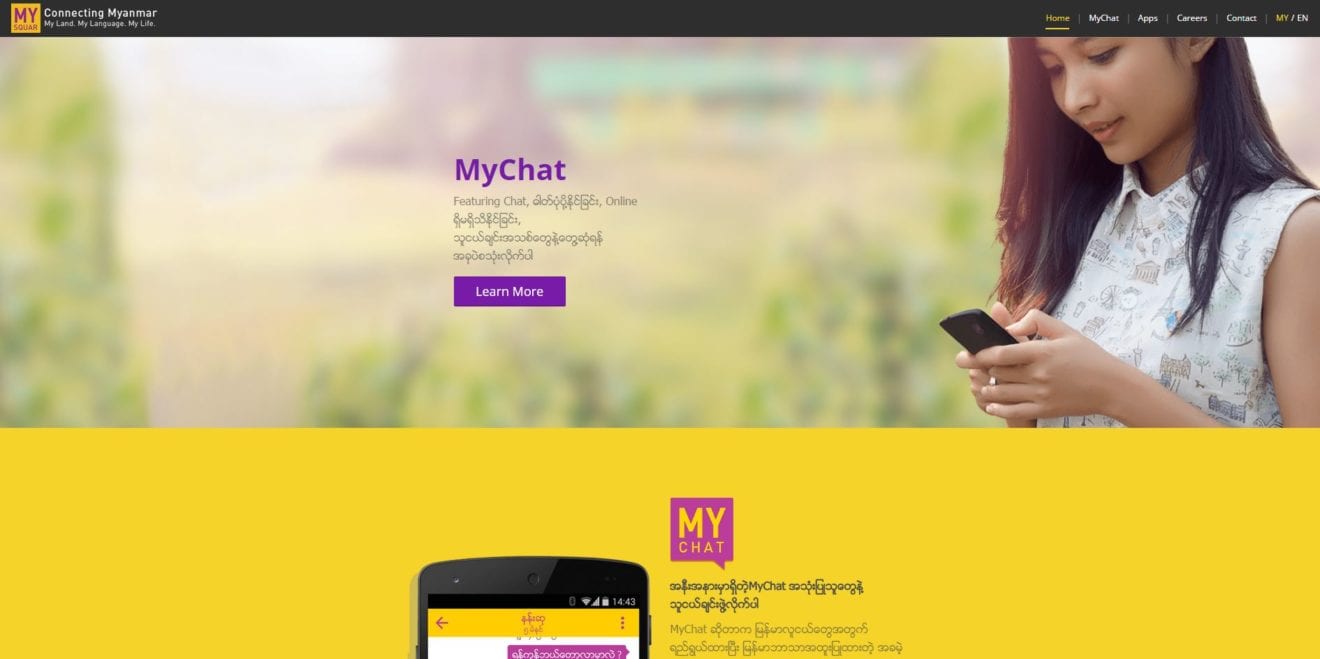
    In August last year, MySQUAR had unveiled its free mobile messaging app – MyChat – built solely for Myanmar.

    The successful listing comes off the back of MySQUAR’s significant growth within the Myanmar telecoms market. Its MyChat app was recently ranked fifth in Google Play’s top free applications store, with over 680,000 accounts on the instant messaging app. By the end of the year, the company expects the figure to have treble to 1.5 million users.

    “What we are seeing in Myanmar is a social revolution and it is gaining traction quickly,” said Eric Schaer, chief executive of MySQUAR. “A SIM card was hundreds of dollars three years ago and now is just US$1.50, making it easily attainable for the population. Although little over 30 per cent of Myanmar’s 60 million population has a handset, the penetration rate is expected to hit 100 per cent in the next five years. We are in a fantastic position to capitalise on this growth and the market has confirmed our position,” he added in a statement.

    Post the listing, Yonder & Beyond’s 3% is worth $845,000, which represents a value up-lift of 24% in four months. “MySQUAR is one of the most exciting companies within our portfolio and this listing provides us with a significant return on our investment,” said Shashi Fernando, chief executive of Yonder and Beyond, in a statement. “It continues to grow at a rapid rate. Through its listing on AIM, they are allowing investors to access the Myanmar market, as well as enabling MySQUAR access to growth capital,” he added.

    MySQUAR intends to expand its product line and Schaer said he was confident that the company would break-even in 2018. The firm intends to move into news, information, financial and payment services in the future to augment its social networking and gaming products.

    By 2019, MySQUAR expects to capture and keep 30 per cent of Myanmar’s connected population continuing its rapid growth trajectory.

    Last year, techinasia, had an interesting post, where MySQAR’s erstwhile Canadian founder claimed she was ousted in a ‘hostile takeover’ of the social media platform. The report further quoted a blogpost titled, ‘When investors turn into bullies’, where Rita Nguyen, founder and former CEO of MySQUAR, had said that her co-founder Nguyen Quynh Anh, and she were “locked out” of the company. Another report, in local media, had said that Rita Nguyen, who had been named one of Forbes’ Asia Power Businesswomen, had taken down this blog post, on June 17, a week after she had uploaded the same.

    Earlier this year, Myanmar granted mobile licenses to Telenor and Ooredoo after these two companies were selected last year following a bidding process, becoming the first foreign mobile phone companies to operate in the country. Their rollout of services has seen Myanmar’s low mobile phone penetration rise rapidly over the last few months.

  • SingPost flourishes on eCommerce focus

    SingPost flourishes on eCommerce focus

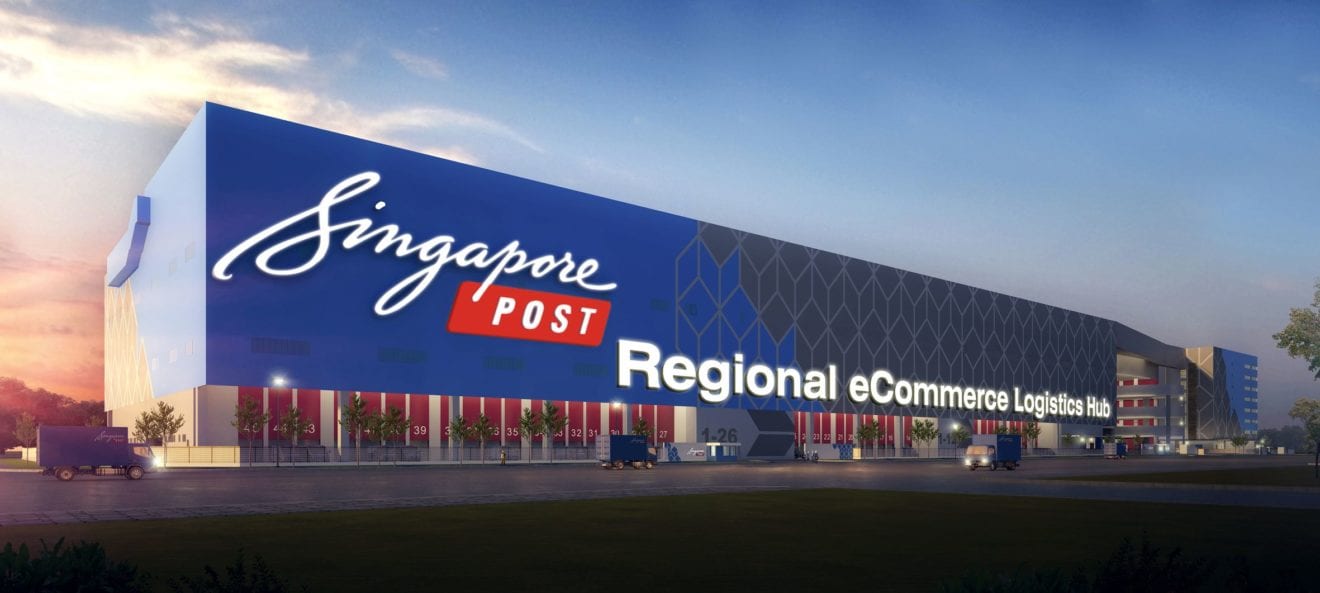
    A firm focus on serving the booming eCommerce market has helped Singapore’s national postal service achieve a record first quarter profit.

    SingPost on Wednesday says in made S$46.6 million net profit in the first three months as its eCommerce strategy paid dividends. Its performance comes in an era when postal services internationally are struggling to break even and remain relevant as traditional mail volumes fall.

    Like every other mail service provider, traditional mail volumes declined in the quarter – by 1.6 per cent – but a modest increase in postal charges offset declining traditional postage income. However revenue from logistics, which includes SingPost’s eCommerce logistics business, soared 43.6 per cent to S$140.1 million – $15 million more than postage revenue.

    The company also achieved a one-off gain from divestments.

  • UK retailers to launch online d-store in China

    UK retailers to launch online d-store in China

    A group of former executives of high profile British retail brands are planning to launch a department store online in China, via JD.com.

    The creators of the virtual department store to be called The Jack Russell Emporium are ex Marks & Spencer, Burberry and Jonathan Saunders. The new store will go live in September.

    It will stock goods from brands such as Hackett, Reiss and Jigsaw, targeting the rising ranks of China’s middle class who aren’t yet quite cashed up enough to splurge on Louis Vuitton.

    “That emerging market has disposable income for the first time; they are cultured and may have travelled to the UK once or twice so they don’t want domestic product, but they cannot afford luxury brands like Burberry and Louis Vuitton,” co-founder Jamie Powell, told Drapers.

    The Jack Russell Emporium will launch with 10 brands initially and expand to 25 by Christmas, before adding a further 75 brands next year.

  • Singapore Press Holdings Limited Makes Big Splash In e-Commerce

    Singapore Press Holdings Limited Makes Big Splash In e-Commerce

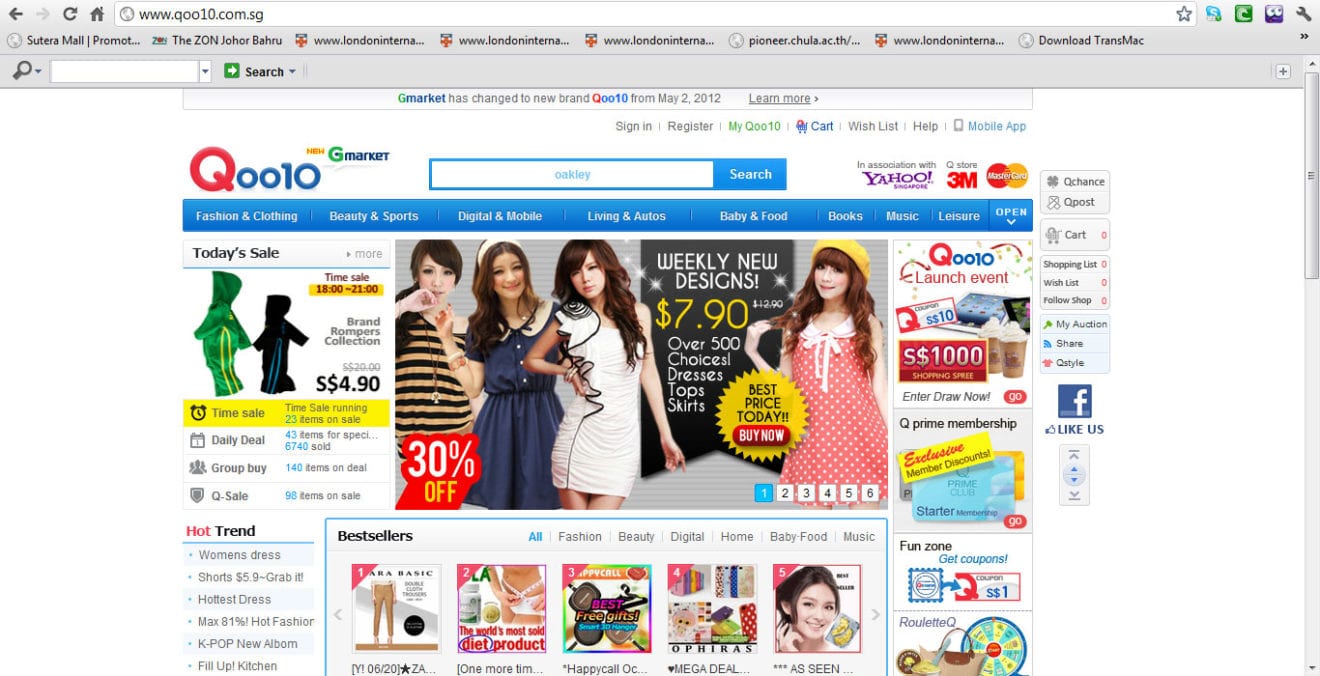
    For those of you who are shopping online regularly, Qoo10.sg might be a familiar name. According to Alexa, a website ranking company, Qoo10.sg is the second most popular e-commerce site in Singapore, behind only U.S. online retail giant Amazon.com.

    Qoo10 is a joint venture between South Korean e-commerce outfit Giosis Group and American online marketplace creator eBay Inc. Qoo10’s still a private company, but investors who believe in the potential of e-commerce and think that Qoo10 will be a strong beneficiary of this important trend will be happy to know that they can now get exposure to the firm.

    Earlier today, it was revealed that Qoo10 had just raised US$82.1 million from a group of investors who are led by newspaper publisher and property developer Singapore Press Holdings Ltd. Singapore Press Holdings has long been trying to diversify away from its traditional print business which might be facing structural challenges with more and more people obtaining their information online. This affects the circulation of the firm’s traditional print newspaper and would thus directly affect the firm’s advertising revenue.

    The negative impacts to Singapore Press Holdings’ business are already apparent with the firm’s total ad revenue from its newspapers falling in each year since its fiscal year ended 31 August 2011 (FY2011).

    As a result, Singapore Press Holdings has been actively investing into other types of businesses over the past few years. In particular, the company has been putting capital to work aggressively in the internet space. Currently, Singapore Press Holdings is owner of some of the most popular sites in Singapore such as hardwarezone.com, shareinvestor.com, and even stomp.com.sg.

    With an investment into Qoo10, Singapore Press Holdings has gained access to an e-commerce marketplace in six different territories (Singapore, Japan, Indonesia, Malaysia, Hong Kong and China).

    Qoo10 currently has about 17.6 million registered users and had achieved a gross merchandise value (GMV) of US$408 million in 2014. Interestingly, Singapore is currently Qoo10’s best performing market, with more than US$182 Million in GMV in 2014 with just 1.8 million registered users. However, there is no detail on whether Qoo10 is profitable or not at the moment.

    More synergy?

    With the new investment, there might be some synergies to exploit given Singapore Press Holdings’ distribution-reach on both its offline and online media properties.

    If Singapore Press Holdings is able to successfully promote Qoo10 within its audiences on its various media platforms, it might help boost growth for Qoo10 in the coming years.

    Foolish Summary

    The internet looks to be the way forward in the future. But, investors have to know that businesses that ply their trade on the web are engaged in extremely fierce competition.

    With low barriers to entry and having access to a global market at your fingertips, internet businesses need to dominate or else they might disintegrate. Clearly, Singapore Press Holdings has decided it wants a part of all these and its investment into Qoo10 is just another step in its longer term ambition to transform its business. Let’s hope it can compete successfully in this unforgiving landscape.

    For those of you who are shopping online regularly, Qoo10.sg might be a familiar name. According to Alexa, a website ranking company, Qoo10.sg is the second most popular e-commerce site in Singapore, behind only U.S. online retail giant Amazon.com.

    Qoo10 is a joint venture between South Korean e-commerce outfit Giosis Group and American online marketplace creator eBay Inc. Qoo10’s still a private company, but investors who believe in the potential of e-commerce and think that Qoo10 will be a strong beneficiary of this important trend will be happy to know that they can now get exposure to the firm.

  • Walmart to boost its e-commerce investment in China

    Walmart to boost its e-commerce investment in China

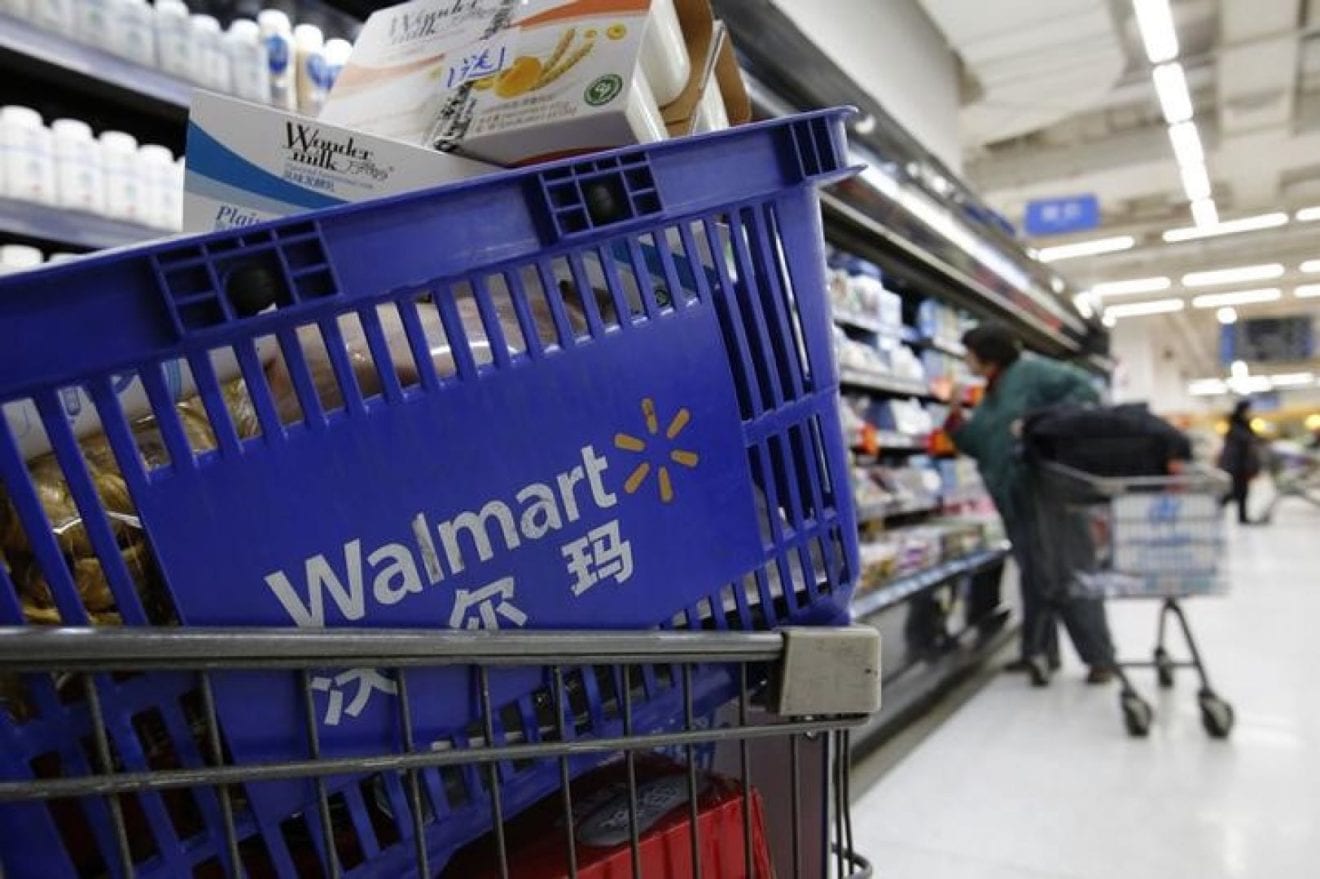
    China’s e-commerce market hasn’t been easy for Walmart to crack, but the U.S. shopping giant isn’t giving up. The company is investing even more in its e-commerce operations there, by taking full control of a Chinese online retailer.
    On Thursday, Walmart bought up the remaining shares of Yihaodian, after previously owning 51 percent in the Chinese company. Financial details were not announced, but the move will accelerate Walmart’s online expansion in China, the U.S. retail giant said.

    Walmart’s move was made possible by the Chinese government’s recent decision to open the e-commerce market to more foreign investment. Last month, a Chinese regulator removed restrictions that barred foreign investors from taking a 100 percent stake in any e-commerce operation in the country. Before that, foreign investors such as Walmart had to enter into joint ventures with local Chinese players.

    Although Walmart’s move could help the U.S. company tap the vast Chinese market, gaining ground against the existing competition will be tough. Other U.S. e-commerce players such as Amazon.com and eBay have all struggled to compete with Alibaba Group, the country’s leading online retailer.

    In China, Alibaba’s Tmall.com site has a 60 percent market share, according to Beijing-based research firm Analysys International. Amazon and Walmart’s Yihaodian site, however, each have about a 1 percent share.

    In spite of Alibaba’s dominance, Walmart’s Yihaodian site has been making gradual progress. It now has 100 million registered users, up from only 4 million back in 2010. Walmart’s goal is to now integrate their physical stores with Yihaodian’s mobile and online services for a better shopping experience.

  • Tmall.com launches massive grocery campaign

    Tmall.com launches massive grocery campaign

    Tmall.com has launched a RMB 1 billion (US$161 million) online grocery promotional campaign targeted at Beijing users.

    The Alibaba eCommerce subsidiary has teamed up with Cainiao, the logistics affiliate of Alibaba Group, to offer same-day delivery services to Beijing city residents.

    Online grocery shopping is a rapidly growing eCommerce segment and a strategic area of interest for Alibaba Group. The convenience of online grocery shopping has already drawn in millions of users. According to Kantar Worldpanel, China’s FMCG (fast moving consumer goods) eCommerce penetration rate was 36 per cent in 2014, while McKinsey says 40 percent of Chinese consumers have bought food online.

    Tmall Supermarket will run its promotion three times a day, allowing Beijing-based Internet users a chance to win ‘red packets’ that subsidise their grocery purchases. The promotion will end on July 31.

    Beijing residents who order from Tmall’s supermarket before 11 am will be eligible for same-day delivery service. In the future, Tmall Supermarket and Cainiao plan to roll-out same-day delivery services to Shanghai and other Chinese cities.

    Jeff Zhang, president of Alibaba Group’s China Retail Marketplaces, said Tmall Supermarket will draw on Alibaba Group’s complete eCommerce ecosystem – including Alibaba’s advantage in logistics, strength in online payments, big data and cloud computing, to bring consumers the most convenient and secure online shopping experience for quality products.

    Tmall Supermarket was established in 2012 and provides a one-stop shopping solution for Chinese users looking to purchase authentic food products, cosmetics, beverages, snacks and imported items. In the past year, Tmall Supermarket’s Beijing area GMV soared more than 700 per cent with 90 per cent of consumers shopping on their mobile phones.

  • Alibaba.com reduces cross-border risk

    Alibaba.com reduces cross-border risk

    Alibaba.com has expanded a free service that offers refunds to disgruntled buyers who use the international wholesale trading platform to purchase goods from overseas suppliers.

    Under the B2B website’s upgraded Trade Assurance program, buyers who make purchases from participating Alibaba.com suppliers will be entitled to full refunds of their deposits, or if applicable the total value of their orders, if suppliers ship products late or if product quality does not meet contract specifications.

    Launched in May, the program initially included only Chinese suppliers with reliable track records of trading on Alibaba.com who volunteered to participate. Within a month, coverage will be expanded to all suppliers who volunteer and are qualified to participate regardless of home country. About 50,000 suppliers have joined the program, according to Alibaba.com, a subsidiary of Hangzhou, China-based Alibaba Group.

    Trade Assurance protects buyers by holding deposits or payments in escrow until they are satisfied that suppliers have lived up to the terms of their sales contracts. The program is designed to reduce risk and foster greater trust and trade among Alibaba.com buyers and suppliers, most of whom conduct business over the Internet and never meet in person. Alibaba.com sells no products itself; the company runs an online marketplace that hosts virtual stores of manufacturers, distributors and other sellers, the majority of them based in China.

    “By providing maximum trade protection, Alibaba.com aims to make cross-border trading easier, therefore empowering small-and medium-sized businesses to engage in global trading,” said Alibaba Group senior VP Wu Min Zhi.

    “By lessening concerns and building trust in international trade, we are committed to introducing more trade opportunities to Alibaba.com members,” Wu said in a statement.

    “As a result, small businesses will not miss out the benefits of international trading due to trust concerns over product quality or payment security.”

    Trade Assurance protection is available to all of Alibaba.com’s millions of global buyers, provided the supplier they want to do business with is approved for the program. To vet suppliers, Alibaba.com uses data analytics to assess past performance and trading histories over six-month periods. The program currently only covers payments made by telegraphic transfer (T/T), but other payment methods will be covered in the future, Alibaba.com said.

    To help make it easier for small businesses to identify reliable trading partners, Alibaba.com encourages suppliers who qualify for the Trade Assurance program to display a Trade Assurance icon on their Alibaba.com virtual storefronts. To further improve transparency, storefronts also display the total number of transactions and total value of deals the supplier has completed over the previous 12 months. In addition, Alibaba.com will show how often and how quickly qualified suppliers respond to customers.

    Meanwhile, Alibaba.com says its “e-Credit Line” service – which provides trade financing to small businesses using Alibaba.com – is now expanded into Australia.

    Through a partnership between Alibaba.com and Australian finance company AUSvance, Australia-based small businesses can apply for loans and lines of credit in under five minutes through a streamlined process and obtain a line of credit from AU$5000 to AU$300,000 to pay suppliers for purchases on Alibaba.com.

    A decision based on an automated credit scoring model will be made within 60 seconds, and full approval can be granted within 24 hours after verification of documentation from the applicants, according to Alibaba.com. The interest rate is as low as 1.15 per cent per month for Alibaba.com customers.

  • GrabBike is officially launching in Bangkok

    GrabBike is officially launching in Bangkok

    GrabBike – a part of GrabTaxi – is an on-demand service for motorcycle taxis. GrabBike is officially launching in Bangkok on August 5th, which makes Thailand the third country on GrabBike’s expansion across Southeast Asia, after Vietnam and Indonesia. However the company itself, GrabTaxi, is no stranger to Thailand. Its regular taxi-hailing service has been around since October 2013.

    In Indonesia, GrabBike competes with a similar local service called Go-Jek., but as far as I know, GrabBike will be the first to offer app-based motorcycle hailing in Thailand. (Please correct me if I’m wrong.)

    GrabBike-Bangkok-launch

    Thailand vs. Indonesia

    There’s one key difference in the “motorcycle-taxi market” in Thailand vs. Indonesia:

    Most moto-taxis in Thailand are registered with the government, wear a yellow vest and have an ID card. I wonder if GrabBike will work in some form of partnership with them, and whether they got full government approval?

    In Indonesia, the legal status of services like GrabBike and Go-Jek is still debated. Motorcycle taxis have so far not been regulated in any way. And Go-Jek and GrabBike drivers are even getting bullied by motorcycle taxi drivers who prefer the old ways.

    We’ll report more on how the service is received in the “Big Mango” after the launch.